

The DOI matches its Crossref record; 14 of the 14 references it cites were found in a registry or an index.
Early transmissibility assessment of the N501Y mutant strains of SARS-CoV-2 in the United Kingdom, October to November 2020
Open accessPublished version of a preprint
Abstract
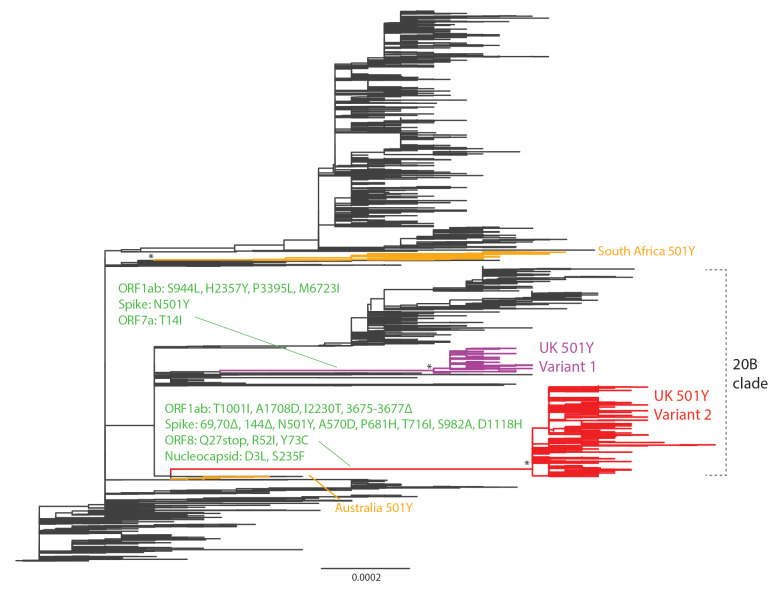
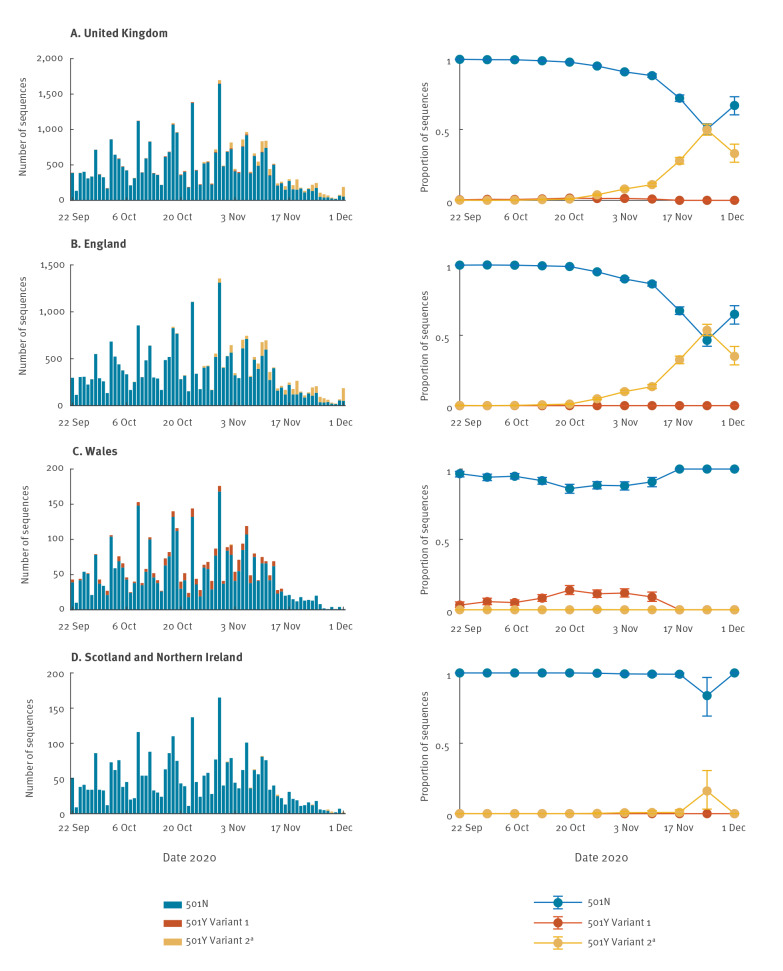
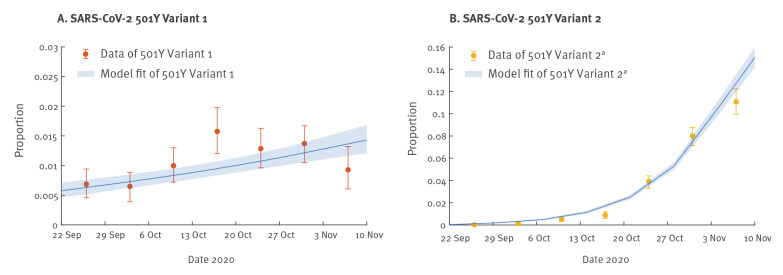
Two new SARS-CoV-2 lineages with the N501Y mutation in the receptor-binding domain of the spike protein spread rapidly in the United Kingdom. We estimated that the earlier 501Y lineage without amino acid deletion Δ69/Δ70, circulating mainly between early September and mid-November, was 10% (6–13%) more transmissible than the 501N lineage, and the 501Y lineage with amino acid deletion Δ69/Δ70, circulating since late September, was 75% (70–80%) more transmissible than the 501N lineage.
Overview
The claims and statistics of this paper haven’t been checked yet.
Run the check — free, no account needed. It reads the open-access text and checks the sources it cites.
Integrity signals
Registry
Cites
Statistics
Figures
Verification
Claims the paper makes
The claims and statistics of this paper haven’t been checked yet.
Run the check — free, no account needed. It reads the open-access text and checks the sources it cites.
Claims other papers make about this one
Each is checked against this paper’s own text: does it say what the citing paper says it does?
In the citing paper
“A B.1.1.7 isolate had signature changes in the spike gene14 including the 69–70 and 144–145 deletions, and N501Y, A570D, D614G, and P681H substitutions.”
From Resistance of SARS-CoV-2 variants to neutralization by monoclonal and serum-derived polyclonal antibodies (2021) · cites this paper as [14]
In the citing paper
“Epidemiological studies suggest that it was approximately 50% more transmissible than previously circulating UK variants 191,197,198 .”
From The biological and clinical significance of emerging SARS-CoV-2 variants (2021) · cites this paper as [197]
Self-check
Percentages, sums and reported differences re-computed from the paper’s own numbers.
The self-check needs the paper’s full text.
Citations
Cites
FastTree 2 – Approximately Maximum-Likelihood Trees for Large Alignments
Price, M. N., Dehal, P. S., & Arkin, A. P. (2010) · PLoS ONE · doi:10.1371/journal.pone.0009490 · Cited by 14,894
An interactive web-based dashboard to track COVID-19 in real time
Dong, E., Du, H., & Gardner, L. (2020) · The Lancet Infectious Diseases · doi:10.1016/s1473-3099(20)30120-1 · Cited by 10,048
A dynamic nomenclature proposal for SARS-CoV-2 lineages to assist genomic epidemiology
Rambaut, A., Holmes, E. C., O’Toole, Á., Hill, V., McCrone, J. T., Ruis, C., du Plessis, L., & Pybus, O. G. (2020) · Nature Microbiology · doi:10.1038/s41564-020-0770-5 · Cited by 2,543
Tegally, H., Wilkinson, E., Giovanetti, M., Iranzadeh, A., Fonseca, V., Giandhari, J., Doolabh, D., Pillay, S., San, E. J., Msomi, N., et al. (2020) · doi:10.1101/2020.12.21.20248640 · Cited by 2,535
Starr, T. N., Greaney, A. J., Hilton, S. K., Ellis, D., Crawford, K. H. D., Dingens, A. S., Navarro, M. J., Bowen, J. E., Tortorici, M. A., Walls, A. C., et al. (2020) · Cell · doi:10.1016/j.cell.2020.08.012 · Cited by 1,956
SARS-CoV-2 evolution during treatment of chronic infection
Kemp, S. A., Collier, D. A., Datir, R. P., Ferreira, I. A. T. M., Gayed, S., Jahun, A., Hosmillo, M., Rees-Spear, C., Mlcochova, P., Lumb, I. U., et al. (2021) · Nature · doi:10.1038/s41586-021-03291-y · Cited by 1,097
Evaluating the Effects of SARS-CoV-2 Spike Mutation D614G on Transmissibility and Pathogenicity
Volz, E., Hill, V., McCrone, J. T., Price, A., Jorgensen, D., O’Toole, Á., Southgate, J., Johnson, R., Jackson, B., Nascimento, F. F., et al. (2021) · Cell · doi:10.1016/j.cell.2020.11.020 · Cited by 1,006
Leung, K. S. M., Wu, J. T. K., Liu, D., & Leung, G. M. (2020) · The Lancet · doi:10.1016/s0140-6736(20)30746-7 · Cited by 840
Self-citationNeutralising antibodies in Spike mediated SARS-CoV-2 adaptationPreprint
Kemp, S. A., Collier, D. A., Datir, R. P., et al. (2020) · medRxiv · doi:10.1101/2020.12.05.20241927 · Cited by 180
Nasal ACE2 Levels and COVID-19 in Children
Patel, A. B., & Verma, A. (2020) · JAMA · doi:10.1001/jama.2020.8946 · Cited by 143
Research works printed but not linked: 1
- Kemp, 2020, Recurrent emergence and transmission of a SARS-CoV-2 Spike deletion ΔH69/ΔV70, bioRxiv
Cited by
Sorted by citations
Items 501–600 of 691
Sequence similarity of SARS-CoV-2 and humans: Implications for SARS-CoV-2 detection
Li, H., Hong, X., Ding, L., Meng, S., Liao, R., Jiang, Z., & Liu, D. J. (2022) · Frontiers in Genetics · doi:10.3389/fgene.2022.946359 · Cited by 5
Yılmaz, H. (2021) · Northern Clinics of Istanbul · doi:10.14744/nci.2021.90947 · Cited by 3
A simple stochastic theory of extinction shows rapid elimination of a Sars-like pandemicPreprint
Khatri, B. S. (2020) · medRxiv · doi:10.1101/2020.08.10.20171454 · Cited by 3
Estimating SARS-CoV-2 variant strain infectiousness in Japan as of March 28, 2021Preprint
Kurita, J., Sugawara, T., & Ohkusa, Y. (2021) · medRxiv · doi:10.1101/2021.04.11.21255283 · Cited by 3
“The earliest case with the variant strain in the UK was 169 reportedly identified on September 20, 2020 [1].”
BackgroundMethodResultInfluentialRego, N., Fernández-Calero, T., Arantes, I., Noya, V., Mir, D., Brandes, M., Zanetti, J., Arleo, M., Pereira-Flores, E., Possi, T., et al. (2021) · medRxiv · doi:10.1101/2021.07.05.21259760 · Cited by 3
Wilson, P. C., Changrob, S., Fu, Y., Guthmiller, J. J., Halfmann, P., Li, L., Stamper, C. T., Dugan, H. L., Accola, M. A., Rehrauer, W. M., et al. (2021) · Research Square · doi:10.21203/rs.3.rs-678247/v1 · Cited by 3
Lai, X., Yu, Y., Xian, W., Ye, F., Ju, X., Luo, Y., Dong, H., Zhou, Y., Tan, W., Zhuang, H., et al. (2021) · bioRxiv (Cold Spring Harbor Laboratory) · doi:10.1101/2021.10.29.466402 · Cited by 3
Mohebbi, F., Zelikovsky, A., Mangul, S., Chowell, G., & Skums, P. (2023) · bioRxiv (Cold Spring Harbor Laboratory) · doi:10.1101/2023.04.02.535277 · Cited by 3
Bosinger, S. E., Edwards, C. T., Karunakaran, K. A., Garcia, E., Beutler, N., Gagné, M., Golden, N., Aoued, H., Pellegrini, K., Burnett, M. R., et al. (2025) · PLoS Pathogens · doi:10.1371/journal.ppat.1012456 · Cited by 3
Cold traps as reliable devices for quantitative determination of SARS-CoV-2 load in aerosols
Gehrke, S. G., Förderer, C., Weiskirchen, R., & Stremmel, W. (2021) · Environmental Monitoring and Assessment · doi:10.1007/s10661-021-09580-3 · Cited by 2
“7 lineage in the UK once underlines the necessity of efficient strategies for airborne surveillance (Leung et al., 2021).”
BackgroundEmerging variants of concern in Saudi Arabian SARS-CoV-2 isolates
Al-Sehemi, A. G., Khan, M. T., & Muhammad, S. (2021) · Saudi Medical Journal · doi:10.15537/smj.2021.42.12.20210630 · Cited by 2
Martin‐Blondel, G., Lescure, F.-X., Assoumou, L., Charpentier, C., Chapplain, J.-M., Perpoint, T., Grouteau, G., Cordel, H., Pialoux, G., Pacanowski, J., et al. (2021) · BMC Infectious Diseases · doi:10.1186/s12879-022-07508-x · Cited by 4
SARS-CoV-2 Variants: Impact of Spike Mutations on Vaccine and Therapeutic Strategies
Raman, R., Patel, K. J., & Ranjan, K. (2022) · Springer eBooks · doi:10.1007/978-3-031-08045-6_7 · Cited by 4
da Silva, A. C. V. F., Silva, C. A. O., de Sousa, G. F., Coelho, V. A. G. S., da Cunha, L. T., Paes, A. N., Pozzobon, A. P. B., dos Santos, D. D. G., Carpes, R. D. M., Costa, E. P., et al. (2024) · Frontiers in Microbiology · doi:10.3389/fmicb.2024.1386271 · Cited by 4
Geospatial Dynamics of SARS-CoV-2 Variants during the Fifth Wave of COVID-19 in Punjab, Pakistan
Beig, M. M., Ali, M. A., Javed, H., Yaqub, T., Mehmood, A. K., Nawaz, M., Raza, S., Ashraf, M. A., Shabbir, M. A. B., Mukhtar, N., et al. (2024) · Advancements in Life Sciences · doi:10.62940/als.v11i2.2872 · Cited by 2
“The mutation N501Y has been reported in the receptor-binding domain and is linked to the surge in the binding affinity of the virus to the ACE2 receptor of host cells [31,32].”
BackgroundHan, X., Pan, H., Jin, P., Wei, M., Jia, S., Wang, W.-J., Chu, K., Gao, S., Zhou, L., Li, J., et al. (2024) · Frontiers in Immunology · doi:10.3389/fimmu.2024.1455730 · Cited by 3
Gozzi, N., Chinazzi, M., Davis, J. T., Mu, K., y Piontti, A. P., Ajelli, M., Vespignani, A., & Perra, N. (2024) · Epidemics · doi:10.1016/j.epidem.2024.100805 · Cited by 2
“…is particularly relevant given that many VOCs typically undergo a cryptic initial phase where they spread silently without being detected by traditional surveillance systems [13]. e To this end, researchers have harnessed genomic data and provided statistical analyses of VOCs’ detection [5, 6, 8].”
Yan, Y., Yang, L., Li, X., Hao, J., Wang, B., Wang, D., & Wang, J. (2022) · Infection and Drug Resistance · doi:10.2147/idr.s371088 · Cited by 2
The importance of effect sizes when comparing cycle threshold values of SARS-CoV-2 variants
Brinkmann, C., Gohl, P., Mack, D., Pfeifer, J., Fenés, M. P., Harzer, O., & Zöllner, B. (2022) · PLoS ONE · doi:10.1371/journal.pone.0271808 · Cited by 2
SECCION II. Definiciones operativas de casos de infección por SARS-CoV-2/COVID-19
Trujillo, C. H. S. (2021) · Infectio · doi:10.22354/in.v25i4.972 · Cited by 2
Development and characterization of SARS-CoV-2 variant-neutralizing monoclonal antibodies
Qiu, H., Yuan, X.-Y., Cabral, T. M., Manguiat, K., Robinson, A., Wood, H., Grant, C., McQueen, P., Westmacott, G., Beniac, D. R., et al. (2021) · Antiviral Research · doi:10.1016/j.antiviral.2021.105206 · Cited by 4
Assessment of the feasibility of pool testing for SARS-CoV-2 infection screening
Paganini, I., Sani, C., Chilleri, C., Baccini, M., Antonelli, A., Bisanzi, S., Burroni, E., Cellai, F., Coppi, M., Mealli, F., et al. (2022) · Scandinavian Journal of Infectious Diseases · doi:10.1080/23744235.2022.2044512 · Cited by 2
Multiplex Quantitative Polymerase Chain Reaction Test to Identify SARS-CoV-2 Variants
Hawkins, S. F. C., & Guest, P. C. (2022) · Methods in molecular biology · doi:10.1007/978-1-0716-2395-4_5 · Cited by 2
Advances and Challenges in COVID-19 Vaccination in Latin American: A public health perspective
Fernandez‐Guzman, D., Chávez-Cruzado, E., Díaz-Vélez, C., Gálvez-Olortegui, T., la Rosa, E. V.-D., Rodriguez-Morales, A. J., & Gálvez-Olórtegui, J. (2022) · Infectio · doi:10.22354/24223794.1094 · Cited by 2
Yang, X., Zhu, Y., Xun, J., Liu, J., Wen, Q., Lin, Y., Shen, X., Chen, J., Yuan, S., Zhao, X., et al. (2022) · iScience · doi:10.1016/j.isci.2022.105016 · Cited by 2
Alkhaldi, S. Y., Peng, I., & Peng, C. (2023) · Bioengineering · doi:10.3390/bioengineering10060652 · Cited by 2
“The interaction with ACE2 is the major key mechanism that facilitates the early transmission of SARS-CoV-2 to the host [5], resulting in high viral infectivity [6].”
BackgroundRamasamy, R. (2023) · International Journal of Microbiology Research · doi:10.4103/ijmr.ijmr_2591_22 · Cited by 2
“Epidemiological studies suggested that an N501Y mutation in S was alone responsible for about 10 per cent greater transmissibility of Alpha, but the N501Y mutation in combination with a ΔH69-ΔV70 deletion made Alpha 70 per cent more transmissible 36 .”
BackgroundMolecular adaptive evolution of SARS-COV-2 spike protein in Saudi Arabia
Nour, I., Alenazi, I. O., Hanif, A., & Eifan, S. A. (2021) · Saudi Journal of Biological Sciences · doi:10.1016/j.sjbs.2021.02.077 · Cited by 2
Psychometric properties of pandemic awareness scale for students aged 8–12: The case of COVID-19
Burak, D. (2023) · Children and Youth Services Review · doi:10.1016/j.childyouth.2023.106944 · Cited by 2
Courjon, J., Contenti, J., Demonchy, É., Levraut, J., Barbry, P., Rios, G., Dellamonica, J., Chirio, D., Bonnefoy, C., Giordanengo, V., et al. (2021) · Research Square · doi:10.21203/rs.3.rs-343317/v1 · Cited by 2
“The N501Y mutation is associated with adaptation to rodent, for instance mice [15] and may increase SARS-CoV-2 Spike protein binding to ACE2 because of conformational changes, thus increasing its transmissibility [1].”
BackgroundHill, K., Dewar, R., & Templeton, K. E. (2021) · The Journal of Infectious Diseases · doi:10.1093/infdis/jiab303 · Cited by 2
Streamlined use of protein structures in variant analysisPreprint
Kaur, S., Sikta, N., Schafferhans, A., Bordin, N., Cowley, M. J., Thomas, D. M., Ballinger, M. L., & O’Donoghue, S. I. (2021) · bioRxiv (Cold Spring Harbor Laboratory) · doi:10.1101/2021.09.10.459756 · Cited by 2
Piantham, C., & Ito, K. (2022) · medRxiv · doi:10.1101/2022.03.30.22273218 · Cited by 2
Quiroz, P., Rutherford, G. W., & Dubé, M. P. (2022) · doi:10.1002/9781119789741.ch1 · Cited by 2
Early Oxygen Treatment Measurements Can Predict COVID-19 Mortality: A Preliminary Study
Levi, Y., Yamin, D., Brandes, T., Shmueli, E., Patalon, T., Peretz, A., Gazit, S., & Nahir, B. (2022) · Healthcare · doi:10.3390/healthcare10061146 · Cited by 1
Structural biology of SARS-CoV-2 accessory proteins
Briggs, D. C., Kandler, L., Schmidt, L., Santoni, G., & Thorn, A. (2023) · Crystallography Reviews · doi:10.1080/0889311x.2023.2173744 · Cited by 1
Advances in Ozone-Based Inactivation of SARS-CoV-2: An Updated Review
Rangel, K., Villas-Bôas, M. H. S., & De-Simone, S. G. (2026) · International Journal of Molecular Sciences · doi:10.3390/ijms27083632 · Cited by 1
“While the initial vaccines have proven effective in reducing hospitalizations, infections, and deaths associated with COVID-19 [14–16], the constant emergence of new viral variants poses ongoing challenges [17,18].”
SECCION I. Antecedentes de infección por SARS-CoV-2/COVID-19
Trujillo, C. H. S. (2021) · Infectio · doi:10.22354/in.v25i4.971 · Cited by 1
Bouam, A., Vincent, J.-J., Glass, E. L., Alméras, L., Levy, P., Tissot‐Dupont, H., Lagier, J., Fournier, P., Raoult, D., & Drancourt, M. (2021) · Journal of Clinical Medicine · doi:10.3390/jcm10122643 · Cited by 1
RetractedLocal Surveillance of the COVID-19 Outbreak
Liu, C., Xu, L., Bai, Y., Xu, X.-K., Lau, E. H. Y., Cowling, B. J., & Du, Z. (2022) · Frontiers in Physics · doi:10.3389/fphy.2022.824369 · Cited by 1
Two-Population SIR Model and Strategies to Reduce Mortality in Pandemics
Ma, L., Kitsak, M., & Mieghem, P. V. (2022) · Studies in computational intelligence · doi:10.1007/978-3-030-93413-2_23 · Cited by 1
Kang, K., Wang, J., Du, X., Li, N., Jin, S., Ji, Y., Liu, X., Chen, P., Yue, C.-S., Wu, J.-H., et al. (2022) · Frontiers in Surgery · doi:10.3389/fsurg.2022.1018637 · Cited by 1
Self-citationVanoni, S., Matulevičius, A., Avdiu, B., Scantamburlo, G., Ulekleiv, C., Brzoska, P. M., Furtado, M. R., Feenstra, J. D. M., Rico, A., Gandhi, M., et al. (2022) · Frontiers in Cellular and Infection Microbiology · doi:10.3389/fcimb.2022.960065 · Cited by 1
“Based on the increased risk they pose to public health, they have been designated either as variants of concern (VOCs) or variants under monitoring (VUMs) (Faria et al., 2021; Leung et al., 2021; O'Dowd, 2021; Tegally et al., 2021).”
BackgroundSARS-CoV-2 vaccines from A to Z: A Review of the current challenges
Albalaty, J. M., Forsan, F. H., Awad, S., et al. (2023) · Global NEST Journal · doi:10.30955/gnj.004651 · Cited by 1
“The B.1.1.7 variant, first discovered in the United Kingdom (UK)(Chand et al ., 2020), it has about 17 mutations, including the N501Y mutation that promotes fast transmission and more severe illness than the other circulating viruses (Leung et al ., 2021).”
BackgroundInfluentialDunajcik, A., Haire, K., Thomas, J. D., Moriarty, L. F., Springer, Y. P., Villanueva, J. M., MacNeil, A., Silk, B. J., Nemhauser, J. B., Byrkit, R., et al. (2023) · PLOS Global Public Health · doi:10.1371/journal.pgph.0001252 · Cited by 1
Picard, G., Fournier, L., Maisa, A., Grolhier, C., Chent, S., Huchet-Kervella, C., Sudour, J., Pretet, M., Josset, L., Behillil, S., et al. (2023) · Eurosurveillance · doi:10.2807/1560-7917.es.2023.28.22.2200671 · Cited by 1
Sanstead, E. C., Li, Z., McKearnan, S. B., Kao, S. Z., Mink, P. J., Simon, A. B., Kuntz, K. M., Gildemeister, S., & Enns, E. A. (2023) · MDM Policy & Practice · doi:10.1177/23814683231202716 · Cited by 1
“…might change if the transmissibility and severity of the circulating fall strain were different from base-case estimates, which could reflect a combination of the emergence of a new variant 35,36 and changes in the underlying immunity of the population due to vaccination and/or previous infection.”
BackgroundTakeda, M. (2023) · Japanese Journal of Infectious Diseases · doi:10.7883/yoken.jjid.2023.353 · Cited by 1
Tiwary, B. K. (2024) · Gene · doi:10.1016/j.gene.2024.148427 · Cited by 1
Genomic surveillance and sequencing of SARS-CoV-2 in Malaysia
Tajudin, N., Wang, S. M., Kumar, D. C., Mohamad, M., & Nawi, S. F. A. M. (2024) · Asia-Pacific Journal of Molecular Biology and Biotechnology · doi:10.35118/apjmbb.2024.032.2.09 · Cited by 1
Tiny-ML and IoT Based Early Covid19 Detection Wearable System
Allam, O. E., Jami, O., & Zaki, M. (2024) · Communications in computer and information science · doi:10.1007/978-3-031-77040-1_20 · Cited by 1
Keeping an eye on the many symptoms of COVID-19
Özateş, S., & Ceran, B. B. (2021) · Graefe s Archive for Clinical and Experimental Ophthalmology · doi:10.1007/s00417-021-05125-z · Cited by 1
Laboratoriet er helsevesenets hjerte
Akselsen, H. E. (2021) · Tidsskrift for Den norske legeforening · doi:10.4045/tidsskr.21.0439 · Cited by 1
Hale, R. S., Green, A., Cunningham, E., & Paul, J. (2021) · Journal of Clinical Virology Plus · doi:10.1016/j.jcvp.2021.100025 · Cited by 1
An update of coronavirus disease 2019 (COVID-19): an essential brief
Zare, A., Sadati-Seyyed-Mahalle, S. F., Mokhtari, A., Pakdel, N., Hamidi, Z., Almasi-turk, S., Baghban, N., Khodamehr, A., Nabipour, I., Behzadi, M. A., et al. (2021) · Modern Medical Laboratory Journal · doi:10.30699/mmlj17.4.1.19 · Cited by 1
Bioinformatic and MD Analysis of N501Y SARS-CoV-2 (UK) Variant
Jukič, M., Kralj, S., Nikitina, N., & Bren, U. (2021) · IFIP advances in information and communication technology · doi:10.1007/978-3-030-86582-5_1 · Cited by 1
Forecasting of COVID-19 Epidemic Process by Lasso Regression
Chumachenko, D., Chumachenko, T., Meniailov, I., Muradyan, O., & Zholtkevych, G. (2021) · International Conference on Information and Telecommunication Technologies and Radio Electronics (UkrMiCo) · doi:10.1109/ukrmico52950.2021.9716621 · Cited by 1
Antony, P., Jobe, A., & Vijayan, R. (2022) · PeerJ · doi:10.7717/peerj.13680 · Cited by 1
“Several viral variants, harboring various sets of mutations have been reported ( Leung et al., 2021 ; Sabino et al., 2021 ; Tegally et al., 2021 ).”
LE VIRUS SARS-COV-2 ET SES VARIANTS
MONETTI, M., Pozzetto, B., PLOTTON, C., & GOCKO, X. (2021) · EXERCER · doi:10.56746/exercer.2021.171.118 · Cited by 1
Kaczorek‐Łukowska, E., Wernike, K., Beer, M., Blank, A., Małaczewska, J., Blank, M., Jałonicka, A., & Siwicki, A. K. (2023) · Acta veterinaria Scandinavica · doi:10.1186/s13028-023-00672-3 · Cited by 1
Tang, C. Y., Wang, Y., Gao, C., Smith, D. R., McElroy, J. A., Li, T., Segovia, K. M., Haynes, T., Hammer, R., Sampson, C. S., et al. (2021) · medRxiv · doi:10.1101/2021.02.03.21250928 · Cited by 1
An Update of Coronavirus Disease 2019 (COVID-19): An Essential Brief for CliniciansPreprint
Zare, A., Sadati-Seyyed-Mahalle, S. F., Mokhtari, A., Pakdel, N., Hamidi, Z., Almasi-turk, S., Baghban, N., Khoradmehr, A., Nabipour, I., Behzadi, M. A., et al. (2021) · Preprints.org · doi:10.20944/preprints202102.0530.v1
Valadan, R., Alizadeh‐Navaei, R., Golpour, M., Gholami, M., Zargari, M., Haghshenas, M., & Mousavi, T. (2021) · Research Square · doi:10.21203/rs.3.rs-307547/v1 · Cited by 1
“The severity and infectious diseases of the UK variant remain unknown [13].”
BackgroundScience’s Response to COVID-19Preprint
Aye, Y., & Long, M. J. C. (2021) · Preprints.org · doi:10.20944/preprints202103.0416.v1 · Cited by 1
Diabelko, D., Dvořáčková, M., Dvořáková, M., Forte, G., Čundrle, I., Růžička, F., & Vrbský, J. (2021) · medRxiv · doi:10.1101/2021.05.24.21257365 · Cited by 1
Zamal, L., & Rocchi, M. (2021) · doi:10.22541/au.162141142.21655505/v1 · Cited by 1
Davidson, S. M., Lukhna, K., Gorog, D. A., Salama, A. D., Castillo, A. R., Giesz, S., Golforoush, P. A., Kalkhoran, S. B., Lecour, S., Imamdin, A., et al. (2021) · Cardiovascular Drugs and Therapy · doi:10.1007/s10557-021-07223-w · Cited by 1
Infectiousness in omicron variant strain and bA.2 variant in JapanPreprint
Kurita, J., Sugawara, T., & Ohkusa, Y. (2021) · medRxiv · doi:10.1101/2021.06.20.21259209 · Cited by 1
Emerging SARS-CoV-2 variants expand species tropism to rodentsPreprint
Shuai, H., Chan, J. F., Yuen, T. T., Yoon, C., Hu, J., Wen, L., Hu, B., Yang, D., Wang, Y., Hou, Y., et al. (2021) · Research Square · doi:10.21203/rs.3.rs-676992/v1 · Cited by 1
Arora, S., & Patra, J. (2022) · bioRxiv (Cold Spring Harbor Laboratory) · doi:10.1101/2022.02.11.480063 · Cited by 1
“Recently, three new variants of concerns (VOCs) emerged such as B.1.1.7-α, B.1.351-β and P.1-γ in the RBD region such as N501Y, E484K and K417N/T (Leung et al., 2021; Rambaut et al., 2020; Volz et al., 2021).”
BackgroundInfluentialSimple Formulae, Deep Learning and Elaborate Modelling for the COVID-19 Pandemic
FOKAS, A. S., Δικαίος, Ν., Tsiodras, S., & Kastis, G. A. (2022) · Encyclopedia · doi:10.3390/encyclopedia2020047 · Cited by 1
Spherical Neutralizing Aptamer Inhibits SARS-CoV-2 InfectionPreprint
Sun, M., Liu, S., Song, T., Chen, F., Zhang, J., Huang, J., Wan, S., Lü, Y., Chen, H., Tan, W., et al. (2021) · ChemRxiv · doi:10.26434/chemrxiv.14054153 · Cited by 1
Investigating the mutations in the SARS-CoV-2 proteins among European countriesPreprint
Abavisani, M., Rahimian, K., Khayami, R., Kodori, M., Sisakht, M. M., Mahmanzar, M., & Meshkat, Z. (2022) · bioRxiv (Cold Spring Harbor Laboratory) · doi:10.1101/2022.06.23.497239 · Cited by 1
“Furthermore, N501Y has been shown to enhance viral transmission compared to the wild-type [28, 29].”
BackgroundBasile, K., Agius, J. E., Fong, W., McPhie, K. A., Fennel, M., Ko, D., Heuston, L., Lam, C., Arnott, A., Chen, S. C. ‐., et al. (2023) · bioRxiv (Cold Spring Harbor Laboratory) · doi:10.1101/2023.09.24.558921 · Cited by 1
“The ability to determine the frequency of cases with specific mutational profiles has provided strong indicators of SARS-328 CoV-2 variants with selective advantage [34–36].”
BackgroundSpatial Clustering of Interface Residues Enhances Few-Shot Prediction of Viral Protein BindingPreprint
Basse, M., Wang, D., & Shakhnovich, E. I. (2025) · bioRxiv (Cold Spring Harbor Laboratory) · doi:10.1101/2025.04.10.647895 · Cited by 1
“This methodology is particularly crucial in the context of viral evolution, where early in a pandemic, variants of concern (VoCs) with specific mutations are observed Deng et al. (2021); Leung et al. (2021).”
Why new COVID-19 variants are on the rise and spreading around the world
Otto, S. P. (2021) · The Conversation · doi:10.64628/aam.3em5gshds · Cited by 1
Neurologische Komplikationen bei COVID-19-Infektion
Gülke, E., & Gerloff, C. P. (2021) · Fortschritte der Neurologie · Psychiatrie · doi:10.1055/a-1634-2377 · Cited by 1
El‐Hay, T., Karavani, E., Peretz, A., Ninio, M., Ravid, S., Chorev, M., Rosen‐Zvi, M., Patalon, T., Shimoni, Y., & Jain, A. (2021) · medRxiv · doi:10.1101/2021.03.24.21251900
“However, the timeframe of the study limits us from observing an effect of the newer variants emerging in late 2020 22 .”
Klegerman, M. E., Cirillo, J. D., & McPherson, D. D. (2021) · bioRxiv (Cold Spring Harbor Laboratory) · doi:10.1101/2021.04.26.441517
Borley, D. W., Trevor, R. A., Richter, A. G., Kidd, S. P., Cortes, N., Moore, N. A., Goring, A., Templeton, K. E., Teltumbde, P., Grippon, S., et al. (2021) · medRxiv · doi:10.1101/2021.05.05.21256396
A Rapid and Consistent Method to Identify SARS-CoV-2 Variants by RT-PCRPreprint
Fabiani, M., Margiotti, K., Sabatino, M., Viola, A., Mesoraca, A., & Giorlandino, C. (2021) · Research Square · doi:10.21203/rs.3.rs-521517/v1
Duration of SARS-CoV-2 Infectivity
Seitz, T., Hasan, K., Christoph, W., & Laferl, H. (2021) · Journal of Cellular Immunology · doi:10.33696/immunology.3.093
“1 (first described in Brazil) [47] are especially worrisome because they are described as more transmissible [48-50].”
BackgroundAnalysis and Simulation of COVID 19
Singh, R., Panchani, N., & Bhatnagar, A. (2021) · International Journal of Innovative Technology and Exploring Engineering · doi:10.35940/ijitee.g8928.0510721
“” [10] the author finds out that covid 501Y variant 2 is 75% more infectious”
BackgroundCORONAVIRUSES – HOW PROTEIN INTERACTIONS CHANGED OUR PERCEPTION OF THE WORLD
Bratosiewicz‐Wąsik, J., & Wąsik, T. J. (2021) · Postępy Mikrobiologii - Advancements of Microbiology · doi:10.21307/pm-2019.60.2.10
Detection of the SARS-CoV-2 UK Variant in Portugal
Bandarra, S., Monteiro, L., & Brum, L. (2021) · International Congress of CiiEM (IC CiiEM) · doi:10.3390/msf2021005039
Schmidt, J., Blessing, F., & Gürtler, L. G. (2021) · DMW - Deutsche Medizinische Wochenschrift · doi:10.1055/a-1550-0001
“Cell 2020; 182: 1284–1294 [28] Leung K, Shum MHH, Leung GM et al.”
Impact of new UK (B.1.1.7) SARS-Cov-2 variant on interacting with ACE2 and host immune response
Paniri, A., Hosseini, M. M., & Akhavan‐Niaki, H. (2021) · Gene Reports · doi:10.1016/j.genrep.2021.101342
Mallikarjunaiah, S., Metikurki, B., & Gurushankara, H. P. (2021) · Elsevier eBooks · doi:10.1016/b978-0-323-85662-1.00003-3
Takaoka, M., Umazume, T., & Watari, H. (2021) · Journal of obstetrics and gynaecology research · doi:10.1111/jog.15002
SARS-CoV-2 variant transmission in a community-health population (Mexico City, Mexico)Preprint
Zhang, W., Martinez, M., Davis, B. D., Chen, S. S., Martínez, J., Corona, C., Díaz, G. D. R. L., Makhoul, E. P., Heneidi, S. G., Goldberg, J., et al. (2021) · medRxiv · doi:10.1101/2021.10.18.21264783
(2021) · Biointerface Research in Applied Chemistry · doi:10.33263/briac124.47804846
BARREIRA HEMATOENCEFÁLICA, EIXO GASTROINTESTINAL-SNC E INFECÇÃO PELO SARS-COV2
Arnholdt, A. C. V. (2021) · doi:10.22533/at.ed.30721041111
A PESSOA COM DEFICIÊNCIA VISUAL NO CONTEXTO DA PANDEMIA DO COVID-19
Figueiredo, E. L. A., Brandolin, F., Oliveira, I. J. D. A. S., Figueiredo, J. R. M., de Oliveira, J. T. M., & Abade, M. L. (2021) · doi:10.22533/at.ed.30721041115
PRÁXIS DA FISIOTERAPIA NA SINDEMIA POR COVID-19: CONTEXTUALIZAÇÃO E PROGNOSE
Pereira, C. M. D. S., Oliveira, I. J. D. A. S., de Oliveira, J. T. M., Fraga, M. C., de Lima, R. P., Ribeiro, S. D. S., & de Souza, M. F. (2021) · doi:10.22533/at.ed.30721041114
FATORES GENÉTICOS E EPIGENÉTICOS RELACIONADOS À COVID-19
Colete, C. C. F. A., Martins, L. M., & Mangiavacchi, P. M. (2021) · doi:10.22533/at.ed.3072104112
Curcio, F. S., da Costa, H. M. V., Rangel, T. L. V., Mangiavacchi, B. M., & Dellatorre, R. D. S. Z. (2021) · doi:10.22533/at.ed.3072104119
Nunes, C. D. R., Curcio, F. S., & Borges, T. R. B. (2021) · doi:10.22533/at.ed.3072104115
Metadata
- Authors
- Leung, K., Shum, M. H., Leung, G. M., Lam, T. T., & Wu, J. T.
- Affiliations
- Laboratory of Data Discovery for Health (HK)
- Joint Institute of Virology (Shantou University and The University of Hong Kong), Guangdong-Hongkong Joint Laboratory of Emerging Infectious Diseases, Shantou University, Shantou, China
- Laboratory of Data Discovery for Health (D24H), Hong Kong Science Park, New Territories, Hong Kong SAR, China
- Corresponding author
- Wu, Joseph T
- Venue
- Eurosurveillance
- Published
- 2021-01-07
- Volume
- 26
- Issue
- 1
- ISSN
- 1025-496X (ISSN-L)
- 1560-7917
- PMC
- PMC7791602
- OpenAlex
- W3120079728
- Cited by
- 694
- References
- 12
- Citations by year
- 2026: 3 · 2025: 14 · 2024: 24 · 2023: 90 · 2022: 176 · 2021: 385
- FWCI
- 53.29
- Type
- journal article
- Language
- en
- Update notices
- addendum (2021-01-21)
- Open access
- diamond
- doi.org
- Locations
- Eurosurveillance (publishedVersion, cc-by)
- medRxiv (acceptedVersion, cc-by-nc-nd)
- Europe PMC (PubMed Central) (publishedVersion, cc-by)
- PubMed Central (publishedVersion, cc-by)
- PubMed (publishedVersion)
- Funders
- National Natural Science Foundation of China (31922087)
- Hong Kong Government
- Health and Medical Research Fund
- Young Scientists Fund
- Topics
- Health Sciences › Medicine › Infectious Diseases › SARS-CoV-2 and COVID-19 Research
- Physical Sciences › Mathematics › Modeling and Simulation › COVID-19 epidemiological studies
- Health Sciences › Medicine › Infectious Diseases › COVID-19 Clinical Research Studies
- Keywords
- SARS-CoV-2, N501Y mutation, spike protein receptor-binding domain, viral transmissibility, United Kingdom, COVID-19 pandemic
- MeSH terms
- COVID-19, SARS-CoV-2, Genetic Markers, United Kingdom, Humans, Mutation, Phylogeny, Genetic Variation, Genome, Viral, Spike Glycoprotein, Coronavirus
About these checks
Registry, retraction, Cites and statistics results are computed, not judged, with one exception: a printed reference that no index lists is read once by a model before it counts as a citation error. Claims are extracted by a model and kept only when their quote appears verbatim in the text; each cited source is then checked, with a model’s help, for whether it says what the claim relies on. Those verdicts can be wrong — read the claim’s quote and the cited source before relying on one.
Statistics and arithmetic are recomputed, not judged.
Confidence bands are shown only for fields calibrated on our annotated test set. None is calibrated yet, so no band is shown.
What counts as a claim ›How we measure confidence ›How we check this ›
Are you an author, or do you see a problem with this page? Request a review
