

The DOI matches its Crossref record; 14 of the 14 references it cites were found in a registry or an index.
Early transmissibility assessment of the N501Y mutant strains of SARS-CoV-2 in the United Kingdom, October to November 2020
Open accessPublished version of a preprint
Abstract
Two new SARS-CoV-2 lineages with the N501Y mutation in the receptor-binding domain of the spike protein spread rapidly in the United Kingdom. We estimated that the earlier 501Y lineage without amino acid deletion Δ69/Δ70, circulating mainly between early September and mid-November, was 10% (6–13%) more transmissible than the 501N lineage, and the 501Y lineage with amino acid deletion Δ69/Δ70, circulating since late September, was 75% (70–80%) more transmissible than the 501N lineage.
Overview
The claims and statistics of this paper haven’t been checked yet.
Run the check — free, no account needed. It reads the open-access text and checks the sources it cites.
Integrity signals
Registry
Cites
Statistics
Figures
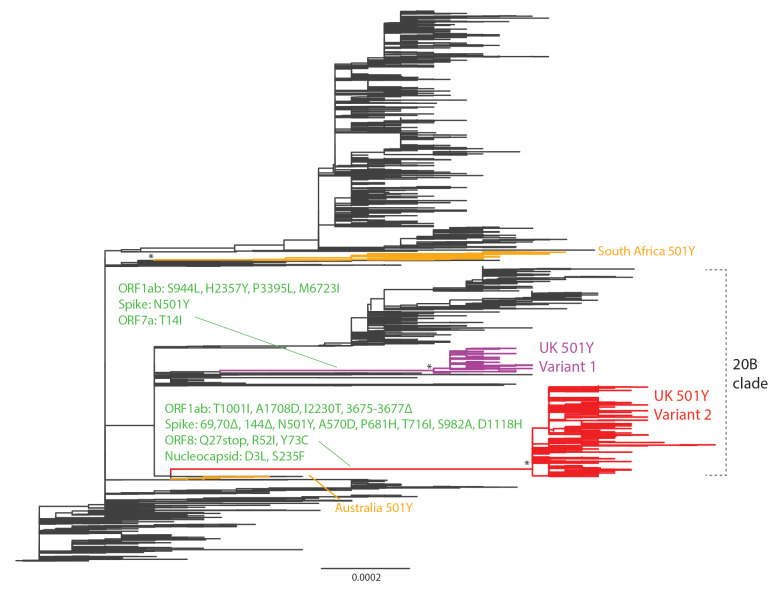
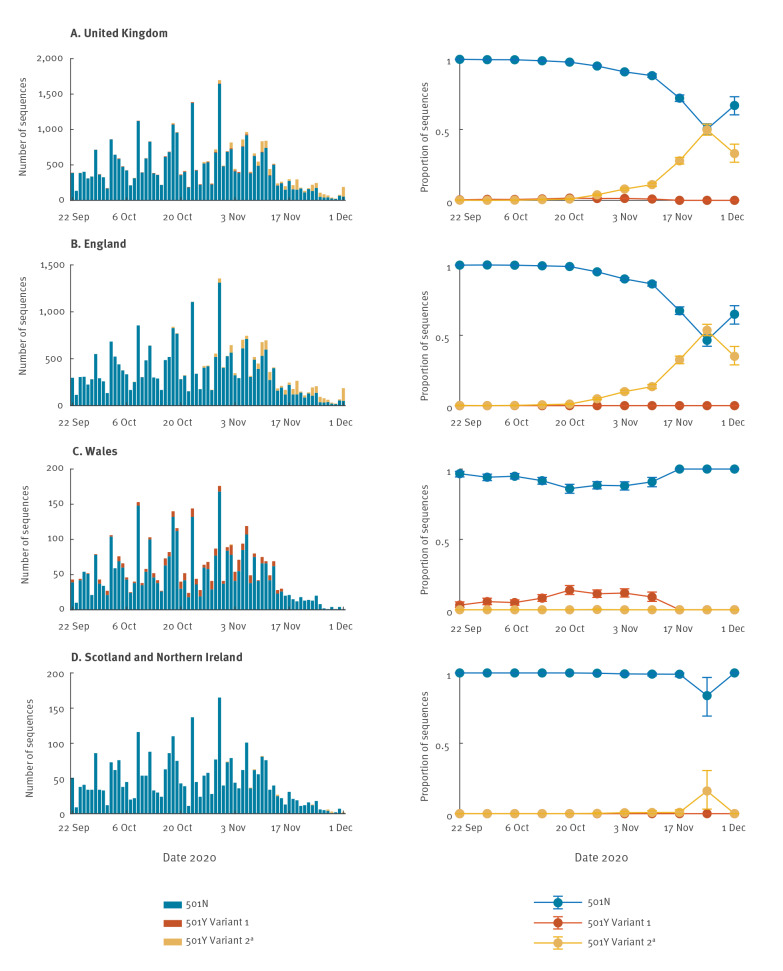
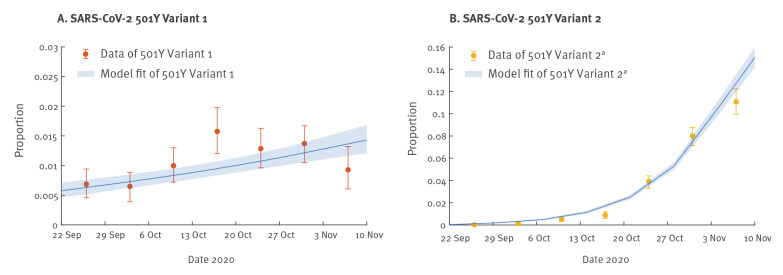
Verification
Claims the paper makes
The claims and statistics of this paper haven’t been checked yet.
Run the check — free, no account needed. It reads the open-access text and checks the sources it cites.
Claims other papers make about this one
Each is checked against this paper’s own text: does it say what the citing paper says it does?
In the citing paper
“A B.1.1.7 isolate had signature changes in the spike gene14 including the 69–70 and 144–145 deletions, and N501Y, A570D, D614G, and P681H substitutions.”
From Resistance of SARS-CoV-2 variants to neutralization by monoclonal and serum-derived polyclonal antibodies (2021) · cites this paper as [14]
In the citing paper
“Epidemiological studies suggest that it was approximately 50% more transmissible than previously circulating UK variants 191,197,198 .”
From The biological and clinical significance of emerging SARS-CoV-2 variants (2021) · cites this paper as [197]
Self-check
Percentages, sums and reported differences re-computed from the paper’s own numbers.
The self-check needs the paper’s full text.
Citations
Cites
FastTree 2 – Approximately Maximum-Likelihood Trees for Large Alignments
Price, M. N., Dehal, P. S., & Arkin, A. P. (2010) · PLoS ONE · doi:10.1371/journal.pone.0009490 · Cited by 14,894
An interactive web-based dashboard to track COVID-19 in real time
Dong, E., Du, H., & Gardner, L. (2020) · The Lancet Infectious Diseases · doi:10.1016/s1473-3099(20)30120-1 · Cited by 10,048
A dynamic nomenclature proposal for SARS-CoV-2 lineages to assist genomic epidemiology
Rambaut, A., Holmes, E. C., O’Toole, Á., Hill, V., McCrone, J. T., Ruis, C., du Plessis, L., & Pybus, O. G. (2020) · Nature Microbiology · doi:10.1038/s41564-020-0770-5 · Cited by 2,543
Tegally, H., Wilkinson, E., Giovanetti, M., Iranzadeh, A., Fonseca, V., Giandhari, J., Doolabh, D., Pillay, S., San, E. J., Msomi, N., et al. (2020) · doi:10.1101/2020.12.21.20248640 · Cited by 2,535
Starr, T. N., Greaney, A. J., Hilton, S. K., Ellis, D., Crawford, K. H. D., Dingens, A. S., Navarro, M. J., Bowen, J. E., Tortorici, M. A., Walls, A. C., et al. (2020) · Cell · doi:10.1016/j.cell.2020.08.012 · Cited by 1,956
SARS-CoV-2 evolution during treatment of chronic infection
Kemp, S. A., Collier, D. A., Datir, R. P., Ferreira, I. A. T. M., Gayed, S., Jahun, A., Hosmillo, M., Rees-Spear, C., Mlcochova, P., Lumb, I. U., et al. (2021) · Nature · doi:10.1038/s41586-021-03291-y · Cited by 1,097
Evaluating the Effects of SARS-CoV-2 Spike Mutation D614G on Transmissibility and Pathogenicity
Volz, E., Hill, V., McCrone, J. T., Price, A., Jorgensen, D., O’Toole, Á., Southgate, J., Johnson, R., Jackson, B., Nascimento, F. F., et al. (2021) · Cell · doi:10.1016/j.cell.2020.11.020 · Cited by 1,006
Leung, K. S. M., Wu, J. T. K., Liu, D., & Leung, G. M. (2020) · The Lancet · doi:10.1016/s0140-6736(20)30746-7 · Cited by 840
Self-citationNeutralising antibodies in Spike mediated SARS-CoV-2 adaptationPreprint
Kemp, S. A., Collier, D. A., Datir, R. P., et al. (2020) · medRxiv · doi:10.1101/2020.12.05.20241927 · Cited by 180
Nasal ACE2 Levels and COVID-19 in Children
Patel, A. B., & Verma, A. (2020) · JAMA · doi:10.1001/jama.2020.8946 · Cited by 143
Research works printed but not linked: 1
- Kemp, 2020, Recurrent emergence and transmission of a SARS-CoV-2 Spike deletion ΔH69/ΔV70, bioRxiv
Cited by
Sorted by citations
Items 101–200 of 691
Mohammad, T., Choudhury, A., Habib, I., Asrani, P., Mathur, Y., Umair, M., Anjum, F., Shafie, A., Yadav, D. K., & Hassan, M. I. (2021) · Frontiers in Cellular and Infection Microbiology · doi:10.3389/fcimb.2021.765039 · Cited by 61
“…in the SARS-CoV-2 S protein found in different variants are discussed here: N501Y: The N501Y mutation was initially found in the B.1.1.7 UK variant (Leung et al., 2021), and later it appeared in South African and Brazilian variants, which were B.1.128.1 and B.1.351, respectively (Weisblum et al.,…”
BackgroundInfluentialRaman Molecular Fingerprints of SARS‐CoV‐2 British Variant and the Concept of Raman Barcode
Pezzotti, G., Boschetto, F., Ohgitani, E., Fujita, Y., Shin‐Ya, M., Adachi, T., Yamamoto, T., Kanamura, N., Marin, E., Zhu, W., et al. (2021) · Advanced Science · doi:10.1002/advs.202103287 · Cited by 60
Antigenic characterization of influenza and SARS-CoV-2 viruses
Wang, Y., Tang, C. Y., & Wan, X. (2021) · Analytical and Bioanalytical Chemistry · doi:10.1007/s00216-021-03806-6 · Cited by 62
The ins and outs of SARS-CoV-2 variants of concern (VOCs)
Salehi-Vaziri, ., Fazlalipour, M., Khorrami, S. M. S., Azadmanesh, K., Pouriayevali, M. H., Jalali, T., Shoja, Z., & Maleki, A. (2022) · Archives of Virology · doi:10.1007/s00705-022-05365-2 · Cited by 61
Covid-19 no Nordeste do Brasil: primeiro ano de pandemia e incertezas que estão por vir
Kerr, L. R. F. S., Kendall, C., de Almeida, R. L. F., Ichihara, M. Y., Aquino, E. M. L., da Sílva, A. A. M., Ximenes, R. A. D. A., de Albuquerque, M. D. F. P. M., Filho, N. D. A., Souza, R., et al. (2021) · Revista de Saúde Pública · doi:10.11606/s1518-8787.2021055003728 · Cited by 65
Impact of temperature on the affinity of SARS-CoV-2 Spike glycoprotein for host ACE2
Prévost, J., Richard, J., Gasser, R., Ding, S., Fage, C., Anand, S. P., Adam, D., Vergara, N. G., Tauzin, A., Benlarbi, M., et al. (2021) · Journal of Biological Chemistry · doi:10.1016/j.jbc.2021.101151 · Cited by 64
“7 lineage (also known as alpha variant), which was first identified in the United Kingdom, was shown to have increased infectivity and transmissibility (31, 32).”
Modeling COVID-19 dynamic using a two-strain model with vaccination
de León, U. A.-P., Avila-Vales, E. J., & Huang, K. (2022) · Chaos Solitons & Fractals · doi:10.1016/j.chaos.2022.111927 · Cited by 59
Nucleocapsid protein of SARS‐CoV‐2 is a potential target for developing new generation of vaccine
Feng, W., Xiang, Y., Wu, L., Chen, Z., Li, Q., Chen, J., Guo, Y., Xia, D., Chen, N., Zhang, L., et al. (2022) · Journal of Clinical Laboratory Analysis · doi:10.1002/jcla.24479 · Cited by 55
Hsiao, W. W., Sharma, N., Le, T., Cheng, Y.-Y., Lee, C., Vo, D., Hui, Y. Y., Chang, H., & Chiang, W. (2022) · Analytica Chimica Acta · doi:10.1016/j.aca.2022.340389 · Cited by 56
Understanding the Origin of COVID-19 Requires to Change the Paradigm on Zoonotic Emergence
Frutos, R., Gavotte, L., & Devaux, C. A. (2020) · Infection Genetics and Evolution · doi:10.1016/j.meegid.2021.104812 · Cited by 61
Predicting Mutational Effects on Receptor Binding of the Spike Protein of SARS-CoV-2 Variants
Bai, C., Wang, J., Chen, G., Zhang, H., An, K., Xu, P., Du, Y., Ye, R. D., Saha, A., Zhang, A., et al. (2021) · Journal of the American Chemical Society · doi:10.1021/jacs.1c07965 · Cited by 51
Valckx, S., Crèvecoeur, J., Verelst, F., Vranckx, M., Hendrickx, G., Hens, N., Damme, P. V., Pepermans, K., Beutels, P., & Neyens, T. (2021) · Vaccine · doi:10.1016/j.vaccine.2021.10.073 · Cited by 53
“Nevertheless, given uncertainty about the vaccines’ effectiveness against transmission [37], the emergence of new virus variants exhibiting greater transmissibility [38] and evolving compliance with NPIs, a so-called ‘herd immunity threshold’ remains unknown.”
Disinfectants against SARS-CoV-2: A Review
Xiao, S., Yuan, Z., & Huang, Y. P. (2022) · Viruses · doi:10.3390/v14081721 · Cited by 62
Covid-19: virology, variants, and vaccines
Young, M., Crook, H., Scott, J. T., & Edison, P. (2022) · BMJ Medicine · doi:10.1136/bmjmed-2021-000040 · Cited by 55
Impact of a New SARS-CoV-2 Variant on the Population: A Mathematical Modeling Approach
González‐Parra, G., Martínez‐Rodríguez, D., & Villanueva, R. J. (2021) · Mathematical and Computational Applications · doi:10.3390/mca26020025 · Cited by 55
SARS-CoV-2 Clinical Outcome in Domestic and Wild Cats: A Systematic Review
Giraldo-Ramírez, S., Rendón-Marín, S., Jaimes, J. A., Martínez‐Gutierrez, M., & Ruíz-Saenz, J. (2021) · Animals · doi:10.3390/ani11072056 · Cited by 54
Peterson, S. W., Lidder, R., Daigle, J., Wonitowy, Q., Dueck, C., Nagasawa, A., Mulvey, M. R., & Mangat, C. S. (2021) · The Science of The Total Environment · doi:10.1016/j.scitotenv.2021.151283 · Cited by 55
Rapid SARS-CoV-2 Adaptation to Available Cellular Proteases
Chaudhry, M. Z., Eschke, K., Hoffmann, M., Grashoff, M., Abassi, L., Kim, Y., Brunotte, L., Ludwig, S., Kröger, A., Klawonn, F., et al. (2022) · Journal of Virology · doi:10.1128/jvi.02186-21 · Cited by 51
Rapid characterization of spike variants via mammalian cell surface display
Javanmardi, K., Chou, C., Terrace, C. I., Annapareddy, A., Kaoud, T. S., Guo, Q., Lutgens, J., Zorkic, H., Horton, A. P., Gardner, E. C., et al. (2021) · Molecular Cell · doi:10.1016/j.molcel.2021.11.024 · Cited by 54
Tablizo, F. A., Kim, K. M., Lapid, C. M., Castro, M. J. R., Yangzon, M. S. L., Maralit, B. A., Ayes, M. E. C., Cutiongco-de la Paz, E. M., De Guzman, A. R., Yap, J. M. C., et al. (2021) · doi:10.1101/2021.03.03.21252812 · Cited by 46
Immune Escape Associated with RBD Omicron Mutations and SARS-CoV-2 Evolution Dynamics
Kudriavtsev, A. V., Vakhrusheva, A., Novoseletsky, V. N., Bozdaganyan, M. E., Шайтан, К. В., Kirpichnikov, M. P., & Sokolova, O. S. (2022) · Viruses · doi:10.3390/v14081603 · Cited by 52
“Between December 2019 and October 2020, about two mutations per month were registered [12,13].”
BackgroundA multiplexed, next generation sequencing platform for high-throughput detection of SARS-CoV-2
Aynaud, M.-M., Hernández, J. J., Barutcu, S., Braunschweig, U., Chan, K., Pearson, J. D., Trcka, D., Prosser, S. L., Kim, J., Barrios‐Rodiles, M., et al. (2021) · Nature Communications · doi:10.1038/s41467-021-21653-y · Cited by 49
Chlorine dioxide is a more potent antiviral agent against SARS-CoV-2 than sodium hypochlorite
Hatanaka, N., Xu, B., Yasugi, M., Morino, H., Tagishi, H., Miura, T., Shibata, T., & Yamasaki, S. (2021) · Journal of Hospital Infection · doi:10.1016/j.jhin.2021.09.006 · Cited by 53
Challenges of SARS-CoV-2 Omicron Variant and appropriate countermeasures
Shao, W., Zhang, W., Fang, X., Yu, D., & Wang, X. (2022) · Journal of Microbiology Immunology and Infection · doi:10.1016/j.jmii.2022.03.007 · Cited by 50
“The transmission rate of Omicron variants may be further enhanced in the presence of concurrent H69/V70 deletions.(13) In addition, Omicron also had P681H and N679K mutations near furin cleavage sites.”
Huang, S., & Wang, S. (2021) · International Journal of Molecular Sciences · doi:10.3390/ijms22063060 · Cited by 50
Jaroszewski, L., Iyer, M., Alisoltani, A., Sedova, M., & Godzik, A. (2021) · PLoS Computational Biology · doi:10.1371/journal.pcbi.1009147 · Cited by 47
Genomic epidemiology of SARS-CoV-2 under an elimination strategy in Hong Kong
Gu, H., Xie, R., Adam, D. C., Tsui, J. L.-H., Chu, D. K. W., Chang, L. D. J., Cheuk, S. S. Y., Gurung, S., Krishnan, P., Ng, D. Y. M., et al. (2022) · Nature Communications · doi:10.1038/s41467-022-28420-7 · Cited by 46
Self-citationSARS-CoV-2 Omicron efficiently infects human airway, but not alveolar epitheliumPreprint
Lamers, M. M., Mykytyn, A. Z., Breugem, T. I., Gröen, N., Knoops, K., Schipper, D., van Acker, R., van den Doel, P. B., Bestebroer, T. M., Koopman, C. D., et al. (2022) · bioRxiv (Cold Spring Harbor Laboratory) · doi:10.1101/2022.01.19.476898 · Cited by 47
“Epidemiological 70 data suggest that Alpha spread 35-100% faster than its ancestral lineage and was associated 71 with higher viral loads (2-5).”
BackgroundElucidating reasons of COVID-19 re-infection and its management strategies
Jain, V. K., Iyengar, K. P., Garg, R. K., & Vaishya, R. (2021) · Diabetes & Metabolic Syndrome Clinical Research & Reviews · doi:10.1016/j.dsx.2021.05.008 · Cited by 50
Çeli̇k, İ., Yadav, R., Düzgün, Z., Albogami, S. M., El‐Shehawi, A. M., Fatimawali, F., Idroes, R., Tallei, T. E., & Emran, T. B. (2021) · Biology · doi:10.3390/biology10090880 · Cited by 49
Fitness, growth and transmissibility of SARS-CoV-2 genetic variants
Volz, E. (2023) · Nature Reviews Genetics · doi:10.1038/s41576-023-00610-z · Cited by 51
Ito, K., Piantham, C., & Nishiura, H. (2022) · Mathematical Biosciences & Engineering · doi:10.3934/mbe.2022418 · Cited by 47
Lam, C., Gray, K.-A., Gall, M. L., Sadsad, R., Arnott, A., Johnson-Mackinnon, J. C., Fong, W., Basile, K., Kok, J., Dwyer, D. E., et al. (2021) · Journal of Clinical Microbiology · doi:10.1128/jcm.01046-21 · Cited by 47
Multiplex Biosensing for Simultaneous Detection of Mutations in SARS-CoV-2
Xi, H., Jiang, H., Juhas, M., & Zhang, Y. (2021) · ACS Omega · doi:10.1021/acsomega.1c04024 · Cited by 48
The Genetic Variant of SARS-CoV-2: Would it matter for Controlling the Devastating Pandemic?
Guo, S., Liu, K., & Zheng, J. (2021) · International Journal of Biological Sciences · doi:10.7150/ijbs.59137 · Cited by 46
“75 times higher than the ancestral N501 strain, resulting in 75% more transmission [57].”
BackgroundFurukawa, K., Tjan, L. H., Kurahashi, Y., Sutandhio, S., Nishimura, M., Arii, J., & Mori, Y. (2022) · JAMA Network Open · doi:10.1001/jamanetworkopen.2022.10780 · Cited by 47
Socher, E., Conrad, M., Heger, L., Paulsen, F. P., Sticht, H., Zunke, F., & Arnold, P. (2021) · Biomedicines · doi:10.3390/biomedicines9050525 · Cited by 42
Biological Properties of SARS-CoV-2 Variants: Epidemiological Impact and Clinical Consequences
Hoteit, R., & Yassine, H. M. (2022) · Vaccines · doi:10.3390/vaccines10060919 · Cited by 47
Alsaidi, S., Cornejal, N., Mahoney, O., Melo, C., Verma, N., Bonnaire, T., Chang, T. L.-Y., O’Keefe, B. R., Sailer, J., Zydowsky, T. M., et al. (2021) · Marine Drugs · doi:10.3390/md19080418 · Cited by 46
Multiple expansions of globally uncommon SARS-CoV-2 lineages in Nigeria
Ozer, E. A., Simons, L. M., Adewumi, M. O., Fowotade, A., Omoruyi, E. C., Adeniji, J. A., Olayinka, O. A., Dean, T. J., Zayas, J. P., Bhimalli, P. P., et al. (2022) · Nature Communications · doi:10.1038/s41467-022-28317-5 · Cited by 48
Nguyen, P. T., Plyusnin, I., Sironen, T. A., Vapalahti, O., Kant, R., & Smura, T. (2021) · BMC Bioinformatics · doi:10.1186/s12859-021-04294-2 · Cited by 42
Emergence of SARS-CoV-2 New Variants and Their Clinical Significance
Singh, H., Dahiya, N., Yadav, M., & Sehrawat, N. (2022) · The Canadian journal of infectious diseases & medical microbiology = Journal canadien des maladies infectieuses et de la microbiologie medicale · doi:10.1155/2022/7336309 · Cited by 37
Rice, A., Verma, M. S., Shin, A., Zakin, L., Sieling, P. A., Tanaka, S., Balint, J. P., Dinkins, K., Adisetiyo, H., Morimoto, B., et al. (2021) · Scientific Reports · doi:10.1038/s41598-021-94364-5 · Cited by 43
Host barriers to SARS-CoV-2 demonstrated by ferrets in a high-exposure domestic setting
Sawatzki, K., Hill, N. J., Puryear, W. B., Foss, A. D., Stone, J. J., & Runstadler, J. A. (2021) · Proceedings of the National Academy of Sciences · doi:10.1073/pnas.2025601118 · Cited by 43
Quantification of the spread of SARS-CoV-2 variant B.1.1.7 in Switzerland
Chen, C., Nadeau, S., Topolsky, I., Manceau, M., Huisman, J. S., Jablonski, K. P., Fuhrmann, L., Dreifuss, D., Jahn, K., Beckmann, C., et al. (2021) · Epidemics · doi:10.1016/j.epidem.2021.100480 · Cited by 39
Park, S. W., Bolker, B. M., Funk, S., Metcalf, C. J. E., Weitz, J. S., Grenfell, B. T., & Dushoff, J. G. (2022) · Journal of The Royal Society Interface · doi:10.1098/rsif.2022.0173 · Cited by 44
“Under constant-strength intervention measures that reduce transmission rates of both strains by a constant amount, we expect ratios between reproduction numbers to remain constant and correspond to the true relative strength: RvarðtÞ=RwtðtÞ 1⁄4 r [3,5,55,56].”
BackgroundSeidah, N. G., Pasquato, A., & Andréo, U. (2021) · Viruses · doi:10.3390/v13071229 · Cited by 41
Saciuk, Y., Kertes, J., Mandel, M., Hemo, B., Shamir-Stein, N., & Zohar, A. E. (2021) · Preventive Medicine · doi:10.1016/j.ypmed.2021.106947 · Cited by 41
Zelyas, N. J., Pabbaraju, K., Croxen, M. A., Lynch, T., Buss, E., Murphy, S. A., Shokoples, S., Wong, A. A., Kanji, J. N., & Tipples, G. A. (2021) · Microbiology Spectrum · doi:10.1128/spectrum.00315-21 · Cited by 38
“This finding is notable and consistent with other studies of B.1.1.7 in the United Kingdom and United States (21, 22).”
BackgroundInfluentialYu, X., Wei, D., Xu, W., Liu, C., Guo, W., Li, X., Tan, W., Liu, L., Zhang, X., Qu, J., et al. (2022) · Nature Communications · doi:10.1038/s41467-022-29477-0 · Cited by 38
Vishwanath, S., Carnell, G., Ferrari, M., Asbach, B., Billmeier, M., George, C. L., Sans, M. S., Nadesalingam, A., Huang, C. Q., Paloniemi, M., et al. (2023) · Nature Biomedical Engineering · doi:10.1038/s41551-023-01094-2 · Cited by 40
“An accumulating number of variants of concern (VOCs) have implications for increased transmission and escape from natural and vaccine-induced immunity 6–9 .”
Cabecinhas, A. R. G., Roloff, T. C., Stange, M., Bertelli, C., Huber, M., Ramette, A., Chen, C., Nadeau, S., Gerth, Y., Yerly, S., et al. (2021) · Microorganisms · doi:10.3390/microorganisms9040677 · Cited by 37
Lu, L., Chu, A. W., Zhang, R., Chan, W.-M., Ip, J. D., Tsoi, H., Chen, L., Cai, J., Lung, D. C., Tam, A. R., et al. (2021) · EBioMedicine · doi:10.1016/j.ebiom.2021.103544 · Cited by 39
“Since November 2020, several variants bearing mutations in the spike RBD have rapidly spread in the United Kingdom (B. [17,18], and a higher viral load is found in patients with the B.1.1.7 variant [19].”
InfluentialGenome composition and genetic characterization of SARS-CoV-2
Al‐Qaaneh, A. M., AlShammari, T. M., Aldahhan, R., Al-Dossary, H. A., Alkhalifah, Z., & Borgio, J. F. (2021) · Saudi Journal of Biological Sciences · doi:10.1016/j.sjbs.2020.12.053 · Cited by 45
Changrob, S., Fu, Y., Guthmiller, J. J., Halfmann, P., Li, L., Stamper, C. T., Dugan, H. L., Accola, M., Rehrauer, W., Zheng, N.-Y., et al. (2021) · mBio · doi:10.1128/mbio.02975-21 · Cited by 40
Emergence and Evolution of a Prevalent New SARS-CoV-2 Variant in the United StatesPreprint
Pater, A. A., Bosmeny, M. S., Barkau, C. L., Ovington, K. N., Chilamkurthy, R., Parasrampuria, M., Eddington, S. B., Yinusa, A. O., White, A. A., Metz, P. E., et al. (2021) · bioRxiv (Cold Spring Harbor Laboratory) · doi:10.1101/2021.01.11.426287 · Cited by 37
Ong, S. W. X., Young, B. E., & Lye, D. C. (2021) · The Lancet Infectious Diseases · doi:10.1016/s1473-3099(21)00201-2 · Cited by 37
Li, B., Wang, L., Ge, H., Zhang, X., Ren, P., Guo, Y., Chen, W., Li, J., Zhu, W. J., Chen, W., et al. (2021) · Frontiers in Chemistry · doi:10.3389/fchem.2021.659764 · Cited by 35
A comprehensive review on Covid-19 Omicron (B.1.1.529) variant
Manjunath, R., Gaonkar, S. L., Saleh, E. A. M., & Husain, K. (2022) · Saudi Journal of Biological Sciences · doi:10.1016/j.sjbs.2022.103372 · Cited by 42
“The communication may be extended even higher when added with the H69/V70 removal (Leung et al., 2021).”
Coincident rapid expansion of two SARS-CoV-2 lineages with enhanced infectivity in Nigeria
Ozer, E. A., Simons, L. M., Adewumi, O. M., Fowotade, A. A., Omoruyi, E. C., Adeniji, J. A., Dean, T. J., Zayas, J., Bhimalli, P. P., Ash, M. K., et al. (2021) · doi:10.1101/2021.04.09.21255206 · Cited by 34
Kubik, S., Marques, A. C., Xing, X., Silvery, J., Bertelli, C., Maio, F. D., Pournaras, S., Burr, T., Duffourd, Y., Siemens, H., et al. (2021) · Clinical Microbiology and Infection · doi:10.1016/j.cmi.2021.03.029 · Cited by 39
SARS‐CoV‐2 surveillance in Norway rats ( Rattus norvegicus ) from Antwerp sewer system, Belgium
Colombo, V. C., Sluydts, V., Mariën, J., Broecke, B. V., Houtte, N. V., Leirs, W., Jacobs, L., Iserbyt, A., Hubert, M., Heyndríckx, L., et al. (2021) · Transboundary and Emerging Diseases · doi:10.1111/tbed.14219 · Cited by 40
Photodynamic and Contact Killing Polymeric Fabric Coating for Bacteria and SARS-CoV-2
Wright, T., Vlok, M., Shapira, T., Olmstead, A. D., Jean, F., & Wolf, M. O. (2022) · ACS Applied Materials & Interfaces · doi:10.1021/acsami.1c14178 · Cited by 37
Increased Transmissibility of the SARS-CoV-2 Alpha Variant in a Japanese Population
Tanaka, H., Hirayama, A., Nagai, H., Shirai, C., Takahashi, Y., Shinomiya, H., Taniguchi, C., & Ogata, T. (2021) · International Journal of Environmental Research and Public Health · doi:10.3390/ijerph18157752 · Cited by 36
Investigating vaccine-induced immunity and its effect in mitigating SARS-CoV-2 epidemics in China
Liu, H., Zhang, J., Cai, J., Deng, X., Peng, C., Chen, X., Yang, J., Wu, Q., Chen, X., Chen, Z., et al. (2022) · BMC Medicine · doi:10.1186/s12916-022-02243-1 · Cited by 37
A Sanger-based approach for scaling up screening of SARS-CoV-2 variants of interest and concern
Bezerra, M. F., Machado, L. C., de Carvalho, V. D. C. V., Docena, C., Brandão-Filho, S. P., Ayres, C. F. J., Paiva, M. H. S., & Wallau, G. L. (2021) · Infection Genetics and Evolution · doi:10.1016/j.meegid.2021.104910 · Cited by 36
“As of December 2020, the United Kingdom reported a new SARSCoV-2 variant, the B.1.1.7, a highly transmissible lineage, bringing deep concerns about the prospects of the COVID-19 pandemic (Leung et al., 2021).”
Influentialda Silva, S. J. R., de Lima, S. C., da Silva, R. C., Kohl, A., & Pena, L. (2022) · Frontiers in Medicine · doi:10.3389/fmed.2021.836826 · Cited by 35
IntAct App: a Cytoscape application for molecular interaction network visualization and analysis
Ragueneau, E., Shrivastava, A., Morris, J. H., del‐Toro, N., Hermjakob, H., & Porras, P. (2021) · Bioinformatics · doi:10.1093/bioinformatics/btab319 · Cited by 34
Li, H., Guo, L., Zheng, H., Li, J., Zhao, X., Li, J., Liang, Y., Yang, F., Zhao, Y., Yang, J., et al. (2021) · Bioconjugate Chemistry · doi:10.1021/acs.bioconjchem.1c00208 · Cited by 33
Banks, D. P., & Vergez, S. (2022) · Journal of Microbiology and Biology Education · doi:10.1128/jmbe.00012-22 · Cited by 34
COVID-19: Epidemiologie und Mutationen
Hemmer, C. J., Löbermann, M., & Reisinger, E. C. (2021) · Der Radiologe · doi:10.1007/s00117-021-00909-0 · Cited by 33
A novel single nucleotide polymorphism assay for the detection of N501Y SARS-CoV-2 variants
Torrientes, M. S., Castelló-Abiétar, C., Riveiro, J. B., Álvarez-Argüelles, M. E., Rojo‐Alba, S., Abreu-Salinas, F., Costales, I., Martínez, Z. P., Rodríguez, G. M., de Oña, J. G., et al. (2021) · Journal of Virological Methods · doi:10.1016/j.jviromet.2021.114143 · Cited by 33
Cheng, V. C., Wong, S., Tong, D. W. K., Chuang, V. W., Chen, J. H.-K., Lee, L. L.-Y., To, K. K., Hung, I. F., Ho, P., Yeung, D. T.-K., et al. (2021) · Infection Control and Hospital Epidemiology · doi:10.1017/ice.2021.119 · Cited by 33
Meng, Z., Guo, S., Zhou, Y., Li, M., Wang, M., & Ying, B. (2021) · Signal Transduction and Targeted Therapy · doi:10.1038/s41392-021-00731-z · Cited by 35
The Immune Response to SARS-CoV-2 and Variants of Concern
Torbati, E., Krause, K. L., & Ussher, J. E. (2021) · Viruses · doi:10.3390/v13101911 · Cited by 36
Gransagne, M., Aymé, G., Brier, S., Friec, G. C.-L., Mériaux, V., Nowakowski, M., Déjardin, F., Levallois, S., de Melo, G. D., Donati, F., et al. (2021) · Journal of Biological Chemistry · doi:10.1016/j.jbc.2021.101290 · Cited by 33
“Recently, several variants emerged (44, 45), which are more efficiently transmitted.”
BackgroundCo-circulation of SARS-CoV-2 Alpha and Gamma variants in Italy, February and March 2021
Stefanelli, P., Trentini, F., Dirani, G., Marziano, V., Mammone, A., Poletti, P., Grané, C. M., Manica, M., Manso, M. D., Andrianou, X. D., et al. (2022) · Eurosurveillance · doi:10.2807/1560-7917.es.2022.27.5.2100429 · Cited by 32
“These values are consistent with available estimates from the UK [1,2,36,37] and France [12].”
Lai, X., Yu, Y., Xian, W., Ye, F., Ju, X., Luo, Y., Dong, H., Zhou, Y., Tan, W., Zhuang, H., et al. (2022) · iScience · doi:10.1016/j.isci.2022.104136 · Cited by 35
Cocherie, T., Zafilaza, K., Leducq, V., Marot, S., Cálvez, V., Marcelin, A., & Todesco, È. (2022) · Microorganisms · doi:10.3390/microorganisms11010030 · Cited by 33
How will emerging SARS-CoV-2 variants impact herd immunity?
Lippi, G., & Henry, B. M. (2021) · Annals of Translational Medicine · doi:10.21037/atm-21-893 · Cited by 33
“to their natural host receptor angiotensin converting enzyme 2 (ACE2), which appears to result in higher viral load and enhanced transmissibility compared to the wild type virus (5,6).”
BackgroundBedotto, M., Fournier, P., Houhamdi, L., Levasseur, A., Delerce, J., Pinault, L., Padane, A., Chamieh, A., Tissot‐Dupont, H., Brouqui, P., et al. (2021) · Journal of Clinical Virology · doi:10.1016/j.jcv.2021.104814 · Cited by 27
Analysis of Key Factors of a SARS-CoV-2 Vaccination Program: A Mathematical Modeling Approach
Martínez‐Rodríguez, D., González‐Parra, G., & Villanueva, R. J. (2021) · Epidemiologia · doi:10.3390/epidemiologia2020012 · Cited by 32
Williams, A. H., & Zhan, C. (2021) · The Journal of Physical Chemistry B · doi:10.1021/acs.jpcb.1c00869 · Cited by 30
O’Donnell, K. L., Pinski, A. N., Clancy, C. S., Gourdine, T., Shifflett, K., Fletcher, P., Messaoudi, I., & Marzi, A. (2021) · EBioMedicine · doi:10.1016/j.ebiom.2021.103675 · Cited by 28
“The K417N and E484K mutations introduced into the S of the B.1.351 enhances the ability to evade pre-existing humoral responses [3,7,10,24 (cid:1) 26].”
InfluentialAbebe, E. C., Medhin, M. T. G., T/Mariam, A. B., Dejenie, T. A., Ayele, T. M., Admasu, F. T., Muche, Z. T., & Adela, G. A. (2022) · Infection and Drug Resistance · doi:10.2147/idr.s360103 · Cited by 31
The Emergence and Spread of Novel SARS-CoV-2 Variants
Yi, H., Wang, J., Wang, J., Lu, Y., Zhang, Y., Peng, R., Lu, J., & Chen, Z. (2021) · Frontiers in Public Health · doi:10.3389/fpubh.2021.696664 · Cited by 29
Glycocalyx as Possible Limiting Factor in COVID-19
Wadowski, P. P., Jilma, B., Kopp, C. W., Ertl, S., Gremmel, T., & Koppensteiner, R. (2021) · Frontiers in Immunology · doi:10.3389/fimmu.2021.607306 · Cited by 30
Risk for International Importations of Variant SARS-CoV-2 Originating in the United Kingdom
Du, Z., Wang, L., Yang, B., Ali, S. T., Tsang, T. K., Shan, S., Wu, P., Lau, E. H. Y., Cowling, B. J., & Ancel, L. W. (2021) · Emerging infectious diseases · doi:10.3201/eid2705.210050 · Cited by 30
Li, X., Zhang, L., Chen, S. E., Ji, W., Li, C., & Ren, L. (2021) · Infection Genetics and Evolution · doi:10.1016/j.meegid.2021.104971 · Cited by 30
“7) appeared in England in late September 2020 and became the dominant lineage in December 2020 (Leung et al., 2021).”
BackgroundInfluentialAltered Subgenomic RNA Expression in SARS-CoV-2 B.1.1.7 InfectionsPreprint
Parker, M. D., Lindsey, B., Shah, D. R., Hsu, S., Keeley, A., Partridge, D., Leary, S., Cope, A., State, A., Johnson, K., et al. (2021) · bioRxiv · doi:10.1101/2021.03.02.433156 · Cited by 33
Evaluation of two RT-PCR screening assays for identifying SARS-CoV-2 variants
Migueres, M., Lhomme, S., Trémeaux, P., Dimeglio, C., Ranger, N., Latour, J., Dubois, M., Nicot, F., Miédougé, M., Mansuy, J., et al. (2021) · Journal of Clinical Virology · doi:10.1016/j.jcv.2021.104969 · Cited by 30
McGill, A. R., Khalil, R., Dutta, R., Green, R. J., Howell, M., Mohapatra, S., & Mohapatra, S. S. (2021) · Infectious Disease Reports · doi:10.3390/idr13010013 · Cited by 30
Ibrahim, I. M., Elfiky, A. A., & Elgohary, A. M. (2021) · Biochemical and Biophysical Research Communications · doi:10.1016/j.bbrc.2021.05.058 · Cited by 29
Tsai, K., Lee, Y.-C., & Tseng, T.-S. (2021) · Frontiers in Microbiology · doi:10.3389/fmicb.2021.698365 · Cited by 32
“This strain may be more transmissible and lethal and may be linked to a higher chance of hospitalization (Leung et al., 2021).”
BackgroundHigh throughput diagnostics and dynamic risk assessment of SARS-CoV-2 variants of concern
Gravagnuolo, A. M., Faqih, L., Cronshaw, C., Wynn, J., Burglin, L., Klapper, P. E., & Wigglesworth, M. J. (2021) · EBioMedicine · doi:10.1016/j.ebiom.2021.103540 · Cited by 31
Durmaz, V., Köchl, K., Krassnigg, A., Parigger, L., Hetmann, M., Singh, A., Nutz, D., Korsunsky, A. M., Kahler, U., König, C., et al. (2022) · Scientific Reports · doi:10.1038/s41598-022-18507-y · Cited by 30
Customization of aptamer to develop CRISPR/Cas12a-derived ultrasensitive biosensor
Xing, W., Li, Q., Han, C., Sun, D., Zhang, Z., Fang, X., Guo, Y., Ge, F., Ding, W., Luo, Z., et al. (2023) · Talanta · doi:10.1016/j.talanta.2023.124312 · Cited by 29
Althaus, C. L., Baggio, S., Reichmuth, M. L., Hodcroft, E. B., Riou, J., Neher, R. A., Jacquérioz, F., Spechbach, H., Salamun, J., Vetter, P., et al. (2021) · medRxiv · doi:10.1101/2021.06.10.21258468 · Cited by 32
A Biochemical Perspective of the Nonstructural Proteins (NSPs) and the Spike Protein of SARS CoV-2
Yoshimoto, F. K. (2021) · The Protein Journal · doi:10.1007/s10930-021-09967-8 · Cited by 28
Metadata
- Authors
- Leung, K., Shum, M. H., Leung, G. M., Lam, T. T., & Wu, J. T.
- Affiliations
- Laboratory of Data Discovery for Health (HK)
- Joint Institute of Virology (Shantou University and The University of Hong Kong), Guangdong-Hongkong Joint Laboratory of Emerging Infectious Diseases, Shantou University, Shantou, China
- Laboratory of Data Discovery for Health (D24H), Hong Kong Science Park, New Territories, Hong Kong SAR, China
- Corresponding author
- Wu, Joseph T
- Venue
- Eurosurveillance
- Published
- 2021-01-07
- Volume
- 26
- Issue
- 1
- ISSN
- 1025-496X (ISSN-L)
- 1560-7917
- PMC
- PMC7791602
- OpenAlex
- W3120079728
- Cited by
- 694
- References
- 12
- Citations by year
- 2026: 3 · 2025: 14 · 2024: 24 · 2023: 90 · 2022: 176 · 2021: 385
- FWCI
- 53.29
- Type
- journal article
- Language
- en
- Update notices
- addendum (2021-01-21)
- Open access
- diamond
- doi.org
- Locations
- Eurosurveillance (publishedVersion, cc-by)
- medRxiv (acceptedVersion, cc-by-nc-nd)
- Europe PMC (PubMed Central) (publishedVersion, cc-by)
- PubMed Central (publishedVersion, cc-by)
- PubMed (publishedVersion)
- Funders
- National Natural Science Foundation of China (31922087)
- Hong Kong Government
- Health and Medical Research Fund
- Young Scientists Fund
- Topics
- Health Sciences › Medicine › Infectious Diseases › SARS-CoV-2 and COVID-19 Research
- Physical Sciences › Mathematics › Modeling and Simulation › COVID-19 epidemiological studies
- Health Sciences › Medicine › Infectious Diseases › COVID-19 Clinical Research Studies
- Keywords
- SARS-CoV-2, N501Y mutation, spike protein receptor-binding domain, viral transmissibility, United Kingdom, COVID-19 pandemic
- MeSH terms
- COVID-19, SARS-CoV-2, Genetic Markers, United Kingdom, Humans, Mutation, Phylogeny, Genetic Variation, Genome, Viral, Spike Glycoprotein, Coronavirus
About these checks
Registry, retraction, Cites and statistics results are computed, not judged, with one exception: a printed reference that no index lists is read once by a model before it counts as a citation error. Claims are extracted by a model and kept only when their quote appears verbatim in the text; each cited source is then checked, with a model’s help, for whether it says what the claim relies on. Those verdicts can be wrong — read the claim’s quote and the cited source before relying on one.
Statistics and arithmetic are recomputed, not judged.
Confidence bands are shown only for fields calibrated on our annotated test set. None is calibrated yet, so no band is shown.
What counts as a claim ›How we measure confidence ›How we check this ›
Are you an author, or do you see a problem with this page? Request a review
