

Increasing number of cases and outbreaks caused by Candida auris in the EU/EEA, 2020 to 2021
Open accessThe DOI matches its Crossref record; 14 of the 14 references it cites were found in a registry or an index.
Abstract
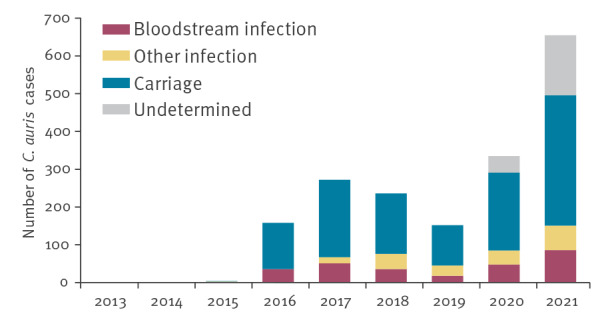
The number of cases of Candida auris infection or carriage and of countries reporting cases and outbreaks increased in the European Union and European Economic Area during 2020 and 2021. Eight countries reported 335 such cases in 2020 and 13 countries 655 cases in 2021. Five countries experienced outbreaks while one country reported regional endemicity. These findings highlight the need for adequate laboratory capacity and surveillance for early detection of C. auris and rapid implementation of control measures.
Overview
The claims and statistics of this paper haven’t been checked yet.
Free: it reads the open-access text and checks the first 5 claims that cite a source we can check. Create a free account to check every claim.
Integrity signals
Registry
Cites
Statistics
Figures
Verification
Claims the paper makes
The claims and statistics of this paper haven’t been checked yet.
Free: it reads the open-access text and checks the first 5 claims that cite a source we can check. Create a free account to check every claim.
Claims other papers make about this one
Each is checked against this paper’s own text: does it say what the citing paper says it does?
The source backs part of the claim, not all of it — or backs it for a different population, condition or comparison.
In the citing paper
“There are still notable differences in the epidemiology of C. auris, where some countries only see isolated cases reported, potentially due to more strict hospital hygiene measures preventing nosocomial transfer and difficult to control outbreaks,75 while other countries are at a state of emergency due to larger outbreaks with this multi-drug resistant pathogen.75,76”
From Epidemiology of Invasive Candidiasis (2024) · cites this paper as [75]
Experimental — accuracy not yet measured
Self-check
Percentages, sums and reported differences re-computed from the paper’s own numbers.
The self-check needs the paper’s full text.
Citations
Cites
Candida auris: a Review of the Literature
Jeffery-Smith, A., Taori, S. K., Schelenz, S., Jeffery, K., Johnson, E. M., Borman, A., Candida auris Incident Management Team, Manuel, R., & Brown, C. S. (2018) · Clinical Microbiology Reviews · doi:10.1128/cmr.00029-17 · Cited by 595 · cited 2×
“Discussion Candida auris is an emerging fungal pathogen that has caused outbreaks of invasive healthcare-associated infections worldwide [6].”
BackgroundCandida auris Outbreak in a COVID-19 Specialty Care Unit — Florida, July–August 2020
Prestel, C., Anderson, E., Forsberg, K., Lyman, M., de Perio, M. A., Kuhar, D., Edwards, K., Rivera, M., Shugart, A., Walters, M., et al. (2021) · MMWR. Morbidity and Mortality Weekly Report · doi:10.15585/mmwr.mm7002e3 · Cited by 237 · cited 1×
“auris have been reported in units caring for COVID-19 patients worldwide [10-13].”
BackgroundCandida auris Pan-Drug-Resistant to Four Classes of Antifungal Agents
Jacobs, S. E., Jacobs, J. L., Dennis, E. K., Taimur, S., Rana, M., Patel, D., Gitman, M., Patel, G., Schaefer, S., Iyer, K., et al. (2022) · Antimicrobial Agents and Chemotherapy · doi:10.1128/aac.00053-22 · Cited by 190 · cited 1×
“auris isolates have also been described, thus leaving very few treatment options [6-8].”
BackgroundBrolund, A., Lagerqvist, N., Byfors, S., Struelens, M. J., Monnet, D. L., Albiger, B., Kohlenberg, A., & European Antimicrobial Resistance Genes Surveillance Network (EURGen-Net) capacity survey group (2019) · Eurosurveillance · doi:10.2807/1560-7917.es.2019.24.9.1900123 · Cited by 175 · cited 1×
“auris was determined based on the respondents’ assessment in analogy to an epidemiological staging methodology that was previously developed and used for multidrug-resistant bacteria such as carbapenemase-producing Enterobacterales and carbapenem-resistant Acinetobacter baumannii [4,5].”
MethodSelf-citationFirst Candida auris Outbreak during a COVID-19 Pandemic in a Tertiary-Care Center in Lebanon
Allaw, F., Kara Zahreddine, N., Ibrahim, A., Tannous, J., Taleb, H., Bizri, A. R., Dbaibo, G., & Kanj, S. S. (2021) · Pathogens · doi:10.3390/pathogens10020157 · Cited by 141
Di Pilato, V., Codda, G., Ball, L., Giacobbe, D. R., Willison, E., Mikulska, M., Magnasco, L., Crea, F., Vena, A., Pelosi, P., et al. (2021) · Journal of Fungi · doi:10.3390/jof7020140 · Cited by 107
Lyman, M., Forsberg, K., Reuben, J., Dang, T., Free, R., Seagle, E. E., Sexton, D. J., Soda, E., Jones, H., Hawkins, D., et al. (2021) · MMWR. Morbidity and Mortality Weekly Report · doi:10.15585/mmwr.mm7029a2 · Cited by 104 · cited 1×
“auris isolates have also been described, thus leaving very few treatment options [6-8].”
BackgroundNobrega de Almeida, J., Brandão, I. B., Francisco, E. C., de Almeida, S. L. R., de Oliveira Dias, P., Pereira, F. M., Santos Ferreira, F., de Andrade, T. S., de Miranda Costa, M. M., de Souza Jordão, R. T., et al. (2021) · Mycoses · doi:10.1111/myc.13320 · Cited by 100
Kohlenberg, A., Struelens, M. J., Monnet, D. L., Plachouras, D., & The Candida auris survey collaborative group (2018) · Eurosurveillance · doi:10.2807/1560-7917.es.2018.23.13.18-00136 · Cited by 83
Self-citationPlachouras, D., Lötsch, F., Kohlenberg, A., Monnet, D. L., & the Candida auris survey collaborative group (2020) · Eurosurveillance · doi:10.2807/1560-7917.es.2020.25.12.2000240 · Cited by 58
Self-citation
Cited by
Antifungal Drug Resistance: An Emergent Health Threat
Vitiello, A., Ferrara, F., Boccellino, M., Ponzo, A., Cimmino, C., Comberiati, E., Zovi, A., Clemente, S., & Sabbatucci, M. (2023) · Biomedicines · doi:10.3390/biomedicines11041063 · Cited by 228
Suphavilai, C., Ko, K. K. K., Lim, K. M., Tan, M. G., Boonsimma, P., Chu, J. J. K., Goh, S. S., Rajandran, P., Lee, L. C., Tan, K. Y., et al. (2024) · The Lancet Microbe · doi:10.1016/s2666-5247(24)00101-0 · Cited by 174
Arendrup, M. C., Arikan-Akdagli, S., Jørgensen, K. M., Barac, A., Steinmann, J., Toscano, C., Arsenijevic, V. A., Sartor, A., Lass-Flörl, C., Hamprecht, A., et al. (2023) · Journal of Infection · doi:10.1016/j.jinf.2023.08.001 · Cited by 123
Epidemiology of Invasive Candidiasis
Bays, D., Jenkins, E., Lyman, M., Chiller, T., Strong, N., Ostrosky-Zeichner, L., Hoenigl, M., Pappas, P., & Thompson, G. (2024) · Clinical Epidemiology · doi:10.2147/clep.s459600 · Cited by 109
“…, where some countries only see isolated cases reported, potentially due to more strict hospital hygiene measures preventing nosocomial transfer and difficult to control outbreaks, 75 while other countries are at a state of emergency due to larger outbreaks with this multi-drug resistant pathogen.”
BackgroundResultAn Overview on Candida auris in Healthcare Settings
Cristina, M. L., Spagnolo, A. M., Sartini, M., Carbone, A., Oliva, M., Schinca, E., Boni, S., & Pontali, E. (2023) · Journal of Fungi · doi:10.3390/jof9090913 · Cited by 124
“In the period 2019 to 2021, another 1142 cases were reported (Figure 3) [45] Cases of Candida non-albicans spp. in the care se tt ing have been found worldwide, presumably related to the prophylactic use of antifungal drugs in high-risk populations; however, C. auris appears to be unique in its…”
BackgroundCandida auris as an Emergent Public Health Problem: A Current Update on European Outbreaks and Cases
Geremia, N., Brugnaro, P., Solinas, M. L., Scarparo, C., & Panese, S. (2023) · Healthcare · doi:10.3390/healthcare11030425 · Cited by 79
The many faces of Candida auris: Phenotypic and strain variation in an emerging pathogen
Santana, D. J., Zhao, G., & O’Meara, T. R. (2024) · PLOS Pathogens · doi:10.1371/journal.ppat.1012011 · Cited by 62
Tryfinopoulou, K., Linkevičius, M., Παππά, Ό., Alm, E., Karadimas, K., Svartström, O., Polemis, M., Μellou, K., Maragkos, A., Brolund, A., et al. (2023) · Eurosurveillance · doi:10.2807/1560-7917.es.2023.28.47.2300571 · Cited by 54
Self-citationJones, C. R., Neill, C., Borman, A. M., Budd, E. L., Cummins, M. N., Fry, C., Guy, R. L., Jeffery, K. J., Johnson, E. M., Manuel, R. J., et al. (2024) · Journal of Medical Microbiology · doi:10.1099/jmm.0.001820 · Cited by 61
“%) were affected [13].”
Babler, K. M., Sharkey, M. E., Arenas, S. P., Amirali, A., Beaver, C. C., Comerford, S. T., Goodman, K. W., Grills, G. S., Holung, M., Kobetz, E. N., et al. (2023) · The Science of The Total Environment · doi:10.1016/j.scitotenv.2023.165459 · Cited by 54
da Silva, K. J. G., Lucini, F., Santos, R., Santos, D. A., Meis, J. F. G. M., Melhem, M. D. S. C., Peres, N. T. A., Bastos, R. W., & Rossato, L. L. (2025) · Clinical Microbiology and Infection · doi:10.1016/j.cmi.2025.04.003 · Cited by 56
Codda, G., Willison, E., Magnasco, L., Morici, P., Giacobbe, D. R., Mencacci, A., Marini, D., Mikulska, M., Bassetti, M., Marchese, A., et al. (2023) · Eurosurveillance · doi:10.2807/1560-7917.es.2023.28.14.2300161 · Cited by 44
Castanheira, M., Deshpande, L. M., Rhomberg, P. R., & Carvalhaes, C. G. (2024) · Antimicrobial Agents and Chemotherapy · doi:10.1128/aac.00570-24 · Cited by 44
“In a surveillance of C. auris infections and carriage in European countries during 2020 and 2021, Kohlenberg et al. reported that bloodstream infections caused by this organism were initially reported in 2016 with a slight increase in 2017, followed by a decline in 2018 and 2019 (27).”
BackgroundBoyce, J. M. (2024) · Antimicrobial Resistance and Infection Control · doi:10.1186/s13756-024-01461-x · Cited by 68
Meletiadis, J., Siopi, M., Spruijtenburg, B., Georgiou, P., Kostoula, M., Vourli, S., Frantzeskaki, F. G., Paramythiotou, E., Meis, J. F., Tsangaris, I., et al. (2024) · Eurosurveillance · doi:10.2807/1560-7917.es.2024.29.45.2400128 · Cited by 41
Candida auris from colonisation to candidemia: A four‐year study
Mulet Bayona, J. V., Tormo Palop, N., Salvador García, C., Guna Serrano, M. D. R., & Gimeno Cardona, C. (2023) · Mycoses · doi:10.1111/myc.13626 · Cited by 35
Critical appraisal beyond clinical guidelines for intraabdominal candidiasis
Maseda, E., Martín‐Loeches, I., Zaragoza, R., Pemán, J., Fortün, J., Grau, S., Aguilar, G., Varela, M., Borges-Sa, M., Giménez, M.-J., et al. (2023) · Critical Care · doi:10.1186/s13054-023-04673-6 · Cited by 40
“auris in USA [32] with outbreaks also reported in various European countries [33].”
BackgroundSiopi, M., Georgiou, P., Paranos, P., Beredaki, M.-I., Tarpatzi, A., Kalogeropoulou, E., Damianidou, S., Vasilakopoulou, A., Karakosta, P., Pournaras, S., et al. (2024) · Eurosurveillance · doi:10.2807/1560-7917.es.2024.29.29.2300661 · Cited by 39
“More recently, the exponential increase and geographical spread of Candida auris -related invasive infections have raised concerns [3,4].”
BackgroundIncreasing Number of Cases Due to Candida auris in North Italy, July 2019–December 2022
Sticchi, C., Raso, R., Ferrara, L., Vecchi, E., Ferrero, L., Filippi, D., Finotto, G., Frassinelli, E., Silvestre, C., Zozzoli, S., et al. (2023) · Journal of Clinical Medicine · doi:10.3390/jcm12051912 · Cited by 38
Global Epidemiology of Invasive Infections by Uncommon Candida Species: A Systematic Review
Pinho, S., Miranda, I. M., & Costa‐de‐Oliveira, S. (2024) · Journal of Fungi · doi:10.3390/jof10080558 · Cited by 42
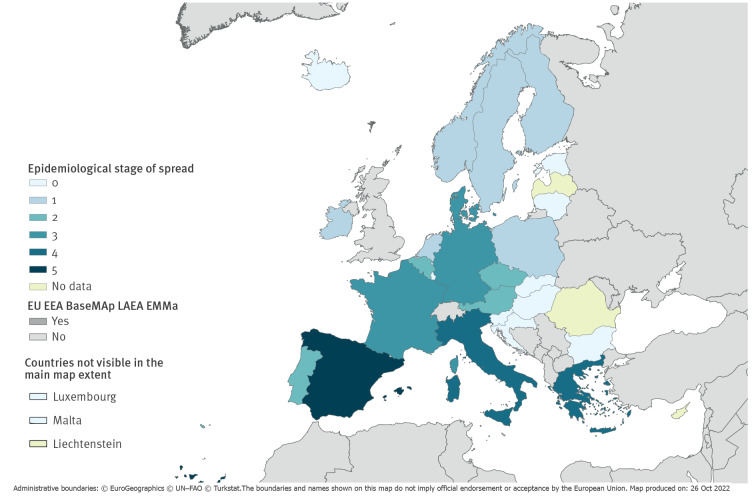
“According to the obtained data, C. auris was assessed as endemic in Spain, which was one of the first countries to report outbreaks, and five countries reported outbreaks in the period of 2019 to 2021: France, Greece, Germany, Denmark, and Italy [106].”
BackgroundResultPotential Environmental Reservoirs of Candida auris: A Systematic Review
da Silva, I. C. B., Miranda, I. M., & Costa‐de‐Oliveira, S. (2024) · Journal of Fungi · doi:10.3390/jof10050336 · Cited by 43
“It has been identified in more than 40 countries, with outbreaks reported on multiple continents, with notable impacts in countries such as the United States, India, South Africa, and several European nations, including the United Kingdom Spain, France, and Italy (Figure 1) [3,4].”
BackgroundCandida auris: the new fungal threat.
Pallotta, F., Viale, P., & Barchiesi, F. (2023) · PubMed Central · doi:10.53854/liim-3103-6 · Cited by 40
Hsu, C., & Yassin, M. (2025) · Microorganisms · doi:10.3390/microorganisms13071461 · Cited by 34
“Similarly, in Europe, reported cases nearly doubled between 2020 and 2021 [4,5].”
Odoj, K., Garlasco, J., Pezzani, M. D., Magnabosco, C., Ortiz, D., Manco, F., Galia, L., Foster, S. K., Arieti, F., & Tacconelli, E. (2024) · Journal of Fungi · doi:10.3390/jof10100685 · Cited by 34
“Despite C. auris being listed as a critical priority pathogen in the WHO FPPL, with its resistance being increasingly reported in the literature, it has not yet been reported in any national surveillance system.”
BackgroundKatsiari, M., Mavroidi, A., Kesesidis, N., Palla, E., Zourla, K., Ntorlis, K., Konstantinidis, K., Laskou, M., Konstantinos, S., Sakkalis, A., et al. (2023) · Journal of Fungi · doi:10.3390/jof9020243 · Cited by 25
Proposal for a screening protocol for Candida auris colonization
Leonhard, S. E., Chong, G. M., Foudraine, D. E., Bode, L. G. M., Croughs, P. D., Popping, S., Schaftenaar, E., Klaassen, C. H. W., & Severin, J. A. (2024) · Journal of Hospital Infection · doi:10.1016/j.jhin.2023.12.019 · Cited by 25
Tiseo, G., Vena, A., Bassetti, M., Bartalucci, C., Cerchiaro, M., Cesaretti, M., Marchese, A. E., Pilato, V. D., Escribano, P., Forniti, A., et al. (2025) · Journal of Infection · doi:10.1016/j.jinf.2025.106586 · Cited by 22
Novy, E., Roger, C., Roberts, J. A., & Cotta, M. O. (2023) · Critical Care · doi:10.1186/s13054-023-04742-w · Cited by 23
Candida auris in Austria—What Is New and What Is Different
Spettel, K., Kriz, R., Wu, C. C., Achter, L., Schmid, S., Galazka, S., Selitsch, B., Camp, I., Makristathis, A., Lagler, H., et al. (2023) · Journal of Fungi · doi:10.3390/jof9020129 · Cited by 21
Program, C. N. I. S. (2024) · Canada Communicable Disease Report · doi:10.14745/ccdr.v50i06a02 · Cited by 26
“Moreover, emerging resistant pathogens such as Candida auris ( C. auris ) have necessitated enhanced surveillance and changes to existing infection prevention and control protocols (12).”
BackgroundThe challenges of the genome-based identification of antifungal resistance in the clinical routine
Alastruey‐Izquierdo, A., & Martín-Galiano, A. J. (2023) · Frontiers in Microbiology · doi:10.3389/fmicb.2023.1134755 · Cited by 20
Salama, E. A., Elgammal, Y., Wijeratne, A., Lanman, N. A., Utturkar, S. M., Farhangian, A., Li, J., Meunier, B., Hazbun, T. R., & Seleem, M. N. (2024) · Emerging Microbes & Infections · doi:10.1080/22221751.2024.2322649 · Cited by 16
“The recent increase in clinical outbreaks of infection caused by C. auris necessitates the development of e ff ective therapeutic approaches to overcome the shortage in the current arsenal of antifungals [14 – 16].”
BackgroundActivity of rezafungin against Candida auris
Locke, J. B., Andes, D. R., Flanagan, S. D., Redell, M. A., Ong, V. S., Aram, J. A., Pappas, P. G., Castanheira, M., & Thompson, G. R. (2025) · Journal of Antimicrobial Chemotherapy · doi:10.1093/jac/dkaf124 · Cited by 20
The Gordian Knot of C. auris: If You Cannot Cut It, Prevent It
Rapti, V., Iliopoulou, K., & Poulakou, G. (2023) · Pathogens · doi:10.3390/pathogens12121444 · Cited by 20
Rhodes, J. L., Jacobs, J. L., Dennis, E. K., Manjari, S. R., Banavali, N. K., Marlow, R., Rokebul, M. A., Chaturvedi, S., & Chaturvedi, V. P. (2024) · Antimicrobial Agents and Chemotherapy · doi:10.1128/aac.00911-24 · Cited by 21
First report of Candida auris in Romania: clinical and molecular aspects
Stanciu, A. M., Florea, D., Surleac, M. D., Paraschiv, S., Oţelea, D., Tălăpan, D., & Popescu, G. A. (2023) · Antimicrobial Resistance and Infection Control · doi:10.1186/s13756-023-01297-x · Cited by 18
Chromophore-Targeting Precision Antimicrobial Phototherapy
Jusuf, S., & Dong, P. (2023) · Cells · doi:10.3390/cells12222664 · Cited by 14
“Thus, with the spread and growing rates of C. auris infections occurring worldwide [84–87], we closely examined the potential antimicrobial effect of photoinactivation of catalase on this multi-drug resistant pathogen.”
BackgroundKey Factors to Consider for Candida auris Screening in Healthcare Settings: A Systematic Review
Danielsen, A. S., Ødeskaug, L. E., Raastad, R., Kjerulf, A., Andersen, A., Tornes, R. A., Himmels, J. P. W., Dahle, U. R., Sare, M., Kristensen, B., et al. (2025) · Mycoses · doi:10.1111/myc.70043 · Cited by 14
Research advances and public health strategies in China on WHO priority fungal pathogens
Wang, Y., Han, L., Gong, J., Liu, L., Miao, B., & Xu, J. (2025) · Mycology: An International Journal on Fungal Biology · doi:10.1080/21501203.2025.2561612 · Cited by 15
“Since then, infection cases have been reported across the globe at an accelerating and concerning rate (Chow et al. 2020; Kohlenberg et al. 2022).”
Grimmeisen, M., & Jessen‐Trefzer, C. (2023) · ChemBioChem · doi:10.1002/cbic.202300177 · Cited by 15
Motta, J. C., Rivas-Pinedo, P., & Oñate, J. (2025) · Journal of Fungi · doi:10.3390/jof11090609 · Cited by 15
“These geographic hotspots are consistent with environmental hypotheses; however, a causal role for climate or other socio-environmental factors remains unproven for Latin America and requires region-specific data [41].”
Asadzadeh, M., Ahmad, S., Alfouzan, W. A., Al‐Obaid, I., Spruijtenburg, B., Meijer, E. F. J., Meis, J. F. G. M., & Mokaddas, E. M. (2024) · Antibiotics · doi:10.3390/antibiotics13090840 · Cited by 13
“These features promote persistence and easy transmission of the yeast to other hospitalized patients, causing outbreaks which have been difficult to control [3,5,9–15].”
BackgroundOyardı, Ö., Demir, E. S., Alkan, B., Kömeç, S., Genç, G. E., Aygün, G., Teke, L., Turan, D., Erturan, Z., Savage, P. B., et al. (2023) · Journal of Fungi · doi:10.3390/jof9101026 · Cited by 12
“According to the report by The European Centre for Disease Prevention and Control (ECDC), C. auris case numbers between 2020 and 2021 were double those of previous years [5].”
ResultJakab, Á., Kovács, F., Balla, N., Nagy-Köteles, C., Ragyák, Á., Nagy, F., Borman, A. M., Majoros, L., & Kovács, R. (2024) · Microbiology Spectrum · doi:10.1128/spectrum.02278-23 · Cited by 13
“Previous studies showed that anti-biofilm strategies interfering with quorum sensing may effectively target C. auris biofilms (30–32).”
BackgroundMelinte, V., Tudor, A. D., Bujoi, A. G., Radu, M. T., Văcăroiu, C. M., Cismaru, I. M., Holban, T. S., Mîrzan, L., Popescu, R., Ciupan, R. C., et al. (2024) · Antibiotics · doi:10.3390/antibiotics13040325 · Cited by 11
“Until 2021 there were no Candida auris strains reported from Romania to the European Center for Disease Prevention and Control (ECDC) [10].”
BackgroundCurtoni, A., Pastrone, L., Cordovana, M., Bondi, A., Piccinini, G., Genco, M., Bottino, P., Polizzi, C., Cavallo, L., Mandras, N., et al. (2024) · Microorganisms · doi:10.3390/microorganisms12071312 · Cited by 11
Bayona, J. V. M., Cancino‐Muñoz, I., García, C. S., Tormo, N., Serrano, M. D. R. G., Ferrer‐Gómez, C., García, M. M. M., Gónzález‐Candelas, F., & Gimeno-Cardona, C. (2024) · Mycoses · doi:10.1111/myc.13776 · Cited by 11
Climate change: shifting boundaries of fungal disease in Europe and beyond
Bottery, M. J., Sedik, S., Schwartz, I. S., Hoenigl, M., & van Rhijn, N. (2025) · Thorax · doi:10.1136/thorax-2024-222168 · Cited by 21
Crotti, S., Cruciani, D., Sabbatucci, M., Spina, S., Piscioneri, V., Torricelli, M., Calcaterra, R., Farina, C., PISANO, L., & Papini, M. (2024) · Journal of Clinical Medicine · doi:10.3390/jcm13185493 · Cited by 12
Sabino, R., Antunes, F., Araujo, R., Bezerra, A. R., Brandão, J. C., Carneiro, C., Carvalho, A., Carvalho, D., Conceição, I. M., Medeiros, F. C., et al. (2025) · Mycopathologia · doi:10.1007/s11046-025-00981-3 · Cited by 18
“Kohlenberg et al. [19] mentioned that one Portuguese case was reported to the European Centre for Disease Prevention and Control in 2022, but no further information was available in the publication.”
Differential susceptibility of Candida (Candidozyma) auris clades to surface disinfectants
Lang, A., Gabriel, H., Meister, T. L., Meis, J. F. G. M., Steinmann, E., Brill, F. H. H., & Steinmann, J. (2025) · Journal of Hospital Infection · doi:10.1016/j.jhin.2025.10.003 · Cited by 10
Should all hospitalised patients colonised with Candida auris be considered for isolation?
Meijer, E. F. J., & Voß, A. (2024) · Eurosurveillance · doi:10.2807/1560-7917.es.2024.29.45.2400729 · Cited by 9
“While C. auris imported cases and outbreaks are increasing in Europe [27], no C. auris outbreaks have been reported in the Netherlands to date, although importations in the Netherlands are gradually increasing [20].”
BackgroundShort-term evolution and dispersal patterns of fluconazole-resistance in Candida auris clade III
Cancino‐Muñoz, I., Bayona, J. V. M., García, C. S., Tormo, N., Guna, R., Cardona, C. G., & Gónzález‐Candelas, F. (2024) · mBio · doi:10.1128/mbio.03164-24 · Cited by 10
Siopi, M., Leventaki, S., Pachoulis, I., Spruijtenburg, B., Meis, J. F. G. M., Pournaras, S., Vrioni, G., Tsakris, A., & Meletiadis, J. (2025) · Journal of Clinical Microbiology · doi:10.1128/jcm.00399-25 · Cited by 10
“…Organization classified it among the fungal pathogens that pose an urgent threat to public health (2), while both the Centers for Disease Control and Prevention (CDC) and the European Centre for Disease Prevention and Control reported its spread in healthcare settings at an alarming rate (3, 4).”
Alanio, A., White, P. L., Arendrup, M. C., Talento, A. F., Andersen, C. T., Johnson, E., Lanternier, F., Meletiadis, J., Aastvad, K. M. T., Cuypers, L., et al. (2025) · Open Forum Infectious Diseases · doi:10.1093/ofid/ofaf747 · Cited by 8
“…the fungal burden and the cost implications of fungal diseases [16–18] The emergence of C auris has enhanced the awareness of resistant fungal disease, but C auris is far from the most prevalent fungal infection in Europe, with significant variation in prevalence within and between countries [19].”
Candida auris in Intensive Care Setting: The First Case Reported in Portugal
Henriques, J. A. P., Mixão, V., Cabrita, J. M., Duarte, T. I., Sequeira, T., Cardoso, S., Germano, N., Dias, L., Bento, L. F. N., Duarte, S., et al. (2023) · Journal of Fungi · doi:10.3390/jof9080837 · Cited by 10
Rise in Candida auris cases and first nosocomial transmissions in Germany
Aldejohann, A. M., Martin, R., Hecht, J., Haller, S., Rickerts, V., Walther, G., Eckmanns, T., & Kurzai, O. (2023) · Deutsches Ärzteblatt international · doi:10.3238/arztebl.m2023.0047 · Cited by 7
First imported case of Candida auris infection in Milan, Italy: genomic characterisation
Rimoldi, S. G., Nodari, R., Rizzo, A., Tamoni, A., Longobardi, C., Pagani, C., Grosso, S., Salari, F., Galimberti, L., Olivieri, P., et al. (2024) · Infection · doi:10.1007/s15010-024-02232-x · Cited by 8
Candida auris: Outbreak, surveillance and epidemiological monitoring in Northern Greece
Poulopoulou, A., Sidiropoulou, A., Sarmourli, T., Zachrou, E., Michailidou, C., Zarras, C., Vagdatli, E., Massa, E., Mouloudi, E. K., Pyrpasopoulou, A., et al. (2024) · Medical Mycology · doi:10.1093/mmy/myae062 · Cited by 8
“43 Isolates of Clade I exhibit resistance to fluconazole and variable resistance to amphotericin B. 44 However, the latter is not still the case for our region, neither did we found any in vitro resistant strain in echinocandins.”
BackgroundCandida auris in intensive care unit: A growing clinical concern
Bassetti, M., Magnasco, L., Lamarina, A., Paola, L. D., Vena, A., Giacobbe, D. R., & Bartalucci, C. (2025) · Journal of Translational Critical Care Medicine · doi:10.1097/jtccm-d-25-00003 · Cited by 10
Sussenbach, A. E., Weterings, V., Bathoorn, E., Tielemans, M. J., ten Oever, J., Visch, B. M., Bergervoet, P., Reinders, Y., Vissers, J., Molenaar, P., et al. (2025) · Antimicrobial Resistance and Infection Control · doi:10.1186/s13756-025-01648-w · Cited by 9
“For C. auris , although the exact transmission route is not yet fully understood and air-borne transmission is unlikely, current literature indicates that it can spread easily and cause outbreaks in healthcare settings [22].”
Spruijtenburg, B., Meis, J. F. G. M., van Rhijn, N., Čurdová, M., Kašperová, E., Vašek, P., Bartoníčková, L., Kubele, J., Olišarová, P., Svobodová, K., et al. (2025) · Eurosurveillance · doi:10.2807/1560-7917.es.2025.30.45.2500285 · Cited by 6
Banik, S., Ozay, B., Trejo, M., Zhu, Y., Kanna, C. R., Santellan, C. A., Shaw, B. M., Chandrasekaran, S., Chaturvedi, S., Vejar, L., et al. (2024) · Journal of Clinical Microbiology · doi:10.1128/jcm.00525-24 · Cited by 8
Stolfa, S., Caggiano, G., Ronga, L., Dalfino, L., Centrone, F., Sallustio, A., Sacco, D., Mosca, A., Stufano, M., Saracino, A., et al. (2024) · Microorganisms · doi:10.3390/microorganisms12101962 · Cited by 7
Meletiadis, J., Guinea, J., Arıkan-Akdağlı, S., Meijer, E. F. J., Meis, J. F. G. M., & Arendrup, M. C. (2025) · Journal of Antimicrobial Chemotherapy · doi:10.1093/jac/dkaf241 · Cited by 7
Changes in Epidemiology of Candidemia in the United States With a Focus on Candida auris
Pérez, M. A., Patel, K., Rasmy, L., Yoshida, H., Arias, C. A., Nigo, M., & Adelman, M. W. (2026) · Clinical Infectious Diseases · doi:10.1093/cid/ciag312 · Cited by 7
“However, there has been an increase in the prevalence of Nakaseomyces glabratus (formerly C. glabrata ) [2, 9], and the commonly multidrug-resistant C. auris has continued to emerge globally [10, 11].”
Nascimento, T., Inácio, J., Guerreiro, D., Diaz, P., Patrício, P., Proença, L., Toscano, C., & Barroso, H. (2024) · Frontiers in Cellular and Infection Microbiology · doi:10.3389/fcimb.2024.1463456 · Cited by 5
Cottrel, C., Regad, M., Arnal, C., Hénard, S., Desnos‐Ollivier, M., Lozniewski, A., Alanio, A., Bursztejn, A. ‐., Lizon, J., & Debourgogne, A. (2025) · Medical Mycology · doi:10.1093/mmy/myaf033 · Cited by 5
Alexander, J., Martins, N., Moghaddasi, A., Hill, A. T., Harris, J., McCune, S., Gick, E., Zhu, Y., Chaturvedi, S., Lewinski, M. A., et al. (2025) · Microbiology Spectrum · doi:10.1128/spectrum.00254-25 · Cited by 4
Candida auris in Dutch hospitals: are we ready for it?
Dix, L., Notermans, D. W., Schneeberger, C., & van Dijk, K. (2024) · Journal of Hospital Infection · doi:10.1016/j.jhin.2024.12.004 · Cited by 4
Paramythiotou, E., Kyriazopoulou, E., Karakike, E., Siopi, M., Frantzeskaki, F. G., Meletiadis, J., & Tsangaris, I. (2025) · Journal of Hospital Infection · doi:10.1016/j.jhin.2025.03.014 · Cited by 3
de Groot, C. C., Spruijtenburg, B., Severin, J. A., van Dijk, K., Buil, J. B., Verweij, P. E., de Jong, A. W., & Meijer, E. F. J. (2026) · Mycopathologia · doi:10.1007/s11046-025-01024-7 · Cited by 4
“In Europe, the prevalence of cases and outbreaks varies highly between countries, with some countries like Belgium and the Scandinavian countries that reported only a few cases to date, while others like the United Kingdom, Italy, Greece and Spain already reported large outbreaks [9, 25].”
Kovács, F., Harmath, A., Balázsi, D., Forgács, L., Ragyák, Á., Balla, N., Tóth, Z., Bozó, A., Borman, A. M., Majoros, L., et al. (2026) · Microbiology Spectrum · doi:10.1128/spectrum.02686-25 · Cited by 3
Reedy, J. M., Fernando, T., Awuor, S. O., Omwenga, E. O., Koutchma, T., & Mariita, R. M. (2024) · Hygiene · doi:10.3390/hygiene4030030 · Cited by 4
Genetic Epidemiology and Resistance Investigations of Clinical Yeasts in Alexandria, Egypt
Spruijtenburg, B., do Prado, C. M., van Kempen, M., Shawky, S. M., Meis, J. F. G. M., Vicente, V. A., Queiroz‐Telles, F., de Groot, T., El‐Kholy, M. A., & Meijer, E. F. J. (2025) · Pathogens · doi:10.3390/pathogens14050486 · Cited by 4
“This yeast is known to frequently cause outbreaks in healthcare settings, especially when infection prevention measures are suboptimal [37,38].”
Program, C. N. I. S. (2025) · Canada Communicable Disease Report · doi:10.14745/ccdr.v51i67a04 · Cited by 6
“Moreover, emerging resistant pathogens, such as Candida auris, have necessitated enhanced surveillance and changes to existing infection prevention and control protocols (15).”
Synergistic Effect of ZnO Thin Films with Gold as Antifungal Coatings
Pereira‐Silva, P., Pacheco, M. I., Borges, J., Vaz, F., & Sampaio, P. (2024) · Advanced Engineering Materials · doi:10.1002/adem.202400342 · Cited by 3
Candida auris as a pathogen that can cause emerging infectious disease: a literature review
Arthisari, N. N. N., Budayanti, N. N. S., & Tarini, N. M. A. (2023) · Intisari Sains Medis · doi:10.15562/ism.v14i1.1679 · Cited by 5
Programme canadien de surveillance des infections nosocomiales (2024) · Relevé des maladies transmissibles au Canada · doi:10.14745/ccdr.v50i06a02f · Cited by 4
“En outre, l’émergence de pathogènes résistants tels que Candida auris ( C. auris ) a nécessité une surveillance accrue et des modifications des protocoles existants de prévention et de contrôle des infections (12).”
Mukhida, S. S., Kannuri, S., Das, N. K., Khan, S., & Patil, R. (2024) · Journal of Marine Medical Society · doi:10.4103/jmms.jmms_78_24 · Cited by 2
Systemic Acetylome Analysis of Evolution in Fluconazole Resistance Candida auris
Zhou, X., Jing, D., Huang, Y., Song, N., Li, D., Liu, W., Liu, C., & Li, X. (2025) · Journal of Proteome Research · doi:10.1021/acs.jproteome.4c01031 · Cited by 2
Dehesa-García, B., Alonso, H., Peris, M. P., Fortuño, B., Abad, P., Rezusta, A., & Milagro, A. (2025) · Microbiology Spectrum · doi:10.1128/spectrum.03111-24 · Cited by 2
“Even with regular screening and following the recommended guidelines, Spain is reported to have a regional endemicity (29).”
Candidozyma auris Outbreak and Its Effective Control in a General Hospital
Kontopidou, F. V., Antonopoulou, M., Votsi, A., Papoutsaki, V., Bereri, V., Kourkoulou, E., Rompola, A., Tsokou, G., Pavli, A., Koutantelia, O. M., et al. (2025) · Antibiotics · doi:10.3390/antibiotics14060579 · Cited by 4
Marcano, D., Eremin, S., Ramón-Pardo, P., Forastiero, A., Galas, M., da Matta, D. A., Nóbrega, D. B., Dobreva, Z., Chayakulkeeree, M., Shin, J. H., et al. (2026) · EClinicalMedicine · doi:10.1016/j.eclinm.2026.104019 · Cited by 2
Dimopoulou, G., Papadoulakis, M., Premetis, I., Papachristou, K., & Magira, E. E. (2026) · Journal of Fungi · doi:10.3390/jof12090629 · Cited by 2
“Similar concerns have been raised in Europe, where increasing numbers of colonization and infection cases, together with prolonged healthcare-associated outbreaks, have been reported [42].”
Verkerk, A. H., Mulder, M., Beuken, E. V. H., von Wintersdorff, C. J. H., Schilperoort, R., Savelkoul, P. H. M., & van Alphen, L. B. (2026) · Antimicrobial Resistance and Infection Control · doi:10.1186/s13756-026-01773-0 · Cited by 1
“Additionally, it could allow for early C. auris detection, which is, in combination with infection control measures, important in preventing C. auris transmission [26].”
Candida species at the workplace: microbiota component, opportunistic pathogen and zoonotic agent
Tokarska-Rodak, M., & Weiner, M. (2023) · Medycyna Pracy · doi:10.13075/mp.5893.01412 · Cited by 4
Marschall, J., Snyders, R. E., Sax, H., Newland, J. G., Guimarães, T., & Kwon, J. H. (2023) · Antimicrobial Stewardship & Healthcare Epidemiology · doi:10.1017/ash.2023.473 · Cited by 3
Bayona, J. V. M., Cancino‐Muñoz, I., Salvador-García, C., Tormo, N., Guna, R., Gónzález‐Candelas, F., & Cardona, C. G. (2024) · bioRxiv (Cold Spring Harbor Laboratory) · doi:10.1101/2024.03.01.582904 · Cited by 1
Key factors to consider for Candida auris screening in healthcare settings: a systematic reviewPreprint
Danielsen, A. S., Ødeskaug, L. E., Raastad, R., Kjerulf, A., Andersen, A., Tornes, R. A., Himmels, J. P. W., Dahle, U. R., Sare, M., Kristensen, B., et al. (2024) · medRxiv · doi:10.1101/2024.11.06.24316836
Isolate Specific Transcriptome Changes Exerted by Isavuconazole Treatment in Candida auris
Balla, N., Kovács, F., Tóth, Z., Harmath, A., Bozó, A., Majoros, L., Kovács, R., & Jakab, Á. (2024) · Mycopathologia · doi:10.1007/s11046-024-00919-1 · Cited by 2
“Although, echinocandins are recommended as first-line agents for the treat-ment of C. auris infections, resistance to these drugs is steadily increasing worldwide [5, 7].”
Bohner, F. (2024) · SZTE Repository of Dissertations (University of Szeged) · doi:10.14232/phd.12031
Bolshakova, H., Мінухін, В. В., Zhuravlova, I. V., Голубка, О. В., Частій, Т. В., Kuchma, I. Y., Savinova, T. V., & Shevchenko, Y. (2025) · Regulatory Mechanisms in Biosystems · doi:10.15421/0225068 · Cited by 1
Should faecal microbiota transplant donors be screened for Candidozyma auris?
Prossomariti, D., Merrick, B., & Goldenberg, S. D. (2025) · Journal of Hospital Infection · doi:10.1016/j.jhin.2025.10.015
Briefing: Candidozyma (Candida) auris
Kampmeier, S., & Kurzai, O. (2025) · Krankenhaushygiene up2date · doi:10.1055/a-2519-8657
Callebaut, K., Hellemans, J., Chin, T., Floré, K., Vanhee, M., Snauwaert, S., Schauwvlieghe, A. F. A. D., DeWulf, B., Reynders, M., & Muyldermans, A. (2026) · European Journal of Clinical Microbiology & Infectious Diseases · doi:10.1007/s10096-026-05409-4
“…exposure, such as extended intensive care unit stays with mechanical ventilation, parenteral nutrition, and the presence of catheters; compromised immune systems; exposure to broad-spectrum antibiotics; and chronic conditions such as diabetes mellitus and chronic renal disease [6, 8, 13 ].”
InfluentialInteractions hôte-candida au cours des péritonites fongiques graves de réanimation
Novy, E. (2024) · theses.fr (ABES) · doi:10.70675/bb875beazbffcz45cdz85b2z2ac1b68c7226
Lysková, P., Dobiáš, R., Bezdíček, M., Hubka, V., Sumerauerová, P., Lžičařová, D., Kocmanová, I., Buchta, V., Prošková, I., Janouškovcová, H., et al. (2026) · Mycopathologia · doi:10.1007/s11046-026-01076-3 · Cited by 1
“An increasing number of cases and outbreaks have been reported [13–15].”
Photoinactivation of Endogenous Chromophores in Wide-Ranging Pathogenic Microbes
Jusuf, S., Hui, J., & Dong, P. (2026) · Springer eBooks · doi:10.1007/978-3-031-55858-0_115-1
Metadata
- Authors
- Kohlenberg, A., Monnet, D. L., Plachouras, D., & Candida auris survey collaborative group
- Affiliations
- European Centre for Disease Prevention and Control (SE)
- Venue
- Eurosurveillance
- Published
- 2022-11-17
- Volume
- 27
- Issue
- 46
- ISSN
- 1025-496X (ISSN-L)
- 1560-7917
- PMC
- PMC9673237
- OpenAlex
- W4309284768
- Semantic Scholar
- ef394d16717246d44fc295b1b93059fe8b004ef2
- Cited by
- 108
- References
- 14
- Citations by year
- 2026: 17 · 2025: 27 · 2024: 39 · 2023: 25
- FWCI
- 11.12
- Type
- journal article
- Language
- en
- Open access
- diamond
- doi.org
- Locations
- Eurosurveillance (publishedVersion, cc-by)
- PubMed Central (publishedVersion, cc-by)
- PubMed (publishedVersion)
- Lirias (submittedVersion, cc-by)
- Topics
- Health Sciences › Medicine › Infectious Diseases › Antifungal resistance and susceptibility
- Life Sciences › Immunology and Microbiology › Microbiology › Yeasts and Rust Fungi Studies
- Health Sciences › Medicine › Infectious Diseases › Fungal Infections and Studies
- Keywords
- Candida auris, fungemia, endemicity, fungal surveillance, laboratory capacity, infection control, Europe
- MeSH terms
- Candida auris, Disease Outbreaks, European Union, Humans, Laboratories, Candidiasis, Invasive
About these checks
Registry, retraction, Cites and statistics results are computed, not judged, with one exception: a printed reference that no index lists is read once by a model before it counts as a citation error. Claims are extracted by a model and kept only when their quote appears verbatim in the text; each cited source is then checked, with a model’s help, for whether it says what the claim relies on. Those verdicts can be wrong — read the claim’s quote and the cited source before relying on one.
Statistics and arithmetic are recomputed, not judged.
Confidence bands are shown only for fields calibrated on our annotated test set. None is calibrated yet, so no band is shown.
What counts as a claim ›How we measure confidence ›How we check this ›
Are you an author, or do you see a problem with this page? Request a review
Data sources
Bibliographic data: Semantic Scholar, OpenAlex, Crossref.
Contains information from the Semantic Scholar Academic Graph Datasets, made available under the ODC Attribution License (ODC-BY 1.0).
Semantic Scholar’s data is described in: Kinney, R., et al. (2023). The Semantic Scholar Open Data Platform. arXiv:2301.10140.
