

Using ChatGPT in academic writing is (not) a form of plagiarism: What does the literature say?
Open accessThe DOI matches its Crossref record; 41 of the 42 references it cites were found in a registry or an index, and 1 are not checked yet; none of the 14 sources its claims cite is checked for support yet.
Abstract
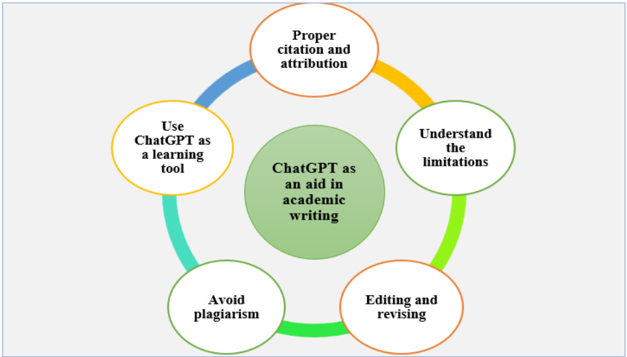
This study aims to review the existing literature on using ChatGPT in academic writing and its implications regarding plagiarism. Various databases, including Scopus, Google Scholar, ScienceDirect, and ProQuest, were searched using specific keywords related to ChatGPT in academia, academic research, higher education, academic publishing, and ethical challenges. The review provides an overview of studies investigating the use of ChatGPT in academic writing and its potential association with plagiarism. The results of this study contribute to our understanding of the use and misuse of ChatGPT in academic writing, considering the growing concern regarding plagiarism in higher education. The findings suggest that ChatGPT can be a valuable writing tool; however, it is crucial to follow responsible practices to uphold academic integrity and ensure ethical use. Properly citing and attributing ChatGPT’s contribution is essential in recognizing its role, preventing plagiarism, and upholding the principles of scholarly writing. By adhering to established citation guidelines, authors can maximize ChatGPT’s benefits while maintaining responsible usage.
Checked 2026-10-06 · 1 reference not checked yet
Overview
CoChat Summary
TL;DR
This systematic literature review examines whether using ChatGPT in academic writing is a form of plagiarism, synthesizing 20 selected articles. It finds divided views: ChatGPT can aid writing, but uncited use raises plagiarism concerns, and proper citation/attribution is central.
Key findings
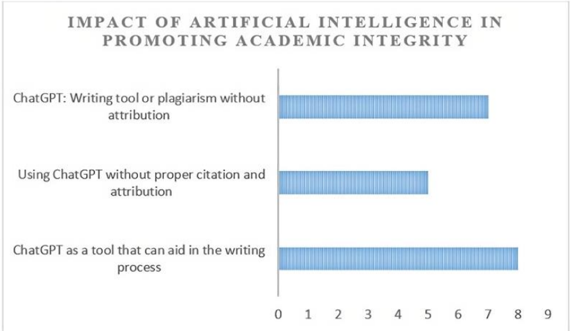
- Among the 20 selected articles, 8 highlight ChatGPT as a tool that can aid the writing process, 7 raise concerns about ChatGPT as a writing tool or as a potential source of plagiarism without proper attribution, and 5 emphasize using ChatGPT with appropriate citation and attribution.
- The review reports an ongoing debate: some argue that using ChatGPT without proper citation and attribution could be plagiarism because generated content is not original work; others argue that if generated content is critically evaluated, rephrased, and properly cited, its use in academic writing can be acceptable and does not constitute plagiarism.
- The conclusion states that ChatGPT falls short of producing academic writing that meets required academic journal publication standards, but excels in providing fast information with excellent language proficiency, primarily free of grammatical errors; the authors also state they used ChatGPT as an aid in writing this article, which was subsequently revised and edited.
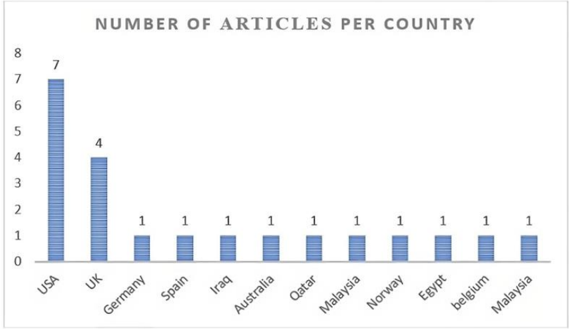
- Regional distribution as reported: European universities contributed 9 articles, American universities 7, Asian universities 3, and universities from Africa and Australia each contributed 1 article; the text also says this totaled five articles, and the reported regional counts are internally inconsistent.
Methods
- Systematic literature review (SLR) based on PRISMA guidelines, searching databases and using keywords related to ChatGPT, chatbot, education, academic writing, plagiarism, citation, and attribution; the abstract, methodology, and search process list different database sets.
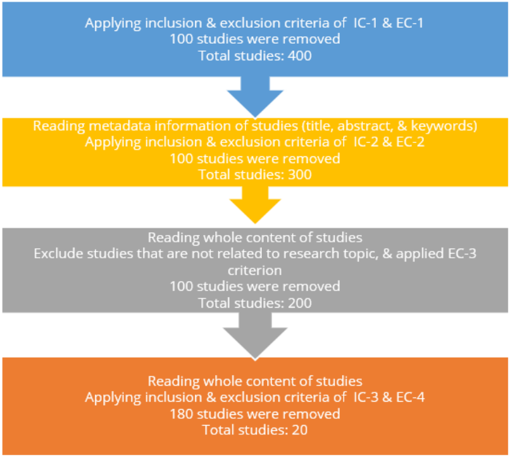
- Four-stage screening from 500 distinct records to 20 included papers, using inclusion/exclusion criteria such as English language, educational chatbot, comprehensive usage details, empirical evidence, and exclusion of duplicates, tutorials, posters, technical reports, review papers, short papers, and PhD theses.
- Data were extracted and coded, then synthesized into three dimensions: ChatGPT as a writing aid, using ChatGPT without proper citation and attribution, and ChatGPT as a writing tool or plagiarism without attribution.
Limitations
- The paper’s stated limitations and implications focus on ChatGPT use: potential plagiarism and the need for citation/attribution; inaccuracies or misleading AI-generated content; difficulty detecting academic integrity violations; unequal access and the digital divide; bias; and the need for peer-review adaptation and institutional policies.
- Evident from the text: database/search reporting is inconsistent across the abstract, methodology, and search process; regional article counts are internally inconsistent (9 + 7 + 3 + 1 + 1 exceeds 20, and “totaling five articles” is unclear); no formal quality appraisal of included studies is described beyond inclusion/exclusion criteria.
- The review states in one section that it “cannot provide specific references to support this viewpoint,” which limits support for that particular claim.
Model-written summary. Check it against the paper before relying on it.
Integrity signals
Registry
Cites
Statistics
Figures
Verification
Claims the paper makes
0 Valid · 5 Not valid · 17 Not checked · 60 Own results and interpretations
None of the sources cited for this claim have been checked yet.
In the paper
“Firstly, ChatGPT is a tool that can enhance the writing process.”
- Also stated in: § ChatGPT as a Tool That Can Aid in Writing Process · plain
“Among the selected articles, a significant majority (eight articles) highlight ChatGPT as a tool that can aid in the writing process, emphasizing its positive role.”
- Also stated in: § ChatGPT as a Tool That Can Aid in Writing Process · boosted
“Numerous research has shown that ChatGPT is a helpful tool that can help with the writing process.”
§ Using ChatGPT in academic writing is (not) a form of plagiarism: What does the literature say? > DISCUSSION
boostedstates a cause- Asserted: passes — The authors put it forward as true.
- Checkable: passes — It can be checked against evidence.
- Load-bearing: passes — The paper’s conclusions depend on it.
- Based: passes — The paper gives a reason why it holds.
- Also stated in: § ChatGPT as a Tool That Can Aid in Writing Process · plain
A result the paper reports from its own data — it cites no other source for it, so there is none to check. The quote shows it is in the paper.
In the paper
“However, a smaller number of articles (seven articles) indicate concerns regarding ChatGPT being used as a writing tool or as a potential source of plagiarism without proper attribution.”
§ Using ChatGPT in academic writing is (not) a form of plagiarism: What does the literature say? > Impact of Artificial Intelligence on Promoting Academic Integrity
hedged- Asserted: passes — The authors put it forward as true.
- Checkable: passes — It can be checked against evidence.
- Load-bearing: unclear — It is unclear whether the paper’s conclusions depend on it.
- Based: passes — The paper gives a reason why it holds.
In the paper
“The findings demonstrate that ChatGPT can generate complex and sophisticated text outputs, evading detection from plagiarism-checking software.”
§ Using ChatGPT in academic writing is (not) a form of plagiarism: What does the literature say? > Using ChatGPT in Academic Writing
What the sources say
- Not checked yetcites Khalil and Er (2023)
boostedstates a cause- Asserted: passes — The authors put it forward as true.
- Checkable: passes — It can be checked against evidence.
- Load-bearing: passes — The paper’s conclusions depend on it.
- Based: passes — The paper gives a reason why it holds.
A result the paper reports from its own data — it cites no other source for it, so there is none to check. The quote shows it is in the paper.
In the paper
“Additionally, a subset of articles (five articles) emphasizes the importance of using ChatGPT with appropriate citation and attribution (Figure 4).”
§ Using ChatGPT in academic writing is (not) a form of plagiarism: What does the literature say? > Impact of Artificial Intelligence on Promoting Academic Integrity
plain- Asserted: passes — The authors put it forward as true.
- Checkable: passes — It can be checked against evidence.
- Load-bearing: unclear — It is unclear whether the paper’s conclusions depend on it.
- Based: passes — The paper gives a reason why it holds.
A result the paper reports from its own data — it cites no other source for it, so there is none to check. The quote shows it is in the paper.
In the paper
“Among the selected articles, a significant majority (eight articles) highlight ChatGPT as a tool that can aid in the writing process, emphasizing its positive role.”
- Also stated in: § ChatGPT as a Tool That Can Aid in Writing Process · plain
“Among the selected articles, most of eight studies emphasize the beneficial role of ChatGPT as a tool for supporting the writing process.”
§ Using ChatGPT in academic writing is (not) a form of plagiarism: What does the literature say? > ChatGPT as a Tool That Can Aid in Writing Process
plain- Asserted: passes — The authors put it forward as true.
- Checkable: passes — It can be checked against evidence.
- Load-bearing: passes — The paper’s conclusions depend on it.
- Based: passes — The paper gives a reason why it holds.
- Also stated in: § ChatGPT as a Tool That Can Aid in Writing Process · plain
8 more claims
Create a free account to see all 82 claims and to verify the 14 references still open.
- Probably not a substantial claim. 64
- It may state two separate claims as one. 29
- The quote only partly states this claim. 1
Claims other papers make about this one
Each is checked against this paper’s own text: does it say what the citing paper says it does?
The source backs part of the claim, not all of it — or backs it for a different population, condition or comparison.
In the citing paper
“Recent surveys of researchers across disciplines indicate that a growing share of scholars use tools such as ChatGPT, Claude, and Gemini to draft manuscripts, generate literature reviews, and suggest/compile reference lists [1,2].”
From How LLMs Cite and Why It Matters: A Cross-Model Audit of Reference Fabrication in AI-Assisted Academic Writing and Methods to Detect Phantom Citations (2026) · cites this paper as [1]
Experimental — accuracy not yet measuredThe source backs part of the claim, not all of it — or backs it for a different population, condition or comparison.
In the citing paper
“While proper attribution allows students to benefit from AI without violating academic standards (Perkins, 2023), empirical studies indicate that failing to disclose AI assistance is commonly interpreted as academic dishonesty (Eke, 2023;Jarrah et al., 2023;Mansilla et al., 2022;Wardat et al., 2023).”
From Academic Integrity and Students’ Ethical Use of ChatGPT in Higher Education (2026) · cites this paper as Jarrah et al., 2023
Experimental — accuracy not yet measuredThe source backs part of the claim, not all of it — or backs it for a different population, condition or comparison.
In the citing paper
“This shift necessitates the re-evaluation of multiple educational parameters-from assignment design and assessment strategies to the graduate skills required in a GenAI-informed academic and professional environment [4,6,13,14].”
From Artificial Intelligence in Higher Education: A State-of-the-Art Overview of Pedagogical Integrity, Artificial Intelligence Literacy, and Policy Integration (2025) · cites this paper as [14]
Experimental — accuracy not yet measuredThe source backs part of the claim, not all of it — or backs it for a different population, condition or comparison.
In the citing paper
“This study supports the broader theoretical call for integrating digital ethics and AI competencies into the curriculum (Jarrah et al., 2023;AlZaabi et al., 2023).”
From Training Students to Identify and Correct Fabricated References in ChatGPT-Generated Literature Reviews (2025) · cites this paper as Jarrah et al., 2023
Experimental — accuracy not yet measuredThe source backs part of the claim, not all of it — or backs it for a different population, condition or comparison.
In the citing paper
“Among these technologies, large language models (LLMs) such as ChatGPT have demonstrated remarkable fluency in producing coherent and technically structured scientific texts across various disciplines, including health sciences and rehabilitation domains.”
From Fabricated or accurate? Ethical concerns and citation hallucination in aI-generated scientific writing on musculoskeletal topics (2025) · cites this paper as [3]
Experimental — accuracy not yet measured
2 more claims about this paper
Create a free account to see every claim other papers make about this one.
Self-check
Percentages, sums and reported differences re-computed from the paper’s own numbers.
Each contradiction between two passages listed here was confirmed by an independent check.
Rated minor: it would not touch a result — a value no result rests on, a p-value that stays on the same side of the significance level, or a conflict that is clerical, resolved elsewhere in the paper, or outside its own findings.
In the paper
§ Using ChatGPT in academic writing is (not) a form of plagiarism: What does the literature say? > Impact of Artificial Intelligence on Promoting Academic Integrity
“Among the selected articles, a significant majority (eight articles) highlight ChatGPT as a tool that can aid in the writing process, emphasizing its positive role.”
§ Using ChatGPT in academic writing is (not) a form of plagiarism: What does the literature say? > Impact of Artificial Intelligence on Promoting Academic Integrity
“The total number of articles in Figure 4 is 20, corresponding to the number of selected articles.”
Rated minor: it would not touch a result — a value no result rests on, a p-value that stays on the same side of the significance level, or a conflict that is clerical, resolved elsewhere in the paper, or outside its own findings.
In the paper
“Furthermore, universities from Africa and Australia each contributed 1 article, totaling five articles.”
§ Using ChatGPT in academic writing is (not) a form of plagiarism: What does the literature say? > Using ChatGPT in Academic Writing
Reported 5 · recomputed 2
Rated minor: it would not touch a result — a value no result rests on, a p-value that stays on the same side of the significance level, or a conflict that is clerical, resolved elsewhere in the paper, or outside its own findings.
In the paper
§ Using ChatGPT in academic writing is (not) a form of plagiarism: What does the literature say? > Using ChatGPT in Academic Writing
“A notable observation is that most of the selected publications were either published or co-written by academics from American universities, indicating a significant American contribution to the research.”
§ Using ChatGPT in academic writing is (not) a form of plagiarism: What does the literature say? > Using ChatGPT in Academic Writing
“European universities also exhibited a robust research output, accounting for the highest number of articles (nine articles) among all regions.In terms of regional contributions, Asian universities contributed three articles, while American universities contributed seven articles.”
Citations
Cites
Preferred reporting items for systematic reviews and meta-analyses: The PRISMA statement
Moher, D., Liberati, A., Tetzlaff, J., Altman, D. G., & the PRISMA Group* (2009) · Annals of Internal Medicine · doi:10.7326/0003-4819-151-4-200908180-00135 · Cited by 37,554
Zawacki-Richter, O., Marín, V. I., Bond, M., & Gouverneur, F. (2019) · International Journal of Educational Technology in Higher Education · doi:10.1186/s41239-019-0171-0 · Cited by 7,242
On the Dangers of Stochastic Parrots: Can Language Models Be Too Big? 🦜
Bender, E. M., Gebru, T., McMillan-Major, A., & Shmitchell, S. (2021) · Proceedings of the 2021 ACM Conference on Fairness, Accountability, and Transparency · doi:10.1145/3442188.3445922 · Cited by 6,988
Artificial Intelligence in Education: A Review
Chen, L., Chen, P., & Lin, Z. (2020) · IEEE Access · doi:10.1109/access.2020.2988510 · Cited by 4,133
Chatting and cheating: Ensuring academic integrity in the era of ChatGPT
Cotton, D. R. E., Cotton, P. A., & Shipway, J. R. (2024) · Innovations in Education and Teaching International · doi:10.1080/14703297.2023.2190148 · Cited by 3,087
Chatting and Cheating. Ensuring academic integrity in the era of ChatGPT
Cotton, D., Cotton, P., & Shipway, J. R. (2023) · doi:10.35542/osf.io/mrz8h · Cited by 3,079
Artificial intelligence: A powerful paradigm for scientific research
Xu, Y., Liu, X., Cao, X., Huang, C., Liu, E., Qian, S., Liu, X., Wu, Y., Dong, F., Qiu, C.-W., et al. (2021) · The Innovation · doi:10.1016/j.xinn.2021.100179 · Cited by 1,726
Artificial hallucinations in ChatGPT: implications in scientific writing
Alkaissi, H., & McFarlane, S. I. (2023) · Cureus · doi:10.7759/cureus.35179 · Cited by 1,540
Gao, C. A., Howard, F. M., Markov, N. S., Dyer, E. C., Ramesh, S., Luo, Y., & Pearson, A. T. (2023) · npj Digital Medicine · doi:10.1038/s41746-023-00819-6 · Cited by 1,099
High-speed spelling with a noninvasive brain–computer interface
Chen, X., Wang, Y., Nakanishi, M., Gao, X., Jung, T.-P., & Gao, S. (2015) · Proceedings of the National Academy of Sciences · doi:10.1073/pnas.1508080112 · Cited by 969
Research works printed but not linked: 4
- Frye, B. L. (2022). Should using an AI text generator to produce academic writing be plagiarism? Fordham Intellectual Property, Media & Entertainment Law Journal, 947.
- Gavilán, J. C. O., Díaz, D. Z., Huallpa, J. J., Cabala, J. L. B., Aguila, O. E. P., Puma, E. G. M., Vasquez-Pauca, M. J., Mansilla, E. B. R., Laura, P. A. S., & Hoces, W. B. (2022). Technological social responsibility in university professors. Eurasian Journal of Educational Research, 100(100), 104-118.
- Gough, D., Oliver, S., & Thomas, J. (2017). An introduction to systematic reviews. SAGE.
- Mansilla, E. B. R., Castillo-Acobo, R. Y., Puma, E. G. M., Maquera, Y. M., Gonzales, J. L. A., & Vasquez-Pauca, M. M. J. (2022). Stress in university teachers in the framework of the post-pandemic face-to-face. Journal of Namibian Studies, 33(S1), 71-85.
Cited by
Items 101–200 of 302
Siddiqui, M. N., Nasseri, N., Coscia, A. J., Pea, R. D., & Subramonyam, H. (2026) · CHI Conference on Human Factors in Computing Systems · doi:10.1145/3772318.3791109 · Cited by 15
A Systematic Review of the Impact of ChatGPT on Higher Education
You, S. (2024) · International Journal of Technology-Enhanced Education · doi:10.4018/ijtee.343528 · Cited by 13
ARTIFICIAL INTELLIGENCE IN OPEN UNIVERSITY ECOSYSTEM CONTEXT
Buinytska, O. P., Terletska, T. S., Smirnova, V., Тютюнник, А. В., Kovalenko, I., & Грицеляк, Б. І. (2025) · Information Technologies and Learning Tools · doi:10.33407/itlt.v105i1.5959 · Cited by 15
“The future of research is discussed in scientific publications by R. Peres, M. Schreier, D. Schweidel, A. Sorescu [8], S. A. Bin-Nashwan, M. Sadallah, M. Bouteraa [9], A. M. Jarrah, Y. Wardat, P. Fidalgo [10], G. J. Hwang, N. S. Chen [11] and others.”
Pakdel, F., Khojasteh, L., Kafipour, R., & Shahsavar, Z. (2025) · Language Teaching Research · doi:10.1177/13621688251322953 · Cited by 17
Chopra, G., Bhaskar, P., Purohit, A., & Strzelecki, A. (2025) · Education and Information Technologies · doi:10.1007/s10639-025-13536-2 · Cited by 16
“It assists in drafting impressive research projects (Baidoo-Anu & Ansah, 2023; Jarrah et al., 2023).”
Bobier, C. A., Rodger, D., & Hurst, D. J. (2025) · BMC Medical Ethics · doi:10.1186/s12910-025-01239-9 · Cited by 16
Embrace or resist? EFL teachers on adopting ChatGPT as a teaching and feedback tool
Saeli, H., Rahmati, P., Dalman, M., Shamsi, Y., & Koltovskaia, S. (2025) · Language Awareness · doi:10.1080/09658416.2025.2577191 · Cited by 17
“Many scholars have, however, voiced concerns regarding the integration of ChatGPT in second language (L2) writing classrooms, noting students’ overreliance on ChatGPT for generating content (Barrot, 2023) and lack of proper attribution (Jarrah et al., 2023; Su et al., 2023), among others.”
Dinçer, S. (2024) · Educational Research & Implementation · doi:10.14527/edure.2024.10 · Cited by 15
Swartz, S., Luck, S. L., & Sharma, S. (2025) · Higher Education Skills and Work-based Learning · doi:10.1108/heswbl-09-2024-0266 · Cited by 13
Ofusori, L. O., & Hendradi, R. (2025) · Journal of Information Systems Engineering and Business Intelligence · doi:10.20473/jisebi.11.1.65-78 · Cited by 13
“The findings reveal chatbots security threats, such as user profiling, malicious input, data breaches and contextual attacks [57] This study reviewed the existing literature on ChatGPT usage in scholarly writing and its challenges which include plagiarism.”
InfluentialUsing Artificial Intelligence for Essay Writing
Jen, S. L., & Salam, A. R. (2024) · Arab World English Journal · doi:10.24093/awej/chatgpt.5 · Cited by 18
“This is further supported by Chiu et al. (2023), AbdAlgane and Jabir Othman (2023), Aydın and Karaarslan (2022), Farrelly and Baker (2023), Jarrah et al. (2023) and Rahman and Watanobe (2023) who asserted that AI has significantly affected education and classroom practice recently.”
ResultAlaqlobi, O., Alduais, A. M. S., Qasem, F. A. A., & Alasmari, M. (2024) · F1000Research · doi:10.12688/f1000research.155378.1 · Cited by 13
Academic Integrity vs. Academic Misconduct: A Thematic Evolution Through Bibliometrics
Suprapto, N., Nurhasan, N., Simamora, R. M., Mursid, A., & Ardha, M. A. A. (2024) · Journal of Academic Ethics · doi:10.1007/s10805-024-09580-1 · Cited by 16
Shin, Y., Wei, S., & Vanchinkhuu, N. (2025) · LEARN Journal : Language Education and Acquisition Research Network · doi:10.70730/rmka9428 · Cited by 12
Jiang, L., Wei, B., Qiu, N., & Huang, L. (2025) · Interactive Learning Environments · doi:10.1080/10494820.2025.2479166 · Cited by 18
“This finding echoed studies conducted by Jarrah et al. (2023) and (2023).”
Başer, M. Y., Kozak, M., & Erdoğan, İ. H. (2025) · The Internet and Higher Education · doi:10.1016/j.iheduc.2025.101071 · Cited by 15
Hollman, J. H., Cloud, B. A., Krause, D. A., & Calley, D. Q. (2024) · Physical Therapy · doi:10.1093/ptj/pzae006 · Cited by 11
Issa, M., Faraj, M., & AbiGhannam, N. (2024) · IEEE Transactions on Learning Technologies · doi:10.1109/tlt.2024.3409514 · Cited by 10
“Toguarantee asafeandethicaluseofChatGPT,userscanfollowguidelines ofproofreadingandediting,verifyinginformation,continuous adaptationandlearning,andothers[23].”
Enoch, S. K., Mejira, A., Bayor, N., Nyemewero, I., & Godfred, A. A. (2024) · American Journal of Technology · doi:10.58425/ajt.v3i1.301 · Cited by 12
“Adopting AI-generated text without critical analysis, rewording, and reference, according to some, can be considered plagiarism and is unacceptable (Jarrah et al., 2023).”
Anthony, A., Sharma, S., & Sharma, S. (2025) · Bulletin of Science Technology & Society · doi:10.1177/02704676251353105 · Cited by 13
“However, like any innovation ChatGPT has its limitations making human review essential to ensure accuracy and prevent plagiarism (Jarrah et al., 2023).”
Tran, K. V., Le, M. T. T., & Pham, A. T. (2025) · International Journal for Educational Integrity · doi:10.1007/s40979-025-00207-5 · Cited by 10
“2023; Elkhatat 2023; Jarrah et al. 2023; Kooli 2023; Malik et al. 2023) since students might use ChatGPT to complete either entire assignments or parts of their work without critically evaluating the content (Acosta-Enriquez et al. 2024).”
A Systematic Review of the Potential Influencing Factors for ChatGPT-Assisted Education
Xu, C. (2024) · International Journal of Technology-Enhanced Education · doi:10.4018/ijtee.339189 · Cited by 10
“Many studies indicated that it was decisive to adopt acceptable procedures in order to maintain academic integrity and make certain that the use was ethical (Jarrah et al., 2023).”
BackgroundGuillén‐Gámez, F. D., Vega, E. S., Magaña, E. C., & Rivas, E. S. (2024) · Research and Practice in Technology Enhanced Learning · doi:10.58459/rptel.2025.20028 · Cited by 10
“Some authors (Anders, 2023; Jarrah et al., 2023) have categorized the intention to use ChatGPT as a form of academic dishonesty, given its potential for facilitating plagiarism.”
BackgroundMethodWasi, A. T., Rafi, T. H., & Chae, D. (2024) · ACM Conference on Computer Supported Cooperative Work (CSCW) · doi:10.1145/3678884.3681862 · Cited by 12
Students’ Attitude Toward Open AI ChatGPT in Writing Academic Articles
Hidayat, A., & Sujarwati, I. (2024) · English Education English Journal for Teaching and Learning · doi:10.24952/ee.v12i01.10852 · Cited by 19
A Bibliometric Analysis of Artificial Intelligence Chatbots in Language Education
Liu, W., Yu-peng, L., & Yu, Z. (2024) · Social Education Research · doi:10.37256/ser.5120243372 · Cited by 14
“The plagiarism in academic writing aided by chatbots emerged also a major concern (Jarrah et al., 2023).”
BackgroundBuilding the Plane as We Fly It: Experimenting with GenAI for Scholarly Writing
Avgerinou, M. D., Karampelas, A., & Stefanou, V. (2023) · Irish Journal of Technology Enhanced Learning · doi:10.22554/ijtel.v7i2.128 · Cited by 10
“The review of the studies investigating the use of ChatGPT in academic writing and its potential association with plagiarism (Jarrah et al., 2023) concluded that: 1* Corresponding author: MAvgerinou@acg.edu 62 ChatGPT can be a valuable writing tool; however, it is crucial to follow responsible…”
BackgroundNavigating the Digital Writing Landscape: EFL Students’ Perspectives on ChatGPT Utilization
Rahayu, A., Tarihoran, N., Rahmawati, E., Muslihah, E., Ma'mur, I., & Anita, A. (2025) · International Journal of Learning Teaching and Educational Research · doi:10.26803/ijlter.24.5.37 · Cited by 10
Buitrago, J., Campos, E. M., & Romero, C. L. V. (2025) · Investigación Bibliotecológica Archivonomía Bibliotecología e Información · doi:10.22201/iibi.24488321xe.2025.104.59032 · Cited by 9
Alfarraj, Y. F. (2024) · Education as Change · doi:10.25159/1947-9417/16006 · Cited by 10
The Potential Uses and Missuses of AI-Powered Writing Skills on Academic Writing: Students' Side
Dangin, D., & Hikmah, I. (2024) · Journal on Education · doi:10.31004/joe.v7i1.7709 · Cited by 9
“Jarrah et al.,(2023) on their systemic literature review found that most articles suggested that AI-powered writing tools have potential in providing efficiency the up-to-date information, increasing productivity and enhancing language quality.”
PARENTS’ VIEWS ON THE USE OF AI-BASED CHATBOTS SUCH AS ChatGPT IN HIGH SCHOOL (STEM) EDUCATION
Feser, M. S. (2024) · Journal of Baltic Science Education · doi:10.33225/jbse/24.23.04 · Cited by 7
Oladokun, B. D., Enakrire, R. T., Emmanuel, A. K., Ajani, Y. A., & Adetayo, A. J. (2025) · Journal of Web Librarianship · doi:10.1080/19322909.2025.2482093 · Cited by 7
“Jarrah et al. (2023) reviewed the literature on ChatGPT’s use in academic writing, particularly its implications for plagiarism.”
Artificial Intelligence in Newsrooms: Case Study on Al-Mamlaka TV
Al-Zoubi, O. A., Ahmad, N., & Hamid, N. A. (2025) · Jurnal Komunikasi Malaysian Journal of Communication · doi:10.17576/jkmjc-2025-4101-03 · Cited by 11
Ni, W., & Li, J. (2026) · Frontiers in Psychology · doi:10.3389/fpsyg.2026.1856854 · Cited by 6
“…plagiarism, authorship, assessment validity, and institutional governance, particularly after the rapid adoption of ChatGPT and large language models in academic settings (Chiu et al., 2022; Crawford et al., 2023; Cotton et al., 2024; Farrokhnia et al., 2023; Sweeney, 2023; Jarrah et al., 2023).”
Ahmed Othman, A. K. (2025) · Journal of Curriculum and Teaching · doi:10.5430/jct.v14n3p18 · Cited by 6
AI in Higher Education: An Analysis of ChatGPT's Impact on Scholarly Communication
Adhikari, C., Das, P. K., & Biswas, S. D. (2025) · Educational Point · doi:10.71176/edup/17641 · Cited by 8
EFL STUDENTS’ PERCEPTION OF ETHICAL CONCERNS ON USING CHATGPT IN ACADEMIC WRITING
Pasaribu, A. N., Manik, S., Pasaribu, T. K., Sibagariang, R. O., & Saragih, Y. I. (2025) · English Review Journal of English Education · doi:10.25134/erjee.v13i1.11322 · Cited by 10
“Jarrah et al., 2023 and Malik et al., 2024 emphasized that ChatGPT can serve as a useful tool for writing, however it is vital to adopt responsible practices to maintain academic integrity and ethical usage.”
Artificial intelligence: a challenge to scientific communication
Gauckler, C., & Werner, M. H. (2024) · Klinische Monatsblätter für Augenheilkunde · doi:10.1055/a-2418-5238 · Cited by 6
The Role of Artificial Intelligence in Higher Education: The Case of Armenia
Atoyan, V., Brosius, L., Movsisyan, N., Օհանյան, Ս., & Հովյան, Վ. (2025) · PS Political Science & Politics · doi:10.1017/s104909652400115x · Cited by 10
“(Jarrah, Wardat, and Fidalgo 2023; Sullivan, Kelly, and Mclaughlan 2023).”
Bevendorff, J., Dementieva, D., Fröbe, M., Gipp, B., Greiner-Petter, A., Jussi Karlgren, C., Mayerl, M., Nakov, P., Panchenko, A., Potthast, M., et al. (2025) · Lecture notes in computer science · doi:10.1007/978-3-031-88720-8_64 · Cited by 19
“As generative LLMs gain wider acceptance as tools for assisting in the writing of scientific texts, merely identifying plagiarized text alignments based on LLM usage will no longer be sufficient [12].”
EDUCATIONAL DATA MINING AND LEARNING ANALYTICS: TEXT GENERATORS USAGE EFFECT ON STUDENTS’ GRADES
Pliuskuvienė, B., Radvilaitė, U., Juodagalvytė, R., Ramanauskaitė, S., & Stefanovič, P. (2024) · New Trends in Computer Sciences · doi:10.3846/ntcs.2024.21318 · Cited by 7
Meishar‐Tal, H. (2025) · Ethics & Behavior · doi:10.1080/10508422.2025.2562589 · Cited by 6
“The reliance on GenAI raises the risk of committing plagiarism since the researcher does not have access to information about the sources upon which the GenAI tool relies when generating responses (Jarrah et al., 2023).”
Alkhuzaim, K. M., Alzuhair, N. F., & Al-Qutaim, A. M. (2024) · Journal of Asian Scientific Research · doi:10.55493/5003.v14i2.5039 · Cited by 6
“The summit was significant as it introduced the second digital education strategy, emphasizing the expected profound influence of artificial intelligence on teaching and learning processes in the future [10-12].”
BackgroundUnveiling the Layers: Analyzing ChatGPT Implementations in Turkish State Universities
Ulum, Ö. G. (2024) · Base for Electronic Educational Sciences · doi:10.29329/bedu.2024.651.7 · Cited by 7
ЧИ Є МАЙБУТНЄ В НАУКОВИХ ЖУРНАЛІВ? ЗМІНИ, ВИКЛИКИ Й ТЕНДЕНЦІЇ В АКАДЕМІЧНОМУ ВИДАВНИЦТВІ
Ярошенко, Т., & Ярошенко, О. (2024) · Open Science and Innovation · doi:10.62405/osi.2024.02.04 · Cited by 5
Assessing the Acceptance and Behavioral Intentions Towards ChatGPT among Undergraduate Students
Baharuddin, M. F., Zaki, N. D. A., Yusuff, K. N. M., & Anuar, M. A. W. (2024) · Journal of Information and Knowledge Management · doi:10.24191/jikm.v14i2.3668 · Cited by 6
Silalahi, R. M. (2025) · Polyglot Jurnal Ilmiah · doi:10.19166/pji.v21i1.8896 · Cited by 7
Fajt, B., & Kállai, B. J. (2024) · Iskolakultúra · doi:10.14232/iskkult.2024.12.75 · Cited by 6
Preventing Academic Dishonesty Originating from Large Language Models
Zdravkova, K., & Ilijoski, B. (2025) · Communications in computer and information science · doi:10.1007/978-3-031-84093-7_9 · Cited by 5
Pratama, H. (2025) · Conference on English Language Teaching · doi:10.24090/celti.2025.1335 · Cited by 4
Safran, E., & Çalı, A. (2025) · Anatolian Current Medical Journal · doi:10.38053/acmj.1746227 · Cited by 4
Wahyuni, S. F., Putro, N. H. P. S., Efendi, A., & Andriyani, N. (2026) · Journal of Academic Ethics · doi:10.1007/s10805-026-09753-0 · Cited by 4
“The bibliometric analysis snapshot shows that research on AI-infused academic writing and its ethical boundaries has increased significantly since 2023, as reflected in several influential studies (Alexander et al., 2023; Bašić et al., 2023; Jarrah et al., 2023; Malik et al., 2023).”
Dark Side of Dependency: Negative Consequences of EFL Students' Use of ChatGPT for Academic Writing
Marisa, S., Rachman, D., Puspita, R. H., & Rahmawati, Y. (2025) · Borneo Educational Journal (Borju) · doi:10.24903/bej.v7i2.2069 · Cited by 6
Yang, Y., Wang, C., Chen, Y.-H., & Chen, H.-M. (2025) · Journal of Education and e-Learning Research · doi:10.20448/jeelr.v12i4.7862 · Cited by 6
“Jarrah, Wardat, and Fidalgo (2023) argued that using generative AI to produce content without proper citation constitutes plagiarism, as the generated content is not considered original work.”
Hasanbaşoğlu, B., & Балоглу, М. (2026) · Contemporary Educational Technology · doi:10.30935/cedtech/17984 · Cited by 5
Chatbot or cheatbot? Moral judgments of AI usage in academic writing
Xu, Y., Guo, J., Zhou, D., & Li, M. (2026) · Education and Information Technologies · doi:10.1007/s10639-026-13947-9 · Cited by 4
“Prior research highlights two recurring sources of disagreement in discussions of AI-assisted academic writing: whether AI-generated content replaces human intellectual labor, and whether human authors retain responsibility for ideas and final output (Eke, 2023; Perkins, 2023; Jarrah et al., 2023).”
The AI Scholar: AI in Higher Education Research and Writing
Dockens, A. L., & Shelton, K. (2025) · Advances in computational intelligence and robotics book series · doi:10.4018/979-8-3373-0502-8.ch005 · Cited by 5
Използване на изкуствен интелект – етични норми и приложение в подготовката на бъдещите учители
Павлова, Н., & Marchev, D. V. (2024) · Mathematics and Education in Mathematics · doi:10.55630/mem.2024.53.154-160 · Cited by 4
Bakker, T. C. M., & Traniello, J. F. A. (2023) · Behavioral Ecology and Sociobiology · doi:10.1007/s00265-023-03416-5 · Cited by 4
“The use of ChatGPT to summarize, translate, and create text is multifarious: it can improve language quality, explore ideas, generate drafts, gather information quickly, assist in searching literature (Jarrah et al. 2023), and improve productivity (Noy and Zhang 2023).”
Employing AI in Academia: the Role of ChatGPT in Generating Research QuestionsPreprint
Chatham, M. D., Duncan, T., & Li, W. (2024) · SSRN Electronic Journal · doi:10.2139/ssrn.4721270 · Cited by 5
Панкова, Т. Н., Вячеславовна, Я. Н., Sadykova, N., Tomin, V. V., & Колбасина, А. Д. (2025) · Вестник педагогических наук. · doi:10.62257/2687-1661-2025-1-202-208 · Cited by 4
Alshakhi, A. (2025) · International Journal of Learning Teaching and Educational Research · doi:10.26803/ijlter.24.5.33 · Cited by 4
Salti, M. A., Yahyaei, A. A., Shamsi, M. A., Dughaishi, E. A., Naseebi, B. A., Al-Hadhrami, A., & Maktoumi, T. A. (2025) · Nursing Forum · doi:10.1155/nuf/7447348 · Cited by 3
“Participants voiced reservations about over-reliance on AI and its impact on critical thinking and originality, consistent with Jarrah et al. [11] and Nakazawa et al. [12].”
High Costs, Long Waits, and Ethical Dilemmas: A Review of Challenges in Academic Publishing
Madegowda, M. J. (2025) · Journal of Scientometric Research · doi:10.5530/jscires.20250015 · Cited by 7
“[73,76] In order to avoid plagiarism and preserve academic standards when using ChatGPT, a study highlights the significance of following responsible practices and citation guidelines.”
Üretken Yapay Zekânın Akademik Yazma Becerisi Üzerindeki Etkisi: Bir SWOT Analizi
Kayhan, S., & Eyüp, B. (2025) · Abant İzzet Baysal Üniversitesi Eğitim Fakültesi Dergisi · doi:10.17240/aibuefd.2025..-1563495 · Cited by 3
Jogezai, N. A., Jaffar, M., Baloch, F. A., & Khilji, G. K. (2025) · International Journal of Information and Learning Technology · doi:10.1108/ijilt-10-2024-0229 · Cited by 4
Baah-Peprah, P., Nyarko, S. A., Afram, O. O., Flåten, B.-T., Baltador, L. A., & Grecu, V. (2025) · Cogent Education · doi:10.1080/2331186x.2025.2559159 · Cited by 4
“For instance, AI-assisted writing is some-times considered a form of plagiarism (Jarrah et al., 2023; Khalaf, 2025), which can lead to punitive measures in many schools.”
RESEARCH TRENDS ON ACADEMIC WRITING FROM 2020 TO 2025
Zubir, F., Ghazali, N., & Suryani, I. (2025) · International Journal of Modern Education · doi:10.35631/ijmoe.726022 · Cited by 3
Maphosa, M., Khoza, L. T., Tlomatsana, C., & Pitjo, W. (2025) · Communications in computer and information science · doi:10.1007/978-3-032-11733-5_27 · Cited by 3
Yusof, I. J., Ashari, Z. M., Ismail, L. H., & Panadi, M. (2025) · BenchCouncil Transactions on Benchmarks Standards and Evaluations · doi:10.1016/j.tbench.2025.100254 · Cited by 4
Salman, H., Ahmad, M. A., Ibrahim, R. B., & Mahmood, J. (2026) · PeerJ Computer Science · doi:10.7717/peerj-cs.3417 · Cited by 4
González-Videgaray, M. C., Elizondo-Cortés, M., Téliz, E. G., Hernández-Coló, M. D. R., Sosa, M. L. D., Ruiz, R. R., Monroy, V. D. C. Q., Cortés, V. M. R., Ulloa-Arellano, V. M., & Lavín-Alanís, L. M. (2026) · FIGURAS REVISTA ACADÉMICA DE INVESTIGACIÓN · doi:10.22201/fesa.26832917e.2026.7.2.466 · Cited by 3
THE EMERGING FUTURE OF AI CHATBOTS IN HIGHER EDUCATION
Sain, Z. H., Vasudevan, A., & Lama, A. V. (2024) · JURNAL ILMIAH DIDAKTIKA Media Ilmiah Pendidikan dan Pengajaran · doi:10.22373/jid.v25i1.25583 · Cited by 6
AI in Scholarly Communications and Academic Research
Tzanova, S. (2024) · Advances in library and information science (ALIS) book series · doi:10.4018/979-8-3693-3053-1.ch002 · Cited by 4
Attitudes of Prospective Teachers on Implementation of AI
Pavlova, N. (2024) · Mathematics and Informatics · doi:10.53656/math2024-4-5-att · Cited by 3
Uddın, M. M. (2025) · Discover Education · doi:10.1007/s44217-025-00805-y · Cited by 4
Ethical Considerations in Research and Writing
Almusaed, A., Almssad, A., & Yitmen, İ. (2025) · Springer eBooks · doi:10.1007/978-3-031-97393-2_25 · Cited by 5
Rodríguez-Anzola, J. E., & Palacios-Núñez, M. L. (2025) · HOMERO · doi:10.64492/xejrd221 · Cited by 3
Pushing-in single-sex schools for enrichment of both enrolment and gender equity in STEM careers
Kibona, I. E., & Nkya, H. E. (2024) · Discover Education · doi:10.1007/s44217-024-00087-w · Cited by 3
“However, in the grounds of research it is not deep-rooted [26] and teachers are not trained yet to carry the task because AI has just been introduced [3].”
Amin, M. R. M., Sivakumaran, V. M., Gan, K. H., Darmaraj, S. R., Hoo, W. C., & Yew, L. K. (2024) · Advances in educational marketing, administration, and leadership book series · doi:10.4018/979-8-3693-6351-5.ch009 · Cited by 3
AI-Assisted Writing and Editing
Schofield, L. N., & Zhou, X. (2025) · Springer eBooks · doi:10.1007/978-3-031-94809-1_7 · Cited by 3
Saif, N., Ali, S., Shaheen, I., Khan, I. U., Khan, S. U., & Khan, M. U. (2024) · SSRN Electronic Journal · doi:10.2139/ssrn.4855571 · Cited by 3
L2 learners’ behavioral and cognitive engagement in AI-supported English writingPreprint
Alqurashi, F. (2025) · Research Square · doi:10.21203/rs.3.rs-6804457/v1 · Cited by 3
Overview of the Plagiarism Detection Task at PAN 2025Preprint
Greiner-Petter, A., Fröbe, M., Wahle, J. P., Ruas, T., Gipp, B., Aizawa, A., & Potthast, M. (2025) · arXiv (Cornell University) · doi:10.48550/arxiv.2510.06805 · Cited by 5
“We want to discourage such approaches, as the use of LLMs in modern research does not necessarily indicate academic misconduct or even plagiarism [16].”
Future Trends in AI and Academic Research Writing
Roy, R., Ashmika, R., Chakraborty, A., & Sharafat, I. (2024) · Advances in educational technologies and instructional design book series · doi:10.4018/979-8-3693-1798-3.ch015 · Cited by 5
Academic Ethics in the Age of Artificial Intelligence: A Systematic Mapping of the Literature
Velarde-Camaqui, D., Velarde, M. I. D., Velarde-Camaqui, K., & Trujillo, B. P. S. (2025) · Smart innovation, systems and technologies · doi:10.1007/978-981-96-0426-5_30 · Cited by 2
Artificial intelligence applied to the stone manufacturing industry: A systematic literature review
Silva, A., Antunes, C. F., Miragaia, R., Costa, R. L. D. C., Silva, F., & Ribeiro, J. (2025) · Computers & Electrical Engineering · doi:10.1016/j.compeleceng.2025.110702 · Cited by 2
Strategy for Deploying Generative Artificial Intelligence in an Educational Institution
Khawaja, K. W., & Kadi, M. (2025) · Journal of Information & Knowledge Management · doi:10.1142/s0219649225501114 · Cited by 2
Ziyang, X. (2025) · Proceedings of the Association for Information Science and Technology · doi:10.1002/pra2.1297 · Cited by 3
Akçay, A., Avan, Ç., & Coşkun, B. K. (2025) · Interactive Learning Environments · doi:10.1080/10494820.2025.2608191 · Cited by 3
“GenAI’s speed creates a positive perception among students by saving time (Jarrah et al., 2023; Yilmaz & Karaoglan Yilmaz, 2023).”
Exploring ChatGPT as a Virtual Assistant for Personalized Writing Experience: EFL Students’ Insights
Nazim, M., Mohammad, T., Alzubi, A. A. F., & Khan, S. I. (2025) · Architecture Image Studies · doi:10.62754/ais.v6i4.758 · Cited by 2
“Scholars note that it alleviates writer's block and aids in the iterative process of developing and reworking texts (Jarrah et al., 2023; Lingard, 2023; Marzuki et al., 2023).”
Peterson, C., Anderson, C., Berdine, G. G., & NUGENT, K. M. (2026) · Journal of Electronic Resources in Medical Libraries · doi:10.1080/15424065.2026.2626575 · Cited by 2
“There are ongoing concerns about plagiarism in AI generally (Jarrah et al., 2023), a sentiment which certainly holds true to academic publishing.”
Navigating the Ethical Landscape: AI's Impact on Academic Research and Integrity
Bhardwaj, S., Sharma, M., Dixit, J. K., Agrawal, V., Agarwal, S., & Saxena, A. (2024) · Advances in educational technologies and instructional design book series · doi:10.4018/979-8-3693-1798-3.ch013 · Cited by 3
The Use and Effects of ChatGPT in Tourism Education
Yaşar, E., Öztürk, İ., Yayla, E., & TÜR, E. (2024) · Advances in systems analysis, software engineering, and high performance computing book series · doi:10.4018/979-8-3693-3033-3.ch007 · Cited by 4
Artificial Intelligence and Admissions to Health Professions Educational Programs: A Scoping Review
Lewis, L. S., Hartman, A. M., Brennan‐Cook, J., Felsman, I. C., Colbert, B., Ledbetter, L., & Gedzyk‐Nieman, S. A. (2024) · Nurse Educator · doi:10.1097/nne.0000000000001753 · Cited by 4
Khaire, R. J., Dixit, N., Ghuge, A. D., Bhutada, D., Kasisomayajula, S. R., & Dhaigude, R. (2025) · Iberoamerican Journal of Science Measurement and Communication · doi:10.47909/ijsmc.202 · Cited by 2
“Implementation blues for the special Indian legislation… particularly regarding plagiarism (Jarrah et al., 2023; Rodrigues et al., 2024).”
Picazo-Sanchez, P., & Ortiz-Martin, L. (2026) · Data · doi:10.3390/data11050122 · Cited by 1
Naser, M. (2026) · arXiv · doi:10.48550/arxiv.2603.03299 · Cited by 1
“Recent surveys of researchers across disciplines indicate that a growing share of scholars use tools such as ChatGPT, Claude, and Gemini to draft manuscripts, generate literature reviews, and suggest/compile reference lists [1,2].”
Año, D., & Jalos, L. J. (2025) · Psychology and Education A Multidisciplinary Journal · doi:10.70838/pemj.370809 · Cited by 1
Metadata
- Authors
- Jarrah, A. M., Wardat, Y., & Fidalgo, P.
- Affiliations
- Emirates College for Advanced Education (AE)
- Higher Colleges of Technology (AE)
- Emirates College for Advanced Education, Abu Dhabi, UAE
- Corresponding author
- Wardat, Yousef
- Venue
- Online Journal of Communication and Media Technologies
- Publisher
- Bastas Publications
- Published
- 2023-10-01
- Volume
- 13
- Issue
- 4
- Pages
- e202346
- ISSN
- 1986-3497 (ISSN-L)
- OpenAlex
- W4385757151
- Cited by
- 220
- References
- 39
- Citations by year
- 2026: 31 · 2025: 88 · 2024: 92 · 2023: 8
- FWCI
- 54.92
- Type
- journal article
- Language
- en
- Open access
- diamond
- doi.org
- Licence
- cc-by
- Locations
- Online Journal of Communication and Media Technologies (publishedVersion, cc-by)
- Topics
- Social Sciences › Education › Academic integrity and plagiarism
- Social Sciences › Education › Artificial Intelligence in Education
- Physical Sciences › Computer Science › Artificial Intelligence › Ethics and Social Impacts of AI
- Keywords
- ChatGPT, academic writing, plagiarism, academic integrity, generative AI in higher education, AI citation, AI attribution, AI ethics
About these checks
Registry, retraction, Cites and statistics results are computed, not judged, with one exception: a printed reference that no index lists is read once by a model before it counts as a citation error. Claims are extracted by a model and kept only when their quote appears verbatim in the text; each cited source is then checked, with a model’s help, for whether it says what the claim relies on. Those verdicts can be wrong — read the claim’s quote and the cited source before relying on one.
A language model drew the claims from the paper on 2026-10-06, under version 3 of the claim definition (model deepseek-v4.1-flash, prompt extract-v3).
A second model labelled each claim on 2026-10-06 (model jev-1.13-20260917, definition revision gold-guideline-v0.2).
Statistics and arithmetic are recomputed, not judged.
Confidence bands are shown only for fields calibrated on our annotated test set. None is calibrated yet, so no band is shown.
What counts as a claim ›How we measure confidence ›How we check this ›
Are you an author, or do you see a problem with this page? Request a review
Data sources
Bibliographic data: Semantic Scholar, OpenAlex, Crossref.
Contains information from the Semantic Scholar Academic Graph Datasets, made available under the ODC Attribution License (ODC-BY 1.0).
Semantic Scholar’s data is described in: Kinney, R., et al. (2023). The Semantic Scholar Open Data Platform. arXiv:2301.10140.
