

Using ChatGPT in academic writing is (not) a form of plagiarism: What does the literature say?
Open accessThe DOI matches its Crossref record; 41 of the 42 references it cites were found in a registry or an index, and 1 are not checked yet; none of the 14 sources its claims cite is checked for support yet.
Abstract
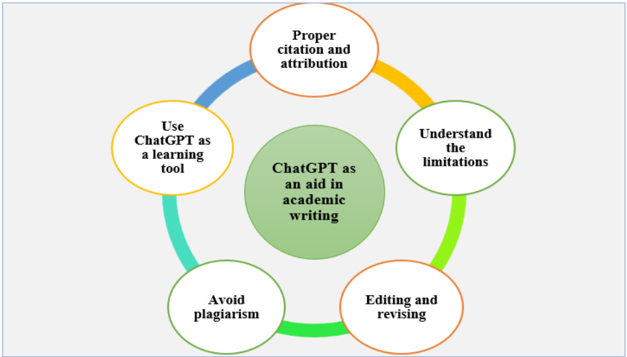
This study aims to review the existing literature on using ChatGPT in academic writing and its implications regarding plagiarism. Various databases, including Scopus, Google Scholar, ScienceDirect, and ProQuest, were searched using specific keywords related to ChatGPT in academia, academic research, higher education, academic publishing, and ethical challenges. The review provides an overview of studies investigating the use of ChatGPT in academic writing and its potential association with plagiarism. The results of this study contribute to our understanding of the use and misuse of ChatGPT in academic writing, considering the growing concern regarding plagiarism in higher education. The findings suggest that ChatGPT can be a valuable writing tool; however, it is crucial to follow responsible practices to uphold academic integrity and ensure ethical use. Properly citing and attributing ChatGPT’s contribution is essential in recognizing its role, preventing plagiarism, and upholding the principles of scholarly writing. By adhering to established citation guidelines, authors can maximize ChatGPT’s benefits while maintaining responsible usage.
Checked 2026-10-06 · 1 reference not checked yet
Overview
CoChat Summary
TL;DR
This systematic literature review examines whether using ChatGPT in academic writing is a form of plagiarism, synthesizing 20 selected articles. It finds divided views: ChatGPT can aid writing, but uncited use raises plagiarism concerns, and proper citation/attribution is central.
Key findings
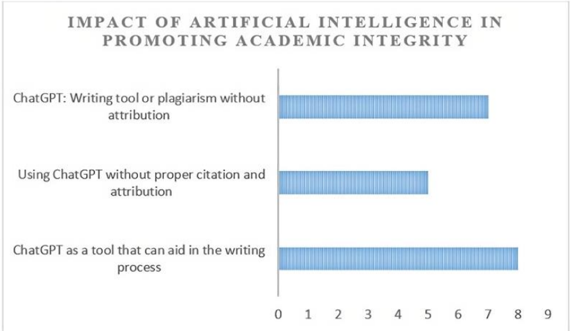
- Among the 20 selected articles, 8 highlight ChatGPT as a tool that can aid the writing process, 7 raise concerns about ChatGPT as a writing tool or as a potential source of plagiarism without proper attribution, and 5 emphasize using ChatGPT with appropriate citation and attribution.
- The review reports an ongoing debate: some argue that using ChatGPT without proper citation and attribution could be plagiarism because generated content is not original work; others argue that if generated content is critically evaluated, rephrased, and properly cited, its use in academic writing can be acceptable and does not constitute plagiarism.
- The conclusion states that ChatGPT falls short of producing academic writing that meets required academic journal publication standards, but excels in providing fast information with excellent language proficiency, primarily free of grammatical errors; the authors also state they used ChatGPT as an aid in writing this article, which was subsequently revised and edited.
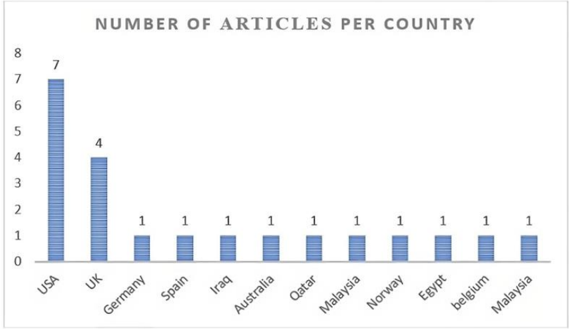
- Regional distribution as reported: European universities contributed 9 articles, American universities 7, Asian universities 3, and universities from Africa and Australia each contributed 1 article; the text also says this totaled five articles, and the reported regional counts are internally inconsistent.
Methods
- Systematic literature review (SLR) based on PRISMA guidelines, searching databases and using keywords related to ChatGPT, chatbot, education, academic writing, plagiarism, citation, and attribution; the abstract, methodology, and search process list different database sets.
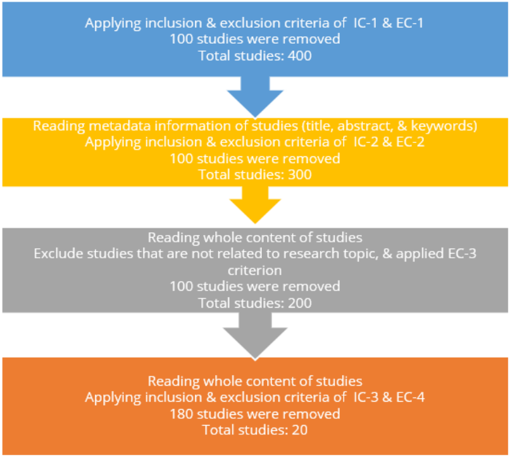
- Four-stage screening from 500 distinct records to 20 included papers, using inclusion/exclusion criteria such as English language, educational chatbot, comprehensive usage details, empirical evidence, and exclusion of duplicates, tutorials, posters, technical reports, review papers, short papers, and PhD theses.
- Data were extracted and coded, then synthesized into three dimensions: ChatGPT as a writing aid, using ChatGPT without proper citation and attribution, and ChatGPT as a writing tool or plagiarism without attribution.
Limitations
- The paper’s stated limitations and implications focus on ChatGPT use: potential plagiarism and the need for citation/attribution; inaccuracies or misleading AI-generated content; difficulty detecting academic integrity violations; unequal access and the digital divide; bias; and the need for peer-review adaptation and institutional policies.
- Evident from the text: database/search reporting is inconsistent across the abstract, methodology, and search process; regional article counts are internally inconsistent (9 + 7 + 3 + 1 + 1 exceeds 20, and “totaling five articles” is unclear); no formal quality appraisal of included studies is described beyond inclusion/exclusion criteria.
- The review states in one section that it “cannot provide specific references to support this viewpoint,” which limits support for that particular claim.
Model-written summary. Check it against the paper before relying on it.
Integrity signals
Registry
Cites
Statistics
Figures
Verification
Claims the paper makes
0 Valid · 5 Not valid · 17 Not checked · 60 Own results and interpretations
None of the sources cited for this claim have been checked yet.
In the paper
“Firstly, ChatGPT is a tool that can enhance the writing process.”
- Also stated in: § ChatGPT as a Tool That Can Aid in Writing Process · plain
“Among the selected articles, a significant majority (eight articles) highlight ChatGPT as a tool that can aid in the writing process, emphasizing its positive role.”
- Also stated in: § ChatGPT as a Tool That Can Aid in Writing Process · boosted
“Numerous research has shown that ChatGPT is a helpful tool that can help with the writing process.”
§ Using ChatGPT in academic writing is (not) a form of plagiarism: What does the literature say? > DISCUSSION
boostedstates a cause- Asserted: passes — The authors put it forward as true.
- Checkable: passes — It can be checked against evidence.
- Load-bearing: passes — The paper’s conclusions depend on it.
- Based: passes — The paper gives a reason why it holds.
- Also stated in: § ChatGPT as a Tool That Can Aid in Writing Process · plain
A result the paper reports from its own data — it cites no other source for it, so there is none to check. The quote shows it is in the paper.
In the paper
“However, a smaller number of articles (seven articles) indicate concerns regarding ChatGPT being used as a writing tool or as a potential source of plagiarism without proper attribution.”
§ Using ChatGPT in academic writing is (not) a form of plagiarism: What does the literature say? > Impact of Artificial Intelligence on Promoting Academic Integrity
hedged- Asserted: passes — The authors put it forward as true.
- Checkable: passes — It can be checked against evidence.
- Load-bearing: unclear — It is unclear whether the paper’s conclusions depend on it.
- Based: passes — The paper gives a reason why it holds.
In the paper
“The findings demonstrate that ChatGPT can generate complex and sophisticated text outputs, evading detection from plagiarism-checking software.”
§ Using ChatGPT in academic writing is (not) a form of plagiarism: What does the literature say? > Using ChatGPT in Academic Writing
What the sources say
- Not checked yetcites Khalil and Er (2023)
boostedstates a cause- Asserted: passes — The authors put it forward as true.
- Checkable: passes — It can be checked against evidence.
- Load-bearing: passes — The paper’s conclusions depend on it.
- Based: passes — The paper gives a reason why it holds.
A result the paper reports from its own data — it cites no other source for it, so there is none to check. The quote shows it is in the paper.
In the paper
“Additionally, a subset of articles (five articles) emphasizes the importance of using ChatGPT with appropriate citation and attribution (Figure 4).”
§ Using ChatGPT in academic writing is (not) a form of plagiarism: What does the literature say? > Impact of Artificial Intelligence on Promoting Academic Integrity
plain- Asserted: passes — The authors put it forward as true.
- Checkable: passes — It can be checked against evidence.
- Load-bearing: unclear — It is unclear whether the paper’s conclusions depend on it.
- Based: passes — The paper gives a reason why it holds.
A result the paper reports from its own data — it cites no other source for it, so there is none to check. The quote shows it is in the paper.
In the paper
“Among the selected articles, a significant majority (eight articles) highlight ChatGPT as a tool that can aid in the writing process, emphasizing its positive role.”
- Also stated in: § ChatGPT as a Tool That Can Aid in Writing Process · plain
“Among the selected articles, most of eight studies emphasize the beneficial role of ChatGPT as a tool for supporting the writing process.”
§ Using ChatGPT in academic writing is (not) a form of plagiarism: What does the literature say? > ChatGPT as a Tool That Can Aid in Writing Process
plain- Asserted: passes — The authors put it forward as true.
- Checkable: passes — It can be checked against evidence.
- Load-bearing: passes — The paper’s conclusions depend on it.
- Based: passes — The paper gives a reason why it holds.
- Also stated in: § ChatGPT as a Tool That Can Aid in Writing Process · plain
8 more claims
Create a free account to see all 82 claims and to verify the 14 references still open.
- Probably not a substantial claim. 64
- It may state two separate claims as one. 29
- The quote only partly states this claim. 1
Claims other papers make about this one
Each is checked against this paper’s own text: does it say what the citing paper says it does?
The source backs part of the claim, not all of it — or backs it for a different population, condition or comparison.
In the citing paper
“Recent surveys of researchers across disciplines indicate that a growing share of scholars use tools such as ChatGPT, Claude, and Gemini to draft manuscripts, generate literature reviews, and suggest/compile reference lists [1,2].”
From How LLMs Cite and Why It Matters: A Cross-Model Audit of Reference Fabrication in AI-Assisted Academic Writing and Methods to Detect Phantom Citations (2026) · cites this paper as [1]
Experimental — accuracy not yet measuredThe source backs part of the claim, not all of it — or backs it for a different population, condition or comparison.
In the citing paper
“While proper attribution allows students to benefit from AI without violating academic standards (Perkins, 2023), empirical studies indicate that failing to disclose AI assistance is commonly interpreted as academic dishonesty (Eke, 2023;Jarrah et al., 2023;Mansilla et al., 2022;Wardat et al., 2023).”
From Academic Integrity and Students’ Ethical Use of ChatGPT in Higher Education (2026) · cites this paper as Jarrah et al., 2023
Experimental — accuracy not yet measuredThe source backs part of the claim, not all of it — or backs it for a different population, condition or comparison.
In the citing paper
“This shift necessitates the re-evaluation of multiple educational parameters-from assignment design and assessment strategies to the graduate skills required in a GenAI-informed academic and professional environment [4,6,13,14].”
From Artificial Intelligence in Higher Education: A State-of-the-Art Overview of Pedagogical Integrity, Artificial Intelligence Literacy, and Policy Integration (2025) · cites this paper as [14]
Experimental — accuracy not yet measuredThe source backs part of the claim, not all of it — or backs it for a different population, condition or comparison.
In the citing paper
“This study supports the broader theoretical call for integrating digital ethics and AI competencies into the curriculum (Jarrah et al., 2023;AlZaabi et al., 2023).”
From Training Students to Identify and Correct Fabricated References in ChatGPT-Generated Literature Reviews (2025) · cites this paper as Jarrah et al., 2023
Experimental — accuracy not yet measuredThe source backs part of the claim, not all of it — or backs it for a different population, condition or comparison.
In the citing paper
“Among these technologies, large language models (LLMs) such as ChatGPT have demonstrated remarkable fluency in producing coherent and technically structured scientific texts across various disciplines, including health sciences and rehabilitation domains.”
From Fabricated or accurate? Ethical concerns and citation hallucination in aI-generated scientific writing on musculoskeletal topics (2025) · cites this paper as [3]
Experimental — accuracy not yet measured
2 more claims about this paper
Create a free account to see every claim other papers make about this one.
Self-check
Percentages, sums and reported differences re-computed from the paper’s own numbers.
Each contradiction between two passages listed here was confirmed by an independent check.
Rated minor: it would not touch a result — a value no result rests on, a p-value that stays on the same side of the significance level, or a conflict that is clerical, resolved elsewhere in the paper, or outside its own findings.
In the paper
§ Using ChatGPT in academic writing is (not) a form of plagiarism: What does the literature say? > Impact of Artificial Intelligence on Promoting Academic Integrity
“Among the selected articles, a significant majority (eight articles) highlight ChatGPT as a tool that can aid in the writing process, emphasizing its positive role.”
§ Using ChatGPT in academic writing is (not) a form of plagiarism: What does the literature say? > Impact of Artificial Intelligence on Promoting Academic Integrity
“The total number of articles in Figure 4 is 20, corresponding to the number of selected articles.”
Rated minor: it would not touch a result — a value no result rests on, a p-value that stays on the same side of the significance level, or a conflict that is clerical, resolved elsewhere in the paper, or outside its own findings.
In the paper
“Furthermore, universities from Africa and Australia each contributed 1 article, totaling five articles.”
§ Using ChatGPT in academic writing is (not) a form of plagiarism: What does the literature say? > Using ChatGPT in Academic Writing
Reported 5 · recomputed 2
Rated minor: it would not touch a result — a value no result rests on, a p-value that stays on the same side of the significance level, or a conflict that is clerical, resolved elsewhere in the paper, or outside its own findings.
In the paper
§ Using ChatGPT in academic writing is (not) a form of plagiarism: What does the literature say? > Using ChatGPT in Academic Writing
“A notable observation is that most of the selected publications were either published or co-written by academics from American universities, indicating a significant American contribution to the research.”
§ Using ChatGPT in academic writing is (not) a form of plagiarism: What does the literature say? > Using ChatGPT in Academic Writing
“European universities also exhibited a robust research output, accounting for the highest number of articles (nine articles) among all regions.In terms of regional contributions, Asian universities contributed three articles, while American universities contributed seven articles.”
Citations
Cites
Preferred reporting items for systematic reviews and meta-analyses: The PRISMA statement
Moher, D., Liberati, A., Tetzlaff, J., Altman, D. G., & the PRISMA Group* (2009) · Annals of Internal Medicine · doi:10.7326/0003-4819-151-4-200908180-00135 · Cited by 37,554
Zawacki-Richter, O., Marín, V. I., Bond, M., & Gouverneur, F. (2019) · International Journal of Educational Technology in Higher Education · doi:10.1186/s41239-019-0171-0 · Cited by 7,242
On the Dangers of Stochastic Parrots: Can Language Models Be Too Big? 🦜
Bender, E. M., Gebru, T., McMillan-Major, A., & Shmitchell, S. (2021) · Proceedings of the 2021 ACM Conference on Fairness, Accountability, and Transparency · doi:10.1145/3442188.3445922 · Cited by 6,988
Artificial Intelligence in Education: A Review
Chen, L., Chen, P., & Lin, Z. (2020) · IEEE Access · doi:10.1109/access.2020.2988510 · Cited by 4,133
Chatting and cheating: Ensuring academic integrity in the era of ChatGPT
Cotton, D. R. E., Cotton, P. A., & Shipway, J. R. (2024) · Innovations in Education and Teaching International · doi:10.1080/14703297.2023.2190148 · Cited by 3,087
Chatting and Cheating. Ensuring academic integrity in the era of ChatGPT
Cotton, D., Cotton, P., & Shipway, J. R. (2023) · doi:10.35542/osf.io/mrz8h · Cited by 3,079
Artificial intelligence: A powerful paradigm for scientific research
Xu, Y., Liu, X., Cao, X., Huang, C., Liu, E., Qian, S., Liu, X., Wu, Y., Dong, F., Qiu, C.-W., et al. (2021) · The Innovation · doi:10.1016/j.xinn.2021.100179 · Cited by 1,726
Artificial hallucinations in ChatGPT: implications in scientific writing
Alkaissi, H., & McFarlane, S. I. (2023) · Cureus · doi:10.7759/cureus.35179 · Cited by 1,540
Gao, C. A., Howard, F. M., Markov, N. S., Dyer, E. C., Ramesh, S., Luo, Y., & Pearson, A. T. (2023) · npj Digital Medicine · doi:10.1038/s41746-023-00819-6 · Cited by 1,099
High-speed spelling with a noninvasive brain–computer interface
Chen, X., Wang, Y., Nakanishi, M., Gao, X., Jung, T.-P., & Gao, S. (2015) · Proceedings of the National Academy of Sciences · doi:10.1073/pnas.1508080112 · Cited by 969
Research works printed but not linked: 4
- Frye, B. L. (2022). Should using an AI text generator to produce academic writing be plagiarism? Fordham Intellectual Property, Media & Entertainment Law Journal, 947.
- Gavilán, J. C. O., Díaz, D. Z., Huallpa, J. J., Cabala, J. L. B., Aguila, O. E. P., Puma, E. G. M., Vasquez-Pauca, M. J., Mansilla, E. B. R., Laura, P. A. S., & Hoces, W. B. (2022). Technological social responsibility in university professors. Eurasian Journal of Educational Research, 100(100), 104-118.
- Gough, D., Oliver, S., & Thomas, J. (2017). An introduction to systematic reviews. SAGE.
- Mansilla, E. B. R., Castillo-Acobo, R. Y., Puma, E. G. M., Maquera, Y. M., Gonzales, J. L. A., & Vasquez-Pauca, M. M. J. (2022). Stress in university teachers in the framework of the post-pandemic face-to-face. Journal of Namibian Studies, 33(S1), 71-85.
Cited by
Items 201–300 of 302
Yu, B. (2025) · International Journal of Education and Humanities · doi:10.54097/x8q26w95 · Cited by 1
Gitalan, P. V., & Regis, J. M. M. (2025) · Journal of Education and Learning Reviews · doi:10.60027/jelr.2025.2031 · Cited by 1
Sismat, M. A. H., Abdullah, R. B., Kahar, K. B. H. A., Abdullah, R. B., & Jarudin, A. (2025) · Studies in computational intelligence · doi:10.1007/978-3-032-01348-4_12 · Cited by 2
AI Tools as Facilitators or Threats to Vietnamese Students' Academic Integrity in Research Writing
Le, T. P., Khoi, D., Hoang, T. H. D., & Nguyen, X. H. (2025) · AsiaCALL Online Journal · doi:10.54855/acoj.251623 · Cited by 2
“In addition, Jarrah et al. (2023) noted that writing ideas and suggestions generated by ChatGPT are highly likely to be plagiarized.”
Oladokun, B. D., Ogunjimi, B. E., Olatunbosun, I. E., Adefila, E. K., Abdul, A., Ebhonu, S. I., Omoniyi, Y. M., & Enakrire, R. T. (2025) · Journal of Library Metadata · doi:10.1080/19386389.2025.2598503 · Cited by 3
“Jarrah et al. (2023) reviewed the implications of ChatGPT in academic writing, stressing the risk of plagiarism if misused.”
Percepción sobre la inteligencia artificial de docentes en formación de República Dominicana
Taveras-Sánchez, B. Y., & Figueroa, R. (2025) · Comunicar · doi:10.5281/zenodo.17217319 · Cited by 2
Artificial Intelligence and Academic Writing: A Scoping Review
Corrales, C. (2025) · LACCEI International Multi-Conference for Engineering, Education and Technology (LACCEI) · doi:10.18687/laccei2025.1.1.2155 · Cited by 1
Apparel pattern modification guidance of competing LLMs: ChatGPT, Claude and Gemini
Knisely-Medina, A., & Jo, J. (2026) · Research Journal of Textile and Apparel · doi:10.1108/rjta-08-2025-0190 · Cited by 2
Al-Maamari, F. S. (2026) · International Journal of Learning Teaching and Educational Research · doi:10.26803/ijlter.25.2.14 · Cited by 1
Pham, A. N. M., Lam, T. T., Thach, T. N., Tran, A. T., & Tran, B. X. (2025) · International Workshop on Artificial Intelligence and Education (WAIE) · doi:10.1109/waie67422.2025.11381097 · Cited by 1
“Plagiarism may be committed if text created using ChatGPT is used directly without giving due credit and citation [8], [9].”
Yundayani, A., Mukminin, A., & Alghadari, F. (2026) · Высшее образование в России · doi:10.31992/0869-3617-2026-35-3-149-168 · Cited by 1
Khan, H., Nafis, M. T., Sohail, S. S., Khalique, A., & Khan, R. H. (2026) · International Conference on Emerging Computational Intelligence (ICECI) · doi:10.1109/iceci69159.2026.11519401 · Cited by 2
“This gap leads to an important research question: how can we create a practical evaluation framework that can detect hallucinations in AI-generated academic writing across different categories and different types of models?”
Diyal, S. B., & Malla, V. (2026) · Innovative Research Journal · doi:10.3126/irj.v5i1.97105 · Cited by 1
“Faculty generally support the use of GenAI for activities such as brainstorming, language refinement, and preliminary writing support, provided that these technologies do not replace critical thinking, scholarly reasoning, or independent knowledge construction (Jarrah et al., 2023).”
InfluentialÁlvarez-Jiménez, M., Pomagualli, A. G. C., Gamboa, D., & Oscullo, D. S. P. (2026) · Computers · doi:10.3390/computers15070466 · Cited by 3
“Undeclared use, often driven by fear of sanctions, together with unequal access to GenAI tools and skills, further exacerbates existing equity gaps [66,67].”
Integrating ChatGPT into 5E inquiry-based learning to scaffold EFL academic research writing
Cheng, Y.-H. (2026) · Asian-Pacific Journal of Second and Foreign Language Education · doi:10.1186/s40862-026-00455-z · Cited by 1
“While studies have reported benefits for language practice, idea generation, and language-focused revision (Barrot, 2023), concerns persist regarding overreliance, academic integrity, and the potential erosion of authorial voice (Cotton et al., 2024; Jarrah et al., 2023).”
The Role of Research Obsession in Shifting ChatGPT into a Plagiarism Tool
Hazaymeh, O. M.-A. A. (2024) · International Journal of Applied Research and Sustainable Sciences · doi:10.59890/ijarss.v2i1.1277 · Cited by 1
AI Tools for Efficient Writing and Editing
Samantaray, R. R., & Azeez, A. (2024) · Advances in educational technologies and instructional design book series · doi:10.4018/979-8-3693-1798-3.ch004 · Cited by 1
ChatGPT and the Crisis of Academic Honesty
Khaleel, M. I., Taha, Z. A., Murad, I. A., & Zahawii, M. (2024) · Alkadhim journal for computer science. · doi:10.61710/kjcs.v2i1.66 · Cited by 1
“In contrast to [11], [12] highlights concerns related to academic dishonesty, including cheating, plagiarism, and the replication of academic content.”
BackgroundIslam, M. N., & Aziz, M. T. B. (2024) · Lecture notes in electrical engineering · doi:10.1007/978-981-97-8031-0_37 · Cited by 2
Language Course Writing Task and AI-Generated Writing Detection: An Ethical Concern
Lau, Y. L., Bakar, A. L. A., Chau, S. K., Sik, R. Y., Yap, J. T. K., Yong, H. W., Tan, J. C., & Ambikapathy, A. (2025) · Advances in computational intelligence and robotics book series · doi:10.4018/979-8-3693-7260-9.ch012 · Cited by 1
Usage and Attitudes of Researchers in Iraq toward Artificial Intelligence in Scientific Research
Ghazi, H. F., & Hasan, T. N. (2025) · Journal of Postgraduate Medicine Education and Research · doi:10.5005/jp-journals-10028-1761 · Cited by 1
Schofield, L., Zhou, X., Petrov, G., & Woon, A. (2026) · Journal of Learning Development in Higher Education · doi:10.47408/jldhe.vi41.1835 · Cited by 1
“Current applications include supporting academic writing through brainstorming, drafting, and editing (Jarrah et al., 2023; Wang, 2025); providing personalised feedback and learning support (Song & Song, 2023); facilitating content creation (Rawas, 2024); and streamlining writing tasks such as…”
Research Ethics Among Undergraduates of the Social Sciences
Shaikh, S. S., & Chhachhar, D. A. R. (2024) · Advances in information quality and management · doi:10.4018/979-8-3693-1726-6.ch010
Effective Strategies for Avoiding Plagiarism in Academic Writing: An Interdisciplinary Approach
Bhatta, D. C. (2024) · The Voice of Creative Research · doi:10.53032/tvcr/2024.v6n4.03
Smart Tools and Ethics: A New Era in Research Writing
Jung, I. (2024) · Springer eBooks · doi:10.1007/978-981-96-0801-0_5
Research on the Application of ChatGPT in Academic Writing
钟, 茜. (2025) · Advances in Education · doi:10.12677/ae.2025.153383
Briand, S., & Ciavaldini-Cartaut, S. (2025) · Médiations et médiatisations · doi:10.52358/mm.vi20.424
Yuan, Q. (2025) · International Conference on Educational and Information Technology · doi:10.1109/iceit64364.2025.10976210 · Cited by 1
Balraj, B. M. (2025) · SocArXiv (OSF Preprints) · doi:10.31235/osf.io/nhc9u_v1
Gunawardana, H. M. R. S. S. (2025) · Springer eBooks · doi:10.1007/978-981-96-6001-8_7
Davenport, H. L. (2025) · Communication Teacher · doi:10.1080/17404622.2025.2536084 · Cited by 1
“Generative AI can serve as a useful tool but can also generate concerns surrounding ethics, academic dishonesty, and ensuring original student work (Jarrah et al., 2023).”
Unlocking the Future: EFL Students' Insights on Artificial Intelligences for Academic Writing
Assapari, M. M., Hidayati, R., & Mukti, S. R. W. (2025) · Indonesian Journal of Artificial Intelligence and Data Mining · doi:10.24014/ijaidm.v8i1.30307
“ChatGPT is recognized for aiding in idea generation, enhancing linguistic clarity, and boosting efficiency, yet concerns over plagiarism and excessive dependence remain [35] .”
Nguyen, L. T., & Tuamsuk, K. (2025) · De Gruyter eBooks · doi:10.1515/9783111373485-024
Ashour, S. (2025) · The political economy of the Middle East/The political economy of the Middle East · doi:10.1007/978-981-96-7963-8_4
How Future Teachers Perceive Artificial Intelligence?
Kubiatko, M. (2025) · Signals and communication technology · doi:10.1007/978-3-031-96855-6_15
Burke, K., Bedford, A., Roux, R., Scott, E. H., Thomas, J. L., & Chamlin, T. L. (2025) · International Journal of Changes in Education · doi:10.47852/bonviewijce52026912 · Cited by 1
“Of particular concern for schools is generative artificial intelligence (GenAI), which can produce a human-like chat interface that can provide information, generate suggestions, produce sophisticated multi-modal outputs, and undertake extensive editing when prompted suitably [1].”
Guidelines for managing and utilizing generative artificial intelligence writing tools
Mufeti, T. K., Amakali, J. M. L., & Greenlaw, R. (2025) · NAWA Journal of Language and Communication · doi:10.59677/njllcs.v19i1.121
Inteligencia artificial: nuevas experiencias académicas
Escudero-Nahón, A. (2025) · Editorial Transdigital eBooks · doi:10.56162/transdigitalbc04
García, J. Á. R., & Escudero-Nahón, A. (2025) · Editorial Transdigital eBooks · doi:10.56162/transdigitalbc04.08
Clean-O-Matic: The Modern Message
Manek, A. S., H, D., Nandini, K., & A., K. (2025) · China International Conference on Circuits and Systems · doi:10.1109/ciccs66437.2025.11280074
“With evolving technology, it holds strong potential for wider everyday applications [14].”
Yıldız, T. A., & Yağcı, Ş. Ç. (2025) · IGI Global eBooks · doi:10.4018/979-8-3373-3967-2.ch005
Predictors of Paraphrasing Website Use in Undergraduate College Students
Chervenak, L. M. (2024) · ScholarWorks (Walden University)
The effectiveness of ChatGPT as a revising and editing tool on students’ writing performance
Kamal, S. (2024) · eTheses of Maulana Malik Ibrahim State Islamic University (Maulana Malik Ibrahim State Islamic University) · Cited by 1
Cainoy, J. P. (2025) · Advances in computational intelligence and robotics book series · doi:10.4018/979-8-3373-7386-7.ch007 · Cited by 1
Assessing the Pros and Cons of AI-Supported Learning in Education (Position Paper)
Abd-Rabo, A. M., & Hashaikeh, S. A. I. (2025) · Journal of Palestine Ahliya University for Research and Studies · doi:10.59994/pau.2025.si.231 · Cited by 1
“You must follow data protection and cybersecurity principles to ensure that users' privacy is not violated or their data is stolen (Jarrah et al., 2023).”
InfluentialFagroud, K., & Mrah, I. (2025) · Innovation, Technologies, Education et Communication · doi:10.60590/prsm.itec-iss10.173
Modern teaching approaches to the Compton phenomenon: theoretical and practical analysis
Παπαγεωργίου, Ι. Ν., & Παπαγεωργίου, Ι. Ν. (2025) · University of Thessaly Institutional Repository (University of Thessaly)
The Use of Generative Artificial Intelligence in Research
Labrosse, I., Campbell, D., Karlstrøm, H., Iversen, E. J., Wang, L., & Notten, A. (2025) · Research Publications (Maastricht University) · doi:10.2777/1024414 · Cited by 1
Oliva, L. E. A., & May-Guillermo, E. G. (2026) · Emerging Trends in Education · doi:10.19136/etie.v8n16.6338
A Comparative Analysis of Chatgtp-4/4.5 and Human-written Summaries in Linguistic Research
Stošić, A., Milojković, M., & Branković, A. (2025) · International Conference on e-Learning (eLearning) · doi:10.46793/elearning2025.205s
The Brat Brain: ChatGPT and the Crisis of Intellectual Effort in Language Education
Wardak, M. (2026) · Arab World English Journal · doi:10.24093/awej/ai3.4 · Cited by 1
“These guidelines should define acceptable practices, outline consequences of misuse, and include advanced AI-detection tools that recognize machine-generated patterns (Alexander et al., 2023; Jarrah et al., 2023).”
From Assistance to Abuse: Investigating AI’s Role in Academic Dishonesty
Dangin, D., Setyawan, A. H., & Rahmawan, A. D. (2026) · International Journal of Science and Environment (IJSE) · doi:10.51601/ijse.v6i1.308
“This shared mindset shows that their choices are influenced not only by personal intentions but also by the culture around them, the pressures they face, and the ease with which AI tools offer help (Jarrah et al., 2023).”
Artificial intelligence in writing: unveiling a research landscape
Salehudin, W. R., Saari, Z., & Abas, H. (2026) · IAES International Journal of Artificial Intelligence · doi:10.11591/ijai.v15.i1.pp66-75
Baker-Gardner, R. (2025) · Emerald Group Publishing Limited eBooks · doi:10.1108/978-1-83608-186-920251023
Artificial Intelligence for Academic Writing: A Bibliometric Analysis (2022–2026)
Hamid, S. H. A., Noor, N. M., & Halim, N. H. A. (2026) · Innovative Teaching and Learning Journal · doi:10.11113/itlj.v10.218
“Apart from the natural educational challenges, growing use of AI in academic writing has led to concerns about violations of academic integrity, ethical issues (and the validity of student work) and calls for an ethical and responsible integration into education (Jarrah et al., 2023; Lendvai, 2025).”
Research on the Effect of Intelligent Writing Aids in Literary Creation
Yan, F. (2026) · Information Resources Management Journal · doi:10.4018/irmj.405420
Ethical Use of ChatGPT and Critic-AI in Academic Writing and ResearchPreprint
Yaprak, Z. (2026) · SSRN Electronic Journal · doi:10.2139/ssrn.6539730
Yang, X., Zhao, Z., Chen, W., Xu, C. K., & Hui, P. (2026) · CHI Conference on Human Factors in Computing Systems · doi:10.1145/3772318.3790702
“At the same time, scholarship on platform-mediated labor has examined how algorithmic governance restructures task assignment, authority, and worker precarity within gig and freelance economies [42, 46, 47, 96].”
Lee, J., & Esposito, A. G. (2026) · Educational Psychology · doi:10.1080/01443410.2026.2651729
Ethical and social dynamics in artificial intelligence and society: A bibliometric study
Игоревна, Т. Л., Gorshkova, K. L., Kolomiets, O. M., Карева, Е. Н., Zaitseva, N. A., Sokolova, E. G., & Коробкова, О. К. (2026) · Online Journal of Communication and Media Technologies · doi:10.30935/ojcmt/18475 · Cited by 1
Pedagogical Insight of University Students into ChatGPT Use in Academic Writing
Untari, M., & Trisanti, N. (2026) · Journal of English Language and Education · doi:10.31004/jele.v11i1.2017 · Cited by 1
“…concerns related to academic integrity, authorship, and students’ reliance on AI -generated content continue to be highlighted in recent literature, indicating the need for critical and ethical engagement with AI technologies in academic writing (Fontenelle-Tereshchuk, 2024; Jarrah et al., 2023).”
InfluentialINTEGRATION OF ARTIFICIAL INTELLIGENCE INTO ONLINE EDUCATIONAL PLATFORMS: CHALLENGES AND PROSPECTS
Zhumatayeva, Z. N., Mametkarim, Z. M., & Abdol, E. (. (2026) · Bulletin of Toraighyrov University Pedagogics Series · doi:10.48081/bgqf1828
Maphosa, M., & Tlomatsana, C. (2026) · Information Research · doi:10.47989/ir31263101 · Cited by 1
“Of late, AI systems can simulate cognitive tasks associated with humans, such as solving problems and making decisions (Bidgoli 2021; Jarrah et al., 2023; Wang 2019).”
BUKU AJAR METODE PENELITIAN ILMU LINGKUNGAN
Latuamury, B. (. (2026) · Neliti · Cited by 1
Alalwi, F. S., Alqahtani, N. R., Jamshed, M., & Ahmmed, M. F. (2026) · World Journal of English Language · doi:10.5430/wjel.v16n5p197
Students' perceptions of the use of artificial intelligence (AI) in academic writing
Ahmad, S. N., Khairuddin, Z., Shahabani, N. S., Yusof, F. H. M., Zamri, N. A. B., Ahmad, A. R., & Ibrahim, W. N. A. T. (2025) · UiTM Institutional Repositories (Universiti Teknologi MARA) · doi:10.24191/cplt.v13i3.7496 · Cited by 1
Musaqqaf, B. I. F., & Bisriyah, M. (2026) · Journal of English Language Teaching and Learning (JETLE) · doi:10.18860/jetle.v7i2.42005
“Over-reliance on AI tools may hinder the development of students' critical thinking, originality, and their ability to write independently (Elkatmış, 2024; Jarrah et al., 2023).”
Xervaser, C. R., & Teh, D. T. B. E. (2026) · Malaysian Journal of ELT Research · doi:10.52696/avwe7447
“These lead to a worrying lack of critical judgement on AI-induced learning, which may in turn encourage blind adoption or worse, plagiarism of AI-generated content (Barrot, 2023; Jarrah et al., 2023; Tilfarlioglu & Ciftci, 2011).”
Gençel, N., & Yılmaz, E. (2026) · International Journal of Technology in Education · doi:10.46328/ijte.6277
Exploring the role of ChatGPT in special education: potential uses and concerns
Giaouri, S., & Charisi, M. (2026) · Psychological Science and Education · doi:10.17759/pse.2026310315
Martinez, M. R., & Bacani, A. (2026) · Diversitas Journal · doi:10.48017/dj.v11i3.3874
“Jarrah, Wardat, and Fidalgo (2023) emphasize that while ChatGPT can be a valuable writing tool, responsible practices such as proper attribution and disclosure of AI use are essential to avoid plagiarism.”
InfluentialIndongo, J. N., & Ruhozu, M. (2026) · Perspectives in Education · doi:10.38140/pie.v44i2.9510
“Jarrah et al .”
Putri, N. A., Kafabih, A., Solikha, A. S., Cleovena, M. H., Herda, R. K., & Monteza, A. M. M. (2026) · LEAD (Language Education and Development) · doi:10.20884/1.lead.2026.5.1.17365
The Effect of Chatgpt on Vocational Students’ Writing and Plagiarism Awareness
Kardiyasa, I. G., Santosa, M. H., & Kusuma, I. P. I. (2026) · JURNAL ILMIAH GLOBAL EDUCATION · doi:10.55681/jige.v7i3.6900
ChatGPT in the literature: A bibliometric analysis
Arık, M. A., Yalman, A., LİVBERBER, T., Aydoğan, H., Şeker, T., & Şeker, M. (2026) · Journal of Information Science · doi:10.1177/01655515261476215
Ethical Challenges Of Ai-Assisted Efl Learning: A Library Research On Students’ Academic Integrity
Musyarofah, Z. A., Ariesta, N., Anggraeni, R., & Husaen, A. M. (2026) · Tarling Journal of Language Education · doi:10.24090/5y56k942
Vaca, X. M. M., Álvarez, C. A. E., Freire, A. V. B., Cuyo, A. G. G., & Álvarez, E. J. Q. (2026) · Sercapo Journal Scientific · doi:10.67166/6sjg7108
Lecturers’ Perspectives on the Use of ChatGPT in Accountancy Education: Opportunities and Threats
Nwosu, L. I., Leendertz, V., & Marx, A. (2026) · Springer eBooks · doi:10.1007/978-981-95-9489-4_34
Una mirada al rol de la inteligencia artificial en la investigación científica: Avances y desafíos
Asís-López, M., Rosales, M. H., Briceño, E. M., Vargas, L. N., & Castillo-Vergara, M. (2026) · Investigación Valdizana · doi:10.33554/riv.20.2.2831
Bibliometric analysis of ChatGPT in education
Sabirova, G., Zharkynbekova, S. K., Kannazarova, Z., Mamatkulov, K., Goyibova, N., Avazovna, U. S., & Shasaidova, L. (2026) · Discover Education · doi:10.1007/s44217-026-02006-7
“Moreover, the results demonstrate that the interest in the ChatGPT theme in education started from safety of ChatGPT for students’ use [22], perception of AI in educational contexts [15], integrating ChatGPT in language education [6], strategies for responsible implementation of ChatGPT [17], using…”
Salman, H., Ahmad, M. A., Ibrahim, R. B., & Mahmood, J. (2026) · IEEE Access · doi:10.1109/access.2026.3736880
“Such concerns have been reported among academics since the tools emerged [71], [72], and ethical risk perceptions have reduced adoption intention across AI contexts, including educational AI tools [73] and other AI-mediated services [74].”
Alaulamie, L. A. (2026) · Journal of Education and e-Learning Research · doi:10.20448/jeelr.v13i3.9376
Hess, S., Asenjo, M. P. F., & Meroño, M. C. P. (2026) · INNOVA Research Journal · doi:10.33890/innova.v11.n3.2026.3002
Ethical Use of AI in Scholarly Communication: A Systematic Review
Kumar, A., Kadyan, S., & Rajesh (2025) · College Libraries
Using AI Tools in Thesis Writing: Perspectives from EFL Students and Lecturers
Jaya, S., Melati, & Ahmad, N. (2025) · INTERNATIONAL JOURNAL OF LANGUAGE PEDAGOGY · doi:10.24036/ijolp.v5i2.104
Generative AI in Higher Education: Opportunities, Ethical Challenges, and Responsible Integration
ElFarmawi, W. (2026) · International Journal of Business Technology and Organizational Behavior (IJBTOB)
The Limitations of Navigating ChatGPT as Writing Assistance Tools in EFL Writing Activities
Aulia, V., & Yamin, M. (2024) · INTERACTION Jurnal Pendidikan Bahasa · Cited by 3
USING AI Chat GPT POWERED DIGITAL WRITING ASSISTANT IN HIGHER EDUCATION: EFL STUDENT’S PERCEPTION
Sambega, P. S. (2025) · UMM Institutional Repository (Universitas Muhammadiyah Malang)
Correlation Analysis: AI Usage Frequency in Academic Writing Course and Plagiarism Awareness
Habiba, H., & Jaya, H. P. (2025) · Journal of English Language and Education · doi:10.31004/jele.v10i5.1405
Using ChatGPT for Research Writing: Perspectives of Jordanian EFL Learners
Ammari, R., & Hantouleh, E. (2026) · International Journal of Arabic-English Studies · doi:10.33806/ijaes1243
Enchantment of Artificial Intelligence: Emerging Advances in Language Development
Banerjee, N., & Rakshit, S. (2024) · Brolly
Unveiling LLM-Generated Text in Student Writing: A Multi-Cohort Study
Wang, Z., Ng, J. T.-D., & Hu, X. (2026) · IEEE International Conference on Advanced Learning Technologies (ICALT) · doi:10.1109/icalt68022.2026.00054
ChatGPT, integridad académica y plagio: percepciones de estudiantes universitarios de educación
Pariamachi, L. G. C., Garay, J. P. P., Wuffarden, J. E. E., Rodríguez, P. C. O., & Vásquez, A. R. O. (2026) · Revista InveCom · doi:10.5281/zenodo.23406255
Sánchez, S. Á., Gómez, E. I. A., Navarro, M. L. A., Breva, A., Salas, S. D., Jiménez, M. G., Moya, I. G., Garrido, R., García, M. V. H., Ramos, D. H., et al. (2026) · Deposito de Investigacion Universidad de Sevilla (University of Seville) · doi:10.5281/zenodo.23434680
Falcón, A. W. C., Reategui, J. F. G., Cienfuegos, H. J. A., & Pimentel, E. M. S. (2026) · Prisma social · doi:10.65598/rps.6263
Tie, J., Ortega, M. G., & Zhao, D. (2026) · Frontiers in Education · doi:10.3389/feduc.2026.1998449 · Cited by 1
Metadata
- Authors
- Jarrah, A. M., Wardat, Y., & Fidalgo, P.
- Affiliations
- Emirates College for Advanced Education (AE)
- Higher Colleges of Technology (AE)
- Emirates College for Advanced Education, Abu Dhabi, UAE
- Corresponding author
- Wardat, Yousef
- Venue
- Online Journal of Communication and Media Technologies
- Publisher
- Bastas Publications
- Published
- 2023-10-01
- Volume
- 13
- Issue
- 4
- Pages
- e202346
- ISSN
- 1986-3497 (ISSN-L)
- OpenAlex
- W4385757151
- Cited by
- 220
- References
- 39
- Citations by year
- 2026: 31 · 2025: 88 · 2024: 92 · 2023: 8
- FWCI
- 54.92
- Type
- journal article
- Language
- en
- Open access
- diamond
- doi.org
- Licence
- cc-by
- Locations
- Online Journal of Communication and Media Technologies (publishedVersion, cc-by)
- Topics
- Social Sciences › Education › Academic integrity and plagiarism
- Social Sciences › Education › Artificial Intelligence in Education
- Physical Sciences › Computer Science › Artificial Intelligence › Ethics and Social Impacts of AI
- Keywords
- ChatGPT, academic writing, plagiarism, academic integrity, generative AI in higher education, AI citation, AI attribution, AI ethics
About these checks
Registry, retraction, Cites and statistics results are computed, not judged, with one exception: a printed reference that no index lists is read once by a model before it counts as a citation error. Claims are extracted by a model and kept only when their quote appears verbatim in the text; each cited source is then checked, with a model’s help, for whether it says what the claim relies on. Those verdicts can be wrong — read the claim’s quote and the cited source before relying on one.
A language model drew the claims from the paper on 2026-10-06, under version 3 of the claim definition (model deepseek-v4.1-flash, prompt extract-v3).
A second model labelled each claim on 2026-10-06 (model jev-1.13-20260917, definition revision gold-guideline-v0.2).
Statistics and arithmetic are recomputed, not judged.
Confidence bands are shown only for fields calibrated on our annotated test set. None is calibrated yet, so no band is shown.
What counts as a claim ›How we measure confidence ›How we check this ›
Are you an author, or do you see a problem with this page? Request a review
Data sources
Bibliographic data: Semantic Scholar, OpenAlex, Crossref.
Contains information from the Semantic Scholar Academic Graph Datasets, made available under the ODC Attribution License (ODC-BY 1.0).
Semantic Scholar’s data is described in: Kinney, R., et al. (2023). The Semantic Scholar Open Data Platform. arXiv:2301.10140.
