

Using ChatGPT in academic writing is (not) a form of plagiarism: What does the literature say?
Open accessThe DOI matches its Crossref record; 41 of the 42 references it cites were found in a registry or an index, and 1 are not checked yet; none of the 14 sources its claims cite is checked for support yet.
Abstract
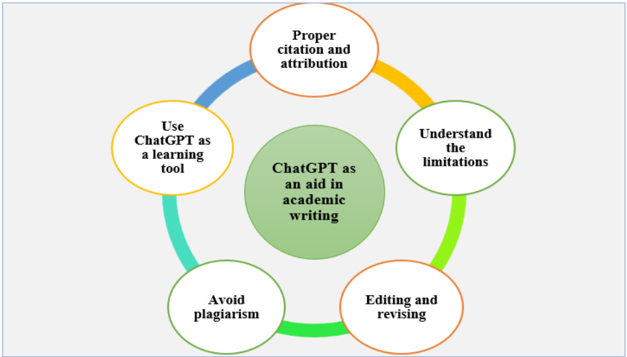
This study aims to review the existing literature on using ChatGPT in academic writing and its implications regarding plagiarism. Various databases, including Scopus, Google Scholar, ScienceDirect, and ProQuest, were searched using specific keywords related to ChatGPT in academia, academic research, higher education, academic publishing, and ethical challenges. The review provides an overview of studies investigating the use of ChatGPT in academic writing and its potential association with plagiarism. The results of this study contribute to our understanding of the use and misuse of ChatGPT in academic writing, considering the growing concern regarding plagiarism in higher education. The findings suggest that ChatGPT can be a valuable writing tool; however, it is crucial to follow responsible practices to uphold academic integrity and ensure ethical use. Properly citing and attributing ChatGPT’s contribution is essential in recognizing its role, preventing plagiarism, and upholding the principles of scholarly writing. By adhering to established citation guidelines, authors can maximize ChatGPT’s benefits while maintaining responsible usage.
Checked 2026-10-06 · 1 reference not checked yet
Overview
CoChat Summary
TL;DR
This systematic literature review examines whether using ChatGPT in academic writing is a form of plagiarism, synthesizing 20 selected articles. It finds divided views: ChatGPT can aid writing, but uncited use raises plagiarism concerns, and proper citation/attribution is central.
Key findings
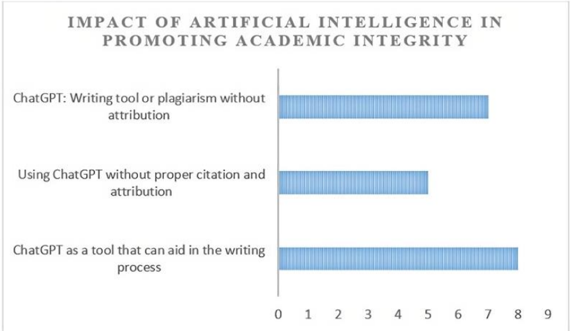
- Among the 20 selected articles, 8 highlight ChatGPT as a tool that can aid the writing process, 7 raise concerns about ChatGPT as a writing tool or as a potential source of plagiarism without proper attribution, and 5 emphasize using ChatGPT with appropriate citation and attribution.
- The review reports an ongoing debate: some argue that using ChatGPT without proper citation and attribution could be plagiarism because generated content is not original work; others argue that if generated content is critically evaluated, rephrased, and properly cited, its use in academic writing can be acceptable and does not constitute plagiarism.
- The conclusion states that ChatGPT falls short of producing academic writing that meets required academic journal publication standards, but excels in providing fast information with excellent language proficiency, primarily free of grammatical errors; the authors also state they used ChatGPT as an aid in writing this article, which was subsequently revised and edited.
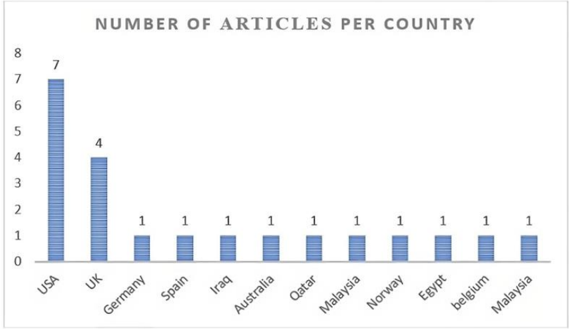
- Regional distribution as reported: European universities contributed 9 articles, American universities 7, Asian universities 3, and universities from Africa and Australia each contributed 1 article; the text also says this totaled five articles, and the reported regional counts are internally inconsistent.
Methods
- Systematic literature review (SLR) based on PRISMA guidelines, searching databases and using keywords related to ChatGPT, chatbot, education, academic writing, plagiarism, citation, and attribution; the abstract, methodology, and search process list different database sets.
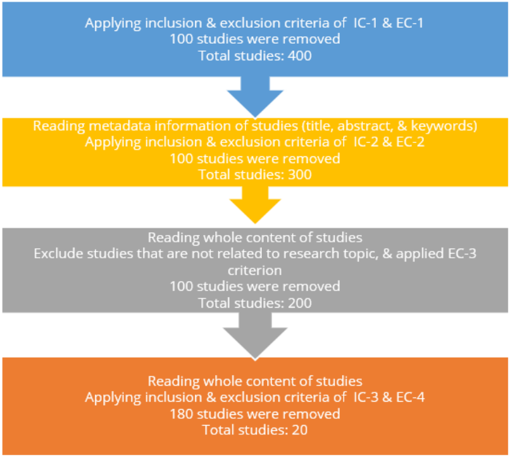
- Four-stage screening from 500 distinct records to 20 included papers, using inclusion/exclusion criteria such as English language, educational chatbot, comprehensive usage details, empirical evidence, and exclusion of duplicates, tutorials, posters, technical reports, review papers, short papers, and PhD theses.
- Data were extracted and coded, then synthesized into three dimensions: ChatGPT as a writing aid, using ChatGPT without proper citation and attribution, and ChatGPT as a writing tool or plagiarism without attribution.
Limitations
- The paper’s stated limitations and implications focus on ChatGPT use: potential plagiarism and the need for citation/attribution; inaccuracies or misleading AI-generated content; difficulty detecting academic integrity violations; unequal access and the digital divide; bias; and the need for peer-review adaptation and institutional policies.
- Evident from the text: database/search reporting is inconsistent across the abstract, methodology, and search process; regional article counts are internally inconsistent (9 + 7 + 3 + 1 + 1 exceeds 20, and “totaling five articles” is unclear); no formal quality appraisal of included studies is described beyond inclusion/exclusion criteria.
- The review states in one section that it “cannot provide specific references to support this viewpoint,” which limits support for that particular claim.
Model-written summary. Check it against the paper before relying on it.
Integrity signals
Registry
Cites
Statistics
Figures
Verification
Claims the paper makes
0 Valid · 5 Not valid · 17 Not checked · 60 Own results and interpretations
None of the sources cited for this claim have been checked yet.
In the paper
“Firstly, ChatGPT is a tool that can enhance the writing process.”
- Also stated in: § ChatGPT as a Tool That Can Aid in Writing Process · plain
“Among the selected articles, a significant majority (eight articles) highlight ChatGPT as a tool that can aid in the writing process, emphasizing its positive role.”
- Also stated in: § ChatGPT as a Tool That Can Aid in Writing Process · boosted
“Numerous research has shown that ChatGPT is a helpful tool that can help with the writing process.”
§ Using ChatGPT in academic writing is (not) a form of plagiarism: What does the literature say? > DISCUSSION
boostedstates a cause- Asserted: passes — The authors put it forward as true.
- Checkable: passes — It can be checked against evidence.
- Load-bearing: passes — The paper’s conclusions depend on it.
- Based: passes — The paper gives a reason why it holds.
- Also stated in: § ChatGPT as a Tool That Can Aid in Writing Process · plain
A result the paper reports from its own data — it cites no other source for it, so there is none to check. The quote shows it is in the paper.
In the paper
“However, a smaller number of articles (seven articles) indicate concerns regarding ChatGPT being used as a writing tool or as a potential source of plagiarism without proper attribution.”
§ Using ChatGPT in academic writing is (not) a form of plagiarism: What does the literature say? > Impact of Artificial Intelligence on Promoting Academic Integrity
hedged- Asserted: passes — The authors put it forward as true.
- Checkable: passes — It can be checked against evidence.
- Load-bearing: unclear — It is unclear whether the paper’s conclusions depend on it.
- Based: passes — The paper gives a reason why it holds.
In the paper
“The findings demonstrate that ChatGPT can generate complex and sophisticated text outputs, evading detection from plagiarism-checking software.”
§ Using ChatGPT in academic writing is (not) a form of plagiarism: What does the literature say? > Using ChatGPT in Academic Writing
What the sources say
- Not checked yetcites Khalil and Er (2023)
boostedstates a cause- Asserted: passes — The authors put it forward as true.
- Checkable: passes — It can be checked against evidence.
- Load-bearing: passes — The paper’s conclusions depend on it.
- Based: passes — The paper gives a reason why it holds.
A result the paper reports from its own data — it cites no other source for it, so there is none to check. The quote shows it is in the paper.
In the paper
“Additionally, a subset of articles (five articles) emphasizes the importance of using ChatGPT with appropriate citation and attribution (Figure 4).”
§ Using ChatGPT in academic writing is (not) a form of plagiarism: What does the literature say? > Impact of Artificial Intelligence on Promoting Academic Integrity
plain- Asserted: passes — The authors put it forward as true.
- Checkable: passes — It can be checked against evidence.
- Load-bearing: unclear — It is unclear whether the paper’s conclusions depend on it.
- Based: passes — The paper gives a reason why it holds.
A result the paper reports from its own data — it cites no other source for it, so there is none to check. The quote shows it is in the paper.
In the paper
“Among the selected articles, a significant majority (eight articles) highlight ChatGPT as a tool that can aid in the writing process, emphasizing its positive role.”
- Also stated in: § ChatGPT as a Tool That Can Aid in Writing Process · plain
“Among the selected articles, most of eight studies emphasize the beneficial role of ChatGPT as a tool for supporting the writing process.”
§ Using ChatGPT in academic writing is (not) a form of plagiarism: What does the literature say? > ChatGPT as a Tool That Can Aid in Writing Process
plain- Asserted: passes — The authors put it forward as true.
- Checkable: passes — It can be checked against evidence.
- Load-bearing: passes — The paper’s conclusions depend on it.
- Based: passes — The paper gives a reason why it holds.
- Also stated in: § ChatGPT as a Tool That Can Aid in Writing Process · plain
8 more claims
Create a free account to see all 82 claims and to verify the 14 references still open.
- Probably not a substantial claim. 64
- It may state two separate claims as one. 29
- The quote only partly states this claim. 1
Claims other papers make about this one
Each is checked against this paper’s own text: does it say what the citing paper says it does?
The source backs part of the claim, not all of it — or backs it for a different population, condition or comparison.
In the citing paper
“Recent surveys of researchers across disciplines indicate that a growing share of scholars use tools such as ChatGPT, Claude, and Gemini to draft manuscripts, generate literature reviews, and suggest/compile reference lists [1,2].”
From How LLMs Cite and Why It Matters: A Cross-Model Audit of Reference Fabrication in AI-Assisted Academic Writing and Methods to Detect Phantom Citations (2026) · cites this paper as [1]
Experimental — accuracy not yet measuredThe source backs part of the claim, not all of it — or backs it for a different population, condition or comparison.
In the citing paper
“While proper attribution allows students to benefit from AI without violating academic standards (Perkins, 2023), empirical studies indicate that failing to disclose AI assistance is commonly interpreted as academic dishonesty (Eke, 2023;Jarrah et al., 2023;Mansilla et al., 2022;Wardat et al., 2023).”
From Academic Integrity and Students’ Ethical Use of ChatGPT in Higher Education (2026) · cites this paper as Jarrah et al., 2023
Experimental — accuracy not yet measuredThe source backs part of the claim, not all of it — or backs it for a different population, condition or comparison.
In the citing paper
“This shift necessitates the re-evaluation of multiple educational parameters-from assignment design and assessment strategies to the graduate skills required in a GenAI-informed academic and professional environment [4,6,13,14].”
From Artificial Intelligence in Higher Education: A State-of-the-Art Overview of Pedagogical Integrity, Artificial Intelligence Literacy, and Policy Integration (2025) · cites this paper as [14]
Experimental — accuracy not yet measuredThe source backs part of the claim, not all of it — or backs it for a different population, condition or comparison.
In the citing paper
“This study supports the broader theoretical call for integrating digital ethics and AI competencies into the curriculum (Jarrah et al., 2023;AlZaabi et al., 2023).”
From Training Students to Identify and Correct Fabricated References in ChatGPT-Generated Literature Reviews (2025) · cites this paper as Jarrah et al., 2023
Experimental — accuracy not yet measuredThe source backs part of the claim, not all of it — or backs it for a different population, condition or comparison.
In the citing paper
“Among these technologies, large language models (LLMs) such as ChatGPT have demonstrated remarkable fluency in producing coherent and technically structured scientific texts across various disciplines, including health sciences and rehabilitation domains.”
From Fabricated or accurate? Ethical concerns and citation hallucination in aI-generated scientific writing on musculoskeletal topics (2025) · cites this paper as [3]
Experimental — accuracy not yet measured
2 more claims about this paper
Create a free account to see every claim other papers make about this one.
Self-check
Percentages, sums and reported differences re-computed from the paper’s own numbers.
Each contradiction between two passages listed here was confirmed by an independent check.
Rated minor: it would not touch a result — a value no result rests on, a p-value that stays on the same side of the significance level, or a conflict that is clerical, resolved elsewhere in the paper, or outside its own findings.
In the paper
§ Using ChatGPT in academic writing is (not) a form of plagiarism: What does the literature say? > Impact of Artificial Intelligence on Promoting Academic Integrity
“Among the selected articles, a significant majority (eight articles) highlight ChatGPT as a tool that can aid in the writing process, emphasizing its positive role.”
§ Using ChatGPT in academic writing is (not) a form of plagiarism: What does the literature say? > Impact of Artificial Intelligence on Promoting Academic Integrity
“The total number of articles in Figure 4 is 20, corresponding to the number of selected articles.”
Rated minor: it would not touch a result — a value no result rests on, a p-value that stays on the same side of the significance level, or a conflict that is clerical, resolved elsewhere in the paper, or outside its own findings.
In the paper
“Furthermore, universities from Africa and Australia each contributed 1 article, totaling five articles.”
§ Using ChatGPT in academic writing is (not) a form of plagiarism: What does the literature say? > Using ChatGPT in Academic Writing
Reported 5 · recomputed 2
Rated minor: it would not touch a result — a value no result rests on, a p-value that stays on the same side of the significance level, or a conflict that is clerical, resolved elsewhere in the paper, or outside its own findings.
In the paper
§ Using ChatGPT in academic writing is (not) a form of plagiarism: What does the literature say? > Using ChatGPT in Academic Writing
“A notable observation is that most of the selected publications were either published or co-written by academics from American universities, indicating a significant American contribution to the research.”
§ Using ChatGPT in academic writing is (not) a form of plagiarism: What does the literature say? > Using ChatGPT in Academic Writing
“European universities also exhibited a robust research output, accounting for the highest number of articles (nine articles) among all regions.In terms of regional contributions, Asian universities contributed three articles, while American universities contributed seven articles.”
Citations
Cites
Preferred reporting items for systematic reviews and meta-analyses: The PRISMA statement
Moher, D., Liberati, A., Tetzlaff, J., Altman, D. G., & the PRISMA Group* (2009) · Annals of Internal Medicine · doi:10.7326/0003-4819-151-4-200908180-00135 · Cited by 37,554
Zawacki-Richter, O., Marín, V. I., Bond, M., & Gouverneur, F. (2019) · International Journal of Educational Technology in Higher Education · doi:10.1186/s41239-019-0171-0 · Cited by 7,242
On the Dangers of Stochastic Parrots: Can Language Models Be Too Big? 🦜
Bender, E. M., Gebru, T., McMillan-Major, A., & Shmitchell, S. (2021) · Proceedings of the 2021 ACM Conference on Fairness, Accountability, and Transparency · doi:10.1145/3442188.3445922 · Cited by 6,988
Artificial Intelligence in Education: A Review
Chen, L., Chen, P., & Lin, Z. (2020) · IEEE Access · doi:10.1109/access.2020.2988510 · Cited by 4,133
Chatting and cheating: Ensuring academic integrity in the era of ChatGPT
Cotton, D. R. E., Cotton, P. A., & Shipway, J. R. (2024) · Innovations in Education and Teaching International · doi:10.1080/14703297.2023.2190148 · Cited by 3,087
Chatting and Cheating. Ensuring academic integrity in the era of ChatGPT
Cotton, D., Cotton, P., & Shipway, J. R. (2023) · doi:10.35542/osf.io/mrz8h · Cited by 3,079
Artificial intelligence: A powerful paradigm for scientific research
Xu, Y., Liu, X., Cao, X., Huang, C., Liu, E., Qian, S., Liu, X., Wu, Y., Dong, F., Qiu, C.-W., et al. (2021) · The Innovation · doi:10.1016/j.xinn.2021.100179 · Cited by 1,726
Artificial hallucinations in ChatGPT: implications in scientific writing
Alkaissi, H., & McFarlane, S. I. (2023) · Cureus · doi:10.7759/cureus.35179 · Cited by 1,540
Gao, C. A., Howard, F. M., Markov, N. S., Dyer, E. C., Ramesh, S., Luo, Y., & Pearson, A. T. (2023) · npj Digital Medicine · doi:10.1038/s41746-023-00819-6 · Cited by 1,099
High-speed spelling with a noninvasive brain–computer interface
Chen, X., Wang, Y., Nakanishi, M., Gao, X., Jung, T.-P., & Gao, S. (2015) · Proceedings of the National Academy of Sciences · doi:10.1073/pnas.1508080112 · Cited by 969
Research works printed but not linked: 4
- Frye, B. L. (2022). Should using an AI text generator to produce academic writing be plagiarism? Fordham Intellectual Property, Media & Entertainment Law Journal, 947.
- Gavilán, J. C. O., Díaz, D. Z., Huallpa, J. J., Cabala, J. L. B., Aguila, O. E. P., Puma, E. G. M., Vasquez-Pauca, M. J., Mansilla, E. B. R., Laura, P. A. S., & Hoces, W. B. (2022). Technological social responsibility in university professors. Eurasian Journal of Educational Research, 100(100), 104-118.
- Gough, D., Oliver, S., & Thomas, J. (2017). An introduction to systematic reviews. SAGE.
- Mansilla, E. B. R., Castillo-Acobo, R. Y., Puma, E. G. M., Maquera, Y. M., Gonzales, J. L. A., & Vasquez-Pauca, M. M. J. (2022). Stress in university teachers in the framework of the post-pandemic face-to-face. Journal of Namibian Studies, 33(S1), 71-85.
Cited by
Wang, H., Dang, A., Wu, Z., & Mac, S. (2024) · Computers and Education: Artificial Intelligence · doi:10.1016/j.caeai.2024.100326 · Cited by 272
“Then we performed a systematic search using”
BackgroundKoltovskaia, S., Rahmati, P., & Saeli, H. (2024) · Journal of Second Language Writing · doi:10.1016/j.jslw.2024.101130 · Cited by 181
Bozkurt, A. (2024) · Open Praxis · doi:10.55982/openpraxis.16.1.654 · Cited by 215
Artificial Intelligence in Education: Mathematics Teachers’ Perspectives, Practices and Challenges
Tashtoush, M. A., Wardat, Y., AlAli, R. M., & Saleh, S. G. (2024) · Iraqi Journal for Computer Science and Mathematics · doi:10.52866/ijcsm.2024.05.01.004 · Cited by 277
“…that they commonly expected AI to (a) provide a more effective teaching and learning process through digitalized learning material and multimodal human-computer interactions [68] and (b) resolve various learning difficulties of students, catering to their needs despite large class sizes [64, 69].”
BackgroundSelf-citationOpportunities and Challenges of Integrating Generative Artificial Intelligence in Education
AlAli, R. M., & Wardat, Y. (2024) · International Journal of Religion · doi:10.61707/8y29gv34 · Cited by 202
“The findings underscore the necessity for a comprehensive approach to AI integration in education, prioritizing ethical considerations, data privacy, educator empowerment, scalability, and socio-cultural dynamics (Jarrah et al., 2023).”
BackgroundSelf-citationChee, H., Ahn, S., & Lee, J. (2025) · British Journal of Educational Technology · doi:10.1111/bjet.13556 · Cited by 158
Rane, N. (2024) · TESOL and Technology Studies · doi:10.48185/tts.v5i1.1000 · Cited by 86
“The utilization of AI-driven tools such as ChatGPT in the realm of education has yielded both advantages and apprehensions, with one of the most prominent concerns revolving around the specter of plagiarism [13,14].”
MethodOpportunities, Challenges, and Strategies for Using ChatGPT in Higher Education: A Literature Review
Sok, S., & Heng, K. (2024) · Journal of Digital Educational Technology · doi:10.30935/jdet/14027 · Cited by 120
“The concerns have focused on academic honesty and plagiarism issues (Cotton et al., 2023), overdependence on AI (Crawford et al., 2023; Jarrah et al., 2023; Sok & Heng, 2023), misleading information (Karakose et al., 2023; Zhuo et al., 2023), and biased learning assessment (Rasul et al., 2023).”
BackgroundLarge Language Model‐Based Chatbots in Higher Education
Yigci, D., Eryilmaz, M., Yetisen, A. K., Tasoglu, S., & Ozcan, A. (2025) · Advanced Intelligent Systems · doi:10.1002/aisy.202400429 · Cited by 113
Perceptions of Higher Education Students towards ChatGPT Usage
Das, S. R., & J.V., M. (2024) · International Journal of Technology in Education · doi:10.46328/ijte.583 · Cited by 69
“So by following the citation guideline scholars can maximize the benefit of the ChatGPT usage (Jarrah & Wardat, 2023).”
BackgroundBartlett, K. A., & Camba, J. D. (2024) · International Journal of Interactive Multimedia and Artificial Intelligence · doi:10.9781/ijimai.2024.02.006 · Cited by 125
“Writing on the related topic of text-generative AI argues that following “responsible practices to uphold academic integrity and ensure ethical use” is crucial [28].”
BackgroundChow, J. C. L., Wong, V., & Li, K. (2024) · BioMedInformatics · doi:10.3390/biomedinformatics4010047 · Cited by 117
“Also, there are questions surrounding whether AI chatbots are responsible for legal problems like plagiarism [84].”
BackgroundGatrell, C., Muzio, D., Post, C., & Wickert, C. (2024) · Journal of Management Studies · doi:10.1111/joms.13045 · Cited by 77
Abdalla, R. (2024) · Journal of Open Innovation Technology Market and Complexity · doi:10.1016/j.joitmc.2024.100327 · Cited by 108
Artificial Intelligence in Health Professions Education assessment: AMEE Guide No. 178
Masters, K., MacNeil, H., Benjamin, J., Carver, T., Nemethy, K., Valanci-Aroesty, S., Taylor, D. C. M., Thoma, B., & Thesen, T. (2025) · Medical Teacher · doi:10.1080/0142159x.2024.2445037 · Cited by 80
“� AI prohibition would discourage the use of an important new tool that could have major benefits [90].”
Almarashdi, H. S., Jarrah, A. M., Khurma, O. A., & Gningue, S. M. (2024) · Eurasia Journal of Mathematics Science and Technology Education · doi:10.29333/ejmste/15739 · Cited by 93
“3 / 14 (Jarrah et al., 2023; McKinsey, 2023).”
Self-citationArtificial Intelligence in Newsrooms: Ethical Challenges Facing Journalists
Al-Zoubi, O. A., Ahmad, N., & Hamid, N. A. (2024) · Studies in Media and Communication · doi:10.11114/smc.v12i1.6587 · Cited by 91
Adamakis, M., & Rachiotis, T. (2025) · Encyclopedia · doi:10.3390/encyclopedia5040180 · Cited by 76
“This shift necessitates the re-evaluation of multiple educational parameters—from assignment design and assessment strategies to the graduate skills required in a GenAI-informed academic and professional environment [4,6,13,14].”
Acuña, B. P., & Durão, R. C. F. (2024) · Frontiers in Education · doi:10.3389/feduc.2024.1490067 · Cited by 97
Lyu, W., Zhang, S., Chung, T., Sun, Y., & Zhang, Y. (2025) · Computers and Education: Artificial Intelligence · doi:10.1016/j.caeai.2025.100383 · Cited by 68
“On the other hand, recent work has also highlighted issues of the use of GenAI in higher education [60], such as accuracy [58], reliability [58, 115], and plagiarism [57].”
Aydın, Ö., Karaarslan, E., Erenay, F. S., & Bačanin, N. (2026) · Turkish Journal of Engineering · doi:10.31127/tuje.1838765 · Cited by 77
Yu, H., Guo, Y., Yang, H., Zhang, W., & Dong, Y. H. (2024) · European Journal of Education · doi:10.1111/ejed.12749 · Cited by 75
Balancing AI and authenticity: EFL students' experiences with ChatGPT in academic writing
Werdiningsih, I., Marzuki, & Rusdin, D. (2024) · Cogent Arts & Humanities · doi:10.1080/23311983.2024.2392388 · Cited by 65
“…in academic settings, driven by the rapid development of ai-assisted writing tools designed to aid students in their compositions (gilburt, 2023; Jarrah et al., 2023; lingard, 2023; marzuki et al., 2023). a standout example is chatgPt, developed by Openai, renowned for its coherent dialogue…”
InfluentialMa, T. (2024) · Computers and Education Artificial Intelligence · doi:10.1016/j.caeai.2024.100336 · Cited by 80
Santiago, C. S., Embang, S. I., Acanto, R. B., Ambojia, K. W. P., Aperocho, M. D. B., Balilo, B. B., Cahapin, E. L., Conlu, M. T. N., Lausa, S. M., Laput, E. Y., et al. (2023) · International Journal of Learning, Teaching and Educational Research · doi:10.26803/ijlter.22.11.14 · Cited by 43
Adopting AI in education: optimizing human resource management considering teacher perceptions
Gârdan, I. P., Manu, M. B., Gârdan, D. A., Negoiţă, L., Paștiu, C. A., Ghiță, E., & Zaharia, A. (2025) · Frontiers in Education · doi:10.3389/feduc.2025.1488147 · Cited by 67
“…are developed around the idea that AI based applications are seeing as possible solutions to reduce instructors’ administrative workload by taking over easy and repetitive duties and effective tools capable to be adapted to the students’ needs despite the size of the classes (Jarrah et al., 2023).”
Mah, C., Walker, H., Phalen, L., Levine, S., Beck, S. W., & Pittman, J. (2024) · Education Sciences · doi:10.3390/educsci14050500 · Cited by 40
ChatGPT in Academic Writing: A Scientometric Analysis of Literature Published Between 2022 and 2023
Lendvai, G. F. (2025) · Journal of Empirical Research on Human Research Ethics · doi:10.1177/15562646251350203 · Cited by 57
“Though ethical dilemmas, and more focally, plagiarism is a key issue discussed in these papers (Jarrah et al., 2023), research conducted in this group and the pertaining clusters presents substantial bene fi ts.”
ChatGPT e outras IAs transformarão a pesquisa científica: reflexões sobre seus usos
Sampaio, R. C., Nicolás, M. A., Junquilho, T. A., Silva, L. R. L., de Freitas, C. S., Telles, M., Teixeira, J. S., da Escóssia, F. M., & dos Santos, L. C. (2024) · Revista de Sociologia e Política · doi:10.1590/1678-98732432e008 · Cited by 54
Artificial intelligence in applied (linguistics): a content analysis and future prospects
Alaqlobi, O., Alduais, A. M. S., Qasem, F. A. A., & Alasmari, M. (2024) · Cogent Arts and Humanities · doi:10.1080/23311983.2024.2382422 · Cited by 64
“…of accuracy, ethical use, and human supervision in medical writing tasks to ensure the reliability and credibility of ai-assisted medical writing (Jarrah et al., 2023). in the domain of (applied) linguistics analysis and language-related tasks, ai tools have been utilized to assess linguistic…”
Writing with AI: What College Students Learned from Utilizing ChatGPT for a Writing Assignment
Wang, C., Aguilar, S. J., Bankard, J. S., Bui, E., & Nye, B. (2024) · Education Sciences · doi:10.3390/educsci14090976 · Cited by 49
ChatGPT in Academia: University Students’ Attitudes Towards the use of ChatGPT and Plagiarism
Fajt, B., & Schiller, E. (2025) · Journal of Academic Ethics · doi:10.1007/s10805-025-09603-5 · Cited by 47
“Additionally, AI can assist stu - dents in verifying the originality of their work and minimize citation errors by streamlining the referencing process (Jarrah et al., 2023 ).”
InfluentialDoes attitude towards plagiarism predict aigiarism using ChatGPT?
Khalaf, M. A. (2024) · AI and Ethics · doi:10.1007/s43681-024-00426-5 · Cited by 55
The Use of AI-Supported Chatbot in Psychology
Uludag, K. (2024) · Advances in Medical Technologies and Clinical Practice · doi:10.4018/979-8-3693-3112-5.ch001 · Cited by 40
Ofem, U. J., Valentine Joseph Owan, P. D., Iyam, M. A., Udeh, M. I., Anake, P. M., & Ovat, S. V. (2024) · Education and Information Technologies · doi:10.1007/s10639-024-12850-5 · Cited by 48
“Jarrah et al. (2023) reported that ChatGPT can lead to plagiarism, depending on its use.”
University Students’ Attitudes Toward ChatGPT Profiles and Their Relation to ChatGPT Intentions
Zhang, Y., Yang, X., & Tong, W. (2024) · International Journal of Human-Computer Interaction · doi:10.1080/10447318.2024.2331882 · Cited by 59
“…and believed to have positive effects on university students’ learning while posing challenges, such as influencing their advanced cognitive abilities and upholding academic integrity (Chan & Hu, 2023; Farrokhnia et al., 2023; Grassini, 2023; Jarrah et al., 2023; Montenegro-Rueda et al., 2023).”
Flipped dialogic learning method with ChatGPT: A case study
Pavlova, N. (2023) · International Electronic Journal of Mathematics Education · doi:10.29333/iejme/14025 · Cited by 57
“Working with AI raises a number of questions about when and how chatbots might be used (Jarrah et al., 2023).”
BackgroundA bibliometric analysis of publications on ChatGPT in education: Research patterns and topics
ZHELTUKHINA, M. R., Sergeeva, O. V., Masalimova, A. R., Budkevich, R. L., Kosarenko, N. N., & Nesterov, G. V. (2024) · Online Journal of Communication and Media Technologies · doi:10.30935/ojcmt/14103 · Cited by 47
Exploration of ChatGPT in basic education: Advantages, disadvantages, and its impact on school tasks
Castro, R. A. G., Cachicatari, N. A. M., Asté, W. M. B., & Medina, M. P. L. (2024) · Contemporary Educational Technology · doi:10.30935/cedtech/14615 · Cited by 49
“Similarly, Jarrah et al. (2023) highlights the need to prevent the high possibility of plagiarism during the preparation of academic work.”
Amini, M., Lee, K.-F., Yi-qiu, W., & Ravindran, L. (2025) · Interactive Learning Environments · doi:10.1080/10494820.2025.2523382 · Cited by 46
“Therefore, while AI can assist students in developing essays, articles, and projects (Lo, 2023), practices of transparency and acknowledgment underscore the ethical responsibilities students have to properly attribute their sources (Jarrah et al., 2023).”
Almanea, M. (2026) · Computer Assisted Language Learning · doi:10.1080/09588221.2024.2410158 · Cited by 40
“Learners’ experience and perspectives regarding ChatGPT use in EFL classes The questionnaires were developed following Cotton et al. (2023), Farrokhniaa et al. (2023), Jarrah et al. (2023), and Ibrahim et al. (2023).”
InfluentialBikanga Ada, M. (2024) · Education Sciences · doi:10.3390/educsci14101106 · Cited by 40
Systematic analysis of generative AI tools integration in academic research and peer review
Salman, H., Ahmad, M. A., Ibrahim, R. B., & Mahmood, J. (2025) · Online Journal of Communication and Media Technologies · doi:10.30935/ojcmt/15832 · Cited by 47
Wang, L., & Ren, B. (2024) · Education Sciences · doi:10.3390/educsci14121329 · Cited by 38
A structural model of student continuance intentions in ChatGPT adoption
Saxena, A., & Doleck, T. (2023) · Eurasia Journal of Mathematics Science and Technology Education · doi:10.29333/ejmste/13839 · Cited by 40
“Similarly, Jarrah et al. (2023) note that ChatGPT can be a valuable writing tool for students.”
BackgroundIttefaq, M., Zain, A., Arif, R., Taufiq, A., Khan, M. L., & Seo, H. (2025) · Journal of International Students · doi:10.32674/fnwdpn48 · Cited by 48
Van Wyk, M. M. (2024) · Journal of Applied Learning and Teaching · doi:10.37074/jalt.2024.7.1.15 · Cited by 35
Sevnarayan, K. (2024) · Journal of Pedagogical Research · doi:10.33902/jpr.202426525 · Cited by 44
Department of Curriculum and Instruction, F. O. M. E., & Wardat, Y. (2024) · International Journal of Information and Education Technology · doi:10.18178/ijiet.2024.14.3.2061 · Cited by 26
Self-citationChaudhuri, J., & Terrones, L. (2025) · Internet Reference Services Quarterly · doi:10.1080/10875301.2024.2400132 · Cited by 48
“The lack of clear policies in most educational institutions presents challenges (Jarrah et al., 2023).”
ChatGPT in Education: Ethical Considerations and Sentiment Analysis
Yang, S., Dong, Y., & Yu, Z. G. (2024) · International Journal of Information and Communication Technology Education · doi:10.4018/ijicte.346826 · Cited by 39
ChatGPT as a Digital Tool in the Transformation of Digital Teaching Competence: A Systematic Review
Cerero, J. F., Rueda, M. M., Graván, P. R., & Fernández‐Batanero, J. M. (2025) · Technologies · doi:10.3390/technologies13050205 · Cited by 39
“In addition, ethical concerns related to plagiarism and academic integrity arise due to the ease with which automated texts are generated [24,25].”
Clarifying Ethical Dilemmas of Using Artificial Intelligence in Research Writing: A Rapid Review
Ugwu, N. F., Igbinlade, A. S., Ochiaka, R. E., Ezeani, U. D., Okorie, N. C., Opele, J. K., Onayinka, T. S., Iroegbu, O., Onyekwere, O. K., Adams, A. B., et al. (2024) · Higher Learning Research Communications · doi:10.18870/hlrc.v142.1549 · Cited by 35
Kaya, D., Yaşar, A. Ö., Çetin, İ., & Kutluca, T. (2025) · Journal of Pedagogical Research · doi:10.33902/jpr.202531498 · Cited by 32
Emerging Dynamics of ChatGPT in Academia: A Scoping Review
Mahrishi, M., Abbas, A., Radovanović, D., & Hosseini, S. (2024) · Journal of University Teaching and Learning Practice · doi:10.53761/b182ws13 · Cited by 28
The New Paradigm of Deepfake Detection at the Text Level
Roșca, C.-M., Stancu, A., & Iovanovici, E. M. (2025) · Applied Sciences · doi:10.3390/app15052560 · Cited by 36
Galindo‐Domínguez, H., Campo, L., Delgado, N., & de la Maza, M. S. (2025) · Interactive Learning Environments · doi:10.1080/10494820.2025.2457351 · Cited by 34
“…learning and enhanced educational tools (e.g. Chen et al., 2020; Murtaza et al., 2022; Wang et al., 2018), its widespread use also raises concerns regarding academic integrity and honesty (e.g. Al Afnan et al., 2023; Dehouche, 2021; Dergaa et al., 2023; Jarrah et al., 2023; Sulli-van et al., 2023).”
Virtual Tutor, Digital Natives and AI: Analyzing the impact of ChatGPT on academia in Indonesia
Margono, H., Saud, M., & Falahat, M. (2024) · Social Sciences & Humanities Open · doi:10.1016/j.ssaho.2024.101069 · Cited by 26
Nguyen, T. Y. P., Nguyen, N. T., & Phan, N. K. H. (2025) · International journal of AI in language education. · doi:10.54855/ijaile.25212 · Cited by 31
“Jarrah et al. (2023) indicated that users should paraphrase and cite correctly the information given by ChatGPT to avoid plagiarism.”
The Impact of AI-Powered Software on Second Language (L2) Writing: A Systematic Literature Review
Angela Andrea Perez, R. O. A., & Halim, S. (2024) · Research and Innovation in Applied Linguistics-Electronic Journal · doi:10.31963/rial.v2i2.4801 · Cited by 27
“With this in mind, plagiarism in L2 writing context with ChatGPT can also be a serious concern (Jarrah et al., 2023).”
BackgroundAppliances of Generative AI-Powered Language Tools in Academic Writing: A Scoping Review
Raitskaya, L., & Тихонова, Е. В. (2024) · Journal of language and Education · doi:10.17323/jle.2024.24181 · Cited by 29
“Jarrah et al. (2023) cited the authors that saw ChatGPT as a source of information that should be properly cited (Perkins, 2023; Okaibedi, 2023).”
How is ChatGPT acknowledged in academic publications?
Kousha, K. (2024) · Scientometrics · doi:10.1007/s11192-024-05193-y · Cited by 23
“Nevertheless, the use of LLMs in academic publishing brings ethical concerns (e.g., Guleria et al., 2023; Jarrah et al., 2023; Lund et al., 2023).”
Revolutionizing EFL learning through ChatGPT: A qualitative study
Alshammari, J. (2024) · Revista Amazonia Investiga · doi:10.34069/ai/2024.82.10.17 · Cited by 26
“A key concern is the potential for academic dishonesty, with some arguing that using AI-generated content in academic writing constitutes a form of plagiarism, especially when authors do not acknowledge the AI tool for its contributions with proper citation (Jarrah et al., 2023).”
How ChatGPT Will Shape the Teaching Learning Landscape in Future?
AlAli, R. M., & Wardat, Y. (2024) · Journal of Educational and Social Research · doi:10.36941/jesr-2024-0047 · Cited by 25
Self-citationOlmo, F. M., & González-Catalán, F. (2024) · Digital Education Review · doi:10.1344/der.2024.45.37-42 · Cited by 30
“Se han hecho ya algunas revisiones sistemáticas sobre IA (como, por ejemplo, Dergaa et al., 2023; Imran & Almusharraf, 2023; Jarrah et al., 2023), pero la rápida evolución de este campo de estudio —con nuevas herramientas, aplicaciones y usos que surgen constantemente— y el hecho de que las…”
BackgroundInfluentialLLMs as Writing Assistants: Exploring Perspectives on Sense of Ownership and Reasoning
Wasi, A. T., Islam, M. R., & Islam, R. (2024) · Workshop on Intelligent and Interactive Writing Assistants (In2Writing) · doi:10.1145/3690712.3690723 · Cited by 35
“When using LLMs for writing assistance, our sense of ownership varies depending on the type of content we’re creating.”
MethodCao, X., Lin, Y.-J., Zhang, J.-H., Tang, Y.-P., Zhang, M.-P., & Gao, H.-Y. (2025) · Education and Information Technologies · doi:10.1007/s10639-025-13339-5 · Cited by 22
“Although the potential benefits of ChatGPT for intelligent education are enor - mous, several studies have found that ChatGPT could affect college students’ high-level cognitive abilities and academic integrity (Farrokhnia et al., 2023; Grassini, 2023; Jarrah et al., 2023).”
Apata, S. B., Oyedele, O. M., & Sulaiman, M. M. (2024) · British Journal of Contemporary Education · doi:10.52589/bjce-dbit7s4t · Cited by 22
“Its ability to generate learning materials (Utami et al., 2023), provide personalised instruction (Chai et al., 2021), answer students' questions in real-time (Yousef et al., 2021), and offer instant feedback (Jarrah et al., 2023) makes it a valuable virtual teaching assistant.”
Physics instructors’ acceptance and implementation of generative AI
Wattanakasiwich, P., Kaewkhong, K., & Katwibun, D. (2025) · Physical Review Physics Education Research · doi:10.1103/r2fn-kdy4 · Cited by 30
Artificial Intelligence in Academic Writing: A Literature Review
Guo, H. Y., & Zaini, S. H. (2024) · Asian Pendidikan · doi:10.53797/aspen.v4i2.6.2024 · Cited by 28
The Future of AI Chatbots in Higher EducationPreprint
Chukwuere, J. E. (2024) · Qeios · doi:10.32388/ue841k · Cited by 24
Castillo, D., Carrión, J., Chamba, C., Jiménez-Gaona, Y., Rodríguez-Álvarez, M. J., & Lakshminarayanan, V. (2025) · Frontiers in Education · doi:10.3389/feduc.2025.1536470 · Cited by 22
Adwan, M. N. A., hAjji, M. E., & Fayez, H. (2024) · Online Journal of Communication and Media Technologies · doi:10.30935/ojcmt/14426 · Cited by 25
Alzyoudi, M., & Almazroui, K. M. (2024) · Online Journal of Communication and Media Technologies · doi:10.30935/ojcmt/14617 · Cited by 22
Alnaimat, F., Al-Halaseh, S., & AlSamhori, A. R. F. (2024) · Journal of Korean Medical Science · doi:10.3346/jkms.2024.39.e231 · Cited by 26
“95 According to the WAME, plagiarism refers to “…the use of others’ published and unpublished ideas or words (or other intellectual property) without attribution or permission, and presenting them as new and original rather than derived from an existing source.””
BackgroundCrawford, L. M., Hendzlik, P., Lam, J., Cannon, L. M., Qi, Y., DeCaporale-Ryan, L. N., & Wilson, N. A. (2024) · Journal of Surgical Research · doi:10.1016/j.jss.2024.06.020 · Cited by 21
Um panorama da História da Inteligência Artificial e suas aplicações na pesquisa histórica
Sobreira, V. (2025) · Varia Historia · doi:10.1590/0104-87752025v41e25035 · Cited by 19
Bawaneh, A. K. (2025) · International Journal of Information and Education Technology · doi:10.18178/ijiet.2025.15.3.2261 · Cited by 23
Students’ AI Dependency in 3R’s: Questionnaire Construction and Validation
Capinding, A. T. (2024) · International Journal of Information and Education Technology · doi:10.18178/ijiet.2024.14.11.2184 · Cited by 22
Bekturova, M., Tulepova, S., & Zhaitapova, A. (2025) · Education and Information Technologies · doi:10.1007/s10639-024-13306-6 · Cited by 21
“…to plagiarism and undermine academic integrity (Abdel-halim, 2024; Dempere et al., 2023); researchers also mention risks of AI-generated text containing biases, inaccuracies, or inappropriate language present in the training data (Ayanwale & Molefi, 2024; Isiaku et al., 2024; Jarrah et al., 2023).”
Assessing medical students’ attitudes, performance, and usage of ChatGPT in Jeddah, Saudi Arabia
Alammari, D. A., Alamari, E., Alamri, R., Alharbi, R. F., Felimban, J., & Aljohani, J. (2025) · Frontiers in Artificial Intelligence · doi:10.3389/frai.2025.1577911 · Cited by 21
Memarian, B., & Doleck, T. (2025) · SN Computer Science · doi:10.1007/s42979-025-04569-y · Cited by 21
“Work has been done to provide recommendations, lifecycles, and frameworks to enhance academic integrity and reduce misconduct [1–7].”
InfluentialSeebut, S., Wongsason, P., & Kim, D. (2023) · Eurasia Journal of Mathematics Science and Technology Education · doi:10.29333/ejmste/13905 · Cited by 20
“…is gaining interest for applications in learning management in many areas (Alneyadi & Wardat, 2023; Castillo et al., 2023; Hanum Siregar et al., 2023; Jarrah et al., 2023; Owan et al., 2023; Ruiz-Rojas et al., 2023; Vasconcelos & dos Santos, 2023), including mathematics (Liang et al., 2023; Wardat…”
BackgroundMedina, W. A. A., Velásquez, C. H. F., Olivares-Zegarra, S., Morales-Romero, G., Quispe-Andía, A., Aybar-Bellido, I., Palacios-Huaraca, C., Aldana-Trejo, F., & Alvarado-Bravo, N. (2024) · International Journal of Learning Teaching and Educational Research · doi:10.26803/ijlter.23.12.19 · Cited by 23
Lee, Y., Oh, J. H., Lee, D., Kang, M., & Lee, S. (2025) · Scientific Reports · doi:10.1038/s41598-025-99423-9 · Cited by 20
Artificial Intelligence in Educational Technology: A Systematic Review of Datasets and Applications
Topham, L., Atherton, P., Reynolds, T., Hussain, Y., Hussain, A. J., Kolivand, H., & Khan, W. (2025) · ACM Computing Surveys · doi:10.1145/3768312 · Cited by 20
“For example, as users are unlikely to be aware of the source of information provided by models, they may not be mindful of copyrighted content and their rights and responsibilities in using this information.”
Doing Thematic Analysis in the Age of Generative AI: Practices, Ethics and Reflexivity
Xu, W. J. (2026) · International Journal of Qualitative Methods · doi:10.1177/16094069261425173 · Cited by 20
Shabir, A. M. (2025) · Information Technology Education Journal · doi:10.59562/intec.v4i3.10494 · Cited by 22
Saleh, S. G., AlAli, R. M., Wardat, Y., Al-Qahtani, M., Soliman, Y., & Helali, M. M. (2023) · European Journal of Investigation in Health Psychology and Education · doi:10.3390/ejihpe13090114 · Cited by 19
“…was crucial to determine the loading values of The loading factors of the items needed to meet the criterion that items with loading factors less than 0.40 should not be adopted [50]. scale items needed to meet the criterion that items with loading factors less than 0.40 should not be adopted [50].”
BackgroundInfluentialSelf-citationLeveraging ChatGPT AI Model in Academic Writing and Avenues for Further Development: SWOT Framework
Alamri, W., Qasem, F. A. A., Alfotais, A., & Taisan, H. A. A. (2025) · Forum for Linguistic Studies · doi:10.30564/fls.v7i2.8218 · Cited by 19
Obura, E. A., & Emoit, P. I. (2024) · Africa Education Review · doi:10.1080/18146627.2024.2440351 · Cited by 24
“Obura and Emoit presenting information verbally or in writing (Eke 2023; Fundi et al. 2023; Guleria et al. 2023; Jarrah et al. 2023), plagiarism detection, error detection and correction, grammar checks, essay”
Slavych, B. K., Atcherson, S. R., & Zraick, R. (2024) · Perspectives of the ASHA Special Interest Groups · doi:10.1044/2024_persp-23-00167 · Cited by 16
Campo, L., Delgado, N., Urbieta, J. M. E., Kanso, H., & Gueye, M. L. (2025) · Innovative Higher Education · doi:10.1007/s10755-025-09830-z · Cited by 18
Academic Integrity and Students’ Ethical Use of ChatGPT in Higher Education
Shishakly, R., & Nachouki, M. (2026) · Journal of Information Technology Education: Research · doi:10.28945/5730 · Cited by 15
“…proper attribution allows students to benefit from AI without violating academic standards (Perkins, 2023), empirical studies indicate that failing to disclose AI assistance is commonly interpreted as academic dishonesty (Eke, 2023; Jarrah et al., 2023; Mansilla et al., 2022; Wardat et al., 2023).”
Elmotri, B., Osman, W. A. E. A. E., Al-humari, M. A., Amri, F., Elyasa, Y. M., Malik, F. H., Garrouri, S. S., & Sayed, O. H. (2025) · Arab World English Journal · doi:10.24093/awej/ai.13 · Cited by 19
“Additionally, ethical issues have been brought to light, specifically those regarding plagiarism and the validity of students' work produced by ChatGPT (Jarrah et al., 2023).”
UNDERGRADUATES' APPLICATION OF CHATGPT IN ACADEMIC WRITING: PERCEPTIONS, PROBLEMS AND PROSPECTS
Apata, S. B., & Oyenuga, M. O. (2025) · International Journal of Social Sciences and Management Review · doi:10.37602/ijssmr.2025.8312 · Cited by 15
“Researchers like Jarrah, Wardat, and Fidalgo (2023) have highlighted how machine learning models and the internet of things (Apata et al, 2024) have evolved from predicting patterns in data to generating content.”
Taiye, M., High, C., Velander, J., Matar, K., Okmanis, R., & Milrad, M. (2024) · Proceedings of the 39th ACM/SIGAPP Symposium on Applied Computing · doi:10.1145/3605098.3636055 · Cited by 14
Ofem, U. J., Anake, P. M., Abuo, C. B., Ukatu, J. O., & Etta, E. O. (2025) · Frontiers in Digital Health · doi:10.3389/fdgth.2024.1414178 · Cited by 17
Analysis of the influence of ChatGPT on secondary education from the perspective of teachers
Santos, M. L., Lozano, A., & Fontao, C. B. (2025) · Journal of Technology and Science Education · doi:10.3926/jotse.3190 · Cited by 16
“Similarly, Jarrah, Wardat and Fidalgo (2023) advocate for responsible practices in the use of ChatGPT, including the need for proper citation and attribution of the tool’s contributions to prevent plagiarism and maintain academic integrity.”
Metadata
- Authors
- Jarrah, A. M., Wardat, Y., & Fidalgo, P.
- Affiliations
- Emirates College for Advanced Education (AE)
- Higher Colleges of Technology (AE)
- Emirates College for Advanced Education, Abu Dhabi, UAE
- Corresponding author
- Wardat, Yousef
- Venue
- Online Journal of Communication and Media Technologies
- Publisher
- Bastas Publications
- Published
- 2023-10-01
- Volume
- 13
- Issue
- 4
- Pages
- e202346
- ISSN
- 1986-3497 (ISSN-L)
- OpenAlex
- W4385757151
- Cited by
- 220
- References
- 39
- Citations by year
- 2026: 31 · 2025: 88 · 2024: 92 · 2023: 8
- FWCI
- 54.92
- Type
- journal article
- Language
- en
- Open access
- diamond
- doi.org
- Licence
- cc-by
- Locations
- Online Journal of Communication and Media Technologies (publishedVersion, cc-by)
- Topics
- Social Sciences › Education › Academic integrity and plagiarism
- Social Sciences › Education › Artificial Intelligence in Education
- Physical Sciences › Computer Science › Artificial Intelligence › Ethics and Social Impacts of AI
- Keywords
- ChatGPT, academic writing, plagiarism, academic integrity, generative AI in higher education, AI citation, AI attribution, AI ethics
About these checks
Registry, retraction, Cites and statistics results are computed, not judged, with one exception: a printed reference that no index lists is read once by a model before it counts as a citation error. Claims are extracted by a model and kept only when their quote appears verbatim in the text; each cited source is then checked, with a model’s help, for whether it says what the claim relies on. Those verdicts can be wrong — read the claim’s quote and the cited source before relying on one.
A language model drew the claims from the paper on 2026-10-06, under version 3 of the claim definition (model deepseek-v4.1-flash, prompt extract-v3).
A second model labelled each claim on 2026-10-06 (model jev-1.13-20260917, definition revision gold-guideline-v0.2).
Statistics and arithmetic are recomputed, not judged.
Confidence bands are shown only for fields calibrated on our annotated test set. None is calibrated yet, so no band is shown.
What counts as a claim ›How we measure confidence ›How we check this ›
Are you an author, or do you see a problem with this page? Request a review
Data sources
Bibliographic data: Semantic Scholar, OpenAlex, Crossref.
Contains information from the Semantic Scholar Academic Graph Datasets, made available under the ODC Attribution License (ODC-BY 1.0).
Semantic Scholar’s data is described in: Kinney, R., et al. (2023). The Semantic Scholar Open Data Platform. arXiv:2301.10140.
