

The DOI matches its Crossref record; 86 of the 86 references it cites were found in a registry or an index.
The placenta and neurodevelopment: sex differences in prenatal vulnerability
Open accessAbstract
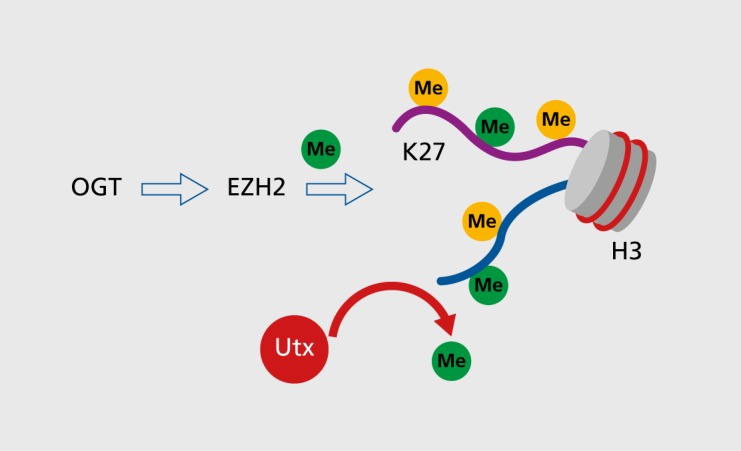
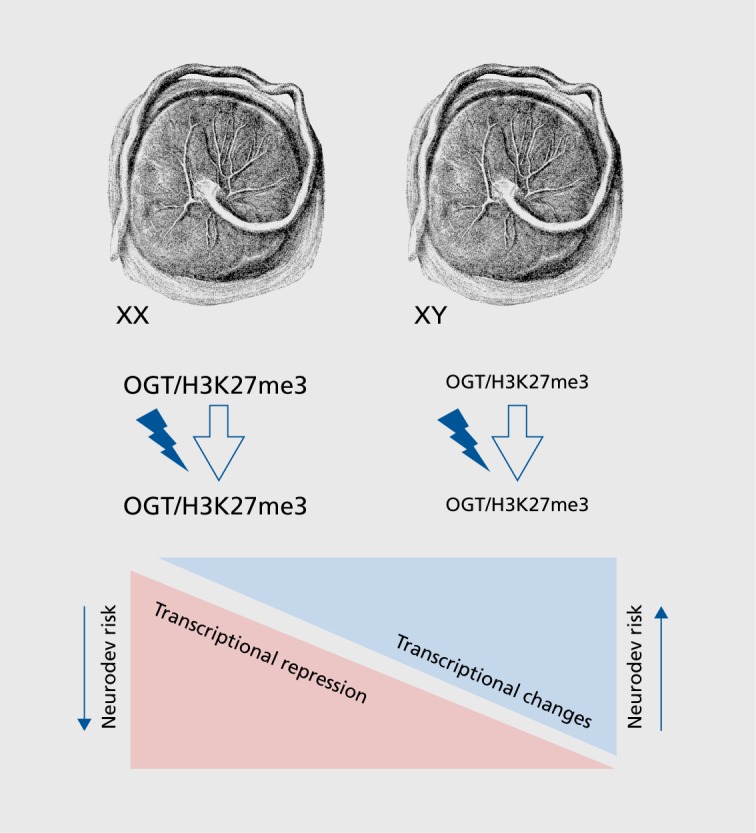
Prenatal insults, such as maternal stress, are associated with an increased neurodevelopmental disease risk and impact males significantly more than females, including increased rates of autism, mental retardation, stuttering, dyslexia, and attention deficit/hyperactivity disorder (ADHD). Sex differences in the placenta, which begin with sex chromosomes, are likely to produce sex-specific transplacental signals to the developing brain. Our studies and others have identified X-linked genes that are expressed at higher levels in the female placenta. Through a genome-wide screen after maternal stress in mice, we identified the X-linked gene O-linked N-acetylglucosamine transferase (OGT) and demonstrated its causality in neurodevelopmental programming producing a male-specific stress phenotype. Elucidating the sex-specific molecular mechanisms involved in transplacental signals that impact brain development is key to understanding the sex bias in neurodevelopmental disorders and is expected to yield novel insight into disease risk and resilience.
Overview
The claims and statistics of this paper haven’t been checked yet.
Run the check — free, no account needed. It reads the open-access text and checks the sources it cites.
Integrity signals
Registry
Cites
Statistics
Figures
Verification
Claims the paper makes
The claims and statistics of this paper haven’t been checked yet.
Run the check — free, no account needed. It reads the open-access text and checks the sources it cites.
Claims other papers make about this one
Each is checked against this paper’s own text: does it say what the citing paper says it does?
In the citing paper
“In many studies, male offspring appear to be the most strongly affected. Interestingly, they often present with what is known as a dysmasculinized phenotype (i.e., with behaviors and gene expression patterns most commonly seen in females) (Bale 2016).”
From Prenatal developmental origins of future psychopathology: mechanisms and pathways (2019) · cites this paper as Bale 2016
In the citing paper
“In one elegant model in mice based on the X-linked gene OGT (O-linked N-acetylglucosamine transferase), male placentas with typically lower levels of OGT are poised for epigenetic alterations that appear to produce robust transcriptional responses to maternal prenatal stress that result in increased stress sensitivity as adults (Bale 2016).”
From Prenatal developmental origins of future psychopathology: mechanisms and pathways (2019) · cites this paper as Bale 2016
Self-check
Percentages, sums and reported differences re-computed from the paper’s own numbers.
The self-check needs the paper’s full text.
Citations
Cites
Geschwind, N. (1985) · Archives of Neurology · doi:10.1001/archneur.1985.04060060019009 · Cited by 1,773
Geschwind, N. (1985) · Archives of Neurology · doi:10.1001/archneur.1985.04060050026008 · Cited by 1,452
Placental development: Lessons from mouse mutants
Rossant, J., & Cross, J. C. (2001) · Nature Reviews Genetics · doi:10.1038/35080570 · Cited by 1,299
Sex-Specific Programming of Offspring Emotionality after Stress Early in Pregnancy
Mueller, B. R., & Bale, T. L. (2008) · The Journal of Neuroscience · doi:10.1523/jneurosci.1424-08.2008 · Cited by 988
Self-citationEarly Life Programming and Neurodevelopmental Disorders
Bale, T. L., Baram, T. Z., Brown, A. S., Goldstein, J. M., Insel, T. R., McCarthy, M. M., Nemeroff, C. B., Reyes, T. M., Simerly, R. B., Susser, E. S., et al. (2010) · Biological Psychiatry · doi:10.1016/j.biopsych.2010.05.028 · Cited by 961
Self-citationOwens, P. C., Smith, R., Brinsmead, M. W., Hall, C., Foureur, M. J., Hurt, D., Lovelock, M., Chan, E.-C., Cubis, J., & Lewin, T. J. (1987) · Life Sciences · doi:10.1016/0024-3205(87)90603-5 · Cited by 958
Review: Sex and the human placenta: Mediating differential strategies of fetal growth and survival
Clifton, V. L. (2010) · Placenta · doi:10.1016/j.placenta.2009.11.010 · Cited by 868
Wadhwa, P. D., Sandman, C. A., Porto, M., Dunkel-Schetter, C., & Garite, T. J. (1993) · American Journal of Obstetrics and Gynecology · doi:10.1016/0002-9378(93)90016-c · Cited by 794
Why are autism spectrum conditions more prevalent in males?
Baron-Cohen, S., Lombardo, M. V., Auyeung, B., Ashwin, E., Chakrabarti, B., & Knickmeyer, R. (2011) · PLoS Biology · doi:10.1371/journal.pbio.1001081 · Cited by 754
Seckl, J. R., & Holmes, M. C. (2007) · Nature Clinical Practice Endocrinology & Metabolism · doi:10.1038/ncpendmet0515 · Cited by 754
Research works printed but not linked: 8
- Sandman CA., 2013, J Psychosom Res., 75, 327, 10.1016/j.jpsychores.2013.07.009 · DOI · Paper page
- Gabory A., 2013, Biol Sex Differ., 4, 5, 10.1186/2042-6410-4-5 · DOI · Paper page
- Howerton CL., 2014, Proc Natl Acad Sci U S A., 111, 9639, 10.1073/pnas.1401203111 · DOI
- Howerton CL., 2013, Proc Natl Acad Sci USA., 110, 5169, 10.1073/pnas.1300065110 · DOI
- Mao J., 2010, Proc Natl Acad Sci U S A., 107, 5557, 10.1073/pnas.1000440107 · DOI · Paper page
- Nugent BM., 2015, Front Neuroendocrinol., 39, 28, 10.1016/j.yfrne.2015.09.001 · DOI · Paper page
- Bronson SL., 2016, Neuropsychopharmacology., 41, 207, 10.1038/npp.2015.231 · DOI
- Nyirenda MJ., 1998, Int J Mol Med., 2, 607
Cited by
Sorted by citations
Prenatal developmental origins of future psychopathology: mechanisms and pathways
Monk, C., Lugo-Candelas, C., & Trumpff, C. (2019) · Annual Review of Clinical Psychology · doi:10.1146/annurev-clinpsy-050718-095539 · Cited by 388
“…there is an extended critical period of prenatal vulnerability—as an explanatory model; another lead considers hormone exposure, especially to testosterone, given its role of organizing sexual variation in the developing brain and association with risk of neurodevelopmental disease (Bale 2016).”
BackgroundInfluentialSex and gender differences in developmental programming of metabolism
Dearden, L., Bouret, S. G., & Ozanne, S. E. (2018) · Molecular Metabolism · doi:10.1016/j.molmet.2018.04.007 · Cited by 353
Maternal prenatal stress phenotypes associate with fetal neurodevelopment and birth outcomes
Walsh, K., McCormack, C. A., Webster, R., Pinto, A., Lee, S., Feng, T., Krakovsky, H. S., O’Grady, S. M., Tycko, B., Champagne, F. A., et al. (2019) · Proceedings of the National Academy of Sciences · doi:10.1073/pnas.1905890116 · Cited by 273
Parental Advisory: Maternal and Paternal Stress Can Impact Offspring Neurodevelopment
Chan, J. C., Nugent, B. M., & Bale, T. L. (2018) · Biological Psychiatry · doi:10.1016/j.biopsych.2017.10.005 · Cited by 241
“During pregnancy, maternal stress alters the maternal milieu, which can directly or indirectly impact fetal development (3,4).”
BackgroundSelf-citationIL-6 and IL-8: An Overview of Their Roles in Healthy and Pathological Pregnancies
Vilotić, A., Nacka-Aleksić, M., Pirković, A., Bojić‐Trbojević, Ž., Dekanski, D., & Krivokuća, M. J. (2022) · International Journal of Molecular Sciences · doi:10.3390/ijms232314574 · Cited by 271
Metadata
- Authors
- Bale, T. L.
- Affiliations
- University of Pennsylvania (US)
- Corresponding author
- Bale, Tracy L.
- ORCID
- Bale, Tracy L.
- Venue
- Dialogues in Clinical Neuroscience
- Publisher
- Informa UK Limited
- Published
- 2016-12-31
- Volume
- 18
- Issue
- 4
- Pages
- 459-464
- ISSN
- 1294-8322 (ISSN-L)
- 1958-5969
- PMC
- PMC5286731
- OpenAlex
- W2988356887
- Cited by
- 236
- References
- 86
- Citations by year
- 2026: 23 · 2025: 29 · 2024: 23 · 2023: 35 · 2022: 30 · 2021: 32 · 2020: 20 · 2019: 17 · 2018: 20 · 2017: 7
- FWCI
- 11.85
- Type
- journal article
- Language
- en
- Open access
- diamond
- doi.org
- Licence
- Locations
- Dialogues in Clinical Neuroscience (publishedVersion, cc-by-nc-nd)
- PubMed Central (publishedVersion, cc-by-nc-nd)
- PubMed (publishedVersion)
- Funders
- National Institutes of Health (5r01mh091258-05)
- National Institute of Mental Health (P50MH099910, R37MH108286, R33MH104184, R01 MH-091258, R01MH087597)
- Topics
- Life Sciences › Biochemistry, Genetics and Molecular Biology › Genetics › Genetics and Neurodevelopmental Disorders
- Health Sciences › Medicine › Pediatrics, Perinatology and Child Health › Birth, Development, and Health
- Health Sciences › Medicine › Public Health, Environmental and Occupational Health › Maternal Mental Health During Pregnancy and Postpartum
- Keywords
- placenta, sex differences, brain development, prenatal stress, maternal stress, neurodevelopmental disorders, autism spectrum disorder, attention deficit hyperactivity disorder, X-linked genes, O-GlcNAc transferase, sex bias
- MeSH terms
- Animals, Female, Humans, Male, Placenta, Pregnancy, Prenatal Exposure Delayed Effects, Sex Characteristics, Stress, Physiological, Stress, Psychological, Neurodevelopmental Disorders
About these checks
Registry, retraction, Cites and statistics results are computed, not judged, with one exception: a printed reference that no index lists is read once by a model before it counts as a citation error. Claims are extracted by a model and kept only when their quote appears verbatim in the text; each cited source is then checked, with a model’s help, for whether it says what the claim relies on. Those verdicts can be wrong — read the claim’s quote and the cited source before relying on one.
Statistics and arithmetic are recomputed, not judged.
Confidence bands are shown only for fields calibrated on our annotated test set. None is calibrated yet, so no band is shown.
What counts as a claim ›How we measure confidence ›How we check this ›
Are you an author, or do you see a problem with this page? Request a review
