

Cannabinoids and the endocannabinoid system in reward processing and addiction: from mechanisms to interventions
Open accessThe DOI matches its Crossref record; 72 of the 72 references it cites were found in a registry or an index.
Abstract
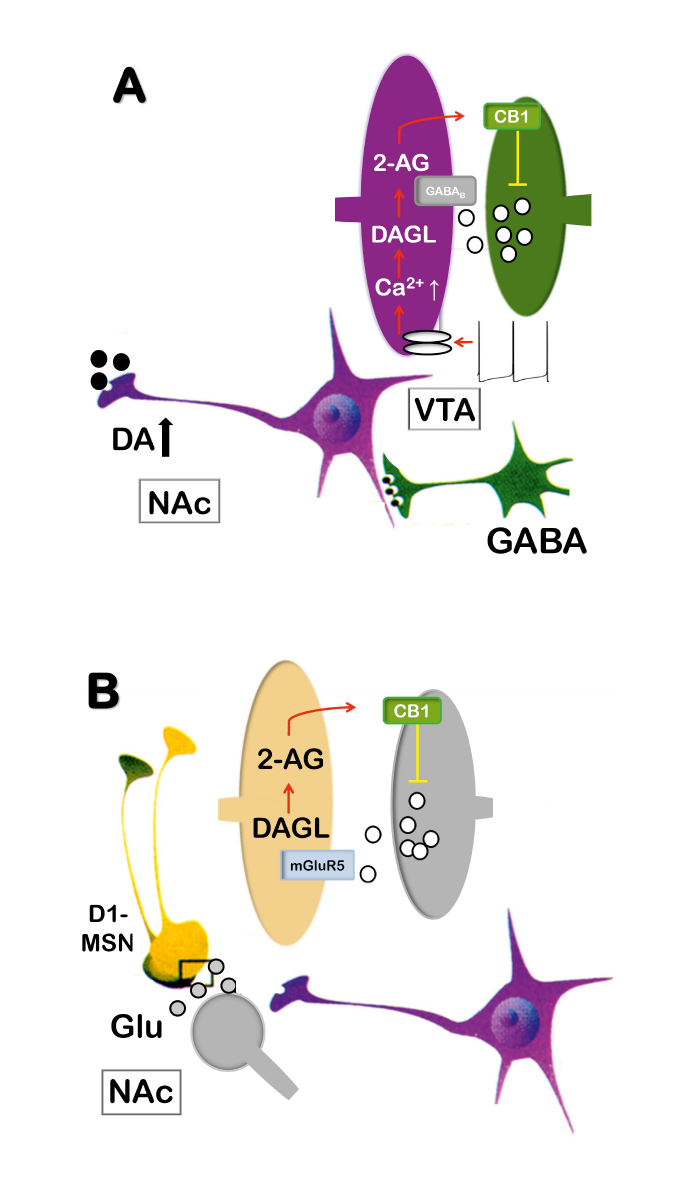
The last decades have seen a major gain in understanding the action of cannabinoids and the endocannabinoid system in reward processing and the development of addictive behavior. Cannabis-derived psychoactive compounds such as Δ9-tetrahydrocannabinol and synthetic cannabinoids directly interact with the reward system and thereby have addictive properties. Cannabinoids induce their reinforcing properties by an increase in tonic dopamine levels through a cannabinoid type 1 (CB1) receptor–dependent mechanism within the ventral tegmental area. Cues that are conditioned to cannabis smoking can induce drug-seeking responses (ie, craving) by eliciting phasic dopamine events. A dopamine-independent mechanism involved in drug-seeking responses involves an endocannabinoid/glutamate interaction within the corticostriatal part of the reward system. In conclusion, pharmacological blockade of endocannabinoid signaling should lead to a reduction in drug craving and subsequently should reduce relapse behavior in addicted individuals. Indeed, there is increasing preclinical evidence that targeting the endocannabinoid system reduces craving and relapse, and allosteric modulators at CB1 receptors and fatty acid amide hydrolase inhibitors are in clinical development for cannabis use disorder. Cannabidiol, which mainly acts on CB1 and CB2 receptors, is currently being tested in patients with alcohol use disorder and opioid use disorder.
Overview
The claims and statistics of this paper haven’t been checked yet.
Free: it reads the open-access text and checks the first 5 claims that cite a source we can check. Create a free account to check every claim.
Integrity signals
Registry
Cites
Statistics
Figures
Verification
Claims the paper makes
The claims and statistics of this paper haven’t been checked yet.
Free: it reads the open-access text and checks the first 5 claims that cite a source we can check. Create a free account to check every claim.
Claims other papers make about this one
Each is checked against this paper’s own text: does it say what the citing paper says it does?
The source backs part of the claim, not all of it — or backs it for a different population, condition or comparison.
In the citing paper
“The EC system contributes to the reinforcing effects of all three substances, and undergoes changes following adolescent exposure to them [255].”
From Consequences of adolescent drug use (2023) · cites this paper as [255]
Experimental — accuracy not yet measured
Self-check
Percentages, sums and reported differences re-computed from the paper’s own numbers.
The self-check needs the paper’s full text.
Citations
Cites
1 retracted
RETRACTED ARTICLE: Crystal structures of agonist-bound human cannabinoid receptor CB1
Hua, T., Vemuri, K., Nikas, S. P., Laprairie, R. B., Wu, Y., Qu, L., Pu, M., Korde, A., Jiang, S., Ho, J.-H., et al. (2017) · Nature · doi:10.1038/nature23272 · Cited by 479
RetractedMolecular characterization of a peripheral receptor for cannabinoids
Munro, S., Thomas, K. L., & Abu-Shaar, M. (1993) · Nature · doi:10.1038/365061a0 · Cited by 5,092
Di Chiara, G., & Imperato, A. (1988) · Proceedings of the National Academy of Sciences · doi:10.1073/pnas.85.14.5274 · Cited by 4,733
Herkenham, M., Lynn, A., Johnson, M., Melvin, L., de Costa, B., & Rice, K. (1991) · The Journal of Neuroscience · doi:10.1523/jneurosci.11-02-00563.1991 · Cited by 2,159
The molecular logic of endocannabinoid signalling
Piomelli, D. (2003) · Nature Reviews Neuroscience · doi:10.1038/nrn1247 · Cited by 1,957
Pertwee, R. G., Howlett, A. C., Abood, M. E., Alexander, S. P. H., Di Marzo, V., Elphick, M. R., Greasley, P. J., Hansen, H. S., Kunos, G., Mackie, K., et al. (2010) · Pharmacological Reviews · doi:10.1124/pr.110.003004 · Cited by 1,605
Cannabidiol is a negative allosteric modulator of the cannabinoid CB 1 receptor
Laprairie, R. B., Bagher, A. M., Kelly, M. E. M., & Denovan‐Wright, E. M. (2015) · British Journal of Pharmacology · doi:10.1111/bph.13250 · Cited by 1,039
Opposing tonically active endogenous opioid systems modulate the mesolimbic dopaminergic pathway.
Spanagel, R., Herz, A., & Shippenberg, T. S. (1992) · Proceedings of the National Academy of Sciences · doi:10.1073/pnas.89.6.2046 · Cited by 1,014
Self-citationElSohly, M. A., Mehmedic, Z., Foster, S., Gon, C., Chandra, S., & Church, J. C. (2016) · Biological Psychiatry · doi:10.1016/j.biopsych.2016.01.004 · Cited by 995
The dopamine hypothesis of reward: past and current status
Spanagel, R., & Weiss, F. (1999) · Trends in Neurosciences · doi:10.1016/s0166-2236(99)01447-2 · Cited by 973
Self-citation
Cited by
Consequences of adolescent drug use
Steinfeld, M. R., & Torregrossa, M. M. (2023) · Translational Psychiatry · doi:10.1038/s41398-023-02590-4 · Cited by 237
Endocannabinoid System and Exogenous Cannabinoids in Depression and Anxiety: A Review
Hasbi, A., Madras, B. K., & George, S. R. (2023) · Brain Sciences · doi:10.3390/brainsci13020325 · Cited by 80
“spiny neurons (D1-MSNs) (reviewed in [62]).”
BackgroundInfluentialThe Impact of Cannabidiol on Human Brain Function: A Systematic Review
Batalla, A., Bos, J., Postma, A., & Bossong, M. G. (2021) · Frontiers in Pharmacology · doi:10.3389/fphar.2020.618184 · Cited by 84
“…promising effects of CBD on reducing craving, negative affect and motivation for substance use (Chye et al., 2019; Hurd et al., 2019; Freeman et al., 2020; Spanagel, 2020), phenomena associated with fronto-striatal and limbic network disbalances (Koob and Volkow, 2016; Volkow and Boyle, 2018).”
BackgroundChronic Pain and Psychiatric Conditions
Johnston, K. J. A., & Huckins, L. M. (2022) · Complex Psychiatry · doi:10.1159/000527041 · Cited by 88
“The ECS also plays a role in nociceptive signaling and chronic pain [309–312], again involving dopamine transmission and reward circuitry in the brain [312, 313], in addition to being highlighted as a potential therapeutic target in ADHD [299, 314–316].”
BackgroundCannabidiol in the context of substance use disorder treatment: A systematic review
Paulus, V., Billieux, J., Benyamina, A., & Karila, L. (2022) · Addictive Behaviors · doi:10.1016/j.addbeh.2022.107360 · Cited by 60
Spanagel, R., & Bilbao, A. (2021) · Neuropharmacology · doi:10.1016/j.neuropharm.2021.108680 · Cited by 43
“However, since cannabis and the hereof derived synthetic cannabinoids have an abuse potential - with the exception of cannabidiol (CBD) (Spanagel, 2020) – they will remain banned drugs for non-medical use under UN law.”
BackgroundSelf-citationHill, M. N., Haney, M., Hillard, C. J., Karhson, D. S., & Vecchiarelli, H. A. (2023) · Psychological Medicine · doi:10.1017/s0033291723002465 · Cited by 44
“To start preclinically, CB1R antagonists reduce nicotine reinforcement [see (Saravia, Ten-Blanco, Pereda-Pérez, & Berrendero, 2021; Spanagel, 2020)], presumably by blocking eCBs from disinhibiting dopaminergic neurons in the ventral tegmental area [see (Asth, Santos, & Moreira, 2022; Butler & Le…”
Hoffmann, S., Gerhardt, S., Mühle, C., Reinhard, I., Reichert, D., Bach, P., Boroumand-Jazi, R., Kuehner, C., Aguilera, A., Aslan, A., et al. (2024) · American Journal of Psychiatry · doi:10.1176/appi.ajp.20230027 · Cited by 40
Self-citationZhang, Q., Melchert, P. W., & Markowitz, J. S. (2024) · Medical Cannabis and Cannabinoids · doi:10.1159/000535726 · Cited by 41
“Animal studies suggest that activation of CB receptors may alter dopamine release in the reward system [19], which is related to biological functions such as food intake, learning, sexual behaviors, and multiple neurological disorders, including Parkinson ’ s disease and depression [20].”
BackgroundHirjak, D., Schmitgen, M. M., Werler, F., Wittemann, M., Kubera, K. M., Wolf, N. D., Sambataro, F., Calhoun, V. D., Reith, W., & Wolf, R. C. (2021) · Addiction Biology · doi:10.1111/adb.13113 · Cited by 33
Kibret, B. G., Canseco-Alba, A., Onaivi, E. S., & Engidawork, E. (2023) · Frontiers in Behavioral Neuroscience · doi:10.3389/fnbeh.2023.1137957 · Cited by 35
“In the meso-corticostriatal complex, DA-dependent and -independent mechanisms are associated with cannabinoid reinforcing effects, and drug-seeking responses associated with eCB/glutamate interaction, respectively (Spanagel, 2020).”
BackgroundCannabinoids in Chronic Pain Management: A Review of the History, Efficacy, Applications, and Risks
Johnson, B. W., Strand, N. H., Raynak, J., Jara, C., Habtegiorgis, K., Hand, B. A., Hong, S., & Maloney, J. A. (2025) · Biomedicines · doi:10.3390/biomedicines13030530 · Cited by 37
“These compounds activate CB1 receptors to increase dopamine in the brain’s reward circuit, which can lead to craving, drug-seeking behavior, and dependence [101].”
Giorgetti, A., Pascali, J. P., Fais, P., Pelletti, G., Gabbin, A., Franchetti, G., Cecchetto, G., & Viel, G. (2021) · Life · doi:10.3390/life11050440 · Cited by 31
Pharmacological Treatments for Methamphetamine Use Disorder: Current Status and Future Targets
Yates, J. R. (2024) · Substance Abuse and Rehabilitation · doi:10.2147/sar.s431273 · Cited by 32
Núñez‐Cortés, R., Salazar‐Méndez, J., & Nijs, J. (2025) · Journal of Functional Morphology and Kinesiology · doi:10.3390/jfmk10020183 · Cited by 37
“Physiologically, exercise stimulates dopamine release, activating the limbic reward system [121] and endorphins [122], replacing the rewarding effects of tobacco and counteracting addictive behavior [123,124].”
Alcohol-Endocannabinoid Interactions: Implications for Addiction-Related Behavioral Processes
Serrano, A., & Natividad, L. A. (2022) · Alcohol research · doi:10.35946/arcr.v42.1.09 · Cited by 30
The Role of Physical Exercise in Opioid Substitution Therapy: Mechanisms of Sequential Effects
Psarianos, A., Chryssanthopοulos, C., Paparrigopoulos, T. J., & Philippou, Α. (2023) · International Journal of Molecular Sciences · doi:10.3390/ijms24054763 · Cited by 31
Adjunctive Management of Opioid Withdrawal with the Nonopioid Medication Cannabidiol
Kudrich, C., Hurd, Y. L., Salsitz, E. A., & Wang, A. (2022) · Cannabis and Cannabinoid Research · doi:10.1089/can.2021.0089 · Cited by 25
“22 The endo-cannabinoid system has close interactions with other neurotransmitter systems involved in substance use disorders.”
Daldegan‐Bueno, D., Maia, L. O., Glass, M., Jutras‐Aswad, D., & Fischer, B. (2021) · European Neuropsychopharmacology · doi:10.1016/j.euroneuro.2021.06.002 · Cited by 22
Gujska, J. H., Silczuk, A., Madejek, R., & Szulc, A. (2023) · Medical Science Monitor · doi:10.12659/msm.939749 · Cited by 25
“Cannabis use disorders (CUDs) can alter brain circuitry and cause disturbances in executive functioning [14-17].”
BackgroundInfluentialHe, Y., Shen, H., Bi, G., Zhang, H., Soler‐Cedeño, O., Alton, H., Yang, Y., & Xi, Z. (2024) · Translational Psychiatry · doi:10.1038/s41398-024-02820-3 · Cited by 19
“Extensive research in the past several decades indicates that cannabinoid CB1 and CB2 receptors are the major receptors in the brain involved in the CNS effects of cannabinoids [5, 6].”
BackgroundDaldegan‐Bueno, D., Maia, L. O., Glass, M., Jutras‐Aswad, D., & Fischer, B. (2021) · Psychopharmacology · doi:10.1007/s00213-021-05960-2 · Cited by 19
Role of Cannabinoids in Oral Cancer
Crețu, B., Zamfir, M.-A., Bucurica, S., Scheau, A. E., Săvulescu-Fiedler, I., Căruntu, C., Căruntu, A., & Scheau, C. (2024) · International Journal of Molecular Sciences · doi:10.3390/ijms25020969 · Cited by 27
“Also, the CB1 receptor, coupled through G i/o proteins, modulates calcium conductance through N-and P/Q-type calcium channels, and previous studies have shown that it may also increase potassium conductance through an inwardly rectifying potassium channel [52].”
BackgroundBest, L. M., Hendershot, C. S., Buckman, J. F., Jagasar, S., McPhee, M. D., Muzumdar, N., Tyndale, R. F., Houle, S., Logan, R., Sanches, M., et al. (2022) · Biological Psychiatry · doi:10.1016/j.biopsych.2022.11.022 · Cited by 21
Secondulfo, C., Mazzeo, F., Pastorino, G. M. G., Vicidomini, A., Meccariello, R., & Operto, F. F. (2024) · International Journal of Molecular Sciences · doi:10.3390/ijms25179407 · Cited by 25
Madrid-Gambín, F., Gomez‐Gómez, À., Busquets-García, A., Haro, N., Marco, S., Mason, N. L., Reckweg, J. T., Mallaroni, P., Kloft, L., van Oorsouw, K. I. M., et al. (2022) · Biomedicine & Pharmacotherapy · doi:10.1016/j.biopha.2022.112845 · Cited by 18
Ahmed, M., Best, L. M., Pereira, C. F., Boileau, I., & Kloiber, S. M. (2022) · Neuroscience & Biobehavioral Reviews · doi:10.1016/j.neubiorev.2022.104680 · Cited by 16
Kroll, S. L., Hulka, L. M., Kexel, A.-K., Vonmoos, M., Preller, K. H., Treyer, V., Ametamey, S. M., Baumgartner, M. R., Boost, C., Pahlisch, F., et al. (2023) · Translational Psychiatry · doi:10.1038/s41398-023-02628-7 · Cited by 19
“Speci fi cally, long-term depression (LTD) causing synaptic plasticity in the mesolimbic DA network has been linked to the ECS underpinning drug-seeking and addictive behavior [21 – 24].”
BackgroundFuentes, J. J., Mayans, J., Guarro, M., Canosa, I., Mestre-Pintó, J. I., Fonseca, F., & Torrens, M. (2024) · BMC Psychiatry · doi:10.1186/s12888-024-05986-8 · Cited by 15
“Similarly, CB1R antagonism decreases voluntary intake of alcohol in rodents and suppresses dopamine release [101].”
BackgroundCannabidiol as a Harm Reduction Strategy for People Who Use Drugs: A Rapid Review
Lo, L. A., MacCallum, C. A., Nanson, K., Koehn, M., Mitchell, I., Milloy, M., Walsh, Z., & Fehr, F. C. (2023) · The Canadian Journal of Psychiatry · doi:10.1177/07067437231183525 · Cited by 13
“For the remaining narrative reviews, 11/12 were assessed with SANRA as being moderate or high quality (Table 3).(9,24,26,27,30-32,38,39,43,44) However, we still considered these lower-quality evidence as they only contained evidence from RCTs judged to be a high risk of bias and would have been rated as low or critica…”
BackgroundMethodYuan, J., Yang, B. R., Hou, G., Xie, X., & Feng, Z. (2023) · Drug Discovery Today · doi:10.1016/j.drudis.2023.103615 · Cited by 12
N-oleoyl glycine and N-oleoyl alanine attenuate alcohol self-administration and preference in mice
Shahen-Zoabi, S., Smoum, R., Bingor, A., Grad, E., Nemirovski, A., Shekh‐Ahmad, T., Mechoulam, R., & Yaka, R. (2023) · Translational Psychiatry · doi:10.1038/s41398-023-02574-4 · Cited by 9
Endocannabinoids and addiction memory: Relevance to methamphetamine/morphine abuse
Alizamini, M. M., Li, Y., Zhang, J., Liang, J., & Haghparast, A. (2022) · The World Journal of Biological Psychiatry · doi:10.1080/15622975.2022.2039408 · Cited by 11
“The reward pathway originates in the VTA, and A10DA neurons mainly project to the NAc, where DA is released in response to rewards (Spanagel 2020).”
BackgroundRedonnet, B., Eren, F., Avenin, G., Melchior, M., & Mary‐Krause, M. (2025) · Addiction · doi:10.1111/add.16745 · Cited by 12
“Cannabinoid compounds such as CBD interact with CB1 and CB2 receptors in a ‘ key and lock ’ manner, modulating the ECS [37].”
Beyond monoamines: II. Novel applications for PET imaging in psychiatric disorders
Royse, S. K., Lopresti, B. J., Mathis, C. A., Tollefson, S., & Narendran, R. (2022) · Journal of Neurochemistry · doi:10.1111/jnc.15657 · Cited by 26
“While still poorly understood, accumulating evidence suggests that the endocannabinoid system may play a role in addiction (Solinas et al., 2008; Spanagel, 2020).”
BackgroundInfluentialLamanna‐Rama, N., MacDowell, K. S., Lopez, G. M. T., Leza, J. C., Desco, M., Ambrosio, E., & Soto‐Montenegro, M. L. (2023) · European Neuropsychopharmacology · doi:10.1016/j.euroneuro.2023.01.005 · Cited by 11
Guldager, M. B., Biojone, C., da Silva, N. R., Godoy, L. D., & Joca, S. R. L. (2024) · Progress in Neuro-Psychopharmacology and Biological Psychiatry · doi:10.1016/j.pnpbp.2024.111029 · Cited by 12
Gut bacteria, endocannabinoid system, and marijuana addiction: Novel therapeutic implications
Pinapati, K. K., Vidya, S., Khan, M. F., Mandal, D., & Banerjee, S. (2023) · Health Sciences Review · doi:10.1016/j.hsr.2023.100144 · Cited by 9
Advances in the Study of Neural Mechanisms Associated with Exercise to Ameliorate Nicotine Addiction
Ni, Y., Li, L., Qu, Y., Chen, S., Zhang, H., & Wang, H. (2022) · Advances in Physical Education · doi:10.4236/ape.2022.122010 · Cited by 12
“Endorphins activate CB1 and/or CB2 receptors to regulate various physiological functions, and the distribution of these receptors in the CNS and periphery correlates with their role in the control of motor function, stress response, analgesia, and rewarding effects (Vlachou & Panagis, 2014; Ligresti et al., 2016; Span…”
BackgroundInfluentialEarly Consumption of Cannabinoids: From Adult Neurogenesis to Behavior
Netzahualcoyotzi, C., Rodríguez–Serrano, L. M., Chávez–Hernández, M. E., & Buenrostro-Jáuregui, M. H. (2021) · International Journal of Molecular Sciences · doi:10.3390/ijms22147450 · Cited by 9
Gallassi, A. D., de Oliveira, A. W. C., Rodrigues, L. A., Nakano, E. Y., Ruas, P. A. S., Mata, J. A. I. D. L., Júnior, E. F., Gomes, J. D. A., Caroba, M. E. S., Silva, M., et al. (2024) · International Journal of Mental Health and Addiction · doi:10.1007/s11469-024-01287-z · Cited by 11
“(Spanagel, 2020).”
Cannabis for Chronic Pain: Mechanistic Insights and Therapeutic Challenges
Matos, C. M., Pereira, A. T., Dias, M. J., Sousa, C., Vinha, A. F., Moutinho, C. M. S. G., & Carvalho, M. C. (2025) · Stresses · doi:10.3390/stresses5010007 · Cited by 15
“These receptors are additionally connected to the G protein [33,34] and are primarily located in immune system cells, including leukocytes, the spleen, tonsils, bone marrow, the thymus, B and T lymphocytes, monocytes, NK cells, and mast cells [35,36].”
Endocannabinoids regulate cocaine-associated memory through brain AEA–CB1R signalling activation
Li, H., Chen, R., Zhou, Y., Wang, H., Sun, L., Yang, Z., Bai, L., & Zhang, J. (2022) · Molecular Metabolism · doi:10.1016/j.molmet.2022.101597 · Cited by 10
Oliva, I., Kazi, F., Cantwell, L., Thakur, G. A., Crystal, J. D., & Hohmann, A. G. (2024) · Addiction Biology · doi:10.1111/adb.13429 · Cited by 7
“21 24 Hence, GAT358 could be modulating glutamatergic afferents onto the NAc during the relapse test.”
BackgroundThe Potential Use of Cannabidiol in the Treatment of Opioid Use Disorder: A Systematic Review
Shafie, M., Ing, K., Abadi, Y. R., Weleff, J., Griffin, M., Ranganathan, M., Aghaei, A. M., Pratt, N., Funaro, M. C., & Nia, A. B. (2025) · Addiction Biology · doi:10.1111/adb.70047 · Cited by 9
Karimi‐Haghighi, S., Mahmoudi, M., Sayehmiri, F., Mozafari, R., & Haghparast, A. (2023) · European Journal of Pharmacology · doi:10.1016/j.ejphar.2023.175669 · Cited by 8
Surakka, A., Vengeliene, V., Skorodumov, I., Meinhardt, M. W., Hansson, A. C., & Spanagel, R. (2021) · Alcoholism Clinical and Experimental Research · doi:10.1111/acer.14640 · Cited by 8
Self-citationFarrow, J. E., DelBello, M. P., Patino, L. R., Blom, T. J., & Welge, J. A. (2024) · JAACAP Open · doi:10.1016/j.jaacop.2024.08.002 · Cited by 7
“31 TPM is associated with cognitive complaints 32 and may modulate the reinforcing effects of cannabis by reducing corticomesolimbic dopamine release.”
AL-Eitan, L. N., Alahmad, S. Z., ElMotasem, M. F. M., & Alghamdi, M. A. (2023) · Toxicology Research · doi:10.1093/toxres/tfad068 · Cited by 7
Galaj, E., Bi, G., & Xi, Z. (2024) · Neuropharmacology · doi:10.1016/j.neuropharm.2024.109947 · Cited by 7
Cong, Z., Fu, Y., Chen, N., Zhang, L., Yao, C., Wang, Y., Yao, Z., & Hu, B. (2022) · Drug and Alcohol Dependence · doi:10.1016/j.drugalcdep.2022.109595 · Cited by 7
Increased cannabis use in pregnant women during COVID-19 pandemic
Agolli, A., Agolli, O., Chowdhury, S., Shet, V., Benitez, J. S. C., Bheemisetty, N., & Waleed, M. S. (2022) · Discoveries · doi:10.15190/d.2022.7 · Cited by 7
Burden and trends of drug use disorders in young adults: global insights from GBD 2021
Su, X., Fan, T., Quan, Q., Kan, J., Liu, Z., Zhang, B., & Huang, Y. (2025) · Frontiers in Psychiatry · doi:10.3389/fpsyt.2025.1503564 · Cited by 7
“Furthermore, targeting ECS-related pathways may offer promising therapeutic strategies (36).”
The Orexin System in Addiction: Neuromodulatory Interactions and Therapeutic Potential
Capó, T., Lillo, J., Rebassa, J. B., Badia, P., Raïch, I., Cubeles-Juberias, E., Reyes‐Resina, I., & Navarro, G. (2025) · Brain Sciences · doi:10.3390/brainsci15101105 · Cited by 7
“The cannabinoid system, comprising cannabinoid receptors 1 and 2 (CB 1 R and CB 2 R) and their endogenous ligands, also plays a significant role in addiction, particularly in modulating reward, stress, and anxiety [225].”
Greener, M.-R., & Storr, S. J. (2022) · NeuroSci · doi:10.3390/neurosci3030035 · Cited by 6
“This promising lead could be a potential pharmacological agent for CUD, if it can be separated from preconceptions of other previously tested, unsafe FAAH-inhibitors [53].”
BackgroundSayson, L. V., Ortiz, D. M., Lee, H. J., Kim, M., Custodio, R. J. P., Yun, J., Lee, C. H., Lee, Y. S., Jin, H., Cheong, J. H., et al. (2023) · Frontiers in Pharmacology · doi:10.3389/fphar.2023.1135929 · Cited by 6
“Since alterations in cannabinoid receptor-encoding gene expressions may indicate GABA/glutamate signaling adaptations and dopaminergic activity dysregulation (Maldonado et al., 2011; Colizzi et al., 2016; Zehra et al., 2018; Pintori et al., 2021), comparable modifications in both Cryab KO and WT mice might suggest sim…”
BackgroundMolecular Advances on Cannabinoid and Endocannabinoid Research
Meccariello, R. (2023) · International Journal of Molecular Sciences · doi:10.3390/ijms241612760 · Cited by 5
“Nevertheless, both cannabinoid and opioid use and abuse can lead to drug addiction in that both endogenous cannabinoid and opioid systems are involved in the control of the dopaminergic circuitry responsible for both natural rewards and the rewarding aspects of nearly all drugs of abuse [35,36].”
BackgroundThe Role of Medicinal Cannabis as an Emerging Therapy for Opioid Use Disorder
Le, K., Le, K. D. R., Nguyen, J., Hua, J., & Munday, S. (2024) · Pain and Therapy · doi:10.1007/s40122-024-00599-1 · Cited by 9
“In the first of these studies, Hurd et al . conducted a double-blind randomised placebo-controlled trial on abstinent participants with heroin use disorder ( n = 42) who were randomly allocated to either CBD (400 mg, n = 14; 800 mg, n = 13) or placebo ( n = 15) [64].”
BackgroundMethodCollins, A. C., Lekkas, D., Struble, C. A., Trudeau, B. M., Jewett, A. D., Griffin, T. Z., Nemesure, M. D., Price, G. D., Heinz, M. V., Nepal, S. K., et al. (2024) · Psychiatry Research · doi:10.1016/j.psychres.2024.116110 · Cited by 6
Hammad, A. M., Meknas, S. J., Hall, F. S., Hikmat, S., Sari, Y., Al-Qirim, T. M., Alfaraj, M., & Amawi, H. A. (2022) · Brain Research Bulletin · doi:10.1016/j.brainresbull.2022.04.014 · Cited by 5
Shahen-Zoabi, S., Smoum, R., Beiser, T., Nemirovski, A., Mechoulam, R., & Yaka, R. (2022) · Cannabis and Cannabinoid Research · doi:10.1089/can.2022.0005 · Cited by 5
UV induced changes in proteome of rats plasma are reversed by dermally applied cannabidiol
Gęgotek, A., Atalay, S., & Skrzydlewska, E. (2021) · Scientific Reports · doi:10.1038/s41598-021-00134-8 · Cited by 6
Preto, M. C., Kortas, G. T., Blaas, I. K., Lassi, D. L. S., Campos, M. W., Torales, J. C., Ventriglio, A., Périco, C. D. A.-M., de Andrade, A. G., & Castaldelli-Maia, J. M. (2023) · International Review of Psychiatry · doi:10.1080/09540261.2023.2231540 · Cited by 5
“The urge to use cannabis , often triggered by environmental cues, represents a key component of cannabis use disorders (Filbey & DeWitt, 2012), augmenting the risk of relapse (Spanagel, 2020) and chronicity induced by cue reactivity (Macatee et al., 2021).”
BackgroundTherapeutic potential of cannabidiol in depression
Guldager, M. B., Filho, A. M. C., Biojone, C., & Joca, S. R. L. (2024) · International review of neurobiology · doi:10.1016/bs.irn.2024.06.001 · Cited by 7
Ezzati, M. R., Ezzati, M. J., Fattahi, M., Mozafari, R., Azizbeigi, R., & Haghparast, A. (2024) · Brain Research Bulletin · doi:10.1016/j.brainresbull.2024.111038 · Cited by 5
“Despite the essential connections between dopamine and reward, numerous studies now suggest that the endo-cannabinoid system is also necessary for the modulation of reward-related processes (Spanagel, 2020).”
BackgroundEffects of acute alcohol administration on endocannabinoids and relation to subjective effects
Petrie, G. N., Mazurka, R., Paul, E. R., Stensson, N., Ghafouri, B., Hill, M. N., Heilig, M. A., & Mayo, L. M. (2025) · Psychopharmacology · doi:10.1007/s00213-025-06843-6 · Cited by 3
Rosa, I., Padula, L. P., Semeraro, F., Marrangone, C., Inserra, A., Risio, L. D., Boffa, M., Zoratto, F., Borgi, M., Guidotti, R., et al. (2025) · Psychiatry Research · doi:10.1016/j.psychres.2025.116697 · Cited by 6
Exploring the interaction between cannabis and music
Darakjian, L., Glassman, H., Lo, C. Y., & Russo, F. (2025) · Annals of the New York Academy of Sciences · doi:10.1111/nyas.70010 · Cited by 4
“35 Additionally, music therapy has shown promise in reducing cravings and improving treatment engagement among individuals with substance use disorders.”
de Ceglia, M., Romano, A., Bonaventura, M. V. M. D., Gavito, A., Botticelli, L., Bonaventura, E. M. D., Friuli, M., Cifani, C., de Fonseca, F. R., & Gaetani, S. (2024) · Current Neuropharmacology · doi:10.2174/1570159x23666241107160840 · Cited by 7
“Interestingly, the endocannabinoid system (ECS) is a major regulator of DA activity and decision-making through its actions on inhibitory and excitatory synapses [2, 25] in the nigrostriatal and mesocorticolimbic pathway (for detailed information, see [26-28]).”
Abdullah, M., Lin, S., Huang, L.-C., Khan, M. I., Kung, C., & Yang, Y. K. (2025) · Clinical Psychopharmacology and Neuroscience · doi:10.9758/cpn.24.1254 · Cited by 3
“Other key neurotransmitters, such as GABA and endo-cannabinoids, may also play significant roles [44,45].”
Perspective Chapter: The Role of Dopamine Receptors in Neuropsychiatric Diseases
Yaman, B. (2023) · IntechOpen eBooks · doi:10.5772/intechopen.112320 · Cited by 4
Hébert, F.-O., Mongeau‐Pérusse, V., Rizkallah, É., Mahroug, A., Bakouni, H., Morissette, F., Brissette, S., Bruneau, J., Dubreucq, S., & Jutras‐Aswad, D. (2024) · Cannabis and Cannabinoid Research · doi:10.1089/can.2023.0273 · Cited by 3
“74 Future studies should collect data on 2-AG in conjunction with AEA.”
Grove, J. L., Beckham, J. C., Calhoun, P. S., Dedert, E. A., Pugh, M. J., & Kimbrel, N. A. (2025) · International Journal of Mental Health and Addiction · doi:10.1007/s11469-025-01453-x · Cited by 3
Perspectives of industrial hemp cultivation
Phipps, B. E., & Schluttenhofer, C. M. (2022) · Elsevier eBooks · doi:10.1016/b978-0-323-90910-5.00002-6 · Cited by 7
Alcohol and Cannabis Use Disorders
Kalin, N. H. (2022) · American Journal of Psychiatry · doi:10.1176/appi.ajp.2021.21111134 · Cited by 3
Ziemichód, W., Kajka, N., Rząd, Z., Metelska, A., Janas-Kozik, M. H., Biała, G., Wilczyński, K. M., Grabowska, K., & Karakuła‐Juchnowicz, H. (2026) · Neuroscience & Biobehavioral Reviews · doi:10.1016/j.neubiorev.2026.106615 · Cited by 2
Baenas, I., Solé‐Morata, N., Granero, R., Fernández‐Aranda, F., Pujadas, M., Mora‐Maltas, B., Lucas, I., Gómez‐Peña, M., Moragas, L., del Pino‐Gutiérrez, A., et al. (2023) · European Psychiatry · doi:10.1192/j.eurpsy.2023.2460 · Cited by 2
“In this line, CBR blockade or eCBs synthesis inhibition (e.g., enzyme inhibitors) seem to reduce reward consumption and craving, as well as subsequent relapse [14, 24, 37, 38].”
BackgroundAguirre-Rodríguez, C. A., Delgado, A., Alatorre, A., Oviedo-Chávez, A., Martínez-Escudero, J. R., Barrientos, R., & Querejeta, E. (2024) · Experimental Brain Research · doi:10.1007/s00221-024-06889-6 · Cited by 2
“…as appetite regulation (Pagotto et al. 2006; Kim et al. 2008), memory and learning (Marsicano and Lafenêtre 2009; Puighermanal et al. 2009), socialization and maternal behavior (Wei et al. 2017), motivation (Oleson et al. 2021), reward (Spanagel 2020), and in fear and anxiety (Ruehle et al. 2012).”
A Translational Approach to Using Endocannabinoid Modulators for Targeting Opioid-Associated Memory
Karimi‐Haghighi, S., Mozafari, R., Chavoshinezhad, S., Khosrowabadi, E., Mahmoudi, M., & Haghparast, A. (2024) · Current Addiction Reports · doi:10.1007/s40429-024-00588-6 · Cited by 2
“In these brain regions, CB1R activation modulates the release of various neurotransmitters, including DA, GABA, and glutamate, all of which have been implicated in the reconsolidation of drug memory [115].”
Cannabinoid-based Pharmacology for the Management of Substance Use Disorders
Luján, M. Á., Kim, Y., Zhang, L., & Cheer, J. F. (2024) · Current topics in behavioral neurosciences · doi:10.1007/7854_2024_551 · Cited by 2
Alsulaihim, I. N., Alanazi, M. M., Alhosaini, K. A., Ahamad, S. R., Khan, M. R., Almezied, F. S., Aldossari, A. A., Abekairi, T. H., Assiri, M. A., & Alasmari, F. F. (2025) · Neuroscience · doi:10.1016/j.neuroscience.2025.05.016 · Cited by 3
Kroll, S. L., Hulka, L. M., Kexel, A.-K., Vonmoos, M., Preller, K. H., Treyer, V., Ametamey, S. M., Baumgartner, M. R., Boost, C., Pahlisch, F., et al. (2023) · bioRxiv (Cold Spring Harbor Laboratory) · doi:10.1101/2023.04.18.537293 · Cited by 2
“Recently, activation of mGluR5-mediated 2-AG synthesis and release at D1-medium spiny neurons (D1-MSN) in the NAc amplifying LTD at glutamatergic neurons has been linked to reward-seeking behavior due to inhibition of glutamate release [25,49].”
BackgroundNiemela, G., & Terry, G. E. (2023) · Elsevier eBooks · doi:10.1016/b978-0-323-90877-1.00032-2 · Cited by 2
Zhang, X., Chen, Z., Becker, B., Shan, T., Chen, T., & Gong, Q. (2024) · Progress in Neuro-Psychopharmacology and Biological Psychiatry · doi:10.1016/j.pnpbp.2024.111156 · Cited by 16
“…(CUD) exhibit brain morphological abnormalities compared to healthy controls (Cong et al., 2022; Pagliaccio et al., 2015), particularly in areas of the brain with high levels of cannabinoid type 1 receptors (CB1Rs), which are primary sites of action for cannabinoid compounds (Spanagel, 2020).”
BackgroundChung, A. K. K., Tse, C. Y., Yeung, G. K. Y., Tang, S. W., Chan, W.-M., & Law, J. K. C. (2024) · Journal of Substance Use and Addiction Treatment · doi:10.1016/j.josat.2024.209607 · Cited by 1
Involvement of CB1R and CB2R Ligands in Sleep Disorders and Addictive Behaviors in the Last 25 Years
Pérez-Morales, M., Espinoza-Abad, R., & García‐García, F. (2025) · Pharmaceuticals · doi:10.3390/ph18020266
“However, a few studies have explored the impact of cannabinoid treatments on opioid dependence and withdrawal [151].”
Danesh, E., Saghafi, M., Mozafari, R., Mesgar, S., & Haghparast, A. (2025) · Pharmacology Biochemistry and Behavior · doi:10.1016/j.pbb.2025.174094 · Cited by 2
Effect of cannabinol, tetrahydrocannabivarin and cannabidiol on voluntary alcohol consumption
Poceviciute, I., Arbaciauskas, M., Buišas, R., Rukšėnas, O., & Vengeliene, V. (2026) · Alcohol and Alcoholism · doi:10.1093/alcalc/agag019 · Cited by 3
“Targeting the endocannabinoid system by the use of non-psychoactive phytocannabinoids have recently been suggested as a potential stra tegy for clinical development of SUD pharma-cotherapies (e.g. Spanagel 2020, Karimi-Haghighi et al. 2022).”
Cannabidiol in medicinal usage of stress: Modeling investigations into cocaine
Valverde, O., & García-Fuster, M. J. (2023) · Elsevier eBooks · doi:10.1016/b978-0-323-90036-2.00035-1 · Cited by 1
Perspective Chapter: The Role of Dopamine Receptors in Neuropsychiatric Diseases
Yaman, B. (2023) · IntechOpen eBooks · doi:10.5772/intechopen.1001592 · Cited by 2
Oliva, I., Kazi, F., Cantwell, L., Thakur, G. A., Crystal, J. D., & Hohmann, A. G. (2024) · bioRxiv (Cold Spring Harbor Laboratory) · doi:10.1101/2024.01.16.575900 · Cited by 1
Surakka, A., Vengeliene, V., Skorodumov, I., Meinhardt, M. W., Hansson, A. C., & Spanagel, R. (2020) · bioRxiv (Cold Spring Harbor Laboratory) · doi:10.1101/2020.12.07.411306
“Where alcohol intake and alcohol-seeking behaviors are enhanced with CB1R agonists while on the other hand antagonists attenuate alcohol self-administration (Reviewed in: Fattore et al., 2007; Spanagel, 2020).”
BackgroundSelf-citationParkinson’s Disease - Animal Models, Current Therapies and Clinical Trials
Yenisetti, S. C., Koza, Z., Kumar, D., Singh, S. K., & Ganeshpurkar, A. (2022) · IntechOpen eBooks · doi:10.5772/intechopen.100831
Therapeutic Advantages of Cannabimimetic Plants: Can They Substitute Medical Cannabis?
Mishra, S., Barreto, K. V., Ezzat, M., Denis, J., & Teasdale, B. W. (2023) · Advances in medical diagnosis, treatment, and care (AMDTC) book series · doi:10.4018/978-1-6684-5652-1.ch011
The endocannabinoid system: Signaling and social motivation
Cysneiros, R. M., & Ribeiro, F. T. (2023) · Elsevier eBooks · doi:10.1016/b978-0-323-90877-1.00012-7 · Cited by 2
Troubles de l’usage du cannabis
Gorelick, D. A. (2023) · Elsevier eBooks · doi:10.1016/b978-2-294-77934-3.00013-5
Interfering with reconsolidation by rimonabant results in blockade of heroin-associated memory
Jiang, L., Peng, Y., Zhang, J., Cheng, J., Chen, Q., Wang, B., Liu, Y., Niu, S., & Yan, J. (2024) · Frontiers in Pharmacology · doi:10.3389/fphar.2024.1361838 · Cited by 1
“CB1 receptor activation in the ventral tegmental area (VTA) may result in reduced glutamate release (Spanagel, 2020).”
BackgroundCurrent options for cannabinoids in the treatment of Parkinson's disease
Zdziebło, P., Machała-Ćwikła, E., Łapińska, U., Ćwikła, P., Machała, K., Zdziebło, A., Machała, D., Zdziebło, K., & Bieniasz, A. (2024) · Quality in Sport · doi:10.12775/qs.2024.17.52922
Medicinal chemistry of cannabinoids
Chimphepo, L., Jana, C. E., Chirambo, G., Mwambyale, T., & Gwedela, M. N. V. (2024) · Elsevier eBooks · doi:10.1016/b978-0-323-95927-8.00020-7
Substance Use Disorders and the Endocannabinoid System: A New Narrative
García‐Gutiérrez, M. S., Torregrosa, A. B., Rueda, F. N., Gasparyan, A., Esteve, L. G., Navarro, D., & Manzanares, J. (2024) · Springer eBooks · doi:10.1007/978-3-031-32035-4_140-1
Metadata
- Authors
- Spanagel, R.
- Affiliations
- Heidelberg University (DE)
- Corresponding author
- Spanagel, Rainer
- ORCID
- Spanagel, Rainer
- Venue
- Dialogues in Clinical Neuroscience
- Publisher
- Informa UK Limited
- Published
- 2020-09-30
- Volume
- 22
- Issue
- 3
- Pages
- 241-250
- ISSN
- 1294-8322 (ISSN-L)
- 1958-5969
- PMC
- PMC7605022
- OpenAlex
- W3105701481
- Cited by
- 127
- References
- 72
- Citations by year
- 2026: 21 · 2025: 22 · 2024: 29 · 2023: 26 · 2022: 18 · 2021: 10 · 2020: 1
- FWCI
- 8.24
- Type
- journal article
- Language
- en
- Open access
- diamond
- doi.org
- Licence
- Locations
- Dialogues in Clinical Neuroscience (publishedVersion, cc-by-nc-nd)
- PubMed Central (publishedVersion, cc-by-nc-nd)
- PubMed (publishedVersion)
- Topics
- Health Sciences › Medicine › Pharmacology (medical) › Cannabis and Cannabinoid Research
- Life Sciences › Neuroscience › Cellular and Molecular Neuroscience › Neurotransmitter Receptor Influence on Behavior
- Life Sciences › Neuroscience › Cellular and Molecular Neuroscience › Neuroscience and Neuropharmacology Research
- Keywords
- cannabinoids, endocannabinoid system, reward processing, addiction, cannabis use disorder, delta-9-tetrahydrocannabinol, synthetic cannabinoids, CB1 receptor, dopamine, ventral tegmental area, drug craving, relapse, corticostriatal pathway, fatty acid amide hydrolase inhibitors, allosteric modulators, cannabidiol, alcoholism, opioid use disorder
- MeSH terms
- Animals, Cannabinoids, Marijuana Abuse, Humans, Reward, Behavior, Addictive, Receptors, Cannabinoid, Drug-Seeking Behavior, Endocannabinoids
About these checks
Registry, retraction, Cites and statistics results are computed, not judged, with one exception: a printed reference that no index lists is read once by a model before it counts as a citation error. Claims are extracted by a model and kept only when their quote appears verbatim in the text; each cited source is then checked, with a model’s help, for whether it says what the claim relies on. Those verdicts can be wrong — read the claim’s quote and the cited source before relying on one.
Statistics and arithmetic are recomputed, not judged.
Confidence bands are shown only for fields calibrated on our annotated test set. None is calibrated yet, so no band is shown.
What counts as a claim ›How we measure confidence ›How we check this ›
Are you an author, or do you see a problem with this page? Request a review
Data sources
Bibliographic data: Semantic Scholar, OpenAlex, Crossref.
Contains information from the Semantic Scholar Academic Graph Datasets, made available under the ODC Attribution License (ODC-BY 1.0).
Semantic Scholar’s data is described in: Kinney, R., et al. (2023). The Semantic Scholar Open Data Platform. arXiv:2301.10140.
