

The DOI matches its Crossref record; 213 of the 216 references it cites were found in a registry or an index.
Hypoxia and Selective Autophagy in Cancer Development and Therapy
Open accessAbstract
Low oxygen availability, a condition known as hypoxia, is a common feature of various pathologies including stroke, ischemic heart disease, and cancer. Hypoxia adaptation requires coordination of intricate pathways and mechanisms such as hypoxia-inducible factors (HIFs), the unfolded protein response (UPR), mTOR, and autophagy. Recently, great effort has been invested toward elucidating the interplay between hypoxia-induced autophagy and cancer cell metabolism. Although novel types of selective autophagy have been identified, including mitophagy, pexophagy, lipophagy, ERphagy and nucleophagy among others, their potential interface with hypoxia response mechanisms remains poorly understood. Autophagy activation facilitates the removal of damaged cellular compartments and recycles components, thus promoting cell survival. Importantly, tumor cells rely on autophagy to support self-proliferation and metastasis; characteristics related to poor disease prognosis. Therefore, a deeper understanding of the molecular crosstalk between hypoxia response mechanisms and autophagy could provide important insights with relevance to cancer and hypoxia-related pathologies. Here, we survey recent findings implicating selective autophagy in hypoxic responses, and discuss emerging links between these pathways and cancer pathophysiology.
Overview
The claims and statistics of this paper haven’t been checked yet.
Run the check — free, no account needed. It reads the open-access text and checks the sources it cites.
Integrity signals
Registry
Cites
Statistics
Figures
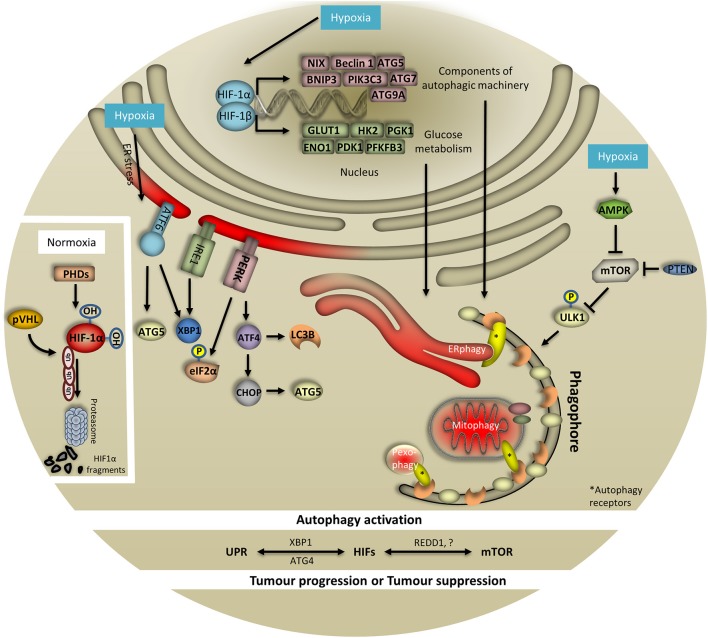
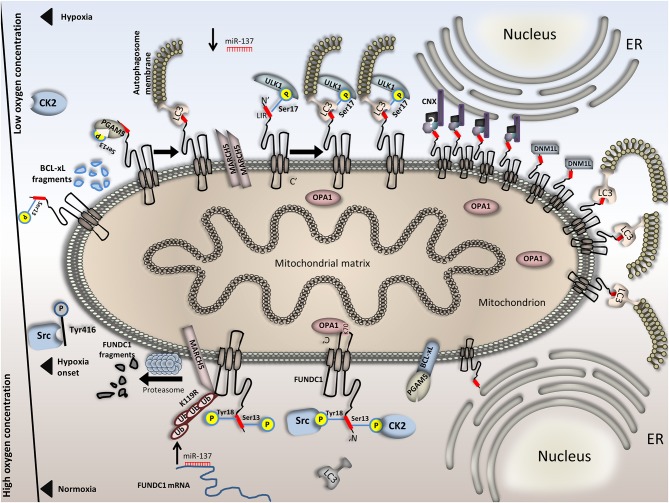
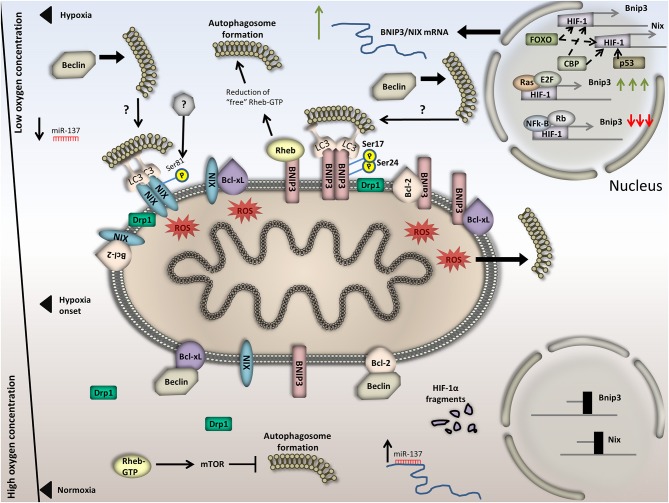
Verification
Claims the paper makes
The claims and statistics of this paper haven’t been checked yet.
Run the check — free, no account needed. It reads the open-access text and checks the sources it cites.
Claims other papers make about this one
Each is checked against this paper’s own text: does it say what the citing paper says it does?
In the citing paper
“Autophagy can be induced by certain treatments or microevironmental effects in relation to metabolic adaptation and resistance [45].”
From Hypoxia Signaling in Cancer: From Basics to Clinical Practice (2021) · cites this paper as [45]
Self-check
Percentages, sums and reported differences re-computed from the paper’s own numbers.
The self-check needs the paper’s full text.
Citations
Cites
3 retracted
Mitochondrial Autophagy Is an HIF-1-dependent Adaptive Metabolic Response to Hypoxia
Zhang, H., Bosch-Marce, M., Shimoda, L. A., Tan, Y. S., Baek, J. H., Wesley, J. B., Gonzalez, F. J., & Semenza, G. L. (2008) · Journal of Biological Chemistry · doi:10.1074/jbc.m800102200 · Cited by 1,601
RetractedRETRACTED: MiR‐137 functions as a tumor suppressor in pancreatic cancer by targeting MRGBP
Ding, F. H., Zhang, S., Gao, S., Shang, J., Li, Y., Cui, N., & Zhao, Q. (2018) · Journal of Cellular Biochemistry · doi:10.1002/jcb.26676 · Cited by 31
RetractedRen, C., Liao, J.-Y., Huang, J., Chen, W., Ma, X., & Luo, X. (2017) · Oncology Research Featuring Preclinical and Clinical Cancer Therapeutics · doi:10.3727/096504017x14954923820137 · Cited by 14
RetractedRepertoires of Autophagy in the Pathogenesis of Ocular Diseases
Li, Y., Jiang, Q. L., Cao, G.-F., Yao, J., & Yan, B. (2015) · Cellular Physiology and Biochemistry · doi:10.1159/000373980 · Cited by 16,351
AMPK and mTOR regulate autophagy through direct phosphorylation of Ulk1
Kim, J., Kundu, M., Viollet, B., & Guan, K.-L. (2011) · Nature Cell Biology · doi:10.1038/ncb2152 · Cited by 7,227
Targeting Hypoxia-Inducible Factors for the Treatment of Anemia in Chronic Kidney Disease Patients
Locatelli, F., Fishbane, S. N., Block, G. A., & Macdougall, I. C. (2017) · American Journal of Nephrology · doi:10.1159/000455166 · Cited by 4,836
Mechanism and medical implications of mammalian autophagy
Dikic, I., & Elazar, Z. (2018) · Nature Reviews Molecular Cell Biology · doi:10.1038/s41580-018-0003-4 · Cited by 2,771
Levy, J. M. M., Towers, C. G., & Thorburn, A. (2017) · Nature Reviews Cancer · doi:10.1038/nrc.2017.53 · Cited by 2,526
Hypoxia-inducible factors and the response to hypoxic stress
Majmundar, A. J., Wong, W. J., & Simon, M. C. (2010) · Molecular Cell · doi:10.1016/j.molcel.2010.09.022 · Cited by 2,380
HIF-1 mediates adaptation to hypoxia by actively downregulating mitochondrial oxygen consumption
Papandreou, I., Cairns, R. A., Fontana, L., Lim, A. L., & Denko, N. C. (2006) · Cell Metabolism · doi:10.1016/j.cmet.2006.01.012 · Cited by 2,267
Jung, C. H., Ro, S.-H., Cao, J., Otto, N. M., & Kim, D.-H. (2010) · FEBS Letters · doi:10.1016/j.febslet.2010.01.017 · Cited by 2,090
Oxygen sensing by HIF hydroxylases
Schofield, C. J., & Ratcliffe, P. J. (2004) · Nature Reviews Molecular Cell Biology · doi:10.1038/nrm1366 · Cited by 2,068
HIF-1α pathway: role, regulation and intervention for cancer therapy
Masoud, G. N., & Li, W. (2015) · Acta Pharmaceutica Sinica B · doi:10.1016/j.apsb.2015.05.007 · Cited by 1,871 · cited 1×
“Despite the complexity of HIF-1 regulation, the role of HIF-1 in tumor progression through autophagy has long been appreciated (Masoud and Li, 2015).”
BackgroundMitochondrial outer-membrane protein FUNDC1 mediates hypoxia-induced mitophagy in mammalian cells
Liu, L., Feng, D., Chen, G., Chen, M., Zheng, Q., Song, P., Ma, Q., Zhu, C., Wang, R., Qi, W., et al. (2012) · Nature Cell Biology · doi:10.1038/ncb2422 · Cited by 1,738
Hypoxia, HIF1 and glucose metabolism in the solid tumour
Denko, N. C. (2008) · Nature Reviews Cancer · doi:10.1038/nrc2468 · Cited by 1,707
Bellot, G., Garcia-Medina, R., Gounon, P., Chiche, J., Roux, D., Pouysségur, J., & Mazure, N. M. (2009) · Molecular and Cellular Biology · doi:10.1128/mcb.00166-09 · Cited by 1,501
Brugarolas, J., Lei, K., Hurley, R. L., Manning, B. D., Reiling, J. H., Hafen, E., Witters, L. A., Ellisen, L. W., & Kaelin, W. G. (2004) · Genes & Development · doi:10.1101/gad.1256804 · Cited by 1,384
Nix is a selective autophagy receptor for mitochondrial clearance
Novak, I., Kirkin, V., McEwan, D. G., Zhang, J., Wild, P., Rozenknop, A., Rogov, V., Löhr, F., Popovic, D., Occhipinti, A., et al. (2010) · The EMBO Reports · doi:10.1038/embor.2009.256 · Cited by 1,309 · cited 1×
“Moreover, both BNIP3 and NIX contain a LIR motif, which is exposed in the cytoplasm, allowing for their physical interaction with LC3/GABARAP (Novak et al., 2010).”
BackgroundHypoxia-Induced Angiogenesis: Good and Evil
Krock, B. L., Skuli, N., & Simon, M. C. (2011) · Genes & Cancer · doi:10.1177/1947601911423654 · Cited by 1,236
UPR, autophagy, and mitochondria crosstalk underlies the ER stress response
Senft, D., & Ronai, Z. A. (2015) · Trends in Biochemical Sciences · doi:10.1016/j.tibs.2015.01.002 · Cited by 1,121
Autophagy at the crossroads of catabolism and anabolism
Kaur, J., & Debnath, J. (2015) · Nature Reviews Molecular Cell Biology · doi:10.1038/nrm4024 · Cited by 1,036
Role of BNIP3 and NIX in cell death, autophagy, and mitophagy
Zhang, J., & Ney, P. A. (2009) · Cell Death & Differentiation · doi:10.1038/cdd.2009.16 · Cited by 1,021
Hypoxia-Inducible Factors: Master Regulators of Cancer Progression
Schito, L., & Semenza, G. L. (2016) · Trends in Cancer · doi:10.1016/j.trecan.2016.10.016 · Cited by 962
Regulation of endoplasmic reticulum turnover by selective autophagy
Khaminets, A., Heinrich, T., Mari, M., Grumati, P., Huebner, A. K., Akutsu, M., Liebmann, L., Stolz, A., Nietzsche, S., Koch, N., et al. (2015) · Nature · doi:10.1038/nature14498 · Cited by 956
Hypoxia signalling through mTOR and the unfolded protein response in cancer
Wouters, B. G., & Koritzinsky, M. (2008) · Nature Reviews Cancer · doi:10.1038/nrc2501 · Cited by 894
Rozpędek‐Kamińska, W., Pytel, D., Mucha, B., Leszczynska, H., Diehl, J. A., & Majsterek, I. (2016) · Current Molecular Medicine · doi:10.2174/1566524016666160523143937 · Cited by 894
XBP1 promotes triple-negative breast cancer by controlling the HIF1α pathway
Chen, X., Iliopoulos, D., Zhang, Q. H., Tang, Q., Greenblatt, M. B., Hatziapostolou, M., Lim, E., Tam, W. L., Ni, M., Chen, Y., et al. (2014) · Nature · doi:10.1038/nature13119 · Cited by 840
Rouschop, K. M. A., van den Beucken, T., Dubois, L., Niessen, H., Bussink, J., Savelkouls, K., Keulers, T., Mujcic, H., Landuyt, W., Voncken, J. W., et al. (2010) · Journal of Clinical Investigation · doi:10.1172/jci40027 · Cited by 829
ER stress: Autophagy induction, inhibition and selection
Rashid, H.-O., Yadav, R. K., Kim, H., & Chae, H. (2015) · Autophagy · doi:10.1080/15548627.2015.1091141 · Cited by 821
The Interplay Between Mitochondrial Dynamics and Mitophagy
Twig, G., & Shirihai, O. S. (2011) · Antioxidants & Redox Signaling · doi:10.1089/ars.2010.3779 · Cited by 778
Coordination of mitophagy and mitochondrial biogenesis during ageing in C. elegans
Palikaras, K., Lionaki, E., & Tavernarakis, N. (2015) · Nature · doi:10.1038/nature14300 · Cited by 770
Self-citationHanna, R. A., Quinsay, M. N., Orogo, A. M., Giang, K., Rikka, S., & Gustafsson, Å. B. (2012) · Journal of Biological Chemistry · doi:10.1074/jbc.m111.322933 · Cited by 762
ER stress‐regulated translation increases tolerance to extreme hypoxia and promotes tumor growth
Bi, M., Naczki, C., Koritzinsky, M., Fels, D. R., Blais, J. D., Hu, N., Harding, H. P., Novoa, I., Varia, M. A., Raleigh, J. A., et al. (2005) · The EMBO Journal · doi:10.1038/sj.emboj.7600777 · Cited by 756
Hypoxia and Metabolic Adaptation of Cancer Cells
Eales, K. L., Hollinshead, K. E. R., & Tennant, D. A. (2016) · Oncogenesis · doi:10.1038/oncsis.2015.50 · Cited by 724 · cited 7×
“These data raise the possibility that a feedback loop that coordinates HIF1, Pink1/Parkin levels and mitophagy exists.”
BackgroundInfluentialSowter, H., Ratcliffe, P. J., Watson, P. H., Greenberg, A. H., & Harris, A. L. (2001) · PubMed · Cited by 705
Src kinases as therapeutic targets for cancer
Kim, L. C., Song, L., & Haura, E. B. (2009) · Nature Reviews Clinical Oncology · doi:10.1038/nrclinonc.2009.129 · Cited by 700
ATM and ATR as therapeutic targets in cancer
Weber, A. M., & Ryan, A. J. (2014) · Pharmacology & Therapeutics · doi:10.1016/j.pharmthera.2014.12.001 · Cited by 676
Hypoxia-induced autophagy: cell death or cell survival?
Mazure, N. M., & Pouysségur, J. (2009) · Current Opinion in Cell Biology · doi:10.1016/j.ceb.2009.11.015 · Cited by 646
Endoplasmic Reticulum Stress and the Hallmarks of Cancer
Urra, H., Dufey, E., Avril, T., Chevet, É., & Hetz, C. A. (2016) · Trends in cancer · doi:10.1016/j.trecan.2016.03.007 · Cited by 630
Mitophagy receptor FUNDC1 regulates mitochondrial dynamics and mitophagy
Chen, M., Chen, Z., Wang, Y., Tan, Z. L., Zhu, C., Li, Y., Han, Z., Chen, L., Gao, R., Liu, L., et al. (2016) · Autophagy · doi:10.1080/15548627.2016.1151580 · Cited by 617
Chen, G., Han, Z., Feng, D., Chen, Y., Chen, L., Wu, H., Huang, L., Zhou, C., Cai, X., Fu, C., et al. (2014) · Molecular Cell · doi:10.1016/j.molcel.2014.02.034 · Cited by 615
ULK1 translocates to mitochondria and phosphorylates FUNDC1 to regulate mitophagy
Wu, W., Tian, W., Hu, Z., Chen, G., Huang, L., Li, W., Zhang, X., Xue, P., Zhou, C., Liu, L., et al. (2014) · The EMBO Reports · doi:10.1002/embr.201438501 · Cited by 574
Dual role of autophagy in hallmarks of cancer
Singh, S. S., Vats, S., Chia, A. Y.-Q., Tan, T. Z., Deng, S., Ong, M. S., Arfuso, F., Yap, C. T., Goh, B. C., Sethi, G., et al. (2018) · Oncogene · doi:10.1038/s41388-017-0046-6 · Cited by 542
Hetz, C., Thielen, P., Matus, S., Nassif, M., Court, F., Kiffin, R., Martinez, G., Cuervo, A. M., Brown, R. H., & Glimcher, L. H. (2009) · Genes & Development · doi:10.1101/gad.1830709 · Cited by 530
Zhu, Y., Maßen, S., Terenzio, M., Lang, V., Chen-Lindner, S., Eils, R., Novak, I., Đikić, I., Hamacher‐Brady, A., & Brady, N. R. (2012) · Journal of Biological Chemistry · doi:10.1074/jbc.m112.399345 · Cited by 504
Li, X., Jiang, Y., Meisenhelder, J., Yang, W., Hawke, D. H., Zheng, Y., Xia, Y., Aldape, K., He, J., Hunter, T. R., et al. (2016) · Molecular Cell · doi:10.1016/j.molcel.2016.02.009 · Cited by 504
Mitochondrial biogenesis and clearance: a balancing act
Ploumi, C., Daskalaki, I., & Tavernarakis, N. (2016) · FEBS Journal · doi:10.1111/febs.13820 · Cited by 479
Translocon component Sec62 acts in endoplasmic reticulum turnover during stress recovery
Fumagalli, F., Noack, J., Bergmann, T. J., Cebollero, E., Pisoni, G. B., Fasana, E., Fregno, I., Galli, C., Loi, M., Soldà, T., et al. (2016) · Nature Cell Biology · doi:10.1038/ncb3423 · Cited by 471
mTORC1 and mTORC2 in cancer and the tumor microenvironment
Kim, L. C., Cook, R. S., & Chen, J. (2016) · Oncogene · doi:10.1038/onc.2016.363 · Cited by 463
Smith, M. D., Harley, M. E., Kemp, A. J., Wills, J. C., Lee, M. W., Arends, M. J., von Kriegsheim, A., Behrends, C., & Wilkinson, S. (2017) · Developmental Cell · doi:10.1016/j.devcel.2017.11.024 · Cited by 452
Full length RTN3 regulates turnover of tubular endoplasmic reticulum via selective autophagy
Grumati, P., Morozzi, G., Hölper, S., Mari, M. C., Harwardt, M.-L. I. E., Yan, R., Müller, S. P., Reggiori, F., Heilemann, M., & Đikić, I. (2017) · eLife · doi:10.7554/elife.25555 · Cited by 447
ATM functions at the peroxisome to induce pexophagy in response to ROS
Zhang, J., Tripathi, D. N., Ji, J., Alexander, A., Kim, J., Powell, R. T., Dere, R., Tait-Mulder, J., Lee, J., Paull, T. T., et al. (2015) · Nature Cell Biology · doi:10.1038/ncb3230 · Cited by 442
Lee, Y., Lee, H.-Y., Hanna, R. A., & Gustafsson, Å. B. (2011) · American Journal of Physiology-Heart and Circulatory Physiology · doi:10.1152/ajpheart.00368.2011 · Cited by 409
Mechanistic insights into selective autophagy pathways: lessons from yeast
Farré, J., & Subramani, S. E. (2016) · Nature Reviews Molecular Cell Biology · doi:10.1038/nrm.2016.74 · Cited by 407
Wu, W., Lin, C., Wu, K., Jiang, L., Wang, X., Li, W., Zhuang, H., Zhang, X., Chen, H. H., Li, S., et al. (2016) · The EMBO Journal · doi:10.15252/embj.201593102 · Cited by 370
BNIP3 Is an RB/E2F Target Gene Required for Hypoxia-Induced Autophagy
Tracy, K., Dibling, B. C., Spike, B. T., Knabb, J. R., Schumacker, P., & Macleod, K. F. (2007) · Molecular and Cellular Biology · doi:10.1128/mcb.02246-06 · Cited by 369
Protein Kinase CK2 in Health and Disease
Trembley, J. H., Wang, G., Unger, G. M., Slaton, J. W., & Ahmed, K. (2009) · Cellular and Molecular Life Sciences · doi:10.1007/s00018-009-9154-y · Cited by 364
Hypoxia induces the expression of the pro-apoptotic gene BNIP3
Guo, K., Searfoss, G. H., Krolikowski, D., Pagnoni, M., Franks, C. F., Clark, K. L., Yu, K. T., Jaye, M., & Ivashchenko, Y. (2001) · Cell Death and Differentiation · doi:10.1038/sj.cdd.4400810 · Cited by 353
Koh, M. Y., Lemos, R., Liu, X., & Powis, G. (2011) · Cancer Research · doi:10.1158/0008-5472.can-10-4142 · Cited by 350
Ray, R., Chen, G., Velde, C. V., Cizeau, J., Park, J. H., Reed, J. C., Gietz, R. D., & Greenberg, A. H. (2000) · Journal of Biological Chemistry · doi:10.1074/jbc.275.2.1439 · Cited by 349
Hexokinase-II Positively Regulates Glucose Starvation-Induced Autophagy through TORC1 Inhibition
Roberts, D. J., Tan‐Sah, V. P., Ding, E., Smith, J. M., & Miyamoto, S. (2014) · Molecular Cell · doi:10.1016/j.molcel.2013.12.019 · Cited by 337
Yang, Z., Fujii, H., Mohan, S. V., Goronzy, J. J., & Weyand, C. M. (2013) · Journal of Experimental Medicine · doi:10.1084/jem.20130252 · Cited by 334
PpAtg30 Tags Peroxisomes for Turnover by Selective Autophagy
Farré, J.-C., Manjithaya, R., Mathewson, R. D., & Subramani, S. (2008) · Developmental Cell · doi:10.1016/j.devcel.2007.12.011 · Cited by 331
Parkin-Independent Mitophagy Controls Chemotherapeutic Response in Cancer Cells
Villa, E., Proïcs, E., Rubio‐Patiño, C., Obba, S., Zunino, B., Bossowski, J. P., Rozier, R., Chiche, J., Mondragón, L., Riley, J. S., et al. (2017) · Cell Reports · doi:10.1016/j.celrep.2017.08.087 · Cited by 325
Targeting Src family kinases in anti-cancer therapies: turning promise into triumph
Zhang, S., & Yu, D. (2011) · Trends in Pharmacological Sciences · doi:10.1016/j.tips.2011.11.002 · Cited by 323
Fang, H.-Y., Hughes, R., Murdoch, C., Coffelt, S. B., Biswas, S. K., Harris, A. L., Johnson, R. S., Imityaz, H. Z., Simon, M. C., Fredlund, E., et al. (2009) · Blood · doi:10.1182/blood-2008-12-195941 · Cited by 319
Cosín‐Roger, J., Simmen, S., Melhem, H., Atrott, K., Frey-Wagner, I. M., Hausmann, M., de Vallière, C., Spalinger, M. R., Spielmann, P., Wenger, R. H., et al. (2017) · Nature Communications · doi:10.1038/s41467-017-00213-3 · Cited by 312
Masson, N., & Ratcliffe, P. J. (2014) · Cancer & Metabolism · doi:10.1186/2049-3002-2-3 · Cited by 305
mTOR Pathways in Cancer and Autophagy
Paquette, M., El–Houjeiri, L., & Pause, A. (2018) · Cancers · doi:10.3390/cancers10010018 · Cited by 301
Mitochondrial E3 ligase MARCH5 regulates FUNDC1 to fine‐tune hypoxic mitophagy
Chen, Z., Liu, L., Cheng, Q., Li, Y., Wu, H., Zhang, W., Wang, Y., Sehgal, S. A., Siraj, S., Wang, X., et al. (2017) · EMBO Reports · doi:10.15252/embr.201643309 · Cited by 299
Margariti, A., Li, H., Chen, T., Martin, D., Vizcay‐Barrena, G., Alam, S., Karamariti, E., Xiao, Q., Zampetaki, A., Zhang, Z., et al. (2012) · Journal of Biological Chemistry · doi:10.1074/jbc.m112.412783 · Cited by 297
BNIP3 Protein Suppresses PINK1 Kinase Proteolytic Cleavage to Promote Mitophagy
Zhang, T., Xue, L., Li, L., Tang, C., Wan, Z., Wang, R., Tan, J., Tan, Y., Han, H., Tian, R., et al. (2016) · Journal of Biological Chemistry · doi:10.1074/jbc.m116.733410 · Cited by 293
Shi, L., Pan, H., Liu, Z., Xie, J., & Han, W. (2017) · Signal Transduction and Targeted Therapy · doi:10.1038/sigtrans.2017.44 · Cited by 291
Schuck, S., Gallagher, C. M., & Walter, P. (2014) · Journal of Cell Science · doi:10.1242/jcs.154716 · Cited by 287
Phosphoglycerate Kinase 1 Phosphorylates Beclin1 to Induce Autophagy
Qian, X., Li, X., Cai, Q., Zhang, C., Yu, Q., Jiang, Y., Lee, J.-H., Hawke, D. H., Wang, Y., Xia, Y., et al. (2017) · Molecular Cell · doi:10.1016/j.molcel.2017.01.027 · Cited by 284
BNIP3L/NIX-mediated mitophagy protects against ischemic brain injury independent of PARK2
Yuan, Y., Zheng, Y., Zhang, X., Chen, Y., Wu, X., Wu, J., Shen, Z., Jiang, L., Wang, L., Yang, W. Y., et al. (2017) · Autophagy · doi:10.1080/15548627.2017.1357792 · Cited by 283
Reciprocal influence of the p53 and the hypoxic pathways
Sermeus, A., & Michiels, C. (2011) · Cell Death and Disease · doi:10.1038/cddis.2011.48 · Cited by 278
Bnip3 impairs mitochondrial bioenergetics and stimulates mitochondrial turnover
Rikka, S., Quinsay, M. N., Thomas, R. L., Kubli, D. A., Zhang, X., Murphy, A. N., & Gustafsson, Å. B. (2011) · Cell Death & Differentiation · doi:10.1038/cdd.2010.146 · Cited by 277
Pex3‐anchored Atg36 tags peroxisomes for degradation in Saccharomyces cerevisiae
Motley, A. M., Nuttall, J. M., & Hettema, E. H. (2012) · The EMBO Journal · doi:10.1038/emboj.2012.151 · Cited by 275
Li, Y., Wang, Y., Kim, E., Beemiller, P., Wang, C. Y., Swanson, J. A., You, M., & Guan, K. (2007) · Journal of Biological Chemistry · doi:10.1074/jbc.m705231200 · Cited by 269
Wei, H., Liu, L., & Chen, Q. (2015) · Biochimica et Biophysica Acta (BBA) - Molecular Cell Research · doi:10.1016/j.bbamcr.2015.03.013 · Cited by 266
HIF-1 in cancer therapy: two decade long story of a transcription factor
Soni, S., & Padwad, Y. S. (2017) · Acta Oncologica · doi:10.1080/0284186x.2017.1301680 · Cited by 251 · cited 2×
“For example, BNIP3 and NIX are highly expressed in breast, macrophage, endothelial and epithelial cancer cells compared to healthy cells from the same patient upon hypoxia induction (Sowter et al., 2001).”
BackgroundSquatrito, M., Brennan, C., Helmy, K. Y., Huse, J. T., Petrini, J. H. J., & Holland, E. C. (2010) · Cancer Cell · doi:10.1016/j.ccr.2010.10.034 · Cited by 242
Silencing of the Hypoxia-Inducible Cell Death Protein BNIP3 in Pancreatic Cancer
Okami, J., Simeone, D. M., & Logsdon, C. D. (2004) · Cancer Research · doi:10.1158/0008-5472.can-04-0089 · Cited by 237
NBR1 acts as an autophagy receptor for peroxisomes
Deosaran, E., Larsen, K. B., Hua, R., Sargent, G., Wang, Y., Kim, S., Lamark, T., Jauregui, M., Law, K., Lippincott-Schwartz, J., et al. (2012) · Journal of Cell Science · doi:10.1242/jcs.114819 · Cited by 232
Nagelkerke, A., Bussink, J., Mujčić, H., Wouters, B. G., Lehmann, S., Sweep, F. C. G. J., & Span, P. N. (2013) · Breast Cancer Research · doi:10.1186/bcr3373 · Cited by 229
Rouschop, K. M. A., Dubois, L. J., Keulers, T. G., van den Beucken, T., Lambin, P., Bussink, J., van der Kogel, A. J., Koritzinsky, M., & Wouters, B. G. (2013) · Proceedings of the National Academy of Sciences · doi:10.1073/pnas.1210633110 · Cited by 225
Acid Suspends the Circadian Clock in Hypoxia through Inhibition of mTOR
Walton, Z. E., Patel, C. H., Brooks, R. C., Yu, Y., Ibrahim‐Hashim, A., Riddle, M., Porcu, A., Jiang, T., Ecker, B. L., Tameire, F., et al. (2018) · Cell · doi:10.1016/j.cell.2018.05.009 · Cited by 222
Elsner, M., Gehrmann, W., & Lenzen, S. (2011) · Diabetes · doi:10.2337/db09-1401 · Cited by 221
Mitochondrial Akt Regulation of Hypoxic Tumor Reprogramming
Chae, Y. C., Vaira, V., Caino, M. C., Tang, H., Seo, J. H., Kossenkov, A. V., Ottobrini, L., Martelli, C., Lucignani, G., Bertolini, I., et al. (2016) · Cancer Cell · doi:10.1016/j.ccell.2016.07.004 · Cited by 214
Wu, W., Li, W., Chen, H. H., Jiang, L., Zhu, R., & Feng, D. (2016) · Autophagy · doi:10.1080/15548627.2016.1193656 · Cited by 200
Peroxisomes in brain development and function
Berger, J., Dorninger, F., Forss-Petter, S., & Kunze, M. (2016) · Biochimica et Biophysica Acta (BBA) - Molecular Cell Research · doi:10.1016/j.bbamcr.2015.12.005 · Cited by 194 · cited 1×
“Their key functions are oxygen-dependent and related to lipid synthesis, ROS metabolism and the degradation of both polyunsaturated fatty acids (PUFAs) and very long fatty acids (VLCFAs), among others (Berger et al., 2016).”
BackgroundEmergence of protein kinase CK2 as a key target in cancer therapy
Trembley, J. H., Chen, Z., Unger, G. M., Slaton, J. W., Kren, B. T., Waes, C. V., & Ahmed, K. (2010) · BioFactors · doi:10.1002/biof.96 · Cited by 194
Pereira, E. R., Frudd, K., Awad, W., & Hendershot, L. M. (2013) · Journal of Biological Chemistry · doi:10.1074/jbc.m113.507194 · Cited by 190
The BCL2L1 and PGAM5 axis defines hypoxia-induced receptor-mediated mitophagy
Wu, H., Xue, D., Chen, G., Han, Z., Huang, L., Zhu, C., Wang, X., Jin, H., Wang, J., Zhu, Y., et al. (2014) · Autophagy · doi:10.4161/auto.29568 · Cited by 186
Palikaras, K., Daskalaki, I., Markaki, M., & Tavernarakis, N. (2017) · Pharmacology & Therapeutics · doi:10.1016/j.pharmthera.2017.04.005 · Cited by 181
PEX2 is the E3 ubiquitin ligase required for pexophagy during starvation
Sargent, G., van Zutphen, T., Shatseva, T., Zhang, L., Giovanni, V. D., Bandsma, R., & Kim, P. K. (2016) · The Journal of Cell Biology · doi:10.1083/jcb.201511034 · Cited by 180
Hif-2α Promotes Degradation of Mammalian Peroxisomes by Selective Autophagy
Walter, K., Schönenberger, M. J., Trötzmüller, M., Horn, M., Elsässer, H., Moser, A. B., Lucas, M. S., Schwarz, T., Gerber, P. A., Faust, P. L., et al. (2014) · Cell Metabolism · doi:10.1016/j.cmet.2014.09.017 · Cited by 164
NBR1 enables autophagy-dependent focal adhesion turnover
Kenific, C. M., Stehbens, S. J., Goldsmith, J., Leidal, A. M., Faure, N., Ye, J., Wittmann, T., & Debnath, J. (2016) · The Journal of Cell Biology · doi:10.1083/jcb.201503075 · Cited by 163
Structural insights into the recognition of phosphorylated FUNDC1 by LC3B in mitophagy
Lv, M., Wang, C., Li, F., Peng, J., Wen, B., Gong, Q., Shi, Y., & Tang, Y. (2016) · Protein & Cell · doi:10.1007/s13238-016-0328-8 · Cited by 163
Pereira, F. F., Bernardes, V. C. D., Eisemberg, C. C., Fantin, C., & Vogt, R. C. (2016) · Genetics and Molecular Research · doi:10.4238/gmr.15017335 · Cited by 161
Roy, S., Leidal, A. M., Ye, J., Ronen, S. M., & Debnath, J. (2017) · Molecular Cell · doi:10.1016/j.molcel.2017.05.020 · Cited by 155
Capello, M., Borgogno, S. F., Riganti, C., Chattaragada, M. S., Principe, M., Roux, C., Zhou, W., Petricoin, E. F., Cappello, P., & Novelli, F. (2015) · Oncotarget · doi:10.18632/oncotarget.6798 · Cited by 153
Structural basis for the phosphorylation of FUNDC1 LIR as a molecular switch of mitophagy
Kuang, Y., Ma, K., Zhou, C., Ding, P., Zhu, Y., Chen, Q., & Xia, B. (2016) · Autophagy · doi:10.1080/15548627.2016.1238552 · Cited by 153
Li, W., Zhang, X., Zhuang, H., Chen, H.-G., Chen, Y., Tian, W., Wu, W., Li, Y., Wang, S., Zhang, L., et al. (2014) · Journal of Biological Chemistry · doi:10.1074/jbc.m113.537050 · Cited by 145
Mujčić, H., Nagelkerke, A., Rouschop, K. M. A., Chung, S., Chaudary, N., Span, P. N., Clarke, B. A., Milosevic, M., Sykes, J. R., Hill, R. P., et al. (2013) · Clinical Cancer Research · doi:10.1158/1078-0432.ccr-13-0526 · Cited by 130
Interplay between unfolded protein response and autophagy promotes tumor drug resistance
YAN, M.-M., Ni, J., Song, D., Ding, M., & Huang, J. X. (2015) · Oncology Letters · doi:10.3892/ol.2015.3508 · Cited by 120
Di Conza, G., Trusso Cafarello, S., Loroch, S., Mennerich, D., Deschoemaeker, S., Di Matteo, M., Ehling, M., Gevaert, K., Prenen, H., Zahedi, R. P., et al. (2017) · Cell Reports · doi:10.1016/j.celrep.2017.01.051 · Cited by 119
Protein kinase activity of the glycolytic enzyme PGK1 regulates autophagy to promote tumorigenesis
Qian, X., Li, X., & Lu, Z. (2017) · Autophagy · doi:10.1080/15548627.2017.1313945 · Cited by 114
Antagonism of E2F-1 regulated Bnip3 transcription by NF-κB is essential for basal cell survival
Shaw, J., Yurkova, N., Zhang, T., Gang, H., Aguilar, F., Weidman, D. R., Scramstad, C., Weisman, H., & Kirshenbaum, L. A. (2008) · Proceedings of the National Academy of Sciences · doi:10.1073/pnas.0807735105 · Cited by 113
p53 directly suppresses BNIP3 expression to protect against hypoxia‐induced cell death
Feng, X., Liu, X., Zhang, W., & Xiao, W. (2011) · The EMBO Journal · doi:10.1038/emboj.2011.248 · Cited by 112
Regulation of hypoxia-induced autophagy in glioblastoma involves ATG9A
Abdul Rahim, S. A., Dirkse, A., Oudin, A., Schuster, A., Bohler, J., Barthelemy, V., Muller, A., Vallar, L., Janji, B., Golebiewska, A., et al. (2017) · British Journal of Cancer · doi:10.1038/bjc.2017.263 · Cited by 111
Regulation and function of mitophagy in development and cancer
Lu, H., Li, G., Liu, L., Feng, L., Wang, X., & Jin, H. (2013) · Autophagy · doi:10.4161/auto.26550 · Cited by 107
Role for casein kinase 2 in the regulation of HIF‐1 activity
Mottet, D., Ruys, S. P. D., Demazy, C., Raes, M. J., & Michiels, C. (2005) · International Journal of Cancer · doi:10.1002/ijc.21268 · Cited by 107
Signaling pathways and mechanisms of hypoxia‐induced autophagy in the animal cells
Fang, Y., Tan, J., & Zhang, Q. (2015) · Cell Biology International · doi:10.1002/cbin.10463 · Cited by 105
Autophagy inhibition in cancer therapy: metabolic considerations for antitumor immunity
Townsend, K. N., Hughson, L. R. K., Schlie, K., Poon, V. I., Westerback, A., & Lum, J. J. (2012) · Immunological Reviews · doi:10.1111/j.1600-065x.2012.01141.x · Cited by 104
Mujčić, H., Rzymski, T., Rouschop, K. M. A., Koritzinsky, M., Milani, M., Harris, A. L., & Wouters, B. G. (2009) · Radiotherapy and Oncology · doi:10.1016/j.radonc.2009.08.017 · Cited by 101
Inhibition of 6-phosphofructo-2-kinase (PFKFB3) induces autophagy as a survival mechanism
Klarer, A. C., O’Neal, J., Imbert-Fernandez, Y., Clem, A. L., Ellis, S. R., Clark, J. A., Clem, B. F., Chesney, J. A., & Telang, S. (2014) · Cancer & Metabolism · doi:10.1186/2049-3002-2-2 · Cited by 101
Physiologic hypoxia promotes maintenance of CML stem cells despite effective BCR-ABL1 inhibition
Ng, K. P., Manjeri, A., Lee, K. L., Huang, W., Tan, S., Chuah, C. T. H., Poellinger, L., & Ong, S. T. (2014) · Blood · doi:10.1182/blood-2013-07-511907 · Cited by 96
Huang, Z., Wu, S., Kong, F., Cai, X., Ye, B., Shan, P., & Huang, W. (2016) · Journal of Cellular and Molecular Medicine · doi:10.1111/jcmm.12990 · Cited by 95
Burton, T. R., Henson, E. S., Baijal, P. K., Eisenstat, D. D., & Gibson, S. B. (2005) · International Journal of Cancer · doi:10.1002/ijc.21547 · Cited by 92
The Cell Cycle Factor E2F-1 Activates Bnip3 and the Intrinsic Death Pathway in Ventricular Myocytes
Yurkova, N., Shaw, J., Blackie, K., Weidman, D. R., Jayas, R., Flynn, B., & Kirshenbaum, L. A. (2007) · Circulation Research · doi:10.1161/circresaha.107.164731 · Cited by 92
Carloni, S., Albertini, M. C., Galluzzi, L., Buonocore, G., Proietti, F., & Balduini, W. (2014) · Experimental Neurology · doi:10.1016/j.expneurol.2014.03.002 · Cited by 87
Weng, L., Du, J., Zhou, Q.-H., Cheng, B., Li, J., Zhang, D., & Ling, C. (2012) · Molecular Cancer · doi:10.1186/1476-4598-11-39 · Cited by 86
Wolff, N. C., Vega-Rubín-de-Celis, S., Xie, X., Castrillón, D. H., Kabbani, W., & Brugarolas, J. (2011) · Molecular and Cellular Biology · doi:10.1128/mcb.01393-10 · Cited by 86
Cerrada, I., Ruiz‐Saurí, A., Carrero, R., Trigueros, C., Dorronsoro, A., Sánchez-Puelles, J.-M., Díez‐Juan, A., Montero, J., & Sepúlveda, P. (2012) · Stem Cells and Development · doi:10.1089/scd.2012.0340 · Cited by 85
Endoplasmic Reticulum Stress and Related Pathological Processes
Mei, Y. (2013) · Journal of Diagnostic Techniques and Biomedical Analysis · doi:10.4172/2327-4638.1000105 · Cited by 85
Lee, H. J., Jung, Y. H., Choi, G. E., Ko, S. H., Lee, S. J., Lee, S. H., & Han, H. J. (2017) · Redox Biology · doi:10.1016/j.redox.2017.07.004 · Cited by 82
Li, B., Feng, W., Luo, O., Xu, T., Cao, Y., Wu, H., Yu, D., & Ding, Y. (2017) · Scientific Reports · doi:10.1038/s41598-017-04811-5 · Cited by 82
Src kinase activation: A switched electrostatic network
Özkırımlı, E., & Post, C. B. (2006) · Protein Science · doi:10.1110/ps.051999206 · Cited by 81
Ishaq, M., Khan, M. A., Sharma, K. K., Sharma, G., Dutta, R. K., & Majumdar, S. (2014) · Biochimica et Biophysica Acta (BBA) - General Subjects · doi:10.1016/j.bbagen.2014.08.019 · Cited by 80
Targeting PDK1 with dichloroacetophenone to inhibit acute myeloid leukemia (AML) cell growth
Qin, L., Tian, Y., Yu, Z., Shi, D., Wang, J., Zhang, C., Peng, R., Chen, X., Liu, C., Chen, Y., et al. (2015) · Oncotarget · doi:10.18632/oncotarget.6366 · Cited by 80
Hou, H., Er, P., Cheng, J., Chen, X., Ding, X., Wang, Y., Chen, X., Yuan, Z., Pang, Q., Wang, P., et al. (2017) · Cancer Medicine · doi:10.1002/cam4.1112 · Cited by 80
miR-137 Modulates a Tumor Suppressor Network-Inducing Senescence in Pancreatic Cancer Cells
Neault, M., Mallette, F. A., & Richard, S. (2016) · Cell Reports · doi:10.1016/j.celrep.2016.01.068 · Cited by 78
Lipophagy Contributes to Testosterone Biosynthesis in Male Rat Leydig Cells
Ma, Y., Zhou, Y., Zhu, Y., Wang, S., Ping, P., & Chen, X. (2018) · Endocrinology · doi:10.1210/en.2017-03020 · Cited by 77
Impairment of peroxisomal biogenesis in human colon carcinoma
Lauer, C. (1999) · Carcinogenesis · doi:10.1093/carcin/20.6.985 · Cited by 75
MARCH5-FUNDC1 axis fine-tunes hypoxia-induced mitophagy
Chen, Z., Siraj, S., Liu, L., & Chen, Q. (2017) · Autophagy · doi:10.1080/15548627.2017.1310789 · Cited by 75
Ryan, D., Carberry, S., Murphy, Á. C., Lindner, A. U., Fay, J., Hector, S., McCawley, N., Bacon, O., Concannon, C. G., Kay, E. W., et al. (2016) · Journal of Translational Medicine · doi:10.1186/s12967-016-0948-z · Cited by 74
Catalase inhibition induces pexophagy through ROS accumulation
Lee, J. N., Dutta, R. K., Maharjan, Y., Liu, Z., Lim, J.-Y., Kim, S.-J., Cho, D., So, H., Choe, S., & Park, R. (2018) · Biochemical and Biophysical Research Communications · doi:10.1016/j.bbrc.2018.05.050 · Cited by 74
Sec62 Bridges the Gap from 3q Amplification to Molecular Cell Biology in Non–Small Cell Lung Cancer
Linxweiler, M., Linxweiler, J., Barth, M., Benedix, J., Jung, V., Kim, Y.-J., Bohle, R. M., Zimmermann, R., & Greiner, M. (2011) · American Journal Of Pathology · doi:10.1016/j.ajpath.2011.10.039 · Cited by 73
Cai, M., Sun, X., Wang, W., Lian, Z., Wu, P., Han, S., Chen, H., & Zhang, P. (2018) · Cancer Letters · doi:10.1016/j.canlet.2018.02.021 · Cited by 72
Regulation of Mitochondrial Integrity, Autophagy and Cell Survival by BNIP3
Tracy, K., & Macleod, K. F. (2007) · Autophagy · doi:10.4161/auto.4892 · Cited by 69
Chen, Q., Zhou, Y., Richards, M., & Wang, P. (2016) · Biochemical and Biophysical Research Communications · doi:10.1016/j.bbrc.2016.04.090 · Cited by 69
A Mechanistic Review of Mitophagy and Its Role in Protection against Alcoholic Liver Disease
Williams, J. A. R., & Ding, W. (2015) · Biomolecules · doi:10.3390/biom5042619 · Cited by 68
He, J., Pei, L., Jiang, H., Yang, W., Chen, J., & Liang, H. (2017) · Journal of Cancer · doi:10.7150/jca.18171 · Cited by 67
Hubert, A., Paris, S., Piret, J., Ninane, N., Raes, M. J., & Michiels, C. (2006) · Journal of Cell Science · doi:10.1242/jcs.03069 · Cited by 65
Neuronal hypoxia disrupts mitochondrial fusion
Sanderson, T. H., Raghunayakula, S., & Kumar, R. (2015) · Neuroscience · doi:10.1016/j.neuroscience.2015.05.078 · Cited by 64
ATM kinase sustains HER2 tumorigenicity in breast cancer
Stagni, V., Manni, I., Oropallo, V., Mottolese, M., Benedetto, A. D., Piaggio, G., Falcioni, R., Giaccari, D., Carlo, S. E. D., Sperati, F., et al. (2015) · Nature Communications · doi:10.1038/ncomms7886 · Cited by 64
Islam, F., Gopalan, V., Vider, J., Wahab, R., Ebrahimi, F., Lu, C., Kasem, K., & Lam, A. K.-Y. (2017) · Experimental Cell Research · doi:10.1016/j.yexcr.2017.05.021 · Cited by 64
Autophagy in non-small cell lung carcinogenesis
Rao, S., Yang, H., Penninger, J. M., & Kroemer, G. (2014) · Autophagy · doi:10.4161/auto.27643 · Cited by 63
Silencing of the SEC62 gene inhibits migratory and invasive potential of various tumor cells
Greiner, M., Kreutzer, B., Jung, V., Grobholz, R., Hasenfus, A., Stöhr, R., Tornillo, L., Dudek, J., Stöckle, M., Unteregger, G., et al. (2010) · International Journal of Cancer · doi:10.1002/ijc.25580 · Cited by 63
Liu, K. E., & Frazier, W. A. (2015) · PLoS ONE · doi:10.1371/journal.pone.0129667 · Cited by 62
Koop, E. A., van Laar, T., van Wichen, D. F., de Weger, R. A., van der Wall, E., & van Diest, P. J. (2009) · BMC Cancer · doi:10.1186/1471-2407-9-175 · Cited by 62
Downregulation of microRNA-498 in colorectal cancers and its cellular effects
Gopalan, V., Smith, R. A., & Lam, A. K.-Y. (2014) · Experimental Cell Research · doi:10.1016/j.yexcr.2014.08.006 · Cited by 60
Jung, V., Kindich, R., Kamradt, J., Jung, M., Müller, M., Schulz, W. A., Engers, R., Unteregger, G., Stöckle, M., Zimmermann, R., et al. (2006) · Molecular Cancer Research · doi:10.1158/1541-7786.mcr-05-0165 · Cited by 60
Hypoxia induces autophagy in cardiomyocytes via a hypoxia-inducible factor 1-dependent mechanism
GUI, L., LIU, B., & Lv, G. (2016) · Experimental and Therapeutic Medicine · doi:10.3892/etm.2016.3190 · Cited by 58
Evaluation of protein biomarkers of prostate cancer aggressiveness
Rizzardi, A. E., Rosener, N. K., Koopmeiners, J. S., Vogel, R. I., Metzger, G. J., Forster, C. L., Marston, L. O., Tiffany, J. R., McCarthy, J. B., Turley, E. A., et al. (2014) · BMC Cancer · doi:10.1186/1471-2407-14-244 · Cited by 55
Zhou, J., Li, C., Wang, Y., Alsiddig, M., Huo, L., Liu, H., & Miao, Y. (2018) · Biology of Reproduction · doi:10.1093/biolre/ioy061 · Cited by 55
MiR-498 regulated FOXO3 expression and inhibited the proliferation of human ovarian cancer cells
Liu, R., Liu, F., Li, L., Sun, M., & Kuisheng, C. (2015) · Biomedicine & Pharmacotherapy · doi:10.1016/j.biopha.2015.04.005 · Cited by 54
Calnexin is a novel sero-diagnostic marker for lung cancer
Kobayashi, M., Nagashio, R., Jiang, S., Saito, K., Tsuchiya, B., Ryuge, S., Katono, K., Nakashima, H., Fukuda, E., Goshima, N., et al. (2015) · Lung Cancer · doi:10.1016/j.lungcan.2015.08.015 · Cited by 52
Peroxisomes protect lymphoma cells from HDAC inhibitor-mediated apoptosis
Dahabieh, M. S., Ha, Z., Pietro, E. D., Nichol, J. N., Bolt, A. M., Gonçalves, C., Dupéré-Richer, D., Pettersson, F., Mann, K. K., Braverman, N., et al. (2017) · Cell Death and Differentiation · doi:10.1038/cdd.2017.115 · Cited by 52
Wang, L., Fan, Z., Zhang, J., Changyi, Y., Huang, C., Gu, Y., Xu, Z., Tang, Z., Lu, W., Wei, X., et al. (2014) · International Journal of Cancer · doi:10.1002/ijc.29153 · Cited by 51
Activation of Ras Up-regulates Pro-apoptotic BNIP3 in Nitric Oxide-induced Cell Death
An, H., Maeng, O., Kang, K.-H., Lee, J., Kim, Y.-S., Paik, S., & Lee, H. (2006) · Journal of Biological Chemistry · doi:10.1074/jbc.m605819200 · Cited by 51
ATM kinase sustains breast cancer stem-like cells by promoting ATG4C expression and autophagy
Antonelli, M., Strappazzon, F., Arisi, I., Brandi, R., D’Onofrio, M., Sambucci, M., Manic, G., Vitale, I., Barilà, D., & Stagni, V. (2017) · Oncotarget · doi:10.18632/oncotarget.15537 · Cited by 50
Vadysirisack, D. D., & Ellisen, L. W. (2011) · Methods in molecular biology · doi:10.1007/978-1-61779-430-8_4 · Cited by 49
Regulation of Peroxisomal Lipid Metabolism by Catalytic Activity of Tumor Suppressor H-rev107
Uyama, T., Ichi, I., Kono, N., Inoue, A., Tsuboi, K., Jin, X.-H., Araki, N., Aoki, J., Arai, H., & Ueda, N. (2011) · Journal of Biological Chemistry · doi:10.1074/jbc.m111.267575 · Cited by 49
Functions and characteristics of PINK1 and Parkin in cancer
Matsuda, S. (2015) · Frontiers in bioscience · doi:10.2741/4321 · Cited by 47
Long-Term Artificial Selection Reveals a Role of TCTP in Autophagy in Mammalian Cells
Chen, K., Huang, C., Yuan, J., Cheng, H., & Zhou, R. (2014) · Molecular Biology and Evolution · doi:10.1093/molbev/msu181 · Cited by 43
Azad, M. B., & Gibson, S. B. (2010) · Annals of the New York Academy of Sciences · doi:10.1111/j.1749-6632.2010.05778.x · Cited by 41
Feng, X., Li, H., Dean, M. L., Wilson, H., Kornaga, E. N., Enwere, E. K., Tang, P. A., Paterson, A. H. G., Lees‐Miller, S. P., Magliocco, A. M., et al. (2015) · Breast Cancer Research · doi:10.1186/s13058-015-0575-2 · Cited by 41
Identification of Novel FAM134B (JK1) Mutations in Oesophageal Squamous Cell Carcinoma
Haque, M. H., Gopalan, V., Chan, K.-W., Shiddiky, M. J. A., Smith, R. A., & Lam, A. K.-Y. (2016) · Scientific Reports · doi:10.1038/srep29173 · Cited by 40
Calnexin Controls the STAT3-Mediated Transcriptional Response to EGF
Lakkaraju, A. K., & van der Goot, F. G. (2013) · Molecular Cell · doi:10.1016/j.molcel.2013.07.009 · Cited by 39
Initial evidence for Sec62 as a prognostic marker in advanced head and neck squamous cell carcinoma
Wemmert, S., LINDNER, Y., Linxweiler, J., Wagenpfeil, S., Bohle, R. M., Niewald, M., & Schick, B. (2016) · Oncology Letters · doi:10.3892/ol.2016.4135 · Cited by 39
Transcriptional response to hypoxic stress in melanoma and prognostic potential of GBE1 and BNIP3
Buart, S., Terry, S., Noman, M. Z., Lanoy, É., Boutros, C., Fogel, P., Dessen, P., Meurice, G., Gaston‐Mathé, Y., Vielh, P. R., et al. (2017) · Oncotarget · doi:10.18632/oncotarget.22150 · Cited by 39
c-Kit Is Suppressed in Human Colon Cancer Tissue and Contributes to L1-Mediated Metastasis
Gavert, N. S., Shvab, A., Sheffer, M., Ben‐Shmuel, A., Haase, G., Bakos, E., Domany, E., & Ben‐Ze'ev, A. (2013) · Cancer Research · doi:10.1158/0008-5472.can-13-0576 · Cited by 36
Bochen, F., Adisurya, H., Wemmert, S., Lerner, C., Greiner, M., Zimmermann, R., Hasenfus, A., Wagner, M., Smola, S., Pfuhl, T., et al. (2016) · Oncotarget · doi:10.18632/oncotarget.13986 · Cited by 36
Maugeri, G., D’Amico, A. G., Reitano, R., Saccone, S., Federico, C., Cavallaro, S., & D’Agata, V. (2016) · Cell and Tissue Research · doi:10.1007/s00441-015-2340-3 · Cited by 35
Yang, L., Wei, N., Wang, L., Wang, X., & Liu, Q. (2017) · Child s Nervous System · doi:10.1007/s00381-017-3622-8 · Cited by 35
Ruan, H., Li, X., Yang, H.-M., Song, Z., Tong, J., Cao, Q., Wang, K., Xiao, W., Xiao, H., Chen, X.-Y., et al. (2017) · Experimental Cell Research · doi:10.1016/j.yexcr.2017.07.004 · Cited by 34
Linxweiler, M., Bochen, F., Schick, B., Wemmert, S., Kadah, B. A., Greiner, M., Hasenfus, A., Bohle, R.-M., Juhasz‐Böss, I., Solomayer, E., et al. (2016) · BMC Cancer · doi:10.1186/s12885-016-2739-6 · Cited by 33
Kasem, K., Gopalan, V., Salajegheh, A., Lu, C., Smith, R. A., & Lam, A. K.-Y. (2014) · Experimental and Molecular Pathology · doi:10.1016/j.yexmp.2014.05.001 · Cited by 32
MicroRNA-498 is downregulated in non-small cell lung cancer and correlates with tumor progression
Wang, M., Zhang, Q., Wang, J., & Zhai, Y. (2015) · Journal of Cancer Research and Therapeutics · doi:10.4103/0973-1482.163859 · Cited by 28
Lee, J. T., Lee, T.-J., Kim, C., Kim, N.-S., & Kwon, T. K. (2009) · Cancer Letters · doi:10.1016/j.canlet.2009.01.035 · Cited by 28
Jin, T., Lin, H., Lin, H., Guo, L., Ge, N., Cai, X.-Y., Sun, R., Chen, W.-K., Li, Q., & Hu, W. (2012) · Journal of Translational Medicine · doi:10.1186/1479-5876-10-64 · Cited by 28
Profiling of a panel of radioresistant prostate cancer cells identifies deregulation of key miRNAs
McDermott, N., Meunier, A., Wong, S. C. K., Buchete, N., & Marignol, L. H. (2017) · Clinical and Translational Radiation Oncology · doi:10.1016/j.ctro.2017.01.005 · Cited by 28
Ding, M., van der Kwast, T., Vellanki, R. N., Foltz, W. D., McKee, T. D., Sonenberg, N., Pandolfi, P. P., Koritzinsky, M., & Wouters, B. G. (2018) · Molecular Cancer Research · doi:10.1158/1541-7786.mcr-17-0696 · Cited by 28
Li, Y., Zhang, X., Yang, J., Zhang, Y., Zhu, D., Zhang, L., Zhu, Y., Li, D., & Zhou, J. (2017) · Oncotarget · doi:10.18632/oncotarget.18736 · Cited by 27
Chen, T., Cai, S., Li, J., Qi, Z., Li, X.-Q., Ye, L., Xie, X., Hou, Y., Yao, L.-Q., Xu, M., et al. (2017) · Scientific Reports · doi:10.1038/srep44543 · Cited by 27
Islam, F., Gopalan, V., Pillai, S., Lu, C., Kasem, K., & Lam, A. K.-Y. (2018) · Genes Chromosomes and Cancer · doi:10.1002/gcc.22525 · Cited by 27
CK2 phosphorylation of human Sec63 regulates its interaction with Sec62
Ampofo, E., Welker, S., Jung, M., Müller, L., Greiner, M., Zimmermann, R., & Montenarh, M. (2012) · Biochimica et Biophysica Acta (BBA) - General Subjects · doi:10.1016/j.bbagen.2012.12.020 · Cited by 25
EPAS1/HIF-2α is a driver of mammalian pexophagy
Schönenberger, M. J., Krek, W., & Kovacs, W. J. (2015) · Autophagy · doi:10.1080/15548627.2015.1045180 · Cited by 24
Jo, D. S., Bae, D., Park, S. J., Seo, H. M., Kim, H. B., Oh, J. S., Chang, J. W., Kim, S., Shin, J.-W., & Cho, D. (2015) · Biochemical and Biophysical Research Communications · doi:10.1016/j.bbrc.2015.09.153 · Cited by 22
Liu, R., Tang, J., Ding, C., Liang, W., Zhang, L., Chen, T., Xiong, Y., Dai, X., Li, W., Xu, Y., et al. (2017) · Cancer Letters · doi:10.1016/j.canlet.2016.12.040 · Cited by 22
Abdel-Mohsen, M. A., Malak, C. A. A., Yossef, M. A. A., & El‐Shafey, E. S. (2017) · Anti-Cancer Agents in Medicinal Chemistry · doi:10.2174/1871520617666170327144122 · Cited by 21
Expression and Functional Characterization of the BNIP3 Protein in Renal Cell Carcinomas
Macher‐Goeppinger, S., Keith, M., Hatiboglu, G., Hohenfellner, M., Schirmacher, P., Roth, W., & Tagscherer, K. E. (2017) · Translational Oncology · doi:10.1016/j.tranon.2017.08.008 · Cited by 21
Treatment of SEC62 over-expressing tumors by Thapsigargin and Trifluoperazine
Körbel, C., Linxweiler, M., Bochen, F., Wemmert, S., Schick, B., Meyer, M. R., Maurer, H. H., Menger, M. D., Zimmermann, R., & Greiner, M. (2018) · BioMolecular Concepts · doi:10.1515/bmc-2018-0006 · Cited by 20
H-ras up-regulates expression of BNIP3.
Kałas, W., Swiderek, E., Rapak, A., Kopij, M., Rak, J. W., & Strządała, L. (2011) · PubMed · Cited by 19
Expression of BRCA1, NBR1 and NBR2 Genes in Human Breast Cancer Cells
Dimitrov, S. D., Matoušková, E., & Forejt, J. (2001) · Folia Biologica · doi:10.14712/fb2001047040120 · Cited by 18
Autophagy degrades hypoxia inducible factors
DePavia, A., Jonasch, E. W., & Liu, X.-D. (2016) · Molecular & Cellular Oncology · doi:10.1080/23723556.2015.1104428 · Cited by 16
Zhang, M., & Luo, S. (2016) · Genetics and Molecular Research · doi:10.4238/gmr.15017496 · Cited by 16
Cited by
Sorted by citations
The Roles of Autophagy in Cancer
Yun, C. W., & Lee, S. H. (2018) · International Journal of Molecular Sciences · doi:10.3390/ijms19113466 · Cited by 965
Nedeljković, M., & Damjanović, A. (2019) · Cells · doi:10.3390/cells8090957 · Cited by 910
“These include: increased expression of ABC transporters (including ABCG2 and ABCC1) [105,106]; decreased proliferation [102]; complex modulation of cellular senescence and apoptosis [102]; induction of autophagy that aids in tumor survival [107]; enhanced genetic instability and subsequent clonal selection of aggressi…”
BackgroundGlioblastoma multiforme (GBM): An overview of current therapies and mechanisms of resistance
Wu, W. E., Klockow, J., Zhang, M., Lafortune, F., Chang, E., Jin, L., Wu, Y., & Daldrup-Link, H. E. (2021) · Pharmacological Research · doi:10.1016/j.phrs.2021.105780 · Cited by 877
Hypoxia signaling in human health and diseases: implications and prospects for therapeutics
Luo, Z., Tian, M., Yang, G., Tan, Q., Chen, Y., Li, G., Zhang, Q., Li, Y., Wan, P., & Wu, J. (2022) · Signal Transduction and Targeted Therapy · doi:10.1038/s41392-022-01080-1 · Cited by 499
“Hypoxiainduced autophagy performs a certain function in tumor progression.(86) Several hypoxia-responsive genes’ transcription is regulated by HIF-1 activation under hypoxia stress.”
BackgroundYao, R.-Q., Ren, C., Xia, Z.-F., & Yao, Y.-M. (2021) · Autophagy · doi:10.1080/15548627.2020.1725377 · Cited by 441
“etiology of various severe conditions, initiates ER stress and functional changes in mitochondria concurrently, accompanied by activation of a variety of organelle-specific autophagies [10].”
Background
Metadata
- Authors
- Daskalaki, I., Gkikas, I., & Tavernarakis, N.
- Affiliations
- University of Crete (GR)
- Corresponding author
- Tavernarakis, Nektarios
- Venue
- Frontiers in Cell and Developmental Biology
- Publisher
- Frontiers Media SA
- Published
- 2018-09-10
- Volume
- 6
- Pages
- 104-104
- ISSN
- 2296-634X (ISSN-L)
- PMC
- PMC6139351
- OpenAlex
- W2890767393
- Cited by
- 188
- References
- 216
- Citations by year
- 2026: 17 · 2025: 20 · 2024: 21 · 2023: 19 · 2022: 31 · 2021: 39 · 2020: 22 · 2019: 15 · 2018: 3
- FWCI
- 2.82
- Type
- journal article
- Language
- en
- Open access
- gold
- doi.org
- Locations
- Frontiers in Cell and Developmental Biology (publishedVersion, cc-by)
- Europe PMC (PubMed Central) (publishedVersion, cc-by)
- PubMed Central (publishedVersion, cc-by)
- PubMed (publishedVersion)
- DOAJ (DOAJ: Directory of Open Access Journals) (submittedVersion, cc-by-sa)
- Funders
- European Commission
- H2020 European Research Council (695190, 737599)
- Topics
- Life Sciences › Biochemistry, Genetics and Molecular Biology › Cell Biology › Autophagy in Disease and Therapy
- Life Sciences › Biochemistry, Genetics and Molecular Biology › Cancer Research › Cancer, Hypoxia, and Metabolism
- Life Sciences › Biochemistry, Genetics and Molecular Biology › Molecular Biology › Ubiquitin and proteasome pathways
- Keywords
- hypoxia, selective autophagy, cancer, hypoxia-inducible factor, unfolded protein response, mTOR, cancer metabolism, mitophagy, pexophagy, lipophagy, nucleophagy, metastasis, tumor cell survival
About these checks
Registry, retraction, Cites and statistics results are computed, not judged, with one exception: a printed reference that no index lists is read once by a model before it counts as a citation error. Claims are extracted by a model and kept only when their quote appears verbatim in the text; each cited source is then checked, with a model’s help, for whether it says what the claim relies on. Those verdicts can be wrong — read the claim’s quote and the cited source before relying on one.
Statistics and arithmetic are recomputed, not judged.
Confidence bands are shown only for fields calibrated on our annotated test set. None is calibrated yet, so no band is shown.
What counts as a claim ›How we measure confidence ›How we check this ›
Are you an author, or do you see a problem with this page? Request a review
