

The DOI matches its Crossref record; 49 of the 50 references it cites were found in a registry or an index.
Your robot therapist is not your therapist: understanding the role of AI-powered mental health chatbots
Open accessAbstract
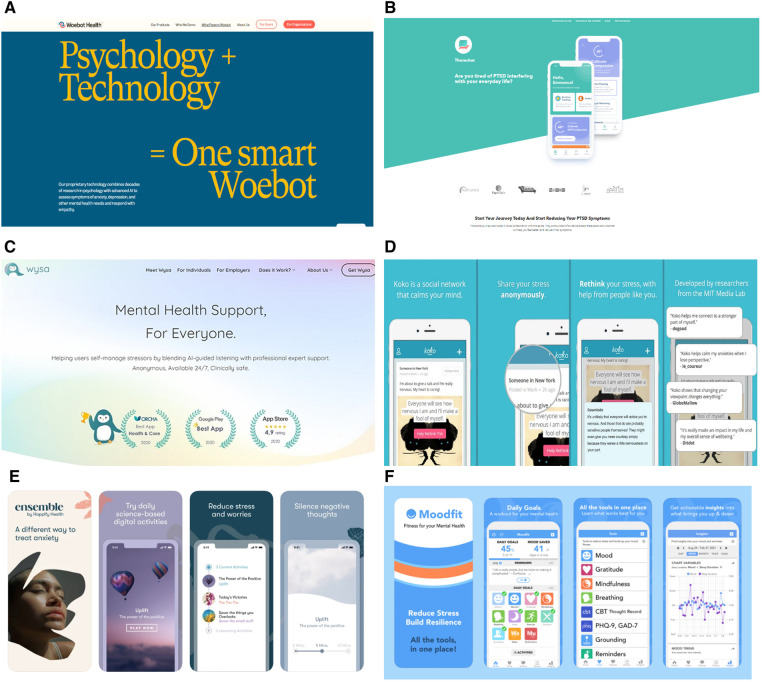
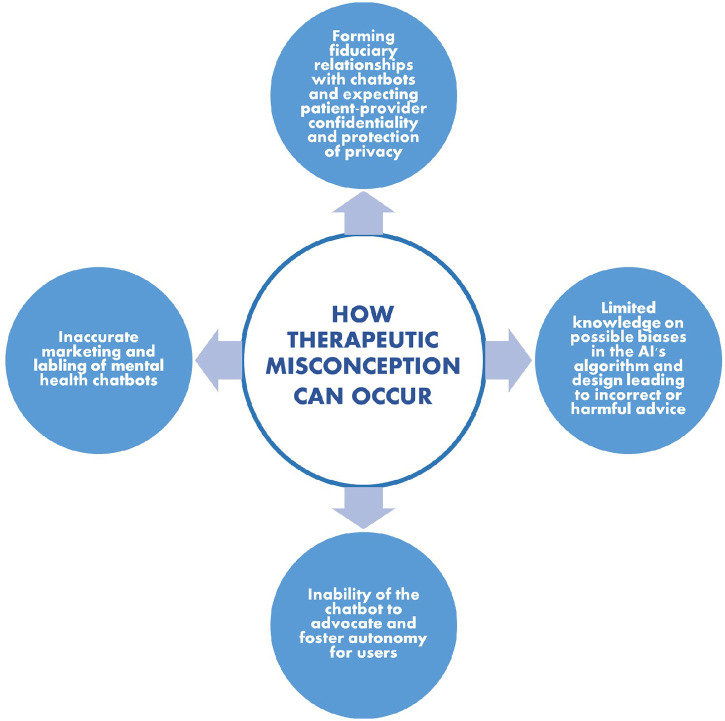
Artificial intelligence (AI)-powered chatbots have the potential to substantially increase access to affordable and effective mental health services by supplementing the work of clinicians. Their 24/7 availability and accessibility through a mobile phone allow individuals to obtain help whenever and wherever needed, overcoming financial and logistical barriers. Although psychological AI chatbots have the ability to make significant improvements in providing mental health care services, they do not come without ethical and technical challenges. Some major concerns include providing inadequate or harmful support, exploiting vulnerable populations, and potentially producing discriminatory advice due to algorithmic bias. However, it is not always obvious for users to fully understand the nature of the relationship they have with chatbots. There can be significant misunderstandings about the exact purpose of the chatbot, particularly in terms of care expectations, ability to adapt to the particularities of users and responsiveness in terms of the needs and resources/treatments that can be offered. Hence, it is imperative that users are aware of the limited therapeutic relationship they can enjoy when interacting with mental health chatbots. Ignorance or misunderstanding of such limitations or of the role of psychological AI chatbots may lead to a therapeutic misconception (TM) where the user would underestimate the restrictions of such technologies and overestimate their ability to provide actual therapeutic support and guidance. TM raises major ethical concerns that can exacerbate one's mental health contributing to the global mental health crisis. This paper will explore the various ways in which TM can occur particularly through inaccurate marketing of these chatbots, forming a digital therapeutic alliance with them, receiving harmful advice due to bias in the design and algorithm, and the chatbots inability to foster autonomy with patients.
Overview
The claims and statistics of this paper haven’t been checked yet.
Run the check — free, no account needed. It reads the open-access text and checks the sources it cites.
Integrity signals
Registry
Cites
Statistics
Figures
Verification
Claims the paper makes
The claims and statistics of this paper haven’t been checked yet.
Run the check — free, no account needed. It reads the open-access text and checks the sources it cites.
Claims other papers make about this one
Each is checked against this paper’s own text: does it say what the citing paper says it does?
The source backs part of the claim, not all of it — or backs it for a different population, condition or comparison.
In the citing paper
“This risk can occur from the underrepresentation of severe mental health cases in training data, training on stigmatizing data, or by LLM-CBs reflecting users’ biases41.”
From A scoping review on the mental health harms of LLM-based chatbots (2026) · cites this paper as [41]
Experimental — accuracy not yet measuredThe source backs part of the claim, not all of it — or backs it for a different population, condition or comparison.
In the citing paper
“As general-purpose LLMs are not medical applications, entered data is not protected with the standards typical for medical data, and data protection often fails HIPAA standards41,48.”
From A scoping review on the mental health harms of LLM-based chatbots (2026) · cites this paper as [41]
Experimental — accuracy not yet measuredThe cited source says what the claim attributes to it.
In the citing paper
“Mentioned by two articles, therapeutic misconception may arise when LLM-CB behaviors (e.g., simulated empathy, validation) lead to users overestimating its abilities to provide psychotherapeutic support while underestimating its limitations41.”
From A scoping review on the mental health harms of LLM-based chatbots (2026) · cites this paper as [41]
Self-check
Percentages, sums and reported differences re-computed from the paper’s own numbers.
The self-check needs the paper’s full text.
Citations
Cites
The generalizability of the psychoanalytic concept of the working alliance.
Bordin, E. S. (1979) · Psychotherapy: Theory, Research & Practice · doi:10.1037/h0085885 · Cited by 5,238
Torous, J., Bucci, S., Bell, I. H., Kessing, L. V., Faurholt‐Jepsen, M., Whelan, P., Carvalho, A. F., Keshavan, M., Linardon, J., & Firth, J. (2021) · World Psychiatry · doi:10.1002/wps.20883 · Cited by 1,199
Inkster, B., Sarda, S., & Subramanian, V. (2018) · doi:10.2196/preprints.12106 · Cited by 1,063
Chatbots and Conversational Agents in Mental Health: A Review of the Psychiatric Landscape
Vaidyam, A. N., Wisniewski, H., Halamka, J. D., Kashavan, M. S., & Torous, J. B. (2019) · The Canadian Journal of Psychiatry · doi:10.1177/0706743719828977 · Cited by 1,048
Fiske, A., Henningsen, P., & Buyx, A. (2019) · Journal of Medical Internet Research · doi:10.2196/13216 · Cited by 857
Legal and human rights issues of AI: Gaps, challenges and vulnerabilities
Rodrigues, R. (2020) · Journal of Responsible Technology · doi:10.1016/j.jrt.2020.100005 · Cited by 494
Clinical Trials and Medical Care: Defining the Therapeutic Misconception
Henderson, G. E., Churchill, L. R., Davis, A. M., Easter, M. M., Grady, C., Joffe, S., KASS, N. E., King, N. M. P., Lidz, C. W., Miller, F. G., et al. (2007) · PLoS Medicine · doi:10.1371/journal.pmed.0040324 · Cited by 468
A critique of clinical equipoise: Therapeutic misconception in the ethics of clinical trials.
Miller, F. G., & Brody, H. (2003) · The Hastings Center Report · doi:10.2307/3528434 · Cited by 451
Artificially intelligent chatbots in digital mental health interventions: a review
Boucher, E. M., Harake, N. R., Ward, H. E., Stoeckl, S. E., Vargas, J., Minkel, J., Parks, A. C., & Zilca, R. (2021) · Expert Review of Medical Devices · doi:10.1080/17434440.2021.2013200 · Cited by 440
Artificial intelligence for good health: a scoping review of the ethics literature.
Murphy, K., Di Ruggiero, E., Upshur, R., Willison, D. J., Malhotra, N., Cai, J. C., Malhotra, N., Lui, V., & Gibson, J. (2021) · BMC Medical Ethics · doi:10.1186/s12910-021-00577-8 · Cited by 435
Research works printed but not linked: 1
- Wintermeyer, 2021, Positive psychology apps: a systematic review of the quality and characteristics of a selection of current free-of-charge positive psychological apps aiming to enhance resilience available in the Google Play Store [Master's thesis]
Cited by
Sorted by citations
Exploring the Ethical Challenges of Conversational AI in Mental Health Care: Scoping Review
Rahsepar Meadi, M., Sillekens, T., Metselaar, S., van Balkom, A., Bernstein, J., & Batelaan, N. (2025) · JMIR Mental Health · doi:10.2196/60432 · Cited by 211
Applications of large language models in psychiatry: a systematic review
Omar, M., Soffer, S., Charney, A. W., Landi, I., Nadkarni, G. N., & Klang, E. (2024) · Frontiers in Psychiatry · doi:10.3389/fpsyt.2024.1422807 · Cited by 85
Performance of mental health chatbot agents in detecting and managing suicidal ideation
Pichowicz, W., Kotas, M., & Piotrowski, P. (2025) · Scientific Reports · doi:10.1038/s41598-025-17242-4 · Cited by 117
Evaluating Generative AI in Mental Health: Systematic Review of Capabilities and Limitations
Wang, L., Bhanushali, T., Huang, Z., Yang, J., Badami, S., & Hightow-Weidman, L. (2025) · JMIR Mental Health · doi:10.2196/70014 · Cited by 73
The Impact of Artificial Intelligence on Human Sexuality: A Five-Year Literature Review 2020–2024
Döring, N., Le, T. D., Vowels, L. M., Vowels, M. J., & Marcantonio, T. L. (2024) · Current Sexual Health Reports · doi:10.1007/s11930-024-00397-y · Cited by 65
Metadata
- Authors
- Khawaja, Z., & Bélisle-Pipon, J.-C.
- Affiliations
- Simon Fraser University (CA)
- ORCID
- Khawaja, Zoha
- Venue
- Frontiers in Digital Health
- Publisher
- Frontiers Media SA
- Published
- 2023-11-08
- Volume
- 5
- Pages
- 1278186-1278186
- ISSN
- 2673-253X (ISSN-L)
- PMC
- PMC10663264
- OpenAlex
- W4388524014
- Cited by
- 214
- References
- 50
- Citations by year
- 2026: 95 · 2025: 87 · 2024: 32
- FWCI
- 55.24
- Type
- journal article
- Language
- en
- Open access
- gold
- doi.org
- Licence
- Locations
- Frontiers in Digital Health (publishedVersion, cc-by)
- PubMed Central (publishedVersion, cc-by)
- PubMed (publishedVersion)
- DOAJ (DOAJ: Directory of Open Access Journals) (submittedVersion, cc-by-sa)
- Topics
- Social Sciences › Psychology › Applied Psychology › Digital Mental Health Interventions
- Physical Sciences › Computer Science › Artificial Intelligence › Ethics and Social Impacts of AI
- Health Sciences › Medicine › Health Informatics › Artificial Intelligence in Healthcare and Education
- Keywords
- mental health chatbots, therapeutic misconception, artificial intelligence in mental health care, algorithmic bias, chatbot marketing, patient autonomy, vulnerable populations, access to mental health care
About these checks
Registry, retraction, Cites and statistics results are computed, not judged, with one exception: a printed reference that no index lists is read once by a model before it counts as a citation error. Claims are extracted by a model and kept only when their quote appears verbatim in the text; each cited source is then checked, with a model’s help, for whether it says what the claim relies on. Those verdicts can be wrong — read the claim’s quote and the cited source before relying on one.
Statistics and arithmetic are recomputed, not judged.
Confidence bands are shown only for fields calibrated on our annotated test set. None is calibrated yet, so no band is shown.
What counts as a claim ›How we measure confidence ›How we check this ›
Are you an author, or do you see a problem with this page? Request a review
