

The DOI matches its Crossref record; 49 of the 50 references it cites were found in a registry or an index.
Your robot therapist is not your therapist: understanding the role of AI-powered mental health chatbots
Open accessAbstract
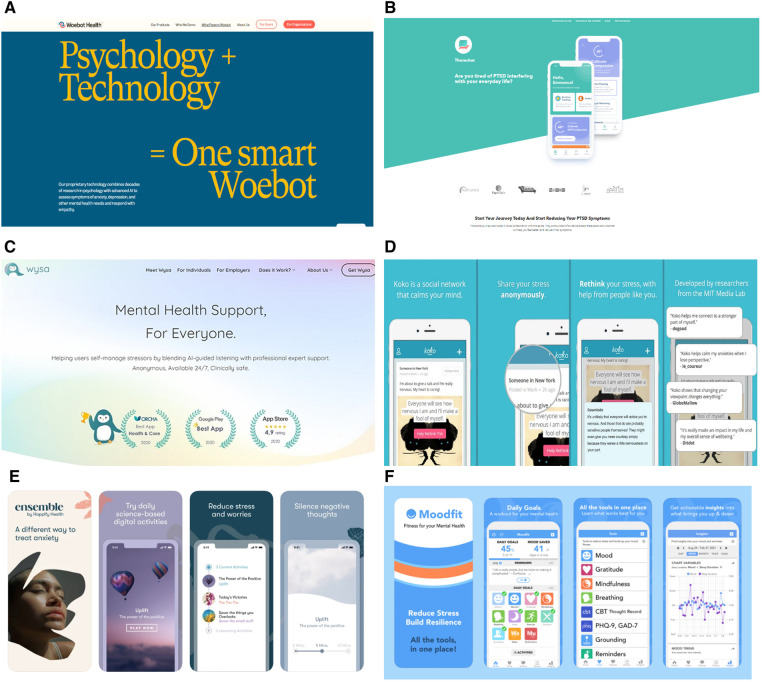
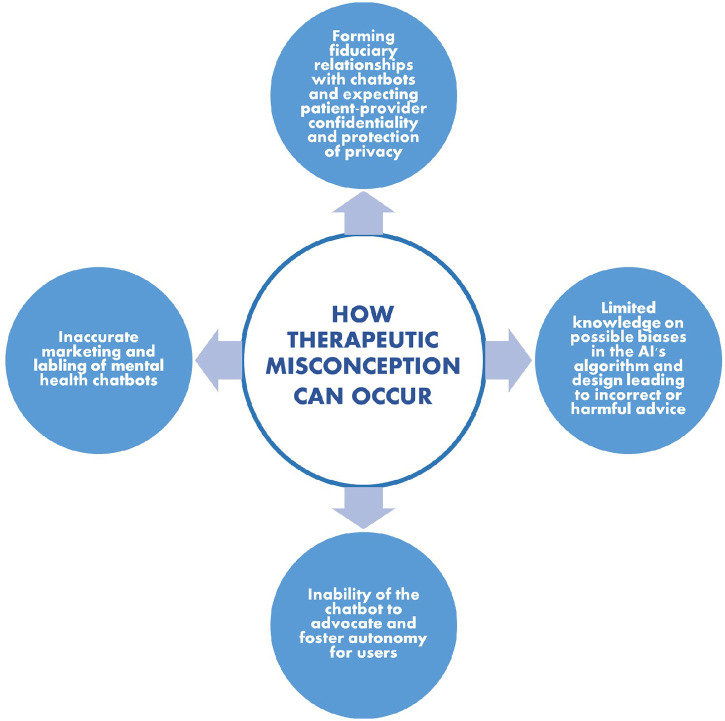
Artificial intelligence (AI)-powered chatbots have the potential to substantially increase access to affordable and effective mental health services by supplementing the work of clinicians. Their 24/7 availability and accessibility through a mobile phone allow individuals to obtain help whenever and wherever needed, overcoming financial and logistical barriers. Although psychological AI chatbots have the ability to make significant improvements in providing mental health care services, they do not come without ethical and technical challenges. Some major concerns include providing inadequate or harmful support, exploiting vulnerable populations, and potentially producing discriminatory advice due to algorithmic bias. However, it is not always obvious for users to fully understand the nature of the relationship they have with chatbots. There can be significant misunderstandings about the exact purpose of the chatbot, particularly in terms of care expectations, ability to adapt to the particularities of users and responsiveness in terms of the needs and resources/treatments that can be offered. Hence, it is imperative that users are aware of the limited therapeutic relationship they can enjoy when interacting with mental health chatbots. Ignorance or misunderstanding of such limitations or of the role of psychological AI chatbots may lead to a therapeutic misconception (TM) where the user would underestimate the restrictions of such technologies and overestimate their ability to provide actual therapeutic support and guidance. TM raises major ethical concerns that can exacerbate one's mental health contributing to the global mental health crisis. This paper will explore the various ways in which TM can occur particularly through inaccurate marketing of these chatbots, forming a digital therapeutic alliance with them, receiving harmful advice due to bias in the design and algorithm, and the chatbots inability to foster autonomy with patients.
Overview
The claims and statistics of this paper haven’t been checked yet.
Run the check — free, no account needed. It reads the open-access text and checks the sources it cites.
Integrity signals
Registry
Cites
Statistics
Figures
Verification
Claims the paper makes
The claims and statistics of this paper haven’t been checked yet.
Run the check — free, no account needed. It reads the open-access text and checks the sources it cites.
Claims other papers make about this one
Each is checked against this paper’s own text: does it say what the citing paper says it does?
The source backs part of the claim, not all of it — or backs it for a different population, condition or comparison.
In the citing paper
“This risk can occur from the underrepresentation of severe mental health cases in training data, training on stigmatizing data, or by LLM-CBs reflecting users’ biases41.”
From A scoping review on the mental health harms of LLM-based chatbots (2026) · cites this paper as [41]
Experimental — accuracy not yet measuredThe source backs part of the claim, not all of it — or backs it for a different population, condition or comparison.
In the citing paper
“As general-purpose LLMs are not medical applications, entered data is not protected with the standards typical for medical data, and data protection often fails HIPAA standards41,48.”
From A scoping review on the mental health harms of LLM-based chatbots (2026) · cites this paper as [41]
Experimental — accuracy not yet measuredThe cited source says what the claim attributes to it.
In the citing paper
“Mentioned by two articles, therapeutic misconception may arise when LLM-CB behaviors (e.g., simulated empathy, validation) lead to users overestimating its abilities to provide psychotherapeutic support while underestimating its limitations41.”
From A scoping review on the mental health harms of LLM-based chatbots (2026) · cites this paper as [41]
Self-check
Percentages, sums and reported differences re-computed from the paper’s own numbers.
The self-check needs the paper’s full text.
Citations
Cites
The generalizability of the psychoanalytic concept of the working alliance.
Bordin, E. S. (1979) · Psychotherapy: Theory, Research & Practice · doi:10.1037/h0085885 · Cited by 5,238
Torous, J., Bucci, S., Bell, I. H., Kessing, L. V., Faurholt‐Jepsen, M., Whelan, P., Carvalho, A. F., Keshavan, M., Linardon, J., & Firth, J. (2021) · World Psychiatry · doi:10.1002/wps.20883 · Cited by 1,199
Inkster, B., Sarda, S., & Subramanian, V. (2018) · doi:10.2196/preprints.12106 · Cited by 1,063
Chatbots and Conversational Agents in Mental Health: A Review of the Psychiatric Landscape
Vaidyam, A. N., Wisniewski, H., Halamka, J. D., Kashavan, M. S., & Torous, J. B. (2019) · The Canadian Journal of Psychiatry · doi:10.1177/0706743719828977 · Cited by 1,048
Fiske, A., Henningsen, P., & Buyx, A. (2019) · Journal of Medical Internet Research · doi:10.2196/13216 · Cited by 857
Legal and human rights issues of AI: Gaps, challenges and vulnerabilities
Rodrigues, R. (2020) · Journal of Responsible Technology · doi:10.1016/j.jrt.2020.100005 · Cited by 494
Clinical Trials and Medical Care: Defining the Therapeutic Misconception
Henderson, G. E., Churchill, L. R., Davis, A. M., Easter, M. M., Grady, C., Joffe, S., KASS, N. E., King, N. M. P., Lidz, C. W., Miller, F. G., et al. (2007) · PLoS Medicine · doi:10.1371/journal.pmed.0040324 · Cited by 468
A critique of clinical equipoise: Therapeutic misconception in the ethics of clinical trials.
Miller, F. G., & Brody, H. (2003) · The Hastings Center Report · doi:10.2307/3528434 · Cited by 451
Artificially intelligent chatbots in digital mental health interventions: a review
Boucher, E. M., Harake, N. R., Ward, H. E., Stoeckl, S. E., Vargas, J., Minkel, J., Parks, A. C., & Zilca, R. (2021) · Expert Review of Medical Devices · doi:10.1080/17434440.2021.2013200 · Cited by 440
Artificial intelligence for good health: a scoping review of the ethics literature.
Murphy, K., Di Ruggiero, E., Upshur, R., Willison, D. J., Malhotra, N., Cai, J. C., Malhotra, N., Lui, V., & Gibson, J. (2021) · BMC Medical Ethics · doi:10.1186/s12910-021-00577-8 · Cited by 435
Research works printed but not linked: 1
- Wintermeyer, 2021, Positive psychology apps: a systematic review of the quality and characteristics of a selection of current free-of-charge positive psychological apps aiming to enhance resilience available in the Google Play Store [Master's thesis]
Cited by
Sorted by citations
Exploring the Ethical Challenges of Conversational AI in Mental Health Care: Scoping Review
Rahsepar Meadi, M., Sillekens, T., Metselaar, S., van Balkom, A., Bernstein, J., & Batelaan, N. (2025) · JMIR Mental Health · doi:10.2196/60432 · Cited by 211
Applications of large language models in psychiatry: a systematic review
Omar, M., Soffer, S., Charney, A. W., Landi, I., Nadkarni, G. N., & Klang, E. (2024) · Frontiers in Psychiatry · doi:10.3389/fpsyt.2024.1422807 · Cited by 85
Performance of mental health chatbot agents in detecting and managing suicidal ideation
Pichowicz, W., Kotas, M., & Piotrowski, P. (2025) · Scientific Reports · doi:10.1038/s41598-025-17242-4 · Cited by 117
Evaluating Generative AI in Mental Health: Systematic Review of Capabilities and Limitations
Wang, L., Bhanushali, T., Huang, Z., Yang, J., Badami, S., & Hightow-Weidman, L. (2025) · JMIR Mental Health · doi:10.2196/70014 · Cited by 73
The Impact of Artificial Intelligence on Human Sexuality: A Five-Year Literature Review 2020–2024
Döring, N., Le, T. D., Vowels, L. M., Vowels, M. J., & Marcantonio, T. L. (2024) · Current Sexual Health Reports · doi:10.1007/s11930-024-00397-y · Cited by 65
Chan, C. K. Y. (2025) · Behavioral Sciences · doi:10.3390/bs15030287 · Cited by 77
Lee, H. S., Wright, C., Ferranto, J., Buttimer, J., Palmer, C. E., Welchman, A., Mazor, K. M., Fisher, K. A., Smelson, D., O’Connor, L., et al. (2025) · Frontiers in Psychiatry · doi:10.3389/fpsyt.2024.1505024 · Cited by 55
Hipgrave, L., Goldie, J., Dennis, S. J., & Coleman, A. (2025) · Frontiers in Digital Health · doi:10.3389/fdgth.2025.1606291 · Cited by 72
Exploring the efficacy and potential of large language models for depression: A systematic review
Omar, M., & Levkovich, I. (2024) · Journal of Affective Disorders · doi:10.1016/j.jad.2024.11.052 · Cited by 60
Generative Artificial Intelligence in Mental Healthcare: An Ethical Evaluation
Blease, C., & Rodman, A. M. (2024) · Current Treatment Options in Psychiatry · doi:10.1007/s40501-024-00340-x · Cited by 57
Perry, N., Sun, C., Munro, M., Boulton, K., & Guastella, A. J. (2024) · npj Digital Medicine · doi:10.1038/s41746-024-01355-7 · Cited by 51
Rządeczka, M., Sterna, A., Stolińska, J., Kaczyńska, P., & Moskalewicz, M. (2024) · JMIR Mental Health · doi:10.2196/64396 · Cited by 32
Cases of Using ChatGPT as a Mental Health and Psychological Support Tool
Giray, L. (2024) · Journal of Consumer Health on the Internet · doi:10.1080/15398285.2024.2442374 · Cited by 42
War, emotions, mental health, and artificial intelligence
Ćosić, K., Kopilaš, V., & Jovanović, T. (2024) · Frontiers in Psychology · doi:10.3389/fpsyg.2024.1394045 · Cited by 56
A New Research Model for Artificial Intelligence–Based Well-Being Chatbot Engagement: Survey Study
Yang, Y., Tavares, J., & Oliveira, T. (2024) · JMIR Human Factors · doi:10.2196/59908 · Cited by 43
Al-Remawi, M. M., Agha, A. S. A. A., Al‐Akayleh, F., Aburub, F. A. F., & Abdel‐Rahem, R. A. (2024) · Heliyon · doi:10.1016/j.heliyon.2024.e40925 · Cited by 30
Tabassum, A., Ghaznavi, I., Abd-Alrazaq, A. A., & Qadir, J. (2025) · Journal of Medical Internet Research · doi:10.2196/72400 · Cited by 38
AI companions and adolescent social relationships: Benefits, risks, and bidirectional influences
Sun, X., Wang, Y., & McDaniel, B. T. (2026) · Child Development Perspectives · doi:10.1093/cdpers/aadaf009 · Cited by 47
ChatGPT: A Pilot Study on a Promising Tool for Mental Health Support in Psychiatric Inpatient Care
Melo, A., Silva, I., & Lopes, J. (2024) · International Journal of Psychiatric Trainees · doi:10.55922/001c.92367 · Cited by 29
Chatbots and mental health: a scoping review of reviews
Mayor, E. (2025) · Current Psychology · doi:10.1007/s12144-025-08094-2 · Cited by 35
Understanding Attitudes and Trust of Generative AI Chatbots for Social Anxiety Support
Wang, Y., Wang, Y., Crace, K., & Zhang, Y. (2025) · CHI Conference on Human Factors in Computing Systems · doi:10.1145/3706598.3714286 · Cited by 25
Artificial Intelligence in Social Work: An EPIC Model for Practice
Boetto, H. (2025) · Australian Social Work · doi:10.1080/0312407x.2025.2488345 · Cited by 41
Stade, E. C., Eichstaedt, J. C., Kim, J. P., & Wiltsey Stirman, S. (2025) · Technology, Mind, and Behavior · doi:10.1037/tmb0000163 · Cited by 23
Denecke, K., & Gabarrón, E. (2024) · Frontiers in Psychiatry · doi:10.3389/fpsyt.2024.1462083 · Cited by 22
A review on the efficacy of artificial intelligence for managing anxiety disorders
Das, K. P., & Gavade, P. (2024) · Frontiers in Artificial Intelligence · doi:10.3389/frai.2024.1435895 · Cited by 25
Carik, B., Izaac, V. V., Ding, X., Scarpa, A., & Rho, E. H. (2025) · Proceedings of the 2025 CHI Conference on Human Factors in Computing Systems · doi:10.1145/3706598.3714287 · Cited by 21
Transference and the psychological interplay in AI-enhanced mental healthcare
Joseph, A. P., & Babu, A. (2024) · Frontiers in Psychiatry · doi:10.3389/fpsyt.2024.1460469 · Cited by 21
Haber, Y., Shoval, D. H., Levkovich, I., Yinon, D., Gigi, K., Pen, O., Angert, T., & Elyoseph, Z. (2025) · Frontiers in Digital Health · doi:10.3389/fdgth.2025.1512273 · Cited by 20
Latt, P. M., Aung, E. T., Htaik, K., Soe, N. N., Lee, D. M., King, A. J., Fortune, R., Ong, J. J., Chow, E. P. F., Bradshaw, C. S., et al. (2025) · BMC Public Health · doi:10.1186/s12889-025-22933-8 · Cited by 35
Private Yet Social: How LLM Chatbots Support and Challenge Eating Disorder Recovery
Choi, R., Kim, T., Park, S., Kim, J. G., & Lee, S.-J. (2025) · Proceedings of the 2025 CHI Conference on Human Factors in Computing Systems · doi:10.1145/3706598.3713485 · Cited by 19
Békés, V., & Doorn, K. A. (2026) · Clinical Psychology & Psychotherapy · doi:10.1002/cpp.70220 · Cited by 17
Weir, I. B., Stroud, A. M., Stout, J., Barry, B. A., Athreya, A. P., Bobo, W. V., & Sharp, R. R. (2025) · JMIR Mental Health · doi:10.2196/81970 · Cited by 15
Esmaeilzadeh, P., Hassanein, K., & Head, M. M. (2025) · Behaviour and Information Technology · doi:10.1080/0144929x.2025.2477754 · Cited by 17
Nivethitha, V., Daniel, R., Surya, B., & Logeswari, G. (2025) · Journal of Postgraduate Medicine · doi:10.4103/jpgm.jpgm_634_24 · Cited by 18
Mirror to Companion: Exploring Roles, Values, and Risks of AI Self-Clones through Story Completion
Huang, J., Kim, I.-J., & Yoon, D. (2025) · CHI Conference on Human Factors in Computing Systems · doi:10.1145/3706598.3713587 · Cited by 15
Disrupted self, therapy, and the limits of conversational AI
Babushkina, D., & de Boer, B. (2024) · Philosophical Psychology · doi:10.1080/09515089.2024.2397004 · Cited by 13
Shankar, R., Bundele, A., Yap, A. E., & Mukhopadhyay, A. (2025) · Frontiers in Psychiatry · doi:10.3389/fpsyt.2025.1553494 · Cited by 14
The Role of Communication in Managing Chronic Lower Limb Wounds
Costa, D., & Serra, R. (2025) · Journal of Multidisciplinary Healthcare · doi:10.2147/jmdh.s533416 · Cited by 12
Lammers, A. F., & Bassil, K. C. (2026) · AJOB Neuroscience · doi:10.1080/21507740.2026.2649181 · Cited by 12
Abrar, M., Rehman, M. U., Khalid, S., & Ullah, R. (2026) · Artificial Intelligence Review · doi:10.1007/s10462-025-11447-9 · Cited by 14
Weng, X. (2025) · Interactive Learning Environments · doi:10.1080/10494820.2025.2554997 · Cited by 13
Towards an EU Charter of Digital Patients’ Rights in the Age of Artificial Intelligence
van Kolfschooten, H. (2025) · Digital Society · doi:10.1007/s44206-025-00159-w · Cited by 13
Fajnerová, I., Hejtmánek, L., Sedlák, M., Jablonská, M., Francová, A., & Stopková, P. (2024) · Journal of Medical Internet Research · doi:10.2196/60441 · Cited by 10
Ethical approval and informed consent in mental health research: a scoping review
Cilar, L., & Štiglic, G. (2025) · AI & Society · doi:10.1007/s00146-025-02364-0 · Cited by 10
Acevedo, S., Aneja, E., Opler, D. J., Valera, P. A., & Jarmon, E. (2025) · American Journal of Psychotherapy · doi:10.1176/appi.psychotherapy.20240070 · Cited by 10
You, C., Ghosh, R., Vilaro, M. J., Venkatakrishnan, R., Venkatakrishnan, R., Maxim, A., Peng, X., Tamboli, D. N. A., & Lok, B. C. L. (2025) · Frontiers in Digital Health · doi:10.3389/fdgth.2025.1655860 · Cited by 10
Elyoseph, Z., Levi‐Belz, Y., Levkovich, I., Haber, Y., Gramaglia, C. M., López‐Castromán, J., Hanon, C., & Olié, É. (2026) · BMC Psychiatry · doi:10.1186/s12888-025-07737-9 · Cited by 9
AI-Powered Chatbots for Mental Health Support
Manoharan, G., Pant, L. M., Tewari, R., Vichare, S., Sarkar, P., & Dhanraj, J. A. (2024) · International Conference on Contemporary Computing and Informatics (IC3I) · doi:10.1109/ic3i61595.2024.10829185 · Cited by 8
Revolutionizing Mental Healthcare Through Artificial Intelligence
Beg, M. J., & Verma, M. K. (2025) · Advances in medical technologies and clinical practice book series · doi:10.4018/979-8-3693-3112-5.ch002 · Cited by 8
Anthropomorphic technology in everyday life: focus on chatbots and impacts on mental health
Monteith, S., Glenn, T., Geddes, J. R., Whybrow, P. C., Achtyes, E. D., & Bauer, M. (2025) · European Archives of Psychiatry and Clinical Neuroscience · doi:10.1007/s00406-025-02088-8 · Cited by 9
The Impact of Chatbots on Adolescent Mental Health Development: A Comprehensive Literature Review
Wu, Y., Wu, T., Zhu, K., Liu, X., Liu, J., Wang, Y., Shi, R., Xiong, J., Xing, X., Lv, Y., et al. (2026) · Journal of Multidisciplinary Healthcare · doi:10.2147/jmdh.s579872 · Cited by 9
Keung, W. M., & So, T. Y. (2025) · Frontiers in Psychology · doi:10.3389/fpsyg.2025.1538387 · Cited by 9
Jung, H. W., Park, J. Y., Holoubek, T., Kim, W. J., & Park, J. (2025) · International Journal of Social Robotics · doi:10.1007/s12369-025-01323-5 · Cited by 11
Zhang, X., Zayed, A. M., Hamrin, J. R., Özgür, A. G., & Kuoppamäki, S. (2025) · Journal of Medical Internet Research · doi:10.2196/78829 · Cited by 10
Liu, X., & Zhang, Z.-R. (2024) · World Journal of Psychiatry · doi:10.5498/wjp.v14.i3.334 · Cited by 8
Co-designing a conversational generative artificial intelligence system for youth mental health
Poulsen, A., Hickie, I. B., de Haan, Z., Capon, W., LaMonica, H. M., Eyeson-Annan, E., Radwan, J., Barnabie, N., Scott, E. M., & Iorfino, F. (2025) · CHI Conference Extended Abstracts on Human Factors in Computing Systems (CHI EA) · doi:10.1145/3706599.3719696 · Cited by 6
Mahajan, P., Kadam, S., Kachwala, H., Tapikar, N., Namde, V., & Poonawala, E. (2026) · Counselling and Psychotherapy Research · doi:10.1002/capr.70095 · Cited by 6
Erdemir, N., & Sumbas, E. (2026) · Inquiry : a journal of medical care organization, provision and financing · doi:10.1177/00469580261438322 · Cited by 5
Holohan, M., & Müller, R. (2024) · Frontiers in Psychology · doi:10.3389/fpsyg.2024.1357572 · Cited by 6
The Machine as Therapist: Unpacking Transference and Emotional Healing in AI-Assisted Therapy
Barzkar, F., Zaribaf, A., Mirfazeli, F. S., & Keshavarz‐Akhlaghi, A. (2025) · Journal of Contemporary Psychotherapy · doi:10.1007/s10879-025-09677-7 · Cited by 5
Redefining Bias Audits for Generative AI in Health Care
Chen, I. Y., & Alsentzer, E. (2025) · NEJM AI · doi:10.1056/aip2500015 · Cited by 5
A scoping review on the mental health harms of LLM-based chatbots
Diel, A., Torous, J., Cuijpers, P., Kleesiek, J., Nensa, F., Weber, N., Faust, F., Lalgi, T. J., Mellis, F. S., Teufel, M., et al. (2026) · npj Digital Medicine · doi:10.1038/s41746-026-03054-x · Cited by 4
“This risk can occur from the under-representation of severe mental health cases in training data, training on stigmatizingdata,orbyLLM-CBsre fl ectingusers ’ biases 41 .”
InfluentialChat GPT and suicide prevention – can it work? A conversation analysis
Waszak, P. M. (2025) · Psychiatria i Psychologia Kliniczna · doi:10.15557/pipk.2024.0036 · Cited by 4
An Exploratory Study of a Narrative Therapy Chatbot with Social Work Students
Chan, C. (2025) · Journal of Technology in Human Services · doi:10.1080/15228835.2025.2559342 · Cited by 6
Demir, M., AYDOĞDU, F., ALABAY, M. B., Yaşar, H. K., & Bozkurt, A. (2026) · Universal Access in the Information Society · doi:10.1007/s10209-025-01297-1 · Cited by 6
Fatal deception: how generative AI fosters therapeutic misconception in vulnerable users
Bélisle-Pipon, J.-C. (2026) · Frontiers in Digital Health · doi:10.3389/fdgth.2026.1756620 · Cited by 3
Self-citationBrailas, A., & Tsolakis, L. (2025) · Lecture notes in computer science · doi:10.1007/978-3-031-88045-2_10 · Cited by 4
Balancing the Double-Edged Implications of AI in Psychiatric Digital Phenotyping
Bassil, K. C. (2024) · The American Journal of Bioethics · doi:10.1080/15265161.2023.2296437 · Cited by 4
Zhu, Y. (2024) · Journal of clinical technology and theory. · doi:10.54254/3049-5458/2024.18639 · Cited by 6
Lee, J., & Joo, C. (2025) · Geriatric Nursing · doi:10.1016/j.gerinurse.2025.04.032 · Cited by 4
Latt, P. M., Aung, E. T., Htaik, K., Soe, N. N., Lee, D. M., King, A. J., Fortune, R., Ong, J. J., Chow, E. P. F., Bradshaw, C. S., et al. (2024) · Research Square · doi:10.21203/rs.3.rs-5190887/v1 · Cited by 4
Artificial Intelligence in Mental Healthcare
Jafar, A., Shabnam, S., & Khan, A. (2025) · Advances in computational intelligence and robotics book series · doi:10.4018/979-8-3373-5072-1.ch014 · Cited by 3
Applications of Artificial Intelligence Use in Therapeutic Interventions
Carneiro, L. S. R. D. S. F., & Gomes, A. F. P. (2025) · Advances in computational intelligence and robotics book series · doi:10.4018/979-8-3373-5072-1.ch008 · Cited by 3
Emotional AI Applied to Mental Health: An Ethical and Philosophical Analysis
Teixeira, R. (2025) · Lecture notes in computer science · doi:10.1007/978-3-032-04999-5_25 · Cited by 4
Herbener, A. B., & Damholdt, M. F. (2025) · Journal of Psychology and AI · doi:10.1080/29974100.2025.2590495 · Cited by 4
Lee, H., Handler, R., Mungle, T., & Hernandez‐Boussard, T. (2026) · Journal of the American Medical Informatics Association · doi:10.1093/jamia/ocag078 · Cited by 3
Estrada-Araoz, E. G. (2026) · Discover Public Health · doi:10.1186/s12982-026-02266-6 · Cited by 3
Digital Psychiatry: Opportunities, Challenges, and Future Directions
Sidani, L., Nadar, S. M., Tfaili, J., Rayes, S. E., Sharara, F., Elhage, J. C., & Fakhoury, M. (2024) · Journal of Psychiatric Practice · doi:10.1097/pra.0000000000000819 · Cited by 5
Tripathi, B., Kumar, D., & Sharma, V. K. (2025) · AIP conference proceedings · doi:10.1063/5.0255877 · Cited by 3
The potential of artificial intelligence to transform medicine
Liberatore, G., Brenner, J., Franco, J., & Milanaik, R. L. (2025) · Current Opinion in Pediatrics · doi:10.1097/mop.0000000000001452 · Cited by 3
The Artificial Intelligence Dilemma: Navigating Ethics in Healthcare
Mullaj, E. (2024) · University of Waterloo Journal of Undergraduate Health Research · doi:10.15353/juhr.v1i3.6106 · Cited by 3
Bélisle‐Pipon, J. (2026) · doi:10.64628/aam.7mgseetjp · Cited by 3
Self-citationEjiohuo, O., Uteh, C. O., Olaleye, O. O., Lawal, S., Maigoro, A. Y., & Onyeaka, H. (2025) · Global Health Journal · doi:10.1016/j.glohj.2025.06.009 · Cited by 2
Data-driven ethical guidelines for digitized mental health services: principal components analysis
Bapat, C., & Jog, S. (2025) · Frontiers in Human Dynamics · doi:10.3389/fhumd.2025.1549325 · Cited by 2
Kian, M. J., Zong, M., Fischer, K., Velentza, A., Singh, A., Shrestha, K., Sang, P., Upadhyay, S., Browning, W., Faruki, M. A., et al. (2025) · IEEE International Symposium on Robot and Human Interactive Communication · doi:10.1109/ro-man63969.2025.11217887 · Cited by 4
Trust and Emotional Authenticity in AI-Mediated Mental Health Support in Nigeria
Nwagbara, U. U., & Dennis, W. U. (2025) · Social Science Insights and Applications · doi:10.65773/ssia.1.1.27 · Cited by 2
Islam, F., Muthukanagaraj, P., Zhan, L., & Shi, C. (2026) · Journal of Enabling Technologies · doi:10.1108/jet-11-2025-0088 · Cited by 2
Shih, I.-T. (2026) · International Journal of Human-Computer Interaction · doi:10.1080/10447318.2026.2671421 · Cited by 2
Clinical and sociodemographic predictors of AI use for mental health among college students
Liu, C. H., Zhang, W., Lou, F., Zhao, C., Chow, A., & Yip, T. (2026) · Journal of Affective Disorders · doi:10.1016/j.jad.2026.122058 · Cited by 4
Overcoming the Potential Drawbacks of Artificial Intelligence in Psychotherapy: Literature Updates
Agazie, O., Ezema, E. C., Meftah, A., Aribisala, B., Sultana, T., Ezenagu, E. U., Singh, S., Htet, T., Beauchamp, J., Ogbonna, N., et al. (2024) · Open Journal of Psychiatry · doi:10.4236/ojpsych.2024.145026 · Cited by 2
Developing Mental Health Support Chatbots in India: Challenges and Insights
Halder, S. (2025) · Annals of Indian Psychiatry · doi:10.4103/aip.aip_187_24 · Cited by 2
Understanding Behavioral Intention of Filipino Adults in Adopting Mental Health Chatbots
-, A. K. B. D. V., Quinto, E. J. M., & Elizaga, L. A. G. (2025) · Journal of Technology in Human Services · doi:10.1080/15228835.2025.2572758 · Cited by 2
Pseudo-Consciousness in AI: Bridging the Gap Between Narrow AI and True AGIPreprint
Prestes, J. A. D. L. (2025) · SSRN Electronic Journal · doi:10.2139/ssrn.5147424 · Cited by 4
Your AI therapist is not your therapist: The dangers of relying on AI mental health chatbots
Khawaja, Z., & Bélisle‐Pipon, J. (2024) · doi:10.64628/aam.96yyu6qfh · Cited by 2
Self-citationNan, J., Purpura, S., Jaiswal, S., Afshar, H., Maric, V., Manchanda, J. K., Taylor, C. T., Ramanathan, D., & Mishra, J. (2026) · NPP—Digital Psychiatry and Neuroscience · doi:10.1038/s44277-026-00062-3 · Cited by 1
“While arti fi cial intelligence (AI) chatbot based therapy is gaining traction [74 – 76], the depth of understanding and empathy provided by a human coach are still unmatched by chatbots [77 – 79], hence, we decided to integrate human coaches that had remote weekly video check-ins with each patient.”
Kim, M., Kwoun, S.-E., Choi, Y., Yun, C., & Woo, T. (2025) · Journal of Digital Contents Society · doi:10.9728/dcs.2025.26.6.1529 · Cited by 1
Tamrin, S. I., Omar, N. F., Ngah, R., Bakhodirovich, G. S., & Absamatovna, K. G. (2025) · Lecture notes in computer science · doi:10.1007/978-3-031-95296-8_2 · Cited by 3
Unmasking the Algorithm: Bridging Innovation and Ethics in AI-Enabled Psychological Care
Hascalovitz, C., & Deonandan, R. (2025) · Lecture notes in computer science · doi:10.1007/978-3-032-00656-1_12 · Cited by 1
Alam, W. O. S. N., & Sari, R. F. (2025) · Lecture notes in networks and systems · doi:10.1007/978-981-96-6438-2_19 · Cited by 1
Fulmer, R., Li, N., & Liu, S. (2025) · Springer eBooks · doi:10.1007/978-3-031-97999-6_7 · Cited by 1
Metadata
- Authors
- Khawaja, Z., & Bélisle-Pipon, J.-C.
- Affiliations
- Simon Fraser University (CA)
- ORCID
- Khawaja, Zoha
- Venue
- Frontiers in Digital Health
- Publisher
- Frontiers Media SA
- Published
- 2023-11-08
- Volume
- 5
- Pages
- 1278186-1278186
- ISSN
- 2673-253X (ISSN-L)
- PMC
- PMC10663264
- OpenAlex
- W4388524014
- Cited by
- 214
- References
- 50
- Citations by year
- 2026: 95 · 2025: 87 · 2024: 32
- FWCI
- 55.24
- Type
- journal article
- Language
- en
- Open access
- gold
- doi.org
- Licence
- Locations
- Frontiers in Digital Health (publishedVersion, cc-by)
- PubMed Central (publishedVersion, cc-by)
- PubMed (publishedVersion)
- DOAJ (DOAJ: Directory of Open Access Journals) (submittedVersion, cc-by-sa)
- Topics
- Social Sciences › Psychology › Applied Psychology › Digital Mental Health Interventions
- Physical Sciences › Computer Science › Artificial Intelligence › Ethics and Social Impacts of AI
- Health Sciences › Medicine › Health Informatics › Artificial Intelligence in Healthcare and Education
- Keywords
- mental health chatbots, therapeutic misconception, artificial intelligence in mental health care, algorithmic bias, chatbot marketing, patient autonomy, vulnerable populations, access to mental health care
About these checks
Registry, retraction, Cites and statistics results are computed, not judged, with one exception: a printed reference that no index lists is read once by a model before it counts as a citation error. Claims are extracted by a model and kept only when their quote appears verbatim in the text; each cited source is then checked, with a model’s help, for whether it says what the claim relies on. Those verdicts can be wrong — read the claim’s quote and the cited source before relying on one.
Statistics and arithmetic are recomputed, not judged.
Confidence bands are shown only for fields calibrated on our annotated test set. None is calibrated yet, so no band is shown.
What counts as a claim ›How we measure confidence ›How we check this ›
Are you an author, or do you see a problem with this page? Request a review
