

The DOI matches its Crossref record; 59 of the 59 references it cites were found in a registry or an index.
FGF21 and Cardiac Physiopathology
Open accessAbstract
The heart is not traditionally considered either a target or a site of fibroblast growth factor-21 (FGF21) production. However, recent findings indicate that FGF21 can act as a cardiomyokine; that is, it is produced by cardiac cells at significant levels and acts in an autocrine manner on the heart itself. The heart is sensitive to the effects of FGF21, both systemic and locally generated, owing to the expression in cardiomyocytes of β-Klotho, the key co-receptor known to confer specific responsiveness to FGF21 action. FGF21 has been demonstrated to protect against cardiac hypertrophy, cardiac inflammation, and oxidative stress. FGF21 expression in the heart is induced in response to cardiac insults, such as experimental cardiac hypertrophy and myocardial infarction in rodents, as well as in failing human hearts. Intracellular mechanisms involving PPARα and Sirt1 mediate transcriptional regulation of the FGF21 gene in response to exogenous stimuli. In humans, circulating FGF21 levels are elevated in coronary heart disease and atherosclerosis, and are associated with a higher risk of cardiovascular events in patients with type 2 diabetes. These findings provide new insights into the role of FGF21 in the heart and may offer potential therapeutic strategies for cardiac disease.
Overview
The claims and statistics of this paper haven’t been checked yet.
Run the check — free, no account needed. It reads the open-access text and checks the sources it cites.
Integrity signals
Registry
Cites
Statistics
Figures
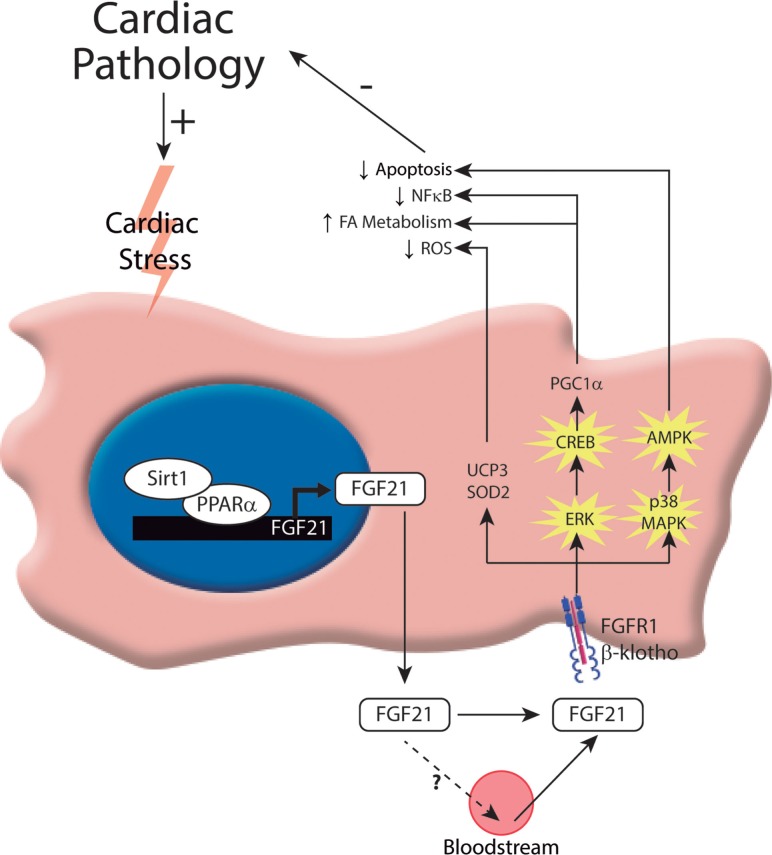
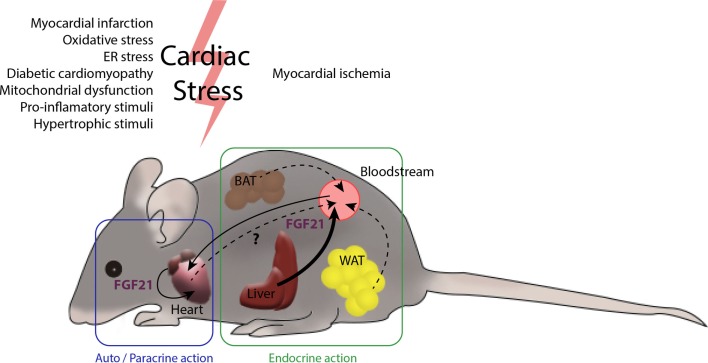
Verification
Claims the paper makes
The claims and statistics of this paper haven’t been checked yet.
Run the check — free, no account needed. It reads the open-access text and checks the sources it cites.
Claims other papers make about this one
Each is checked against this paper’s own text: does it say what the citing paper says it does?
In the citing paper
“administration of FGF21 is actually cardioprotective in numerous rodent models93–95.”
From Metabolic messengers: FGF21 (2021) · cites this paper as [93]
Self-check
Percentages, sums and reported differences re-computed from the paper’s own numbers.
The self-check needs the paper’s full text.
Citations
Cites
FGF-21 as a novel metabolic regulator
Kharitonenkov, A., Shiyanova, T. L., Koester, A., Ford, A. M., Micanovic, R., Galbreath, E. J., Sandusky, G. E., Hammond, L. J., Moyers, J. S., Owens, R. A., et al. (2005) · Journal of Clinical Investigation · doi:10.1172/jci23606 · Cited by 2,125
Gnecchi, M., He, H., Liang, O. D., Melo, L. G., Morello, F., Mu, H., Noiseux, N., Zhang, L., Pratt, R. E., Ingwall, J. S., et al. (2005) · Nature Medicine · doi:10.1038/nm0405-367 · Cited by 1,677 · cited 1×
“Several lines of evidence indicate that communication among cardiac cells via secreted factors may contribute to myocardial hypertrophic remodeling (55, 56).”
BackgroundInagaki, T., Dutchak, P., Zhao, G., Ding, X., Gautron, L., Parameswara, V., Li, Y., Goetz, R., Mohammadi, M., Esser, V., et al. (2007) · Cell Metabolism · doi:10.1016/j.cmet.2007.05.003 · Cited by 1,504 · cited 1×
“FGF21 expression is under the control of peroxisome proliferator-activated receptor-α (PPARα), and the main site of its production and release into the blood is considered to be the liver (1, 3).”
BackgroundBadman, M. K., Pissios, P., Kennedy, A. R., Koukos, G., Flier, J. S., & Maratos-Flier, E. (2007) · Cell Metabolism · doi:10.1016/j.cmet.2007.05.002 · Cited by 1,495 · cited 3×
“FGF21 also has autocrine/paracrine effects, such as induction of hepatic ketogenesis (1).”
BackgroundFGF21 regulates PGC-1α and browning of white adipose tissues in adaptive thermogenesis
Fisher, F. M., Kleiner, S., Douris, N., Fox, E. C., Mepani, R. J., Verdeguer, F., Wu, J., Kharitonenkov, A., Flier, J. S., Maratos-Flier, E., et al. (2012) · Genes & Development · doi:10.1101/gad.177857.111 · Cited by 1,478 · cited 1×
“Endocrine actions of FGF21 include the promotion of glucose uptake by white adipocytes through induction of the glucose transporter, Glut1 (7), activation of brown fat thermogenic activity (8), and promotion of the appearance of brown fat-like cells in white fat – the so-called “browning” process (9).”
BackgroundPurushotham, A., Schug, T. T., Xu, Q., Surapureddi, S., Guo, X., & Li, X. (2009) · Cell Metabolism · doi:10.1016/j.cmet.2009.02.006 · Cited by 1,003 · cited 1×
“This transcriptional pathway, which is also known to be involved in the regulation of FGF21 expression in the liver in the context of the control of carbohydrate and lipid metabolism (35), was found to play a pivotal role in controlling FGF21 expression and release in cardiac cells.”
BackgroundTranscriptional control of mitochondrial biogenesis: the central role of PGC-1
Ventura-Clapier, R., Garnier, A., & Veksler, V. (2008) · Cardiovascular Research · doi:10.1093/cvr/cvn098 · Cited by 932
Zhang, X., Yeung, D. C. Y., Karpisek, M., Stejskal, D., Zhou, Z.-G., Liu, F., Wong, R. L. C., Chow, W.-S., Tso, A. W. K., Lam, K. S. L., et al. (2008) · Diabetes · doi:10.2337/db07-1476 · Cited by 908 · cited 1×
“As previously mentioned, serum levels of FGF21 are elevated in subjects with adverse lipid profiles, obesity, metabolic syndrome, impaired glucose tolerance, type 2 diabetes mellitus, and hypertension (47, 48).”
BackgroundThe effects of LY2405319, an FGF21 analog, in obese human subjects with type 2 diabetes
Gaich, G., Chien, J. Y., Fu, H., Glass, L. C., Deeg, M. A., Holland, W. L., Kharitonenkov, A., Bumol, T., Schilske, H. K., & Moller, D. E. (2013) · Cell Metabolism · doi:10.1016/j.cmet.2013.08.005 · Cited by 885 · cited 3×
“In this context, transgenic mice with cardiac-specific FGF21 overexpression show increased circulating FGF21 levels and altered body mass composition (26), suggesting that FGF21 released by the heart has the potential to act at a distance in an endocrine manner.”
BackgroundResultInfluentialObesity Is a Fibroblast Growth Factor 21 (FGF21)-Resistant State
Fisher, F. M., Chui, P. C., Antonellis, P. J., Bina, H. A., Kharitonenkov, A., Flier, J. S., & Maratos-Flier, E. (2010) · Diabetes · doi:10.2337/db10-0193 · Cited by 830
Cited by
Sorted by citations
The therapeutic potential of FGF21 in metabolic diseases: from bench to clinic
Geng, L., Lam, K. S. L., & Xu, A. (2020) · Nature Reviews Endocrinology · doi:10.1038/s41574-020-0386-0 · Cited by 607
Flippo, K. H., & Potthoff, M. J. (2021) · Nature Metabolism · doi:10.1038/s42255-021-00354-2 · Cited by 311
Wang, Q., Yuan, J., Yu, Z., Lin, L., Jiang, Y., Cao, Z., Zhuang, P., Whalen, M. J., Song, B., Wang, X., et al. (2017) · Molecular Neurobiology · doi:10.1007/s12035-017-0663-7 · Cited by 157
Roles of FGF Signals in Heart Development, Health, and Disease
Itoh, N., Ohta, H., Nakayama, Y., & Konishi, M. (2016) · Frontiers in Cell and Developmental Biology · doi:10.3389/fcell.2016.00110 · Cited by 152
“FGF15/19 typically activates FGFR4 with βKlotho as an endocrine signal (Itoh et al., 2015).”
BackgroundInfluential‘Browning’ the cardiac and peri-vascular adipose tissues to modulate cardiovascular risk
Aldiss, P., Davies, G., Woods, R., Budge, H., Sacks, H. S., & Symonds, M. E. (2017) · International Journal of Cardiology · doi:10.1016/j.ijcard.2016.11.074 · Cited by 148
New developments in the biology of fibroblast growth factors
Ornitz, D. M., & Itoh, N. (2022) · WIREs Mechanisms of Disease · doi:10.1002/wsbm.1549 · Cited by 147
Adipokines and cardiovascular disease: A comprehensive review
Smékal, A., & Václavík, J. (2017) · Biomedical Papers · doi:10.5507/bp.2017.002 · Cited by 108
Chou, R., Huang, P., Hsu, C., Chang, C. C., Leu, H., Huang, C., Chen, J., & Lin, S. (2016) · Scientific Reports · doi:10.1038/srep33953 · Cited by 82
“5 and deceleration time of E wave ≥ 280 ms, (3) septal e′ < 8 and E/e′ ≥ 8 and E/A < 0.”
Fibroblast growth factor 21 in cardio-metabolic disorders: a systematic review and meta-analysis
Lakhani, I., Gong, M., Wong, W. T., Bazoukis, G., Lampropoulos, K. M., Wong, S. H., Wu, W. K. K., Wong, M. C. S., Ong, K. L., Liu, T., et al. (2018) · Metabolism · doi:10.1016/j.metabol.2018.01.017 · Cited by 76
An IL-6/STAT3/MR/FGF21 axis mediates heart-liver cross-talk after myocardial infarction
Sun, J.-Y., Du, L., Shi, X., Zhang, Y., Liu, Y., Wang, Y.-L., Chen, B., Liu, T., Zhu, H., Liu, Y., et al. (2023) · Science Advances · doi:10.1126/sciadv.ade4110 · Cited by 77
“FGF21 has been previously demonstrated to exert protective effects against cardiovascular diseases ( 28 ).”
High Levels of Frataxin Overexpression Lead to Mitochondrial and Cardiac Toxicity in Mouse Models
Belbellaa, B., Reutenauer, L., Messaddeq, N., Monassier, L., & Puccio, H. M. (2020) · Molecular Therapy — Methods & Clinical Development · doi:10.1016/j.omtm.2020.08.018 · Cited by 78
“Interestingly, Fgf21 and Gdf15 have been proposed as biomarkers of mitochondria and heart dysfunction.(31,32)”
BackgroundKhosravi, F., Ahmadvand, N., Bellusci, S., & Sauer, H. (2021) · Frontiers in Cell and Developmental Biology · doi:10.3389/fcell.2021.672935 · Cited by 78
Use of FGF-21 as a Biomarker of Mitochondrial Disease in Clinical Practice
Morovat, A., Weerasinghe, G. R., Nesbitt, V., Hofer, M., Agnew, T., Quaghebeur, G., Sergeant, K., Fratter, C., Guha, N., Mirzazadeh, M., et al. (2017) · Journal of Clinical Medicine · doi:10.3390/jcm6080080 · Cited by 68
“Under most physiological conditions the liver is the main contributor to circulating levels, followed by adipose tissue [31].”
BackgroundJiang, Y., Lin, L., Liu, N., Wang, Q., Yuan, J., Li, Y., Chung, K. K., Guo, S., Yu, Z., & Wang, X. (2020) · International Journal of Molecular Sciences · doi:10.3390/ijms21030824 · Cited by 66
Croon, M., Szczepanowska, K., Popović, M., Lienkamp, C., Senft, K., Brandscheid, C. P., Bock, T., Gnatzy-Feik, L., Ashurov, A., Acton, R., et al. (2022) · Science Advances · doi:10.1126/sciadv.abn7105 · Cited by 60
“FGF21 signaling primarily leads to phosphorylation and consequent activation of extracellular signal–regulated kinases 1 and 2 [ERK1/2; also known as mitogen-activated protein kinase 3 (MAPK3)/MAPK1], which further regulate multiple metabolic processes ( 16 , 20 ).”
Growth Factors as Immunotherapeutic Targets in Cardiovascular Disease
Mindur, J. E., & Świrski, F. K. (2019) · Arteriosclerosis Thrombosis and Vascular Biology · doi:10.1161/atvbaha.119.311994 · Cited by 58
New Treatment Strategies for Alcohol-Induced Heart Damage
Fernández‐Solà, J., & Porta, A. P. (2016) · International Journal of Molecular Sciences · doi:10.3390/ijms17101651 · Cited by 53
Jiang, Y., Liu, N., Wang, Q., Yu, Z., Lin, L., Yuan, J., Guo, S., Ahn, B. J., Wang, X., Li, X., et al. (2018) · Stroke · doi:10.1161/strokeaha.118.022119 · Cited by 49
“Growing experimental findings have demonstrated FGF21 is also a mediator of adaptive responses to tissue injury and repair in various pathological conditions.(12,15,16) In the present study, we propose that FGF21 is a novel therapeutic candidate with both adaptive and protective pharmacological actions that protect ag…”
Fgf21 is required for cardiac remodeling in pregnancy
Redondo‐Angulo, I., Mas‐Stachurska, A., Sitges, M., Tinahones, F. J., Giralt, M., Villarroya, F., & Planavila, A. (2017) · Cardiovascular Research · doi:10.1093/cvr/cvx088 · Cited by 48
“In pathological hypertrophy, in contrast, the circulating levels of Fgf21 are unchanged and Fgf21 expression is specifically upregulated in the heart, indicating that Fgf21 plays a predominantly autocrine protective role in pathological cardiac pathology.(12,47) Confirmation of an endocrine/autocrine role of cardiac F…”
BackgroundSelf-citationIntracellular to Interorgan Mitochondrial Communication in Striated Muscle in Health and Disease
Boardman, N. T., Trani, G., Scalabrin, M., Romanello, V., & Wüst, R. C. I. (2023) · Endocrine Reviews · doi:10.1210/endrev/bnad004 · Cited by 51
FGF23 expression is stimulated in transgenic α-Klotho longevity mouse model
Xiao, Z., King, G. D., Mancarella, S., Munkhsaikhan, U., Cao, L., Cai, C., & Quarles, L. D. (2019) · JCI Insight · doi:10.1172/jci.insight.132820 · Cited by 46
“In KlTg mice, the ectopic expression of mKl135 in the heart or circulating sKL acting as an “on demand” coreceptor may have attenuated FGF23 cardiotoxicity through reducing PLC-γ–dependent cardiac hypertrophy pathways (25, 78).”
BackgroundFibroblast growth factor 21 in heart failure
Tucker, W., Tucker, B., Rye, K., & Ong, K. L. (2022) · Heart Failure Reviews · doi:10.1007/s10741-022-10268-0 · Cited by 44
LongShengZhi capsule inhibits doxorubicin-induced heart failure by anti-oxidative stress
Xu, S., Wang, Y., Yu, M., Wang, D., Liang, Y., Chen, Y., Liao, C., Xie, Z., Zhao, B., Han, J., et al. (2019) · Biomedicine & Pharmacotherapy · doi:10.1016/j.biopha.2019.109803 · Cited by 44
Gao, J., Liu, J., Meng, Z., Li, Y., Hong, Y., Wang, L., He, L., Hu, B. Q., Zheng, Y., Li, T., et al. (2021) · Acta Biomaterialia · doi:10.1016/j.actbio.2021.06.015 · Cited by 44
McCarty, M. F. (2021) · International Journal of Molecular Sciences · doi:10.3390/ijms22073321 · Cited by 41
Characterization of a robust mouse model of heart failure with preserved ejection fraction
Matsiukevich, D., Kovács, A. D., Li, T., Kokkonen-Simon, K. M., Matkovich, S. J., Oladipupo, S. S., & Ornitz, D. M. (2023) · American Journal of Physiology-Heart and Circulatory Physiology · doi:10.1152/ajpheart.00038.2023 · Cited by 39
Cardiokines as Modulators of Stress-Induced Cardiac Disorders
Planavila, A., Fernández‐Solà, J., & Villarroya, F. (2017) · Advances in protein chemistry and structural biology · doi:10.1016/bs.apcsb.2017.01.002 · Cited by 38
Self-citationChiba, A., Watanabe‐Takano, H., Miyazaki, T., & Mochizuki, N. (2017) · Cellular and Molecular Life Sciences · doi:10.1007/s00018-017-2723-6 · Cited by 37
Zhao, J., & Pei, L. (2020) · JACC Basic to Translational Science · doi:10.1016/j.jacbts.2020.05.007 · Cited by 36
“FGF-21 Regulating cardiac metabolism; antihypertrophic AMI, CHD, HF, DCM (93,94)”
BackgroundWei, Y., Wang, J., Cheng, F., Xu, H.-J., Chen, J., Xiong, J., & Wang, J. (2021) · Journal of Physiology and Biochemistry · doi:10.1007/s13105-021-00822-z · Cited by 34
Basurto, L., Gregory, M. A., Barrera-Hernández, S., Sánchez-Huerta, L., Martínez, A. D., Manuel‐Apolinar, L., Avelar‐Garnica, F. J., Alonso, L. A. M., & Sánchez‐Arenas, R. (2019) · Experimental Gerontology · doi:10.1016/j.exger.2019.05.013 · Cited by 33
Ren, Z., Xiao, W., Zeng, Y., Liu, M., Li, G., Tang, Z., Qu, S., Hao, Y., Yuan, H., & Jiang, Z. (2019) · International Journal of Molecular Medicine · doi:10.3892/ijmm.2019.4071 · Cited by 33
“Fibroblast growth factor (FGF-21) is a member of the FGF family (5).”
Hu, S., Cao, S., & Liu, J. (2017) · Experimental and Therapeutic Medicine · doi:10.3892/etm.2017.4564 · Cited by 31
“Evidence has been provided that FGF21 protects the heart from I/R-induced injury (22).”
BackgroundYe, D., Li, H., Wang, Y., Jia, W., Zhou, J., Fan, J., Man, K., Lo, C., Wong, C., Wang, Y., et al. (2016) · Scientific Reports · doi:10.1038/srep19776 · Cited by 32
Arias‐Calderón, M., Casas, M., Balanta‐Melo, J., Morales, C., Hernández, N., Llanos, P., Jaimovich, E., & Buvinic, S. (2023) · Frontiers in Endocrinology · doi:10.3389/fendo.2023.1059020 · Cited by 29
“First described expressed in liver cells (2), it is now well considered an adipokine (3), myokine (4), and cardiomyokine (5).”
BackgroundYan, B., Mei, Z., Tang, Y., Song, H., Wu, H., Jing, Q., Zhang, X., Yan, C., & Han, Y. (2023) · Cell Death and Disease · doi:10.1038/s41419-023-05842-9 · Cited by 29
“It has been established in previous studies that cardiac cells can secret FGF21, although at a lower level than liver or white adipose tissue [40 – 42].”
Wang, N., Xu, T.-Y., Zhang, X., Li, J.-Y., Wang, Y.-X., Guo, X.-C., Li, S.-M., Wang, W.-F., & Li, D.-S. (2018) · International Immunopharmacology · doi:10.1016/j.intimp.2018.01.048 · Cited by 23
Ferrer‐Curriu, G., Guitart‐Mampel, M., Rupérez, C., Zamora, M., Crispi, F., Villarroya, F., Fernández‐Solà, J., Garrabou, G., & Planavila, A. (2020) · The Journal of Pathology · doi:10.1002/path.5573 · Cited by 26
“The heart is both a target and a source of FGF21 [10,11], which acts in an autocrine/ paracrine manner protecting against metabolic, oxidative, and inflammatory cardiac damage [7,12].”
BackgroundSelf-citationSchmitz, T., Harmel, E. K., Heier, M., Peters, A., Linseisen, J., & Meisinger, C. (2022) · Journal of Translational Medicine · doi:10.1186/s12967-022-03644-9 · Cited by 26
“A review proposed FGF-21 as a new cardiomyokine which is crucial for maintaining cardiac function and has positive effects on the heart in the context of pathological conditions [43].”
BackgroundHFpEF and MASLD: converging mechanisms and clinical implications
Capone, F., Häseli, S. P., Liu, L., Strocchi, S., Langenberg, C., Lusis, A. J., Pietzner, M., Muoio, D. M., Rider, O. J., Raman, B., et al. (2026) · Nature Reviews Cardiology · doi:10.1038/s41569-026-01257-z · Cited by 35
“In obese mice, ipragliflozin significantly decreased hepatic lipid accumulation without altering body weight, concurrently increasing hepatic sirtuin 1 (SIRT1) signalling, accompanied by increased expression of PGC1α, PPARα and FGF21, suggesting upregulation of lipid oxidation and energy metabolism pathways 351 .”
Yanucil, C., Kentrup, D., Li, X., Grabner, A., Schramm, K. J., Martinez, E. C., Li, J., Campos, I. D., Czaya, B. A., Heitman, K., et al. (2022) · Scientific Reports · doi:10.1038/s41598-022-11033-x · Cited by 25
Puengel, T., & Tacke, F. (2023) · Expert Opinion on Investigational Drugs · doi:10.1080/13543784.2023.2230115 · Cited by 24
“More recently, the role of FGF21 in interorgan crosstalk has been highlighted by protective effects of FGF21 against cardiovascular disease exceeding indirect effects of ameliorated metabolic injury [51,52].”
BackgroundPérez‐Martí, A., Sandoval, V., Marrero, P. F., Haro, D., & Relat, J. (2016) · Hormone Molecular Biology and Clinical Investigation · doi:10.1515/hmbci-2016-0034 · Cited by 24
“However, later studies showed that FGF21 is expressed and secreted by cardiac cells in response to various stress conditions, including obesity, type 1 diabetes, fasting, ER stress, inflammation, infarct or hypertrophy, and some cardiovascular diseases [49, 50].”
BackgroundInfluentialCao, F., Liu, X., Cao, X., Wang, S., Fu, K., Zhao, Y., Shen, F., & Liu, J. (2017) · Biochemical and Biophysical Research Communications · doi:10.1016/j.bbrc.2017.07.160 · Cited by 24
Gu, L., Jiang, W., Huidong, Q., Zheng, R., & Li, W. (2021) · PeerJ · doi:10.7717/peerj.12235 · Cited by 23
Crosstalk between adipose tissue and the heart: An update
Li, C., Sun, X., Zhao, S., & Scherer, P. E. (2022) · Journal of Translational Internal Medicine · doi:10.2478/jtim-2022-0039 · Cited by 22
“[53,54] Under regular physiological conditions, FGF21 is mainly secreted by the liver.”
BackgroundFan, L., Gu, L., Yao, Y., & Ma, G. (2022) · Computational and Mathematical Methods in Medicine · doi:10.1155/2022/7138776 · Cited by 20
“Fibroblast growth factors (FGFs) are secreted proteins [10].”
BackgroundKaur, N., Gare, S. R., Ruiz‐Velasco, A., Miller, J. M., Abouleisa, R., Ou, Q., Shen, J., Soran, H., Mohamed, T., & Liu, W. (2023) · Heliyon · doi:10.1016/j.heliyon.2023.e14952 · Cited by 18
“Furthermore, FGF21 is a cardiac myokine released under pathological stress and has autocrine and paracrine action [6].”
BackgroundLurins, J., Lūriņa, D., Svirskis, Š., Nora-Krūkle, Z., Tretjakovs, P., Mackēvičs, V., Lejnieks, A., Rapisarda, V., & Baylon, V. (2019) · Experimental and Therapeutic Medicine · doi:10.3892/etm.2019.7254 · Cited by 18
“FGF‐21 was found to improve endothelial function, decrease oxidative stress and prevent endothelial cell apoptosis (18,19,20,21).”
BackgroundResultHuang, W., Chen, C., Lin, T., Kuo, C., Huang, H., Huang, P., & Lin, S. (2022) · Journal of Cellular and Molecular Medicine · doi:10.1111/jcmm.17273 · Cited by 18
Cheung, J., Cheung, B. M. Y., Yiu, K., Tse, H., & Chan, Y. (2025) · Frontiers in Cardiovascular Medicine · doi:10.3389/fcvm.2025.1573841 · Cited by 17
Lee, M., Kim, K. J., Chung, T., Bae, J., Lee, Y., Lee, B., Cha, B., Yun, M., & Kang, E. S. (2021) · Diabetes Obesity and Metabolism · doi:10.1111/dom.14310 · Cited by 15
“[44, 45] FGF21 resistance may contribute to myocardial insulin resistance due to altered lipid homeostasis in cardiomyocytes.[13, 46] In addition, the role of the liver as a generator of circulating mediators that affect cardiac remodeling has been hypothesized.”
BackgroundJung, C., Jung, S.-H., Kim, B., Kim, C., Kang, S., & Mok, J. (2016) · Journal of Diabetes and its Complications · doi:10.1016/j.jdiacomp.2016.10.017 · Cited by 15
Fibroblast growth factor-21 as a novel metabolic factor for regulating thrombotic homeostasis
Li, S., Jia, H., Liu, Z., Wang, N., Guo, X., Cao, M., Fang, F., Yang, J., Li, J., He, Q., et al. (2022) · Scientific Reports · doi:10.1038/s41598-021-00906-2 · Cited by 14
Fibroblast growth factor 12 attenuated cardiac remodeling via suppressing oxidative stress
Liu, A., Zhang, Y., Xun, S., Zhou, G., Lin, L., & Mei, Y. (2022) · Peptides · doi:10.1016/j.peptides.2022.170786 · Cited by 14
Increased serum chemerin level to predict early onset of aortic valve stenosis
Lurins, J., Lūriņa, D., Tretjakovs, P., Mackēvičs, V., Lejnieks, A., Rapisarda, V., & Baylon, V. (2017) · Biomedical Reports · doi:10.3892/br.2017.1010 · Cited by 12
“It has been suggested that FGF-21 may have a cardioprotective role in different cardiovascular diseases such as atrial fibrillation, myocardial infarction, coronary artery disease, hypertension, and cardiac hypertrophy, which supports our findings (38,42).”
From Beats to Metabolism: the Heart at the Core of Interorgan Metabolic Cross Talk
Romero-Becerra, R., Santamans, A. M., Arcones, A. C., & Sabio, G. (2023) · Physiology · doi:10.1152/physiol.00018.2023 · Cited by 12
Xiao, M., Tang, Y., Wang, S., Wang, J., Wang, J., Guo, Y., Zhang, J., & Gu, J. (2021) · Frontiers in Endocrinology · doi:10.3389/fendo.2021.598008 · Cited by 12
García‐Carrizo, F., Galmés, S., Picó, C., Palou, A., & Rodríguez, A. M. (2022) · Journal of Agricultural and Food Chemistry · doi:10.1021/acs.jafc.2c03143 · Cited by 11
Prognostic Utility of Circulating Growth Factors in Aortic Valve Stenosis: A Pilot Study
Hofmanis, J., Tretjakovs, P., Svirskis, Š., Gersone, G., Hofmane, D., Rozenberga, U., Blumfelds, L., Bahs, G., Lejnieks, A., & Mackēvičs, V. (2021) · Medicina · doi:10.3390/medicina57010078 · Cited by 11
Li, J., Li, Y., Liu, Y., Yu, H., Xu, N., Huang, D., Xue, Y., Li, S., Chen, H., Liu, J., et al. (2021) · Frontiers in Pharmacology · doi:10.3389/fphar.2021.715466 · Cited by 10
“FGF21 is abundantly secreted by cardiac cells in response to cardiac stress, including cardiac hypertrophy, myocardial ischemia, heart failure, and diabetic cardiomyopathy (Planavila et al., 2015).”
BackgroundIntermittent Fasting as Possible Treatment for Heart Failure
Garza-González, S., Nieblas, B., Solbes-Gochicoa, M. M., Altamirano, J., & Garcı́a, N. (2022) · Current Vascular Pharmacology · doi:10.2174/1570161120666220610151915 · Cited by 11
Gu, L., Jiang, W., Jiang, W., Xu, Z., Li, W., & Zhang, H. (2023) · PeerJ · doi:10.7717/peerj.14855 · Cited by 9
Aleem, M., Maqsood, H., Younus, S., Zafar, A. F., Talpur, A. S., & Shakeel, H. A. (2021) · Cureus · doi:10.7759/cureus.17723 · Cited by 9
“FGF-21 decreases oxidative stress in cardiomyocytes and prevents injury by stimulating antioxidative pathways [19].”
BackgroundHepatokines and their role in cardiohepatic interactions in heart failure
Shouman, W. A., Najmeddine, S., Sinno, L., Nehme, R. D., Ghawi, A. E., Ziade, J. A., Altara, R., Amin, G., Booz, G. W., & Zouein, F. A. (2025) · European Journal of Pharmacology · doi:10.1016/j.ejphar.2025.177356 · Cited by 9
Emerging Evidence Linking the Liver to the Cardiovascular System: Liver-derived Secretory Factors
Liu, X., Shao, Y., Han, L., Zhang, R., & Chen, J. (2023) · Journal of Clinical and Translational Hepatology · doi:10.14218/jcth.2022.00122 · Cited by 8
Functions of FGF21 and its role in cardiac hypertrophy
Chen, L., Gao, M., Ong, S., & Gong, G. (2025) · Journal of Advanced Research · doi:10.1016/j.jare.2025.03.007 · Cited by 7
“Published reviews have emphasized the connections between FGF21 and various cardiovascular conditions, including myocardial infarction (MI), cardiac hypertrophy, coronary heart disease, atherosclerosis, and heart failure (HF) [13–17].”
The Adipokine Axis in Heart Failure: Linking Obesity, Sarcopenia and Cardiac Dysfunction in HFpEF
Komić, L., Komic, J., Pavlović, N., Kumrić, M., Bukić, J., Tomić, I. J., & Božić, J. (2026) · International Journal of Molecular Sciences · doi:10.3390/ijms27020612 · Cited by 9
“FGF21, a hepatokine/adipokine induced by stress, facilitates mitochondrial repair and enhances metabolic flexibility [55,60].”
Feng, E., Wang, J., Wang, X., Wang, Z., Chen, X., Zhu, X. C., & Hou, W. (2021) · Europe PMC (PubMed Central) · doi:10.22037/ijpr.2020.113584.14384 · Cited by 7
Thioredoxin-1 and Correlations of the Plasma Cytokines Regarding Aortic Valve Stenosis Severity
Tretjakovs, P., Lurins, J., Svirskis, Š., Gersone, G., Lūriņa, D., Rozenberga, U., Blumfelds, L., Bahs, G., Lejnieks, A., & Mackēvičs, V. (2021) · Biomedicines · doi:10.3390/biomedicines9081041 · Cited by 7
Research Progress of Fibroblast Growth Factor 21 in Fibrotic Diseases
Jia, M.-Q., Guan, C., Tao, J., & Zhou, Y. (2022) · Oxidative Medicine and Cellular Longevity · doi:10.1155/2022/5042762 · Cited by 7
“One study proved that FGF21 produced by myocardial cells functions as an autocrine factor to attenuate metabolic disorder, prevent hypertrophy, and activate pro-in fl ammatory pathways in cardiac tissue [61].”
The burn repair molecule? Evaluating FGF-21 in thermal injury – A systematic review
Niederegger, T., Schaschinger, T., Brandt, J., Knoedler, L., Knoedler, S. A., Palackic, A., Klimitz, F. J., Noll, D., Most, P., Ritterhoff, J., et al. (2025) · Burns · doi:10.1016/j.burns.2025.107785 · Cited by 6
Liu, X., Dong, M., Li, T., & Wang, J. (2024) · Cytokine · doi:10.1016/j.cyto.2024.156591 · Cited by 6
Role of serum cytokines in the prediction of heart failure in patients with coronary artery disease
Hou, Q., Sun, Z., Zhao, L., Liu, Y., Zhang, J., Huang, J., Luo, Y., Xiao, Y., Hu, Z., & Shen, A. (2023) · ESC Heart Failure · doi:10.1002/ehf2.14491 · Cited by 5
“FGF-21 has also been implicated in the pathogenesis of HF through the modulation of oxidative stress.(42) Tucker et al.”
BackgroundRama, K., Jahagirdar, V., & Sanyal, A. J. (2026) · Drug Design Development and Therapy · doi:10.2147/dddt.s560034 · Cited by 6
Heart Failure and Osteoporosis: Shared Challenges in the Aging Population
Spoladore, R., Ciampi, C. M., Ossola, P., Sultana, A., Spreafico, L. P., Farina, A., & Fragasso, G. (2025) · Journal of Cardiovascular Development and Disease · doi:10.3390/jcdd12020069 · Cited by 5
“It may function in an autocrine manner, protecting from cardiac hypertrophy through PGC1alfa expression, which is involved in the control of oxidative stress and energy metabolism [70].”
Peng, Z., Gao, L., Zhang, L., Yao, R., Li, X., Deng, L. J., Fan, J., Ying, L., & Wang, Y. (2025) · International Journal of Molecular Sciences · doi:10.3390/ijms26146577 · Cited by 5
“Beyond regulating metabolic disorders in T2D, FGF21 may also directly act on the heart to ameliorate DCM, as FGFR1 and KLB—the receptor and co-receptor mediating the biological functions of FGF21—are expressed in cardiac tissue [15–18]).”
Defining the Roles of Cardiokines in Human Aging and Age-Associated Diseases
Srivastava, H., Pozzoli, M., & Lau, E. (2022) · Frontiers in Aging · doi:10.3389/fragi.2022.884321 · Cited by 6
“FGF21 is normally expressed in the liver but is induced in multiple tissues under stress (Keipert and Ost, 2021), and has a relatively short circulating half-life (Kharitonenkov et al., 2007).”
BackgroundInfluentialUPRmt-regulated mitokines: novel strategies for myocardial injury repair
Gao, W., Liu, J., Zhang, W., Liu, B., & Shen, L. (2025) · Frontiers in Cell and Developmental Biology · doi:10.3389/fcell.2025.1652353 · Cited by 4
Prognostic Utility Of Novel Biomarkers in Aortic Valve Stenosis
Tretjakovs, P., Hofmanis, J., Hofmane, D., Krieviņa, G., Blumfelds, L., Mackēvičs, V., Lejnieks, A., & Bahs, G. (2019) · Proceedings of the Latvian Academy of Sciences Section B Natural Exact and Applied Sciences · doi:10.2478/prolas-2019-0016 · Cited by 4
“Recent findings indicate that FGF-21 exerts cardioprotective effects, e.g., protects against cardiac hypertrophy and cardiac inflammation (Lenart-Lipiñska et al., 2015; Planavila et al., 2015).”
InfluentialMichaëlsson, K., Lemming, E. W., Larsson, S. C., Höijer, J., Melhus, H., Svennblad, B., Baron, J. A., Wolk, A., & Byberg, L. (2024) · BMC Medicine · doi:10.1186/s12916-024-03651-1 · Cited by 4
“S4C) [63, 64].”
Pedersen, A. K. N., Hage, C., Jessen, N., Mellbin, L., & Bjerre, M. (2022) · Molecular and Cellular Endocrinology · doi:10.1016/j.mce.2022.111738 · Cited by 4
“Interestingly, FGF21 may be secreted by cardiomyocytes as an autocrine factor and potentially protect the heart from adverse cardiac events and prevent the heart from pathological remodelling after a myocardial infarction (Joki et al., 2015; Planavila et al., 2015).”
BackgroundTherapeutic potential of FGF21 in diabetes
Davis, D., Garg, C., & Lahiri, S. (2017) · Journal of Medicinal Plants Studies · Cited by 4
Pinheiro, F., Lail, H. L., Neves, J. S., Negrão, R., & Wanders, D. (2024) · Nutrients · doi:10.3390/nu16244347 · Cited by 3
Li, Y., Song, W., Huan, C., Xu, K., Sun, J., Zhen, X., Ouyang, H., Tang, H., Fan, Q., Zhi, W., et al. (2026) · Pharmacology & Therapeutics · doi:10.1016/j.pharmthera.2026.109089 · Cited by 3
Circadian Regulation of Endocrine Fibroblast Growth Factors on Systemic Energy Metabolism
Yang, Z., Zarbl, H., & Guo, G. L. (2024) · Molecular Pharmacology · doi:10.1124/molpharm.123.000831 · Cited by 3
Zhu, Z., Gao, Z., Chen, B., Hall, D. D., Minerath, R. A., Koval, O. M., Sierra, A., Subbotina, E., Zhu, X., Kim, Y. R., et al. (2021) · EP Europace · doi:10.1093/europace/euab273 · Cited by 3
The Role of Adipose Tissue in Cardiovascular Pathophysiology
Maya-Ramos, L., Gillette, T. G., Hill, J. A., & Scherer, P. E. (2023) · CardioMetabolic Syndrome Journal · doi:10.51789/cmsj.2023.3.e9 · Cited by 3
FGF21: a promising therapeutic agent for alcoholic cardiomyopathy?†
Romanello, V. (2021) · The Journal of Pathology · doi:10.1002/path.5654 · Cited by 3
“While FGF21 expression in the heart is low in healthy conditions, levels increase during cardiac stress to mediate adaptive compensatory stress responses [2].”
BackgroundChen, L., Zheng, L., Qin, Y. H., Liu, B., Zheng, Y., Tong, X., Dai, M., & Gong, G. (2025) · Journal of Advanced Research · doi:10.1016/j.jare.2025.10.053 · Cited by 2
“The antihypertrophic effects of FGF21 have been demonstrated previously [43,44].”
Li, M. (2021) · Aging Pathobiology and Therapeutics · doi:10.31491/apt.2021.09.065 · Cited by 2
“Accumulating evidence has indicated that FGF-21 is involved in tissue injury and repair under various pathological conditions [35].”
BackgroundAlieva, A. M., Baikova, I. E., Reznik, E. V., Valiev, R. K., Akhmatov, I. Z., Arakelyan, R. A., Saryev, M. N., & Nikitin, I. G. (2022) · Russian Medicine · doi:10.17816/medjrf108900 · Cited by 2
Shanehbandpour-Tabari, F., Gholamnataj, F., Neamati, N., Zabihi, E., Feizi, F., & Parsian, H. (2024) · Iranian journal of pharmaceutical research · doi:10.5812/ijpr-142903 · Cited by 2
“Recent studies have shown that FGF21 expression in the heart increases during cardiac stress to mediate compensatory stress responses (30, 31).”
BackgroundHung, W., Yu, T., Wang, C.-P., Hsu, C., Lu, Y., Wei, C., Chung, F., Lee, Y., Wu, C., & Tang, W.-H. (2022) · BMC Cardiovascular Disorders · doi:10.1186/s12872-022-02868-3 · Cited by 1
Cappellini, F., Zorzan, D., Tomay, F., Toccaceli, M., Marinelli, A., Mancini, M., Bucchi, A., Tonelli, C., & Petroni, K. (2025) · Oxidative Medicine and Cellular Longevity · doi:10.1155/omcl/7786043 · Cited by 1
“In cardiomyocytes, FGF21 also acts through an autocrine mechanism: secreted cardiac FGF21 activates SIRT1, which in turn promotes FGF21 synthesis [6].”
Chetana, S., & Kalyani, B. (2025) · Cardiovascular Toxicology · doi:10.1007/s12012-025-10079-3 · Cited by 1
“Treatment with met - signaling in DCM can be a desirable therapeutic target as it leads to metabolic dysregulation due to elevated BCAA levels [117].”
Lin, X., Davidsohn, N., Boyce, S., McIntyre, M., Zhang, M., Gencarelli, M., Ascheim, D. D., Delmar, M., & Cerrone, M. (2026) · Heart Rhythm · doi:10.1016/j.hrthm.2026.02.030 · Cited by 1
Therapeutic potential of FGF21 in cardiorenal syndrome
Li, F., Tang, C., & Dong, Z. (2016) · International Journal of Cardiology · doi:10.1016/j.ijcard.2016.03.142 · Cited by 1
Heart dysfunction in a rat model with autosomal recessive polycystic kidney disease
Gayrard, N., Plawecki, M., Lauret, C., Fila, M., Sicard, P., Duranton, F., Boukhaled, J. H., Cortijo, I., Lotierzo, M., Jover, B. F., et al. (2025) · The Journal of Physiology · doi:10.1113/jp286364 · Cited by 1
Correlations between vessel stiffness and biomarkers of senescent cell in elderly patients
Sorokina, A. G., Efimenko, A. Y., Grigorieva, O., Novoseletskaya, E. S., Basalova, N. A., Aleksandrushkina, N. A., Vigovskiy, M. A., Kirillova, K. I., Strazhesko, I. D., Orlov, A. V., et al. (2022) · Kardiologiia · doi:10.18087/cardio.2022.6.n2033 · Cited by 1
Metadata
- Authors
- Planavila, A., Redondo-Angulo, I., & Villarroya, F.
- Affiliations
- Instituto de Salud Carlos III (ES)
- Corresponding author
- Villarroya, Francesc
- Venue
- Frontiers in Endocrinology
- Publisher
- Frontiers Media SA
- Published
- 2015-08-31
- Volume
- 6
- Pages
- 133-133
- ISSN
- 1664-2392 (ISSN-L)
- PMC
- PMC4553397
- OpenAlex
- W1800862889
- Cited by
- 123
- References
- 59
- Citations by year
- 2026: 10 · 2025: 11 · 2024: 8 · 2023: 16 · 2022: 21 · 2021: 21 · 2020: 5 · 2019: 10 · 2018: 3 · 2017: 10 · 2016: 8
- FWCI
- 0.68
- Type
- journal article
- Language
- en
- Open access
- gold
- doi.org
- Licence
- cc-by
- Locations
- Frontiers in Endocrinology (publishedVersion, cc-by)
- PubMed Central (publishedVersion, cc-by)
- PubMed (publishedVersion)
- RECERCAT (Consorci de Serveis Universitaris de Catalunya) (publishedVersion, other-oa)
- Dipòsit Digital de la Universitat de Barcelona (Universitat de Barcelona) (submittedVersion, cc-by)
- DOAJ (DOAJ: Directory of Open Access Journals) (submittedVersion, cc-by-sa)
- Funders
- Fundación BBVA
- European Commission (277713)
- Generalitat de Catalunya (2014SGR-141, 2014SGR)
- Eusko Jaurlaritza
- Banco Bilbao Vizcaya Argentaria
- Topics
- Life Sciences › Biochemistry, Genetics and Molecular Biology › Molecular Biology › Fibroblast Growth Factor Research
- Health Sciences › Medicine › Cardiology and Cardiovascular Medicine › Cardiac Fibrosis and Remodeling
- Health Sciences › Medicine › Cardiology and Cardiovascular Medicine › GDF15 and Related Biomarkers
- Keywords
- FGF21, β-Klotho, cardiac hypertrophy, myocardial infarction, cardiac inflammation, oxidative stress, PPARα, SIRT1, coronary artery disease, atherosclerosis, type 2 diabetes, heart failure, cardiovascular risk
About these checks
Registry, retraction, Cites and statistics results are computed, not judged, with one exception: a printed reference that no index lists is read once by a model before it counts as a citation error. Claims are extracted by a model and kept only when their quote appears verbatim in the text; each cited source is then checked, with a model’s help, for whether it says what the claim relies on. Those verdicts can be wrong — read the claim’s quote and the cited source before relying on one.
Statistics and arithmetic are recomputed, not judged.
Confidence bands are shown only for fields calibrated on our annotated test set. None is calibrated yet, so no band is shown.
What counts as a claim ›How we measure confidence ›How we check this ›
Are you an author, or do you see a problem with this page? Request a review
