

The DOI matches its Crossref record; 59 of the 59 references it cites were found in a registry or an index.
FGF21 and Cardiac Physiopathology
Open accessAbstract
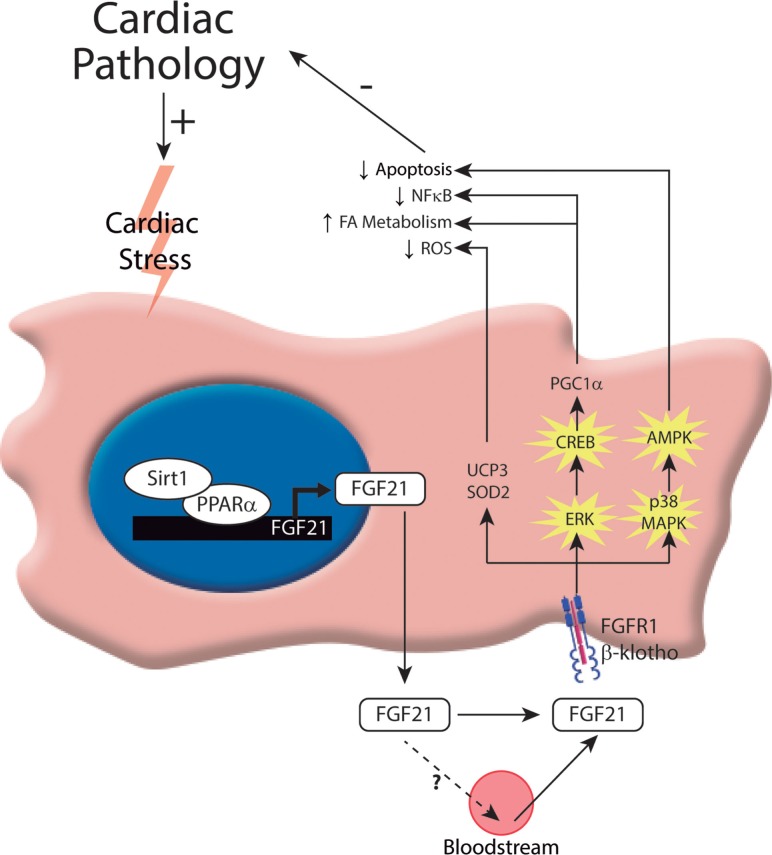
The heart is not traditionally considered either a target or a site of fibroblast growth factor-21 (FGF21) production. However, recent findings indicate that FGF21 can act as a cardiomyokine; that is, it is produced by cardiac cells at significant levels and acts in an autocrine manner on the heart itself. The heart is sensitive to the effects of FGF21, both systemic and locally generated, owing to the expression in cardiomyocytes of β-Klotho, the key co-receptor known to confer specific responsiveness to FGF21 action. FGF21 has been demonstrated to protect against cardiac hypertrophy, cardiac inflammation, and oxidative stress. FGF21 expression in the heart is induced in response to cardiac insults, such as experimental cardiac hypertrophy and myocardial infarction in rodents, as well as in failing human hearts. Intracellular mechanisms involving PPARα and Sirt1 mediate transcriptional regulation of the FGF21 gene in response to exogenous stimuli. In humans, circulating FGF21 levels are elevated in coronary heart disease and atherosclerosis, and are associated with a higher risk of cardiovascular events in patients with type 2 diabetes. These findings provide new insights into the role of FGF21 in the heart and may offer potential therapeutic strategies for cardiac disease.
Overview
The claims and statistics of this paper haven’t been checked yet.
Run the check — free, no account needed. It reads the open-access text and checks the sources it cites.
Integrity signals
Registry
Cites
Statistics
Figures
Verification
Claims the paper makes
The claims and statistics of this paper haven’t been checked yet.
Run the check — free, no account needed. It reads the open-access text and checks the sources it cites.
Claims other papers make about this one
Each is checked against this paper’s own text: does it say what the citing paper says it does?
In the citing paper
“administration of FGF21 is actually cardioprotective in numerous rodent models93–95.”
From Metabolic messengers: FGF21 (2021) · cites this paper as [93]
Self-check
Percentages, sums and reported differences re-computed from the paper’s own numbers.
The self-check needs the paper’s full text.
Citations
Cites
FGF-21 as a novel metabolic regulator
Kharitonenkov, A., Shiyanova, T. L., Koester, A., Ford, A. M., Micanovic, R., Galbreath, E. J., Sandusky, G. E., Hammond, L. J., Moyers, J. S., Owens, R. A., et al. (2005) · Journal of Clinical Investigation · doi:10.1172/jci23606 · Cited by 2,125
Gnecchi, M., He, H., Liang, O. D., Melo, L. G., Morello, F., Mu, H., Noiseux, N., Zhang, L., Pratt, R. E., Ingwall, J. S., et al. (2005) · Nature Medicine · doi:10.1038/nm0405-367 · Cited by 1,677 · cited 1×
“Several lines of evidence indicate that communication among cardiac cells via secreted factors may contribute to myocardial hypertrophic remodeling (55, 56).”
BackgroundInagaki, T., Dutchak, P., Zhao, G., Ding, X., Gautron, L., Parameswara, V., Li, Y., Goetz, R., Mohammadi, M., Esser, V., et al. (2007) · Cell Metabolism · doi:10.1016/j.cmet.2007.05.003 · Cited by 1,504 · cited 1×
“FGF21 expression is under the control of peroxisome proliferator-activated receptor-α (PPARα), and the main site of its production and release into the blood is considered to be the liver (1, 3).”
BackgroundBadman, M. K., Pissios, P., Kennedy, A. R., Koukos, G., Flier, J. S., & Maratos-Flier, E. (2007) · Cell Metabolism · doi:10.1016/j.cmet.2007.05.002 · Cited by 1,495 · cited 3×
“FGF21 also has autocrine/paracrine effects, such as induction of hepatic ketogenesis (1).”
BackgroundFGF21 regulates PGC-1α and browning of white adipose tissues in adaptive thermogenesis
Fisher, F. M., Kleiner, S., Douris, N., Fox, E. C., Mepani, R. J., Verdeguer, F., Wu, J., Kharitonenkov, A., Flier, J. S., Maratos-Flier, E., et al. (2012) · Genes & Development · doi:10.1101/gad.177857.111 · Cited by 1,478 · cited 1×
“Endocrine actions of FGF21 include the promotion of glucose uptake by white adipocytes through induction of the glucose transporter, Glut1 (7), activation of brown fat thermogenic activity (8), and promotion of the appearance of brown fat-like cells in white fat – the so-called “browning” process (9).”
BackgroundPurushotham, A., Schug, T. T., Xu, Q., Surapureddi, S., Guo, X., & Li, X. (2009) · Cell Metabolism · doi:10.1016/j.cmet.2009.02.006 · Cited by 1,003 · cited 1×
“This transcriptional pathway, which is also known to be involved in the regulation of FGF21 expression in the liver in the context of the control of carbohydrate and lipid metabolism (35), was found to play a pivotal role in controlling FGF21 expression and release in cardiac cells.”
BackgroundTranscriptional control of mitochondrial biogenesis: the central role of PGC-1
Ventura-Clapier, R., Garnier, A., & Veksler, V. (2008) · Cardiovascular Research · doi:10.1093/cvr/cvn098 · Cited by 932
Zhang, X., Yeung, D. C. Y., Karpisek, M., Stejskal, D., Zhou, Z.-G., Liu, F., Wong, R. L. C., Chow, W.-S., Tso, A. W. K., Lam, K. S. L., et al. (2008) · Diabetes · doi:10.2337/db07-1476 · Cited by 908 · cited 1×
“As previously mentioned, serum levels of FGF21 are elevated in subjects with adverse lipid profiles, obesity, metabolic syndrome, impaired glucose tolerance, type 2 diabetes mellitus, and hypertension (47, 48).”
BackgroundThe effects of LY2405319, an FGF21 analog, in obese human subjects with type 2 diabetes
Gaich, G., Chien, J. Y., Fu, H., Glass, L. C., Deeg, M. A., Holland, W. L., Kharitonenkov, A., Bumol, T., Schilske, H. K., & Moller, D. E. (2013) · Cell Metabolism · doi:10.1016/j.cmet.2013.08.005 · Cited by 885 · cited 3×
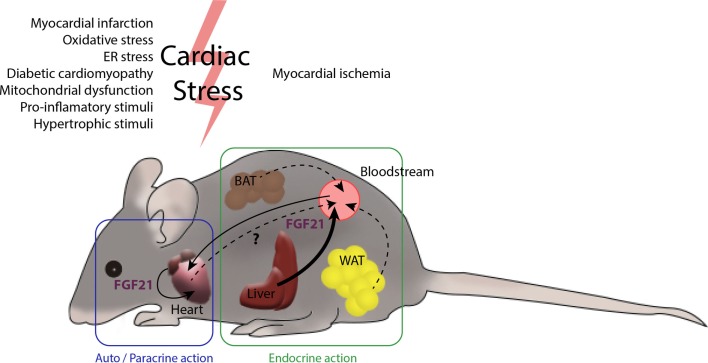
“In this context, transgenic mice with cardiac-specific FGF21 overexpression show increased circulating FGF21 levels and altered body mass composition (26), suggesting that FGF21 released by the heart has the potential to act at a distance in an endocrine manner.”
BackgroundResultInfluentialObesity Is a Fibroblast Growth Factor 21 (FGF21)-Resistant State
Fisher, F. M., Chui, P. C., Antonellis, P. J., Bina, H. A., Kharitonenkov, A., Flier, J. S., & Maratos-Flier, E. (2010) · Diabetes · doi:10.2337/db10-0193 · Cited by 830
Kim, K. H., Jeong, Y. T., Oh, H., Kim, S. H., Cho, J. M., Kim, Y.-N., Kim, S. S., Kim, D. H., Hur, K. Y., Kim, H. K., et al. (2013) · Nature Medicine · doi:10.1038/nm.3014 · Cited by 774 · cited 2×
“Recent findings also underscore the potential role of FGF21 under conditions of mitochondrial dysfunction, with several studies showing that skeletalmuscle is an FGF21-producing tissue inmice (36, 37) and humans (38), and that a mitochondrial respiratory chain deficiency leads to induction of FGF21 mRNA expression in…”
BackgroundKurosu, H., Choi, M., Ogawa, Y., Dickson, A. S., Goetz, R., Eliseenkova, A. V., Mohammadi, M., Rosenblatt, K. P., Kliewer, S. A., & Kuro-o, M. (2007) · Journal of Biological Chemistry · doi:10.1074/jbc.m704165200 · Cited by 748 · cited 1×
“The action of FGF21 on target cells requires FGF receptors (mainly FGFR1 and FGFR4 in adipose tissue and liver, respectively) and β-Klotho, a single-pass transmembrane protein that functions as an obligate cofactor for FGF21 signaling (10, 11).”
BackgroundFon Tacer, K., Bookout, A. L., Ding, X., Kurosu, H., John, G. B., Wang, L., Goetz, R., Mohammadi, M., Kuro-o, M., Mangelsdorf, D. J., et al. (2010) · Molecular Endocrinology · doi:10.1210/me.2010-0142 · Cited by 700
Thermogenic Activation Induces FGF21 Expression and Release in Brown Adipose Tissue
Hondares, E., Iglesias, R., Giralt, A., Gonzalez, F. J., Giralt, M., Mampel, T., & Villarroya, F. (2011) · Journal of Biological Chemistry · doi:10.1074/jbc.m110.215889 · Cited by 623
Self-citationCirculating FGF21 Is Liver Derived and Enhances Glucose Uptake During Refeeding and Overfeeding
Markan, K. R., Naber, M. C., Ameka, M. K., Anderegg, M. D., Mangelsdorf, D. J., Kliewer, S. A., Mohammadi, M., & Potthoff, M. J. (2014) · Diabetes · doi:10.2337/db14-0595 · Cited by 590 · cited 1×
“The main contributor to circulating levels of FGF21 is the liver (46)”
BackgroundGälman, C., Lundåsen, T., Kharitonenkov, A., Bina, H. A., Eriksson, M., Hafström, I., Dahlin, M., Åmark, P., Angelin, B., & Rudling, M. (2008) · Cell Metabolism · doi:10.1016/j.cmet.2008.06.014 · Cited by 512 · cited 1×
“Among FGFs, FGF21 has been shown to be a secreted protein that acts as a metabolic regulator and plays a role in the control of glucose homeostasis, insulin sensitivity, and ketogenesis (1, 2).”
BackgroundSuomalainen, A., Elo, J. M., Pietiläinen, K. H., Hakonen, A. H., Sevastianova, K., Korpela, M., Isohanni, P., Marjavaara, S. K., Tyni, T., Kiuru-Enari, S., et al. (2011) · The Lancet Neurology · doi:10.1016/s1474-4422(11)70155-7 · Cited by 427
FGF21 is an Akt‐regulated myokine
Izumiya, Y., Bina, H. A., Ouchi, N., Akasaki, Y., Kharitonenkov, A., & Walsh, K. (2008) · FEBS Letters · doi:10.1016/j.febslet.2008.10.021 · Cited by 415
Hondares, E., Rosell, M., Gonzalez, F. J., Giralt, M., Iglesias, R., & Villarroya, F. (2010) · Cell Metabolism · doi:10.1016/j.cmet.2010.02.001 · Cited by 377 · cited 1×
“Endocrine actions of FGF21 include the promotion of glucose uptake by white adipocytes through induction of the glucose transporter, Glut1 (7), activation of brown fat thermogenic activity (8), and promotion of the appearance of brown fat-like cells in white fat – the so-called “browning” process (9).”
BackgroundSelf-citationFibroblast growth factor 21 protects against cardiac hypertrophy in mice
Planavila, A., Redondo‐Angulo, I., Hondares, E., Vinciguerra, M., Munts, C., Iglesias, R., Gabrielli, L., Sitges, M., Giralt, M., van Bilsen, M., et al. (2013) · Nature Communications · doi:10.1038/ncomms3019 · Cited by 371 · cited 8×
“Furthermore, FGF21 treatment prevents cardiac hypertrophy development (at least, in neonatal mouse models), enhances fatty acid oxidation, and prevents the induction of pro-inflammatory pathways in the heart, thereby confirming the anti-hypertrophic properties of FGF21 (13).”
BackgroundInfluentialSelf-citationFGF‐21/FGF‐21 receptor interaction and activation is determined by βKlotho
Kharitonenkov, A., Dunbar, J. D., Bina, H. A., Bright, S. W., Moyers, J. S., Zhang, C., Ding, L., Micanovic, R., Mehrbod, S. F., Knierman, M. D., et al. (2007) · Journal of Cellular Physiology · doi:10.1002/jcp.21357 · Cited by 333 · cited 1×
“The action of FGF21 on target cells requires FGF receptors (mainly FGFR1 and FGFR4 in adipose tissue and liver, respectively) and β-Klotho, a single-pass transmembrane protein that functions as an obligate cofactor for FGF21 signaling (10, 11).”
BackgroundMitochondrial myopathy induces a starvation-like response
Tyynismaa, H., Carroll, C. J., Raimundo, N., Ahola-Erkkilä, S., Wenz, T., Ruhanen, H., Guse, K., Hemminki, A., Peltola-Mjøsund, K. E., Tulkki, V., et al. (2010) · Human Molecular Genetics · doi:10.1093/hmg/ddq310 · Cited by 300 · cited 1×
“Recent findings also underscore the potential role of FGF21 under conditions of mitochondrial dysfunction, with several studies showing that skeletalmuscle is an FGF21-producing tissue inmice (36, 37) and humans (38), and that a mitochondrial respiratory chain deficiency leads to induction of FGF21 mRNA expression in…”
BackgroundMuise, E. S., Azzolina, B., Kuo, D. W., El-Sherbeini, M., Tan, Y., Yuan, X., Mu, J., Thompson, J. R., Berger, J. P., & Wong, K. K. (2008) · Molecular Pharmacology · doi:10.1124/mol.108.044826 · Cited by 294
Fibroblast growth factor 21 protects the heart from oxidative stress
Planavila, A., Redondo‐Angulo, I., Ribas‐Aulinas, F., Garrabou, G., Casademont, J., Giralt, M., & Villarroya, F. (2014) · Cardiovascular Research · doi:10.1093/cvr/cvu263 · Cited by 265 · cited 5×
“Additional studies reported increases in cardiac FGF21 expression in obese rats (24), in type 1 diabetes (32), under fasting conditions (25), after endoplasmic reticulum (ER) stress (25), and in pro-oxidative/proinflammatory conditions (14).”
BackgroundInfluentialSelf-citationTranscriptional Activation Of Energy Metabolic Switches In The Developing And Hypertrophied Heart
Lehman, J. J., & Kelly, D. P. (2002) · Clinical and Experimental Pharmacology and Physiology · doi:10.1046/j.1440-1681.2002.03655.x · Cited by 257 · cited 1×
“It was previously reported that cardiac expression of PGC1α is repressed by hypertrophic (18) and pro-inflammatory stimuli (19, 20).”
BackgroundMolecular and Functional Signature of Heart Hypertrophy During Pregnancy
Eghbali, M., Deva, R., Alioua, A., Minosyan, T. Y., Ruan, H., Wang, Y., Toro, L., & Stefani, E. (2005) · Circulation Research · doi:10.1161/01.res.0000170652.71414.16 · Cited by 233 · cited 1×
“In physiological models of cardiac hypertrophy, such as pregnancy (43), the circulating levels of FGF21 (44) as well as FGF21 expression levels in the heart are increased (45).”
BackgroundDoğan, Ş. A., Pujol, C., Maiti, P., Kukat, A., Wang, S., Hermans, S., Senft, K., Wibom, R., Rugarli, E. I., & Trifunović, A. (2014) · Cell Metabolism · doi:10.1016/j.cmet.2014.02.004 · Cited by 222 · cited 2×
“The transcription factor, ATF4, might also be involved in the transcriptional control of cardiac FGF21 expression in response to mitochondrial dysfunction or ER stress situations (25, 41).”
BackgroundGallego-Escuredo, J. M., Gómez‐Ambrosi, J., Catalán, V., Domingo, P., Giralt, M., Frühbeck, G., & Villarroya, F. (2014) · International Journal of Obesity · doi:10.1038/ijo.2014.76 · Cited by 212
Self-citationDíaz-Delfín, J., Hondares, E., Iglesias, R., Giralt, M., Caelles, C., & Villarroya, F. (2012) · Endocrinology · doi:10.1210/en.2012-1193 · Cited by 199 · cited 1×
“This phenomenon of reduced FGF21 action in obesity has been attributed to an abnormal reduction in the expression of the FGF21 co-receptor, β-Klotho, in white adipose tissue, commonly observed in rodent models of obesity and in obese individuals (30).”
BackgroundSelf-citationFibroblast Growth Factor-21 Is Induced in Human Skeletal Muscles by Hyperinsulinemia
Hojman, P., Pedersen, M., Nielsen, A. R., Krogh-Madsen, R., Yfanti, C., Åkerstrom, T., Nielsen, S., & Pedersen, B. K. (2009) · Diabetes · doi:10.2337/db09-0713 · Cited by 198 · cited 1×
“Recent findings also underscore the potential role of FGF21 under conditions of mitochondrial dysfunction, with several studies showing that skeletalmuscle is an FGF21-producing tissue inmice (36, 37) and humans (38), and that a mitochondrial respiratory chain deficiency leads to induction of FGF21 mRNA expression in…”
BackgroundChow, W. S., Xu, A., Woo, Y. C., Tso, A. W. K., Cheung, S., Fong, C. H.-Y., Tse, H., Chau, M. T., Cheung, B. M. Y., & Lam, K. S. L. (2013) · Arteriosclerosis Thrombosis and Vascular Biology · doi:10.1161/atvbaha.113.301599 · Cited by 193
Álvarez-Guardia, D., Palomer, X., Coll, T., Davidson, M. M., Chan, T. O., Feldman, A. M., Laguna, J. C., & Vázquez‐Carrera, M. (2010) · Cardiovascular Research · doi:10.1093/cvr/cvq080 · Cited by 190 · cited 1×
“It was previously reported that cardiac expression of PGC1α is repressed by hypertrophic (18) and pro-inflammatory stimuli (19, 20).”
BackgroundEisele, P. S., Salatino, S., Sobek, J., Hottiger, M. O., & Handschin, C. (2013) · Journal of Biological Chemistry · doi:10.1074/jbc.m112.375253 · Cited by 187
Lin, Z., Wu, Z., Yin, X., Liu, Y., Yan, X., Lin, S., Xiao, J., Wang, X., Feng, W., & Li, X. (2010) · PLoS ONE · doi:10.1371/journal.pone.0015534 · Cited by 179
Endocrine Protection of Ischemic Myocardium by FGF21 from the Liver and Adipose Tissue
Liu, S. Q., Roberts, D., Kharitonenkov, A., Zhang, B., Hanson, S., Li, Y. C., Zhang, L., & Wu, Y. (2013) · Scientific Reports · doi:10.1038/srep02767 · Cited by 179 · cited 3×
“Several recent investigations have demonstrated that the liver responds to ischemicmyocardial injury by increasing the secretion of cardioprotective proteins (15, 33).”
BackgroundNovel Insights into the Cardio-Protective Effects of FGF21 in Lean and Obese Rat Hearts
Patel, V., Adya, R., Chen, J., Ramanjaneya, M., Bari, M. F., Bhudia, S. K., Hillhouse, E. W., Tan, B. K., & Randeva, H. S. (2014) · PLoS ONE · doi:10.1371/journal.pone.0087102 · Cited by 124 · cited 3×
“In obese rats, β-Klotho protein expression in the heart is reduced, indicating that the FGF21-resistance state also occurs in the heart (24).”
BackgroundSchilling, J. D., Lai, L., Sambandam, N., Dey, C. E., Leone, T. C., & Kelly, D. P. (2011) · Circulation Heart Failure · doi:10.1161/circheartfailure.110.959833 · Cited by 123 · cited 1×
“It was previously reported that cardiac expression of PGC1α is repressed by hypertrophic (18) and pro-inflammatory stimuli (19, 20).”
BackgroundThe cardiokine story unfolds: ischemic stress-induced protein secretion in the heart
Doroudgar, S., & Glembotski, C. C. (2011) · Trends in Molecular Medicine · doi:10.1016/j.molmed.2010.12.003 · Cited by 117
Fredj, S., Bescond, J., Louault, C., & Potreau, D. (2004) · Journal of Cellular Physiology · doi:10.1002/jcp.20197 · Cited by 114 · cited 1×
“Several lines of evidence indicate that communication among cardiac cells via secreted factors may contribute to myocardial hypertrophic remodeling (55, 56).”
BackgroundJoki, Y., Ohashi, K., Yuasa, D., Shibata, R., Ito, M., Matsuo, K., Kambara, T., Uemura, Y., Hayakawa, S., Hiramatsu‐Ito, M., et al. (2015) · Biochemical and Biophysical Research Communications · doi:10.1016/j.bbrc.2015.02.081 · Cited by 114 · cited 1×
“Other studies have reported that FGF21 also exerts protection after myocardial infarction by inhibiting cardiomyocyte apoptosis (15), attenuating pathological myocardial remodeling, and reducing infarct size (16, 24).”
BackgroundZhang, C., Huang, Z., Gu, J., Yan, X., Lu, X., Zhou, S., Wang, S., Shao, M., Zhang, F., Cheng, P., et al. (2015) · Diabetologia · doi:10.1007/s00125-015-3630-8 · Cited by 113 · cited 2×
“A recent study has shown that FGF21 prevents diabetes-induced cardiac apoptosis by activating the ERK–p38MAPK–AMPK pathway (Figure 1); therefore, FGF21 has been proposed as a treatment for diabetes-related cardiac damage (32).”
BackgroundStachowiak, E. K., Fang, X., Myers, J. A., Dunham-Ems, S. M., & Stachowiak, M. K. (2003) · Journal of Neurochemistry · doi:10.1046/j.1471-4159.2003.01624.x · Cited by 109 · cited 1×
“Moreover, FGF21 was shown to rapidly induce cAMP responsive element binding protein (CREB) phosphorylation in cardiomyocytes, a finding in accord with previous studies on FGFR1mediated induction of CREB in other cell types (21).”
ResultŠt́astná, M., Chimenti, I., Marbán, E., & Eyk, J. E. V. (2009) · PROTEOMICS · doi:10.1002/pmic.200900515 · Cited by 100 · cited 1×
“Cardiomyokines have been estimated to number between 30 and 60, and include growth factors, endocrine hormones, and cytokines (58, 59).”
BackgroundAubert, G., Vega, R. B., & Kelly, D. P. (2012) · Biochimica et Biophysica Acta (BBA) - Molecular Cell Research · doi:10.1016/j.bbamcr.2012.08.015 · Cited by 93 · cited 1×
“PGC1α is a transcriptional co-activator involved in the control of energy metabolism and oxidative stress in several tissues, including the heart (17).”
BackgroundOng, K. L., Januszewski, A. S., O'Connell, R. L., Jenkins, A. J., Xu, A., SULLIVAN, D. R., Barter, P. J., Hung, W.-T., Scott, R. S., Taskinen, M., et al. (2014) · Diabetologia · doi:10.1007/s00125-014-3458-7 · Cited by 93 · cited 1×
“Moreover, plasma FGF21 levels have been linked to a higher risk of cardiovascular events in patients with type 2 diabetes (52).”
BackgroundSemba, R. D., Crasto, C., Strait, J., Sun, K., Schaumberg, D. A., & Ferrucci, L. (2012) · Journal of Human Hypertension · doi:10.1038/jhh.2012.52 · Cited by 87 · cited 1×
“As previously mentioned, serum levels of FGF21 are elevated in subjects with adverse lipid profiles, obesity, metabolic syndrome, impaired glucose tolerance, type 2 diabetes mellitus, and hypertension (47, 48).”
BackgroundFGF 21 deletion exacerbates diabetic cardiomyopathy by aggravating cardiac lipid accumulation
Yan, X., Chen, J., Zhang, C., Zhou, S., Zhang, Z., Chen, J., Feng, W., Li, X., & Tan, Y. (2015) · Journal of Cellular and Molecular Medicine · doi:10.1111/jcmm.12530 · Cited by 85 · cited 1×
“Moreover, FGF21 deletion in mice exacerbates diabetic cardiomyopathy by aggravating cardiac lipid accumulation, although it is not clear whether this is a direct effect of the lack of FGF21 action on heart or indirect due to altered systemic lipid homeostasis in diabetic FGF21-null mice (31).”
BackgroundCardioprotective proteins upregulated in the liver in response to experimental myocardial ischemia
Liu, S. Q., Tefft, B. J., Roberts, D., Zhang, L., Ren, Y., Li, Y. C., Huang, Y., Zhang, D., Phillips, H. R., & Wu, Y. H. (2012) · American Journal of Physiology-Heart and Circulatory Physiology · doi:10.1152/ajpheart.00362.2012 · Cited by 78 · cited 1×
“One such protein identified by microarray-based gene expression profiling and protein analysis is FGF21 (33, 34), which was found to be highly increased at the protein level in the liver and also in adipose tissue after myocardial infarction.”
BackgroundZhang, W., Chu, S., Ding, W., & Wang, F. (2015) · PLoS ONE · doi:10.1371/journal.pone.0129791 · Cited by 70 · cited 1×
“Interestingly, a recent study reported that serum FGF21 levels are independently associated with acute myocardial infarction (54), showing that serum FGF21 levels are markedly increased on the first day after the onset of myocardial infarction and remain high on days 3 and 7; moreover, FGF21 levels were found to be cl…”
BackgroundFibroblast growth factor 21 is induced upon cardiac stress and alters cardiac lipid homeostasis
Brahma, M. K., Adam, R. C., Pollak, N. M., Jaeger, D., Zierler, K. A., Poecher, N., Schreiber, R., Romauch, M., Moustafa, T., Eder, S., et al. (2014) · Journal of Lipid Research · doi:10.1194/jlr.m044784 · Cited by 70 · cited 3×
“Finally, it has been proposed that FGF21 is involved in modulating cardiac lipid metabolism and homeostasis (25).”
BackgroundAn, S.-Y., Lee, M. S., Yi, S., Ha, E. S., Han, S. J., Kim, H. J., Kim, D. J., & Lee, K. W. (2012) · Diabetes Research and Clinical Practice · doi:10.1016/j.diabres.2012.01.004 · Cited by 69
Ribas, F., Villarroya, J., Hondares, E., Giralt, M., & Villarroya, F. (2014) · Biochemical Journal · doi:10.1042/bj20140403 · Cited by 69
Self-citationFrost, R. J., & Engelhardt, S. H. (2007) · Circulation · doi:10.1161/circulationaha.107.696468 · Cited by 61 · cited 1×
“Cardiomyokines have been estimated to number between 30 and 60, and include growth factors, endocrine hormones, and cytokines (58, 59).”
BackgroundSerum fibroblast growth factor 21 levels are increased in atrial fibrillation patients
Han, X., Chen, C., Cheng, G., Xie, C., Yang, M., Shou, X., & Sun, C. (2015) · Cytokine · doi:10.1016/j.cyto.2015.02.019 · Cited by 35 · cited 1×
“In addition, serum FGF21 levels are elevated in atrial fibrillation patients in association with atrial remodeling (53).”
BackgroundLisa, F. D., & Itoh, N. (2015) · Cardiovascular Research · doi:10.1093/cvr/cvv050 · Cited by 28
Fibroblast Growth Factor‐21 and the Beneficial Effects of Long‐Chain n‐3 Polyunsaturated Fatty Acids
Villarroya, J., Flachs, P., Redondo‐Angulo, I., Giralt, M., Medříková, D., Villarroya, F., Kopecký, J., & Planavila, A. (2014) · Lipids · doi:10.1007/s11745-014-3948-x · Cited by 25
Self-citationHepatic FGF21 production is increased in late pregnancy in the mouse
Cui, Y., Giesy, S. L., Hassan, M., Davis, K., Zhao, S., & Boisclair, Y. R. (2014) · American Journal of Physiology-Regulatory, Integrative and Comparative Physiology · doi:10.1152/ajpregu.00554.2013 · Cited by 21
Liver cell-mediated alleviation of acute ischemic myocardial injury
Liu, S. Q. (2010) · Frontiers in Bioscience-Elite · doi:10.2741/e131 · Cited by 17 · cited 2×
“One such protein identified by microarray-based gene expression profiling and protein analysis is FGF21 (33, 34), which was found to be highly increased at the protein level in the liver and also in adipose tissue after myocardial infarction.”
BackgroundShamagian, L. G., Romo, A. I., Castro, A. A. D. M., Alonso, J. A. B., Sáez, A. O., Blázquez, I. T. G., Sepulveda, J. A. S., Verdes, M. B. C., Correa, A. S., & Juan‐Salvadores, P. (2014) · European Heart Journal · doi:10.1093/eurheartj/ehu324 · Cited by 9
Cited by
Sorted by citations
The therapeutic potential of FGF21 in metabolic diseases: from bench to clinic
Geng, L., Lam, K. S. L., & Xu, A. (2020) · Nature Reviews Endocrinology · doi:10.1038/s41574-020-0386-0 · Cited by 607
Flippo, K. H., & Potthoff, M. J. (2021) · Nature Metabolism · doi:10.1038/s42255-021-00354-2 · Cited by 311
Wang, Q., Yuan, J., Yu, Z., Lin, L., Jiang, Y., Cao, Z., Zhuang, P., Whalen, M. J., Song, B., Wang, X., et al. (2017) · Molecular Neurobiology · doi:10.1007/s12035-017-0663-7 · Cited by 157
Roles of FGF Signals in Heart Development, Health, and Disease
Itoh, N., Ohta, H., Nakayama, Y., & Konishi, M. (2016) · Frontiers in Cell and Developmental Biology · doi:10.3389/fcell.2016.00110 · Cited by 152
“FGF15/19 typically activates FGFR4 with βKlotho as an endocrine signal (Itoh et al., 2015).”
BackgroundInfluential‘Browning’ the cardiac and peri-vascular adipose tissues to modulate cardiovascular risk
Aldiss, P., Davies, G., Woods, R., Budge, H., Sacks, H. S., & Symonds, M. E. (2017) · International Journal of Cardiology · doi:10.1016/j.ijcard.2016.11.074 · Cited by 148
Metadata
- Authors
- Planavila, A., Redondo-Angulo, I., & Villarroya, F.
- Affiliations
- Instituto de Salud Carlos III (ES)
- Corresponding author
- Villarroya, Francesc
- Venue
- Frontiers in Endocrinology
- Publisher
- Frontiers Media SA
- Published
- 2015-08-31
- Volume
- 6
- Pages
- 133-133
- ISSN
- 1664-2392 (ISSN-L)
- PMC
- PMC4553397
- OpenAlex
- W1800862889
- Cited by
- 123
- References
- 59
- Citations by year
- 2026: 10 · 2025: 11 · 2024: 8 · 2023: 16 · 2022: 21 · 2021: 21 · 2020: 5 · 2019: 10 · 2018: 3 · 2017: 10 · 2016: 8
- FWCI
- 0.68
- Type
- journal article
- Language
- en
- Open access
- gold
- doi.org
- Licence
- cc-by
- Locations
- Frontiers in Endocrinology (publishedVersion, cc-by)
- PubMed Central (publishedVersion, cc-by)
- PubMed (publishedVersion)
- RECERCAT (Consorci de Serveis Universitaris de Catalunya) (publishedVersion, other-oa)
- Dipòsit Digital de la Universitat de Barcelona (Universitat de Barcelona) (submittedVersion, cc-by)
- DOAJ (DOAJ: Directory of Open Access Journals) (submittedVersion, cc-by-sa)
- Funders
- Fundación BBVA
- European Commission (277713)
- Generalitat de Catalunya (2014SGR-141, 2014SGR)
- Eusko Jaurlaritza
- Banco Bilbao Vizcaya Argentaria
- Topics
- Life Sciences › Biochemistry, Genetics and Molecular Biology › Molecular Biology › Fibroblast Growth Factor Research
- Health Sciences › Medicine › Cardiology and Cardiovascular Medicine › Cardiac Fibrosis and Remodeling
- Health Sciences › Medicine › Cardiology and Cardiovascular Medicine › GDF15 and Related Biomarkers
- Keywords
- FGF21, β-Klotho, cardiac hypertrophy, myocardial infarction, cardiac inflammation, oxidative stress, PPARα, SIRT1, coronary artery disease, atherosclerosis, type 2 diabetes, heart failure, cardiovascular risk
About these checks
Registry, retraction, Cites and statistics results are computed, not judged, with one exception: a printed reference that no index lists is read once by a model before it counts as a citation error. Claims are extracted by a model and kept only when their quote appears verbatim in the text; each cited source is then checked, with a model’s help, for whether it says what the claim relies on. Those verdicts can be wrong — read the claim’s quote and the cited source before relying on one.
Statistics and arithmetic are recomputed, not judged.
Confidence bands are shown only for fields calibrated on our annotated test set. None is calibrated yet, so no band is shown.
What counts as a claim ›How we measure confidence ›How we check this ›
Are you an author, or do you see a problem with this page? Request a review
