

The DOI matches its Crossref record; 150 of the 150 references it cites were found in a registry or an index.
The Roles of ApoC-III on the Metabolism of Triglyceride-Rich Lipoproteins in Humans
Open accessAbstract
Cardiovascular disease (CVD) is the leading cause of death globally. It is well established based on evidence accrued during the last three decades that high plasma concentrations of cholesterol-rich atherogenic lipoproteins are causatively linked to CVD, and that lowering these reduces atherosclerotic cardiovascular events in humans.1-9 Historically, most attention has been on low-density lipoproteins (LDL) since these are the most abundant atherogenic lipoproteins in the circulation, and thus the main carrier of cholesterol into the artery wall. However, with the rise of obesity and insulin resistance in many populations, there is increasing interest in the role of triglyceride-rich lipoproteins (TRLs) and their metabolic remnants, with accumulating evidence showing they too are causatively linked to CVD. Plasma triglyceride, measured either in the fasting or non-fasting state, is a useful index of the abundance of TRLs and recent research into the biology and genetics of triglyceride heritability has provided new insight into the causal relationship of TRLs with CVD. Of the genetic factors known to influence plasma triglyceride levels variation in APOC3 - the gene for apolipoprotein (apo) C-III - has emerged as being particularly important as a regulator of triglyceride transport and a novel therapeutic target to reduce dyslipidaemia and CVD risk.
Overview
The claims and statistics of this paper haven’t been checked yet.
Run the check — free, no account needed. It reads the open-access text and checks the sources it cites.
Integrity signals
Registry
Cites
Statistics
Figures
Verification
Claims the paper makes
The claims and statistics of this paper haven’t been checked yet.
Run the check — free, no account needed. It reads the open-access text and checks the sources it cites.
Claims other papers make about this one
Each is checked against this paper’s own text: does it say what the citing paper says it does?
The source backs part of the claim, not all of it — or backs it for a different population, condition or comparison.
In the citing paper
“Moreover, the reduction in apolipoprotein C-III levels by the conventional triglyceride-lowering agents, such as fibrates and omega-3 fatty acids, is modest (10 to 40%)”
From Olezarsen, Acute Pancreatitis, and Familial Chylomicronemia Syndrome (2024) · cites this paper as [34]
Experimental — accuracy not yet measuredThe cited source says what the claim attributes to it.
In the citing paper
“Elevated apoC-III levels are associated with increased circulating TG, impaired remnant clearance, and a heightened burden of atherogenic lipoproteins.”
From Targeting triglycerides for cardiovascular risk reduction (2026) · cites this paper as [111]
The cited source says what the claim attributes to it.
In the citing paper
“beyond its inhibitory action on lipoprotein lipase (LPL), apoC-III also delays hepatic uptake of TRL remnants, contributing to both hypertriglyceridemia and atherosclerotic progression through LPL-independent pathways [111]”
From Targeting triglycerides for cardiovascular risk reduction (2026) · cites this paper as [111]
The check wasn’t confident either way, so it gives no verdict — never disputed.
In the citing paper
“and these agents have not been effective in lowering triglyceride levels in patients with familial chylomicronemia syndrome. 21,34”
From Olezarsen, Acute Pancreatitis, and Familial Chylomicronemia Syndrome (2024) · cites this paper as [34]
Experimental — accuracy not yet measured
Self-check
Percentages, sums and reported differences re-computed from the paper’s own numbers.
The self-check needs the paper’s full text.
Citations
Cites
Chapman, M. J., Ginsberg, H. N., Amarenco, P., Andreotti, F., Borén, J., Catapano, A. L., Descamps, O. S., Fisher, E., Kovanen, P. T., Kuivenhoven, J. A., et al. (2011) · European Heart Journal · doi:10.1093/eurheartj/ehr112 · Cited by 1,227
Self-citationLoss-of-Function Mutations in APOC3, Triglycerides, and Coronary Disease
The TG and HDL Working Group of the Exome Sequencing Project, N. H. (2014) · New England Journal of Medicine · doi:10.1056/nejmoa1307095 · Cited by 1,071
Subendothelial retention of atherogenic lipoproteins in early atherosclerosis
Skålén, K., Gustafsson, M., Rydberg, E. K., Hultén, L. M., Wiklund, O., Innerarity, T. L., & Borén, J. (2002) · Nature · doi:10.1038/nature00804 · Cited by 1,019 · cited 1×
“This is mediated by ionic interactions between positively charged domains in apoB100 (74), and negatively charged artery wall proteoglycans (75).”
BackgroundSelf-citationLoss-of-Function Mutations in APOC3 and Risk of Ischemic Vascular Disease
Jørgensen, A. B., Frikke-Schmidt, R., Nordestgaard, B. G., & Tybjærg-Hansen, A. (2014) · New England Journal of Medicine · doi:10.1056/nejmoa1308027 · Cited by 919
Crooke, S. T., Witztum, J. L., Bennett, C. F., & Baker, B. F. (2018) · Cell Metabolism · doi:10.1016/j.cmet.2018.03.004 · Cited by 841
Adiels, M., Olofsson, S.-O., Taskinen, M.-R., & Borén, J. (2008) · Arteriosclerosis, Thrombosis, and Vascular Biology · doi:10.1161/atvbaha.107.160192 · Cited by 820
Self-citationGalNAc-siRNA conjugates: leading the way for delivery of RNAi therapeutics
Springer, A. D., & Dowdy, S. F. (2018) · Nucleic Acid Therapeutics · doi:10.1089/nat.2018.0736 · Cited by 711 · cited 1×
“Development of novel technologies including ASOs, siRNAs and monoclonal antibodies (137, 138), as well as improved targeting methods (139, 140), including use of N-acetyl galactosamine-conjugated (GalNAc) adducts (i.”
BackgroundFerence, B. A., Kastelein, J. J. P., Ray, K. K., Ginsberg, H. N., Chapman, M. J., Packard, C. J., Laufs, U., Oliver-Williams, C., Wood, A. M., Butterworth, A. S., et al. (2019) · JAMA · doi:10.1001/jama.2018.20045 · Cited by 703 · cited 1×
“showing that reductions in triglyceride levels do not reduce CVD risk unless there was an accompanying reduction in circulating apoB levels, and that the reduction in risk was proportional to the decrement in apoB (105).”
BackgroundSelf-citationOverproduction of large VLDL particles is driven by increased liver fat content in man
Adiels, M., Taskinen, M.-R., Packard, C., Caslake, M. J., Soro-Paavonen, A., Westerbacka, J., Vehkavaara, S., Häkkinen, A., Olofsson, S.-O., Yki-Järvinen, H., et al. (2006) · Diabetologia · doi:10.1007/s00125-005-0125-z · Cited by 690
Self-citationPollin, T. I., Damcott, C. M., Shen, H., Ott, S. H., Shelton, J., Horenstein, R. B., Post, W., McLenithan, J. C., Bielak, L. F., Peyser, P. A., et al. (2008) · Science · doi:10.1126/science.1161524 · Cited by 688 · cited 1×
“Genetic studies have also shown that carriers of the APOC3 null mutation R19X have 50% lower plasma apoC-III levels, 35% lower plasma triglycerides, markedly lower postprandial triglycerides and significantly lower coronary artery calcification (CAC) scores than non-carriers (96, 97).”
BackgroundGenetics of blood lipids among ∼300,000 multi-ethnic participants of the Million Veteran Program
Global Lipids Genetics Consortium, Klarin, D., Myocardial Infarction Genetics (MIGen) Consortium, The Geisinger-Regeneron DiscovEHR Collaboration, Program, T. V. M. V., Damrauer, S. M., Cho, K., Sun, Y. V., Teslovich, T. M., Honerlaw, J., et al. (2018) · Nature Genetics · doi:10.1038/s41588-018-0222-9 · Cited by 625
Exome-wide association study of plasma lipids in >300,000 individuals
Charge Diabetes Working Group, Liu, D. J., The EPIC-InterAct Consortium, EPIC-CVD Consortium, GOLD Consortium, Program, V. M. V., Peloso, G. M., Yu, H., Butterworth, A. S., Wang, X., et al. (2017) · Nature Genetics · doi:10.1038/ng.3977 · Cited by 540
Hypertriglyceridemia as a Result of Human apo CII Gene Expression in Transgenic Mice
Ito, Y., Azrolan, N., O'Connell, A., Walsh, A., & Breslow, J. L. (1990) · Science · doi:10.1126/science.2167514 · Cited by 539 · cited 1×
“Earlier studies have reported that PPARα agonists reduce APOC3 and plasma apoC-III levels (30, 33, 127).”
BackgroundRole of apoCs in lipoprotein metabolism: functional differences between apoC1, apoC2, and apoC3
Jong, M. C., Hofker, M. H., & Havekes, L. M. (1999) · Arteriosclerosis, Thrombosis, and Vascular Biology · doi:10.1161/01.atv.19.3.472 · Cited by 539
Antisense Inhibition of Apolipoprotein C-III in Patients with Hypertriglyceridemia
Gaudet, D., Alexander, V. J., Baker, B. F., Brisson, D., Tremblay, K., Singleton, W., Geary, R. S., Hughes, S. G., Viney, N. J., Graham, M. J., et al. (2015) · New England Journal of Medicine · doi:10.1056/nejmoa1400283 · Cited by 528
Silencing disease genes in the laboratory and the clinic
Watts, J. K., & Corey, D. R. (2011) · The Journal of Pathology · doi:10.1002/path.2993 · Cited by 493 · cited 1×
“Development of novel technologies including ASOs, siRNAs and monoclonal antibodies (137, 138), as well as improved targeting methods (139, 140), including use of N-acetyl galactosamine-conjugated (GalNAc) adducts (i.”
BackgroundTargeting APOC3 in the familial chylomicronemia syndrome
Gaudet, D., Brisson, D., Tremblay, K., Alexander, V. J., Singleton, W., Hughes, S. G., Geary, R. S., Baker, B. F., Graham, M. J., Crooke, R. M., et al. (2014) · New England Journal of Medicine · doi:10.1056/nejmoa1400284 · Cited by 491 · cited 2×
“These results validate earlier studies showing that apoC-III inhibits not only LPL-dependent but also LPL-independent pathway(s) of TRL clearance (69).”
BackgroundResultSacks, F. M., Alaupovic, P., Moye, L. A., Cole, T. G., Sussex, B., Stampfer, M. J., Pfeffer, M. A., & Braunwald, E. (2000) · Circulation · doi:10.1161/01.cir.102.16.1886 · Cited by 490
Studies of the Proteins in Human Plasma Very Low Density Lipoproteins
Brown, W. V., Levy, R. I., & Fredrickson, D. S. (1969) · Journal of Biological Chemistry · doi:10.1016/s0021-9258(18)63614-2 · Cited by 465 · cited 1×
“Despite the fact that apoC-III was discovered more than 50 years ago (21), we still lack a detailed molecular understanding on how it interacts with lipoprotein particles, enzymes, and cell surface receptors (12, 22–24).”
BackgroundMardinoğlu, A., Wu, H., Björnson, E., Zhang, C., Hakkarainen, A., Räsänen, S., Lee, S., Mancina, R. M., Bergentall, M., Pietiläinen, K. H., et al. (2018) · Cell Metabolism · doi:10.1016/j.cmet.2018.01.005 · Cited by 465 · cited 3×
“In line, a two-week intervention using an isocaloric low-carbohydrate diet ( 30 g carbohydrates/day) induced an almost 50% reduction of plasma apoC-III levels in obese subjects with non-alcoholic fatty liver disease (NAFLD) (115).”
MethodSelf-citationNew insights into the pathophysiology of dyslipidemia in type 2 diabetes
Taskinen, M.-R., & Borén, J. (2015) · Atherosclerosis · doi:10.1016/j.atherosclerosis.2015.01.039 · Cited by 440
Self-citationGinsberg, H. N., Le, N. A., Goldberg, I. J., Gibson, J. C., Rubinstein, A., Wang-Iverson, P., Norum, R., & Brown, W. V. (1986) · Journal of Clinical Investigation · doi:10.1172/jci112713 · Cited by 424 · cited 1×
“Inhibition of LPL-Mediated Lipolysis of TRLs Clearance of plasma triglycerides is directly linked to the lipolysis of TRLs by lipoprotein lipase (LPL) which is attached to the capillary endothelium in adipose tissue, skeletal muscle and the heart (63).”
BackgroundStaels, B., Vu-Dac, N., Kosykh, V. A., Saladin, R., Fruchart, J. C., Dallongeville, J., & Auwerx, J. (1995) · Journal of Clinical Investigation · doi:10.1172/jci117717 · Cited by 410 · cited 4×
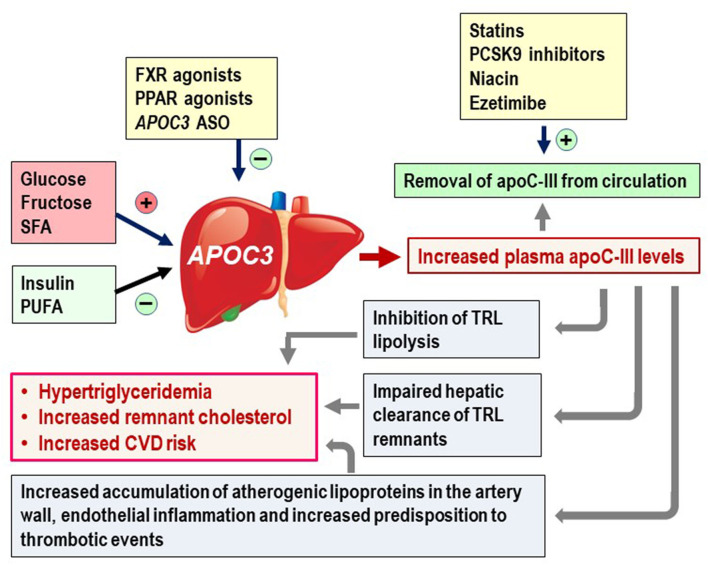
“The transcription rate of APOC3 is decreased by insulin (28, 29), peroxisome proliferator-activated receptor-α (PPARα) (30), and farnesoid X receptor (FXR) (Figure 1) (32).”
BackgroundInfluentialGraham, M. J., Lee, R. G., Bell, T. A., Fu, W., Mullick, A. E., Alexander, V. J., Singleton, W., Viney, N., Geary, R., Su, J., et al. (2013) · Circulation Research · doi:10.1161/circresaha.111.300367 · Cited by 377 · cited 2×
“However, suppression of apoC3 expression in mice using an ASO did not influence VLDL secretion (62), and results from kinetic studies in humans are still lacking.”
BackgroundMode of Action of Peroxisome Proliferators as Hypolipidemic Drugs.
Hertz, R., Bishara-Shieban, J., & Bar‐Tana, J. (1995) · Journal of Biological Chemistry · doi:10.1074/jbc.270.22.13470 · Cited by 340 · cited 4×
“Even less has been reported on how PPARγ agonists (pioglitazone, rosiglitazone) affect apoCIII metabolism (34, 132).”
BackgroundInfluentialHuman knockouts and phenotypic analysis in a cohort with a high rate of consanguinity
Saleheen, D., Natarajan, P., Armean, I. M., Zhao, W., Rasheed, A., Khetarpal, S. A., Won, H.-H., Karczewski, K. J., O’Donnell-Luria, A. H., Samocha, K. E., et al. (2017) · Nature · doi:10.1038/nature22034 · Cited by 340 · cited 3×
“As expected, the homozygotes APOC3 LOF carriers had low very plasma apoC-III levels and markedly blunted postprandial triglyceride responses (106).”
BackgroundInfluentialBorén, J., Olin, K., Lee, I., Chait, A., Wight, T. N., & Innerarity, T. L. (1998) · Journal of Clinical Investigation · doi:10.1172/jci2265 · Cited by 331 · cited 1×
“This is mediated by ionic interactions between positively charged domains in apoB100 (74), and negatively charged artery wall proteoglycans (75).”
BackgroundSelf-citationSchissel, S. L., Jiang, X., Tweedie-Hardman, J., Jeong, T., Hurt‐Camejo, E., Najïb, J., Rapp, J. H., Williams, K. J., & Tabas, I. A. (1998) · Journal of Biological Chemistry · doi:10.1074/jbc.273.5.2738 · Cited by 322 · cited 2×
“Thus, apoC-III may promote proatherogenicmodification of retained LDL in the artery wall, and induce inflammatory responses (86, 89).”
BackgroundFoxo1 mediates insulin action on apoC-III and triglyceride metabolism
Altomonte, J., Lin, C., Harbaran, S., Richter, A. M., Xu, J., Meseck, M. L., & Dong, H. H. (2004) · Journal of Clinical Investigation · doi:10.1172/jci19992 · Cited by 312 · cited 1×
“The transcription rate of APOC3 is decreased by insulin (28, 29), peroxisome proliferator-activated receptor-α (PPARα) (30), and farnesoid X receptor (FXR) (Figure 1) (32).”
BackgroundDietary Fructose and the Metabolic Syndrome
Taskinen, M., Packard, C. J., & Borén, J. (2019) · Nutrients · doi:10.3390/nu11091987 · Cited by 310 · cited 1×
“Fructose induced not only increased expression of APOC3 (111, 113), but also increased hepatic de novo lipogenesis of fatty acids that is an important initiator of NAFLD and overproduction of triglyceride-rich VLDL1 particles (43, 61, 118– 122).”
BackgroundSelf-citationKawakami, A., Aikawa, M., Alcaide, P., Luscinskas, F. W., Libby, P., & Sacks, F. M. (2006) · Circulation · doi:10.1161/circulationaha.106.622514 · Cited by 305 · cited 1×
“ApoCIII has also been shown to directly activate adhesion molecules and proinflammatory responses in monocytes and endothelial cells (Figure 1) (90, 91).”
BackgroundApolipoprotein C-III: understanding an emerging cardiovascular risk factor
Ooi, E. M. M., Barrett, P. H. R., Chan, D. C., & Watts, G. F. (2008) · Clinical Science · doi:10.1042/cs20070308 · Cited by 282
Farnesoid X receptor agonists suppress hepatic apolipoprotein CIII expression
Claudel, T., Inoue, Y., Barbier, O., Durán-Sandoval, D., Kosykh, V., Fruchart, J., Fruchart, J., Gonzalez, F. J., & Staels, B. (2003) · Gastroenterology · doi:10.1016/s0016-5085(03)00896-5 · Cited by 279 · cited 3×
“The transcription rate of APOC3 is decreased by insulin (28, 29), peroxisome proliferator-activated receptor-α (PPARα) (30), and farnesoid X receptor (FXR) (Figure 1) (32).”
BackgroundOverproduction of VLDL 1 Driven by Hyperglycemia Is a Dominant Feature of Diabetic Dyslipidemia
Adiels, M., Borén, J., CASLAKE, M. J., Stewart, P., Soro, A., Westerbacka, J., Wennberg, B., Olofsson, S., Packard, C. J., & Taskinen, M. (2005) · Arteriosclerosis Thrombosis and Vascular Biology · doi:10.1161/01.atv.0000172689.53992.25 · Cited by 275
Self-citationSchwarz, J., Noworolski, S. M., Erkin‐Cakmak, A., Korn, N. J., Wen, M., Tai, V., Jones, G. M., Palii, S. P., Velasco-Alin, M., Pan, K. D. H., et al. (2017) · Gastroenterology · doi:10.1053/j.gastro.2017.05.043 · Cited by 275 · cited 1×
“For example, fructose-enriched diets have been shown to induce several cardiometabolic risk factors including increased apoC-III plasma levels (111–113) and fructose restriction has been shown to lower plasma apoC-III (112, 114).”
BackgroundApoC-III inhibits clearance of triglyceride-rich lipoproteins through LDL family receptors
Gordts, P. L. S. M., Nock, R., Son, N.-H., Ramms, B., Lew, I., Gonzales, J. C., Thacker, B. E., Basu, D., Lee, R. G., Mullick, A. E., et al. (2016) · Journal of Clinical Investigation · doi:10.1172/jci86610 · Cited by 274 · cited 1×
“Recent results indicate that LDLR and LRPl are involved, since apoC-III ASO treatment in LDLR/LRP1 deficient mice did not lower plasma TG levels (65).”
ResultStanhope, K. L., Medici, V., Bremer, A. A., Lee, V., Lam, H. D., Nunez, M. V., Chen, G. X., Keim, N. L., & Havel, P. J. (2015) · The American Journal of Clinical Nutrition · doi:10.3945/ajcn.114.100461 · Cited by 270 · cited 1×
“For example, fructose-enriched diets have been shown to induce several cardiometabolic risk factors including increased apoC-III plasma levels (111–113) and fructose restriction has been shown to lower plasma apoC-III (112, 114).”
BackgroundFoxo1 mediates insulin action on apoC-III and triglyceride metabolism
Altomonte, J., Lin, C., Harbaran, S., et al. (2004) · Journal of Clinical Investigation · doi:10.1172/jci200419992 · Cited by 260
Alexander, V. J., Xia, S., Hurh, E., Hughes, S. G., O’Dea, L., Geary, R. S., Witztum, J. L., & Tsimikas, S. (2019) · European Heart Journal · doi:10.1093/eurheartj/ehz209 · Cited by 231 · cited 1×
“Results showed 89% in reduction in apoC-III levels, and 66% reduction in plasma triglycerides (145).”
BackgroundZheng, C., Khoo, C., Furtado, J., & Sacks, F. M. (2010) · Circulation · doi:10.1161/circulationaha.109.875807 · Cited by 223 · cited 1×
“Further, metabolic studies in hypertriglyceridemic subjects have shown that the removal of TRL particles from the circulation is impaired if they are enriched in apoC-III (49).”
BackgroundNagashima, K., Lopez, C., Donovan, D., Ngai, C., Fontanez, N., Bensadoun, A., Fruchart-Najib, J., Holleran, S., Cohn, J. S., Ramakrishnan, R., et al. (2005) · Journal of Clinical Investigation · doi:10.1172/jci200523219 · Cited by 201
Ebara, T., Ramakrishnan, R., Steiner, G. A., & Shachter, N. S. (1997) · Journal of Clinical Investigation · doi:10.1172/jci119456 · Cited by 195
Alaupovic, P., Mack, W. J., Knight‐Gibson, C., & Hodis, H. N. (1997) · Arteriosclerosis Thrombosis and Vascular Biology · doi:10.1161/01.atv.17.4.715 · Cited by 184
Chen, M., Breslow, J. L., Li, W., & Leff, T. (1994) · Journal of Lipid Research · doi:10.1016/s0022-2275(20)39938-7 · Cited by 183
Apolipoprotein C-III: from pathophysiology to pharmacology
Norata, G. D., Tsimikas, S., Pirillo, A., & Catapano, A. L. (2015) · Trends in Pharmacological Sciences · doi:10.1016/j.tips.2015.07.001 · Cited by 182
Ruuth, M., Nguyen, S. D., Vihervaara, T., Hilvo, M., Laajala, T. D., Kondadi, P. K., Gisterå, A., Lähteenmäki, H., Kittilä, T., Huusko, J., et al. (2018) · European Heart Journal · doi:10.1093/eurheartj/ehy319 · Cited by 180 · cited 1×
“Thus, apoC-III may promote proatherogenicmodification of retained LDL in the artery wall, and induce inflammatory responses (86, 89).”
BackgroundSelf-citationLarsson, M., Vorrsjö, E., Talmud, P. J., Lõokene, A., & Olivecrona, G. (2013) · Journal of Biological Chemistry · doi:10.1074/jbc.m113.495366 · Cited by 176
Lee, S.-J., Campos, H., Moye, L. A., & Sacks, F. M. (2003) · Arteriosclerosis, Thrombosis, and Vascular Biology · doi:10.1161/01.atv.0000066131.01313.eb · Cited by 170 · cited 1×
“In diabetic subjects, those with LDL with the highest apoC-III content have a six-fold higher relative risk of new coronary events compared to those with LDL with lowest apoC-III content (3).”
BackgroundDigenio, A., Dunbar, R. L., Alexander, V. J., Hompesch, M., Morrow, L., Lee, R. G., Graham, M. J., Hughes, S. G., Yu, R., Singleton, W., et al. (2016) · Diabetes Care · doi:10.2337/dc16-0126 · Cited by 170 · cited 1×
“Volanesorsen has also been shown to successfully improved diabetic dyslipidaemia by reducing both apoC-III (−88%) and plasma TG (−69%) in 15 overweight or obese subjects with type 2 diabetes (144).”
BackgroundMolecular processes that handle — and mishandle — dietary lipids
Williams, K. J. (2008) · Journal of Clinical Investigation · doi:10.1172/jci35206 · Cited by 169 · cited 2×
“Recent results indicate that LDLR and LRPl are involved, since apoC-III ASO treatment in LDLR/LRP1 deficient mice did not lower plasma TG levels (65).”
BackgroundSacks, F. M. (2015) · Current Opinion in Lipidology · doi:10.1097/mol.0000000000000146 · Cited by 168 · cited 3×
“The principal ligand on the remnant particles is apoE, and by displacing this protein from the lipoprotein particle surface (66), apoC-III effectively impairs the clearance of remnants (71).”
BackgroundCaron, S., Verrijken, A., Mertens, I. L., Samanez, C. H., Mautino, G., Haas, J. T., Duran-Sandoval, D., Prawitt, J., Francque, S., Vallez, E., et al. (2010) · Arteriosclerosis Thrombosis and Vascular Biology · doi:10.1161/atvbaha.110.220723 · Cited by 168 · cited 2×
“In contrast, glucose stimulates expression of APOC3 via hepatic nuclear factor-4 (HNF4) and carbohydrate-responsive element binding protein (ChREBP) (41).”
BackgroundSelf-citationOscarsson, J., & Hurt-Camejo, E. (2017) · Lipids in Health and Disease · doi:10.1186/s12944-017-0541-3 · Cited by 158
Willems van Dijk, K., Rensen, P. C., Voshol, P. J., & Havekes, L. M. (2004) · Current Opinion in Lipidology · doi:10.1097/00041433-200406000-00002 · Cited by 154 · cited 1×
“APOC3 is expressed in hepatocytes and, to a lesser extent in enterocytes (11).”
BackgroundMolecular basis of exchangeable apolipoprotein function
Narayanaswami, V., & Ryan, R. O. (2000) · Biochimica et Biophysica Acta (BBA) - Molecular and Cell Biology of Lipids · doi:10.1016/s1388-1981(99)00176-6 · Cited by 152 · cited 1×
“The principal ligand on the remnant particles is apoE, and by displacing this protein from the lipoprotein particle surface (66), apoC-III effectively impairs the clearance of remnants (71).”
BackgroundFatty liver, insulin resistance, and dyslipidemia
Adiels, M., Taskinen, M., & Borén, J. (2008) · Current Diabetes Reports · doi:10.1007/s11892-008-0011-4 · Cited by 147
Self-citationHiukka, A., Ståhlman, M., Pettersson, C., Levin, M. C., Adiels, M., Teneberg, S., Leinonen, E. S., Hultén, L. M., Wiklund, O., Orešič, M., et al. (2009) · Diabetes · doi:10.2337/db09-0206 · Cited by 141
Self-citationÖörni, K., Hakala, J. K., Annila, A., Ala‐Korpela, M., & Kovanen, P. T. (1998) · Journal of Biological Chemistry · doi:10.1074/jbc.273.44.29127 · Cited by 137 · cited 1×
“This modification promotes both fusion and aggregation of the retained LDL (85, 86), as well as release of proinflammatory metabolites including arachidonic acid (87).”
BackgroundJong, M. C., Rensen, P. C. N., Dahlmans, V. E. H., van der Boom, H., van Berkel, T. J. C., & Havekes, L. M. (2001) · Journal of Lipid Research · doi:10.1016/s0022-2275(20)32211-2 · Cited by 136
Wyler von Ballmoos, M. C., Haring, B., & Sacks, F. M. (2015) · Journal of Clinical Lipidology · doi:10.1016/j.jacl.2015.05.002 · Cited by 134
Flood, C., Gustafsson, M. V., Pitas, R. E., Arnaboldi, L., Walzem, R. L., & Borén, J. (2004) · Arteriosclerosis Thrombosis and Vascular Biology · doi:10.1161/01.atv.0000117174.19078.85 · Cited by 125 · cited 1×
“Thus, the altered lipid composition in apoCIII-enriched LDL may induce conformational changes in apoB100 that are more favorable for proteoglycan binding (52, 82, 83).”
BackgroundSelf-citationTaskinen, M., Söderlund, S., Bogl, L. H., Hakkarainen, A., Matikainen, N., Pietiläinen, K. H., Räsänen, S., Lundbom, N. M. I., Björnson, E., Eliasson, B., et al. (2017) · Journal of Internal Medicine · doi:10.1111/joim.12632 · Cited by 122 · cited 1×
“Fructose induced not only increased expression of APOC3 (111, 113), but also increased hepatic de novo lipogenesis of fatty acids that is an important initiator of NAFLD and overproduction of triglyceride-rich VLDL1 particles (43, 61, 118– 122).”
BackgroundSelf-citationKohan, A. B. (2015) · Current Opinion in Endocrinology Diabetes and Obesity · doi:10.1097/med.0000000000000136 · Cited by 116
Fagerberg, B., Edwards, S., Halmos, T., Łopatyński, J., Schuster, H., Stender, S., Birketvedt, G. S., Tonstad, S., Halldórsdóttir, S., & Gause‐Nilsson, I. A. M. (2005) · Diabetologia · doi:10.1007/s00125-005-1846-8 · Cited by 115
Olin-Lewis, K., Krauss, R. M., La Belle, M., Blanche, P. J., Barrett, P. H. R., Wight, T. N., & Chait, A. (2002) · Journal of Lipid Research · doi:10.1194/jlr.m200322-jlr200 · Cited by 114
Wulff, A. B., Nordestgaard, B. G., & Tybjærg‐Hansen, A. (2018) · Arteriosclerosis Thrombosis and Vascular Biology · doi:10.1161/atvbaha.117.310473 · Cited by 113
Alaupovic, P. (1996) · Methods in enzymology on CD-ROM/Methods in enzymology · doi:10.1016/s0076-6879(96)63004-3 · Cited by 109
Chapman, M. J., Ginsberg, H. N., Amarenco, P., Andreotti, F., Borén, J., Catapano, A. L., Descamps, O. S., Fisher, E. A. A., Kovanen, P. T., Kuivenhoven, J. A., et al. (2011) · Atherosclerosis Supplements · doi:10.1016/s1567-5688(11)70033-2 · Cited by 108
Self-citationApolipoprotein C-III in triglyceride-rich lipoprotein metabolism
Ramms, B., & Gordts, P. L. S. M. (2018) · Current Opinion in Lipidology · doi:10.1097/mol.0000000000000502 · Cited by 107 · cited 5×
“Recent results indicate that LDLR and LRPl are involved, since apoC-III ASO treatment in LDLR/LRP1 deficient mice did not lower plasma TG levels (65).”
BackgroundInfluentialIncreased apolipoprotein C3 drives cardiovascular risk in type 1 diabetes
Kanter, J. E., Shao, B., Kramer, F., Barnhart, S., Shimizu‐Albergine, M., Vaisar, T., Graham, M. J., Crooke, R. M., Manuel, C. R., Haeusler, R. A., et al. (2019) · Journal of Clinical Investigation · doi:10.1172/jci127308 · Cited by 105 · cited 3×
“Thus, apoCIII seems to drive accelerate the CVD risk both in T2DM and T1DM (54).”
BackgroundKawakami, A., Aikawa, M., Nitta, N., Yoshida, M., Libby, P., & Sacks, F. M. (2006) · Arteriosclerosis Thrombosis and Vascular Biology · doi:10.1161/01.atv.0000249620.68705.0d · Cited by 99
Effects of APOC3 Heterozygous Deficiency on Plasma Lipid and Lipoprotein Metabolism
Reyes-Soffer, G., Sztalryd, C., Horenstein, R. B., Holleran, S., Matveyenko, A., Thomas, T., Nandakumar, R., Ngai, C., Karmally, W., Ginsberg, H. N., et al. (2019) · Arteriosclerosis, Thrombosis, and Vascular Biology · doi:10.1161/atvbaha.118.311476 · Cited by 97 · cited 15×
“Clearance of plasma triglycerides is directly linked to the lipolysis of TRLs by lipoprotein lipase (LPL) which is attached to the capillary endothelium in adipose tissue, skeletal muscle and the heart (63).”
BackgroundInfluentialTachmazidou, I., Dedoussis, G. V., Southam, L., Farmaki, A., Ritchie, G. R. S., Xifara, D. K., Matchan, A., Hatzikotoulas, K., Rayner, N. W., Chen, Y., et al. (2013) · Nature Communications · doi:10.1038/ncomms3872 · Cited by 96 · cited 2×
“Carriers of the APOC3 null mutation R19X variant are rare Frontiers in Endocrinology | www.frontiersin.org 4 July 2020 | Volume 11 | Article 474 [0.08% in Americans (98) and 0.05% in Europeans (99)], but the R19X variant is enriched in the Amish population and in an isolated cohort on the island of Crete (100).”
BackgroundInfluentialHiukka, A., Fruchart‐Najib, J., Leinonen, E. S., Hilden, H., Fruchart, J., & Taskinen, M. (2005) · Diabetologia · doi:10.1007/s00125-005-1753-z · Cited by 96 · cited 1×
“That is, VLDL particles do not seem to be enriched with apoC-III (50, 51), (although it has been reported that there is an increased concentration of LDL particles carrying apoCIII in subjects with type 2 diabetes) (52).”
BackgroundSelf-citationTaskinen, M., & Borén, J. (2016) · Current Atherosclerosis Reports · doi:10.1007/s11883-016-0614-1 · Cited by 96 · cited 2×
“The hepatic APOC3 expression is induced by carbohydrates (glucose and fructose) and saturated fatty acid (SFA), and reduced by insulin and insulin and polyunsaturated fatty acid (PUFA) (18, 19, 31).”
BackgroundSelf-citationStructure and Dynamics of Human Apolipoprotein CIII
Gangabadage, C. S., Zdunek, J., Tessari, M., Nilsson, S., Olivecrona, G., & Wijmenga, S. S. (2008) · Journal of Biological Chemistry · doi:10.1074/jbc.m800756200 · Cited by 91 · cited 1×
“It encodes apoC-III, a smaller apolipoprotein of 79 amino acid residues (12).”
BackgroundDavidsson, P., Hulthe, J., Fagerberg, B., Olsson, B., Hallberg, C., Dahllöf, B., & Camejo, G. (2005) · Journal of Lipid Research · doi:10.1194/jlr.m500161-jlr200 · Cited by 88
Apolipoprotein CIII links islet insulin resistance to β-cell failure in diabetes
Åvall, K., Ali, Y., Leibiger, I. B., Leibiger, B., Moede, T., Paschen, M., Dicker, A., Daré, E., Köhler, M. G., Ilegems, E., et al. (2015) · Proceedings of the National Academy of Sciences · doi:10.1073/pnas.1423849112 · Cited by 82
Triglycerides, apo C3 and Lp B:C3 and cardiovascular risk in Type II diabetes
Gervaise, N., Garrigue, M. A., Lasfargues, G., & Lecomte, P. (2000) · Diabetologia · doi:10.1007/s001250051366 · Cited by 82
Maki, K. C., Bays, H. E., Dicklin, M. R., Johnson, S. L., & Shabbout, M. (2011) · Journal of Clinical Lipidology · doi:10.1016/j.jacl.2011.09.001 · Cited by 81 · cited 1×
“Omega-3 carboxylic acids (OM3CA) and polyunsaturated fatty acids have also been shown to reduce plasma apoC-III by 20–30% (125, 135, 136).”
BackgroundMann, C. J., Troussard, A. A., Yen, F. T., Hannouche, N., Najïb, J., Fruchart, J., Lotteau, V., André, P., & Bihain, B. E. (1997) · Journal of Biological Chemistry · doi:10.1074/jbc.272.50.31348 · Cited by 81 · cited 15×
“Clearance of plasma triglycerides is directly linked to the lipolysis of TRLs by lipoprotein lipase (LPL) which is attached to the capillary endothelium in adipose tissue, skeletal muscle and the heart (63).”
BackgroundInfluentialAn abnormal triglyceride-rich lipoprotein containing excess sialylated apolipoprotein C-III.
Holdsworth, G., Stocks, J., Dodson, P. M., & Galton, D. J. (1982) · Journal of Clinical Investigation · doi:10.1172/jci110532 · Cited by 80 · cited 2×
“This form of the protein is chiefly excreted by the kidney (46).”
BackgroundRegulation of Hepatic ApoC3 Expression by PGC-1β Mediates Hypolipidemic Effect of Nicotinic Acid
Hernandez, C., Molusky, M. M., Li, Y., Li, S., & Lin, J. D. (2010) · Cell Metabolism · doi:10.1016/j.cmet.2010.09.001 · Cited by 79
Mechanism of lipoprotein retention by the extracellular matrix
Gustafsson, M., & Borén, J. (2004) · Current Opinion in Lipidology · doi:10.1097/00041433-200410000-00003 · Cited by 75
Self-citationRole of extracellular retention of low density lipoproteins in atherosclerosis
Borén, J., Gustafsson, M. V., Skålén, K., Flood, C., & Innerarity, T. L. (2000) · Current Opinion in Lipidology · doi:10.1097/00041433-200010000-00002 · Cited by 75
Self-citationCampos, H., Perlov, D., Khoo, C., & Sacks, F. M. (2001) · Journal of Lipid Research · doi:10.1016/s0022-2275(20)31574-1 · Cited by 73
Borén, J., Watts, G. F., Adiels, M., Söderlund, S., Chan, D. C., Hakkarainen, A., Lundbom, J., Lundbom, N., Matikainen, N., Kahri, J., et al. (2015) · Arteriosclerosis, Thrombosis, and Vascular Biology · doi:10.1161/atvbaha.115.305614 · Cited by 72
Self-citationYao, Z. (2012) · Cardiovascular & Haematological Disorders - Drug Targets · doi:10.2174/1871529x11202020133 · Cited by 70
Wolska, A. T., Lo, L., Sviridov, D. O., Pourmousa, M., Pryor, M., Ghosh, S. S., Kakkar, R. K., Davidson, M., Wilson, S. R., Pastor, R. W., et al. (2020) · Science Translational Medicine · doi:10.1126/scitranslmed.aaw7905 · Cited by 69
Segrest, J. P., Jones, M. K., Mishra, V., Pierotti, V., Young, S. G., Borén, J., Innerarity, T. L., & Dashti, N. (1998) · Journal of Lipid Research · doi:10.1016/s0022-2275(20)34206-1 · Cited by 68
Self-citationPlasma apolipoprotein C-III metabolism in patients with chronic kidney disease
Ooi, E. M. M., Chan, D. T., Watts, G. F., Chan, D. C., Ng, T. W., Dogra, G. K., Irish, A. B., & Barrett, P. H. R. (2011) · Journal of Lipid Research · doi:10.1194/jlr.m011163 · Cited by 66
Solà, R., Baudet, M. F., Motta, C., Maillé, M., Boisnier, C., & JACOTOT, B. (1990) · Biochimica et Biophysica Acta (BBA) - Lipids and Lipid Metabolism · doi:10.1016/0005-2760(90)90108-a · Cited by 65 · cited 1×
“The loss of these lipids, but not of phosphatidylcholine, likely affects the surface fluidity of the lipoprotein particle (81).”
BackgroundFurtado, J. D., Campos, H., Appel, L. J., Miller, E. R., Laranjo, N., Carey, V. J., & Sacks, F. M. (2008) · American Journal of Clinical Nutrition · doi:10.1093/ajcn/87.6.1623 · Cited by 60
ApoC-III ASO promotes tissue LPL activity in the absence of apoE-mediated TRL clearance
Ramms, B., Patel, S., Nora, C., Pessentheiner, A. R., Chang, M. W., Green, C. R., Golden, G. J., Secrest, P., Krauss, R. M., Metallo, C. M., et al. (2019) · Journal of Lipid Research · doi:10.1194/jlr.m093740 · Cited by 59 · cited 17×
“It appears that apoC-III can inhibit hepatic clearance of remnants by LPL-independent pathways (Figure 1) (69), possibly by interfering with the binding of apoB and apoE to hepatic lipoprotein receptors including HSPG, LDLR and LRPl (31, 70).”
BackgroundMethodInfluentialApolipoprotein C-II: the re-emergence of a forgotten factor
Wolska, A. T., Reimund, M., & Remaley, A. T. (2020) · Current Opinion in Lipidology · doi:10.1097/mol.0000000000000680 · Cited by 58
Koška, J., Yassine, H. N., Trenchevska, O., Sinari, S. A., Schwenke, D. C., Yen, F. T., Billheimer, D. D., Nelson, R. W., Nedelkov, D., & Reaven, P. D. (2016) · Journal of Lipid Research · doi:10.1194/jlr.p064816 · Cited by 56 · cited 1×
“The metabolic and clinical relevance of the three glycoforms of apoC-III has been unclear, but recent studies have shown that the monosialylated apoC-III1 correlates stronger with elevated plasma triglyceride levels than the disialylated apoC-III2 (55, 56), and that a higher apoC-III2/apoC-III1 ratio associated with l…”
BackgroundRole of apolipoprotein C-III overproduction in diabetic dyslipidaemia
Adiels, M., Taskinen, M., Björnson, E., Andersson, L., Matikainen, N., Söderlund, S., Kahri, J., Hakkarainen, A., Lundbom, N., Sihlbom, C., et al. (2019) · Diabetes, Obesity and Metabolism · doi:10.1111/dom.13744 · Cited by 55 · cited 4×
“These findings demonstrate that glucose homeostasis is an important regulator of apoC-III metabolism, and that the secretion rate of apoC-III is an important driver for the elevation of TRLs in subjects with type 2 diabetes (43).”
BackgroundResultInfluentialSelf-citationPavlic, M., Valéro, R., Duez, H., Xiao, C., Szeto, L., Patterson, B. W., & Lewis, G. F. (2008) · Arteriosclerosis Thrombosis and Vascular Biology · doi:10.1161/atvbaha.108.169383 · Cited by 53 · cited 2×
“Consumption of saturated fat has been reported to increase plasma apoC-III levels (42, 123), whereas intake of mono- and poly-unsaturated fat associate with reduced plasma apoC-III levels (Figure 1) (123).”
BackgroundChan, D. C., Watts, G. F., Ooi, E. M. M., Ji, J., Johnson, A. G., & Barrett, P. H. R. (2008) · Arteriosclerosis Thrombosis and Vascular Biology · doi:10.1161/atvbaha.108.170530 · Cited by 53
Hoff, H. F., O'Neil, J. C., Pepin, J. M., & Cole, T. B. (1990) · European Heart Journal · doi:10.1093/eurheartj/11.suppl_e.105 · Cited by 52 · cited 1×
“The aggregation of LDL may also drive an inflammatory response as aggregated LDL is a potent inducer of macrophage foam cell formation (88).”
BackgroundLipid binding by fragments of apolipoprotein C-III-1 obtained by thrombin cleavage
Sparrow, J. T., Pownall, H. J., Hsu, F. J., Blumenthal, L. D., Culwell, A. R., & Gotto, A. M. (1977) · Biochemistry · doi:10.1021/bi00644a004 · Cited by 52
Dunbar, R. L., Nicholls, S. J., Maki, K. C., Roth, E. M., Orloff, D. G., Curcio, D., Johnson, J., Kling, D., & Davidson, M. H. (2015) · Lipids in Health and Disease · doi:10.1186/s12944-015-0100-8 · Cited by 52
Dallinga‐Thie, G. M., Berk-Planken, I. I. L., Bootsma, A. H., Jansen, H., & on behalf of the Diabetes Atorvastatin Lipid Intervention (DALI) Study Group (2004) · Diabetes Care · doi:10.2337/diacare.27.6.1358 · Cited by 51
The Association of Human Apolipoprotein C-III Sialylation Proteoforms with Plasma Triglycerides
Yassine, H. N., Trenchevska, O., Ramrakhiani, A., Parekh, A., Koška, J., Walker, R. W., Billheimer, D. D., Reaven, P. D., Yen, F. T., Nelson, R. W., et al. (2015) · PLoS ONE · doi:10.1371/journal.pone.0144138 · Cited by 51 · cited 1×
“The metabolic and clinical relevance of the three glycoforms of apoC-III has been unclear, but recent studies have shown that the monosialylated apoC-III1 correlates stronger with elevated plasma triglyceride levels than the disialylated apoC-III2 (55, 56), and that a higher apoC-III2/apoC-III1 ratio associated with l…”
BackgroundLee, S.-J., Moye, L. A., Campos, H., Williams, G. H., & Sacks, F. M. (2003) · Atherosclerosis · doi:10.1016/s0021-9150(03)00007-8 · Cited by 50 · cited 1×
“That is, VLDL particles do not seem to be enriched with apoC-III (50, 51), (although it has been reported that there is an increased concentration of LDL particles carrying apoCIII in subjects with type 2 diabetes) (52).”
BackgroundReyes‐Soffer, G., Ngai, C. I., Lovato, L., Karmally, W., Ramakrishnan, R., Holleran, S., & Ginsberg, H. N. (2012) · Diabetes Care · doi:10.2337/dc11-2556 · Cited by 49
Trenchevska, O., Schaab, M. R., Nelson, R. W., & Nedelkov, D. (2015) · Methods · doi:10.1016/j.ymeth.2015.02.020 · Cited by 47 · cited 1×
“Once synthesized, apoC-III can undergo posttranslational modification on threonine-74 resulting in three different glycoforms; unsialylated apoC-III0, monosialylated apoC-III1 and disialylated apoC-III2 (26).”
BackgroundSahebkar, A., Simental‐Mendía, L. E., Mikhailidis, D. P., Pirro, M., Banach, M., Sirtori, C. R., & Reiner, Ž. (2018) · Annals of Medicine · doi:10.1080/07853890.2018.1511919 · Cited by 47
Huff, M. W., & Nestel, P. J. (1982) · Metabolism · doi:10.1016/0026-0495(82)90240-2 · Cited by 43
Liu, H., Labeur, C., Xu, C., Ferrell, R. E., Lins, L., Brasseur, R., Rosseneu, M., Weiss, K. M., Humphries, S. E., & Talmud, P. J. (2000) · Journal of Lipid Research · doi:10.1016/s0022-2275(20)31969-6 · Cited by 43
Jattan, J., Rodia, C. N., Li, D., Diakhate, A., Dong, H., Bataille, A. M., Shroyer, N. F., & Kohan, A. B. (2017) · Journal of Lipid Research · doi:10.1194/jlr.m071340 · Cited by 43 · cited 1×
“to result in the secretion of smaller chylomicrons and a reduced triglyceride secretion from the intestine (45).”
BackgroundNucleic Acid–Based Therapies for Atherosclerosis
Mäkinen, P. I., Ruotsalainen, A., & Ylä‐Herttuala, S. (2020) · Current Atherosclerosis Reports · doi:10.1007/s11883-020-0826-2 · Cited by 43 · cited 1×
“, the ligand of the hepatic asialoglycoprotein receptor), have enabled unprecendented fast translation of basic science to clinical intervention (141).”
BackgroundLiu, H., Talmud, P. J., Lins, L., Brasseur, R., Olivecrona, G., Peelman, F., Vandekerckhove, J. S., Rosseneu, M., & Labeur, C. (2000) · Biochemistry · doi:10.1021/bi0009441 · Cited by 42
Lipid-interacting properties of the N-terminal domain of human apolipoprotein C-III
Lins, L., Flore, C., Chapelle, L., Talmud, P. J., Thomas, A., & Brasseur, R. (2002) · Protein Engineering Design and Selection · doi:10.1093/protein/15.6.513 · Cited by 42
Ooi, E. M. M., Watts, G. F., Chan, D. C., Chen, M., Nestel, P. J., Sviridov, D., & Barrett, P. H. R. (2008) · Diabetes Care · doi:10.2337/dc08-0358 · Cited by 41 · cited 2×
“Also, nicotinic acid (niacin) (133) and statin therapy have been shown to reduce hepatic APOC3 expression through largely unknown mechanisms (38).”
BackgroundApoCIII-Lp(a) complexes in conjunction with Lp(a)-OxPL predict rapid progression of aortic stenosis
Capoulade, R., Torzewski, M., Mayr, M., Chan, K., Mathieu, P., Bossé, Y., Dumesnil, J. G., Tam, J. W., Teo, K. K., Burnap, S. A., et al. (2020) · Heart · doi:10.1136/heartjnl-2019-315840 · Cited by 41 · cited 2×
“recently reported that apoC-III is present on lipoprotein (a) (Lp(a) particles in the circulation and in the aortic valve leaflets (94).”
BackgroundLemieux, I., Salomon, H., & Després, J. (2003) · Annals of Medicine · doi:10.1080/07853890310011969 · Cited by 40
The role of antisense oligonucleotide therapy against apolipoprotein-CIII in hypertriglyceridemia
Gouni‐Berthold, I. (2017) · Atherosclerosis Supplements · doi:10.1016/j.atherosclerosissup.2017.05.003 · Cited by 40 · cited 1×
“Development of novel technologies including ASOs, siRNAs and monoclonal antibodies (137, 138), as well as improved targeting methods (139, 140), including use of N-acetyl galactosamine-conjugated (GalNAc) adducts (i.”
BackgroundSundaram, M., Curtis, K. R., Alipour, M. A., LeBlond, N. D., Margison, K. D., Yaworski, R., Parks, R. J., McIntyre, A. D., Hegele, R. A., Fullerton, M. D., et al. (2017) · Journal of Lipid Research · doi:10.1194/jlr.m077313 · Cited by 40 · cited 1×
“The heterozygote APOC3 LOF mutation Ala43Thr variant has also been associated with impaired lipidation of nascent VLDL particles during their hepatic assembly (103).”
BackgroundReeskamp, L. F., Tromp, T. R., & Stroes, E. S. G. (2020) · Current Opinion in Lipidology · doi:10.1097/mol.0000000000000679 · Cited by 40 · cited 1×
“However, there are some concerns as the treatment has shown less marked response on apoB reduction, than for example suppression of ANGPTL3 that seems to reduce plasma apoB levels more efficiently (148).”
BackgroundKhoo, C., Campos, H., Judge, H., & Sacks, F. M. (1999) · Journal of Lipid Research · doi:10.1016/s0022-2275(20)33358-7 · Cited by 37
Mendoza, S., Trenchevska, O., King, S. M., Nelson, R., Nedelkov, D., Krauss, R., & Yassine, H. N. (2016) · Journal of Clinical Lipidology · doi:10.1016/j.jacl.2016.12.009 · Cited by 37 · cited 1×
“It has also been shown that the relative abundances of apoC-III0 and apoC-III1, but not apoC-III2, are associated with lower triglyceride levels after weight loss or diet intervention (57).”
BackgroundShin, M., Blanche, P. J., Rawlings, R. S., Fernstrom, H. A., & Krauss, R. M. (2007) · American Journal of Clinical Nutrition · doi:10.1093/ajcn/85.6.1527 · Cited by 36
Effects of dietary saturated fat on LDL subclasses and apolipoprotein CIII in men
Faghihnia, N., Mangravite, L. M., Chiu, S., Bergeron, N., & Krauss, R. M. (2012) · European Journal of Clinical Nutrition · doi:10.1038/ejcn.2012.118 · Cited by 36 · cited 1×
“Consumption of saturated fat has been reported to increase plasma apoC-III levels (42, 123), whereas intake of mono- and poly-unsaturated fat associate with reduced plasma apoC-III levels (Figure 1) (123).”
BackgroundCrawford, D. C., Dumitrescu, L. C., Goodloe, R., Brown-Gentry, K. D., Boston, J., McClellan, B., Sutcliffe, C. B., Wiseman, R., Baker, P. G., Pericak‐Vance, M. A., et al. (2014) · Circulation Cardiovascular Genetics · doi:10.1161/circgenetics.113.000369 · Cited by 36
Kegulian, N. C., Ramms, B., Horton, S. B., Trenchevska, O., Nedelkov, D., Graham, M. J., Lee, R. G., Esko, J. D., Yassine, H. N., & Gordts, P. L. S. M. (2019) · Arteriosclerosis Thrombosis and Vascular Biology · doi:10.1161/atvbaha.119.312723 · Cited by 36 · cited 1×
“The impact of this posttranslational modification has for long been unclear, but recent results indicate that the glycoforms are cleared differently by liver receptors (27).”
ResultImplementing a successful data-management framework: the UK10K managed access model
Muddyman, D., Smee, C., Griffin, H., Kaye, J. S., & the UK10K Project (2013) · Genome Medicine · doi:10.1186/gm504 · Cited by 35
Dietary fructose and dyslipidemia: new mechanisms involving apolipoprotein CIII
Hieronimus, B., & Stanhope, K. L. (2019) · Current Opinion in Lipidology · doi:10.1097/mol.0000000000000653 · Cited by 33
Morton, A. M., Furtado, J. D., Lee, J., Amerine, W., Davidson, M. H., & Sacks, F. M. (2016) · Journal of clinical lipidology · doi:10.1016/j.jacl.2016.09.005 · Cited by 32 · cited 2×
“Also, omega3 polyunsaturated fatty acids have been reported to decrease plasma apoC-III levels (124, 125).”
BackgroundSchuster, H., Fagerberg, B., Edwards, S., Halmos, T., Łopatyński, J., Stender, S., Birketvedt, G. S., Tonstad, S., Gause‐Nilsson, I. A. M., Halldórsdóttir, S., et al. (2007) · Atherosclerosis · doi:10.1016/j.atherosclerosis.2007.05.029 · Cited by 31
Overexpression of apolipoprotein C-III decreases secretion of dietary triglyceride into lymph
Fei, W., Kohan, A. B., Dong, H. H., Yang, Q., Xu, M., Huesman, S., Lou, D., Hui, D. Y., & Tso, P. (2014) · Physiological Reports · doi:10.1002/phy2.247 · Cited by 31 · cited 1×
“Intriguingly, overexpression of apoC-III has been shown to decrease intestinal secretion of dietary triglycerides into lymph due to impaired lipid uptake into enterocytes, and impaired esterification capacity to form triglyceride in the mucosa (44).”
BackgroundWagner, J. A., Larson, P., Weiss, S., Miller, J., Doebber, T. W., Wu, M., Moller, D. E., & Gottesdiener, K. M. (2005) · The Journal of Clinical Pharmacology · doi:10.1177/0091270004273136 · Cited by 30
Aromatic residues in the C terminus of apolipoprotein C-III mediate lipid binding and LPL inhibition
Meyers, N. L., Larsson, M., Vorrsjö, E., Olivecrona, G., & SMALL, D. M. (2017) · Journal of Lipid Research · doi:10.1194/jlr.m071126 · Cited by 30 · cited 14×
“Clearance of plasma triglycerides is directly linked to the lipolysis of TRLs by lipoprotein lipase (LPL) which is attached to the capillary endothelium in adipose tissue, skeletal muscle and the heart (63).”
BackgroundInfluentialOestvang, J., Bonnefont‐Rousselot, D., Ninio, E., Hakala, J. K., Johansen, B., & Anthonsen, M. W. (2004) · Journal of Lipid Research · doi:10.1194/jlr.m300310-jlr200 · Cited by 29 · cited 1×
“This modification promotes both fusion and aggregation of the retained LDL (85, 86), as well as release of proinflammatory metabolites including arachidonic acid (87).”
BackgroundMartinelli, N., Baroni, M., Castagna, A., Lunghi, B., Stefanoni, F., Tosi, F., Croce, J., Udali, S., Woodhams, B. J., Girelli, D., et al. (2019) · Thrombosis and Haemostasis · doi:10.1055/s-0038-1676817 · Cited by 27 · cited 1×
“In addition, apoC-III levels have also been shown to strongly correlate with plasma levels of activated factor VII-anti-thrombin (FVIIa-AT) complex, a biomarker for increased predisposition to thrombotic events (Figure 1); a strong association was found in both sexes, regardless of whether or not there had been a prio…”
BackgroundTwo novel mutations in apolipoprotein C3 underlie atheroprotective lipid profiles in families
Bochem, A. E., van Capelleveen, J. C., Dallinga‐Thie, G. M., Schimmel, A. W. M., Motazacker, M. M., Tietjen, I., Singaraja, R. R., Hayden, M. R., Kastelein, J. J. P., Stroes, E. S. G., et al. (2013) · Clinical Genetics · doi:10.1111/cge.12201 · Cited by 26 · cited 1×
“Heterozygote LOF mutations in APOC3 have also been shown to associate with high HDL-cholesterol in addition to low plasma triglycerides (101, 102).”
BackgroundIncreasing Lipolysis and Reducing Atherosclerosis
Tall, A. R. (2017) · New England Journal of Medicine · doi:10.1056/nejme1706907 · Cited by 26
Hieronimus, B., Griffen, S. C., Keim, N. L., Bremer, A. A., Berglund, L., Nakajima, K., Havel, P. J., & Stanhope, K. L. (2019) · Journal of Clinical Medicine · doi:10.3390/jcm8070913 · Cited by 26
Hydrolysis of phospholipids by purified milk lipoprotein lipase
Lambert, D., Smith, L. C., Pownall, H. J., Sparrow, J. T., Nicolas, J., & Gotto, A. M. (2000) · Clinica Chimica Acta · doi:10.1016/s0009-8981(99)00193-x · Cited by 25
Retention of atherogenic lipoproteins in atherogenesis
Gustafsson, M. V., Flood, C., Jirholt, P., & Bor�n, J. (2004) · Cellular and Molecular Life Sciences · doi:10.1007/s00018-003-3262-x · Cited by 25
Self-citationBroad Views of Non-alcoholic Fatty Liver Disease
Mardinoğlu, A., Uhlén, M., & Borén, J. (2018) · Cell Systems · doi:10.1016/j.cels.2018.01.004 · Cited by 25
Self-citationSahebkar, A., Simental‐Mendía, L. E., Mikhailidis, D. P., Pirro, M., Banach, M., Sirtori, C. R., Ruscica, M., & Reiner, Ž. (2018) · Journal of clinical lipidology · doi:10.1016/j.jacl.2018.01.008 · Cited by 25
de Man, F. H. A. F., de Beer, F., van der Laarse, A., Jansen, H., Leuven, J. A. G., Souverijn, J. H. M., Vroom, T. F. F. P., Schoormans, S. C. M., Fruchart, J., Havekes, L. M., et al. (2000) · Atherosclerosis · doi:10.1016/s0021-9150(00)00409-3 · Cited by 21
Archer, W. R., Desroches, S., Lamarche, B., Dériaz, O., Landry, N., Fontaine‐Bisson, B., Bergeron, J., Couture, P., & Bergeron, N. (2005) · Metabolism · doi:10.1016/j.metabol.2005.05.004 · Cited by 19
HDL-associated apoCIII plays an independent role in predicting postprandial hypertriglyceridemia
Zhang, T., Tang, X., Mao, L., Chen, J., Kuang, J., Guo, X., Xu, D., Peng, D., & Yu, B. (2020) · Clinical Biochemistry · doi:10.1016/j.clinbiochem.2020.02.004 · Cited by 17 · cited 1×
“In line, also apoCIII-enriched HDL display altered lipid composition, with changes in triglycerides, unesterified cholesterol, free cholesterol, phospholipid and apoAI (84).”
BackgroundAttia, N., Durlach, V., Cambilleau, M., Roche, D., & Girard-Globa, A. (2000) · Atherosclerosis · doi:10.1016/s0021-9150(99)00337-8 · Cited by 14
Gelrud, A., DIGENIO, A. G., Alexander, V. J., Williams, K. R., Hsieh, A., Gouni‐Berthold, I., Bruckert, É., Stroes, E. S. G., Geary, R. S., Hughes, S. G., et al. (2018) · Journal of clinical lipidology · doi:10.1016/j.jacl.2018.03.032 · Cited by 14 · cited 1×
“It is therefore promising that acute pancreatitis were markedly less in hypertriglyceridemic patients treated with volanesorsen than in the placebo group (143).”
BackgroundDual apoC-II mimetic and apoC-III antagonist for hypertriglyceridaemia
Huynh, K. (2020) · Nature Reviews Cardiology · doi:10.1038/s41569-020-0351-6 · Cited by 10 · cited 1×
“Thus, the results are encouraging but the project is still in early development (147).”
BackgroundOlivieri, O., Cappellari, M., Turcato, G., Bonetti, B., Girelli, D., Pizzolo, F., Friso, S., Bassi, A., Castagna, A., & Martinelli, N. (2019) · Stroke · doi:10.1161/strokeaha.119.026811 · Cited by 8 · cited 1×
“recently reported that high plasma apoC-III levels predict an increased risk of ischemic stroke/transient ischemic attack (TIA) events in cardiovascular patients (95).”
BackgroundIs APOC3 the driver of cardiovascular disease in people with type I diabetes mellitus?
Ginsberg, H. N., & Reyes‐Soffer, G. (2019) · Journal of Clinical Investigation · doi:10.1172/jci131333 · Cited by 7 · cited 1×
“Also, using two mouse models of T1DM, the authors observed that slowly catabolized lipoproteins, enriched in apoC-III and apoE, may be particularly atherogenic (53, 54).”
Cited by
Sorted by citations
Metabolism of triglyceride-rich lipoproteins in health and dyslipidaemia
Borén, J., Taskinen, M.-R., Björnson, E., & Packard, C. J. (2022) · Nature Reviews Cardiology · doi:10.1038/s41569-022-00676-y · Cited by 315
Self-citationOlezarsen, Acute Pancreatitis, and Familial Chylomicronemia Syndrome
Stroes, E. S. G., Alexander, V. J., Karwatowska-Prokopczuk, E., Hegele, R. A., Arca, M., Ballantyne, C. M., Soran, H., Prohaska, T. A., Xia, S., Ginsberg, H. N., et al. (2024) · New England Journal of Medicine · doi:10.1056/nejmoa2400201 · Cited by 271
Saturated fats and cardiovascular health: Current evidence and controversies
Maki, K. C., Dicklin, M. R., & Kirkpatrick, C. F. (2021) · Journal of clinical lipidology · doi:10.1016/j.jacl.2021.09.049 · Cited by 233
Glavinovic, T., Thanassoulis, G., Graaf, J. D., Couture, P., Hegele, R. A., & Sniderman, A. D. (2022) · Journal of the American Heart Association · doi:10.1161/jaha.122.025858 · Cited by 182
Apolipoprotein B-containing lipoproteins in atherogenesis
Borén, J., Packard, C. J., & Binder, C. J. (2025) · Nature Reviews Cardiology · doi:10.1038/s41569-024-01111-0 · Cited by 110
Self-citation
Metadata
- Authors
- Borén, J., Packard, C. J., & Taskinen, M.-R.
- Affiliations
- University of Gothenburg (SE)
- University of Glasgow (GB)
- University of Helsinki (FI)
- Corresponding author
- Borén, Jan
- Venue
- Frontiers in Endocrinology
- Publisher
- Frontiers Media SA
- Published
- 2020-07-28
- Volume
- 11
- Pages
- 474-474
- ISSN
- 1664-2392 (ISSN-L)
- PMC
- PMC7399058
- OpenAlex
- W3045911834
- Cited by
- 196
- References
- 149
- Citations by year
- 2026: 46 · 2025: 35 · 2024: 30 · 2023: 32 · 2022: 35 · 2021: 17 · 2020: 1
- FWCI
- 3.61
- Type
- journal article
- Language
- en
- Open access
- gold
- doi.org
- Licence
- Locations
- Frontiers in Endocrinology (publishedVersion, cc-by)
- PubMed Central (publishedVersion, cc-by)
- PubMed (publishedVersion)
- DOAJ (DOAJ: Directory of Open Access Journals) (submittedVersion, cc-by-sa)
- Työväentutkimus Vuosikirja (submittedVersion)
- Funders
- Vetenskapsrådet
- Hjärt-Lungfonden
- Topics
- Health Sciences › Medicine › Cardiology and Cardiovascular Medicine › Lipid metabolism and disorders
- Health Sciences › Medicine › Cardiology and Cardiovascular Medicine › Lipoproteins and Cardiovascular Health
- Health Sciences › Medicine › Endocrinology, Diabetes and Metabolism › Diabetes, Cardiovascular Risks, and Lipoproteins
- Keywords
- apolipoprotein C-III, triglyceride-rich lipoproteins, triglyceride metabolism, cardiovascular disease, dyslipidemia, plasma triglycerides, atherogenic lipoproteins, triglyceride transport, obesity, insulin resistance
- MeSH terms
- Cardiovascular Diseases, Humans, Lipoproteins, Triglycerides, Atherosclerosis, Lipid Metabolism, Apolipoprotein C-III
About these checks
Registry, retraction, Cites and statistics results are computed, not judged, with one exception: a printed reference that no index lists is read once by a model before it counts as a citation error. Claims are extracted by a model and kept only when their quote appears verbatim in the text; each cited source is then checked, with a model’s help, for whether it says what the claim relies on. Those verdicts can be wrong — read the claim’s quote and the cited source before relying on one.
Statistics and arithmetic are recomputed, not judged.
Confidence bands are shown only for fields calibrated on our annotated test set. None is calibrated yet, so no band is shown.
What counts as a claim ›How we measure confidence ›How we check this ›
Are you an author, or do you see a problem with this page? Request a review
