

The DOI matches its Crossref record; 423 of the 429 references it cites were found in a registry or an index.
Cancer Immune Evasion Through Loss of MHC Class I Antigen Presentation
Open accessAbstract
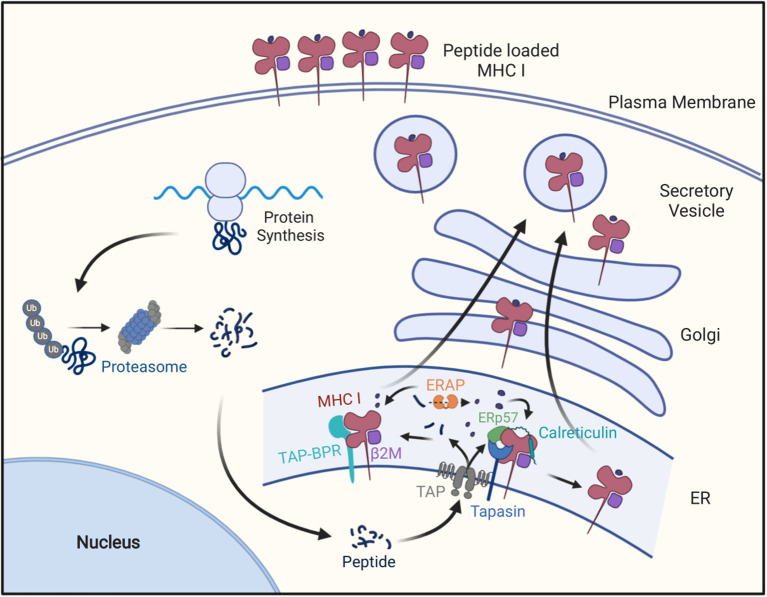
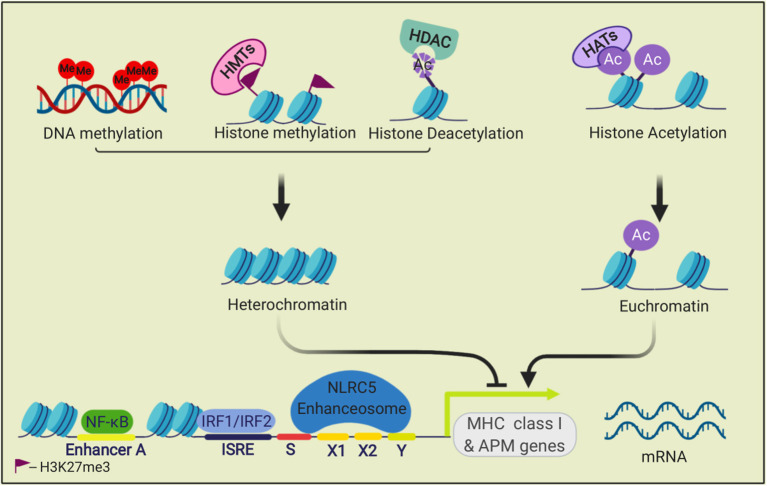
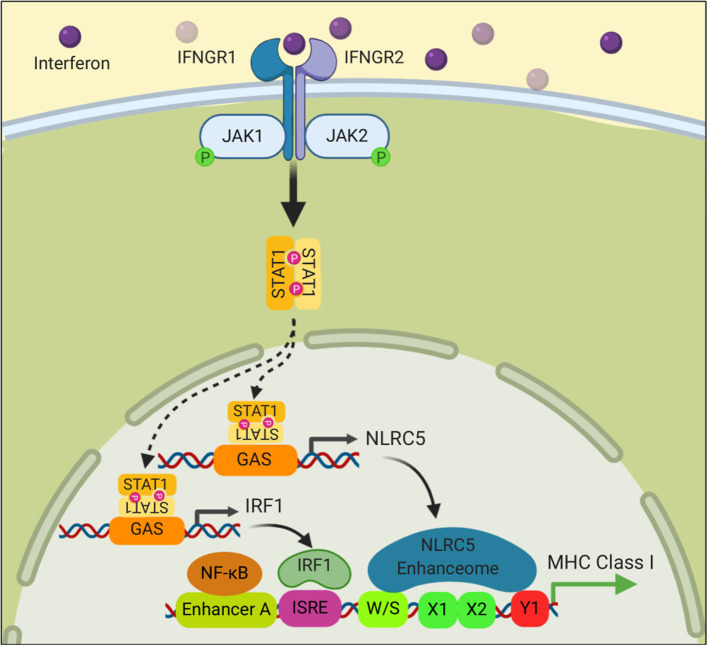
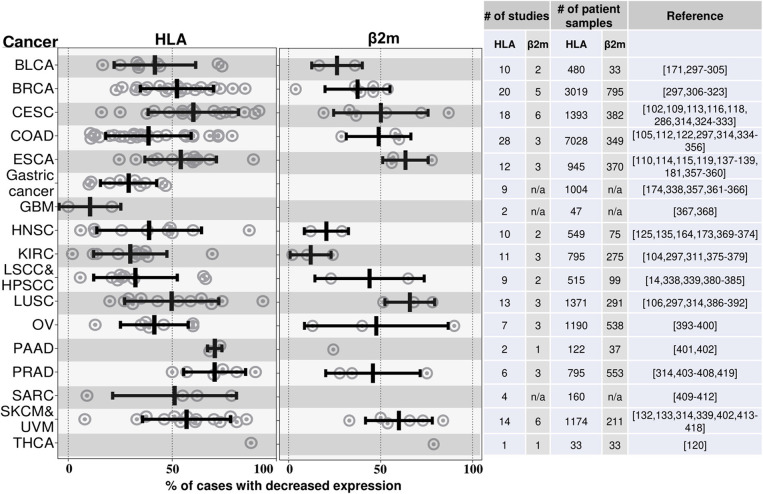
Major histocompatibility class I (MHC I) molecules bind peptides derived from a cell's expressed genes and then transport and display this antigenic information on the cell surface. This allows CD8 T cells to identify pathological cells that are synthesizing abnormal proteins, such as cancers that are expressing mutated proteins. In order for many cancers to arise and progress, they need to evolve mechanisms to avoid elimination by CD8 T cells. MHC I molecules are not essential for cell survival and therefore one mechanism by which cancers can evade immune control is by losing MHC I antigen presentation machinery (APM). Not only will this impair the ability of natural immune responses to control cancers, but also frustrate immunotherapies that work by re-invigorating anti-tumor CD8 T cells, such as checkpoint blockade. Here we review the evidence that loss of MHC I antigen presentation is a frequent occurrence in many cancers. We discuss new insights into some common underlying mechanisms through which some cancers inactivate the MHC I pathway and consider some possible strategies to overcome this limitation in ways that could restore immune control of tumors and improve immunotherapy.
Overview
The claims and statistics of this paper haven’t been checked yet.
Run the check — free, no account needed. It reads the open-access text and checks the sources it cites.
Integrity signals
Registry
Cites
Statistics
Figures
Verification
Claims the paper makes
The claims and statistics of this paper haven’t been checked yet.
Run the check — free, no account needed. It reads the open-access text and checks the sources it cites.
Claims other papers make about this one
Each is checked against this paper’s own text: does it say what the citing paper says it does?
The cited source doesn’t support the claim as written.
In the citing paper
“Desirable biocompatibility of natural scaffolds is primarily ascribed to the inter- and intra-species conservation of ECM [27] and its MHC-free nature that makes the host immune system recognize them as self-components [28].”
From Immunogenicity of decellularized extracellular matrix scaffolds: a bottleneck in tissue engineering and regenerative medicine (2023) · cites this paper as [28]
Checked by a reasoning model — may be wrong.
Experimental — accuracy not yet measuredThe source backs part of the claim, not all of it — or backs it for a different population, condition or comparison.
In the citing paper
“However, immune evasion can also occur by loss of the required HLA allele or defects in the HLA presentation pathway, although this is less common in GBM than other tumour types [40].”
From Preclinical development of an mRNA-based multiepitope immunotherapeutic for glioblastoma (2025) · cites this paper as [40]
Experimental — accuracy not yet measured
Self-check
Percentages, sums and reported differences re-computed from the paper’s own numbers.
The self-check needs the paper’s full text.
Citations
Cites
PD-1 and PD-L1 Immune Checkpoint Blockade to Treat Breast Cancer
Hartkopf, A. D., Taran, F., Wallwiener, M., Walter, C. B., Krämer, B., Grischke, E., & Brucker, S. Y. (2016) · Breast Care · doi:10.1159/000453569 · Cited by 30,989
Cerami, E., Gao, J., Dogrusoz, U., Gross, B. E., Sumer, S. O., Aksoy, B. A., Jacobsen, A., Byrne, C. J., Heuer, M. L., Larsson, E., et al. (2012) · Cancer Discovery · doi:10.1158/2159-8290.cd-12-0095 · Cited by 17,455
Integrative Analysis of Complex Cancer Genomics and Clinical Profiles Using the cBioPortal
Gao, J., Aksoy, B. A., Dogrusoz, U., Dresdner, G., Gross, B., Sumer, S. O., Sun, Y., Jacobsen, A., Sinha, R., Larsson, E., et al. (2013) · Science Signaling · doi:10.1126/scisignal.2004088 · Cited by 15,160
Type, Density, and Location of Immune Cells Within Human Colorectal Tumors Predict Clinical Outcome
Galon, J., Costes, A., Sanchez-Cabo, F., Kirilovsky, A., Mlecnik, B., Lagorce-Pagès, C., Tosolini, M., Camus, M., Berger, A., Wind, P., et al. (2006) · Science · doi:10.1126/science.1129139 · Cited by 6,516
Cancer Immunoediting: Integrating Immunity’s Roles in Cancer Suppression and Promotion
Schreiber, R. D., Old, L. J., & Smyth, M. J. (2011) · Science · doi:10.1126/science.1203486 · Cited by 6,474
Primary, Adaptive, and Acquired Resistance to Cancer Immunotherapy
Sharma, P., Hu-Lieskovan, S., Wargo, J. A., & Ribas, A. (2017) · Cell · doi:10.1016/j.cell.2017.01.017 · Cited by 5,588
The immune contexture in human tumours: impact on clinical outcome
Fridman, W. H., Pagès, F., Sautès-Fridman, C., & Galon, J. (2012) · Nature reviews. Cancer · doi:10.1038/nrc3245 · Cited by 4,981
MicroRNA therapeutics: towards a new era for the management of cancer and other diseases
Rupaimoole, R., & Slack, F. J. (2017) · Nature Reviews Drug Discovery · doi:10.1038/nrd.2016.246 · Cited by 4,741
Structure of the human class I histocompatibility antigen, HLA-A2
Björkman, P. J., Saper, M. A., Samraoui, B., Bennett, W. S., Strominger, J. L., & Wiley, D. C. (1987) · Nature · doi:10.1038/329506a0 · Cited by 3,488
Intratumoral T Cells, Recurrence, and Survival in Epithelial Ovarian Cancer
Zhang, L., Conejo-Garcia, J. R., Katsaros, D., Gimotty, P. A., Massobrio, M., Regnani, G., Makrigiannakis, A., Gray, H., Schlienger, K., Liebman, M. N., et al. (2003) · New England Journal of Medicine · doi:10.1056/nejmoa020177 · Cited by 3,397
Research works printed but not linked: 1
- Lu, 2000, Decreased HLA-A expression in prostate cancer is associated with normal allele dosage in the majority of cases, J Pathol, 190, 169, 10.1002/(SICI)1096-9896(200002)190:2169::AID-PATH517>3.0.CO;2-# · DOI
Cited by
Sorted by citations
Toward personalized treatment approaches for non-small-cell lung cancer
Wang, M., Herbst, R. S., & Boshoff, C. (2021) · Nature Medicine · doi:10.1038/s41591-021-01450-2 · Cited by 1,127
A guide to antigen processing and presentation
Pishesha, N., Harmand, T. J., & Ploegh, H. L. (2022) · Nature Reviews Immunology · doi:10.1038/s41577-022-00707-2 · Cited by 805
Vivier, É., Rebuffet, L., Narni-Mancinelli, É., Cornen, S., Igarashi, R., & Fantin, V. R. (2024) · Nature · doi:10.1038/s41586-023-06945-1 · Cited by 496
The Evasion Mechanisms of Cancer Immunity and Drug Intervention in the Tumor Microenvironment
Kim, S. K., & Cho, S. W. (2022) · Frontiers in Pharmacology · doi:10.3389/fphar.2022.868695 · Cited by 502
A pan-cancer single-cell panorama of human natural killer cells
Tang, F., Li, J., Qi, L., Liu, D., Bo, Y., Qin, S., Miao, Y., Yu, K., Hou, W., Li, J., et al. (2023) · Cell · doi:10.1016/j.cell.2023.07.034 · Cited by 450
“Compared with CD8 T cells, NK cells serve as alternative sources of cytotoxic activities and combat tumor cells with low mutation load and aberrant expression of major histocompatibility complex (MHC) class I.(22,23) Although the dysfunctional state of CD8 T cells is well-characterized with reduced cytotoxicity”
Background
Metadata
- Authors
- Dhatchinamoorthy, K., Colbert, J. D., & Rock, K. L.
- Affiliations
- University of Massachusetts Chan Medical School (US)
- Corresponding author
- Rock, Kenneth L.
- Venue
- Frontiers in Immunology
- Publisher
- Frontiers Media SA
- Published
- 2021-03-09
- Volume
- 12
- Pages
- 636568-636568
- ISSN
- 1664-3224 (ISSN-L)
- PMC
- PMC7986854
- OpenAlex
- W3134746059
- Cited by
- 1,077
- References
- 429
- Citations by year
- 2026: 209 · 2025: 244 · 2024: 251 · 2023: 202 · 2022: 138 · 2021: 33
- FWCI
- 19.72
- Type
- journal article
- Language
- en
- Open access
- gold
- doi.org
- Licence
- Locations
- Frontiers in Immunology (publishedVersion, cc-by)
- PubMed Central (publishedVersion, cc-by)
- PubMed (publishedVersion)
- eScholarship@UMassChan (submittedVersion, cc-by)
- DOAJ (DOAJ: Directory of Open Access Journals) (submittedVersion, cc-by-sa)
- Funders
- National Cancer Institute (R01CA247624)
- National Institute of Allergy and Infectious Diseases (R01AI145932)
- Topics
- Health Sciences › Medicine › Oncology › Cancer Immunotherapy and Biomarkers
- Life Sciences › Immunology and Microbiology › Immunology › Immunotherapy and Immune Responses
- Life Sciences › Immunology and Microbiology › Immunology › T-cell and B-cell Immunology
- Keywords
- tumor immune evasion, MHC class I antigen presentation, MHC class I loss, CD8+ T cells, cancer immunotherapy, immune checkpoint blockade, tumor antigens
- MeSH terms
- Animals, Humans, Killer Cells, Natural, Mutation, Neoplasms, Transcription, Genetic, Histocompatibility Antigens Class I, Signal Transduction, Gene Expression Regulation, Neoplastic, Lymphocytes, Tumor-Infiltrating, Gene Deletion, Antigen Presentation, Tumor Escape, Tumor Microenvironment
About these checks
Registry, retraction, Cites and statistics results are computed, not judged, with one exception: a printed reference that no index lists is read once by a model before it counts as a citation error. Claims are extracted by a model and kept only when their quote appears verbatim in the text; each cited source is then checked, with a model’s help, for whether it says what the claim relies on. Those verdicts can be wrong — read the claim’s quote and the cited source before relying on one.
Statistics and arithmetic are recomputed, not judged.
Confidence bands are shown only for fields calibrated on our annotated test set. None is calibrated yet, so no band is shown.
What counts as a claim ›How we measure confidence ›How we check this ›
Are you an author, or do you see a problem with this page? Request a review
