

The DOI matches its Crossref record; 11 of the 11 references it cites were found in a registry or an index.
Intestinal immune responses to commensal and pathogenic protozoa
Abstract
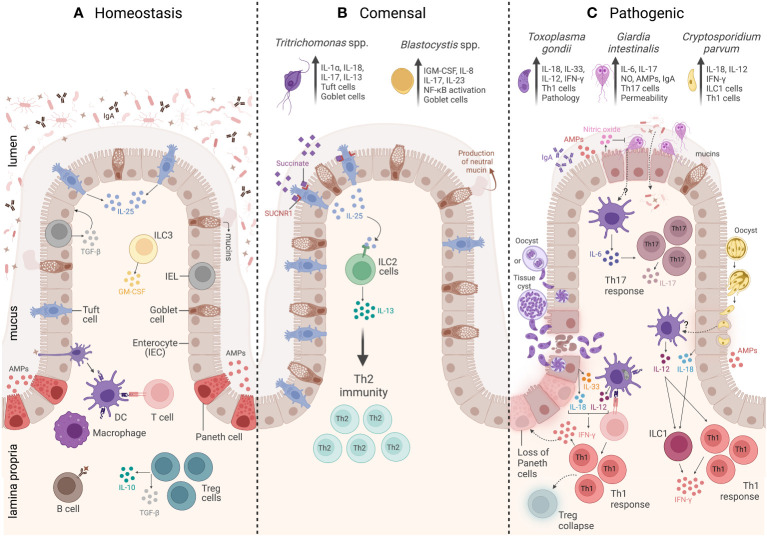
The physical barrier of the intestine and associated mucosal immunity maintains a delicate homeostatic balance between the host and the external environment by regulating immune responses to commensals, as well as functioning as the first line of defense against pathogenic microorganisms. Understanding the orchestration and characteristics of the intestinal mucosal immune response during commensal or pathological conditions may provide novel insights into the mechanisms underlying microbe-induced immunological tolerance, protection, and/or pathogenesis. Over the last decade, our knowledge about the interface between the host intestinal mucosa and the gut microbiome has been dominated by studies focused on bacterial communities, helminth parasites, and intestinal viruses. In contrast, specifically how commensal and pathogenic protozoa regulate intestinal immunity is less well studied. In this review, we provide an overview of mucosal immune responses induced by intestinal protozoa, with a major focus on the role of different cell types and immune mediators triggered by commensal ( Blastocystis spp. and Tritrichomonas spp.) and pathogenic ( Toxoplasma gondii , Giardia intestinalis , Cryptosporidium parvum ) protozoa. We will discuss how these various protozoa modulate innate and adaptive immune responses induced in experimental models of infection that benefit or harm the host.
Overview
The claims and statistics of this paper haven’t been checked yet.
Run the check — free, no account needed. It reads the open-access text and checks the sources it cites.
Integrity signals
Registry
Cites
Statistics
Figures
Verification
Claims the paper makes
The claims and statistics of this paper haven’t been checked yet.
Run the check — free, no account needed. It reads the open-access text and checks the sources it cites.
Claims other papers make about this one
Each is checked against this paper’s own text: does it say what the citing paper says it does?
In the citing paper
“One such mechanism appears to be an integrated immune system in which mast cells, immunoglobulin E (IgE), and eosinophils play central roles (Sardinha-Silva et al. 2022).”
From Parasites and allergies: a complex bidirectional relationship from evolutionary origins to modern therapeutics (2026) · cites this paper as Sardinha-Silva et al. 2022
In the citing paper
“Recent studies indicate that intestinal protozoa, such as Giardia intestinalis and Cryptosporidium spp., may cause gastrointestinal symptoms, including diarrhea and abdominal pain, and may disrupt the gut microbiota, thereby influencing immune homeostasis and potentially modifying allergic responses (Grondin et al. 2024; Sardinha-Silva et al. 2022).”
From Parasites and allergies: a complex bidirectional relationship from evolutionary origins to modern therapeutics (2026) · cites this paper as Sardinha-Silva et al. 2022
Self-check
Percentages, sums and reported differences re-computed from the paper’s own numbers.
The self-check needs the paper’s full text.
Citations
Cites
Paneth cells constitute the niche for Lgr5 stem cells in intestinal crypts
Sato, T., van Es, J. H., Snippert, H. J., Stange, D. E., Vries, R. G., van den Born, M., Barker, N., Shroyer, N. F., van de Wetering, M., & Clevers, H. (2011) · Nature · doi:10.1038/nature09637 · Cited by 2,510
Paneth cells, antimicrobial peptides and maintenance of intestinal homeostasis
Bevins, C. L., & Salzman, N. H. (2011) · Nature Reviews Microbiology · doi:10.1038/nrmicro2546 · Cited by 1,238
The intestinal epithelium: central coordinator of mucosal immunity
Allaire, J. M., Crowley, S. M., Law, H. T., Chang, S.-Y., Ko, H.-J., & Vallance, B. A. (2018) · Trends in Immunology · doi:10.1016/j.it.2018.04.002 · Cited by 933
Biochemistry and Evolution of Anaerobic Energy Metabolism in Eukaryotes
Müller, M., Mentel, M., van Hellemond, J. J., Henze, K., Woehle, C., Gould, S. B., Yu, R.-Y., van der Giezen, M., Tielens, A. G. M., & Martin, W. F. (2012) · Microbiology and Molecular Biology Reviews · doi:10.1128/mmbr.05024-11 · Cited by 838
Paneth cells as a site of origin for intestinal inflammation
Adolph, T. E., Tomczak, M. F., Niederreiter, L., Ko, H.-J., Böck, J., Martinez-Naves, E., Glickman, J. N., Tschurtschenthaler, M., Hartwig, J., Hosomi, S., et al. (2013) · Nature · doi:10.1038/nature12599 · Cited by 732
Interactions of commensal and pathogenic microorganisms with the intestinal mucosal barrier
Martens, E. C., Neumann, M., & Desai, M. S. (2018) · Nature Reviews Microbiology · doi:10.1038/s41579-018-0036-x · Cited by 711
The light and dark sides of intestinal intraepithelial lymphocytes
Cheroutre, H., Lambolez, F., & Mucida, D. (2011) · Nature Reviews Immunology · doi:10.1038/nri3007 · Cited by 693 · cited 3×
“Finally, the IELs, composed of gd T cells and CD8 T cells (expressing the CD8a homodimer), are interspersed throughout the intestinal epithelial layer and regulate epithelial growth and homeostasis by their secretion of TGF-b1 (20).”
BackgroundHost-Protozoan Interactions Protect from Mucosal Infections through Activation of the Inflammasome
Chudnovskiy, A., Mortha, A., Kana, V., Kennard, A., Ramirez, J. D., Rahman, A., Remark, R., Mogno, I., Ng, R., Gnjatic, S., et al. (2016) · Cell · doi:10.1016/j.cell.2016.08.076 · Cited by 325
Self-citationAdvances in understanding Giardia: Determinants and mechanisms of chronic sequelae
Bartelt, L. A., & Sartor, R. B. (2015) · F1000Prime Reports · doi:10.12703/p7-62 · Cited by 154
Clinical Aspects of Human Cryptosporidiosis
Farthing, M. J. G. (2000) · Contributions to Microbiology · doi:10.1159/000060368 · Cited by 106
Research works printed but not linked: 211
- McGhee, 2012, Inside the mucosal immune system, PloS Biol, 10, 10.1371/journal.pbio.1001397 · DOI
- Kasper, 2001, Ups and downs of mucosal cellular immunity against protozoan parasites, Infect Immun, 69, 1, 10.1128/IAI.69.1.1-8.2001 · DOI
- Kabat, 2014, Modulation of immune development and function by intestinal microbiota, Trends Immunol, 35, 10.1016/j.it.2014.07.010 · DOI
- Kayama, 2012, Regulation of intestinal homeostasis by innate and adaptive immunity, Int Immunol, 24, 10.1093/intimm/dxs094 · DOI
- Perez-Lopez, 2016, Mucosal immunity to pathogenic intestinal bacteria, Nat Rev Immunol, 16, 10.1038/nri.2015.17 · DOI
- Okumura, 2018, Maintenance of intestinal homeostasis by mucosal barriers, Inflammation Regen., 38, 5, 10.1186/s41232-018-0063-z · DOI
- Tokuhara, 2019, A comprehensive understanding of the gut mucosal immune system in allergic inflammation, Allergol Int, 68, 17, 10.1016/j.alit.2018.09.004 · DOI
- Rodriguez-Sillke, 2021, Recognition of food antigens by the mucosal and systemic immune system: Consequences for intestinal development and homeostasis, Int J Med Microbiol, 311, 151493, 10.1016/j.ijmm.2021.151493 · DOI
- Grondin, 2020, Mucins in intestinal mucosal defense and inflammation: Learning from clinical and experimental studies, Front Immunol, 11, 10.3389/fimmu.2020.02054 · DOI
- Gerbe, 2012, The intestinal epithelium tuft cells: specification and function, Cell Mol Life Sci, 69, 10.1007/s00018-012-0984-7 · DOI
- van der Flier, 2009, Stem cells, self-renewal, and differentiation in the intestinal epithelium, Annu Rev Physiol, 71, 10.1146/annurev.physiol.010908.163145 · DOI
- Cohen, 2014, Border maneuvers: deployment of mucosal immune defenses against toxoplasma gondii, Mucosal Immunol, 7, 10.1038/mi.2014.25 · DOI
- Clevers, 2013, Paneth cells: maestros of the small intestinal crypts, Annu Rev Physiol, 75, 289, 10.1146/annurev-physiol-030212-183744 · DOI
- Ting, 2019, The immune function of tuft cells at gut mucosal surfaces and beyond, J Immunol, 202, 10.4049/jimmunol.1801069 · DOI
- Mayassi, 2018, Human intraepithelial lymphocytes, Mucosal Immunol, 11, 10.1038/s41385-018-0016-5 · DOI · Paper page
- Sim, 1995, Intraepithelial lymphocytes and the immune system, Adv Immunol, 58, 297, 10.1016/S0065-2776(08)60622-7 · DOI
- Stagg, 2018, Intestinal dendritic cells in health and gut inflammation, Front Immunol, 9, 10.3389/fimmu.2018.02883 · DOI
- Sun, 2020, Dendritic cell subsets in intestinal immunity and inflammation, J Immunol, 204, 10.4049/jimmunol.1900710 · DOI
- Spits, 2012, Innate lymphoid cells: emerging insights in development, lineage relationships, and function, Annu Rev Immunol, 30, 10.1146/annurev-immunol-020711-075053 · DOI
- Mortha, 2014, Microbiota-dependent crosstalk between macrophages and ILC3 promotes intestinal homeostasis, Science., 343, 1249288, 10.1126/science.1249288 · DOI · Paper page
- Bennett, 2015, Innate-like lymphocytes in intestinal infections, Curr Opin Infect Dis, 28, 10.1097/QCO.0000000000000189 · DOI
- Wesemann, 2013, Microbial colonization influences early b-lineage development in the gut lamina propria, Nature., 501, 10.1038/nature12496 · DOI · Paper page
- Kabat, 2016, The mucosal immune system and its regulation by autophagy, Front Immunol, 7, 10.3389/fimmu.2016.00240 · DOI
- Mowat, 2014, Regional specialization within the intestinal immune system, Nat Rev Immunol, 14, 10.1038/nri3738 · DOI
- Shale, 2013, CD4(+) T-cell subsets in intestinal inflammation, Immunol Rev, 252, 10.1111/imr.12039 · DOI
- Harrison, 2013, Regulatory T cells and immune tolerance in the intestine, Cold Spring Harb Perspect Biol, 5, :a018341, 10.1101/cshperspect.a018341 · DOI
- Lukes, 2015, Are human intestinal eukaryotes beneficial or commensals, PloS Pathog, 11, 10.1371/journal.ppat.1005039 · DOI
- del Campo, 2020, The eukaryome: Diversity and role of microeukaryotic organisms associated with animal hosts, Funct Ecol, 34, 10.1111/1365-2435.13490 · DOI
- Parija, 2013, Blastocystis: Taxonomy, biology and virulence, Trop Parasitol, 3, 17, 10.4103/2229-5070.113894 · DOI
- Zierdt, 1967, Protozoan characteristics of blastocystis hominis, Am J Clin Pathol, 48, 495, 10.1093/ajcp/48.5.495 · DOI
- Silberman, 1996, Human parasite finds taxonomic home, Nature., 380, 398, 10.1038/380398a0 · DOI
- Alfellani, 2013, Genetic diversity of blastocystis in livestock and zoo animals, Protist., 164, 497, 10.1016/j.protis.2013.05.003 · DOI
- Nithyamathi, 2016, Predominance of blastocystis sp. infection among school children in peninsular Malaysia, PloS One, 11, 10.1371/journal.pone.0136709 · DOI
- Osman, 2016, Prevalence and risk factors for intestinal protozoan infections with cryptosporidium, giardia, blastocystis and dientamoeba among schoolchildren in Tripoli, Lebanon, PloS Negl Trop Dis, 10, 10.1371/journal.pntd.0004496 · DOI
- Ning, 2020, Epidemiology of blastocystis infection from 1990 to 2019 in China, Infect Dis Poverty., 9, 168, 10.1186/s40249-020-00779-z · DOI
- Alfellani, 2013, Variable geographic distribution of blastocystis subtypes and its potential implications, Acta Trop, 126, 10.1016/j.actatropica.2012.12.011 · DOI
- Khademvatan, 2018, PCR-based molecular characterization of blastocystis hominis subtypes in southwest of Iran, J Infect Public Health, 11, 10.1016/j.jiph.2017.03.009 · DOI
- Stensvold, 2020, Pre-empting pandora's box: Blastocystis subtypes revisited, Trends Parasitol, 36, 10.1016/j.pt.2019.12.009 · DOI
- Higuera, 2021, Identification of multiple blastocystis subtypes in domestic animals from Colombia using amplicon-based next generation sequencing, Front Vet Sci, 8, 10.3389/fvets.2021.732129 · DOI
- Maloney, 2021, Wide genetic diversity of blastocystis in white-tailed deer (Odocoileus virginianus) from Maryland, USA, Microorganisms., 9, :1343, 10.3390/microorganisms9061343 · DOI
- Deng, 2021, New insights into the interactions between blastocystis, the gut microbiota, and host immunity, PloS Pathog, 17, 10.1371/journal.ppat.1009253 · DOI
- Stenzel, 1996, Blastocystis hominis revisited, Clin Microbiol Rev, 9, 10.1128/CMR.9.4.563 · DOI
- Chabe, 2017, Gut Protozoa: Friends or foes of the human gut microbiota, Trends Parasitol, 33, 10.1016/j.pt.2017.08.005 · DOI
- Shirvani, 2020, Prevalence and molecular subtyping of blastocystis from patients with irritable bowel syndrome, inflammatory bowel disease and chronic urticaria in Iran, Acta Parasitol, 65, 10.2478/s11686-019-00131-y · DOI
- Pena, 2020, Determination of subtypes of blastocystis sp. in Chilean patients with and without inflammatory bowel syndrome, a preliminary report, Parasite Epidemiol Control., 8, 10.1016/j.parepi.2019.e00125 · DOI
- Scanlan, 2014, The microbial eukaryote blastocystis is a prevalent and diverse member of the healthy human gut microbiota, FEMS Microbiol Ecol, 90, 10.1111/1574-6941.12396 · DOI
- Long, 2001, Blastocystis hominis modulates immune responses and cytokine release in colonic epithelial cells, Parasitol Res, 87, 10.1007/s004360100494 · DOI
- Puthia, 2008, Blastocystis ratti contains cysteine proteases that mediate interleukin-8 response from human intestinal epithelial cells in an NF-kappaB-dependent manner, Eukaryot Cell, 7, 10.1128/EC.00371-07 · DOI
- Mirza, 2011, A metronidazole-resistant isolate of blastocystis spp. is susceptible to nitric oxide and downregulates intestinal epithelial inducible nitric oxide synthase by a novel parasite survival mechanism, Infect Immun, 79, 10.1128/IAI.05632-11 · DOI
- Puthia, 2005, Degradation of human secretory immunoglobulin a by blastocystis, Parasitol Res, 97, 10.1007/s00436-005-1461-0 · DOI
- Iguchi, 2009, Expression of interferon gamma and proinflammatory cytokines in the cecal mucosa of rats experimentally infected with blastocystis sp. strain RN94-9, Parasitol Res, 105, 10.1007/s00436-009-1373-5 · DOI
- Kim, 2013, Goblet cells and mucins: role in innate defense in enteric infections, Pathogens., 2, 55, 10.3390/pathogens2010055 · DOI
- Oukka, 2008, Th17 cells in immunity and autoimmunity, Ann Rheum Dis, 10.1136/ard.2008.098004 · DOI
- Stockinger, 2007, Differentiation and function of Th17 T cells, Curr Opin Immunol, 19, 10.1016/j.coi.2007.04.005 · DOI
- Wu, 2012, [Expressions and significance of IL-17 and IL-23 in intestinal mucosa of mice infected with blastocystis hominis], Zhongguo Xue Xi Chong Bing Fang Zhi Za Zhi., 24
- Guillen, 2020, Eukaryome: Emerging field with profound translational potential
- Howitt, 2016, Tuft cells, taste-chemosensory cells, orchestrate parasite type 2 immunity in the gut, Science., 351, 10.1126/science.aaf1648 · DOI
- von Moltke, 2016, Tuft-cell-derived IL-25 regulates an intestinal ILC2-epithelial response circuit, Nature., 529, 10.1038/nature16161 · DOI · Paper page
- Gerbe, 2016, Intestinal tuft cells: epithelial sentinels linking luminal cues to the immune system, Mucosal Immunol, 9, 10.1038/mi.2016.68 · DOI
- Rajeev, 2021, Enteric tuft cells in host-parasite interactions, Pathogens., 10, :1163, 10.3390/pathogens10091163 · DOI
- Nadjsombati, 2018, Detection of succinate by intestinal tuft cells triggers a type 2 innate immune circuit, Immunity., 49, 33, 10.1016/j.immuni.2018.06.016 · DOI · Paper page
- Escalante, 2016, The common mouse protozoa tritrichomonas muris alters mucosal T cell homeostasis and colitis susceptibility, J Exp Med, 213, 10.1084/jem.20161776 · DOI
- Chiaranunt, 2022, NLRP1B and NLRP3 control the host response following colonization with the commensal protist tritrichomonas musculis, J Immunol, 208, 10.4049/jimmunol.2100802 · DOI
- Kou, 2022, A murine commensal protozoan influences host glucose homeostasis by facilitating free choline generation, Appl Environ Microbiol, 88, e0241321, 10.1128/aem.02413-21 · DOI
- Flegr, 2014, Toxoplasmosis–a global threat. correlation of latent toxoplasmosis with specific disease burden in a set of 88 countries, PloS One, 9, 10.1371/journal.pone.0090203 · DOI · Paper page
- McLeod, 2014, Human Toxoplasma infection. Toxoplasma gondii: The model apicomplexan
- Snyder, 2020, From initiators to effectors: Roadmap through the intestine during encounter of toxoplasma gondii with the mucosal immune system, Front Cell Infect Microbiol, 10, 10.3389/fcimb.2020.614701 · DOI
- Kasper, 2004, Toxoplasma gondii and mucosal immunity, Int J Parasitol, 34, 10.1016/j.ijpara.2003.11.023 · DOI
- Schulthess, 2008, Mucosal immunity in toxoplasma gondii infection, Parasite., 15, 10.1051/parasite/2008153389 · DOI
- Oldenhove, 2009, Decrease of Foxp3+ treg cell number and acquisition of effector cell phenotype during lethal infection, Immunity., 31, 10.1016/j.immuni.2009.10.001 · DOI
- Sher, 1992, Regulation of immunity to parasites by T cells and T cell-derived cytokines, Annu Rev Immunol, 10, 385, 10.1146/annurev.iy.10.040192.002125 · DOI
- Liesenfeld, 1996, Association of CD4+ T cell-dependent, interferon-gamma-mediated necrosis of the small intestine with genetic susceptibility of mice to peroral infection with toxoplasma gondii, J Exp Med, 184, 597, 10.1084/jem.184.2.597 · DOI
- Denkers, 1998, Regulation and function of T-cell-mediated immunity during toxoplasma gondii infection, Clin Microbiol Rev, 11, 10.1128/CMR.11.4.569 · DOI
- Dupont, 2012, Immune response and immunopathology during toxoplasmosis, Semin Immunopathol, 34, 793, 10.1007/s00281-012-0339-3 · DOI
- Egan, 2012, Insights into inflammatory bowel disease using toxoplasma gondii as an infectious trigger, Immunol Cell Biol, 90, 10.1038/icb.2011.93 · DOI
- Gorfu, 2014, Dual role for inflammasome sensors NLRP1 and NLRP3 in murine resistance to toxoplasma gondii, mBio, 5, :e01117-13, 10.1128/mBio.01117-13 · DOI
- Munoz, 2015, Interleukin-22 induces interleukin-18 expression from epithelial cells during intestinal infection, Immunity., 42, 10.1016/j.immuni.2015.01.011 · DOI
- Speer, 1998, Ultrastructure of early stages of infections in mice fed toxoplasma gondii oocysts, Parasitology., 116, 35, 10.1017/S0031182097001959 · DOI
- Clark, 2021, IL-33 promotes innate lymphoid cell-dependent IFN-γ production required for innate immunity to Toxoplasma gondii, Elife, 10, :e65614, 10.7554/eLife.65614 · DOI
- Heimesaat, 2006, Gram-negative bacteria aggravate murine small intestinal Th1-type immunopathology following oral infection with toxoplasma gondii, J Immunol, 177, 10.4049/jimmunol.177.12.8785 · DOI
- Craven, 2012, Inflammation drives dysbiosis and bacterial invasion in murine models of ileal crohn's disease, PloS One, 7, 10.1371/journal.pone.0041594 · DOI
- Molloy, 2013, Intraluminal containment of commensal outgrowth in the gut during infection-induced dysbiosis, Cell Host Microbe, 14, 10.1016/j.chom.2013.08.003 · DOI
- Wang, 2019, Infection-induced intestinal dysbiosis is mediated by macrophage activation and nitrate production, mBio, 10, :e00935-19, 10.1128/mBio.00935-19 · DOI
- Raetz, 2013, Parasite-induced TH1 cells and intestinal dysbiosis cooperate in IFN-gamma-dependent elimination of paneth cells, Nat Immunol, 14, 10.1038/ni.2508 · DOI
- Lopez-Yglesias, 2018, T-Bet-independent Th1 response induces intestinal immunopathology during toxoplasma gondii infection, Mucosal Immunol, 11, 10.1038/mi.2017.102 · DOI
- Araujo, 2021, IFN-γ mediates paneth cell death via suppression of mTOR, Elife., 10, :e60478, 10.7554/eLife.60478 · DOI
- Egan, 2009, CCR2-dependent intraepithelial lymphocytes mediate inflammatory gut pathology during toxoplasma gondii infection, Mucosal Immunol, 2, 10.1038/mi.2009.105 · DOI
- Mahmoudzadeh, 2021, The role of IL-12 in stimulating NK cells against toxoplasma gondii infection: a mini-review, Parasitol Res, 120, 10.1007/s00436-021-07204-w · DOI
- Sasai, 2018, Host immune responses to toxoplasma gondii, Int Immunol, 30, 10.1093/intimm/dxy004 · DOI · Paper page
- Wagage, 2015, The group 3 innate lymphoid cell defect in aryl hydrocarbon receptor deficient mice is associated with T cell hyperactivation during intestinal infection, PloS One, 10, 10.1371/journal.pone.0128335 · DOI
- Sukhumavasi, 2008, TLR adaptor MyD88 is essential for pathogen control during oral toxoplasma gondii infection but not adaptive immunity induced by a vaccine strain of the parasite, J Immunol, 181, 10.4049/jimmunol.181.5.3464 · DOI
- Gregg, 2013, Replication and distribution of toxoplasma gondii in the small intestine after oral infection with tissue cysts, Infect Immun, 81, 10.1128/IAI.01126-12 · DOI
- Coombes, 2013, Motile invaded neutrophils in the small intestine of toxoplasma gondii-infected mice reveal a potential mechanism for parasite spread, Proc Natl Acad Sci U S A., 110, 10.1073/pnas.1220272110 · DOI
- Sardinha-Silva, 2019, The lectin-specific activity of toxoplasma gondii microneme proteins 1 and 4 binds toll-like receptor 2 and 4 n-glycans to regulate innate immune priming, PloS Pathog, 15, 10.1371/journal.ppat.1007871 · DOI
- Yarovinsky, 2005, TLR11 activation of dendritic cells by a protozoan profilin-like protein, Science., 308, 10.1126/science.1109893 · DOI
- Kucera, 2010, Structure-based analysis of toxoplasma gondii profilin: a parasite-specific motif is required for recognition by toll-like receptor 11, J Mol Biol, 403, 10.1016/j.jmb.2010.09.022 · DOI
- Koblansky, 2013, Recognition of profilin by toll-like receptor 12 is critical for host resistance to toxoplasma gondii, Immunity., 38, 10.1016/j.immuni.2012.09.016 · DOI
- Raetz, 2013, Cooperation of TLR12 and TLR11 in the IRF8-dependent IL-12 response to toxoplasma gondii profilin, J Immunol, 191, 10.4049/jimmunol.1301301 · DOI
- Benson, 2009, Gut commensal bacteria direct a protective immune response against toxoplasma gondii, Cell Host Microbe, 6, 10.1016/j.chom.2009.06.005 · DOI
- Koshy, 2012, Toxoplasma co-opts host cells it does not invade, PloS Pathog, 8, 10.1371/journal.ppat.1002825 · DOI
- Chen, 2020, The toxoplasma gondii virulence factor ROP16 acts in cis and trans, and suppresses T cell responses, J Exp Med, 217, :e20181757, 10.1084/jem.20181757 · DOI
- Cohen, 2015, Impact of toxoplasma gondii on dendritic cell subset function in the intestinal mucosa, J Immunol, 195, 10.4049/jimmunol.1501137 · DOI
- Jensen, 2011, Toxoplasma polymorphic effectors determine macrophage polarization and intestinal inflammation, Cell Host Microbe, 9, 10.1016/j.chom.2011.04.015 · DOI
- Jensen, 2013, Toxoplasma gondii rhoptry 16 kinase promotes host resistance to oral infection and intestinal inflammation only in the context of the dense granule protein GRA15, Infect Immun, 81, 10.1128/IAI.01185-12 · DOI
- Kim, 2005, p38 MAPK autophosphorylation drives macrophage IL-12 production during intracellular infection, J Immunol, 174, 10.4049/jimmunol.174.7.4178 · DOI
- Braun, 2013, A toxoplasma dense granule protein, GRA24, modulates the early immune response to infection by promoting a direct and sustained host p38 MAPK activation, J Exp Med, 210, 10.1084/jem.20130103 · DOI
- Mercer, 2020, Toxoplasma gondii dense granule protein GRA24 drives MyD88-independent p38 MAPK activation, IL-12 production and induction of protective immunity, PloS Pathog, 16, 10.1371/journal.ppat.1008572 · DOI
- Mukhopadhyay, 2020, Toxoplasma GRA15 and GRA24 are important activators of the host innate immune response in the absence of TLR11, PloS Pathog, 16, 10.1371/journal.ppat.1008586 · DOI
- Dunay, 2008, Gr1(+) inflammatory monocytes are required for mucosal resistance to the pathogen toxoplasma gondii, Immunity., 29, 10.1016/j.immuni.2008.05.019 · DOI
- Cohen, 2013, CXCR3-dependent CD4(+) T cells are required to activate inflammatory monocytes for defense against intestinal infection, PloS Pathog, 9, 10.1371/journal.ppat.1003706 · DOI
- Khan, 1997, A dichotomous role for nitric oxide during acute toxoplasma gondii infection in mice, Proc Natl Acad Sci U S A., 94, 10.1073/pnas.94.25.13955 · DOI
- Hunn, 2011, The immunity-related GTPases in mammals: a fast-evolving cell-autonomous resistance system against intracellular pathogens, Mamm Genome, 22, 43, 10.1007/s00335-010-9293-3 · DOI
- Burger, 2018, Loss of paneth cell autophagy causes acute susceptibility to toxoplasma gondii-mediated inflammation, Cell Host Microbe, 23, 177, 10.1016/j.chom.2018.01.001 · DOI
- Suzuki, 2000, IL-10 is required for prevention of necrosis in the small intestine and mortality in both genetically resistant BALB/c and susceptible C57BL/6 mice following peroral infection with toxoplasma gondii, J Immunol, 164, 10.4049/jimmunol.164.10.5375 · DOI
- Rachinel, 2004, The induction of acute ileitis by a single microbial antigen of toxoplasma gondii, J Immunol, 173, 10.4049/jimmunol.173.4.2725 · DOI
- Cortez, 2014, CRTAM controls residency of gut CD4+CD8+ T cells in the steady state and maintenance of gut CD4+ Th17 during parasitic infection, J Exp Med, 211, 10.1084/jem.20130904 · DOI
- Cervantes-Barragan, 2019, CRTAM protects against intestinal dysbiosis during pathogenic parasitic infection by enabling Th17 maturation, Front Immunol, 10, 10.3389/fimmu.2019.01423 · DOI
- Savioli, 2006, Giardia and cryptosporidium join the 'Neglected diseases initiative', Trends Parasitol, 22, 10.1016/j.pt.2006.02.015 · DOI
- Solaymani-Mohammadi, 2010, Giardia duodenalis: the double-edged sword of immune responses in giardiasis, Exp Parasitol, 126, 10.1016/j.exppara.2010.06.014 · DOI
- Yoder, 2012, Giardiasis surveillance–united states, 2009-2010, MMWR Surveill Summ., 61, 13
- Garzon, 2017, Association of enteric parasitic infections with intestinal inflammation and permeability in asymptomatic infants of sao tome island, Pathog Glob Health, 111, 10.1080/20477724.2017.1299831 · DOI
- Kraft, 2017, Giardia's epithelial cell interaction In vitro: Mimicking asymptomatic infection, Front Cell Infect Microbiol, 7, 10.3389/fcimb.2017.00421 · DOI
- Solaymani-Mohammadi, 2022, Mucosal defense against giardia at the intestinal epithelial cell interface, Front Immunol, 13, 10.3389/fimmu.2022.817468 · DOI · Paper page
- Mahmud, 1995, Risk factors for development of first symptomatic giardia infection among infants of a birth cohort in rural Egypt, Am J Trop Med Hyg, 53, 10.4269/ajtmh.1995.53.84 · DOI
- Al-Mekhlafi, 2013, Burden of giardia duodenalis infection and its adverse effects on growth of schoolchildren in rural Malaysia, PloS Negl Trop Dis, 7, 10.1371/journal.pntd.0002516 · DOI
- Rogawski, 2017, Determinants and impact of giardia infection in the first 2 years of life in the MAL-ED birth cohort, J Pediatr Infect Dis Soc, 6, 10.1093/jpids/piw082 · DOI
- Rogawski, 2018, Use of quantitative molecular diagnostic methods to investigate the effect of enteropathogen infections on linear growth in children in low-resource settings: longitudinal analysis of results from the MAL-ED cohort study, Lancet Glob Health, 6, 10.1016/S2214-109X(18)30351-6 · DOI · Paper page
- Adam, 2001, Biology of giardia lamblia, Clin Microbiol Rev, 14, 10.1128/CMR.14.3.447-475.2001 · DOI
- Saghaug, 2016, Human memory CD4+ T cell immune responses against giardia lamblia, Clin Vaccine Immunol, 23, 10.1128/CVI.00419-15 · DOI
- Singer, 2019, Recent insights into innate and adaptive immune responses to giardia, Adv Parasitol, 106, 171, 10.1016/bs.apar.2019.07.004 · DOI · Paper page
- Muller, 2005, Recent insights into the mucosal reactions associated with giardia lamblia infections, Int J Parasitol, 35, 10.1016/j.ijpara.2005.07.008 · DOI
- Troeger, 2007, Effect of chronic giardia lamblia infection on epithelial transport and barrier function in human duodenum, Gut., 56, 10.1136/gut.2006.100198 · DOI · Paper page
- Reynoso-Robles, 2015, The invasive potential of giardia intestinalis in an in vivo model, Sci Rep, 5, 15168, 10.1038/srep15168 · DOI
- Eckmann, 2000, Nitric oxide production by human intestinal epithelial cells and competition for arginine as potential determinants of host defense against the lumen-dwelling pathogen giardia lamblia, J Immunol, 164, 10.4049/jimmunol.164.3.1478 · DOI
- Stadelmann, 2012, Arginine consumption by the intestinal parasite giardia intestinalis reduces proliferation of intestinal epithelial cells, PloS One, 7, 10.1371/journal.pone.0045325 · DOI
- Tako, 2013, Transcriptomic analysis of the host response to giardia duodenalis infection reveals redundant mechanisms for parasite control, mBio., 4, 10.1128/mBio.00660-13 · DOI
- Paerewijck, 2017, Interleukin-17 receptor a (IL-17RA) as a central regulator of the protective immune response against giardia, Sci Rep, 7, 8520, 10.1038/s41598-017-08590-x · DOI
- Manko, 2017, Giardia co-infection promotes the secretion of antimicrobial peptides beta-defensin 2 and trefoil factor 3 and attenuates attaching and effacing bacteria-induced intestinal disease, PloS One, 12, 10.1371/journal.pone.0178647 · DOI
- Manko-Prykhoda, 2020, Giardia spp. promote the production of antimicrobial peptides and attenuate disease severity induced by attaching and effacing enteropathogens via the induction of the NLRP3 inflammasome, Int J Parasitol, 50, 10.1016/j.ijpara.2019.12.011 · DOI
- Scott, 2002, Intestinal infection with giardia spp. reduces epithelial barrier function in a myosin light chain kinase-dependent fashion, Gastroenterology., 123, 10.1053/gast.2002.36002 · DOI
- Zhou, 2007, Tumour necrosis factor alpha contributes to protection against giardia lamblia infection in mice, Parasite Immunol, 29, 10.1111/j.1365-3024.2007.00953.x · DOI
- Chen, 2013, Persistent gut barrier damage and commensal bacterial influx following eradication of giardia infection in mice, Gut Pathog, 5, 26, 10.1186/1757-4749-5-26 · DOI
- Bienz, 2003, Interleukin-6-deficient mice are highly susceptible to giardia lamblia infection but exhibit normal intestinal immunoglobulin a responses against the parasite, Infect Immun, 71, 10.1128/IAI.71.3.1569-1573.2003 · DOI
- Zhou, 2003, Role of interleukin-6 in the control of acute and chronic giardia lamblia infections in mice, Infect Immun, 71, 10.1128/IAI.71.3.1566-1568.2003 · DOI
- Kamda, 2012, Giardia duodenalis: dendritic cell defects in IL-6 deficient mice contribute to susceptibility to intestinal infection, Exp Parasitol, 130, 10.1016/j.exppara.2012.01.003 · DOI
- Keselman, 2016, The microbiota contributes to CD8+ T cell activation and nutrient malabsorption following intestinal infection with giardia duodenalis, Infect Immun, 84, 10.1128/IAI.00348-16 · DOI
- Li, 2017, TLR2(-/-) mice display decreased severity of giardiasis via enhanced proinflammatory cytokines production dependent on AKT signal pathway, Front Immunol, 8, 10.3389/fimmu.2017.01186 · DOI
- Li, 2004, Mast cell-dependent control of giardia lamblia infections in mice, Infect Immun, 72, 10.1128/IAI.72.11.6642-6649.2004 · DOI
- Li, 2007, Mast cell-mediated changes in smooth muscle contractility during mouse giardiasis, Infect Immun, 75, 10.1128/IAI.00596-07 · DOI
- Li, 2016, Complement activation by giardia duodenalis parasites through the lectin pathway contributes to mast cell responses and parasite control, Infect Immun, 84, 10.1128/IAI.00074-16 · DOI
- Singer, 2000, T-Cell-dependent control of acute giardia lamblia infections in mice, Infect Immun, 68, 10.1128/IAI.68.1.170-175.2000 · DOI
- Andersen, 2006, Adaptive immunity-dependent intestinal hypermotility contributes to host defense against giardia spp, Infect Immun, 74, 10.1128/IAI.74.4.2473-2476.2006 · DOI
- Li, 2006, Neuronal nitric oxide synthase is necessary for elimination of giardia lamblia infections in mice, J Immunol, 176, 10.4049/jimmunol.176.1.516 · DOI
- Scott, 2004, Role of CD8+ and CD4+ T lymphocytes in jejunal mucosal injury during murine giardiasis, Infect Immun, 72, 10.1128/IAI.72.6.3536-3542.2004 · DOI
- Bouzid, 2013, A new heterogeneous family of telomerically encoded cryptosporidium proteins, Evol Appl, 6, 10.1111/j.1752-4571.2012.00277.x · DOI
- Huang, 2006, An updated review on cryptosporidium and giardia, Gastroenterol Clin North Am, 35, 291, 10.1016/j.gtc.2006.03.006 · DOI
- 2017, Estimates of global, regional, and national morbidity, mortality, and aetiologies of diarrhoeal diseases: a systematic analysis for the global burden of disease study 2015, Lancet Infect Dis, 17, 10.1016/S1473-3099(17)30276-1 · DOI
- Crawford, 2021, The mucosal innate immune response to cryptosporidium parvum, a global one health issue, Front Cell Infect Microbiol, 11, 10.3389/fcimb.2021.689401 · DOI
- McDonald, 2013, Innate immune responses against cryptosporidium parvum infection, Parasite Immunol, 35, 55, 10.1111/pim.12020 · DOI
- Laurent, 2017, Innate immune responses play a key role in controlling infection of the intestinal epithelium by cryptosporidium, Int J Parasitol, 47, 10.1016/j.ijpara.2017.08.001 · DOI
- Lantier, 2013, Intestinal CD103+ dendritic cells are key players in the innate immune control of cryptosporidium parvum infection in neonatal mice, PloS Pathog, 9, 10.1371/journal.ppat.1003801 · DOI
- Lacroix-Lamande, 2002, Role of gamma interferon in chemokine expression in the ileum of mice and in a murine intestinal epithelial cell line after cryptosporidium parvum infection, Infect Immun, 70, 10.1128/IAI.70.4.2090-2099.2002 · DOI
- Pantenburg, 2008, Intestinal immune response to human cryptosporidium sp, infection. Infect Immun, 76, 10.1128/IAI.00960-07 · DOI
- Chen, 2001, Cryptosporidium parvum activates nuclear factor kappaB in biliary epithelia preventing epithelial cell apoptosis, Gastroenterology., 120, 10.1053/gast.2001.24850 · DOI
- Chen, 2005, Multiple TLRs are expressed in human cholangiocytes and mediate host epithelial defense responses to cryptosporidium parvum via activation of NF-kappaB, J Immunol, 175, 10.4049/jimmunol.175.11.7447 · DOI
- Choudhry, 2012, A protective role for interleukin 18 in interferon gamma-mediated innate immunity to cryptosporidium parvum that is independent of natural killer cells, J Infect Dis, 206, 10.1093/infdis/jis300 · DOI
- Korbel, 2011, CD4+ T cells are not essential for control of early acute cryptosporidium parvum infection in neonatal mice, Infect Immun, 79, 10.1128/IAI.00922-10 · DOI
- Urban, 1996, IL-12 protects immunocompetent and immunodeficient neonatal mice against infection with cryptosporidium parvum, J Immunol, 156, 10.4049/jimmunol.156.1.263 · DOI
- Mead, 1998, Susceptibility differences to cryptosporidium parvum infection in two strains of gamma interferon knockout mice, J Parasitol, 84, 10.2307/3284643 · DOI
- Ehigiator, 2007, Cryptosporidium parvum: the contribution of Th1-inducing pathways to the resolution of infection in mice, Exp Parasitol, 115, 10.1016/j.exppara.2006.07.001 · DOI
- Tessema, 2009, Dynamics of gut mucosal and systemic Th1/Th2 cytokine responses in interferon-gamma and interleukin-12p40 knock out mice during primary and challenge cryptosporidium parvum infection, Immunobiology., 214, 10.1016/j.imbio.2008.11.015 · DOI
- Sateriale, 2021, The intestinal parasite Cryptosporidium is controlled by an enterocyte intrinsic inflammasome that depends on NLRP6, Proc Natl Acad Sci USA, 118, :e2007807118, 10.1073/pnas.2007807118 · DOI
- Gullicksrud, 2022, Enterocyte-innate lymphoid cell crosstalk drives early IFN-gamma-mediated control of cryptosporidium, Mucosal Immunol, 15, 10.1038/s41385-021-00468-6 · DOI
- Ungar, 1991, Cryptosporidium infection in an adult mouse model. independent roles for IFN-gamma and CD4+ T lymphocytes in protective immunity, J Immunol, 147, 10.4049/jimmunol.147.3.1014 · DOI
- McDonald, 1994, Mechanisms of innate and acquired resistance to cryptosporidium parvum infection in SCID mice, Parasite Immunol, 16, 10.1111/j.1365-3024.1994.tb00354.x · DOI
- Hayward, 2000, Interferon-gamma is required for innate immunity to cryptosporidium parvum in mice, J Infect Dis, 182, 10.1086/315802 · DOI
- Robinson, 2001, Expression of IL-15 and IL-4 in IFN-gamma-independent control of experimental human cryptosporidium parvum infection, Cytokine., 15, 39, 10.1006/cyto.2001.0888 · DOI
- Barakat, 2009, Roles for NK cells and an NK cell-independent source of intestinal gamma interferon for innate immunity to cryptosporidium parvum infection, Infect Immun, 77, 10.1128/IAI.00377-09 · DOI
- McDonald, 2004, Protection against the early acute phase of cryptosporidium parvum infection conferred by interleukin-4-induced expression of T helper 1 cytokines, J Infect Dis, 190, 10.1086/422761 · DOI
- Enriquez, 1993, Role of CD4+ TH1- and TH2-cell-secreted cytokines in cryptosporidiosis, Folia Parasitol (Praha)., 40
- Aguirre, 1994, Susceptibility of major histocompatibility complex (MHC) class I- and MHC class II-deficient mice to cryptosporidium parvum infection, Infect Immun, 62, 10.1128/iai.62.2.697-699.1994 · DOI
- Chen, 2003, Cryptosporidium parvum infection in gene-targeted b cell-deficient mice, J Parasitol, 89, 10.1645/0022-3395(2003)089[0391:CPIIGB]2.0.CO;2 · DOI
- Frost, 2005, How clean must our drinking water be: the importance of protective immunity, J Infect Dis, 191, 10.1086/427561 · DOI
- Frost, 2005, Protective immunity associated with a strong serological response to a cryptosporidium-specific antigen group, in HIV-infected individuals, J Infect Dis, 192, 10.1086/431681 · DOI
- Dumaine, 2021, The enteric pathogen cryptosporidium parvum exports proteins into the cytosol of the infected host cell, Elife, 10, :e70451, 10.7554/eLife.70451 · DOI
- Wei, 2020, Commensal bacteria impact a protozoan's integration into the murine gut microbiota in a dietary nutrient-dependent manner, Appl Environ Microbiol, 86, :e00303-20, 10.1128/AEM.00303-20 · DOI
- Audebert, 2016, Colonization with the enteric protozoa blastocystis is associated with increased diversity of human gut bacterial microbiota, Sci Rep, 6, 25255, 10.1038/srep25255 · DOI
- Hatter, 2018, Toxoplasma gondii infection triggers chronic cachexia and sustained commensal dysbiosis in mice, PloS One, 13, 10.1371/journal.pone.0204895 · DOI
- Iebba, 2016, Gut microbiota related to giardia duodenalis, entamoeba spp. and blastocystis hominis infections in humans from cote d'Ivoire, J Infect Dev Ctries., 10, 10.3855/jidc.8179 · DOI
- Barash, 2017, Giardia alters commensal microbial diversity throughout the murine gut, Infect Immun, 85, :e00948, 10.1128/IAI.00948-16 · DOI
- Beatty, 2017, Giardia duodenalis induces pathogenic dysbiosis of human intestinal microbiota biofilms, Int J Parasitol, 47, 10.1016/j.ijpara.2016.11.010 · DOI · Paper page
- McKenney, 2017, Down for the count: Cryptosporidium infection depletes the gut microbiome in coquerel's sifakas, Microb Ecol Health Dis, 28, 1335165, 10.1080/16512235.2017.1335165 · DOI
- Mammeri, 2019, Cryptosporidium parvum-infected neonatal mice show gut microbiota remodelling using high-throughput sequencing analysis: Preliminary results, Acta Parasitol, 64, 10.2478/s11686-019-00044-w · DOI
- Hand, 2012, Acute gastrointestinal infection induces long-lived microbiota-specific T cell responses, Science., 337, 10.1126/science.1220961 · DOI
- Melgar, 2005, Acute colitis induced by dextran sulfate sodium progresses to chronicity in C57BL/6 but not in BALB/c mice: correlation between symptoms and inflammation, Am J Physiol Gastrointest Liver Physiol, 288, 10.1152/ajpgi.00467.2004 · DOI
- Huang, 2002, The quantity of nitric oxide released by macrophages regulates chlamydia-induced disease, Proc Natl Acad Sci U S A., 99, 10.1073/pnas.062578399 · DOI
- Mills, 2000, M-1/M-2 macrophages and the Th1/Th2 paradigm, J Immunol, 164, 10.4049/jimmunol.164.12.6166 · DOI · Paper page
- Falkow, 2006, Is persistent bacterial infection good for your health, Cell, 124, 699, 10.1016/j.cell.2006.02.004 · DOI
- Smith, 2013, The microbial metabolites, short-chain fatty acids, regulate colonic treg cell homeostasis, Science., 341, 10.1126/science.1241165 · DOI · Paper page
- Kamada, 2013, Role of the gut microbiota in the development and function of lymphoid cells, J Immunol, 190, 10.4049/jimmunol.1203100 · DOI
200 of 211 shown
Cited by
Sorted by citations
Packi, K., Świerczewski, D., Klimczak, S., Ochab, D., Gałęziewska, J., Gromek, P., Kruczkowska, W., Płuciennik, E., Kałuzińska-Kołat, Ż., & Kołat, D. (2026) · Antonie van Leeuwenhoek · doi:10.1007/s10482-026-02425-4
Metadata
- Authors
- Sardinha-Silva, A., Alves-Ferreira, E. V. C., & Grigg, M. E.
- Venue
- Frontiers in Immunology
- Publisher
- Frontiers Media SA
- Published
- 2022-09-16
- Volume
- 13
- ISSN
- 1664-3224
- PMC
- PMC9533738
- Cited by
- 72
- References
- 11
- Funders
- Division of Intramural Research, National Institute of Allergy and Infectious Diseases
About these checks
Registry, retraction, Cites and statistics results are computed, not judged, with one exception: a printed reference that no index lists is read once by a model before it counts as a citation error. Claims are extracted by a model and kept only when their quote appears verbatim in the text; each cited source is then checked, with a model’s help, for whether it says what the claim relies on. Those verdicts can be wrong — read the claim’s quote and the cited source before relying on one.
Statistics and arithmetic are recomputed, not judged.
Confidence bands are shown only for fields calibrated on our annotated test set. None is calibrated yet, so no band is shown.
What counts as a claim ›How we measure confidence ›How we check this ›
Are you an author, or do you see a problem with this page? Request a review
How to cite
Cite CoChat for the checks on this page, and the paper for its own findings.
- This page
- CoChat. (2026). Citation check: Intestinal immune responses to commensal and pathogenic protozoa. https://app.cochat.ai/papers/10.3389/fimmu.2022.963723
- The paper
- Sardinha-Silva, A., Alves-Ferreira, E. V. C., & Grigg, M. E. (2022). Intestinal immune responses to commensal and pathogenic protozoa. Frontiers in Immunology. https://doi.org/10.3389/fimmu.2022.963723
