

The DOI matches its Crossref record; 184 of the 189 references it cites were found in a registry or an index.
The Genus Enterococcus: Between Probiotic Potential and Safety Concerns—An Update
Open accessAbstract
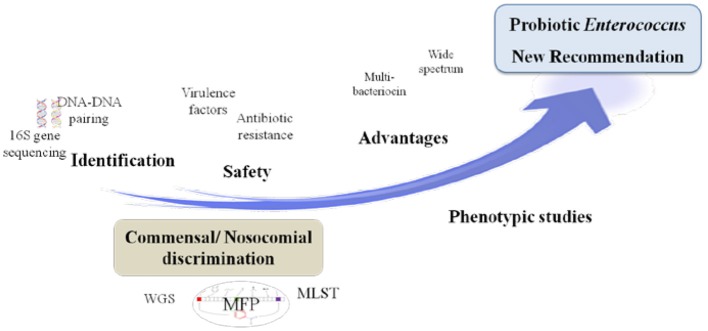
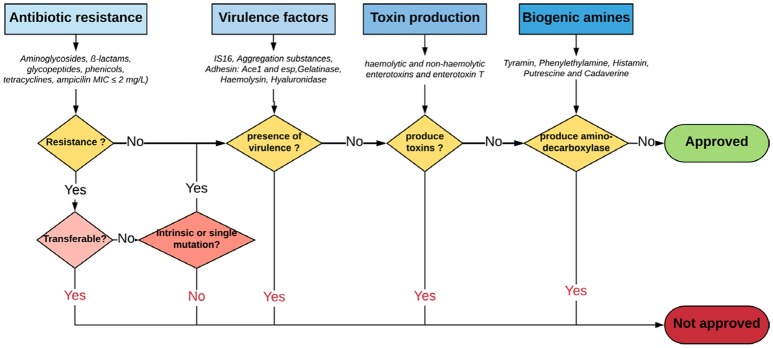
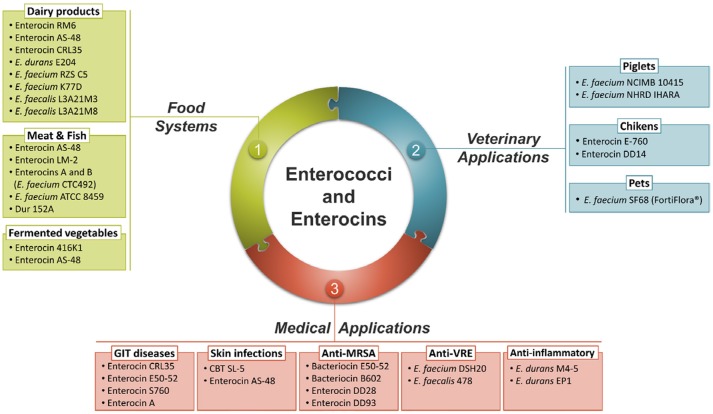
A considerable number of strains belonging to different species of Enterococcus are highly competitive due to their resistance to wide range of pH and temperature. Their competitiveness is also owed to their ability to produce bacteriocins recognized for their wide-range effectiveness on pathogenic and spoilage bacteria. Enterococcal bacteriocins have attracted great research interest as natural antimicrobial agents in the food industry, and as a potential drug candidate for replacing antibiotics in order to treat multiple drugs resistance pathogens. However, the prevalence of virulence factors and antibiotic-resistance genes and the ability to cause disease could compromise their application in food, human and animal health. From the current regulatory point of view, the genus Enterococcus is neither recommended for the QPS list nor have GRAS status. Although recent advances in molecular biology and the recommended methods for the safety evaluation of Enterococcus strains allowed the distinction between commensal and clinical clades, development of highly adapted methods and legislations are still required. In the present review, we evaluate some aspects of Enterococcus spp. related to their probiotic properties and safety concerns as well as the current and potential application in food systems and treatment of infections. The regulatory status of commensal Enterococcus candidates for food/feed/probiotic use and recommended methods to assess and ensure their safety are also discussed.
Overview
The claims and statistics of this paper haven’t been checked yet.
Run the check — free, no account needed. It reads the open-access text and checks the sources it cites.
Integrity signals
Registry
Cites
Statistics
Figures
Verification
Claims the paper makes
The claims and statistics of this paper haven’t been checked yet.
Run the check — free, no account needed. It reads the open-access text and checks the sources it cites.
Claims other papers make about this one
Each is checked against this paper’s own text: does it say what the citing paper says it does?
In the citing paper
“This is because, when passing through the digestive tract, Saccharomyces strains have a higher survival capacity compared with the other probiotics. Also, these strains help to maintain the balance of the normal microflora of the intestinal tract and have immunomodulatory effects, acting to fine-tune immunological pathways during pathogenic infections or chronic diseases [32,33,34].”
From The Potential Impact of Probiotics on Human Health: An Update on Their Health-Promoting Properties (2024) · cites this paper as [32]
Self-check
Percentages, sums and reported differences re-computed from the paper’s own numbers.
The self-check needs the paper’s full text.
Citations
Cites
Bacteriocins: Developing innate immunity for food
Cotter, P. D., Hill, C., & Ross, R. P. (2005) · Nature Reviews Microbiology · doi:10.1038/nrmicro1273 · Cited by 2,380
Antibiotics and Bacterial Resistance in the 21st Century
Fair, R. J., & Tor, Y. (2014) · Perspectives in Medicinal Chemistry · doi:10.4137/pmc.s14459 · Cited by 2,041
Bacteriocins—A viable alternative to antibiotics?
Cotter, P. D., Ross, R. P., & Hill, C. (2013) · Nature Reviews Microbiology · doi:10.1038/nrmicro2937 · Cited by 1,793
The rise of the Enterococcus: beyond vancomycin resistance
Arias, C. A., & Murray, B. E. (2012) · Nature Reviews Microbiology · doi:10.1038/nrmicro2761 · Cited by 1,776
The ecology, epidemiology and virulence of Enterococcus
Fisher, K., & Phillips, C. A. (2009) · Microbiology · doi:10.1099/mic.0.026385-0 · Cited by 1,231
The role and application of enterococci in food and health
Foulquié-Moreno, M. R., Sarantinopoulos, P., Tsakalidou, E., & Vuyst, L. D. (2005) · International Journal of Food Microbiology · doi:10.1016/j.ijfoodmicro.2005.06.026 · Cited by 1,075
(BIOHAZ), E. P. O. B. H. (2011) · EFSA Journal · doi:10.2903/j.efsa.2011.2393 · Cited by 995
Eaton, T., & Gasson, M. J. (2001) · Applied and Environmental Microbiology · doi:10.1128/aem.67.4.1628-1635.2001 · Cited by 945
Safety assessment of probiotics for human use
Sanders, M. E., Akkermans, L. M. A., Haller, D., Hammerman, C., Heimbach, J. T., Hörmannsperger, G., & Huys, G. (2010) · Gut Microbes · doi:10.4161/gmic.1.3.12127 · Cited by 816
Enterococci as probiotics and their implications in food safety
Franz, C. M. A. P., Huch, M., Abriouel, H., Holzapfel, W. H., & Gálvez, A. (2011) · International Journal of Food Microbiology · doi:10.1016/j.ijfoodmicro.2011.08.014 · Cited by 795
Research works printed but not linked: 6
- 1996, Report on Enterococcus faecium, strain K77D
- 2000, Directive 2000/54/EC of the European Parliament and of the council of 18 September 2000 on the protection of workers from risks related to exposure to biological agents at work, Official J. Eur. Union L, 262, 21
- 2002, Report of a Joint FAO/WHO Working Group on Drafting Guidelines for the Evaluation of Probiotics in Food
- Farias, 1999, Inhibition of Listeria monocytogenes by the bacteriocin enterocin CRL35 during goat cheese making, Milchwissensch. Milk Sci. Int., 54, 30
- 2011, Scombrotoxin (Histamine) Formation, 113
- Maqueda Abreu, 2014, Composition for Treating Bacterial Infections of the Skin and Mucous Membranes
Cited by
Sorted by citations
Probiotics Mechanism of Action on Immune Cells and Beneficial Effects on Human Health
Mazziotta, C., Tognon, M., Martini, F., Torreggiani, E., & Rotondo, J. C. (2023) · Cells · doi:10.3390/cells12010184 · Cited by 889
Biogenic Amine Production by Lactic Acid Bacteria: A Review
Barbieri, F., Montanari, C., Gardini, F., & Tabanelli, G. (2019) · Foods · doi:10.3390/foods8010017 · Cited by 528
The Potential Impact of Probiotics on Human Health: An Update on Their Health-Promoting Properties
Maftei, N.-M., Raileanu, C. R., Balta, A. A., Ambrose, L., Boev, M., Marin, D. B., & Lisa, E. L. (2024) · Microorganisms · doi:10.3390/microorganisms12020234 · Cited by 381
Enterococcus peptidoglycan remodeling promotes checkpoint inhibitor cancer immunotherapy
Griffin, M. E., Espinosa, J., Becker, J. L., Luo, J.-D., Carroll, T. S., Jha, J. K., Fanger, G. R., & Hang, H. C. (2021) · Science · doi:10.1126/science.abc9113 · Cited by 366
The promotion mechanism of prebiotics for probiotics: A review
You, S., Ma, Y., Yan, B., Pei, W., Wu, Q., Ding, C., & Huang, C. (2022) · Frontiers in Nutrition · doi:10.3389/fnut.2022.1000517 · Cited by 320
Metadata
- Authors
- Hanchi, H., Mottawea, W., Sebei, K., & Hammami, R.
- Affiliations
- Tunis University (TN)
- University of Ottawa (CA)
- Corresponding author
- Hammami, Riadh
- Venue
- Frontiers in Microbiology
- Publisher
- Frontiers Media SA
- Published
- 2018-08-03
- Volume
- 9
- Pages
- 1791-1791
- ISSN
- 1664-302X (ISSN-L)
- PMC
- PMC6085487
- OpenAlex
- W2885034377
- Cited by
- 569
- References
- 189
- Citations by year
- 2026: 43 · 2025: 77 · 2024: 99 · 2023: 83 · 2022: 86 · 2021: 91 · 2020: 59 · 2019: 30
- FWCI
- 4.59
- Type
- journal article
- Language
- en
- Open access
- gold
- doi.org
- Locations
- Frontiers in Microbiology (publishedVersion, cc-by)
- Europe PMC (PubMed Central) (publishedVersion, cc-by)
- PubMed Central (publishedVersion, cc-by)
- PubMed (publishedVersion)
- DOAJ (DOAJ: Directory of Open Access Journals) (submittedVersion, cc-by-sa)
- Greater South Information System
- Topics
- Life Sciences › Agricultural and Biological Sciences › Food Science › Probiotics and Fermented Foods
- Life Sciences › Agricultural and Biological Sciences › Food Science › Agricultural safety and regulations
- Life Sciences › Biochemistry, Genetics and Molecular Biology › Genetics › Bacterial Genetics and Biotechnology
- Keywords
- Enterococcus, probiotics, food safety, bacteriocins, antimicrobial peptides, antibiotic resistance, virulence factors, GRAS status, qualified presumption of safety, safety assessment, probiotic regulation, antibiotic alternatives, multidrug resistance
About these checks
Registry, retraction, Cites and statistics results are computed, not judged, with one exception: a printed reference that no index lists is read once by a model before it counts as a citation error. Claims are extracted by a model and kept only when their quote appears verbatim in the text; each cited source is then checked, with a model’s help, for whether it says what the claim relies on. Those verdicts can be wrong — read the claim’s quote and the cited source before relying on one.
Statistics and arithmetic are recomputed, not judged.
Confidence bands are shown only for fields calibrated on our annotated test set. None is calibrated yet, so no band is shown.
What counts as a claim ›How we measure confidence ›How we check this ›
Are you an author, or do you see a problem with this page? Request a review
