

The DOI matches its Crossref record; 59 of the 59 references it cites were found in a registry or an index.
Role of Tryptophan in Microbiota-Induced Depressive-Like Behavior: Evidence From Tryptophan Depletion Study
Open accessAbstract
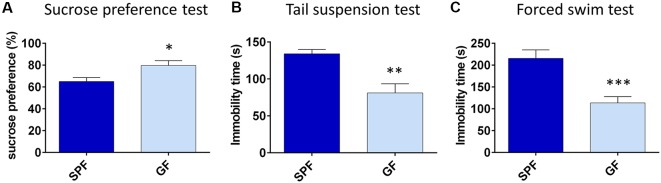
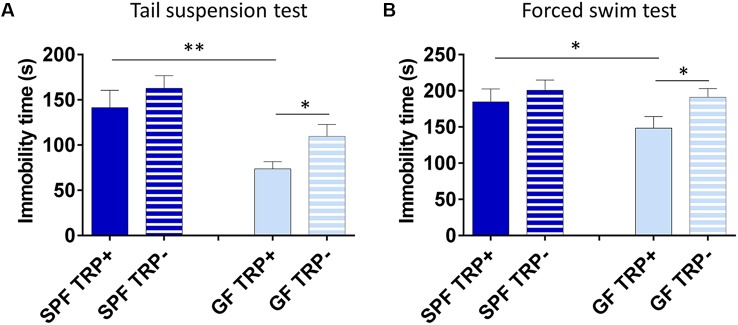
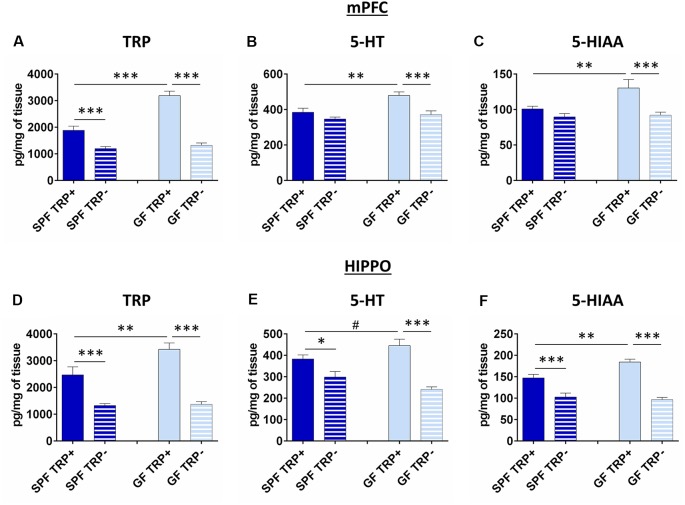
During the past decade, there has been a substantial rise in the knowledge about the effects of gut microbiota on host physiology and behavior, including depressive behavior. Initial studies determined that gut microbiota can regulate host tryptophan levels, which is a main serotonin precursor. A dysfunctional serotonergic system is considered to be one of the main factors contributing to the development of depression. Therefore, we hypothesized that regulation of brain tryptophan and serotonin can explain, at least partly, the effects of microbiota on depressive behavior. To test this hypothesis, we examined depressive-like behavior and brain levels of serotonin and tryptophan, of germ free (GF) and specific-pathogen free (SPF) mice under basal conditions, or after acute tryptophan depletion (ATD) procedure, which is a method to decrease tryptophan and serotonin levels in the brain. In basal conditions, GF mice exhibited less depressive-like behavior in sucrose preference, tail-suspension and forced swim tests, compared to SPF mice. In addition, in mice that were not subjected to ATD, GF mice displayed higher levels of tryptophan, serotonin and 5-hydroxyindoleacetic acid (the main degradation product of serotonin) in medial prefrontal cortex (mPFC) and hippocampus (HIPPO), compared to SPF mice. Interestingly, ATD increased depressive-like behavior of GF, but not of SPF mice. These behavioral changes were accompanied by a stronger reduction of tryptophan, serotonin and 5-hydroxyindoleacetic acid in mPFC and HIPPO in GF mice after ATD, when compared to SPF mice. Therefore, the serotonergic system of GF mice is more vulnerable to the acute challenge of tryptophan reduction, and GF mice after tryptophan reduction behave more similarly to SPF mice. These data provide functional evidence that microbiota affects depression-like behavior through influencing brain tryptophan accessibility and the serotonergic system.
Overview
The claims and statistics of this paper haven’t been checked yet.
Run the check — free, no account needed. It reads the open-access text and checks the sources it cites.
Integrity signals
Registry
Cites
Statistics
Figures
Verification
Claims the paper makes
The claims and statistics of this paper haven’t been checked yet.
Run the check — free, no account needed. It reads the open-access text and checks the sources it cites.
Claims other papers make about this one
Each is checked against this paper’s own text: does it say what the citing paper says it does?
The source backs part of the claim, not all of it — or backs it for a different population, condition or comparison.
In the citing paper
“These changes include increased hippocampal dopamine D1 receptor mRNA levels and decreased dopamine D1 receptor in the striatum and nucleus accumbens, as well as increased serotonin in the blood and hippocampus, with decreased serotonin receptor expression, respectively.”
From Signalling cognition: The gut microbiota and hypothalamic-pituitary-adrenal axis (2023) · cites this paper as [378]
Experimental — accuracy not yet measuredIn the citing paper
“Several metabolomic studies show alterations in the dopamine and serotonin systems (124, 189, 350, 378–380).”
From Signalling cognition: The gut microbiota and hypothalamic-pituitary-adrenal axis (2023) · cites this paper as [378]
In the citing paper
“Additionally, the production of 5-HT can affect peripheral tryptophan availability and, thus, indirectly affect brain 5-HT levels, suggesting that peripheral alterations in 5-HT can affect the central 5-HT signaling system (390, 391).”
From Diet and the Microbiota–Gut–Brain Axis: Sowing the Seeds of Good Mental Health (2021) · cites this paper as [391]
Self-check
Percentages, sums and reported differences re-computed from the paper’s own numbers.
The self-check needs the paper’s full text.
Citations
Cites
Stress and the brain: from adaptation to disease
de Kloet, E. R., Joëls, M., & Holsboer, F. (2005) · Nature Reviews Neuroscience · doi:10.1038/nrn1683 · Cited by 4,621
Indigenous bacteria from the gut microbiota regulate host serotonin biosynthesis
Yano, J. M., Yu, K., Donaldson, G. P., Shastri, G. G., Ann, P., Ma, L., Nagler, C. R., Ismagilov, R. F., Mazmanian, S. K., & Hsiao, E. Y. (2015) · Cell · doi:10.1016/j.cell.2015.02.047 · Cited by 3,614
Normal gut microbiota modulates brain development and behavior
Heijtz, R. D., Wang, S., Anuar, F., Qian, Y., Björkholm, B., Samuelsson, A., Hibberd, M. L., Forssberg, H., & Pettersson, S. (2011) · Proceedings of the National Academy of Sciences · doi:10.1073/pnas.1010529108 · Cited by 3,228
Gut Microbiota Regulation of Tryptophan Metabolism in Health and Disease
Agus, A., Planchais, J., & Sokol, H. (2018) · Cell Host & Microbe · doi:10.1016/j.chom.2018.05.003 · Cited by 3,180 · cited 2×
“TRP, which is an essential amino acid, is mainly supplied from ingested food and is a biosynthetic precursor of a large number of host as well as microbial metabolites (Milligan et al., 1978; Lee and Lee, 2010; Agus et al., 2018).”
BackgroundSudo, N., Chida, Y., Aiba, Y., Sonoda, J., Oyama, N., Yu, X., Kubo, C., & Koga, Y. (2004) · The Journal of Physiology · doi:10.1113/jphysiol.2004.063388 · Cited by 2,735
Metabolomics analysis reveals large effects of gut microflora on mammalian blood metabolites
Wikoff, W. R., Anfora, A. T., Liu, J., Schultz, P. G., Lesley, S. A., Peters, E. C., & Siuzdak, G. (2009) · Proceedings of the National Academy of Sciences · doi:10.1073/pnas.0812874106 · Cited by 2,677
The Epidemiology of Depression Across Cultures
Kessler, R. C., & Bromet, E. J. (2013) · Annual Review of Public Health · doi:10.1146/annurev-publhealth-031912-114409 · Cited by 2,657
Structure and function of the brain serotonin system
Jacobs, B. L., & Azmitia, E. C. (1992) · Physiological Reviews · doi:10.1152/physrev.1992.72.1.165 · Cited by 2,574
Altered fecal microbiota composition in patients with major depressive disorder
Jiang, H., Ling, Z., Zhang, Y., Mao, H., Ma, Z., Yin, Y., Wang, W., Tang, W., Tan, Z., Shi, J., et al. (2015) · Brain, Behavior, and Immunity · doi:10.1016/j.bbi.2015.03.016 · Cited by 2,275
Belmaker, R. H., & Agam, G. (2008) · New England Journal of Medicine · doi:10.1056/nejmra073096 · Cited by 2,166
Research works printed but not linked: 1
- Yamaguchi, 1981, Demonstration of tryptophan 5-monooxygenase activity in human-brain by highly sensitive high-performance liquid-chromatography with fluorometric detection, Biochem. Int., 2, 295
Cited by
Sorted by citations
Tryptophan Metabolism: A Link Between the Gut Microbiota and Brain
Gao, K., Mu, C.-L., Farzi, A., & Zhu, W.-Y. (2020) · Advances in Nutrition · doi:10.1093/advances/nmz127 · Cited by 1,029
Diet and depression: Exploring the biological mechanisms of action
Marx, W., Lane, M., Hockey, M., Aslam, H., Berk, M., Walder, K., Borsini, A., Firth, J., Pariante, C. M., Berding, K., et al. (2021) · Molecular Psychiatry · doi:10.1038/s41380-020-00925-x · Cited by 685
Diet and the Microbiota–Gut–Brain Axis: Sowing the Seeds of Good Mental Health
Berding, K., Vlckova, K., Marx, W., Schellekens, H., Stanton, C., Clarke, G., Jacka, F., Dinan, T. G., & Cryan, J. F. (2021) · Advances in Nutrition · doi:10.1093/advances/nmaa181 · Cited by 451
Signalling cognition: The gut microbiota and hypothalamic-pituitary-adrenal axis
Rusch, J. A., Layden, B. T., & Dugas, L. R. (2023) · Frontiers in Endocrinology · doi:10.3389/fendo.2023.1130689 · Cited by 415
Gut microbial molecules in behavioural and neurodegenerative conditions
Needham, B. D., Kaddurah-Daouk, R., & Mazmanian, S. K. (2020) · Nature Reviews Neuroscience · doi:10.1038/s41583-020-00381-0 · Cited by 379
Feeding gut microbes to nourish the brain: unravelling the diet–microbiota–gut–brain axis
Schneider, E., O’Riordan, K. J., Clarke, G. A., & Cryan, J. F. (2024) · Nature Metabolism · doi:10.1038/s42255-024-01108-6 · Cited by 317
Focus on the essentials: tryptophan metabolism and the microbiome-gut-brain axis
Gheorghe, C. E., Martin, J. A., Manriquez, F. V., Dinan, T. G., Cryan, J. F., & Clarke, G. (2019) · Current Opinion in Pharmacology · doi:10.1016/j.coph.2019.08.004 · Cited by 212
The Role of Gut Bacterial Metabolites in Brain Development, Aging and Disease
Tran, S. M.-S., & Mohajeri, M. H. (2021) · Nutrients · doi:10.3390/nu13030732 · Cited by 213
Microbial-derived metabolites as a risk factor of age-related cognitive decline and dementia
Connell, E., Le Gall, G., Pontifex, M. G., Sami, S., Cryan, J. F., Clarke, G., Müller, M., & Vauzour, D. (2022) · Molecular Neurodegeneration · doi:10.1186/s13024-022-00548-6 · Cited by 208
Ortega, M. A., Álvarez-Mon, M. Á., Montero, C. G., Fraile‐Μartinez, O., Guijarro, L. G., Lahera, G., Monserrat, J., Valls, P., Mora, F., Rodríguez–Jiménez, R., et al. (2022) · Metabolites · doi:10.3390/metabo12010050 · Cited by 131
Qian, X., Li, Q., Zhu, H., Chen, Y., Lin, G., Zhang, H., Chen, W., Wang, G., & Tian, P. (2024) · Cell Reports Medicine · doi:10.1016/j.xcrm.2024.101798 · Cited by 135
Wu, L., Tang, Z., Chen, H., Ren, Z., Ding, Q., Liang, K., & Sun, Z. (2020) · Animal nutrition · doi:10.1016/j.aninu.2020.11.003 · Cited by 124
Settanni, C. R., Ianiro, G., Bibbò, S., Cammarota, G., & Gasbarrini, A. (2021) · Progress in Neuro-Psychopharmacology and Biological Psychiatry · doi:10.1016/j.pnpbp.2021.110258 · Cited by 106
Tryptophan metabolites in depression: Modulation by gut microbiota
Lukić, I., Ivković, S., Mitić, M., & Adžić, M. (2022) · Frontiers in Behavioral Neuroscience · doi:10.3389/fnbeh.2022.987697 · Cited by 113
Ghiboub, M., Verburgt, C. M., Sovran, B., Benninga, M. A., de Jonge, W. J., & Limbergen, J. V. (2020) · Nutrients · doi:10.3390/nu12092846 · Cited by 97
Li, S., Hua, D., Wang, Q., Yang, L., Wang, X., Luo, A., & Yang, C. (2019) · The International Journal of Neuropsychopharmacology · doi:10.1093/ijnp/pyz061 · Cited by 94
Wang, Z., Shao, D., Wu, S., Song, Z., & Shi, S. (2022) · Ecotoxicology and Environmental Safety · doi:10.1016/j.ecoenv.2022.114053 · Cited by 76
He, Y., Wang, K., Su, N., Yuan, C., Zhang, N., Hu, X., Fu, Y., & Zhao, F. (2024) · Journal of Cellular and Molecular Medicine · doi:10.1111/jcmm.70099 · Cited by 83
Liaqat, H., Parveen, A., & Kim, S. Y. (2022) · Nutrients · doi:10.3390/nu14163270 · Cited by 72
Gut microbiota and neuropsychiatric disorders: Implications for neuroendocrine-immune regulation
Ge, T., Yao, X., Zhao, H., Yang, W., Zou, X., Peng, F., Li, B., & Cui, R. (2021) · Pharmacological Research · doi:10.1016/j.phrs.2021.105909 · Cited by 62
Davies, C., Mishra, D., Eshraghi, R. S., Mittal, J., Sinha, R., Bulut, E., Mittal, R., & Eshraghi, A. A. (2021) · Neuroscience & Biobehavioral Reviews · doi:10.1016/j.neubiorev.2021.07.001 · Cited by 61
The contribution of age-related changes in the gut-brain axis to neurological disorders
Khan, R., Gesù, C. M. D., Lee, J., & McCullough, L. D. (2024) · Gut Microbes · doi:10.1080/19490976.2024.2302801 · Cited by 62
Al-Khafaji, A. H., Jepsen, S. D., Christensen, K. R., & Vigsnæs, L. K. (2020) · Journal of Functional Foods · doi:10.1016/j.jff.2020.104176 · Cited by 62
Murray, N., Khalaf, S. Y. A., Bastiaanssen, T. F. S., Kaulmann, D., Lonergan, E., Cryan, J. F., Clarke, G. A., Khashan, A. S., & O’Connor, K. (2023) · Schizophrenia Bulletin · doi:10.1093/schbul/sbad049 · Cited by 60
Boscaini, S., Skuse, P., Nilaweera, K. N., Cryan, J. F., & Cotter, P. D. (2023) · Trends in Food Science & Technology · doi:10.1016/j.tifs.2022.12.009 · Cited by 59
Kezer, G., Paramithiotis, S., Khwaldia, K., Harahap, I. A., Čagalj, M., Šimat, V., Smaoui, S., Elfalleh, W., Özoğul, F., & Esatbeyoglu, T. (2025) · Frontiers in Microbiology · doi:10.3389/fmicb.2025.1651965 · Cited by 61
Sun, Y., Cheng, L., Zeng, X., Zhang, X., Liu, Y., Wu, Z., & Weng, P. (2020) · International Journal of Biological Macromolecules · doi:10.1016/j.ijbiomac.2020.12.164 · Cited by 51
Lactobacillus rhamnosus: An emerging probiotic with therapeutic potential for depression
Feng, J. B., Cen, Q., Cui, Y., Hu, X., Li, M., Wang, L., Wei, J., Sun, N., Wang, J., & Zhang, A. (2024) · Pharmacological Research · doi:10.1016/j.phrs.2024.107541 · Cited by 51
Potential Roles of Enterochromaffin Cells in Early Life Stress-Induced Irritable Bowel Syndrome
Tao, E., Zhu, Z., Hu, C., Long, G., Chen, B., Guo, R. C., Fang, M., & Jiang, M. (2022) · Frontiers in Cellular Neuroscience · doi:10.3389/fncel.2022.837166 · Cited by 47
Clerici, L., Bottari, D., & Bottari, B. (2025) · Current Nutrition Reports · doi:10.1007/s13668-025-00619-2 · Cited by 54
Prenatal stress-induced disruptions in microbial and host tryptophan metabolism and transport
Galley, J. D., Chen, H. J., Antonson, A. M., & Gur, T. (2021) · Behavioural Brain Research · doi:10.1016/j.bbr.2021.113471 · Cited by 47
Gut microbiota in mental health and depression: role of pre/pro/synbiotics in their modulation
Methiwala, H. N., Vaidya, B., Addanki, V. K., Bishnoi, M., Sharma, S. S., & Kondepudi, K. K. (2021) · Food & Function · doi:10.1039/d0fo02855j · Cited by 38
Murakami, Y., Imamura, Y., Kasahara, Y., Yoshida, C., Momono, Y., Fang, K., Sakai, D., Konishi, Y., & Nishiyama, T. (2023) · Cells · doi:10.3390/cells12071087 · Cited by 36
Dual-directional regulation of spinal cord injury and the gut microbiota
Cui, Y., Liu, J., Xiao, L., Liu, S., Chen, H., Wei, Z., Li, H., Yang, Y., Zheng, C., & Li, Z. (2023) · Neural Regeneration Research · doi:10.4103/1673-5374.380881 · Cited by 38
Stress, inflammation, microbiome and depression
Medina-Rodriguez, E. M., Cruz, A. A., Abreu, J. C. D., & Beurel, E. (2023) · Pharmacology Biochemistry and Behavior · doi:10.1016/j.pbb.2023.173561 · Cited by 41
Mood and microbes: a comprehensive review of intestinal microbiota’s impact on depression
Luqman, A., He, M., Hassan, A., Ullah, M., Zhang, L., Khan, M. R., Din, A. U., Ullah, K., Wang, W. J., & Wang, G. (2024) · Frontiers in Psychiatry · doi:10.3389/fpsyt.2024.1295766 · Cited by 39
van Zundert, S. K. M., Broekhuizen, M., Smit, A. J., van Rossem, L., Mirzaian, M., Willemsen, S. P., Danser, A. J., de Rijke, Y. B., Reiss, I. K. M., Merkus, D., et al. (2022) · International Journal of Tryptophan Research · doi:10.1177/11786469221135545 · Cited by 37
Neurobiological mechanisms in the kynurenine pathway and major depressive disorder
Bertollo, A. G., Mingoti, M. E. D., & Ignácio, Z. M. (2024) · Reviews in the Neurosciences · doi:10.1515/revneuro-2024-0065 · Cited by 37
Kohl, H. M., Castillo, A., & Ochoa‐Repáraz, J. (2020) · Diseases · doi:10.3390/diseases8030033 · Cited by 36
Vurallı, D., Akgör, M. C., Dağıdır, H. G., Onat, P. Ş., Yalınay, M., Sezerman, O. U., & Bolay, H. (2024) · The Journal of Headache and Pain · doi:10.1186/s10194-024-01891-3 · Cited by 30
Samsuzzaman, M., Lee, J. H., Hong, S., Park, H., Chang, K., Kim, H.-B., Park, M. G., Eo, H., Oh, M. S., & Kim, S. Y. (2024) · Biological Research · doi:10.1186/s40659-024-00572-4 · Cited by 34
The Intervention of Prebiotics on Depression via the Gut–Brain Axis
He, Q., Si, C., Sun, Z., Chen, Y., & Zhang, X. (2022) · Molecules · doi:10.3390/molecules27123671 · Cited by 29
Sochacka, K., Kotowska, A., & Lachowicz, S. (2024) · Nutrients · doi:10.3390/nu16071039 · Cited by 34
Francis, H., Stevenson, R. J., Tan, L. S. Y., Ehrenfeld, L., Byeon, S., Attuquayefio, T., Gupta, D., & Lim, C. K. (2022) · Frontiers in Nutrition · doi:10.3389/fnut.2022.945538 · Cited by 27
Tryptophan Intake and Tryptophan Losses in Hemodialysis Patients: A Balance Study
Post, A., Huberts, M., Poppe, E. S. J. M., van Faassen, M. H. J. R., Kema, I. P., Vogels, S., Geleijnse, J. M., Westerhuis, R., Ipema, K. J. R., Bakker, S. J. L., et al. (2019) · Nutrients · doi:10.3390/nu11122851 · Cited by 25
Graves’ disease as a driver of depression: a mechanistic insight
Song, Y., Wang, X., Ma, W., Yang, Y., Yan, S., Sun, J., Zhu, X., & Tang, Y. (2023) · Frontiers in Endocrinology · doi:10.3389/fendo.2023.1162445 · Cited by 26
Comai, S., Núñez, N. A., Atkin, T., Ghabrash, M. F., Zakarian, R., Fielding, A., Saint-Laurent, M., Low, N. C. P., Sauber, G., Ragazzi, E., et al. (2024) · BMC Medicine · doi:10.1186/s12916-024-03248-8 · Cited by 22
Lin, S., Li, Q., Xu, Z., Chen, Z., Tao, Y., Tong, Y., Wang, T., Chen, S., & Wang, P. (2022) · Psychopharmacology · doi:10.1007/s00213-022-06239-w · Cited by 22
Multi-Omics Strategies for Investigating the Microbiome in Toxicology Research
Morgan, E. W., Perdew, G. H., & Patterson, A. D. (2022) · Toxicological Sciences · doi:10.1093/toxsci/kfac029 · Cited by 23
Whey protein isolate attenuates depression-like behavior developed in a mouse model of breast tumor
Xia, S., Maitiniyazi, G., Liu, Y., Chen, Y., Guo, M., He, J., Tao, W., & Li, Z. (2023) · Food Research International · doi:10.1016/j.foodres.2023.112849 · Cited by 21
Vicentini, F., Mathews, A. J., Pittman, Q. J., Swain, M. G., Sharkey, K. A., & Hirota, S. A. (2021) · Brain Behavior and Immunity · doi:10.1016/j.bbi.2021.08.228 · Cited by 22
A Gut Feeling: The Importance of the Intestinal Microbiota in Psychiatric Disorders
Ochoa‐Repáraz, J., Ramelow, C. C., & Kasper, L. H. (2020) · Frontiers in Immunology · doi:10.3389/fimmu.2020.510113 · Cited by 21
Deore, R., Ansari, R., Awathale, S. N., Shelke, M., Badwaik, H. R., Goyal, S. N., & Nakhate, K. T. (2024) · European Journal of Pharmacology · doi:10.1016/j.ejphar.2024.176707 · Cited by 20
HIV-associated neurocognitive disorder: key implications of the microbiota-gut-brain axis
Hu, A., Zaongo, S. D., Harypursat, V., Wang, X., Ouyang, J., & Chen, Y. (2024) · Frontiers in Microbiology · doi:10.3389/fmicb.2024.1428239 · Cited by 18
Galley, J. D., Rajasekera, T. A., Bennouna, D., Batabyal, A., Verosky, B. G., Woodke, S. T., Stokes, J., Brown, A. K., Murthy, S., Kopec, R. E., et al. (2024) · Beneficial Microbes · doi:10.1163/18762891-bja00047 · Cited by 17
Reemst, K., Tims, S., Yam, K., Mischke, M., Knol, J., Brul, S., Schipper, L., & Kőrösi, A. (2022) · mSystems · doi:10.1128/msystems.00180-22 · Cited by 19
Kavyani, B., Ahn, S. B., Missailidis, D., Annesley, S. J., Fisher, P. R., Schloeffel, R., Guillemin, G. J., Lovejoy, D. B., & Heng, B. (2023) · Molecular Neurobiology · doi:10.1007/s12035-023-03784-z · Cited by 18
Serotonin: The Link between Gut Microbiome and Brain
Margoob, M. A., Kouser, S., & Jan, N. (2024) · IntechOpen eBooks · doi:10.5772/intechopen.1003826 · Cited by 22
Mental Disorders Linked to Crosstalk between The Gut Microbiome and The Brain
Choi, T.-Y., Choi, Y. P., & Koo, J. W. (2020) · Experimental Neurobiology · doi:10.5607/en20047 · Cited by 18
Leucine deprivation results in antidepressant effects via GCN2 in AgRP neurons
Yuan, F., Wu, S., Zhou, Z., Jiao, F., Yin, H., Niu, Y., Jiang, H., Chen, S., & Guo, F. (2023) · Life Metabolism · doi:10.1093/lifemeta/load004 · Cited by 14
Tryptophan and its role in sleep and mood
Yousef, P., Rosen, J., & Shapiro, C. M. (2024) · Studies in natural products chemistry · doi:10.1016/b978-0-443-15589-5.00001-3 · Cited by 12
Galley, J. D., King, M. K., Rajasekera, T. A., Batabyal, A., Woodke, S. T., & Gur, T. (2024) · Brain Behavior and Immunity · doi:10.1016/j.bbi.2024.08.006 · Cited by 13
Wang, L., Qin, N., Shi, L., Liu, R., & Zhu, T. (2024) · Molecular Nutrition & Food Research · doi:10.1002/mnfr.202400639 · Cited by 11
Ghernati, L., Tamim, H., Chokor, F. A. Z., Taktouk, M., Assi, B., Nasreddine, L., & Elbejjani, M. (2024) · Nutrition Research · doi:10.1016/j.nutres.2024.11.011 · Cited by 12
Schapira, I., O'Neill, M. R., Russo-Savage, L., Narla, T., Laprade, K. A., Stafford, J. M., & Ou, Y. (2023) · RSC Advances · doi:10.1039/d3ra04551j · Cited by 10
Kärkkäinen, O. K., Tolmunen, T., Kivimäki, P., Kurkinen, K., Ali-Sisto, T., Mäntyselkä, P. T., Valkonen‐Korhonen, M., Koivumaa-Honkanen, H. T., Honkalampi, K. M., Ruusunen, A. A., et al. (2024) · Alcohol · doi:10.1016/j.alcohol.2024.01.005 · Cited by 11
Vajdi, M., Khorvash, F., & Askari, G. (2024) · Food & Function · doi:10.1039/d4fo02796e · Cited by 10
Rotem‐Kohavi, N., Keane, J., Clarke, G. A., Dinan, T. G., Cryan, J. F., McCarthy, F. P., Oberlander, T. F., & O’Mahony, S. M. (2021) · Springer eBooks · doi:10.1007/978-3-030-60159-1_8 · Cited by 9
Nan, N., Wang, Q., Li, M., Xu, Y., Guo, X., Xu, R., Ma, Z., Wang, S., Li, J., Zhao, H., et al. (2023) · Oxidative Medicine and Cellular Longevity · doi:10.1155/2023/2302653 · Cited by 8
Eitan, S., Madison, C. A., & Kuempel, J. (2021) · Neuroscience & Biobehavioral Reviews · doi:10.1016/j.neubiorev.2021.04.019 · Cited by 8
Tryptophan and Membrane Mobility as Conditioners and Brokers of Gut–Brain Axis in Depression
Cocchi, M., & Traina, G. (2020) · Applied Sciences · doi:10.3390/app10144933 · Cited by 9
Tryptophan Metabolism and the Microbiome-Gut-Brain Axis
Clarke, G. A., Villalobos-Manríquez, F., & Marin, D. C. (2021) · Oxford University Press eBooks · doi:10.1093/oxfordhb/9780190931544.013.13 · Cited by 7
Kaikai, N.-E., Ba-M’hamed, S., Slimani, A., Dilagui, I., Hanchi, A. L., Soraa, N., Mezrioui, N., Bennis, M., & Ghanima, A. (2023) · Environmental Toxicology and Pharmacology · doi:10.1016/j.etap.2023.104066 · Cited by 7
Hu, X.-Q., Fang, Z., Wang, F., Mei, Z., Huang, X., Lin, Y., & Lin, Z. (2024) · Cerebral Cortex · doi:10.1093/cercor/bhae056 · Cited by 7
Holistic Fitness: Microbiomes are Part of the Holobiont’s Fitness
ROSENBERG, E. B. (2021) · The microbiomes of humans, animals, plants, and the environment · doi:10.1007/978-3-030-65317-0_4 · Cited by 7
Effect of Human Infant Gut Microbiota on Mouse Behavior, Dendritic Complexity, and MyelinationPreprint
Dubey, H., Roychoudhury, R., Alex, A., Best, C., Liu, S., White, A., Carlson, A. L., Azcárate-Peril, M. A., Mansfield, L. S., & Knickmeyer, R. C. (2023) · bioRxiv (Cold Spring Harbor Laboratory) · doi:10.1101/2023.10.24.563309 · Cited by 6
Serotonin and the gut microbiome: Pathways, functions, and health implications
Abubaker, S., Miri, S., & Hammami, R. (2026) · The Microbe · doi:10.1016/j.microb.2026.100668 · Cited by 6
de Brito, C. B., Arifa, R. D. D. N., Bezerra, R. D. O., Igídio, C. E. D., de Amorim‐Santos, B. M., Santos, A. C. P. D. M., Barbosa, L. M., Barbosa, J. P. P., Cassiano, L. M. G., Kohlhoff, M., et al. (2025) · Immunology · doi:10.1111/imm.13932 · Cited by 5
Role of gut microbiota in the 5-hydroxytryptamine signal transduction mechanism
Hu, G., Zhu, Y., Ding, S., & Zheng, L. (2023) · Metabolism and Translational Medicine · doi:10.54844/mtm.2023.0344 · Cited by 7
Polyák, H., Galla, Z., Rajda, C., Monostori, P. B., Klivènyi, P., & Vécsei, L. (2025) · International Journal of Molecular Sciences · doi:10.3390/ijms26030976 · Cited by 4
Biosignals in the Gut–Brain Axis Transmission: Function and Detection
Sun, L., Bai, Y., Kang, F., & Lei, Y. (2024) · ACS Applied Materials & Interfaces · doi:10.1021/acsami.4c00194 · Cited by 3
Exploring gut microbiota and spinal cord injury: pathogenesis, treatment strategies and prospects
Chen, Q., Zhong, M., & Ye, L. (2025) · Frontiers in Immunology · doi:10.3389/fimmu.2025.1693883 · Cited by 3
Marano, G., Acanfora, M., Conci, L., Traversi, G., Mazza, O., Capristo, E., Gaetani, E., Franceschini, G., & Mazza, M. (2026) · Metabolites · doi:10.3390/metabo16060400 · Cited by 3
The Influence of Gut Microbiota in Psychosis
Murray, N., Ghomi, R. H., Nemani, K., & O’Connor, K. (2024) · Elsevier eBooks · doi:10.1016/b978-0-323-99971-7.00018-7 · Cited by 3
From Gut Microbiomes to Infectious Pathogens: Neurological Disease Game Changers
Muhasina, K. M., Ghosh, P., Nagappan, K., Palaniswamy, D. S., Begum, R., Islam, M. R., Tagde, P., Shaikh, N. K., Farahim, F., & Mondal, T. K. (2024) · Molecular Neurobiology · doi:10.1007/s12035-024-04323-0 · Cited by 5
Host and microbiota interaction in depression syndrome
Mohsenipour, Z., Keshavarz, P., & Moghanloo, Z. S. (2025) · Brain Disorders · doi:10.1016/j.dscb.2025.100291 · Cited by 2
Research Progress of Tryptophan and Its Metabolites in the Microbial-Gut-Brain Axis
唐, 婕. (2024) · Advances in Clinical Medicine · doi:10.12677/acm.2024.1461901 · Cited by 2
Hu, X., Pang, N., Wang, H., Wang, Z., Li, F., Yang, J., Yu, J., Yang, Y., Sun, M.-F., & Lv, S. (2025) · Animal Feed Science and Technology · doi:10.1016/j.anifeedsci.2025.116287 · Cited by 2
Effect of Diet on Depression: A Review of Nutritional Solutions
Ahmadnia, H., Bahrami, H., & Mohamadzadeh, S. (2023) · World Nutrition · doi:10.26596/wn.202314128-57 · Cited by 2
Modulating the Gut Microbiota to Combat Drug-Induced Liver Injury: A New Frontier in Hepatic Health
Ye, Y., & Chu, H. (2025) · IntechOpen eBooks · doi:10.5772/intechopen.1009178 · Cited by 1
The role of microbiome in gut-brain-axis dysbiosis causing depression: From mechanisms to treatment
Mi, J., Morys, J., Nowacka-Chmielewska, M. M., & Burek, M. (2025) · International review of neurobiology · doi:10.1016/bs.irn.2025.03.006 · Cited by 1
Distinct Gut Microbiota Profiles Reflect Severity in Chronic Insomnia Disorder
Liu, Y., Cai, Y., Shi, X., Fan, M., Zhang, X., Lin, J., Fan, X., Liu, B., & Pan, J. (2025) · Brain and Behavior · doi:10.1002/brb3.71155 · Cited by 1
Goes, V. D. A., Tajudeen, Y. A., & El‐Sherbini, M. S. (2022) · Challenges · doi:10.3390/challe13020063 · Cited by 1
Pedroso-Roussado, C., Guppy, F. M., Bowler, L. D., & Inácio, J. (2022) · Preprints.org · doi:10.20944/preprints202212.0205.v1
Knudsen, J. K. (2021) · VBN Forskningsportal (Aalborg Universitet) · doi:10.54337/aau455013245
Electrochemistry meets mass spectrometry
Sanz, J. A. (2022) · University of Groningen research database (University of Groningen / Centre for Information Technology) · doi:10.33612/diss.256856845
Microbiota to brain communication
Foster, J. A., & Clarke, G. A. (2024) · Elsevier eBooks · doi:10.1016/b978-0-12-814800-6.00007-8
Gut–brain communication through microbes
Green, M., & Foster, J. A. (2024) · Elsevier eBooks · doi:10.1016/b978-0-323-90144-4.00002-1
谭, 林. (2025) · Journal of Clinical Personalized Medicine · doi:10.12677/jcpm.2025.41016
COMAI, S., Nunez, N., Atkin, T., Ghabrash, M. F., Zakarian, R., Fielding, A., Saint-Laurent, M., Low, N. C. P., Sauber, G., Ragazzi, E., et al. (2024) · Figshare · doi:10.6084/m9.figshare.25067208
Metadata
- Authors
- Lukić, I., Getselter, D., Koren, O., & Elliott, E.
- Affiliations
- Bar-Ilan University (IL)
- Corresponding author
- Elliott, Evan
- Venue
- Frontiers in Behavioral Neuroscience
- Publisher
- Frontiers Media SA
- Published
- 2019-06-04
- Volume
- 13
- Pages
- 123-123
- ISSN
- 1662-5153 (ISSN-L)
- PMC
- PMC6558209
- OpenAlex
- W2948144072
- Cited by
- 102
- References
- 59
- Citations by year
- 2026: 4 · 2025: 11 · 2024: 29 · 2023: 16 · 2022: 15 · 2021: 12 · 2020: 11 · 2019: 4
- FWCI
- 3.44
- Type
- journal article
- Language
- en
- Open access
- gold
- doi.org
- Licence
- Locations
- Frontiers in Behavioral Neuroscience (publishedVersion, cc-by)
- Europe PMC (PubMed Central) (publishedVersion, cc-by)
- PubMed Central (publishedVersion, cc-by)
- PubMed (publishedVersion)
- DOAJ (DOAJ: Directory of Open Access Journals) (submittedVersion, cc-by-sa)
- Funders
- Israel Science Foundation
- Teva Pharmaceutical Industries
- Topics
- Life Sciences › Neuroscience › Biological Psychiatry › Tryptophan and brain disorders
- Life Sciences › Biochemistry, Genetics and Molecular Biology › Molecular Biology › Gut microbiota and health
- Life Sciences › Neuroscience › Cellular and Molecular Neuroscience › Neurotransmitter Receptor Influence on Behavior
- Keywords
- gut microbiota, depression-like behavior, tryptophan, serotonin, acute tryptophan depletion, germ-free mice, serotonergic system, 5-hydroxyindoleacetic acid, medial prefrontal cortex, hippocampus, depression
About these checks
Registry, retraction, Cites and statistics results are computed, not judged, with one exception: a printed reference that no index lists is read once by a model before it counts as a citation error. Claims are extracted by a model and kept only when their quote appears verbatim in the text; each cited source is then checked, with a model’s help, for whether it says what the claim relies on. Those verdicts can be wrong — read the claim’s quote and the cited source before relying on one.
Statistics and arithmetic are recomputed, not judged.
Confidence bands are shown only for fields calibrated on our annotated test set. None is calibrated yet, so no band is shown.
What counts as a claim ›How we measure confidence ›How we check this ›
Are you an author, or do you see a problem with this page? Request a review
