

The DOI matches its Crossref record; 115 of the 116 references it cites were found in a registry or an index, and 1 are not checked yet.
Intrinsically Photosensitive Retinal Ganglion Cells of the Human Retina
Open accessAbstract
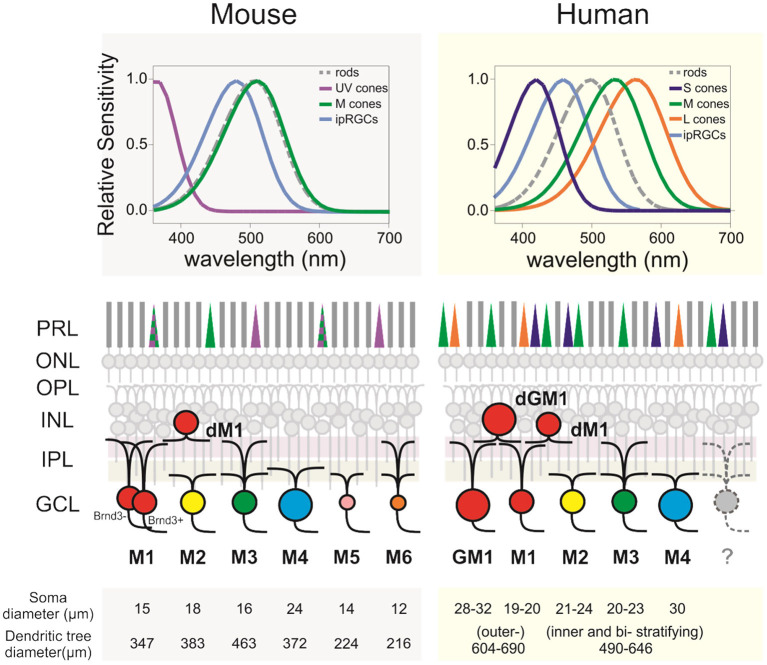
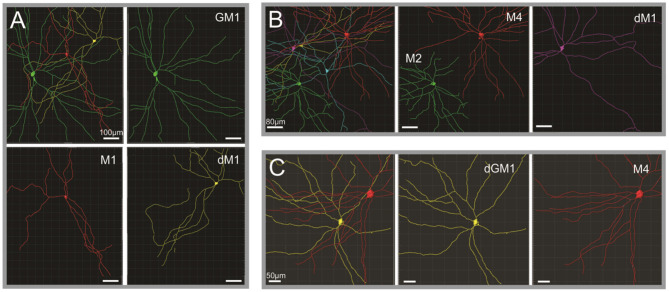
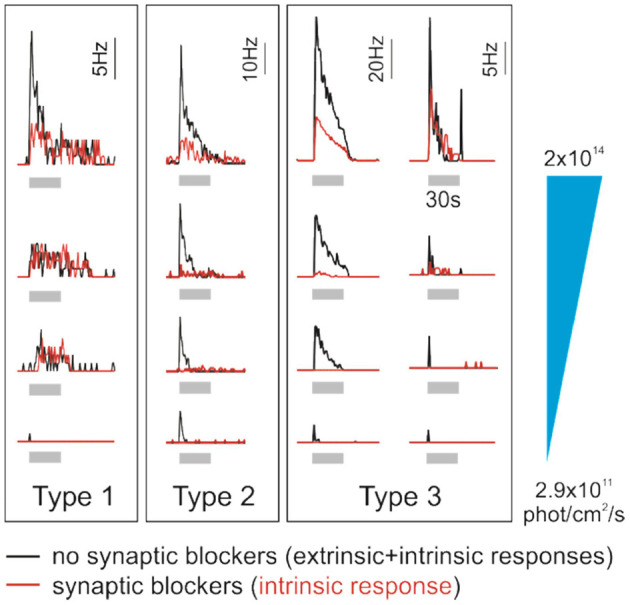
Light profoundly affects our mental and physical health. In particular, light, when not delivered at the appropriate time, may have detrimental effects. In mammals, light is perceived not only by rods and cones but also by a subset of retinal ganglion cells that express the photopigment melanopsin that renders them intrinsically photosensitive (ipRGCs). ipRGCs participate in contrast detection and play critical roles in non-image-forming vision, a set of light responses that include circadian entrainment, pupillary light reflex (PLR), and the modulation of sleep/alertness, and mood. ipRGCs are also found in the human retina, and their response to light has been characterized indirectly through the suppression of nocturnal melatonin and PLR. However, until recently, human ipRGCs had rarely been investigated directly. This gap is progressively being filled as, over the last years, an increasing number of studies provided descriptions of their morphology, responses to light, and gene expression. Here, I review the progress in our knowledge of human ipRGCs, in particular, the different morphological and functional subtypes described so far and how they match the murine subtypes. I also highlight questions that remain to be addressed. Investigating ipRGCs is critical as these few cells play a major role in our well-being. Additionally, as ipRGCs display increased vulnerability or resilience to certain disorders compared to conventional RGCs, a deeper knowledge of their function could help identify therapeutic approaches or develop diagnostic tools. Overall, a better understanding of how light is perceived by the human eye will help deliver precise light usage recommendations and implement light-based therapeutic interventions to improve cognitive performance, mood, and life quality.
Overview
The claims and statistics of this paper haven’t been checked yet.
Run the check — free, no account needed. It reads the open-access text and checks the sources it cites.
Integrity signals
Registry
Cites
Statistics
Figures
Verification
Claims the paper makes
The claims and statistics of this paper haven’t been checked yet.
Run the check — free, no account needed. It reads the open-access text and checks the sources it cites.
Claims other papers make about this one
Each is checked against this paper’s own text: does it say what the citing paper says it does?
The source backs part of the claim, not all of it — or backs it for a different population, condition or comparison.
In the citing paper
“When light enters the eye, it is detected by intrinsically photosensitive retinal ganglion cells, which then send signals to the suprachiasmatic nuclei in the hypothalamus, the brain's master clock that coordinates daily physiological rhythms [60].”
From Ocular light exposure interventions for sleep, circadian rhythms, rest-activity cycles, mood, and cognitive function in older adults: An Overview of Cochrane and non-Cochrane Systematic Reviews (2025) · cites this paper as [60]
Experimental — accuracy not yet measuredThe cited source says what the claim attributes to it.
In the citing paper
“The mechanism behind ocular light exposure interventions lies in the non‐image‐forming effects of light, mediated by specialised, intrinsically photosensitive retinal ganglion cell photoreceptors in the eye [60].”
Self-check
Percentages, sums and reported differences re-computed from the paper’s own numbers.
The self-check needs the paper’s full text.
Citations
Cites
Phototransduction by retinal ganglion cells that set the circadian clock
Berson, D. M., Dunn, F. A., & Takao, M. (2002) · Science · doi:10.1126/science.1067262 · Cited by 3,629
Action Spectrum for Melatonin Regulation in Humans: Evidence for a Novel Circadian Photoreceptor
Brainard, G. C., Hanifin, J. P., Greeson, J. M., Byrne, B., Glickman, G., Gerner, E., & Rollag, M. D. (2001) · The Journal of Neuroscience · doi:10.1523/jneurosci.21-16-06405.2001 · Cited by 1,930
Topography of ganglion cells in human retina
Curcio, C. A., & Allen, K. A. (1990) · The Journal of Comparative Neurology · doi:10.1002/cne.903000103 · Cited by 1,849
Chang, A.-M., Aeschbach, D., Duffy, J. F., & Czeisler, C. A. (2015) · Proceedings of the National Academy of Sciences · doi:10.1073/pnas.1418490112 · Cited by 1,430 · cited 1×
“Even low-level light exposure from light-emitting devices, smartphones, or tablets may disrupt sleep (5, 6).”
BackgroundDacey, D. M., Liao, H.-W., Peterson, B. B., Robinson, F. R., Smith, V. C., Pokorny, J., Yau, K.-W., & Gamlin, P. D. (2005) · Nature · doi:10.1038/nature03387 · Cited by 1,333
Thapan, K., Arendt, J., & Skene, D. J. (2001) · The Journal of Physiology · doi:10.1111/j.1469-7793.2001.t01-1-00261.x · Cited by 1,320
A Novel Human Opsin in the Inner Retina
Provencio, I., Rodriguez, I. R., Jiang, G., Hayes, W. P., Moreira, E. F., & Rollag, M. D. (2000) · The Journal of Neuroscience · doi:10.1523/jneurosci.20-02-00600.2000 · Cited by 1,290
Central projections of melanopsin‐expressing retinal ganglion cells in the mouse
Hattar, S., Kumar, M., Park, A., Tong, P., Tung, J., Yau, K., & Berson, D. M. (2006) · Journal of Comparative Neurology · doi:10.1002/cne.20970 · Cited by 996
Melanopsin: An opsin in melanophores, brain, and eye
Provencio, I., Jiang, G., De Grip, W. J., Hayes, W. P., & Rollag, M. D. (1998) · Proceedings of the National Academy of Sciences · doi:10.1073/pnas.95.1.340 · Cited by 975
Artificially lit surface of Earth at night increasing in radiance and extent
Kyba, C. C. M., Kuester, T., de Miguel, A. S., Baugh, K., Jechow, A., Hölker, F., Bennie, J., Elvidge, C. D., Gaston, K. J., & Guanter, L. (2017) · Science Advances · doi:10.1126/sciadv.1701528 · Cited by 958
Cited by
Sorted by citations
Blue Light Exposure: Ocular Hazards and Prevention—A Narrative Review
Cougnard‐Grégoire, A., Merle, B. M. J., Aslam, T. M., Seddon, J. M., Aknin, I., Klaver, C. C. W., Garhöfer, G., García‐Layana, A., Minnella, A. M., da Silva, R. M., et al. (2023) · Ophthalmology and Therapy · doi:10.1007/s40123-023-00675-3 · Cited by 217
Reducing nighttime light exposure in the urban environment to benefit human health and society
Zielińska-Dąbkowska, K. M., Schernhammer, E. S., Hanifin, J. P., & Brainard, G. C. (2023) · Science · doi:10.1126/science.adg5277 · Cited by 158
Understanding light pollution: Recent advances on its health threats and regulations
Cao, M., Xu, T., & Yin, D. (2022) · Journal of Environmental Sciences · doi:10.1016/j.jes.2022.06.020 · Cited by 131
The cognitive impact of light: illuminating ipRGC circuit mechanisms
Mahoney, H. L., & Schmidt, T. M. (2024) · Nature reviews. Neuroscience · doi:10.1038/s41583-023-00788-5 · Cited by 83
Spitschan, M., Kervezee, L., Lok, R., McGlashan, E., Najjar, R. P., Allen, A. E., Andersen, M., Bará, S., Blattner, P., Blume, C., et al. (2023) · eBioMedicine · doi:10.1016/j.ebiom.2023.104889 · Cited by 60
Self-citationIt is time for a moonshot to find “Cures” for diabetic retinal disease
Levine, S. R., Sapieha, P. S., Dutta, S., Sun, J. K., & Gardner, T. W. (2022) · Progress in Retinal and Eye Research · doi:10.1016/j.preteyeres.2022.101051 · Cited by 53
The Blue Light Hazard Versus Blue Light Hype
Mainster, M. A., Findl, O., Dick, H. B., Desmettre, T. J., Ledesma‐Gil, G., Curcio, C. A., & Turner, P. L. (2022) · American Journal of Ophthalmology · doi:10.1016/j.ajo.2022.02.016 · Cited by 54
The Mammalian Circadian Time-Keeping System
Patton, A. P., & Hastings, M. H. (2023) · Journal of Huntington s Disease · doi:10.3233/jhd-230571 · Cited by 50
Gubin, D. G., Danilenko, K. V., Stefani, O., Kolomeichuk, S. N., Markov, A., Petrov, I. M., Voronin, K., Mezhakova, M. S., Borisenkov, M. F., Shigabaeva, A., et al. (2023) · Biology · doi:10.3390/biology13010022 · Cited by 53
Križaj, D., Cordeiro, S., & Strauß, O. (2022) · Progress in Retinal and Eye Research · doi:10.1016/j.preteyeres.2022.101114 · Cited by 47
Campbell, I., Sharifpour, R., & Vandewalle, G. (2023) · Clocks & Sleep · doi:10.3390/clockssleep5010012 · Cited by 43
Höhn, C., Hahn, M. A., Gruber, G., Pletzer, B. A., Cajochen, C., & Hoedlmoser, K. (2024) · Brain Communications · doi:10.1093/braincomms/fcae173 · Cited by 45
Light Pollution and Oxidative Stress: Effects on Retina and Human Health
Salceda, R. (2024) · Antioxidants · doi:10.3390/antiox13030362 · Cited by 40
PupilEXT: Flexible Open-Source Platform for High-Resolution Pupillometry in Vision Research
Zandi, B., Lode, M., Herzog, A., Sakas, G., & Khanh, T. Q. (2021) · Frontiers in Neuroscience · doi:10.3389/fnins.2021.676220 · Cited by 34
Photoreceptor contributions to the human pupil light reflex
Barrionuevo, P. A., Issolio, L., & Tripolone, M. C. (2023) · Journal of Photochemistry and Photobiology · doi:10.1016/j.jpap.2023.100178 · Cited by 34
An Anatomy of Fungal Eye: Fungal Photoreceptors and Signalling Mechanisms
Bayram, Ö. S., & Bayram, Ö. (2023) · Journal of Fungi · doi:10.3390/jof9050591 · Cited by 33
Menéndez‐Velázquez, A., Morales, D., & García-Delgado, A. B. (2022) · International Journal of Environmental Research and Public Health · doi:10.3390/ijerph19031849 · Cited by 31
The impact of lifestyle factors on myopia development: Insights and recommendations
Ba, M., & Li, Z. (2024) · AJO International · doi:10.1016/j.ajoint.2024.100010 · Cited by 35
Chen, H., Shi, X., Liu, N., Jiang, Z., Ma, C., Luo, G., Liu, S., Wei, X., Liu, Y., & Ming, D. (2024) · Journal of Photochemistry and Photobiology B Biology · doi:10.1016/j.jphotobiol.2024.112998 · Cited by 29
Chaffiol, A., Provansal, M., Joffrois, C., Blaize, K., Labernède, G., Goulet, R., Burban, E., Brazhnikova, E., Duebel, J., Pouget, P., et al. (2021) · Molecular Therapy — Methods & Clinical Development · doi:10.1016/j.omtm.2021.11.009 · Cited by 26
Circadian Disruption in Glaucoma: Causes, Consequences, and Countermeasures
Gubin, D. G., Malishevskaya, Т. N., Weinert, D., Zakharova, E., Astakhov, S. Y., & Cornélissen, G. (2024) · Frontiers in Bioscience-Landmark · doi:10.31083/j.fbl2912410 · Cited by 24
Perea‐García, J. O., Ramarajan, K., Kret, M. E., Hobaiter, C., & Monteiro, A. (2022) · Scientific Reports · doi:10.1038/s41598-022-20900-6 · Cited by 25
Circadian regulation in aging: Implications for spaceflight and life on earth
Malhan, D., Schoenrock, B., Yalçın, M., Blottner, D., & Relógio, A. (2023) · Aging Cell · doi:10.1111/acel.13935 · Cited by 25
miRNA Studies in Glaucoma: A Comprehensive Review of Current Knowledge and Future Perspectives
Dobrzycka, M., Sulewska, A., Biecek, P., Charkiewicz, R., Karabowicz, P., Charkiewicz, A. E., Gołaszewska, K., Milewska, P., Michalska‐Falkowska, A., Nowak, K., et al. (2023) · International Journal of Molecular Sciences · doi:10.3390/ijms241914699 · Cited by 25
Zang, L., Liu, X., Li, Y., Liu, J., Lu, Q., Zhang, Y., & Meng, Q. (2023) · PLoS ONE · doi:10.1371/journal.pone.0293977 · Cited by 25
Melanopsin-mediated optical entrainment regulates circadian rhythms in vertebrates
Pan, D., Wang, Z., Chen, Y., & Cao, J. (2023) · Communications Biology · doi:10.1038/s42003-023-05432-7 · Cited by 25
Virtual reality-based study assessing the impact of lighting on attention in university classrooms
Cabanes, N. C., Higuera-Trujillo, J. L., & Llinares, C. (2024) · Journal of Building Engineering · doi:10.1016/j.jobe.2024.108902 · Cited by 27
OPA1 Dominant Optic Atrophy: Pathogenesis and Therapeutic Targets
Wong, D., Harvey, J. P., Jurkutė, N., Thomasy, S. M., Moosajee, M., Yu‐Wai‐Man, P., & Gilhooley, M. J. (2023) · Journal of Neuro-Ophthalmology · doi:10.1097/wno.0000000000001830 · Cited by 24
Increased ocular dopamine levels in rabbits after blue light stimulation of the optic nerve head
Carpena‐Torres, C., Schilling, T., Huete‐Toral, F., Bahmani, H., & Carracedo, G. (2023) · Experimental Eye Research · doi:10.1016/j.exer.2023.109604 · Cited by 22
Fernandez, F. (2022) · Nature and Science of Sleep · doi:10.2147/nss.s251712 · Cited by 28
The Newborn's Reaction to Light as the Determinant of the Brain's Activation at Human Birth
Polese, D., Riccio, M. L., Fagioli, M., Mazzetta, A., Fagioli, F., Parisi, P., & Fagioli, M. (2022) · Frontiers in Integrative Neuroscience · doi:10.3389/fnint.2022.933426 · Cited by 22
Depression scores are associated with retinal ganglion cells loss
Gubin, D. G., Neroev, V. V., Malishevskaya, Т. N., Kolomeichuk, S. N., Cornélissen, G., Yuzhakova, N., Власова, А. С., & Weinert, D. (2023) · Journal of Affective Disorders · doi:10.1016/j.jad.2023.04.039 · Cited by 20
Understanding the role of chronopharmacology for drug optimization: what do we know?
Fujimura, A., & Ushijima, K. (2023) · Expert Review of Clinical Pharmacology · doi:10.1080/17512433.2023.2233438 · Cited by 20
Zouache, M. A. (2022) · Frontiers in Aging Neuroscience · doi:10.3389/fnagi.2022.778404 · Cited by 19
Kralik, J., & Kleinlogel, S. (2021) · International Journal of Molecular Sciences · doi:10.3390/ijms222111515 · Cited by 18
Bjerrum, L. B., Nordhus, I. H., Sørensen, L., Wulff, K., Bjorvatn, B., Flo, E., & Visted, E. (2024) · Biological Psychology · doi:10.1016/j.biopsycho.2024.108845 · Cited by 22
Killgore, W. D. S., Alkozei, A., Vanuk, J. R., Reign, D., Grandner, M. A., & Dailey, N. S. (2022) · Neuroreport · doi:10.1097/wnr.0000000000001774 · Cited by 18
Fernandez, F. (2022) · Dove Medical Press (Taylor and Francis Group) · Cited by 18
Zhang, C., Zhu, Z., Zhao, J., Li, Y., Zhang, Z., & Zheng, Y. (2022) · The Science of The Total Environment · doi:10.1016/j.scitotenv.2022.160809 · Cited by 19
Li, H., Gao, M., Song, H., Wu, X. Y., Li, G., Cui, Y., Li, Y., Xie, Z., Ren, Q., & Zhang, H. (2023) · Frontiers in Cardiovascular Medicine · doi:10.3389/fcvm.2023.1185890 · Cited by 18
Illuminating the way: the role of bright light therapy in the treatment of depression
Rajačić, B. K., Šagud, M., Pivac, N., & Begić, D. (2023) · Expert Review of Neurotherapeutics · doi:10.1080/14737175.2023.2273396 · Cited by 19
Impact of light on task‐evoked pupil responses during cognitive tasks
Campbell, I., Beckers, E., Sharifpour, R., Berger, A., Paparella, I., Aizpurua, J. F. B., Koshmanova, E., Mortazavi, N., Sherif, S., & Vandewalle, G. (2023) · Journal of Sleep Research · doi:10.1111/jsr.14101 · Cited by 18
Martínez-Pérez, C., Sánchez‐Tena, M. Á., Sánchez‐González, J., Villa-Collar, C. C., & Alvarez-Peregrina, C. C. (2025) · Acta Ophthalmologica · doi:10.1111/aos.17478 · Cited by 16
Seeing and sensing temporal variations in natural daylight
Pastilha, R., & Hurlbert, A. C. (2022) · Progress in brain research · doi:10.1016/bs.pbr.2022.04.013 · Cited by 18
Joyce, D. S., Houser, K. W., Peirson, S. N., Zeitzer, J. M., & Zele, A. J. (2022) · Cambridge University Press eBooks · doi:10.1017/9781009029865 · Cited by 16
Yoshikawa, T., Obayashi, K., Miyata, K., Saeki, K., & Ogata, N. (2022) · Investigative Ophthalmology & Visual Science · doi:10.1167/iovs.63.3.24 · Cited by 15
Impact of repeated short light exposures on sustained pupil responses in an fMRI environment
Beckers, E., Campbell, I., Sharifpour, R., Paparella, I., Berger, A., Aizpurua, J. F. B., Koshmanova, E., Mortazavi, N., Talwar, P., Sherif, S., et al. (2023) · Journal of Sleep Research · doi:10.1111/jsr.14085 · Cited by 15
Cabanes, N. C., Higuera-Trujillo, J. L., & Llinares, C. (2023) · Energy and Buildings · doi:10.1016/j.enbuild.2023.113496 · Cited by 15
Is melanopsin activation affecting large field color-matching functions?
Barrionuevo, P. A., Filgueira, C. P., & Cao, D. (2022) · Journal of the Optical Society of America A · doi:10.1364/josaa.457223 · Cited by 13
Li, M., Sun, H., Hou, Z., Hao, S., Jin, L., & Wang, B. (2023) · Small · doi:10.1002/smll.202306451 · Cited by 12
Costello, A., Linning‐Duffy, K., Vandenbrook, C., Donohue, K. D., O’Hara, B. F., Kim, A. B., Lonstein, J. S., & Yan, L. (2023) · Journal of Affective Disorders · doi:10.1016/j.jad.2023.04.012 · Cited by 16
Brain stimulation with 40 Hz heterochromatic flicker extended beyond red, green, and blue
Henney, M. A., Carstensen, M. S., Thorning‐Schmidt, M. W., Kubińska, M., Grønberg, M. G., Nguyen, M., Madsen, K. H., Clemmensen, L. K. H., & Petersen, P. M. (2024) · Scientific Reports · doi:10.1038/s41598-024-52679-z · Cited by 12
Correlated color temperature and light intensity: Complementary features in non-visual light field
Argüelles-Prieto, R., Madrid, J. A., Rol, M. A., & Bonmatí‐Carrión, M. (2021) · PLoS ONE · doi:10.1371/journal.pone.0254171 · Cited by 11
Blue-light stimulation of the blind-spot constricts the pupil and enhances contrast sensitivity
Schilling, T., Soltanlou, M., Nuerk, H., & Bahmani, H. (2023) · PLoS ONE · doi:10.1371/journal.pone.0286503 · Cited by 11
Gabinet, N. M. (2024) · Exploration of neuroscience · doi:10.37349/en.2024.00057 · Cited by 10
Kubota, N., Tamori, Y., Baba, K., & Yamanaka, Y. (2022) · Sleep and Biological Rhythms · doi:10.1007/s41105-021-00360-7 · Cited by 10
Chaigne, C., Sapède, D., Cousin, X., Sanchou, L., Blader, P., & Cau, E. (2024) · PLoS Genetics · doi:10.1371/journal.pgen.1011172 · Cited by 9
Screening of genes interacting with high myopia and neuropsychiatric disorders
Liu, Y., Liu, Y., Zhang, W., Xue, Z.-Q., Zhang, F.-X., Xu, W.-G., & Zhuang, W. (2023) · Scientific Reports · doi:10.1038/s41598-023-45463-y · Cited by 9
Sánchez-Cano, A. I., Bartolomé, M. J. L., & Solanas, E. (2025) · Life · doi:10.3390/life15050715 · Cited by 11
Human trichromacy and refractive development
Gawne, T. J., She, Z., & Khanal, S. (2025) · Vision Research · doi:10.1016/j.visres.2025.108632 · Cited by 8
Blue light emitted from digital devices - impact on our sleep
Kurek, J., GADOMSKA, A., GORZYŃSKI, R., MOLCZYK-SIEŃCZAK, J., Garstka, M., DOMINIK, H., Czudy, Z., PAWĘSKA, W., RADWAŃSKI, J., & POLATOWSKA, M. (2023) · Journal of Education Health and Sport · doi:10.12775/jehs.2023.40.01.007 · Cited by 7
Wong, N. K., Yip, S. P., & Huang, C. (2023) · International Journal of Molecular Sciences · doi:10.3390/ijms241713652 · Cited by 7
Yuan, M., Liu, H., Zhu, R., Li, Y., Song, S., & Yang, A. (2025) · Molecular Medicine Reports · doi:10.3892/mmr.2025.13726 · Cited by 12
Effects of blue light during and after exposure on auditory working memory
Kim, K., Yokosawa, K., Okada, K., Onishi, H., Tan, Y., & Lee, S. (2025) · Journal of PHYSIOLOGICAL ANTHROPOLOGY · doi:10.1186/s40101-025-00395-6 · Cited by 6
ipRGC properties prevent light from shifting the SCN clock during daytime
Komal, R., Beier, C., Nath, A., Grimes, W. N., Wang, H. M., Berry, M. H., Gao, C., Yang, S. Y., Thurman, M., Ostermeyer, G. P., et al. (2026) · Nature · doi:10.1038/s41586-025-09894-z · Cited by 6
Effect of Light on Dairy Cattle in Farm Conditions – A Review
Adamczyk, K., Herbut, P., Godyń, D., Angrecka, S., Kupczyński, R., & Vieira, F. M. C. (2024) · Annals of Animal Science · doi:10.2478/aoas-2024-0052 · Cited by 6
Nagata, E., Takao, M., Toriumi, H., Suzuki, M., Fujii, N., Kohara, S., Tsuda, A., Nakayama, T., Kadokura, A., & Hadano, M. (2024) · International Journal of Molecular Sciences · doi:10.3390/ijms25147980 · Cited by 6
The importance of ligand gated ion channels in sleep and sleep disorders
Arnold, E. C., Soler-Llavina, G. J., Kambara, K., & Bertrand, D. (2023) · Biochemical Pharmacology · doi:10.1016/j.bcp.2023.115532 · Cited by 7
Basics, benefits, and pitfalls of pupillometers assessing visual function
Philibert, M., & Miléa, D. (2024) · Eye · doi:10.1038/s41433-024-03151-9 · Cited by 6
Murukesu, R. R., Alkaff, Z. A., Bridges, C., & Spitschan, M. (2025) · Cochrane Database of Systematic Reviews · doi:10.1002/14651858.cd016157 · Cited by 5
Matynia, A., Recio, B. S., Myers, Z., Parikh, S., Goit, R. K., Brecha, N. C., & Müller, L. P. D. S. (2024) · Investigative Ophthalmology & Visual Science · doi:10.1167/iovs.65.1.28 · Cited by 6
Sleep Patterns in Children With Blindness: A Comparison With Normally Sighted Peers
Adhikari, S., van Nispen, R. M. A., Poudel, M. P., van Rens, F. E. C. A., Elsman, E. B. M., van der Werf, Y. D., & van Rens, G. H. M. B. (2023) · Investigative Ophthalmology & Visual Science · doi:10.1167/iovs.64.14.46 · Cited by 6
Georgieva, I., Tchekalarova, J. D., Nenchovska, Z., Kortenska, L., & Tzoneva, R. (2024) · International Journal of Molecular Sciences · doi:10.3390/ijms251910294 · Cited by 5
Seeing the Light: Perception and Discrimination of Illumination Color
Hurlbert, A. C., & Yu, C. (2025) · Annual Review of Vision Science · doi:10.1146/annurev-vision-121423-013755 · Cited by 7
Wong, Q. Y. A., Lim, J. J., Ng, J. Y., Lim, Y. Y. E., Sio, Y. Y., & Chew, F. T. (2024) · Journal of PHYSIOLOGICAL ANTHROPOLOGY · doi:10.1186/s40101-024-00356-5 · Cited by 5
Light pollution: time to consider testicular effects
Liu, P. Y. (2024) · Frontiers in Toxicology · doi:10.3389/ftox.2024.1481385 · Cited by 5
A study on the effect of blue light on kidney stone formation in rats via the brain-kidney axis
Fang, D., Hu, Y., Wang, C., Fan, J., & Wen, H. (2025) · Scientific Reports · doi:10.1038/s41598-025-85586-y · Cited by 4
Sánchez-Cano, A. I., Blasco-Yachemet, L., & Aporta, J. (2025) · Buildings · doi:10.3390/buildings15111779 · Cited by 4
A new method to quantify the human visual threshold from melanopsin sensitive ganglion cells
Rabin, J. C., Poole, E., Price, W., Kaur, G., Hall, K., Sailors, V., Andrews, B., & Somphruek, R. (2023) · Frontiers in Cellular Neuroscience · doi:10.3389/fncel.2023.1132230 · Cited by 4
Guia, I. D., Eslick, S., Naismith, S. L., Kanduri, S., Shah, T. M., & Martins, R. N. (2024) · Journal of Alzheimer s Disease Reports · doi:10.3233/adr-230150 · Cited by 4
Ritter, P. S., Glenn, T., Achtyes, E. D., Alda, M., Ağaoğlu, E., Altınbaş, K., Andreassen, O. A., Angelopoulos, E. K., Ardau, R., Aydın, M., et al. (2024) · International Journal of Bipolar Disorders · doi:10.1186/s40345-024-00364-5 · Cited by 3
Hua, Z., Shen, Y., & Zhou, X. (2026) · Pharmaceutics · doi:10.3390/pharmaceutics18030282 · Cited by 5
Inner-retinal changes in AMD: Evidence, mechanisms, and future perspectives
Trinh, M., Kalloniatis, M., Jones, B. W., Yiu, G. C., Borrelli, E., & Nivison‐Smith, L. (2026) · Progress in Retinal and Eye Research · doi:10.1016/j.preteyeres.2026.101463 · Cited by 3
Royer, M., Abboushi, B., & Bermudez, E. R.-F. (2025) · LEUKOS The Journal of the Illuminating Engineering Society of North America · doi:10.1080/15502724.2024.2434977 · Cited by 4
Integrating monitors into circadian lighting strategies for offices
Dianagri, A. T., Göçer, Ö., & Hu, W. (2025) · Journal of Building Engineering · doi:10.1016/j.jobe.2025.113051 · Cited by 3
Das, G., & Milner, T. E. (2024) · Frontiers in Photonics · doi:10.3389/fphot.2024.1389683 · Cited by 2
Derengowski, N., Knoop, M., & Völker, S. (2025) · Lighting Research & Technology · doi:10.1177/14771535251339672 · Cited by 2
Volf, C., Aggestrup, A. S., Petersen, P. M., Dam‐Hansen, C., Knorr, U., Petersen, E. E., Engstrøm, J., Hansen, T. S., Madsen, H. Ø., Hageman, I., et al. (2025) · Chronobiology International · doi:10.1080/07420528.2025.2530129 · Cited by 3
Photoreceptor-specific scene statistics reveal melanopic structure in natural environments
Tabandeh, N., & Spitschan, M. (2026) · iScience · doi:10.1016/j.isci.2026.116661 · Cited by 3
Chronobiologic treatments for mood disorders
Dallaspezia, S., & Benedetti, F. (2025) · Handbook of clinical neurology · doi:10.1016/b978-0-323-90918-1.00011-3 · Cited by 3
The impact of circadian rhythms on retinal immunity
Ren, H., Yuan, Y., Zhang, D., Xing, Y., & Chen, Z. (2025) · Chronobiology International · doi:10.1080/07420528.2025.2460675 · Cited by 2
Srikanta, S. B., Brown, T. W., Malescot, A., Cloutier, M., Zhu, L., Coutanson, C., Malki, M., Storch, K.-F., Rungta, R. L., Cayouette, M., et al. (2025) · Journal of Neurochemistry · doi:10.1111/jnc.70018 · Cited by 2
Sleep links hippocampal propensity for epileptiform activity to its viscerosensory inputs
Levichkina, E. V., Pigarev, I. N., Grayden, D. B., Petrou, S., & Vidyasagar, T. R. (2025) · Frontiers in Neuroscience · doi:10.3389/fnins.2025.1559529 · Cited by 1
Multimodality in the Collicular Pathway: Towards Compensatory Visual Processes
Rusciano, D., & Bagnoli, P. (2025) · Cells · doi:10.3390/cells14090635 · Cited by 3
Gan, J., Wang, M., Li, C.-Y., Huang, Y., Liu, Z., Bai, W., Xu, W., Sun, M.-H., Kang, M., Morgan, I. G., et al. (2025) · Graefe s Archive for Clinical and Experimental Ophthalmology · doi:10.1007/s00417-025-06950-2 · Cited by 2
Regional activity within the human amygdala varies with season, mood and illuminance
Campbell, I., Balda, J., Sharifpour, R., Paparella, I., Beckers, E., Mortazavi, N., Read, J., Phillips, C. L. M., Collette, F., Talwar, P., et al. (2025) · Nature Communications · doi:10.1038/s41467-025-67715-3 · Cited by 2
Open-source Python module for the analysis of personalized light exposure dataPreprint
Hammad, G. H., Wulff, K., Skene, D. J., Münch, M. Y., & Spitschan, M. (2023) · doi:10.31219/osf.io/msk9n · Cited by 2
Exploring the relationship between melanopsin gene variants, sleep, and markers of brain health
Armstrong, A. M., O’Brien, E. K., Porter, T., Doré, V., Bourgeat, P., Maruff, P. T., Rowe, C. C., Villemagne, V. L., Rainey‐Smith, S. R., & Laws, S. M. (2025) · Alzheimer s & Dementia Diagnosis Assessment & Disease Monitoring · doi:10.1002/dad2.70056 · Cited by 1
Effects of binocularity and eye dominance on visually-driven ocular tracking
Seyedmadani, K., Tucker, K. A., Anderson, M. R., Akay, M., Akay, M., & Stone, L. S. (2025) · Frontiers in Neuroscience · doi:10.3389/fnins.2025.1504628 · Cited by 1
In Vitro retinal ganglion cell differentiation and enrichment under the scope: do subtypes matter?
Baakdhah, T. W., & Sivak, J. M. (2026) · Frontiers in Cell and Developmental Biology · doi:10.3389/fcell.2025.1750142 · Cited by 1
Metadata
- Authors
- Mure, L. S.
- Affiliations
- University of Bern (CH)
- Corresponding author
- Mure, Ludovic S.
- ORCID
- Mure, Ludovic S.
- Venue
- Frontiers in Neurology
- Publisher
- Frontiers Media SA
- Published
- 2021-03-25
- Volume
- 12
- Pages
- 636330-636330
- ISSN
- 1664-2295 (ISSN-L)
- PMC
- PMC8027232
- OpenAlex
- W3151649762
- Cited by
- 151
- References
- 116
- Citations by year
- 2026: 32 · 2025: 31 · 2024: 27 · 2023: 37 · 2022: 19 · 2021: 5
- FWCI
- 2.81
- Type
- journal article
- Language
- en
- Open access
- gold
- doi.org
- Licence
- Locations
- Frontiers in Neurology (publishedVersion, cc-by)
- PubMed Central (publishedVersion, cc-by)
- PubMed (publishedVersion)
- BORIS (University Library Bern) (submittedVersion, cc-by)
- DOAJ (DOAJ: Directory of Open Access Journals) (submittedVersion, cc-by-sa)
- Open Access CRIS of the University of Bern
- Funders
- University of Bern
- Topics
- Life Sciences › Neuroscience › Endocrine and Autonomic Systems › Circadian rhythm and melatonin
- Health Sciences › Medicine › Ophthalmology › Retinal Development and Disorders
- Life Sciences › Neuroscience › Cognitive Neuroscience › Visual perception and processing mechanisms
- Keywords
- intrinsically photosensitive retinal ganglion cells, melanopsin, human retina, non-image-forming vision, circadian entrainment, pupillary light reflex, melatonin suppression, light perception, phototherapy
About these checks
Registry, retraction, Cites and statistics results are computed, not judged, with one exception: a printed reference that no index lists is read once by a model before it counts as a citation error. Claims are extracted by a model and kept only when their quote appears verbatim in the text; each cited source is then checked, with a model’s help, for whether it says what the claim relies on. Those verdicts can be wrong — read the claim’s quote and the cited source before relying on one.
Statistics and arithmetic are recomputed, not judged.
Confidence bands are shown only for fields calibrated on our annotated test set. None is calibrated yet, so no band is shown.
What counts as a claim ›How we measure confidence ›How we check this ›
Are you an author, or do you see a problem with this page? Request a review
