

The DOI matches its Crossref record; 115 of the 116 references it cites were found in a registry or an index, and 1 are not checked yet.
Intrinsically Photosensitive Retinal Ganglion Cells of the Human Retina
Open accessAbstract
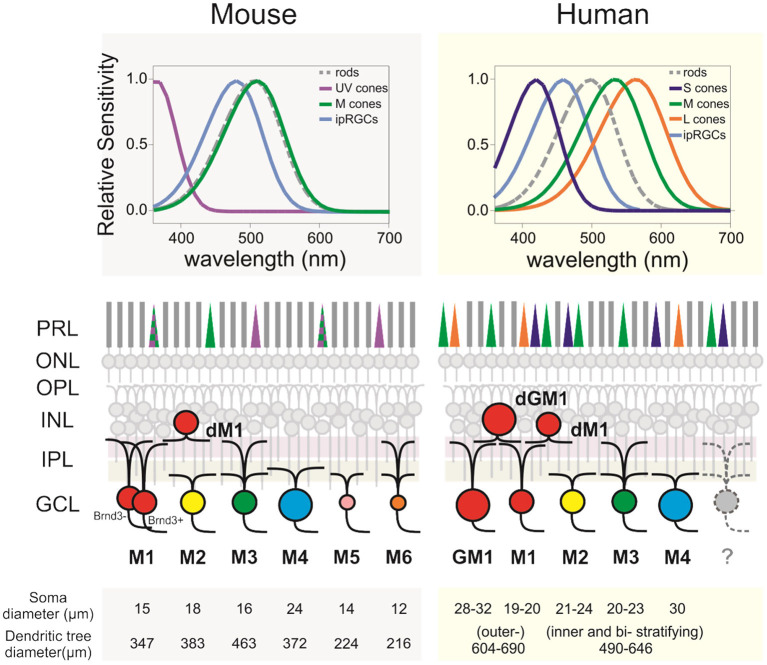
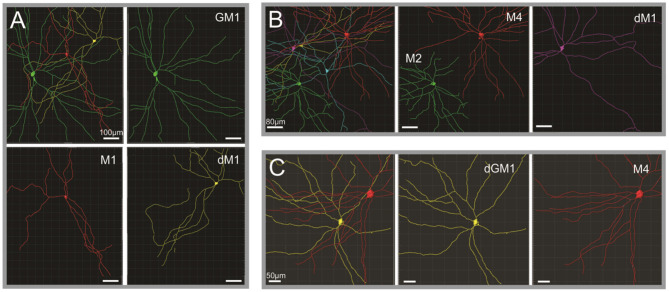
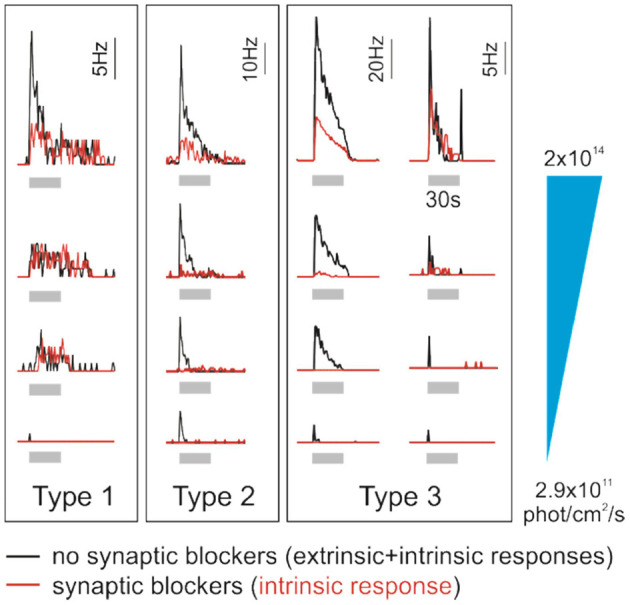
Light profoundly affects our mental and physical health. In particular, light, when not delivered at the appropriate time, may have detrimental effects. In mammals, light is perceived not only by rods and cones but also by a subset of retinal ganglion cells that express the photopigment melanopsin that renders them intrinsically photosensitive (ipRGCs). ipRGCs participate in contrast detection and play critical roles in non-image-forming vision, a set of light responses that include circadian entrainment, pupillary light reflex (PLR), and the modulation of sleep/alertness, and mood. ipRGCs are also found in the human retina, and their response to light has been characterized indirectly through the suppression of nocturnal melatonin and PLR. However, until recently, human ipRGCs had rarely been investigated directly. This gap is progressively being filled as, over the last years, an increasing number of studies provided descriptions of their morphology, responses to light, and gene expression. Here, I review the progress in our knowledge of human ipRGCs, in particular, the different morphological and functional subtypes described so far and how they match the murine subtypes. I also highlight questions that remain to be addressed. Investigating ipRGCs is critical as these few cells play a major role in our well-being. Additionally, as ipRGCs display increased vulnerability or resilience to certain disorders compared to conventional RGCs, a deeper knowledge of their function could help identify therapeutic approaches or develop diagnostic tools. Overall, a better understanding of how light is perceived by the human eye will help deliver precise light usage recommendations and implement light-based therapeutic interventions to improve cognitive performance, mood, and life quality.
Overview
The claims and statistics of this paper haven’t been checked yet.
Run the check — free, no account needed. It reads the open-access text and checks the sources it cites.
Integrity signals
Registry
Cites
Statistics
Figures
Verification
Claims the paper makes
The claims and statistics of this paper haven’t been checked yet.
Run the check — free, no account needed. It reads the open-access text and checks the sources it cites.
Claims other papers make about this one
Each is checked against this paper’s own text: does it say what the citing paper says it does?
The source backs part of the claim, not all of it — or backs it for a different population, condition or comparison.
In the citing paper
“When light enters the eye, it is detected by intrinsically photosensitive retinal ganglion cells, which then send signals to the suprachiasmatic nuclei in the hypothalamus, the brain's master clock that coordinates daily physiological rhythms [60].”
From Ocular light exposure interventions for sleep, circadian rhythms, rest-activity cycles, mood, and cognitive function in older adults: An Overview of Cochrane and non-Cochrane Systematic Reviews (2025) · cites this paper as [60]
Experimental — accuracy not yet measuredThe cited source says what the claim attributes to it.
In the citing paper
“The mechanism behind ocular light exposure interventions lies in the non‐image‐forming effects of light, mediated by specialised, intrinsically photosensitive retinal ganglion cell photoreceptors in the eye [60].”
Self-check
Percentages, sums and reported differences re-computed from the paper’s own numbers.
The self-check needs the paper’s full text.
Citations
Cites
Phototransduction by retinal ganglion cells that set the circadian clock
Berson, D. M., Dunn, F. A., & Takao, M. (2002) · Science · doi:10.1126/science.1067262 · Cited by 3,629
Action Spectrum for Melatonin Regulation in Humans: Evidence for a Novel Circadian Photoreceptor
Brainard, G. C., Hanifin, J. P., Greeson, J. M., Byrne, B., Glickman, G., Gerner, E., & Rollag, M. D. (2001) · The Journal of Neuroscience · doi:10.1523/jneurosci.21-16-06405.2001 · Cited by 1,930
Topography of ganglion cells in human retina
Curcio, C. A., & Allen, K. A. (1990) · The Journal of Comparative Neurology · doi:10.1002/cne.903000103 · Cited by 1,849
Chang, A.-M., Aeschbach, D., Duffy, J. F., & Czeisler, C. A. (2015) · Proceedings of the National Academy of Sciences · doi:10.1073/pnas.1418490112 · Cited by 1,430 · cited 1×
“Even low-level light exposure from light-emitting devices, smartphones, or tablets may disrupt sleep (5, 6).”
BackgroundDacey, D. M., Liao, H.-W., Peterson, B. B., Robinson, F. R., Smith, V. C., Pokorny, J., Yau, K.-W., & Gamlin, P. D. (2005) · Nature · doi:10.1038/nature03387 · Cited by 1,333
Thapan, K., Arendt, J., & Skene, D. J. (2001) · The Journal of Physiology · doi:10.1111/j.1469-7793.2001.t01-1-00261.x · Cited by 1,320
A Novel Human Opsin in the Inner Retina
Provencio, I., Rodriguez, I. R., Jiang, G., Hayes, W. P., Moreira, E. F., & Rollag, M. D. (2000) · The Journal of Neuroscience · doi:10.1523/jneurosci.20-02-00600.2000 · Cited by 1,290
Central projections of melanopsin‐expressing retinal ganglion cells in the mouse
Hattar, S., Kumar, M., Park, A., Tong, P., Tung, J., Yau, K., & Berson, D. M. (2006) · Journal of Comparative Neurology · doi:10.1002/cne.20970 · Cited by 996
Melanopsin: An opsin in melanophores, brain, and eye
Provencio, I., Jiang, G., De Grip, W. J., Hayes, W. P., & Rollag, M. D. (1998) · Proceedings of the National Academy of Sciences · doi:10.1073/pnas.95.1.340 · Cited by 975
Artificially lit surface of Earth at night increasing in radiance and extent
Kyba, C. C. M., Kuester, T., de Miguel, A. S., Baugh, K., Jechow, A., Hölker, F., Bennie, J., Elvidge, C. D., Gaston, K. J., & Guanter, L. (2017) · Science Advances · doi:10.1126/sciadv.1701528 · Cited by 958
Cajochen, C., Münch, M., Kobialka, S., Kräuchi, K., Steiner, R., Oelhafen, P., Orgül, S., & Wirz-Justice, A. (2005) · The Journal of Clinical Endocrinology & Metabolism · doi:10.1210/jc.2004-0957 · Cited by 939
Riemersma-van der Lek, R. F. (2008) · JAMA · doi:10.1001/jama.299.22.2642 · Cited by 803
Ecker, J. L., Dumitrescu, O. N., Wong, K. Y., Alam, N. M., Chen, S., LeGates, T. A., Renna, J. M., Prusky, G. T., Berson, D. M., & Hattar, S. S. (2010) · Neuron · doi:10.1016/j.neuron.2010.05.023 · Cited by 697
Cell Types of the Human Retina and Its Organoids at Single-Cell Resolution
Cowan, C. S., Renner, M., De Gennaro, M., Gross-Scherf, B., Goldblum, D., Hou, Y., Munz, M., Rodrigues, T. M., Krol, J., Szikra, T., et al. (2020) · Cell · doi:10.1016/j.cell.2020.08.013 · Cited by 654
Tran, N. M., Shekhar, K., Whitney, I. E., Jacobi, A., Benhar, I., Hong, G., Yan, W., Adiconis, X., Arnold, M. E., Lee, J. M., et al. (2019) · Neuron · doi:10.1016/j.neuron.2019.11.006 · Cited by 627
Human and macaque pupil responses driven by melanopsin-containing retinal ganglion cells
Gamlin, P. D. R., McDougal, D. H., Pokorny, J., Smith, V. C., Yau, K.-W., & Dacey, D. M. (2007) · Vision Research · doi:10.1016/j.visres.2006.12.015 · Cited by 617
Electrophysiological, transcriptomic and morphologic profiling of single neurons using Patch-seq
Cadwell, C. R., Palasantza, A., Jiang, X., Berens, P., Deng, Q., Yilmaz, M., Reimer, J., Shen, S., Bethge, M., Tolias, K. F., et al. (2016) · Nature Biotechnology · doi:10.1038/nbt.3445 · Cited by 581
Applebury, M. L., Antoch, M. P., Baxter, L. C., Chun, L. L. Y., Falk, J. D., Farhangfar, F., Kage, K., Krzystolik, M. G., Lyass, L., & Robbins, J. T. (2000) · Neuron · doi:10.1016/s0896-6273(00)00062-3 · Cited by 566
Viola, A. U., James, L. M., Schlangen, L. J., & Dijk, D.-J. (2008) · Scandinavian Journal of Work, Environment & Health · doi:10.5271/sjweh.1268 · Cited by 565
Light Affects Mood and Learning through Distinct Retina-Brain Pathways
Fernandez, D. C., Fogerson, P. M., Lazzerini Ospri, L., Thomsen, M. B., Layne, R. M., Severin, D., Zhan, J., Singer, J. H., Kirkwood, A., Zhao, H., et al. (2018) · Cell · doi:10.1016/j.cell.2018.08.004 · Cited by 505
Molecular Classification and Comparative Taxonomics of Foveal and Peripheral Cells in Primate Retina
Peng, Y., Shekhar, K., Yan, W., Herrmann, D., Sappington, A., Bryman, G. S., van Zyl, T. A., Do, M. T. H., Regev, A., & Sanes, J. R. (2019) · Cell · doi:10.1016/j.cell.2019.01.004 · Cited by 470
Gooley, J. J., Rajaratnam, S. M. W., Brainard, G. C., Kronauer, R. E., Czeisler, C. A., & Lockley, S. W. (2010) · Science Translational Medicine · doi:10.1126/scitranslmed.3000741 · Cited by 447
Photoentrainment and pupillary light reflex are mediated by distinct populations of ipRGCs
Chen, S., Badea, T. C., & Hattar, S. S. (2011) · Nature · doi:10.1038/nature10206 · Cited by 436
Phillips, A. J. K., Vidafar, P., Burns, A. C., McGlashan, E. M., Anderson, C., Rajaratnam, S. M. W., Lockley, S. W., & Cain, S. W. (2019) · Proceedings of the National Academy of Sciences · doi:10.1073/pnas.1901824116 · Cited by 430
Retinal receptors in rodents maximally sensitive to ultraviolet light
Jacobs, G. H., Neitz, J., & Deegan, J. F. (1991) · Nature · doi:10.1038/353655a0 · Cited by 417
Single cell transcriptome profiling of retinal ganglion cells identifies cellular subtypes
Rheaume, B. A., Jereen, A., Bolisetty, M. T., Sajid, M. S., Yang, Y. J., Renna, K., Sun, L., Robson, P., & Trakhtenberg, E. F. (2018) · Nature Communications · doi:10.1038/s41467-018-05134-3 · Cited by 401
Melanopsin retinal ganglion cell loss in A lzheimer disease
Morgia, C. L., Ross‐Cisneros, F. N., Koronyo, Y., Hannibal, J., Gallassi, R., Cantalupo, G., Sambati, L., Pan, B. X., Tozer, K. R., Barboni, P., et al. (2015) · Annals of Neurology · doi:10.1002/ana.24548 · Cited by 400
Animal models of age related macular degeneration
Pennesi, M. E., Neuringer, M., & Courtney, R. J. (2012) · Molecular Aspects of Medicine · doi:10.1016/j.mam.2012.06.003 · Cited by 391 · cited 1×
“As a consequence, there is a lack of appropriate murine models for some humane ocular disorders, such as age-related macular degeneration (31).”
BackgroundZaidi, F. H., Hull, J. T., Peirson, S. N., Wulff, K., Aeschbach, D., Gooley, J. J., Brainard, G. C., Gregory-Evans, K., Rizzo, J. F., Czeisler, C. A., et al. (2007) · Current Biology · doi:10.1016/j.cub.2007.11.034 · Cited by 385
Bittencourt, J. C., Vaughan, J. M., Arias, C., Rissman, R. A., Vale, W., & Sawchenko, P. E. (1999) · The Journal of Comparative Neurology · doi:10.1002/(sici)1096-9861(19991220)415:3 · Cited by 367
Spectral sensitivity of human cone photoreceptors
Schnapf, J. L., Kraft, T. W., & Baylor, D. A. (1987) · Nature · doi:10.1038/325439a0 · Cited by 346
Melanopsin and the Intrinsically Photosensitive Retinal Ganglion Cells: Biophysics to Behavior
Do, M. T. H. (2019) · Neuron · doi:10.1016/j.neuron.2019.07.016 · Cited by 320
Bailes, H. J., & Lucas, R. J. (2013) · Proceedings of the Royal Society B: Biological Sciences · doi:10.1098/rspb.2012.2987 · Cited by 319 · cited 1×
“Their spectral sensitivity peaked in the blue region of the spectrum (∼460 nm), different from the peaks of human rods and cones but close to mouse andmacaquemelanopsin peaks (17, 34) and to the human melanopsin expressed in HEK293 cells (61).”
BackgroundNikonov, S. S., Kholodenko, R. V., Lem, J., & Pugh, E. N. (2006) · The Journal of General Physiology · doi:10.1085/jgp.200609490 · Cited by 298
Touitou, Y., Touitou, D., & Reinberg, A. (2016) · Journal of Physiology-Paris · doi:10.1016/j.jphysparis.2017.05.001 · Cited by 297
Cell Atlas of The Human Fovea and Peripheral Retina
Yan, W., Peng, Y., van Zyl, T. A., Regev, A., Shekhar, K., Juric, D., & Sanes, J. R. (2020) · Scientific Reports · doi:10.1038/s41598-020-66092-9 · Cited by 286
Age‐related Changes in the Circadian and Homeostatic Regulation of Human Sleep
Cajochen, C., Münch, M., Knoblauch, V., Blatter, K., & Wirz‐Justice, A. (2006) · Chronobiology International · doi:10.1080/07420520500545813 · Cited by 285
Synaptic influences on rat ganglion‐cell photoreceptors
Wong, K. Y., Dunn, F. A., Graham, D. M., & Berson, D. M. (2007) · The Journal of Physiology · doi:10.1113/jphysiol.2007.133751 · Cited by 277
Vandewalle, G., Gais, S., Schabus, M., Balteau, E., Carrier, J., Darsaud, A., Sterpenich, V., Albouy, G., Dijk, D. J., & Maquet, P. (2007) · Cerebral Cortex · doi:10.1093/cercor/bhm007 · Cited by 277
Melanopsin Contributions to Irradiance Coding in the Thalamo-Cortical Visual System
Brown, T. M., Gias, C., Hatori, M., Keding, S. R., Semo, M., Coffey, P. J., Gigg, J., Piggins, H. D., Panda, S., & Lucas, R. J. (2010) · PLoS Biology · doi:10.1371/journal.pbio.1000558 · Cited by 268
Melanopsin-Based Brightness Discrimination in Mice and Humans
Brown, T. M., Tsujimura, S.-I., Allen, A. E., Wynne, J., Bedford, R., Vickery, G., Vugler, A., & Lucas, R. J. (2012) · Current Biology · doi:10.1016/j.cub.2012.04.039 · Cited by 256
Biology and therapy of inherited retinal degenerative disease: insights from mouse models
Veleri, S., Lazar, C. H., Chang, B., Sieving, P. A., Banin, E., & Swaroop, A. (2015) · Disease Models & Mechanisms · doi:10.1242/dmm.017913 · Cited by 253
Brown, T. M. (2020) · Journal of Pineal Research · doi:10.1111/jpi.12655 · Cited by 249
Functional and Morphological Differences among Intrinsically Photosensitive Retinal Ganglion Cells
Schmidt, T. M., & Kofuji, P. (2009) · Journal of Neuroscience · doi:10.1523/jneurosci.4117-08.2009 · Cited by 247
Physiologic Diversity and Development of Intrinsically Photosensitive Retinal Ganglion Cells
Tu, D. C., Zhang, D., Demas, J., Slutsky, E. B., Provencio, I., Holy, T. E., & Gelder, R. N. V. (2005) · Neuron · doi:10.1016/j.neuron.2005.09.031 · Cited by 242
Stabio, M. E., Fogerson, P. M., Ilardi, M. C., Borghuis, B. G., Chan, E., Weng, S.-J., Auferkorte, O. N., Demb, J. B., & Berson, D. M. (2012) · Journal of Neuroscience · doi:10.1523/jneurosci.1422-12.2012 · Cited by 238
Paksarian, D., Rudolph, K. E., Stapp, E. K., Dunster, G. P., He, J., Mennitt, D. J., Hattar, S. S., Casey, J. A., James, P., & Merikangas, K. R. (2020) · JAMA Psychiatry · doi:10.1001/jamapsychiatry.2020.1935 · Cited by 230
Hannibal, J., Hindersson, P., Østergaard, J., Georg, B., Heegaard, S., Larsen, P. J., & Fahrenkrug, J. (2004) · Investigative Ophthalmology & Visual Science · doi:10.1167/iovs.04-0313 · Cited by 213
Figueiro, M., Plitnick, B., Lok, A., Jones, G., Higgins, P., Hornick, T., & Rea, M. (2014) · Clinical Interventions in Aging · doi:10.2147/cia.s68557 · Cited by 211
Morgia, C. L., Ross‐Cisneros, F. N., Sadun, A. A., Hannibal, J., Munarini, A., Mantovani, V., Barboni, P., Cantalupo, G., Tozer, K. R., Sancisi, E., et al. (2010) · Brain · doi:10.1093/brain/awq155 · Cited by 199
Opponent melanopsin and S-cone signals in the human pupillary light response
Spitschan, M., Jain, S., Brainard, D. H., & Aguirre, G. K. (2014) · Proceedings of the National Academy of Sciences · doi:10.1073/pnas.1400942111 · Cited by 192
Melanopsin Bistability: A Fly's Eye Technology in the Human Retina
Mure, L. S., Cornut, P., Rieux, C., Drouyer, E., Denis, P., Gronfier, C., & Cooper, H. M. (2009) · PLoS ONE · doi:10.1371/journal.pone.0005991 · Cited by 189
Self-citationPhotoresponse diversity among the five types of intrinsically photosensitive retinal ganglion cells
Zhao, X., Stafford, B. K., Godin, A. L., King, W. M., & Wong, K. Y. (2014) · The Journal of Physiology · doi:10.1113/jphysiol.2013.262782 · Cited by 184
Diversity of intrinsically photosensitive retinal ganglion cells: circuits and functions
Aranda, M. L., & Schmidt, T. M. (2020) · Cellular and Molecular Life Sciences · doi:10.1007/s00018-020-03641-5 · Cited by 174
Hannibal, J., Christiansen, A. T., Heegaard, S., Fahrenkrug, J., & Kiilgaard, J. F. (2017) · Journal of Comparative Neurology · doi:10.1002/cne.24181 · Cited by 169
Circadian Photoentrainment in Mice and Humans
Foster, F., Hughes, S., & Peirson, S. N. (2020) · Biology · doi:10.3390/biology9070180 · Cited by 167
Bardy, C., van den Hurk, M., Kakaradov, B., Erwin, J. A., Jaeger, B. N., Hernandez, R. V., Eames, T., Paucar, A. A., Gorris, M. A. J., Marchand, C., et al. (2016) · Molecular Psychiatry · doi:10.1038/mp.2016.158 · Cited by 166
Visual transduction in human rod photoreceptors.
Kraft, T. W., Schneeweis, D. M., & Schnapf, J. L. (1993) · The Journal of Physiology · doi:10.1113/jphysiol.1993.sp019661 · Cited by 165
Individual differences in light sensitivity affect sleep and circadian rhythms
Chellappa, S. L. (2021) · Sleep · doi:10.1093/sleep/zsaa214 · Cited by 163
Liao, H., Ren, X., Peterson, B. B., MARSHAK, D. W., Yau, K., Gamlin, P. D., & Dacey, D. M. (2016) · The Journal of Comparative Neurology · doi:10.1002/cne.23995 · Cited by 158
Sleep fragmentation in patients from a nursing home
Ancoli-Israel, S., Parker, L., Sinaee, R., Fell, R. L., & Kripke, D. F. (1989) · Journal of Gerontology · doi:10.1093/geronj/44.1.m18 · Cited by 157 · cited 1×
“However, there are also reports of reduced amplitude of circadian rhythm in body temperature and increasing prevalence of sleep fragmentation among the elderly (95, 96), which can be improved by bright light (8).”
BackgroundCentral projections of intrinsically photosensitive retinal ganglion cells in the macaque monkey
Hannibal, J., Kankipati, L., Strang, C. E., Peterson, B. B., Dacey, D. M., & Gamlin, P. D. (2014) · The Journal of Comparative Neurology · doi:10.1002/cne.23555 · Cited by 153
Schmidt, T. M., & Kofuji, P. (2010) · The Journal of Comparative Neurology · doi:10.1002/cne.22579 · Cited by 138
Coolen, L. M., Peters, H. J. P. W., & Veening, J. G. (1998) · The Journal of Comparative Neurology · doi:10.1002/(sici)1096-9861(19980803)397:3 · Cited by 136
Functional diversity of human intrinsically photosensitive retinal ganglion cells
Mure, L. S., Vinberg, F., Hanneken, A. M., & Panda, S. (2019) · Science · doi:10.1126/science.aaz0898 · Cited by 128
Self-citationSynapses in neurodegenerative diseases
Bae, J. R., & Kim, S. H. (2017) · BMB Reports · doi:10.5483/bmbrep.2017.50.5.038 · Cited by 122
Light-Induced Pupillary Responses in Alzheimer's Disease
Chougule, P. S., Najjar, R. P., Finkelstein, M. T., Kandiah, N., & Miléa, D. (2019) · Frontiers in Neurology · doi:10.3389/fneur.2019.00360 · Cited by 122
Retinal Ganglion Cells and Circadian Rhythms in Alzheimer’s Disease, Parkinson’s Disease, and Beyond
Morgia, C. L., Ross‐Cisneros, F. N., Sadun, A. A., & Carelli, V. (2017) · Frontiers in Neurology · doi:10.3389/fneur.2017.00162 · Cited by 116
Spitschan, M., Bock, A. S., Ryan, J., Frazzetta, G., Brainard, D. H., & Aguirre, G. K. (2017) · Proceedings of the National Academy of Sciences · doi:10.1073/pnas.1711522114 · Cited by 116
Cui, Q., Ren, C., Sollars, P. J., Pickard, G. E., & So, K. (2014) · Neuroscience · doi:10.1016/j.neuroscience.2014.11.002 · Cited by 110
Esquiva, G., Lax, P., Pérez-Santonja, J. J., García-Fernández, J. M., & Cuenca, N. (2017) · Frontiers in Aging Neuroscience · doi:10.3389/fnagi.2017.00079 · Cited by 110
Nasir‐Ahmad, S., Lee, S., Martin, P. R., & Grünert, U. (2017) · The Journal of Comparative Neurology · doi:10.1002/cne.24176 · Cited by 107
Body Silhouette Trajectories Over the Lifespan and Insomnia Symptoms: The Paris Prospective Study 3
Lisan, Q., Tafflet, M., Thomas, F., Boutouyrie, P., Guibout, C., Haba‐Rubio, J., Climie, R. E., Perier, M., van Sloten, T. T., Pannier, B., et al. (2019) · Scientific Reports · doi:10.1038/s41598-018-38145-7 · Cited by 107
Form vision from melanopsin in humans
Allen, A. E., Martial, F. P., & Lucas, R. J. (2019) · Nature Communications · doi:10.1038/s41467-019-10113-3 · Cited by 106
Metabolic Implications of Exposure to Light at Night: Lessons from Animal and Human Studies
Fleury, G., Masís‐vargas, A., & Kalsbeek, A. (2020) · Obesity · doi:10.1002/oby.22807 · Cited by 100
What is the ‘spectral diet’ of humans?
Webler, F. S., Spitschan, M., Foster, F., Andersen, M., & Peirson, S. N. (2019) · Current Opinion in Behavioral Sciences · doi:10.1016/j.cobeha.2019.06.006 · Cited by 93
Melanopsin-mediated pupil function is impaired in Parkinson’s disease
Joyce, D. S., Feigl, B., Kerr, G., Roeder, L., & Zele, A. J. (2018) · Scientific Reports · doi:10.1038/s41598-018-26078-0 · Cited by 91
Photoreceptor inputs to pupil control
Spitschan, M. (2019) · Journal of Vision · doi:10.1167/19.9.5 · Cited by 89
Ortuño‐Lizarán, I., Esquiva, G., Beach, T. G., Serrano, G. E., Adler, C. H., Lax, P., & Cuenca, N. (2018) · Acta Neuropathologica Communications · doi:10.1186/s40478-018-0596-z · Cited by 87
Melanopsin-expressing retinal ganglion cells: implications for human diseases
La Morgia, C., Ross-Cisneros, F. N., Hannibal, J., Montagna, P., Sadun, A. A., & Carelli, V. (2011) · Vision Research · doi:10.1016/j.visres.2010.07.023 · Cited by 84
Adhikari, P., Pearson, C. A., Anderson, A. M., Zele, A. J., & Feigl, B. (2015) · Scientific Reports · doi:10.1038/srep17610 · Cited by 84
Gaston, K. J. (2018) · Science · doi:10.1126/science.aau8226 · Cited by 81
Small-molecule antagonists of melanopsin-mediated phototransduction
JONES, K. A., Hatori, M., Mure, L. S., Bramley, J. R., Artymyshyn, R. P., Hong, S.-P., Marzabadi, M. R., Zhong, H., Sprouse, J. S., Zhu, Q., et al. (2013) · Nature Chemical Biology · doi:10.1038/nchembio.1333 · Cited by 77
Self-citationThe rat retina has five types of ganglion-cell photoreceptors
Reifler, A. N., Chervenak, A. P., Dolikian, M. E., Benenati, B. A., Meyers, B. S., Demertzis, Z. D., Lynch, A. M., Li, B. Y., Wachter, R. D., Abufarha, F. S., et al. (2014) · Experimental Eye Research · doi:10.1016/j.exer.2014.11.010 · Cited by 71
Molecular signatures of retinal ganglion cells revealed through single cell profiling
Laboissonniere, L. A., Goetz, J. J., Martin, G. M., Bi, R., Lund, T. J. S., Ellson, L., Lynch, M. R., Mooney, B., Wickham, H., Liu, P., et al. (2019) · Scientific Reports · doi:10.1038/s41598-019-52215-4 · Cited by 68
Sondereker, K. B., Stabio, M. E., & Renna, J. M. (2020) · The Journal of Comparative Neurology · doi:10.1002/cne.24873 · Cited by 67
Does Pupil Constriction under Blue and Green Monochromatic Light Exposure Change with Age?
Daneault, V., Vandewalle, G., Hébert, M., Teikari, P., Mure, L. S., Doyon, J., Gronfier, C., Cooper, H. M., Dumont, M., & Carrier, J. (2012) · Journal of Biological Rhythms · doi:10.1177/0748730412441172 · Cited by 66
Self-citationNajjar, R. P., Sharma, S., Atalay, E., Rukmini, A. V., Sun, C., Lock, J. Z., Baskaran, M., Perera, S., Husain, R., Lamoureux, E. L., et al. (2018) · Ophthalmology · doi:10.1016/j.ophtha.2018.02.024 · Cited by 66
Melanopsin Retinal Ganglion Cells and Pupil: Clinical Implications for Neuro-Ophthalmology
Morgia, C. L., Carelli, V., & Carbonelli, M. (2018) · Frontiers in Neurology · doi:10.3389/fneur.2018.01047 · Cited by 66
Loss of Melanopsin-Expressing Retinal Ganglion Cells in Severely Staged Glaucoma Patients
Obara, E. A. A., Hannibal, J., Heegaard, S., & Fahrenkrug, J. (2016) · Investigative Ophthalmology & Visual Science · doi:10.1167/iovs.16-19997 · Cited by 61
Schroeder, M. M., Harrison, K. R., Jaeckel, E. R., Berger, H. N., Zhao, X., Flannery, M. P., Pierre, E. S., Pateqi, N., Jachimska, A., Chervenak, A. P., et al. (2018) · Frontiers in Cellular Neuroscience · doi:10.3389/fncel.2018.00203 · Cited by 56
Efficient Coding by Midget and Parasol Ganglion Cells in the Human Retina
Soto, F., Hsiang, J.-C., Rajagopal, R., Piggott, K., Harocopos, G. J., Couch, S. M., Custer, P. L., Morgan, J., & Kerschensteiner, D. (2020) · Neuron · doi:10.1016/j.neuron.2020.05.030 · Cited by 55
Loss of Melanopsin-Expressing Retinal Ganglion Cells in Patients With Diabetic Retinopathy
Obara, E. A. A., Hannibal, J., Heegaard, S., & Fahrenkrug, J. (2017) · Investigative Ophthalmology & Visual Science · doi:10.1167/iovs.16-21168 · Cited by 52
Visual properties of human retinal ganglion cells
Reinhard, K., & Münch, T. A. (2021) · PLoS ONE · doi:10.1371/journal.pone.0246952 · Cited by 52
Lucas, R. J., Allen, A. E., Milosavljevic, N., Storchi, R., & Woelders, T. (2020) · Annual Review of Vision Science · doi:10.1146/annurev-vision-030320-041239 · Cited by 51
Immunohistochemical Evidence of a Melanopsin Cone in Human Retina
Dkhissi‐Benyahya, O., Rieux, C., Hut, R. A., & Cooper, H. M. (2006) · Investigative Ophthalmology & Visual Science · doi:10.1167/iovs.05-1459 · Cited by 50
Delwig, A., Larsen, D. D., Yasumura, D., Yang, C. F., Shah, N. M., & Copenhagen, D. R. (2016) · PLoS ONE · doi:10.1371/journal.pone.0149501 · Cited by 50
Oh, A. J., Amore, G., Sultan, W., Asanad, S., Park, J. C., Romagnoli, M., Morgia, C. L., Karanjia, R., Harrington, M. G., & Sadun, A. A. (2019) · PLoS ONE · doi:10.1371/journal.pone.0226197 · Cited by 45
Lee, S. K., Sonoda, T., & Schmidt, T. M. (2019) · Cell Reports · doi:10.1016/j.celrep.2019.11.024 · Cited by 44
Retinal Architecture and Melanopsin-Mediated Pupillary Response Characteristics
Meltzer, E. I., Sguigna, P. V., Subei, A. M., Beh, S. C., Kildebeck, E., Conger, D. L., Conger, A., Lucero, M., Frohman, B. S., Frohman, A. N., et al. (2017) · JAMA Neurology · doi:10.1001/jamaneurol.2016.5131 · Cited by 38
Hayter, E. A., & Brown, T. M. (2018) · BMC Biology · doi:10.1186/s12915-018-0552-1 · Cited by 36
Sexton, T. J., Bleckert, A., Turner, M. H., & Gelder, R. N. V. (2015) · Neural Development · doi:10.1186/s13064-015-0042-x · Cited by 34
Melanopsin Cell Dysfunction is Involved in Sleep Disruption in Parkinson’s Disease
Feigl, B., Dumpala, S., Kerr, G., & Zele, A. J. (2020) · Journal of Parkinson s Disease · doi:10.3233/jpd-202178 · Cited by 34
Transcriptomic Signatures of Postnatal and Adult Intrinsically Photosensitive Ganglion Cells
Berg, D. J., Kartheiser, K., Leyrer, M. L., Saali, A., & Berson, D. M. (2019) · eNeuro · doi:10.1523/eneuro.0022-19.2019 · Cited by 30
Influence of Opa1 Mutation on Survival and Function of Retinal Ganglion Cells
González-Menéndez, I., Reinhard, K., Tolivia, J., Wissinger, B., & Münch, T. A. (2015) · Investigative Ophthalmology & Visual Science · doi:10.1167/iovs.15-16743 · Cited by 24
Early-Stage Alzheimer’s Disease Does Not Alter Pupil Responses to Colored Light Stimuli
Kawasaki, A., Ouanes, S., Crippa, S. V., & Popp, J. (2020) · Journal of Alzheimer s Disease · doi:10.3233/jad-200120 · Cited by 24
Functional organization of midget and parasol ganglion cells in the human retina
Kling, A., Gogliettino, A. R., Shah, N. P., Wu, E. G., Brackbill, N., Sher, A., Litke, A. M., Silva, R. A., & Chichilnisky, E. J. (2020) · bioRxiv (Cold Spring Harbor Laboratory) · doi:10.1101/2020.08.07.240762 · Cited by 24
Extracellular Recordings from Human Retinal Ganglion Cells
Weinstein, G. W., Hobson, R. R., & Baker, F. (1971) · Science · doi:10.1126/science.171.3975.1021 · Cited by 22
Direct visual and circadian pathways target neuroendocrine cells in primates
Abizaid, A., Horvath, B., Keefe, D. L., Leranth, C., & Horvath, T. L. (2004) · European Journal of Neuroscience · doi:10.1111/j.1460-9568.2004.03737.x · Cited by 22
Intrinsic Photosensitive Retinal Ganglion Cells in the Diurnal Rodent, Arvicanthis ansorgei
Karnas, D., Hicks, D., Mordel, J., Pévet, P., & Meissl, H. (2013) · PLoS ONE · doi:10.1371/journal.pone.0073343 · Cited by 22
de Lima, R. R. M., Pinato, L., do Nascimento, R. B. S., Engelberth, R. C. G. J., do Nascimento, E. S., Cavalcante, J. C., Britto, L. R. G., Costa, M. S. M. O., & Cavalcante, J. S. (2012) · Journal of Chemical Neuroanatomy · doi:10.1016/j.jchemneu.2012.04.001 · Cited by 18
Rheaume, B. A., Jereen, A., Bolisetty, M. T., Sajid, M. S., Yang, Y. J., Renna, K., Sun, L., Robson, P., & Trakhtenberg, E. F. (2018) · Nature Communications · doi:10.1038/s41467-018-05792-3 · Cited by 13
What is the "spectral diet" of humans?Preprint
Webler, F. S., Spitschan, M., Foster, F., Andersen, M., & Peirson, S. N. (2019) · OSF Preprints (OSF Preprints) · doi:10.31219/osf.io/dqkv3 · Cited by 6
Melanopsin Effects on Pupil Responses
White, O. B., & Costello, F. (2017) · JAMA Neurology · doi:10.1001/jamaneurol.2016.5385 · Cited by 3
Sleep and circadian phenotype in people without cone-mediated visionPreprint
Spitschan, M., Garbazza, C., Kohl, S., & Cajochen, C. (2020) · bioRxiv (Cold Spring Harbor Laboratory) · doi:10.1101/2020.06.02.129502 · Cited by 3
Revival of light-evoked neuronal signals in the post-mortem mouse and human retinaPreprint
Abbas, F., Becker, S., Jones, B. W., Mure, L. S., Panda, S., Hanneken, A. M., & Vinberg, F. (2020) · bioRxiv (Cold Spring Harbor Laboratory) · doi:10.1101/2020.06.30.180497 · Cited by 2
Self-citation
Cited by
Sorted by citations
Blue Light Exposure: Ocular Hazards and Prevention—A Narrative Review
Cougnard‐Grégoire, A., Merle, B. M. J., Aslam, T. M., Seddon, J. M., Aknin, I., Klaver, C. C. W., Garhöfer, G., García‐Layana, A., Minnella, A. M., da Silva, R. M., et al. (2023) · Ophthalmology and Therapy · doi:10.1007/s40123-023-00675-3 · Cited by 217
Reducing nighttime light exposure in the urban environment to benefit human health and society
Zielińska-Dąbkowska, K. M., Schernhammer, E. S., Hanifin, J. P., & Brainard, G. C. (2023) · Science · doi:10.1126/science.adg5277 · Cited by 158
Understanding light pollution: Recent advances on its health threats and regulations
Cao, M., Xu, T., & Yin, D. (2022) · Journal of Environmental Sciences · doi:10.1016/j.jes.2022.06.020 · Cited by 131
The cognitive impact of light: illuminating ipRGC circuit mechanisms
Mahoney, H. L., & Schmidt, T. M. (2024) · Nature reviews. Neuroscience · doi:10.1038/s41583-023-00788-5 · Cited by 83
Spitschan, M., Kervezee, L., Lok, R., McGlashan, E., Najjar, R. P., Allen, A. E., Andersen, M., Bará, S., Blattner, P., Blume, C., et al. (2023) · eBioMedicine · doi:10.1016/j.ebiom.2023.104889 · Cited by 60
Self-citation
Metadata
- Authors
- Mure, L. S.
- Affiliations
- University of Bern (CH)
- Corresponding author
- Mure, Ludovic S.
- ORCID
- Mure, Ludovic S.
- Venue
- Frontiers in Neurology
- Publisher
- Frontiers Media SA
- Published
- 2021-03-25
- Volume
- 12
- Pages
- 636330-636330
- ISSN
- 1664-2295 (ISSN-L)
- PMC
- PMC8027232
- OpenAlex
- W3151649762
- Cited by
- 151
- References
- 116
- Citations by year
- 2026: 32 · 2025: 31 · 2024: 27 · 2023: 37 · 2022: 19 · 2021: 5
- FWCI
- 2.81
- Type
- journal article
- Language
- en
- Open access
- gold
- doi.org
- Licence
- Locations
- Frontiers in Neurology (publishedVersion, cc-by)
- PubMed Central (publishedVersion, cc-by)
- PubMed (publishedVersion)
- BORIS (University Library Bern) (submittedVersion, cc-by)
- DOAJ (DOAJ: Directory of Open Access Journals) (submittedVersion, cc-by-sa)
- Open Access CRIS of the University of Bern
- Funders
- University of Bern
- Topics
- Life Sciences › Neuroscience › Endocrine and Autonomic Systems › Circadian rhythm and melatonin
- Health Sciences › Medicine › Ophthalmology › Retinal Development and Disorders
- Life Sciences › Neuroscience › Cognitive Neuroscience › Visual perception and processing mechanisms
- Keywords
- intrinsically photosensitive retinal ganglion cells, melanopsin, human retina, non-image-forming vision, circadian entrainment, pupillary light reflex, melatonin suppression, light perception, phototherapy
About these checks
Registry, retraction, Cites and statistics results are computed, not judged, with one exception: a printed reference that no index lists is read once by a model before it counts as a citation error. Claims are extracted by a model and kept only when their quote appears verbatim in the text; each cited source is then checked, with a model’s help, for whether it says what the claim relies on. Those verdicts can be wrong — read the claim’s quote and the cited source before relying on one.
Statistics and arithmetic are recomputed, not judged.
Confidence bands are shown only for fields calibrated on our annotated test set. None is calibrated yet, so no band is shown.
What counts as a claim ›How we measure confidence ›How we check this ›
Are you an author, or do you see a problem with this page? Request a review
