

The DOI matches its Crossref record; 8 of the 8 references it cites were found in a registry or an index.
Exposure of BALB/c Mice to Diesel Engine Exhaust Origin Secondary Organic Aerosol (DE-SOA) during the Developmental Stages Impairs the Social Behavior in Adult Life of the Males
Overview
The claims and statistics of this paper haven’t been checked yet.
Run the check — free, no account needed. It reads the open-access text and checks the sources it cites.
Integrity signals
Registry
Cites
Statistics
Figures
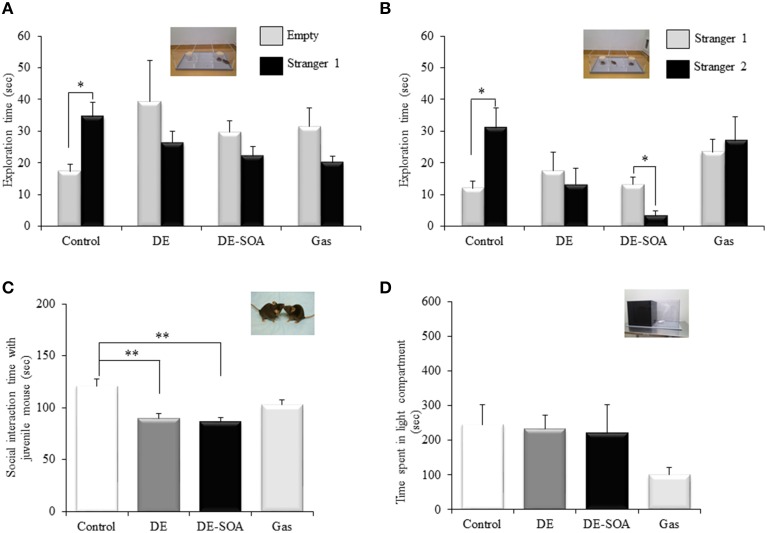
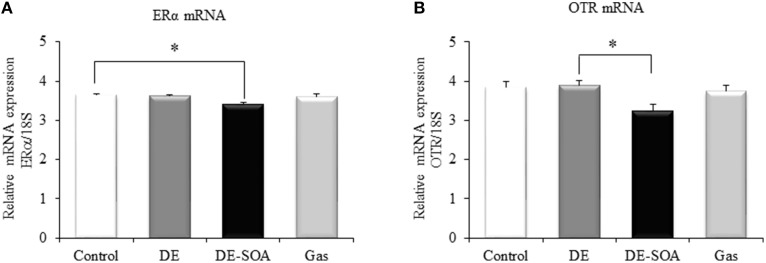
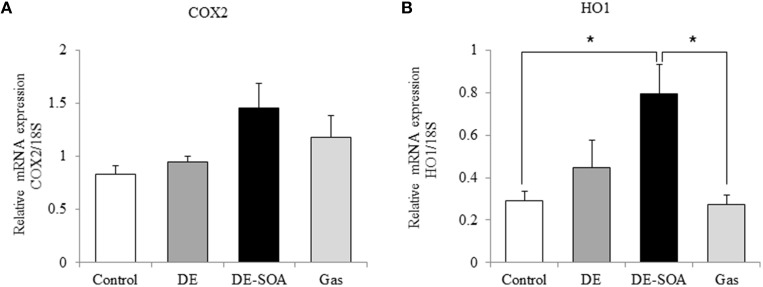
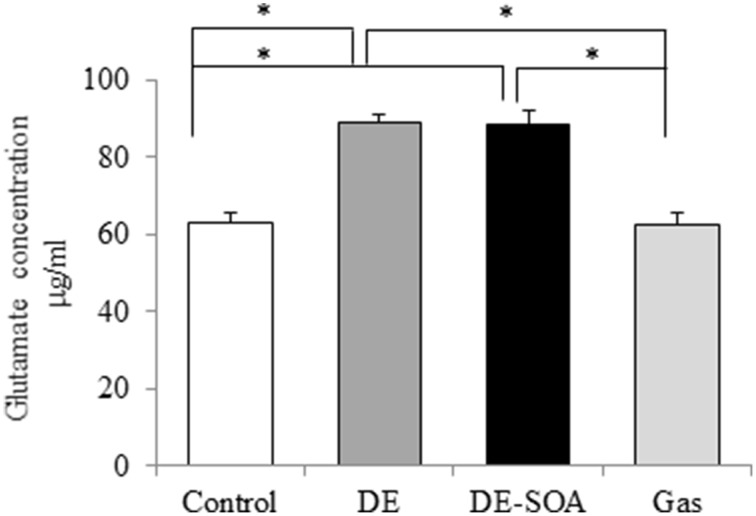
Verification
Claims the paper makes
The claims and statistics of this paper haven’t been checked yet.
Run the check — free, no account needed. It reads the open-access text and checks the sources it cites.
Claims other papers make about this one
Each is checked against this paper’s own text: does it say what the citing paper says it does?
In the citing paper
“Neonatal mice exposed to secondary organic particles demonstrated a decrease in social behaviour with down-regulation of estrogen receptor-β and oxytocin receptor in the hypothalamus [173].”
From Particle toxicology and health - where are we? (2019) · cites this paper as [173]
Self-check
Percentages, sums and reported differences re-computed from the paper’s own numbers.
The self-check needs the paper’s full text.
Citations
Cites
Increased plasma viscosity during an air pollution episode: a link to mortality?
Peters, A., Döring, A., Wichmann, H.-E., & Koenig, W. (1997) · The Lancet · doi:10.1016/s0140-6736(97)01211-7 · Cited by 706
The outdoor air pollution and brain health workshop
Block, M. L., Elder, A., Auten, R. L., Bilbo, S. D., Chen, H., Chen, J.-C., Cory-Slechta, D. A., Costa, D., Diaz-Sanchez, D., Dorman, D. C., et al. (2012) · NeuroToxicology · doi:10.1016/j.neuro.2012.08.014 · Cited by 539
How environmental and genetic factors combine to cause autism: A redox/methylation hypothesis
Deth, R., Muratore, C., Benzecry, J., Power-Charnitsky, V.-A., & Waly, M. (2008) · NeuroToxicology · doi:10.1016/j.neuro.2007.09.010 · Cited by 325
Calderón-Garcidueñas, L., Engle, R., Mora-Tiscareño, A., Styner, M., Gómez-Garza, G., Zhu, H., Jewells, V., Torres-Jardón, R., Romero, L., Monroy-Acosta, M. E., et al. (2011) · Brain and Cognition · doi:10.1016/j.bandc.2011.09.006 · Cited by 323
Pedersen, C. A., Gibson, C. M., Rau, S. W., Salimi, K., Smedley, K. L., Casey, R. L., Leserman, J., Jarskog, L. F., & Penn, D. L. (2011) · Schizophrenia Research · doi:10.1016/j.schres.2011.07.027 · Cited by 305
Crawley, J. N., Chen, T., Puri, A., Washburn, R., Sullivan, T. L., Hill, J. M., Young, N. B., Nadler, J. J., Moy, S. S., Young, L. J., et al. (2007) · Neuropeptides · doi:10.1016/j.npep.2007.02.002 · Cited by 232
Landrigan, P. J., Lambertini, L., & Birnbaum, L. S. (2012) · Environmental Health Perspectives · doi:10.1289/ehp.1104285 · Cited by 230
Effects of single dose intranasal oxytocin on social cognition in schizophrenia
Davis, M. C., Lee, J., Horan, W. P., Clarke, A. D., McGee, M. R., Green, M. F., & Marder, S. R. (2013) · Schizophrenia Research · doi:10.1016/j.schres.2013.04.023 · Cited by 124
Research works printed but not linked: 45
- Andari, 2010, Promoting social behavior with oxytocin in high functioning autism spectrum disorders, Proc. Natl. Acad. Sci. U.S.A., 107, 4389, 10.1073/pnas.0910249107 · DOI · Paper page
- Bezzi, 1999, Astrocytes as active participants of glutamatergic function and regulators of its homeostasis, Adv. Exp. Med. Biol., 468, 69, 10.1007/978-1-4615-4685-6_6 · DOI
- Block, 2009, Air pollution: mechanisms of neuroinflammation and CNS disease, Trends Neurosci., 32, 506, 10.1016/j.tins.2009.05.009 · DOI
- Calderón-Garcidueñas, 2013, Brain immune interactions and air pollution: macrophage inhibitory factor (MIF), prion cellular protein (PrP(C)), Interleukin-6 (IL-6), interleukin 1 receptor antagonist (IL-1Ra), and interleukin-2 (IL-2) in cerebrospinal fluid and MIF in serum differentiate urban children exposed to severe vs. low air pollution, Front. Neurosci., 7, 10.3389/fnins.2013.00183 · DOI
- Calderón-Garcidueñas, 2008a, Air pollution, cognitive deficits and brain abnormalities: a pilot study with children and dogs, Brain Cogn., 68, 117, 10.1016/j.bandc.2008.04.008 · DOI
- Calderón-Garcidueñas, 2004, Brain inflammation and Alzheimer's-like pathology in individuals exposed to severe air pollution, Toxicol. Pathol., 32, 650, 10.1080/01926230490520232 · DOI
- Calderón-Garcidueñas, 2008b, Long-term air pollution exposure is associated with neuroinflammation, an altered innate immune response, disruption of the blood-brain barrier, ultrafine particulate deposition, and accumulation of amyloid beta-42 and alpha-synuclein in children and young adults, Toxicol. Pathol., 36, 289, 10.1177/0192623307313011 · DOI · Paper page
- Choi, 1990, The role of glutamate neurotoxicity in hypoxic-ischemic neuronal death, Annu. Rev. Neurosci., 13, 171, 10.1146/annurev.ne.13.030190.001131 · DOI
- Costa, 2014, Neurotoxicants are in the air: convergence of human, animal, and in vitro studies on the effects of air pollution on the brain, Biomed Res. Int., 2014, 736385, 10.1155/2014/736385 · DOI
- Dockery, 1993, Epidemiologic study design for investigating respiratory health effects of complex air pollution mixtures, Environ. Health Perspect., 101, 187, 10.1289/ehp.93101s4187 · DOI
- Ervin, 2015, Estrogen involvement in social behavior in rodents: rapid and long-term actions, Horm. Behav., 74, 53, 10.1016/j.yhbeh.2015.05.023 · DOI
- File, 1998, Striking changes in anxiety in Huntington's disease transgenic mice, Brain Res., 2, 234, 10.1016/S0006-8993(98)00736-7 · DOI
- Fonnum, 1984, Glutamate: a neurotransmitter in mammalian brain, J. Neurochem., 42, 1, 10.1111/j.1471-4159.1984.tb09689.x · DOI
- Fujitani, 2009, Characterization of dilution conditions for diesel nanoparticle inhalation studies, Inhal. Toxicol., 21, 200, 10.1080/08958370802339491 · DOI
- Gaschen, 2010, Cellular responses after exposure of lung cell cultures to secondary organic aerosol particles, Environ. Sci. Technol., 44, 1424, 10.1021/es902261m · DOI
- Genc, 2012, The adverse effects of air pollution on the nervous system, J. Toxicol., 2012, 782462, 10.1155/2012/782462 · DOI
- Jung, 2013, Social deficits in the AY-9944 mouse model of atypical absence epilepsy, Behav. Brain Res., 236, 23, 10.1016/j.bbr.2012.08.029 · DOI
- Kanai, 1995, Neuronal high-affinity glutamate transport in the rat central nervous system, Neuroreport, 27, 2357, 10.1097/00001756-199511270-00020 · DOI
- Kanai, 1993, A new family of neurotransmitter transporters: the high-affinity glutamate transporters, FASEB J., 7, 1450, 10.1096/fasebj.7.15.7903261 · DOI
- Kanakidou, 2005, Organic aerosol and global climate modelling: a review, Atmos. Chem. Phys., 5, 1053, 10.5194/acp-5-1053-2005 · DOI
- Kim, 2015, Characterization of air freshener emission: the potential health effects, J. Toxicol. Sci., 40, 535, 10.2131/jts.40.535 · DOI
- Lee, 2010, Inflammation and Alzheimer's disease, Arch. Pharm. Res., 33, 1539, 10.1007/s12272-010-1006-7 · DOI · Paper page
- Moretti, 2005, Abnormalities of social interactions and home-cage behavior in a mouse model of Rett syndrome, Hum. Mol. Genet., 14, 205, 10.1093/hmg/ddi016 · DOI
- Penttinen, 2001, Ultrafine particles in urban air and respiratory health among adult asthmatics, Eur. Respir. J., 17, 428, 10.1183/09031936.01.17304280 · DOI
- Pope, 2002, Lung cancer, cardiopulmonary mortality, and long-term exposure to fine particulate air pollution, J. Am. Med. Assoc., 287, 1132, 10.1001/jama.287.9.1132 · DOI · Paper page
- Rauen, 1999, Glia-neuron interaction by high-affinity glutamate transporters in neurotransmission, Adv. Exp. Med. Biol., 468, 81, 10.1007/978-1-4615-4685-6_7 · DOI
- Robinson, 2007, Rethinking organic aerosols: semivolatile emissions and photochemical aging, Science, 315, 1259, 10.1126/science.1133061 · DOI
- Spiteri, 2010, The role of the estrogen receptor alpha in the medial amygdala and ventromedial nucleus of the hypothalamus in social recognition, anxiety and aggression, Behav. Brain Res., 210, 211, 10.1016/j.bbr.2010.02.033 · DOI
- Takayanagi, 2005, Pervasive social deficits, but normal parturition, in oxytocin receptor-deficient mice, Proc. Natl. Acad. Sci. U.S.A., 102, 16096, 10.1073/pnas.0505312102 · DOI · Paper page
- Virtanen, 2012, An amorphous solid state of biogenic secondary organic aerosol particles, Nature, 467, 824, 10.1038/nature09455 · DOI
- Wang, 2012, Ozone-initiated particle formation, particle aging, and precursors in a laser printer, Environ. Sci. Technol., 46, 704, 10.1021/es203066k · DOI
- Weisskopf, 2015, Air pollution and autism spectrum disorders: causal or confounded?, Curr. Environ. Health Rep, 2, 340, 10.1007/s40572-015-0073-9 · DOI
- Wellenius, 2011, Electrocardiographic and respiratory responses to coal-fired power plant emissions in a rat model of acute myocardial infarction: Results from the toxicological evaluation of realistic emissions of source aerosols study, Inhal. Toxicol., 23, 84, 10.3109/08958378.2010.554461 · DOI
- Win-Shwe, 2011, Nanoparticles and neurotoxicity, Int. J. Mol. Sci, 12, 6267, 10.3390/ijms12096267 · DOI
- Win-Shwe, 2012b, Novel object recognition ability in female mice following exposure to nanoparticle-rich diesel exhaust, Toxicol. Appl. Pharmacol, 262, 355, 10.1016/j.taap.2012.05.015 · DOI
- Win-Shwe, 2014, Effects of diesel engine exhaust origin secondary organic aerosols on novel object recognition ability and maternal behavior in BALB/c mice, Int. J. Environ. Res. Public Health, 11, 11286, 10.3390/ijerph111111286 · DOI
- Win-Shwe, 2013, Effects of acute single intranasal instillation of secondary organic aerosol on neurological and immunological biomarkers in the brain and lung of BALB/c mice, J. Toxicol. Sci., 38, 71, 10.2131/jts.38.71 · DOI
- Win-Shwe, 2015, Nano-sized secondary organic aerosol of diesel engine exhaust origin impairs olfactory-based spatial learning performance in preweaning mice, Nanomaterials, 2015, 1147, 10.3390/nano5031147 · DOI
- Win-Shwe, 2009, Extracellular glutamate level and NMDA receptor subunit expression in mouse olfactory bulb following nanoparticle-rich diesel exhaust exposure, Inhal. Toxicol, 21, 828, 10.1080/08958370802538068 · DOI
- Win-Shwe, 2008a, Changes in neurotransmitter levels and proinflammatory cytokine mRNA expressions in the mice olfactory bulb following nanoparticle exposure, Toxicol. Appl. Pharmacol., 226, 192, 10.1016/j.taap.2007.09.009 · DOI
- Win-Shwe, 2006, Brain cytokine and chemokine mRNA expression in mice induced by intranasal instillation with ultrafine carbon black, Toxicol. Lett, 163, 153, 10.1016/j.toxlet.2005.10.006 · DOI
- Win-Shwe, 2008b, Spatial learning and memory function-related gene expression in the hippocampus of mouse exposed to nanoparticle-rich diesel exhaust, Neurotoxicology, 29, 940, 10.1016/j.neuro.2008.09.007 · DOI
- Win-Shwe, 2012a, Nanoparticle-rich diesel exhaust affects hippocampal-dependent spatial learning and NMDA receptor subunit expression in female mice, Nanotoxicology, 6, 543, 10.3109/17435390.2011.590904 · DOI
- Winslow, 2002, The social deficits of the oxytocin knockout mouse, Neuropeptides, 36, 221, 10.1054/npep.2002.0909 · DOI · Paper page
- Youssefi, 2012, Predicting secondary organic aerosol formation from terpenoid ozonolysis with varying yields in indoor environments, Indoor Air, 22, 415, 10.1111/j.1600-0668.2012.00776.x · DOI
Cited by
Sorted by citations
Particle toxicology and health - where are we?
Riediker, M., Zink, D., Kreyling, W., Oberdörster, G., Elder, A., Graham, U., Lynch, I., Duschl, A., Ichihara, G., Ichihara, S., et al. (2019) · Particle and Fibre Toxicology · doi:10.1186/s12989-019-0302-8 · Cited by 237
Croze, M. L., & Zimmer, L. (2018) · Journal of Alzheimer s Disease · doi:10.3233/jad-170857 · Cited by 78
Metadata
- Authors
- Win-Shwe, T.-T., Kyi-Tha-Thu, C., Moe, Y., Fujitani, Y., Tsukahara, S., & Hirano, S.
- Venue
- Frontiers in Neuroscience
- Publisher
- Frontiers Media SA
- Published
- 2016-01-25
- Volume
- 9
- ISSN
- 1662-453X
- PMC
- PMC4724727
- Cited by
- 17
- References
- 8
About these checks
Registry, retraction, Cites and statistics results are computed, not judged, with one exception: a printed reference that no index lists is read once by a model before it counts as a citation error. Claims are extracted by a model and kept only when their quote appears verbatim in the text; each cited source is then checked, with a model’s help, for whether it says what the claim relies on. Those verdicts can be wrong — read the claim’s quote and the cited source before relying on one.
Statistics and arithmetic are recomputed, not judged.
Confidence bands are shown only for fields calibrated on our annotated test set. None is calibrated yet, so no band is shown.
What counts as a claim ›How we measure confidence ›How we check this ›
Are you an author, or do you see a problem with this page? Request a review
