

The DOI matches its Crossref record; 234 of the 235 references it cites were found in a registry or an index.
Autism As a Disorder of High Intelligence
Open accessAbstract
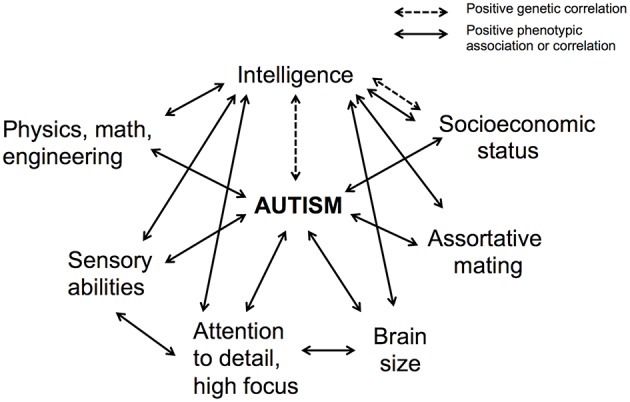
A suite of recent studies has reported positive genetic correlations between autism risk and measures of mental ability. These findings indicate that alleles for autism overlap broadly with alleles for high intelligence, which appears paradoxical given that autism is characterized, overall, by below-average IQ. This paradox can be resolved under the hypothesis that autism etiology commonly involves enhanced, but imbalanced, components of intelligence. This hypothesis is supported by convergent evidence showing that autism and high IQ share a diverse set of convergent correlates, including large brain size, fast brain growth, increased sensory and visual-spatial abilities, enhanced synaptic functions, increased attentional focus, high socioeconomic status, more deliberative decision-making, profession and occupational interests in engineering and physical sciences, and high levels of positive assortative mating. These findings help to provide an evolutionary basis to understanding autism risk as underlain in part by dysregulation of intelligence, a core human-specific adaptation. In turn, integration of studies on intelligence with studies of autism should provide novel insights into the neurological and genetic causes of high mental abilities, with important implications for cognitive enhancement, artificial intelligence, the relationship of autism with schizophrenia, and the treatment of both autism and intellectual disability.
Overview
The claims and statistics of this paper haven’t been checked yet.
Run the check — free, no account needed. It reads the open-access text and checks the sources it cites.
Integrity signals
Registry
Cites
Statistics
Figures
Verification
Claims the paper makes
The claims and statistics of this paper haven’t been checked yet.
Run the check — free, no account needed. It reads the open-access text and checks the sources it cites.
Claims other papers make about this one
Each is checked against this paper’s own text: does it say what the citing paper says it does?
The source backs part of the claim, not all of it — or backs it for a different population, condition or comparison.
In the citing paper
“Some gifted profiles might share socio-emotional problems with highfunctioning autism, mainly regarding social abilities, adaptation disorders, withdrawal in imaginary and/or intellectual abstraction, attention deficit, clumsiness, excessive attention to restricted interests, and hypersensitivity [7, 15, 16].”
From Behavioral and Socio-Emotional Disorders in Intellectual Giftedness: A Systematic Review (2024) · cites this paper as [16]
Experimental — accuracy not yet measuredThe source backs part of the claim, not all of it — or backs it for a different population, condition or comparison.
In the citing paper
“Notably, it was proposed that the higher cognitive capacities in humans were acquired at the cost of increased susceptibility to mental disease17–19.”
From Distinct selective forces and Neanderthal introgression shaped genetic diversity at genes involved in neurodevelopmental disorders (2017) · cites this paper as [19]
Experimental — accuracy not yet measured
Self-check
Percentages, sums and reported differences re-computed from the paper’s own numbers.
The self-check needs the paper’s full text.
Citations
Cites
Shrestha, S., & Offer, S. M. (2016) · Medical Epigenetics · doi:10.1159/000444713 · Cited by 8,951
(1943) · The Nervous child · Cited by 8,870
"General Intelligence," Objectively Determined and Measured
Spearman, C. (1904) · The American Journal of Psychology · doi:10.2307/1412107 · Cited by 6,207
An atlas of genetic correlations across human diseases and traits
ReproGen Consortium, Bulik-Sullivan, B., Psychiatric Genomics Consortium, Genetic Consortium for Anorexia Nervosa of the Wellcome Trust Case Control Consortium 3, Finucane, H. K., Anttila, V., Gusev, A., Day, F. R., Loh, P.-R., Duncan, L., et al. (2015) · Nature Genetics · doi:10.1038/ng.3406 · Cited by 4,255
The weak coherence account: detail-focused cognitive style in autism spectrum disorders
Happé, F., & Frith, U. (2006) · Journal of Autism and Developmental Disorders · doi:10.1007/s10803-005-0039-0 · Cited by 2,884
Model of autism: increased ratio of excitation/inhibition in key neural systems
Rubenstein, J. L. R., & Merzenich, M. M. (2003) · Genes, Brain and Behavior · doi:10.1034/j.1601-183x.2003.00037.x · Cited by 2,768
Mental Rotations, a Group Test of Three-Dimensional Spatial Visualization
Vandenberg, S. G., & Kuse, A. R. (1978) · Perceptual and Motor Skills · doi:10.2466/pms.1978.47.2.599 · Cited by 2,620
Autistic disturbances of affective contact.
Kanner, L. (1968) · PubMed · Cited by 2,282
Genetic relationship between five psychiatric disorders estimated from genome-wide SNPs
Cross-Disorder Group of the Psychiatric Genomics Consortium (2013) · Nature Genetics · doi:10.1038/ng.2711 · Cited by 2,263
Wai, J., Lubinski, D., & Benbow, C. P. (2009) · Journal of Educational Psychology · doi:10.1037/a0016127 · Cited by 2,004
Research works printed but not linked: 2
- Crespi, 2016, The evolutionary biology of human neurodevelopment: evo-neuro-devo comes of age, 205
- Hauser, 2002, Meritocracy, Cognitive Ability, and the Sources of Occupational Success
Cited by
Sorted by citations
Getting to the cores of autism
Iakoucheva, L. M., Muotri, A. R., & Sebat, J. (2019) · Cell · doi:10.1016/j.cell.2019.07.037 · Cited by 260
“This result has led to fascinating speculation as to the potential causative relationship of high intelligence to ASD (Crespi, 2016), but a rigorous dissection of the relationship of ASD PRS with intelligence in the general population is needed.”
BackgroundAntaki, D., Guevara, J., Maihofer, A. X., Klein, M., Gujral, M., Grove, J., Carey, C. E., Hong, O., Arranz, M. J., Hervas, A., et al. (2022) · Nature Genetics · doi:10.1038/s41588-022-01064-5 · Cited by 206
Peñuelas‐Calvo, I., Sareen, A., Sevilla‐Llewellyn‐Jones, J., & Fernández‐Berrocal, P. (2018) · Journal of Autism and Developmental Disorders · doi:10.1007/s10803-018-3814-4 · Cited by 130
Hou, Q.-L., Wang, Y., Li, Y., Chen, D., Yang, F., & Wang, S. (2018) · Frontiers in Behavioral Neuroscience · doi:10.3389/fnbeh.2018.00182 · Cited by 115
Saleh, M. W. A., & Mansour, M. (2024) · Accounting Research Journal · doi:10.1108/arj-04-2023-0106 · Cited by 127
Journey to diagnosis for women with autism
Zener, D. (2019) · Advances in Autism · doi:10.1108/aia-10-2018-0041 · Cited by 108
Polimanti, R. A., & Gelernter, J. E. (2017) · PLoS Genetics · doi:10.1371/journal.pgen.1006618 · Cited by 98
Park, B., Bethlehem, R. A. I., Paquola, C., Larivière, S., Rodríguez‐Cruces, R., de Wael, R. V., Bullmore, E. T., Dolan, R. J., Goodyer, I. M., Fonagy, P., et al. (2021) · eLife · doi:10.7554/elife.64694 · Cited by 86
Brynge, M., Sjöqvist, H., Gardner, R. M., Lee, B. K., Dalman, C., & Karlsson, H. (2022) · The Lancet Psychiatry · doi:10.1016/s2215-0366(22)00264-4 · Cited by 67
Pham, A. V., & Charles, L. C. (2023) · Current Psychiatry Reports · doi:10.1007/s11920-023-01417-9 · Cited by 69
Gray space and green space proximity associated with higher anxiety in youth with autism
Larson, L. R., Barger, B. D., Ogletree, S. S., Torquati, J., Rosenberg, S. A., Gaither, C. J., Bartz, J. M., Gardner, A. W., Moody, E. J., & Schutte, A. R. (2018) · Health & Place · doi:10.1016/j.healthplace.2018.07.006 · Cited by 54
Rao, S., Baranova, A. V., Yao, Y., Wang, J., & Zhang, F. (2022) · Neuropsychobiology · doi:10.1159/000525411 · Cited by 49
Carlisi, C. O., Norman, L., Murphy, C. M., Christakou, A., Chantiluke, K., Giampietro, V., Simmons, A., Brammer, M., Murphy, D. G., MRC AIMS consortium, et al. (2017) · Psychological Medicine · doi:10.1017/s0033291717001088 · Cited by 49
Blain, S. D., Grazioplene, R. G., Ma, Y., & DeYoung, C. G. (2019) · Schizophrenia Bulletin · doi:10.1093/schbul/sbz103 · Cited by 45
Association of phthalate exposure with autistic traits in children
Kim, J. I., Lee, J. E., Lee, K., Lee, Y. A., Shin, C. H., Hong, Y., Kim, B.-N., & Lim, Y.-H. (2021) · Environment International · doi:10.1016/j.envint.2021.106775 · Cited by 49
Genomic trade-offs: are autism and schizophrenia the steep price of the human brain?
Sikela, J. M., & Quick, V. B. S. (2018) · Human Genetics · doi:10.1007/s00439-017-1865-9 · Cited by 44
Behavioral and Socio-Emotional Disorders in Intellectual Giftedness: A Systematic Review
Tasca, I., Guidi, M., Turriziani, P., Mento, G., & Tarantino, V. (2024) · Child Psychiatry & Human Development · doi:10.1007/s10578-022-01420-w · Cited by 44
Liu, G., Shi, L., Qiu, J., & Lu, W. (2022) · Molecular Autism · doi:10.1186/s13229-022-00489-3 · Cited by 45
Alemany, S., Blok, E., Jansen, P. R., Muetzel, R. L., & White, T. J. H. (2021) · Autism Research · doi:10.1002/aur.2576 · Cited by 42
Crespi, B. J. (2021) · Frontiers in Psychiatry · doi:10.3389/fpsyt.2021.621659 · Cited by 39
Self-citationColor Vision Losses in Autism Spectrum Disorders
Zachi, E. C., Costa, T. L., Barboni, M. T. S., Costa, M. F., Bonci, D. M. O., & Ventura, D. F. (2017) · Frontiers in Psychology · doi:10.3389/fpsyg.2017.01127 · Cited by 33
Hunt, A., & Jaeggi, A. V. (2022) · Evolutionary Human Sciences · doi:10.1017/ehs.2022.23 · Cited by 32
The evolution of a series of behavioral traits is associated with autism-risk genes in cavefish
Yoshizawa, M., Settle, A. H., Hermosura, M. C., Tuttle, L. J., Cetraro, N., Passow, C. N., & McGaugh, S. E. (2018) · BMC Evolutionary Biology · doi:10.1186/s12862-018-1199-9 · Cited by 31
Three models for the regulation of polygenic scores in reproduction
Munday, S., & Savulescu, J. (2021) · Journal of Medical Ethics · doi:10.1136/medethics-2020-106588 · Cited by 31
Chakraborti, B., Verma, D., Guhathakurta, S., Jaiswal, P., Singh, A. S., Sinha, S., Ghosh, S., Mukhopadhyay, K., Mohanakumar, K. P., & Rajamma, U. (2020) · Frontiers in Neuroscience · doi:10.3389/fnins.2019.01375 · Cited by 28
Abu-Akel, A. M., Webb, M. E., de Montpellier, E., Bentivegni, S. V., Luechinger, L., Ishii, A., & Möhr, C. (2020) · Thinking Skills and Creativity · doi:10.1016/j.tsc.2020.100656 · Cited by 30
Hunt, A., & Procyshyn, T. L. (2024) · Autism Research · doi:10.1002/aur.3078 · Cited by 27
A Unifying Theory for Autism: The Pathogenetic Triad as a Theoretical Framework
Sarovic, D. (2021) · Frontiers in Psychiatry · doi:10.3389/fpsyt.2021.767075 · Cited by 30
Bidirectional genetic overlap between autism spectrum disorder and cognitive traits
Hope, S., Shadrin, A. A., Lin, A., Bahrami, S., Rødevand, L. N., Frei, O., Hübenette, S. J., Cheng, W., Hindley, G., Nag, H. E., et al. (2023) · Translational Psychiatry · doi:10.1038/s41398-023-02563-7 · Cited by 28
Polygenic risk for psychiatric disorders correlates with executive function in typical development
Schork, A. J., Brown, T. T., Hagler, D. J., Thompson, W. K., Chen, C. ‐., Dale, A. M., Jernigan, T. L., Akshoomoff, N. A., & for the Pediatric Imaging, N. A. G. S. (2018) · Genes Brain & Behavior · doi:10.1111/gbb.12480 · Cited by 28
Griffiths, A. J., Brady, J. J., Riley, N., Alsip, J., Trine, V., & Gomez, L. (2021) · Frontiers in Education · doi:10.3389/feduc.2020.545701 · Cited by 24
Crespi, B. J. (2019) · Evolution Medicine and Public Health · doi:10.1093/emph/eoz022 · Cited by 24
Self-citationBilleiter, K. B., & Froiland, J. M. (2022) · Child Psychiatry & Human Development · doi:10.1007/s10578-021-01300-9 · Cited by 29
Mozzi, A., Forni, D., Cagliani, R., Pozzoli, U., Clerici, M., & Sironi, M. (2017) · Scientific Reports · doi:10.1038/s41598-017-06440-4 · Cited by 19
Bruton, O. J. (2021) · Intelligence · doi:10.1016/j.intell.2021.101540 · Cited by 20
Comparative analysis reveals distinctive epigenetic features of the human cerebellum
Guevara, E. E., Hopkins, W. D., Hof, P. R., Ely, J. J., Bradley, B. J., & Sherwood, C. C. (2021) · PLoS Genetics · doi:10.1371/journal.pgen.1009506 · Cited by 21
Evolutionary and genetic insights for clinical psychology
Crespi, B. J. (2020) · Clinical Psychology Review · doi:10.1016/j.cpr.2020.101857 · Cited by 18
Self-citationFacilitating independent commuting among individuals with autism – A design study in Singapore
Lim, P. Y., Kong, P., Cornet, H., & Frenkler, F. (2021) · Journal of Transport & Health · doi:10.1016/j.jth.2021.101022 · Cited by 20
Autism Spectrum Disorders: State-of-the-Art (Review)
Bozhkova, E. D., Balandina, O. V., & Коновалов, А. А. (2020) · Современные технологии в медицине · doi:10.17691/stm2020.12.2.14 · Cited by 19
Sex Differences in Mental Rotation and How They Add to the Understanding of Autism
Zapf, A. C., Glindemann, L. A., Vogeley, K. T., & Falter, C. M. (2015) · PLoS ONE · doi:10.1371/journal.pone.0124628 · Cited by 17
Riccioni, A., Stefano, P. R. O., Criscio, L. D., Terribili, M., Siracusano, M., Moavero, R., Valeriani, M., & Mazzone, L. (2021) · Brain Sciences · doi:10.3390/brainsci11121607 · Cited by 21
The DCIDE framework: systematic investigation of evolutionary hypotheses, exemplified with autism
Hunt, A., & Jaeggi, A. V. (2025) · Biological reviews/Biological reviews of the Cambridge Philosophical Society · doi:10.1111/brv.70010 · Cited by 15
Santiago, M., & Louro, V. (2021) · Revista Música · doi:10.11606/rm.v21i2.181126 · Cited by 14
Halder, S., Bruyère, S. M., & Gower, W. S. (2022) · International Journal of Developmental Disabilities · doi:10.1080/20473869.2022.2058781 · Cited by 14
Tree Canopy Coverage Predicts Lower Conduct Problem Severity in Children with ASD
Barger, B. D., Larson, L. R., Ogletree, S. S., Torquati, J., Rosenberg, S. A., Gaither, C. J., Bartz, J. M., Gardner, A. W., & Moody, E. J. (2020) · Journal of Mental Health Research in Intellectual Disabilities · doi:10.1080/19315864.2020.1714824 · Cited by 15
Williams, C. M., Peyre, H., Toro, R., Beggiato, A., & Ramus, F. (2020) · Human Brain Mapping · doi:10.1002/hbm.25145 · Cited by 15
Caldwell‐Harris, C. L. (2021) · Frontiers in Psychiatry · doi:10.3389/fpsyt.2021.657774 · Cited by 18
Openshaw, R. L., Thomson, D. M., Bristow, G. C., Mitchell, E. J., Pratt, J. A., MORRIS, B. J., & Dawson, N. (2023) · Communications Biology · doi:10.1038/s42003-023-04891-2 · Cited by 20
Gardner, R. M., Dalman, C., Rai, D., Lee, B. K., & Karlsson, H. (2019) · Journal of the American Academy of Child & Adolescent Psychiatry · doi:10.1016/j.jaac.2019.04.004 · Cited by 15
Dutton, E., Nijenhuis, J. T., Metzen, D., van der Linden, D., & Madison, G. (2019) · Journal of Religion and Health · doi:10.1007/s10943-019-00926-3 · Cited by 14
Stuurman, S., Passier, H. J. M., Geven, F. E. M., & Barendsen, E. (2019) · Computer Science Education Research Conference · doi:10.1145/3375258.3375261 · Cited by 15
Sleep Health at the Genomic Level: Six Distinct Factors and Their Relationships With Psychopathology
Morrison, C. L., Winiger, E. A., Rieselbach, M. M., Vetter, C., Wright, K. P., LeBourgeois, M. K., & Friedman, N. P. (2022) · Biological Psychiatry Global Open Science · doi:10.1016/j.bpsgos.2022.07.002 · Cited by 13
Loffi, R. G., Cruz, T. K. F., Paiva, G. M., Souto, D. O., Barreto, S. R., SANTANA, P. C. M., Nascimento, A. A. A. C., Costa, F. R. M., Cota, E. B., & Haase, V. G. (2024) · Children · doi:10.3390/children11020191 · Cited by 19
Facial Expression Databases and Autism Spectrum Disorder: A Scoping Review
Pandey, R., & Bhushan, B. (2025) · Autism Research · doi:10.1002/aur.70030 · Cited by 12
South, G., & Sunderland, N. (2020) · Disability & Society · doi:10.1080/09687599.2020.1816903 · Cited by 13
Aguilar, C. P. C., & Rauli, P. M. F. (2020) · Revista Educação Especial · doi:10.5902/1984686x44082 · Cited by 18
The sexual selection of creativity: A nomological approach
Novaes, F. C., & Natividade, J. C. (2023) · Frontiers in Psychology · doi:10.3389/fpsyg.2022.874261 · Cited by 12
Autistic nurses: do they exist?
Hedlund, Å. (2023) · British Journal of Nursing · doi:10.12968/bjon.2023.32.4.210 · Cited by 12
Rządeczka, M., Wodziński, M. C., & Moskalewicz, M. (2023) · Frontiers in Psychiatry · doi:10.3389/fpsyt.2023.1291854 · Cited by 17
The “Primitive Brain Dysfunction” Theory of Autism: The Superior Colliculus Role
Jure, R. (2022) · Frontiers in Integrative Neuroscience · doi:10.3389/fnint.2022.797391 · Cited by 14
Park, B.-Y., Bethlehem, R. A. I., Paquola, C., Larivière, S., Cruces, R. R., de Wael, R. V., Bullmore, E. T., & Bernhardt, B. C. (2020) · bioRxiv (Cold Spring Harbor Laboratory) · doi:10.1101/2020.06.22.165621 · Cited by 12
Biological Constraint as a Cause of AgingPreprint
Gems, D., & Kern, C. C. (2022) · Preprints.org · doi:10.20944/preprints202205.0212.v1 · Cited by 10
Halder, S., & Bruyère, S. M. (2021) · International Journal of Developmental Disabilities · doi:10.1080/20473869.2021.1917111 · Cited by 9
Bright, but allergic and neurotic? A critical investigation of the “overexcitable genius” hypothesis
Fries, J., Baudson, T. G., Kovacs, K., & Pietschnig, J. (2022) · Frontiers in Psychology · doi:10.3389/fpsyg.2022.1051910 · Cited by 9
Jain, A., Tiwari, S., & Padickaparambil, S. (2019) · Indian Journal of Psychological Medicine · doi:10.4103/ijpsym.ijpsym_163_19 · Cited by 9
Maksimović, S., Jeličić, L., Marisavljević, M., Fatić, S., Gavrilović, A., & Subotić, M. (2022) · Diagnostics · doi:10.3390/diagnostics12051110 · Cited by 9
Rezaeinejad, M., Riahi, S. M., Moghadam, K. B., Tadi, M. J., Geraili, Z., Parsa, H., Marhoommirzabak, E., Shiadeh, M. N., & Khatir, A. A. (2023) · PLoS ONE · doi:10.1371/journal.pone.0292226 · Cited by 8
Emotion Perception in Members of Norwegian Mensa
Egeland, J. (2019) · Frontiers in Psychology · doi:10.3389/fpsyg.2019.00027 · Cited by 8
Enrichment of a subset of Neanderthal polymorphisms in autistic probands and siblings
Pauly, R., Johnson, L., Feltus, F. A., & Casanova, E. L. (2024) · Molecular Psychiatry · doi:10.1038/s41380-024-02593-7 · Cited by 11
Brain working memory network indices as landmarks of intelligence
Khodaei, M., Laurienti, P. J., Dagenbach, D., & Simpson, S. L. (2023) · Neuroimage Reports · doi:10.1016/j.ynirp.2023.100165 · Cited by 8
Crespi, B. J. (2020) · Cambridge University Press eBooks · doi:10.1017/9781108580298.045 · Cited by 7
Self-citationCrespi, B. J. (2022) · Frontiers in Psychiatry · doi:10.3389/fpsyt.2022.937163 · Cited by 6
Self-citationGignac, G. E., Palermo, R., Bothe, E., Walker, D. L., & Wilmer, J. B. (2023) · Quarterly Journal of Experimental Psychology · doi:10.1177/17470218231203679 · Cited by 7
Schmilovich, Z., Bourque, V.-R., Douard, E. A., Huguet, G., Poulain, C., Ross, J. P., Alipour, P., Castonguay, C.-E., Younis, N., Jean‐Louis, M., et al. (2024) · Frontiers in Psychiatry · doi:10.3389/fpsyt.2024.1369767 · Cited by 9
Prakash, A., & Banerjee, M. (2021) · Scientific Reports · doi:10.1038/s41598-021-89798-w · Cited by 8
Avaliação da inteligência em crianças com transtorno do espectro autista (TEA)
Bezam, P. D. B. (2020) · doi:10.11606/d.59.2020.tde-28042020-100710 · Cited by 5
Keeping the balance: Trade-offs between human brain evolution, autism, and schizophrenia
Duński, E., & Pękowska, A. (2022) · Frontiers in Genetics · doi:10.3389/fgene.2022.1009390 · Cited by 5
Mottron, L., Lavigne-Champagne, A., Bernhardt, B. C., Dumas, G., Jacquemont, S., & Gagnon, D. (2025) · Molecular Psychiatry · doi:10.1038/s41380-025-03275-8 · Cited by 4
Cognitive Development and Language Acquisition in Autistic Children
Mostek, J. (2022) · Science Insights · doi:10.15354/si.22.re091 · Cited by 4
The neurobiology of autism spectrum disorder as it relates to twice exceptionality
Sharkey, R. J., & Nickl‐Jockschat, T. (2023) · Neurobiology of Learning and Memory · doi:10.1016/j.nlm.2023.107740 · Cited by 9
Evolutionary Perspectives on Neurodevelopmental Disorders
Swanepoel, A., Reiss, M. J., Launer, J., Music, G., & Wren, B. (2022) · Cambridge University Press eBooks · doi:10.1017/9781009030564.017 · Cited by 4
Evolutionary Analyses of RNA Editing and Amino Acid Recoding in CephalopodsPreprint
Wang, M., & Mohlhenrich, E. R. (2019) · bioRxiv (Cold Spring Harbor Laboratory) · doi:10.1101/714394 · Cited by 4
Differences in ongoing thought between autistic and non-autistic adults
Strawson, W., Mckeown, B., Quadt, L., Wang, H.-T., Larsson, D. E. O., Mulcahy, J., Silva, M., Kampoureli, C. N., Turnbull, A. G., Garfinkel, S. N., et al. (2024) · Scientific Reports · doi:10.1038/s41598-024-78286-6 · Cited by 3
The Labor Market Skills Gap and Autism
Hurley-Hanson, A. E., Giannantonio, C. M., & Griffiths, A. J. (2019) · Palgrave explorations in workplace stigma · doi:10.1007/978-3-030-29049-8_7 · Cited by 3
When autistic writing is superior to neurotypical writing: the case of blogs
Caldwell‐Harris, C. L., & Posner, S. D. (2024) · Educational Review · doi:10.1080/00131911.2024.2302119 · Cited by 3
Allman, M. E., Kerr, S., Roldan, C. I., Harris, G. M., & Harris, G. E. (2024) · Advances in Autism · doi:10.1108/aia-02-2024-0013 · Cited by 4
Jha, S., Read, S., Hurd, P. L., & Crespi, B. J. (2018) · Neuropsychologia · doi:10.1016/j.neuropsychologia.2018.06.021 · Cited by 3
Self-citationBilleiter, K. B., Froiland, J. M., Allen, J. P., & Hajovsky, D. B. (2021) · Child Psychiatry & Human Development · doi:10.1007/s10578-021-01175-w · Cited by 4
ALTUNTAŞ, E. Y., & Doğanyiğit, S. Ö. (2021) · Cogent Social Sciences · doi:10.1080/23311886.2021.1947607 · Cited by 3
Filice, D. C. S., & Smith, J. J. (2022) · Elsevier eBooks · doi:10.1016/b978-0-323-91497-0.00102-8 · Cited by 3
Hunt, A. (2023) · doi:10.31234/osf.io/qbgke · Cited by 3
Halder, S., & Bruyère, S. M. (2025) · Preventing School Failure Alternative Education for Children and Youth · doi:10.1080/1045988x.2025.2472629 · Cited by 2
Genetic and Environmental Predisposing Factors of Autism Spectrum Disorders
Yontan, E. (2020) · Journal of Experimental and Basic Medical Sciences · doi:10.5606/jebms.2020.75604 · Cited by 2
(2022) · Emerald Group Publishing Limited eBooks · doi:10.1108/9781800712560 · Cited by 2
Creating Career Opportunities for Women with Autism in STEM
Griffiths, A. J., Nash, A. M., Maupin, Z. D., Delgado, R., & Mathur, S. K. (2022) · Emerald Group Publishing Limited eBooks · doi:10.1108/978-1-80262-263-820220001 · Cited by 2
Kurth, L., O’Shea, T. M., Burd, I. D., Dunlop, A. L., Croen, L., Wilkening, G. N., Hsu, T.-J., Ehrhardt, S., Palanisamy, A., McGrath, M., et al. (2024) · Journal of Neurodevelopmental Disorders · doi:10.1186/s11689-024-09540-1 · Cited by 2
Czerwiński, S. K., Atroszko, P. A., & Konarski, R. (2024) · Health Psychology Report · doi:10.5114/hpr/187337 · Cited by 2
Kumar, A. (2025) · Frontiers in Psychiatry · doi:10.3389/fpsyt.2025.1562061 · Cited by 2
Geraldhyne, V. J., Yuliati, N., & Saputri, S. W. D. (2020) · International Conference on Early Childhood and Primary Childhood Education (ECPE) · doi:10.2991/assehr.k.201112.011 · Cited by 2
Evidências de validade convergente Raven e R-2 em crianças com TEA
Bezam, P. D. B., Antonelli-Ponti, M., & Silva, J. A. D. (2020) · Revista Psicologia em Pesquisa · doi:10.34019/1982-1247.2020.v14.30531 · Cited by 2
Metadata
- Authors
- Crespi, B. J.
- Affiliations
- Simon Fraser University (CA)
- Corresponding author
- Crespi, Bernard J.
- ORCID
- Crespi, Bernard J.
- Venue
- Frontiers in Neuroscience
- Publisher
- Frontiers Media SA
- Published
- 2016-06-30
- Volume
- 10
- Pages
- 300-300
- ISSN
- 1662-453X (ISSN-L)
- PMC
- PMC4927579
- OpenAlex
- W2470385410
- Cited by
- 156
- References
- 235
- Citations by year
- 2026: 8 · 2025: 12 · 2024: 18 · 2023: 24 · 2022: 24 · 2021: 22 · 2020: 19 · 2019: 13 · 2018: 10 · 2017: 4 · 2016: 1
- FWCI
- 5.94
- Type
- journal article
- Language
- en
- Open access
- gold
- doi.org
- Licence
- cc-by
- Locations
- Frontiers in Neuroscience (publishedVersion, cc-by)
- Europe PMC (PubMed Central) (publishedVersion, cc-by)
- PubMed Central (publishedVersion, cc-by)
- PubMed (publishedVersion)
- Funders
- Natural Sciences and Engineering Research Council of Canada (311201)
- Topics
- Life Sciences › Neuroscience › Cognitive Neuroscience › Autism Spectrum Disorder Research
- Life Sciences › Biochemistry, Genetics and Molecular Biology › Genetics › Genetics and Neurodevelopmental Disorders
- Social Sciences › Psychology › Experimental and Cognitive Psychology › Cognitive Abilities and Testing
- Keywords
- autism spectrum disorder, high IQ, genetic correlation, IQ, brain size, brain growth, visuospatial ability, sensory abilities, synaptic function, attention, socioeconomic status, decision-making, career interest, assortative mating, autism etiology, schizophrenia, intellectual disability, cognitive enhancement
About these checks
Registry, retraction, Cites and statistics results are computed, not judged, with one exception: a printed reference that no index lists is read once by a model before it counts as a citation error. Claims are extracted by a model and kept only when their quote appears verbatim in the text; each cited source is then checked, with a model’s help, for whether it says what the claim relies on. Those verdicts can be wrong — read the claim’s quote and the cited source before relying on one.
Statistics and arithmetic are recomputed, not judged.
Confidence bands are shown only for fields calibrated on our annotated test set. None is calibrated yet, so no band is shown.
What counts as a claim ›How we measure confidence ›How we check this ›
Are you an author, or do you see a problem with this page? Request a review
