

The DOI matches its Crossref record; 330 of the 330 references it cites were found in a registry or an index.
Axonal Degeneration during Aging and Its Functional Role in Neurodegenerative Disorders
Open accessAbstract
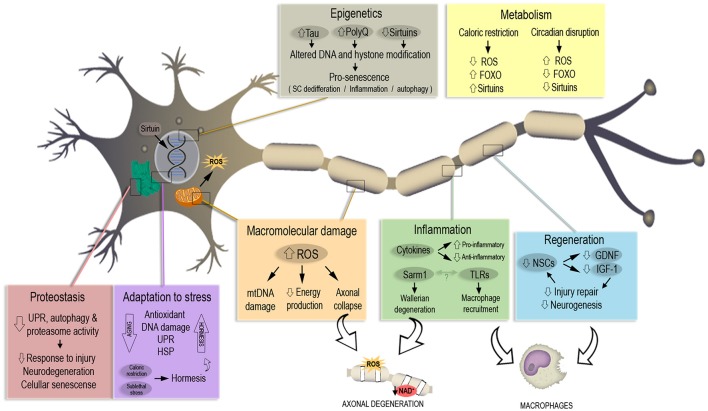
Aging constitutes the main risk factor for the development of neurodegenerative diseases. This represents a major health issue worldwide that is only expected to escalate due to the ever-increasing life expectancy of the population. Interestingly, axonal degeneration, which occurs at early stages of neurodegenerative disorders (ND) such as Alzheimer's disease, Amyotrophic lateral sclerosis, and Parkinson's disease, also takes place as a consequence of normal aging. Moreover, the alteration of several cellular processes such as proteostasis, response to cellular stress and mitochondrial homeostasis, which have been described to occur in the aging brain, can also contribute to axonal pathology. Compelling evidence indicate that the degeneration of axons precedes clinical symptoms in NDs and occurs before cell body loss, constituting an early event in the pathological process and providing a potential therapeutic target to treat neurodegeneration before neuronal cell death. Although, normal aging and the development of neurodegeneration are two processes that are closely linked, the molecular basis of the switch that triggers the transition from healthy aging to neurodegeneration remains unrevealed. In this review we discuss the potential role of axonal degeneration in this transition and provide a detailed overview of the literature and current advances in the molecular understanding of the cellular changes that occur during aging that promote axonal degeneration and then discuss this in the context of ND.
Overview
The claims and statistics of this paper haven’t been checked yet.
Run the check — free, no account needed. It reads the open-access text and checks the sources it cites.
Integrity signals
Registry
Cites
Statistics
Figures
Verification
Claims the paper makes
The claims and statistics of this paper haven’t been checked yet.
Run the check — free, no account needed. It reads the open-access text and checks the sources it cites.
Claims other papers make about this one
Each is checked against this paper’s own text: does it say what the citing paper says it does?
In the citing paper
“First, axonal degeneration, which is a precursor to many age-related neuronal disorders140,141, is characterized by rapid NAD+ depletion.”
From NAD+ metabolism and its roles in cellular processes during ageing (2021) · cites this paper as [140]
Self-check
Percentages, sums and reported differences re-computed from the paper’s own numbers.
The self-check needs the paper’s full text.
Citations
Cites
1 retracted
Poulsen, E. T., Iannuzzi, F., Rasmussen, H. F., Maier, T. J., Enghild, J. J., Jørgensen, A. L., & Matrone, C. (2017) · Frontiers in Molecular Neuroscience · doi:10.3389/fnmol.2017.00059 · Cited by 31
RetractedAging: a theory based on free radical and radiation chemistry
Harman, D. (1956) · Journal of Gerontology · doi:10.1093/geronj/11.3.298 · Cited by 8,567
Rosen, D. R., Siddique, T., Patterson, D., Figlewicz, D. A., Sapp, P., Hentati, A., Donaldson, D., Goto, J., O'Regan, J. P., Deng, H.-X., et al. (1993) · Nature · doi:10.1038/362059a0 · Cited by 7,062
The amyloid hypothesis of Alzheimer's disease at 25 years
Selkoe, D. J., & Hardy, J. (2016) · EMBO Molecular Medicine · doi:10.15252/emmm.201606210 · Cited by 6,164
2016 Alzheimer's disease facts and figures
Alzheimer's Association (2016) · Alzheimer's & Dementia · doi:10.1016/j.jalz.2016.03.001 · Cited by 5,069
Neuropathological alterations in Alzheimer disease
Serrano-Pozo, A., Frosch, M. P., Masliah, E., & Hyman, B. T. (2011) · Cold Spring Harbor Perspectives in Medicine · doi:10.1101/cshperspect.a006189 · Cited by 3,345
Protein translation and folding are coupled by an endoplasmic-reticulum-resident kinase
Harding, H. P., Zhang, Y., & Ron, D. (1999) · Nature · doi:10.1038/16729 · Cited by 3,310
Geroscience: Linking Aging to Chronic Disease
Kennedy, B. K., Berger, S. L., Brunet, A., Campisi, J., Cuervo, A. M., Epel, E. S., Franceschi, C., Lithgow, G. J., Morimoto, R. I., Pessin, J. E., et al. (2014) · Cell · doi:10.1016/j.cell.2014.10.039 · Cited by 2,764
Variant of TREM2 Associated with the Risk of Alzheimer's Disease
Jonsson, T., Stefansson, H., Steinberg, S., Jonsdottir, I., Jonsson, P. V., Snaedal, J., Bjornsson, S., Huttenlocher, J., Levey, A. I., Lah, J. J., et al. (2013) · New England Journal of Medicine · doi:10.1056/nejmoa1211103 · Cited by 2,558
Hypoxia-inducible factors and the response to hypoxic stress
Majmundar, A. J., Wong, W. J., & Simon, M. C. (2010) · Molecular Cell · doi:10.1016/j.molcel.2010.09.022 · Cited by 2,380
Cited by
Sorted by citations
NAD+ metabolism and its roles in cellular processes during ageing
Covarrubias, A. J., Perrone, R., Grozio, A., & Verdin, E. (2021) · Nature Reviews Molecular Cell Biology · doi:10.1038/s41580-020-00313-x · Cited by 1,617
Castelli, V., Benedetti, E., Antonosante, A., Catanesi, M., Pitari, G., Ippoliti, R., Cimini, A., & d’Angelo, M. (2019) · Frontiers in Molecular Neuroscience · doi:10.3389/fnmol.2019.00132 · Cited by 224
Chamberlain, K. A., Huang, N., Xie, Y., Licausi, F., Li, S., Li, Y., & Sheng, Z. (2021) · Neuron · doi:10.1016/j.neuron.2021.08.011 · Cited by 184
Philips, T., Mironova, Y. A., Jouroukhin, Y., Chew, J., Vidensky, S., Farah, M. H., Pletnikov, M. V., Bergles, D. E., Morrison, B. M., & Rothstein, J. D. (2021) · Cell Reports · doi:10.1016/j.celrep.2020.108610 · Cited by 126
The necroptosis machinery mediates axonal degeneration in a model of Parkinson disease
Oñate, M., Catenaccio, A., Salvadores, N., Saquel, C., Martinez, A. N., Moreno‐González, I., Gamez, N., Rudolffi-Soto, P., Soto, C. A., Hetz, C. A., et al. (2019) · Cell Death and Differentiation · doi:10.1038/s41418-019-0408-4 · Cited by 133
Self-citationMitochondria and Calcium Regulation as Basis of Neurodegeneration Associated With Aging
Müller, M., Ahumada-Castro, U., Sanhueza, M., González-Billault, C. E., Court, F. A., & Cárdenas, C. (2018) · Frontiers in Neuroscience · doi:10.3389/fnins.2018.00470 · Cited by 127
Self-citationOligodendrocyte–axon metabolic coupling is mediated by extracellular K+ and maintains axonal health
Looser, Z. J., Faik, Z., Ravotto, L., Zanker, H. S., Jung, R. B., Werner, H. B., Ruhwedel, T., Möbius, W., Bergles, D. E., Barros, L. F., et al. (2024) · Nature Neuroscience · doi:10.1038/s41593-023-01558-3 · Cited by 130
Groh, J., Knöpper, K., Arampatzi, P., Yuan, X., Lößlein, L., Saliba, A.-E., Kastenmüller, W., & Martini, R. (2021) · Nature Aging · doi:10.1038/s43587-021-00049-z · Cited by 118
Axonal Degeneration in AD: The Contribution of Aβ and Tau
Salvadores, N., Gerónimo‐Olvera, C., & Court, F. A. (2020) · Frontiers in Aging Neuroscience · doi:10.3389/fnagi.2020.581767 · Cited by 101
Self-citationAxonal energy metabolism, and the effects in aging and neurodegenerative diseases
Yang, S., Park, J. H., & Lu, H.-C. (2023) · Molecular Neurodegeneration · doi:10.1186/s13024-023-00634-3 · Cited by 94
“Axons, the longest and the most morphologically complex subcellular compartment of most neurons [57–59], are particularly vulnerable to aging [60, 61], environmental insults [62] and neurodegenerative conditions Abbreviations: ALS amyotrophic lateral sclerosis, APOE Apolipoprotein E, APP Amyloid precursor protein, C9O…”
BackgroundKynurenines link chronic inflammation to functional decline and physical frailty
Westbrook, R., Chung, T., Lovett, J., Ward, C. W., Joca, H. C., Yang, H., Khadeer, M., Tian, J., Xue, Q., Le, A., et al. (2020) · JCI Insight · doi:10.1172/jci.insight.136091 · Cited by 92
Mitochondria in Neuronal Health: From Energy Metabolism to Parkinson's Disease
Mahadevan, H. M., Hashemiaghdam, A., Ashrafi, G., & Harbauer, A. B. (2021) · Advanced Biology · doi:10.1002/adbi.202100663 · Cited by 112
Degenerative Cervical Myelopathy: Insights into Its Pathobiology and Molecular Mechanisms
Tu, J., Castillo, J. V., Das, A., & Diwan, A. D. (2021) · Journal of Clinical Medicine · doi:10.3390/jcm10061214 · Cited by 99
Čėsnaitė, E., Steinfath, T. P., Idaji, M. J., Stephani, T., Kumral, D., Haufe, S., Sander, C., Hensch, T., Hegerl, U., Riedel-Heller, S. G., et al. (2022) · NeuroImage · doi:10.1016/j.neuroimage.2022.119810 · Cited by 91
Binding and transport of SFPQ-RNA granules by KIF5A/KLC1 motors promotes axon survival
Fukuda, Y., Pazyra‐Murphy, M. F., Silagi, E. S., Tasdemir-Yilmaz, O. E., Li, Y., Rose, L., Yeoh, Z. C., Vangos, N. E., Geffken, E. A., Seo, H., et al. (2020) · The Journal of Cell Biology · doi:10.1083/jcb.202005051 · Cited by 88
Palmitoylation enables MAPK-dependent proteostasis of axon survival factors
Summers, D. W., Milbrandt, J., & DiAntonio, A. (2018) · Proceedings of the National Academy of Sciences · doi:10.1073/pnas.1806933115 · Cited by 88
Tesco, G., & Lomoio, S. (2022) · Seminars in Immunology · doi:10.1016/j.smim.2022.101628 · Cited by 102
Axonal degeneration induced by glutamate excitotoxicity is mediated by necroptosis
Hernández, D. E., Salvadores, N., Moya‐Alvarado, G., Catalán, R. J., Bronfman, F. C., & Court, F. A. (2018) · Journal of Cell Science · doi:10.1242/jcs.214684 · Cited by 75
Self-citationZheng, Y., Zhang, X., & Chen, Z. (2019) · CNS Neuroscience & Therapeutics · doi:10.1111/cns.13122 · Cited by 72
Hahn, I., Voelzmann, A., Liew, Y.-T., Costa-Gomes, B., & Prokop, A. (2019) · Neural Development · doi:10.1186/s13064-019-0134-0 · Cited by 66
Implications of NAD metabolism in pathophysiology and therapeutics for neurodegenerative diseases
Hikosaka, K., Yaku, K., Okabe, K., & Nakagawa, T. (2021) · Nutritional Neuroscience · doi:10.1080/1028415x.2019.1637504 · Cited by 62
The balance between NAD+ biosynthesis and consumption in ageing
Strømland, Ø., Diab, J., Ferrario, E., Sverkeli, L. J., & Ziegler, M. (2021) · Mechanisms of Ageing and Development · doi:10.1016/j.mad.2021.111569 · Cited by 64
Peters, O. M., Lewis, E. A., Osterloh, J. M., Weiss, A., Salameh, J. S., Metterville, J., Brown, R. H., & Freeman, M. R. (2018) · Human Molecular Genetics · doi:10.1093/hmg/ddy260 · Cited by 64
Gut-Brain Axis a Key Player to Control Gut Dysbiosis in Neurological Diseases
Pan, I., Issac, P. K., Rahman, M. M., Guru, A., & Arockiaraj, J. (2023) · Molecular Neurobiology · doi:10.1007/s12035-023-03691-3 · Cited by 62
Yang, Y., & Zhang, L. (2020) · Food & Function · doi:10.1039/c9fo02611h · Cited by 57
Pratt, J., VITO, G. D., Segurado, R., Pessanha, L., Dolan, J., Narici, M. V., & Boreham, C. A. (2022) · Journal of Cachexia Sarcopenia and Muscle · doi:10.1002/jcsm.12979 · Cited by 55
Yuva-Aydemir, Y., Almeida, S., Krishnan, G., Gendron, T. F., & Gao, F. (2019) · Nature Communications · doi:10.1038/s41467-019-13477-8 · Cited by 55
Mitochondrial Transplantation: A Novel Therapeutic Approach for Treating Diseases
Miao, X., Jiang, P., Wang, Z., Kong, W., & Feng, L. (2025) · MedComm · doi:10.1002/mco2.70253 · Cited by 54
Regulated cell death and its role in Alzheimer’s disease and amyotrophic lateral sclerosis
Thal, D. R., Gawor, K., & Moonen, S. (2024) · Acta Neuropathologica · doi:10.1007/s00401-024-02722-0 · Cited by 50
Microstructural Alterations in Hippocampal Subfields Mediate Age-Related Memory Decline in Humans
Radhakrishnan, H., Stark, S. M., & Stark, C. E. L. (2020) · Frontiers in Aging Neuroscience · doi:10.3389/fnagi.2020.00094 · Cited by 49
Omics Approach to Axonal Dysfunction of Motor Neurons in Amyotrophic Lateral Sclerosis (ALS)
Suzuki, N., Akiyama, T., Warita, H., & Aoki, M. (2020) · Frontiers in Neuroscience · doi:10.3389/fnins.2020.00194 · Cited by 46
Blommaert, J., Schroyen, G., Vandenbulcke, M., Radwan, A., Smeets, A., Peeters, R. R., Sleurs, C., Neven, P., Wildiers, H. P. M. W., Amant, F. C., et al. (2019) · Human Brain Mapping · doi:10.1002/hbm.24753 · Cited by 40
A systems-approach to NAD+ restoration
Conlon, N. J., & Ford, D. (2022) · Biochemical Pharmacology · doi:10.1016/j.bcp.2022.114946 · Cited by 41
The reverse transcriptase inhibitor 3TC protects against age‐related cognitive dysfunction
Wahl, D., Smith, M. E., McEntee, C. M., Cavalier, A. N., Osburn, S. C., Burke, S. D., Grant, R. A., Nerguizian, D., Lark, D. S., Link, C. D., et al. (2023) · Aging Cell · doi:10.1111/acel.13798 · Cited by 40
The Role of Spastin in Axon Biology
Costa, A. C., & Sousa, M. M. (2022) · Frontiers in Cell and Developmental Biology · doi:10.3389/fcell.2022.934522 · Cited by 36
Groh, J., Abdelwahab, T., Kattimani, Y., Hörner, M., Loserth, S., Gudi, V., Adalbert, R., Imdahl, F., Saliba, A.-E., Coleman, M., et al. (2023) · Nature Communications · doi:10.1038/s41467-023-42570-2 · Cited by 39
Ristola, M., Fedele, C., Hagman, S., Sukki, L., Kapucu, F. E., Mzezewa, R., Hyvärinen, T., Kallio, P. J., Priimägi, A., & Narkilahti, S. (2021) · Advanced Materials Interfaces · doi:10.1002/admi.202100048 · Cited by 39
Qu, Y., Hahn, I., Lees, M., Parkin, J., Voelzmann, A., Dorey, K., Rathbone, A., Friel, C. T., Allan, V., Okenve-Ramos, P., et al. (2019) · eLife · doi:10.7554/elife.50319 · Cited by 38
Wang, Y., Lobb-Rabe, M., Ashley, J., Anand, V., & Carrillo, R. A. (2021) · Journal of Neuroscience · doi:10.1523/jneurosci.1492-20.2020 · Cited by 38
Rosety, I., Žagare, A., Saraiva, C., Nickels, S., Antony, P. M. A., Serra-Almeida, C., Glaab, E., Halder, R., Velychko, S., Rauen, T., et al. (2023) · npj Parkinson s Disease · doi:10.1038/s41531-023-00616-8 · Cited by 39
Photobiomodulation reduces gliosis in the basal ganglia of aged mice
Massri, N. E., Weinrich, T. W., Kam, J. H., Jeffery, G., & Mitrofanis, J. (2018) · Neurobiology of Aging · doi:10.1016/j.neurobiolaging.2018.02.019 · Cited by 38
Metabolic aspects of neuronal degeneration: From a NAD+ point of view
Sasaki, Y. (2018) · Neuroscience Research · doi:10.1016/j.neures.2018.07.001 · Cited by 39
Budgett, R. F., Bakker, G., Sergeev, E., Bennett, K. A., & Bradley, S. J. (2022) · Frontiers in Pharmacology · doi:10.3389/fphar.2022.893422 · Cited by 38
Advances in protein misfolding, amyloidosis and its correlation with human diseases
Kundu, D., Prerna, K., Chaurasia, R., Bharty, M. K., & Dubey, V. K. (2020) · 3 Biotech · doi:10.1007/s13205-020-2166-x · Cited by 40
Nakamura, S. (2022) · Frontiers in Bioscience-Scholar · doi:10.31083/j.fbs1401004 · Cited by 36
Therapeutic opportunities and pitfalls in the treatment of axon degeneration
Simon, D. J., & Watkins, T. A. (2018) · Current Opinion in Neurology · doi:10.1097/wco.0000000000000621 · Cited by 35
Role of nutraceuticals in cognition during aging and related disorders
Singh, P., Sivanandam, T. M., Konar, A., & Thakur, M. K. (2020) · Neurochemistry International · doi:10.1016/j.neuint.2020.104928 · Cited by 37
Telomere shortening induces aging-associated phenotypes in hiPSC-derived neurons and astrocytes
Harley, J., Santosa, M. M., Ng, C. Y., Grinchuk, O. V., Hor, J., Liang, Y., Lim, V. J. W., Tee, W., Ong, D. S. T., & Ng, S. (2023) · Biogerontology · doi:10.1007/s10522-023-10076-5 · Cited by 37
Sur, M., Dey, P., Sarkar, A., Bar, S., Banerjee, D., Bhat, S., & Mukherjee, P. (2018) · Cell Death Discovery · doi:10.1038/s41420-018-0119-5 · Cited by 35
Birder, L. A., & Kerrebroeck, P. V. (2019) · Urology · doi:10.1016/j.urology.2019.07.020 · Cited by 34
Zhang, J., Wu, N., Wang, S., Yao, Z., Xiao, F., Lu, J., & Chen, B. (2021) · Aging Cell · doi:10.1111/acel.13380 · Cited by 33
Kamiya, K., Kamagata, K., Ogaki, K., Hatano, T., Ogawa, T., Takeshige‐Amano, H., Murata, S., Andica, C., Murata, K., Feiweier, T., et al. (2020) · Frontiers in Neuroscience · doi:10.3389/fnins.2020.584510 · Cited by 30
Bhandari, A., SMITH, J., Zhang, K. Y., Jensen, A. A., Reid, L., Goeser, T., Fan, S., Ghate, D. A., & Hook, M. J. V. (2019) · Frontiers in Cellular Neuroscience · doi:10.3389/fncel.2019.00426 · Cited by 29
Seebauer, L., Schneider, Y., Drobny, A., Plötz, S., Koudelka, T., Tholey, A., Prots, I., Winner, B., Zunke, F., Winkler, J., et al. (2022) · International Journal of Molecular Sciences · doi:10.3390/ijms23031812 · Cited by 30
Alsameen, M. H., Gong, Z., Qian, W., Kiely, M., Triebswetter, C., Bergeron, C. M., Cortina, L. E., Faulkner, M. E., Laporte, J. P., & Bouhrara, M. (2023) · Frontiers in Neurology · doi:10.3389/fneur.2023.1205426 · Cited by 29
Age-related changes in the neuromuscular control of forward and backward locomotion
Dewolf, A. H., Labini, F. S., Cappellini, G., Ivanenko, Y. P., & Lacquaniti, F. (2021) · PLoS ONE · doi:10.1371/journal.pone.0246372 · Cited by 29
Neuronal ageing is promoted by the decay of the microtubule cytoskeleton
Okenve-Ramos, P., Gosling, R., Chojnowska-Monga, M., Gupta, K., Shields, S., Alhadyian, H., Collie, C., Gregory, E., & Sánchez‐Soriano, N. (2024) · PLoS Biology · doi:10.1371/journal.pbio.3002504 · Cited by 29
How neurons maintain their axons long-term: an integrated view of axon biology and pathology
Smith, G. A., Sweeney, S. T., O’Kane, C. J., & Prokop, A. (2023) · Frontiers in Neuroscience · doi:10.3389/fnins.2023.1236815 · Cited by 28
TSG101 negatively regulates mitochondrial biogenesis in axons
Lin, T.-H., Bis‐Brewer, D. M., Sheehan, A. E., Townsend, L., Maddison, D. C., Zuchner, S. L., Smith, G. A., & Freeman, M. R. (2021) · Proceedings of the National Academy of Sciences · doi:10.1073/pnas.2018770118 · Cited by 24
A common theme for axonopathies? The dependency cycle of local axon homeostasis
Prokop, A. (2021) · Cytoskeleton · doi:10.1002/cm.21657 · Cited by 24
Chua, J., Li, C., Ho, L. K. H., Wong, D. W. K., Tan, B., Yao, X., Gan, A. T. L., Schwarzhans, F., Garhöfer, G., Sng, C. C. A., et al. (2022) · Alzheimer s Research & Therapy · doi:10.1186/s13195-022-00982-0 · Cited by 24
Thota, R. N., Chatterjee, P., Pedrini, S., Hone, E., Ferguson, J. J. A., Garg, M. L., & Martins, R. N. (2022) · Frontiers in Endocrinology · doi:10.3389/fendo.2022.915449 · Cited by 26
Giorgetti, E., Obrecht, M., Ronco, M., Panesar, M., Lambert, C., Accart, N., Doelemeyer, A., Nash, M., Bidinosti, M., & Beckmann, N. (2019) · Scientific Reports · doi:10.1038/s41598-019-49850-2 · Cited by 24
Kundu, D., & Dubey, V. K. (2020) · Current Protein and Peptide Science · doi:10.2174/1389203721999201208200605 · Cited by 23
Wang, Y., Chen, X., Wang, Y. Y., Li, S., Cai, H., & Le, W. (2021) · Cell Death and Disease · doi:10.1038/s41419-021-04319-x · Cited by 23
Autophagy protein ULK1 interacts with and regulates SARM1 during axonal injury
Choi, H., Li, Y., Suraj, D., Hsia, R., Sarkar, C., Wu, J., & Lipinski, M. M. (2022) · Proceedings of the National Academy of Sciences · doi:10.1073/pnas.2203824119 · Cited by 21
Ugbaja, S. C., Lawal, I. A., Kumalo, H. M., & Lawal, M. M. (2021) · Current Drug Targets · doi:10.2174/1389450122666210809100050 · Cited by 22
Zhang, Y., Sun, X., Zhang, Y., Kang, Z., Cai, L., Ding, J., Lu, M., & Hu, G. (2022) · Pharmacological Research · doi:10.1016/j.phrs.2022.106459 · Cited by 21
Cui, C., Hu, Y. S., Wong, R. M. Y., Zhang, N., Guan, Y., & Cheung, W. (2025) · GeroScience · doi:10.1007/s11357-025-01760-0 · Cited by 20
Plasma lipids are associated with white matter microstructural changes and axonal degeneration
Iriondo, A., García‐Sebastián, M., Arrospide, A., de Arriba, M., Aurtenetxe, S., Barandiarán, M., Clerigué, M., Ecay‐Torres, M., Estanga, A., Gabilondo, A., et al. (2020) · Brain Imaging and Behavior · doi:10.1007/s11682-020-00311-9 · Cited by 21
Neuroprotective Effects of Curcumin-Loaded Emulsomes in a Laser Axotomy-Induced CNS Injury Model
Yılmaz, E. N., Bay, S., Öztürk, G., & Üçışık, M. H. (2020) · International Journal of Nanomedicine · doi:10.2147/ijn.s272931 · Cited by 19
Bao, Y., Yang, L., Chen, Y., Zhang, B., Li, H., Tang, W., Geng, D., & Li, Y. (2018) · European Radiology · doi:10.1007/s00330-018-5506-z · Cited by 21
Correia, M., Henriques, R. N., Golub, M., Winzeck, S., & Nunes, R. G. (2024) · Imaging Neuroscience · doi:10.1162/imag_a_00252 · Cited by 19
An adult-stage transcriptional program for survival of serotonergic connectivity
Kitt, M. M., Tabuchi, N., Spencer, W. C., Robinson, H. L., Zhang, X. L., Eastman, B., Lobur, K. J., Silver, J., Mei, L., & Deneris, E. S. (2022) · Cell Reports · doi:10.1016/j.celrep.2022.110711 · Cited by 19
Mirzaei, M., Abyadeh, M., Turner, A. J., Wall, R. V., Chick, J. M., Paulo, J. A., Gupta, V. K., Basavarajappa, D. K., Chitranshi, N., Mirshahvaladi, S., et al. (2022) · PROTEOMICS · doi:10.1002/pmic.202100247 · Cited by 19
Romano, L. E. L., Aw, W. Y., Hixson, K. M., Novoselova, T. V., Havener, T. M., Howell, S., Taylor‐Blake, B., Hall, C. L., Xing, L., Beri, J., et al. (2022) · Cell Reports · doi:10.1016/j.celrep.2022.111580 · Cited by 19
The lifecycle of the neuronal microtubule transport machinery
Twelvetrees, A. E. (2020) · Seminars in Cell and Developmental Biology · doi:10.1016/j.semcdb.2020.02.008 · Cited by 22
Salvadores, N., & Court, F. A. (2020) · Expert Opinion on Therapeutic Targets · doi:10.1080/14728222.2020.1758668 · Cited by 18
Self-citationFunctional Genomics of Axons and Synapses to Understand Neurodegenerative Diseases
Paolo, A. D., Garat, J., Eastman, G., Farías, J., Dajas‐Bailador, F., Smircich, P., & Sotelo-Silveira, J. R. (2021) · Frontiers in Cellular Neuroscience · doi:10.3389/fncel.2021.686722 · Cited by 21
Amaral, L. D., Santos, N. A. G. D., Sisti, F. M., Del Bel, E., & Santos, A. C. D. (2021) · Chemico-Biological Interactions · doi:10.1016/j.cbi.2021.109454 · Cited by 18
Kerns, J. M., Walter, J. S., Patetta, M. J., Sood, A., Hussain, A. K., Chung, J. J., Deshpande, A., DesLaurier, J. T., Dieter, R. A., Siemionow, M., et al. (2020) · Journal of Reconstructive Microsurgery · doi:10.1055/s-0040-1716870 · Cited by 18
Song, N., Fang, Y., Zhu, H. Y., Liu, J., Jiang, S., Sun, S., Xu, R. H., Ding, J., Hu, G., & Lu, M. (2021) · Redox Biology · doi:10.1016/j.redox.2021.102168 · Cited by 19
Lambuk, L., Ahmad, S., Sadikan, M. Z., Nordin, N. A., Kadir, R., Nasir, N. A. A., Chen, X., Boer, J. C., Plebanski, M., & Mohamud, R. (2022) · Frontiers in Immunology · doi:10.3389/fimmu.2022.857812 · Cited by 18
Huang, Y.-L., Zhang, J.-N., Hou, T., Gu, L., Yang, H.-M., & Zhang, H. (2022) · Neurochemistry International · doi:10.1016/j.neuint.2022.105389 · Cited by 17
Functional alterations in bipartite network of white and grey matters during aging
Gao, Y., Zhao, Y., Li, M., Lawless, R. D., Schilling, K. G., Xu, L., Shafer, A. T., Beason‐Held, L. L., Resnick, S. M., Rogers, B. P., et al. (2023) · NeuroImage · doi:10.1016/j.neuroimage.2023.120277 · Cited by 19
Alzheimer’s disease: an axonal injury disease?
Liang, D., & Zhang, Z. (2023) · Frontiers in Aging Neuroscience · doi:10.3389/fnagi.2023.1264448 · Cited by 21
FOXO Regulates Neuromuscular Junction Homeostasis During Drosophila Aging
Birnbaum, A., Sodders, M., Bouska, M. J., Chang, K., Kang, P., McNeill, E. M., & Bai, H. (2021) · Frontiers in Aging Neuroscience · doi:10.3389/fnagi.2020.567861 · Cited by 18
Evaluation of White Matter Integrity Utilizing the DELPHI (TMS-EEG) System
Levy-Lamdan, O., Zifman, N., Sasson, E., Efrati, S., Hack, D. C., Tanné, D., Dolev, I., & Fogel, H. (2020) · Frontiers in Neuroscience · doi:10.3389/fnins.2020.589107 · Cited by 16
Srisaikaew, P., Wongpakaran, N., Anderson, N. D., Chen, J. J., Kothan, S., Varnado, P., Unsrisong, K., & Mahakkanukrauh, P. (2020) · Frontiers in Aging Neuroscience · doi:10.3389/fnagi.2020.594002 · Cited by 16
Zhang, J.-N., Huang, Y.-L., Yang, H.-M., Wang, Y., Gu, L., & Zhang, H. (2020) · Molecular and Cellular Neuroscience · doi:10.1016/j.mcn.2020.103572 · Cited by 16
Kalyakulina, A., Yusipov, I., Trukhanov, A., Franceschi, C., Moskalev, A., & Ivanchenko, M. (2025) · International Journal of Molecular Sciences · doi:10.3390/ijms26136284 · Cited by 19
Xie, Z., Zhang, X., Li, Y., & Zhu, R. (2025) · Experimental Gerontology · doi:10.1016/j.exger.2025.112913 · Cited by 21
Tai, H., Tsai, W., Chang, M., Rajneesh, C. P., Tseng, X., Hsu, W., Wu, Y., & Chiang, H. (2023) · The FASEB Journal · doi:10.1096/fj.202201443r · Cited by 15
Influences of amyloid-β and tau on white matter neurite alterations in dementia with Lewy bodies
Mak, E., Reid, R. I., Przybelski, S. A., Lesnick, T. G., Schwarz, C. G., Senjem, M. L., Raghavan, S., Vemuri, P., Jack, C. R., Min, H.-K. P., et al. (2024) · npj Parkinson s Disease · doi:10.1038/s41531-024-00684-4 · Cited by 15
Liu, Y., Schwam, J., & Chen, Q. (2022) · Cells · doi:10.3390/cells11071089 · Cited by 15
Cold protection allows local cryotherapy in a clinical-relevant model of traumatic optic neuropathy
Zhang, Y., Li, M., Yu, B., Lu, S., Zhang, L., Zhu, S., Yu, Z., Xia, T., Huang, H., Jiang, W., et al. (2022) · eLife · doi:10.7554/elife.75070 · Cited by 14
Ogundele, O. M., Pardo, J., Francis, J., Goya, R. G., & Lee, C. C. (2018) · Frontiers in Neuroanatomy · doi:10.3389/fnana.2018.00035 · Cited by 16
Murata, H., Yasui, Y., Oiso, K., Ochi, T., Tomonobu, N., Yamamoto, K., Kinoshita, R., & Sakaguchi, M. (2023) · Cellular Signalling · doi:10.1016/j.cellsig.2023.110717 · Cited by 14
Mechanisms of Aging-Related Cognitive Decline
Nadeau, S. E. (2019) · Cambridge University Press eBooks · doi:10.1017/9781108554350.015 · Cited by 13
Murphy, E. R., Thompson, R., Osman, K. L., Haxton, C., Brothers, M., Lee, L., Warncke, K., Smith, C. L., Keilholz, A. N., Hamad, A., et al. (2022) · Frontiers in Neuroscience · doi:10.3389/fnins.2022.869592 · Cited by 13
Metadata
- Authors
- Salvadores, N., Sanhueza, M., Manque, P., & Court, F. A.
- Affiliations
- Universidad Mayor (CL)
- Corresponding author
- Court, Felipe A.
- Venue
- Frontiers in Neuroscience
- Publisher
- Frontiers Media SA
- Published
- 2017-09-04
- Volume
- 11
- Pages
- 451-451
- ISSN
- 1662-453X (ISSN-L)
- PMC
- PMC5591337
- OpenAlex
- W2740768704
- Semantic Scholar
- 6954583ab5a9e498ecf5cde38c09b1e4621405f8
- Cited by
- 182
- References
- 330
- Citations by year
- 2026: 17 · 2025: 18 · 2024: 21 · 2023: 18 · 2022: 30 · 2021: 24 · 2020: 25 · 2019: 15 · 2018: 14
- FWCI
- 1.81
- Type
- journal article
- Language
- en
- Open access
- gold
- doi.org
- Licence
- cc-by
- Locations
- Frontiers in Neuroscience (publishedVersion, cc-by)
- PubMed Central (publishedVersion, cc-by)
- PubMed (publishedVersion)
- Americanae (AECID Library) (submittedVersion, cc-by-nc-nd)
- DOAJ (DOAJ: Directory of Open Access Journals) (submittedVersion)
- LA Referencia (Red Federada de Repositorios Institucionales de Publicaciones Científicas) (submittedVersion, cc-by-nc-nd)
- Funders
- International Development Research Centre
- Israel Science Foundation
- Azrieli Foundation
- Canadian Institutes of Health Research
- Fondo de Financiamiento de Centros de Investigación en Áreas Prioritarias (15150012, /FONDAP/15150012)
- Topics
- Life Sciences › Neuroscience › Cellular and Molecular Neuroscience › Alzheimer's disease research and treatments
- Life Sciences › Biochemistry, Genetics and Molecular Biology › Aging › Genetics, Aging, and Longevity in Model Organisms
- Life Sciences › Biochemistry, Genetics and Molecular Biology › Molecular Biology › Mitochondrial Function and Pathology
- Keywords
- axonal degeneration, aging, neurodegenerative diseases, Alzheimer's disease, amyotrophic lateral sclerosis, Parkinson's disease, proteostasis, cellular stress response, mitochondrial homeostasis, therapeutic target
About these checks
Registry, retraction, Cites and statistics results are computed, not judged, with one exception: a printed reference that no index lists is read once by a model before it counts as a citation error. Claims are extracted by a model and kept only when their quote appears verbatim in the text; each cited source is then checked, with a model’s help, for whether it says what the claim relies on. Those verdicts can be wrong — read the claim’s quote and the cited source before relying on one.
Statistics and arithmetic are recomputed, not judged.
Confidence bands are shown only for fields calibrated on our annotated test set. None is calibrated yet, so no band is shown.
What counts as a claim ›How we measure confidence ›How we check this ›
Are you an author, or do you see a problem with this page? Request a review
