

The DOI matches its Crossref record; 464 of the 476 references it cites were found in a registry or an index.
Acylated Ghrelin as a Multi-Targeted Therapy for Alzheimer's and Parkinson's Disease
Open accessAbstract
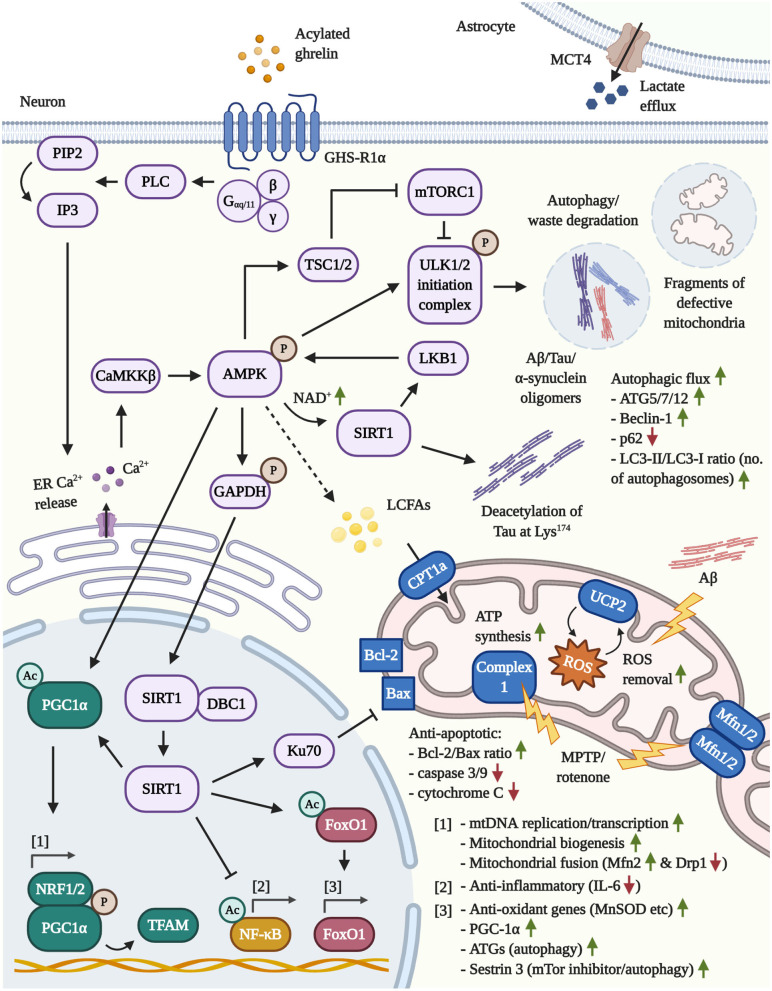
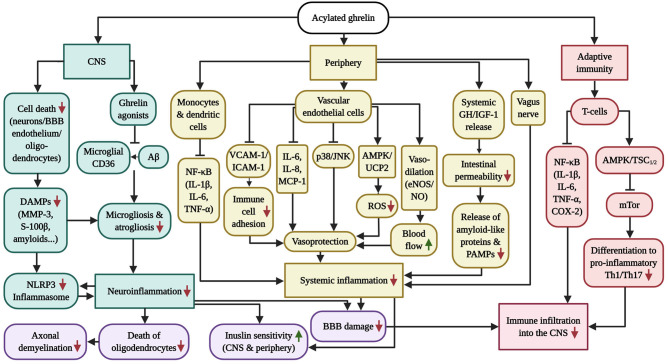
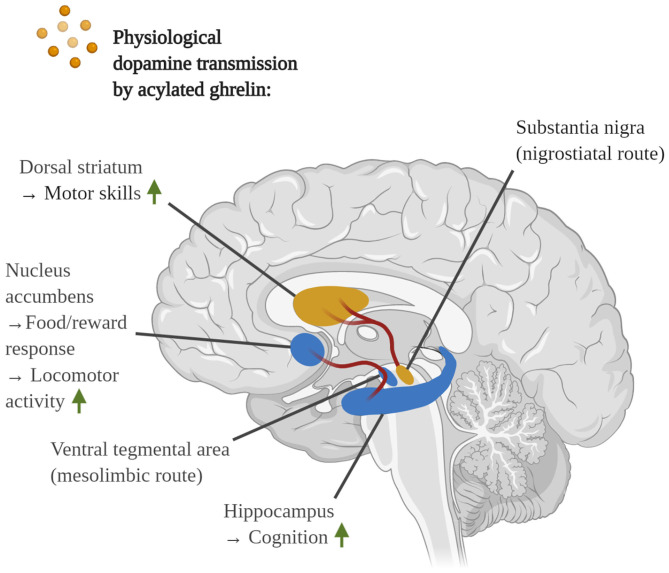
Much thought has been given to the impact of Amyloid Beta, Tau and Alpha-Synuclein in the development of Alzheimer's disease (AD) and Parkinson's disease (PD), yet the clinical failures of the recent decades indicate that there are further pathological mechanisms at work. Indeed, besides amyloids, AD and PD are characterized by the culminative interplay of oxidative stress, mitochondrial dysfunction and hyperfission, defective autophagy and mitophagy, systemic inflammation, BBB and vascular damage, demyelination, cerebral insulin resistance, the loss of dopamine production in PD, impaired neurogenesis and, of course, widespread axonal, synaptic and neuronal degeneration that leads to cognitive and motor impediments. Interestingly, the acylated form of the hormone ghrelin has shown the potential to ameliorate the latter pathologic changes, although some studies indicate a few complications that need to be considered in the long-term administration of the hormone. As such, this review will illustrate the wide-ranging neuroprotective properties of acylated ghrelin and critically evaluate the hormone's therapeutic benefits for the treatment of AD and PD.
Overview
The claims and statistics of this paper haven’t been checked yet.
Run the check — free, no account needed. It reads the open-access text and checks the sources it cites.
Integrity signals
Registry
Cites
Statistics
Figures
Verification
Claims the paper makes
The claims and statistics of this paper haven’t been checked yet.
Run the check — free, no account needed. It reads the open-access text and checks the sources it cites.
Claims other papers make about this one
Each is checked against this paper’s own text: does it say what the citing paper says it does?
The cited source says what the claim attributes to it.
In the citing paper
“Moreover, the beneficial role of ghrelin in the central nervous system has been widely discussed, including enhanced cognition [48, 59–61].”
From Protective PLCG2 variants associate with a delayed onset of Alzheimer’s disease among heterozygous APOE ε4 carriers (2026) · cites this paper as [60]
Self-check
Percentages, sums and reported differences re-computed from the paper’s own numbers.
The self-check needs the paper’s full text.
Citations
Cites
Haleng, J., Pincemail, J., Defraigne, J., Charlier, C., & Chapelle, J. (2007) · Revue Medicale de Liege · doi:10.1007/springerreference_224261 · Cited by 7,347 · cited 1×
“, 2019), oxidative stress (Cenini et al., 2019), chronic systemic inflammation, pathological immune cell infiltration into the brain (Amor and Woodroofe, 2014; Anderson et al.”
BackgroundAMPK and mTOR regulate autophagy through direct phosphorylation of Ulk1
Kim, J., Kundu, M., Viollet, B., & Guan, K.-L. (2011) · Nature Cell Biology · doi:10.1038/ncb2152 · Cited by 7,227
Serum Immunoreactive-Leptin Concentrations in Normal-Weight and Obese Humans
Considine, R. V., Sinha, M. K., Heiman, M. L., Kriauciunas, A., Stephens, T. W., Nyce, M. R., Ohannesian, J. P., Marco, C. C., McKee, L. J., Bauer, T. L., et al. (1996) · New England Journal of Medicine · doi:10.1056/nejm199602013340503 · Cited by 6,326 · cited 1×
“Thus, obesity and T2DMassociated hyperleptinemia (Maffei et al., 1995; Considine et al., 1996; Okumura et al., 2003; Pandey et al., 2015) may contribute to the desensitization of AG in the hypothalamus.”
BackgroundAkt phosphorylation of BAD couples survival signals to the cell-intrinsic death machinery
Datta, S. R., Dudek, H., Tao, X., Masters, S., Fu, H., Gotoh, Y., & Greenberg, M. E. (1997) · Cell · doi:10.1016/s0092-8674(00)80405-5 · Cited by 5,689 · cited 1×
“Furthermore, in IGF1-positive brain areas, the increased phosphorylation of Akt, enhanced levels of the apoptosis-suppressing protein Bcl-2 as well as the inactivation of the apoptosis-mediator Bad were detected (Datta et al., 1997).”
BackgroundChronic Parkinsonism in Humans Due to a Product of Meperidine-Analog Synthesis
Langston, J. W., Ballard, P., Tetrud, J. W., & Irwin, I. (1983) · Science · doi:10.1126/science.6823561 · Cited by 4,914 · cited 1×
“Given the pivotal role of mitochondrial dysfunction in PD, toxins that are selectively taken up by dopaminergic neurons and impair mitochondrial complex 1, such as 1-methyl-4-phenyl-1,2,3,6-tetrahydropyridine (MPTP), kill SN-located, dopaminergic neurons and induce Parkinsonism in humans and rodents (see Figure 2) (La…”
BackgroundAMPK: guardian of metabolism and mitochondrial homeostasis
Herzig, S., & Shaw, R. J. (2017) · Nature Reviews Molecular Cell Biology · doi:10.1038/nrm.2017.95 · Cited by 4,192 · cited 1×
“, 2014), which is a master effector that upregulates ATP synthesis, curbs ATP utility, maintains the mitochondrial homeostasis and navigates mitophagy when the cellular energy stores are depleted (Herzig and Shaw, 2018).”
BackgroundLagouge, M., Argmann, C., Gerhart-Hines, Z., Meziane, H., Lerin, C., Daussin, F., Messadeq, N., Milne, J., Lambert, P., Elliott, P., et al. (2006) · Cell · doi:10.1016/j.cell.2006.11.013 · Cited by 4,057 · cited 1×
“, 2007) and deacetylates nuclear PGC1α to initiate mitochondrial biogenesis (Lagouge et al., 2006) as well as the transcription factor forkhead box protein O1 (FoxO1) to amplify the expression of PGC1α (Daitoku et al.”
BackgroundTSC2 Mediates Cellular Energy Response to Control Cell Growth and Survival
Inoki, K., Zhu, T., & Guan, K.-L. (2003) · Cell · doi:10.1016/s0092-8674(03)00929-2 · Cited by 3,914 · cited 1×
“autophagy and, typically in response to stressful cellular conditions and starvation, the activating phosphorylation of the cytoplasmic energy-sensor AMPK results in the AMPK-mediated phosphorylation of TSC1/2 and the inhibition of mTORC1 (Inoki et al., 2003;Manning andCantley, 2003; Demetriades et al., 2016).”
Suppression of basal autophagy in neural cells causes neurodegenerative disease in mice
Hara, T., Nakamura, K., Matsui, M., Yamamoto, A., Nakahara, Y., Suzuki-Migishima, R., Yokoyama, M., Mishima, K., Saito, I., Okano, H., et al. (2006) · Nature · doi:10.1038/nature04724 · Cited by 3,882 · cited 1×
“Thus, impairments in autophagy induce neurodegeneration independent of amyloid accumulation in affected brain areas (Hara et al., 2006; Komatsu et al., 2006).”
BackgroundMaffei, M., Halaas, J., Ravussin, E., Pratley, R. E., Lee, G. H., Zhang, Y., Fei, H., Kim, S., Lallone, R., Ranganathan, S., et al. (1995) · Nature Medicine · doi:10.1038/nm1195-1155 · Cited by 3,725 · cited 1×
“Thus, obesity and T2DMassociated hyperleptinemia (Maffei et al., 1995; Considine et al., 1996; Okumura et al., 2003; Pandey et al., 2015) may contribute to the desensitization of AG in the hypothalamus.”
Background
Research works printed but not linked: 7
- Jerlhag, 2010, Ghrelin receptor antagonism attenuates cocaine- and amphetamine-induced locomotor stimulation, accumbal dopamine release, and conditioned place preference, Psychopharmacology, 211, 415, 10.1007/s00213-010-1907-7 · DOI
- Konturek, 2009, Ghrelin ameliorates colonic inflammation. role of nitric oxide and sensory nerves, J. Physiol. Pharmacol, 60, 41
- Majumder, 2011, Inducing autophagy by rapamycin before, but not after, the formation of plaques and tangles ameliorates cognitive deficits, PLoS ONE, 6, e25416, 10.1371/journal.pone.0025416 · DOI · Paper page
- Mao, 2015, Ghrelin attenuated lipotoxicity via autophagy induction and nuclear factor-kappa B inhibition, Cell. Physiol. Biochem., 37, 563, 10.1159/000430377 · DOI
- Poewe, 2017, Parkinson disease, Nat. Rev. Dis., 3, 17013, 10.1038/nrdp.2017.13 · DOI · Paper page
- Yokochi, 2007, Mesolimbic and mesocortical pathways in parkinson disease, Brain Nerve 59, 943, 10.11477/mf.1416100129 · DOI
- Zhang, 2008, Hypothalamic IKKbeta/NF-kappaB and ER stress link overnutrition to energy imbalance and obesity, Cell, 135, 61, 10.1016/j.cell.2008.07.043 · DOI · Paper page
Cited by
Sorted by citations
Reich, N., & Hölscher, C. (2022) · Frontiers in Neuroscience · doi:10.3389/fnins.2022.970925 · Cited by 248
Self-citationAcetyl-CoA Metabolism and Histone Acetylation in the Regulation of Aging and Lifespan
Bradshaw, P. C. (2021) · Antioxidants · doi:10.3390/antiox10040572 · Cited by 189
“Ghrelin has shown efficacy for the treatment of several mouse models of neurodegenerative disease consistent with the neuroprotective effects of AMPK signaling [208,209].”
Potential roles of gut microbiota and microbial metabolites in Parkinson’s disease
Zheng, S.-Y., Li, H.-X., Xu, R.-C., Miao, W.-T., Dai, M.-Y., Ding, S.-T., & Liu, H.-D. (2021) · Ageing Research Reviews · doi:10.1016/j.arr.2021.101347 · Cited by 101
Ruiz-Pozo, V. A., Tamayo-Trujillo, R., Cadena-Ullauri, S., Frias-Toral, E., Guevara-Ramírez, P., Paz-Cruz, E., Chapela, S., Montalván, M., Morales-López, T., Simancas-Racines, D., et al. (2023) · Nutrients · doi:10.3390/nu15163585 · Cited by 63
“Moreover, ghrelin can enhance several energy metabolic pathways like beta oxidation [133] and alleviate neuronal inflammation by reducing proinflammatory cytokines [134].”
BackgroundRusso, C., Valle, M. S., Russo, A., & Malaguarnera, L. (2022) · International Journal of Molecular Sciences · doi:10.3390/ijms232113432 · Cited by 40
Hang, Z., Lei, T., Zeng, Z., Cai, S., Bi, W., & Du, H. (2021) · Biomedicine & Pharmacotherapy · doi:10.1016/j.biopha.2021.112343 · Cited by 45
Reich, N., & Hölscher, C. (2024) · Frontiers in Neuroendocrinology · doi:10.1016/j.yfrne.2024.101122 · Cited by 43
“Other pathologic events include, for example, oxidative stress, mitochondrial damage, dysfunctional autophagy, loss of hippocampal neurogenesis and BBB and microvascular injury (Reich & Holscher, 2020).”
InfluentialSelf-citationApplication of Marine Natural Products against Alzheimer’s Disease: Past, Present and Future
Hu, D., Jin, Y., Hou, X., Zhu, Y., Chen, D., Tai, J., Chen, Q., Shi, C., Ye, J., Wu, M., et al. (2023) · Marine Drugs · doi:10.3390/md21010043 · Cited by 48
“Most clinical drug trials target at Aβ and tau, but the clinical failures of the recent decades indicate that there are further pathological mechanisms [146].”
BackgroundGhrelin as a Biomarker of “Immunometabolic Depression” and Its Connection with Dysbiosis
Gajewska, A., Strzelecki, D., & Gawlik-Kotelnicka, O. (2023) · Nutrients · doi:10.3390/nu15183960 · Cited by 33
“(AD) [80], and Huntington’s disease (HD) [81], all of which have been associated with ghrelin.”
BackgroundRecent insights into autophagy and metals/nanoparticles exposure
Li, Q., Feng, Y., Wang, R., Liu, R., Ba, Y., & Huang, H. (2023) · Toxicological Research · doi:10.1007/s43188-023-00184-2 · Cited by 25
“At present, accumulating studies have identified autophagy as being widely involved in diverse physiological and pathogenetic processes underlying neurodegenerative diseases [13], cancers [14], and metabolic diseases [15].”
BackgroundAdvances in the Development of Nonpeptide Small Molecules Targeting Ghrelin Receptor
Giorgioni, G., Bello, F. D., Quaglia, W., Botticelli, L., Cifani, C., Bonaventura, E. M. D., Bonaventura, M. V. M. D., & Piergentili, A. (2022) · Journal of Medicinal Chemistry · doi:10.1021/acs.jmedchem.1c02191 · Cited by 28
Park, M. H., Park, K. H., Choi, B. J., Han, W. H., Yoon, H. J., Jung, H. Y., Lee, J., Song, I., Lim, D. Y., Choi, M., et al. (2022) · Proceedings of the National Academy of Sciences · doi:10.1073/pnas.2115082119 · Cited by 28
Li, N., Xiao, K., Mi, X., Li, N., Guo, L., Wang, X., Sun, Y.-X., Li, G.-D., & Zhou, Y. (2021) · Neuropharmacology · doi:10.1016/j.neuropharm.2021.108871 · Cited by 20
Targeting G Protein-Coupled Receptors in the Treatment of Parkinson's Disease.
Jones-Tabah, J. (2022) · Journal of Molecular Biology · doi:10.1016/j.jmb.2022.167927 · Cited by 18
Beyond appetite: Acylated ghrelin as a learning, memory and fear behavior-modulating hormone
Reich, N., & Hölscher, C. (2022) · Neuroscience & Biobehavioral Reviews · doi:10.1016/j.neubiorev.2022.104952 · Cited by 20
Self-citation“Sibling” battle or harmony: Crosstalk between nesfatin-1 and ghrelin
Chen, X., Dong, J., Jiao, Q., Du, X., Bi, M., & Jiang, H. (2022) · Cellular and Molecular Life Sciences · doi:10.1007/s00018-022-04193-6 · Cited by 17
Harris, B. N., Roberts, B. R., DiMarco, G. M., Maldonado, K. A., Okwunwanne, Z., Savonenko, A. V., & Soto, P. L. (2022) · General and Comparative Endocrinology · doi:10.1016/j.ygcen.2022.114126 · Cited by 19
THE ROLE OF CIRCADIAN REGULATION OF GHRELIN LEVELS IN PARKINSON’S DISEASE (LITERATURE REVIEW)
Tarianyk, K., Lytvynenko, N. V., Shkodina, A., & Kaidashev, I. (2021) · Wiadomości Lekarskie · doi:10.36740/wlek202107132 · Cited by 14
Ghrelin system in Alzheimer's disease
Tian, J., Wang, T., & Du, H. (2022) · Current Opinion in Neurobiology · doi:10.1016/j.conb.2022.102655 · Cited by 17
Recent Advances Towards Diagnosis and Therapeutic Fingerprinting for Alzheimer’s Disease
Pradhan, L. K., Sahoo, P. K., Chauhan, S., & Das, S. K. (2022) · Journal of Molecular Neuroscience · doi:10.1007/s12031-022-02009-7 · Cited by 11
“AG also encourages hippocampal neurogenesis and revives cognition in AD (Reich and Hölscher 2020).”
BackgroundHan, S., Utami, R., Qin, Y., Liam-or, R., Sreedharan, J., Davies, J. S., & Al-Jamal, K. T. (2025) · Small · doi:10.1002/smll.202504517 · Cited by 8
Changes in Circulating Acylated Ghrelin and Neutrophil Elastase in Diabetic Retinopathy
Trotta, M. C., Gesualdo, C., Russo, M., Lepre, C. C., Petrillo, F., Vastarella, M. G., Nicoletti, M., Simonelli, F., Hermenean, A. O., D’Amico, M., et al. (2024) · Medicina · doi:10.3390/medicina60010118 · Cited by 8
“Therefore, in line with the novel clinical applications suggested for AG in Alzheimer’s and Parkinson’s disease [65], lipodystrophy [66], reproductive toxicity in cancer patients [67] and heart failure [68], serum AG could be considered a sensitive peripheral marker of distinction between NPDR and…”
BackgroundEmerging Relevance of Ghrelin in Programmed Cell Death and Its Application in Diseases
Zhang, X., Zeng, Z., Liu, Y., & Liu, D. (2023) · International Journal of Molecular Sciences · doi:10.3390/ijms242417254 · Cited by 10
“Additionally, acylated ghrelin can stimulate the activation of SIRT1 to boost autophagy, which can eliminate harmful proteins [95].”
BackgroundLi, N., Li, N., Yang, L., Gu, H., Ji, J., Zhou, H., Zhu, Q., Yu, M., Sun, Y., & Zhou, Y. (2022) · Cerebral Cortex · doi:10.1093/cercor/bhac230 · Cited by 9
Zhang, M., Yang, L., Jia, J., Xu, F., Gao, S., Han, F., Deng, M., Wang, J., Li, V. W. T., Yu, M., et al. (2024) · Communications Biology · doi:10.1038/s42003-024-06914-y · Cited by 7
The Gut-Brain Axis: A Critical Link between Type 2 Diabetes and Parkinson’s disease
Almohmadi, N. H., Al‐kuraishy, H. M., Hussein, K. S., Turkistani, A., Yousef, F. M., Al-Gareeb, A. I., Abdelaziz, A. M., Elewa, Y. H. A., & Batiha, G. E. (2026) · Probiotics and Antimicrobial Proteins · doi:10.1007/s12602-026-11014-w · Cited by 2
“Both ghrelin and SCFAs have neuroprotective effects against PD neuropathology [ 70, 71].”
Futran-Sheinberg, E. J., Urbina, V., Nava, S., Sanchez, D., Guzmán-Valdivia, G., & Zetter, M. A. (2025) · Neuroglia · doi:10.3390/neuroglia6030035 · Cited by 5
“In recent years, the acylated form of ghrelin has shown protective effects in Alzheimer’s and other neurodegenerative diseases [130], remarkably indicating that the post-translational modification of neuropeptides could be a milestone for their protective effects.”
Jászberényi, M., Thurzó, B., Jayakumar, A. R., & Schally, A. V. (2024) · International Journal of Molecular Sciences · doi:10.3390/ijms252313086 · Cited by 5
“This way, while treatment with ghrelin, acylated ghrelin, or synthetic agonists [181,253,256,272] appears advantageous in the long run, the inhibition of BChE [271,273] may provide both long-term and short-term beneficial effects in Alzheimer’s disease.”
The Role of Helicobacter pylori and Small Intestinal Bacterial Overgrowth in Parkinson's Disease
Justich, M. B., Rojas, O. L., & Fasano, A. A. (2023) · Seminars in Neurology · doi:10.1055/s-0043-1771468 · Cited by 5
Kamarehei, M., & Zahednasab, H. (2025) · Neuropeptides · doi:10.1016/j.npep.2025.102534 · Cited by 3
GHS-R1a deficiency protects against lipopolysaccharide-induced spatial memory impairment in mice
Liu, J., Li, N., Wei, C., Han, F., Deng, M., Ma, J., Zou, X., Zhou, Y., Yang, R., & Yuan, H. (2024) · Biochemical and Biophysical Research Communications · doi:10.1016/j.bbrc.2024.150270 · Cited by 2
Kumar, D., Kondaveeti, S. B., Agrawal, M., Kumar, A., Awasthi, A., Mahmood, S., Singh, T. G., & Kumar, M. (2026) · Molecular Neurobiology · doi:10.1007/s12035-026-05857-1 · Cited by 2
Kadiri, W. E., Perrignon-Sommet, M., Delpont, B., Graber, M., Mohr, S., Mouillot, T., Devilliers, H., Grall, S., Liénard, F., Georges, M., et al. (2023) · Journal of Alzheimer's Disease · doi:10.3233/jad-230270 · Cited by 2
Jeskanen, H., Heikkinen, S., Kervinen, I., Lehtisalo, J., Ngandu, T., Willman, R.-M., Rosa, J., Hoffmann, D., FinnGen, Leinonen, V., et al. (2026) · Alzheimer's Research & Therapy · doi:10.1186/s13195-026-01957-1 · Cited by 1
Sun, Q., & Chen, C. (2025) · Cellular Signalling · doi:10.1016/j.cellsig.2025.111956 · Cited by 1
Tian, J., Du, E. Y., Jia, K., Wang, T., Guo, L., Zigman, J. M., & Du, H. (2023) · Journal of Alzheimer s Disease · doi:10.3233/jad-231002 · Cited by 6
“[74, 75].”
Multi-faceted small molecule for Alzheimer’s disease
Park, M., Jin, H., & Bae, J.-S. (2023) · Neural Regeneration Research · doi:10.4103/1673-5374.369110 · Cited by 1
“In the contrast, the activation of the ghrelin receptor in immune cells has a positive effect on the suppression of systemic immune responses (Jeon et al., 2019; Reich et al., 2020).”
Zhou, L., Cheng, Y., Zhao, W., Sun, X., Hu, F., Ge, M., Zhang, Y., Zhang, G., Dong, B., & Liu, X. (2026) · Aging Cell · doi:10.1111/acel.70732
“Our results showed that ghrelin treatment attenuated the expression of microglial senescence markers and increased Beclin1 and LC3-II levels, indicating improved autophagy-related molecular changes, consistent with its well-known protective effects (Chung et al. 2018; Reich and Holscher 2020).”
Druk, I. V., Usacheva, E., Zamahina, O. V., & Kulikova, O. (2026) · Scientific Bulletin of the Omsk State Medical University · doi:10.61634/2782-3024-2025-19-2-10
Integrative role of orexigenic peptides in neuroprotection and neurodegenerative disease modulation
Sopko, Z., Pačesová, A., Železná, B., & Maletı́nská, L. (2026) · Bioscience Reports · doi:10.1042/bsr20250362
“By activating NPY/AgRP neurons in the hypothalamus, it drives feeding behavior and fat storage [73].”
The protective PLCG2 variants delay Alzheimer's disease onset age in APOE ϵ4 carriersPreprint
Jeskanen, H., Heikkinen, S., Kervinen, I., Lehtisalo, J., Ngandu, T., Willman, R.-M., Rosa, J., Hoffmann, D., FinnGen, Leinonen, V., et al. (2025) · medRxiv · doi:10.1101/2025.09.22.25336304
The Dual Actions of Melatonin and Ghrelin Hormones in Autism Spectrum Disorder
Ayob, S. M., Mustafa, N., & Nanakali, Q. (2026) · passer of basic and applied sciences · doi:10.24271/psr.2025.548550.2368
“This indicates its potential as a target for treating neurodegenerative disorders, including Parkinson’s and Alzheimer’s diseases [15] .”
Metadata
- Authors
- Reich, N., & Hölscher, C.
- Affiliations
- Lancaster University (GB)
- Henan University of Chinese Medicine (CN)
- Corresponding author
- Reich, Niklas
- Venue
- Frontiers in Neuroscience
- Publisher
- Frontiers Media SA
- Published
- 2020-12-14
- Volume
- 14
- Pages
- 614828-614828
- ISSN
- 1662-453X (ISSN-L)
- PMC
- PMC7767977
- OpenAlex
- W3111850577
- Cited by
- 48
- References
- 476
- Citations by year
- 2026: 7 · 2025: 6 · 2024: 7 · 2023: 9 · 2022: 13 · 2021: 6
- FWCI
- 0.92
- Type
- journal article
- Language
- en
- Open access
- gold
- doi.org
- Licence
- Locations
- Frontiers in Neuroscience (publishedVersion, cc-by)
- PubMed Central (publishedVersion, cc-by)
- PubMed (publishedVersion)
- DOAJ (DOAJ: Directory of Open Access Journals) (submittedVersion, cc-by-sa)
- Lancaster EPrints (Lancaster University) (submittedVersion)
- Topics
- Life Sciences › Neuroscience › Cellular and Molecular Neuroscience › Alzheimer's disease research and treatments
- Health Sciences › Medicine › Clinical Neurology › Parkinson's Disease Mechanisms and Treatments
- Life Sciences › Neuroscience › Neurology › Neuroinflammation and Neurodegeneration Mechanisms
- Keywords
- acylated ghrelin, Alzheimer's disease, Parkinson's disease, neuroprotection, oxidative stress, mitochondrial dysfunction, autophagy, mitophagy, systemic inflammation, blood-brain barrier, dopamine depletion, neurogenesis, multi-target therapy
About these checks
Registry, retraction, Cites and statistics results are computed, not judged, with one exception: a printed reference that no index lists is read once by a model before it counts as a citation error. Claims are extracted by a model and kept only when their quote appears verbatim in the text; each cited source is then checked, with a model’s help, for whether it says what the claim relies on. Those verdicts can be wrong — read the claim’s quote and the cited source before relying on one.
Statistics and arithmetic are recomputed, not judged.
Confidence bands are shown only for fields calibrated on our annotated test set. None is calibrated yet, so no band is shown.
What counts as a claim ›How we measure confidence ›How we check this ›
Are you an author, or do you see a problem with this page? Request a review
