

Frontotemporal dementia: does structural MRI-based clustering match clinical syndromes?
Open accessThe DOI matches its Crossref record; 67 of the 67 references it cites were found in a registry or an index.
Abstract
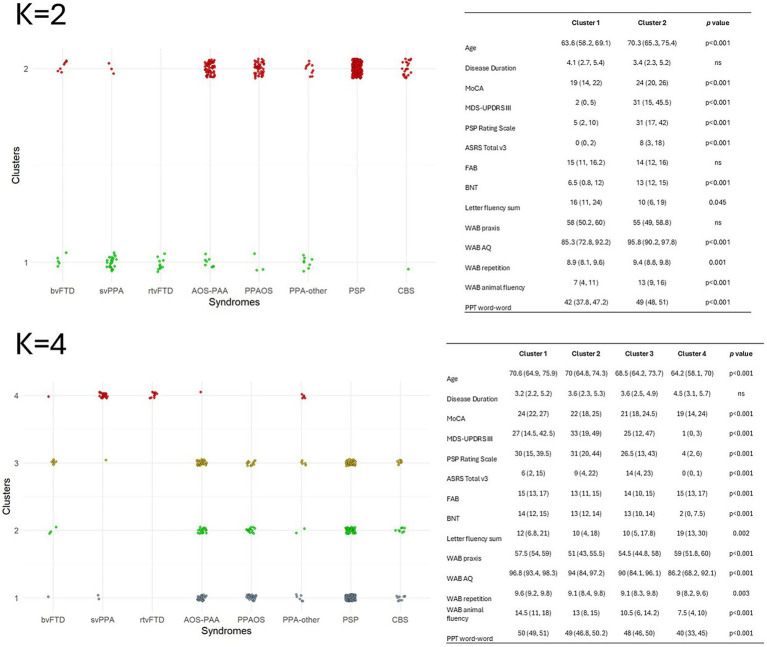
Background: Frontotemporal dementia is an umbrella term that encompasses several clinical syndromes with impaired behavioral, language, and motor functions. These syndromes show considerable overlap in clinical features and imaging patterns. Therefore, there is a need to investigate the syndromic heterogeneity in FTD using unbiased data-driven approaches. Methods: We used data-driven clustering analysis of structural magnetic resonance imaging (MRI) data on 400 patients with clinical FTD diagnoses [behavioral variant of frontotemporal dementia (bvFTD), semantic variant of primary progressive aphasia (svPPA), right temporal variant of frontotemporal dementia (rtvFTD), apraxia of speech with agrammatic aphasia (AOS-PAA), primary progressive apraxia of speech (PPAOS), progressive supranuclear palsy (PSP), corticobasal syndrome (CBS) and primary progressive aphasia who did not fit into the other diagnostic categories (PPA-other)]. MR images were w-scored relative to cognitively unimpaired individuals, and principal component analysis was performed. A clustering ensemble approach, including hierarchical algorithms, was applied to the MR-based principal components, and imaging and clinical characteristics of the clusters were investigated. Various numbers of clusters ( K = 2, 3, or 4) were evaluated. Results: The K = 3 solution offered the most clinically meaningful separation of FTD syndromes. The first cluster captured mostly frontal MRI abnormalities related to the speech, language and behavioral clinical dimensions, including patients with AOS-PAA, PPAOS, PPA-other, and bvFTD. The second cluster captured mostly temporal abnormalities and included mainly patients with svPPA and rtvFTD, but also bvFTD, AOS-PAA, and PPA-other. The third cluster captured cortical and subcortical atrophy, particularly in the midbrain, and included atypical Parkinsonian syndromes, with all PSP and CBS patients captured in this cluster, as well as most PPAOS patients. Considerable overlap of clinical syndromes was noted across these clusters, whereby patients with AOS-PAA, svPPA, PPA-other, and bvFTD were captured in more than one cluster. Discussion: Our findings highlight heterogeneity in FTD, which mainly exists along three axes: speech, language and behavioral deficits reflecting frontal atrophy, language deficits reflecting temporal atrophy, and motor and motor speech deficits reflecting mostly midbrain and subcortical atrophy, with cortical involvement.
Overview
The claims and statistics of this paper haven’t been checked yet.
Free: it reads the open-access text and checks the first 5 claims that cite a source we can check. Create a free account to check every claim.
Integrity signals
Registry
Cites
Statistics
Figures
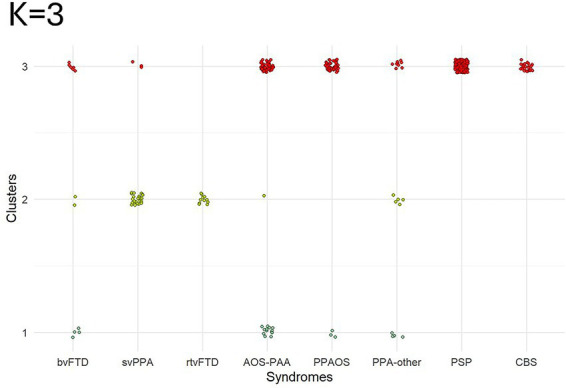
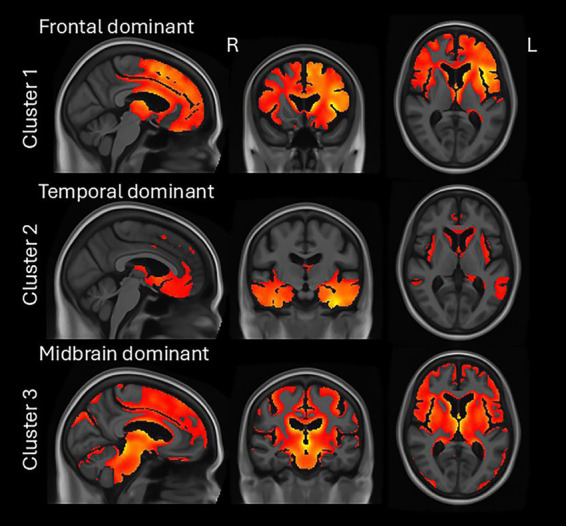
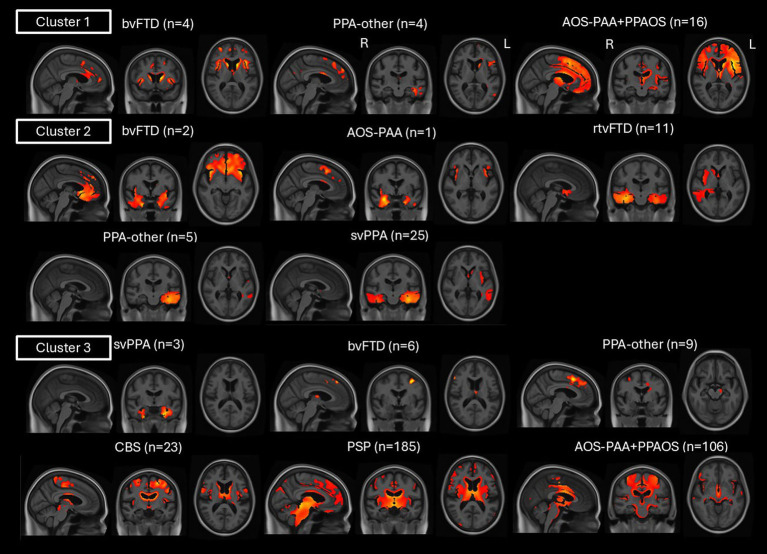
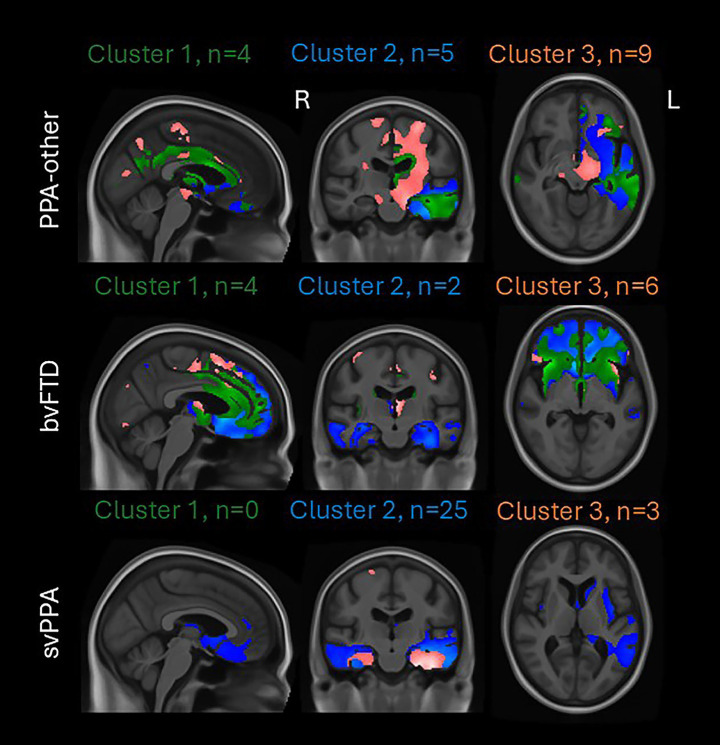
Verification
Claims the paper makes
The claims and statistics of this paper haven’t been checked yet.
Free: it reads the open-access text and checks the first 5 claims that cite a source we can check. Create a free account to check every claim.
Self-check
Percentages, sums and reported differences re-computed from the paper’s own numbers.
The self-check needs the paper’s full text.
Citations
Cites
The Montreal Cognitive Assessment, MoCA: a brief screening tool for mild cognitive impairment
Nasreddine, Z. S., Phillips, N. A., Bédirian, V., Charbonneau, S., Whitehead, V., Collin, I., Cummings, J. L., & Chertkow, H. (2005) · Journal of the American Geriatrics Society · doi:10.1111/j.1532-5415.2005.53221.x · Cited by 25,553
Hubert, L., & Arabie, P. (1985) · Journal of Classification · doi:10.1007/bf01908075 · Cited by 8,219 · cited 1×
“To further ensure clusters stability, we employed a leave-one-out (LOO) analysis and compared the cluster assignments obtained leaving one participant out to the ones obtained on the full cohort with the Rand index and adjusted Rand index (Hubert and Arabie, 1985).”
Ashburner, J., & Friston, K. J. (2005) · NeuroImage · doi:10.1016/j.neuroimage.2005.02.018 · Cited by 7,507
Sensitivity of revised diagnostic criteria for the behavioural variant of frontotemporal dementia
Rascovsky, K., Hodges, J. R., Knopman, D., Mendez, M. F., Kramer, J. H., Neuhaus, J., van Swieten, J. C., Seelaar, H., Dopper, E. G. P., Onyike, C. U., et al. (2011) · Brain · doi:10.1093/brain/awr179 · Cited by 5,221 · cited 1×
“…including the behavioral variant of FTD (bvFTD), characterized by changes in behavioral and personality, and impairment in executive function (Rascovsky et al., 2011); semantic dementia characterized by loss of semantic knowledge (Hodges et al., 1992), and progressive non-fluent aphasia…”
Self-citationClassification of primary progressive aphasia and its variants
Gorno-Tempini, M. L., Hillis, A. E., Weintraub, S., Kertesz, A., Mendez, M., Cappa, S. F., Ogar, J. M., Rohrer, J. D., Black, S., Boeve, B. F., et al. (2011) · Neurology · doi:10.1212/wnl.0b013e31821103e6 · Cited by 5,141
Frontotemporal lobar degeneration: A consensus on clinical diagnostic criteria
Neary, D., Snowden, J. S., Gustafson, L., Passant, U., Stuss, D., Black, S., Freedman, M., Kertesz, A., Robert, P. H., Albert, M., et al. (1998) · Neurology · doi:10.1212/wnl.51.6.1546 · Cited by 5,047
The FAB: A frontal assessment battery at bedside
Dubois, B., Slachevsky, A., Litvan, I., & Pillon, B. (2000) · Neurology · doi:10.1212/wnl.55.11.1621 · Cited by 3,913
Clinical diagnosis of progressive supranuclear palsy: The movement disorder society criteria
Höglinger, G. U., Respondek, G., Stamelou, M., Kurz, C., Josephs, K. A., Lang, A. E., Mollenhauer, B., Müller, U., Nilsson, C., Whitwell, J. L., et al. (2017) · Movement Disorders · doi:10.1002/mds.26987 · Cited by 2,359
Self-citationCriteria for the diagnosis of corticobasal degeneration
Armstrong, M. J., Litvan, I., Lang, A. E., Bak, T. H., Bhatia, K. P., Borroni, B., Boxer, A. L., Dickson, D. W., Grossman, M., Hallett, M., et al. (2013) · Neurology · doi:10.1212/wnl.0b013e31827f0fd1 · Cited by 1,904
Self-citationSEMANTIC DEMENTIA: PROGRESSIVE FLUENT APHASIA WITH TEMPORAL LOBE ATROPHY
HODGES, J. R., PATTERSON, K., OXBURY, S., & FUNNELL, E. (1992) · Brain · doi:10.1093/brain/115.6.1783 · Cited by 1,710 · cited 2×
“…by changes in behavioral and personality, and impairment in executive function (Rascovsky et al., 2011); semantic dementia characterized by loss of semantic knowledge (Hodges et al., 1992), and progressive non-fluent aphasia (PNFA), characterized by non-fluent spontaneous speech output.”
Cognition and anatomy in three variants of primary progressive aphasia
Gorno‐Tempini, M. L., Dronkers, N. F., Rankin, K. P., Ogar, J. M., Phengrasamy, L., Rosen, H. J., Johnson, J. K., Weiner, M. W., & Miller, B. L. (2004) · Annals of Neurology · doi:10.1002/ana.10825 · Cited by 1,625
Defining imaging biomarker cut points for brain aging and Alzheimer's disease
Jack, C. R., Wiste, H. J., Weigand, S. D., Therneau, T. M., Lowe, V. J., Knopman, D. S., Gunter, J. L., Senjem, M. L., Jones, D. T., Kantarci, K., et al. (2017) · Alzheimer's & Dementia · doi:10.1016/j.jalz.2016.08.005 · Cited by 931 · cited 1×
“Patients with CBS were required to be either tau-negative or amyloid-negative on positron emission tomography (PET) and patients with PPA-other (logo-penic variant) were required to be amyloid-negative to rule out AD (Jack et al., 2017).”
Self-citationUnified Parkinson's disease rating scale characteristics and structure
Martínez‐Martín, P., Gil‐Nagel, A., Gracia, L. M., Gómez, J. B., Martínez‐Sarriés, J., Bermejo, F., & The Cooperative Multicentric Group (1994) · Movement Disorders · doi:10.1002/mds.870090112 · Cited by 796
Identification of normal and pathological aging in prospectively studied nondemented elderly humans
Dickson, D. W., Crystal, H. A., Mattiace, L. A., Masur, D. M., Blau, A. D., Davies, P., Yen, S.-H., & Aronson, M. K. (1992) · Neurobiology of Aging · doi:10.1016/0197-4580(92)90027-u · Cited by 643
A clinical rating scale for progressive supranuclear palsy
Golbe, L. I., & Ohman-Strickland, P. A. (2007) · Brain · doi:10.1093/brain/awm032 · Cited by 614
Characterizing a neurodegenerative syndrome: primary progressive apraxia of speech
Josephs, K. A., Duffy, J. R., Strand, E. A., Machulda, M. M., Senjem, M. L., Master, A. V., Lowe, V. J., Jack, C. R., & Whitwell, J. L. (2012) · Brain · doi:10.1093/brain/aws032 · Cited by 419
Self-citationTypical and atypical pathology in primary progressive aphasia variants
Spinelli, E. G., Mandelli, M. L., Miller, Z. A., Santos‐Santos, M. A., Wilson, S. M., Agosta, F., Grinberg, L. T., Huang, E. J., Trojanowski, J. Q., Meyer, M., et al. (2017) · Annals of Neurology · doi:10.1002/ana.24885 · Cited by 409
La Joie, R., Perrotin, A., Barré, L., Hommet, C., Mézenge, F., Ibazizene, M., Camus, V., Abbas, A., Landeau, B., Guilloteau, D., et al. (2012) · The Journal of Neuroscience · doi:10.1523/jneurosci.2170-12.2012 · Cited by 374
Mesulam, M.-M., Weintraub, S., Rogalski, E. J., Wieneke, C., Geula, C., & Bigio, E. H. (2014) · Brain · doi:10.1093/brain/awu024 · Cited by 334 · cited 1×
“Furthermore, patients with svPPA rarely report AD pathology (Spinelli et al., 2017; Harris et al., 2013; Davies et al., 2005; Mesulam et al., 2014), which makes it unlikely that all three patients will have AD pathology at autopsy.”
The pathological basis of semantic dementia
Davies, R. R., Hodges, J. R., Kril, J. J., Patterson, K., Halliday, G. M., & Xuereb, J. H. (2005) · Brain · doi:10.1093/brain/awh582 · Cited by 325
Reliability and Validity Characteristics of the Western Aphasia Battery (WAB)
Shewan, C. M., & Kertesz, A. (1980) · Journal of Speech and Hearing Disorders · doi:10.1044/jshd.4503.308 · Cited by 317
Whitwell, J. L., Przybelski, S. A., Weigand, S. D., Ivnik, R. J., Vemuri, P., Gunter, J. L., Senjem, M. L., Shiung, M. M., Boeve, B. F., Knopman, D. S., et al. (2009) · Brain · doi:10.1093/brain/awp232 · Cited by 305
Self-citationImaging correlates of pathology in corticobasal syndrome
Whitwell, J. L., Jack, C. R., Boeve, B. F., Parisi, J. E., Ahlskog, J. E., Drubach, D. A., Senjem, M. L., Knopman, D. S., Petersen, R. C., Dickson, D. W., et al. (2010) · Neurology · doi:10.1212/wnl.0b013e3181feb2e8 · Cited by 244
Self-citationClassification and pathology of primary progressive aphasia
Harris, J. M., Gall, C., Thompson, J. C., Richardson, A. M. T., Neary, D., du Plessis, D., Pal, P., Mann, D. M. A., Snowden, J. S., & Jones, M. (2013) · Neurology · doi:10.1212/01.wnl.0000436070.28137.7b · Cited by 232
Beta‐amyloid deposition and the aging brain
Rodrigue, K. M., Kennedy, K. M., & Park, D. C. (2009) · Neuropsychology Review · doi:10.1007/s11065-009-9118-x · Cited by 230 · cited 1×
“More importantly, these three svPPA patients in cluster 3 were older than the rest of the svPPA cohort suggesting that the older age (Dickson et al., 1992; Rodrigue et al., 2009) could be a more likely explanation for the presence of amyloid deposition.”
Miller, B. L., Chang, L., Mena, I., Boone, K., & Lesser, I. M. (1993) · Dementia and Geriatric Cognitive Disorders · doi:10.1159/000107324 · Cited by 206
Progressive Nonfluent Aphasia and Its Characteristic Motor Speech Deficits
Ogar, J. M., Dronkers, N. F., Brambati, S. M., Miller, B. L., & Gorno-Tempini, M. L. (2007) · Alzheimer Disease & Associated Disorders · doi:10.1097/wad.0b013e31815d19fe · Cited by 203
Two distinct subtypes of right temporal variant frontotemporal dementia
Josephs, K. A., Whitwell, J. L., Knopman, D. S., Boeve, B. F., Vemuri, P., Senjem, M. L., Parisi, J. E., Ivnik, R. J., Dickson, D. W., Petersen, R. C., et al. (2009) · Neurology · doi:10.1212/wnl.0b013e3181bf9945 · Cited by 195 · cited 3×
“…is associated with structural changes in specific brain regions, with the frontotemporal cortices and subcortical regions showing visible signs of neuronal loss on magnetic resonance imaging (MRI) and matching post-mortem pathological findings (Whitwell et al., 2009; Whitwell et al., 2005).”
Self-citationJosephs, K. A., & Duffy, J. R. (2008) · Current Opinion in Neurology · doi:10.1097/wco.0b013e3283168ddd · Cited by 193
Self-citationJosephs, K. A., Boeve, B. F., Duffy, J. R., Smith, G. E., Knopman, D. S., Parisi, J. E., Petersen, R. C., & Dickson, D. W. (2005) · Neurocase · doi:10.1080/13554790590963004 · Cited by 192
Self-citationAn Empirically Derived Short Form of the Boston Naming Test
Lansing, A. (1999) · Archives of Clinical Neuropsychology · doi:10.1016/s0887-6177(98)00022-5 · Cited by 180
Dong, A., Toledo, J. B., Honnorat, N., Doshi, J., Varol, E., Sotiras, A., Wolk, D., Trojanowski, J. Q., Davatzikos, C., & Initiative, F. T. A. D. N. (2016) · Brain · doi:10.1093/brain/aww319 · Cited by 176
Botha, H., Duffy, J. R., Whitwell, J. L., Strand, E. A., Machulda, M. M., Schwarz, C. G., Reid, R. I., Spychalla, A. J., Senjem, M. L., Jones, D. T., et al. (2015) · Cortex · doi:10.1016/j.cortex.2015.05.013 · Cited by 173
Self-citationThe evolution of primary progressive apraxia of speech
Josephs, K. A., Duffy, J. R., Strand, E. A., Machulda, M. M., Senjem, M. L., Gunter, J. L., Schwarz, C. G., Reid, R. I., Spychalla, A. J., Lowe, V. J., et al. (2014) · Brain · doi:10.1093/brain/awu223 · Cited by 172
Self-citationRedefining the multidimensional clinical phenotypes of frontotemporal lobar degeneration syndromes
Murley, A. G., Coyle-Gilchrist, I., Rouse, M. A., Jones, P. S., Li, W., Wiggins, J., Lansdall, C., Rodríguez, P. V., Wilcox, A., Tsvetanov, K. A., et al. (2020) · Brain · doi:10.1093/brain/awaa097 · Cited by 162
A clinical-radiological framework of the right temporal variant of frontotemporal dementia
Ulugut Erkoyun, H., Groot, C., Heilbron, R., Nelissen, A., van Rossum, J., Jutten, R., Koene, T., van der Flier, W. M., Wattjes, M. P., Scheltens, P., et al. (2020) · Brain · doi:10.1093/brain/awaa225 · Cited by 161 · cited 2×
“Right predominant semantic dementia cases present with behavioral abnormalities, difficulty recognizing faces and anomia, and have been referred to as right temporal variant of FTD (rtvFTD) (Ulugut Erkoyun et al., 2020; Josephs et al., 2009).”
Magnetic Resonance Imaging Signatures of Tissue Pathology in Frontotemporal Dementia
Whitwell, J. L., Josephs, K. A., Rossor, M. N., Stevens, J. M., Revesz, T., Holton, J. L., Al-Sarraj, S., Godbolt, A. K., Fox, N. C., & Warren, J. D. (2005) · Archives of Neurology · doi:10.1001/archneur.62.9.1402 · Cited by 137
Self-citationDissociable executive functions in behavioral variant frontotemporal and Alzheimer dementias
Possin, K. L., Feigenbaum, D., Rankin, K. P., Smith, G. E., Boxer, A. L., Wood, K., Hanna, S. M., Miller, B. L., & Kramer, J. H. (2013) · Neurology · doi:10.1212/wnl.0b013e318296e940 · Cited by 117
Rates of Amyloid Imaging Positivity in Patients With Primary Progressive Aphasia
Santos-Santos, M. A., Rabinovici, G. D., Iaccarino, L., Ayakta, N., Tammewar, G., Lobach, I., Henry, M. L., Hubbard, I., Mandelli, M. L., Spinelli, E., et al. (2018) · JAMA Neurology · doi:10.1001/jamaneurol.2017.4309 · Cited by 106
Brain volume and flortaucipir analysis of progressive supranuclear palsy clinical variants
Whitwell, J. L., Tosakulwong, N., Botha, H., Ali, F., Clark, H. M., Duffy, J. R., Utianski, R. L., Stevens, C. A., Weigand, S. D., Schwarz, C. G., et al. (2019) · NeuroImage Clinical · doi:10.1016/j.nicl.2019.102152 · Cited by 102
Self-citationStructural brain imaging in frontotemporal dementia
Rohrer, J. D. (2011) · Biochimica et Biophysica Acta (BBA) - Molecular Basis of Disease · doi:10.1016/j.bbadis.2011.07.014 · Cited by 101
The Apraxia of Speech Rating Scale: Reliability, Validity, and Utility
Duffy, J. R., Martin, P. R., Clark, H. M., Utianski, R. L., Strand, E. A., Whitwell, J. L., & Josephs, K. A. (2023) · American Journal of Speech-Language Pathology · doi:10.1044/2022_ajslp-22-00148 · Cited by 90
Self-citationCortical atrophy patterns in early Parkinson's disease patients using hierarchical cluster analysis
Uribe, C., Segura, B., Baggio, H. C., Abos, A., Garcia-Diaz, A. I., Campabadal, A., Marti, M. J., Valldeoriola, F., Compta, Y., Tolosa, E., et al. (2018) · Parkinsonism & Related Disorders · doi:10.1016/j.parkreldis.2018.02.006 · Cited by 82
Progranulin-associated PiB-negative logopenic primary progressive aphasia
Josephs, K. A., Duffy, J. R., Strand, E. A., Machulda, M. M., Vemuri, P., Senjem, M. L., Perkerson, R. B., Baker, M. C., Lowe, V., Jack, C. R., et al. (2014) · Journal of Neurology · doi:10.1007/s00415-014-7243-9 · Cited by 78
Self-citationHassan, A., Parisi, J. E., & Josephs, K. A. (2011) · Neurocase · doi:10.1080/13554794.2011.627345 · Cited by 76
Self-citationJosephs, K. A., Duffy, J. R., Clark, H. M., Utianski, R. L., Strand, E. A., Machulda, M. M., Botha, H., Martin, P. R., Pham, N. T. T., Stierwalt, J., et al. (2021) · Nature Communications · doi:10.1038/s41467-021-23687-8 · Cited by 70
Self-citationInguanzo, A., Sala‐Llonch, R., Segura, B., Erostarbe, H., Abós, A., Campabadal, A., Uribe, C., Baggio, H. C., Compta, Y., Martí, M. J., et al. (2020) · Parkinsonism & Related Disorders · doi:10.1016/j.parkreldis.2020.11.010 · Cited by 64
MRI Clustering Reveals Three ALS Subtypes With Unique Neurodegeneration Patterns
Tan, H. H. G., Westeneng, H., Nitert, A. D., van Veenhuijzen, K., Meier, J. M., van der Burgh, H. K., van Zandvoort, M. J. E., van Es, M. A., Veldink, J. H., & van den Berg, L. H. (2022) · Annals of Neurology · doi:10.1002/ana.26488 · Cited by 61
Clinical and neuroimaging biomarkers of amyloid-negative logopenic primary progressive aphasia
Whitwell, J. L., Duffy, J. R., Strand, E. A., Machulda, M. M., Senjem, M. L., Schwarz, C. G., Reid, R., Baker, M. C., Perkerson, R. B., Lowe, V. J., et al. (2015) · Brain and Language · doi:10.1016/j.bandl.2015.01.009 · Cited by 58
Self-citationNeuroimaging comparison of primary progressive apraxia of speech and progressive supranuclear palsy
Whitwell, J. L., Duffy, J. R., Strand, E. A., Machulda, M. M., Senjem, M. L., Gunter, J. L., Kantarci, K., Eggers, S. D., Jack, C. R., & Josephs, K. A. (2013) · European Journal of Neurology · doi:10.1111/ene.12004 · Cited by 56
Self-citationWhitwell, J. L., Jack, Jr., Senjem, M. L., Parisi, J. E., Boeve, B. F., Knopman, D. S., Dickson, D. W., Petersen, R. C., & Josephs, K. A. (2009) · Neurodegenerative Diseases · doi:10.1159/000209507 · Cited by 53
Self-citationChanging perspectives on frontotemporal dementia: A review
Snowden, J. S. (2022) · Journal of Neuropsychology · doi:10.1111/jnp.12297 · Cited by 52
Frontotemporal Lobar Degeneration
Josephs, K. A. (2007) · Neurologic Clinics · doi:10.1016/j.ncl.2007.03.005 · Cited by 51
Self-citationAn Evaluation of the Progressive Supranuclear Palsy Speech/Language Variant
Whitwell, J. L., Stevens, C. A., Duffy, J. R., Clark, H. M., Machulda, M. M., Strand, E. A., Martin, P. R., Utianski, R. L., Botha, H., Spychalla, A. J., et al. (2019) · Movement Disorders Clinical Practice · doi:10.1002/mdc3.12796 · Cited by 49
Self-citationUlugut, H., Bertoux, M., Younes, K., Montembeault, M., Fumagalli, G. G., Samanci, B., Illán‐Gala, I., Kuchcinski, G., Leroy, M., Thompson, J. C., et al. (2024) · Alzheimer's & Dementia · doi:10.1002/alz.14076 · Cited by 43 · cited 1×
“As expected from the high proportion of svPPA and rtvFTD patients, this cluster showed severe anomia and impairments in word knowledge (Hodges et al., 1992; Ulugut et al., 2024).”
Self-citationMRI data-driven clustering reveals different subtypes of Dementia with Lewy bodies
Inguanzo, A., Poulakis, K., Mohanty, R., Schwarz, C. G., Przybelski, S. A., Diaz‐Galvan, P., Lowe, V. J., Boeve, B. F., Lemstra, A. W., Beek, M. H. C. T. V., et al. (2023) · npj Parkinson s Disease · doi:10.1038/s41531-023-00448-6 · Cited by 37
Self-citationThe evolution of parkinsonism in primary progressive apraxia of speech: a 6-year longitudinal study
Seckin, Z. I., Duffy, J. R., Strand, E. A., Clark, H. M., Utianski, R. L., Machulda, M. M., Botha, H., Ali, F., Thu Pham, N. T., Lowe, V. J., et al. (2020) · Parkinsonism & Related Disorders · doi:10.1016/j.parkreldis.2020.09.039 · Cited by 36 · cited 1×
“…the fact that the AOS-PAA and PPAOS patients often develop a parkinsonian disorder over time (Josephs et al., 2021), with features of PSP and CBS, and these patients commonly have a 4R tauopathy at autopsy (Spinelli et al., 2017; Seckin et al., 2020; Josephs and Duffy, 2008; Josephs et al., 2005).”
Self-citationExecutive functions in primary progressive aphasia: A meta-analysis
Coemans, S., Keulen, S., Savieri, P., Tsapkini, K., Engelborghs, S., Chrispeels, N., Vandenborre, D., Paquier, P. F., Wilssens, I., Declerck, M., et al. (2022) · Cortex · doi:10.1016/j.cortex.2022.10.001 · Cited by 29
[IC‐P‐122]: THE MAYO CLINIC ADULT LIFE SPAN TEMPLATE: BETTER QUANTIFICATION ACROSS THE LIFE SPAN
Schwarz, C. G., Gunter, J. L., Ward, C. P., Vemuri, P., Senjem, M. L., Wiste, H. J., Petersen, R. C., Knopman, D. S., & Jack, C. R. (2017) · Alzheimer s & Dementia · doi:10.1016/j.jalz.2017.06.2396 · Cited by 29
Eldaief, M. C., Brickhouse, M. J., Katsumi, Y., Rosen, H. J., Carvalho, N., Touroutoglou, A., & Dickerson, B. C. (2023) · Brain · doi:10.1093/brain/awad167 · Cited by 27
Clinical characteristics of parkinsonism in frontotemporal dementia according to subtypes
Park, H. K., Park, K. H., Yoon, B., Lee, J.-H., Choi, S. H., Joung, J. H., Yoon, S. J., Kim, B. C., Kim, S. H., Kim, E.-J., et al. (2017) · Journal of the Neurological Sciences · doi:10.1016/j.jns.2016.11.033 · Cited by 24 · cited 1×
“Patients with bvFTD can have PSP pathology (Hassan et al., 2012) and parkinsonian features (Park et al., 2017).”
Scheffel, L., Duffy, J. R., Strand, E. A., & Josephs, K. A. (2021) · American Journal of Speech-Language Pathology · doi:10.1044/2021_ajslp-21-00058 · Cited by 16
Self-citationSpatial patterns of elevated magnetic susceptibility in progressive apraxia of speech
Satoh, R., Arani, A., Senjem, M. L., Duffy, J. R., Clark, H. M., Utianski, R. L., Botha, H., Machulda, M. M., Jack, C. R., Whitwell, J. L., et al. (2023) · NeuroImage Clinical · doi:10.1016/j.nicl.2023.103394 · Cited by 10
Self-citationNeuropsychological Profiles of Patients with Progressive Apraxia of Speech and Aphasia
Polsinelli, A. J., Machulda, M. M., Martin, P. R., Duffy, J. R., Clark, H. M., Butts, A. M., Botha, H., Lowe, V. J., Whitwell, J. L., Josephs, K. A., et al. (2021) · Journal of the International Neuropsychological Society · doi:10.1017/s1355617721000692 · Cited by 7
Self-citationSpinelli, E. G., Orlandi, F., Basaia, S., Costa, F., Pisano, S., Ghirelli, A., Canu, E., Castelnovo, V., Sibilla, E., Cecchetti, G., et al. (2025) · European Journal of Neurology · doi:10.1111/ene.70275 · Cited by 4
FDG ‐ PET patterns associate with survival in patients with prion disease
Corriveau‐Lecavalier, N., Piura, Y. D., Appleby, B. S., Shir, D., Barnard, L. R., Gogineni, V., Jones, D. T., & Day, G. S. (2024) · Annals of Clinical and Translational Neurology · doi:10.1002/acn3.52230 · Cited by 3
Tetzloff, K. A., Meade, G. F., Duffy, J. R., Clark, H. M., Botha, H., Josephs, K. A., Whitwell, J. L., & Utianski, R. L. (2025) · Folia Phoniatrica et Logopaedica · doi:10.1159/000543607 · Cited by 2
Self-citation
Research works printed but not linked: 2
- Howard D. Patterson K. (1992). The Pyramids and Palm Trees Test: A Test of Semantic Access From Words and Picture. London: Thames Valley Test Company.
- Kertesz A. (2007). Western Aphasia Battery (Revised). San Antonio, Tx: PsychCorp.
Metadata
- Authors
- Singh-Reilly, N., Sintini, I., Ali, F., Duffy, J. R., Clark, H. M., Utianski, R. L., Meade, G., Machulda, M. M., Satoh, R., Lowe, V. J., Josephs, K. A., & Whitwell, J. L.
- Affiliations
- Department of Radiology, Mayo Clinic
- Mayo Clinic (US)
- Corresponding author
- Whitwell, Jennifer L.
- ORCID
- Venue
- Frontiers in Neuroscience
- Publisher
- Frontiers Media SA
- Published
- 2026-05-05
- Volume
- 20
- Pages
- 1771092-1771092
- ISSN
- 1662-453X (ISSN-L)
- PMC
- PMC13184375
- OpenAlex
- W7160274201
- Cited by
- 0
- References
- 67
- FWCI
- 0.00
- Type
- journal article
- Language
- en
- Open access
- gold
- doi.org
- Licence
- Locations
- Frontiers in Neuroscience (publishedVersion, cc-by)
- PubMed (publishedVersion)
- PubMed Central (publishedVersion, cc-by)
- DOAJ (DOAJ: Directory of Open Access Journals) (submittedVersion, cc-by-sa)
- Funders
- National Institutes of Health
- Topics
- Health Sciences › Medicine › Psychiatry and Mental health › Dementia and Cognitive Impairment Research
- Health Sciences › Medicine › Clinical Neurology › Amyotrophic Lateral Sclerosis Research
- Life Sciences › Neuroscience › Cellular and Molecular Neuroscience › Alzheimer's disease research and treatments
- Keywords
- frontotemporal dementia, behavioral variant frontotemporal dementia, semantic dementia, primary progressive apraxia of speech, progressive supranuclear palsy, corticobasal syndrome, atypical parkinsonism, frontal lobe atrophy, temporal lobe atrophy, midbrain atrophy, subcortical atrophy, speech and language disorders, behavioral deficits
About these checks
Registry, retraction, Cites and statistics results are computed, not judged, with one exception: a printed reference that no index lists is read once by a model before it counts as a citation error. Claims are extracted by a model and kept only when their quote appears verbatim in the text; each cited source is then checked, with a model’s help, for whether it says what the claim relies on. Those verdicts can be wrong — read the claim’s quote and the cited source before relying on one.
Statistics and arithmetic are recomputed, not judged.
Confidence bands are shown only for fields calibrated on our annotated test set. None is calibrated yet, so no band is shown.
What counts as a claim ›How we measure confidence ›How we check this ›
Are you an author, or do you see a problem with this page? Request a review
Data sources
Bibliographic data: Semantic Scholar, OpenAlex, Crossref.
Contains information from the Semantic Scholar Academic Graph Datasets, made available under the ODC Attribution License (ODC-BY 1.0).
Semantic Scholar’s data is described in: Kinney, R., et al. (2023). The Semantic Scholar Open Data Platform. arXiv:2301.10140.
