

CRISPR-Cas9-based precise engineering of SlHyPRP1 protein towards multi-stress tolerance in tomato
Open accessThe DOI matches its Crossref record; 66 of the 66 references it cites were found in a registry or an index.
Abstract
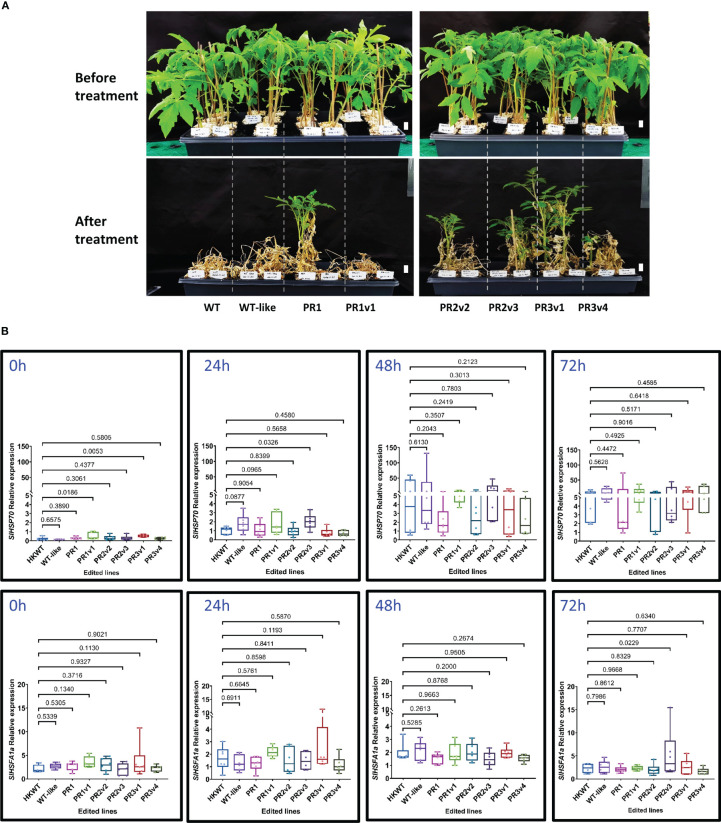
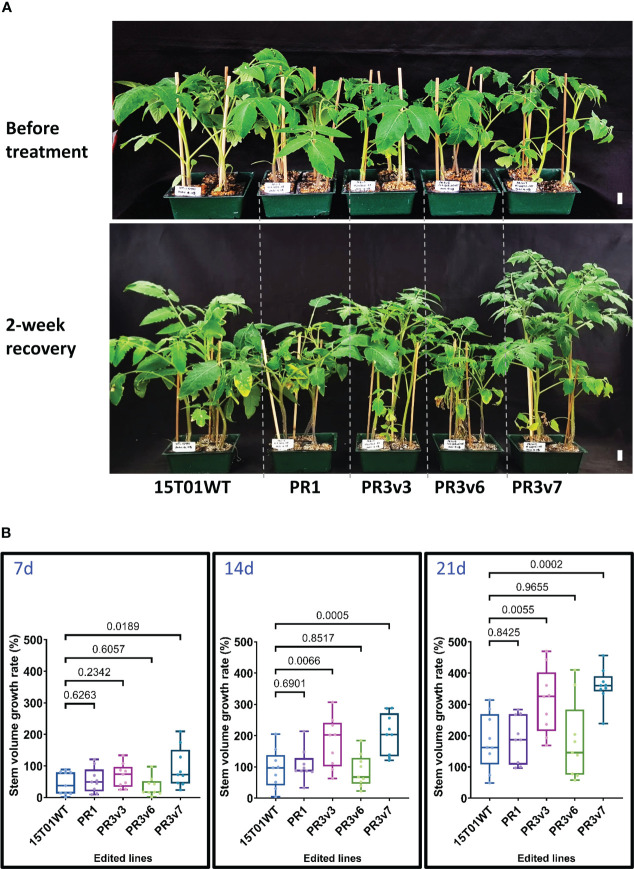
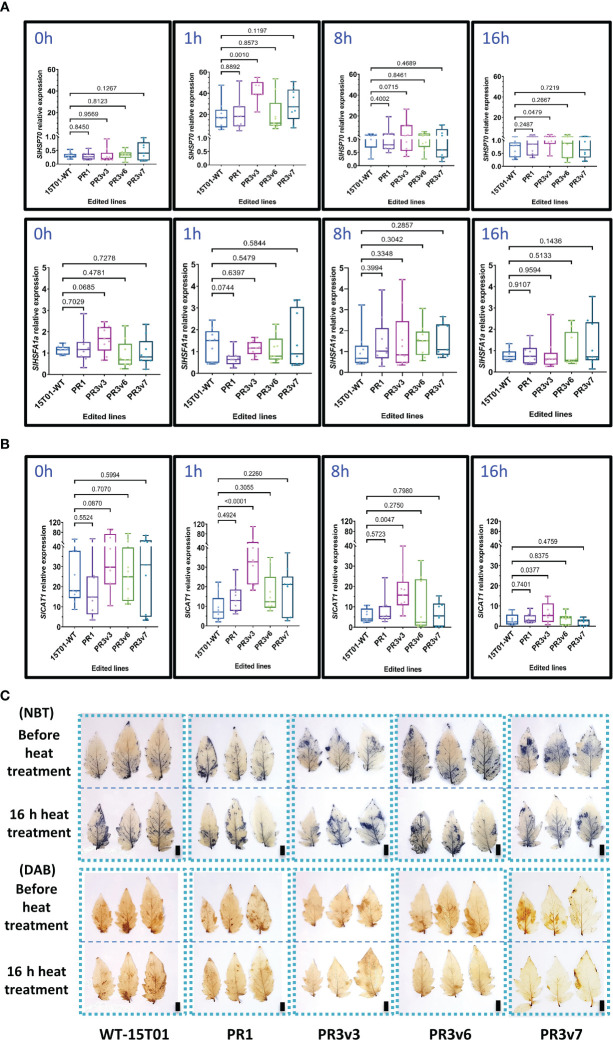
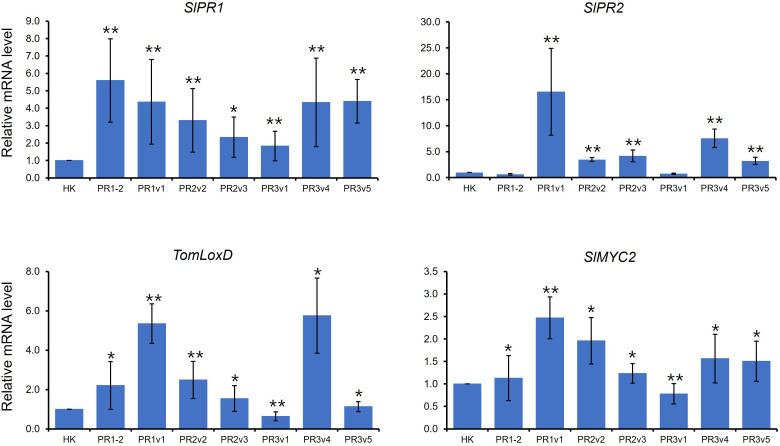
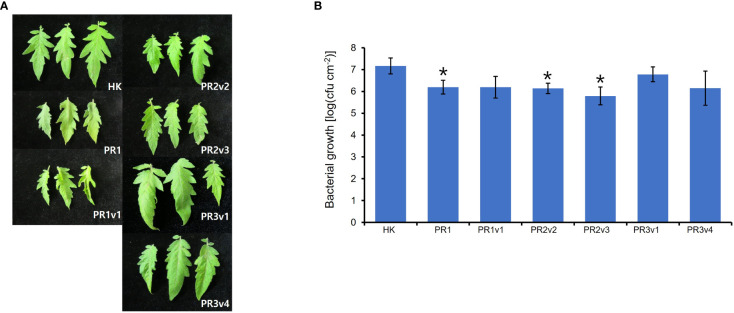
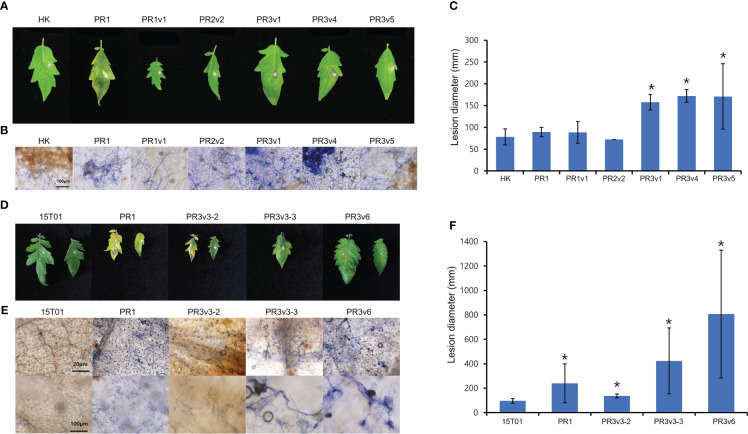
Recently, CRISPR-Cas9-based genome editing has been widely used for plant breeding. In our previous report, a tomato gene encoding hybrid proline-rich protein 1 (HyPRP1), a negative regulator of salt stress responses, has been edited using a CRISPR-Cas9 multiplexing approach that resulted in precise eliminations of its functional domains, proline-rich domain (PRD) and eight cysteine-motif (8CM). We subsequently demonstrated that eliminating the PRD domain of HyPRP1 in tomatoes conferred the highest level of salinity tolerance. In this study, we characterized the edited lines under several abiotic and biotic stresses to examine the possibility of multiple stress tolerance. Our data reveal that the 8CM removal variants of HK and the KO alleles of both HK and 15T01 cultivars exhibited moderate heat stress tolerance. Similarly, plants carrying either the domains of the PRD removal variant (PR1v1) or 8CM removal variants (PR2v2 and PR2v3) showed better germination under osmosis stress (up to 200 mM mannitol) compared to the WT control. Moreover, the PR1v1 line continuously grew after 5 days of water cutoff. When the edited lines were challenged with pathogenic bacteria of Pseudomonas syringae pv. tomato (Pto) DC3000, the growth of the bacterium was significantly reduced by 2.0- to 2.5-fold compared to that in WT plants. However, the edited alleles enhanced susceptibility against Fusarium oxysporum f. sp. lycopersici, which causes fusarium wilt. CRISPR-Cas9-based precise domain editing of the SlHyPRP1 gene generated multi-stress-tolerant alleles that could be used as genetic materials for tomato breeding.
Overview
The claims and statistics of this paper haven’t been checked yet.
Free: it reads the open-access text and checks the first 5 claims that cite a source we can check. Create a free account to check every claim.
Integrity signals
Registry
Cites
Statistics
Figures
Verification
Claims the paper makes
The claims and statistics of this paper haven’t been checked yet.
Free: it reads the open-access text and checks the first 5 claims that cite a source we can check. Create a free account to check every claim.
Claims other papers make about this one
Each is checked against this paper’s own text: does it say what the citing paper says it does?
The source backs part of the claim, not all of it — or backs it for a different population, condition or comparison.
In the citing paper
“Genome-edited tomato lines have demonstrated better germination and vegetative growth under heat-stress conditions, showcasing the potential of these edited genes to enhance heat resilience (Tran et al., 2023).”
From Emerging applications of gene editing technologies for the development of climate-resilient crops (2025) · cites this paper as Tran et al., 2023
Experimental — accuracy not yet measuredThe cited source says what the claim attributes to it.
In the citing paper
“Another example isthat engineering SlHyPRP1 protein domains in tomatoes has improved multi-stress tolerance, including heat stress.”
From Emerging applications of gene editing technologies for the development of climate-resilient crops (2025) · cites this paper as Tran et al., 2023
Self-check
Percentages, sums and reported differences re-computed from the paper’s own numbers.
The self-check needs the paper’s full text.
Citations
Cites
Analysis of Relative Gene Expression Data Using Real-Time Quantitative PCR and the 2−ΔΔCT Method
Livak, K. J., & Schmittgen, T. D. (2001) · Methods · doi:10.1006/meth.2001.1262 · Cited by 180,860
The MIQE guidelines: minimum information for publication of quantitative real-time PCR experiments
Bustin, S. A., Benes, V., Garson, J. A., Hellemans, J., Huggett, J., Kubista, M., Mueller, R., Nolan, T., Pfaffl, M. W., Shipley, G. L., et al. (2009) · Clinical Chemistry · doi:10.1373/clinchem.2008.112797 · Cited by 16,303
Contrasting Mechanisms of Defense Against Biotrophic and Necrotrophic Pathogens
Glazebrook, J. (2005) · Annual Review of Phytopathology · doi:10.1146/annurev.phyto.43.040204.135923 · Cited by 4,367
Plant drought stress: effects, mechanisms and management
Farooq, M., Wahid, A., Kobayashi, N., Fujita, D., & Basra, S. M. A. (2009) · Agronomy for Sustainable Development · doi:10.1051/agro:2008021 · Cited by 4,098
Mutation of the mouse klotho gene leads to a syndrome resembling ageing
Kuro-o, M., Matsumura, Y., Aizawa, H., Kawaguchi, H., Suga, T., Utsugi, T., Ohyama, Y., Kurabayashi, M., Kaname, T., Kume, E., et al. (1997) · Nature · doi:10.1038/36285 · Cited by 3,837
Crop production under drought and heat stress: plant responses and management options.
Fahad, S., Bajwa, A. A., Nazir, U., Anjum, S. A., Farooq, A., Zohaib, A., Sadia, S., Nasim, W., Adkins, S., Saud, S., et al. (2017) · Frontiers in Plant Science · doi:10.3389/fpls.2017.01147 · Cited by 2,629
Drought Stress Impacts on Plants and Different Approaches to Alleviate Its Adverse Effects
Seleiman, M. F., Al-Suhaibani, N., Ali, N., Akmal, M., Alotaibi, M., Refay, Y., Dindaroglu, T., Abdul-Wajid, H. H., & Battaglia, M. L. (2021) · Plants · doi:10.3390/plants10020259 · Cited by 1,976
Targeted genome modification of crop plants using a CRISPR-Cas system
Shan, Q., Wang, Y., Li, J., Zhang, Y., Chen, K., Liang, Z., Zhang, K., Liu, J., Xi, J. J., Qiu, J.-L., et al. (2013) · Nature Biotechnology · doi:10.1038/nbt.2650 · Cited by 1,810
CRISPR/Cas Genome Editing and Precision Plant Breeding in Agriculture
Chen, K., Wang, Y., Zhang, R., Zhang, H., & Gao, C. (2019) · Annual Review of Plant Biology · doi:10.1146/annurev-arplant-050718-100049 · Cited by 1,572
Transcriptional Regulatory Network of Plant Heat Stress Response
Ohama, N., Sato, H., Shinozaki, K., & Yamaguchi-Shinozaki, K. (2017) · Trends in Plant Science · doi:10.1016/j.tplants.2016.08.015 · Cited by 1,234
Cited by
Stress salinity in plants: New strategies to cope with in the foreseeable scenario
Hualpa-Ramirez, E., Carrasco-Lozano, E. C., Madrid‐Espinoza, J., Tejos, R., Ruíz-Lara, S., Stange, C., & Norambuena, L. (2024) · Plant Physiology and Biochemistry · doi:10.1016/j.plaphy.2024.108507 · Cited by 155
Cannea, F. B., & Padiglia, A. (2025) · Life · doi:10.3390/life15081293 · Cited by 130
Crucial plant processes under heat stress and tolerance through heat shock proteins
Mondal, S., Karmakar, S., Panda, D., Pramanik, K., Bose, B., & Singhal, R. K. (2023) · Plant Stress · doi:10.1016/j.stress.2023.100227 · Cited by 113
Genomic and Transcriptomic Approaches to Developing Abiotic Stress-Resilient Crops
Kamali, S., & Singh, A. (2023) · Agronomy · doi:10.3390/agronomy13122903 · Cited by 86
Elsisi, M., Elshiekh, M., Sabry, N., Aziz, M., Attia, K. A., Islam, F., Chen, J., & Abdelrahman, M. (2024) · Stress Biology · doi:10.1007/s44154-024-00160-2 · Cited by 77
Emerging applications of gene editing technologies for the development of climate-resilient crops
Chavhan, R. L., Jaybhaye, S. G., Hinge, V. R., Deshmukh, A. S., Shaikh, U. S., Jadhav, P. K., Kadam, U. S., & Hong, J. C. (2025) · Frontiers in Genome Editing · doi:10.3389/fgeed.2025.1524767 · Cited by 55
“Genome-edited tomato lines have demonstrated better germination and vegetative growth under heat-stress conditions, showcasing the potential of these edited genes to enhance heat resilience (Tran et al., 2023).”
Saikia, B., Remya, S., Debbarma, J., Maharana, J., Sastry, G. N., & Chikkaputtaiah, C. (2024) · Frontiers in Plant Science · doi:10.3389/fpls.2024.1304381 · Cited by 49
CRISPR-Cas9-mediated editing of GmARM improves resistance to multiple stresses in soybean
Luo, T., Ma, C., Fan, Y., Qiu, Z., Li, M., Tian, Y., Shang, Y., Liu, C., Cao, Q., Peng, Y., et al. (2024) · Plant Science · doi:10.1016/j.plantsci.2024.112147 · Cited by 42
Chawla, R., Poonia, A., Samantara, K., Mohapatra, S. R., Naik, S. B., Ashwath, M. N., Djalović, I. G., & Prasad, P. V. V. (2023) · Frontiers in Genetics · doi:10.3389/fgene.2023.1204585 · Cited by 31
Revolutionizing Tomato Cultivation: CRISPR/Cas9 Mediated Biotic Stress Resistance
Shawky, A., Hatawsh, A., Al-Saadi, N. H., Farzan, R. A., Eltawy, N., Francis, M., Abousamra, S., Ismail, Y. Y., Attia, K. A., Fakhouri, A. S., et al. (2024) · Plants · doi:10.3390/plants13162269 · Cited by 31
Genetic Databases and Gene Editing Tools for Enhancing Crop Resistance against Abiotic Stress
Joshi, A. B., Yang, S.-Y., Song, H.-G., Min, J., & Lee, J.-H. (2023) · Biology · doi:10.3390/biology12111400 · Cited by 27
Self-citationAdane, M., & Alamnie, G. (2024) · Functional & Integrative Genomics · doi:10.1007/s10142-024-01480-2 · Cited by 25
Ajithkumar, V., Soni, K. B., Alex, S., Anuradha, T. S., Augustine, R., & Manju, R. V. (2025) · Plant Molecular Biology Reporter · doi:10.1007/s11105-025-01601-6 · Cited by 24
Gene editing for tolerance to temperature stress in plants: A review
Chakraborty, A., Choudhury, S., Kar, S. R., Deb, P., & Wylie, S. J. (2023) · Plant Gene · doi:10.1016/j.plgene.2023.100439 · Cited by 24
Integrating ROS and plant hormone signaling in response to abiotic stress
Bali, A. S. (2025) · Discover Plants. · doi:10.1007/s44372-025-00440-9 · Cited by 23
Research Progress on Grapevine Response Mechanisms and Alleviation Measures Under Salt Stress
Lai, Y., Zhang, C.-C., Yan, H., Nai, G., Bao, J., Sun, P., Liu, Y., Zhang, J., Pu, Z., Li, S., et al. (2025) · Journal of Plant Growth Regulation · doi:10.1007/s00344-025-11640-8 · Cited by 19
Engineering tomato disease resistance by manipulating susceptibility genes
Wang, D., Mandal, P., Rahman, M. M., & Yang, L. (2025) · Frontiers in Genome Editing · doi:10.3389/fgeed.2025.1537148 · Cited by 18
Harnessing the power of genomics to develop climate-smart crop varieties: A comprehensive review
Ravikiran, K. T., Thribhuvan, R., Anilkumar, C., Kallugudi, J., Prakash, N. R., Adavi, S. B., Sunitha, N. C., & Abhijith, K. P. (2024) · Journal of Environmental Management · doi:10.1016/j.jenvman.2024.123461 · Cited by 17
Technological advancements in the CRISPR toolbox for improving plant salt tolerance
Sharma, M., Sidhu, A. K., Samota, M. K., Shah, P., Pandey, M. K., & Gangurde, S. S. (2024) · Discover Agriculture · doi:10.1007/s44279-024-00105-3 · Cited by 15
Multiplex genome editing for climate-resilient woody plants
Sen, M. K., Mondal, S. K., Bharati, R., Severová, L., & Šrédl, K. (2025) · Frontiers in Forests and Global Change · doi:10.3389/ffgc.2025.1542459 · Cited by 12
Innovations in Plant Genome Editing and Biotechnology: Addressing Global Agricultural Challenges
Yerlikaya, B. A., Mostafa, K., Aydin, A., Yerlikaya, S., Mehmood, M., Yılmaz, N. N., Yıldırım, K., & Kavas, M. (2024) · TURKISH JOURNAL OF BOTANY · doi:10.55730/1300-008x.2823 · Cited by 11
Patil, A. M., Wagh, S. G., Janvale, G. B., Pawar, B. D., & Daspute, A. A. (2024) · International Journal of Advanced Biochemistry Research · doi:10.33545/26174693.2024.v8.i3sj.885 · Cited by 11
CRISPR and RNA interference: revolutionary tools for extending food shelf life and ensuring safety
Sidhu, A. K., Sharma, M., Shah, P., & Sandhu, S. K. (2025) · Frontiers in Food Science and Technology · doi:10.3389/frfst.2025.1609948 · Cited by 10
Farooq, M., Khan, A., Hassan, A., & Shah, M. M. (2026) · Planta · doi:10.1007/s00425-026-04942-y · Cited by 9
Exploring the capacity of modern biotechnology to enhance climate smart crop production in Africa
Mmbando, G. S. (2025) · Discover Agriculture · doi:10.1007/s44279-025-00198-4 · Cited by 9
Abdallah, N. A., Hamwieh, A., Radwan, K. H., Fouad, N., & Baum, M. (2025) · CABI biotechnology series. · doi:10.1079/9781800627307.0022 · Cited by 7
A novel stress-inducible dCas9 system for solanaceous plants
Mukherjee, A., Jodder, J., Chowdhury, S., Das, H., & Kundu, P. (2025) · International Journal of Biological Macromolecules · doi:10.1016/j.ijbiomac.2025.142462 · Cited by 6
Aamir, M., Kashyap, S. P., Krishna, R., Mishra, P., Singh, P., Ansari, W. A., Moharana, D. P., Tiwari, S. K., Singh, P. M., Rai, N., et al. (2025) · Environmental Sustainability · doi:10.1007/s42398-025-00354-y · Cited by 6
Harnessing breeding and biotechnological innovations for global food security under climate change
Rehman, O. U., Zhu, F., Hu, X., Xu, X., Uzair, M., Qian, J., Fiaz, S., & Huo, S. (2025) · Functional & Integrative Genomics · doi:10.1007/s10142-025-01733-8 · Cited by 5
Tariq, S., Gul, A., Negri, S., & Mujtaba, T. (2024) · Elsevier eBooks · doi:10.1016/b978-0-443-26614-0.00015-1 · Cited by 5
Kallugudi, J., Lata, C., Thribhuvan, R., Ravikiran, K. T., Dutta, S., Krishnan, P., Patel, C., Thakur, A., Manjul, A. S., Prasad, P., et al. (2025) · Springer eBooks · doi:10.1007/978-981-96-2508-6_6 · Cited by 4
Scientific insights into genetic and physiological response of heat stress in tomato
Visakh, R. L., Anand, S., Reddy, N. R. S., Jha, U. C., Sah, R. P., & Beena, R. (2025) · Planta · doi:10.1007/s00425-025-04893-w · Cited by 4
Crops exposed to extreme conditions: perspectives of gene editing to improve stress tolerance
Szabados, L., Kant, K., Rabilu, S. A., Rashid, A., & Zsigmond, L. (2026) · Plant Cell Reports · doi:10.1007/s00299-026-03891-w · Cited by 3
CRISPR-Based Genome Editing for Enhancing Crop Resilience to Climate Change-Induced Abiotic Stresses
Kumar, K. R. R., & Pandab, P. (2025) · Springer eBooks · doi:10.1007/978-3-030-98067-2_174-1 · Cited by 3
(2026) · Trends in Animal and Plant Sciences · doi:10.62324/taps/2025.069 · Cited by 3
CRISPR-Based Genome Editing for Enhancing Crop Resilience to Climate Change-Induced Abiotic Stresses
Kumar, K. R. R., & Pandab, P. (2025) · Springer eBooks · doi:10.1007/978-3-031-34967-6_174 · Cited by 2
Joe, A. D., Liu, R., Luo, X., Liu, M., Syed, R., Aslam, F., Barclay, C. A. G., & Zheng, Z. (2025) · Journal of Plant Growth Regulation · doi:10.1007/s00344-025-11942-x · Cited by 2
Current Trends in CRISPR‐Cas System Based Genome Editing in Tomato ( Solanum lycopersicum )
Anand, S., Visakh, R. L., Bhalaji, B. K. S., Parvathy, Reddy, N. R. S., & Rajasekharan, A. (2025) · Plant Breeding · doi:10.1111/pbr.70023 · Cited by 2
Farooq, M., Khan, A., Hassan, A., & Shah, M. M. (2026) · Plant Breeding · doi:10.1111/pbr.70126 · Cited by 2
Key issues in editing elite-tomato lines by CRISPR-Cas9 system
Amoroso, C. G., & Ercolano, M. R. (2025) · Euphytica · doi:10.1007/s10681-025-03648-8 · Cited by 2
Confronting Abiotic Stresses: Molecular Strategies for Improving Tomato Stress Tolerance
Arain, S. M., Sajjad, M., Faheem, M., Ullah, G., Laghari, K. A., & Sial, M. A. (2025) · Springer eBooks · doi:10.1007/978-981-96-3890-1_3 · Cited by 2
Genetic Variability Studies on Solanum Lycopersicum
Ajie, V. I. (2026) · JOURNAL OF BIOLOGY AND GENETIC RESEARCH · doi:10.56201/jbgr.vol.11.no1.2025.pg19.43 · Cited by 2
Genetic frontiers in tomato breeding: Overcoming heat stress for sustainable yield
Agalya, P., Selvaraj, K. S. V., Beaulah, A., Ramalingam, J., Bharathi, A., & Gurusamy, K. (2025) · Plant Science Today · doi:10.14719/pst.7710 · Cited by 2
Bovio-Zenteno, E. M., Jia, T., Nazir, M. F., Dai, L., Xu, J., Zhao, Y., Zou, S., & Huang, H. (2025) · Plant Stress · doi:10.1016/j.stress.2025.101209 · Cited by 2
Customizing Crops for Salinity Tolerance: Toward Resilient Crop Production Systems
Tailor, A., Sharma, P., Joshi, A., Kumari, A., & Gogna, M. (2025) · Wiley eBooks · doi:10.1002/9781394192595.ch18 · Cited by 1
Future Perspective on CRISPR-Cas9-Based Targeted Genome Editing in Date Palms
Kaur, N., Alok, A., & Ahmed, Z. F. R. (2024) · Springer eBooks · doi:10.1007/978-981-97-3119-0_18 · Cited by 1
Meena, V. K. (2026) · Scientific Reviews · doi:10.1038/s44573-026-00002-4 · Cited by 1
Salt Stress in Crops: Tolerance Mechanisms and Emerging Amelioration Strategies
Samuel, K. B., & Oyetunji, O. J. (2025) · IntechOpen eBooks · doi:10.5772/intechopen.1012586 · Cited by 1
Beyond Productivity: CRISPR-Based Genome Editing for High-Value and Well-being Tomato Production
Kim, M., Amarillis, S., Sabbir, M. M. R., Duc, T. M., Javeed, A., Joh, A.-R., & Park, S. J. (2026) · Plant Breeding and Biotechnology · doi:10.9787/pbb.2026.14.152 · Cited by 1
Self-citationSlbHLH053 and AtMSRB5 synergistically enhance salt tolerance in transgenic tomatoes
Balladona, F. K., Li, C.-W., Lin, Y., Cai, Z.-R., Lan, T. H., Ohme‐Takagi, M., Sukma, D., & Chan, M. (2025) · Plant Stress · doi:10.1016/j.stress.2025.101029 · Cited by 1
Khattak, M., Ajmal, M., Firdous, H., Yue, Z., Sajjad, N., Zafar, M. M., & MingHui, L. (2026) · Plant Cell Reports · doi:10.1007/s00299-026-03974-8 · Cited by 1
Genome editing approaches using CRISPR/Cas for sustainable management of Fusarium wilt in crops
Sihag, A., Raj, S. N., Manju, K. G., Sanjana, Lakshmi, S., Prasad, M. N. N., Kotian, S. S., Shetty, S. S., Lakshmi, N. V., Ashok, P., et al. (2026) · Current Plant Biology · doi:10.1016/j.cpb.2026.100633
Dutt, A., Keithellakpam, A., Laskar, A., Kachari, A., Chikkaputtaiah, C., & Saikia, B. (2026) · Elsevier eBooks · doi:10.1016/b978-0-443-44994-9.00011-0
Advances in Genome Editing for Plant Disease Resistance Breeding
Amoroso, C. G., & Andolfo, G. (2026) · Plants · doi:10.3390/plants15111644
Genomic Innovation in Agriculture: The Rise of CRISPR-Cas9 in Plant Improvement
Metkari, T. (2025) · International Journal for Research in Applied Science and Engineering Technology · doi:10.22214/ijraset.2025.71225
Regulatory genes for the improvement of salt and drought tolerance
Jha, S., Singh, J., Dutta, S., Varshney, V., Mishra, V., Choudhary, D. K., & Tak, N. (2025) · Elsevier eBooks · doi:10.1016/b978-0-443-13490-6.00023-0
CRISPR-tool box and its applications in tomato: From stress resilience to trait improvement
Reddy, C. S., Patel, V., Kondala, S., Alavalapati, T., Gracia-Rodriguez, C., & Reddy, U. K. (2026) · Plant Stress · doi:10.1016/j.stress.2026.101432
Intelligent gene editing for stress tolerance in plants
Tilgam, J., Begam, S., Jayaswal, D., Jayaswall, K., Das, J., & Kumar, R. (2026) · Elsevier eBooks · doi:10.1016/b978-0-443-44079-3.00025-5
Tanveer, A., Khan, M. H., Atif, R. M., Azhar, M. T., Usman, M., Ali, Z., & Rana, I. A. (2026) · Scientia Horticulturae · doi:10.1016/j.scienta.2026.115154
Geneedited plants: achievements and prospects (review)
Волкова, Н. Е. (2024) · Plant varieties studying and protection · doi:10.21498/2518-1017.20.1.2024.300137
Altıntaş, S., Çatkın, S., & İnal, B. (2025) · Elsevier eBooks · doi:10.1016/b978-0-443-26799-4.00007-4
Kumar, P., Patel, M., Choudhury, D., Dwivedi, P., & Upadhyay, S. K. (2026) · Journal of Plant Growth Regulation · doi:10.1007/s00344-026-12200-4
Phytomicrobiome-Mediated Signaling in Plant Growth Regulation and Abiotic Stress Management
Dev, M., Pant, P., & Singh, K. P. (2026) · Elsevier eBooks · doi:10.1016/b978-0-443-27628-6.00003-6
Sun, X., Wang, K., Gao, M., Wang, Y., Cai, Y., Jones, M. G. K., & Yang, R. (2026) · Crop Breeding Genetics and Genomics · doi:10.20900/cbgg20260021
Paramanik, S., Subramanian, P., Mani, M., & Das, U. (2026) · Environmental and Experimental Botany · doi:10.1016/j.envexpbot.2026.106422
Plant Resilience to Abiotic Stress
Waseem, M. (2025) · IntechOpen eBooks · doi:10.5772/intechopen.1008096
Impact of high day and night temperatures on major food crops: A comprehensive review
Devadharshini, S., Sathyamoorthy, N. K., Kokilavani, S., Manivannan, V., Chandrakumar, K., & Vanitha, K. (2026) · Plant Science Today · doi:10.14719/pst.14740
Chojnacka, K., & Jagielski, D. (2026) · Food & Function · doi:10.1039/d6fo03747j
Omics approaches - Comprehensive insights for abiotic stress tolerance in horticultural crops
Bharathi, A., Selvaraj, K. S. V., Karthikeyan, J., Agalya, P., & Periakaruppan, R. (2025) · Plant Science Today · doi:10.14719/pst.10450
Cardi, T., & Esposito, S. (2025) · Romanian journal of Horticulture · doi:10.51258/rjh.2025.01
Verma, P., Choudhary, S., Sharma, N., Pandey, E., & Kumari, R. (2025) · CABI biotechnology series. · doi:10.1079/9781800627307.0020
Saikia, B., Remya, S., Debbarma, J., Maharana, J., Sastry, G. N., & Chikkaputtaiah, C. (2024) · doi:10.3389/fpls.2024.1304381.s001
Aziz, M. A., & Rahman, S. (2026) · Current Plant Biology · doi:10.1016/j.cpb.2026.100649
Climate resilient vegetables: Breeding for heat stress tolerance
Suresh, K., Muradi, K. B., Athira, G., Chaithra, B. S., Keerthana, M. V., Bhrundha, K., Totawar, H. M., Laxmi, P. S., Wayal, Y. V., & Nandu, P. K. (2026) · International Journal of Advanced Biochemistry Research · doi:10.33545/26174693.2026.v10.i2sm.7968
Editing dual-function susceptibility genes for multistress-resilient crops
Zahid, M. A., & Andréasson, E. (2026) · Trends in biotechnology · doi:10.1016/j.tibtech.2026.10.006
Metadata
- Authors
- Tran, M. T., Son, G. H., Song, Y. J., Nguyen, N. T., Park, S., Thach, T. V., Kim, J., Sung, Y. W., Das, S., Pramanik, D., Lee, J., Son, K.-H., Kim, S. H., Vu, T. V., & Kim, J.-Y.
- Affiliations
- Gyeongsang National University (KR)
- Corresponding author
- Kim, Sang Hee
- Vu, Tien Van
- Kim, Jae-Yean
- ORCID
- Venue
- Frontiers in Plant Science
- Publisher
- Frontiers Media SA
- Published
- 2023-05-15
- Volume
- 14
- Pages
- 1186932-1186932
- ISSN
- 1664-462X (ISSN-L)
- PMC
- PMC10225705
- OpenAlex
- W4378782020
- Cited by
- 60
- References
- 66
- Citations by year
- 2026: 16 · 2025: 27 · 2024: 12 · 2023: 5
- FWCI
- 9.45
- Type
- journal article
- Language
- en
- Open access
- gold
- doi.org
- Licence
- Locations
- Frontiers in Plant Science (publishedVersion, cc-by)
- PubMed Central (publishedVersion, cc-by)
- PubMed (publishedVersion)
- DOAJ (DOAJ: Directory of Open Access Journals) (submittedVersion, cc-by-sa)
- Funders
- National Research Foundation of Korea (2020R1I1A1A01072130, 2020R1A6A1A03044344, 2021R1A5A8029490, 2022R1A2C3010331, 2021M3A9I5023695, 2022R1A5A1031361)
- Rural Development Administration (PJ016867022022)
- Topics
- Life Sciences › Agricultural and Biological Sciences › Plant Science › Plant Stress Responses and Tolerance
- Life Sciences › Biochemistry, Genetics and Molecular Biology › Molecular Biology › CRISPR and Genetic Engineering
- Life Sciences › Agricultural and Biological Sciences › Plant Science › Plant-Microbe Interactions and Immunity
- Keywords
- tomato, CRISPR/Cas9 genome editing, proline-rich region, salt tolerance, heat tolerance, osmotic stress tolerance, drought tolerance, Pseudomonas syringae pv. tomato DC3000, Fusarium oxysporum f. sp. lycopersici, Fusarium wilt resistance, disease resistance, multi-stress tolerance
About these checks
Registry, retraction, Cites and statistics results are computed, not judged, with one exception: a printed reference that no index lists is read once by a model before it counts as a citation error. Claims are extracted by a model and kept only when their quote appears verbatim in the text; each cited source is then checked, with a model’s help, for whether it says what the claim relies on. Those verdicts can be wrong — read the claim’s quote and the cited source before relying on one.
Statistics and arithmetic are recomputed, not judged.
Confidence bands are shown only for fields calibrated on our annotated test set. None is calibrated yet, so no band is shown.
What counts as a claim ›How we measure confidence ›How we check this ›
Are you an author, or do you see a problem with this page? Request a review
Data sources
Bibliographic data: Semantic Scholar, OpenAlex, Crossref.
Contains information from the Semantic Scholar Academic Graph Datasets, made available under the ODC Attribution License (ODC-BY 1.0).
Semantic Scholar’s data is described in: Kinney, R., et al. (2023). The Semantic Scholar Open Data Platform. arXiv:2301.10140.
