

Motor skills and cognitive benefits in children and adolescents: Relationship, mechanism and perspectives
Open accessThe DOI matches its Crossref record; 96 of the 100 references it cites were found in a registry or an index.
Abstract
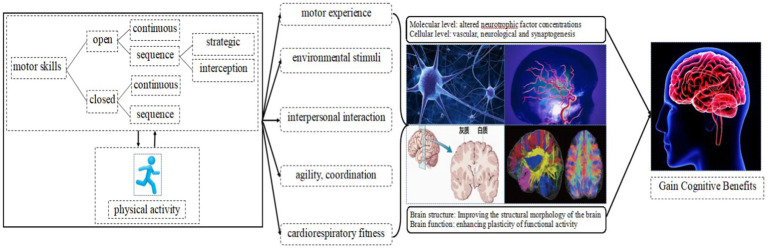
Objective: There is a strong interaction between motor skills and cognitive benefits for children and young people. The aim of this paper is to explore the relationship between motor skill types and their development and the cognitive benefits of children and adolescents. In turn, on this basis, it proposes pathways and mechanisms by which motor skills improve cognition, and provide a basis for subsequent teaching of skills that follow the laws of brain cognitive development. Methods: This paper summarizes the research on the relationship between different types of motor skills and their development and cognitive benefits of children and adolescents. Based on these relationships, pathways, and mechanisms for motor skills to improve cognition are tentatively proposed. Results: There is an overall pattern of “open > closed, strategy > interception, sequence > continuous” between motor skill types and the cognitive benefits of children and adolescents. Long-term motor skill learning practice is accompanied by increased cognitive benefits as skill proficiency increases. The dynamic interaction between motor skills and physical activity exposes children and adolescents to environmental stimuli and interpersonal interactions of varying complexity, promoting the development of agility, coordination and cardiorespiratory fitness, enhancing their motor experience, which in turn improves brain structure and functional activity. Conclusion: Motor skills training promote cognitive efficiency in children and adolescents. Motor skill interventions that are open-ended, strategic and sequential in nature are more effective. Environmental stimuli, interpersonal interaction, agility, coordination, and cardiorespiratory fitness can be considered as skill attribute moderators of motor skills to improve cognition.
Overview
The claims and statistics of this paper haven’t been checked yet.
Free: it reads the open-access text and checks the first 5 claims that cite a source we can check. Create a free account to check every claim.
Integrity signals
Registry
Cites
Statistics
Figures
Verification
Claims the paper makes
The claims and statistics of this paper haven’t been checked yet.
Free: it reads the open-access text and checks the first 5 claims that cite a source we can check. Create a free account to check every claim.
Claims other papers make about this one
Each is checked against this paper’s own text: does it say what the citing paper says it does?
The check wasn’t confident either way, so it gives no verdict — never disputed.
In the citing paper
“VR assessment instruments developed so far exhibit limited ecological validity, as their interfaces present scenarios and activities that bear little or no relation to actual daily life activities [35].”
From Enhancing Ecological Validity: Virtual Reality Assessment of Executive Functioning in Children and Adolescents with ADHD (2024) · cites this paper as [35]
Experimental — accuracy not yet measuredThe check wasn’t confident either way, so it gives no verdict — never disputed.
In the citing paper
“They also fail to incorporate natural types of movement (such as navigating through different scenarios and manipulating various materials) and real-life distractors [35], except for a new task developed to assess prospective memory [33,36].”
From Enhancing Ecological Validity: Virtual Reality Assessment of Executive Functioning in Children and Adolescents with ADHD (2024) · cites this paper as [35]
Experimental — accuracy not yet measured
Self-check
Percentages, sums and reported differences re-computed from the paper’s own numbers.
The self-check needs the paper’s full text.
Citations
Cites
Stodden, D. F., Goodway, J. D., Langendorfer, S. J., Roberton, M. A., Rudisill, M. E., Garcia, C., & Garcia, L. E. (2008) · Quest · doi:10.1080/00336297.2008.10483582 · Cited by 2,334 · cited 1×
“It interacts with physical activity to jointly maintain the physical health of children and adolescents (Stodden et al., 2008).”
BackgroundDevelopment of the adolescent brain: implications for executive function and social cognition
Blakemore, S., & Choudhury, S. (2006) · Journal of Child Psychology and Psychiatry · doi:10.1111/j.1469-7610.2006.01611.x · Cited by 2,328 · cited 1×
“The level of cognitive development at this stage is of great significance to individual academic performance, mental health, and social development in adulthood (Blakemore and Choudhury, 2006; Ahmed et al., 2020).”
BackgroundEnriched environments, experience-dependent plasticity and disorders of the nervous system
Nithianantharajah, J., & Hannan, A. J. (2006) · Nature Reviews Neuroscience · doi:10.1038/nrn1970 · Cited by 1,771 · cited 4×
“, 2000), increases the number of dendritic spines and the volume of synapses on certain neuronal populations (Nithianantharajah and Hannan, 2006), and promotes neuronal activation, signaling, and brain plasticity (Nithianantharajah and Hannan, 2006; Sale et al., 2009).”
BackgroundInfluentialPlasticity in gray and white: neuroimaging changes in brain structure during learning
Zatorre, R. J., Fields, R. D., & Johansen-Berg, H. (2012) · Nature Neuroscience · doi:10.1038/nn.3045 · Cited by 1,685 · cited 1×
“Acute or long-term motor skill learning can cause brain plasticity changes, promote brain angiogenesis, gliogenesis and synaptogenesis, and improve brain structural morphology and functional activities (Zatorre et al., 2012; Vints et al., 2022).”
BackgroundErtmer, P. A., & Newby, T. J. (1993) · Performance Improvement Quarterly · doi:10.1111/j.1937-8327.1993.tb00605.x · Cited by 1,410 · cited 1×
“With increasing research in cognitive psychology and cognitive neuroscience, there is a growing focus on the acquisition and restructuring of internal mental representations during motor skill learning (Ertmer and Newby, 1993).”
BackgroundDiamond, A., & Ling, D. S. (2016) · Developmental Cognitive Neuroscience · doi:10.1016/j.dcn.2015.11.005 · Cited by 1,177
Effects of acute bouts of exercise on cognition
Tomporowski, P. D. (2003) · Acta Psychologica · doi:10.1016/s0001-6918(02)00134-8 · Cited by 1,030 · cited 3×
“Effects of acute interventions in motor skills on cognition Exercise has immediate cognitive effect, and a single exercise intervention can produce certain cognitive benefits (Tomporowski, 2003).”
BackgroundInfluentialBrain plasticity and behaviour in the developing brain.
Kolb, B. E., & Gibb, R. L. (2011) · Europe PMC (PubMed Central) · Cited by 928
de Greeff, J. W., Bosker, R. J., Oosterlaan, J., Visscher, C., & Hartman, E. (2018) · Journal of Science and Medicine in Sport · doi:10.1016/j.jsams.2017.09.595 · Cited by 841
Voss, M. W., Kramer, A. F., Basak, C., Prakash, R. S., & Roberts, B. (2010) · Applied Cognitive Psychology · doi:10.1002/acp.1588 · Cited by 632
Research works printed but not linked: 31
- Bi Y. Li J. Qin Z. Sun X. P. Shi J. L. Lang J. (2020). Differences in response inhibition in female college students of different soccer levels: correlation with brain anatomy. J. Beijing Normal Univ. (Nat. Sci.) 58, 310– 317. doi: 10.12202/j.0476-0301.2021273 · doi:10.12202/j.0476-0301.2021273
- Cao C. M. Dong G. Liu Y. Gao C. (2017). Movement coordination and skill learning: a review of theory and perspective. J. Wuhan Inst. Phys. Educ. 51, 82– 87. doi: 10.15930/j.cnki.wtxb.2017.01.013 · doi:10.15930/j.cnki.wtxb.2017.01.013
- Chen A. G. Feng L. Zhu L. N. Yan J. (2015a). Effect of moderate intensity basketball dribbling training of different durations on children’ executive function. J. Capital Univ. Phys. Educ. Sports 27, 223– 227. doi: 10.14036/j.cnki.cn11-4513.2015.03.007 · doi:10.14036/j.cnki.cn11-4513.2015.03.007
- Chen A. G. Xiong X. Zhu L. N. (2021). Physical exercise and development of brain and mind in children and adolescents: evidence and theory. China Sport Sci. 41, 43– 51. doi: 10.16469/j.css.202111006 · doi:10.16469/j.css.202111006
- Chen A. G. Zhao L. Li H. Y. Yan J. Yin H. C. (2014). Effects of acute basketball dribbling training of different intensity on executive function of primary students. J. TUS 29, 352– 355. doi: 10.13297/j.cnki.issn1005-0000.2014.04.015 · doi:10.13297/j.cnki.issn1005-0000.2014.04.015
- Chen A. G. Zhao Z. Y. Yan J. (2015b). Effects of rope skipping with different forms of organization on the executive function of preadolescent children: a school-based experimental study. Chin J Sports Med 34, 886– 890. doi: 10.16038/j.1000-6710.2015.09.011 · doi:10.16038/j.1000-6710.2015.09.011
- Chen A. G. Zhu L. N. Jin L. Xiong X. Wang W. Yan J. (2016). Effects of aerobic exercise on executive control and its brain network in deaf children. J. Sports Sci. 37, 94– 101.
- Gong H. P. Liu M. Y. Kong Q. Q. Hu H. X. (2020). Scientific evidence of integration of sports and education: an analysis of association between sports exercise and education. China Sport Sci. Technol. 56, 19– 28.
- Hou W. D. (2008). A comparison of attention between outstanding young female soccer athletes and ordinary female middle-school students:constructing a distinction equation based on parameter differences. J. Clin. Rehabil. Tissue Eng. Res. 12, 1291– 1294.
- Hu J. Gu J. Y. Wang W. Y. Pang L. Ma R. (2022). Correlation between motor skills and focused with shifting attention in preschool children. Chin J Sch Health 43, 274– 279. doi: 10.16835/j.cnki.1000-9817.2022.02.026 · doi:10.16835/j.cnki.1000-9817.2022.02.026
- Ji X. H. (2014). Study on the Differences of Executive Function of Pupils Trained by Different Sports. Yangzhou, Yangzhou University.
- Ji L. Yin H. C. Yan J. (2010). Sports Psychology. (2nd Edn.) Beijing: Higher Education Press, 189– 190.
- Kong J. C. (2012). The effect of physical activity style on children’s attentional stability. Chin J Sch Health 33, 485– 486.
- Ma Z. H. Cao Q. J. Yan C. G. Mei T. Lu B. Liu J. R.. (2019). Functional connectivity characteristics of executive control network in patients with high-functioning autism aged 6-18 years. Chin. Ment. Health J. 33, 401– 405.
- Pan J. L. Yin H. C. Chen A. G. Cui L. Wang Y. Cui Y. B. (2016). An experimental study on the effect of exercise intervention on the executive functions of primary students with and without learning difficulties. China Sport Sci. 36, 84– 91. doi: 10.16469/j.css.201606009 · doi:10.16469/j.css.201606009
- Shao F. Z. (2019). Cognitive Psychology: Theory, Experiment and Application. (3rd Edn.) Shanghai: Shanghai Education Publishing House, 8– 10.
- Shi J. L. Wang J. Chen F. J. Li Y. T. Zhu J. Q. Huang H. J.. (2019). Advances in the frontal lobe-basal ganglia model of response inhibition. Chem. Life 39, 1113– 1119. doi: 10.13488/j.smhx.20190245 · doi:10.13488/j.smhx.20190245
- Song Y. Liu Y. Yang N. Wang C. Z. (2020). Research on orienteering exercise improving the execution function of children with attention deficit hyperactivity disorder. J. Phys. Educ. 27, 110– 115. doi: 10.16237/j.cnki.cn44-1404/g8.2020.03.017 · doi:10.16237/j.cnki.cn44-1404/g8.2020.03.017
- Wang W. Q. Shen Y. W. Huang M. (2001). Effect of the exercise on the cardio respiratory function of the old. J. Chengdu Phys. Educ. Inst. 19, 85– 88.
- Wang R. Y. Su Q. S. (2016). Exercise Physiology. Beijing: People’s Physical Culture Publishing House, 350– 360.
- Wu Y. Zhang J. Zeng Y. W. Shen C. (2015). Structural brain plasticity change in athletes associated with different sports. China Sport Sci. 35, 52– 57. doi: 10.16469/j.css.201504006 · doi:10.16469/j.css.201504006
- Xiao H. Yu L. Zhao L. (2021). Relationship of agility and quickness with EEG signals among school-age children. Chin J Sports Med 40, 942– 949. doi: 10.16038/j.1000-6710.2021.12.003 · doi:10.16038/j.1000-6710.2021.12.003
- Yan J. Wang Y. Chen A. G. Ma D. J. (2014). Empirical study of the impact of various school-term physical activity of moderate intensity on the executive function of children in their preadolescence. J. Sports Sci. 35, 94– 100. doi: 10.13598/j.issn1004-4590.2014.06.017 · doi:10.13598/j.issn1004-4590.2014.06.017
- Yin X. F. (2019). A study on the evaluation of motor ability and its socio-ecological influencing factors of Shanghai children (7-8 years old). Shanghai, Shanghai University of Sport.
- Yin H. C. Pan J. L. Liu M. Ma Q. Chen A. G. (2017). The effects of an exercise intervention on the executive functions of primary school students with learning difficulties and normally developing primary school students: a comparison of the time course efficiency. Chin. J. Spec. Educ. 2017, 55– 62.
- Yu Q. Liang Z. W. Zhang T. Li X. Y. Chen S. Z. (2019). The performance of different types of motor skills on proactive and reactive controls of executive functions. Chinese J. Rehabil. Med. 34, 280– 286. doi: 10.3969/j.issn.1001-1242.2019.03.006 · doi:10.3969/j.issn.1001-1242.2019.03.006
- Zhang Y. B. (2012). Theory and Practice of Motor Skills. Beijing: Higher Education Press, 4– 12.
- Zhang J. S. Ji X. Yan C. H. Xu J. Ren F. Shen L. X. (2009). Primary study on executive function in children with ping-pong training and swimming training. J. Shanghai Jiaotong Univ. (Med. Sci.) 29, 782– 784.
- Zhang Z. Y. Jin C. J. Xie C. (2022). Effects of eleven kinds of sports on working memory of our school-age children: a network meta-analysis. J. Liaoning Normal Univ. (Nat. Sci. Ed.) 45, 135– 144. doi: 10.11679/lsxblk2022010135 · doi:10.11679/lsxblk2022010135
- Zhong X. K. Zhang J. Wang Z. P. Jiang C. H. (2022). Effect of physical activity on neurocognitive function of overweight children: a systematic review. Chin J Rehabil Theory Pract 28, 421– 428.
- Zhou C. L. Jin X. H. (2021). Theory and practice of sports to promote learning efficiency from the perspective of brain science. J. Shanghai Univ. Sport 45, 20– 28. doi: 10.16099/j.sus.2021.01.003 · doi:10.16099/j.sus.2021.01.003
Cited by
Two new Later Stone Age sites from the Final Pleistocene in the Falémé Valley, eastern Senegal
Ndiaye, M., Lespez, L., Tribolo, C., Rassé, M., Hadjas, I., Davidoux, S., Huysecom, É., & Douze, K. (2024) · Monash University Research Portal (Monash University) · doi:10.3929/ethz-b-000667478 · Cited by 23,868
Feng, X., Zhang, Z., Jin, T., & Shi, P. (2023) · BMC Psychology · doi:10.1186/s40359-023-01317-w · Cited by 59
“The cognitive benefits generated by exercise may be different in skill types [22], which may be related to the action tasks of the activities involved [23].”
BackgroundSelf-citationEffects of sports experience on children's gross motor coordination level
Biino, V., Giustino, V., Gallotta, M. C., Bellafiore, M., Battaglia, G., Lanza, M., Baldari, C., Giuriato, M., Figlioli, F., Guidetti, L., et al. (2023) · Frontiers in Sports and Active Living · doi:10.3389/fspor.2023.1310074 · Cited by 51
Li, Z., Xia, X., Sun, Q., & Li, Y. (2023) · Frontiers in Psychology · doi:10.3389/fpsyg.2023.1294116 · Cited by 54
“Motor skills can be divided into open and closed skills based on the predictability of environmental changes (Shi and Feng, 2022).”
BackgroundMa, Y., & Mumtaz, S. (2025) · Frontiers in Psychiatry · doi:10.3389/fpsyt.2025.1678367 · Cited by 53
Frikha, M., & Alharbi, R. S. (2023) · Children · doi:10.3390/children10050786 · Cited by 38
“Indeed, in a review, Shi and Feng [16] highlighted that PA conducted in natural environments has a positive effect on typically developed children and adolescents, and that open and/or sequential features of motor skills are more beneficial in enhancing executive function.”
BackgroundInfluentialVandoni, M., Giuriato, M., Pirazzi, A., Zanelli, S., Gaboardi, F., Pellino, V. C., Gazzarri, A. A., Baldassarre, P., Zuccotti, G., & Calcaterra, V. (2023) · Pediatric Reports · doi:10.3390/pediatric15040062 · Cited by 45
“However, current literature evidence shows that children and adolescents with DS display differences in motor performance precision because of their sex [85].”
BackgroundMao, F., Yin, A., Zhao, S., & Fang, Q. (2024) · Frontiers in Psychology · doi:10.3389/fpsyg.2024.1449612 · Cited by 38
“Increasing evidence suggests that engaging in open-skills and strategic sports confers more cognitive advantages in cognitive performance tasks compared to closed-skills sports (Gallotta et al., 2015; Krenn et al., 2018; Shi and Feng, 2022; Wang et al., 2016).”
Hu, S., Shi, P., Zhang, Z., Feng, X., Zhang, K., & Jin, T. (2025) · Frontiers in Human Neuroscience · doi:10.3389/fnhum.2024.1495371 · Cited by 33
Self-citationAkıl, M., Tokay, B., & Güngör, M. G. (2024) · BMC Psychology · doi:10.1186/s40359-024-02006-y · Cited by 26
“Environmental stimuli, interpersonal interaction, agility, coordination, and cardiorespiratory fitness can be considered as skill attribute moderators of motor skills to improve cognition [34].”
BackgroundRomero-Ayuso, D., del Pino-González, A., Torres-Jiménez, A., Juan-González, J., Celdrán, F. J., Franchella, M. C., Ortega-López, N., Triviño-Juárez, J. M., Garach-Gómez, A., Arrabal-Fernández, L., et al. (2024) · Children · doi:10.3390/children11080986 · Cited by 20
“They also fail to incorporate natural types of movement (such as navigating through different scenarios and manipulating various materials) and real-life distractors [35], except for a new task developed to assess prospective memory [33,36].”
BackgroundZhang, Z., Shi, P., Zhang, K., Li, C., & Feng, X. (2024) · Frontiers in Human Neuroscience · doi:10.3389/fnhum.2024.1418803 · Cited by 20
Self-citationDeng, L., Wu, H., Ruan, H., Xu, D., Pang, S., & Shi, M. (2024) · Frontiers in Psychology · doi:10.3389/fpsyg.2024.1383397 · Cited by 23
Enhancing Executive Function in Children and Adolescents Through Motor Learning: A Systematic Review
Richter, M., Ali, H. M., & Immink, M. A. (2024) · Journal of Motor Learning and Development · doi:10.1123/jmld.2024-0038 · Cited by 20
Bădău, D., Bădău, A., Joksimović, M., Oancea, B. M., Mănescu, C. O., Graur, C., CORNEA, G.-G., Ene-Voiculescu, V., Cojanu, F., Ștefănică, V., et al. (2023) · Balneo and PRM Research Journal · doi:10.12680/balneo.2023.570 · Cited by 21
Shi, P., Zhang, Z., Feng, X., Li, C., & Tang, Y. (2023) · Child Care Health and Development · doi:10.1111/cch.13182 · Cited by 16
Self-citationLyu, S. W., & Zhang, W. (2025) · Frontiers in Psychology · doi:10.3389/fpsyg.2025.1511559 · Cited by 13
“In addition, open exercises provide opportunities for social interaction, which can cultivate children’s social skills such as communication, negotiation, and cooperation with others (Shi and Feng, 2022).”
InfluentialSchott, N., Mündörfer, A., & Holfelder, B. (2023) · Children · doi:10.3390/children10081332 · Cited by 12
“In recent decades, the number of research studies examining the relationship between movement and cognition has increased [43].”
BackgroundThe Association Between Motor Competence and Inhibitory Control in Preschool Children
Zhang, A., Chen, X., Zhao, D., & Zhang, Y. (2024) · Children · doi:10.3390/children11121537 · Cited by 9
Saez, G. B., Rico-González, M., & Gómez, N. M. (2025) · Sports · doi:10.3390/sports13080261 · Cited by 11
“…must be addressed in an integrated way considering children’s continuous and progressive exploration of the environment, their relationships with objects and other children, the environment, and the teacher, which may help to build children’s topological, spatial, and problem-solving skills [5].”
Physical fitness as a predictor of reaction time in soccer-playing children
Santos, V., Casanova, N., Marconcin, P., Willig, R., Conti, J. V., Soares, D. P., & Flôres, F. S. (2025) · PLoS ONE · doi:10.1371/journal.pone.0320147 · Cited by 11
“Incorporating exercises that challenge both the body and the mind, such as dual-task exercises or complex motor tasks, may be an effective strategy to improve both d cognitive function in soccer-playing boys [60].”
Sari, D. A., Kuswanto, C. W., Anhusadar, L., Purnama, S., & Ulfah, M. (2025) · Jurnal Ilmiah Ilmu Terapan Universitas Jambi|JIITUJ| · doi:10.22437/jiituj.v9i3.42381 · Cited by 8
“The upward trajectory indicates consistent and accumulative growth, reinforcing that learning and motor development are dynamic and synergistic processes (Barela, 2021; Latash, 2021; Shi & Feng, 2022).”
Yang, M., Guo, Y., Li, Z., Jiang, L., Gao, Y., Yang, S., & Zhou, Z. (2026) · Journal of Medical Internet Research · doi:10.2196/82769 · Cited by 8
“Such incomplete internalization could partly limit the transfer of benefits to domains that typically require greater cognitive engagement, longer accumulation, or additional components beyond increasing activity volume (eg, strength-related fitness and selected EF domains) [46].”
Bernate, J., Rojas, L., & Mendoza, J. (2024) · Retos · doi:10.47197/retos.v54.101819 · Cited by 14
Križalkovičová, Z., Szabó, P., Kumli, K., Štefanovský, M., Makai, A., & Szentpéteri, J. L. (2024) · Frontiers in Psychology · doi:10.3389/fpsyg.2024.1457515 · Cited by 10
Katanić, B., Aleksić‐Veljković, A., Radaković, R., Mujanović, R., & Prvulović, N. (2025) · Retos · doi:10.47197/retos.v65.111375 · Cited by 9
Ασωνίτου, Κ., Koutsouki, D., Kourtessis, T., & Kambas, A. (2025) · Children · doi:10.3390/children12091118 · Cited by 7
Baduni, K., Khan, O. A., Modlesky, C. M., & Maitre, N. L. (2025) · Developmental Medicine & Child Neurology · doi:10.1111/dmcn.70041 · Cited by 9
“10 Although evidence generally supports the presence of motor–cognitive associations in children, 10,45,46 prior reviews focus on older TDC (4–16 years) or specific risk groups (e.g. low birth-weight, preterm birth).”
PASS Theory and Movement Disorders: Methodology for Assessment and Intervention
Ασωνίτου, Κ., & Koutsouki, D. (2024) · Children · doi:10.3390/children11101192 · Cited by 7
“Research indicates that motor and cognitive skills develop along a parallel path [32,39].”
BackgroundIntawachirarat, K., Mitranun, W., Permpoonputtana, K., Kaewkamnerdpongse, W., & Sriramatr, S. (2025) · Journal of Physical Activity and Health · doi:10.1123/jpah.2024-0730 · Cited by 6
Zhao, D., Chen, X., Zhang, A., Wang, C., Wang, Y., He, J., Chen, J., Hu, H., Tang, X., Zhang, A., et al. (2025) · Frontiers in Public Health · doi:10.3389/fpubh.2025.1585768 · Cited by 5
“These deficits may further impair physical health, psychological resilience, and long-term quality of life (32, 33).”
Hidayat, A. K., Setyawati, H., Hidayatullah, F., & Hartono, M. (2025) · Retos · doi:10.47197/retos.v74.117447 · Cited by 5
“Shi & Feng (2022) Argued that cognitive development is shaped by social interaction and language, triggered through cooperative physical activities.”
Woodard, K. F., & Chen, Y. (2024) · Journal of Teaching in Physical Education · doi:10.1123/jtpe.2023-0388 · Cited by 5
Zheng, W., Wang, W., Zhou, C., & Zhang, B. (2025) · Frontiers in Psychology · doi:10.3389/fpsyg.2025.1618503 · Cited by 5
“Complex movements can effectively improve the activation patterns of various brain systems, thereby enhancing adolescents’ sports cognitive levels (Mao et al., 2024; Shi, 2022).”
Chen, X., Zhao, D., Zhang, A., Wang, C., He, J., Chen, J., Hu, H., Tang, X., Zhang, A., Han, X., et al. (2025) · Frontiers in Public Health · doi:10.3389/fpubh.2025.1630387 · Cited by 4
“These findings are consistent with theoretical perspectives in early childhood development, where fundamental motor skills support both physical and cognitive domains (35, 36).”
Crochet increases attention through a requiring motor skill learning
Sebastiano, D. R., Muscio, C., Duran, D., Bonfoco, D., Dotta, S., Anversa, P., Pellencin, E., Tiraboschi, P., & Visani, E. (2025) · Scientific Reports · doi:10.1038/s41598-025-88777-9 · Cited by 5
Koriakina, M. M., Agranovich, O. Е., Ntoumanis, I., Ulanov, M., Blank, I. B., Шестакова, А. Н., & Blagovechtchenski, E. (2025) · Frontiers in Human Neuroscience · doi:10.3389/fnhum.2025.1499521 · Cited by 4
“Some studies indicate that motor development can significantly aid children with cognitive delays, whereas children with typical cognitive development may not experience similar advancements in these functions (Shi and Feng, 2022).”
Rui, P., & Wei, W. (2025) · Acta Psychologica · doi:10.1016/j.actpsy.2025.105857 · Cited by 4
Padli, P., Cahyani, F. I., Bais, S., Akbar, A., Andika, H., & Sagita, D. D. (2025) · International journal of human movement and sports sciences · doi:10.13189/saj.2025.130313 · Cited by 4
Permata, F. D., Nidomuddin, M., Pamungkas, H., Husen, A., & Agyanur, S. (2025) · JURNAL PENDIDIKAN OLAHRAGA · doi:10.37630/jpo.v15i4.3298 · Cited by 4
“Penguasaan keterampilan motorik, termasuk kompetensi motorik kasar dan halus, selain berkontribusi pada kesehatan fisik dan perkembangan fisik, tetapi juga dengan meningkatknya keterampilan motorik akan berkontribusi secara substansial pada perkembangan kognitif dan sosial siswa (Shi & Feng, 2022).”
Pausas activas y funciones cognitivas en el contexto escolar. Una revisión sistemática
Navarrete, F. C., Arriagada-Hernández, C., Sandoval-Obando, E., Lagos-Hernández, R., Delgado‐Floody, P., & Fuentes-Vilugrón, G. (2025) · Retos · doi:10.47197/retos.v74.117320 · Cited by 3
Xie, C., Zhang, Z., Wang, S., Zhang, J., & Jin, Y. (2025) · Frontiers in Psychology · doi:10.3389/fpsyg.2025.1694637 · Cited by 4
Wang, Z., Lu, Y., & Qin, G. (2026) · Journal of NeuroEngineering and Rehabilitation · doi:10.1186/s12984-026-01887-x · Cited by 3
“Additionally, comprehensive analyses of motor skills and cognitive benefits have identified specific mechanisms through which motor abilities influence cognitive development across childhood and adolescence [11].”
Zhang, Y., Rui, H., Deng, M., & Shi, P. (2026) · Frontiers in Psychology · doi:10.3389/fpsyg.2026.1695406 · Cited by 4
“This complexity directly challenges the cognitive regulation system (Shi et al., 2023; Shi and Feng, 2022).”
Self-citationEarly Motor Interventions in Infants and Young Children: A Comprehensive Scoping Review
Charitou, S., & Skordilis, E. (2026) · Children · doi:10.3390/children13050644 · Cited by 3
“• Third, substantial heterogeneity was observed across studies in terms of intervention type, intensity, duration, outcome measures, and follow-up periods, limiting direct comparisons and synthesis of findings [3,39].”
InfluentialDarliani, D., Komaini, A., Welis, W., & Sepriani, R. (2025) · JPPI (Jurnal Penelitian Pendidikan Indonesia) · doi:10.29210/020256708 · Cited by 5
Contreras-Altamirano, Klapprott, M., Jacobsen, N. S. J., Maanen, P., Welzel, J., & Debener, S. (2026) · Experimental Brain Research · doi:10.1007/s00221-026-07342-6 · Cited by 3
“Evidently, throwing a basketball toward a target requires a highly precise sequence of movements (Cheng et al. 2015a, b, Chang et al. 2022, Feng et al. 2023, O'Brien et al. 2017, Qiu et al. 2019 , Shi and Feng 2022).”
Grine, W. (2025) · Scientific Journal of Sport and Performance · doi:10.55860/yvls4311 · Cited by 4
Romanova, E. N., Deviaterikova, A. A., Tolchennikova, V. V., Karelin, A. F., & Kasatkin, V. N. (2024) · Journal of Neuro-Oncology · doi:10.1007/s11060-024-04858-1 · Cited by 3
Braille Literacy and Visual Disabilities
Gurnani, B., & Kaur, K. (2025) · Springer eBooks · doi:10.1007/978-3-031-40858-8_522-1 · Cited by 4
Association between HIV and cytomegalovirus and neurocognitive outcomes among children with HIV
Neary, J., Chebet, D. J., Benki-Nugent, S. F., Moraa, H., Richardson, B. A., Njuguna, I. N., Langat, A., Ngugi, E. W., Lehman, D. A., Slyker, J. A., et al. (2024) · AIDS · doi:10.1097/qad.0000000000004000 · Cited by 2
Shoghi, M., Fatemi, N. S., & Sharifian, P. (2025) · BMC Psychology · doi:10.1186/s40359-025-03215-9 · Cited by 2
“It mainly delays or disrupts the acquisition of cognitive, motor, language, or social skills and has a significant impact on child development [5, 6].”
Ibrahim, S. T., Desai, H., Patel, J., Khadilkar, A. V., Bhawra, J., & Katapally, T. R. (2025) · Youth · doi:10.3390/youth5030091 · Cited by 2
“…children and youth, regular physical activity supports growth (Fritz et al., 2016; Janssen & LeBlanc, 2010), cognitive and motor skill development (Shi & Feng, 2022; van der Fels et al., 2020), and mental health (Cai et al., 2025; Li et al., 2023), while also reducing the risk of early-onset…”
Kazandjian, N., Harandian, K., Dufour, M., Chichinina, E., Desmurget, M., & Pagani, L. S. (2025) · Children · doi:10.3390/children12111431 · Cited by 3
“Among these underexplored domains are fine and gross motor skills, which are essential for children’s physical activity, development, and everyday functioning [5].”
Silva, K. G. D., de Souza, S. L., Arruda, P. R. L. D., Silva, M. L. D., da Silva, R. F., da Silva, É. H. A., Alves, M. E. R., Souza, A. P. D. S., Silva, A. B. J., & Waleska Maria Almeida Barros, W. M. A. (2025) · GESTUS MULTIDISCIPLINAR · doi:10.5281/zenodo.16015994 · Cited by 3
Wang, J., Yang, X., & Shi, P. (2026) · Frontiers in Psychology · doi:10.3389/fpsyg.2026.1670150 · Cited by 2
Self-citationWang, J., Zheng, Z., Zhou, Z., & Li, M. (2026) · Frontiers in Psychology · doi:10.3389/fpsyg.2026.1702811 · Cited by 3
“There is also evidence that the nature of the activity matters; activities that integrate cognitive engagement or complex motor skills (e.g., team sports or coordinative exercises) tend to yield larger cognitive benefits than purely repetitive physical training (Shi and Feng, 2022).”
Pratama, S. V., Priadana, B. W., & Putri, W. S. K. (2023) · Bima Loka Journal of Physical Education · doi:10.26740/bimaloka.v3i2.26663 · Cited by 2
Öğrenme Güçlüğü ve Fiziksel Aktivite Arasındaki İlişkinin İncelenmesi: Geleneksel Derleme
Başkonuş, T., & Soykan, O. (2024) · Spor ve Rekreasyon Araştırmaları Dergisi · doi:10.52272/srad.1594182 · Cited by 2
Carballo-Afonso, R., González-Devesa, D., Sánchez-Lastra, M. A., Diz, J. C., & Ayán, C. (2025) · The Journal of Strength and Conditioning Research · doi:10.1519/jsc.0000000000005086 · Cited by 2
“…of skill attributes (29), a substantial contributor to motor proficiency (18), is considered an important moderator of motor skill attributes (29) (i.e., running, jumping, throwing), due to its significant contribution to motor proficiency (18) and its direct correlation with motor control…”
Akıl, M., Top, E., & Güngör, M. G. (2025) · International Journal of Sport and Exercise Psychology · doi:10.1080/1612197x.2025.2510254 · Cited by 3
“In this context, it is evident that team games develop not only physical skills but also attention parameters (Shi & Feng, 2022).”
Dhony, N. N. A., Wadiyo, W., Sahid, N., & Cahyono, A. (2025) · Konselor · doi:10.24036/02025142123-0-86 · Cited by 2
“Motor experience, contextual stimulation, and social engagement are recognised to augment executive function (Shi & Feng, 2022).”
Yu, W., Gao, J., & Zhu, P. (2024) · JMIR Research Protocols · doi:10.2196/56424 · Cited by 1
Bentuk Latihan Motorik pada Anak dengan Hambatan Majemuk di Sekolah Luar Biasa
Umar, V., & Zakiah, Z. (2024) · Jurnal Basicedu · doi:10.31004/basicedu.v8i4.8387 · Cited by 1
Respiratory Sinus Arrhythmia (RSA) Reactivity and Developmental Delay in the Preschool Years
Lee, J. J., Flouri, E., & Jackson, Y. (2025) · Developmental Psychobiology · doi:10.1002/dev.70042 · Cited by 1
Esgiyayla, S., Şendil, A. M., Öngören, B., Doğan, Z., Dinç, F. Ç., Gündoğdu, E., & Canlı, U. (2025) · Uluslararası Türk Spor ve Egzersiz Psikolojisi Dergisi · doi:10.55376/ijtsep.1682791 · Cited by 1
Striking the right balance of daily 24-h physical behaviors in preschoolers
Ramos-Munell, J., Álvarez‐Barbosa, F., Gallardo‐Gómez, D., Cruz, B. D. P., Alfonso‐Rosa, R. M., Okely, A. D., & del Pozo-Cruz, J. (2025) · Journal of Public Health · doi:10.1007/s10389-025-02531-z · Cited by 2
Translating sensory input into motor output: A novel tool in tooth morphology
Jammula, V., Anandan, S., Aditasaivam, V., Sonali, D., & Deepavi, T. (2025) · Bioinformation · doi:10.6026/973206300212191 · Cited by 1
Akıl, M., Top, E., Güngör, M. G., & Bek, H. (2025) · International Journal of Sport and Exercise Psychology · doi:10.1080/1612197x.2025.2563320 · Cited by 1
Shi, P., Feng, X., & Wei, B. (2025) · BMC Public Health · doi:10.1186/s12889-025-24430-4 · Cited by 1
“The tool was developed based on our previously proposed theories [34, 35], which were distilled based on the effects of open and closed skill exercises on executive function and the motor attribute elements of these two types of skills.”
InfluentialSelf-citationByczkovski, L. M., da Costa, J. L. M. N., & Novello, D. (2025) · Caderno Pedagógico · doi:10.54033/cadpedv22n12-129 · Cited by 1
Long-term Mobile Phone Use and its Impact on Hearing Loss: A Scoping Review
Swain, S. K. (2025) · Matrix Science Medica · doi:10.4103/mtsm.mtsm_3_25 · Cited by 1
Partners in Play: Examining Parent-Teacher Collaboration on Preschoolers’ Cognitive Growth
Nofianti, R., Waeno, M., & Utami, R. D. (2025) · Golden Age Jurnal Ilmiah Tumbuh Kembang Anak Usia Dini · doi:10.14421/jga.2025.104-07 · Cited by 4
Sari, D. I., Milawati, M., Agustin, N. D., & Kamila, A. N. (2026) · CREATIVE Jurnal Pengabdian Masyarakat · doi:10.65881/creative.v1i2.32 · Cited by 1
“Meskipun secara konseptual integrasi perkembangan kognitif dan motorik telah banyak dibahas dalam literatur (Adatul’aisy et al., 2023; Nurulita & Aziz, 2024; Shi & Feng, 2022), praktik di lapangan menunjukkan adanya kesenjangan yang cukup nyata antara teori dan implementasi.”
Association Between Health‐Related Physical Fitness and Cognition in Preschoolers: MOVI ‐ HIIT Study
Visier‐Alfonso, M. E., Sánchez-López, M., Bizzozero‐Peroni, B., Díez‐Fernández, A., Hermosa, A. R., & Martínez-Vizcaíno, V. (2026) · Scandinavian Journal of Medicine and Science in Sports · doi:10.1111/sms.70268 · Cited by 1
“Importantly, during preschool years, cognitive domains remain weakly differentiated and better represented by a largely unitary construct [24, 25], suggesting that mechanisms linking HRPF and cognition may extend beyond executive functions to broader abilities such as reasoning and vocabulary [26].”
Corrado, D. D., Parisi, M. C., Mancini, M. P., & Tortella, P. (2026) · Children · doi:10.3390/children13060718 · Cited by 1
Salih, K. R., Shihab, H. A., Mahdi, M. F., Ghanim, S. R., Alqarani, Z. S., & Latof, A. O. (2026) · Studia sportiva · doi:10.5817/sts2026-2-1 · Cited by 1
“Shi and Feng (2022) showed a relationship between cognitive development and enhanced motor control under pressure.”
Pediatric Developmental Coordination Disorder Screening and Assessment: Emerging Roles of Technology
Melo, K. D., Oliveira, J., Niechwiej‐Szwedo, E., Schott, N., & Vallis, L. A. (2026) · Clinical Pediatrics · doi:10.1177/00099228261476200 · Cited by 1
Larashati, N. P. D., Sundari, L. P. R., Wahyuddin, W., Adiputra, L. M. I. S. H., Iswari, I. S., Tianing, N. W., & Tianing, N. W. (2024) · Majalah Ilmiah Fisioterapi Indonesia · doi:10.24843/mifi.2024.v12.i02.p02 · Cited by 3
Inclusión, diversidad y desarrollo personal
Patiño, D. H. C., Gómez, N. C. M., & González, Y. E. (2024) · doi:10.36006/16442-1 · Cited by 1
The relationship between tooth loss and cognitive function among elderly: a cross-sectional study
Mustofa, W. F., Indriana, T., & Joelijanto, R. (2025) · Padjadjaran Journal of Dentistry · doi:10.24198/pjd.vol37no1.58538 · Cited by 1
“19,42,43 Through cognitive function, individuals process incoming sensory information, which includes attention (focusing), memory (recalling), language (communicating), motor skills (moving) and executive function (decision-making).”
Basketball-Based Learning: An Innovative Method in English Language Learning in Elementary Schools
Hita, I. P. A. D., & Fatmawan, A. R. (2025) · BAILEO JURNAL SOSIAL HUMANIORA · doi:10.30598/baileofisipvol2iss3pp350-364 · Cited by 1
“However, these studies have not specifically discussed the application of sports in English language learning at the elementary level, leaving a research gap that needs to be addressed (Shi & Feng, 2022).”
Carcelén‐Fraile, M. D. C., Aibar‐Almazán, A., Rusillo-Magdaleno, A., & Ruiz‐Ariza, A. (2025) · Journal of Functional Morphology and Kinesiology · doi:10.3390/jfmk10030255 · Cited by 1
“Likewise, it has been shown that they not only contribute to the development of strength and endurance, but also promote better motor integration, helping children reach important milestones in their motor development [12].”
Henjilito, R., Zulkifli, Z., Yani, A., Setiawan, B. A., & Pardilla, H. (2025) · International journal of human movement and sports sciences · doi:10.13189/saj.2025.130126 · Cited by 1
Frolova, L. S. (2024) · Sports games · doi:10.15391/si.2024-3.08
Beurteilung motorischer Leistung
Jekauc, D., Wagner, M. O., Mechling, H., & Bös, K. (2024) · Springer eBooks · doi:10.1007/978-3-662-64801-8_139-1
СТАН ІНТЕЛЕКТУАЛЬНО МНЕСТИЧНОЇ ФУНКЦІЇ У ПАЦІЄНТІВ З ХРОНІЧНИМ ГАСТРИТОМ
Kucher, S. V., Smachylo, I., Бударна, О. Ю., Ткачук, В., Ткачук, Н. І., & Бойко, Т. (2024) · Перспективи та інновації науки · doi:10.52058/2786-4952-2024-9(43)-816-833
Ahmad, H. A. E., Peck, B., & Terry, D. R. (2024) · Early Human Development · doi:10.1016/j.earlhumdev.2024.106152
González-Devesa, D., Ayán, C., Vila, P. V., Carballo-Afonso, R., Patiño-Rodríguez, A., Aboy, B. P., Álvarez-González, Ó., & Diz-Gómez, J. C. (2024) · Journal of Science in Sport and Exercise · doi:10.1007/s42978-024-00322-8
PERBANDINGAN PROGRAM SPARK DAN ICPL UNTUK MENINGKATKAN MOTORIK PADA PESERTA DIDIK PENYANDANG AUTISME
Widyawan, D., & Fuzita, M. (2024) · Jurnal Pendidikan Olah Raga · doi:10.31571/jpo.v13i2.8245
The Evolving Brain: Unraveling the Forces Shaping Human Cognition
Tjandrawinata, R. R. (2025) · Asian Journal of Social and Humanities · doi:10.59888/ajosh.v3i4.475
“Tool-making required fine motor skills, foresight, and sequential thought processes, reinforcing the co-evolution of cognition and manual dexterity (Shi & Feng, 2022).”
ON THE DEVELOPMENT OF SPORTS EDUCATION FRAMEWORK IN MAASIN CITY, PHILIPPINES
Sarra, J. C., Capili, P. L. G., Hungo, M. O., & Casinillo, L. F. (2025) · IJIET (International Journal of Indonesian Education and Teaching) · doi:10.24071/ijiet.v9i1.8913
“Shi and Feng (2022) identified advantages like learning physical skills, appreciating fitness, a sense of belonging, and acquiring sports skills for leisure.”
Beurteilung motorischer Leistung
Jekauc, D., Wagner, M. O., Mechling, H., & Bös, K. (2025) · Springer eBooks · doi:10.1007/978-3-662-64797-4_139
Jamil, S. E. S. A., Baharom, M. K., Khairudin, K. A., & Yasin, S. M. A. (2023) · Kupas Seni · doi:10.37134/kupasseni.vol11.3.7.2023
Souza, N. C., de Sá, K. S. G., Buratti, J. R., Abrão, J. L., & Gorla, J. I. (2025) · Retos · doi:10.47197/retos.v66.102624
ORGANIZATION OF PROFESSIONAL TRAINING OF THE PHYSICAL EDUCATION SPECIALISTS IN CHINESE UNIVERSITIES
Tang, Z. (2025) · Вісник науки та освіти · doi:10.52058/2786-6165-2025-3(33)-739-748
Underestimation and Overestimation of Hand and Arm Length Coexist in Children
Cardinali, L., Becchio, C., Coelho, L. A., & Gori, M. (2025) · Developmental Science · doi:10.1111/desc.70035
Yuniarni, D. (2025) · Jurnal Pedagogi dan Pembelajaran · doi:10.23887/jp2.v8i2.93840
Ionescu, A. N., & Carp, I. (2025) · Bulletin of the Transilvania University of Braşov Series IX Sciences of Human Kinetics · doi:10.31926/but.shk.2025.18.67.1.19
Impact of an Accessible Technological System (ENVISO) on Visuomotor Reaction Time in Young AdultsPreprint
León, J. S., Villa, M., Amador, J. F. L., Angarita, O. F. B., & Lizcano, A. (2025) · Preprints.org · doi:10.20944/preprints202506.1769.v1
Metadata
- Authors
- Shi, P., & Feng, X.
- Affiliations
- Shanghai University of Sport (CN)
- Liaoning Normal University (CN)
- Corresponding author
- Shi, Peng
- Venue
- Frontiers in Psychology
- Publisher
- Frontiers Media SA
- Published
- 2022-11-21
- Volume
- 13
- Pages
- 1017825-1017825
- ISSN
- 1664-1078 (ISSN-L)
- PMC
- PMC9721199
- OpenAlex
- W4309742841
- Cited by
- 113
- References
- 100
- Citations by year
- 2026: 35 · 2025: 47 · 2024: 22 · 2023: 9
- FWCI
- 3.97
- Type
- journal article
- Language
- en
- Open access
- gold
- doi.org
- Licence
- Locations
- Frontiers in Psychology (publishedVersion, cc-by)
- PubMed Central (publishedVersion, cc-by)
- PubMed (publishedVersion)
- DOAJ (DOAJ: Directory of Open Access Journals) (submittedVersion, cc-by-sa)
- Topics
- Social Sciences › Psychology › Developmental and Educational Psychology › Children's Physical and Motor Development
- Health Sciences › Health Professions › Physical Therapy, Sports Therapy and Rehabilitation › Sports and Physical Education Research
- Social Sciences › Psychology › Neuropsychology and Physiological Psychology › Developmental and Educational Neuropsychology
- Keywords
- motor skills, cognitive benefits, children, adolescents, motor skill development, cognitive-motor interaction, motor skill learning, physical activity, agility, coordination, cardiorespiratory fitness, brain development, motor skill intervention, skill proficiency
About these checks
Registry, retraction, Cites and statistics results are computed, not judged, with one exception: a printed reference that no index lists is read once by a model before it counts as a citation error. Claims are extracted by a model and kept only when their quote appears verbatim in the text; each cited source is then checked, with a model’s help, for whether it says what the claim relies on. Those verdicts can be wrong — read the claim’s quote and the cited source before relying on one.
Statistics and arithmetic are recomputed, not judged.
Confidence bands are shown only for fields calibrated on our annotated test set. None is calibrated yet, so no band is shown.
What counts as a claim ›How we measure confidence ›How we check this ›
Are you an author, or do you see a problem with this page? Request a review
Data sources
Bibliographic data: Semantic Scholar, OpenAlex, Crossref.
Contains information from the Semantic Scholar Academic Graph Datasets, made available under the ODC Attribution License (ODC-BY 1.0).
Semantic Scholar’s data is described in: Kinney, R., et al. (2023). The Semantic Scholar Open Data Platform. arXiv:2301.10140.
