

Developing the Metacognitive Awareness of Grit Scale for a better understanding of learners of English as a foreign language
Open accessThe DOI matches its Crossref record; 78 of the 80 references it cites were found in a registry or an index.
Abstract
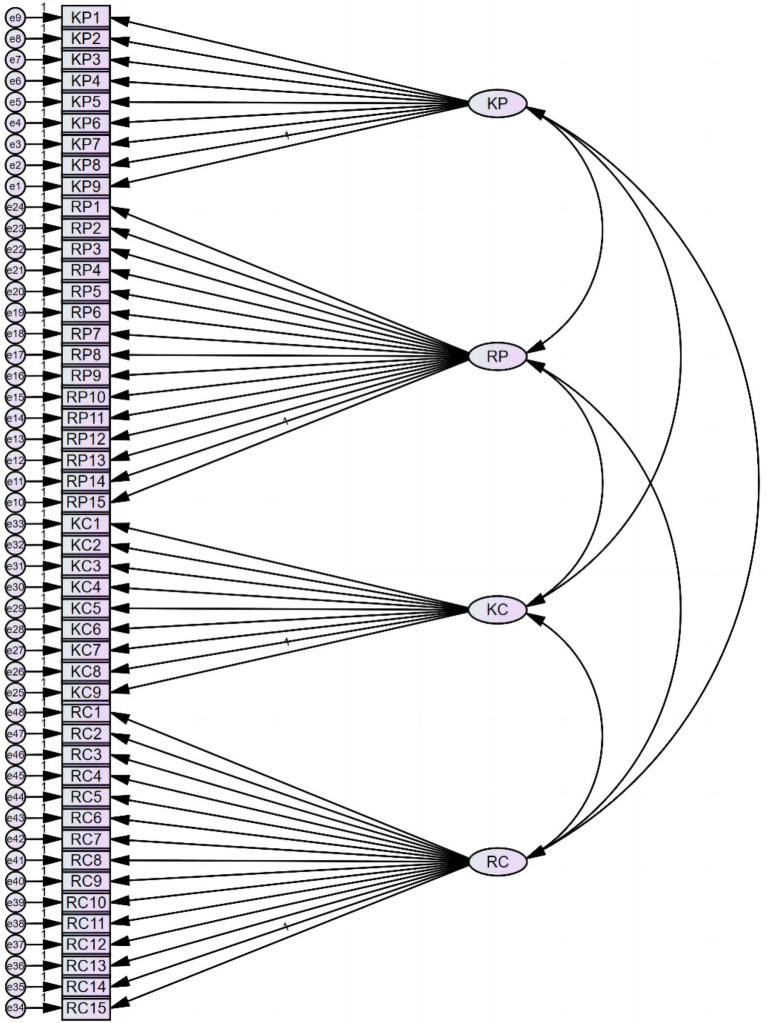
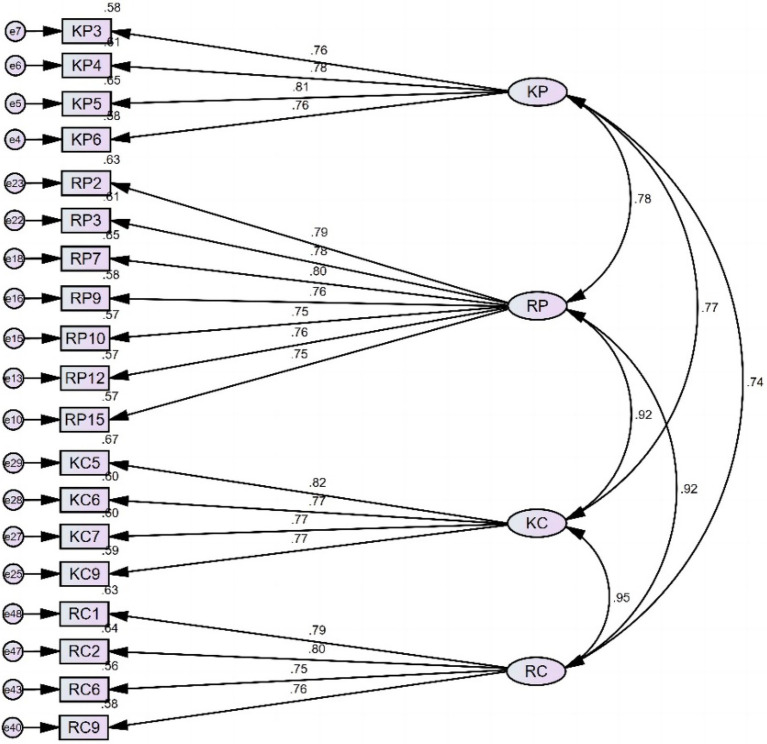
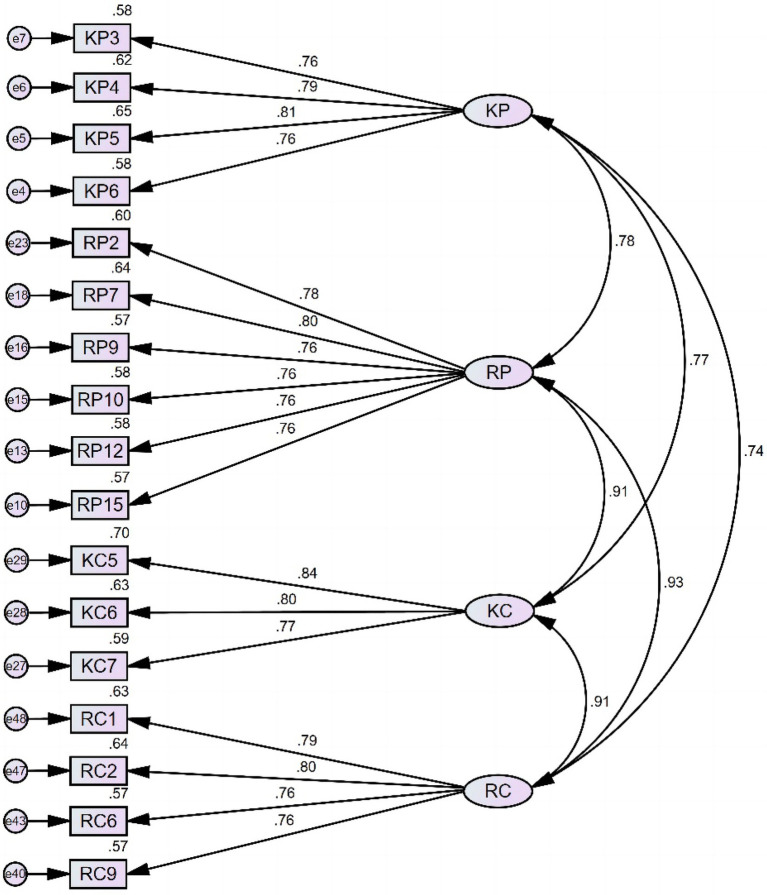
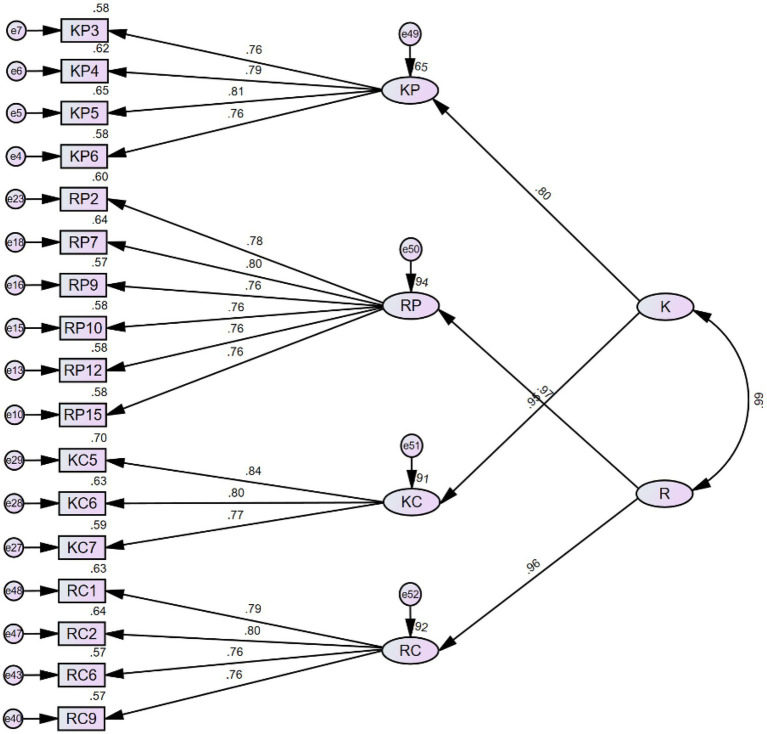
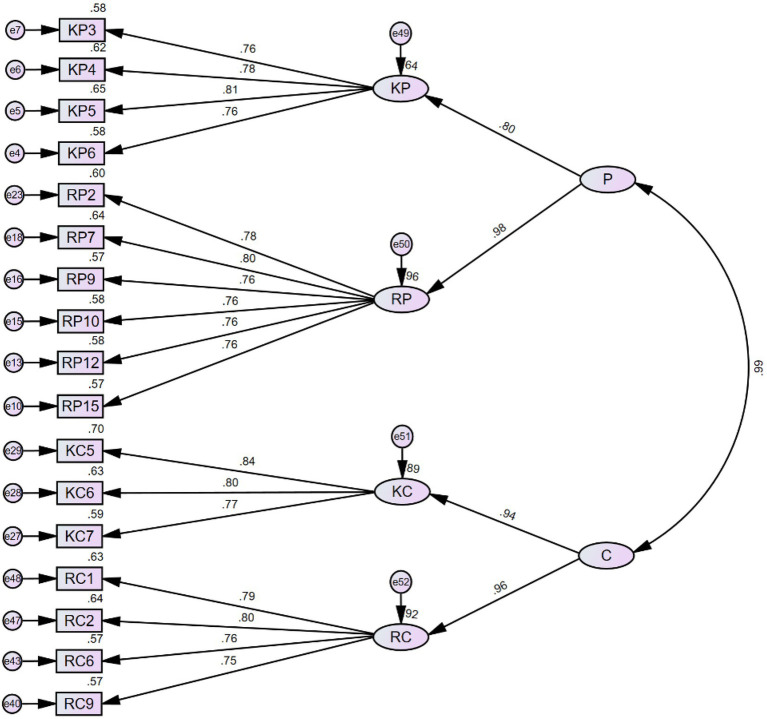
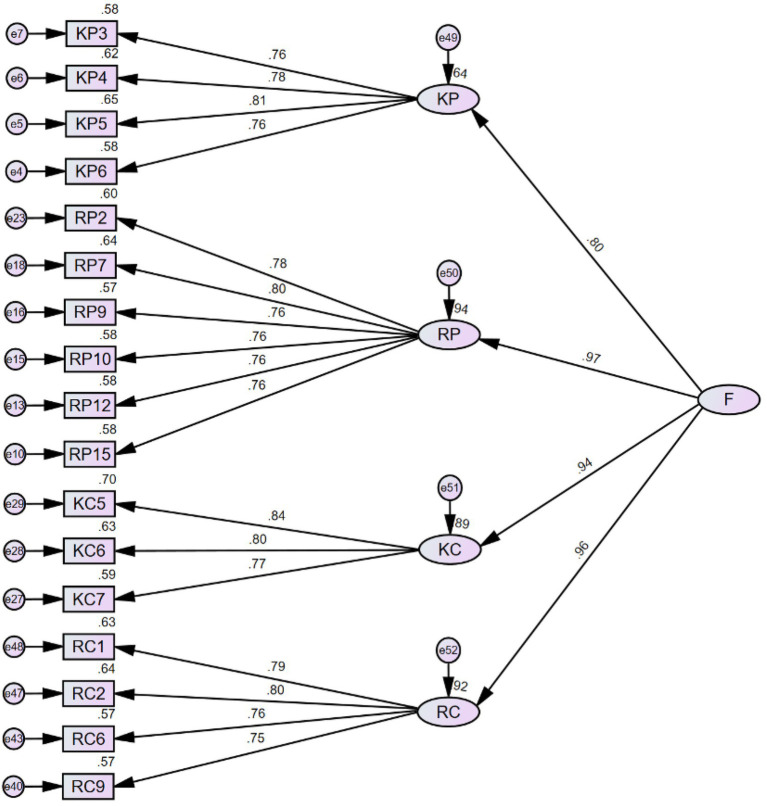
The prominent impact of metacognition on learners’ academic achievement is widely discussed. Learners armed with appropriate metacognitive strategies should witness enhancement in learning performance. Similarly, the concept of grit is also valued as a crucial factor contributing to the improvement of academic achievement. Nevertheless, discussion of the relationship between metacognition and grit or their collective influence on other educational and psychological variables is limited, not to mention that an instrument measuring learners’ metacognitive awareness of grit is a desideratum. Hence, by incorporating the constructs of metacognition and grit, the present research developed a measurement scale to address this need, named the Metacognitive Awareness of Grit Scale (MCAGS). The MCAGS consists of four components and initially included 48 items. It was later distributed to 859 participants for the purpose of scale validation. Confirmatory factor analysis was applied to evaluate the scale’s validity and explore the factor-item relationship. A final model containing 17 items was retained. Implications and future directions were discussed.
Overview
The claims and statistics of this paper haven’t been checked yet.
Free: it reads the open-access text and checks the first 5 claims that cite a source we can check. Create a free account to check every claim.
Integrity signals
Registry
Cites
Statistics
Figures
Verification
Claims the paper makes
The claims and statistics of this paper haven’t been checked yet.
Free: it reads the open-access text and checks the first 5 claims that cite a source we can check. Create a free account to check every claim.
Claims other papers make about this one
Each is checked against this paper’s own text: does it say what the citing paper says it does?
The source backs part of the claim, not all of it — or backs it for a different population, condition or comparison.
In the citing paper
“Despite strong empirical evidence that explicit metacognitive instruction improves writing performance (Teng et al., 2022;Wang et al., 2023), novice EFL learners often struggle to apply these strategies independently.”
From Generative AI, visual scaffolds, and metacognition in EFL writing (2026) · cites this paper as Wang et al., 2023
Experimental — accuracy not yet measured
Self-check
Percentages, sums and reported differences re-computed from the paper’s own numbers.
The self-check needs the paper’s full text.
Citations
Cites
Principles and Practice of Structural Equation Modeling
Tabri, N., & Elliott, C. M. (2012) · Canadian Graduate Journal of Sociology and Criminology · doi:10.15353/cgjsc-rcessc.v1i1.25 · Cited by 38,891
Comparative fit indexes in structural models.
Bentler, P. M. (1990) · Psychological Bulletin · doi:10.1037/0033-2909.107.2.238 · Cited by 25,266 · cited 10×
“Indices χ2/df CFI NFI RMSEA SRMR GFI AGFI Model values 4.272 0.885 0.856 0.062* 0.039* 0.791 0.771 Cutoff criteria ≤3.0 ≥0.90 ≥0.90 ≤0.08 ≤0.10 ≥0.90 ≥0.90 *Is a model value that meets the suggested cutoff criteria. χ2 = 4588.619; df = 1,074.”
MethodInfluentialSignificance tests and goodness of fit in the analysis of covariance structures.
Bentler, P. M., & Bonett, D. G. (1980) · Psychological Bulletin · doi:10.1037//0033-2909.88.3.588 · Cited by 19,023
Metacognition and cognitive monitoring: A new area of cognitive–developmental inquiry
Flavell, J. H. (1979) · American Psychologist · doi:10.1037/0003-066x.34.10.906 · Cited by 11,282 · cited 3×
“Working within Flavell’s framework (Flavell, 1979, p. 907), scholars in the EFL learning research realm primarily incorporated metacognition within specific domains or skill areas of EFL learning, for example, reading, writing, listening, speaking, vocabulary, and grammar.”
BackgroundInfluentialGrit: perseverance and passion for long-term goals
Duckworth, A. L., Peterson, C., Matthews, M. D., & Kelly, D. R. (2007) · Journal of Personality and Social Psychology · doi:10.1037/0022-3514.92.6.1087 · Cited by 6,911 · cited 9×
“Nevertheless, the extant empirical research in this domain mostly applied the general metacognitive awareness scales such as the Metacognitive Awareness Inventory (MAI; Schraw and Dennison, 1994) with the Grit-O (Duckworth et al., 2007) or the Grit-S (Duckworth and Quinn, 2009) scale.”
BackgroundInfluentialLanguage Learning Strategies: What Every Teacher Should Know
Horwitz, E. K., & Oxford, R. (1991) · The Modern Language Journal · doi:10.2307/329849 · Cited by 5,941
Development and validation of the short grit scale (grit-s)
Duckworth, A. L., & Quinn, P. D. (2009) · Journal of Personality Assessment · doi:10.1080/00223890802634290 · Cited by 3,376
Assessing Metacognitive Awareness
Schraw, G., & Dennison, R. S. (1994) · Contemporary Educational Psychology · doi:10.1006/ceps.1994.1033 · Cited by 3,199
Handbook of Self-Regulation of Learning and Performance
Schunk, D. H. (2011) · Routledge eBooks · doi:10.4324/9780203839010 · Cited by 2,122
Much ado about grit: A meta-analytic synthesis of the grit literature
Credé, M., Tynan, M. C., & Harms, P. D. (2017) · Journal of Personality and Social Psychology · doi:10.1037/pspp0000102 · Cited by 1,653
Research works printed but not linked: 3
- Arnold J. Fonseca C. (2007). “ Affect in teacher talk” in Language acquisition and development. ed. Tomlinson B. (London: Continuum), 107– 121.
- Joreskog K. G. Sorbom D. (1981). LISREL V: Analysis of linear structural relationships by the method of maximum likelihood. Chicago: National Educational Resources.
- Joreskog K. G. Sorbom D. (1984). LISREL VI users guide (3rd). Mooresville, IN: Scientific Software.
Cited by
Teng, M. F., & Mizumoto, A. (2024) · IRAL - International Review of Applied Linguistics in Language Teaching · doi:10.1515/iral-2023-0294 · Cited by 56
The relationship between L2 grit and vocabulary knowledge in first-year Moroccan university students
Hadim, H. E., & Ghaicha, A. (2024) · System · doi:10.1016/j.system.2024.103316 · Cited by 12
Mei, Y., Yan, Y., & Shen, Y. (2024) · SAGE Open · doi:10.1177/21582440241243201 · Cited by 10
Wang, M., & Zhang, L. J. (2026) · Language Teaching Research · doi:10.1177/13621688251405049 · Cited by 9
Self-citationKim, K., Lee, C.-H., & Lim, D. (2025) · Journal of Marine Science and Engineering · doi:10.3390/jmse13122308 · Cited by 6
Metadata
- Authors
- Wang, M., Zhang, L. J., & Hamilton, R.
- Affiliations
- University of Auckland (NZ)
- Corresponding author
- Zhang, Lawrence Jun
- Venue
- Frontiers in Psychology
- Publisher
- Frontiers Media SA
- Published
- 2023-04-11
- Volume
- 14
- Pages
- 1141214-1141214
- ISSN
- 1664-1078 (ISSN-L)
- PMC
- PMC10126521
- OpenAlex
- W4364382081
- Cited by
- 12
- References
- 80
- Citations by year
- 2026: 2 · 2025: 4 · 2024: 6
- FWCI
- 3.55
- Type
- journal article
- Language
- en
- Open access
- gold
- doi.org
- Licence
- Locations
- Frontiers in Psychology (publishedVersion, cc-by)
- PubMed Central (publishedVersion, cc-by)
- PubMed (publishedVersion)
- DOAJ (DOAJ: Directory of Open Access Journals) (submittedVersion, cc-by-sa)
- ResearchSpace (University of Auckland) (submittedVersion, cc-by)
- Topics
- Social Sciences › Psychology › Social Psychology › Grit, Self-Efficacy, and Motivation
- Social Sciences › Arts and Humanities › Language and Linguistics › EFL/ESL Teaching and Learning
- Social Sciences › Psychology › Developmental and Educational Psychology › Innovative Teaching and Learning Methods
- Keywords
- metacognition, grit, scale development, EFL learners, academic performance, metacognitive strategies, scale validation
About these checks
Registry, retraction, Cites and statistics results are computed, not judged, with one exception: a printed reference that no index lists is read once by a model before it counts as a citation error. Claims are extracted by a model and kept only when their quote appears verbatim in the text; each cited source is then checked, with a model’s help, for whether it says what the claim relies on. Those verdicts can be wrong — read the claim’s quote and the cited source before relying on one.
Statistics and arithmetic are recomputed, not judged.
Confidence bands are shown only for fields calibrated on our annotated test set. None is calibrated yet, so no band is shown.
What counts as a claim ›How we measure confidence ›How we check this ›
Are you an author, or do you see a problem with this page? Request a review
How to cite
Cite CoChat for the checks on this page, and the paper for its own findings.
- This page
- CoChat. (2026). Citation check: Developing the Metacognitive Awareness of Grit Scale for a better understanding of learners of English as a foreign language. https://app.cochat.ai/papers/10.3389/fpsyg.2023.1141214
- The paper
- Wang, M., Zhang, L. J., & Hamilton, R. (2023). Developing the Metacognitive Awareness of Grit Scale for a better understanding of learners of English as a foreign language. Frontiers in Psychology. https://doi.org/10.3389/fpsyg.2023.1141214
Data sources
Bibliographic data: Semantic Scholar, OpenAlex, Crossref.
Contains information from the Semantic Scholar Academic Graph Datasets, made available under the ODC Attribution License (ODC-BY 1.0).
Semantic Scholar’s data is described in: Kinney, R., et al. (2023). The Semantic Scholar Open Data Platform. arXiv:2301.10140.
