

The DOI matches its Crossref record; 57 of the 58 references it cites were found in a registry or an index; 1 of the 44 sources its claims cite were checked for support.
The supervisory relationship as a predictor of mental health outcomes in doctoral students in the United Kingdom
Open accessAbstract
Introduction: The process of a doctorate degree has been implicated in the onset and exacerbation of mental health problems among doctoral students. Previous studies have suggested that the student-supervisor relationship may predict emotional wellbeing and mental health outcomes in doctoral students in the UK. However, these studies were conducted before the COVID-19 pandemic and often used unstandardized measures to investigate supervisory styles. Methods: The present study was part of the Better Together project, a wellbeing initiative for doctoral students in the UK. It explored the predictive ability of aspects of the student-supervisor relationship with regards to doctoral students’ mental health outcomes. The sample consisted of 141 students doing a research-based doctorate degree in the UK. The survey included demographic questions and questionnaires assessing supervisory styles, the discrepancy between actual and preferred supervisory relationship, depression, anxiety, and stress. Results: A large proportion of participants fell in the severe and extremely severe categories in the depression, anxiety, and stress sub-scales. Multiple regression analyses indicated that both supervisory styles and discrepancy significantly predicted students’ mental health outcomes. More specifically, higher scores in the uncertain supervisory style, which is characterized by indecisiveness and ambiguity, were linked with higher scores in depression, anxiety, and stress. Discussion: The findings provided new insights concerning the aspects of the student-supervisor relationship that are related to the mental health issues of doctoral students in the UK. They have important implications for future research and supervision practice.
Overview
AI snapshot
Written from the paper’s full text.
TL;DR
In a UK sample of 141 research doctoral students, a large proportion reported severe or extremely severe depression, anxiety, and stress. The uncertain supervisory style and the discrepancy between actual and preferred supervisory relationship significantly predicted worse mental health outcomes.
Key findings
- Severe/extremely severe DASS-21 categories were reported by 22% for depression, 32.6% for anxiety, and 27% for stress.
- Supervisory styles explained 26% of variance in depression, 12% in anxiety, and 23% in stress; the uncertain style was the only significant predictor: depression β = 5.36, p = 0.011; anxiety β = 5.68, p = 0.004; stress β = 8.57, p < 0.001.
- The Actual-Preferred Supervisory Relationship Discrepancy Scale predicted depression (β = 0.77, p < 0.001; 19% variance), anxiety (β = 0.32, p = 0.008; 5.2% variance), and stress (β = 0.43, p = 0.002; 6.9% variance).
- Content analysis found most participants described their actual supervisory relationship positively, but many wanted more friendly/informal, supportive, straightforward, organized, and frequent contact, while some wanted less anxiety-provoking, intimidating, and strict supervision.
Methods
- Cross-sectional online survey within the Better Together project at UCL; convenience sample of 141 doctoral students doing a research-based degree in the UK, after 187 attempted and 42 were excluded for incomplete data or not meeting inclusion criteria.
- Measures included demographic questions, the QSDI for eight supervisory styles, an adapted Actual-Preferred Supervisory Relationship Discrepancy Scale, and the DASS-21; the RSES was also completed but analyzed elsewhere.
- Six multiple regression analyses tested supervisory styles and discrepancy as predictors of depression, anxiety, and stress; the understanding supervisory style was removed due to multicollinearity, and content analysis was performed on open-ended discrepancy items.
Limitations
- Stated: the cross-sectional design gives only a snapshot; the sample was relatively small for the UK doctoral population and over-represented females, limiting generalizability; supervisory styles were highly intercorrelated, which may have obscured unique contributions such as leadership.
- Stated: the over-representation of females may have influenced the high observed levels of depression, anxiety, and stress, since mental health problems are more prevalent in females in the UK.
- Evident from the text: recruitment via student lists, word-of-mouth, and supervisor-forwarded emails, plus reliance on self-report questionnaires, may introduce selection and response biases; the study cannot establish causality.
Model-written summary. Check it against the paper before relying on it.
Integrity signals
Registry
Cites
Statistics
Figures
Verification
Claims the paper makes
30 Own result · 20 Not checked yet · 8 No full text of the sources · 7 Own method · 5 Sources not found · 5 Own interpretation · 4 No basis given · 1 Supported · 1 Check pending
In the paper
“Additionally, a substantial proportion of our participants (27%) fell in the severe and extremely severe categories of the stress sub-scale, which is in line with previous studies and meta-analyses (e.g., Hazell et al., 2020).”
§ The supervisory relationship as a predictor of mental health outcomes in doctoral students in the United Kingdom > Discussion
What the sources say
- Not checked yetcites Hazell et al., 2020 source
plain- Asserted: passes — The authors put it forward as true.
- Checkable: passes — It can be checked against evidence.
- Load-bearing: unclear — It is unclear whether the paper’s conclusions depend on it.
- Based: passes — The paper gives a reason why it holds.
A result the paper reports from its own data — it cites no other source for it, so there is none to check. The quote shows it is in the paper.
In the paper
“The scores on the discrepancy scale explained 19% of the variance on depression, 5.2% of the variance on anxiety, and 6.9% on stress scores.”
§ The supervisory relationship as a predictor of mental health outcomes in doctoral students in the United Kingdom > Results > Actual-preferred supervisory relationship discrepancy scale and mental health outcomes
plaincorrelational- Asserted: passes — The authors put it forward as true.
- Checkable: passes — It can be checked against evidence.
- Load-bearing: passes — The paper’s conclusions depend on it.
- Based: passes — The paper gives a reason why it holds.
- Rests on an assumption: The Actual-Preferred Supervisory Discrepancy Scale validly measures the discrepancy between actual and preferred supervisory relationships.
A result the paper reports from its own data — it cites no other source for it, so there is none to check. The quote shows it is in the paper.
In the paper
“Results indicated that supervisory styles explained a significant proportion of the variance in the sub-scales of depression, anxiety, and stress (26, 12, and 23%, respectively).”
§ The supervisory relationship as a predictor of mental health outcomes in doctoral students in the United Kingdom > Discussion
hedgedcorrelational- Asserted: passes — The authors put it forward as true.
- Checkable: passes — It can be checked against evidence.
- Load-bearing: passes — The paper’s conclusions depend on it.
- Based: passes — The paper gives a reason why it holds.
A result the paper reports from its own data — it cites no other source for it, so there is none to check. The quote shows it is in the paper.
In the paper
“The uncertain supervisory style was the only significant predictor on the sub-scales of depression (β = 5.36, p = 0.011), anxiety (β = 5.68, p = 0.004), and stress (β = 8.57, p < 0.001).”
§ The supervisory relationship as a predictor of mental health outcomes in doctoral students in the United Kingdom > Results > Supervisory styles and mental health outcomes
plaincorrelational- Asserted: passes — The authors put it forward as true.
- Checkable: passes — It can be checked against evidence.
- Load-bearing: passes — The paper’s conclusions depend on it.
- Based: passes — The paper gives a reason why it holds.
- Rests on an assumption: The sample of 141 doctoral students is representative of UK doctoral students.
- Rests on an assumption: The QSDI's eight supervisory styles are sufficiently distinct to be used as separate predictors despite intercorrelation.
A result the paper reports from its own data — it cites no other source for it, so there is none to check. The quote shows it is in the paper.
In the paper
“A large proportion of participants fell in the severe and extremely severe categories in the depression, anxiety, and stress sub-scales.”
- Also stated in: § Descriptive statistics for DASS-21 · plain
“A high proportion of the sample reached the severe and extremely severe categories of depression, anxiety, and stress.”
§ The supervisory relationship as a predictor of mental health outcomes in doctoral students in the United Kingdom > Abstract > Results
plain- Asserted: passes — The authors put it forward as true.
- Checkable: passes — It can be checked against evidence.
- Load-bearing: unclear — It is unclear whether the paper’s conclusions depend on it.
- Based: passes — The paper gives a reason why it holds.
- Rests on an assumption: The sample of 141 doctoral students is representative of UK doctoral students.
- Also stated in: § Descriptive statistics for DASS-21 · plain
A result the paper reports from its own data — it cites no other source for it, so there is none to check. The quote shows it is in the paper.
In the paper
“The scores on the discrepancy scale explained 19% of the variance on depression, 5.2% of the variance on anxiety, and 6.9% on stress scores.”
§ The supervisory relationship as a predictor of mental health outcomes in doctoral students in the United Kingdom > Results > Actual-preferred supervisory relationship discrepancy scale and mental health outcomes
plaincorrelational- Asserted: passes — The authors put it forward as true.
- Checkable: passes — It can be checked against evidence.
- Load-bearing: passes — The paper’s conclusions depend on it.
- Based: passes — The paper gives a reason why it holds.
- Rests on an assumption: The Actual-Preferred Supervisory Discrepancy Scale validly measures the discrepancy between actual and preferred supervisory relationships.
A result the paper reports from its own data — it cites no other source for it, so there is none to check. The quote shows it is in the paper.
In the paper
“Surprisingly, the other supervisory styles were not significant predictors of doctoral students’ levels of depression, anxiety, and stress.”
§ The supervisory relationship as a predictor of mental health outcomes in doctoral students in the United Kingdom > Discussion
plain- Asserted: passes — The authors put it forward as true.
- Checkable: passes — It can be checked against evidence.
- Load-bearing: passes — The paper’s conclusions depend on it.
- Based: passes — The paper gives a reason why it holds.
A result the paper reports from its own data — it cites no other source for it, so there is none to check. The quote shows it is in the paper.
In the paper
“In the first three multiple regression analyses that were conducted (see Table 3 for coefficients, Table 4 for model outputs), the supervisory styles explained 26% of the variance on depression scores, 12% of the variance on anxiety scores, and 23% on stress scores.”
§ The supervisory relationship as a predictor of mental health outcomes in doctoral students in the United Kingdom > Results > Supervisory styles and mental health outcomes
plaincorrelational- Asserted: passes — The authors put it forward as true.
- Checkable: passes — It can be checked against evidence.
- Load-bearing: passes — The paper’s conclusions depend on it.
- Based: passes — The paper gives a reason why it holds.
- Rests on an assumption: The sample of 141 doctoral students is representative of UK doctoral students.
- Rests on an assumption: The QSDI's eight supervisory styles are sufficiently distinct to be used as separate predictors despite intercorrelation.
A result the paper reports from its own data — it cites no other source for it, so there is none to check. The quote shows it is in the paper.
In the paper
“The uncertain supervisory style was the only significant predictor on the sub-scales of depression (β = 5.36, p = 0.011), anxiety (β = 5.68, p = 0.004), and stress (β = 8.57, p < 0.001).”
§ The supervisory relationship as a predictor of mental health outcomes in doctoral students in the United Kingdom > Results > Supervisory styles and mental health outcomes
plaincorrelational- Asserted: passes — The authors put it forward as true.
- Checkable: passes — It can be checked against evidence.
- Load-bearing: passes — The paper’s conclusions depend on it.
- Based: passes — The paper gives a reason why it holds.
- Rests on an assumption: The sample of 141 doctoral students is representative of UK doctoral students.
- Rests on an assumption: The QSDI's eight supervisory styles are sufficiently distinct to be used as separate predictors despite intercorrelation.
A result the paper reports from its own data — it cites no other source for it, so there is none to check. The quote shows it is in the paper.
In the paper
“Results indicated that supervisory styles explained a significant proportion of the variance in the sub-scales of depression, anxiety, and stress (26, 12, and 23%, respectively).”
§ The supervisory relationship as a predictor of mental health outcomes in doctoral students in the United Kingdom > Discussion
hedgedcorrelational- Asserted: passes — The authors put it forward as true.
- Checkable: passes — It can be checked against evidence.
- Load-bearing: passes — The paper’s conclusions depend on it.
- Based: passes — The paper gives a reason why it holds.
- Probably not a substantial claim. 28
- It may state two separate claims as one. 26
- The quote only partly states this claim. 1
Every source the paper cites for this claim was checked and supports it.
In the paper
“Levecque et al. (2017), for example, have suggested strong links between a lack of the leadership supervisory style and mental health issues in doctoral students.”
§ The supervisory relationship as a predictor of mental health outcomes in doctoral students in the United Kingdom > Discussion
What the sources say
- Supportedcites Levecque et al., 2017 source
In §5.4 (Policy implications; page unavailable), the authors explicitly associate a lack of inspirational leadership from PhD supervisors with a higher risk of mental health problems. The Results (§4; page unavailable) also report better mental health among students with inspirational supervisors. The claim describes a link, not a causal effect. (LLM, conf=0.93)
boostedcorrelational- Asserted: passes — The authors put it forward as true.
- Checkable: passes — It can be checked against evidence.
- Load-bearing: passes — The paper’s conclusions depend on it.
- Based: passes — The paper gives a reason why it holds.
Probably not a substantial claim.
- Supported
A result the paper reports from its own data — it cites no other source for it, so there is none to check. The quote shows it is in the paper.
In the paper
“However, doctoral students also expressed different expectations and the need for a different approach and relationship from their supervisor.”
§ The supervisory relationship as a predictor of mental health outcomes in doctoral students in the United Kingdom > Discussion
plain- Asserted: passes — The authors put it forward as true.
- Checkable: passes — It can be checked against evidence.
- Load-bearing: passes — The paper’s conclusions depend on it.
- Based: passes — The paper gives a reason why it holds.
It may state two separate claims as one.
The paper states this without a source or data behind it here, so there is nothing to check it against. The quote shows it is in the paper.
In the paper
“That means that for each unit increase on the uncertain supervisory style, there is approximately a five-unit change on depression and anxiety scores and an eight-unit change on stress scores.”
§ The supervisory relationship as a predictor of mental health outcomes in doctoral students in the United Kingdom > Results > Supervisory styles and mental health outcomes
plaincorrelational- Asserted: passes — The authors put it forward as true.
- Checkable: passes — It can be checked against evidence.
- Load-bearing: passes — The paper’s conclusions depend on it.
- Based: passes — The paper gives a reason why it holds.
It may state two separate claims as one.
- Rests on an assumption: The sample of 141 doctoral students is representative of UK doctoral students.
- Rests on an assumption: The QSDI's eight supervisory styles are sufficiently distinct to be used as separate predictors despite intercorrelation.
A result the paper reports from its own data — it cites no other source for it, so there is none to check. The quote shows it is in the paper.
In the paper
“The final sample consisted of 141 doctoral students (MAge = 31.21 years, SD = 8.01).”
§ The supervisory relationship as a predictor of mental health outcomes in doctoral students in the United Kingdom > Methods > Participants
plainSingle case- Asserted: passes — The authors put it forward as true.
- Checkable: passes — It can be checked against evidence.
- Load-bearing: fails — The paper’s conclusions may not depend on it.
- Based: passes — The paper gives a reason why it holds.
Probably not a substantial claim. The paper’s conclusions may not depend on it.
A result the paper reports from its own data — it cites no other source for it, so there is none to check. The quote shows it is in the paper.
In the paper
“Results supported these two hypotheses, with the uncertain supervisory style significantly predicting mental health scores.”
§ The supervisory relationship as a predictor of mental health outcomes in doctoral students in the United Kingdom > Discussion
plaincorrelational- Asserted: passes — The authors put it forward as true.
- Checkable: passes — It can be checked against evidence.
- Load-bearing: passes — The paper’s conclusions depend on it.
- Based: passes — The paper gives a reason why it holds.
It may state two separate claims as one. The quote only partly states this claim.
- Rests on an assumption: The Actual-Preferred Supervisory Discrepancy Scale validly measures the discrepancy between actual and preferred supervisory relationships.
In the paper
“However, they acknowledge that the supervisory relationship was subjectively measured using the item “To what extent has your supervisor negatively affected your wellbeing?” and that a more in-depth examination of the supervisory relationship (e.g., in terms of the quality of supervisors’ academic input) is required.”
§ The supervisory relationship as a predictor of mental health outcomes in doctoral students in the United Kingdom > Introduction > Supervisory relationship and mental health outcomes
What the sources say
- Not checked — no full text of the sourcecites Gooding et al. (2023) source
plain- Asserted: passes — The authors put it forward as true.
- Checkable: passes — It can be checked against evidence.
- Load-bearing: fails — The paper’s conclusions may not depend on it.
- Based: passes — The paper gives a reason why it holds.
Probably not a substantial claim. The paper’s conclusions may not depend on it. It may state two separate claims as one.
None of the sources cited for this claim have been checked yet.
In the paper
“The authors did not use an existing standardized measure of supervisory relationship. They created a novel instrument and only seemed to distinguish between good and bad supervision.”
§ The supervisory relationship as a predictor of mental health outcomes in doctoral students in the United Kingdom > Introduction > Supervisory relationship and mental health outcomes
What the sources say
- Not checked yetcites Milicev et al., 2021 source
Checked before — its earlier verdict is held back until a new check runs.
hedged- Asserted: passes — The authors put it forward as true.
- Checkable: passes — It can be checked against evidence.
- Load-bearing: fails — The paper’s conclusions may not depend on it.
- Based: passes — The paper gives a reason why it holds.
Probably not a substantial claim. The paper’s conclusions may not depend on it. It may state two separate claims as one.
- Not checked yet
In the paper
“However, the discrepancy between supervisors’ and students’ expectations was a phenomenon that caused confusion, stress, and anxiety in several doctoral students.”
§ The supervisory relationship as a predictor of mental health outcomes in doctoral students in the United Kingdom > Introduction > Supervisory relationship and mental health outcomes
What the sources say
- Not checked — no full text of the sourcecites Cotterall (2013) source
plaindirect- Asserted: passes — The authors put it forward as true.
- Checkable: passes — It can be checked against evidence.
- Load-bearing: passes — The paper’s conclusions depend on it.
- Based: passes — The paper gives a reason why it holds.
Probably not a substantial claim.
None of the sources cited for this claim have been checked yet.
In the paper
“Since the supervisory relationship and students’ perception of it is also affected by students’ personal characteristics (Corner et al., 2017), it is possible that students’ own intolerance of uncertainty (IU) plays a role in these results.”
§ The supervisory relationship as a predictor of mental health outcomes in doctoral students in the United Kingdom > Discussion
What the sources say
- Not checked yetcites Corner et al., 2017 source
Checked before — its earlier verdict is held back until a new check runs.
hedgedconditional- Asserted: passes — The authors put it forward as true.
- Checkable: passes — It can be checked against evidence.
- Load-bearing: fails — The paper’s conclusions may not depend on it.
- Based: passes — The paper gives a reason why it holds.
Probably not a substantial claim. The paper’s conclusions may not depend on it.
- Not checked yet
In the paper
“They found that doctoral students were significantly more likely to be at risk of having or developing a common psychiatric disorder, with a particularly high risk for depression.”
§ The supervisory relationship as a predictor of mental health outcomes in doctoral students in the United Kingdom > Introduction > Mental health concerns
What the sources say
- Not checked yetcites Levecque et al. (2017) source
plaincorrelational- Asserted: passes — The authors put it forward as true.
- Checkable: passes — It can be checked against evidence.
- Load-bearing: unclear — It is unclear whether the paper’s conclusions depend on it.
- Based: passes — The paper gives a reason why it holds.
It may state two separate claims as one.
What the paper did — it cites no source for this, so there is none to check. The quote shows it is in the paper.
In the paper
“A second limitation is that the sample size of the study was relatively small compared to the population of doctoral students in the UK, with an over-representation of females. This may limit the generalizability of the findings.”
§ The supervisory relationship as a predictor of mental health outcomes in doctoral students in the United Kingdom > Discussion
hedgedconditional- Asserted: passes — The authors put it forward as true.
- Checkable: passes — It can be checked against evidence.
- Load-bearing: unclear — It is unclear whether the paper’s conclusions depend on it.
- Based: passes — The paper gives a reason why it holds.
It may state two separate claims as one.
None of the sources cited for this claim have been checked yet.
In the paper
“High IU has been associated with various anxiety- and depression-related conditions and is considered to be a transdiagnostic risk factor across a number of psychological disorders (see McEvoy et al., 2019; Morriss et al., 2023).”
§ The supervisory relationship as a predictor of mental health outcomes in doctoral students in the United Kingdom > Discussion
What the sources say
plaincorrelational- Asserted: passes — The authors put it forward as true.
- Checkable: passes — It can be checked against evidence.
- Load-bearing: fails — The paper’s conclusions may not depend on it.
- Based: passes — The paper gives a reason why it holds.
Probably not a substantial claim. The paper’s conclusions may not depend on it. It may state two separate claims as one.
What the paper did — it cites no source for this, so there is none to check. The quote shows it is in the paper.
In the paper
“In this study, the Cronbach’s alpha values of each sub-scale ranged from 0.81 to 0.89, indicating high internal consistency.”
§ The supervisory relationship as a predictor of mental health outcomes in doctoral students in the United Kingdom > Methods > Materials
hedged- Asserted: passes — The authors put it forward as true.
- Checkable: passes — It can be checked against evidence.
- Load-bearing: unclear — It is unclear whether the paper’s conclusions depend on it.
- Based: passes — The paper gives a reason why it holds.
It may state two separate claims as one.
In the paper
“Interestingly, a longitudinal study by Gooding et al. (2023) indicated that only the perception of academic challenges at Time 1 predicted anxiety at Time 2 relative to baseline. The authors did not find any association between perceptions of supervisors and mental health problems or wellbeing over time.”
§ The supervisory relationship as a predictor of mental health outcomes in doctoral students in the United Kingdom > Introduction > Supervisory relationship and mental health outcomes
What the sources say
- Not checked — no full text of the sourcecites Gooding et al. (2023) source
hedged- Asserted: passes — The authors put it forward as true.
- Checkable: passes — It can be checked against evidence.
- Load-bearing: fails — The paper’s conclusions may not depend on it.
- Based: passes — The paper gives a reason why it holds.
Probably not a substantial claim. The paper’s conclusions may not depend on it. It may state two separate claims as one.
A conclusion the paper draws from its own results — it cites no other source for it, so there is none to check. The quote shows it is in the paper.
In the paper
“The presence of items which may be related to one or more supervisory styles could make it hard to unambiguously distinguish between the different behaviors and may thus account for our finding that only the uncertain supervisory style had predictive ability.”
§ The supervisory relationship as a predictor of mental health outcomes in doctoral students in the United Kingdom > Discussion
hedgedconditional- Asserted: passes — The authors put it forward as true.
- Checkable: passes — It can be checked against evidence.
- Load-bearing: passes — The paper’s conclusions depend on it.
- Based: passes — The paper gives a reason why it holds.
It may state two separate claims as one.
A conclusion the paper draws from its own results — it cites no other source for it, so there is none to check. The quote shows it is in the paper.
In the paper
“Even though it is known that individual, interpersonal, and institutional factors all play a role in the experience and mental health of doctoral students, the current findings provide a clearer understanding that an uncertain supervisory style and a discrepancy between actual and preferred supervisory relationship seem to be most related to students’ negative emotional experiences.”
§ The supervisory relationship as a predictor of mental health outcomes in doctoral students in the United Kingdom > Discussion
hedgedcorrelational- Asserted: passes — The authors put it forward as true.
- Checkable: passes — It can be checked against evidence.
- Load-bearing: passes — The paper’s conclusions depend on it.
- Based: passes — The paper gives a reason why it holds.
It may state two separate claims as one.
- Rests on an assumption: The Actual-Preferred Supervisory Discrepancy Scale validly measures the discrepancy between actual and preferred supervisory relationships.
None of the sources cited for this claim have been checked yet.
In the paper
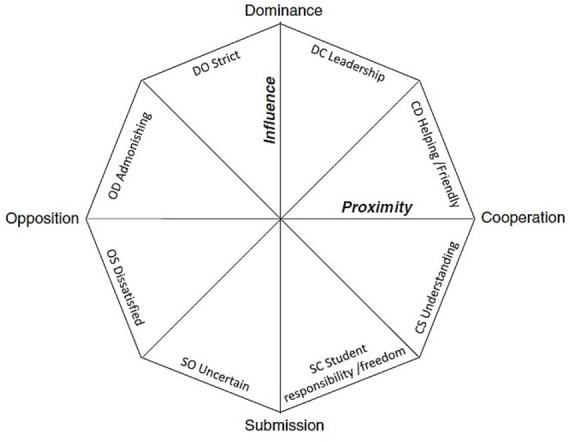
“However, they reduced the supervisory styles into two dimensions. Given that each style has a certain degree of proximity and influence (Mainhard et al., 2009), it is unknown whether the two dimensions actually indicate a measure of proximity and influence independently.”
§ The supervisory relationship as a predictor of mental health outcomes in doctoral students in the United Kingdom > Introduction > Supervisory relationship and mental health outcomes
What the sources say
- Not checked yetcites Mainhard et al., 2009 source
Checked before — its earlier verdict is held back until a new check runs.
plain- Asserted: passes — The authors put it forward as true.
- Checkable: passes — It can be checked against evidence.
- Load-bearing: passes — The paper’s conclusions depend on it.
- Based: passes — The paper gives a reason why it holds.
Probably not a substantial claim. It may state two separate claims as one.
- Not checked yet
None of the sources cited for this claim could be matched to a paper in Crossref, so there is nothing to check it against.
In the paper
“Although variable deletion may introduce a certain degree of bias, it is in line with recommendations from Field (2018), Sprinthall (2014), and Wooldridge (2020).”
§ The supervisory relationship as a predictor of mental health outcomes in doctoral students in the United Kingdom > Methods > Data analysis
What the sources say
- Not matchedcites Field (2018)
Couldn’t be matched to a paper in Crossref, so it can’t be checked.
- Not matchedcites Sprinthall (2014)
Couldn’t be matched to a paper in Crossref, so it can’t be checked.
- Not matchedcites Wooldridge (2020)
Couldn’t be matched to a paper in Crossref, so it can’t be checked.
plain- Asserted: passes — The authors put it forward as true.
- Checkable: passes — It can be checked against evidence.
- Load-bearing: passes — The paper’s conclusions depend on it.
- Based: passes — The paper gives a reason why it holds.
Probably not a substantial claim.
- Not matched
The paper states this without a source or data behind it here, so there is nothing to check it against. The quote shows it is in the paper.
In the paper
“The majority do not explore the supervisory relationship through a robust theoretical framework and use unvalidated standardized methods for assessing it.”
§ The supervisory relationship as a predictor of mental health outcomes in doctoral students in the United Kingdom > Introduction > Present study
plain- Asserted: passes — The authors put it forward as true.
- Checkable: passes — It can be checked against evidence.
- Load-bearing: passes — The paper’s conclusions depend on it.
- Based: fails — The paper may give no reason why it holds.
Probably not a substantial claim. The paper may give no reason why it holds. It may state two separate claims as one.
None of the sources cited for this claim have been checked yet.
In the paper
“Corner et al. (2017) have also suggested associations between reduced levels of satisfaction with the supervisory relationship and higher reports of stress and emotional exhaustion in doctoral students.”
§ The supervisory relationship as a predictor of mental health outcomes in doctoral students in the United Kingdom > Introduction > Supervisory relationship and mental health outcomes
What the sources say
- Not checked yetcites Corner et al. (2017) source
Checked before — its earlier verdict is held back until a new check runs.
hedgedcorrelational- Asserted: passes — The authors put it forward as true.
- Checkable: passes — It can be checked against evidence.
- Load-bearing: passes — The paper’s conclusions depend on it.
- Based: passes — The paper gives a reason why it holds.
Probably not a substantial claim.
- Not checked yet
In the paper
“Additionally, both studies tested hierarchical logistic regression models with a large number of variables and thus the individual contribution of each variable is difficult to interpret.”
§ The supervisory relationship as a predictor of mental health outcomes in doctoral students in the United Kingdom > Introduction > Supervisory relationship and mental health outcomes
What the sources say
- Not matchedcites Berry et al.
Couldn’t be matched to a paper in Crossref, so it can’t be checked.
plain- Asserted: passes — The authors put it forward as true.
- Checkable: passes — It can be checked against evidence.
- Load-bearing: fails — The paper’s conclusions may not depend on it.
- Based: passes — The paper gives a reason why it holds.
Probably not a substantial claim. The paper’s conclusions may not depend on it. It may state two separate claims as one.
- Not matched
In the paper
“More specifically, an inspirational leadership was negatively associated with psychological distress and risk of experiencing a common psychiatric disorder (i.e., anxiety, depression, social withdrawal, and somatic symptoms), whereas a laissez-faire leadership style was positively associated with psychological distress.”
§ The supervisory relationship as a predictor of mental health outcomes in doctoral students in the United Kingdom > Introduction > Supervisory relationship and mental health outcomes
What the sources say
- Not checked yetcites Levecque et al. (2017) source
plaincorrelational- Asserted: passes — The authors put it forward as true.
- Checkable: passes — It can be checked against evidence.
- Load-bearing: passes — The paper’s conclusions depend on it.
- Based: passes — The paper gives a reason why it holds.
Probably not a substantial claim. It may state two separate claims as one.
What the paper did — it cites no source for this, so there is none to check. The quote shows it is in the paper.
In the paper
“However, 42 responses were excluded either because the participants did not complete all the questionnaires or because they did not meet the inclusion criteria.”
§ The supervisory relationship as a predictor of mental health outcomes in doctoral students in the United Kingdom > Methods > Participants
plain- Asserted: passes — The authors put it forward as true.
- Checkable: passes — It can be checked against evidence.
- Load-bearing: fails — The paper’s conclusions may not depend on it.
- Based: passes — The paper gives a reason why it holds.
Probably not a substantial claim. The paper’s conclusions may not depend on it.
In the paper
“This phenomenon has been described as a mental health crisis (Evans et al., 2018) since a substantial proportion of doctoral students has been found to experience clinically relevant mental health symptoms, including depression, anxiety, and stress.”
§ The supervisory relationship as a predictor of mental health outcomes in doctoral students in the United Kingdom > Introduction > Mental health concerns
What the sources say
- Not checked — no full text of the sourcecites Evans et al., 2018 source
plain- Asserted: passes — The authors put it forward as true.
- Checkable: passes — It can be checked against evidence.
- Load-bearing: fails — The paper’s conclusions may not depend on it.
- Based: passes — The paper gives a reason why it holds.
Probably not a substantial claim. The paper’s conclusions may not depend on it.
None of the sources cited for this claim have been checked yet.
In the paper
“Using hierarchical regression, they found that low communion was associated with symptoms of depression and anxiety, whereas agency only predicted depression.”
§ The supervisory relationship as a predictor of mental health outcomes in doctoral students in the United Kingdom > Introduction > Supervisory relationship and mental health outcomes
What the sources say
- Not checked yetcites Berry et al. (2021) source
Checked before — its earlier verdict is held back until a new check runs.
plaincorrelational- Asserted: passes — The authors put it forward as true.
- Checkable: passes — It can be checked against evidence.
- Load-bearing: passes — The paper’s conclusions depend on it.
- Based: passes — The paper gives a reason why it holds.
Probably not a substantial claim. It may state two separate claims as one.
- Not checked yet
What the paper did — it cites no source for this, so there is none to check. The quote shows it is in the paper.
In the paper
“In this study, Cronbach’s alpha for the eight supervisory styles ranged from 0.70 to 0.95.”
§ The supervisory relationship as a predictor of mental health outcomes in doctoral students in the United Kingdom > Methods > Materials
plain- Asserted: passes — The authors put it forward as true.
- Checkable: passes — It can be checked against evidence.
- Load-bearing: fails — The paper’s conclusions may not depend on it.
- Based: passes — The paper gives a reason why it holds.
Probably not a substantial claim. The paper’s conclusions may not depend on it.
In the paper
“Similarly, Sverdlik et al. (2018) suggest that the fit of supervision affects doctoral students’ emotions and persistence in the doctorate journey.”
§ The supervisory relationship as a predictor of mental health outcomes in doctoral students in the United Kingdom > Introduction > Supervisory relationship and mental health outcomes
What the sources say
- Not checked yetcites Sverdlik et al. (2018) source
hedgeddirect- Asserted: passes — The authors put it forward as true.
- Checkable: passes — It can be checked against evidence.
- Load-bearing: passes — The paper’s conclusions depend on it.
- Based: passes — The paper gives a reason why it holds.
Probably not a substantial claim. It may state two separate claims as one.
None of the sources cited for this claim have been checked yet.
In the paper
“Additionally, a follow-up study (Berry et al., 2023) indicated that lower agency was related to lower attendance behaviors, measured using binary categorical variables of absenteeism (days absent) and presenteeism (working days that were affected by physical or psychological problems) in the past month, excluding planned annual leave or holidays. At the same time, lower communion predicted mental-”
§ The supervisory relationship as a predictor of mental health outcomes in doctoral students in the United Kingdom > Introduction > Supervisory relationship and mental health outcomes
What the sources say
- Not checked yetcites Berry et al., 2023 source
Checked before — its earlier verdict is held back until a new check runs.
hedgedcorrelational- Asserted: passes — The authors put it forward as true.
- Checkable: passes — It can be checked against evidence.
- Load-bearing: fails — The paper’s conclusions may not depend on it.
- Based: passes — The paper gives a reason why it holds.
Probably not a substantial claim. The paper’s conclusions may not depend on it. It may state two separate claims as one.
- Not checked yet
None of the sources cited for this claim have been checked yet.
In the paper
“They found that maladaptive perfectionism and workaholism were linked to negative outcomes for mental health, whereas resilience, adaptive perfectionism, and supervisory relationship were linked to positive outcomes, with supervisory relationship indicating a smaller predictive ability (Milicev et al., 2021).”
§ The supervisory relationship as a predictor of mental health outcomes in doctoral students in the United Kingdom > Introduction > Supervisory relationship and mental health outcomes
What the sources say
- Not checked yetcites Milicev et al., 2021 source
Checked before — its earlier verdict is held back until a new check runs.
plaincorrelational- Asserted: passes — The authors put it forward as true.
- Checkable: passes — It can be checked against evidence.
- Load-bearing: passes — The paper’s conclusions depend on it.
- Based: passes — The paper gives a reason why it holds.
Probably not a substantial claim. It may state two separate claims as one.
- Not checked yet
What the paper did — it cites no source for this, so there is none to check. The quote shows it is in the paper.
In the paper
“First, the study used a cross-sectional design and only provided a small snapshot in time.”
§ The supervisory relationship as a predictor of mental health outcomes in doctoral students in the United Kingdom > Discussion
plain- Asserted: passes — The authors put it forward as true.
- Checkable: passes — It can be checked against evidence.
- Load-bearing: fails — The paper’s conclusions may not depend on it.
- Based: passes — The paper gives a reason why it holds.
Probably not a substantial claim. The paper’s conclusions may not depend on it. It may state two separate claims as one.
What the paper did — it cites no source for this, so there is none to check. The quote shows it is in the paper.
In the paper
“The understanding supervisory style was strongly correlated with the other supervisory styles (r = 0.77 with leadership, r = 0.86 with helping/friendly, r = 0.84 with PhD student responsibility/freedom, r = −0.66 with uncertain, r = −0.75 with dissatisfied, and r = −0.75 with admonishing) and the assumption of multicollinearity was violated.”
§ The supervisory relationship as a predictor of mental health outcomes in doctoral students in the United Kingdom > Methods > Data analysis
boostedcorrelational- Asserted: passes — The authors put it forward as true.
- Checkable: passes — It can be checked against evidence.
- Load-bearing: passes — The paper’s conclusions depend on it.
- Based: passes — The paper gives a reason why it holds.
It may state two separate claims as one.
In the paper
“Research on the prevalence of mental health issues in doctoral students (e.g., Barry et al., 2018) suggests that a good and supportive supervision, as well as the communication between student and supervisor, is vital for students’ experience and overall emotional wellbeing.”
§ The supervisory relationship as a predictor of mental health outcomes in doctoral students in the United Kingdom > Introduction > Supervisory relationship and mental health outcomes
What the sources say
- Not checked — no full text of the sourcecites Barry et al., 2018 source
hedgeddirect- Asserted: passes — The authors put it forward as true.
- Checkable: passes — It can be checked against evidence.
- Load-bearing: passes — The paper’s conclusions depend on it.
- Based: passes — The paper gives a reason why it holds.
It may state two separate claims as one.
The paper states this without a source or data behind it here, so there is nothing to check it against. The quote shows it is in the paper.
In the paper
“Looking at the interpersonal model of supervisory relationship, the uncertain supervisory style is found on the low Proximity (Opposition) and low Influence (Submission) side of the model.”
§ The supervisory relationship as a predictor of mental health outcomes in doctoral students in the United Kingdom > Discussion
plain- Asserted: passes — The authors put it forward as true.
- Checkable: passes — It can be checked against evidence.
- Load-bearing: fails — The paper’s conclusions may not depend on it.
- Based: passes — The paper gives a reason why it holds.
Probably not a substantial claim. The paper’s conclusions may not depend on it.
In the paper
“Since there is a higher prevalence of mental health problems in females than in males in the UK (McManus et al., 2016), it is possible that the high levels of depression, anxiety, and stress observed are a result of the over-representation of females in the sample.”
§ The supervisory relationship as a predictor of mental health outcomes in doctoral students in the United Kingdom > Discussion
What the sources say
- Not matchedcites McManus et al., 2016
Couldn’t be matched to a paper in Crossref, so it can’t be checked.
plain- Asserted: passes — The authors put it forward as true.
- Checkable: passes — It can be checked against evidence.
- Load-bearing: passes — The paper’s conclusions depend on it.
- Based: passes — The paper gives a reason why it holds.
Probably not a substantial claim.
- Not matched
None of the sources cited for this claim have been checked yet.
In the paper
“The style includes indecisiveness and ambiguity during meetings with the supervisor, as well as the supervisor not providing clear directions (Mainhard et al., 2009).”
§ The supervisory relationship as a predictor of mental health outcomes in doctoral students in the United Kingdom > Discussion
What the sources say
- Not checked yetcites Mainhard et al., 2009 source
Checked before — its earlier verdict is held back until a new check runs.
plain- Asserted: passes — The authors put it forward as true.
- Checkable: passes — It can be checked against evidence.
- Load-bearing: fails — The paper’s conclusions may not depend on it.
- Based: passes — The paper gives a reason why it holds.
Probably not a substantial claim. The paper’s conclusions may not depend on it. It may state two separate claims as one.
- Not checked yet
None of the sources cited for this claim have been checked yet.
In the paper
“This is in line with previous literature demonstrating that supervisory relationship is a significant predictor, but not the only important factor influencing doctoral students’ mental health (e.g., Berry et al., 2021, 2023).”
§ The supervisory relationship as a predictor of mental health outcomes in doctoral students in the United Kingdom > Discussion
What the sources say
boostedcorrelational- Asserted: passes — The authors put it forward as true.
- Checkable: passes — It can be checked against evidence.
- Load-bearing: unclear — It is unclear whether the paper’s conclusions depend on it.
- Based: passes — The paper gives a reason why it holds.
It may state two separate claims as one.
In the paper
“Since there is a higher prevalence of mental health problems in females than in males in the UK (McManus et al., 2016), it is possible that the high levels of depression, anxiety, and stress observed are a result of the over-representation of females in the sample.”
§ The supervisory relationship as a predictor of mental health outcomes in doctoral students in the United Kingdom > Discussion
What the sources say
- Not matchedcites McManus et al., 2016
Couldn’t be matched to a paper in Crossref, so it can’t be checked.
hedgedconditional- Asserted: passes — The authors put it forward as true.
- Checkable: passes — It can be checked against evidence.
- Load-bearing: fails — The paper’s conclusions may not depend on it.
- Based: passes — The paper gives a reason why it holds.
Probably not a substantial claim. The paper’s conclusions may not depend on it.
- Not matched
A claim is checked only against the cited paper’s full text, never its abstract, and none is available for its sources.
In the paper
“In fact, a small body of research suggests that, even if doctoral students report a satisfactory supervisory relationship, their wellbeing is influenced by a lack of communication with family and friends and social isolation (e.g., Janta et al., 2014), as well as their personal perceptions of social support (e.g., Gooding et al., 2023).”
§ The supervisory relationship as a predictor of mental health outcomes in doctoral students in the United Kingdom > Discussion
What the sources say
hedgedcorrelational- Asserted: passes — The authors put it forward as true.
- Checkable: passes — It can be checked against evidence.
- Load-bearing: unclear — It is unclear whether the paper’s conclusions depend on it.
- Based: passes — The paper gives a reason why it holds.
It may state two separate claims as one.
None of the sources cited for this claim have been checked yet.
In the paper
“People with high IU were greatly affected during the pandemic, as it was a period of high uncertainty and unpredictability, with research indicating both that people with high IU had the highest rates of depression and anxiety symptoms (e.g., Andrews et al., 2023) and a potential mediating role of IU in the relationship between anxiety and pandemic-related stress (Bredemeier et al., 2023).”
§ The supervisory relationship as a predictor of mental health outcomes in doctoral students in the United Kingdom > Discussion
What the sources say
hedgedcorrelational- Asserted: passes — The authors put it forward as true.
- Checkable: passes — It can be checked against evidence.
- Load-bearing: fails — The paper’s conclusions may not depend on it.
- Based: passes — The paper gives a reason why it holds.
Probably not a substantial claim. The paper’s conclusions may not depend on it.
None of the sources cited for this claim have been checked yet.
In the paper
“This contradicts previous literature that has demonstrated associations between other supervisory styles and mental health issues.”
§ The supervisory relationship as a predictor of mental health outcomes in doctoral students in the United Kingdom > Discussion
boostedcorrelational- Asserted: passes — The authors put it forward as true.
- Checkable: passes — It can be checked against evidence.
- Load-bearing: passes — The paper’s conclusions depend on it.
- Based: passes — The paper gives a reason why it holds.
Probably not a substantial claim.
The paper relies on this without support.
The adapted Actual-Preferred Supervisory Relationship Discrepancy Scale validly measures the discrepancy between actual and preferred supervisory relationship.
“For the purposes of this study, we created the Actual-Preferred Supervisory Relationship Discrepancy Scale, in which participants had to complete the sentence “My relationship with my PhD supervisor is… but I would like it to be…” and rate it on a scale from 1 to 5.”
The paper relies on this without support.
The sample of 141 doctoral students is representative of UK doctoral students.
“The participants were a convenience sample of doctoral students doing a research-based degree in a UK university.”
The paper relies on this without support.
The QSDI's eight supervisory styles are sufficiently distinct to be used as separate predictors despite intercorrelation.
“It is important to note that the intercorrelation between the eight types of behavior could create ambiguity when trying to identify the effects of different supervisory styles on doctoral students as it does not fully distinguish between different types of supervision.”
The paper relies on this without support.
The cross-sectional regression models can be interpreted as predictive ability of the supervisory relationship on mental health outcomes.
“The present study investigated the predictive ability of aspects of the student-supervisor relationship with regards to doctoral students’ mental health outcomes, specifically depression, anxiety, and stress.”
The paper relies on this without support.
The supervisory relationship variables (supervisory styles and actual-preferred discrepancy) influence doctoral students' mental health, rather than mental health influencing perceptions of the supervisory relationship.
“This is a novel finding which could potentially indicate how the supervisory relationship might influence the mental health issues of doctoral students, but also how IU could be shaping the perception of the supervisory relationship.”
“Even though it is known that individual, interpersonal, and institutional factors all play a role in the experience and mental health of doctoral students, the current findings provide a clearer understanding that an uncertain supervisory style and a discrepancy between actual and preferred supervisory relationship seem to be most related to students’ negative emotional experiences.”
The paper relies on this without support.
The Actual-Preferred Supervisory Discrepancy Scale validly measures the discrepancy between actual and preferred supervisory relationships.
“the Actual-Preferred Supervisory Discrepancy Scale significantly predicted scores on the sub-scales of depression (β = 0.77, p < 0.001), anxiety (β = 0.32, p = 0.008), and stress (β = 0.43, p = 0.002; see Table 5 for coefficients, Table 4 for model outputs).”
“In order to answer the second research question, three regression models used the Actual-Preferred Supervisory Relationship Discrepancy Scale as a predictor for DASS-21 scores.”
Statistics recomputed
Every reported test result, recomputed from its test statistic and degrees of freedom. A result shows as not adding up only once an independent check has confirmed it.
- ConsistentF(7, 126) = 6.42reported p < .001 · recomputed p < .001
“F(7, 126) = 6.42, p < .001”
- ConsistentF(7, 126) = 2.52reported p = .019 · recomputed p = .019
“F(7, 126) = 2.52, p = .019”
- ConsistentF(7, 126) = 4.23reported p < .001 · recomputed p < .001
“F(7, 126) = 4.23, p < .001”
- ConsistentF(1, 133) = 38.84reported p < .001 · recomputed p < .001
“F(1, 133) = 38.84, p < .001”
- ConsistentF(1, 132) = 7.22reported p = .008 · recomputed p = .008
“F(1, 132) = 7.22, p = .008”
- ConsistentF(1, 133) = 9.87reported p = .002 · recomputed p = .002
“F(1, 133) = 9.87, p = .002”
Self-check
Percentages, sums and reported differences re-computed from the paper’s own numbers.
Each contradiction between two passages listed here was confirmed by an independent check.
Rated major: it would touch a result — a value a result rests on, reported and recomputed p-values on opposite sides of the significance level, two passages that conflict with no sign which is right, or a cited work retracted before this paper was published.
In the paper
§ The supervisory relationship as a predictor of mental health outcomes in doctoral students in the United Kingdom > Results > Supervisory styles and mental health outcomes
“F(7, 126) = 4.23”
§ The supervisory relationship as a predictor of mental health outcomes in doctoral students in the United Kingdom > Results > Supervisory styles and mental health outcomes
“R2 = 0.23, R2 adjusted = 0.22”
Rated minor: it would not touch a result — a value no result rests on, a p-value that stays on the same side of the significance level, or a conflict that is clerical, resolved elsewhere in the paper, or outside its own findings.
In the paper
“In total, 187 doctoral students attempted to complete the study. However, 42 responses were excluded either because the participants did not complete all the questionnaires or because they did not meet the inclusion criteria. The final sample consisted of 141 doctoral students”
§ The supervisory relationship as a predictor of mental health outcomes in doctoral students in the United Kingdom > Methods > Participants
Reported 141 · recomputed 145
Citations
Cites
The PHQ-9: Validity of a brief depression severity measure
Kroenke, K., Spitzer, R. L., & Williams, J. B. W. (2001) · Journal of General Internal Medicine · doi:10.1046/j.1525-1497.2001.016009606.x · Cited by 44,910
A Brief Measure for Assessing Generalized Anxiety Disorder: The GAD-7
Spitzer, R. L., Kroenke, K., Williams, J. B. W., & Löwe, B. (2006) · Archives of Internal Medicine · doi:10.1001/archinte.166.10.1092 · Cited by 31,765
(2017) · Cited by 16,319
Introductory Econometrics: A Modern Approach
Wooldridge, J. M. (1999) · Cited by 14,354
Podsakoff, N. P., LePine, J. A., & LePine, M. A. (2007) · Journal of Applied Psychology · doi:10.1037/0021-9010.92.2.438 · Cited by 1,948
Freeston, M. H., Rhéaume, J., Letarte, H., Dugas, M. J., & Ladouceur, R. (1994) · Personality and Individual Differences · doi:10.1016/0191-8869(94)90048-5 · Cited by 1,731
Handbook of Classroom Management: Research, Practice, and Contemporary Issues
Emmer, E. T. (2012) · Cited by 1,461
Evidence for a mental health crisis in graduate education
Evans, T. M., Bira, L., Gastelum, J. B., Weiss, L. T., & Vanderford, N. L. (2018) · Nature Biotechnology · doi:10.1038/nbt.4089 · Cited by 1,441
Work organization and mental health problems in PhD students
Levecque, K., Anseel, F., De Beuckelaer, A., Van der Heyden, J., & Gisle, L. (2017) · Research Policy · doi:10.1016/j.respol.2017.02.008 · Cited by 1,182
Into the unknown: A review and synthesis of contemporary models involving uncertainty
Carleton, R. N. (2016) · Journal of Anxiety Disorders · doi:10.1016/j.janxdis.2016.02.007 · Cited by 1,104
Research works printed but not linked: 4
- Latona, 2001, Factors associated with completion of research higher degrees, Department of Education, Training and Youth Affairs., 1, 035
- Lovibond, 1995, Manual for the depression anxiety stress scale
- Metcalfe, 2018, Exploring wellbeing and mental health and associated support services for postgraduate researchers
- Wubbels, 2006, An interpersonal perspective on classroom management in secondary classrooms in the Netherlands, 1161
Cited by
Sorted by citations
Guo, Y.-X. (2025) · New Directions for Child and Adolescent Development · doi:10.1155/cad/6254499 · Cited by 9
Ghaseminangi, S., Jokar, F., & Yousefy, A. (2025) · BMC Medical Education · doi:10.1186/s12909-025-08411-0 · Cited by 5
Zhou, Y., Hou, J., Liu, C.-L., Zhou, C., Song, J., & Li, L. (2025) · European Journal of Investigation in Health Psychology and Education · doi:10.3390/ejihpe15110227 · Cited by 4
XIE, S., Yu, S., & Xu, L. (2026) · Frontiers in Psychology · doi:10.3389/fpsyg.2026.1794711 · Cited by 3
Dreisoerner, A., Goetz, V., Frohnmayer, D., Tran, U. S., Voracek, M., & Nater, U. M. (2026) · Nature Human Behaviour · doi:10.1038/s41562-026-02505-5 · Cited by 2
Zhang, X., Ahmad, A. B., & Yunos, N. (2026) · International journal of doctoral studies · doi:10.28945/5755 · Cited by 2
A design science blueprint for an orchestrated AI assistant in doctoral supervision
Sušnjak, T., McIntosh, T. R., Liu, T., & Watters, P. (2026) · Technology Pedagogy and Education · doi:10.1080/1475939x.2026.2660721 · Cited by 1
Zhang, J., Wu, P., Chen, W., & Fang, F. (2026) · Frontiers in Psychology · doi:10.3389/fpsyg.2026.1747603 · Cited by 1
Huraira, M. A., Khan, M. M., Begum, M., Das, P., Faruk, M. O., Rahman, S., Aktar, S., Hasan, M. Z., ALmerab, M. M., Lathabhavan, R., et al. (2026) · PLoS ONE · doi:10.1371/journal.pone.0345636 · Cited by 1
Working Under Pressure: Empirical Findings on the Challenges Facing PhD Students in Chemistry
Tietze, A., Röhnelt, A. M., Hillebrand, L., Schlöglmann, S., Schilling, M., Wanner, C. M., & Beuthert, K. (2026) · Chemistry - A European Journal · doi:10.1002/chem.71358 · Cited by 1
Chen, X., Zhu, R., & Zhang, L. (2026) · International Journal of Educational Research · doi:10.1016/j.ijer.2026.103085 · Cited by 1
Khalid, H., & Porta, S. D. (2026) · Social Sciences & Humanities Open · doi:10.1016/j.ssaho.2026.103794 · Cited by 1
Bastola, S., & Adhikari, S. (2025) · Research Square · doi:10.21203/rs.3.rs-6675109/v1 · Cited by 1
Aydın, Y., & Fer, S. (2025) · Nevşehir Hacı Bektaş Veli Üniversitesi SBE Dergisi · doi:10.30783/nevsosbilen.1622475
Language and racialised emotions: Narratives of a student’s racism complaint at a British university
Gao, S. (2025) · Linguistics and Education · doi:10.1016/j.linged.2025.101488
Educating and Reflecting forResilient, Critically Aware Societies
Odrowąż‐Coates, A., & Zsögön, C. (2026) · doi:10.71358/9788368700169
Johnson, G. U., Thennakoon, S., KUMARAGE, M., TOUTOUNTZIS, E., & Whitehead, L. (2026) · Nurse Education in Practice · doi:10.1016/j.nepr.2026.104778
(2026) · IGI Global eBooks · doi:10.4018/979-8-3373-8830-4.ch007
Psychometric and structural analysis of the thesis advisor abuse scale through network analysis
Mamani-Benito, O., Ventura‐León, J., Sánchez-Villena, A., Incio, F. A. R., Cruz-Campos, C., & Lingán-Huamán, S. K. (2026) · Frontiers in Education · doi:10.3389/feduc.2026.1753630
dos Santos, J. S. (2026) · EXCLI journal · doi:10.17179/excli2026-9428
Culture and Emotion in Educational Dynamics, volume V
(2026) · Frontiers research topics · doi:10.3389/978-2-8325-7906-0
Чухрій, І., & Nastoiashcha, A. (2026) · Personality and Environmental Issues · doi:10.31652/2786-6033-2026-5(2)-132-138
Xu, Z., & Chen, P. (2026) · SAGE Open · doi:10.1177/21582440261427921
Mamani-Benito, O., & Ventura‐León, J. (2026) · Frontiers in Psychology · doi:10.3389/fpsyg.2026.1766064
Cao, S. (2026) · Frontiers in Psychology · doi:10.3389/fpsyg.2026.1797110
Zhang, J., Li, E., & Gong, L. (2026) · Research Square · doi:10.21203/rs.3.rs-9978972/v1
Zhou, J., Zhang, Y., Dong, Y., Xia, L., Qin, Y., & Ye, X. (2026) · Behavioral Sciences · doi:10.3390/bs16071246
Shaliha, A., Nurviani, R., & Prasetyo, M. A. M. (2026) · Educazione. · doi:10.61987/educazione.v4i1.2473
Li, N. Y., Zhang, H., Wang, J., & Ye, M. (2026) · PLoS ONE · doi:10.1371/journal.pone.0357413
บทบาทของอาจารย์ที่ปรึกษาต่อการส่งเสริมการทำวิจัยของนักศึกษาระดับบัณฑิตศึกษา
Keartprayuk, P. (2025) · Sahasat: Journal of Social Sciences and Humanities
Molefe, L. M., & Ntuli, N. (2026) · Advances in computational intelligence and robotics book series · doi:10.4018/979-8-3373-8939-4.ch018
Mulyo, W. G., & Firzah, M. (2026) · Reformasi Administrasi · doi:10.31334/bverpg12
Abbas, K., Alam, M., Habib, S., & Usmani, N. (2026) · Springer eBooks · doi:10.1007/978-981-92-1629-1_170-1
Metadata
- Authors
- Mavrogalou-Foti, A. P., Kambouri, M. A., & Çili, S.
- Affiliations
- University College London (GB)
- Corresponding author
- Kambouri, Maria A.
- Venue
- Frontiers in Psychology
- Publisher
- Frontiers Media SA
- Published
- 2024-10-09
- Volume
- 15
- Pages
- 1437819-1437819
- ISSN
- 1664-1078 (ISSN-L)
- PMC
- PMC11497167
- OpenAlex
- W4403249712
- Semantic Scholar
- 3127bf17e1df663717518a73e8c86352a1c4aa52
- Cited by
- 34
- References
- 58
- Citations by year
- 2026: 27 · 2025: 7
- FWCI
- 13.56
- Type
- journal article
- Language
- en
- Open access
- gold
- doi.org
- Licence
- Locations
- Frontiers in Psychology (publishedVersion, cc-by)
- PubMed Central (publishedVersion, cc-by)
- PubMed (publishedVersion)
- UCL Discovery (University College London) (submittedVersion, cc-by)
- University of the Arts London Research Online (University of the Arts London) (submittedVersion)
- DOAJ (DOAJ: Directory of Open Access Journals) (submittedVersion, cc-by-sa)
- Funders
- University College London
- Topics
- Social Sciences › Education › Doctoral Education Challenges and Solutions
- Social Sciences › Psychology › Developmental and Educational Psychology › Student Stress and Coping
- Health Sciences › Health Professions › General Health Professions › Healthcare professionals’ stress and burnout
- Keywords
- doctoral supervision, supervisor-student relationship, doctoral students, mental health, depression, anxiety, stress, supervisory style, emotional well-being
About these checks
Registry, retraction, Cites and statistics results are computed, not judged, with one exception: a printed reference that no index lists is read once by a model before it counts as a citation error. Claims are extracted by a model and kept only when their quote appears verbatim in the text; each cited source is then checked, with a model’s help, for whether it says what the claim relies on. Those verdicts can be wrong — read the claim’s quote and the cited source before relying on one.
A language model drew the claims from the paper on 2026-11-11, under version 3 of the claim definition (model deepseek-v4.1-flash, prompt extract-v3).
A second model labelled each claim on 2026-11-11 (model jev-1.13-20260917, definition revision gold-guideline-v0.2).
Cited sources are checked with a language model’s help (gpt-6-sol).
Statistics and arithmetic are recomputed, not judged.
Confidence bands are shown only for fields calibrated on our annotated test set. None is calibrated yet, so no band is shown.
What counts as a claim ›How we measure confidence ›How we check this ›
Are you an author, or do you see a problem with this page? Request a review
