

The dark side of empathy in narcissistic personality disorder
Open accessThe DOI matches its Crossref record; 64 of the 65 references it cites were found in a registry or an index; 25 of the 79 sources its claims cite were checked for support.
Abstract
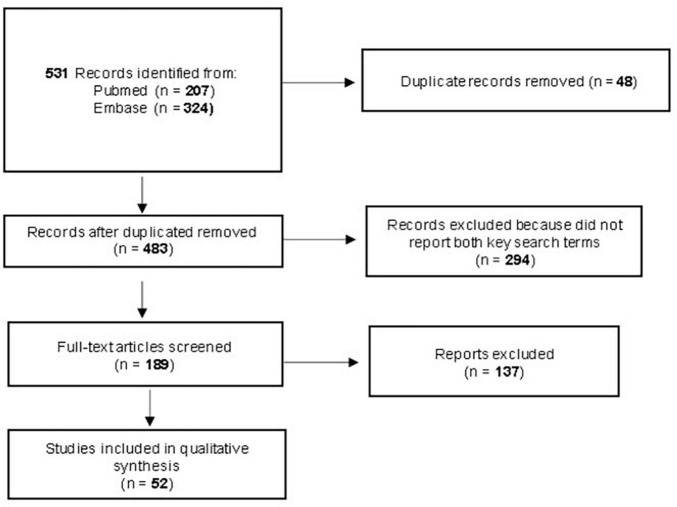
Narcissistic personality disorder is characterized by self-absorption, grandiosity, exploitation of others and lack of empathy. People with that disorder may switch from an overt form, mainly with grandiosity, to a covert presentation, with fears, hypersensitivity and dependence from others. Empathy represents a key point in detecting people affected by narcissistic personality disorder because, even if it is described as reduced, it plays a fundamental role in exploitation and manipulation. A systematic search of Literature without any language or time restriction, was performed combining thesaurus and free-search indexing terms related to Narcissistic personality disorder and empathy and produced 531 results. Fifty-two papers that analyzed possible issues in the empathic attitude of people with narcissistic personality disorder were included in this narrative review. Empathy is the capability of understating and feeling others emotions. It is not a unitary construct and can be distinguished in cognitive and affective. It might be channeled into prosocial and antisocial behaviors. A crucial trait identified in narcissistic empathy is affective dissonance that is closely related to rivalry as part of the dark tetrad (narcissism, machiavellianism, psychopathy, and sadism). Subjects affected by narcissistic personality disorder show greater impairment in affective aspects while their cognitive part of empathy appears preserved. Saving at least the cognitive aspects of empathy may contribute to therapeutic improvement of affective aspects.
Overview
CoChat Summary
TL;DR
This narrative review examines the relationship between narcissistic personality disorder (NPD) and empathy, arguing that NPD involves preserved cognitive empathy but impaired affective empathy, which can support manipulation and exploitation. It also discusses antisocial/prosocial behavior, neurophysiological correlates, and therapeutic implications.
Key findings
- The search produced 531 results (207 in PubMed, 324 in Embase); 189 full texts were analyzed and 52 articles were included in qualitative analysis, with 46 of 52 published in the last 15 years.
- People with NPD show greater impairment in affective empathy, while cognitive empathy appears preserved; this preserved cognitive component may contribute to manipulative skill and exploitation of others.
- Affective dissonance is identified as a crucial narcissistic empathy trait, closely related to rivalry as part of the dark tetrad (narcissism, Machiavellianism, psychopathy, and sadism); rivalry was reported as the strongest trait of the dark core.
- Narcissistic traits are described as escalating in western society, with a 30% rise in the past 30 years, and NPD empathy difficulties are linked to both antisocial behavior and goal-directed prosocial behavior.
Methods
- Systematic literature search in PubMed and Embase until October 2022, without language or time restriction, combining thesaurus and free-search indexing terms related to NPD and empathy.
- Review conducted according to PRISMA-ScR; studies not describing both narcissism and empathy were excluded, and experimental research was included if it diagnosed NPD or analyzed empathy through standardized tests.
- From 531 records, 189 full texts were analyzed and 52 articles were included in qualitative synthesis; papers were categorized into narcissism/empathy correlation, antisocial behavior, neurophysiologic mechanisms, therapeutic implications, and prosocial behaviors.
Limitations
- The paper states that research on NPD is limited, patients are often considered among the most difficult to treat, and few studies examine psychotherapy efficacy or empathy correlates in these patients.
- The paper states that most research is conducted on western populations, so results cannot be generalized.
- Evident from the text: this is a narrative/qualitative synthesis of 52 heterogeneous studies using different measures and designs, so it does not provide pooled quantitative effect estimates.
Model-written summary. Check it against the paper before relying on it.
Integrity signals
Registry
Cites
Statistics
Figures
Verification
Claims the paper makes
16 Valid · 8 Not valid · 37 Not checked · 34 Own results and interpretations
The cited sources support only part of this claim — read each source’s verdict below.
In the paper
“Prosociality might hide several reasons, even egoistic, such as receiving praise or attention, or having something in return (58).”
§ The dark side of empathy in narcissistic personality disorder > Results > Prosocial behavior
What the sources say
- Partly supportedcites [58] Zimmerman C. The Impact of Perspective Taking on the Relationship Between Narcissism and Affective Empathy. (2017). Available online at: http://digital.library.wisc.edu/1793/76938 (accessed October 1, 2022).Experimental — accuracy not yet measured
The Pathological Narcissism Inventory reproduced in the Student Newspaper Pilot Articles Study materials (page unavailable) includes items about helping others to prove one is a good person, expecting favors in return, and wanting acknowledgment. These support the possibility of self-interested motives for helping, but they are questionnaire items about narcissism, not a finding that prosocial behavior generally conceals such motives. (LLM, conf=0.82)
hedgedstates a possible cause- Asserted: passes — The authors put it forward as true.
- Checkable: passes — It can be checked against evidence.
- Load-bearing: passes — The paper’s conclusions depend on it.
- Based: passes — The paper gives a reason why it holds.
- Rests on an assumption not shown here.
- Partly supported
The cited sources that could be checked couldn’t confirm or dispute this claim.
In the paper
“Narcissistic traits are escalating in western society with a 30% rise in the past 30 years (53) leading to increased criminal behavior with relevant public concern.”
§ The dark side of empathy in narcissistic personality disorder > Results > Antisocial behavior
What the sources say
- Could not verifycites [53] Yap JY Elizaveta B. Cold hearts playing with fire: the dark triad, risk-taking and empathy. J Health Transl Med. (2021) 24: 170– 9. 10.22452/jummec.vol24no2.11 sourceExperimental — accuracy not yet measured
The Dark Triad and Empathy section reports a cross-cultural difference: regions with greater individualism generally exhibited more narcissism. It does not report a rise in narcissistic traits in Western society over the past 30 years, or quantify such a rise at 30%. Searches for the claimed percentage and time trend found no supporting passage in our copy. (LLM, conf=0.75)
plainstates a cause- Asserted: passes — The authors put it forward as true.
- Checkable: passes — It can be checked against evidence.
- Load-bearing: unclear — It is unclear whether the paper’s conclusions depend on it.
- Based: passes — The paper gives a reason why it holds.
- Could not verify
The cited sources that could be checked couldn’t confirm or dispute this claim.
In the paper
“High personal distress is linked with vulnerability and fearfulness (37).”
§ The dark side of empathy in narcissistic personality disorder > Results > Empathy and narcissistic personality disorder
What the sources say
- Could not verifycites [37] Topić Lukaèević S Bagarić A. Theoretical concepts of narcissistic personality disorder. overview of narcissistic disorder in group analysis. Soc Psihijatr. (2018) 46: 285– 306. sourceExperimental — accuracy not yet measured
The available paper passage discusses vulnerable and grandiose narcissism, but does not address personal distress or fearfulness. Searches for those terms and their proposed link returned no relevant passage; the indexed passages have no section or page labels. (LLM, conf=0.73)
plainstates an association- Asserted: passes — The authors put it forward as true.
- Checkable: passes — It can be checked against evidence.
- Load-bearing: unclear — It is unclear whether the paper’s conclusions depend on it.
- Based: passes — The paper gives a reason why it holds.
- Rests on an assumption not shown here.
- Could not verify
Every source the paper cites for this claim was checked and supports it.
In the paper
“The experience of ego-dissolution and lowered focus on the self, as induced by psychedelic drugs appear antagonistic to the self-focus and self-importance that is characteristic of high trait narcissism (68).”
§ The dark side of empathy in narcissistic personality disorder > Results > Therapeutic implication
What the sources say
- Supportedcites [68] van Mulukom V Patterson RE van Elk M. Broadening your mind to include others: the relationship between serotonergic psychedelic experiences and maladaptive narcissism. Psychopharmacology. (2020) 237: 2725– 37. 10.1007/s00213-020-05568-y 32472162 source
Section 1.1 (p. 5) states almost exactly the cited claim: the authors suggest that psychedelic-induced ego dissolution and reduced self-focus appear antagonistic to the self-focus and self-importance characteristic of high trait narcissism. The citing sentence preserves the paper’s tentative framing. (LLM, conf=0.95)
hedgedstates a cause- Asserted: passes — The authors put it forward as true.
- Checkable: passes — It can be checked against evidence.
- Load-bearing: passes — The paper’s conclusions depend on it.
- Based: passes — The paper gives a reason why it holds.
- Supported
The cited sources that could be checked couldn’t confirm or dispute this claim.
In the paper
“It might be channeled into prosocial and antisocial behaviors.”
- Also stated in: § Empathy · plain
“Despite it, some authors admit that emotional competence can be directed antisocially, with manipulative connotations or drive others toward sociopathy and mischievous acts (9).”
§ The dark side of empathy in narcissistic personality disorder > Abstract
What the sources say
- Could not verifycites [9] Seeley WW Menon V Schatzberg AF Keller J Glover GH Kenna H Dissociable intrinsic connectivity networks for salience processing and executive control. J Neurosci. (2007) 28: 2349– 56. 10.1523/JNEUROSCI.5587-06.2007 17329432 PMC2680293 sourceExperimental — accuracy not yet measured
The Functional significance section mentions empathy for pain as a form of salience, but does not discuss whether empathy leads to prosocial or antisocial behavior. Searches for prosocial and antisocial behavior, empathy, altruism, and aggression found no passage addressing that claim. (LLM, conf=0.73)
plainstates a possible cause- Asserted: passes — The authors put it forward as true.
- Checkable: passes — It can be checked against evidence.
- Load-bearing: passes — The paper’s conclusions depend on it.
- Based: passes — The paper gives a reason why it holds.
- Rests on an assumption not shown here.
- Also stated in: § Empathy · plain
27 more claims · 3 with their cited sources checked
Create a free account to see all 95 claims and every source verdict.
- Probably not a substantial claim. 32
- It may state two separate claims as one. 45
- The quote only partly states this claim. 1
Self-check
Percentages, sums and reported differences re-computed from the paper’s own numbers.
Each contradiction between two passages listed here was confirmed by an independent check.
Rated major: it would touch a result — a value a result rests on, reported and recomputed p-values on opposite sides of the significance level, two passages that conflict with no sign which is right, or a cited work retracted before this paper was published.
In the paper
§ The dark side of empathy in narcissistic personality disorder > Results > Neurophysiological aspects of empathy
“Research highlights main obstacles both in the bottom-up pathway among narcissists, but the cognitive parts of empathy seem damaged as well (3, 17, 18).”
§ The dark side of empathy in narcissistic personality disorder > Discussion
“People affected by NPD show specific issues in empathy, but those difficulties are limited to its affective part. In fact, the cognitive portion seems preserved and essential for manipulative skill and exploitation of others.”
Rated minor: it would not touch a result — a value no result rests on, a p-value that stays on the same side of the significance level, or a conflict that is clerical, resolved elsewhere in the paper, or outside its own findings.
In the paper
§ The dark side of empathy in narcissistic personality disorder > Results > Neurophysiological aspects of empathy
“Fan et al. (19) analyzed a group of non-clinical subjects, divided in high (HN) and low narcissism (LN).”
§ The dark side of empathy in narcissistic personality disorder > References
“19. Ibáñez A Hurtado E Lobos A Escobar J Trujillo N Baez S Subliminal presentation of other faces (but not own face) primes behavioral and evoked cortical processing of empathy for pain.”
Rated minor: it would not touch a result — a value no result rests on, a p-value that stays on the same side of the significance level, or a conflict that is clerical, resolved elsewhere in the paper, or outside its own findings.
In the paper
§ The dark side of empathy in narcissistic personality disorder > Results > Antisocial behavior
“Johnson et al. (51) found that NPD symptoms in early adolescence prognosticate violent criminal behavior in mid-adolescence and early adulthood (52).”
§ The dark side of empathy in narcissistic personality disorder > References
“51. Twenge JM Konrath S Foster JD Campbell WK Bushman BJ. Egos inflating over time: A cross-temporal meta-analysis of the Narcissistic Personality Inventory.”
Rated minor: it would not touch a result — a value no result rests on, a p-value that stays on the same side of the significance level, or a conflict that is clerical, resolved elsewhere in the paper, or outside its own findings.
In the paper
§ The dark side of empathy in narcissistic personality disorder > Results > Empathy and narcissistic personality disorder
“An interplay between narcissism and empathy was investigated from the clinical conceptualization of NPD to its launch in the DSM–III (22)”
§ The dark side of empathy in narcissistic personality disorder > References
“22. Giacomin M Jordan CH. Down-regulating narcissistic tendencies: communal focus reduces state narcissism.”
Rated minor: it would not touch a result — a value no result rests on, a p-value that stays on the same side of the significance level, or a conflict that is clerical, resolved elsewhere in the paper, or outside its own findings.
In the paper
§ The dark side of empathy in narcissistic personality disorder > Results
“| Decety and Moriguchi (15) | The empathic brain and its dysfunction in psychiatric populations: Implications for intervention across different clinical conditions. | 2007 | USA | Review | – | – | – | Neurophysiological aspects |”
§ The dark side of empathy in narcissistic personality disorder > References
“15. Decety J Moriguchi Y. The empathic brain and its dysfunction in psychiatric populations: implications for intervention across different clinical conditions. Biopsychosoc Med. (2011) 1: 22.”
Citations
Cites
Dissociable intrinsic connectivity networks for salience processing and executive control
Seeley, W. W., Menon, V., Schatzberg, A. F., Keller, J., Glover, G. H., Kenna, H., Reiss, A. L., & Greicius, M. D. (2007) · The Journal of Neuroscience · doi:10.1523/jneurosci.5587-06.2007 · Cited by 7,426
Frick, P. J., & White, S. F. (2008) · Journal of Child Psychology and Psychiatry · doi:10.1111/j.1469-7610.2007.01862.x · Cited by 1,290
Egos inflating over time: A cross-temporal meta-analysis of the Narcissistic Personality Inventory
Twenge, J. M., Konrath, S., Foster, J. D., Keith Campbell, W., & Bushman, B. J. (2008) · Journal of Personality · doi:10.1111/j.1467-6494.2008.00507.x · Cited by 972
Decety, J., & Moriguchi, Y. (2007) · BioPsychoSocial Medicine · doi:10.1186/1751-0759-1-22 · Cited by 497
Smallwood, J., Brown, K., Baird, B., & Schooler, J. W. (2012) · Brain Research · doi:10.1016/j.brainres.2011.03.072 · Cited by 379
Lack of empathy in patients with narcissistic personality disorder
Ritter, K., Dziobek, I., Preißler, S., Rüter, A., Vater, A., Fydrich, T., Lammers, C.-H., Heekeren, H. R., & Roepke, S. (2011) · Psychiatry Research · doi:10.1016/j.psychres.2010.09.013 · Cited by 287
Dimaggio, G., Lysaker, P. H., Carcione, A., Nicolò, G., & Semerari, A. (2008) · Consciousness and Cognition · doi:10.1016/j.concog.2008.02.005 · Cited by 232
Social cognition in borderline personality disorder
Roepke, S., Vater, A., Preißler, S., Heekeren, H. R., & Dziobek, I. (2013) · Frontiers in Neuroscience · doi:10.3389/fnins.2012.00195 · Cited by 184
Narcissistic personality disorder: a current review.
Ronningstam, E. (2010) · Current Psychiatry Reports · doi:10.1007/s11920-009-0084-z · Cited by 177
The Productive Narcissist. The Promise and Peril of Visionary Leadership.
(2004) · Choice Reviews Online · doi:10.5860/choice.41-5386 · Cited by 160
Research works printed but not linked: 4
- Ibáñez A Hurtado E Lobos A Escobar J Trujillo N Baez S Subliminal presentation of other faces (but not own face) primes behavioral and evoked cortical processing of empathy for pain. Brain Res. (2011) 1398: 72– 85. 10.1016/j.brainres.2011.05.014 21624566 · DOI · Paper page
- American Psychiatric Association. Diagnostic and Statistical Manual of Mental Disorders. 3rd ed. Washington, DC: American Psychiatric Association (1980).
- Akhtar S. The shy narcissist. In: Akhtar S editor. New Clinical Realms. Pushing the envelope of Theory and Technique. Northvale, NJ: Jason Aronson (2003). p. 47– 58.
- Twenge JM Konrath S Foster JD Campbell WK Bushman BJ. Egos inflating over time: a cross-temporal meta-analysis of the narcissistic personality inventory. J Pers. (2008) 76: 875– 902. 10.1111/j.1467-6494.2008.00507.x 18507710 · DOI · Paper page
Cited by
The Dark Side of Empathy: The Role of Excessive Affective Empathy in Mental Health Disorders
Huang, C., Wu, Z., Sha, S., Liu, C., Yang, L., Jiang, P., Zhang, H., & Yang, C. (2025) · Biological Psychiatry · doi:10.1016/j.biopsych.2024.12.020 · Cited by 35
Shukla, M., & Upadhyay, N. (2025) · Frontiers in Psychiatry · doi:10.3389/fpsyt.2025.1546917 · Cited by 28
Association between pathological narcissism and emotion regulation: The role of self-mentalizing
Blay, M., Bouteloup, M., Duarte, M., Hasler, R., Pham, E., Nicastro, R., Jan, M., Debbané, M., & Perroud, N. (2024) · Personality and Mental Health · doi:10.1002/pmh.1613 · Cited by 10
“To note, we did not conduct multi-variate analyses on the positive association found between PNI grandiosity and other-mentalizing because no comorbidities were associated with this dimension in bivariate analyses.”
Shahri, F., Zabihzadeh, A., Taqipanahi, A., Haromi, M. E., Rasouli, M., Nik, A. S., & Eddy, C. M. (2024) · Frontiers in Psychology · doi:10.3389/fpsyg.2024.1350133 · Cited by 7
Guidali, G., Franca, M., Arrigoni, E., Picardi, M., Pisoni, A., & Bolognini, N. (2025) · Brain Sciences · doi:10.3390/brainsci15111174 · Cited by 7
(2025) · Journal of Psychology and Neuroscience · doi:10.47485/2693-2490.1136 · Cited by 5
Brown, M. A., & Toyama, M. (2025) · Behaviour and Information Technology · doi:10.1080/0144929x.2025.2547922 · Cited by 5
“In addition, lack of empathy is a characteristic of narcissistic personality disorder as a pathological level of narcissism (di Giacomo et al. 2023), which is also linked to trolling (Hamarta, Aka, and Akbulut 2023).”
The Dynamics of Narcissus: Exploring the Covariation of Narcissistic States in Daily Life
Dowgwillo, E. A., Fanti, E., & Pincus, A. L. (2025) · Journal of Personality Disorders · doi:10.1521/pedi.2025.39.1.22 · Cited by 5
Narcissistic Personality Disorder through psycholinguistic analysis and neuroscientific correlates
Elleuch, D. (2024) · Frontiers in Behavioral Neuroscience · doi:10.3389/fnbeh.2024.1354258 · Cited by 6
Kanze, D. (2025) · Organization Science · doi:10.1287/orsc.2023.18429 · Cited by 4
Orovou, E., Jotautis, V., Vousoura, E., Koutelekos, I., Rigas, N., & Sarantaki, A. (2025) · Cureus · doi:10.7759/cureus.100229 · Cited by 3
“Parents with such traits may view their child as an extension of the self, reinforcing achievement and conformity to parental expectations while withholding affection when the child demonstrates independence or perceived weakness [6,7].”
Zadorozhny, B. S., Petrides, K. V., Yang, J., & van der Linden, D. (2026) · Frontiers in Psychology · doi:10.3389/fpsyg.2025.1635847 · Cited by 1
Carpini, J. A., Ahmed, M., Johnston, C., Bhusal, A., Wang, B., Seubert, L., Clifford, R. M., & Ashoorian, D. M. (2026) · Current Psychology · doi:10.1007/s12144-025-08615-z · Cited by 1
“Such results highlight the potential bright and dark side of empathy (di Giacomo et al., 2023) adding caution to the growing calls for more empathic healthcare service (Frick et al., 2021; Lonie, 2006).”
Pan, J., Wu, H., Wang, Y., & Zhang, B. (2025) · Frontiers in Psychiatry · doi:10.3389/fpsyt.2025.1532940 · Cited by 2
Stanton, K. J., Levin-Aspenson, H. F., Emery, N. N., et al. (2023) · doi:10.31219/osf.io/qcd2r · Cited by 1
Elleuch, D. (2024) · Research Square · doi:10.21203/rs.3.rs-3895684/v1
Self-esteem, subjective well-being, and narcissistic behavior among instagram users
Fasha, V. H., & Astuti, R. D. (2024) · Empathy Jurnal Fakultas Psikologi · doi:10.12928/empathy.v7i1.29315
Aesthetic peerhood and the significance of aesthetic peer disagreement
Pharr, Q., & Torregrossa, C. (2024) · The Southern Journal of Philosophy · doi:10.1111/sjp.12595
“…the agents do not need to genuinely have the same type and broadly similar degree of feelings toward those objects—as some agents might have affective disorders that make having certain feelings difficult or nearly physically impossible for them to feel (see, e.g., di Giacomo et al., 2023).”
BackgroundAntagonistic Narcissism in Women with Borderline Personality Disorder: A Case-Control Study
Wülfing, P., Krämer, N., Lammers, C.-H., & Spitzer, C. (2025) · Psychopathology · doi:10.1159/000545761 · Cited by 3
“Regarding cognitive empathy in narcissism, some scholars argue it is preserved [45], whereas others suggest that it is dysfunctional rather than de fi cient [44, 46].”
Mechanisms of dark personality traits in lesbian adult attachment: a chain-mediated model
Liu, Y., Li, S., & Ma, S. (2025) · Frontiers in Psychology · doi:10.3389/fpsyg.2025.1619432
The frequency of narcissistic traits in medical and psychology students in Poland and France
Sobczak, K., Rudnik, A. A., Basińska, M., Azoulay, S., & Tostain, M. (2025) · Health Psychology Report · doi:10.5114/hpr/203960
“While empathy fosters prosocial behavior, narcissism – especially in its pathological form – diminishes emotional resonance and impairs relationships (Burgmer et al., 2021; di Giacomo et al., 2023).”
Empathy is under attack — but it remains vital for leadership and connection
Stawnychko, L., & Hans, K. (2025) · doi:10.64628/aam.rt5encxx3
Mo, S., Yang, Q. P., & Carmon, C. M. (2025) · Psychological Studies · doi:10.1007/s12646-025-00856-z
“Other studies have argued that communal narcissists may exhibit empathy in a superficial manner, masking their true intentions, as they are not genuinely concerned with others’ feelings (di Giacomo et al., 2023).”
Maerz, J., Rabl, L., Buchheim, A., Viviani, R., & Labek, K. (2025) · PTT - Persönlichkeitsstörungen: Theorie und Therapie · doi:10.21706/ptt-29-4-477
The Offender Personality Disorder Pathway
Groome, E. (2026) · Springer eBooks · doi:10.1007/978-3-032-03312-3_14
Toxic Leaders in der Polizeiführung
Oswald, A., Hagemeyer, P., & Gysi, J. (2026) · Springer eBooks · doi:10.1007/978-3-662-71991-6_20
Szlávicz, E., Osváth, P., Major, J., Bancsók, T., & Lengyel, Z. (2026) · International Journal of Dermatology · doi:10.1111/ijd.70358 · Cited by 1
“In narcissistic pathologies, the patient expects admiration and care from the partner, yet at the same time objectifies the other individual and is unable to demonstrate empathy [13, 16, 20].”
Ghalebin, S. S. A., Basharpoor, S., Mikaeili, N., Hajloo, N., & Gholipour, F. (2026) · Journal of Istanbul Faculty of Medicine / İstanbul Tıp Fakültesi Dergisi · doi:10.26650/iuitfd.1703763
Empathy impairments in patients with gambling disorder
Arafat, D., Schröer, N., Juckel, G., Chang, D., & Thoma, P. (2026) · Journal of Clinical and Experimental Neuropsychology · doi:10.1080/13803395.2026.2622924
Narcissism, Advantageous Comparisons, and Tax CompliancePreprint
Kaszak, S. E., & Reckers, P. (2026) · SSRN Electronic Journal · doi:10.2139/ssrn.6628925
Yazıcı, M. S., & Çobanoğlu, H. (2026) · Journal of Disability & Religion · doi:10.1080/23312521.2026.2677466
“It is characterized by an excessive focus on the self, a strong need for admiration, and a lack of empathy (di Giacomo et al., 2023).”
Narcissistic Personality Disorder in Adulthood
Elgalil, H. M. A., Ghazy, R. M., Hammouda, S. M., Ahmed, H. A. A., & Shiba, H. A. A. (2026) · Springer eBooks · doi:10.1007/978-3-032-11375-7_553
Budiarto, Y., & Hastuti, R. (2026) · Primenjena psihologija · doi:10.19090/pp.v19i3.2597
Metadata
- Authors
- di Giacomo, E., Andreini, E., Lorusso, O., & Clerici, M.
- Affiliations
- Azienda Ospedaliera San Gerardo (IT)
- ORCID
- Clerici, Massimo
- Venue
- Frontiers in Psychiatry
- Publisher
- Frontiers Media SA
- Published
- 2023-03-30
- Volume
- 14
- Pages
- 1074558-1074558
- ISSN
- 1664-0640 (ISSN-L)
- PMC
- PMC10097942
- OpenAlex
- W4361281724
- Cited by
- 34
- References
- 65
- Citations by year
- 2026: 11 · 2025: 17 · 2024: 6
- FWCI
- 1.72
- Type
- journal article
- Language
- en
- Open access
- gold
- doi.org
- Licence
- Locations
- Frontiers in Psychiatry (publishedVersion, cc-by)
- PubMed Central (publishedVersion, cc-by)
- PubMed (publishedVersion)
- BOA (University of Milano-Bicocca) (submittedVersion, cc-by)
- DOAJ (DOAJ: Directory of Open Access Journals) (submittedVersion, cc-by-sa)
- Topics
- Social Sciences › Psychology › Clinical Psychology › Personality Disorders and Psychopathology
- Social Sciences › Psychology › Clinical Psychology › Personality Traits and Psychology
- Social Sciences › Psychology › Clinical Psychology › Psychopathy, Forensic Psychiatry, Sexual Offending
- Keywords
- narcissistic personality disorder, empathy, affective empathy, cognitive empathy, Dark Tetrad, affective dissonance, manipulation, exploitation, prosocial and antisocial behavior
About these checks
Registry, retraction, Cites and statistics results are computed, not judged, with one exception: a printed reference that no index lists is read once by a model before it counts as a citation error. Claims are extracted by a model and kept only when their quote appears verbatim in the text; each cited source is then checked, with a model’s help, for whether it says what the claim relies on. Those verdicts can be wrong — read the claim’s quote and the cited source before relying on one.
The claim verdicts this report counts are experimental: their accuracy is not yet measured.
A language model drew the claims from the paper on 2026-10-10, under version 3 of the claim definition (model deepseek-v4.1-flash, prompt extract-v3).
A second model labelled each claim on 2026-10-10 (model jev-1.13-20260917, definition revision gold-guideline-v0.2).
Cited sources are checked with a language model’s help (gpt-6-sol).
Statistics and arithmetic are recomputed, not judged.
Confidence bands are shown only for fields calibrated on our annotated test set. None is calibrated yet, so no band is shown.
What counts as a claim ›How we measure confidence ›How we check this ›
Are you an author, or do you see a problem with this page? Request a review
Data sources
Bibliographic data: Semantic Scholar, OpenAlex, Crossref.
Contains information from the Semantic Scholar Academic Graph Datasets, made available under the ODC Attribution License (ODC-BY 1.0).
Semantic Scholar’s data is described in: Kinney, R., et al. (2023). The Semantic Scholar Open Data Platform. arXiv:2301.10140.
