

The dark side of empathy in narcissistic personality disorder
Open accessThe DOI matches its Crossref record; 64 of the 65 references it cites were found in a registry or an index; 25 of the 79 sources its claims cite were checked for support.
Abstract
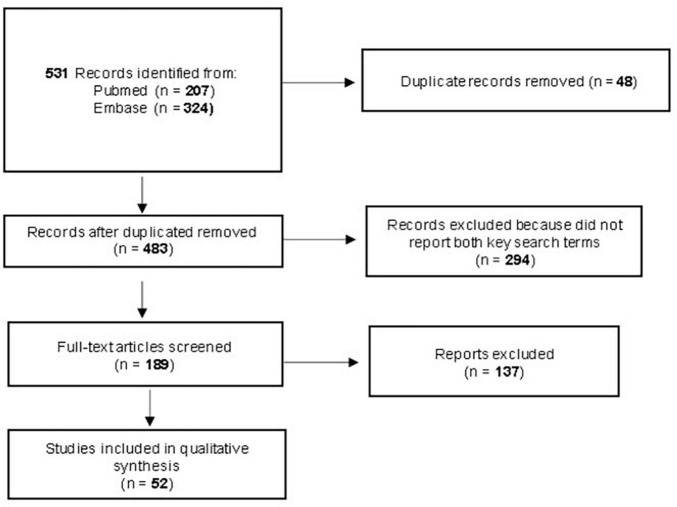
Narcissistic personality disorder is characterized by self-absorption, grandiosity, exploitation of others and lack of empathy. People with that disorder may switch from an overt form, mainly with grandiosity, to a covert presentation, with fears, hypersensitivity and dependence from others. Empathy represents a key point in detecting people affected by narcissistic personality disorder because, even if it is described as reduced, it plays a fundamental role in exploitation and manipulation. A systematic search of Literature without any language or time restriction, was performed combining thesaurus and free-search indexing terms related to Narcissistic personality disorder and empathy and produced 531 results. Fifty-two papers that analyzed possible issues in the empathic attitude of people with narcissistic personality disorder were included in this narrative review. Empathy is the capability of understating and feeling others emotions. It is not a unitary construct and can be distinguished in cognitive and affective. It might be channeled into prosocial and antisocial behaviors. A crucial trait identified in narcissistic empathy is affective dissonance that is closely related to rivalry as part of the dark tetrad (narcissism, machiavellianism, psychopathy, and sadism). Subjects affected by narcissistic personality disorder show greater impairment in affective aspects while their cognitive part of empathy appears preserved. Saving at least the cognitive aspects of empathy may contribute to therapeutic improvement of affective aspects.
Overview
CoChat Summary
TL;DR
This narrative review examines the relationship between narcissistic personality disorder (NPD) and empathy, arguing that NPD involves preserved cognitive empathy but impaired affective empathy, which can support manipulation and exploitation. It also discusses antisocial/prosocial behavior, neurophysiological correlates, and therapeutic implications.
Key findings
- The search produced 531 results (207 in PubMed, 324 in Embase); 189 full texts were analyzed and 52 articles were included in qualitative analysis, with 46 of 52 published in the last 15 years.
- People with NPD show greater impairment in affective empathy, while cognitive empathy appears preserved; this preserved cognitive component may contribute to manipulative skill and exploitation of others.
- Affective dissonance is identified as a crucial narcissistic empathy trait, closely related to rivalry as part of the dark tetrad (narcissism, Machiavellianism, psychopathy, and sadism); rivalry was reported as the strongest trait of the dark core.
- Narcissistic traits are described as escalating in western society, with a 30% rise in the past 30 years, and NPD empathy difficulties are linked to both antisocial behavior and goal-directed prosocial behavior.
Methods
- Systematic literature search in PubMed and Embase until October 2022, without language or time restriction, combining thesaurus and free-search indexing terms related to NPD and empathy.
- Review conducted according to PRISMA-ScR; studies not describing both narcissism and empathy were excluded, and experimental research was included if it diagnosed NPD or analyzed empathy through standardized tests.
- From 531 records, 189 full texts were analyzed and 52 articles were included in qualitative synthesis; papers were categorized into narcissism/empathy correlation, antisocial behavior, neurophysiologic mechanisms, therapeutic implications, and prosocial behaviors.
Limitations
- The paper states that research on NPD is limited, patients are often considered among the most difficult to treat, and few studies examine psychotherapy efficacy or empathy correlates in these patients.
- The paper states that most research is conducted on western populations, so results cannot be generalized.
- Evident from the text: this is a narrative/qualitative synthesis of 52 heterogeneous studies using different measures and designs, so it does not provide pooled quantitative effect estimates.
Model-written summary. Check it against the paper before relying on it.
Integrity signals
Registry
Cites
Statistics
Figures
Verification
Claims the paper makes
16 Valid · 8 Not valid · 37 Not checked · 34 Own results and interpretations
The cited sources support only part of this claim — read each source’s verdict below.
In the paper
“Prosociality might hide several reasons, even egoistic, such as receiving praise or attention, or having something in return (58).”
§ The dark side of empathy in narcissistic personality disorder > Results > Prosocial behavior
What the sources say
- Partly supportedcites [58] Zimmerman C. The Impact of Perspective Taking on the Relationship Between Narcissism and Affective Empathy. (2017). Available online at: http://digital.library.wisc.edu/1793/76938 (accessed October 1, 2022).Experimental — accuracy not yet measured
The Pathological Narcissism Inventory reproduced in the Student Newspaper Pilot Articles Study materials (page unavailable) includes items about helping others to prove one is a good person, expecting favors in return, and wanting acknowledgment. These support the possibility of self-interested motives for helping, but they are questionnaire items about narcissism, not a finding that prosocial behavior generally conceals such motives. (LLM, conf=0.82)
hedgedstates a possible cause- Asserted: passes — The authors put it forward as true.
- Checkable: passes — It can be checked against evidence.
- Load-bearing: passes — The paper’s conclusions depend on it.
- Based: passes — The paper gives a reason why it holds.
- Rests on an assumption not shown here.
- Partly supported
The cited sources that could be checked couldn’t confirm or dispute this claim.
In the paper
“Narcissistic traits are escalating in western society with a 30% rise in the past 30 years (53) leading to increased criminal behavior with relevant public concern.”
§ The dark side of empathy in narcissistic personality disorder > Results > Antisocial behavior
What the sources say
- Could not verifycites [53] Yap JY Elizaveta B. Cold hearts playing with fire: the dark triad, risk-taking and empathy. J Health Transl Med. (2021) 24: 170– 9. 10.22452/jummec.vol24no2.11 sourceExperimental — accuracy not yet measured
The Dark Triad and Empathy section reports a cross-cultural difference: regions with greater individualism generally exhibited more narcissism. It does not report a rise in narcissistic traits in Western society over the past 30 years, or quantify such a rise at 30%. Searches for the claimed percentage and time trend found no supporting passage in our copy. (LLM, conf=0.75)
plainstates a cause- Asserted: passes — The authors put it forward as true.
- Checkable: passes — It can be checked against evidence.
- Load-bearing: unclear — It is unclear whether the paper’s conclusions depend on it.
- Based: passes — The paper gives a reason why it holds.
- Could not verify
The cited sources that could be checked couldn’t confirm or dispute this claim.
In the paper
“High personal distress is linked with vulnerability and fearfulness (37).”
§ The dark side of empathy in narcissistic personality disorder > Results > Empathy and narcissistic personality disorder
What the sources say
- Could not verifycites [37] Topić Lukaèević S Bagarić A. Theoretical concepts of narcissistic personality disorder. overview of narcissistic disorder in group analysis. Soc Psihijatr. (2018) 46: 285– 306. sourceExperimental — accuracy not yet measured
The available paper passage discusses vulnerable and grandiose narcissism, but does not address personal distress or fearfulness. Searches for those terms and their proposed link returned no relevant passage; the indexed passages have no section or page labels. (LLM, conf=0.73)
plainstates an association- Asserted: passes — The authors put it forward as true.
- Checkable: passes — It can be checked against evidence.
- Load-bearing: unclear — It is unclear whether the paper’s conclusions depend on it.
- Based: passes — The paper gives a reason why it holds.
- Rests on an assumption not shown here.
- Could not verify
Every source the paper cites for this claim was checked and supports it.
In the paper
“The experience of ego-dissolution and lowered focus on the self, as induced by psychedelic drugs appear antagonistic to the self-focus and self-importance that is characteristic of high trait narcissism (68).”
§ The dark side of empathy in narcissistic personality disorder > Results > Therapeutic implication
What the sources say
- Supportedcites [68] van Mulukom V Patterson RE van Elk M. Broadening your mind to include others: the relationship between serotonergic psychedelic experiences and maladaptive narcissism. Psychopharmacology. (2020) 237: 2725– 37. 10.1007/s00213-020-05568-y 32472162 source
Section 1.1 (p. 5) states almost exactly the cited claim: the authors suggest that psychedelic-induced ego dissolution and reduced self-focus appear antagonistic to the self-focus and self-importance characteristic of high trait narcissism. The citing sentence preserves the paper’s tentative framing. (LLM, conf=0.95)
hedgedstates a cause- Asserted: passes — The authors put it forward as true.
- Checkable: passes — It can be checked against evidence.
- Load-bearing: passes — The paper’s conclusions depend on it.
- Based: passes — The paper gives a reason why it holds.
- Supported
The cited sources that could be checked couldn’t confirm or dispute this claim.
In the paper
“It might be channeled into prosocial and antisocial behaviors.”
- Also stated in: § Empathy · plain
“Despite it, some authors admit that emotional competence can be directed antisocially, with manipulative connotations or drive others toward sociopathy and mischievous acts (9).”
§ The dark side of empathy in narcissistic personality disorder > Abstract
What the sources say
- Could not verifycites [9] Seeley WW Menon V Schatzberg AF Keller J Glover GH Kenna H Dissociable intrinsic connectivity networks for salience processing and executive control. J Neurosci. (2007) 28: 2349– 56. 10.1523/JNEUROSCI.5587-06.2007 17329432 PMC2680293 sourceExperimental — accuracy not yet measured
The Functional significance section mentions empathy for pain as a form of salience, but does not discuss whether empathy leads to prosocial or antisocial behavior. Searches for prosocial and antisocial behavior, empathy, altruism, and aggression found no passage addressing that claim. (LLM, conf=0.73)
plainstates a possible cause- Asserted: passes — The authors put it forward as true.
- Checkable: passes — It can be checked against evidence.
- Load-bearing: passes — The paper’s conclusions depend on it.
- Based: passes — The paper gives a reason why it holds.
- Rests on an assumption not shown here.
- Also stated in: § Empathy · plain
27 more claims · 3 with their cited sources checked
Create a free account to see all 95 claims and every source verdict.
- Probably not a substantial claim. 32
- It may state two separate claims as one. 45
- The quote only partly states this claim. 1
Self-check
Percentages, sums and reported differences re-computed from the paper’s own numbers.
Each contradiction between two passages listed here was confirmed by an independent check.
Rated major: it would touch a result — a value a result rests on, reported and recomputed p-values on opposite sides of the significance level, two passages that conflict with no sign which is right, or a cited work retracted before this paper was published.
In the paper
§ The dark side of empathy in narcissistic personality disorder > Results > Neurophysiological aspects of empathy
“Research highlights main obstacles both in the bottom-up pathway among narcissists, but the cognitive parts of empathy seem damaged as well (3, 17, 18).”
§ The dark side of empathy in narcissistic personality disorder > Discussion
“People affected by NPD show specific issues in empathy, but those difficulties are limited to its affective part. In fact, the cognitive portion seems preserved and essential for manipulative skill and exploitation of others.”
Rated minor: it would not touch a result — a value no result rests on, a p-value that stays on the same side of the significance level, or a conflict that is clerical, resolved elsewhere in the paper, or outside its own findings.
In the paper
§ The dark side of empathy in narcissistic personality disorder > Results > Neurophysiological aspects of empathy
“Fan et al. (19) analyzed a group of non-clinical subjects, divided in high (HN) and low narcissism (LN).”
§ The dark side of empathy in narcissistic personality disorder > References
“19. Ibáñez A Hurtado E Lobos A Escobar J Trujillo N Baez S Subliminal presentation of other faces (but not own face) primes behavioral and evoked cortical processing of empathy for pain.”
Rated minor: it would not touch a result — a value no result rests on, a p-value that stays on the same side of the significance level, or a conflict that is clerical, resolved elsewhere in the paper, or outside its own findings.
In the paper
§ The dark side of empathy in narcissistic personality disorder > Results > Antisocial behavior
“Johnson et al. (51) found that NPD symptoms in early adolescence prognosticate violent criminal behavior in mid-adolescence and early adulthood (52).”
§ The dark side of empathy in narcissistic personality disorder > References
“51. Twenge JM Konrath S Foster JD Campbell WK Bushman BJ. Egos inflating over time: A cross-temporal meta-analysis of the Narcissistic Personality Inventory.”
Rated minor: it would not touch a result — a value no result rests on, a p-value that stays on the same side of the significance level, or a conflict that is clerical, resolved elsewhere in the paper, or outside its own findings.
In the paper
§ The dark side of empathy in narcissistic personality disorder > Results > Empathy and narcissistic personality disorder
“An interplay between narcissism and empathy was investigated from the clinical conceptualization of NPD to its launch in the DSM–III (22)”
§ The dark side of empathy in narcissistic personality disorder > References
“22. Giacomin M Jordan CH. Down-regulating narcissistic tendencies: communal focus reduces state narcissism.”
Rated minor: it would not touch a result — a value no result rests on, a p-value that stays on the same side of the significance level, or a conflict that is clerical, resolved elsewhere in the paper, or outside its own findings.
In the paper
§ The dark side of empathy in narcissistic personality disorder > Results
“| Decety and Moriguchi (15) | The empathic brain and its dysfunction in psychiatric populations: Implications for intervention across different clinical conditions. | 2007 | USA | Review | – | – | – | Neurophysiological aspects |”
§ The dark side of empathy in narcissistic personality disorder > References
“15. Decety J Moriguchi Y. The empathic brain and its dysfunction in psychiatric populations: implications for intervention across different clinical conditions. Biopsychosoc Med. (2011) 1: 22.”
Citations
Cites
Dissociable intrinsic connectivity networks for salience processing and executive control
Seeley, W. W., Menon, V., Schatzberg, A. F., Keller, J., Glover, G. H., Kenna, H., Reiss, A. L., & Greicius, M. D. (2007) · The Journal of Neuroscience · doi:10.1523/jneurosci.5587-06.2007 · Cited by 7,426
Frick, P. J., & White, S. F. (2008) · Journal of Child Psychology and Psychiatry · doi:10.1111/j.1469-7610.2007.01862.x · Cited by 1,290
Egos inflating over time: A cross-temporal meta-analysis of the Narcissistic Personality Inventory
Twenge, J. M., Konrath, S., Foster, J. D., Keith Campbell, W., & Bushman, B. J. (2008) · Journal of Personality · doi:10.1111/j.1467-6494.2008.00507.x · Cited by 972
Decety, J., & Moriguchi, Y. (2007) · BioPsychoSocial Medicine · doi:10.1186/1751-0759-1-22 · Cited by 497
Smallwood, J., Brown, K., Baird, B., & Schooler, J. W. (2012) · Brain Research · doi:10.1016/j.brainres.2011.03.072 · Cited by 379
Lack of empathy in patients with narcissistic personality disorder
Ritter, K., Dziobek, I., Preißler, S., Rüter, A., Vater, A., Fydrich, T., Lammers, C.-H., Heekeren, H. R., & Roepke, S. (2011) · Psychiatry Research · doi:10.1016/j.psychres.2010.09.013 · Cited by 287
Dimaggio, G., Lysaker, P. H., Carcione, A., Nicolò, G., & Semerari, A. (2008) · Consciousness and Cognition · doi:10.1016/j.concog.2008.02.005 · Cited by 232
Social cognition in borderline personality disorder
Roepke, S., Vater, A., Preißler, S., Heekeren, H. R., & Dziobek, I. (2013) · Frontiers in Neuroscience · doi:10.3389/fnins.2012.00195 · Cited by 184
Narcissistic personality disorder: a current review.
Ronningstam, E. (2010) · Current Psychiatry Reports · doi:10.1007/s11920-009-0084-z · Cited by 177
The Productive Narcissist. The Promise and Peril of Visionary Leadership.
(2004) · Choice Reviews Online · doi:10.5860/choice.41-5386 · Cited by 160
Brook, M., & Kosson, D. S. (2013) · Journal of Abnormal Psychology · doi:10.1037/a0030261 · Cited by 157
Moving Narcissus: Can Narcissists Be Empathic?
Hepper, E. G., Hart, C. M., & Sedikides, C. (2014) · Personality and Social Psychology Bulletin · doi:10.1177/0146167214535812 · Cited by 152
The Strategic Helper: Narcissism and Prosocial Motives and Behaviors
Konrath, S., Ho, M.-H., & Zarins, S. (2016) · Current Psychology · doi:10.1007/s12144-016-9417-3 · Cited by 146
The Almost Untreatable Narcissistic Patient
Kernberg, O. F. (2007) · Journal of the American Psychoanalytic Association · doi:10.1177/00030651070550020701 · Cited by 143
Narcissism and empathy in young offenders and non–offenders.
Hepper, E. G., Hart, C. M., Meek, R., Cisek, S., & Sedikides, C. (2014) · European Journal of Personality · doi:10.1002/per.1939 · Cited by 143
Empathy in narcissistic personality disorder: From clinical and empirical perspectives.
Baskin-Sommers, A., Krusemark, E., & Ronningstam, E. (2014) · Personality Disorders: Theory, Research, and Treatment · doi:10.1037/per0000061 · Cited by 137
Thoma, P., Friedmann, C., & Suchan, B. (2013) · Neuroscience & Biobehavioral Reviews · doi:10.1016/j.neubiorev.2013.01.024 · Cited by 134
The narcissistic self and its psychological and neural correlates: an exploratory fMRI study
Fan, Y., Wonneberger, C., Enzi, B., de Greck, M., Ulrich, C., Tempelmann, C., Bogerts, B., Doering, S., & Northoff, G. (2011) · Psychological Medicine · doi:10.1017/s003329171000228x · Cited by 115
The human and animal baby schema effect: correlates of individual differences.
Lehmann, V., Huis in‘t Veld, E. M. J., & Vingerhoets, A. J. J. M. (2013) · Behavioural Processes · doi:10.1016/j.beproc.2013.01.001 · Cited by 114
Ibáñez, A., Hurtado, E., Lobos, A., Escobar, J., Trujillo, N., Baez, S., Huepe, D., Manes, F., & Decety, J. (2011) · Brain Research · doi:10.1016/j.brainres.2011.05.014 · Cited by 110
Dimaggio, G., Procacci, M., Nicolò, G., Popolo, R., Semerari, A., Carcione, A., & Lysaker, P. H. (2007) · Clinical Psychology & Psychotherapy · doi:10.1002/cpp.541 · Cited by 105
Narcissists’ social pain seen only in the brain
Cascio, C. N., Konrath, S. H., & Falk, E. B. (2015) · Social Cognitive and Affective Neuroscience · doi:10.1093/scan/nsu072 · Cited by 104
Konrath, S., Corneille, O., Bushman, B. J., & Luminet, O. (2014) · Journal of Nonverbal Behavior · doi:10.1007/s10919-013-0164-y · Cited by 103
Gray matter abnormalities in patients with narcissistic personality disorder
Schulze, L., Dziobek, I., Vater, A., Heekeren, H. R., Bajbouj, M., Renneberg, B., Heuser, I., & Roepke, S. (2013) · Journal of Psychiatric Research · doi:10.1016/j.jpsychires.2013.05.017 · Cited by 102 · cited 6×
“2010 USA Case-control study MET – MASC Narcissism/empathy correlation Ronningstam (30) Beyond the diagnostic traits: A collaborative exploratory diagnostic process for dimensions and underpinnings of narcissistic personality disorder 2014 USA Review – – – Narcissism/empathy correlation Ronningstam (24) Narcissistic pe…”
BackgroundInfluentialMeasures of the narcissistic personality: complexity of relationships with self-esteem and empathy.
Watson, P. J., Little, T., Sawrie, S. M., & Biderman, M. D. (1992) · Journal of Personality Disorders · doi:10.1521/pedi.1992.6.4.434 · Cited by 94
Heym, N., Firth, J., Kibowski, F., Sumich, A., Egan, V., & Bloxsom, C. A. J. (2019) · Frontiers in Psychiatry · doi:10.3389/fpsyt.2019.00095 · Cited by 93
Mindreading in the dark: dark personality features and theory of mind.
Vonk, J., Zeigler-Hill, V., Ewing, D., Mercer, S., & Noser, A. E. (2015) · Personality and Individual Differences · doi:10.1016/j.paid.2015.07.025 · Cited by 92
Disturbed emotion recognition in patients with narcissistic personality disorder
Marissen, M. A. E., Deen, M. L., & Franken, I. H. A. (2012) · Psychiatry Research · doi:10.1016/j.psychres.2011.12.042 · Cited by 87
Down-Regulating Narcissistic Tendencies: Communal Focus Reduces State Narcissism
Giacomin, M., & Jordan, C. H. (2014) · Personality and Social Psychology Bulletin · doi:10.1177/0146167213516635 · Cited by 85
Meta-cognitive and interpersonal difficulties in overt and covert narcissism.
Given-Wilson, Z., McIlwain, D., & Warburton, W. (2011) · Personality and Individual Differences · doi:10.1016/j.paid.2011.01.014 · Cited by 67
Mentalization-Based Treatment for Pathological Narcissism
Drozek, R. P., & Unruh, B. T. (2020) · Journal of Personality Disorders · doi:10.1521/pedi.2020.34.supp.177 · Cited by 64
van Mulukom, V., Patterson, R. E., & van Elk, M. (2020) · Psychopharmacology · doi:10.1007/s00213-020-05568-y · Cited by 62
Szabó, E., & Bereczkei, T. (2017) · Advances in Cognitive Psychology · doi:10.5709/acp-0230-7 · Cited by 57
A neural model of mechanisms of empathy deficits in narcissism.
Zajkowski, W. (2013) · Medical Science Monitor · doi:10.12659/msm.889593 · Cited by 54
Self-reported Emotional and Social Intelligence and Empathy as Distinctive Predictors of Narcissism
Delič, L., Novak, P. K., Kovačič, J., & Avsec, A. (2011) · Psihologijske teme · Cited by 53
Narcissistic Interpersonal Problems in Clinical Practice
Kealy, D., & Ogrodniczuk, J. S. (2011) · Harvard Review of Psychiatry · doi:10.3109/10673229.2011.632604 · Cited by 41
Hengartner, M. P., Ajdacic‐Gross, V., Rodgers, S., Müller, M., Haker, H., & Rössler, W. (2013) · European Archives of Psychiatry and Clinical Neuroscience · doi:10.1007/s00406-013-0441-0 · Cited by 38
Feeling but not caring: Empathic alteration in narcissistic men with high psychopathic traits
Marcoux, L.-A., Michon, P.-E., Lemelin, S., Voisin, J. A., Vachon-Presseau, E., & Jackson, P. L. (2014) · Psychiatry Research: Neuroimaging · doi:10.1016/j.pscychresns.2014.10.002 · Cited by 31
Vaughn, M. G., Litschge, C., DeLisi, M., Beaver, K. M., & McMillen, C. J. (2008) · Children and Youth Services Review · doi:10.1016/j.childyouth.2008.02.001 · Cited by 31
Narcissus locked in the past: vulnerable narcissism and the negative views of the past.
Zajenkowski, M., Rogoza, R., Maciantowicz, O., Witowska, J., & Jonason, P. K. (2021) · Journal of Research in Personality · doi:10.1016/j.jrp.2021.104123 · Cited by 30
Symptom severity and mindreading in narcissistic personality disorder.
Bilotta, E., Carcione, A., Fera, T., Moroni, F., Nicolò, G., Pedone, R., Pellecchia, G., Semerari, A., & Colle, L. (2018) · PLOS ONE · doi:10.1371/journal.pone.0201216 · Cited by 29
The role of identity instability in the relationship between narcissism and emotional empathy.
Di Pierro, R., Di Sarno, M., Preti, E., Di Mattei, V. E., & Madeddu, F. (2018) · Psychoanalytic Psychology · doi:10.1037/pap0000159 · Cited by 27
Chukwuorji, J. C., Uzuegbu, C. N., Agbo, F., Ifeagwazi, C. M., & Ebulum, G. C. (2020) · Current Psychology · doi:10.1007/s12144-018-9881-z · Cited by 27
Narcissism, need for power, and social interest.
Joubert, C. E. (1998) · Psychological Reports · doi:10.2466/pr0.1998.82.2.701 · Cited by 26
Ronningstam, E. (2014) · Personality Disorders Theory Research and Treatment · doi:10.1037/per0000034 · Cited by 25
Reed‐Knight, B., & Fischer, S. (2011) · The Handbook of Narcissism and Narcissistic Personality Disorder · doi:10.1002/9781118093108.ch42 · Cited by 23
Understanding empathy and its disorders through a focus on the neural mechanism.
Preston, S. D., Ermler, M., Lei, Y., & Bickel, L. (2020) · Cortex · doi:10.1016/j.cortex.2020.03.001 · Cited by 23
(2016) · North American journal of psychology · Cited by 22
Hartmann, H. (2009) · Annals of the New York Academy of Sciences · doi:10.1111/j.1749-6632.2009.04476.x · Cited by 21
Weise, K. L., & Tuber, S. (2004) · Psychoanalytic Psychology · doi:10.1037/0736-9735.21.2.244 · Cited by 20
Blasco-Belled, A., Rogoza, R., & Alsinet, C. (2022) · Personality and Individual Differences · doi:10.1016/j.paid.2022.111536 · Cited by 20
Khodabakhsh, M. R., & Besharat, M. A. (2011) · Procedia - Social and Behavioral Sciences · doi:10.1016/j.sbspro.2011.10.175 · Cited by 14
It takes two to tango: on empathy with fragile processes.
Vanaerschot, G. (2004) · Psychotherapy: Theory, Research, Practice, Training · doi:10.1037/0033-3204.41.2.112 · Cited by 13
Structure of darkness: the dark triad, the dark” empathy and the dark’ narcissism.
Gojković, V., Dostanić, J. S., & Đurić, V. (2022) · Primenjena psihologija · doi:10.19090/pp.v15i2.2380 · Cited by 13
Emotion recognition and moral utilitarianism in the dark triad of personality.
Amiri, S., & Behnezhad, S. (2017) · Neuropsychiatria i Neuropsychologia · doi:10.5114/nan.2017.74142 · Cited by 12
Barry, C. T., Kauten, R. L., & Lui, J. H. L. (2014) · Individual Differences Research · doi:10.65030/idr.12016 · Cited by 12
Narcissism and self-versus recipient-oriented imagery in charitable giving.
Kang, E., & Lakshmanan, A. (2018) · Personality and Social Psychology Bulletin · doi:10.1177/0146167218764658 · Cited by 9
Some structural considerations in the relationship between M and empathy.
Urist, J. (1976) · Journal of Personality Assessment · doi:10.1207/s15327752jpa4006_2 · Cited by 7
Employing multiple theories and evoking new ideas: the use of clinical material.
Kantrowitz, J. L. (2008) · The International Journal of Psychoanalysis · doi:10.1111/j.1745-8315.2008.00039.x · Cited by 5
Cold hearts playing with fire: the dark triad, risk-taking and empathy.
Yap, J. Y., & Elizaveta, B. (2021) · Journal of Health and Translational Medicine · doi:10.22452/jummec.vol24no2.11 · Cited by 4
The technique of partial identification: waking up to the world.
Holmes, L. (2009) · International Journal of Group Psychotherapy · doi:10.1521/ijgp.2009.59.2.253 · Cited by 3
Kleiger, J. H. (1990) · Psychoanalytic Psychology · doi:10.1037/h0079154 · Cited by 3
Narcissistic Behaviour and the Successful Conservation of Ambivalence
Fourie, D. P. (2010) · Psychological Reports · doi:10.2466/pr0.106.1.217-230 · Cited by 1
Psychiatric Hospital Sveti Ivan, Z., Topic Lukacevic, S., Bagaric, A., & Clinical Psychiatric Hospital Vrapce, Z. (2018) · Socijalna psihijatrija · doi:10.24869/spsih.2018.285 · Cited by 1
(2017) · Minds at UW (University of Wisconsin) · Cited by 1
Research works printed but not linked: 4
- Ibáñez A Hurtado E Lobos A Escobar J Trujillo N Baez S Subliminal presentation of other faces (but not own face) primes behavioral and evoked cortical processing of empathy for pain. Brain Res. (2011) 1398: 72– 85. 10.1016/j.brainres.2011.05.014 21624566 · DOI · Paper page
- American Psychiatric Association. Diagnostic and Statistical Manual of Mental Disorders. 3rd ed. Washington, DC: American Psychiatric Association (1980).
- Akhtar S. The shy narcissist. In: Akhtar S editor. New Clinical Realms. Pushing the envelope of Theory and Technique. Northvale, NJ: Jason Aronson (2003). p. 47– 58.
- Twenge JM Konrath S Foster JD Campbell WK Bushman BJ. Egos inflating over time: a cross-temporal meta-analysis of the narcissistic personality inventory. J Pers. (2008) 76: 875– 902. 10.1111/j.1467-6494.2008.00507.x 18507710 · DOI · Paper page
Cited by
The Dark Side of Empathy: The Role of Excessive Affective Empathy in Mental Health Disorders
Huang, C., Wu, Z., Sha, S., Liu, C., Yang, L., Jiang, P., Zhang, H., & Yang, C. (2025) · Biological Psychiatry · doi:10.1016/j.biopsych.2024.12.020 · Cited by 35
Shukla, M., & Upadhyay, N. (2025) · Frontiers in Psychiatry · doi:10.3389/fpsyt.2025.1546917 · Cited by 28
Association between pathological narcissism and emotion regulation: The role of self-mentalizing
Blay, M., Bouteloup, M., Duarte, M., Hasler, R., Pham, E., Nicastro, R., Jan, M., Debbané, M., & Perroud, N. (2024) · Personality and Mental Health · doi:10.1002/pmh.1613 · Cited by 10
“To note, we did not conduct multi-variate analyses on the positive association found between PNI grandiosity and other-mentalizing because no comorbidities were associated with this dimension in bivariate analyses.”
Shahri, F., Zabihzadeh, A., Taqipanahi, A., Haromi, M. E., Rasouli, M., Nik, A. S., & Eddy, C. M. (2024) · Frontiers in Psychology · doi:10.3389/fpsyg.2024.1350133 · Cited by 7
Guidali, G., Franca, M., Arrigoni, E., Picardi, M., Pisoni, A., & Bolognini, N. (2025) · Brain Sciences · doi:10.3390/brainsci15111174 · Cited by 7
Metadata
- Authors
- di Giacomo, E., Andreini, E., Lorusso, O., & Clerici, M.
- Affiliations
- Azienda Ospedaliera San Gerardo (IT)
- ORCID
- Clerici, Massimo
- Venue
- Frontiers in Psychiatry
- Publisher
- Frontiers Media SA
- Published
- 2023-03-30
- Volume
- 14
- Pages
- 1074558-1074558
- ISSN
- 1664-0640 (ISSN-L)
- PMC
- PMC10097942
- OpenAlex
- W4361281724
- Cited by
- 34
- References
- 65
- Citations by year
- 2026: 11 · 2025: 17 · 2024: 6
- FWCI
- 1.72
- Type
- journal article
- Language
- en
- Open access
- gold
- doi.org
- Licence
- Locations
- Frontiers in Psychiatry (publishedVersion, cc-by)
- PubMed Central (publishedVersion, cc-by)
- PubMed (publishedVersion)
- BOA (University of Milano-Bicocca) (submittedVersion, cc-by)
- DOAJ (DOAJ: Directory of Open Access Journals) (submittedVersion, cc-by-sa)
- Topics
- Social Sciences › Psychology › Clinical Psychology › Personality Disorders and Psychopathology
- Social Sciences › Psychology › Clinical Psychology › Personality Traits and Psychology
- Social Sciences › Psychology › Clinical Psychology › Psychopathy, Forensic Psychiatry, Sexual Offending
- Keywords
- narcissistic personality disorder, empathy, affective empathy, cognitive empathy, Dark Tetrad, affective dissonance, manipulation, exploitation, prosocial and antisocial behavior
About these checks
Registry, retraction, Cites and statistics results are computed, not judged, with one exception: a printed reference that no index lists is read once by a model before it counts as a citation error. Claims are extracted by a model and kept only when their quote appears verbatim in the text; each cited source is then checked, with a model’s help, for whether it says what the claim relies on. Those verdicts can be wrong — read the claim’s quote and the cited source before relying on one.
The claim verdicts this report counts are experimental: their accuracy is not yet measured.
A language model drew the claims from the paper on 2026-10-10, under version 3 of the claim definition (model deepseek-v4.1-flash, prompt extract-v3).
A second model labelled each claim on 2026-10-10 (model jev-1.13-20260917, definition revision gold-guideline-v0.2).
Cited sources are checked with a language model’s help (gpt-6-sol).
Statistics and arithmetic are recomputed, not judged.
Confidence bands are shown only for fields calibrated on our annotated test set. None is calibrated yet, so no band is shown.
What counts as a claim ›How we measure confidence ›How we check this ›
Are you an author, or do you see a problem with this page? Request a review
Data sources
Bibliographic data: Semantic Scholar, OpenAlex, Crossref.
Contains information from the Semantic Scholar Academic Graph Datasets, made available under the ODC Attribution License (ODC-BY 1.0).
Semantic Scholar’s data is described in: Kinney, R., et al. (2023). The Semantic Scholar Open Data Platform. arXiv:2301.10140.
