

Safety, tolerability, and clinical and neural effects of single-dose psilocybin in obsessive-compulsive disorder: Protocol for a randomized, double-blind, placebo-controlled, non-crossover trial
Open accessThe DOI matches its Crossref record; 87 of the 88 references it cites were found in a registry or an index, and 1 are not checked yet.
Abstract
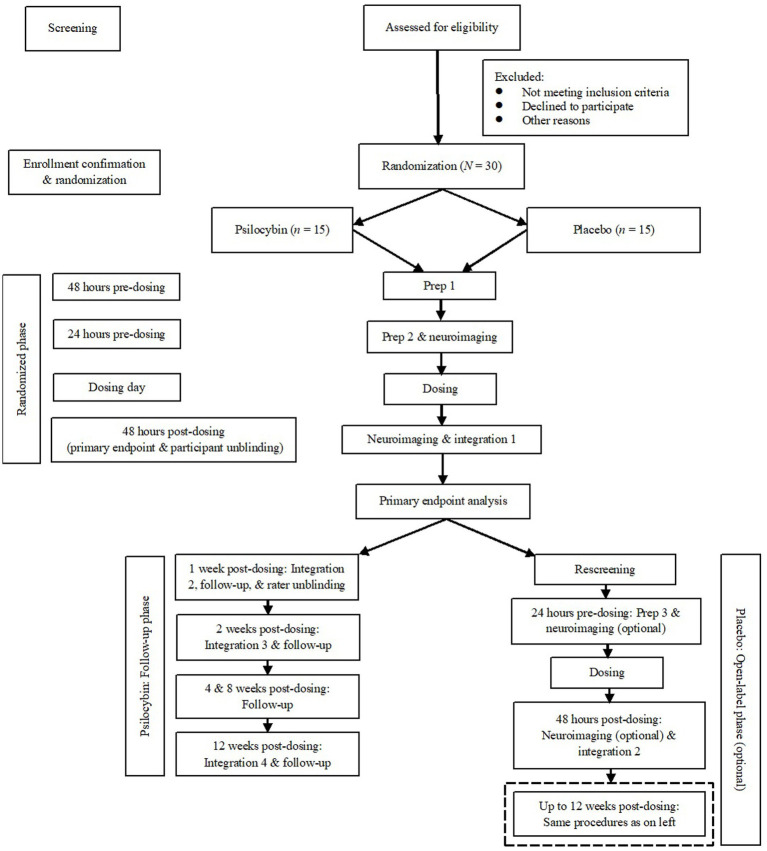
Background: Psilocybin may help treat obsessive-compulsive disorder (OCD). To date, only one open-label study of psilocybin for OCD exists, necessitating further investigation with a randomized controlled design. The neural correlates of psilocybin's effects on OCD have also not been studied. Objectives: This first-of-its-kind trial aims to evaluate the feasibility, safety, and tolerability of psilocybin in the treatment of OCD, provide preliminary evidence on the effects of psilocybin on OCD symptoms, and elucidate neural mechanisms that may mediate psilocybin's effects on OCD. Design: We use a randomized (1:1), double-blind, placebo-controlled, non-crossover design to examine the clinical and neural effects of either a single dose of oral psilocybin (0.25 mg/kg) or active placebo-control agent (250 mg of niacin) on OCD symptoms. Methods and analysis: We are enrolling 30 adult participants at a single site in Connecticut, USA who have failed at least one trial of standard care treatment (medication/psychotherapy) for OCD. All participants will also receive unstructured, non-directive psychological support during visits. Aside from safety, primary outcomes include OCD symptoms over the past 24 h, assessed by the Acute Yale-Brown Obsessive-Compulsive Scale and Visual Analog Scale ratings. These are collected by blinded, independent raters at baseline and the primary endpoint of 48 h post-dosing. Total follow-up is 12 weeks post-dosing. Resting state neuroimaging data will be collected at baseline and primary endpoint. Participants randomized to placebo will be offered the chance to return for an open-label dose of 0.25 mg/kg. Ethics statement: All participants will be required to provide written informed consent. The trial (protocol v. 5.2) was approved by the institutional review board (HIC #2000020355) and registered with ClinicalTrials.gov (NCT03356483). Discussion: This study may represent an advance in our ability to treat refractory OCD, and pave the way for future studies of neurobiological mechanisms of OCD that may respond to psilocybin.
Overview
The claims and statistics of this paper haven’t been checked yet.
Free: it reads the open-access text and checks the first 5 claims that cite a source we can check. Create a free account to check every claim.
Integrity signals
Registry
Cites
Statistics
Figures
Verification
Claims the paper makes
The claims and statistics of this paper haven’t been checked yet.
Free: it reads the open-access text and checks the first 5 claims that cite a source we can check. Create a free account to check every claim.
Claims other papers make about this one
Each is checked against this paper’s own text: does it say what the citing paper says it does?
The cited source says what the claim attributes to it.
In the citing paper
“In this study, we conducted a qualitative analysis of post-dosing interview data from 12 completers in the first, randomized, double-blind, single-dose, placebo-controlled trial of psilocybin for OCD (31, 33).”
Self-check
Percentages, sums and reported differences re-computed from the paper’s own numbers.
The self-check needs the paper’s full text.
Citations
Cites
The Pittsburgh Sleep Quality Index: a new instrument for psychiatric practice and research
Buysse, D. J., Reynolds, C. F., Monk, T. H., Berman, S. R., & Kupfer, D. J. (1989) · Psychiatry Research · doi:10.1016/0165-1781(89)90047-4 · Cited by 35,234
(1970) · Cited by 24,983
(1998) · The Journal of Clinical Psychiatry · Cited by 19,139
A new depression scale designed to be sensitive to change
Montgomery, S. A., & Åsberg, M. (1979) · British Journal of Psychiatry · doi:10.1192/bjp.134.4.382 · Cited by 13,962 · cited 1×
“Montgomery-Åsberg Depression Scale (MADRS) (59) 6.”
(1998) · PubMed · Cited by 10,216
(1976) · Medical Entomology and Zoology · Cited by 8,899
The Yale-Brown Obsessive Compulsive Scale: I. Development, Use, and Reliability
Goodman, W. K. (1989) · Archives of General Psychiatry · doi:10.1001/archpsyc.1989.01810110048007 · Cited by 7,712 · cited 10×
“A Y-BOCS score of 19 indicates moderate OCD symptom severity; with the criteria for a persisting diagnosis of OCD and the failure of at least one trial of standard care treatment (see Section 2.3.2), this cutoff score allows us to characterize our intended sample as treatmentrefractory.”
BackgroundMethodInfluentialScheier, M. F., Carver, C. S., & Bridges, M. W. (1994) · Journal of Personality and Social Psychology · doi:10.1037//0022-3514.67.6.1063 · Cited by 7,456
(2001) · Cited by 5,455
Inclusion of Other in the Self Scale and the structure of interpersonal closeness.
Aron, A., Aron, E. N., & Smollan, D. (1992) · Journal of Personality and Social Psychology · doi:10.1037/0022-3514.63.4.596 · Cited by 5,157 · cited 1×
“Inclusion of Other in the Self Scale (IOS) (82) 27.”
The PANAS-X: Manual for the Positive and Negative Affect Schedule - Expanded Form
Watson, D., & Clark, L. A. (1994) · University of Iowa · doi:10.17077/48vt-m4t2 · Cited by 3,700
The Obsessive-Compulsive Inventory: Development and validation of a short version.
Foa, E. B., Huppert, J. D., Leiberg, S., Langner, R., Kichic, R., Hajcak, G., & Salkovskis, P. M. (2002) · Psychological Assessment · doi:10.1037/1040-3590.14.4.485 · Cited by 2,959
Kessler, R. C., Petukhova, M., Sampson, N. A., Zaslavsky, A. M., & Wittchen, H. (2012) · International Journal of Methods in Psychiatric Research · doi:10.1002/mpr.1359 · Cited by 2,947
The clinical global impressions scale: applying a research tool in clinical practice.
Busner, J., & Targum, S. D. (2007) · PubMed Central · Cited by 2,813
The Yale-Brown Obsessive Compulsive Scale: II. Validity
Goodman, W. K. (1989) · Archives of General Psychiatry · doi:10.1001/archpsyc.1989.01810110054008 · Cited by 2,799 · cited 10×
“A Y-BOCS score of 19 indicates moderate OCD symptom severity; with the criteria for a persisting diagnosis of OCD and the failure of at least one trial of standard care treatment (see Section 2.3.2), this cutoff score allows us to characterize our intended sample as treatmentrefractory.”
BackgroundMethodInfluentialThe epidemiology of obsessive-compulsive disorder in the National Comorbidity Survey Replication
Ruscio, A. M., Stein, D. J., Chiu, W. T., & Kessler, R. C. (2010) · Molecular Psychiatry · doi:10.1038/mp.2008.94 · Cited by 2,771
Nisbet, E. K., Zelenski, J. M., & Murphy, S. A. (2009) · Environment and Behavior · doi:10.1177/0013916508318748 · Cited by 1,963
Griffiths, R. R., Richards, W. A., McCann, U., & Jesse, R. (2006) · Psychopharmacology · doi:10.1007/s00213-006-0457-5 · Cited by 1,684
A taxonomy of ethical ideologies.
Forsyth, D. R. (1980) · Journal of Personality and Social Psychology · doi:10.1037//0022-3514.39.1.175 · Cited by 1,535 · cited 1×
“Ethics Position Questionnaire (EPQ) (83) 28.”
Sheehan, D. V., Harnett-Sheehan, K., & Raj, B. A. (1996) · International Clinical Psychopharmacology · doi:10.1097/00004850-199606003-00015 · Cited by 1,440 · cited 1×
“Sheehan Disability Scale (SDS) (72) 17.”
Effects of Psilocybin-Assisted Therapy on Major Depressive Disorder: A Randomized Clinical Trial
Davis, A. K., Barrett, F. S., May, D. G., Cosimano, M. P., Sepeda, N. D., Johnson, M. W., Finan, P. H., & Griffiths, R. R. (2021) · JAMA Psychiatry · doi:10.1001/jamapsychiatry.2020.3285 · Cited by 1,301
Who Sees Human?: The Stability and Importance of Individual Differences in Anthropomorphism
Waytz, A., Cacioppo, J., & Epley, N. (2010) · Perspectives on Psychological Science · doi:10.1177/1745691610369336 · Cited by 1,228 · cited 2×
“Individual Differences in Anthropomorphism Questionnaire (IDAQ) (80) 25.”
BackgroundNeural correlates of the psychedelic state as determined by fMRI studies with psilocybin
Carhart-Harris, R. L., Erritzoe, D., Williams, T., Stone, J. M., Reed, L. J., Colasanti, A., Tyacke, R. J., Leech, R., Malizia, A. L., Murphy, K., et al. (2012) · Proceedings of the National Academy of Sciences · doi:10.1073/pnas.1119598109 · Cited by 1,172 · cited 1×
“org between the posterior cingulate cortex (PCC) and mPFC (39).”
BackgroundSingle-Dose Psilocybin for a Treatment-Resistant Episode of Major Depression
Goodwin, G. M., Aaronson, S. T., Alvarez, O., Arden, P. C., Baker, A., Bennett, J. C., Bird, C., Blom, R. E., Brennan, C., Brusch, D., et al. (2022) · New England Journal of Medicine · doi:10.1056/nejmoa2206443 · Cited by 1,167 · cited 1×
“Additionally, instances of serious adverse events (SAEs) have generally been low in these settings (29, 30).”
BackgroundPractice Guideline for the Treatment of Patients With Obsessive-Compulsive Disorder
(2008) · APA Practice Guidelines for the Treatment of Psychiatric Disorders: Comprehensive Guidelines and Guideline Watches · doi:10.1176/appi.books.9780890423363.149114 · Cited by 1,028
Levels of personal agency: Individual variation in action identification.
Vallacher, R. R., & Wegner, D. M. (1989) · Journal of Personality and Social Psychology · doi:10.1037/0022-3514.57.4.660 · Cited by 978
Berman, A. H., Bergman, H., Palmstierna, T., & Schlyter, F. (2005) · European Addiction Research · doi:10.1159/000081413 · Cited by 977 · cited 1×
“Drug Use Disorders Identification Test (DUDIT) (63) 9.”
BackgroundObsessions and compulsions: The Padua inventory
Sanavio, E. (1988) · Behaviour Research and Therapy · doi:10.1016/0005-7967(88)90116-7 · Cited by 925
Griffiths, R., Richards, W., Johnson, M., McCann, U., & Jesse, R. (2008) · Journal of Psychopharmacology · doi:10.1177/0269881108094300 · Cited by 905 · cited 1×
“, changes in body temperature, increases in blood pressure or heart rate) (27, 28).”
BackgroundObsessive Compulsive Cognitions Working Group (2005) · Behaviour Research and Therapy · doi:10.1016/j.brat.2004.07.010 · Cited by 880
Carpenter, J. K., Andrews, L. A., Witcraft, S. M., Powers, M. B., Smits, J. A. J., & Hofmann, S. G. (2018) · Depression and Anxiety · doi:10.1002/da.22728 · Cited by 846
Safety, tolerability, and efficacy of psilocybin in 9 patients with obsessive-compulsive disorder
Moreno, F. A., Wiegand, C. B., Taitano, E. K., & Delgado, P. L. (2006) · The Journal of Clinical Psychiatry · doi:10.4088/jcp.v67n1110 · Cited by 789 · cited 3×
“Consistent with prior research (35, 45), unstructured, non-directive psychological support will be provided during the dosing session, as well as during two pre-dosing preparatory visits over the two consecutive days immediately before blinded dosing, and during four integration/follow-up visits (i.”
BackgroundMethodThought-action fusion in obsessive compulsive disorder
Shafran, R., Thordarson, D. S., & Rachman, S. (1996) · Journal of Anxiety Disorders · doi:10.1016/0887-6185(96)00018-7 · Cited by 663 · cited 1×
“Thought-Action Fusion Scale (TAFS) (66) 12.”
Stages of change profiles in outpatient alcoholism treatment
DiClemente, C. C., & Hughes, S. O. (1990) · Journal of Substance Abuse · doi:10.1016/s0899-3289(05)80057-4 · Cited by 659 · cited 1×
“University of Rhode Island Change Assessment (URICA) (90) 34.”
BackgroundÖst, L.-G., Havnen, A., Hansen, B., & Kvale, G. (2015) · Clinical Psychology Review · doi:10.1016/j.cpr.2015.06.003 · Cited by 655
Cuijpers, P., Sijbrandij, M., Koole, S. L., Andersson, G., Beekman, A. T., & Reynolds, C. F. (2013) · World Psychiatry · doi:10.1002/wps.20038 · Cited by 540
Studerus, E., Kometer, M., Hasler, F., & Vollenweider, F. X. (2011) · Journal of Psychopharmacology · doi:10.1177/0269881110382466 · Cited by 532
Beck Depression Inventory-II (BDI-II)
Bortnick, K. (2024) · Occupational Therapy Assessments for Older Adults · doi:10.4324/9781003525288-77 · Cited by 491
Hartogsohn, I. (2016) · Journal of Psychopharmacology · doi:10.1177/0269881116677852 · Cited by 483
Responsibility attitudes and interpretations are characteristic of obsessive compulsive disorder
Salkovskis, P. M., Wroe, A. L., Gledhill, A., Morrison, N., Forrester, E., Richards, C., Reynolds, M., & Thorpe, S. (2000) · Behaviour Research and Therapy · doi:10.1016/s0005-7967(99)00071-6 · Cited by 451 · cited 1×
“Responsibility Attitude Scale (RAS) (67) 13.”
Hasler, F., Grimberg, U., Benz, M. A., Huber, T., & Vollenweider, F. X. (2004) · Psychopharmacology · doi:10.1007/s00213-003-1640-6 · Cited by 451
Treatment non-response in OCD: methodological issues and operational definitions
Pallanti, S., Hollander, E., Bienstock, C., Koran, L., Leckman, J., Marazziti, D., Pato, M., Stein, D., Zohar, J., & International Treatment Refractory OCD Consortium (2002) · The International Journal of Neuropsychopharmacology · doi:10.1017/s1461145702002900 · Cited by 416
MacLean, K. A., Leoutsakos, J. S., Johnson, M. W., & Griffiths, R. R. (2012) · Journal for the Scientific Study of Religion · doi:10.1111/j.1468-5906.2012.01685.x · Cited by 405
Randomized Controlled Crossover Trial of Ketamine in Obsessive-Compulsive Disorder: Proof-of-Concept
Rodriguez, C. I., Kegeles, L. S., Levinson, A., Feng, T., Marcus, S. M., Vermes, D., Flood, P., & Simpson, H. B. (2013) · Neuropsychopharmacology · doi:10.1038/npp.2013.150 · Cited by 386
Columbia-Suicide Severity Rating Scale (C-SSRS)
Shahid, A., Wilkinson, K., Marcu, S., & Shapiro, C. M. (2011) · STOP, THAT and One Hundred Other Sleep Scales · doi:10.1007/978-1-4419-9893-4_24 · Cited by 384
Barrett, F. S., Bradstreet, M. P., Leoutsakos, J.-M. S., Johnson, M. W., & Griffiths, R. R. (2016) · Journal of Psychopharmacology · doi:10.1177/0269881116678781 · Cited by 366
Andersen, K. A. A., Carhart‐Harris, R., Nutt, D. J., & Erritzoe, D. (2021) · Acta Psychiatrica Scandinavica · doi:10.1111/acps.13249 · Cited by 347
Soomro, G. M., Altman, D. G., Rajagopal, S., & Oakley Browne, M. (2008) · Cochrane Database of Systematic Reviews · doi:10.1002/14651858.cd001765.pub3 · Cited by 342
Milad, M. R., Furtak, S. C., Greenberg, J. L., Keshaviah, A., Im, J. J., Falkenstein, M. J., Jenike, M., Rauch, S. L., & Wilhelm, S. (2013) · JAMA Psychiatry · doi:10.1001/jamapsychiatry.2013.914 · Cited by 308
Markle, G. L. (2013) · Human Ecology · doi:10.1007/s10745-013-9614-8 · Cited by 285
Marques, L., LeBlanc, N. J., Weingarden, H. M., Timpano, K. R., Jenike, M., & Wilhelm, S. (2010) · Depression and Anxiety · doi:10.1002/da.20694 · Cited by 283
Efficacy of cognitive-behavioral therapy for obsessive-compulsive disorder
McKay, D., Sookman, D., Neziroglu, F., Wilhelm, S., Stein, D. J., Kyrios, M., Matthews, K., & Veale, D. (2015) · Psychiatry Research · doi:10.1016/j.psychres.2014.11.058 · Cited by 283
STEVANOVIC, D. (2011) · Journal of Psychiatric and Mental Health Nursing · doi:10.1111/j.1365-2850.2011.01735.x · Cited by 278
Psilocybin – Summary of knowledge and new perspectives
Tylš, F., Páleníček, T., & Horáček, J. (2014) · European Neuropsychopharmacology · doi:10.1016/j.euroneuro.2013.12.006 · Cited by 276 · cited 1×
“In summary, psilocybin appears to acutely modulate brain activity in OCD-relevant regions in healthy controls (42).”
BackgroundEffects of psilocybin on hippocampal neurogenesis and extinction of trace fear conditioning
Catlow, B. J., Song, S., Paredes, D. A., Kirstein, C. L., & Sanchez-Ramos, J. (2013) · Experimental Brain Research · doi:10.1007/s00221-013-3579-0 · Cited by 266 · cited 1×
“Additionally, a preclinical study showed that psilocybin facilitates acute extinction of classically conditioned fear responses and increases hippocampal neurogenesis (40).”
BackgroundReid, J. E., Laws, K. R., Drummond, L., Vismara, M., Grancini, B., Mpavaenda, D., & Fineberg, N. A. (2021) · Comprehensive Psychiatry · doi:10.1016/j.comppsych.2021.152223 · Cited by 266
Smigielski, L., Scheidegger, M., Kometer, M., & Vollenweider, F. X. (2019) · NeuroImage · doi:10.1016/j.neuroimage.2019.04.009 · Cited by 248 · cited 5×
“Safety measures assessed only during dosing include vitals and SUDs, and those assessed throughout the study duration include the Since Last Visit version of the C-SSRS (54), AEs, and any required changes to psychiatric or non-psychiatric medication regimens.”
BackgroundMethodInfluentialCarhart-Harris, R. L., Leech, R., Williams, T. M., Erritzoe, D., Abbasi, N., Bargiotas, T., Hobden, P., Sharp, D. J., Evans, J., Feilding, A., et al. (2012) · British Journal of Psychiatry · doi:10.1192/bjp.bp.111.103309 · Cited by 237
Quality of Life in Obsessive-Compulsive Disorder: Impact of the Disorder and of Treatment
Subramaniam, M., Soh, P., Vaingankar, J. A., Picco, L., & Chong, S. A. (2013) · CNS Drugs · doi:10.1007/s40263-013-0056-z · Cited by 185
Newman, E., Willard, T., Sinclair, R., & Kaloupek, D. (2001) · Accountability in Research · doi:10.1080/08989620108573983 · Cited by 180
Incompleteness and harm avoidance in OCD symptom dimensions
Ecker, W., & Gönner, S. (2008) · Behaviour Research and Therapy · doi:10.1016/j.brat.2008.04.002 · Cited by 164 · cited 2×
“Obsessive–Compulsive Trait Core Dimensions Questionnaire (OC-TCDQ) (56) 3.”
BackgroundEffects of Ketamine in Treatment-Refractory Obsessive-Compulsive Disorder
Bloch, M. H., Wasylink, S., Landeros-Weisenberger, A., Panza, K. E., Billingslea, E., Leckman, J. F., Krystal, J. H., Bhagwagar, Z., Sanacora, G., & Pittenger, C. (2012) · Biological Psychiatry · doi:10.1016/j.biopsych.2012.05.028 · Cited by 162 · cited 3×
“To test the secondary hypothesis that normalization of activity in these regions at 48 h postdosing will correlate with clinical improvement in OCD symptoms (i.e., on the VAS for OCD symptoms, AY-BOCS, and Y-BOCS), we will conduct a correlational analysis with these variables.”
BackgroundSelf-citationShin, D.-J., Jung, W. H., He, Y., Wang, J., Shim, G., Byun, M. S., Jang, J. H., Kim, S. N., Lee, T. Y., Park, H. Y., et al. (2014) · Biological Psychiatry · doi:10.1016/j.biopsych.2013.09.002 · Cited by 162 · cited 1×
“For example, SSRI pharmacotherapy in depression (43) and OCD (44) have been shown to “normalize” aberrant connectivity in key brain regions (particularly the default mode network).”
BackgroundQuality of life in obsessive compulsive disorder
Macy, A. S., Theo, J. N., Kaufmann, S. C. V., Ghazzaoui, R. B., Pawlowski, P. A., Fakhry, H. I., Cassmassi, B. J., & IsHak, W. W. (2013) · CNS Spectrums · doi:10.1017/s1092852912000697 · Cited by 150 · cited 2×
“The PI will form a Data and Safety Monitoring Board (DSMB) comprising: (1) a psychiatrist with extensive OCD experience; (2) a cardiologist or internal medicine specialist; and (3) a general physician.”
BackgroundMethodThat's easy for you to say: Action identification and speech fluency.
Vallacher, R. R., Wegner, D. M., & Somoza, M. P. (1989) · Journal of Personality and Social Psychology · doi:10.1037//0022-3514.56.2.199 · Cited by 150
Gadot, R., Najera, R., Hirani, S., Anand, A., Storch, E., Goodman, W. K., Shofty, B., & Sheth, S. A. (2022) · Journal of Neurology, Neurosurgery & Psychiatry · doi:10.1136/jnnp-2021-328738 · Cited by 148
Fegg, M. J., Kramer, M., L’hoste, S., & Borasio, G. D. (2008) · Journal of Pain and Symptom Management · doi:10.1016/j.jpainsymman.2007.05.007 · Cited by 133
Molecular Mechanisms of Psilocybin and Implications for the Treatment of Depression
Ling, S., Ceban, F., Lui, L. M. W., Lee, Y., Teopiz, K. M., Rodrigues, N. B., Lipsitz, O., Gill, H., Subramaniapillai, M., Mansur, R. B., et al. (2022) · CNS Drugs · doi:10.1007/s40263-021-00877-y · Cited by 127 · cited 1×
“When ingested, psilocybin is metabolized into psilocin, which is an agonist or partial agonist at several serotonin receptors, with complex downstream effects (24, 25).”
BackgroundPharmacotherapy of obsessive–compulsive disorder: evidence-based treatment and beyond
Fineberg, N. A., Reghunandanan, S., Brown, A., & Pampaloni, I. (2013) · Australian & New Zealand Journal of Psychiatry · doi:10.1177/0004867412461958 · Cited by 122
Efficacy of cognitive-behavioral therapy for obsessive–compulsive disorder
McKay, D., Sookman, D., Neziroglu, F. A., Wilhelm, S., Stein, D. J., Kyrios, M., Matthews, K., & Veale, D. M. (2015) · Psychiatry Research · doi:10.1016/j.psychres.2015.02.004 · Cited by 112
Bloch, M. H., Green, C., Kichuk, S. A., Dombrowski, P. A., Wasylink, S., Billingslea, E., Landeros-Weisenberger, A., Kelmendi, B., Goodman, W. K., Leckman, J. F., et al. (2013) · Depression and Anxiety · doi:10.1002/da.22103 · Cited by 94 · cited 1×
“Further, many OCD patients classified as responders in SSRI and CBT/ERP trials remain symptomatic and lead restricted lives (20).”
BackgroundSelf-citationIssari, Y., Jakubovski, E., Bartley, C. A., Pittenger, C., & Bloch, M. H. (2016) · The Journal of Clinical Psychiatry · doi:10.4088/jcp.14r09758 · Cited by 92
A meta-analysis of relapse rates in cognitive-behavioral therapy for anxiety disorders
Levy, H. C., O’Bryan, E. M., & Tolin, D. F. (2021) · Journal of Anxiety Disorders · doi:10.1016/j.janxdis.2021.102407 · Cited by 91
Hallucinogen-induced relief of obsessions and compulsions
Moreno, F., & Delgado, P. L. (1997) · American Journal of Psychiatry · doi:10.1176/ajp.154.7.1037b · Cited by 85
Relief of obsessive-compulsive symptoms by LSD and psilocin
Leonard, H. L., & RAPOPORT, J. L. (1987) · American Journal of Psychiatry · doi:10.1176/ajp.144.9.1239b · Cited by 81
Look Again: Effects of Brain Images and Mind–Brain Dualism on Lay Evaluations of Research
Hook, C. J., & Farah, M. J. (2013) · Journal of Cognitive Neuroscience · doi:10.1162/jocn_a_00407 · Cited by 75
The therapeutic potential of psilocybin: a systematic review
van Amsterdam, J., & van den Brink, W. (2022) · Expert Opinion on Drug Safety · doi:10.1080/14740338.2022.2047929 · Cited by 74
Psilocybin in neuropsychiatry: a review of its pharmacology, safety, and efficacy
Dodd, S., Norman, T. R., Eyre, H. A., Stahl, S. M., Phillips, A., Carvalho, A. F., & Berk, M. (2023) · CNS Spectrums · doi:10.1017/s1092852922000888 · Cited by 73
A 2012 evidence-based algorithm for the pharmacotherapy for obsessive-compulsive disorder
Stein, D. J., Koen, N., Fineberg, N., Fontenelle, L. F., Matsunaga, H., Osser, D., & Simpson, H. B. (2012) · Current Psychiatry Reports · doi:10.1007/s11920-012-0268-9 · Cited by 65
QuNex—An integrative platform for reproducible neuroimaging analytics
Ji, J. L., Demšar, J., Fonteneau, C., Tamayo, Z., Pan, L., Kraljič, A., Matkovič, A., Purg, N., Helmer, M., Warrington, S., et al. (2023) · Frontiers in Neuroinformatics · doi:10.3389/fninf.2023.1104508 · Cited by 63
Psilocybin and Obsessive Compulsive Disorder
Wilcox, J. A. (2014) · Journal of Psychoactive Drugs · doi:10.1080/02791072.2014.963754 · Cited by 54
Martens, M., Filippini, N., Harmer, C. J., & Godlewska, B. R. (2021) · Psychopharmacology · doi:10.1007/s00213-021-05915-7 · Cited by 48
Keleher, J., Jassi, A. D., & Krebs, G. (2019) · Journal of Obsessive-Compulsive and Related Disorders · doi:10.1016/j.jocrd.2019.100498 · Cited by 44
Kaup, K., Vasser, M., Tulver, K., Munk, M., Pikamäe, J., & Aru, J. (2023) · Frontiers in Psychiatry · doi:10.3389/fpsyt.2023.1088896 · Cited by 33
Costa, D. L. D. C., Polpo, A., Pereira, C. A. D. B., Torres, A. R., dos Santos, A. C., Requena, G. D. L., Ferrão, Y. A., do Rosário, M. C., Miguel, E. C., Simpson, H. B., et al. (2022) · Psychiatry Research · doi:10.1016/j.psychres.2022.114567 · Cited by 24
Longitudinal course of pharmacotherapy in obsessive–compulsive disorder
Grant, J. E., Mancebo, M. C., Weinhandl, E., Odlaug, B. L., Eisen, J. L., & Rasmussen, S. A. (2013) · International Clinical Psychopharmacology · doi:10.1097/yic.0b013e3283613e4d · Cited by 12 · cited 1×
“Relapse after SSRI discontinuation or completion of CBT is also common (21, 22).”
BackgroundChing, T. H. W., Kichuk, S. A., DePalmer, G., Pittenger, C., & Kelmendi, B. (2022) · PsyArXiv (OSF Preprints) · doi:10.31234/osf.io/85s9p · Cited by 8
QuNex – An Integrative Platform for Reproducible Neuroimaging Analytics
Ji, J. L., Demšar, J., Fonteneau, C., Tamayo, Z., Pan, L., Kraljič, A., Matkovič, A., Purg, N., Helmer, M., Warrington, S., et al. (2022) · doi:10.1101/2022.06.03.494750
Research works printed but not linked: 9
- Williams MT Ching THW. Obsessive-compulsive disorder in ethnoracial minorities: symptoms, barriers to, and considerations for treatment In: Pittenger C, editor. Obsessive-compulsive disorder: Phenomenology, pathophysiology, and treatment. New York: Oxford University Press (2017). 703– 14.
- First MB Gibbon M Spitzer RL Williams JBW Benjamin LS. SCID-II personality questionnaire. Washington, DC: American Psychiatric Press (1997).
- Saunders JB Aasland OG. WHO collaborative project on the identification and treatment of persons with harmful alcohol consumption: Report on phase I, the development of a screening instrument. Geneva, Switzerland: World Health Organization (1987).
- Multidisciplinary Association for Psychedelic Science (MAPS). Self-reported nicotine use (SRNU). Santa Cruz, CA: MAPS (2017).
- DeYoung CG Quilty LC Peterson JB. Big five aspects scale (BFAS). Washington, DC: APA (2007).
- Dittrich A Lamparter D Maurer M. A short introduction. Zurich, Switzerland: PSIN PLUS (2010).
- Newman E Kaloupek D. Reactions to research participation questionnaire. Unpublished instrument. Tulsa, OK: University of Tulsa (1996).
- Multidisciplinary Association for Psychedelic Science (MAPS). Utilization of facility and emergent care (UFEC). Santa Cruz, CA: MAPS (2017).
- Smith JA Flowers P Larkin M. Interpretative phenomenological analysis: theory, research, practice. London, UK: SAGE (2009).
Cited by
Bhatt, K. V., & Weissman, C. R. (2024) · npj Mental Health Research · doi:10.1038/s44184-023-00053-8 · Cited by 34
Psilocybin for the treatment of Alzheimer’s disease
Zheng, S., Ma, R., Yang, Y., & Li, G. (2024) · Frontiers in Neuroscience · doi:10.3389/fnins.2024.1420601 · Cited by 28
Adverse psychiatric effects of psychedelic drugs: a systematic review of case reports
Yildirim, B., Sahin, S. S., Gee, A., Jauhar, S., Rucker, J., Salgado‐Pineda, P., Pomarol‐Clotet, E., & McKenna, P. J. (2024) · Psychological Medicine · doi:10.1017/s0033291724002496 · Cited by 32
“Two double-blind placebo-controlled trials of psilocybin for obsessive-compulsive disorder are currently underway (Ching et al., 2023a, 2023b).”
Psychedelics for the Treatment of Obsessive–Compulsive Disorder: Efficacy and Proposed Mechanisms
Collins, H. M. (2024) · The International Journal of Neuropsychopharmacology · doi:10.1093/ijnp/pyae057 · Cited by 29
Pellegrini, L., Fineberg, N. A., O'Connor, S., de Souza, A. M. F. L. P., Godfrey, K., Reed, S., Peill, J. M., Healy, M. P., Rohani-Shukla, C., Lee, H., et al. (2025) · Comprehensive Psychiatry · doi:10.1016/j.comppsych.2025.152619 · Cited by 33
Metadata
- Authors
- Ching, T. H. W., Grazioplene, R., Bohner, C., Kichuk, S. A., DePalmer, G., D’Amico, E., Eilbott, J., Jankovsky, A., Burke, M., Hokanson, J., Martins, B., Witherow, C., Patel, P., Amoroso, L., Schaer, H., Pittenger, C., & Kelmendi, B.
- Affiliations
- Yale University (US)
- Corresponding author
- Ching, Terence H. W.
- ORCID
- Venue
- Frontiers in Psychiatry
- Publisher
- Frontiers Media SA
- Published
- 2023-04-25
- Volume
- 14
- Pages
- 1178529-1178529
- ISSN
- 1664-0640 (ISSN-L)
- PMC
- PMC10166878
- OpenAlex
- W4366989647
- Cited by
- 29
- References
- 88
- Citations by year
- 2026: 5 · 2025: 9 · 2024: 14 · 2023: 1
- FWCI
- 8.43
- Type
- journal article
- Language
- en
- Open access
- gold
- doi.org
- Licence
- Locations
- Frontiers in Psychiatry (publishedVersion, cc-by)
- PubMed Central (publishedVersion, cc-by)
- PubMed (publishedVersion)
- DOAJ (DOAJ: Directory of Open Access Journals) (submittedVersion, cc-by-sa)
- Funders
- Yale University
- National Institute of Mental Health (K23MH122777)
- Yale Center for Clinical Investigation, Yale School of Medicine
- Topics
- Social Sciences › Psychology › Clinical Psychology › Psychedelics and Drug Studies
- Social Sciences › Psychology › Clinical Psychology › Obsessive-Compulsive Spectrum Disorders
- Health Sciences › Medicine › Psychiatry and Mental health › Schizophrenia research and treatment
- Keywords
- psilocybin, obsessive-compulsive disorder, treatment-resistant OCD, treatment-resistant depression, psychedelic therapy
About these checks
Registry, retraction, Cites and statistics results are computed, not judged, with one exception: a printed reference that no index lists is read once by a model before it counts as a citation error. Claims are extracted by a model and kept only when their quote appears verbatim in the text; each cited source is then checked, with a model’s help, for whether it says what the claim relies on. Those verdicts can be wrong — read the claim’s quote and the cited source before relying on one.
Statistics and arithmetic are recomputed, not judged.
Confidence bands are shown only for fields calibrated on our annotated test set. None is calibrated yet, so no band is shown.
What counts as a claim ›How we measure confidence ›How we check this ›
Are you an author, or do you see a problem with this page? Request a review
Data sources
Bibliographic data: Semantic Scholar, OpenAlex, Crossref.
Contains information from the Semantic Scholar Academic Graph Datasets, made available under the ODC Attribution License (ODC-BY 1.0).
Semantic Scholar’s data is described in: Kinney, R., et al. (2023). The Semantic Scholar Open Data Platform. arXiv:2301.10140.
