

The DOI matches its Crossref record; 20 of the 20 references it cites were found in a registry or an index.
Interaction Matters: The Effect of Touching the Social Robot PARO on Pain and Stress is Stronger When Turned ON vs. OFF
Abstract
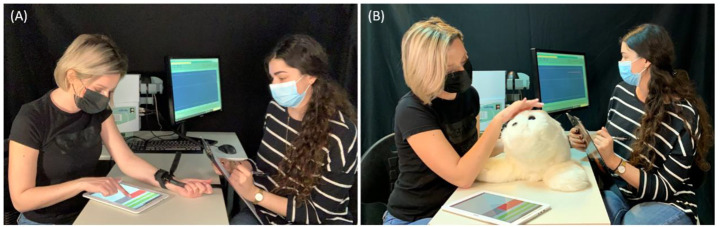
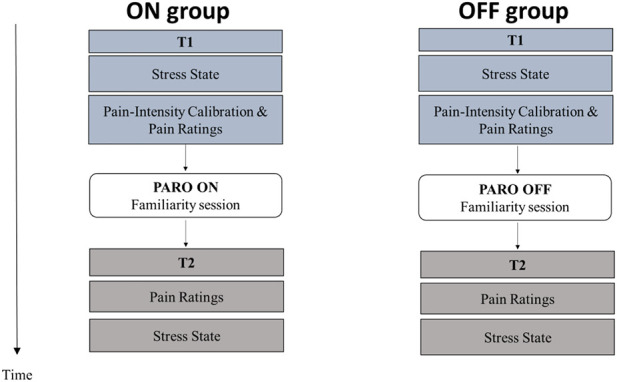
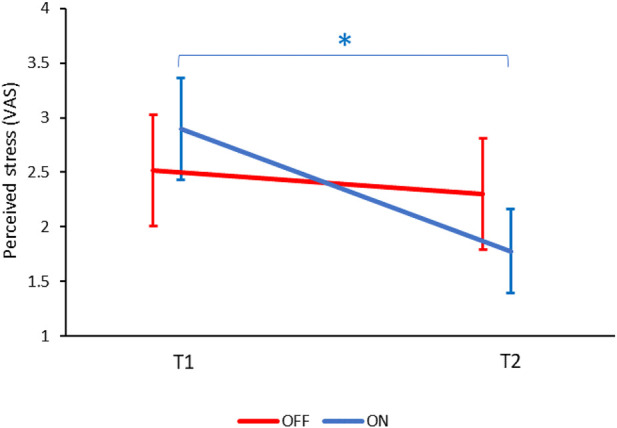
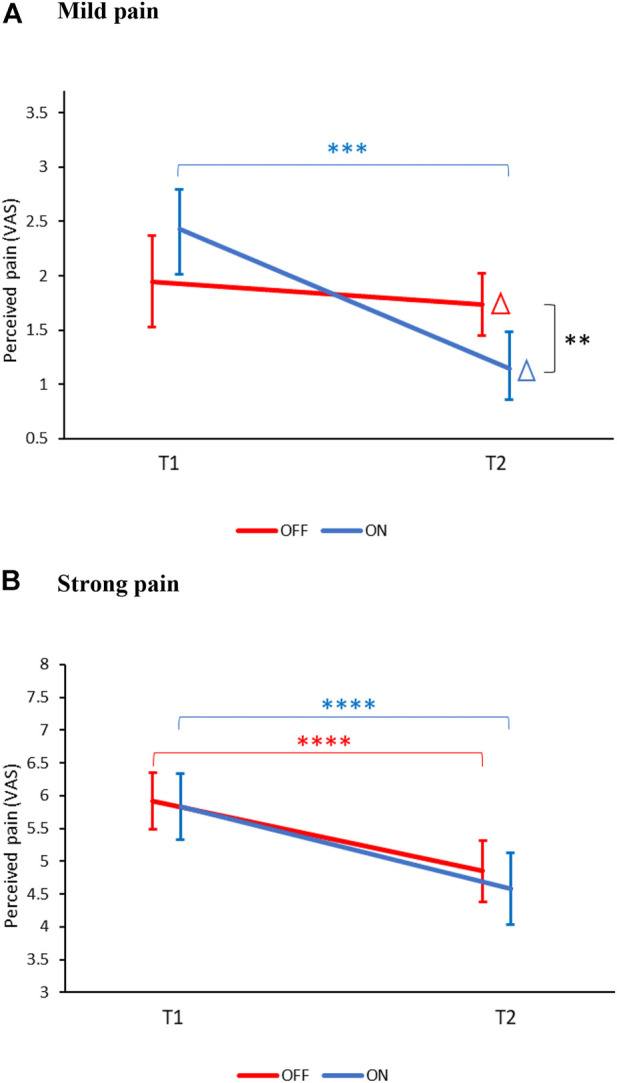
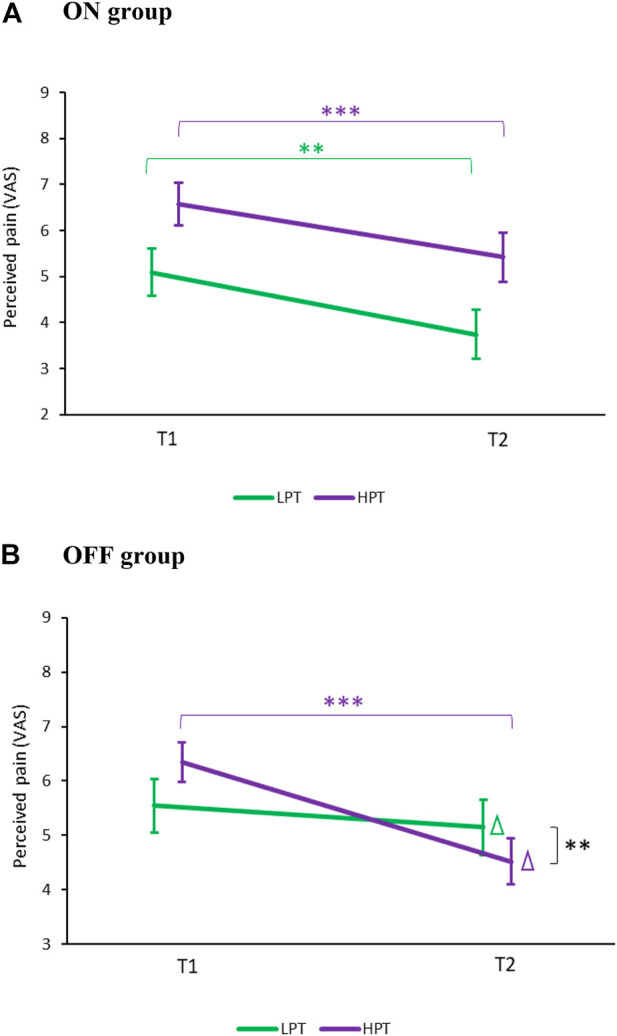
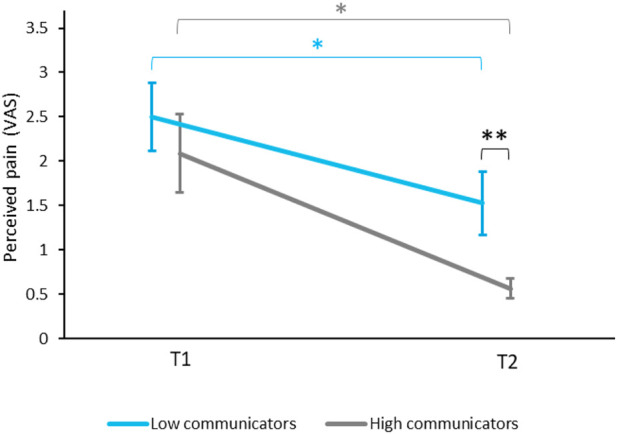
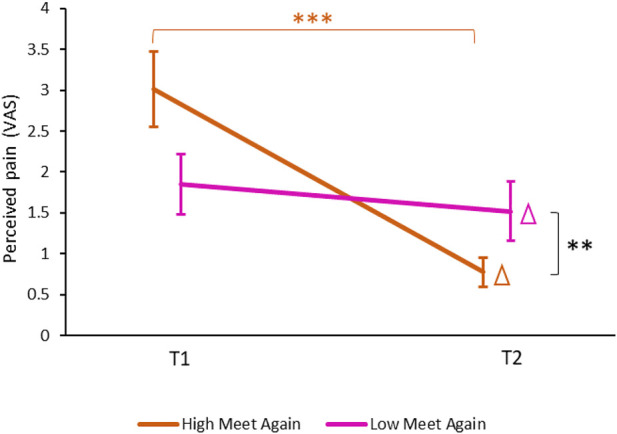
Social touch between humans, as well as between humans and animals, was previously found to reduce pain and stress. We previously reported that touching a social robot can also induce a reduction in pain ratings. However, it is unclear if the effect that touching a robot has on pain perception is due to its appearance and its pleasant touch, or due to its ability to socially interact with humans. In the current experiment, we aimed to assess the contribution of the interactive quality to pain perception. We assessed the effect of touching the social robot PARO on mild and strong pain ratings and on stress perception, on a total of 60 healthy young participants. The robot either interacted with participants (ON group, n = 30) or was turned off (OFF group, n = 30). Touching the robot induced a decrease in mild pain ratings (compared to baseline) only in the ON group while strong pain ratings decreased similarly in both the ON and the OFF groups. The decrease in mild pain ratings in the ON group was significantly greater in participants with a higher positive perception of the interaction with PARO. We conclude that part of the effect that touching the robot has on pain stems from its interactive features.
Overview
The claims and statistics of this paper haven’t been checked yet.
Run the check — free, no account needed. It reads the open-access text and checks the sources it cites.
Integrity signals
Registry
Cites
Statistics
Figures
Verification
Claims the paper makes
The claims and statistics of this paper haven’t been checked yet.
Run the check — free, no account needed. It reads the open-access text and checks the sources it cites.
Claims other papers make about this one
Each is checked against this paper’s own text: does it say what the citing paper says it does?
The source backs part of the claim, not all of it — or backs it for a different population, condition or comparison.
In the citing paper
“Earlier experimental work similarly suggested that touching PARO, compared with its mere presence, was associated with reduced pain perception and increased happiness, with stronger hypoallergic effects observed among participants who reported more positive experiences and a greater perceived ability to communicate with the robot [24,54].”
From The Effectiveness of Artificial Intelligence-Based Pet Therapy in Improving the Care of Patients: A Systematic Review (2026) · cites this paper as [24]
Experimental — accuracy not yet measuredThe cited source says what the claim attributes to it.
In the citing paper
“interactive PARO was associated with reductions in stress and mild pain”
From The Effectiveness of Artificial Intelligence-Based Pet Therapy in Improving the Care of Patients: A Systematic Review (2026) · cites this paper as [24]
In the citing paper
“robot responsiveness may contribute to therapeutic outcomes”
From The Effectiveness of Artificial Intelligence-Based Pet Therapy in Improving the Care of Patients: A Systematic Review (2026) · cites this paper as [24]
In the citing paper
“In healthy adults, interactions with PARO reduce stress and mild pain, with enjoyment moderating effects [24].”
From The Effectiveness of Artificial Intelligence-Based Pet Therapy in Improving the Care of Patients: A Systematic Review (2026) · cites this paper as [24]
Self-check
Percentages, sums and reported differences re-computed from the paper’s own numbers.
The self-check needs the paper’s full text.
Citations
Cites
Advances in subjective well-being research
Diener, E., Oishi, S., & Tay, L. (2018) · Nature Human Behaviour · doi:10.1038/s41562-018-0307-6 · Cited by 2,003
Valtorta, N. K., Kanaan, M., Gilbody, S., Ronzi, S., & Hanratty, B. (2016) · Heart · doi:10.1136/heartjnl-2015-308790 · Cited by 1,971
Neuronal circuits for fear and anxiety
Tovote, P., Fadok, J. P., & Lüthi, A. (2015) · Nature Reviews Neuroscience · doi:10.1038/nrn3945 · Cited by 1,786
Stress, memory and the amygdala
Roozendaal, B., McEwen, B. S., & Chattarji, S. (2009) · Nature Reviews Neuroscience · doi:10.1038/nrn2651 · Cited by 1,760
Mindfulness Meditation for Chronic Pain: Systematic Review and Meta-analysis
Hilton, L., Hempel, S., Ewing, B. A., Apaydin, E., Xenakis, L., Newberry, S., Colaiaco, B., Maher, A. R., Shanman, R. M., Sorbero, M. E., et al. (2017) · Annals of Behavioral Medicine · doi:10.1007/s12160-016-9844-2 · Cited by 977
Tull, M. T., Edmonds, K. A., Scamaldo, K. M., Richmond, J. R., Rose, J. P., & Gratz, K. L. (2020) · Psychiatry Research · doi:10.1016/j.psychres.2020.113098 · Cited by 922
Loneliness: A signature mental health concern in the era of COVID-19
Killgore, W. D. S., Cloonan, S. A., Taylor, E. C., & Dailey, N. S. (2020) · Psychiatry Research · doi:10.1016/j.psychres.2020.113117 · Cited by 915
Beetz, A., Uvnäs-Moberg, K., Julius, H., & Kotrschal, K. (2012) · Frontiers in Psychology · doi:10.3389/fpsyg.2012.00234 · Cited by 904 · cited 1×
“Previous studies demonstrate that interaction and especially petting a companion animal can provide a calming effect and increase positive emotions (Walsh, 2009; Beetz et al., 2012; Bao and Schreer, 2016; Gee et al., 2017; Charry-Sánchez et al., 2018; Young et al., 2020).”
BackgroundDitzen, B., Neumann, I. D., Bodenmann, G., von Dawans, B., Turner, R. A., Ehlert, U., & Heinrichs, M. (2007) · Psychoneuroendocrinology · doi:10.1016/j.psyneuen.2007.03.011 · Cited by 525
A visual analogue scale technique to measure global vigor and affect
Monk, T. H. (1989) · Psychiatry Research · doi:10.1016/0165-1781(89)90013-9 · Cited by 418
Wada, K., Shibata, T., Saito, T., Sakamoto, K., & Tanie, K. (2006) · Proceedings of the 2005 IEEE International Conference on Robotics and Automation · doi:10.1109/robot.2005.1570535 · Cited by 288
Social Isolation and Stress-related Cardiovascular, Lipid, and Cortisol Responses
Grant, N., Hamer, M., & Steptoe, A. (2009) · Annals of Behavioral Medicine · doi:10.1007/s12160-009-9081-z · Cited by 263
Performance-dependent inhibition of pain by an executive working memory task
Buhle, J., & Wager, T. D. (2010) · Pain · doi:10.1016/j.pain.2009.10.027 · Cited by 249
Social Robots for People with Aging and Dementia: A Systematic Review of Literature
Góngora Alonso, S., Hamrioui, S., de la Torre Díez, I., Motta Cruz, E., López-Coronado, M., & Franco, M. (2019) · Telemedicine and e-Health · doi:10.1089/tmj.2018.0051 · Cited by 223
The social threats of COVID-19 for people with chronic pain
Karos, K., McParland, J. L., Bunzli, S., Devan, H., Hirsh, A., Kapos, F. P., Keogh, E., Moore, D., Tracy, L. M., & Ashton-James, C. E. (2020) · Pain · doi:10.1097/j.pain.0000000000002004 · Cited by 149
Pacheco, D. D. F., Romero, T. R. L., & Duarte, I. D. G. (2014) · Brain Research · doi:10.1016/j.brainres.2014.03.026 · Cited by 122
Dreisoerner, A., Junker, N. M., Schlotz, W., Heimrich, J., Bloemeke, S., Ditzen, B., & van Dick, R. (2021) · Comprehensive Psychoneuroendocrinology · doi:10.1016/j.cpnec.2021.100091 · Cited by 118 · cited 1×
“Especially during exposure to acute or chronic stressors, social touch may act as a stress buffer and reduce the physiological and behavioral stress response (Morrison, 2016; Dreisoerner et al., 2021).”
BackgroundFeuille, M., & Pargament, K. (2015) · Journal of Health Psychology · doi:10.1177/1359105313508459 · Cited by 101
Affective regulation through touch: homeostatic and allostatic mechanisms
Fotopoulou, A., von Mohr, M., & Krahé, C. (2022) · Current Opinion in Behavioral Sciences · doi:10.1016/j.cobeha.2021.08.008 · Cited by 87
Oxytocin enhances the pain‐relieving effects of social support in romantic couples
Kreuder, A., Wassermann, L., Wollseifer, M., Ditzen, B., Eckstein, M., Stoffel‐Wagner, B., Hennig, J., Hurlemann, R., & Scheele, D. (2019) · Human Brain Mapping · doi:10.1002/hbm.24368 · Cited by 62 · cited 1×
“In particular, social relationship that involve social touch (i.e., stroking, hugging or holding hands) were found to reduce stress and pain perception (Goldstein et al., 2016; Morrison, 2016; Ditzen et al., 2019; Kreuder et al., 2019).”
Background
Research works printed but not linked: 107
- Attal, 2021, Potential for Increased Prevalence of Neuropathic Pain after the COVID-19 Pandemic, Pain Rep., 6, e884, 10.1097/pr9.0000000000000884 · DOI
- Bannon, 2021, The Role of Social Isolation in Physical and Emotional Outcomes Among Patients with Chronic Pain, General Hosp. psychiatry, 69, 50, 10.1016/j.genhosppsych.2021.01.009 · DOI
- Bao, 2016, Pets and Happiness: Examining the Association between Pet Ownership and Wellbeing, Anthrozoös, 29, 283, 10.1080/08927936.2016.1152721 · DOI
- Bardoni, 2013, Pre- and Postsynaptic Inhibitory Control in the Spinal Cord Dorsal Horn, Ann. N.Y. Acad. Sci., 1279, 90, 10.1111/nyas.12056 · DOI
- Barré, 2017, The Visual Analogue Scale: An Easy and Reliable Way of Assessing Perceived Stress, Qual. Prim. Health Care, 1, 1
- Beekman, 2016, Need to Belong, Not Rejection Sensitivity, Moderates Cortisol Response, Self-Reported Stress, and Negative Affect Following Social Exclusion, J. Soc. Psychol., 156, 131, 10.1080/00224545.2015.1071767 · DOI
- Beran, 2013, Reducing Children's Pain and Distress towards Flu Vaccinations: a Novel and Effective Application of Humanoid Robotics, Vaccine, 31, 2772, 10.1016/j.vaccine.2013.03.056 · DOI
- Beran, 2015, Humanoid Robotics in Health Care: An Exploration of Children's and Parents' Emotional Reactions, J. Health Psychol., 20, 984, 10.1177/1359105313504794 · DOI
- Birnie, 2017, Mechanisms of Distraction in Acute Pain Perception and Modulation, Pain, 158, 1012, 10.1097/j.pain.0000000000000913 · DOI
- Björnsdotter, 2011, Vicarious Responses to Social Touch in Posterior Insular Cortex Are Tuned to Pleasant Caressing Speeds, J. Neurosci., 31, 9554, 10.1523/JNEUROSCI.0397-11.2011 · DOI
- Braz, 2014, Transmitting Pain and Itch Messages: a Contemporary View of the Spinal Cord Circuits that Generate Gate Control, Neuron, 82, 522, 10.1016/j.neuron.2014.01.018 · DOI
- Burleson, 2013, 10 Social Touch and Resilience," The Resilience Handbook: Approaches to Stress and Trauma, 131
- Carrillo-de-la-Peña, 2021, Effects of the COVID-19 Pandemic on Chronic Pain in Spain: a Scoping Review, Pain Rep., 6, e899, 10.1097/pr9.0000000000000899 · DOI
- Case, 2021, The Role of Expectations and Endogenous Opioids in Mindfulness-Based Relief of Experimentally Induced Acute Pain, Psychosom. Med., 83, 549, 10.1097/psy.0000000000000908 · DOI
- Céspedes Gómez, 2021, A Socially Assistive Robot for Long-Term Cardiac Rehabilitation in the Real World, Front. Neurorobotics, 15, 21, 10.3389/fnbot.2021.633248 · DOI
- Charry-Sánchez, 2018, Animal-assisted Therapy in Adults: A Systematic Review, Complementary Ther. Clin. Pract., 32, 169, 10.1016/j.ctcp.2018.06.011 · DOI
- Che, 2021, Social Touch Modulates Pain-Evoked Increases in Facial Temperature, Curr. Psychol., 1, 10.1007/s12144-020-01212-2 · DOI
- Clauw, 2020, Considering the Potential for an Increase in Chronic Pain after the COVID-19 Pandemic, Pain, 161, 1694, 10.1097/j.pain.0000000000001950 · DOI
- Cohavi, 2022, Young and Old Users Prefer Immersive Virtual Reality over a Social Robot for Short-Term Cognitive Training, Int. J. Human-Computer Stud., 161, 102775, 10.1016/j.ijhcs.2022.102775 · DOI
- Crossman, 2018, The Influence of a Socially Assistive Robot on Mood, Anxiety, and Arousal in Children, Prof. Psychol. Res. Pract., 49, 48, 10.1037/pro0000177 · DOI
- Davis, 1992, The Role of the Amygdala in Fear and Anxiety, Annu. Rev. Neurosci., 15, 353, 10.1146/annurev.ne.15.030192.002033 · DOI · Paper page
- Demir, 2012, Social Skills, Friendship and Happiness: A Cross-Cultural Investigation, J. Soc. Psychol., 152, 379, 10.1080/00224545.2011.591451 · DOI
- Ditzen, 2019, Intimacy as Related to Cortisol Reactivity and Recovery in Couples Undergoing Psychosocial Stress, Psychosom. Med., 81, 16, 10.1097/psy.0000000000000633 · DOI
- Eckstein, 2020, Calming Effects of Touch in Human, Animal, and Robotic Interaction—Scientific State-Of-The-Art and Technical Advances, Front. psychiatry, 11, 555058, 10.3389/fpsyt.2020.555058 · DOI · Paper page
- Edwards, 2020, Using Robot Animal Companions in the Academic Library to Mitigate Student Stress, 10.1108/LHT-07-2020-0148 · DOI
- Eizicovits, 2018, Robotic Gaming Prototype for Upper Limb Exercise: Effects of Age and Embodiment on User Preferences and Movement, Rnn, 36, 261, 10.3233/rnn-170802 · DOI
- Ellingsen, 2016, The Neurobiology Shaping Affective Touch: Expectation, Motivation, and Meaning in the Multisensory Context, Front. Psychol., 6, 1986, 10.3389/fpsyg.2015.01986 · DOI
- Eskander, 2013, Pilot Study of the PARO Therapeutic Robot Demonstrates Decreased Pain, Fatigue, and Anxiety Among Patients with Recurrent Ovarian Carcinoma, Gynecol. Oncol., 130, e144, 10.1016/j.ygyno.2013.04.410 · DOI
- Fairhurst, 2014, Physiological and Behavioral Responses Reveal 9-Month-Old Infants' Sensitivity to Pleasant Touch, Psychol. Sci., 25, 1124, 10.1177/0956797614527114 · DOI
- Feingold-Polak, 2021, A Robot Goes to Rehab: a Novel Gamified System for Long-Term Stroke Rehabilitation Using a Socially Assistive Robot—Methodology and Usability Testing, J. NeuroEngineering Rehabilitation, 18, 1, 10.1186/s12984-021-00915-2 · DOI
- Feldman, 2010, Natural Variations in Maternal and Paternal Care Are Associated with Systematic Changes in Oxytocin Following Parent-Infant Contact, Psychoneuroendocrinology, 35, 1133, 10.1016/j.psyneuen.2010.01.013 · DOI · Paper page
- Feldman, 2011, Maternal and Paternal Plasma, Salivary, and Urinary Oxytocin and Parent-Infant Synchrony: Considering Stress and Affiliation Components of Human Bonding, Dev. Sci., 14, 752, 10.1111/j.1467-7687.2010.01021.x · DOI · Paper page
- Fidanza, 2021, A Better Touch: C-Tactile Fibers Related Activity Is Associated to Pain Reduction during Temporal Summation of Second Pain, J. Pain, 22, 567, 10.1016/j.jpain.2021.01.001 · DOI
- Gates, 2020, Digital Technology Distraction for Acute Pain in Children: a Meta-Analysis, Pediatrics, 145, e20191139, 10.1542/peds.2019-1139 · DOI
- Gee, 2017, Human-Animal Interaction and Older Adults: An Overview, Front. Psychol., 8, 1416, 10.3389/fpsyg.2017.01416 · DOI
- Geva, 2018, Opposite Effects of Stress on Pain Modulation Depend on the Magnitude of Individual Stress Response, J. Pain, 19, 360, 10.1016/j.jpain.2017.11.011 · DOI
- Geva, 2014, Acute Psychosocial Stress Reduces Pain Modulation Capabilities in Healthy Men, Pain®, 155, 2418, 10.1016/j.pain.2014.09.023 · DOI
- Geva, 2020, Touching the Social Robot PARO Reduces Pain Perception and Salivary Oxytocin Levels, Sci. Rep., 10, 9814, 10.1038/s41598-020-66982-y · DOI · Paper page
- Giansanti, 2021, The Social Robot in Rehabilitation and Assistance: What Is the Future?, Healthcare, 9, 244, 10.3390/healthcare9030244 · DOI
- Goldstein, 2016, Empathy Predicts an Experimental Pain Reduction during Touch, J. Pain, 17, 1049, 10.1016/j.jpain.2016.06.007 · DOI · Paper page
- Guan, 2012, Spinal Cord Stimulation: Neurophysiological and Neurochemical Mechanisms of Action, Curr. Pain Headache Rep., 16, 217, 10.1007/s11916-012-0260-4 · DOI
- Gupta, 2018, Innovative Technology Using Virtual Reality in the Treatment of Pain: Does it Reduce Pain via Distraction, or Is There More to it?, Pain Med., 19, 151, 10.1093/pm/pnx109 · DOI
- Heidarigorji, 2014, The Efficacy of Relaxation Training on Stress, Anxiety, and Pain Perception in Hemodialysis Patients, Indian J. Nephrol., 24, 356, 10.4103/0971-4065.132998 · DOI
- Helpman, 2017, Endocrine and Emotional Response to Exclusion Among Women and Men; Cortisol, Salivary Alpha Amylase, and Mood, Anxiety, Stress, & Coping, 30, 253, 10.1080/10615806.2016.1269323 · DOI
- Henschel, 2021, What Makes a Robot Social? a Review of Social Robots from Science Fiction to a Home or Hospital Near You, Curr. Robot. Rep., 2, 9, 10.1007/s43154-020-00035-0 · DOI
- Hoffmann, 2021, The Persuasive Power of Robot Touch. Behavioral and Evaluative Consequences of Non-functional Touch from a Robot, Plos one, 16, e0249554, 10.1371/journal.pone.0249554 · DOI
- Jablonski, 2021, Social and Affective Touch in Primates and its Role in the Evolution of Social Cohesion, Neuroscience, 464, 117, 10.1016/j.neuroscience.2020.11.024 · DOI
- Johnson, 1998, The Effects of Imagery and Sensory Detection Distractors on Different Measures of Pain: How Does Distraction Work?, Br. J. Clin. Psychol., 37, 141, 10.1111/j.2044-8260.1998.tb01290.x · DOI
- Kashi, 2018, Smooth Leader or Sharp Follower? Playing the Mirror Game with a Robot, Rnn, 36, 147, 10.3233/rnn-170756 · DOI
- Kataoka, 2020, A Central Master Driver of Psychosocial Stress Responses in the Rat, Science, 367, 1105, 10.1126/science.aaz4639 · DOI
- Kubota, 2021, Methods for Robot Behavior Adaptation for Cognitive Neurorehabilitation, Annu. Rev. Control, Robotics, Aut. Syst., 5, 109, 10.1146/annurev-control-042920-093225 · DOI
- Kucyi, 2013, Mind Wandering Away from Pain Dynamically Engages Antinociceptive and Default Mode Brain Networks, Proc. Natl. Acad. Sci. U.S.A., 110, 18692, 10.1073/pnas.1312902110 · DOI
- Kuhn, 1990, Endocrine Responses to Mother-Infant Separation in Developing Rats, Dev. Psychobiol., 23, 395, 10.1002/dev.420230503 · DOI
- Liljencrantz, 2016, Pain and Touch: Roles for C-Tactile Afferents in Pain Inhibition and Tactile Allodynia, 409, 10.1007/978-1-4939-6418-5_24 · DOI
- Liljencrantz, 2017, Slow Brushing Reduces Heat Pain in Humans, Eur. J. Pain, 21, 1173, 10.1002/ejp.1018 · DOI
- Löken, 2010, The Skin as a Social Organ, Exp. Brain Res., 204, 305, 10.1007/s00221-009-2007-y · DOI
- López-Solà, 2019, Brain Mechanisms of Social Touch-Induced Analgesia in Females, Pain, 160, 2072, 10.1097/j.pain.0000000000001599 · DOI
- Loreto-Quijada, 2014, Differential Effects of Two Virtual Reality Interventions: Distraction versus Pain Control, Cyberpsychology, Behav. Soc. Netw., 17, 353, 10.1089/cyber.2014.0057 · DOI
- Lu, 2021, Effectiveness of Companion Robot Care for Dementia: A Systematic Review and Meta-Analysis, Innov. Aging, 5, igab013, 10.1093/geroni/igab013 · DOI
- Mancini, 19362015, Touch Inhibits Subcortical and Cortical Nociceptive Responses, Pain, 156, 1936, 10.1097/j.pain.0000000000000253 · DOI · Paper page
- Manduca, 2014, Social Play Behavior, Ultrasonic Vocalizations and Their Modulation by Morphine and Amphetamine in Wistar and Sprague-Dawley Rats, Psychopharmacology, 231, 1661, 10.1007/s00213-013-3337-9 · DOI · Paper page
- Martela, 2019, Clarifying the Concept of Well-Being: Psychological Need Satisfaction as the Common Core Connecting Eudaimonic and Subjective Well-Being, Rev. General Psychol., 23, 458, 10.1177/1089268019880886 · DOI
- Martos-Montes, 2019, Psychophysiological Effects of Human-Dog Interaction in University Students Exposed to a Stress-Induced Situation Using the Trier Social Stress Test (TSST), Hum. Anim. Interact. Bull., 8, 36
- Massaccesi, 2022, Opioid-Blunted Cortisol Response to Stress is Associated with Increased Negative Mood and Wanting of Social Reward, 1
- Master, 2009, A Picture's Worth, Psychol. Sci., 20, 1316, 10.1111/j.1467-9280.2009.02444.x · DOI · Paper page
- McGlone, 2014, Discriminative and Affective Touch: Sensing and Feeling, Neuron, 82, 737, 10.1016/j.neuron.2014.05.001 · DOI · Paper page
- Meijer, 2021, Neural Basis of Affective Touch and Pain: A Novel Model Suggests Possible Targets for Pain Amelioration, J. Neuropsychology, 16, 38, 10.1111/jnp.12250 · DOI
- Meller, 1980, Behavioural and Endocrine Effects of Naltrexone in Male Talapoin Monkeys, Pharmacol. Biochem. Behav., 13, 663, 10.1016/0091-3057(80)90010-6 · DOI
- Mendell, 2014, Constructing and Deconstructing the Gate Theory of Pain, Pain®, 155, 210, 10.1016/j.pain.2013.12.010 · DOI
- Mertens, 2020, The Result of Acute Induced Psychosocial Stress on Pain Sensitivity and Modulation in Healthy People, Pain physician, 23, E703
- Morrison, 2016, Keep Calm and Cuddle on: Social Touch as a Stress Buffer, Adapt. Hum. Behav. Physiology, 2, 344, 10.1007/s40750-016-0052-x · DOI · Paper page
- Nelson, 2017, Relaxation Training and Postoperative Music Therapy for Adolescents Undergoing Spinal Fusion Surgery, Pain Manag. Nurs., 18, 16, 10.1016/j.pmn.2016.10.005 · DOI
- Nummenmaa, 2015, Adult Attachment Style Is Associated with Cerebral μ-opioid Receptor Availability in Humans, Hum. Brain Mapp., 36, 3621, 10.1002/hbm.22866 · DOI · Paper page
- Nummenmaa, 2016, Social Touch Modulates Endogenous μ-opioid System Activity in Humans, NeuroImage, 138, 242, 10.1016/j.neuroimage.2016.05.063 · DOI
- Okita, 2013, Self-Other's Perspective Taking: The Use of Therapeutic Robot Companions as Social Agents for Reducing Pain and Anxiety in Pediatric Patients, Cyberpsychology, Behav. Soc. Netw., 16, 436, 10.1089/cyber.2012.0513 · DOI
- Osawa, 2021, Soft Robotic Shell with Active Thermal Display, Sci. Rep., 11, 1, 10.1038/s41598-021-99117-y · DOI
- Price, 1983, The Validation of Visual Analogue Scales as Ratio Scale Measures for Chronic and Experimental Pain, Pain, 17, 45, 10.1016/0304-3959(83)90126-4 · DOI · Paper page
- Pu, 2019, The Effectiveness of Social Robots for Older Adults: a Systematic Review and Meta-Analysis of Randomized Controlled Studies, Gerontologist, 59, e37, 10.1093/geront/gny046 · DOI · Paper page
- Rokach, 2018, People with Chronic Pain and Caregivers: Experiencing Loneliness and Coping with it, Curr. Psychol., 37, 886, 10.1007/s12144-017-9571-2 · DOI
- Roques, 2012, Inhibiting the Breakdown of Endogenous Opioids and Cannabinoids to Alleviate Pain, Nat. Rev. Drug Discov., 11, 292, 10.1038/nrd3673 · DOI
- Rosenberg, 2020, Depression and Loneliness during COVID-19 Restrictions in the United States, and Their Associations with Frequency of Social and Sexual, Soc. Psychiatry Psychiatr. Epidemiol., 56, 1221, 10.1007/s00127-020-02002-8 · DOI
- Salter, 1990, Differential Responses of Nociceptive vs. Non-nociceptive Spinal Dorsal Horn Neurones to Cutaneously Applied Vibration in the Cat, Pain, 40, 311, 10.1016/0304-3959(90)91128-6 · DOI
- Salter, 1990, Physiological Characteristics of Responses of Wide Dynamic Range Spinal Neurones to Cutaneously Applied Vibration in the Cat, Brain Res., 507, 69, 10.1016/0006-8993(90)90524-f · DOI
- Sawicki, 2021, Neuroimmune Interactions in Pain and Stress: an Interdisciplinary Approach, Neuroscientist, 27, 113, 10.1177/1073858420914747 · DOI
- Schirmer, 2022, Social Touch - a Tool rather Than a Signal, Curr. Opin. Behav. Sci., 44, 101100, 10.1016/j.cobeha.2021.101100 · DOI
- Shiloh, 2003, Reduction of State-Anxiety by Petting Animals in a Controlled Laboratory Experiment, Anxiety, Stress & Coping, 16, 387, 10.1080/1061580031000091582 · DOI
- Smakman, 2021, Mitigating Children's Pain and Anxiety during Blood Draw Using Social Robots, Electronics, 10, 1211, 10.3390/electronics10101211 · DOI
- Snyder, 2019, Stimulation-Produced Analgesia (TENS and Acupuncture), 153, 10.1007/978-3-030-18005-8_24 · DOI
- Soares, 2021, Social Relationships and Survival in the Older Adult Cohort, Rev. Latino-Americana Enferm., 29, e3395, 10.1590/1518-8345.3844.3395 · DOI
- Stachowski, 2021, Spinal Inhibitory Interneurons: Gatekeepers of Sensorimotor Pathways, Ijms, 22, 2667, 10.3390/ijms22052667 · DOI
- Stein, 2007, Opioids: from Physical Pain to the Pain of Social Isolation, CNS Spectr., 12, 669, 10.1017/s1092852900021490 · DOI
- Su, 2018, A Touch-Scaffolded Model of Human Prosociality, Neurosci. Biobehav. Rev., 92, 453, 10.1016/j.neubiorev.2018.07.008 · DOI
- Sufka, 2002, Gate Control Theory Reconsidered, Brain Mind, 3, 277, 10.1023/a:1019996809849 · DOI
- Tanaka, 2012, Effect of a Human-type Communication Robot on Cognitive Function in Elderly Women Living Alone, Med. Sci. Monit., 18, CR550, 10.12659/msm.883350 · DOI · Paper page
- Tang, 2020, Social Touch Promotes Interfemale Communication via Activation of Parvocellular Oxytocin Neurons, Nat. Neurosci., 23, 1125, 10.1038/s41593-020-0674-y · DOI · Paper page
- Triscoli, 2017, Heart Rate Variability Is Enhanced by Long-Lasting Pleasant Touch at CT-optimized Velocity, Biol. Psychol., 128, 71, 10.1016/j.biopsycho.2017.07.007 · DOI
- Trost, 2019, Socially Assistive Robots for Helping Pediatric Distress and Pain, Clin. J. pain, 35, 451, 10.1097/ajp.0000000000000688 · DOI
- Trost, 2020, Socially-Assistive Robots Using Empathy to Reduce Pain and Distress during Peripheral IV Placement in Children, Pain Res. Manag., 2020, 7935215, 10.1155/2020/7935215 · DOI
- van Oers, 1998, Maternal Deprivation Effect on the Infant's Neural Stress Markers Is Reversed by Tactile Stimulation and Feeding but Not by Suppressing Corticosterone, J. Neurosci., 18, 10171, 10.1523/jneurosci.18-23-10171.1998 · DOI
- Vrontou, 2013, Genetic Identification of C Fibres that Detect Massage-like Stroking of Hairy Skin In Vivo, Nature, 493, 669, 10.1038/nature11810 · DOI
- Wada, 2007, Living with Seal Robots-Its Sociopsychological and Physiological Influences on the Elderly at a Care House, IEEE Trans. Robot., 23, 972, 10.1109/tro.2007.906261 · DOI · Paper page
- Walsh, 2009, Human-Animal Bonds I: The Relational Significance of Companion Animals, Fam. process, 48, 462, 10.1111/j.1545-5300.2009.01296.x · DOI · Paper page
- Weinrich, 1990, The Effect of Massage on Pain in Cancer Patients, Appl. Nurs. Res., 3, 140, 10.1016/s0897-1897(05)80135-1 · DOI
- West, 2015, Circuitry and Plasticity of the Dorsal Horn - Toward a Better Understanding of Neuropathic Pain, Neuroscience, 300, 254, 10.1016/j.neuroscience.2015.05.020 · DOI
- Williamson, 2018, Effects of Social Exclusion on Cardiovascular and Affective Reactivity to a Socially Evaluative Stressor, Int.J. Behav. Med., 25, 410, 10.1007/s12529-018-9720-5 · DOI
- Young, 2020, Pets, Touch, and COVID-19: Health Benefits from Non-human Touch through Times of Stress, J. Behav. Econ. Policy, 4, 25
- Zhang, 2020, Different Neuronal Populations Mediate Inflammatory Pain Analgesia by Exogenous and Endogenous Opioids, Elife, 9, e55289, 10.7554/eLife.55289 · DOI
Cited by
Sorted by citations
Trajbarič, T., Muršec, D., Svenšek, A., Štiglic, G., & Gosak, L. (2026) · Applied Sciences · doi:10.3390/app16104683
Metadata
- Authors
- Geva, N., Hermoni, N., & Levy-Tzedek, S.
- Venue
- Frontiers in Robotics and AI
- Publisher
- Frontiers Media SA
- Published
- 2022-07-08
- Volume
- 9
- ISSN
- 2296-9144
- PMC
- PMC9305613
- Cited by
- 19
- References
- 20
About these checks
Registry, retraction, Cites and statistics results are computed, not judged, with one exception: a printed reference that no index lists is read once by a model before it counts as a citation error. Claims are extracted by a model and kept only when their quote appears verbatim in the text; each cited source is then checked, with a model’s help, for whether it says what the claim relies on. Those verdicts can be wrong — read the claim’s quote and the cited source before relying on one.
Statistics and arithmetic are recomputed, not judged.
Confidence bands are shown only for fields calibrated on our annotated test set. None is calibrated yet, so no band is shown.
What counts as a claim ›How we measure confidence ›How we check this ›
Are you an author, or do you see a problem with this page? Request a review
