

Inter-set stretch: A potential time-efficient strategy for enhancing skeletal muscle adaptations
Open accessThe DOI matches its Crossref record; 67 of the 68 references it cites were found in a registry or an index.
Abstract
Time is considered a primary barrier to exercise adherence. Therefore, developing time-efficient resistance training (RT) strategies that optimize muscular adaptations is of primary interest to practitioners. A novel approach to the problem involves combining intensive stretch protocols with RT. Conceivably, integrating stretch into the inter-set period may provide an added stimulus for muscle growth without increasing session duration. Mechanistically, stretch can regulate anabolic signaling via both active and passive force sensors. Emerging evidence indicates that both lengthening contractions against a high load as well as passive stretch can acutely activate anabolic intracellular signaling pathways involved in muscle hypertrophy. Although longitudinal research investigating the effects of stretching between RT sets is limited, some evidence suggests it may in fact enhance hypertrophic adaptations. Accordingly, the purpose of this paper is threefold: (1) to review how the active force of a muscle contraction and the force of a passive stretched are sensed; (2) to present evidence for the effectiveness of RT with inter-set stretch for muscle hypertrophy (3) to provide practical recommendations for application of inter-set stretch in program design as well as directions for future research.
Overview
The claims and statistics of this paper haven’t been checked yet.
Free: it reads the open-access text and checks the first 5 claims that cite a source we can check. Create a free account to check every claim.
Integrity signals
Registry
Cites
Statistics
Figures
Verification
Claims the paper makes
The claims and statistics of this paper haven’t been checked yet.
Free: it reads the open-access text and checks the first 5 claims that cite a source we can check. Create a free account to check every claim.
Claims other papers make about this one
Each is checked against this paper’s own text: does it say what the citing paper says it does?
The source backs part of the claim, not all of it — or backs it for a different population, condition or comparison.
In the citing paper
“However, there seems to be substantial limitations of this training method, since stretching durations of up to 120 continuous minutes per day per muscle would be difficult to sustain [168]”
From Minimalist Training: Is Lower Dosage or Intensity Resistance Training Effective to Improve Physical Fitness? A Narrative Review (2024) · cites this paper as [168]
Experimental — accuracy not yet measured
Self-check
Percentages, sums and reported differences re-computed from the paper’s own numbers.
The self-check needs the paper’s full text.
Citations
Cites
Calcium's Role in Mechanotransduction during Muscle Development
Benavides Damm, T., & Egli, M. (2014) · Cellular Physiology and Biochemistry · doi:10.1159/000356667 · Cited by 14,502
Force triggers YAP nuclear entry by regulating transport across nuclear pores
Elosegui-Artola, A., Andreu, I., Beedle, A. E. M., Lezamiz, A., Uroz, M., Kosmalska, A. J., Oria, R., Kechagia, J. Z., Rico-Lastres, P., Le Roux, A.-L., et al. (2017) · Cell · doi:10.1016/j.cell.2017.10.008 · Cited by 1,491 · cited 1×
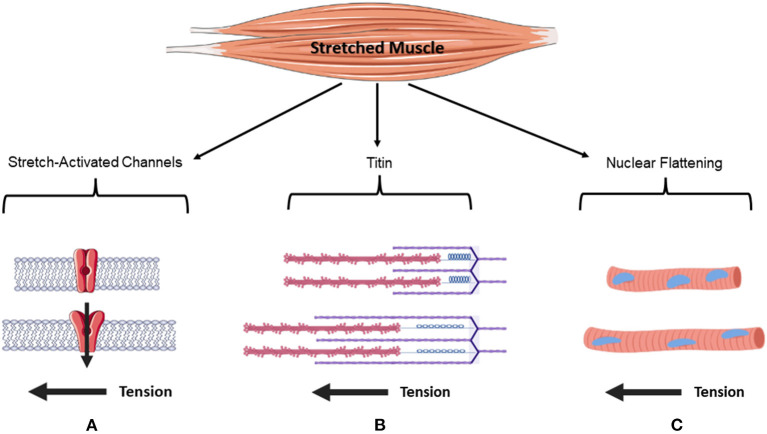
“Although there are no experimental data on this as yet, we can speculate that passive stretch may cause nuclei to flatten, followed by YAP influx and activity, increased LAT1 expression (18), greater leucine influx, mTORC1 activation and ultimately greater MPS.”
BackgroundThe Role of Resistance Exercise Intensity on Muscle Fibre Adaptations
Fry, A. C. (2004) · Sports Medicine · doi:10.2165/00007256-200434100-00004 · Cited by 626
Transcriptomic profiling of skeletal muscle adaptations to exercise and inactivity
Pillon, N. J., Gabriel, B. M., Dollet, L., Smith, J. A. B., Sardón Puig, L., Botella, J., Bishop, D. J., Krook, A., & Zierath, J. R. (2020) · Nature Communications · doi:10.1038/s41467-019-13869-w · Cited by 457 · cited 4×
“Consistent with this process, resistance exercise increases the expression of the leucine transporter LAT1 in human muscle (10).”
BackgroundInfluentialStimuli and sensors that initiate skeletal muscle hypertrophy following resistance exercise
Wackerhage, H., Schoenfeld, B. J., Hamilton, D. L., Lehti, M., & Hulmi, J. J. (2019) · Journal of Applied Physiology · doi:10.1152/japplphysiol.00685.2018 · Cited by 357 · cited 13×
“Active force sensors either localize to the Z-disc that anchors actin, or to protein complexes called costameres that help to direct the force generated by contracting sarcomeres to the extracellular matrix surrounding each myofiber (6).”
BackgroundInfluentialBurd, N. A., Andrews, R. J., West, D. W. D., Little, J. P., Cochran, A. J. R., Hector, A. J., Cashaback, J. G. A., Gibala, M. J., Potvin, J. R., Baker, S. K., et al. (2012) · The Journal of Physiology · doi:10.1113/jphysiol.2011.221200 · Cited by 345 · cited 1×
“In addition to the heightened tension in the stretch, the strategy allows for a greater time-under-tension during a given session, which has been proposed as a driving factor in hypertrophy (56).”
BackgroundMuscle composition in relation to age and sex
Forsberg, A. M., Nilsson, E., Werneman, J., Bergström, J., & Hultman, E. (1991) · Clinical Science · doi:10.1042/cs0810249 · Cited by 282 · cited 1×
“The dry mass of a muscle is ≈70% protein (5); hence, the accretion of skeletal muscle tissue is largely a function of net protein balance (i.”
BackgroundIn Vitro Model for Stretch-Induced Hypertrophy of Skeletal Muscle
Vandenburgh, H., & Kaufman, S. (1979) · Science · doi:10.1126/science.569901 · Cited by 264
Exploring Motivation and Barriers to Physical Activity among Active and Inactive Australian Adults
Hoare, E., Stavreski, B., Jennings, G., & Kingwell, B. (2017) · Sports · doi:10.3390/sports5030047 · Cited by 262
Martineau, L. C., & Gardiner, P. F. (2001) · Journal of Applied Physiology · doi:10.1152/jappl.2001.91.2.693 · Cited by 259 · cited 1×
“Martineau and Gardiner (32) demonstrated that p54JNK signaling was responsive to both peak tension and the time/tension interval following in situ passive stretch of the rat medial gastrocnemius; the application of a contraction stimulus to the stretchedmuscle amplifies JNK signaling, with the greatest effects observe…”
BackgroundHORNBERGER, T. A., STUPPARD, R., CONLEY, K. E., FEDELE, M. J., FIOROTTO, M. L., CHIN, E. R., & ESSER, K. A. (2004) · Biochemical Journal · doi:10.1042/bj20040274 · Cited by 256
Hansen, C. G., Ng, Y. L. D., Lam, W.-L. M., Plouffe, S. W., & Guan, K.-L. (2015) · Cell Research · doi:10.1038/cr.2015.140 · Cited by 212 · cited 1×
“Research in non-muscle cells indicates that such nuclear flattening can activate the Hippo effector YAP, which drives the expression of the genes that encode the leucine LAT1 transporter (17).”
BackgroundReview of Length-Associated Changes in Muscle
Gossman, M. R., Sahrmann, S. A., & Rose, S. J. (1982) · Physical Therapy · doi:10.1093/ptj/62.12.1799 · Cited by 211 · cited 2×
“Compelling evidence shows that when animals have a limb immobilized in a lengthened position it results in muscle hypertrophy while immobilizing the limb in a shortened position induces atrophy (44).”
BackgroundYANG, S., ALNAQEEB, M., SIMPSON, H., & GOLDSPINK, G. (1997) · Journal of Anatomy · doi:10.1046/j.1469-7580.1997.19040613.x · Cited by 211 · cited 1×
“Upregulation of IGF-1 mRNA expression following passive stretch by plaster cast immobilization of the lower limb muscles in a lengthened position have been reported elsewhere in rabbits (38).”
BackgroundAkt signaling in skeletal muscle: regulation by exercise and passive stretch
Sakamoto, K., Aschenbach, W. G., Hirshman, M. F., & Goodyear, L. J. (2003) · American Journal of Physiology-Endocrinology and Metabolism · doi:10.1152/ajpendo.00228.2003 · Cited by 208 · cited 1×
“(34) demonstrated that passively stretching the incubated fasttwitch dominant extensor digitorum longus muscle for 10min elicited a 2-fold increase in Akt activity.”
BackgroundStretch-induced growth in chicken wing muscles: a new model of stretch hypertrophy
Holly, R. G., Barnett, J. G., Ashmore, C. R., Taylor, R. G., & Mole, P. A. (1980) · American Journal of Physiology-Cell Physiology · doi:10.1152/ajpcell.1980.238.1.c62 · Cited by 199 · cited 2×
“The magnitude of hypertrophy associated with such interventions appears to be greater in type I compared to type II myofibers (46).”
BackgroundHaun, C. T., Vann, C. G., Roberts, B. M., Vigotsky, A. D., Schoenfeld, B. J., & Roberts, M. D. (2019) · Frontiers in Physiology · doi:10.3389/fphys.2019.00247 · Cited by 192 · cited 1×
“, along the longitudinal axis) (44), as opposed to traditional RT protocols where a majority of hypertrophy occurs from the addition of sarcomeres in parallel (45).”
BackgroundSelf-citationLateral Force Transmission Across Costameres in Skeletal Muscle
Bloch, R. J., & Gonzalez-Serratos, H. (2003) · Exercise and Sport Sciences Reviews · doi:10.1097/00003677-200304000-00004 · Cited by 190 · cited 1×
“Forces can be transduced longitudinally (from zdisk to z-disk within each myofibril) and/or laterally via a series of radially oriented elastic elements including the endomysium, epimysium and perimysium (8).”
BackgroundMuscle growth in response to mechanical stimuli
Goldspink, D. F., Cox, V. M., Smith, S. K., Eaves, L. A., Osbaldeston, N. J., Lee, D. M., & Mantle, D. (1995) · American Journal of Physiology-Endocrinology and Metabolism · doi:10.1152/ajpendo.1995.268.2.e288 · Cited by 189
Chaabene, H., Behm, D. G., Negra, Y., & Granacher, U. (2019) · Frontiers in Physiology · doi:10.3389/fphys.2019.01468 · Cited by 156
Mechanotransduction in skeletal muscle
Burkholder, T. (2007) · Frontiers in Bioscience · doi:10.2741/2057 · Cited by 155 · cited 1×
“When a muscle is subjected to mechanical stimuli, the body initiates a response via a process called mechanotransduction, whereby these forces are transduced to chemical signals that regulate anabolic and catabolic processes through a variety of intracellular enzymatic pathways (7).”
BackgroundResidual Force Enhancement Following Eccentric Contractions: A New Mechanism Involving Titin
Herzog, W., Schappacher‐Tilp, G., DuVall, M., Leonard, T. R., & Herzog, J. (2016) · Physiology · doi:10.1152/physiol.00049.2014 · Cited by 151
A comparison of the contractile properties of the human gastrocnemius and soleus muscles
Vandervoort, A. A., & McComas, A. J. (1983) · European Journal of Applied Physiology · doi:10.1007/bf00429079 · Cited by 146 · cited 1×
“Given that the soleus is a predominantly slow-twitch muscle while the gastrocnemius is a mixed-fiber type muscle (60), these findings suggest that interset stretch may be more effective in hypertrophy of type I muscle fibers.”
BackgroundCytoskeletal protein kinases: titin and its relations in mechanosensing
Gautel, M. (2011) · Pflügers Archiv - European Journal of Physiology · doi:10.1007/s00424-011-0946-1 · Cited by 142 · cited 1×
“Titin has a force-activated kinase domain, so it possesses the ability to phosphorylate other proteins (15).”
BackgroundHornberger, T. A., Armstrong, D. D., Koh, T. J., Burkholder, T. J., & Esser, K. A. (2005) · American Journal of Physiology-Cell Physiology · doi:10.1152/ajpcell.00207.2004 · Cited by 136
Mechanism of Focal Adhesion Kinase Mechanosensing
Zhou, J., Aponte-Santamaría, C., Sturm, S., Bullerjahn, J. T., Bronowska, A., & Gräter, F. (2015) · PLOS Computational Biology · doi:10.1371/journal.pcbi.1004593 · Cited by 127 · cited 1×
“FAK is a component of costameres that convey the forces generated by the cytoskeleton and by sarcomeres out of the muscle fiber to the surrounding extracellular matrix (11).”
BackgroundEffect of inactivity and passive stretch on protein turnover in phasic and postural rat muscles
Loughna, P., Goldspink, G., & Goldspink, D. F. (1986) · Journal of Applied Physiology · doi:10.1152/jappl.1986.61.1.173 · Cited by 125
Schoenfeld, B., Fisher, J., Grgic, J., Haun, C., Helms, E., Phillips, S., Steele, J., & Vigotsky, A. (2021) · International Journal of Strength and Conditioning · doi:10.47206/ijsc.v1i1.81 · Cited by 124
Self-citationWretman, C., Lionikas, A., Widegren, U., Lännergren, J., Westerblad, H., & Henriksson, J. (2001) · The Journal of Physiology · doi:10.1111/j.1469-7793.2001.00155.x · Cited by 122
Hornberger, T. A., & Chien, S. (2006) · Journal of Cellular Biochemistry · doi:10.1002/jcb.20671 · Cited by 114
Krüger, M., & Kötter, S. (2016) · Frontiers in Physiology · doi:10.3389/fphys.2016.00076 · Cited by 113 · cited 4×
“Titin, the largest known protein in the human body, possesses elastic properties that allow it to act as a molecular spring (14).”
BackgroundInfluentialStretch-activated ion channels contribute to membrane depolarization after eccentric contractions
McBride, T. A., Stockert, B. W., Gorin, F. A., & Carlsen, R. C. (2000) · Journal of Applied Physiology · doi:10.1152/jappl.2000.88.1.91 · Cited by 104 · cited 1×
“These findings are consistent with evidence that blockage of SACs correlates with a blunted hypertrophic response to training in rodents (22).”
ResultSimpson, C. L., Kim, B. D. H., Bourcet, M. R., Jones, G. R., & Jakobi, J. M. (2017) · Scandinavian Journal of Medicine & Science in Sports · doi:10.1111/sms.12822 · Cited by 102 · cited 1×
“(53) found that loaded stretch of the plantar flexors (performed on a leg press machine) increased gastrocnemius muscle thickness vs.”
BackgroundSpangenburg, E. E., & McBride, T. A. (2006) · Journal of Applied Physiology · doi:10.1152/japplphysiol.00619.2005 · Cited by 97 · cited 1×
“For example, Spangenburg and McBride (21) showed that inhibition of SACs blunted activation of p70S6K, a key regulator of protein translation, after performance of eccentric actions.”
BackgroundCrossland, H., Kazi, A. A., Lang, C. H., Timmons, J. A., Pierre, P., Wilkinson, D. J., Smith, K., Szewczyk, N. J., & Atherton, P. J. (2013) · American Journal of Physiology-Endocrinology and Metabolism · doi:10.1152/ajpendo.00541.2012 · Cited by 95 · cited 1×
“FAK is involved in IGF-1-induced muscle hypertrophy via TSC2 and mTORC1 (12).”
BackgroundJoanisse, S., Lim, C., McKendry, J., Mcleod, J. C., Stokes, T., & Phillips, S. M. (2020) · F1000Research · doi:10.12688/f1000research.21588.1 · Cited by 92
The skeletal muscle fiber: a mechanically sensitive cell
Olsen, L. A., Nicoll, J. X., & Fry, A. C. (2019) · European Journal of Applied Physiology · doi:10.1007/s00421-018-04061-x · Cited by 83
Kathage, B., Gehlert, S., Ulbricht, A., Lüdecke, L., Tapia, V., Orfanos, Z., Wenzel, D., Bloch, W., Volkmer, R., Fleischmann, B. K., et al. (2016) · Biochimica et Biophysica Acta (BBA) - Molecular Cell Research · doi:10.1016/j.bbamcr.2016.10.007 · Cited by 83 · cited 1×
“Indeed, TSC1 appears to move near BAG3 after maximal eccentric exercise of a human muscle and at the same time activation-related mTOR phosphorylation increases (9).”
BackgroundModulation of IGF mRNA abundance during stretch-induced skeletal muscle hypertrophy and regression
Czerwinski, S. M., Martin, J. M., & Bechtel, P. J. (1994) · Journal of Applied Physiology · doi:10.1152/jappl.1994.76.5.2026 · Cited by 82 · cited 1×
“(37) showed that IGF-I mRNA abundance of the avian patagialis muscle increased 3-fold after 11 days of load stretch of the birds’ wings.”
BackgroundProgressive stretch overload of skeletal muscle results in hypertrophy before hyperplasia
Antonio, J., & Gonyea, W. J. (1993) · Journal of Applied Physiology · doi:10.1152/jappl.1993.75.3.1263 · Cited by 75
Involvement of PI3K/Akt/TOR pathway in stretch‐induced hypertrophy of myotubes
Sasai, N., Agata, N., Inoue‐Miyazu, M., Kawakami, K., Kobayashi, K., Sokabe, M., & Hayakawa, K. (2010) · Muscle & Nerve · doi:10.1002/mus.21473 · Cited by 72
Influence of Long-Lasting Static Stretching on Maximal Strength, Muscle Thickness and Flexibility
Warneke, K., Brinkmann, A., Hillebrecht, M., & Schiemann, S. (2022) · Frontiers in Physiology · doi:10.3389/fphys.2022.878955 · Cited by 72 · cited 1×
“(54) reported robust increases in muscle thickness (∼15%) of the lateral gastrocnemius following a 6-week stretch protocol for the calf muscles using a specially designed orthosis.”
BackgroundMuscle intermediate filaments form a stress-transmitting and stress- signaling network in muscle
Palmisano, M. G., Bremner, S. N., Hornberger, T. A., Meyer, G. A., Domenighetti, A. A., Shah, S. B., Kiss, B., Kellermayer, M., Ryan, A. F., & Lieber, R. L. (2014) · Journal of Cell Science · doi:10.1242/jcs.142463 · Cited by 70 · cited 1×
“The nuclei of muscle fibers “flatten” during passive stretch of a muscle fiber (16).”
BackgroundYahata, K., Konrad, A., Sato, S., Kiyono, R., Yoshida, R., Fukaya, T., Nunes, J. P., & Nakamura, M. (2021) · European Journal of Applied Physiology · doi:10.1007/s00421-021-04608-5 · Cited by 59 · cited 1×
“A follow-up study from the same lab reported no appreciable changes in plantar flexor hypertrophy in healthy young men after 6 weeks of two weekly 30-min stretch training sessions (51).”
BackgroundAtherton, P. J., Szewczyk, N. J., Selby, A., Rankin, D., Hillier, K., Smith, K., Rennie, M. J., & Loughna, P. T. (2009) · The Journal of Physiology · doi:10.1113/jphysiol.2009.169854 · Cited by 58 · cited 1×
“(42) reported a reduction in MPS in cultured L6 skeletal muscle cells for up to 120min after a bout of cyclic stretch.”
BackgroundHornberger, T. A., Mateja, R. D., Chin, E. R., Andrews, J. L., & Esser, K. A. (2005) · Journal of Applied Physiology · doi:10.1152/japplphysiol.00870.2004 · Cited by 54
Fu, S., Yin, L., Lin, X., Lu, J., & Wang, X. (2018) · International Journal of Molecular Sciences · doi:10.3390/ijms19061649 · Cited by 50
Moriggi, R., Berton, R. P. D. B., de Souza, T. M. F., Chacon‐Mikahil, M. P. T., & Cavaglieri, C. R. (2017) · European Journal of Applied Physiology · doi:10.1007/s00421-016-3527-3 · Cited by 46 · cited 1×
“(52) reported that performing two, 25-s sets of passive stretch immediately prior to leg extension exercise attenuated muscle attenuated increases in vastus lateralis CSA compared to a RT-only condition (12.”
BackgroundPractices, Perceived Benefits, and Barriers to Strength Training Among Women Enrolled in College
Kimberly S., H., Flippin, K. J., Blom, L. C., Bolin, J. E., Hoover, D. L., & Judge, L. W. (2018) · International Journal of Exercise Science · doi:10.70252/zrmt3507 · Cited by 46 · cited 3×
“of RT with inter-set stretch for muscle hypertrophy (3) to provide practical”
BackgroundEvangelista, A. L., Souza, E. O. D., Moreira, D. C. B., Alonso, A. C., Teixeira, C. V. L. S., Wadhi, T., Rauch, J. T., Bocalini, D. S., Pereira, P. E., & Greve, J. M. D. (2019) · The Journal of Strength and Conditioning Research · doi:10.1519/jsc.0000000000003036 · Cited by 46 · cited 1×
“(58) randomly assigned untrained young men to perform an 8-week total-body RT program with either a passive between-set rest interval or a 30-s inter-set stretch integrated into the 90 s rest period.”
MethodFrey, J. W., Farley, E. E., O’Neil, T. K., Burkholder, T. J., & Hornberger, T. A. (2009) · Biophysical Journal · doi:10.1016/j.bpj.2009.04.025 · Cited by 44 · cited 1×
“In vitro research indicates that a high magnitude of strain is required to maximally stimulate p70S6K (65), but it is not clear how these findings translate in vivo.”
BackgroundRole of muscle fiber hypertrophy and hyperplasia in intermittently stretched avian muscle
Antonio, J., & Gonyea, W. J. (1993) · Journal of Applied Physiology · doi:10.1152/jappl.1993.74.4.1893 · Cited by 40
The Effects of Acute Passive Stretch on Muscle Protein Synthesis in Humans
Fowles, J. R., MacDougall, J. D., Tarnopolsky, M. A., Sale, D. G., Roy, B. D., & Yarasheski, K. E. (2000) · Canadian Journal of Applied Physiology · doi:10.1139/h00-012 · Cited by 36 · cited 1×
“(43) failed to demonstrate an increase in soleus MPS following ∼27min intermittent passive plantar flexor stretch in a cohort of 8 healthy men.”
BackgroundNakai, N., Kawano, F., Oke, Y., Nomura, S., Ohira, T., Fujita, R., & Ohira, Y. (2010) · Molecules and Cells · doi:10.1007/s10059-010-0147-3 · Cited by 36
Muscle fiber splitting in stretch-enlarged avian muscle
ANTONIO, J., & GONYEA, W. J. (1994) · Medicine and Science in Sports and Exercise · doi:10.1249/00005768-199408000-00007 · Cited by 33
Martineau, L. C., & Gardiner, P. F. (2002) · Journal of Biomechanics · doi:10.1016/s0021-9290(01)00249-4 · Cited by 32 · cited 1×
“Martineau and Gardiner (32) demonstrated that p54JNK signaling was responsive to both peak tension and the time/tension interval following in situ passive stretch of the rat medial gastrocnemius; the application of a contraction stimulus to the stretchedmuscle amplifies JNK signaling, with the greatest effects observe…”
BackgroundSato, S., Hiraizumi, K., Kiyono, R., Fukaya, T., Nishishita, S., Nunes, J. P., & Nakamura, M. (2020) · PLOS ONE · doi:10.1371/journal.pone.0235679 · Cited by 30 · cited 1×
“(50) subjected healthy males to 360 s static stretch of the plantar flexors per week for 6 weeks.”
BackgroundMirzoev, T. M., Tyganov, S. A., Petrova, I. O., & Shenkman, B. S. (2018) · American Journal of Physiology-Endocrinology and Metabolism · doi:10.1152/ajpendo.00261.2018 · Cited by 27 · cited 2×
“(19) established a link between SAC activity and downstream anabolic signaling pathways in rat skeletal muscle during acute recovery following a period of mechanical unloading.”
BackgroundNakamura, M., Ikezu, H., Sato, S., Yahata, K., Kiyono, R., Yoshida, R., Takeuchi, K., & Nunes, J. P. (2021) · International Journal of Environmental Research and Public Health · doi:10.3390/ijerph18073770 · Cited by 26
Active and Passive Tension Interact to Promote Akt Signaling with Muscle Contraction
RUSS, D. W. (2008) · Medicine & Science in Sports & Exercise · doi:10.1249/mss.0b013e318158e450 · Cited by 21
Loaded inter-set stretch may selectively enhance muscular adaptations of the plantar flexors
Every, D. W. V., Coleman, M., Rosa, A., Zambrano, H., Plotkin, D. L., Torres, X., Mercado, M., Souza, E. O. D., Alto, A., Oberlin, D. J., et al. (2022) · PLoS ONE · doi:10.1371/journal.pone.0273451 · Cited by 16 · cited 3×
“(59) found that inter-set stretch elicited greater hypertrophy in the soleus, a type I dominant muscle, compared to the gastrocnemii, a mixed-fibermuscle.”
BackgroundResultInfluentialSelf-citationLoaded Inter-set Stretching for Muscular Adaptations in Trained Males: Is the Hype Real?
Wadhi, T., Barakat, C., Evangelista, A. L., Pearson, J. R., Anand, A. S., Morrison, T. E. A., O'Sullivan, J., Walters, J., & Souza, E. O. D. (2021) · International Journal of Sports Medicine · doi:10.1055/a-1529-6281 · Cited by 13
Mechanobiology in Skeletal Muscle: Conversion of Mechanical Information into Molecular Signal
Miyagoe‐Suzuki, Y., & Takeda, S. (2010) · Springer eBooks · doi:10.1007/978-4-431-89757-6_4 · Cited by 10 · cited 1×
“It has been proposed that stretching of muscle fibers opens SACs, initiating an intracellular signaling cascade that induces calcium-dependent anabolic signaling via mTOR and its downstream target enzymes (20).”
BackgroundWang, Y., Ikeda, S., & Ikoma, K. (2021) · Journal of Muscle Research and Cell Motility · doi:10.1007/s10974-021-09609-7 · Cited by 8 · cited 2×
“(36) found that passive stretch (15min, 5 days a week for 2 weeks) of the gastrocnemii in mice upregulated mRNA expression of the anabolic factors p70S6K and myogenin while downregulating the catabolic factors MuRF1, MAFbx, myostatin, and 4EBP1.”
BackgroundEftestøl, E., Franchi, M. V., Kasper, S., & Flück, M. (2021) · Scientific Reports · doi:10.1038/s41598-021-94930-x · Cited by 7 · cited 1×
“However, high load contractions of rat muscles do not appear to increase FAK Tyr397 phosphorylation (13).”
BackgroundSeitz, L. B., Barr, M., & Haff, G. (2014) · The Journal of Strength and Conditioning Research · doi:10.1519/jsc.0000000000000655 · Cited by 1
Correction: Loaded Inter-set Stretching for Muscular Adaptations in Trained Males: Is the Hype Real?
Wadhi, T., Barakat, C., Evangelista, A. L., Pearson, J. R., Anand, A. S., Morrison, T. E. A., O'Sullivan, J., Walters, J., & Souza, E. O. D. (2021) · International Journal of Sports Medicine · doi:10.1055/a-1643-7189 · Cited by 1 · cited 3×
“(63) employed a stretch on a different exercise (cable fly) amounting to 15% of participants working load from the prior set on the benchpress or incline bench-press exercises.”
BackgroundMethodInfluential
Cited by
Behm, D. G., Granacher, U., Warneke, K., Aragão-Santos, J. C., Da Silva-Grigoletto, M. E., & Konrad, A. (2024) · Sports Medicine · doi:10.1007/s40279-023-01949-3 · Cited by 45
“…limitations of this training method, since stretching durations of up to 120 continuous minutes per day per muscle would be difficult to sustain [168] and it can be assumed that most people would not be able or willing to perform a weekly stretching volume of 420–840 min per week per muscle…”
MethodPhysiology of Stretch-Mediated Hypertrophy and Strength Increases: A Narrative Review
Warneke, K., Lohmann, L. H., Lima, C. D., Hollander, K., Konrad, A., Zech, A., Nakamura, M., WIRTH, K. J., Keiner, M., & Behm, D. G. (2023) · Sports Medicine · doi:10.1007/s40279-023-01898-x · Cited by 61
“For example, it would be difficult to practically implement and compare 7 h of calf stretch training to 3 × 15 min of calf raise training per week [142].”
MethodWarneke, K., Lohmann, L. H., Behm, D. G., WIRTH, K. J., Keiner, M., Schiemann, S., & Wilke, J. (2024) · Sports Medicine - Open · doi:10.1186/s40798-024-00706-8 · Cited by 34
“Assuming about one hour of stretching on one isolated muscle to achieve meaningful muscle hypertrophy [83] seems, on the one hand, of limited practical relevance [85].”
BackgroundBouguezzi, R., Sammoud, S., Markov, A., Negra, Y., & Chaabene, H. (2023) · Youth · doi:10.3390/youth3010010 · Cited by 23
“Promising evidence indicates that SS training exercises could favor muscle hypertrophy whether performed as a single mode [15,24,44] or combined with RT exercises [17,18,54].”
InfluentialWohlann, T., Warneke, K., Kalder, V., Behm, D. G., Schmidt, T., & Schiemann, S. (2024) · European Journal of Applied Physiology · doi:10.1007/s00421-023-05413-y · Cited by 21
“Some of these mechanisms were frequently suggested to be involved in muscle hypertrophy after resistance training as well (Lamas et al. 2010; Schoenfeld et al. 2022; Vissing et al. 2013; Wackerhage et al. 2019).”
Background
Metadata
- Authors
- Schoenfeld, B. J., Wackerhage, H., & De Souza, E.
- Affiliations
- Lehman College (US)
- Technical University of Munich (DE)
- Corresponding author
- Schoenfeld, Brad J.
- Venue
- Frontiers in Sports and Active Living
- Publisher
- Frontiers Media SA
- Published
- 2022-11-15
- Volume
- 4
- Pages
- 1035190-1035190
- ISSN
- 2624-9367 (ISSN-L)
- PMC
- PMC9706104
- OpenAlex
- W4309214531
- Semantic Scholar
- 2d5fe9c3857f073cfa4069a1303930ff129cba91
- Cited by
- 21
- References
- 68
- Citations by year
- 2026: 3 · 2025: 5 · 2024: 8 · 2023: 5
- FWCI
- 0.99
- Type
- journal article
- Language
- en
- Open access
- gold
- doi.org
- Licence
- Locations
- Frontiers in Sports and Active Living (publishedVersion, cc-by)
- PubMed Central (publishedVersion, cc-by)
- PubMed (publishedVersion)
- DOAJ (DOAJ: Directory of Open Access Journals) (submittedVersion, cc-by-sa)
- mediaTUM – the media and publications repository of the Technical University Munich (Technical University Munich) (submittedVersion, cc-by)
- Topics
- Health Sciences › Medicine › Orthopedics and Sports Medicine › Sports Performance and Training
- Health Sciences › Nursing › Nutrition and Dietetics › Muscle metabolism and nutrition
- Life Sciences › Biochemistry, Genetics and Molecular Biology › Molecular Biology › Muscle Physiology and Disorders
- Keywords
- resistance training, muscle hypertrophy, skeletal muscle adaptation, passive stretch, anabolic signaling, exercise adherence, training program design
About these checks
Registry, retraction, Cites and statistics results are computed, not judged, with one exception: a printed reference that no index lists is read once by a model before it counts as a citation error. Claims are extracted by a model and kept only when their quote appears verbatim in the text; each cited source is then checked, with a model’s help, for whether it says what the claim relies on. Those verdicts can be wrong — read the claim’s quote and the cited source before relying on one.
Statistics and arithmetic are recomputed, not judged.
Confidence bands are shown only for fields calibrated on our annotated test set. None is calibrated yet, so no band is shown.
What counts as a claim ›How we measure confidence ›How we check this ›
Are you an author, or do you see a problem with this page? Request a review
Data sources
Bibliographic data: Semantic Scholar, OpenAlex, Crossref.
Contains information from the Semantic Scholar Academic Graph Datasets, made available under the ODC Attribution License (ODC-BY 1.0).
Semantic Scholar’s data is described in: Kinney, R., et al. (2023). The Semantic Scholar Open Data Platform. arXiv:2301.10140.
