

The DOI matches its Crossref record; 95 of the 95 references it cites were found in a registry or an index.
The 2020 five domains model: including human-animal interactions in assessments of animal welfare
Open accessAbstract
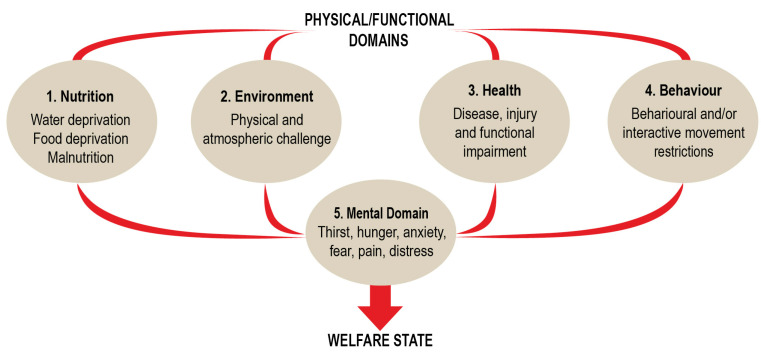
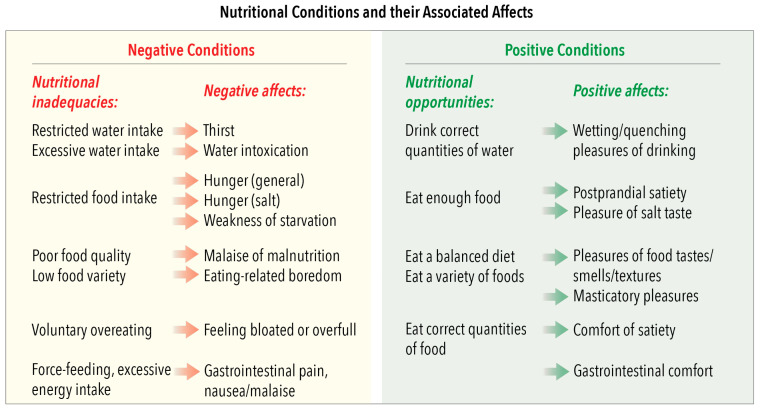
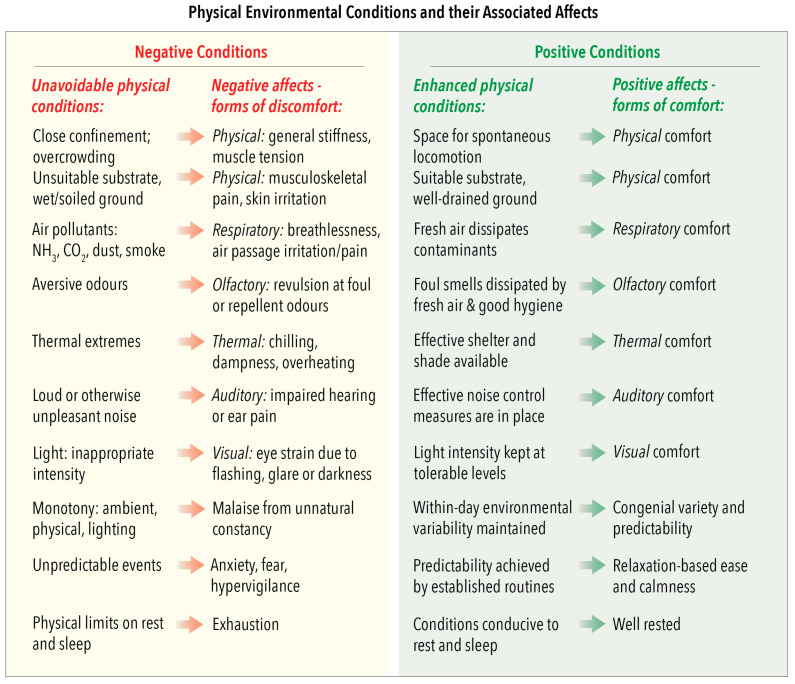
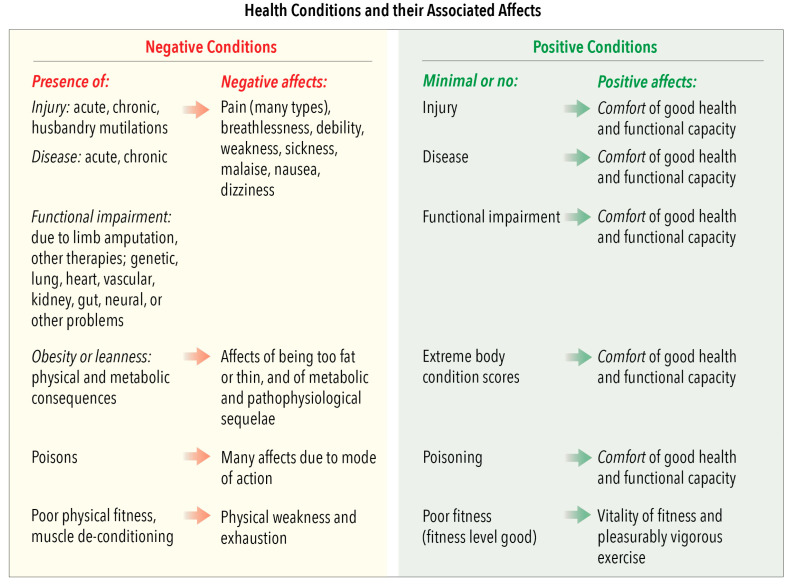
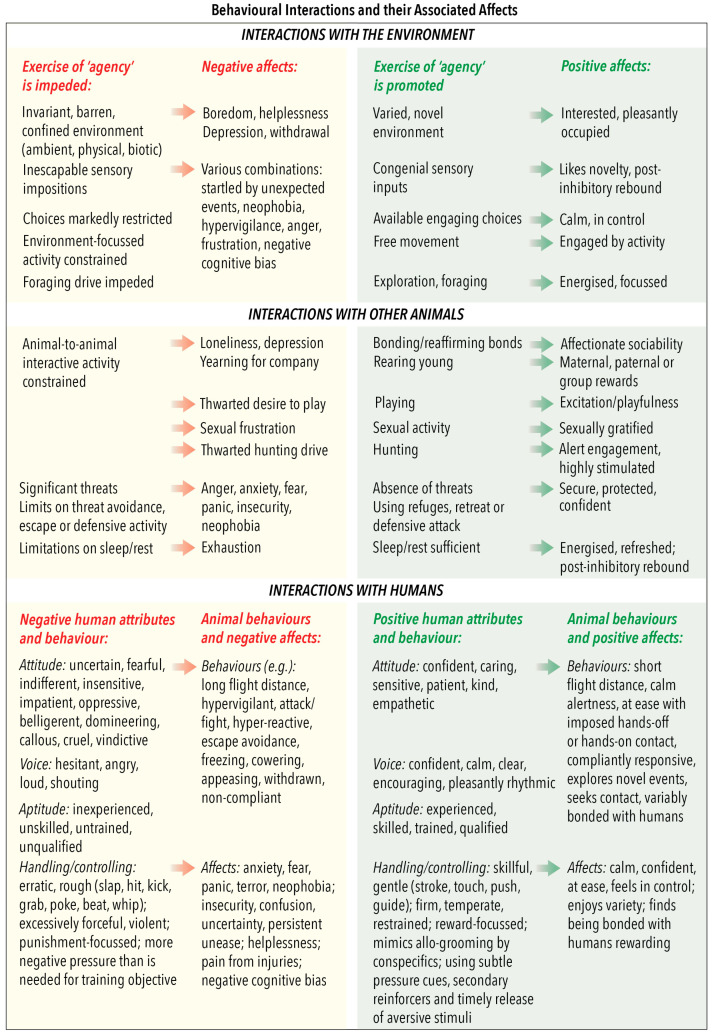
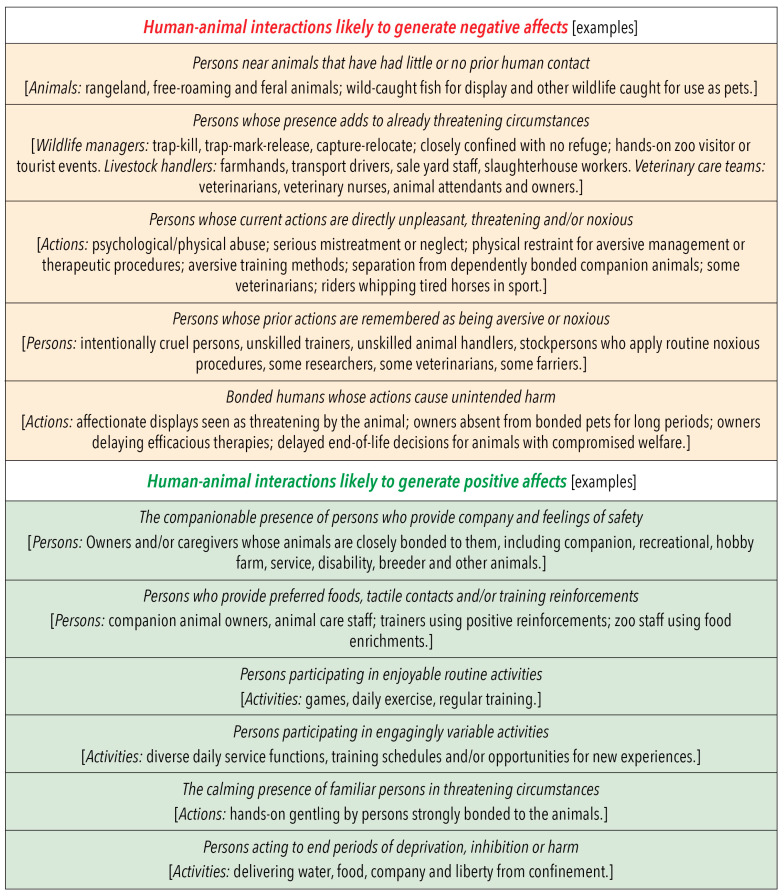
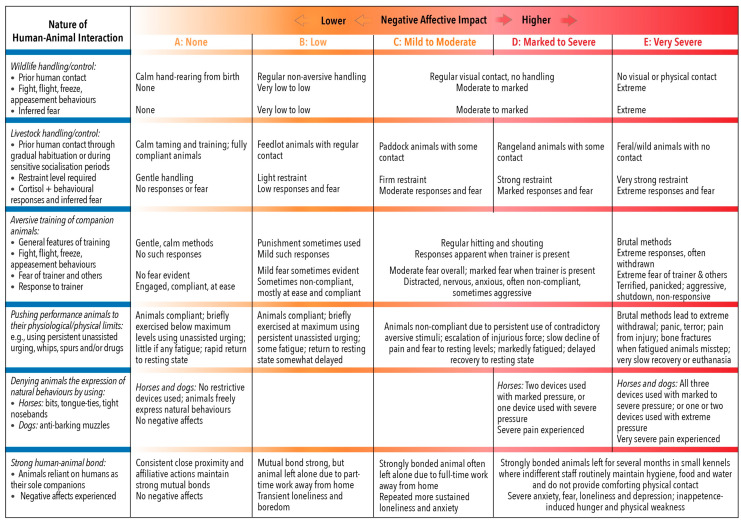
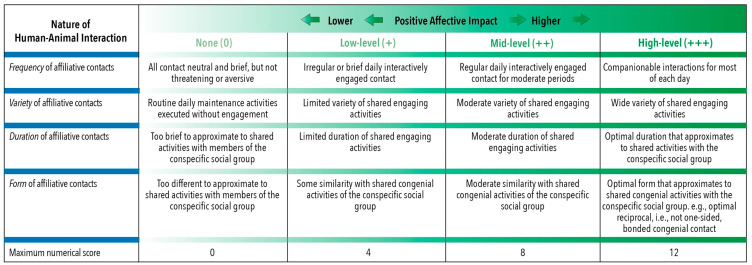
Throughout its 25-year history, the Five Domains Model for animal welfare assessment has been regularly updated to include at each stage the latest authenticated developments in animal welfare science thinking. The domains of the most up-to-date Model described here are: 1 Nutrition, 2 Physical Environment, 3 Health, 4 Behavioural Interactions and 5 Mental State. The first four domains focus attention on factors that give rise to specific negative or positive subjective experiences (affects), which contribute to the animal’s mental state, as evaluated in Domain 5. More specifically, the first three domains focus mainly on factors that disturb or disrupt particular features of the body’s internal stability. Each disturbed or disrupted feature generates sensory inputs which are processed by the brain to form specific negative affects, and these affects are associated with behaviours that act to restore the body’s internal stability. As each such behaviour is essential for the survival of the animal, the affects associated with them are collectively referred to as “survival-critical affects”. In contrast, Domain 4, now named Behavioural Interactions, focusses on evidence of animals consciously seeking specific goals when interacting behaviourally with (1) the environment, (2) other non-human animals and (3) as a new feature of the Model outlined here, humans. The associated affects, evaluated via Domain 5, are mainly generated by brain processing of sensory inputs elicited by external stimuli. The success of the animals’ behavioural attempts to achieve their chosen goals is reflected in whether the associated affects are negative or positive. Collectively referred to as “situation-related affects”, these outcomes are understood to contribute to animals’ perceptions of their external circumstances. These observations reveal a key distinction between the way survival-critical and situation-related affects influence animals’ aligned behaviours. The former mainly reflect compelling motivations to engage in genetically embedded behavioural responses, whereas the latter mainly involve conscious behavioural choices which are the hallmarks of agency. Finally, numerous examples of human–animal interactions and their attendant affects are described, and the qualitative grading of interactions that generate negative or positive affect is also illustrated.
Overview
The claims and statistics of this paper haven’t been checked yet.
Run the check — free, no account needed. It reads the open-access text and checks the sources it cites.
Integrity signals
Registry
Cites
Statistics
Figures
Verification
Claims the paper makes
The claims and statistics of this paper haven’t been checked yet.
Run the check — free, no account needed. It reads the open-access text and checks the sources it cites.
Claims other papers make about this one
Each is checked against this paper’s own text: does it say what the citing paper says it does?
The source backs part of the claim, not all of it — or backs it for a different population, condition or comparison.
In the citing paper
“One element of many modern models of animal wellbeing is that animals should be able to live in species-typical social groups and express normal, non-harmful social behaviours.”
From The Concept of Agency, Animal Wellbeing, and the Practical Realities of Ex Situ Breeding Programs in Zoos and Aquariums (2024) · cites this paper as [9]
Experimental — accuracy not yet measuredThe cited source says what the claim attributes to it.
In the citing paper
“The Five Domains Model offers a holistic approach focusing on affective terms and recognizing the subjectivity in measuring mental experiences (10).”
From Comparison of animal welfare assessment tools and methodologies: need for an effective approach for captive elephants in Asia (2024) · cites this paper as [10]
The cited source says what the claim attributes to it.
In the citing paper
“A holistic animal wellbeing program includes access to appropriate nutrition, experiencing positive emotions, reducing negative emotions, and performing species-typical behaviours [6,9].”
From The Concept of Agency, Animal Wellbeing, and the Practical Realities of Ex Situ Breeding Programs in Zoos and Aquariums (2024) · cites this paper as [9]
Self-check
Percentages, sums and reported differences re-computed from the paper’s own numbers.
The self-check needs the paper’s full text.
Citations
Cites
Biological basis of the behavior of sick animals
Hart, B. L. (1988) · Neuroscience & Biobehavioral Reviews · doi:10.1016/s0149-7634(88)80004-6 · Cited by 2,223
Assessment of positive emotions in animals to improve their welfare
Boissy, A., Manteuffel, G., Jensen, M. B., Moe, R. O., Spruijt, B., Keeling, L. J., Winckler, C., Forkman, B., Dimitrov, I., Langbein, J., et al. (2007) · Physiology & Behavior · doi:10.1016/j.physbeh.2007.02.003 · Cited by 1,486
Affective consciousness: core emotional feelings in animals and humans.
Panksepp, J. (2005) · Consciousness and Cognition · doi:10.1016/j.concog.2004.10.004 · Cited by 1,217
A Scientific Conception of Animal Welfare that Reflects Ethical Concerns
Fraser, D. J., Weary, D. M., Pajor, E. A., & Milligan, B. N. (1997) · Animal Welfare · doi:10.1017/s0962728600019795 · Cited by 1,066
Updating Animal Welfare Thinking: Moving beyond the “Five Freedoms” towards “A Life Worth Living”
Mellor, D. (2016) · Animals · doi:10.3390/ani6030021 · Cited by 948
Self-citationChartrand, T. L., & Bargh, J. A. (1996) · Journal of Personality and Social Psychology · doi:10.1037/0022-3514.71.3.464 · Cited by 879
Mellor, D., & Beausoleil, N. (2015) · Animal Welfare · doi:10.7120/09627286.24.3.241 · Cited by 627
Self-citationAssessment of positive welfare: a review
Yeates, J. W., & Main, D. C. J. (2008) · The Veterinary Journal · doi:10.1016/j.tvjl.2007.05.009 · Cited by 504
(2010) · CABI eBooks · doi:10.1079/9781845936730.0000 · Cited by 477
Research works printed but not linked: 16
- Mellor, D.J., Patterson-Kane, E., and Stafford, K.J. (2009). Animal welfare, grading compromise and mitigating suffering. The Sciences of Animal Welfare, Wiley-Blackwell Publishing.
- Mellor, 2012, Affective states and the assessment of laboratory-induced animal welfare impacts, ALTEX Proc., 1, 445
- Fraser, D. (2008). Understanding Animal Welfare: The Science in its Cultural Context, Wiley-Blackwell.
- Broom, 2008, Welfare assessment and relevant ethical decisions: Key concepts, ARBS Ann. Rev. Biomed. Sci., 10, T79
- Beausoleil, N.J. (2017, January 2–4). Dissecting Distress: What is a humane death and how can we assess the humaneness of death?. Proceedings of the ANZCCART Research and Teaching Conference, Queenstown, New Zealand. Available online: https://anzccart.org.nz/app/uploads/2017/03/Proceedings-of-the-2017-Australian-and-New-Zealand-Council-for-the-Care-of-Animals-in-Research-and-Teaching-part-2.pdf.
- McMillan, F.D. (2005). The mental health of laboratory animals. Mental Health and Well-Being in Animals, Blackwell Publishing. · DOI · Paper page
- Appleby, M.C., Mench, J.A., Olsson, I.A.S., and Hughes, B.O. (2011). Environmental challenge and animal agency. Animal Welfare, CAB International. [2nd ed.]. · DOI
- McMillan, F.D. (2005). The concept of quality of life in animals. Mental Health and Well-Being in Animals, Blackwell Publishing. · DOI · Paper page
- McMillan, F.D. (2020). Mental health and well-being benefits of personal control in animals. Mental Health and Well-Being in Animals, CAB International. [2nd ed.]. · DOI
- Sharp, T., and Saunders, G. (2008). A Model for Assessing the Relative Humaneness of Pest Animal Control Methods, Australian Government Department of Agriculture, Fisheries and Forestry.
- Sharp, T., and Saunders, G.A. (2011). Model for Assessing the Relative Humaneness of Pest Animal Control Methods, Australian Department of Agriculture and Water Resources. [2nd ed.].
- Beausoleil, 2012, Complementary roles for systematic analytical evaluation and qualitative whole animal profiling in welfare assessment for Three Rs applications, ALTEX Proc., 1, 455
- Mellor, 2012, Species-specific approaches are needed for effective implementation of the Three Rs in farm animal research, ALTEX Proc., 1, 469
- Mellor, D.J., Patterson-Kane, E., and Stafford, K.J. (2009). Human-animal interactions and animal welfare. The Sciences of Animal Welfare, Wiley-Blackwell Publishing.
- Grandin, T. (2015). Animal well-being and behavioural needs on the farm. Improving Animal Welfare: A Practical Approach, CAB International. [2nd ed.]. · DOI
- Heleski, C., and Wickens, C. (2013, January 17–20). Arousal, attachment and affective state. Proceedings of the 9th International Equitation Science Conference, Newark, NJ, USA. Available online: https://www.esi-education.com/arousal-attachment-and-affective-state/.
Cited by
Sorted by citations
Items 801–900 of 1,000
Red-Knee Tarantulas ( Brachypela spp.): A Push Towards Evidence-Based Care for the Eight-Legged
Chamberlain, C., Ferreira-Pike, X., Barnes, T., Root, A., McEwan, L., Morris, R., Davis, M., Mills, O., Bailey, M., Kirkham, A., et al. (2025) · Animal Behaviour and Welfare Cases · doi:10.1079/abwcases.2025.0022
Johnson, A., Benjamin, M., Bučková, K., Pairis-Garcia, M. D., Jass, C., Millman, S. T., Moeller, G. A., Tomacheuski, R. M., Siegford, J. M., Strickland, M., et al. (2025) · Wiley eBooks · doi:10.1002/9781394179466.ch03
Assessing the welfare of smallholder pigs in Vietnam using a pilot protocol
Dang-Xuan, S., Huyen, L. T. T., Ha, T.-Q., Duc, D. V., Dũng, L. T., Tuấn, H. A., Unger, F., Doyle, R. E., & Toribio, J.-A. L. M. L. (2025) · Tropical Animal Health and Production · doi:10.1007/s11250-025-04602-5
Hickey, E., Jenkins, M. A., Parker, K., Singh, R., Steele, A., Taylor, D. D., Zagmutt, F. J., & Swafford, B. (2025) · Journal of Shelter Medicine and Community Animal Health · doi:10.56771/jsmcah.v4.142
Views of young equestrians and lay people on equestrian sports in Sweden in 2020
Alveheim, N. K., Hedenborg, S., Kyrklund, K., Jönsson, J., & Jansson, A. (2025) · Comparative Exercise Physiology · doi:10.1163/17552559-bja10063
Can we improve the welfare of sheep used to teach veterinary students clinical examination skills?
Reeves, M. C. (2025) · Veterinary Record · doi:10.1002/vetr.6054
Watson, T. L., Thapa, S., Nye, C., & Kubasiewicz, L. M. (2025) · Journal of Rural Studies · doi:10.1016/j.jrurstud.2025.103874
Understanding and Assessing Quality of Life
Eslinger, A. (2025) · Wiley eBooks · doi:10.1002/9781394266098.ch5
Heart rate variability of dogs living in restricted spaces
Busato, P. R. P., Gnoatto, F. L. C., & Champion, T. (2025) · Semina Ciências Agrárias · doi:10.5433/1679-0359.2025v46n5p1373
Human-Animal Adoption: Bioethical Challenges and Considerations
Bellissimo, L., Bassan, E., Manti, F., Normando, S., Mutinelli, F., & Contalbrigo, L. (2025) · Biosemiotics · doi:10.1007/s12304-025-09623-z
Neves, M. M., de Lima, M. T., Trindade, P. H. E., de Oliveira, M. C., Monteiro, B. P., Crosignani, N., Tseng, C. T., YAMASHITA, K., Kronen, P., & Luna, S. P. L. (2025) · Veterinary Anaesthesia and Analgesia · doi:10.1016/j.vaa.2025.10.001
Om bruk av terapihund for unge med langvarige helseutfordringer
Røysum, A., & Andersen, E. B. (2025) · Tidsskrift for velferdsforskning · doi:10.18261/tfv.28.4.5
Platto, S., Serres, A., Normando, S., & Hao, Y. (2025) · Animal Welfare · doi:10.1017/awf.2025.10040
1 Welfare of Australian mammals in human care
Ford, C., & Campbell-Ward, M. L. (2025) · CSIRO Publishing eBooks · doi:10.1071/9781486315284.bk08039_ch1
Consumer Perceptions, Preferences, and Attitudes Regarding Broiler Chicken Catching Methods
Dutra, F. M., Binotto, E., Burbarelli, M. F. D. C., da Silva, M. C., Valentim, J. K., Caldara, F. R., Komiyama, C. M., dos Ouros, C. C., & Garcia, R. G. (2025) · Brazilian Journal of Poultry Science · doi:10.1590/1806-9061-2025-2115
Autonomy in Action: Empowering Animal‐Led Choices
Rust, K., Phillips, W. F., & Fernandez, E. J. (2025) · Zoo Biology · doi:10.1002/zoo.70035
Percepções sobre bem-estar animal e ética em biotérios
Assunção, V., de Sena, P. R., Oliveira, M., de Azevedo, M. C. D. R. E., Aguiar, Y. G. S. M., Pereira, L. M. M., de Morais, E. S. G., & Soares, A. F. (2025) · Cuadernos de Educación y Desarrollo · doi:10.55905/cuadv17n10-116
Kaura, R. L., Hrnčić, D., Dervišević, A., Borbélyová, V., Cevik, Ö. S., Heffer, M., & Čater, M. (2025) · Slovenian Veterinary Research · doi:10.26873/svr-2247-2025
An assessment of cetacean welfare in the Faroe Islands’ drive hunt
Simmons, A. G., Boys, R. M., Nunny, L., & Simmonds, M. P. (2025) · Biology Letters · doi:10.1098/rsbl.2025.0311
Choice and Control: Experimental Perspectives to Enhance Applied Animal Welfare
Kalafut, K. L., Campbell, A. S., & McGuire, A. E. B. (2025) · Behavior Analysis in Practice · doi:10.1007/s40617-025-01116-2
Pig welfare in scientific literature from 1991 to 2024: A text mining approach
Fu, L., & Le, Y. (2025) · Journal of Veterinary Behavior · doi:10.1016/j.jveb.2025.11.007
Treich, N. (2025) · Cambridge University Press eBooks · doi:10.1017/9781009699334.005
Treich, N. (2025) · Cambridge University Press eBooks · doi:10.1017/9781009699334.007
Intestinal Microbiota of Commercial Laying Hens in a Cage-Free System Fed with Probiotics
da Silva, W. J., Sousa, J. S., Bonifácio, N. P., Carrijo, M. S., Rezende, C. S. M. E., da Costa, H. C. G., dos Santos, F. R., Fernandes, C. C., Costa, A. C., Filho, S. T. S., et al. (2025) · Animals · doi:10.3390/ani15233388
Perceptions of Elephants’ Labor and Autonomy in Zoos
Lacinak, A. M. (2025) · Animals · doi:10.3390/ani15233410
Brey, L., McNames, M., McGraw, E. B., Hassinger, L., Wagoner, I., & Nippert-Eng, C. E. (2025) · International Conference on Animal-Computer Interaction (ACI) · doi:10.1145/3768539.3768556
Development of Qualitative Behaviour Assessment (QBA) in farmed fox species and Finnraccoons
Koistinen, T., & Kurkilahti, M. (2025) · Applied Animal Behaviour Science · doi:10.1016/j.applanim.2025.106890
The enriched mind: cognitive stimulation and behavior in non-human primates
Mota‐Rojas, D., Whittaker, A. L., Coria‐Ávila, G. A., Domínguez-Oliva, A., Bienboire‐Frosini, C., Hernández-Ávalos, I., Chávez, C., Olmos-Hernández, A. S., Martı́nez-Burnes, J., García‐Herrera, R., et al. (2025) · Frontiers in Veterinary Science · doi:10.3389/fvets.2025.1724923
One Health and Future Legal Structures
Woolaston, K., & Kotzmann, J. (2025) · Cambridge University Press eBooks · doi:10.1017/9781009653732.015
Longitudinal welfare assessment in French jump racehorses during season preparation
Bonhomme, M. M., Boisdenghien, L., Courouce, A. M., & Votion, D. M. (2025) · Equine Veterinary Journal · doi:10.1002/evj.70142
Doll, J. (2025) · Veterinary Clinics of North America Small Animal Practice · doi:10.1016/j.cvsm.2025.10.005
Yeo, E., Krekeler, N., & Cohen, S. (2026) · Discover Animals · doi:10.1007/s44338-025-00150-2
Treating a pigeon with a fractured wing
Shotton, J. (2026) · In Practice · doi:10.1002/inpr.70043
Welfare of farm animals as an ethical component of the professional activity of a veterinarian
Yevtukh, L. H., Гуральська, С. В., Кот, Т. Ф., Захарін, В. В., Пінський, О. В., Шнайдер, В. Л., & Kochuk-Yashchenko, O. A. (2025) · Науковий вісник Львівського національного університету ветеринарної медицини та біотехнологій імені С.З. Ґжицького · doi:10.32718/nvlvet12007
breeds, M. O. T. A.-U. G. O. V. (. P. A. I. J. A. C. S. I. L. A. P. (. C. S. A. A. L. O. E. M. A. C. O. H., & Kuzmina, G. (2025) · The American Journal of Veterinary Sciences And Wildlife Discovery · doi:10.37547/tajvswd/volume07issue12-02
Neufuss, J., Pullen, K., Farmer, H. L., Tatchley, C., Davis, N., Chappell, J., & Thorpe, S. K. S. (2026) · PLoS ONE · doi:10.1371/journal.pone.0340094
Review: Compliance standards for dairy cattle welfare in European countries
Debertolis, L., Holighaus, L., Gauly, M., & Zanon, T. (2026) · Veterinary and Animal Science · doi:10.1016/j.vas.2026.100587 · Cited by 1
Norris, I. M. (2026) · Springer eBooks · doi:10.1007/978-3-032-11407-5_20
Sociocultural and Religious Influences on Practices
Ankeny, R. A., Buddle, E. A., & Whittaker, A. L. (2026) · Springer eBooks · doi:10.1007/978-3-032-11407-5_2
Crump, A., Albalat, A., Coates, C. J., & Powell, A. (2026) · Springer eBooks · doi:10.1007/978-3-032-11407-5_22
Veteriner Zootekni Genetik ve Biyoistatistik
BAYRAM, D., Karaman, Ö., Tasdelen, S. M., Erten, Ö., KOÇYİĞİT, S., Koşan, Ş., Karaca, M., & Çağlayan, T. (2026) · Akademisyen Kitabevi eBooks · doi:10.37609/akya.3952
Cohen, S., Lomax, S., Hemsworth, L. M., Tripovich, J. S., Slavich, E., Brandis, K., & Becker, J. A. (2026) · Animal Welfare · doi:10.1017/awf.2026.10064 · Cited by 1
Dave, A., Evans, D., Vindevoghel, T., Ward, M. P., & Quain, A. (2026) · Ruminants · doi:10.3390/ruminants6010015
Vesque-Annear, H., Piermattéo, A., Sueur, C., Stachowiak, A., Pelé, M., & Grandgeorge, M. (2026) · Frontiers in Ethology · doi:10.3389/fetho.2026.1668835
Buiati, E. M., Bellis, L. M., & Busso, J. M. (2026) · Frontiers in Ethology · doi:10.3389/fetho.2026.1777695
Psychosomatic disorders in animals: Interplay of affect, cognition, and reflex regulation
Kozіy, V., Порошинська, О. А., Stavetska, R., Stepanov, O., Гуральська, С. В., Yevtukh, L. H., Dubovyi, A., Yeroshenko, O., Vlasenko, S., Avramenko, N., et al. (2025) · Regulatory Mechanisms in Biosystems · doi:10.15421/0225199
Animal Welfare Assessment in Dairy Goat
Almeida, M. I. B., & Silva, S. U. (2026) · Springer eBooks · doi:10.1007/978-3-031-61549-8_182
Welfare Assessments for Dairy and Meat Sheep Productions
Almeida, M. I. B., & Silva, S. U. (2026) · Springer eBooks · doi:10.1007/978-3-031-61549-8_115
Sommese, A., Galunder, K., Arhant, C., Lesch, R., Pákozdy, Á., Virányi, Z., & Windschnurer, I. (2026) · Applied Animal Behaviour Science · doi:10.1016/j.applanim.2026.106962
Rider education at Swedish riding schools: Comparing teachers' and pupils' perspectives
Nyberg, L., Blokhuis, M. Z., McLean, A., & Hartmann, E. (2026) · PLoS ONE · doi:10.1371/journal.pone.0331059
Self-citationFernandes, J. N., Hoffman, L. C., Kho, E. A., Navarro, M., Roura, E., Tilbrook, A. J., Blache, D., & Cozzolino, D. (2026) · Applied Spectroscopy Reviews · doi:10.1080/05704928.2026.2637926
Jemberu, W. T., Lemma, M., Fatalo, T., Yitagesu, E., Doyle, R. E., Dione, M., & Knight-Jones, T. J. D. (2026) · BMC Veterinary Research · doi:10.1186/s12917-026-05397-9
Mason, N., Dowling‐Guyer, S., Anderson, E. C., & Mueller, M. K. (2026) · Behavioral Sciences · doi:10.3390/bs16030391
The welfare of farmed pangasiid catfish at slaughter
Wahltinez, S. J., Cohen, S., Dang, H. T. T., & Huynh, C. (2026) · Aquaculture · doi:10.1016/j.aquaculture.2026.743878
Hiney, K. M., Anderson, K., & Brady, C. (2026) · Journal of Equine Veterinary Science · doi:10.1016/j.jevs.2026.105847
Agustí, C., Manteca, X., Almunia, J., López-Arjona, M., Cerón, J. M. C., Tejero, E. V., Câmara, N., Guix, L., & Talló-Parra, O. (2026) · Comparative Biochemistry and Physiology Part A Molecular & Integrative Physiology · doi:10.1016/j.cbpa.2026.111993
Behaviour of Icelandic horses during gait competitions and the association with oral lesions
Christensen, J. W., & Uldahl, M. (2026) · Applied Animal Behaviour Science · doi:10.1016/j.applanim.2026.106987 · Cited by 1
Untangling animal-based production narratives: a review of UK’s post-Brexit policy landscape
Lawes-Johnson, A., Tak, M., & Abeyesinghe, S. M. (2026) · British Food Journal · doi:10.1108/bfj-04-2025-0405
Higa, S., Takahashi, S., Nakashima, E., Kurosu, Y., Ikeshima, H., Yagi, R., Adachi, N., Ueda, K., Umeyama, H., Yamamoto, H., et al. (2026) · PLoS ONE · doi:10.1371/journal.pone.0331642 · Cited by 1
Cañizales, I. (2026) · Research Square · doi:10.21203/rs.3.rs-9141637/v1
Fröhlich, F., Mentesana, L., Deimel, C., & Hau, M. (2026) · bioRxiv (Cold Spring Harbor Laboratory) · doi:10.64898/2026.03.17.712382
Cow quality of life: a global typology for dairy farm systems
Matheson, L., Jago, J. G., Edwards, J. P., & Matthews, L. (2026) · Animal Production Science · doi:10.1071/an25249
Visser, E. K., Jens, A. L., van Honk, P., van Asselt, M., & Haven-Pross, S. C. (2026) · Animals · doi:10.3390/ani16071078
Alkan, Z. N., & Morales-Beltrán, M. (2026) · Urban Ecosystems · doi:10.1007/s11252-026-01968-8
Emotion et prise de décision chez la seiche, Sepia
Peyrafort, M. (2023) · theses.fr (ABES) · doi:10.70675/b5da572czf59az473cz8d22zb77c28989efc
Yang, Q., Zhang, Z., Xu, T., Li, W., Li, H., Tang, R., Deng, Y., Yu, L., Zhang, X., Li, L., et al. (2026) · Fishes · doi:10.3390/fishes11040223
Fish Health and Welfare Monitoring for Potential Digital Twins
Noble, C., Alvestad, R., Arechavala‐Lopez, P., Bjørnson, F. O., Bloecher, N., Burke, M., Císař, P., Falconer, L., Føre, M., Helberg, G. A. N., et al. (2026) · Springer eBooks · doi:10.1007/978-3-032-10362-8_1
Li, X., Jin, X., Gu, X., Han, Z., & Phillips, C. J. C. (2026) · Animals · doi:10.3390/ani16081194
Welfare implications of injuries and deformities in wild fish
Eckerström‐Liedholm, S. (2026) · Animal Welfare · doi:10.1017/awf.2026.10083
Joy, A., Cullen, B. R., DiGiacomo, K., Dunshea, F. R., Eckard, R., & Chauhan, S. S. (2026) · Elsevier eBooks · doi:10.1016/b978-0-443-14048-8.00004-4
Craven, E. F., Prosser, N. S., Vasquez-Diosdado, J. A., Kaler, J., Russell, A. L., Green, M. J., & Thompson, J. S. (2026) · Frontiers in Animal Science · doi:10.3389/fanim.2026.1807554
Flores, F. D. L. C., Frausto, H. R., García, T. D. L. C., & Flores, P. A. D. L. C. (2026) · Journal of Integrative Science and Societal Impact · doi:10.29121/jissi.v2.i1.2026.33
Kiley-Worthington, M. (2026) · Preprints.org · doi:10.20944/preprints202604.1120.v1
Animal Welfare Is Human Economic Welfare
Keeling, L. J. (2026) · Natural resource management and policy · doi:10.1007/978-3-032-17580-9_4
Paulsen, C., Buono, S. D., Kelly, E., Zurek, J., Feng, L. C., & Byosiere, S. (2026) · Animal Behaviour and Welfare Cases · doi:10.1079/abwcases.2026.0006
Speiran, S. I. M. (2026) · Natural resource management and policy · doi:10.1007/978-3-032-17580-9_18
The Influence of Dolphin Offspring to a Social Group
Dudzinski, K. M., Themelin, M., & Hill, H. M. (2026) · Animal Behavior and Cognition · doi:10.26451/abc.13.02.04.2026
Luštrek, B., Potočnik, K., ŠTUHEC, I., & Šemrov, M. Z. (2026) · Applied Animal Behaviour Science · doi:10.1016/j.applanim.2026.107021
Quantifying and categorising the animal welfare impacts caused by biological invasions
Evans, T., & Mendl, M. (2026) · Nature Communications · doi:10.1038/s41467-026-72154-9
Pet ownership: Their interactions towards pets and perceptions of animal welfare in zoos
Majid, M. A. (2026) · Journal of Earth Kingdom · doi:10.61511/jek.v3i2.2026.2475
Thinking outside of the box: Refining rat housing to improve welfarePreprint
O’Malley, C. I., Paterson, E. A., Tambadou, H., Moreau, E., Ekundayo, O., Puoliväli, J., Collymore, C., & Turner, P. V. (2026) · bioRxiv (Cold Spring Harbor Laboratory) · doi:10.64898/2026.04.29.721812
Are Visual Stimuli Enriching for Three Species of Odontocetes in Managed Care?
Yeater, D. B., Ali, S. N. S., Lamia, S., Guarino, S., Halter, E. R., Aibel, S., & Hill, H. M. (2026) · Zoo Biology · doi:10.1002/zoo.70077
Amiot, C. E., Gagné, C., & Bastian, B. B. (2026) · Psychology of Human-Animal Intergroup Relations · doi:10.5964/phair.17681
Jones, D., Robertson, J., Roskilley, R., & Bennett, T. (2026) · Frontiers in Ethology · doi:10.3389/fetho.2026.1789917
Liffen, K., Henshall, C., & Randle, H. (2026) · International Journal of Equine Science · doi:10.64292/ijes.218
Promoting sustainable human behaviour change in horse weight management
Ross, M., & Furtado, T. (2026) · UK-Vet Equine · doi:10.12968/ukve.2025.0030
Gender inequality and animal welfare intersections in family dairy farming
Stadnick, E. C. P., & Hötzel, M. J. (2026) · Frontiers in Animal Science · doi:10.3389/fanim.2026.1717922
Kang, H. (2026) · Frontiers in Veterinary Science · doi:10.3389/fvets.2026.1814857
Caspar-Cohen, J., Demellier, J., Pellé, S., Valenchon, M., Ravel, S., Romain, A., & Petit, O. (2026) · Animal Welfare · doi:10.1017/awf.2026.10061
The impact of learning theory knowledge on improved horse welfare
Gregić, M., Bobić, T., Dokić, D., Ljubojević, B., & Vesna, G. (2026) · AgroReS · doi:10.63356/agrores.2026.020
Compensating animals through the reduction and positive redress of welfare harms
Nicol, C. J., & Yeates, J. W. (2026) · Discover Animals · doi:10.1007/s44338-026-00204-z
Campos‐Sánchez, J. C., Cabrera-Álvarez, M. J., Oliveira, A. R., Oliveira, G., Guardiola, F. A., Esteban, M. Á., Soares, F., & Saraiva, J. L. (2026) · Research Square · doi:10.21203/rs.3.rs-8701382/v1
Urrego, A. C. B., Mendoza, J. C., Botina, P. A. D., Vieira, M. F., MASCARENHAS, I. F., & Melchert, A. (2026) · Journal of Medical Primatology · doi:10.1111/jmp.70084
Arruda, R., Lucas, M. S. B., & de Azevedo, C. S. (2026) · Applied Animal Behaviour Science · doi:10.1016/j.applanim.2026.107077
Digital Ethograms: A Framework for High-Frequency Multimodal Representation of Farm Animal BehaviorPreprint
Foy, D., Foris, B., & Parsons, T. D. (2026) · SSRN Electronic Journal · doi:10.2139/ssrn.6849560
Griffioen, R. E., Haven-Pross, S. C., & Verkuil, H. (2026) · Frontiers in Psychology · doi:10.3389/fpsyg.2026.1832096
Olfactory prototyping as diplomatic device: Codesigning a MorethanHuman ‘Us’ with two captive pumas
Mora, M., & Hermansen, P. (2026) · Proceedings of DRS · doi:10.21606/drs.2026.1333
Metadata
- Authors
- Mellor, D. J., Beausoleil, N. J., Littlewood, K. E., McLean, A. N., McGreevy, P. D., Jones, B., & Wilkins, C.
- Affiliations
- Massey University (NZ)
- Equitation Science International, 3 Wonderland Ave, Tuerong, VIC 3915, Australia
- The University of Sydney (AU)
- Saddletops Pty Ltd., P.O. Box 557, Gatton, QLD 4343, Australia
- Corresponding author
- Mellor, David J.
- ORCID
- Venue
- Animals
- Publisher
- MDPI AG
- Published
- 2020-10-14
- Volume
- 10
- Issue
- 10
- Pages
- 1870
- ISSN
- 2076-2615 (ISSN-L)
- PMC
- PMC7602120
- OpenAlex
- W3092689285
- Cited by
- 985
- References
- 95
- Citations by year
- 2026: 219 · 2025: 222 · 2024: 197 · 2023: 165 · 2022: 115 · 2021: 65 · 2020: 2
- FWCI
- 15.93
- Type
- journal article
- Language
- en
- Open access
- gold
- doi.org
- Licence
- Locations
- Animals (publishedVersion, cc-by)
- PubMed Central (publishedVersion, cc-by)
- PubMed (publishedVersion)
- DOAJ (DOAJ: Directory of Open Access Journals) (submittedVersion, cc-by-sa)
- WBI Studies Repository (submittedVersion)
- Topics
- Life Sciences › Agricultural and Biological Sciences › Animal Science and Zoology › Animal Behavior and Welfare Studies
- Life Sciences › Agricultural and Biological Sciences › Animal Science and Zoology › Human-Animal Interaction Studies
- Health Sciences › Veterinary › Small Animals › Veterinary Pharmacology and Anesthesia
- Keywords
- Five Domains Model, animal welfare assessment, human-animal interaction, animal welfare science, affective states, agency, mental states, behavioral interactions, nutrition, physical environment, positive and negative affect
About these checks
Registry, retraction, Cites and statistics results are computed, not judged, with one exception: a printed reference that no index lists is read once by a model before it counts as a citation error. Claims are extracted by a model and kept only when their quote appears verbatim in the text; each cited source is then checked, with a model’s help, for whether it says what the claim relies on. Those verdicts can be wrong — read the claim’s quote and the cited source before relying on one.
Statistics and arithmetic are recomputed, not judged.
Confidence bands are shown only for fields calibrated on our annotated test set. None is calibrated yet, so no band is shown.
What counts as a claim ›How we measure confidence ›How we check this ›
Are you an author, or do you see a problem with this page? Request a review
