

The DOI matches its Crossref record; 95 of the 95 references it cites were found in a registry or an index.
The 2020 five domains model: including human-animal interactions in assessments of animal welfare
Open accessAbstract
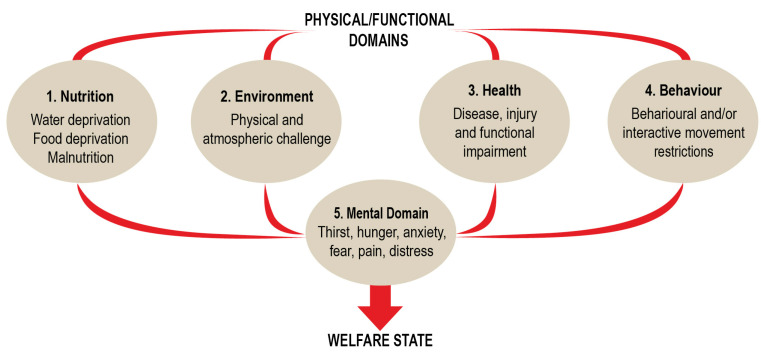
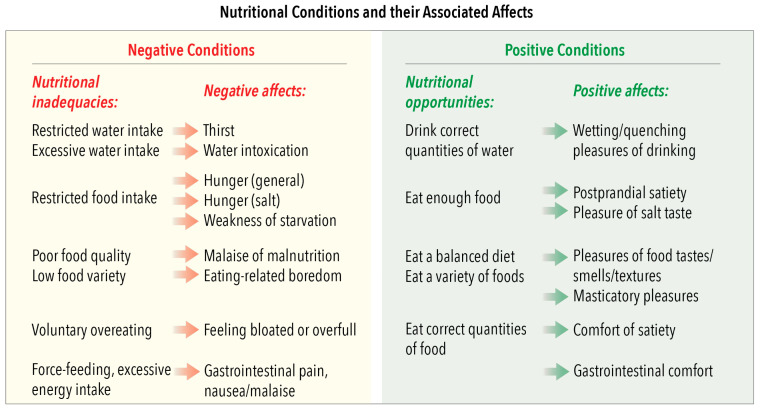
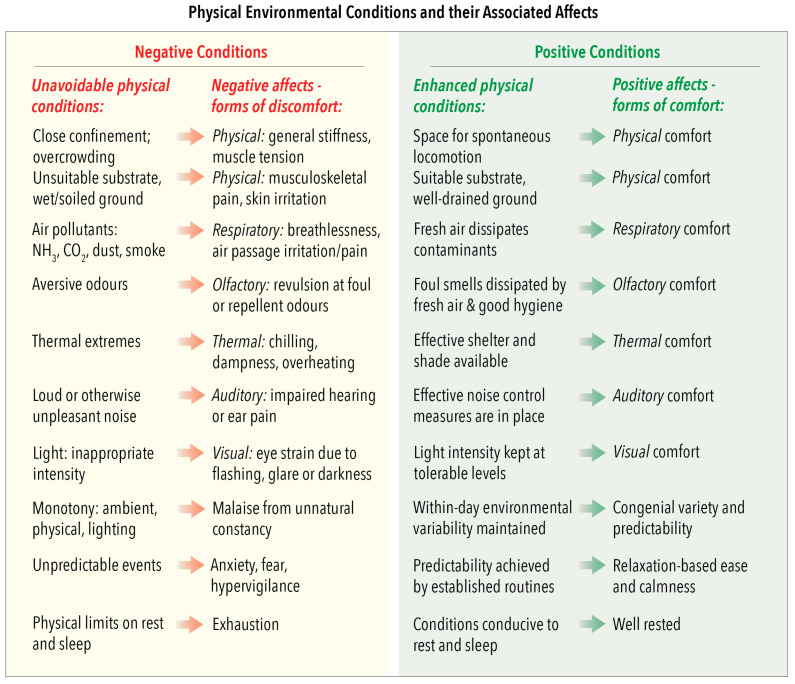
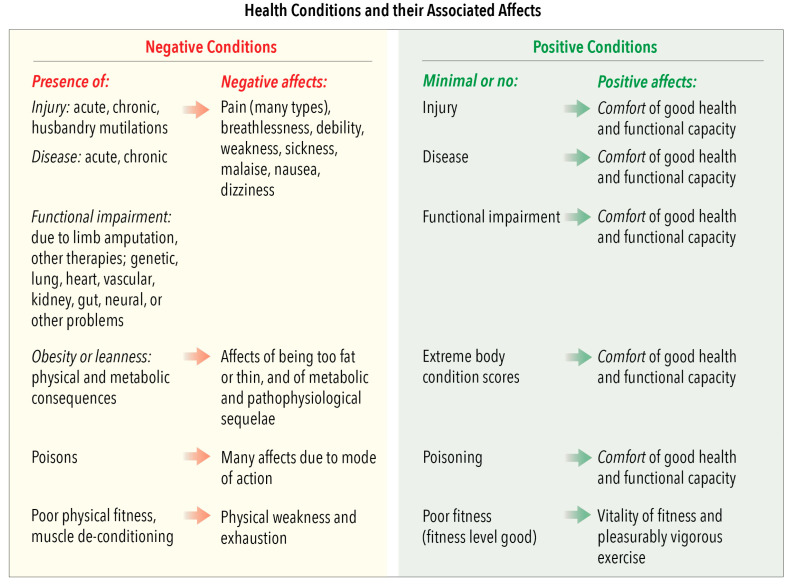
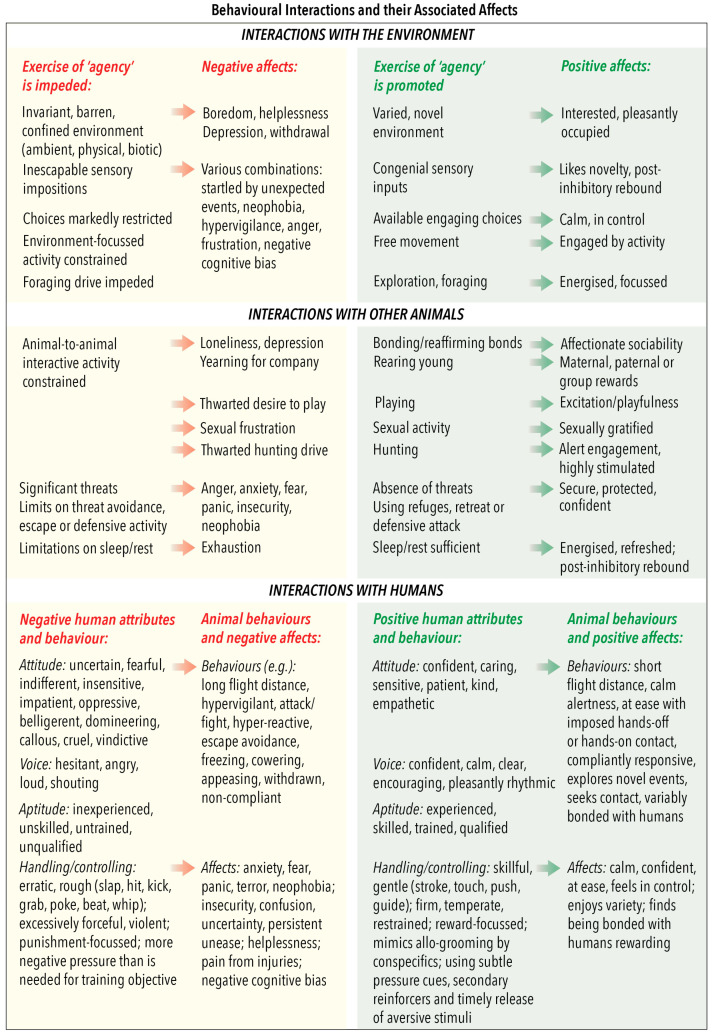
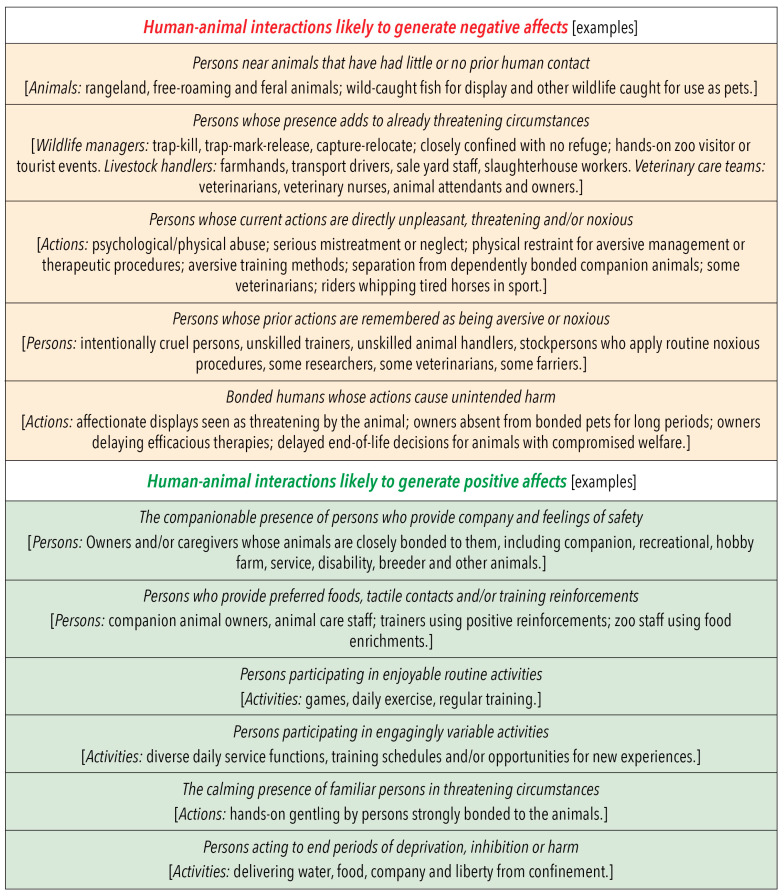
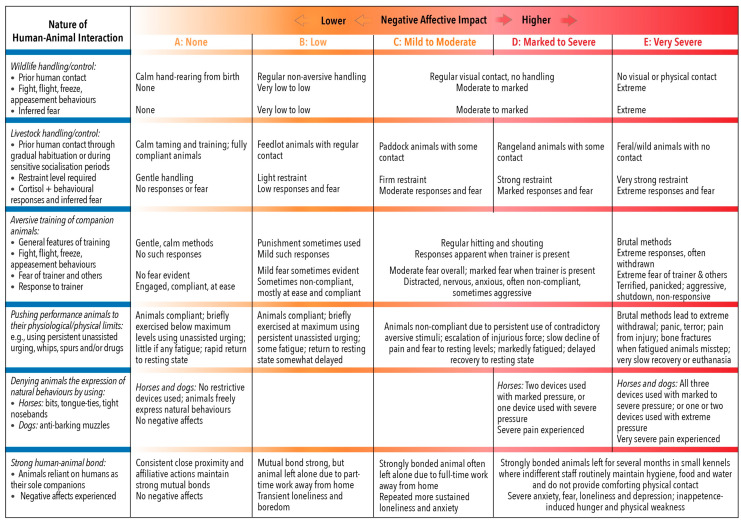
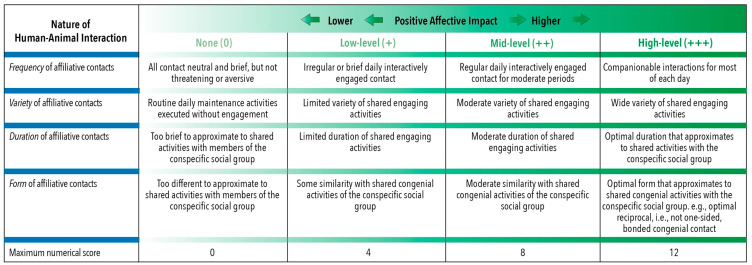
Throughout its 25-year history, the Five Domains Model for animal welfare assessment has been regularly updated to include at each stage the latest authenticated developments in animal welfare science thinking. The domains of the most up-to-date Model described here are: 1 Nutrition, 2 Physical Environment, 3 Health, 4 Behavioural Interactions and 5 Mental State. The first four domains focus attention on factors that give rise to specific negative or positive subjective experiences (affects), which contribute to the animal’s mental state, as evaluated in Domain 5. More specifically, the first three domains focus mainly on factors that disturb or disrupt particular features of the body’s internal stability. Each disturbed or disrupted feature generates sensory inputs which are processed by the brain to form specific negative affects, and these affects are associated with behaviours that act to restore the body’s internal stability. As each such behaviour is essential for the survival of the animal, the affects associated with them are collectively referred to as “survival-critical affects”. In contrast, Domain 4, now named Behavioural Interactions, focusses on evidence of animals consciously seeking specific goals when interacting behaviourally with (1) the environment, (2) other non-human animals and (3) as a new feature of the Model outlined here, humans. The associated affects, evaluated via Domain 5, are mainly generated by brain processing of sensory inputs elicited by external stimuli. The success of the animals’ behavioural attempts to achieve their chosen goals is reflected in whether the associated affects are negative or positive. Collectively referred to as “situation-related affects”, these outcomes are understood to contribute to animals’ perceptions of their external circumstances. These observations reveal a key distinction between the way survival-critical and situation-related affects influence animals’ aligned behaviours. The former mainly reflect compelling motivations to engage in genetically embedded behavioural responses, whereas the latter mainly involve conscious behavioural choices which are the hallmarks of agency. Finally, numerous examples of human–animal interactions and their attendant affects are described, and the qualitative grading of interactions that generate negative or positive affect is also illustrated.
Overview
The claims and statistics of this paper haven’t been checked yet.
Run the check — free, no account needed. It reads the open-access text and checks the sources it cites.
Integrity signals
Registry
Cites
Statistics
Figures
Verification
Claims the paper makes
The claims and statistics of this paper haven’t been checked yet.
Run the check — free, no account needed. It reads the open-access text and checks the sources it cites.
Claims other papers make about this one
Each is checked against this paper’s own text: does it say what the citing paper says it does?
The source backs part of the claim, not all of it — or backs it for a different population, condition or comparison.
In the citing paper
“One element of many modern models of animal wellbeing is that animals should be able to live in species-typical social groups and express normal, non-harmful social behaviours.”
From The Concept of Agency, Animal Wellbeing, and the Practical Realities of Ex Situ Breeding Programs in Zoos and Aquariums (2024) · cites this paper as [9]
Experimental — accuracy not yet measuredThe cited source says what the claim attributes to it.
In the citing paper
“The Five Domains Model offers a holistic approach focusing on affective terms and recognizing the subjectivity in measuring mental experiences (10).”
From Comparison of animal welfare assessment tools and methodologies: need for an effective approach for captive elephants in Asia (2024) · cites this paper as [10]
The cited source says what the claim attributes to it.
In the citing paper
“A holistic animal wellbeing program includes access to appropriate nutrition, experiencing positive emotions, reducing negative emotions, and performing species-typical behaviours [6,9].”
From The Concept of Agency, Animal Wellbeing, and the Practical Realities of Ex Situ Breeding Programs in Zoos and Aquariums (2024) · cites this paper as [9]
Self-check
Percentages, sums and reported differences re-computed from the paper’s own numbers.
The self-check needs the paper’s full text.
Citations
Cites
Biological basis of the behavior of sick animals
Hart, B. L. (1988) · Neuroscience & Biobehavioral Reviews · doi:10.1016/s0149-7634(88)80004-6 · Cited by 2,223
Assessment of positive emotions in animals to improve their welfare
Boissy, A., Manteuffel, G., Jensen, M. B., Moe, R. O., Spruijt, B., Keeling, L. J., Winckler, C., Forkman, B., Dimitrov, I., Langbein, J., et al. (2007) · Physiology & Behavior · doi:10.1016/j.physbeh.2007.02.003 · Cited by 1,486
Affective consciousness: core emotional feelings in animals and humans.
Panksepp, J. (2005) · Consciousness and Cognition · doi:10.1016/j.concog.2004.10.004 · Cited by 1,217
A Scientific Conception of Animal Welfare that Reflects Ethical Concerns
Fraser, D. J., Weary, D. M., Pajor, E. A., & Milligan, B. N. (1997) · Animal Welfare · doi:10.1017/s0962728600019795 · Cited by 1,066
Updating Animal Welfare Thinking: Moving beyond the “Five Freedoms” towards “A Life Worth Living”
Mellor, D. (2016) · Animals · doi:10.3390/ani6030021 · Cited by 948
Self-citationChartrand, T. L., & Bargh, J. A. (1996) · Journal of Personality and Social Psychology · doi:10.1037/0022-3514.71.3.464 · Cited by 879
Mellor, D., & Beausoleil, N. (2015) · Animal Welfare · doi:10.7120/09627286.24.3.241 · Cited by 627
Self-citationAssessment of positive welfare: a review
Yeates, J. W., & Main, D. C. J. (2008) · The Veterinary Journal · doi:10.1016/j.tvjl.2007.05.009 · Cited by 504
(2010) · CABI eBooks · doi:10.1079/9781845936730.0000 · Cited by 477
Mellor, D. J. (2017) · Animals · doi:10.3390/ani7080060 · Cited by 471
Self-citationProduction and growth related disorders and other metabolic diseases of poultry – A review
Julian, R. J. (2004) · The Veterinary Journal · doi:10.1016/j.tvjl.2004.04.015 · Cited by 422
‘Pleasures’,'Pains’ and Animal Welfare: Toward a Natural History of Affect
Fraser, D., & Duncan, I. J. H. (1998) · Animal Welfare · doi:10.1017/s0962728600020935 · Cited by 335
Using preference, motivation and aversion tests to ask scientific questions about animals’ feelings
Kirkden, R. D., & Pajor, E. A. (2006) · Applied Animal Behaviour Science · doi:10.1016/j.applanim.2006.04.009 · Cited by 334
Extending ideas about animal welfare assessment to include ‘quality of life’ and related concepts
Green, T., & Mellor, D. J. (2011) · New Zealand Veterinary Journal · doi:10.1080/00480169.2011.610283 · Cited by 304
Self-citationAnimal Welfare: Limping Towards Eden
(2005) · Wiley eBooks · doi:10.1002/9780470751107 · Cited by 273
Scientific assessment of animal welfare
Hemsworth, P., Mellor, D., Cronin, G., & Tilbrook, A. (2015) · New Zealand Veterinary Journal · doi:10.1080/00480169.2014.966167 · Cited by 252
Self-citationHemsworth, P. H., Coleman, G. J., Barnett, J. L., Borg, S. S., & Dowling, S. K. (2002) · Journal of Animal Science · doi:10.2527/2002.80168x · Cited by 238
Science-based assessment of animal welfare: farm animals.
Duncan, I. J. H. (2005) · PubMed · Cited by 219
The role of primordial emotions in the evolutionary origin of consciousness
Denton, D. A., McKinley, M. J., Farrell, M., & Egan, G. F. (2009) · Consciousness and Cognition · doi:10.1016/j.concog.2008.06.009 · Cited by 216
Fraser, D. J., Duncan, I. J. H., Edwards, S. A., Grandin, T., Gregory, N. G., Guyonnet, V., Hemsworth, P. H., Huertas, S. M., Huzzey, J. M., Mellor, D. J., et al. (2013) · The Veterinary Journal · doi:10.1016/j.tvjl.2013.06.028 · Cited by 216
Self-citationPhysiology and Behaviour of Animal Suffering
Gregory, N. G. (2004) · Wiley eBooks · doi:10.1002/9780470752494 · Cited by 214
Animal agency, animal awareness and animal welfare
Špinka, M. (2019) · Animal Welfare · doi:10.7120/09627286.28.1.011 · Cited by 209
Mental health and well-being in animals
(2005) · Wiley eBooks · doi:10.1002/9780470384947 · Cited by 200
Burn, C. C. (2017) · Animal Behaviour · doi:10.1016/j.anbehav.2017.06.006 · Cited by 193
Concepts of animal well-being and predicting the impact of procedures on experimental animals
Mellor, D. J., & Reid, C. (1994) · WBI Studies Repository · Cited by 186
Self-citationMellor, D. (2016) · Animals · doi:10.3390/ani6100059 · Cited by 186
Self-citationLa evaluación del bienestar animal con fundamento científico
Duncan, I. J. (2005) · Scientific and Technical Review (World Organisation for Animal Health) · doi:10.20506/rst.24.2.1587 · Cited by 179
The application of learning theory in horse training
McLean, A. N., & Christensen, J. W. (2017) · Applied Animal Behaviour Science · doi:10.1016/j.applanim.2017.02.020 · Cited by 171
Self-citationThe scientific validity of subjective concepts in models of animal welfare
Wemelsfelder, F. (1997) · Applied Animal Behaviour Science · doi:10.1016/s0168-1591(96)01152-5 · Cited by 167
Is There Evidence of Learned Helplessness in Horses?
Hall, C., Goodwin, D., Heleski, C., Randle, H., & Waran, N. K. (2008) · Journal of Applied Animal Welfare Science · doi:10.1080/10888700802101130 · Cited by 148
Enhancing animal welfare by creating opportunities for positive affective engagement
Mellor, D. (2015) · New Zealand Veterinary Journal · doi:10.1080/00480169.2014.926799 · Cited by 145
Self-citationMellor, D. J. (2019) · Animals · doi:10.3390/ani9070440 · Cited by 144
Self-citationRuud Custers, A., & Aarts, H. (2006) · Journal of Experimental Social Psychology · doi:10.1016/j.jesp.2006.02.005 · Cited by 142
Mellor, D. J. (2014) · New Zealand Veterinary Journal · doi:10.1080/00480169.2014.926800 · Cited by 137
Self-citationMental health and well-being in animals
(2019) · CABI eBooks · doi:10.1079/9781786393401.0000 · Cited by 127
Integrating practical, regulatory and ethical strategies for enhancing farm animal welfare
Mellor, D. J., & Stafford, K. (2001) · Australian Veterinary Journal · doi:10.1111/j.1751-0813.2001.tb10895.x · Cited by 120
Self-citationIntroducing breathlessness as a significant animal welfare issue
Beausoleil, N. J., & Mellor, D. J. (2014) · New Zealand Veterinary Journal · doi:10.1080/00480169.2014.940410 · Cited by 116
Self-citationColeman, G. J., & Hemsworth, P. H. (2014) · Scientific and Technical Review (World Organisation for Animal Health) · doi:10.20506/rst.33.1.2257 · Cited by 113
Positive animal welfare states and reference standards for welfare assessment
Mellor, D. J. (2014) · New Zealand Veterinary Journal · doi:10.1080/00480169.2014.926802 · Cited by 111
Self-citationEdgar, J. L., Mullan, S. M., Pritchard, J. C., McFarlane, U., & Main, D. C. J. (2013) · Animals · doi:10.3390/ani3030584 · Cited by 110
An animal welfare risk assessment process for zoos
Sherwen, S. L., Hemsworth, L. M., Beausoleil, N. J., Embury, A., & Mellor, D. J. (2018) · Animals · doi:10.3390/ani8080130 · Cited by 105
Self-citationSymposium review: Scientific assessment of affective states in dairy cattle
Ede, T., Lecorps, B., von Keyserlingk, M. A. G., & Weary, D. M. (2019) · Journal of Dairy Science · doi:10.3168/jds.2019-16325 · Cited by 102
Is boredom an animal welfare concern?
Meagher, R. K. (2019) · Animal Welfare · doi:10.7120/09627286.28.1.021 · Cited by 95
Exploring the basis of divergent selection for ‘temperament’ in domestic sheep
Beausoleil, N. J., Blache, D., Stafford, K. J., Mellor, D. J., & Noble, A. D. L. (2007) · Applied Animal Behaviour Science · doi:10.1016/j.applanim.2007.03.013 · Cited by 91
Self-citationFirth, E. C., Rogers, C. W., Doube, M., & Jopson, N. (2005) · New Zealand Veterinary Journal · doi:10.1080/00480169.2005.36487 · Cited by 89
McGreevy, P. D., Berger, J. M., de Brauwere, N., Doherty, O., Harrison, A. M., Fiedler, J. M., Jones, C., McDonnell, S. M., McLean, A. N., Nakonechny, L., et al. (2018) · Animals · doi:10.3390/ani8030041 · Cited by 85
Self-citationExploring the existence and potential underpinnings of dog–human and horse–human attachment bonds
Payne, E., DeAraugo, J., Bennett, P., & McGreevy, P. (2016) · Behavioural Processes · doi:10.1016/j.beproc.2015.10.004 · Cited by 81
Self-citationHarvey, A. M., Beausoleil, N. J., Ramp, D., & Mellor, D. J. (2020) · Animals · doi:10.3390/ani10010148 · Cited by 81
Self-citationHow assessing relationships between emotions and cognition can improve farm animal welfare
Boissy, A., & Lee, C. (2014) · Scientific and Technical Review (World Organisation for Animal Health) · doi:10.20506/rst.33.1.2260 · Cited by 80
Improving animal welfare: a practical approach
(2015) · CABI eBooks · doi:10.1079/9781780644677.0000 · Cited by 74
Anthropogenic Threats to Wild Cetacean Welfare and a Tool to Inform Policy in This Area
Nicol, C. J., Bejder, L., Green, L. E., Johnson, C. B., Keeling, L. J., Noren, D. P., van der Hoop, J., & Simmonds, M. P. (2020) · Frontiers in Veterinary Science · doi:10.3389/fvets.2020.00057 · Cited by 73
(2011) · CABI eBooks · doi:10.1079/9781845936594.0000 · Cited by 66
Beausoleil, N. J., & Mellor, D. J. (2014) · New Zealand Veterinary Journal · doi:10.1080/00480169.2014.956832 · Cited by 65
Self-citationAllen, B. L., Allen, B. L., Ballard, G., Drouilly, M., Fleming, P. J. S., Hampton, J. O., Hayward, M. W., Kerley, G. I. H., Meek, P. D., Minnie, L., et al. (2019) · Biological Conservation · doi:10.1016/j.biocon.2019.02.019 · Cited by 64
A Scientific Background for Skeletal Muscle Conditioning in Equine Practice
Rivero, J. L. L. (2007) · Zentralblatt für Veterinärmedizin Reihe A · doi:10.1111/j.1439-0442.2007.00947.x · Cited by 60
Stafford, K. J. (2006) · Kluwer Academic Publishers eBooks · doi:10.1007/1-4020-4362-7 · Cited by 57
An Investigation of Racing Performance and Whip Use by Jockeys in Thoroughbred Races
EVANS, D. L., & McGreevy, P. D. (2011) · PLoS ONE · doi:10.1371/journal.pone.0015622 · Cited by 55
Self-citationPrioritisation of companion dog welfare issues using expert consensus
Buckland, E., Corr, S., Abeyesinghe, S. M., & Wathes, C. M. (2014) · Animal Welfare · doi:10.7120/09627286.23.1.039 · Cited by 52
Equine Welfare during Exercise: An Evaluation of Breathing, Breathlessness and Bridles
Mellor, D. J., & Beausoleil, N. J. (2017) · Animals · doi:10.3390/ani7060041 · Cited by 52
Self-citationWelfare aspects of vertebrate pest control and culling: ranking control techniques for humaneness
Littin, K. E., Fisher, P., Beausoleil, N. J., & Sharp, T. M. (2014) · Scientific and Technical Review (World Organisation for Animal Health) · doi:10.20506/rst.33.1.2281 · Cited by 51
Self-citationFirth, E. C., van Weeren, P. R., Pfeiffer, D. U., DeLaHunt, J., & Barneveld, A. (1999) · Equine Veterinary Journal · doi:10.1111/j.2042-3306.1999.tb05317.x · Cited by 49
Science and its application in assessing the welfare of laying hens in the egg industry
Barnett, J., & Hemsworth, P. H. (2003) · Australian Veterinary Journal · doi:10.1111/j.1751-0813.2003.tb12506.x · Cited by 48
Forensic Use of the Five Domains Model for Assessing Suffering in Cases of Animal Cruelty
Ledger, R. A., & Mellor, D. J. (2018) · Animals · doi:10.3390/ani8070101 · Cited by 46
Self-citationDevelopment of animal welfare understanding drives change in minimum welfare standards
Mellor, D. J., & WEBSTER, J. (2014) · Scientific and Technical Review (World Organisation for Animal Health) · doi:10.20506/rst.33.1.2258 · Cited by 45
Self-citationMellor, D. J., & Burns, M. (2020) · New Zealand Veterinary Journal · doi:10.1080/00480169.2020.1715900 · Cited by 45
Self-citationClegg, I. L. K., & Delfour, F. (2018) · Aquatic Mammals · doi:10.1578/am.44.2.2018.181 · Cited by 41
Beausoleil, N. J. (2020) · Animals · doi:10.3390/ani10020257 · Cited by 40
Self-citationBeausoleil, N. J., Fisher, P., Littin, K. E., Warburton, B., Mellor, D. J., Dalefield, R. R., & Cowan, P. E. (2016) · Wildlife Research · doi:10.1071/wr16041 · Cited by 39
Self-citationChanges in the Welfare of an Injured Working Farm Dog Assessed Using the Five Domains Model
Littlewood, K. E., & Mellor, D. J. (2016) · Animals · doi:10.3390/ani6090058 · Cited by 35
Self-citationPhysiological Mechanisms Causing Sickness Behaviour and Suffering in Diseased Animals
Gregory, N. G. (1998) · Animal Welfare · doi:10.1017/s0962728600020728 · Cited by 35
Dreger, D. L., Hooser, B., Hughes, A. M., Ganesan, B., Donner, J., Anderson, H., Holtvoigt, L. E., & Ekenstedt, K. J. (2019) · PLoS ONE · doi:10.1371/journal.pone.0223995 · Cited by 34
Mellor, D. J. (2004) · Alternatives to Laboratory Animals · doi:10.1177/026119290403201s73 · Cited by 33
Self-citationEvidence of horsemanship and dogmanship and their application in veterinary contexts
Payne, E. M., Boot, M., Starling, M. J., Henshall, C., McLean, A. N., Bennett, P. C., & McGreevy, P. D. (2015) · The Veterinary Journal · doi:10.1016/j.tvjl.2015.04.004 · Cited by 32
Self-citationSalivary Cortisol Interactions in Search and Rescue Dogs and Their Handlers
Wojtaś, J., Karpiński, M., & Czyżowski, P. (2020) · Animals · doi:10.3390/ani10040595 · Cited by 32
Association between Attitude and Empathy with the Quality of Human-Livestock Interactions
Leon, A. F., Sanchez, J. A., & Romero, M. H. (2020) · Animals · doi:10.3390/ani10081304 · Cited by 32
Sociality and Wild Animal Welfare: Future Directions
Brakes, P. (2019) · Frontiers in Veterinary Science · doi:10.3389/fvets.2019.00062 · Cited by 30
Verbeek, E., Waas, J. R., Oliver, M. H., McLeay, L. M., Ferguson, D. M., & Matthews, L. R. (2012) · Hormones and Behavior · doi:10.1016/j.yhbeh.2012.06.006 · Cited by 28
McMillan, F. D. (2016) · Physiology & Behavior · doi:10.1016/j.physbeh.2016.09.013 · Cited by 27
The Importance of Good Stockmanship and Its Benefits to Animals
Rushen, J., & de Passillé, M. (2020) · CABI eBooks · doi:10.1079/9781789245219.0145 · Cited by 26
Revision of a scale for assessing the severity of live animal manipulations
Mellor, D. J. (2006) · ENLIGHTEN (Jurnal Bimbingan dan Konseling Islam) · Cited by 23
Self-citationAnalgesia for non-mammalian vertebrates
Williams, C. J. A., James, L. E., Bertelsen, M. F., & Wang, T. (2019) · Current Opinion in Physiology · doi:10.1016/j.cophys.2019.07.001 · Cited by 20
Fd, M. (2007) · Animal Welfare · doi:10.1017/s0962728600031845 · Cited by 20
Economic and Welfare Impacts of Providing Good Life Opportunities to Farm Animals
Stokes, J. E., Mullan, S. M., Takahashi, T., Monte, F., & Main, D. C. J. (2020) · Animals · doi:10.3390/ani10040610 · Cited by 20
Serrapica, M., Boivin, X., Coulon, M., Braghieri, A., & Napolitano, F. (2016) · Applied Animal Behaviour Science · doi:10.1016/j.applanim.2016.11.007 · Cited by 19
Telos, Conservation of Welfare, and Ethical Issues in Genetic Engineering of Animals
Rollin, B. E. (2014) · Current topics in behavioral neurosciences · doi:10.1007/7854_2014_279 · Cited by 19
Mellor, D. J. (2018) · Animals · doi:10.3390/ani8060082 · Cited by 18
Self-citationZookeepers’ Perception of Zoo Canid Welfare and its Effect on Job Satisfaction, Worldwide
Riggio, G., Pirrone, F., Lunghini, E., Gazzano, A., & Mariti, C. (2020) · Animals · doi:10.3390/ani10050916 · Cited by 17
Animal welfare: the five freedoms and the free market
Webster, A. J. F. (1993) · BSAP Occasional Publication · doi:10.1017/s0263967x00001282 · Cited by 17
When pain and stress interact: looking at stress-induced analgesia and hyperalgesia in birds
Baker-Cook, B. I., Machin, K. L., & Schwean-Lardner, K. V. (2019) · World s Poultry Science Journal · doi:10.1017/s0043933919000382 · Cited by 15
The Human-Animal Relationship in Australian Caged Laying Hens
Edwards, L. E., Coleman, G. J., Butler, K. L., & Hemsworth, P. H. (2019) · Animals · doi:10.3390/ani9050211 · Cited by 13
Mellor, D. J. (2004) · Alternatives to Laboratory Animals · doi:10.1177/026119290403201s22 · Cited by 8
Self-citationZintzsch, A., Noe, E., & Grimm, H. (2020) · Animals · doi:10.3390/ani10050857 · Cited by 7
Achieving positive animal welfare outcomes in zoos and aquariums.
Portas, T. (2013) · Cited by 5
Establishing the Three Rs Principle: A Plea for an International Severity Standard
Elżanowski, A. (2005) · Cited by 2
Research works printed but not linked: 16
- Mellor, D.J., Patterson-Kane, E., and Stafford, K.J. (2009). Animal welfare, grading compromise and mitigating suffering. The Sciences of Animal Welfare, Wiley-Blackwell Publishing.
- Mellor, 2012, Affective states and the assessment of laboratory-induced animal welfare impacts, ALTEX Proc., 1, 445
- Fraser, D. (2008). Understanding Animal Welfare: The Science in its Cultural Context, Wiley-Blackwell.
- Broom, 2008, Welfare assessment and relevant ethical decisions: Key concepts, ARBS Ann. Rev. Biomed. Sci., 10, T79
- Beausoleil, N.J. (2017, January 2–4). Dissecting Distress: What is a humane death and how can we assess the humaneness of death?. Proceedings of the ANZCCART Research and Teaching Conference, Queenstown, New Zealand. Available online: https://anzccart.org.nz/app/uploads/2017/03/Proceedings-of-the-2017-Australian-and-New-Zealand-Council-for-the-Care-of-Animals-in-Research-and-Teaching-part-2.pdf.
- McMillan, F.D. (2005). The mental health of laboratory animals. Mental Health and Well-Being in Animals, Blackwell Publishing. · DOI · Paper page
- Appleby, M.C., Mench, J.A., Olsson, I.A.S., and Hughes, B.O. (2011). Environmental challenge and animal agency. Animal Welfare, CAB International. [2nd ed.]. · DOI
- McMillan, F.D. (2005). The concept of quality of life in animals. Mental Health and Well-Being in Animals, Blackwell Publishing. · DOI · Paper page
- McMillan, F.D. (2020). Mental health and well-being benefits of personal control in animals. Mental Health and Well-Being in Animals, CAB International. [2nd ed.]. · DOI
- Sharp, T., and Saunders, G. (2008). A Model for Assessing the Relative Humaneness of Pest Animal Control Methods, Australian Government Department of Agriculture, Fisheries and Forestry.
- Sharp, T., and Saunders, G.A. (2011). Model for Assessing the Relative Humaneness of Pest Animal Control Methods, Australian Department of Agriculture and Water Resources. [2nd ed.].
- Beausoleil, 2012, Complementary roles for systematic analytical evaluation and qualitative whole animal profiling in welfare assessment for Three Rs applications, ALTEX Proc., 1, 455
- Mellor, 2012, Species-specific approaches are needed for effective implementation of the Three Rs in farm animal research, ALTEX Proc., 1, 469
- Mellor, D.J., Patterson-Kane, E., and Stafford, K.J. (2009). Human-animal interactions and animal welfare. The Sciences of Animal Welfare, Wiley-Blackwell Publishing.
- Grandin, T. (2015). Animal well-being and behavioural needs on the farm. Improving Animal Welfare: A Practical Approach, CAB International. [2nd ed.]. · DOI
- Heleski, C., and Wickens, C. (2013, January 17–20). Arousal, attachment and affective state. Proceedings of the 9th International Equitation Science Conference, Newark, NJ, USA. Available online: https://www.esi-education.com/arousal-attachment-and-affective-state/.
Cited by
Sorted by citations
2022 WSAVA guidelines for the recognition, assessment and treatment of pain
Monteiro, B. P., Lascelles, B. D. X., Murrell, J. C., Robertson, S. A., Steagall, P. V. M., & Wright, B. D. (2022) · Journal of Small Animal Practice · doi:10.1111/jsap.13566 · Cited by 257
2022 AAHA Pain Management Guidelines for Dogs and Cats*
Gruen, M. E., Lascelles, B. D. X., Colleran, E., Gottlieb, A., Johnson, J., Lotsikas, P., Marcellin‐Little, D. J., & Wright, B. (2022) · Journal of the American Animal Hospital Association · doi:10.5326/jaaha-ms-7292 · Cited by 205
Schillings, J., Bennett, R. M., & Rose, D. C. (2021) · Frontiers in Animal Science · doi:10.3389/fanim.2021.639678 · Cited by 190
Emerging indicators of fish welfare in aquaculture
Barreto, M. O., Rey, S., Yang, Y., Phillips, C. J. C., & Descovich, K. (2021) · Reviews in Aquaculture · doi:10.1111/raq.12601 · Cited by 185
Browning, H., & Birch, J. (2022) · Philosophy Compass · doi:10.1111/phc3.12822 · Cited by 173
Metadata
- Authors
- Mellor, D. J., Beausoleil, N. J., Littlewood, K. E., McLean, A. N., McGreevy, P. D., Jones, B., & Wilkins, C.
- Affiliations
- Massey University (NZ)
- Equitation Science International, 3 Wonderland Ave, Tuerong, VIC 3915, Australia
- The University of Sydney (AU)
- Saddletops Pty Ltd., P.O. Box 557, Gatton, QLD 4343, Australia
- Corresponding author
- Mellor, David J.
- ORCID
- Venue
- Animals
- Publisher
- MDPI AG
- Published
- 2020-10-14
- Volume
- 10
- Issue
- 10
- Pages
- 1870
- ISSN
- 2076-2615 (ISSN-L)
- PMC
- PMC7602120
- OpenAlex
- W3092689285
- Cited by
- 985
- References
- 95
- Citations by year
- 2026: 219 · 2025: 222 · 2024: 197 · 2023: 165 · 2022: 115 · 2021: 65 · 2020: 2
- FWCI
- 15.93
- Type
- journal article
- Language
- en
- Open access
- gold
- doi.org
- Licence
- Locations
- Animals (publishedVersion, cc-by)
- PubMed Central (publishedVersion, cc-by)
- PubMed (publishedVersion)
- DOAJ (DOAJ: Directory of Open Access Journals) (submittedVersion, cc-by-sa)
- WBI Studies Repository (submittedVersion)
- Topics
- Life Sciences › Agricultural and Biological Sciences › Animal Science and Zoology › Animal Behavior and Welfare Studies
- Life Sciences › Agricultural and Biological Sciences › Animal Science and Zoology › Human-Animal Interaction Studies
- Health Sciences › Veterinary › Small Animals › Veterinary Pharmacology and Anesthesia
- Keywords
- Five Domains Model, animal welfare assessment, human-animal interaction, animal welfare science, affective states, agency, mental states, behavioral interactions, nutrition, physical environment, positive and negative affect
About these checks
Registry, retraction, Cites and statistics results are computed, not judged, with one exception: a printed reference that no index lists is read once by a model before it counts as a citation error. Claims are extracted by a model and kept only when their quote appears verbatim in the text; each cited source is then checked, with a model’s help, for whether it says what the claim relies on. Those verdicts can be wrong — read the claim’s quote and the cited source before relying on one.
Statistics and arithmetic are recomputed, not judged.
Confidence bands are shown only for fields calibrated on our annotated test set. None is calibrated yet, so no band is shown.
What counts as a claim ›How we measure confidence ›How we check this ›
Are you an author, or do you see a problem with this page? Request a review
