

The DOI matches its Crossref record; 95 of the 95 references it cites were found in a registry or an index.
The 2020 five domains model: including human-animal interactions in assessments of animal welfare
Open accessAbstract
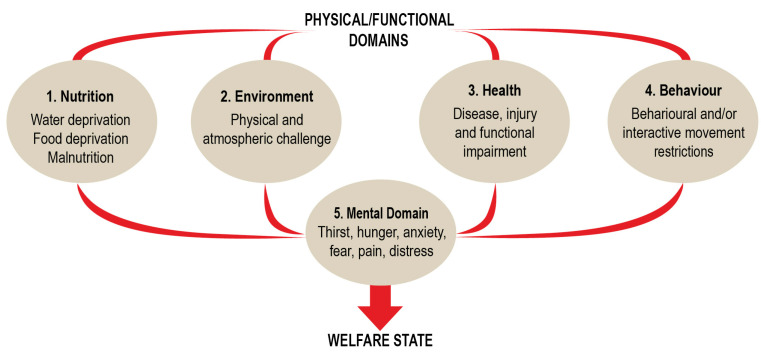
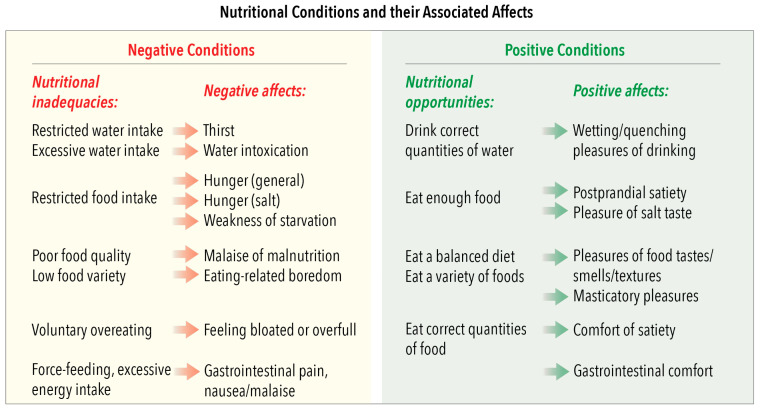
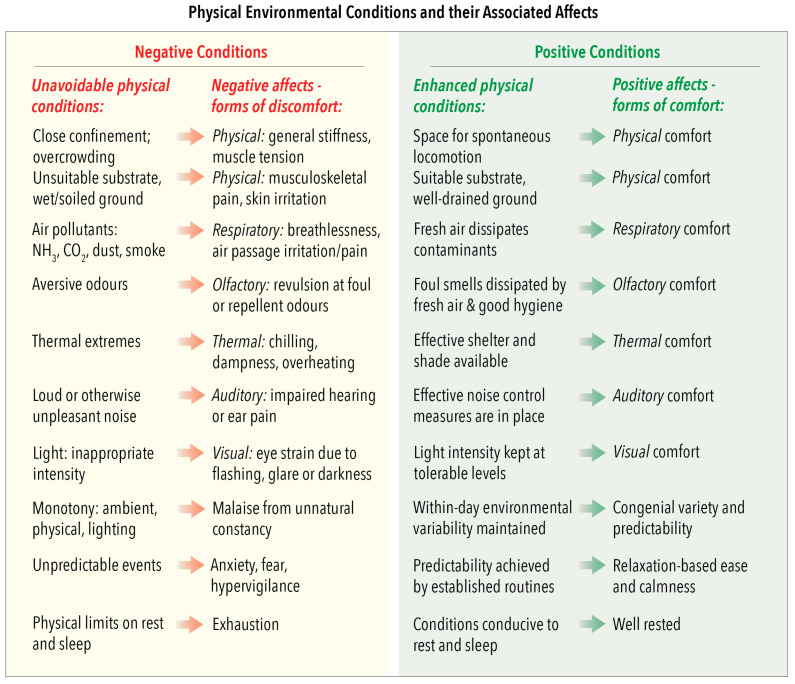
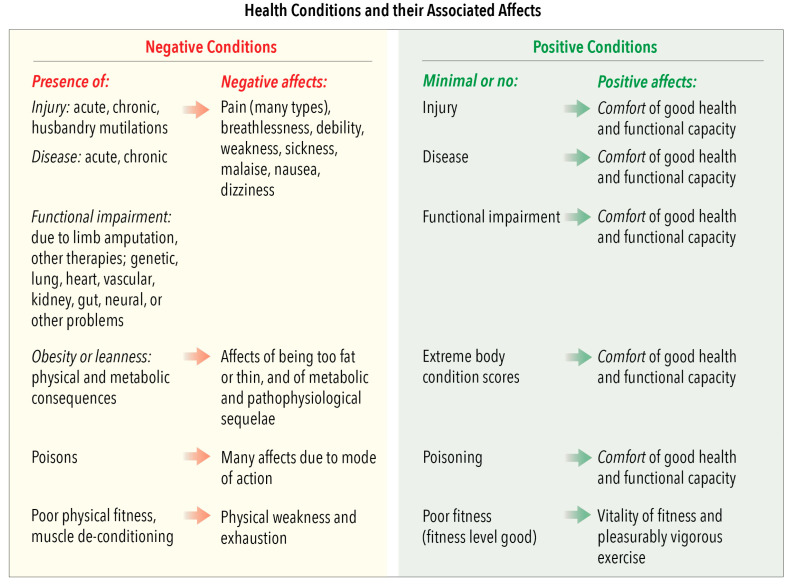
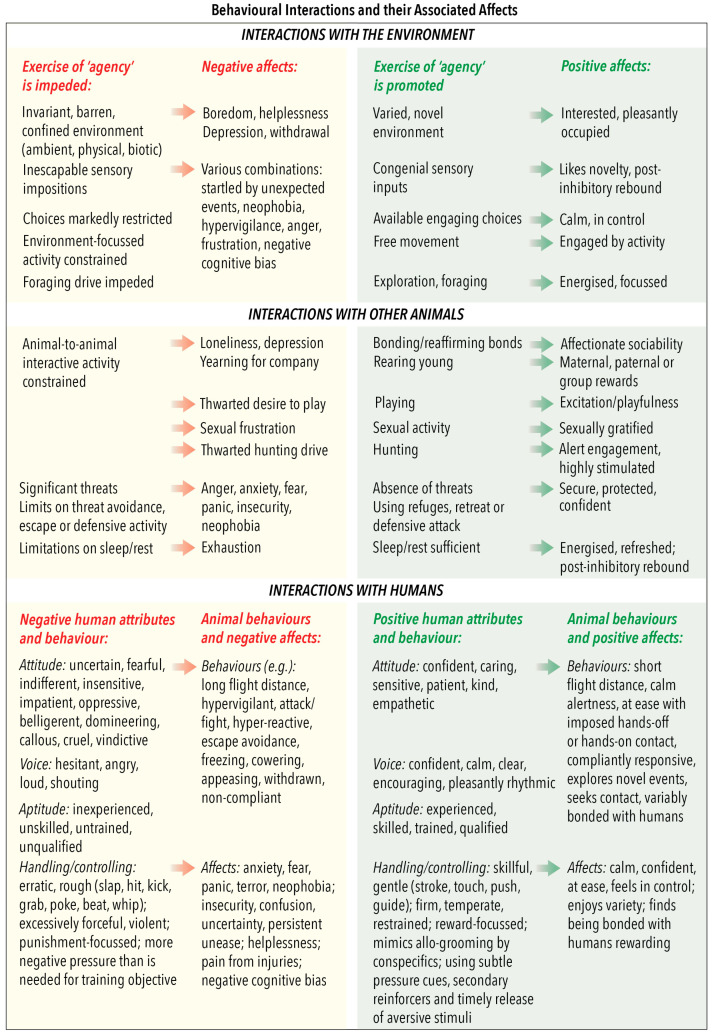
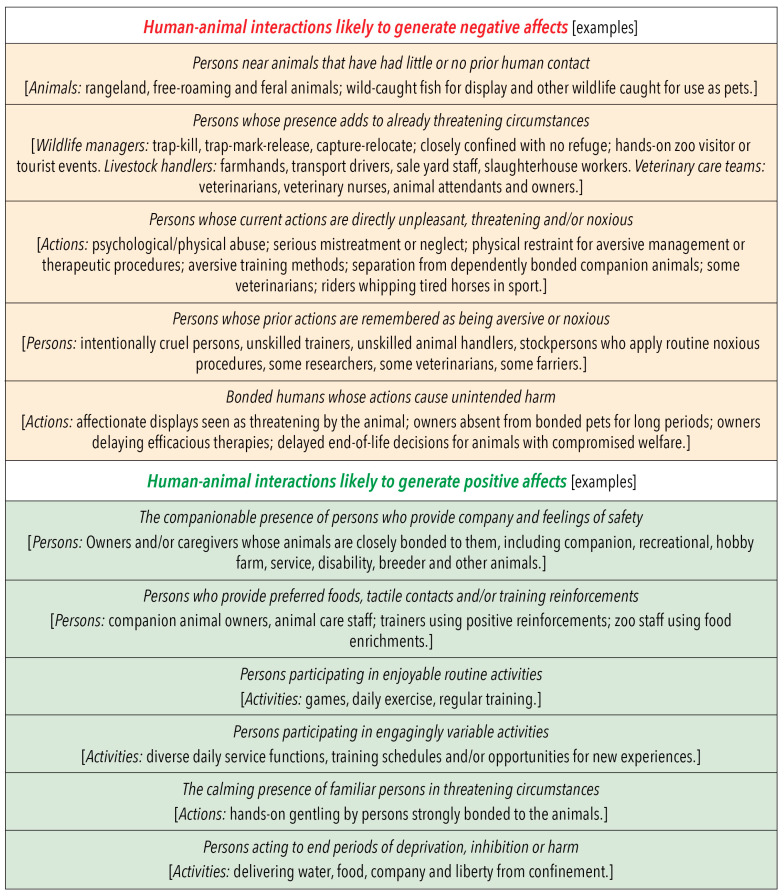
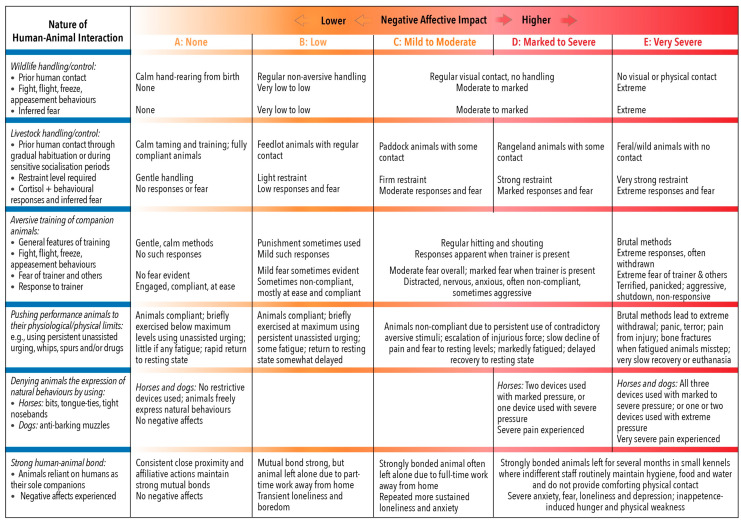
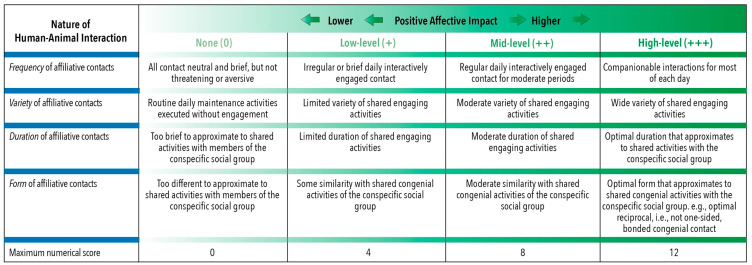
Throughout its 25-year history, the Five Domains Model for animal welfare assessment has been regularly updated to include at each stage the latest authenticated developments in animal welfare science thinking. The domains of the most up-to-date Model described here are: 1 Nutrition, 2 Physical Environment, 3 Health, 4 Behavioural Interactions and 5 Mental State. The first four domains focus attention on factors that give rise to specific negative or positive subjective experiences (affects), which contribute to the animal’s mental state, as evaluated in Domain 5. More specifically, the first three domains focus mainly on factors that disturb or disrupt particular features of the body’s internal stability. Each disturbed or disrupted feature generates sensory inputs which are processed by the brain to form specific negative affects, and these affects are associated with behaviours that act to restore the body’s internal stability. As each such behaviour is essential for the survival of the animal, the affects associated with them are collectively referred to as “survival-critical affects”. In contrast, Domain 4, now named Behavioural Interactions, focusses on evidence of animals consciously seeking specific goals when interacting behaviourally with (1) the environment, (2) other non-human animals and (3) as a new feature of the Model outlined here, humans. The associated affects, evaluated via Domain 5, are mainly generated by brain processing of sensory inputs elicited by external stimuli. The success of the animals’ behavioural attempts to achieve their chosen goals is reflected in whether the associated affects are negative or positive. Collectively referred to as “situation-related affects”, these outcomes are understood to contribute to animals’ perceptions of their external circumstances. These observations reveal a key distinction between the way survival-critical and situation-related affects influence animals’ aligned behaviours. The former mainly reflect compelling motivations to engage in genetically embedded behavioural responses, whereas the latter mainly involve conscious behavioural choices which are the hallmarks of agency. Finally, numerous examples of human–animal interactions and their attendant affects are described, and the qualitative grading of interactions that generate negative or positive affect is also illustrated.
Overview
The claims and statistics of this paper haven’t been checked yet.
Run the check — free, no account needed. It reads the open-access text and checks the sources it cites.
Integrity signals
Registry
Cites
Statistics
Figures
Verification
Claims the paper makes
The claims and statistics of this paper haven’t been checked yet.
Run the check — free, no account needed. It reads the open-access text and checks the sources it cites.
Claims other papers make about this one
Each is checked against this paper’s own text: does it say what the citing paper says it does?
The source backs part of the claim, not all of it — or backs it for a different population, condition or comparison.
In the citing paper
“One element of many modern models of animal wellbeing is that animals should be able to live in species-typical social groups and express normal, non-harmful social behaviours.”
From The Concept of Agency, Animal Wellbeing, and the Practical Realities of Ex Situ Breeding Programs in Zoos and Aquariums (2024) · cites this paper as [9]
Experimental — accuracy not yet measuredThe cited source says what the claim attributes to it.
In the citing paper
“The Five Domains Model offers a holistic approach focusing on affective terms and recognizing the subjectivity in measuring mental experiences (10).”
From Comparison of animal welfare assessment tools and methodologies: need for an effective approach for captive elephants in Asia (2024) · cites this paper as [10]
The cited source says what the claim attributes to it.
In the citing paper
“A holistic animal wellbeing program includes access to appropriate nutrition, experiencing positive emotions, reducing negative emotions, and performing species-typical behaviours [6,9].”
From The Concept of Agency, Animal Wellbeing, and the Practical Realities of Ex Situ Breeding Programs in Zoos and Aquariums (2024) · cites this paper as [9]
Self-check
Percentages, sums and reported differences re-computed from the paper’s own numbers.
The self-check needs the paper’s full text.
Citations
Cites
Biological basis of the behavior of sick animals
Hart, B. L. (1988) · Neuroscience & Biobehavioral Reviews · doi:10.1016/s0149-7634(88)80004-6 · Cited by 2,223
Assessment of positive emotions in animals to improve their welfare
Boissy, A., Manteuffel, G., Jensen, M. B., Moe, R. O., Spruijt, B., Keeling, L. J., Winckler, C., Forkman, B., Dimitrov, I., Langbein, J., et al. (2007) · Physiology & Behavior · doi:10.1016/j.physbeh.2007.02.003 · Cited by 1,486
Affective consciousness: core emotional feelings in animals and humans.
Panksepp, J. (2005) · Consciousness and Cognition · doi:10.1016/j.concog.2004.10.004 · Cited by 1,217
A Scientific Conception of Animal Welfare that Reflects Ethical Concerns
Fraser, D. J., Weary, D. M., Pajor, E. A., & Milligan, B. N. (1997) · Animal Welfare · doi:10.1017/s0962728600019795 · Cited by 1,066
Updating Animal Welfare Thinking: Moving beyond the “Five Freedoms” towards “A Life Worth Living”
Mellor, D. (2016) · Animals · doi:10.3390/ani6030021 · Cited by 948
Self-citationChartrand, T. L., & Bargh, J. A. (1996) · Journal of Personality and Social Psychology · doi:10.1037/0022-3514.71.3.464 · Cited by 879
Mellor, D., & Beausoleil, N. (2015) · Animal Welfare · doi:10.7120/09627286.24.3.241 · Cited by 627
Self-citationAssessment of positive welfare: a review
Yeates, J. W., & Main, D. C. J. (2008) · The Veterinary Journal · doi:10.1016/j.tvjl.2007.05.009 · Cited by 504
(2010) · CABI eBooks · doi:10.1079/9781845936730.0000 · Cited by 477
Research works printed but not linked: 16
- Mellor, D.J., Patterson-Kane, E., and Stafford, K.J. (2009). Animal welfare, grading compromise and mitigating suffering. The Sciences of Animal Welfare, Wiley-Blackwell Publishing.
- Mellor, 2012, Affective states and the assessment of laboratory-induced animal welfare impacts, ALTEX Proc., 1, 445
- Fraser, D. (2008). Understanding Animal Welfare: The Science in its Cultural Context, Wiley-Blackwell.
- Broom, 2008, Welfare assessment and relevant ethical decisions: Key concepts, ARBS Ann. Rev. Biomed. Sci., 10, T79
- Beausoleil, N.J. (2017, January 2–4). Dissecting Distress: What is a humane death and how can we assess the humaneness of death?. Proceedings of the ANZCCART Research and Teaching Conference, Queenstown, New Zealand. Available online: https://anzccart.org.nz/app/uploads/2017/03/Proceedings-of-the-2017-Australian-and-New-Zealand-Council-for-the-Care-of-Animals-in-Research-and-Teaching-part-2.pdf.
- McMillan, F.D. (2005). The mental health of laboratory animals. Mental Health and Well-Being in Animals, Blackwell Publishing. · DOI · Paper page
- Appleby, M.C., Mench, J.A., Olsson, I.A.S., and Hughes, B.O. (2011). Environmental challenge and animal agency. Animal Welfare, CAB International. [2nd ed.]. · DOI
- McMillan, F.D. (2005). The concept of quality of life in animals. Mental Health and Well-Being in Animals, Blackwell Publishing. · DOI · Paper page
- McMillan, F.D. (2020). Mental health and well-being benefits of personal control in animals. Mental Health and Well-Being in Animals, CAB International. [2nd ed.]. · DOI
- Sharp, T., and Saunders, G. (2008). A Model for Assessing the Relative Humaneness of Pest Animal Control Methods, Australian Government Department of Agriculture, Fisheries and Forestry.
- Sharp, T., and Saunders, G.A. (2011). Model for Assessing the Relative Humaneness of Pest Animal Control Methods, Australian Department of Agriculture and Water Resources. [2nd ed.].
- Beausoleil, 2012, Complementary roles for systematic analytical evaluation and qualitative whole animal profiling in welfare assessment for Three Rs applications, ALTEX Proc., 1, 455
- Mellor, 2012, Species-specific approaches are needed for effective implementation of the Three Rs in farm animal research, ALTEX Proc., 1, 469
- Mellor, D.J., Patterson-Kane, E., and Stafford, K.J. (2009). Human-animal interactions and animal welfare. The Sciences of Animal Welfare, Wiley-Blackwell Publishing.
- Grandin, T. (2015). Animal well-being and behavioural needs on the farm. Improving Animal Welfare: A Practical Approach, CAB International. [2nd ed.]. · DOI
- Heleski, C., and Wickens, C. (2013, January 17–20). Arousal, attachment and affective state. Proceedings of the 9th International Equitation Science Conference, Newark, NJ, USA. Available online: https://www.esi-education.com/arousal-attachment-and-affective-state/.
Cited by
Sorted by citations
2022 WSAVA guidelines for the recognition, assessment and treatment of pain
Monteiro, B. P., Lascelles, B. D. X., Murrell, J. C., Robertson, S. A., Steagall, P. V. M., & Wright, B. D. (2022) · Journal of Small Animal Practice · doi:10.1111/jsap.13566 · Cited by 257
2022 AAHA Pain Management Guidelines for Dogs and Cats*
Gruen, M. E., Lascelles, B. D. X., Colleran, E., Gottlieb, A., Johnson, J., Lotsikas, P., Marcellin‐Little, D. J., & Wright, B. (2022) · Journal of the American Animal Hospital Association · doi:10.5326/jaaha-ms-7292 · Cited by 205
Schillings, J., Bennett, R. M., & Rose, D. C. (2021) · Frontiers in Animal Science · doi:10.3389/fanim.2021.639678 · Cited by 190
Emerging indicators of fish welfare in aquaculture
Barreto, M. O., Rey, S., Yang, Y., Phillips, C. J. C., & Descovich, K. (2021) · Reviews in Aquaculture · doi:10.1111/raq.12601 · Cited by 185
Browning, H., & Birch, J. (2022) · Philosophy Compass · doi:10.1111/phc3.12822 · Cited by 173
Silva, S. R., Sacarrão-Birrento, L., Almeida, M., Ribeiro, D. M., Guedes, C., Montaña, J. R. G., Pereira, A. M. F., Zaralis, K., Geraldo, A. C. A. P. D. M., Tzamaloukas, O., et al. (2022) · Animals · doi:10.3390/ani12070885 · Cited by 148
Review: Towards an integrated concept of animal welfare
Reimert, I., Webb, L. E., van Marwijk, M. A., & Bolhuis, J. E. (2023) · animal · doi:10.1016/j.animal.2023.100838 · Cited by 101
Social Licence to Operate: What Can Equestrian Sports Learn from Other Industries?
Douglas, J. E., Owers, R., & Campbell, M. (2022) · Animals · doi:10.3390/ani12151987 · Cited by 96
Gehlot, A., Malik, P. K., Singh, R., Akram, S. V., & Alsuwian, T. M. (2022) · Applied Sciences · doi:10.3390/app12147316 · Cited by 92
Animal Feed Formulation—Connecting Technologies to Build a Resilient and Sustainable System
Akintan, O. A., Gebremedhin, K. G., & Uyeh, D. D. (2024) · Animals · doi:10.3390/ani14101497 · Cited by 109
Cobb, M., Otto, C. M., & Fine, A. H. (2021) · Frontiers in Veterinary Science · doi:10.3389/fvets.2021.666898 · Cited by 89
Assessing measures of animal welfare
Browning, H. (2022) · Biology & Philosophy · doi:10.1007/s10539-022-09862-1 · Cited by 85
Arndt, S. S., Goerlich, V. C., & van der Staay, F. J. (2022) · Frontiers in Animal Science · doi:10.3389/fanim.2022.908513 · Cited by 89
One Conservation: The integrated view of biodiversity conservation
Pizzutto, C. S., Colbachini, H., & Jorge-Neto, P. N. (2021) · Animal Reproduction · doi:10.1590/1984-3143-ar2021-0024 · Cited by 82
de Azevedo, C. S., Cipreste, C. F., Pizzutto, C. S., & Young, R. J. (2023) · Animals · doi:10.3390/ani13081277 · Cited by 91
Littlewood, K. E., Heslop, M. V., & Cobb, M. (2023) · Frontiers in Veterinary Science · doi:10.3389/fvets.2023.1284869 · Cited by 85
Self-citationDefining Terms Used for Animals Working in Support Roles for People with Support Needs
Howell, T. J., Nieforth, L. O., Thomas-Pino, C., Samet, L. E., Agbonika, S., Cuevas-Pavincich, F., Fry, N. E., Hill, K., Jegatheesan, B. I., Kakinuma, M., et al. (2022) · Animals · doi:10.3390/ani12151975 · Cited by 73
Leconstant, C., & Spitz, É. (2022) · Frontiers in Veterinary Science · doi:10.3389/fvets.2022.656833 · Cited by 72
Training as enrichment: A critical review
Fernandez, E. J. (2022) · Animal Welfare · doi:10.7120/09627286.31.1.001 · Cited by 76
Browning, H., & Veit, W. (2021) · Animals · doi:10.3390/ani11041148 · Cited by 73
Ethical Challenges Posed by Advanced Veterinary Care in Companion Animal Veterinary Practice
Quain, A., Ward, M. P., & Mullan, S. M. (2021) · Animals · doi:10.3390/ani11113010 · Cited by 65
Invited review: The welfare of young calves transported by road
Roadknight, N., Mansell, P., Jongman, E., Courtman, N., & Fisher, A. (2021) · Journal of Dairy Science · doi:10.3168/jds.2020-19346 · Cited by 63
Welfare assessment tools in zoos: from theory to practice
Jones, N., Sherwen, S. L., Robbins, R., McLelland, D. J., & Whittaker, A. L. (2022) · Veterinary Sciences · doi:10.3390/vetsci9040170 · Cited by 62
Success of Aquaculture Industry with New Insights of Using Insects as Feed: A Review
Hameed, A., Majeed, W., Naveed, M., Ramzan, U., Bordiga, M., Hameed, M., Rehman, S. U., & Rana, N. (2022) · Fishes · doi:10.3390/fishes7060395 · Cited by 66
Williams, E., Carter, A. J., Rendle, J., & Ward, S. J. (2021) · Applied Animal Behaviour Science · doi:10.1016/j.applanim.2021.105253 · Cited by 65
Furtado, T., Preshaw, L., Hockenhull, J., Wathan, J., Douglas, J. E., Horseman, S., Smith, R., Pollard, D., Pinchbeck, G. L., Rogers, J., et al. (2021) · Animals · doi:10.3390/ani11113228 · Cited by 56
Park, M., Britton, D. F., Daley, W. D. R., McMurray, G. V., Navaei, M., Samoylov, A., Usher, C. T., & Xu, J. (2022) · Animal Frontiers · doi:10.1093/af/vfac001 · Cited by 59
The Impact of the Social Determinants of Human Health on Companion Animal Welfare
McDowall, S., Hazel, S. J., Chittleborough, C., Hamilton‐Bruce, M. A., Stuckey, R., & Howell, T. J. (2023) · Animals · doi:10.3390/ani13061113 · Cited by 63
Improving welfare assessment in aquaculture
Browning, H. (2023) · Frontiers in Veterinary Science · doi:10.3389/fvets.2023.1060720 · Cited by 54
Simitzis, P., Tzanidakis, C., Tzamaloukas, O., & Sossidou, E. (2021) · Dairy · doi:10.3390/dairy3010002 · Cited by 53
Quain, A., Mullan, S. M., McGreevy, P. D., & Ward, M. P. (2021) · Frontiers in Veterinary Science · doi:10.3389/fvets.2021.647108 · Cited by 53
Self-citationWelfare Through Competence: A Framework for Animal-Centric Technology Design
Webber, S. E., Cobb, M., & Coe, J. C. (2022) · Frontiers in Veterinary Science · doi:10.3389/fvets.2022.885973 · Cited by 52
Animal sentience: history, science, and politics
Rowan, A., D'Silva, J. M., Duncan, I. J. H., & Palmer, N. (2021) · Animal Sentience · doi:10.51291/2377-7478.1697 · Cited by 54
Interrupted Lives: Welfare Considerations in Wildlife Rehabilitation
Willette, M. M., Rosenhagen, N., Buhl, G., Innis, C. J., & Boehm, J. (2023) · Animals · doi:10.3390/ani13111836 · Cited by 51
Legislações em defesa dos animais: Avanços e desafios
Negrão, J. T. D. J., Mendes, P. F., & Laurentino, T. (2024) · PubVet · doi:10.31533/pubvet.v18n05e1599 · Cited by 49
Animal welfare and effects of per-female stress on male and cattle reproduction—A review
da Silva, W. C., da Silva, J. A. R., Júnior, R. N. C. C., da Silva, É. B. R., dos Santos, M. R. P., Viana, R. B., Silva, A. G. M. E., da Silva, C. M. G., & Júnior, J. D. B. L. (2023) · Frontiers in Veterinary Science · doi:10.3389/fvets.2023.1083469 · Cited by 48
Applied Animal Ethics in Industrial Food Animal Production: Exploring the Role of the Veterinarian
Hernández, E., Llonch, P., & Turner, P. V. (2022) · Animals · doi:10.3390/ani12060678 · Cited by 46
Rethinking the utility of the five domains model
Hampton, J. O., Hemsworth, L. M., Hemsworth, P. H., Hyndman, T. H., & Sandøe, P. (2023) · Animal Welfare · doi:10.1017/awf.2023.84 · Cited by 45
Zoo animal welfare assessment: where do we stand?
Tallo-Parra, O., Salas, M., & Manteca, X. (2023) · Animals · doi:10.3390/ani13121966 · Cited by 45
New insights into ridden horse behaviour, horse welfare and horse-related safety
Luke, K. L., McAdie, T. M., Smith, B. P., & Warren-Smith, A. K. (2021) · Applied Animal Behaviour Science · doi:10.1016/j.applanim.2021.105539 · Cited by 45
Review: The challenge to integrate animal welfare indicators into the Life Cycle Assessment
Lanzoni, L., Whatford, L., Atzori, A. S., Chincarini, M., Giammarco, M., Fusaro, I., & Vignola, G. (2023) · animal · doi:10.1016/j.animal.2023.100794 · Cited by 44
Holmes, T. Q., & Brown, A. F. (2022) · Animals · doi:10.3390/ani12091186 · Cited by 43
Giraudet, C., Liu, K., McElligott, A. G., & Cobb, M. (2022) · PeerJ · doi:10.7717/peerj.14532 · Cited by 50
Farm animal welfare: Beyond “natural” behavior
Dawkins, M. S. (2023) · Science · doi:10.1126/science.ade5437 · Cited by 43
Welfare of Decapod Crustaceans with Special Emphasis on Stress Physiology
Wuertz, S., Bierbach, D., & Bögner, M. (2023) · Aquaculture Research · doi:10.1155/2023/1307684 · Cited by 45
The importance of considering age when quantifying wild animals’ welfare
Hecht, L. (2021) · Biological reviews/Biological reviews of the Cambridge Philosophical Society · doi:10.1111/brv.12769 · Cited by 43
An animal welfare literacy framework for tourism
Fennell, D. A. (2022) · Annals of Tourism Research · doi:10.1016/j.annals.2022.103461 · Cited by 41
Animal-informed consent: sled dog tours as asymmetric agential events
Fennell, D. A. (2022) · Tourism Management · doi:10.1016/j.tourman.2022.104584 · Cited by 40
Grazing Cattle, Sheep, and Goats Are Important Parts of a Sustainable Agricultural Future
Grandin, T. (2022) · Animals · doi:10.3390/ani12162092 · Cited by 43
Beer, H. N., Shrader, T. C., Schmidt, T. B., & Yates, D. T. (2023) · Journal of Zoological and Botanical Gardens · doi:10.3390/jzbg4040046 · Cited by 48
Silva, A. J. (2022) · Personnel Review · doi:10.1108/pr-09-2022-0588 · Cited by 40
The impact of visitors on non-primate species in zoos: a quantitative review
Williams, E., Hunton, V., Hosey, G., & Ward, S. J. (2023) · Animals · doi:10.3390/ani13071178 · Cited by 38
Stallones, L. F., McManus, P., & McGreevy, P. D. (2023) · Animals · doi:10.3390/ani13030490 · Cited by 38
Self-citationThe Fibre Requirements of Horses and the Consequences and Causes of Failure to Meet Them
Ermers, C., McGilchrist, N., Fenner, K., Wilson, B. J., & McGreevy, P. D. (2023) · Animals · doi:10.3390/ani13081414 · Cited by 37
Self-citationReview: Exploring the use of precision livestock farming for small ruminant welfare management
Morgan‐Davies, C., Tesnière, G., Gautier, J. M., Jørgensen, G. H. M., García, E. G., Patsios, S. I., Sossidou, E. Ν., Keady, T. W. J., McClearn, B., Kenyon, F., et al. (2024) · animal · doi:10.1016/j.animal.2024.101233 · Cited by 37
Canine-Assisted Interventions in Hospitals: Best Practices for Maximizing Human and Canine Safety
Barker, S. B., & Gee, N. R. (2021) · Frontiers in Veterinary Science · doi:10.3389/fvets.2021.615730 · Cited by 45
How should we monitor welfare in the ornamental fish trade?
Jones, M., Alexander, M. E., Snellgrove, D., Smith, P., Bramhall, S., Carey, P., Henriquez, F. L., McLellan, I. S., & Sloman, K. A. (2021) · Reviews in Aquaculture · doi:10.1111/raq.12624 · Cited by 39
Can Humans and Elephants Coexist? A Review of the Conflict on Sumatra Island, Indonesia
Kuswanda, W., Garsetiasih, R., Gunawan, H., Situmorang, R. O. P., Hutapea, F. J., Kwatrina, R. T., Karlina, E., Atmoko, T., Zahrah, M., Takandjandji, M., et al. (2022) · Diversity · doi:10.3390/d14060420 · Cited by 38
Identification of Animal-Based Welfare Indicators in Captive Reptiles: A Delphi Consultation Survey
Whittaker, A. L., Golder-Dewar, B., Triggs, J. L., Sherwen, S. L., & McLelland, D. J. (2021) · Animals · doi:10.3390/ani11072010 · Cited by 35
The New Era of Canine Science: Reshaping Our Relationships With Dogs
MacLean, E. L., Fine, A. H., Herzog, H., Strauss, E. G., & Cobb, M. (2021) · Frontiers in Veterinary Science · doi:10.3389/fvets.2021.675782 · Cited by 34
Rowe, E., & Mullan, S. M. (2022) · Animals · doi:10.3390/ani12050565 · Cited by 33
Dogs as Pets and Pests: Global Patterns of Canine Abundance, Activity, and Health
Bryce, C. M. (2021) · Integrative and Comparative Biology · doi:10.1093/icb/icab046 · Cited by 33
Observational behaviors and emotions to assess welfare of dogs: A systematic review
de Winkel, T., van der Steen, S., Enders‐Slegers, M., Griffioen, R. E., Haverbeke, A., Groenewoud, D., & Hediger, K. (2024) · Journal of Veterinary Behavior · doi:10.1016/j.jveb.2023.12.007 · Cited by 32
Verkuijl, C., Smit, J., Green, J., Nordquist, R. E., Sebo, J., Hayek, M., & Hötzel, M. J. (2024) · Frontiers in Animal Science · doi:10.3389/fanim.2024.1281450 · Cited by 32
A Qualitative Exploration of UK Leisure Horse Owners’ Perceptions of Equine Wellbeing
Smith, R., Furtado, T., Brigden, C. V., Pinchbeck, G. L., & Perkins, E. (2022) · Animals · doi:10.3390/ani12212937 · Cited by 32
Review: The Five Domains model and promoting positive welfare in pigs
Kells, N. J. (2021) · animal · doi:10.1016/j.animal.2021.100378 · Cited by 33
Animal-Visitor Interactions: Effects, Experiences, and Welfare
Fernandez, E. J., & Chiew, S. J. (2021) · Animal Behavior and Cognition · doi:10.26451/abc.08.04.01.2021 · Cited by 31
Review: Space allowance for growing pigs: animal welfare, performance and on-farm practicality
Chidgey, K. L. (2023) · animal · doi:10.1016/j.animal.2023.100890 · Cited by 29
Does a Working Knowledge of Learning Theory Relate to Improved Horse Welfare and Rider Safety?
Luke, K. L., McAdie, T. M., Warren-Smith, A. K., Rawluk, A., & Smith, B. P. (2023) · Anthrozoös · doi:10.1080/08927936.2023.2166713 · Cited by 32
Decker, S., Lavery, J. M., & Mason, G. J. (2023) · Zoo Biology · doi:10.1002/zoo.21756 · Cited by 35
Using zoo welfare assessments to identify common issues in developing country zoos
Ward, S. J., Williams, E., Groves, G., Marsh, S., & Morgan, D. (2020) · Animals · doi:10.3390/ani10112101 · Cited by 28
Humans and Goats: Improving Knowledge for a Better Relationship
Celozzi, S., Battini, M., Prato‐Previde, E., & Mattiello, S. (2022) · Animals · doi:10.3390/ani12060774 · Cited by 33
The Social Construction of Narratives and Arguments in Animal Welfare Discourse and Debate
Muhammad, M., Stokes, J. E., Morgans, L. C., & Manning, L. (2022) · Animals · doi:10.3390/ani12192582 · Cited by 31
Dawkins, M. S. (2023) · Animals · doi:10.3390/ani13060988 · Cited by 28
How equestrians conceptualise horse welfare: Does it facilitate or hinder change?
Luke, K. L., Rawluk, A., McAdie, T. M., Smith, B. P., & Warren-Smith, A. K. (2023) · Animal Welfare · doi:10.1017/awf.2023.79 · Cited by 31
Harvey, A. M., Beausoleil, N. J., Ramp, D., & Mellor, D. J. (2023) · Animals · doi:10.3390/ani13091507 · Cited by 30
Self-citationSmart farming and Artificial Intelligence (AI): How can we ensure that animal welfare is a priority?
Dawkins, M. S. (2025) · Applied Animal Behaviour Science · doi:10.1016/j.applanim.2025.106519 · Cited by 32
Arcidiacono, C., Mancino, M., Porto, S. M. C., Bloch, V., & Pastell, M. (2021) · Computers and Electronics in Agriculture · doi:10.1016/j.compag.2021.106500 · Cited by 27
Modern Pig Production: Aspects of Animal Welfare, Sustainability and Circular Bioeconomy
Sossidou, E. Ν., Banias, G., Batsioula, M., Termatzidou, S.-A., Simitzis, P., Patsios, S. I., & Broom, D. M. (2025) · Sustainability · doi:10.3390/su17115184 · Cited by 26
van der Staay, F. J., Goerlich, V. C., Meijboom, F. L. B., & Arndt, S. S. (2025) · Animal Welfare · doi:10.1017/awf.2025.23 · Cited by 27
Yang, Y., Wang, T., Phillips, C. J. C., Shao, Q., Narayan, E. J., & Descovich, K. (2021) · Animals · doi:10.3390/ani11092678 · Cited by 25
Beaujouan, J., Cromer, D., & Boivin, X. (2021) · animal · doi:10.1016/j.animal.2021.100395 · Cited by 25
Fennell, D. A., Moorhouse, T. P., & Macdonald, D. W. (2023) · Journal of Ecotourism · doi:10.1080/14724049.2022.2156523 · Cited by 25
Understanding the Role of Therapy Dogs in Human Health Promotion
McDowall, S., Hazel, S. J., Cobb, M., & Hamilton-Bruce, A. (2023) · International Journal of Environmental Research and Public Health · doi:10.3390/ijerph20105801 · Cited by 21
Glaeser, S. S., Shepherdson, D., Lewis, K., Prado, N., Brown, J. L., Lee, B., & Wielebnowski, N. (2021) · Animals · doi:10.3390/ani11092566 · Cited by 24
Protecting Animal Welfare in Animal-Assisted Intervention: Our Ethical Obligation
Fine, A. H., & Griffin, T. C. (2022) · Seminars in Speech and Language · doi:10.1055/s-0041-1742099 · Cited by 28
Hofstra, G., Roelofs, J. B., Rutter, S. M., der Kooij, E. V. E.-V., & de Vlieg, J. (2022) · Dairy · doi:10.3390/dairy3040053 · Cited by 24
Global Overview of Environmental Enrichment Studies: What Has Been Done and Future Directions
Bachetti, E. D. S., Viol, L. Y., Junior, A. B. V., Young, R. J., & de Azevedo, C. S. (2024) · Animals · doi:10.3390/ani14111613 · Cited by 24
Domínguez-Oliva, A., Hernández-Ávalos, I., Bueno-Nava, A., Chávez, C., Verduzco-Mendoza, A., Olmos-Hernández, A. S., Villanueva‐García, D., Ávila-Luna, A., Mora‐Medina, P., Martínez-Burnes, J., et al. (2025) · Frontiers in Veterinary Science · doi:10.3389/fvets.2025.1622417 · Cited by 27
Assessing the Uniformity in Australian Animal Protection Law: A Statutory Comparison
Morton, R., Hebart, M. L., Ankeny, R. A., & Whittaker, A. L. (2020) · Animals · doi:10.3390/ani11010035 · Cited by 24
Long, M., Dürnberger, C., Jenner, F., Kelemen, Z., Auer, U., & Grimm, H. (2022) · Animals · doi:10.3390/ani12141822 · Cited by 24
Williams, J. M., Berg, L. C., Clayton, H. M., Kirsch, K., Marlin, D., Randle, H., Roepstorff, L., van Oldruitenborgh-Oosterbaan, M. M. S., Weishaupt, M. A., & Munsters, C. (2023) · Animals · doi:10.3390/ani13213404 · Cited by 24
Conceptual foundations for a clarified meaning of the 3Rs principles in animal experimentation
Louis-Maerten, E., Perez, C. R., Morales, R. M. C., Persson, K., & Elger, B. S. (2024) · Animal Welfare · doi:10.1017/awf.2024.39 · Cited by 25
Manikandan, V., & Neethirajan, S. R. (2025) · Sensors · doi:10.3390/s25134058 · Cited by 30
Multimodal AI systems for enhanced laying hen welfare assessment and productivity optimization
Essien, D., & Neethirajan, S. R. (2025) · Smart Agricultural Technology · doi:10.1016/j.atech.2025.101564 · Cited by 23
Comparative Analysis of Broiler Housing Systems: Implications for Production and Wellbeing
Honig, H. H., Haron, A., Plitman, L., Lokshtanov, D., Shinder, D., Nagar, S., Goshen, T., & Druyan, S. (2024) · Animals · doi:10.3390/ani14111665 · Cited by 22
Developing Recommendations for Cumulative Endpoints and Lifetime Use for Research Animals
Nunamaker, E. A., Davis, S., O’Malley, C. I., & Turner, P. V. (2021) · Animals · doi:10.3390/ani11072031 · Cited by 22
Positive Welfare in Science and Society: Differences, Similarities and Synergies
Vigors, B., Sandøe, P., & Lawrence, A. B. (2021) · Frontiers in Animal Science · doi:10.3389/fanim.2021.738193 · Cited by 24
Vicino, G. A., Sheftel, J., & Radosevich, L. M. (2022) · Animals · doi:10.3390/ani12101293 · Cited by 22
Beausoleil, N. J., Swanson, J. C., McKeegan, D. E. F., & Croney, C. (2023) · Frontiers in Animal Science · doi:10.3389/fanim.2023.1042733 · Cited by 23
Self-citation
Metadata
- Authors
- Mellor, D. J., Beausoleil, N. J., Littlewood, K. E., McLean, A. N., McGreevy, P. D., Jones, B., & Wilkins, C.
- Affiliations
- Massey University (NZ)
- Equitation Science International, 3 Wonderland Ave, Tuerong, VIC 3915, Australia
- The University of Sydney (AU)
- Saddletops Pty Ltd., P.O. Box 557, Gatton, QLD 4343, Australia
- Corresponding author
- Mellor, David J.
- ORCID
- Venue
- Animals
- Publisher
- MDPI AG
- Published
- 2020-10-14
- Volume
- 10
- Issue
- 10
- Pages
- 1870
- ISSN
- 2076-2615 (ISSN-L)
- PMC
- PMC7602120
- OpenAlex
- W3092689285
- Cited by
- 985
- References
- 95
- Citations by year
- 2026: 219 · 2025: 222 · 2024: 197 · 2023: 165 · 2022: 115 · 2021: 65 · 2020: 2
- FWCI
- 15.93
- Type
- journal article
- Language
- en
- Open access
- gold
- doi.org
- Licence
- Locations
- Animals (publishedVersion, cc-by)
- PubMed Central (publishedVersion, cc-by)
- PubMed (publishedVersion)
- DOAJ (DOAJ: Directory of Open Access Journals) (submittedVersion, cc-by-sa)
- WBI Studies Repository (submittedVersion)
- Topics
- Life Sciences › Agricultural and Biological Sciences › Animal Science and Zoology › Animal Behavior and Welfare Studies
- Life Sciences › Agricultural and Biological Sciences › Animal Science and Zoology › Human-Animal Interaction Studies
- Health Sciences › Veterinary › Small Animals › Veterinary Pharmacology and Anesthesia
- Keywords
- Five Domains Model, animal welfare assessment, human-animal interaction, animal welfare science, affective states, agency, mental states, behavioral interactions, nutrition, physical environment, positive and negative affect
About these checks
Registry, retraction, Cites and statistics results are computed, not judged, with one exception: a printed reference that no index lists is read once by a model before it counts as a citation error. Claims are extracted by a model and kept only when their quote appears verbatim in the text; each cited source is then checked, with a model’s help, for whether it says what the claim relies on. Those verdicts can be wrong — read the claim’s quote and the cited source before relying on one.
Statistics and arithmetic are recomputed, not judged.
Confidence bands are shown only for fields calibrated on our annotated test set. None is calibrated yet, so no band is shown.
What counts as a claim ›How we measure confidence ›How we check this ›
Are you an author, or do you see a problem with this page? Request a review
