

The DOI matches its Crossref record; 67 of the 67 references it cites were found in a registry or an index.
Pro-oxidant Actions of Carotenoids in Triggering Apoptosis of Cancer Cells: A Review of Emerging Evidence
Open accessAbstract
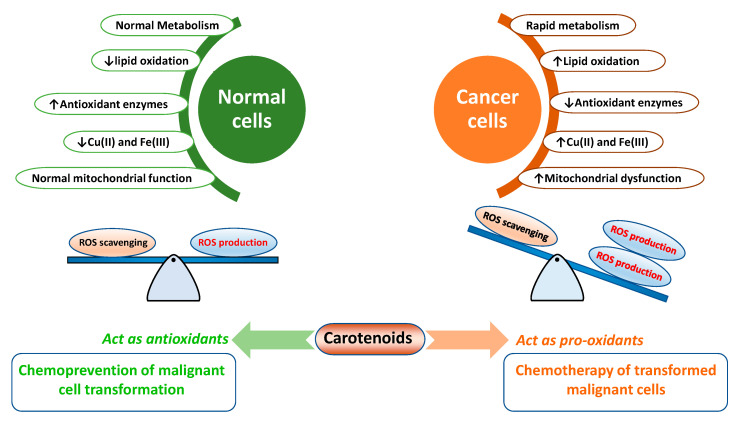
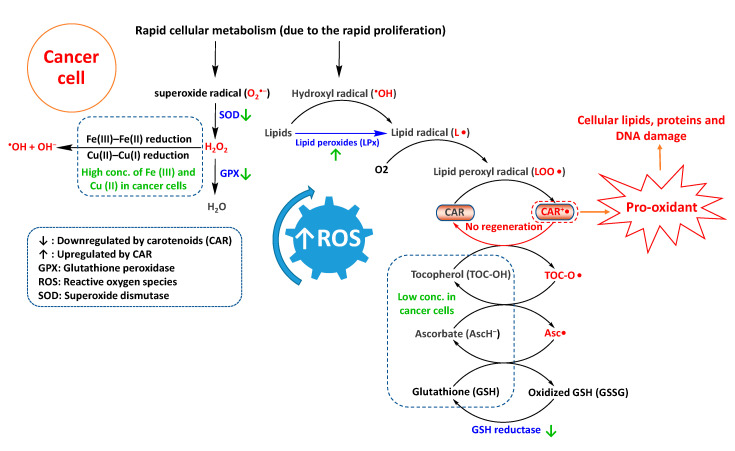
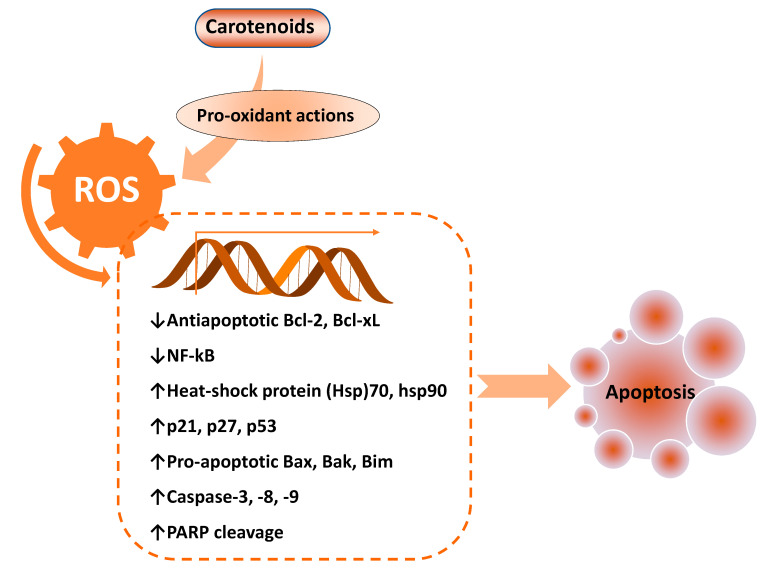
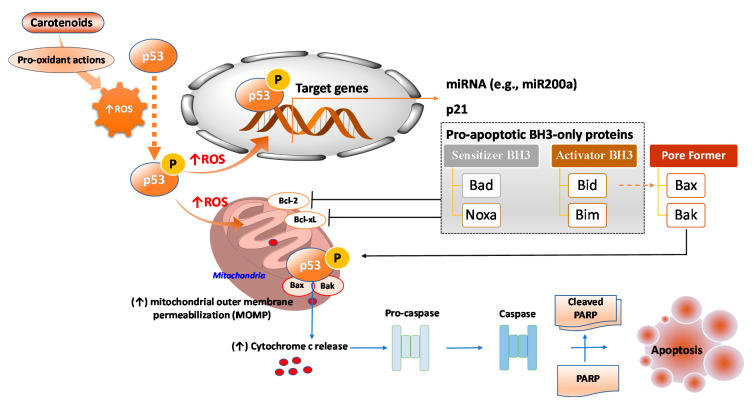
Carotenoids are well known for their potent antioxidant function in the cellular system. However, in cancer cells with an innately high level of intracellular reactive oxygen species (ROS), carotenoids may act as potent pro-oxidant molecules and trigger ROS-mediated apoptosis. In recent years, the pro-oxidant function of several common dietary carotenoids, including astaxanthin, β-carotene, fucoxanthin, and lycopene, has been investigated for their effective killing effects on various cancer cell lines. Besides, when carotenoids are delivered with ROS-inducing cytotoxic drugs (e.g., anthracyclines), they can minimize the adverse effects of these drugs on normal cells by acting as antioxidants without interfering with their cytotoxic effects on cancer cells as pro-oxidants. These dynamic actions of carotenoids can optimize oxidative stress in normal cells while enhancing oxidative stress in cancer cells. This review discusses possible mechanisms of carotenoid-triggered ROS production in cancer cells, the activation of pro-apoptotic signaling by ROS, and apoptotic cell death. Moreover, synergistic actions of carotenoids with ROS-inducing anti-cancer drugs are discussed, and research gaps are suggested.
Overview
The claims and statistics of this paper haven’t been checked yet.
Run the check — free, no account needed. It reads the open-access text and checks the sources it cites.
Integrity signals
Registry
Cites
Statistics
Figures
Verification
Claims the paper makes
The claims and statistics of this paper haven’t been checked yet.
Run the check — free, no account needed. It reads the open-access text and checks the sources it cites.
Claims other papers make about this one
Each is checked against this paper’s own text: does it say what the citing paper says it does?
In the citing paper
“The key factor affecting the switch from antioxidant to prooxidant properties of carotenoids has been attributed to the partial pressure of oxygen, typically high in the lungs.”
From Reactive Oxygen Species, Toxicity, Oxidative Stress, and Antioxidants: Chronic Diseases and Aging (2023) · cites this paper as Shin et al. 2020
In the citing paper
“Under conditions of high partial pressure of oxygen, radicals of carotenoids, Car·, originating from the reaction of ROS with a carotenoid molecule by hydrogen abstraction may further react with dioxygen according to the reaction (Young and Lowe 2001; Shin et al. 2020)24”
From Reactive Oxygen Species, Toxicity, Oxidative Stress, and Antioxidants: Chronic Diseases and Aging (2023) · cites this paper as Shin et al. 2020
Self-check
Percentages, sums and reported differences re-computed from the paper’s own numbers.
The self-check needs the paper’s full text.
Citations
Cites
Trumbo (2001) · doi:10.1016/s0002-8223(01)00078-5 · Cited by 4,852
Institute of Medicine (2001) · National Academies Press eBooks · doi:10.17226/10026 · Cited by 4,239
Minotti, G., Menna, P., Salvatorelli, E., Cairo, G., & Gianni, L. (2004) · Pharmacological Reviews · doi:10.1124/pr.56.2.6 · Cited by 3,868
ROS and the DNA damage response in cancer
Srinivas, U. S., Tan, B. W. Q., Vellayappan, B. A., & Jeyasekharan, A. D. (2019) · Redox Biology · doi:10.1016/j.redox.2018.101084 · Cited by 2,144 · cited 2×
“In the human body, a range of short-lived reactive oxygen species (ROS), including superoxide radical/anion (O2•−), hydroxyl radical (•OH), and hydrogen peroxide H2O2 are endogenously produced by mitochondria (electron transport chain), NADPH oxidase, peroxisomes, and endoplasmic reticulum (as byproducts during the ce…”
BackgroundCarocho, M., & Ferreira, I. C. F. R. (2013) · Food and Chemical Toxicology · doi:10.1016/j.fct.2012.09.021 · Cited by 1,661
BCL-2 family proteins: changing partners in the dance towards death
Kale, J., Osterlund, E. J., & Andrews, D. W. (2018) · Cell Death & Differentiation · doi:10.1038/cdd.2017.186 · Cited by 1,574
Mutant p53 in Cancer: New Functions and Therapeutic Opportunities
Muller, P. A. J., & Vousden, K. H. (2014) · Cancer Cell · doi:10.1016/j.ccr.2014.01.021 · Cited by 1,545
How does p53 induce apoptosis and how does this relate to p53-mediated tumour suppression
Aubrey, B. J., Kelly, G. L., Janic, A., Herold, M. J., & Strasser, A. (2018) · Cell Death & Differentiation · doi:10.1038/cdd.2017.169 · Cited by 1,395
ROS homeostasis and metabolism: a dangerous liason in cancer cells
Panieri, E., & Santoro, M. M. (2016) · Cell Death and Disease · doi:10.1038/cddis.2016.105 · Cited by 1,187
Elevated copper and oxidative stress in cancer cells as a target for cancer treatment
Gupte, A., & Mumper, R. J. (2008) · Cancer Treatment Reviews · doi:10.1016/j.ctrv.2008.07.004 · Cited by 1,051
Cited by
Sorted by citations
Reactive Oxygen Species, Toxicity, Oxidative Stress, and Antioxidants: Chronic Diseases and Aging
Jomova, K., Raptova, R., Alomar, S. Y., Alwasel, S. H., Nepovimova, E., Kuca, K., & Valko, M. (2023) · Archives of Toxicology · doi:10.1007/s00204-023-03562-9 · Cited by 2,638
Saini, R. K., Ranjit, A., Sharma, K., Parchuri, P., Shang, X., Gouda, K. G. M., & Keum, Y. (2022) · Antioxidants · doi:10.3390/antiox11020239 · Cited by 647
Self-citationSaini, R. K., Parchuri, P., Lokesh, V., Shang, X., Shin, J., Keum, Y., & Lee, J. (2022) · Antioxidants · doi:10.3390/antiox11040795 · Cited by 308
Self-citationThe relationship between nutrition and the immune system
Munteanu, C., & Schwartz, B. (2022) · Frontiers in Nutrition · doi:10.3389/fnut.2022.1082500 · Cited by 346
Kabir, M. T., Rahman, M. H., Shah, M., Jamiruddin, M. R., Basak, D., Al‐Harrasi, A., Bhatia, S., Ashraf, G. M., Najda, A., El-kott, A. F., et al. (2022) · Biomedicine & Pharmacotherapy · doi:10.1016/j.biopha.2021.112610 · Cited by 191
Antioxidant and Anti-Tumor Effects of Dietary Vitamins A, C, and E
Didier, A. J., Stiene, J., Fang, L., Watkins, D., Dworkin, L. D., & Creeden, J. F. (2023) · Antioxidants · doi:10.3390/antiox12030632 · Cited by 204
Méresse, S., Fodil, M., Fleury, F., & Chénais, B. (2020) · International Journal of Molecular Sciences · doi:10.3390/ijms21239273 · Cited by 177
Anti-Inflammatory and Anticancer Effects of Microalgal Carotenoids
Ávila‐Román, J., García-Gil, S., Rodríguez-Luna, A., Motilva, V., & Talero, E. (2021) · Marine Drugs · doi:10.3390/md19100531 · Cited by 175
Saratale, G. D., Saratale, R. G., Kim, D., Kim, D., & Shin, H.-S. (2020) · Nanomaterials · doi:10.3390/nano10081457 · Cited by 163
An evaluation on potential anti-oxidant and anti-inflammatory effects of Crocin
Bastani, S., Vahedian, V., Rashidi, M., Mir, A., Mirzaei, S., Alipourfard, I., Pouremamali, F., Nejabati, H. R., Kadkhoda, J., Maroufi, N. F., et al. (2022) · Biomedicine & Pharmacotherapy · doi:10.1016/j.biopha.2022.113297 · Cited by 115
Antioxidants for the Treatment of Breast Cancer: Are We There Yet?
Griñán‐Lisón, C., Blaya-Cánovas, J. L., López-Tejada, A., Ávalos-Moreno, M., Navarro-Ocón, A., Cara, F. E., González-González, A., Lorente, J. A., Marchal, J. A., & Granados-Principal, S. M. (2021) · Antioxidants · doi:10.3390/antiox10020205 · Cited by 108
Recent advances in health benefits and bioavailability of dietary astaxanthin and its isomers
Liu, X., Xie, J., Zhou, L., Zhang, J., Chen, Z., Xiao, J., Cao, Y., & Xiao, H. (2022) · Food Chemistry · doi:10.1016/j.foodchem.2022.134605 · Cited by 100
Sanati, M., Afshari, A. R., Kesharwani, P., Sukhorukov, V. N., & Sahebkar, A. (2022) · Journal of Controlled Release · doi:10.1016/j.jconrel.2022.05.035 · Cited by 95
Chili Pepper Carotenoids: Nutraceutical Properties and Mechanisms of Action
Villa-Rivera, M. G., & Ochoa‐Alejo, N. (2020) · Molecules · doi:10.3390/molecules25235573 · Cited by 86
Vieira, Í. R. S., & Conte‐Júnior, C. A. (2022) · Critical Reviews in Food Science and Nutrition · doi:10.1080/10408398.2022.2106471 · Cited by 82
Reactive oxygen species (ROS): sources, generation, disease pathophysiology, and antioxidants
Ansari, W. A., Srivastava, K., Nasibullah, M., & Khan, M. F. (2025) · Discover Chemistry. · doi:10.1007/s44371-025-00275-z · Cited by 97
Modulation of the tumor microenvironment (TME) by melatonin
Qi, M., & Najafi, M. (2021) · European Journal of Pharmacology · doi:10.1016/j.ejphar.2021.174365 · Cited by 82
Kim, J. A., Jang, J., & Lee, S. (2021) · Nutrients · doi:10.3390/nu13093162 · Cited by 68
The Antitumour Mechanisms of Carotenoids: A Comprehensive Review
Baeza-Morales, A., Medina-García, M., Martínez-Peinado, P., Pascual-García, S., Pujalte-Satorre, C., López-Jaén, A. B., Martínez‐Espinosa, R. M., & Sempere-Ortells, J. M. (2024) · Antioxidants · doi:10.3390/antiox13091060 · Cited by 57
Xiao, Y., Hassani, M., Moghaddam, M. B., Fazilat, A., Ojarudi, M., & Valilo, M. (2025) · Medical Oncology · doi:10.1007/s12032-025-02675-8 · Cited by 58
Liu, Y., Xu, X., Tang, H., Pan, Y., Hu, B., & Huang, G. (2021) · International Journal of Molecular Medicine · doi:10.3892/ijmm.2021.4900 · Cited by 50
Stiefvatter, L., Lehnert, K., Frick, K., Montoya‐Arroyo, A., Frank, J., Vetter, W., Schmid‐Staiger, U., & Bischoff, S. C. (2021) · Marine Drugs · doi:10.3390/md19120700 · Cited by 49
Sinha, S., Das, S., Saha, B., Paul, D., & Basu, B. (2023) · Frontiers in Microbiology · doi:10.3389/fmicb.2022.1088477 · Cited by 49
Polyakov, N. E., Focsan, A. L., Gao, Y., & Kispert, L. D. (2023) · International Journal of Molecular Sciences · doi:10.3390/ijms24129885 · Cited by 55
Nanoscale Delivery Systems of Lutein: An Updated Review from a Pharmaceutical Perspective
Algan, A. H., Ak, A. G., & Karatas, A. (2022) · Pharmaceutics · doi:10.3390/pharmaceutics14091852 · Cited by 51
Sangija, F., Martin, H., & Matemu, A. O. (2021) · Comprehensive Reviews in Food Science and Food Safety · doi:10.1111/1541-4337.12756 · Cited by 47
Mostofa, M. G., Reza, A. S. M. A., Khan, Z., Munira, M. S., Khatoon, M. M., Kabir, S. R., Sadik, G., Ağagündüz, D., Capasso, R., Kazi, M., et al. (2023) · Heliyon · doi:10.1016/j.heliyon.2023.e23400 · Cited by 40
Novikov, V. S., Kuz'min, V. V., Kuznetsov, S. M., Darvin, M. E., Lademann, J. M., Sagitova, E. A., Ustynyuk, L. Y., Prokhorov, K. A., & Nikolaeva, G. Y. (2021) · Spectrochimica Acta Part A Molecular and Biomolecular Spectroscopy · doi:10.1016/j.saa.2021.119668 · Cited by 40
Kim, S., Lee, H., Lim, J. W., & Kim, H. (2021) · Molecular Medicine Reports · doi:10.3892/mmr.2021.12477 · Cited by 40
Sui, Y., Gu, Y., Lu, Y., Yu, C., Zheng, J., & Qi, H. (2021) · Marine Drugs · doi:10.3390/md19020092 · Cited by 39
Muthulakshmi, L., Prabakaran, S., Ramalingam, V., Rajulu, A. V., Rajan, M., Ramakrishna, S., & Luo, H. (2022) · Process Biochemistry · doi:10.1016/j.procbio.2022.04.004 · Cited by 40
Bifenazate induces developmental and immunotoxicity in zebrafish
Peng, Y., Li, M., Huang, Y., Cheng, B., Cao, Z., Liao, X., Xiong, G., Liu, F., Hu, C., & Lu, H. (2021) · Chemosphere · doi:10.1016/j.chemosphere.2020.129457 · Cited by 39
Burcher, J. T., DeLiberto, L. K., Allen, A. M., Kilpatrick, K. L., & Bishayee, A. (2023) · Medicinal Research Reviews · doi:10.1002/med.21969 · Cited by 37
Fucoxanthin Is a Potential Therapeutic Agent for the Treatment of Breast Cancer
Lau, T.-Y., & Kwan, H. Y. (2022) · Marine Drugs · doi:10.3390/md20060370 · Cited by 40
Prajapati, S. K., Yadav, D., Katiyar, S., Jain, S., & Yadav, H. (2025) · Biomolecules · doi:10.3390/biom15070954 · Cited by 40
A Comprehensive Review on the Molecular Mechanism of Lycopene in Cancer Therapy
Maaz, M., Sultan, M. T., Khalid, M. U., Raza, H., Imran, M., Hussain, M., Abdulmonem, W. A., Alsagaby, S. A., Abdelgawad, M. A., Ghoneim, M. M., et al. (2025) · Food Science & Nutrition · doi:10.1002/fsn3.70608 · Cited by 40
Dietary Carotenoids in Head and Neck Cancer—Molecular and Clinical Implications
Starska, K. (2022) · Nutrients · doi:10.3390/nu14030531 · Cited by 33
Krestinin, R. R., Baburina, Y. L., Odinokova, I. V., Kruglov, A. G., Fadeeva, I. S., Zvyagina, A. I., Sotnikova, L. D., & Krestinina, O. V. (2020) · Biomedicines · doi:10.3390/biomedicines8100437 · Cited by 32
Wang, C., Ren, J., Song, H., Chen, X., & Qi, H. (2021) · LWT · doi:10.1016/j.lwt.2021.112208 · Cited by 31
Therapeutic Role of Carotenoids in Blood Cancer: Mechanistic Insights and Therapeutic Potential
Hussain, Y., Abdullah, Alsharif, K. F., Aschner, M., Theyab, A., Khan, F., Saso, L., & Khan, H. Z. (2022) · Nutrients · doi:10.3390/nu14091949 · Cited by 30
Agena, R., Cortés-Sánchez, A. D. J., Hernández‐Sánchez, H., & Jaramillo‐Flores, M. E. (2023) · Marine Drugs · doi:10.3390/md21030182 · Cited by 32
Halophilic Carotenoids and Breast Cancer: From Salt Marshes to Biomedicine
Giani, M., Montoyo-Pujol, Y. G., Peiró, G., & Martínez‐Espinosa, R. M. (2021) · Marine Drugs · doi:10.3390/md19110594 · Cited by 31
Autophagy and oxidative stress in solid tumors: Mechanisms and therapeutic opportunities
Carretero-Fernández, M., Cabrera-Serrano, A. J., Sánchez‐Maldonado, J. M., Ruiz-Durán, L., Jiménez-Romera, F., García‐Verdejo, F. J., González‐Olmedo, C., Cardús, A., Díaz-Beltrán, L., Gutiérrez‐Bautista, J. F., et al. (2025) · Critical Reviews in Oncology/Hematology · doi:10.1016/j.critrevonc.2025.104820 · Cited by 37
Mitra, S., Emran, T. B., Chandran, D., Zidan, B. M. R. M., Das, R. C., Mamada, S. S., Masyita, A., Salampe, M., Nainu, F., Khandaker, M. U., et al. (2022) · Frontiers in Nutrition · doi:10.3389/fnut.2022.951935 · Cited by 29
Cinnamaldehyde-Rich Cinnamon Extract Induces Cell Death in Colon Cancer Cell Lines HCT 116 and HT-29
Nile, A. S., Shin, J., Shin, J., Park, G. S., Lee, S., Lee, J., Lee, K.-W., Kim, B. G., Han, S. G., Saini, R. K., et al. (2023) · International Journal of Molecular Sciences · doi:10.3390/ijms24098191 · Cited by 29
Self-citationAdıgüzel, E., & Ülger, T. G. (2024) · European Journal of Pharmacology · doi:10.1016/j.ejphar.2024.176706 · Cited by 28
Skin Aging and Carotenoids: A Systematic Review of Their Multifaceted Protective Mechanisms
Stanescu, C. M., Chiscop, I., Mihalache, D., Popa, F., Tamaş, C., & Stoleriu, G. (2025) · Nutrients · doi:10.3390/nu17162596 · Cited by 32
Basu, B. (2022) · Current Research in Microbial Sciences · doi:10.1016/j.crmicr.2022.100153 · Cited by 26
Yepes‐Molina, L., & Carvajal, M. (2021) · Pharmaceutical Biology · doi:10.1080/13880209.2021.1992450 · Cited by 25
Sanna, D., & Fadda, A. (2022) · Nutraceuticals · doi:10.3390/nutraceuticals2040028 · Cited by 24
Dumitraș, D. A., Bunea, A., Vodnar, D. C., Hanganu, D., Páll, E., Cenariu, M., Adrian Florin, G. A. L., & Andrei, S. (2022) · Antioxidants · doi:10.3390/antiox11061039 · Cited by 24
An, Y., Zhao, J., Zhang, Y., Wu, W., Hu, J., Hao, H., Qiao, Y., Tao, Y., & An, L. (2021) · Asian Pacific Journal of Cancer Prevention · doi:10.31557/apjcp.2021.22.5.1623 · Cited by 24
Miranda, M. R., Basilicata, M. G., Vestuto, V., Aquino, G., Marino, P., Salviati, E., Ciaglia, T., Domínguez‐Rodríguez, G., Moltedo, O., Campiglia, P., et al. (2024) · Antioxidants · doi:10.3390/antiox13060708 · Cited by 23
Fu, M., Yoon, K., Ha, J., Kang, I., & Choe, W. (2025) · Antioxidants · doi:10.3390/antiox14020203 · Cited by 25
Vișan, S., Şoriţău, O., Tatomir, C. B., Baldasici, O., Bălăcescu, L., Bălăcescu, O., MUNTEAN, P. A. L., Gherasim, C., & Pintea, A. (2023) · Molecules · doi:10.3390/molecules28114486 · Cited by 22
The potential modulation of gut microbiota and oxidative stress by dietary carotenoid pigments
Bernabeu, M., Gharibzahedi, S. M. T., Ganaie, A. A., Macha, M. A., Dar, B. N., Castagnini, J. M., García‐Bonillo, C., Meléndez‐Martínez, A. J., Altıntaş, Z., & Barba, F. J. (2023) · Critical Reviews in Food Science and Nutrition · doi:10.1080/10408398.2023.2254383 · Cited by 30
Wei, J., Ye, Z., Li, Y., Li, Y., & Zhou, Z. (2024) · Antioxidants · doi:10.3390/antiox13030264 · Cited by 22
Malhão, F., Macedo, A. C., Costa, C., Rocha, E., & Ramos, A. A. (2021) · Molecules · doi:10.3390/molecules26144288 · Cited by 24
Shin, J., Saini, R. K., & Oh, J. (2020) · Biomedicines · doi:10.3390/biomedicines8100434 · Cited by 21
Self-citationReactive oxygen species: Key players in the anticancer effects of apigenin?
Oyenihi, O. R., Oyenihi, A. B., Alabi, T. D., Tade, O. G., Adeyanju, A. A., & Oguntibeju, O. O. (2022) · Journal of Food Biochemistry · doi:10.1111/jfbc.14060 · Cited by 21
Kusmita, L., Franyoto, Y. D., Mutmainah, M., Puspitaningrum, I., & Nurcahyanti, A. D. R. (2022) · Natural Product Research · doi:10.1080/14786419.2022.2036144 · Cited by 21
Cold Atmospheric Plasma Does Not Affect Stellate Cells Phenotype in Pancreatic Cancer Tissue in Ovo
Privat‐Maldonado, A., Verloy, R., Hoz, E. C. D. L., Lin, A. G., Vanlanduit, S., Smits, E., & Bogaerts, A. (2022) · International Journal of Molecular Sciences · doi:10.3390/ijms23041954 · Cited by 21
Dou, J., Li, L., Guo, M. L., Feng, M., Zheng, D., Xu, H., Xue, R., Bao, X., Zhao, F., & Zhang, Y. (2021) · International Journal of Nanomedicine · doi:10.2147/ijn.s278885 · Cited by 21
Alnusaire, T. S., Sayed, A. M., Elmaidomy, A. H., Al-Sanea, M. M., Albogami, S. M., Albqmi, M., Alowaiesh, B. F., Mostafa, E. M., Musa, A., Youssif, K. A., et al. (2021) · Antioxidants · doi:10.3390/antiox10121860 · Cited by 20
Bixin and fucoxanthin sensitize human lung cancer and cervical cancer cell to cisplatin in vitro
Nurcahyanti, A. D. R., Kusmita, L., & Wink, M. (2021) · BMC Research Notes · doi:10.1186/s13104-021-05866-4 · Cited by 19
Antioxidants from different citrus peels provide protection against cancer
ALaqeel, N. K. (2023) · Brazilian Journal of Biology · doi:10.1590/1519-6984.271619 · Cited by 26
Erden, Y. (2020) · Nutrition and Cancer · doi:10.1080/01635581.2020.1819347 · Cited by 19
Sularz, O., Koronowicz, A. A., Smoleń, S., Kowalska, I., Skoczylas, Ł., Liszka‐Skoczylas, M., Tabaszewska, M., & Pitala, J. (2021) · RSC Advances · doi:10.1039/d1ra04679a · Cited by 19
Pinchuk, I., Kohen, R., Stuetz, W., Weber, D., Franceschi, C., Capri, M., Hurme, M., Grubeck-Loebenstein, B., Schön, C., Bernhardt, J., et al. (2021) · Archives of Biochemistry and Biophysics · doi:10.1016/j.abb.2021.109061 · Cited by 17
Cold atmospheric plasma activated media selectively affects human head and neck cancer cell lines
di Giacomo, V., Balaha, M. F., Pinti, M., Marcantonio, M. C. D., Cela, I., Acharya, T. R., Kaushik, N. K., Choi, E. H., Rapino, M., Mazzone, M., et al. (2024) · Oral Diseases · doi:10.1111/odi.15120 · Cited by 17
Srinual, O., Moonmanee, T., Lumsangkul, C., Doan, H. V., Punyatong, M., Yachai, M., Chaiyaso, T., Kongtong, K., & Tapingkae, W. (2022) · Toxins · doi:10.3390/toxins14100678 · Cited by 17
Inhibition of Melanoma Cells A375 by Carotenoid Extract and Nanoemulsion Prepared from Pomelo Leaves
Liu, M.-H., Li, Y.-F., & Chen, B. (2021) · Plants · doi:10.3390/plants10102129 · Cited by 16
Jiang, Q., Sun, Y., Si, X., Cui, H., Li, J., Bao, Y., Li, J., & Li, B. (2024) · Food Chemistry · doi:10.1016/j.foodchem.2024.140152 · Cited by 15
Shin, J., Nile, A. S., Saini, R. K., & Oh, J. (2022) · Antioxidants · doi:10.3390/antiox11020375 · Cited by 14
Self-citationViana, A. R., Londero, J. E. L., Pinheiro, P. N., Acosta, P., Silva, L. D., Lopes, E. J., Ourique, A. F., Zepka, L. Q., Rhoden, C. R. B., Schuch, A. P., et al. (2023) · Journal of Toxicology and Environmental Health · doi:10.1080/15287394.2023.2291513 · Cited by 15
Roquito, T., Colaço, M., Costa, J. P., & Borges, O. (2024) · Colloids and Surfaces B Biointerfaces · doi:10.1016/j.colsurfb.2024.114326 · Cited by 13
Zhang, N., Ren, Y., & Xu, Y. (2025) · Frontiers in Nutrition · doi:10.3389/fnut.2025.1627949 · Cited by 14
Xu, R., Zeng, M., Wu, Y., Wang, S., Zhang, B., Zhang, J., Kan, Y., Li, B., Cao, B., Zheng, X., et al. (2021) · OncoTargets and Therapy · doi:10.2147/ott.s308371 · Cited by 12
Natesungnoen, M., Pongrakhananon, V., Lindblad, P. C., & Jantaro, S. (2023) · International Journal of Molecular Sciences · doi:10.3390/ijms24119370 · Cited by 10
Mazzone, V., Alessio, N., Aprile, D., Galano, G., Rosa, R. D., Schiraldi, C., Bernardo, G. D., & Galderisi, U. (2025) · Stem Cell Research & Therapy · doi:10.1186/s13287-025-04310-9 · Cited by 11
Ito, H., Shoji, Y., Matsumoto, K., Fukuhara, K., & Nakanishi, I. (2023) · ACS Medicinal Chemistry Letters · doi:10.1021/acsmedchemlett.3c00328 · Cited by 11
Exploring How Reactive Oxygen Species Contribute to Cancer via Oxidative Stress
Tavakolpournegari, A., Moosavi, S. S., Matinahmadi, A., Zayani, Z., & Bidooki, S. H. (2025) · Stresses · doi:10.3390/stresses5040069 · Cited by 10
Recent updates of carotenoid encapsulation by spray-drying technique
Griep, P., Gayeski, L., Colet, R., Zeni, J., & Valduga, E. (2024) · Journal of Microencapsulation · doi:10.1080/02652048.2024.2430643 · Cited by 10
Antioxidant and Pro-oxidant Activities of Carotenoids
Lucas, M., Freitas, M., Carvalho, F. D., Fernandes, E. G. R., & Ribeiro, D. (2020) · Reference series in phytochemistry · doi:10.1007/978-3-030-45299-5_4-1 · Cited by 10
From Foods to Chemotherapeutics: The Antioxidant Potential of Dietary Phytochemicals
Briggs, M. A. (2022) · Processes · doi:10.3390/pr10061222 · Cited by 10
Darouei, B., Bohn, T., Vahid, F., Amani‐Beni, R., Javanmard, S. H., Zendehdel, K., & Abdollahpour, I. (2025) · Nutrition & Metabolism · doi:10.1186/s12986-025-01007-x · Cited by 9
Endogenous ozone as a regular reactive oxygen species in (patho) physiology
Onyango, A. N. (2023) · Advances in Redox Research · doi:10.1016/j.arres.2023.100075 · Cited by 12
Shindia, A. A., Abdel-Shafi, S., Atef, A., Osman, A., Sitohy, B., & Sitohy, M. Z. (2024) · LWT · doi:10.1016/j.lwt.2024.116638 · Cited by 9
Gong, B., Ma, S., Yan, Y., & Wang, Z. (2024) · Frontiers in Marine Science · doi:10.3389/fmars.2024.1357425 · Cited by 10
Chlorella spp. as an Emerging Source for Anticancer Remedy and Nutraceuticals: An Advance Study
Ferdous, U. T., Khan, S. A., Shakoor, A., Uddin, S., Nazarudin, M. F., & Zia, A. W. (2025) · Food Reviews International · doi:10.1080/87559129.2025.2493740 · Cited by 8
Russo, C., Barone, D., Lavorgna, M., Piscitelli, C., Macaluso, M., Pacifico, S., Piccolella, S., Giordano, A., & Isidori, M. (2022) · Scientific Reports · doi:10.1038/s41598-022-13876-w · Cited by 8
Boehm, F., Edge, R., & Truscott, T. G. (2023) · Oxygen · doi:10.3390/oxygen3030021 · Cited by 9
Nagy, N. S., Essawy, A. E., Al-Sherif, S. S., Ali, M. M., Sheta, E., & Helal, M. (2024) · PLoS ONE · doi:10.1371/journal.pone.0296312 · Cited by 8
Enhanced Inhibition of Cancer Cell Migration by a Planar Catechin Analog
Ito, H., Shoji, Y., Matsumoto, K., Fukuhara, K., & Nakanishi, I. (2024) · ACS Medicinal Chemistry Letters · doi:10.1021/acsmedchemlett.3c00499 · Cited by 8
Golestani, A., Rahimi, A., Najafzadeh, M., Sayadi, M., & Sajjadi, S. M. (2024) · Molecular Biology Reports · doi:10.1007/s11033-023-09135-4 · Cited by 8
Free radical scavenging synergism of fucoxanthin with lipophilic plant products
Nurcahyanti, A. D. R., Satriawan, N., & Sharopov, F. S. (2022) · Natural Product Research · doi:10.1080/14786419.2022.2084737 · Cited by 8
Nanotechnology-enhanced delivery systems for bioactive citrus compounds: a comprehensive review
Davodabadi, F., Nasri, N., Valizadeh, N., Ali, B. H., Ghotekar, S. K., Sargazi, S., Barani, M., & Rahman, M. M. (2025) · Critical Reviews in Food Science and Nutrition · doi:10.1080/10408398.2025.2584454 · Cited by 11
Apostolova, S. N., Oreshkova, T., Uzunova, V. P., Georgieva, I., Maslenkova, L. T., & Tzoneva, R. (2023) · Frontiers in Bioscience-Landmark · doi:10.31083/j.fbl2806111 · Cited by 7
Laderian, A., Ghasemi, M., Mortazavi, P., Mousavi, Z., & Ale‐Ebrahim, M. (2024) · Journal of Biochemical and Molecular Toxicology · doi:10.1002/jbt.23788 · Cited by 7
Breast Cancer Chemoprevention from Nano Zingiber officinale Roscoe
Wardana, A. P., Kristanti, A. N., Aminah, N. S., Fahmi, M. Z., Raoov, M., & Indriani, I. (2024) · International Journal of Nanomedicine · doi:10.2147/ijn.s474611 · Cited by 7
Metadata
- Authors
- Shin, J., Song, M.-H., Oh, J.-W., Keum, Y.-S., & Saini, R. K.
- Affiliations
- Konkuk University (KR)
- Department of Crop Science, Konkuk University, Seoul 143-701, Korea
- Corresponding author
- Saini, Ramesh Kumar
- Venue
- Antioxidants
- Publisher
- MDPI AG
- Published
- 2020-06-17
- Volume
- 9
- Issue
- 6
- Pages
- 532
- ISSN
- 2076-3921 (ISSN-L)
- PMC
- PMC7346220
- OpenAlex
- W3036006354
- Cited by
- 173
- References
- 67
- Citations by year
- 2026: 18 · 2025: 25 · 2024: 30 · 2023: 32 · 2022: 33 · 2021: 28 · 2020: 7
- FWCI
- 2.19
- Type
- journal article
- Language
- en
- Open access
- gold
- dx.doi.org
- Licence
- Locations
- Antioxidants (publishedVersion, cc-by)
- PubMed Central (publishedVersion, cc-by)
- PubMed (publishedVersion)
- DOAJ (DOAJ: Directory of Open Access Journals) (submittedVersion, cc-by-sa)
- Funders
- National Research Foundation of Korea (2019R1G1A1006815)
- Topics
- Health Sciences › Medicine › Biochemistry (medical) › Antioxidant Activity and Oxidative Stress
- Life Sciences › Biochemistry, Genetics and Molecular Biology › Molecular Biology › Cancer and biochemical research
- Life Sciences › Biochemistry, Genetics and Molecular Biology › Molecular Biology › Cell death mechanisms and regulation
- Keywords
- carotenoids, pro-oxidant activity, reactive oxygen species, apoptosis, cancer cells, astaxanthin, beta-carotene, fucoxanthin, lycopene, anthracyclines, oxidative stress, pro-apoptotic signaling, drug synergy, dietary carotenoids
About these checks
Registry, retraction, Cites and statistics results are computed, not judged, with one exception: a printed reference that no index lists is read once by a model before it counts as a citation error. Claims are extracted by a model and kept only when their quote appears verbatim in the text; each cited source is then checked, with a model’s help, for whether it says what the claim relies on. Those verdicts can be wrong — read the claim’s quote and the cited source before relying on one.
Statistics and arithmetic are recomputed, not judged.
Confidence bands are shown only for fields calibrated on our annotated test set. None is calibrated yet, so no band is shown.
What counts as a claim ›How we measure confidence ›How we check this ›
Are you an author, or do you see a problem with this page? Request a review
