

The DOI matches its Crossref record; 67 of the 67 references it cites were found in a registry or an index.
Pro-oxidant Actions of Carotenoids in Triggering Apoptosis of Cancer Cells: A Review of Emerging Evidence
Open accessAbstract
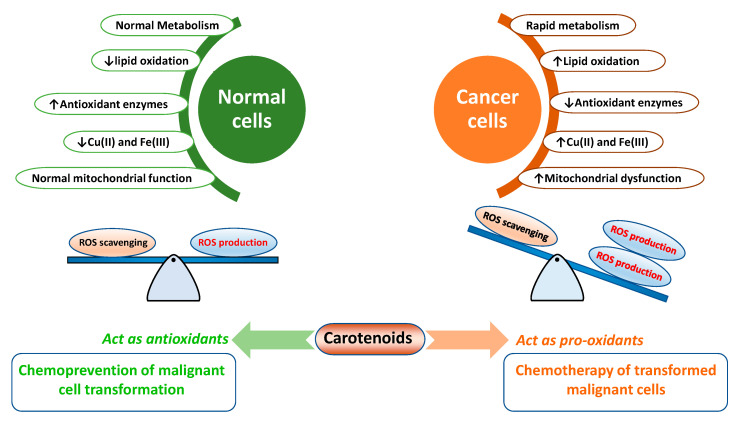
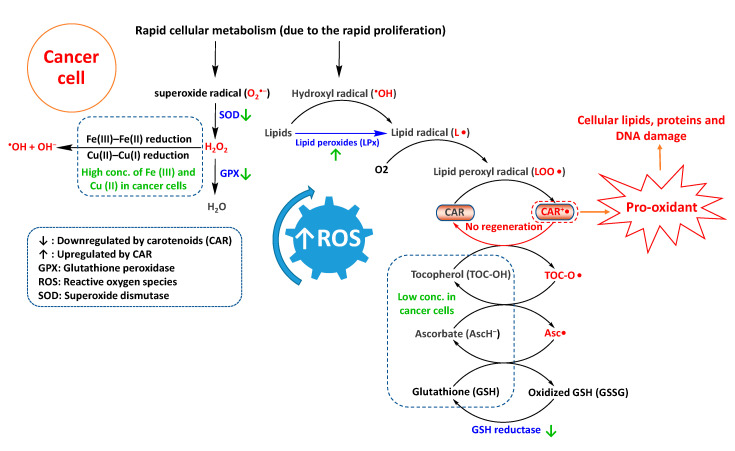
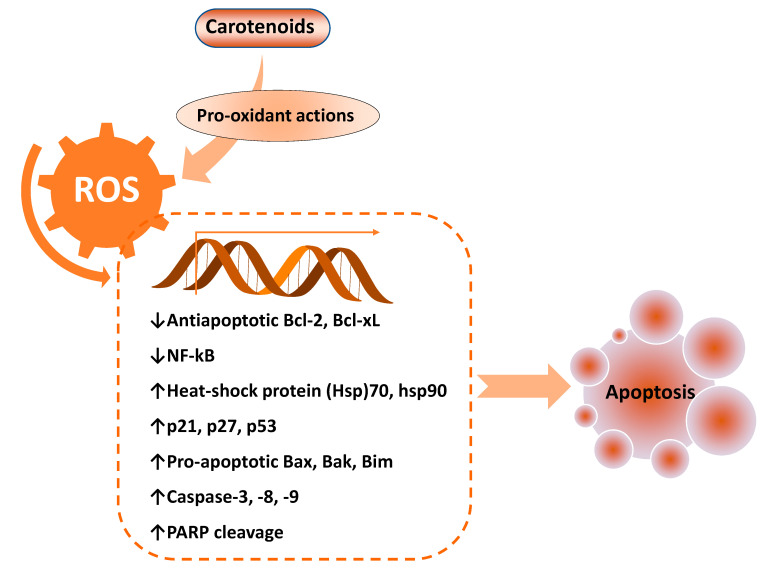
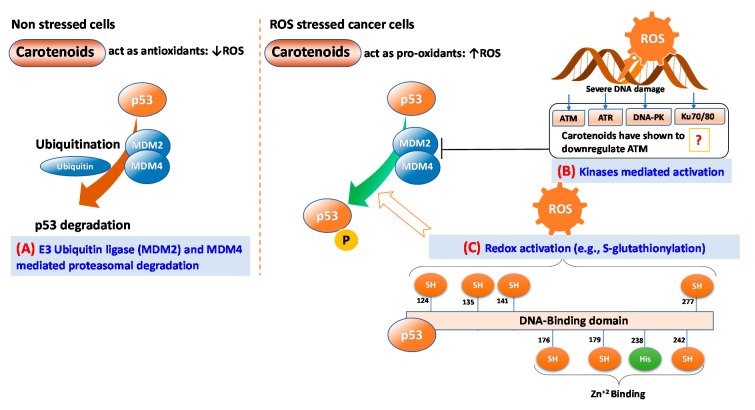
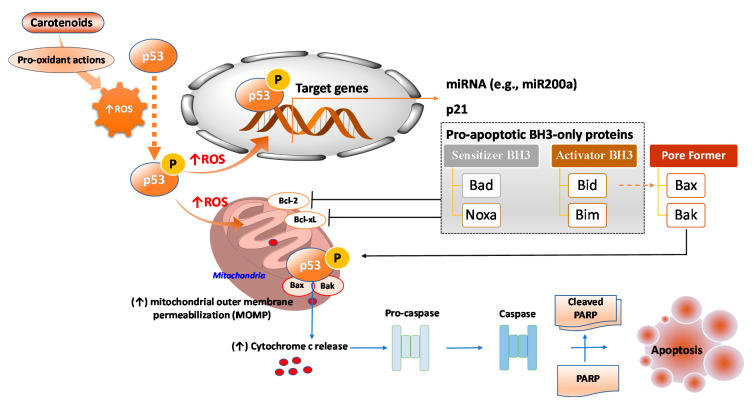
Carotenoids are well known for their potent antioxidant function in the cellular system. However, in cancer cells with an innately high level of intracellular reactive oxygen species (ROS), carotenoids may act as potent pro-oxidant molecules and trigger ROS-mediated apoptosis. In recent years, the pro-oxidant function of several common dietary carotenoids, including astaxanthin, β-carotene, fucoxanthin, and lycopene, has been investigated for their effective killing effects on various cancer cell lines. Besides, when carotenoids are delivered with ROS-inducing cytotoxic drugs (e.g., anthracyclines), they can minimize the adverse effects of these drugs on normal cells by acting as antioxidants without interfering with their cytotoxic effects on cancer cells as pro-oxidants. These dynamic actions of carotenoids can optimize oxidative stress in normal cells while enhancing oxidative stress in cancer cells. This review discusses possible mechanisms of carotenoid-triggered ROS production in cancer cells, the activation of pro-apoptotic signaling by ROS, and apoptotic cell death. Moreover, synergistic actions of carotenoids with ROS-inducing anti-cancer drugs are discussed, and research gaps are suggested.
Overview
The claims and statistics of this paper haven’t been checked yet.
Run the check — free, no account needed. It reads the open-access text and checks the sources it cites.
Integrity signals
Registry
Cites
Statistics
Figures
Verification
Claims the paper makes
The claims and statistics of this paper haven’t been checked yet.
Run the check — free, no account needed. It reads the open-access text and checks the sources it cites.
Claims other papers make about this one
Each is checked against this paper’s own text: does it say what the citing paper says it does?
In the citing paper
“The key factor affecting the switch from antioxidant to prooxidant properties of carotenoids has been attributed to the partial pressure of oxygen, typically high in the lungs.”
From Reactive Oxygen Species, Toxicity, Oxidative Stress, and Antioxidants: Chronic Diseases and Aging (2023) · cites this paper as Shin et al. 2020
In the citing paper
“Under conditions of high partial pressure of oxygen, radicals of carotenoids, Car·, originating from the reaction of ROS with a carotenoid molecule by hydrogen abstraction may further react with dioxygen according to the reaction (Young and Lowe 2001; Shin et al. 2020)24”
From Reactive Oxygen Species, Toxicity, Oxidative Stress, and Antioxidants: Chronic Diseases and Aging (2023) · cites this paper as Shin et al. 2020
Self-check
Percentages, sums and reported differences re-computed from the paper’s own numbers.
The self-check needs the paper’s full text.
Citations
Cites
Trumbo (2001) · doi:10.1016/s0002-8223(01)00078-5 · Cited by 4,852
Institute of Medicine (2001) · National Academies Press eBooks · doi:10.17226/10026 · Cited by 4,239
Minotti, G., Menna, P., Salvatorelli, E., Cairo, G., & Gianni, L. (2004) · Pharmacological Reviews · doi:10.1124/pr.56.2.6 · Cited by 3,868
ROS and the DNA damage response in cancer
Srinivas, U. S., Tan, B. W. Q., Vellayappan, B. A., & Jeyasekharan, A. D. (2019) · Redox Biology · doi:10.1016/j.redox.2018.101084 · Cited by 2,144 · cited 2×
“In the human body, a range of short-lived reactive oxygen species (ROS), including superoxide radical/anion (O2•−), hydroxyl radical (•OH), and hydrogen peroxide H2O2 are endogenously produced by mitochondria (electron transport chain), NADPH oxidase, peroxisomes, and endoplasmic reticulum (as byproducts during the ce…”
BackgroundCarocho, M., & Ferreira, I. C. F. R. (2013) · Food and Chemical Toxicology · doi:10.1016/j.fct.2012.09.021 · Cited by 1,661
BCL-2 family proteins: changing partners in the dance towards death
Kale, J., Osterlund, E. J., & Andrews, D. W. (2018) · Cell Death & Differentiation · doi:10.1038/cdd.2017.186 · Cited by 1,574
Mutant p53 in Cancer: New Functions and Therapeutic Opportunities
Muller, P. A. J., & Vousden, K. H. (2014) · Cancer Cell · doi:10.1016/j.ccr.2014.01.021 · Cited by 1,545
How does p53 induce apoptosis and how does this relate to p53-mediated tumour suppression
Aubrey, B. J., Kelly, G. L., Janic, A., Herold, M. J., & Strasser, A. (2018) · Cell Death & Differentiation · doi:10.1038/cdd.2017.169 · Cited by 1,395
ROS homeostasis and metabolism: a dangerous liason in cancer cells
Panieri, E., & Santoro, M. M. (2016) · Cell Death and Disease · doi:10.1038/cddis.2016.105 · Cited by 1,187
Elevated copper and oxidative stress in cancer cells as a target for cancer treatment
Gupte, A., & Mumper, R. J. (2008) · Cancer Treatment Reviews · doi:10.1016/j.ctrv.2008.07.004 · Cited by 1,051
Carotenoid extraction methods: A review of recent developments
Saini, R. K., & Keum, Y.-S. (2018) · Food Chemistry · doi:10.1016/j.foodchem.2017.07.099 · Cited by 857
Self-citationChen, Q., Espey, M. G., Sun, A. Y., Pooput, C., Kirk, K. L., Krishna, M. C., Khosh, D. B., Drisko, J., & Levine, M. (2008) · Proceedings of the National Academy of Sciences · doi:10.1073/pnas.0804226105 · Cited by 854
ROS and p53: A versatile partnership
Liu, B., Chen, Y., & Clair, D. K. S. (2008) · Free Radical Biology and Medicine · doi:10.1016/j.freeradbiomed.2008.01.011 · Cited by 842
Saini, R. K., Nile, S. H., & Park, S. W. (2015) · Food Research International · doi:10.1016/j.foodres.2015.07.047 · Cited by 789
Self-citationMaiani, G., Periago Castón, M. J., Catasta, G., Toti, E., Cambrodón, I. G., Bysted, A., Granado‐Lorencio, F., Olmedilla‐Alonso, B., Knuthsen, P., Valoti, M., et al. (2009) · Molecular Nutrition & Food Research · doi:10.1002/mnfr.200800053 · Cited by 773
Lateral Transfer of Genes from Fungi Underlies Carotenoid Production in Aphids
Moran, N. A., & Jarvik, T. (2010) · Science · doi:10.1126/science.1187113 · Cited by 648
The Two Faces of Reactive Oxygen Species in Cancer
Reczek, C. R., & Chandel, N. S. (2017) · Annual Review of Cancer Biology · doi:10.1146/annurev-cancerbio-041916-065808 · Cited by 602 · cited 1×
“However, at higher concentrations, an increase in ROS can boost anti-tumorigenic signaling and trigger oxidative stress-induced apoptosis of cancer cells [43].”
BackgroundAstaxanthin decreased oxidative stress and inflammation and enhanced immune response in humans
Park, J. S., Chyun, J. H., Kim, Y. K., Line, L. L., & Chew, B. P. (2010) · Nutrition & Metabolism · doi:10.1186/1743-7075-7-18 · Cited by 569
Eghbaliferiz, S., & Iranshahi, M. (2016) · Phytotherapy Research · doi:10.1002/ptr.5643 · Cited by 561
Ezeriņa, D., Takano, Y., Hanaoka, K., Urano, Y., & Dick, T. P. (2018) · Cell chemical biology · doi:10.1016/j.chembiol.2018.01.011 · Cited by 411
Antioxidant and pro-oxidant activities of carotenoids and their oxidation products
Ribeiro, D., Freitas, M., Silva, A. M. S., Carvalho, F., & Fernandes, E. (2018) · Food and Chemical Toxicology · doi:10.1016/j.fct.2018.07.060 · Cited by 280
McNulty, H. P., Byun, J., Lockwood, S. F., Jacob, R. F., & Mason, R. P. (2006) · Biochimica et Biophysica Acta (BBA) - Biomembranes · doi:10.1016/j.bbamem.2006.09.010 · Cited by 276
Pro-oxidant activity of polyphenols and its implication on cancer chemoprevention and chemotherapy.
León-González, A., Auger, C., & Schini-Kerth, V. (2015) · Biochemical Pharmacology · doi:10.1016/j.bcp.2015.07.017 · Cited by 271
Health protective effects of carotenoids and their interactions with other biological antioxidants
Jomová, K., & Valko, M. (2013) · European Journal of Medicinal Chemistry · doi:10.1016/j.ejmech.2013.09.054 · Cited by 261
Beutner, S., Bloedorn, B., Frixel, S., Hernández Blanco, I., Hoffmann, T., Martin, H., Mayer, B., Noack, P., Ruck, C., Schmidt, M., et al. (2001) · Journal of the Science of Food and Agriculture · doi:10.1002/jsfa.849 · Cited by 253
ATM, ATR and DNA-PKcs kinases—the lessons from the mouse models: inhibition ≠ deletion
Menolfi, D., & Zha, S. (2020) · Cell & Bioscience · doi:10.1186/s13578-020-0376-x · Cited by 227
Fucoxanthin induces apoptosis in human leukemia HL-60 cells through a ROS-mediated Bcl-xL pathway
Kim, K., Heo, S., Kang, S., Ahn, G., & Jeon, Y. (2010) · Toxicology in Vitro · doi:10.1016/j.tiv.2010.05.023 · Cited by 213
Black, H. S., Boehm, F., Edge, R., & Truscott, T. G. (2020) · Antioxidants · doi:10.3390/antiox9030264 · Cited by 200
Lycopene and beta-carotene induce cell-cycle arrest and apoptosis in human breast cancer cell lines.
Gloria, N. F., Soares, N. D. C. P., Brand, C., de Oliveira, F. L., Borojević, R., & Teodoro, A. J. (2014) · PubMed · Cited by 194
Saini, R. K., Rengasamy, K. R. R., Mahomoodally, M. F., & Keum, Y. (2020) · Pharmacological Research · doi:10.1016/j.phrs.2020.104730 · Cited by 193
Self-citationGanesan, P., Noda, K., Manabe, Y., Ohkubo, T., Tanaka, Y., Maoka, T., Sugawara, T., & Hirata, T. (2011) · Biochimica et Biophysica Acta (BBA) - General Subjects · doi:10.1016/j.bbagen.2011.02.008 · Cited by 187
Toti, E., Chen, O., Palmery, M., Villaño, D., & Peluso, I. (2018) · Oxidative Medicine and Cellular Longevity · doi:10.1155/2018/4637861 · Cited by 178
The neglected significance of “antioxidative stress”
Poljsak, B., & Milisav, I. (2012) · Oxidative Medicine and Cellular Longevity · doi:10.1155/2012/480895 · Cited by 177
Gong, X., Smith, J., Swanson, H., & Rubin, L. P. (2018) · Molecules · doi:10.3390/molecules23040905 · Cited by 171
Dietary carotenoids in cancer chemoprevention and chemotherapy: A review of emerging evidence
Saini, R. K., Keum, Y., Daglia, M., & Rengasamy, K. R. R. (2020) · Pharmacological Research · doi:10.1016/j.phrs.2020.104830 · Cited by 169
Self-citationSiems, W., Wiswedel, I., SALERNO, C., Crifò, C., Augustin, W., Schild, L., Langhans, C., & Sommerburg, O. (2005) · The Journal of Nutritional Biochemistry · doi:10.1016/j.jnutbio.2005.01.009 · Cited by 147
Tumor suppressive role for kinases phosphorylating p53 in DNA damage‐induced apoptosis
Yogosawa, S., & Yoshida, K. (2018) · Cancer Science · doi:10.1111/cas.13792 · Cited by 143
Evidence of oxidative stress in the circulation of ovarian cancer patients
Senthil, K., Aranganathan, S., & Nalini, N. (2003) · Clinica Chimica Acta · doi:10.1016/j.cccn.2003.08.017 · Cited by 138
Takeshima, M., Ono, M., Higuchi, T., Chen, C., Hara, T., & Nakano, S. (2014) · Cancer Science · doi:10.1111/cas.12349 · Cited by 136
Characterization of Apoptosis Induced by Fucoxanthin in Human Promyelocytic Leukemia Cells
Kotake‐Nara, E., Terasaki, M., & Nagao, A. (2005) · Bioscience Biotechnology and Biochemistry · doi:10.1271/bbb.69.224 · Cited by 122
Al‐Delaimy, W. K., van Kappel, A. L., Ferrari, P., Slimani, N., Steghens, J., Bingham, S. A., Johansson, I., Wallström, P., Overvad, K., Tjønneland, A. M., et al. (2004) · Public Health Nutrition · doi:10.1079/phn2004598 · Cited by 119
p53-Mediated Tumor Suppression: DNA-Damage Response and Alternative Mechanisms
Pitolli, C., Wang, Y., Candi, E., Shi, Y., Melino, G., & Amelio, I. (2019) · Cancers · doi:10.3390/cancers11121983 · Cited by 111
Saini, R. K., Bekhit, A. E. A., Roohinejad, S., Rengasamy, K. R. R., & Keum, Y. (2019) · Journal of Agricultural and Food Chemistry · doi:10.1021/acs.jafc.9b06669 · Cited by 106
Self-citationGopal, S. S., Prasad, K. Y., Arpitha, H. S., Rudresh, D. U., Kumar, K. N., Mondal, P., & Ponesakki, G. (2017) · Molecular and Cellular Biochemistry · doi:10.1007/s11010-017-3071-4 · Cited by 97
Vijay, K., Sowmya, P. R., Arathi, B. P., Shilpa, S., Shwetha, H. J., Marisiddaiah, R., Baskaran, V., & Lakshminarayana, R. (2018) · Food and Chemical Toxicology · doi:10.1016/j.fct.2018.06.027 · Cited by 92
Exploring the benefits and challenges of establishing a DRI-like process for bioactives
Lupton, J. R., Atkinson, S. A., Chang, N., Fraga, C. G., Levy, J., Messina, M. J., Richardson, D. P., van Ommen, B., Yang, Y., Griffiths, J. C., et al. (2014) · European Journal of Nutrition · doi:10.1007/s00394-014-0666-3 · Cited by 91
Chisté, R. C., Freitas, M., Mercadante, A. Z., & Fernandes, E. (2014) · Life Sciences · doi:10.1016/j.lfs.2014.01.059 · Cited by 90
Sowmya, P. R., Arathi, B. P., Vijay, K., Baskaran, V., & Lakshminarayana, R. (2017) · Food and Chemical Toxicology · doi:10.1016/j.fct.2017.05.024 · Cited by 89
Wu, H., Fu, X., Cao, W.-Q., Xiang, W., Hou, Y., Ma, J., Wang, Y., & Fan, C. (2019) · Journal of Agricultural and Food Chemistry · doi:10.1021/acs.jafc.8b07126 · Cited by 88
Honda, M., Kageyama, H., Hibino, T., Zhang, Y., Diono, W., Kanda, H., Yamaguchi, R., Takemura, R., Fukaya, T., & Goto, M. (2019) · Molecules · doi:10.3390/molecules24112149 · Cited by 85
Ser392 Phosphorylation Regulates the Oncogenic Function of Mutant p53
Yap, D., Hsieh, J.-K., Zhong, S., Heath, V., Gusterson, B. A., Crook, T., & Lü, X. (2004) · Cancer Research · doi:10.1158/0008-5472.can-1305-2 · Cited by 84
The shifting perception on antioxidants: The case of vitamin E and β-carotene
Vrolijk, M. F., Opperhuizen, A., Jansen, E. H. J. M., Godschalk, R., van Schooten, F., Bast, A., & Haenen, G. R. M. M. (2015) · Redox Biology · doi:10.1016/j.redox.2014.12.017 · Cited by 82
Enkhtaivan, G., Mya, K. K., Jung, M., Keum, Y., Kim, D. H., & Saini, R. K. (2019) · Food and Chemical Toxicology · doi:10.1016/j.fct.2019.02.037 · Cited by 82
Self-citationNikbakht‐Jam, I., Khademi, M., Nosrati, M., Eslami, S., Foroutan-Tanha, M., Sahebkar, A., Tavalaie, S., Ghayour‐Mobarhan, M., Ferns, G. A., Hadizadeh, F., et al. (2015) · European Journal of Integrative Medicine · doi:10.1016/j.eujim.2015.12.008 · Cited by 76
Júnior, R. G. D. O., Bonnet, A., Braconnier, E., Groult, H., Prunier, G., Beaugeard, L., Grougnet, R., Almeida, J. R. G. D. S., Ferraz, C. A. A., & Picot, L. (2019) · Food and Chemical Toxicology · doi:10.1016/j.fct.2019.02.013 · Cited by 73
Antioxidant/Pro-oxidant Actions of Carotenoids
Yeum, K., Aldini, G., Russell, R. M., & Krinsky, N. I. (2009) · Birkhäuser Basel eBooks · doi:10.1007/978-3-7643-7501-0_12 · Cited by 70
Miranda‐Vilela, A. L., Grisólia, C. K., Longo, J. P. F., Peixoto, R. C. A., de Almeida, M. C., Barbosa, L. C. P., Roll, M. M., Portilho, F. A., Estevanato, L. L. C., Bocca, A. L., et al. (2014) · The Journal of Nutritional Biochemistry · doi:10.1016/j.jnutbio.2014.06.005 · Cited by 64
Arathi, B. P., Sowmya, P. R., Kuriakose, G. C., Vijay, K., Baskaran, V., Jayabaskaran, C., & Lakshminarayana, R. (2016) · Food and Chemical Toxicology · doi:10.1016/j.fct.2016.09.016 · Cited by 61
Lowe, G. M., Vlismas, K., & Young, A. J. (2003) · Molecular Aspects of Medicine · doi:10.1016/s0098-2997(03)00032-3 · Cited by 57
β-Carotene-induced apoptosis is mediated with loss of Ku proteins in gastric cancer AGS cells
Park, Y., Choi, J., Lim, J. W., & Kim, H. (2015) · Genes & Nutrition · doi:10.1007/s12263-015-0467-1 · Cited by 47
Jang, S. H., Lim, J. W., & Kim, H. (2009) · Annals of the New York Academy of Sciences · doi:10.1111/j.1749-6632.2009.04711.x · Cited by 43
Structures and Analysis of Carotenoid Molecules
Rodriguez–Amaya, D. B. (2016) · Sub-cellular biochemistry/Subcellular biochemistry · doi:10.1007/978-3-319-39126-7_3 · Cited by 42
Do carotenoids serve as transmembrane radical channels?
Johnson, J. D. (2009) · Free Radical Biology and Medicine · doi:10.1016/j.freeradbiomed.2009.05.008 · Cited by 38
Arathi, B. P., Sowmya, P. R., Kuriakose, G. C., Shilpa, S., Shwetha, H. J., Kumar, S., Marisiddaiah, R., Baskaran, V., & Lakshminarayana, R. (2018) · Journal of Agricultural and Food Chemistry · doi:10.1021/acs.jafc.8b04850 · Cited by 38
Kavalappa, Y. P., Rudresh, D. U., Gopal, S. S., Shivarudrappa, A. H., Stephen, N. M., Rangiah, K., & Ponesakki, G. (2018) · Journal of Functional Foods · doi:10.1016/j.jff.2018.11.015 · Cited by 35
Enkhtaivan, G., Nile, A. S., Sivanesan, I., Rengasamy, K. R. R., Kim, D.-H., Keum, Y., & Saini, R. K. (2019) · Antioxidants · doi:10.3390/antiox9010028 · Cited by 30
Self-citationThe reactivity of carotenoid radicals with oxygen
El‐Agamey, A., & McGarvey, D. J. (2006) · Free Radical Research · doi:10.1080/10715760601087558 · Cited by 24
Cited by
Sorted by citations
Reactive Oxygen Species, Toxicity, Oxidative Stress, and Antioxidants: Chronic Diseases and Aging
Jomova, K., Raptova, R., Alomar, S. Y., Alwasel, S. H., Nepovimova, E., Kuca, K., & Valko, M. (2023) · Archives of Toxicology · doi:10.1007/s00204-023-03562-9 · Cited by 2,638
Saini, R. K., Ranjit, A., Sharma, K., Parchuri, P., Shang, X., Gouda, K. G. M., & Keum, Y. (2022) · Antioxidants · doi:10.3390/antiox11020239 · Cited by 647
Self-citationSaini, R. K., Parchuri, P., Lokesh, V., Shang, X., Shin, J., Keum, Y., & Lee, J. (2022) · Antioxidants · doi:10.3390/antiox11040795 · Cited by 308
Self-citationThe relationship between nutrition and the immune system
Munteanu, C., & Schwartz, B. (2022) · Frontiers in Nutrition · doi:10.3389/fnut.2022.1082500 · Cited by 346
Kabir, M. T., Rahman, M. H., Shah, M., Jamiruddin, M. R., Basak, D., Al‐Harrasi, A., Bhatia, S., Ashraf, G. M., Najda, A., El-kott, A. F., et al. (2022) · Biomedicine & Pharmacotherapy · doi:10.1016/j.biopha.2021.112610 · Cited by 191
Metadata
- Authors
- Shin, J., Song, M.-H., Oh, J.-W., Keum, Y.-S., & Saini, R. K.
- Affiliations
- Konkuk University (KR)
- Department of Crop Science, Konkuk University, Seoul 143-701, Korea
- Corresponding author
- Saini, Ramesh Kumar
- Venue
- Antioxidants
- Publisher
- MDPI AG
- Published
- 2020-06-17
- Volume
- 9
- Issue
- 6
- Pages
- 532
- ISSN
- 2076-3921 (ISSN-L)
- PMC
- PMC7346220
- OpenAlex
- W3036006354
- Cited by
- 173
- References
- 67
- Citations by year
- 2026: 18 · 2025: 25 · 2024: 30 · 2023: 32 · 2022: 33 · 2021: 28 · 2020: 7
- FWCI
- 2.19
- Type
- journal article
- Language
- en
- Open access
- gold
- dx.doi.org
- Licence
- Locations
- Antioxidants (publishedVersion, cc-by)
- PubMed Central (publishedVersion, cc-by)
- PubMed (publishedVersion)
- DOAJ (DOAJ: Directory of Open Access Journals) (submittedVersion, cc-by-sa)
- Funders
- National Research Foundation of Korea (2019R1G1A1006815)
- Topics
- Health Sciences › Medicine › Biochemistry (medical) › Antioxidant Activity and Oxidative Stress
- Life Sciences › Biochemistry, Genetics and Molecular Biology › Molecular Biology › Cancer and biochemical research
- Life Sciences › Biochemistry, Genetics and Molecular Biology › Molecular Biology › Cell death mechanisms and regulation
- Keywords
- carotenoids, pro-oxidant activity, reactive oxygen species, apoptosis, cancer cells, astaxanthin, beta-carotene, fucoxanthin, lycopene, anthracyclines, oxidative stress, pro-apoptotic signaling, drug synergy, dietary carotenoids
About these checks
Registry, retraction, Cites and statistics results are computed, not judged, with one exception: a printed reference that no index lists is read once by a model before it counts as a citation error. Claims are extracted by a model and kept only when their quote appears verbatim in the text; each cited source is then checked, with a model’s help, for whether it says what the claim relies on. Those verdicts can be wrong — read the claim’s quote and the cited source before relying on one.
Statistics and arithmetic are recomputed, not judged.
Confidence bands are shown only for fields calibrated on our annotated test set. None is calibrated yet, so no band is shown.
What counts as a claim ›How we measure confidence ›How we check this ›
Are you an author, or do you see a problem with this page? Request a review
