

The DOI matches its Crossref record; 21 of the 21 references it cites were found in a registry or an index.
Detecting Deepfake Voice Using Explainable Deep Learning Techniques
Open accessAbstract
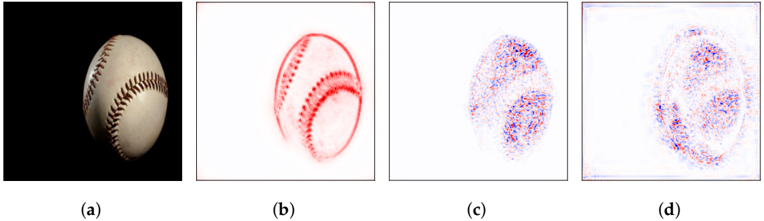
Fake media, generated by methods such as deepfakes, have become indistinguishable from real media, but their detection has not improved at the same pace. Furthermore, the absence of interpretability on deepfake detection models makes their reliability questionable. In this paper, we present a human perception level of interpretability for deepfake audio detection. Based on their characteristics, we implement several explainable artificial intelligence (XAI) methods used for image classification on an audio-related task. In addition, by examining the human cognitive process of XAI on image classification, we suggest the use of a corresponding data format for providing interpretability. Using this novel concept, a fresh interpretation using attribution scores can be provided.
Overview
The claims and statistics of this paper haven’t been checked yet.
Free: it reads the open-access text and checks the first 5 claims that cite a source we can check. Create a free account to check every claim.
Integrity signals
Registry
Cites
Statistics
Figures
Verification
Claims the paper makes
The claims and statistics of this paper haven’t been checked yet.
Free: it reads the open-access text and checks the first 5 claims that cite a source we can check. Create a free account to check every claim.
Claims other papers make about this one
Each is checked against this paper’s own text: does it say what the citing paper says it does?
The source backs part of the claim, not all of it — or backs it for a different population, condition or comparison.
In the citing paper
“Moreover, the image-based methods outperformed feature-based techniques, including those that made use of characteristics related to energy, bandwidth, frequency, and short-term transform features like MFCCs, for the identification of synthetic audio [72, 73].”
From Attention-based Multimodal learning framework for Generalized Audio-Visual Deepfake Detection (2023) · cites this paper as [73]
Experimental — accuracy not yet measuredThe cited source says what the claim attributes to it.
In the citing paper
“Lim et al. [85] used layer-wise relevance propagation (LRP) and Deep Taylor Decomposition to explain predictions in spectrogram-based detection models.”
From Deepfake Media Forensics: Status and Future Challenges (2025) · cites this paper as [85]
Self-check
Percentages, sums and reported differences re-computed from the paper’s own numbers.
The self-check needs the paper’s full text.
Citations
Cites
Axiomatic attribution for deep networks
Sundararajan, M., Taly, A., & Yan, Q. (2017) · arXiv · doi:10.48550/arxiv.1703.01365 · Cited by 4,087 · cited 2×
“With the path integral formulation, integrated gradients can satisfy the axioms and properly calculate the attribution score [13].”
MethodConformer: Convolution-augmented Transformer for Speech Recognition
Gulati, A., Qin, J., Chiu, C.-C., Parmar, N., Zhang, Y., Yu, J., Han, W., Wang, S., Zhang, Z., Wu, Y., et al. (2020) · Interspeech 2020 · doi:10.21437/interspeech.2020-3015 · Cited by 3,150
Conformer: Convolution-augmented Transformer for Speech Recognition
Gulati, A., Qin, J., Chiu, C.-C., Parmar, N., Zhang, Y., Yu, J., Han, W., Wang, S., Zhang, Z., Wu, Y., et al. (2020) · arXiv · doi:10.48550/arxiv.2005.08100 · Cited by 3,150
Natural TTS Synthesis by Conditioning Wavenet on MEL Spectrogram Predictions
Shen, J., Pang, R., Weiss, R. J., Schuster, M., Jaitly, N., Yang, Z., Chen, Z., Zhang, Y., Wang, Y., Skerrv-Ryan, R., et al. (2018) · 2018 IEEE International Conference on Acoustics, Speech and Signal Processing (ICASSP) · doi:10.1109/icassp.2018.8461368 · Cited by 2,791
X-Vectors: Robust DNN Embeddings for Speaker Recognition
Snyder, D., Garcia-Romero, D., Sell, G., Povey, D., & Khudanpur, S. (2018) · 2018 IEEE International Conference on Acoustics, Speech and Signal Processing (ICASSP) · doi:10.1109/icassp.2018.8461375 · Cited by 2,620 · cited 1×
“Tasks, such as speaker verification, use x-vector or d-vector to make the process efficient [6,7].”
Methodwav2vec 2.0: A Framework for Self-Supervised Learning of Speech Representations
Baevski, A., Zhou, H., Mohamed, A., & Auli, M. (2020) · arXiv · doi:10.48550/arxiv.2006.11477 · Cited by 2,369 · cited 2×
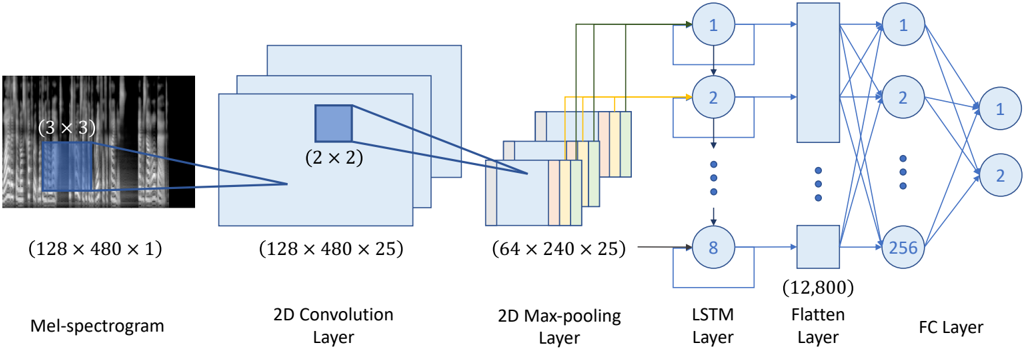
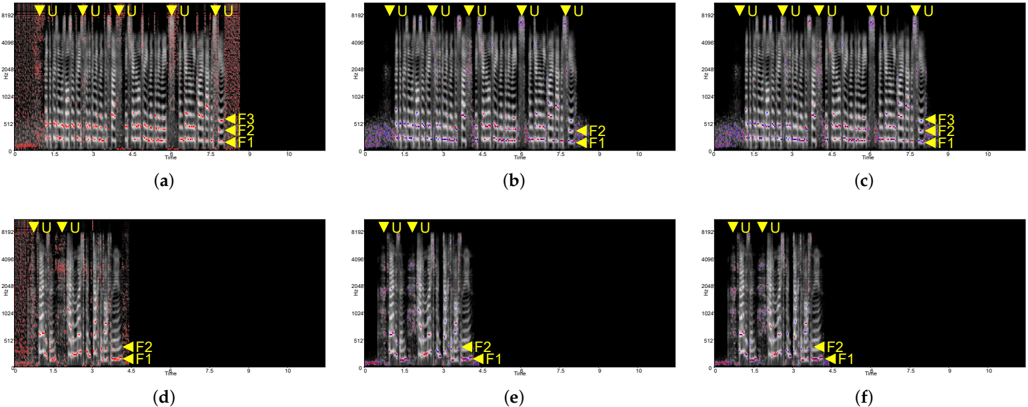
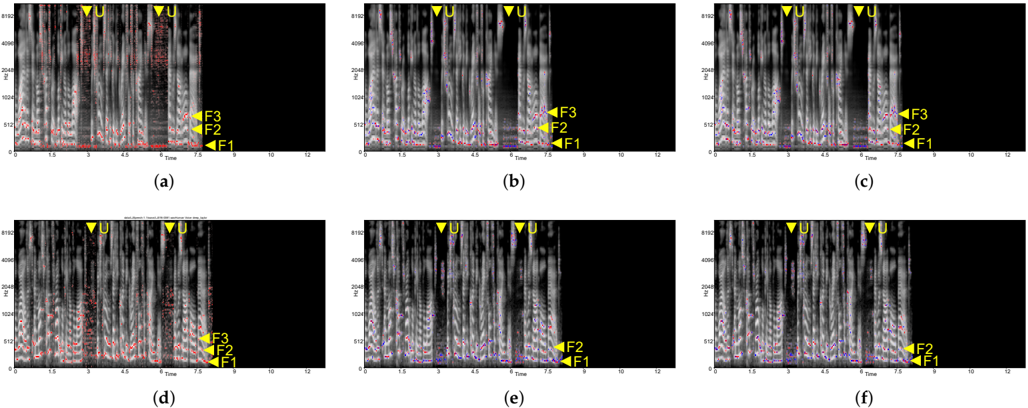
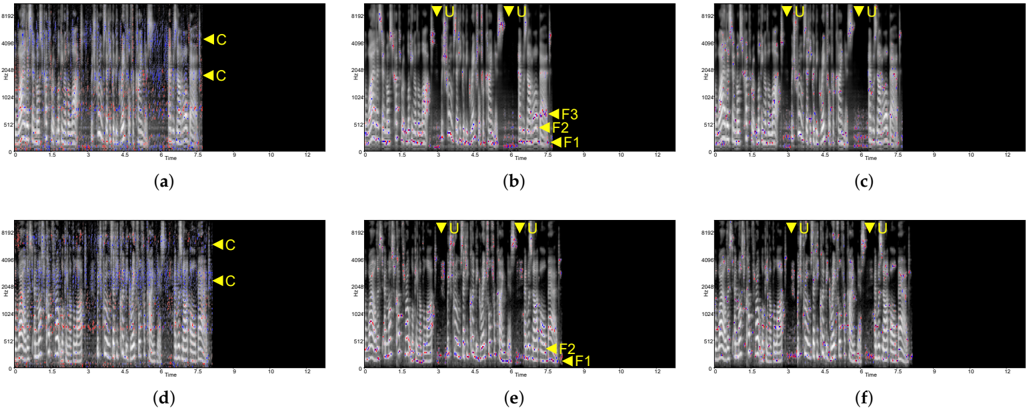
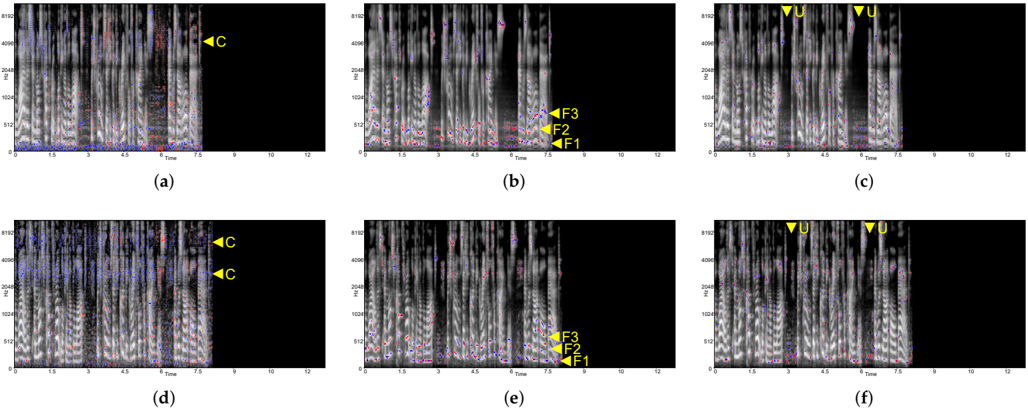
“In the case of the recomposed voice of Deep Taylor and LRP on the CNN-LSTM model, because of the lack of sensitivity on formants 1, 2, and 3, the transcript of the speech was unrecognizable.”
MethodSignal estimation from modified short-time Fourier transform
Griffin, D., & Lim, J. (1984) · IEEE Transactions on Acoustics, Speech, and Signal Processing · doi:10.1109/tassp.1984.1164317 · Cited by 2,095
Explaining nonlinear classification decisions with deep taylor decomposition
Montavon, G., Lapuschkin, S., Binder, A., Samek, W., & Müller, K.-R. (2017) · Pattern Recognition · doi:10.1016/j.patcog.2016.11.008 · Cited by 1,357
Speech-Transformer: A No-Recurrence Sequence-to-Sequence Model for Speech Recognition
Dong, L., Xu, S., & Xu, B. (2018) · 2018 IEEE International Conference on Acoustics, Speech and Signal Processing (ICASSP) · doi:10.1109/icassp.2018.8462506 · Cited by 1,100
Deep neural networks for small footprint text-dependent speaker verification
Variani, E., Lei, X., McDermott, E., Moreno, I. L., & Gonzalez-Dominguez, J. (2014) · 2014 IEEE International Conference on Acoustics, Speech and Signal Processing (ICASSP) · doi:10.1109/icassp.2014.6854363 · Cited by 1,035
Research works printed but not linked: 2
- Bracewell, R.N., and Bracewell, R.N. (1986). The Fourier Transform and Its Applications, McGraw-Hill.
- Becker, S., Ackermann, M., Lapuschkin, S., Müller, K.R., and Samek, W. (2018). Interpreting and explaining deep neural networks for classification of audio signals. arXiv.
Cited by
A., S., & R., S. (2023) · Decision Analytics Journal · doi:10.1016/j.dajour.2023.100230 · Cited by 432
ŞAHiN, E., Arslan, N. N., & Özdemir, D. (2025) · Neural Computing and Applications · doi:10.1007/s00521-024-10437-2 · Cited by 278
What is Human-Centered about Human-Centered AI? A Map of the Research Landscape
Capel, T., & Brereton, M. (2023) · Proceedings of the 2023 CHI Conference on Human Factors in Computing Systems · doi:10.1145/3544548.3580959 · Cited by 228
“The importance of interpretability was particularly prevalent in contexts such as child welfare screening [326], education [5, 7], medicine and healthcare [95, 196, 246], fnance [80, 186], fraud detection in digital retailing and banking [65], manufacturing [158, 236], media [170, 264], autonomous vehicles [280, 294],…”
BackgroundRecent Applications of Explainable AI (XAI): A Systematic Literature Review
Saarela, M., & Podgorelec, V. (2024) · Applied Sciences · doi:10.3390/app14198884 · Cited by 183
Understanding Human-Centred AI: a review of its defining elements and a research agenda
Schmager, S., Pappas, I. O., & Vassilakopoulou, P. (2025) · Behaviour and Information Technology · doi:10.1080/0144929x.2024.2448719 · Cited by 253
Metadata
- Authors
- Lim, S.-Y., Chae, D.-K., & Lee, S.-C.
- Affiliations
- Hanyang University (KR)
- Division of Nanotechnology, Daegu Gyeongbuk Institute of Science & Technology (DGIST), Deagu 42988, Korea
- ORCID
- Chae, Dong-Kyu
- Venue
- Applied Sciences
- Publisher
- MDPI AG
- Published
- 2022-04-13
- Volume
- 12
- Issue
- 8
- Pages
- 3926
- ISSN
- 2076-3417 (ISSN-L)
- OpenAlex
- W4223915588
- Cited by
- 82
- References
- 17
- Citations by year
- 2026: 17 · 2025: 31 · 2024: 23 · 2023: 10 · 2022: 1
- FWCI
- 5.35
- Type
- journal article
- Language
- en
- Open access
- gold
- doi.org
- Licence
- Locations
- Applied Sciences (publishedVersion, cc-by)
- DOAJ (DOAJ: Directory of Open Access Journals) (submittedVersion, cc-by-sa)
- Funders
- Korea government(MSIT) (No.2020-0- 378 01373)
- Korean government (MSIT) (No. NRF-2021M3E5D2A01021156)
- Ministry of Science and ICT of KOREA (21-IT-10-03)
- Topics
- Physical Sciences › Computer Science › Artificial Intelligence › Explainable Artificial Intelligence (XAI)
- Physical Sciences › Computer Science › Computer Vision and Pattern Recognition › Digital Media Forensic Detection
- Physical Sciences › Computer Science › Artificial Intelligence › Speech Recognition and Synthesis
- Keywords
- deepfake detection, explainable AI, audio forensics, interpretability, fake media, audio classification
About these checks
Registry, retraction, Cites and statistics results are computed, not judged, with one exception: a printed reference that no index lists is read once by a model before it counts as a citation error. Claims are extracted by a model and kept only when their quote appears verbatim in the text; each cited source is then checked, with a model’s help, for whether it says what the claim relies on. Those verdicts can be wrong — read the claim’s quote and the cited source before relying on one.
Statistics and arithmetic are recomputed, not judged.
Confidence bands are shown only for fields calibrated on our annotated test set. None is calibrated yet, so no band is shown.
What counts as a claim ›How we measure confidence ›How we check this ›
Are you an author, or do you see a problem with this page? Request a review
How to cite
Cite CoChat for the checks on this page, and the paper for its own findings.
- This page
- CoChat. (2026). Citation check: Detecting Deepfake Voice Using Explainable Deep Learning Techniques. https://app.cochat.ai/papers/10.3390/app12083926
- The paper
- Lim, S.-Y., Chae, D.-K., & Lee, S.-C. (2022). Detecting Deepfake Voice Using Explainable Deep Learning Techniques. Applied Sciences. https://doi.org/10.3390/app12083926
Data sources
Bibliographic data: Semantic Scholar, OpenAlex, Crossref.
Contains information from the Semantic Scholar Academic Graph Datasets, made available under the ODC Attribution License (ODC-BY 1.0).
Semantic Scholar’s data is described in: Kinney, R., et al. (2023). The Semantic Scholar Open Data Platform. arXiv:2301.10140.
