

Detecting Deepfake Voice Using Explainable Deep Learning Techniques
Open accessThe DOI matches its Crossref record; 21 of the 21 references it cites were found in a registry or an index.
Abstract
Fake media, generated by methods such as deepfakes, have become indistinguishable from real media, but their detection has not improved at the same pace. Furthermore, the absence of interpretability on deepfake detection models makes their reliability questionable. In this paper, we present a human perception level of interpretability for deepfake audio detection. Based on their characteristics, we implement several explainable artificial intelligence (XAI) methods used for image classification on an audio-related task. In addition, by examining the human cognitive process of XAI on image classification, we suggest the use of a corresponding data format for providing interpretability. Using this novel concept, a fresh interpretation using attribution scores can be provided.
Overview
The claims and statistics of this paper haven’t been checked yet.
Free: it reads the open-access text and checks the first 5 claims that cite a source we can check. Create a free account to check every claim.
Integrity signals
Registry
Cites
Statistics
Figures
Verification
Claims the paper makes
The claims and statistics of this paper haven’t been checked yet.
Free: it reads the open-access text and checks the first 5 claims that cite a source we can check. Create a free account to check every claim.
Claims other papers make about this one
Each is checked against this paper’s own text: does it say what the citing paper says it does?
The source backs part of the claim, not all of it — or backs it for a different population, condition or comparison.
In the citing paper
“Moreover, the image-based methods outperformed feature-based techniques, including those that made use of characteristics related to energy, bandwidth, frequency, and short-term transform features like MFCCs, for the identification of synthetic audio [72, 73].”
From Attention-based Multimodal learning framework for Generalized Audio-Visual Deepfake Detection (2023) · cites this paper as [73]
Experimental — accuracy not yet measuredThe cited source says what the claim attributes to it.
In the citing paper
“Lim et al. [85] used layer-wise relevance propagation (LRP) and Deep Taylor Decomposition to explain predictions in spectrogram-based detection models.”
From Deepfake Media Forensics: Status and Future Challenges (2025) · cites this paper as [85]
Self-check
Percentages, sums and reported differences re-computed from the paper’s own numbers.
The self-check needs the paper’s full text.
Citations
Cites
Axiomatic attribution for deep networks
Sundararajan, M., Taly, A., & Yan, Q. (2017) · arXiv · doi:10.48550/arxiv.1703.01365 · Cited by 4,087 · cited 2×
“With the path integral formulation, integrated gradients can satisfy the axioms and properly calculate the attribution score [13].”
MethodConformer: Convolution-augmented Transformer for Speech Recognition
Gulati, A., Qin, J., Chiu, C.-C., Parmar, N., Zhang, Y., Yu, J., Han, W., Wang, S., Zhang, Z., Wu, Y., et al. (2020) · Interspeech 2020 · doi:10.21437/interspeech.2020-3015 · Cited by 3,150
Conformer: Convolution-augmented Transformer for Speech Recognition
Gulati, A., Qin, J., Chiu, C.-C., Parmar, N., Zhang, Y., Yu, J., Han, W., Wang, S., Zhang, Z., Wu, Y., et al. (2020) · arXiv · doi:10.48550/arxiv.2005.08100 · Cited by 3,150
Natural TTS Synthesis by Conditioning Wavenet on MEL Spectrogram Predictions
Shen, J., Pang, R., Weiss, R. J., Schuster, M., Jaitly, N., Yang, Z., Chen, Z., Zhang, Y., Wang, Y., Skerrv-Ryan, R., et al. (2018) · 2018 IEEE International Conference on Acoustics, Speech and Signal Processing (ICASSP) · doi:10.1109/icassp.2018.8461368 · Cited by 2,791
X-Vectors: Robust DNN Embeddings for Speaker Recognition
Snyder, D., Garcia-Romero, D., Sell, G., Povey, D., & Khudanpur, S. (2018) · 2018 IEEE International Conference on Acoustics, Speech and Signal Processing (ICASSP) · doi:10.1109/icassp.2018.8461375 · Cited by 2,620 · cited 1×
“Tasks, such as speaker verification, use x-vector or d-vector to make the process efficient [6,7].”
Methodwav2vec 2.0: A Framework for Self-Supervised Learning of Speech Representations
Baevski, A., Zhou, H., Mohamed, A., & Auli, M. (2020) · arXiv · doi:10.48550/arxiv.2006.11477 · Cited by 2,369 · cited 2×
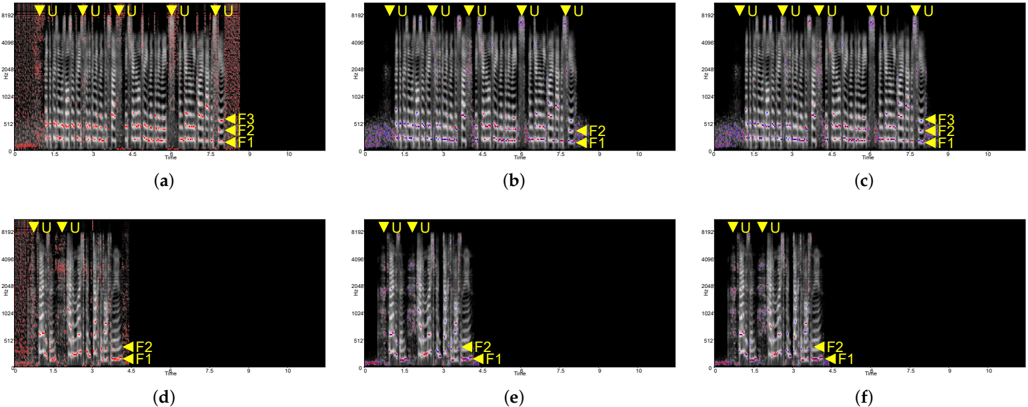
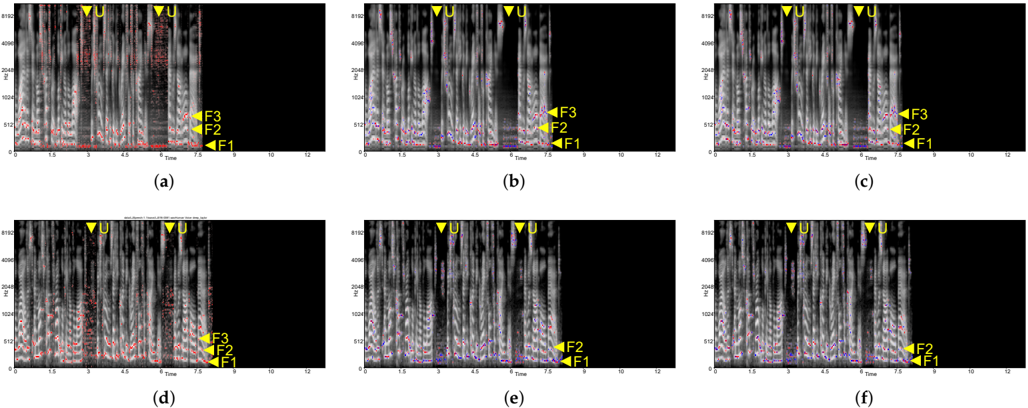
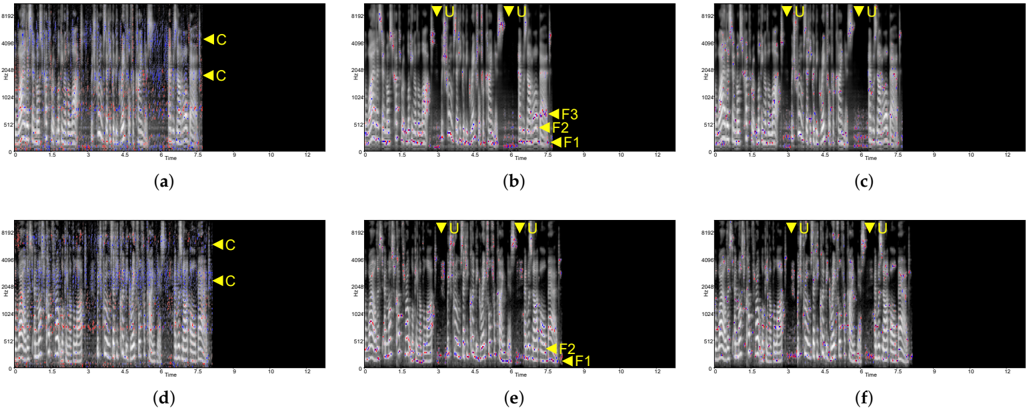
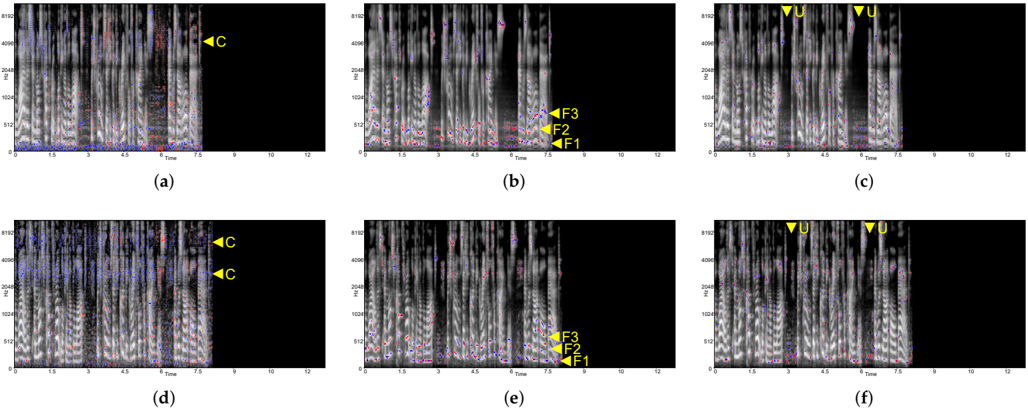
“In the case of the recomposed voice of Deep Taylor and LRP on the CNN-LSTM model, because of the lack of sensitivity on formants 1, 2, and 3, the transcript of the speech was unrecognizable.”
MethodSignal estimation from modified short-time Fourier transform
Griffin, D., & Lim, J. (1984) · IEEE Transactions on Acoustics, Speech, and Signal Processing · doi:10.1109/tassp.1984.1164317 · Cited by 2,095
Explaining nonlinear classification decisions with deep taylor decomposition
Montavon, G., Lapuschkin, S., Binder, A., Samek, W., & Müller, K.-R. (2017) · Pattern Recognition · doi:10.1016/j.patcog.2016.11.008 · Cited by 1,357
Speech-Transformer: A No-Recurrence Sequence-to-Sequence Model for Speech Recognition
Dong, L., Xu, S., & Xu, B. (2018) · 2018 IEEE International Conference on Acoustics, Speech and Signal Processing (ICASSP) · doi:10.1109/icassp.2018.8462506 · Cited by 1,100
Deep neural networks for small footprint text-dependent speaker verification
Variani, E., Lei, X., McDermott, E., Moreno, I. L., & Gonzalez-Dominguez, J. (2014) · 2014 IEEE International Conference on Acoustics, Speech and Signal Processing (ICASSP) · doi:10.1109/icassp.2014.6854363 · Cited by 1,035
Research works printed but not linked: 2
- Bracewell, R.N., and Bracewell, R.N. (1986). The Fourier Transform and Its Applications, McGraw-Hill.
- Becker, S., Ackermann, M., Lapuschkin, S., Müller, K.R., and Samek, W. (2018). Interpreting and explaining deep neural networks for classification of audio signals. arXiv.
Cited by
A., S., & R., S. (2023) · Decision Analytics Journal · doi:10.1016/j.dajour.2023.100230 · Cited by 432
ŞAHiN, E., Arslan, N. N., & Özdemir, D. (2025) · Neural Computing and Applications · doi:10.1007/s00521-024-10437-2 · Cited by 278
What is Human-Centered about Human-Centered AI? A Map of the Research Landscape
Capel, T., & Brereton, M. (2023) · Proceedings of the 2023 CHI Conference on Human Factors in Computing Systems · doi:10.1145/3544548.3580959 · Cited by 228
“The importance of interpretability was particularly prevalent in contexts such as child welfare screening [326], education [5, 7], medicine and healthcare [95, 196, 246], fnance [80, 186], fraud detection in digital retailing and banking [65], manufacturing [158, 236], media [170, 264], autonomous vehicles [280, 294],…”
BackgroundRecent Applications of Explainable AI (XAI): A Systematic Literature Review
Saarela, M., & Podgorelec, V. (2024) · Applied Sciences · doi:10.3390/app14198884 · Cited by 183
Understanding Human-Centred AI: a review of its defining elements and a research agenda
Schmager, S., Pappas, I. O., & Vassilakopoulou, P. (2025) · Behaviour and Information Technology · doi:10.1080/0144929x.2024.2448719 · Cited by 255
A Survey on the Detection and Impacts of Deepfakes in Visual, Audio, and Textual Formats
Mubarak, R., Alsboui, T., Alshaikh, O., Inuwa-Dutse, I., Khan, S., & Parkinson, S. (2023) · IEEE Access · doi:10.1109/access.2023.3344653 · Cited by 132
“Lim et al. [210] applied explainable AI (XAI) methods for deepfake voice detection, focussing on interpretations accessible to human perception.”
MethodAbbas, F., & Taeihagh, A. (2024) · Expert Systems with Applications · doi:10.1016/j.eswa.2024.124260 · Cited by 184
“A conflict may arise when sound and image do not sync or when audio content contradicts or conflicts with visual content (Johnson et al., 2022; Lim et al., 2022).”
BackgroundDeepfakes generation and detection: a short survey
Akhtar, Z. (2023) · Journal of Imaging · doi:10.3390/jimaging9010018 · Cited by 106
“…creating warmongering situations [22], generating political or religious unrest via fake speeches For instance, the fore-going works are usually lagging in the robustness of the systems against adversarial attacks [44], decision explainability [45], and real-time mobile deepfake detection [46].”
BackgroundDeepfake Media Forensics: Status and Future Challenges
Amerini, I., Barni, M., Battiato, S., Bestagini, P., Boato, G., Bruni, V., Caldelli, R., De Natale, F., De Nicola, R., Guarnera, L., et al. (2025) · Journal of Imaging · doi:10.3390/jimaging11030073 · Cited by 113
A Survey on Speech Deepfake Detection
Li, M., Ahmadiadli, Y., & Zhang, X.-P. (2025) · ACM Computing Surveys · doi:10.1145/3714458 · Cited by 101
Kumar, A., Singh, D., Jain, R., Jain, D. K., Gan, C., & Zhao, X. (2025) · Information Fusion · doi:10.1016/j.inffus.2025.102993 · Cited by 58
AudioProtoPNet: An interpretable deep learning model for bird sound classification
Heinrich, R., Rauch, L., Sick, B., & Scholz, C. (2025) · Ecological Informatics · doi:10.1016/j.ecoinf.2025.103081 · Cited by 48
AudioProtoPNet: An interpretable deep learning model for bird sound classification
Heinrich, R., Rauch, L., Sick, B., & Scholz, C. (2024) · arXiv · doi:10.48550/arxiv.2404.10420 · Cited by 31
“In the area of post-hoc explanation methods, counterfactual explanations [12] as well as gradient [13, 14, 15], perturbation [16, 17, 18], and attention-based [19, 20, 21] feature attribution methods have been investigated to explain deep learning models in audio processing.”
Acoustic Features Analysis for Explainable Machine Learning-Based Audio Spoofing Detection
Bisogni, C., Loia, V., Nappi, M., & Pero, C. (2024) · Computer Vision and Image Understanding · doi:10.1016/j.cviu.2024.104145 · Cited by 30
Casu, M., Guarnera, L., Caponnetto, P., & Battiato, S. (2024) · Forensic Science International: Digital Investigation · doi:10.1016/j.fsidi.2024.301795 · Cited by 30
“The question of trusting the predictions of detection algorithms is indeed a separate but related study, as explored by Mathews et al. (2023), Lim et al. (2022), and others (Cantero-Arjona and S´anchez-Maci´an, 2024; Pinhasov et al., 2024; Pandey et al., 2024; Pontorno et al., 2024).”
ResultUnmasking the Fake: Machine Learning Approach for Deepfake Voice Detection
Tanveer, M. U., Munir, K., Amjad, M., Rehman, A. U., & Bermak, A. (2024) · IEEE Access · doi:10.1109/access.2024.3521026 · Cited by 41
Hybrid CMNV2: DeepFake faces classification and recognition using deep learning methods
Kumar, B. A., Misra, N. K., Pathak, N., Ahmadpour, S.-S., Krishnamoorthy, M., Shukla, D. K., Patidar, M., & Hakimi, M. (2025) · Results in Engineering · doi:10.1016/j.rineng.2025.107513 · Cited by 37
Towards Frequency Band Explainability in Synthetic Speech Detection
Salvi, D., Bestagini, P., & Tubaro, S. (2023) · European Signal Processing Conference (EUSIPCO) · doi:10.23919/eusipco58844.2023.10289804 · Cited by 30
“Finally, other studies such as [17] and [18], have focused on explaining the results obtained using specific audio features, focusing on different frequency bands and speech formants.”
BackgroundExplainable deepfake detection across different modalities: An overview of methods and challenges
Momin, M. S., Sufian, A., Barman, D., Leo, M., Distante, C., & Damer, N. (2025) · Image and Vision Computing · doi:10.1016/j.imavis.2025.105738 · Cited by 37
An explainable deepfake of speech detection method with spectrograms and waveforms
Yu, N., Chen, L., Leng, T., Chen, Z., & Yi, X. (2024) · Journal of Information Security and Applications · doi:10.1016/j.jisa.2024.103720 · Cited by 18
Wani, T. M., Qadri, S. A. A., Wani, F. A., & Amerini, I. (2024) · Foundations and Trends® in Privacy and Security · doi:10.1561/3300000048 · Cited by 16
A comprehensive survey with critical analysis for deepfake speech detection
Pham, L. D., Lam, P., Tran, D., Tang, H., Nguyen, T., Schindler, A., Skopik, F., Polonsky, A., & Vu, H. C. (2025) · Computer Science Review · doi:10.1016/j.cosrev.2025.100757 · Cited by 43
Kang, Y., Kim, W., Lim, S., Kim, H., & Seo, H. (2022) · Applied Sciences · doi:10.3390/app122111109 · Cited by 23
Self-citationDeepfake Detection in Video and Audio Clips: A Comprehensive Survey and Analysis
Jbara, W. A., Hussein, N. A.-H. K., & Soud, J. H. (2024) · Mesopotamian Journal of CyberSecurity · doi:10.58496/mjcs/2024/025 · Cited by 21
Beyond the Illusion: Ensemble Learning for Effective Voice Deepfake Detection
Ali, G., Rashid, J., Hussnain, M. R. U., Tariq, M. U., Ghani, A., & Kwak, D. (2024) · IEEE Access · doi:10.1109/access.2024.3457866 · Cited by 21
“Lim et al. [25] used explainable artificial intelligence (XAI) techniques for detecting deepfake voices.”
BackgroundFairSSD: Understanding Bias in Synthetic Speech Detectors
Singh Yadav, A. K., Bhagtani, K., Salvi, D., Bestagini, P., & Delp, E. J. (2024) · 2024 IEEE/CVF Conference on Computer Vision and Pattern Recognition Workshops (CVPRW) · doi:10.1109/cvprw63382.2024.00445 · Cited by 12
Dual-branch network with fused Mel features for logic-manipulated speech detection
Yang, H., Yan, X., & Wang, H. (2024) · Applied Acoustics · doi:10.1016/j.apacoust.2024.110047 · Cited by 12
Alrowais, F., Hassan, A. A., ALMUKADI, W. S., Alanazi, M. H., Marzouk, R., & Mahmud, A. (2024) · IEEE Access · doi:10.1109/access.2024.3470128 · Cited by 21
“In [16], a human perception level of interpretability was introduced for detecting deepfake audios.”
BackgroundExplainable Deep Learning Analysis for Raga Identification in Indian Art Music
Singh, P., & Arora, V. (2025) · IEEE Transactions on Audio Speech and Language Processing · doi:10.1109/taslpro.2025.3574839 · Cited by 22
“In the audio domain, we have some works [32] which treat audio feature representations as images and use the XAI methods for images to generate explanations.”
Explainable Artificial Intelligence (XAI) for Emotion Detection
Ayyalasomayajula, M. M. T., Ayyalasomayajula, S., & Pandey, J. K. (2024) · Advances in psychology, mental health, and behavioral studies (APMHBS) book series · doi:10.4018/979-8-3693-4143-8.ch010 · Cited by 10
Deepfake audio detection and justification with Explainable Artificial Intelligence (XAI)Preprint
Govindu, A., Kale, P., Hullur, A., Gurav, A., & Godse, P. (2023) · Research Square · doi:10.21203/rs.3.rs-3444277/v1 · Cited by 9
Investigating voiced and unvoiced regions of speech for audio deepfake detection
Sivaraman, G., Tak, H., & Khoury, E. (2025) · IEEE International Conference on Acoustics Speech and Signal Processing · doi:10.1109/icassp49660.2025.10890861 · Cited by 17
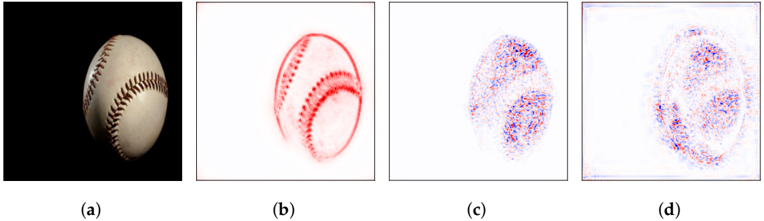
“Authors in [12] studied several explainable artificial intelligence (XAI) methods used for image classification.”
Synthetic Speech Detection through Audio Folding
Salvi, D., Bestagini, P., & Tubaro, S. (2023) · ACM International Workshop on Multimedia AI against Disinformation (MAD) · doi:10.1145/3592572.3592844 · Cited by 12
A Decade of Deepfake Research in the Generative AI Era, 2014–2024: A Bibliometric Analysis
Acim, B., Boukhlif, M., Ouhnni, H., Kharmoum, N., & Ziti, S. (2025) · Publications · doi:10.3390/publications13040050 · Cited by 16
What Does an Audio Deepfake Detector Focus on? A Study in the Time Domain
Grinberg, P., Kumar, A., Koppisetti, S., & Bharaj, G. (2025) · IEEE International Conference on Acoustics Speech and Signal Processing · doi:10.1109/icassp49660.2025.10887568 · Cited by 17
Deepfake as an Artificial Intelligence tool for VFX Films
Singh, H., Kaur, K., Nahak, F. M., Singh, S. K., & Kumar, S. (2023) · International Conference on Computation System and Information Technology for Sustainable Solutions (CSITSS) · doi:10.1109/csitss60515.2023.10334186 · Cited by 12
“[ 16]”
Attention-based Multimodal learning framework for Generalized Audio-Visual Deepfake Detection
Masood, M., Javed, A., & Irtaza, A. (2023) · Preprint (Research Square) · doi:10.21203/rs.3.rs-3415144/v1 · Cited by 6
Unmasking Deepfakes: Understanding the Technology, Risks, and Countermeasures
Rathi, P., Budhani, S. K., Upadhyay, G. M., Vats, P., Kaur, R., & Saini, A. K. (2024) · International Conference on Innovative Practices in Technology and Management (ICIPTM) · doi:10.1109/iciptm59628.2024.10563353 · Cited by 7
“[16] explores the role of academic programs and training courses in equipping filmmakers with the necessary skills to leverage deep fake technology responsibly and creatively in their projects.”
BackgroundAudio Deepfake Detection and Classification
Sarada, B., Sudha, T. L., Domakonda, M., & Vasantha, B. (2024) · Asia Pacific Conference on Innovation in Technology (APCIT) · doi:10.1109/apcit62007.2024.10673438 · Cited by 6
Analysis of Spectro-Temporal Modulation Representation for Deep-Fake Speech Detection
Cheng, H., Mawalim, C. O., Li, K., Wang, L., & Unoki, M. (2023) · Asia-Pacific Signal and Information Processing Association Annual Summit and Conference (APSIPA ASC) · doi:10.1109/apsipaasc58517.2023.10317309 · Cited by 16
Detection of Fake Audio: A Deep Learning-Based Comprehensive Survey
Sahane, P. B., Badole, D., Kale, C., Chavare, S., & Walunj, S. (2024) · Smart innovation, systems and technologies · doi:10.1007/978-981-99-8612-5_22 · Cited by 5
Deep Learning-Based Detection of AI-Generated Voices Using Spectral Features
Shike, M., Irfan, M., Lee, S. J., & Salman, A. (2025) · International Conference on Machine Intelligence and Smart Innovation (ICMISI) · doi:10.1109/icmisi65108.2025.11115443 · Cited by 3
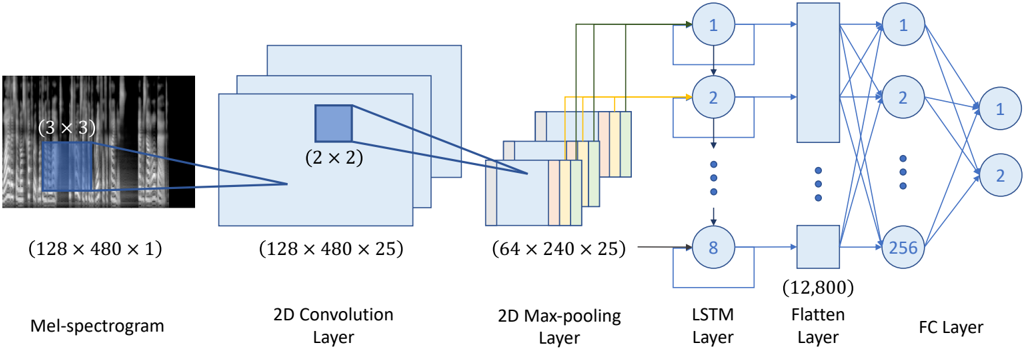
“Recent work by Lim et al. [4] approached the problem from a different perspective, focusing on model interpretability using simpler CNN and CNN-LSTM architectures.”
Self-citationEstella, T., Zahra, A., & Fung, W.-K. (2024) · International Conference on Informatics and Computing (ICIC) · doi:10.1109/icic64337.2024.10957049 · Cited by 3
“…baseline models/papers: Real-time Detection of AI-Generated Speech for DeepFake Voice Conversion [1] and Detecting deepfake voice using explainable deep learning techniques [19], which use state-of-the-art methods in AD detection with various Machine Learning and custom-built Deep Learning models.”
InfluentialA Comprehensive Review of Machine Learning Techniques for DeepFake Detection
Kabir, M. H., Noman, A. A., Afiq, A. A., Jaki, H., Hasan, M. N., Ahmad, Islam, M. S., Hasan, H., & Mojumder, I. A. (2025) · Applied Computational Intelligence and Soft Computing · doi:10.1155/acis/8883527 · Cited by 3
“Te FoR dataset [35] (2019), a sizable dataset of synthetic speech, was examined using a variety of ML and DL methodologies.”
Martin, N., Nambayil, S. R., Devikrishna, U., Joel Jismon, P., & Fasila, K. A. (2024) · IEEE International Conference on Signal Processing, Informatics, Communication and Energy Systems (SPICES) · doi:10.1109/spices62143.2024.10779815 · Cited by 4
Generation Gap or Diffusion Trap? How Age Affects the Detection of Personalized AI-Generated Images
Lüdemann, R., Schulz, A., & Kuhl, U. (2025) · Communications in computer and information science · doi:10.1007/978-3-031-83845-3_22 · Cited by 5
Deep-Detector: Deepfake Voice Recognition using Machine Learning
Parida, S., Mukharjee, T., Panda, S., & Pati, B. (2025) · International Conference on Intelligent and Cloud Computing (ICoICC) · doi:10.1109/icoicc64033.2025.11052136 · Cited by 3
Current State of Deepfake Detection and Generation: A Review
Chauhan, R., Kansal, I., Popli, R., Kumar, R., & Sharma, A. (2024) · Recent Advances in Electrical & Electronic Engineering (Formerly Recent Patents on Electrical & Electronic Engineering) · doi:10.2174/0123520965269334231117112747 · Cited by 7
Reddy, B. R., Rup, D. C., Mathi, R., & Belwal, M. (2024) · IEEE Global Conference for Advancement in Technology (GCAT) · doi:10.1109/gcat62922.2024.10924003 · Cited by 1
“[ 11], [12].”
Speaker Identification Using Deep Learning Models for Enhanced Voice Biometrics
Akhilesh, A., Balipa, M., & Shetty, A. S. (2025) · International Conference on Sentiment Analysis and Deep Learning (ICSADL) · doi:10.1109/icsadl65848.2025.10933058 · Cited by 1
Deepfake Detection in Call Recordings: A Deep Learning Solution for Voice Authentication
Nimbalkar, M. S. H. (2025) · International Journal for Research in Applied Science and Engineering Technology · doi:10.22214/ijraset.2025.68267 · Cited by 1
Naresh, B., Ch, R., Reddy, K. S., Srinivas, S., Sheikh, A. N. Q., & Raghavendar, K. (2025) · International Conference on Applications of Machine Intelligence and Data Analytics (ICAMIDA) · doi:10.1109/icamida64673.2025.11209741 · Cited by 3
“…subjects, and manipulate sensi-2025 Digital forensic investigators have thus been on the frontline to find solutions to these issues, and this imposes the role of carrying out the task of designing the audio tools and techniques to analyze, authenticate and prove the audio materials [7].”
Çelik, B., ZEYBEK, B., Karadeniz, M. B., Koçyiğit, A., Arsalı, O., EFEOĞLU, E., & Türetken, B. (2026) · Alexandria Engineering Journal · doi:10.1016/j.aej.2026.01.009 · Cited by 1
A Hybrid Deep Learning Framework for Real and Deepfake Voice Detection
Murty, M., Tomar, S., & Koolagudi, S. G. (2026) · Circuits Systems and Signal Processing · doi:10.1007/s00034-025-03464-4 · Cited by 2
“To improve the accuracy of audio deepfake detection, another study [9] stressed the importance of interpretability in detection models and modified explainable artificial intelligence (XAI) techniques.”
Armağan, S., Gündoğan, E., Kaya, M., & Alhajj, R. (2026) · Ain Shams Engineering Journal · doi:10.1016/j.asej.2026.104233 · Cited by 1
Deepfake audio detection and justification with explainable artificial intelligence
Govindu, A., Kale, P., Hullur, A., Gurav, A., & Godse, P. (2026) · International Journal of Data Science and Analytics · doi:10.1007/s41060-026-01186-7 · Cited by 16
DeepFake Technology for Breast Cancer Dataset Generation Using Autoencoders and Deep Neural Networks
Anwar, S., Anwer, M. A., & Al-Nadawi, D. (2025) · Lecture notes in computer science · doi:10.1007/978-3-031-88220-3_1 · Cited by 4
DevoX: Deep Voice Detection MLOps Framework for Crime Prevention in the Core-Edge Cloud
Seo, Y., Jo, H.-K., Roh, S., Sun, T.-J., Jeong, S.-W., Kim, H., Ngo, T.-T., & Huh, E. (2024) · International Conference on Information Networking · doi:10.1109/icoin59985.2024.10572202 · Cited by 2
“Lim et al. [12] applied explainable AI to deep voice to provide reliability through analysis of the deep voice detection model.”
Method“Deepfake Detection in Call Recordings:A Deep Learning Solution for Voice Authentication”
Nimbalkar, P. D. S. (2025) · INTERANTIONAL JOURNAL OF SCIENTIFIC RESEARCH IN ENGINEERING AND MANAGEMENT · doi:10.55041/ijsrem49194
Deepfake Audio Detection Using Shallow Convolutional Neural Network
Sahane, P. B., Badole, D., Chavare, S., Kale, C., & Walunj, S. (2025) · Lecture notes in networks and systems · doi:10.1007/978-981-96-1741-8_44
Kavya, V., & Raj, D. (2025) · AIP conference proceedings · doi:10.1063/5.0277802
Decoding Deepfake Audio with Machine Learning: A Comprehensive Review
Sartape, R., Kumar, S., Tomar, A., Munot, M. V., & Jaiswal, R. C. (2025) · Lecture notes in networks and systems · doi:10.1007/978-981-96-5751-3_12
Choughule, A., Mullaji, R., Patil, D., & Madachane, S. (2024) · International Conference on Communication, Computing, Smart Materials and Devices (ICCCSMD) · doi:10.1109/icccsmd63546.2024.11015131
“…and transfer learning techniques for achieving superior performance in audio recognition tasks, including deepfake audio detection.. Lim et al. [6] explored deepfake voice detection using explainable deep learning techniques, employing convolutional neural networks (CNNs) and LSTM-based…”
Ranjan, V., & Singh, D. (2025) · International Journal of Software Engineering and Knowledge Engineering · doi:10.1142/s0218194025500676
Deepfaceguard: A Lightweight CNN Framework for Robust Face Manipulation Detection
Tauseef, M., Viji, L. S., & Fenwick, J. (2025) · International Conference on Networks, Multimedia and Information Technology (NMITCON) · doi:10.1109/nmitcon65824.2025.11188219 · Cited by 3
“This optimization ensures efficient deployment on mobile and edge devices, directly tackling the computational overhead issue in existing methods [11].”
A Review on Deepfake Audio Recognition Using Generative AI
Dubey, D., Gupta, M., & Mattoo, A. (2025) · Lecture notes in networks and systems · doi:10.1007/978-981-96-8343-7_43
Real-Time Deepfake Audio Detection Using Lightweight CNNs
Karale, A., & Talele, P. (2026) · Lecture notes in networks and systems · doi:10.1007/978-3-032-13419-6_5
Deepfake Audio Detection Using Ensemble Learning
Ahmed, P. K., Chandra, S., Chakraborty, A., Sarkar, U., Jana, T., & Vaidya, S. A. (2026) · Lecture notes in networks and systems · doi:10.1007/978-981-95-2872-1_38
Deepfake Audio Detection Using Convolutional Neural Network
Vineeta, Kumar, A., & Kumar, A. (2025) · International Conference on Digital Innovations for Sustainable Solutions (ICDISS) · doi:10.1109/icdiss68238.2025.11320608
Design and Development of a System for Unveiling Inauthenticity in Audio Content
Kale, S. D., Tipale, J., Sonawane, S., Mulay, K., Patil, G., & Khumkar, N. (2026) · Lecture notes in networks and systems · doi:10.1007/978-3-032-12987-1_23
Semi-automatic approach utilizing Siamese Neural Network for forensic voice comparison
Kruthika, S. G., Nagavi, T. C., Mahesha, P., Chethana, H. T., Ravi, V., & Mazroa, A. A. (2026) · Franklin Open · doi:10.1016/j.fraope.2026.100527
Uddin, K., Khan, A. A., Farooq, M. U., & Malik, K. M. (2025) · IEEE International Conference on Computer Vision Workshops · doi:10.1109/iccvw69036.2025.00161 · Cited by 15
“Concurrently, Grinberg et al. [5] and Lim et al., [20] integrated explain-ability techniques such as saliency maps and Grad-CAM to support forensic analysis.”
The Creation of Digital Deception: An Examination of the Development of Deep fakes
Baloni, D., Agrawal, P. P., Chauhan, H., Mishra, A. K., Bhatt, C., & Prajapati, Y. N. (2025) · International Conference on Internet of Things: Smart Innovation and Usages (IoT-SIU) · doi:10.1109/iot-siu65919.2025.11402710 · Cited by 1
“Two datasets, Dataset-A and Dataset-B were used [3].”
Deepfake Voice Detection Using Bayesian Optimization and Root Mean Square Energy-Adjusted Features
Sugara, R., & Zahra, A. (2025) · Beyond Technology Summit on Informatics International Conference (BTS-I2C) · doi:10.1109/bts-i2c67944.2025.11399301
“However, these models often require heavy computation and large memory requirements, which limits their use in real-time systems or devices with fewer resources [10].”
Employing Transfer Learning Enabled Convolution Neural Networks for Deep Fake Voice Detection
Thilakarathne, N. N., Galajit, K., Yassin, H., & Silva, L. C. D. (2026) · IEEE International Conference on Advanced Systems and Emergent Technologies (IC_ASET) · doi:10.1109/ic_aset69920.2026.11502524
“The initial detection methods were primarily manual, relying on human experts to identify anomalies through auditory and waveform analysis [2]-[6].”
AI-Based Detection of Telemarketing Call Intent and Fraud Using Short-Duration Audio Analysis
Alam, I., Khan, J., Zafar, A., Sheikh, J. K., Mohamed, M. Y. N., & Choudhary, S. (2026) · International Conference on Emerging Computational Intelligence (ICECI) · doi:10.1109/iceci69159.2026.11519455
“…studies have shown the effectiveness of the spectrogram-based deep learning algorithms for distinguishing between genuine speech signals and manipulated speech or audio signals by analyzing the time-frequency characteristics of the speech signals within a small segment of audio duration [14],[15].”
Towards Secure Media Deepfake Detection Using Explainable AI
Rajathi, S., Hemalatha, J., Rajeswari, S., Parameswaran, S., Ramya, D., & Balamurugan, S. (2026) · IFIP advances in information and communication technology · doi:10.1007/978-3-032-28939-1_24
Deepfake detection: A review of audio, visual and multimodal techniques
Kanwal, R., Ashraf, H., Jhanjhi, N. Z., & Mirza, Q. U. A. Z. Z. (2026) · Applied Soft Computing · doi:10.1016/j.asoc.2026.115845
HIL-MDF: A Human-in-the-Loop Multimodal Deepfake Detection System
El-Beheiry, H., Asmah, A., Zaher, O., Abdulwagid, M., & Moussa, S. M. (2026) · IEEE International Conference on Smart Sustainable Systems for Computer and Engineering Applications (3SCEA) · doi:10.1109/3scea68071.2026.11603194
“Similarly, authors in [8] proposed a unimodal audio deepfake detection approach to detect auditory inconsistencies.”
tayari, Z., & Zaied, M. (2026) · Machine Learning and Knowledge Extraction · doi:10.3390/make8080220
“Additionally, the LIME method was employed to identify deepfake audio, contributing to better understanding and mitigation of such threats [36].”
Maltby, H., Wall, J., Glackin, C., Moniri, M., Salami, I., Li, L., & Cannings, N. (2026) · Computer Speech & Language · doi:10.1016/j.csl.2026.102037 · Cited by 1
An Efficient Deepfake Arabic Voice Detection System Based on a Deep Learning Approach
Almarashi, R., & Kim, J. (2026) · Studies in big data · doi:10.1007/978-3-032-29599-6_5
Analyzing and Recognizing a Pretender’s Acoustic System by Leveraging of Novel Approach
Swaminathan, B., & Reddy, Y. B. (2026) · Communications in computer and information science · doi:10.1007/978-3-032-35516-4_12
Metadata
- Authors
- Lim, S.-Y., Chae, D.-K., & Lee, S.-C.
- Affiliations
- Hanyang University (KR)
- Division of Nanotechnology, Daegu Gyeongbuk Institute of Science & Technology (DGIST), Deagu 42988, Korea
- ORCID
- Chae, Dong-Kyu
- Venue
- Applied Sciences
- Publisher
- MDPI AG
- Published
- 2022-04-13
- Volume
- 12
- Issue
- 8
- Pages
- 3926
- ISSN
- 2076-3417 (ISSN-L)
- OpenAlex
- W4223915588
- Cited by
- 82
- References
- 17
- Citations by year
- 2026: 17 · 2025: 31 · 2024: 23 · 2023: 10 · 2022: 1
- FWCI
- 5.35
- Type
- journal article
- Language
- en
- Open access
- gold
- doi.org
- Licence
- Locations
- Applied Sciences (publishedVersion, cc-by)
- DOAJ (DOAJ: Directory of Open Access Journals) (submittedVersion, cc-by-sa)
- Funders
- Korea government(MSIT) (No.2020-0- 378 01373)
- Korean government (MSIT) (No. NRF-2021M3E5D2A01021156)
- Ministry of Science and ICT of KOREA (21-IT-10-03)
- Topics
- Physical Sciences › Computer Science › Artificial Intelligence › Explainable Artificial Intelligence (XAI)
- Physical Sciences › Computer Science › Computer Vision and Pattern Recognition › Digital Media Forensic Detection
- Physical Sciences › Computer Science › Artificial Intelligence › Speech Recognition and Synthesis
- Keywords
- deepfake detection, explainable AI, audio forensics, interpretability, fake media, audio classification
About these checks
Registry, retraction, Cites and statistics results are computed, not judged, with one exception: a printed reference that no index lists is read once by a model before it counts as a citation error. Claims are extracted by a model and kept only when their quote appears verbatim in the text; each cited source is then checked, with a model’s help, for whether it says what the claim relies on. Those verdicts can be wrong — read the claim’s quote and the cited source before relying on one.
Statistics and arithmetic are recomputed, not judged.
Confidence bands are shown only for fields calibrated on our annotated test set. None is calibrated yet, so no band is shown.
What counts as a claim ›How we measure confidence ›How we check this ›
Are you an author, or do you see a problem with this page? Request a review
Data sources
Bibliographic data: Semantic Scholar, OpenAlex, Crossref.
Contains information from the Semantic Scholar Academic Graph Datasets, made available under the ODC Attribution License (ODC-BY 1.0).
Semantic Scholar’s data is described in: Kinney, R., et al. (2023). The Semantic Scholar Open Data Platform. arXiv:2301.10140.
