

The Regulation of Fat Metabolism during Aerobic Exercise
Open accessThe DOI matches its Crossref record; 226 of the 228 references it cites were found in a registry or an index.
Abstract
Since the lipid profile is altered by physical activity, the study of lipid metabolism is a remarkable element in understanding if and how physical activity affects the health of both professional athletes and sedentary subjects. Although not fully defined, it has become clear that resistance exercise uses fat as an energy source. The fatty acid oxidation rate is the result of the following processes: (a) triglycerides lipolysis, most abundant in fat adipocytes and intramuscular triacylglycerol (IMTG) stores, (b) fatty acid transport from blood plasma to muscle sarcoplasm, (c) availability and hydrolysis rate of intramuscular triglycerides, and (d) transport of fatty acids through the mitochondrial membrane. In this review, we report some studies concerning the relationship between exercise and the aforementioned processes also in light of hormonal controls and molecular regulations within fat and skeletal muscle cells.
Overview
The claims and statistics of this paper haven’t been checked yet.
Free: it reads the open-access text and checks the first 5 claims that cite a source we can check. Create a free account to check every claim.
Integrity signals
Registry
Cites
Statistics
Figures
Verification
Claims the paper makes
The claims and statistics of this paper haven’t been checked yet.
Free: it reads the open-access text and checks the first 5 claims that cite a source we can check. Create a free account to check every claim.
Claims other papers make about this one
Each is checked against this paper’s own text: does it say what the citing paper says it does?
The source backs part of the claim, not all of it — or backs it for a different population, condition or comparison.
In the citing paper
“At low intensities (<40% VO2max), fat is the predominant substrate, particularly during prolonged exercise (>90 min) when glycogen stores are depleted.”
From Isocaloric High-Intensity Interval and Circuit Training Increases Excess Post-Exercise Oxygen Consumption and Lipid Oxidation Compared to Moderate-Intensity Continuous Training (2025) · cites this paper as [9]
Experimental — accuracy not yet measuredThe source backs part of the claim, not all of it — or backs it for a different population, condition or comparison.
In the citing paper
“At higher intensities (≥70% VO2max), carbohydrate becomes the dominant energy source due to the rapid ATP demand.”
From Isocaloric High-Intensity Interval and Circuit Training Increases Excess Post-Exercise Oxygen Consumption and Lipid Oxidation Compared to Moderate-Intensity Continuous Training (2025) · cites this paper as [9]
Experimental — accuracy not yet measuredThe source backs part of the claim, not all of it — or backs it for a different population, condition or comparison.
In the citing paper
“At moderate intensities (40–65% VO2max), carbohydrate and fat contributions are more balanced, with fat oxidation peaking near the upper limit of this range.”
From Isocaloric High-Intensity Interval and Circuit Training Increases Excess Post-Exercise Oxygen Consumption and Lipid Oxidation Compared to Moderate-Intensity Continuous Training (2025) · cites this paper as [9]
Experimental — accuracy not yet measuredThe source backs part of the claim, not all of it — or backs it for a different population, condition or comparison.
In the citing paper
“Importantly, individuals with greater aerobic capacity tend to shift the point of maximal fat oxidation to higher intensities.”
From Isocaloric High-Intensity Interval and Circuit Training Increases Excess Post-Exercise Oxygen Consumption and Lipid Oxidation Compared to Moderate-Intensity Continuous Training (2025) · cites this paper as [9]
Experimental — accuracy not yet measuredThe source backs part of the claim, not all of it — or backs it for a different population, condition or comparison.
In the citing paper
“This greater EPOC magnitude in HIIT and HICT aligns with findings from previous studies [9,10] that suggest that higher exercise intensities and reduced rest intervals significantly enhance post-exercise metabolic activity.”
From Isocaloric High-Intensity Interval and Circuit Training Increases Excess Post-Exercise Oxygen Consumption and Lipid Oxidation Compared to Moderate-Intensity Continuous Training (2025) · cites this paper as [9]
Experimental — accuracy not yet measured
3 more claims about this paper
Create a free account to see every claim other papers make about this one.
Self-check
Percentages, sums and reported differences re-computed from the paper’s own numbers.
The self-check needs the paper’s full text.
Citations
Cites
High density lipoprotein as a protective factor against coronary heart disease
Gordon, T., Castelli, W. P., Hjortland, M. C., Kannel, W. B., & Dawber, T. R. (1977) · The American Journal of Medicine · doi:10.1016/0002-9343(77)90874-9 · Cited by 5,059 · cited 1×
“High-density lipoprotein- cholesterol concentrations are inversely associated with risk for cardiovascular disease [32], thus exercise interventions are routinely prescribed to decrease the risk of cardio-metabolic complications by promoting an increase in HDL-C concentration [31,33–35].”
BackgroundFat Mobilization in Adipose Tissue Is Promoted by Adipose Triglyceride Lipase
Zimmermann, R., Strauss, J. G., Haemmerle, G., Schoiswohl, G., Birner-Gruenberger, R., Riederer, M., Lass, A., Neuberger, G., Eisenhaber, F., Hermetter, A., et al. (2004) · Science · doi:10.1126/science.1100747 · Cited by 2,116
Romijn, J. A., Coyle, E. F., Sidossis, L. S., Gastaldelli, A., Horowitz, J. F., Endert, E., & Wolfe, R. R. (1993) · American Journal of Physiology-Endocrinology and Metabolism · doi:10.1152/ajpendo.1993.265.3.e380 · Cited by 1,747 · cited 5×
“However, the significant quantity of FFA used during exercise comes solely from adipose tissue and muscle [17,19,20].”
BackgroundInfluentialThe Mitochondrial Carnitine Palmitoyltransferase System — From Concept to Molecular Analysis
McGarry, J. D., & Brown, N. F. (1997) · European Journal of Biochemistry · doi:10.1111/j.1432-1033.1997.00001.x · Cited by 1,616
Biochemical Adaptations in Muscle
Holloszy, J. O. (1967) · Journal of Biological Chemistry · doi:10.1016/s0021-9258(18)96046-1 · Cited by 1,517
A meta-analysis of physical activity in the prevention of coronary heart disease.
BERLIN, J. A., & COLDITZ, G. A. (1990) · American Journal of Epidemiology · doi:10.1093/oxfordjournals.aje.a115704 · Cited by 1,382
A general introduction to the biochemistry of mitochondrial fatty acid β‐oxidation
Houten, S. M., & Wanders, R. J. A. (2010) · Journal of Inherited Metabolic Disease · doi:10.1007/s10545-010-9061-2 · Cited by 1,020 · cited 1×
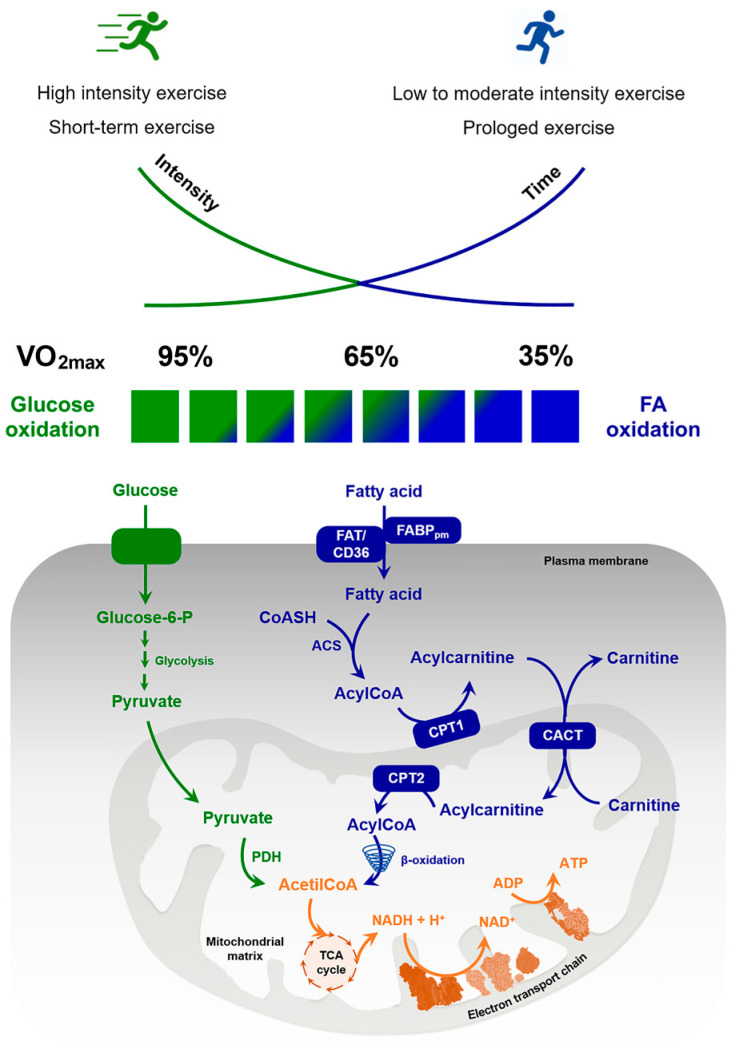
“The substrate used to derive energy during exercise depends on the duration and intensity of the latter: glucose utilization is greater during high exercise intensity, while FAs oxidation increases during moderate exercise intensity [21,22].”
BackgroundTriglyceride Metabolism in the Liver
Alves‐Bezerra, M., & Cohen, D. E. (2017) · Comprehensive Physiology · doi:10.1002/cphy.c170012 · Cited by 1,016
The Biochemistry and Physiology of Mitochondrial Fatty Acid β-Oxidation and Its Genetic Disorders
Houten, S. M., Violante, S., Ventura, F. V., & Wanders, R. J. A. (2016) · Annual Review of Physiology · doi:10.1146/annurev-physiol-021115-105045 · Cited by 920 · cited 1×
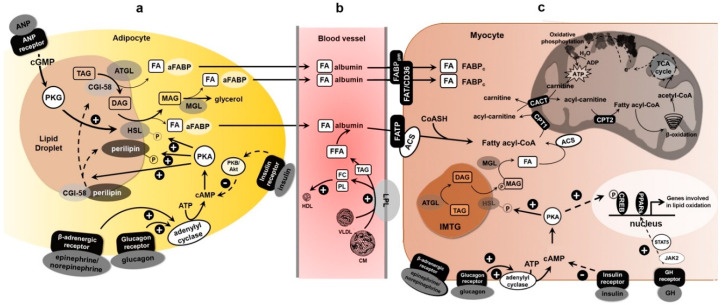
“Acyl carnitine is transported through the mitochondrial inner membrane in exchange for a free carnitine molecule by a translocase (CACT) and is reconverted to acyl-CoA by CPT2 inside the mitochondrion for oxidation [94] (Figure 1c).”
BackgroundThe effects of increasing exercise intensity on muscle fuel utilisation in humans
van Loon, L. J. C., Greenhaff, P. L., Constantin‐Teodosiu, D., Saris, W. H. M., & Wagenmakers, A. J. M. (2001) · The Journal of Physiology · doi:10.1111/j.1469-7793.2001.00295.x · Cited by 897 · cited 4×
“Specifically, the depletion of IMTG of type I muscle fibers is higher than that of type II muscle fibers, since type I fibers contain approximately twice the IMTG of type II fibers [61,90].”
BackgroundInfluential
Research works printed but not linked: 1
- Marriott B.M. Food Components to Enhance Performance: An Evaluation of Potential Performance-Enhancing Food Components for Operational Rations National Academy Press Washington, DC, USA 1994 24967488
Cited by
Items 101–200 of 236
García-Pérez, I., Aragón-Serrano, L., Montblanch, M., Sánchez-Moya, A., Perelló-Amorós, M., Fernández‐Borràs, J., Gutiérrez, J., & Blasco, J. (2025) · Aquaculture Reports · doi:10.1016/j.aqrep.2025.102765 · Cited by 4
Feng, Y., Zhou, W., & Niu, Y. (2025) · iScience · doi:10.1016/j.isci.2025.113243 · Cited by 6
“20 Exercise enhances muscle-specific VDR transcriptional activation and increases serum 25(OH)D concentrations, potentially through improved vitamin D bioavailability.”
Xia, T., Chen, L., Fei, Z., Liu, X., Dai, J. M., Hinkle, S. N., Zhu, Y., Wu, J., Weir, N. L., Tsai, M. Y., et al. (2022) · Frontiers in Nutrition · doi:10.3389/fnut.2022.983418 · Cited by 3
Fitriani, A., Setiarini, A., Ahmad, E. K., Purwaningtyas, D. R., & Fitria, F. (2023) · Malaysian Journal of Nutrition · doi:10.31246/mjn-2022-0086 · Cited by 3
Ouali, E. M. E., Kartibou, J., Coso, J. D., Elmakhzen, B., Bouguenouch, L., Akbir, R. E., Haboussi, A. E., Akhouayri, O., Ibrahimi, A., Mesfioui, A., et al. (2025) · Genes · doi:10.3390/genes16060651 · Cited by 4
“During endurance exercise, the CD36 protein has been demonstrated to play a critical role in the lipolysis process in adipose tissue and the transport of fatty acids to the mitochondria for oxidation [27–29].”
Shi, D., Xu, F., Li, Y., Shang, X., Liao, N., Han, J., Liu, G., & Shao, D. (2024) · Journal of Food Science · doi:10.1111/1750-3841.17392 · Cited by 2
Sheng, C., & Yue, R. (2025) · Journal of Ethnopharmacology · doi:10.1016/j.jep.2025.119338 · Cited by 2
Zhou, P., Hu, Z., Kim, T.-S., Kim, Y., Leng, Z., & Choi, M. (2025) · Life · doi:10.3390/life15091401 · Cited by 6
“The subsequent objective was to assess changes in substrate efficiency, defined as the capacity to effectively utilize lipids and carbohydrates during exercise and recovery [24].”
Wang, H., Zhao, S., Fang, T., Xiao, L., Yin, D., & Sun, Z. (2025) · Frontiers in Public Health · doi:10.3389/fpubh.2025.1640974 · Cited by 6
“Regular physical activity increases the body’s metabolic rate (13), regulates the endocrine system (14), and facilitates the release of neurotransmitters, including endorphins (15).”
Beyond Calories: Redox Interactions in Adipose Tissue That Lead to Metabolic Pathologies
Miranda-Martínez, A., Rodríguez-Martínez, E., Barragán-Reséndiz, P., & Rivas-Arancibia, S. (2025) · Physiologia · doi:10.3390/physiologia5040050 · Cited by 2
“These include chylomicrons, very low-density lipoproteins (VLDL) rich in triglycerides, intermediate-density lipoproteins (IDL), low-density lipoproteins (LDL) rich in cholesterol, and high-density lipoproteins (HDL) [39].”
Siri, M., Hosseini, E. M., Mazhari, S. A., Jalali, P., Soltaninejad, K., Raji, M. A., Yazdekhasti, N., Naseri, E., Mohammadi, A., & Maleki, M. H. (2025) · Nutrition & Metabolism · doi:10.1186/s12986-025-01067-z · Cited by 2
“However, when carbohydrate availability is limited either through prolonged exercise, fasting, or ketogenic supplementation the body shifts toward using fats as a predominant fuel source via β-oxidation and oxidative phosphorylation pathways in mitochondria [28, 29].”
DeBalsi, K. L., Goodman, K. D., Sommerville, L. J., Mitchell, M. W., Lane, B. A., Evans, A. M., & Kennedy, A. D. (2025) · Metabolomics · doi:10.1007/s11306-025-02390-5 · Cited by 3
“In addition to glucose, cardiac and skeletal muscle each derive energy from lipids during exercise through lipoly - sis and β-oxidation of free fatty acids (FFA) (Horowitz & Klein, 2000; Muscella et al., 2020 ).”
Antonio, G. C. F., Macêdo, A. P. A., Antunes, G. C., de Lima, R. D., Rios, T. D. S., Pitoli, B. D. S., Brisque, G. D., Dias, L. M., Silva, A. S. R., Cintra, D. E., et al. (2026) · Scientific Reports · doi:10.1038/s41598-025-33139-8 · Cited by 4
“This reduction can be explained by the increased rate of total fatty acid oxidation in the liver during fasting, which was enhanced by physical training, particularly aerobic exercise, known to more strongly stimulate the use of fatty acids as an energy source 17,83,84 .”
Zhao, L., Li, H., Li, D., Luo, L., & Hu, S. (2026) · PLoS ONE · doi:10.1371/journal.pone.0340309 · Cited by 3
“Skeletal muscle, a primary organ for locomotion and metabolism, accounts for approximately 30%−40% of human body weight and exhibits remarkable plasticity, undergoing extensive molecular and structural adaptations in response to different forms of exercise stimuli [1–5].”
Louie, J. C. Y. (2026) · Journal of Nutrition · doi:10.1016/j.tjnut.2026.101575 · Cited by 2
“During exercise, for example, fatty acid oxidation increases substantially, shifting breath CO 2 toward the isotopic composition of body fat stores, which reflects long-term diet rather than recent intake [49].”
Follow-Up of Eight-Weeks Detraining Period after Exercise Program on Health Profiles of Older Women
Leitão, L., Campos, Y., Figueira, A. C., Figueiredo, T. P., & Pereira, A. (2023) · Healthcare · doi:10.3390/healthcare11233021 · Cited by 3
de Oliveira, D. B. O., Giordani, M. A., Luvizotto, R. D. A. M., do Nascimento, A. F., dos Santos, M. C., Santos, K. C. C., Lima‐Leopoldo, A. P., Leopoldo, A. S., & Sugizaki, M. M. (2024) · Brazilian Journal of Medical and Biological Research · doi:10.1590/1414-431x2024e13676 · Cited by 2
“Furthermore, the reduction in total and low-density lipoprotein (LDL) cholesterol, and the increase in high-density lipoprotein (HDL) concentrations caused by HIIT help control blood pressure and lipid pro fi le, reducing the risk of cardiovascular diseases (11).”
BackgroundEffects of a competitive season on the plasma lipid profile of soccer players
Marsigliante, S., My, G., Selmi, O., Villani, E. P., Hawani, A., & Muscella, A. (2025) · Physiological Reports · doi:10.14814/phy2.70382 · Cited by 2
“This knowledge strongly suggests that measuring plasma LDL-C alone does not provide a complete picture of (CHD) risk (Muscella, Stefàno, & Marsigliante, 2020).”
InfluentialSelf-citationDownregulation of microRNA‐494 drives mitochondrial biogenesis and function in trained muscle
Pálešová, N., Gabrišová, K., Babulicová, J., Krumpolec, P., Kovaničová, Z., Kurdiová, T., Modica, S., Wolfrum, C., Ukropec, J., Ukropcová, B., et al. (2025) · Experimental Physiology · doi:10.1113/ep092977 · Cited by 3
The Role of Aerobic Exercise to Prevent Coronary Artery Disease
Tinduh, D., Abidanovanty, F. M., Zen, N. S. F., & Rahmaputri, F. (2022) · Cardiovascular and Cardiometabolic Journal (CCJ) · doi:10.20473/ccj.v3i2.2022.87-93 · Cited by 2
“An increase in Apo A1 and a decrease in Apo B after exercise can better predict CAD risk than the LDL/HDL ratio.[15]”
BackgroundEffect of Sports Energy Drink on Fat Metabolism and Weight Loss of College Students
Chu, H., Zhou, W., & Wang, S. (2022) · Journal of Food Quality · doi:10.1155/2022/3978964 · Cited by 2
“(e result of endurance training enables athletes to use fat for energy supply during endurance exercise, which is about 10% more than that of nonendurance athletes, thus helping to save sugar reserves in the body and improve endurance [11].”
BackgroundRetractedPhysiological response of exercise as modulation of lipid profile in young adults
Sugiharto, S., Merawati, D., Susanto, H., Taufiq, A., Pranoto, A., & Angga, P. D. (2023) · Comparative Exercise Physiology · doi:10.3920/cep220056 · Cited by 4
An epigenome-wide association study of waist circumference in Chinese monozygotic twins
Xing, F., Han, F., Wu, Y., Lv, B., Tian, H., Wang, W., Tian, X., Xu, C., Duan, H., Zhang, D., et al. (2024) · International Journal of Obesity · doi:10.1038/s41366-024-01538-y · Cited by 2
“Due to the in fl uence of muscle tissue on fat metabolism, research has suggested that muscle fi ber types and metabolic activity within muscle tissue can affect the oxidation and utilization of fat [54].”
Krentz, A. J. (2023) · Elsevier eBooks · doi:10.1016/b978-0-323-91707-0.00001-2 · Cited by 1
(The CD36 receptor - the link between inflammation, lipid metabolism, and cardiovascular disease)
Poledne, R., & Lesná, I. K. (2024) · Cor et Vasa · doi:10.33678/cor.2024.005 · Cited by 1
Prediction of Cardiovascular Disease based on Lipid Profiles
Biju, I. S., Nathan, G. M., & Raj, V. F. D. (2024) · International Conference on Emerging Trends in Information Technology and Engineering (ICETITE) · doi:10.1109/ic-etite58242.2024.10493840 · Cited by 3
“As we work harder, our bodies use less fat and more carbohydrates for energy, but at lower exercise levels, fat burning increases from resting state [12].”
BackgroundSari, A. K., Sugiharto, S., Merawati, D., & Pranoto, A. (2024) · Physical Education Theory and Methodology · doi:10.17309/tmfv.2024.2.03 · Cited by 1
“…2020). t Endurance training can induce fatty acid metabolism through oxidation in muscle mitochondria to produce large amounts of ATP (Muscella et al., 2020) thereby triggering the activation of the adenosine protein kinase (AMPK) pathway conserving ATP by inhibiting and anabolic…”
BackgroundIrvine, C. J., Browning, M., Brustia, S., Carter, V., Beridon, D., Gordon, R. A., & Sokoloski, M. L. (2024) · Journal of Exercise and Nutrition · doi:10.53520/jen2024.103161 · Cited by 1
“26,27 The adaptations produced may also influence the ability of caffeine to augment fat utilization during submaximal intensities.”
BackgroundHeart Rate Responses of Post-Menopausal Women to Zumba Gold® Classes
Delextrat, A. A., Shaw, C. D., & Solera-Sanchez, A. (2024) · Biology · doi:10.3390/biology13070462 · Cited by 3
A cohort study of serum 25-hydroxyvitamin D levels and the risk of hyperlipidaemia in adults
Liu, Z.-Y., Liu, S., Yao, X., Wang, C., Song, Y., Bi, Y.-M., Wang, J., Li, Y., Shi, T., Mi, W., et al. (2025) · Frontiers in Nutrition · doi:10.3389/fnut.2024.1492621 · Cited by 1
Eftekhari, S. M., Saghebjoo, M., Islami, F., & Ahmadabadi, F. (2025) · Obesity Medicine · doi:10.1016/j.obmed.2025.100603 · Cited by 1
Şerare, S., Şenel, Ö., Karadağ, A., Çerik, İ. B., Otu, M., & Arslan, M. (2025) · Pamukkale Journal of Sport Sciences · doi:10.54141/psbd.1569168 · Cited by 1
Cox, M., Raman, A., Fairchild, T. J., Beilby, J. P., Yeap, B. B., Nicholson, J. K., Wist, J., Peiffer, J. J., & Lawler, N. G. (2025) · Experimental Physiology · doi:10.1113/ep092768 · Cited by 3
Yin, W., Luo, D., Huang, W., Jiang, H., Wang, Y., & Qi, H. (2025) · Frontiers in Nutrition · doi:10.3389/fnut.2025.1635746 · Cited by 1
“The relationship between physical activity and lipid metabolism is well-documented, with regular exercise known to improve lipid profiles (65–67).”
Exercise mimetics: A new strategy for treating metabolic diseases?
Li, M., Wei, A., & Wang, T. (2025) · Science & Sports · doi:10.1016/j.scispo.2025.08.003 · Cited by 1
Vignaud, J., Loiseau, C., Côme, M., Hérault, J., Mayer, C., Lépine, O., & Ulmann, L. (2025) · Nutrition Research · doi:10.1016/j.nutres.2025.09.006 · Cited by 3
Fit but not immune from the risk: the hidden burden of dyslipidemia in elite athletes
Celeski, M., Lavisci, P., Loddo, E. B., Calandri, C., Kowalczyk, J., Ferrera, A., Crotta, S., Rizzi, M., Sposato, B., Volterrani, M., et al. (2025) · European Journal of Preventive Cardiology · doi:10.1093/eurjpc/zwaf607 · Cited by 2
Cheng, Z., Liu, L., Han, Y., Wang, H., Wang, Y., & Han, Y. (2025) · Scientific Reports · doi:10.1038/s41598-025-13526-x · Cited by 2
“The decrease in glucose oxidation amount may reflect a metabolic shift, where the body gradually shifts from primarily relying on glucose for energy to relying more on fat 49,50 .”
Lastra, J. R., & Kouser, S. (2025) · Journal of Cosmetic Dermatology · doi:10.1111/jocd.70490 · Cited by 2
Zhao, C., & Dev, R. D. O. (2025) · Journal of Human Sport and Exercise · doi:10.55860/mds5x068 · Cited by 3
“AE mainly enhances fat oxidation through elevated aerobic metabolism, thereby contributing to greater fat reduction (Muscella et al., 2020).”
Exercise Ameliorates Immunosenescence: From Mechanisms to Interventions
Xiao, H., & Ren, J. (2025) · Biology · doi:10.3390/biology15010058 · Cited by 5
“…exercise transiently elevates FFAs for energy supply, chronic regular exercise significantly enhances the tissue FFA utilization capacity, reducing fasting and postprandial FFAs, especially pro-inflammatory SFAs [94], thereby decreasing aged immune cell exposure to high pro-inflammatory FFA risk.”
Ye, W., Chen, S., Jiang, D., WANG, Y., Sun, X., & Liu, Q. (2026) · Scientific Reports · doi:10.1038/s41598-026-35907-6 · Cited by 1
“Acetyl-CoA enters the citric acid cycle, generating energy for muscle metabolism 28 .”
Silva, D. M. D. S. E., Avgerinou, G., Petridou, A., Theodoridis, G. A., Mougios, V., & Gika, H. (2026) · Metabolomics · doi:10.1007/s11306-025-02385-2 · Cited by 1
“Factors like exercise type, intensity, and duration exert profound effects on the differences in metabolite concentrations measured between pre-and post-exercise samples (Muscella et al., 2020; Schranner et al., 2020).”
Bravo‐Sànchez, A., Ramírez-delaCruz, M., Sánchez-Infante, J., Abián, P., & Abián‐Vicén, J. (2026) · Applied Sciences · doi:10.3390/app16062967 · Cited by 1
The Role of Exercise in Cardiovascular Metabolism and Its Importance for Adolescent Metabolic Health
Susanto, H., Firdaus, S. R. A., Sholeh, M., Sugiharto, S., & Pranoto, A. (2026) · Advances in experimental medicine and biology · doi:10.1007/978-981-95-7000-3_18 · Cited by 2
Acute metabolic responses to breaking up sedentary time in older adults
Maréchal, R., St‐Martin, P., Desjardins, C., Ghachem, A., Mekari, S., Bélanger, M. F., Cohen, A. A., & Dionne, I. J. (2026) · Physiology & Behavior · doi:10.1016/j.physbeh.2026.115361 · Cited by 1
Cai, Y., Jin, J., Wang, Y., Han, D., Yu, X., Jin, F., Li, M. D., Li, Y., & Li, X. (2026) · BMC Medicine · doi:10.1186/s12916-026-04898-6 · Cited by 2
“…consistent aerobic exercise in individuals with visceral adiposity may lower serum triglycerides, total cholesterol, and low-density lipoprotein levels, thereby supporting more favorable lipid homeostasis and reducing the reservoir of obesity-derived metabolites available to the TME [165, 166].”
Marín‐Jiménez, N., Flor‐Alemany, M., Baena‐García, L., Coll‐Risco, I., Castro‐Piñero, J., & Aparicio, V. A. (2022) · European Journal of Sport Science · doi:10.1080/17461391.2022.2115405 · Cited by 4
“In this regard, intense aerobic exercise results in fat oxidation (and carbohydrate oxidation, both primary sources in aerobic exercise at ≈80% of Vo2max) and lipolysis stimulation, linked to central fat reduction (Muscella et al., 2020).”
BackgroundResultThe Effect of L-Carnitine Supplementation on Sportive Performance
Eyipınar, C. D. (2023) · The Eurasia Proceedings of Health Environment and Life Sciences · doi:10.55549/ephels.100 · Cited by 2
“Given the significance of fatty acids in muscle bioenergetics and free carnitine's limiting effect on the oxidation of fatty acids during endurance exercise, supplementing with L-carnitine has been suggested as a way to enhance athletic performance (Muscella et al., 2020).”
BackgroundThakurdesai, P. A., Deshpande, P. O., Nimse, S. R., & Sathiyanarayanan, A. (2024) · International journal of Nutrition Pharmacology Neurological Diseases · doi:10.4103/ijnpnd.ijnpnd_96_23 · Cited by 1
Júnior, N. R. T., Jimenes, D. R., Schultz, C., Almeida, D. L., Mathias, P. C. D. F., & Berti, J. A. (2024) · Brazilian Journal of Medical and Biological Research · doi:10.1590/1414-431x2024e13202 · Cited by 5
“Moderate-intensity continuous training (MICT) is a physical exercise with a high rate of lipid oxidation for energy substrate, both during and after exercise (14).”
BackgroundMuhammad, Siantoro, G., Subagio, I., Yosika, G. F., Phanpheng, Y., Pramono, B. A., Kusuma, I. D. M. A. W., & Pranoto, A. (2024) · Physical Education Theory and Methodology · doi:10.17309/tmfv.2024.4.14 · Cited by 5
RetractedSex- and endurance training-mediated cardiovascular protection through lipids during exercise
An, J., Thorson, A. S., Wasserman, D. H., Stafford, J. M., & Zhu, L. (2024) · Trends in Endocrinology and Metabolism · doi:10.1016/j.tem.2024.12.004 · Cited by 1
Tratamento medicamentoso e estilo de vida para obesidade: Uma revisão integrativa
Silva, R. G. A., Faro, B. A. R., de Jesus, B. M. D., Santos, M. F. L. B., Costa, V. S. N. D. B., Santos, Y. G. F., Oliveira, F. K. F., & Hora, A. B. (2025) · Research Society and Development · doi:10.33448/rsd-v14i1.47970 · Cited by 1
Pour, S. G., & Marandi, S. M. (2025) · International Journal of Preventive Medicine · doi:10.4103/ijpvm.ijpvm_122_23 · Cited by 2
“[32] Physical activity improves the release and transport of glucose and oxidation of fatty acids through mitochondrial biogenesis and an increase in beta‑oxidation enzymes.”
Post-exercise Recovery Nutrition Strategies with RPE Scale
Sarkar, S., & Saranya, K. (2025) · Methods and protocols in food science · doi:10.1007/978-1-0716-4370-9_12 · Cited by 1
The muscle specific MEF2Dα2 isoform promotes muscle ketolysis and running capacity in mice
Kumar, S., Ji, X., Iqbal, H., Guan, X., Mis, B., Dave, D. D., Kumar, S. N., Besler, J., Dash, R. K., Xia, Z., et al. (2025) · EMBO Reports · doi:10.1038/s44319-025-00578-3 · Cited by 1
“At moderate-speed running, both carbohydrates and fatty acids are utilized as an energy source (Coyle, 1995; Muscella et al, 2020; Romijn et al, 1993).”
Mikłosz, A., Łukaszuk, B., Chabowski, A., & Górski, J. (2021) · Biomolecules · doi:10.3390/biom11060906 · Cited by 1
“An excellent example of such a therapeutic approach is physical exercise, a natural activity exerting a beneficial effect on blood serum lipid profile [62,64].”
BackgroundThe impact of overhead dumbbell squat towards swimming speed of Tirta Palm Swimming Club members
Putri, W. A., Handoko, A., & Elfiah, U. (2022) · Jurnal Keolahragaan · doi:10.21831/jk.v10i1.37031 · Cited by 1
Kusnanik, N. W., Jatmiko, T., Dyaksa, R. S., Ayubi, N., Callixte, C., Aljunaid, M., & Muin, A. (2022) · Retos · doi:10.47197/retos.v46.93900 · Cited by 2
Guzzoni, V., Sanches, A., Costa, R., de Souza, L. B., Firoozmand, L. T., de Abreu, I. C. M. E., Guerra, J. F. D. C., Pedrosa, M. L., Casarini, D. E., Marcondes, F. K., et al. (2022) · SSRN Electronic Journal · doi:10.2139/ssrn.4121004 · Cited by 1
Oukheda, M., Bouaouda, K., Mohtadi, K., Lebrazi, H., Derouiche, A., Kettani, A., Saïle, R., & Taki, H. (2023) · Preprints.org · doi:10.20944/preprints202308.1600.v1 · Cited by 1
Bravo, G. M., Paramasivam, P., Jacquez, Q., Sandoval, G., Beason, H., Ramirez, E. B., Chi, J., Gu, H., Magalhães, F. D. C., & Mota, R. I. (2025) · bioRxiv (Cold Spring Harbor Laboratory) · doi:10.1101/2025.04.27.650052 · Cited by 1
Efeitos do treinamento físico aeróbio concomitante a restrição calórica no perfil de miocinas.
Aquino‐Junior, J. C. J. (2021) · Digital Library of Theses and Dissertations (Universidade de São Paulo) · doi:10.11606/t.42.2021.tde-15122022-165457 · Cited by 1
La dieta chetogenica nella preservazione della massa muscolare
Falbo, E., Conte, C., Barrea, L., & Tarsitano, M. G. (2023) · L Endocrinologo · doi:10.1007/s40619-023-01236-3
Research Progress on Mechanism of Glucagon-Like Peptide-1 and Aortic Valve Calcification
张, 盼. (2023) · Advances in Clinical Medicine · doi:10.12677/acm.2023.134905
Kumar, S., Iqbal, H., Xiangnan, G., Mis, B., Dave, D. D., Kumar, S., Besler, J., Dash, R., Xia, Z., & Singh, R. K. (2023) · bioRxiv (Cold Spring Harbor Laboratory) · doi:10.1101/2023.05.22.540988
Salkhordeh, M., Nasiri, K., & Fathi, R. (2023) · Zahedan Journal of Research in Medical Sciences · doi:10.5812/zjrms-134862
“The type, duration, and intensity of exercise training can affect fatty acid transporters differently (15).”
BackgroundMiazga, K., Kopczyńska, K., Szaluś‐Jordanow, O., Moroz, A., Wilczak, J., Barszcz, K., & Cywińska, A. (2023) · Scientific Reports · doi:10.1038/s41598-023-45546-w
Normal dan Dislipidemia: Profil Lipid Pasien Hipertensi- Prolanis di Kota Pontianak
Sen, S., Nuswantoro, A., Kamilla, L., & Aprillia, D. (2023) · MAHESA Malahayati Health Student Journal · doi:10.33024/mahesa.v4i1.13266
“Namun, hanya 26,9% pasien yang menyadari kondisinya, 22,5% menerima pengobatan, dan hanya 28,2% yang dapat mengontrol tekanan darah dan mencapai tujuan terapi (Mashuri et al., 2022) (Muscella et al., 2020).”
BackgroundShi, L. S., Liu, Y., Duan, Y., Liu, T., Zhang, B., Zhu, W., Kang, J., & Zhang, K.-R. (2024) · Research Square · doi:10.21203/rs.3.rs-3867242/v1
Aveseh, M., Jahromi, M. K., Nemati, J., & Esmaeili‐Mahani, S. (2023) · Research in Sport Medicine and Technology · doi:10.61186/jsmt.21.25.1
Vigorous physical activity and weight status in school-aged children: a cross-sectional study
Yu, W., Xu, S., Dai, X., & Fan, H. (2024) · Frontiers in Public Health · doi:10.3389/fpubh.2024.1402780
Siqueira, G. D. M., de Souza, A. S. S., da Veiga, R. S., Félix, A. D. O. C., Vecchio, F. B. D., & Orcy, R. B. (2024) · Clinical Nutrition ESPEN · doi:10.1016/j.clnesp.2024.06.024
Sheik, S. M., Mallya, M., Manel, D. N., Iyer, V. L. R., Pai, K. S. R., Suryakanth, V. B., & Shenoy, R. P. (2024) · Journal of Applied Pharmaceutical Science · doi:10.7324/japs.2024.201460
“The FFAs can divert to the energy expenditure metabolism [23].”
BackgroundHIIT vs continuous training in obesity prevention
Waffak, M. N., Arifianti, E., & Graha, A. S. (2024) · doi:10.56984/8zg020a8pl · Cited by 1
The effect of the carbohydrate loading method on improving the performance of amateur runners
Sudirman, S., Zainuddin, M. S., & Husnul, D. (2024) · Jurnal SPORTIF Jurnal Penelitian Pembelajaran · doi:10.29407/js_unpgri.v10i2.23063 · Cited by 1
Ahmadi, Z., Habibi, H., & Amani-Shalamzari, S. (2024) · Research Square · doi:10.21203/rs.3.rs-5030972/v1 · Cited by 1
Metabolik Sendrom, Modern Yaşam ve Enerji Mekanizması
Çetin, B. (2024) · Özgür Yayınları eBooks · doi:10.58830/ozgur.pub499.c2104
Ma, H., Lu, Y. C., Chen, W. J., Gao, Z., Wu, D., Chong, Y., Wu, J., Xi, D., Deng, W., & Hong, J. (2025) · Genomics · doi:10.1016/j.ygeno.2025.111006
Saftel, M. A., Leonte, N., Maftei, A., & Moanta, A. D. (2025) · Applied Sciences · doi:10.3390/app15031304 · Cited by 1
Siriphong, H., Prasongsook, S., Rakangthong, C., Rangubhet, K. T., & Poeikhampha, T. (2025) · BIO Web of Conferences · doi:10.1051/bioconf/202516401004
de Cali, U. S., Tello, N. C., Caballero-Lozada, A. F., del Valle, U., Marín-Herrada, S., de Cali, U. S., Hidalgo-Santander, J. F., del Valle, U., Barahona-Guzmán, J. P., Martín, U. S., et al. (2025) · Revista Facultad Nacional de Salud Pública · doi:10.17533/udea.rfnsp.e356821 · Cited by 2
Biochemical perspectives of environmental factors impacting metabolic dysregulation
Akash, M. S. H., & Rehman, K. (2025) · Elsevier eBooks · doi:10.1016/b978-0-443-36312-2.00014-0
Li, J., Qin, Q., Zhu, Y., Qian, Y., Yin, J., Gao, X., Wen, H., & Wang, P. (2025) · Food Science & Nutrition · doi:10.1002/fsn3.70424
RetractedJiang, L., Ding, H., Seo, H., & Chun, B. (2025) · SSRN Electronic Journal · doi:10.2139/ssrn.5363070
The Impact of Exercise on Dietary Fat Taste Perception: A Report on Its Role in Obesity Prevention
Shanmugamprema, D., Ganapathy, D., Muthuswamy, K., & Selvakumar, S. (2025) · Obesity Reviews · doi:10.1111/obr.70010 · Cited by 1
“Additionally, it is well recognized that exercise modulates lipid metabolism and body composition, two aspects that are intricately linked to fat taste sensitivity [12].”
ZAG promotes exercise performance during endurance exercise by lipid utilization in skeletal muscle
Li, Y., Sun, H., He, X., Suo, X., Fan, G., & Yang, X. (2025) · Applied Physiology, Nutrition, and Metabolism · doi:10.1139/apnm-2025-0137 · Cited by 1
Khadem, F., Shariati, M., Kavehzadeh, H., Cheraghian, A., & Salemi, A. (2025) · Advanced Biomedical Research · doi:10.4103/abr.abr_201_24
“[40] The findings of this study indicated that the expression level of the PDK4 gene in the cardiac tissue of obese rats was markedly elevated compared to the control group.”
Asadi, N., Sadeghi‐Yarandi, M., Eyvazlou, M., Ghasemi, N., Hosseinzadeh, K., & Azizi, G. (2025) · Work · doi:10.1177/10519815251390841
“43 Furthermore, regular exercise plays a critical role in lowering FBS by improving insulin sensitivity and increasing glucose transports and utilization.”
Liao, Y., Pei, J., Guo, Y., Li, R., Shang, Y., Kong, Y., & Sui, L. (2025) · International Journal of Biological Macromolecules · doi:10.1016/j.ijbiomac.2025.148999
Xu, H., Ye, H., Chen, Z., Luo, J., & Xu, H. (2025) · Medicine · doi:10.1097/md.0000000000045680
“[49] Specifically, lipid consumption during exercise may lead to a reduction in non-high-density lipoprotein cholesterol, thereby affecting the NHHR index.”
Effects of a Competitive Season on the Plasma Lipid Profile of Soccer PlayersPreprint
My, G., Marsigliante, S., Selmi, O., Hawani, A., & MUSCELLA, A. (2023) · Research Square · doi:10.21203/rs.3.rs-3681786/v1
Self-citationThe effect of moderate-intensity combined exercise in decreasing inflammation in young obese women
Rejeki, P. S., Prabowo, K. S., Ihsan, M. A., Hakim, F. A., Sari, D. R., Kartiko, D. C., Indarto, D., Dewi, N. T., Zamri, E. N., & Pranoto, A. (2025) · Pedagogy of Physical Culture and Sports · doi:10.15561/26649837.2025.0604 · Cited by 1
Dewi, S., Hardiany, N. S., Yustisia, I., & Purnomo, E. (2026) · Journal of Multidisciplinary Applied Natural Science · doi:10.47352/jmans.2774-3047.343
Baumhover, A. M., Ortner, B. M., Thomson, D. U., Schwartzkopf-Genswein, K. S., & Hansen, S. L. (2026) · Journal of Animal Science · doi:10.1093/jas/skag002
Metadata
- Authors
- Muscella, A., Stefàno, E., Lunetti, P., Capobianco, L., & Marsigliante, S.
- Affiliations
- University of Salento (IT)
- Corresponding author
- Muscella, Antonella
- Lunetti, Paola
- Venue
- Biomolecules
- Publisher
- MDPI AG
- Published
- 2020-12-21
- Volume
- 10
- Issue
- 12
- Pages
- 1699
- ISSN
- 2218-273X (ISSN-L)
- PMC
- PMC7767423
- OpenAlex
- W3114836706
- Cited by
- 237
- References
- 228
- Citations by year
- 2026: 50 · 2025: 67 · 2024: 51 · 2023: 35 · 2022: 26 · 2021: 7 · 2020: 1
- FWCI
- 2.20
- Type
- journal article
- Language
- en
- Open access
- gold
- doi.org
- Licence
- Locations
- Biomolecules (publishedVersion, cc-by)
- PubMed Central (publishedVersion, cc-by)
- PubMed (publishedVersion)
- DOAJ (DOAJ: Directory of Open Access Journals) (submittedVersion, cc-by-sa)
- AIRUS (submittedVersion)
- Funders
- Ministero dell’Istruzione, dell’Università e della Ricerca (2017PAB8EM_003)
- Topics
- Health Sciences › Medicine › Physiology (medical) › Adipose Tissue and Metabolism
- Health Sciences › Nursing › Nutrition and Dietetics › Muscle metabolism and nutrition
- Health Sciences › Medicine › Physiology (medical) › Cardiovascular and exercise physiology
- Keywords
- fat metabolism, aerobic exercise, lipid metabolism, fatty acid oxidation, lipolysis, fatty acid uptake, mitochondrial fatty acid transport, hormonal regulation, skeletal muscle, adipocytes, physical activity
- MeSH terms
- Adipose Tissue, Blood Glucose, Sterol Esterase, Endocrine System, Fatty Acids, Humans, Lipolysis, Oxygen, Temperature, Triglycerides, Exercise, Muscle, Skeletal, Lipid Metabolism, Mitochondrial Membranes
About these checks
Registry, retraction, Cites and statistics results are computed, not judged, with one exception: a printed reference that no index lists is read once by a model before it counts as a citation error. Claims are extracted by a model and kept only when their quote appears verbatim in the text; each cited source is then checked, with a model’s help, for whether it says what the claim relies on. Those verdicts can be wrong — read the claim’s quote and the cited source before relying on one.
Statistics and arithmetic are recomputed, not judged.
Confidence bands are shown only for fields calibrated on our annotated test set. None is calibrated yet, so no band is shown.
What counts as a claim ›How we measure confidence ›How we check this ›
Are you an author, or do you see a problem with this page? Request a review
Data sources
Bibliographic data: Semantic Scholar, OpenAlex, Crossref.
Contains information from the Semantic Scholar Academic Graph Datasets, made available under the ODC Attribution License (ODC-BY 1.0).
Semantic Scholar’s data is described in: Kinney, R., et al. (2023). The Semantic Scholar Open Data Platform. arXiv:2301.10140.
