

The Regulation of Fat Metabolism during Aerobic Exercise
Open accessThe DOI matches its Crossref record; 226 of the 228 references it cites were found in a registry or an index.
Abstract
Since the lipid profile is altered by physical activity, the study of lipid metabolism is a remarkable element in understanding if and how physical activity affects the health of both professional athletes and sedentary subjects. Although not fully defined, it has become clear that resistance exercise uses fat as an energy source. The fatty acid oxidation rate is the result of the following processes: (a) triglycerides lipolysis, most abundant in fat adipocytes and intramuscular triacylglycerol (IMTG) stores, (b) fatty acid transport from blood plasma to muscle sarcoplasm, (c) availability and hydrolysis rate of intramuscular triglycerides, and (d) transport of fatty acids through the mitochondrial membrane. In this review, we report some studies concerning the relationship between exercise and the aforementioned processes also in light of hormonal controls and molecular regulations within fat and skeletal muscle cells.
Overview
The claims and statistics of this paper haven’t been checked yet.
Free: it reads the open-access text and checks the first 5 claims that cite a source we can check. Create a free account to check every claim.
Integrity signals
Registry
Cites
Statistics
Figures
Verification
Claims the paper makes
The claims and statistics of this paper haven’t been checked yet.
Free: it reads the open-access text and checks the first 5 claims that cite a source we can check. Create a free account to check every claim.
Claims other papers make about this one
Each is checked against this paper’s own text: does it say what the citing paper says it does?
The source backs part of the claim, not all of it — or backs it for a different population, condition or comparison.
In the citing paper
“At low intensities (<40% VO2max), fat is the predominant substrate, particularly during prolonged exercise (>90 min) when glycogen stores are depleted.”
From Isocaloric High-Intensity Interval and Circuit Training Increases Excess Post-Exercise Oxygen Consumption and Lipid Oxidation Compared to Moderate-Intensity Continuous Training (2025) · cites this paper as [9]
Experimental — accuracy not yet measuredThe source backs part of the claim, not all of it — or backs it for a different population, condition or comparison.
In the citing paper
“At higher intensities (≥70% VO2max), carbohydrate becomes the dominant energy source due to the rapid ATP demand.”
From Isocaloric High-Intensity Interval and Circuit Training Increases Excess Post-Exercise Oxygen Consumption and Lipid Oxidation Compared to Moderate-Intensity Continuous Training (2025) · cites this paper as [9]
Experimental — accuracy not yet measuredThe source backs part of the claim, not all of it — or backs it for a different population, condition or comparison.
In the citing paper
“At moderate intensities (40–65% VO2max), carbohydrate and fat contributions are more balanced, with fat oxidation peaking near the upper limit of this range.”
From Isocaloric High-Intensity Interval and Circuit Training Increases Excess Post-Exercise Oxygen Consumption and Lipid Oxidation Compared to Moderate-Intensity Continuous Training (2025) · cites this paper as [9]
Experimental — accuracy not yet measuredThe source backs part of the claim, not all of it — or backs it for a different population, condition or comparison.
In the citing paper
“Importantly, individuals with greater aerobic capacity tend to shift the point of maximal fat oxidation to higher intensities.”
From Isocaloric High-Intensity Interval and Circuit Training Increases Excess Post-Exercise Oxygen Consumption and Lipid Oxidation Compared to Moderate-Intensity Continuous Training (2025) · cites this paper as [9]
Experimental — accuracy not yet measuredThe source backs part of the claim, not all of it — or backs it for a different population, condition or comparison.
In the citing paper
“This greater EPOC magnitude in HIIT and HICT aligns with findings from previous studies [9,10] that suggest that higher exercise intensities and reduced rest intervals significantly enhance post-exercise metabolic activity.”
From Isocaloric High-Intensity Interval and Circuit Training Increases Excess Post-Exercise Oxygen Consumption and Lipid Oxidation Compared to Moderate-Intensity Continuous Training (2025) · cites this paper as [9]
Experimental — accuracy not yet measured
3 more claims about this paper
Create a free account to see every claim other papers make about this one.
Self-check
Percentages, sums and reported differences re-computed from the paper’s own numbers.
The self-check needs the paper’s full text.
Citations
Cites
High density lipoprotein as a protective factor against coronary heart disease
Gordon, T., Castelli, W. P., Hjortland, M. C., Kannel, W. B., & Dawber, T. R. (1977) · The American Journal of Medicine · doi:10.1016/0002-9343(77)90874-9 · Cited by 5,059 · cited 1×
“High-density lipoprotein- cholesterol concentrations are inversely associated with risk for cardiovascular disease [32], thus exercise interventions are routinely prescribed to decrease the risk of cardio-metabolic complications by promoting an increase in HDL-C concentration [31,33–35].”
BackgroundFat Mobilization in Adipose Tissue Is Promoted by Adipose Triglyceride Lipase
Zimmermann, R., Strauss, J. G., Haemmerle, G., Schoiswohl, G., Birner-Gruenberger, R., Riederer, M., Lass, A., Neuberger, G., Eisenhaber, F., Hermetter, A., et al. (2004) · Science · doi:10.1126/science.1100747 · Cited by 2,116
Romijn, J. A., Coyle, E. F., Sidossis, L. S., Gastaldelli, A., Horowitz, J. F., Endert, E., & Wolfe, R. R. (1993) · American Journal of Physiology-Endocrinology and Metabolism · doi:10.1152/ajpendo.1993.265.3.e380 · Cited by 1,747 · cited 5×
“However, the significant quantity of FFA used during exercise comes solely from adipose tissue and muscle [17,19,20].”
BackgroundInfluentialThe Mitochondrial Carnitine Palmitoyltransferase System — From Concept to Molecular Analysis
McGarry, J. D., & Brown, N. F. (1997) · European Journal of Biochemistry · doi:10.1111/j.1432-1033.1997.00001.x · Cited by 1,616
Biochemical Adaptations in Muscle
Holloszy, J. O. (1967) · Journal of Biological Chemistry · doi:10.1016/s0021-9258(18)96046-1 · Cited by 1,517
A meta-analysis of physical activity in the prevention of coronary heart disease.
BERLIN, J. A., & COLDITZ, G. A. (1990) · American Journal of Epidemiology · doi:10.1093/oxfordjournals.aje.a115704 · Cited by 1,382
A general introduction to the biochemistry of mitochondrial fatty acid β‐oxidation
Houten, S. M., & Wanders, R. J. A. (2010) · Journal of Inherited Metabolic Disease · doi:10.1007/s10545-010-9061-2 · Cited by 1,020 · cited 1×
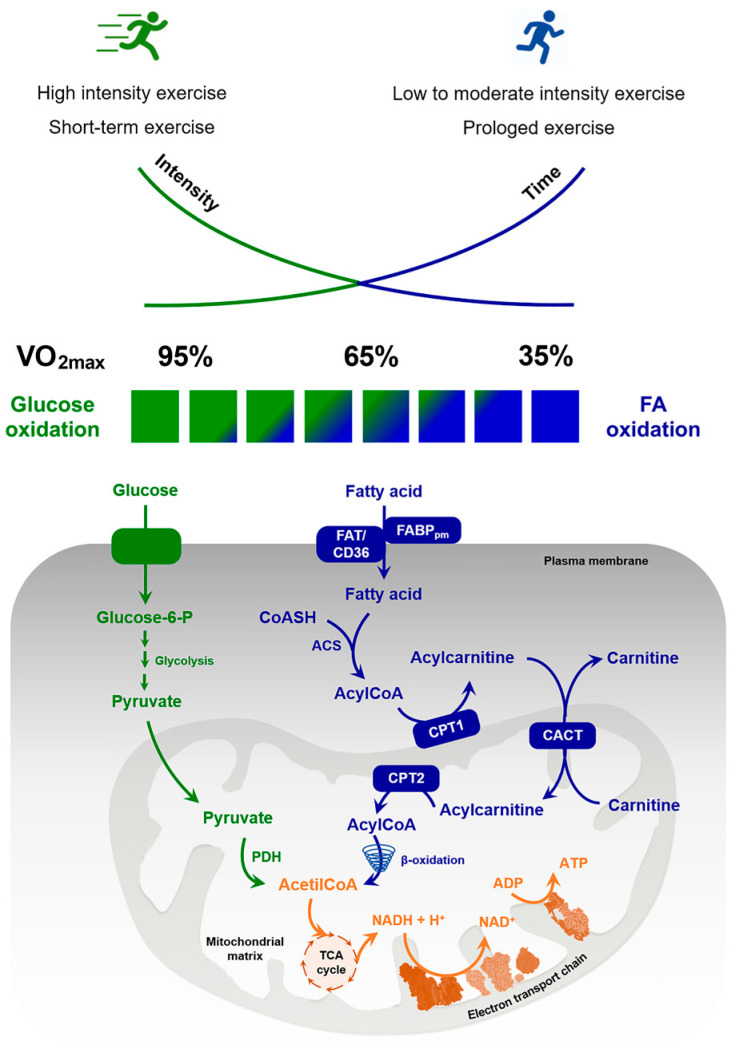
“The substrate used to derive energy during exercise depends on the duration and intensity of the latter: glucose utilization is greater during high exercise intensity, while FAs oxidation increases during moderate exercise intensity [21,22].”
BackgroundTriglyceride Metabolism in the Liver
Alves‐Bezerra, M., & Cohen, D. E. (2017) · Comprehensive Physiology · doi:10.1002/cphy.c170012 · Cited by 1,016
The Biochemistry and Physiology of Mitochondrial Fatty Acid β-Oxidation and Its Genetic Disorders
Houten, S. M., Violante, S., Ventura, F. V., & Wanders, R. J. A. (2016) · Annual Review of Physiology · doi:10.1146/annurev-physiol-021115-105045 · Cited by 920 · cited 1×
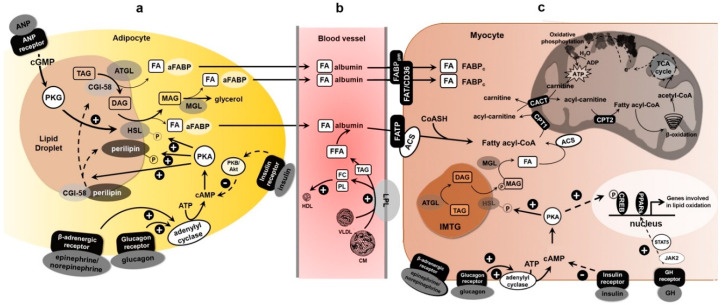
“Acyl carnitine is transported through the mitochondrial inner membrane in exchange for a free carnitine molecule by a translocase (CACT) and is reconverted to acyl-CoA by CPT2 inside the mitochondrion for oxidation [94] (Figure 1c).”
BackgroundThe effects of increasing exercise intensity on muscle fuel utilisation in humans
van Loon, L. J. C., Greenhaff, P. L., Constantin‐Teodosiu, D., Saris, W. H. M., & Wagenmakers, A. J. M. (2001) · The Journal of Physiology · doi:10.1111/j.1469-7793.2001.00295.x · Cited by 897 · cited 4×
“Specifically, the depletion of IMTG of type I muscle fibers is higher than that of type II muscle fibers, since type I fibers contain approximately twice the IMTG of type II fibers [61,90].”
BackgroundInfluential
Research works printed but not linked: 1
- Marriott B.M. Food Components to Enhance Performance: An Evaluation of Potential Performance-Enhancing Food Components for Operational Rations National Academy Press Washington, DC, USA 1994 24967488
Cited by
Items 201–236 of 236
Wang, Y., Han, Y., Cheng, Z., Fan, Y., & Wang, H. (2026) · Frontiers in Physiology · doi:10.3389/fphys.2025.1721312
“Lower hepatic and potentially lower muscle glycogen stores may also shift the metabolic preference toward fat utilization during the initial stages of exercise (Muscella et al., 2020).”
Schalt, A., Coker, R. H., Gunga, H., Kienast, C., Mascarell-Maricic, L., & Steinach, M. (2026) · Frontiers in Nutrition · doi:10.3389/fnut.2025.1691771
“The effect of cold environments on substrate metabolism during prolonged exercise, however, is less certain (62).”
RSK2 facilitates beige fat formation through thermogenic and glycolytic pathways
Cai, Y., Chen, J., He, L.-F., Xu, Y., Rui-qi, Y., & Yang, Z.-C. (2026) · Journal of Thermal Biology · doi:10.1016/j.jtherbio.2026.104389
Li, B., Yiwei, W., Huang, C., & Shi, Y. (2026) · Medicine · doi:10.1097/md.0000000000047334
“Faster walking speed likely improves cardiorespiratory fitness and nutrient transport (including iron), [32] while physical activity beneficially regulates metabolism, iron absorption, and reduces markers [33–36] – key in IDA.”
Wu, P., Wang, Z., Li, K., Gao, Y., Yang, J., Wang, J., Shan, C., Guo, Q., Yang, H., Wang, J., et al. (2026) · PLoS ONE · doi:10.1371/journal.pone.0341129
Correlation between human composition analysis and risk of dyslipidemia in health examination
Han, L., Feng, Y. A., & Zhang, Y. (2026) · BMC Cardiovascular Disorders · doi:10.1186/s12872-026-05646-7
“…skeletal muscle: (1) Muscle contraction activates lipoprotein lipase (LPL), accelerating the hydrolysis of very-low-density lipoprotein (VLDL) and chylomicrons [17]; (2) Muscle tissue enhances fatty acid oxidation capacity through the AMPK/SIRT1 pathway, reducing circulating free fatty acids [18].”
Walking handball as an exercise alternative to conventional walking and recreational team handball
Martins, R., Krustrup, P., Castagna, C., Mohr, M., Teixeira, J. M. M., Carneiro, I., & Póvoas, S. C. A. (2026) · Frontiers in Sports and Active Living · doi:10.3389/fspor.2026.1784474
“One potential mechanism underlying these adaptations is the predominance of fat oxidation during moderate intensity exercise (43, 44), which has been linked to favourable metabolic changes, that may be linked to improvements in VO 2max (45).”
Morrissey, M. C., Szymanski, M. R., Filep, E. M., Langan, S. P., Ormsbee, M. J., Lee, E. C., & Casa, D. J. (2026) · European Journal of Sport Science · doi:10.1002/ejsc.70162
“If exercise is performed at a low to moderate intensity for a longer duration, fatty acids become the main source of energy and can be derived from multiple sources such as the muscle, liver, or white adipose tissue (Muscella et al. 2020; Stern et al. 2016; Laurens et al. 2020).”
Akar, E. A. (2022) · theses.fr (ABES) · doi:10.70675/a7b15e3fz84e7z4915z9447zc112181e06e4
Exercise-induced protein lactylation: From molecular mechanisms to precision health applications
Chen, W., Meng, Y., Zhong, Q., & Shi, R. (2026) · iScience · doi:10.1016/j.isci.2026.115661
“55 Studies on lactylation provide new insights into the regulation of lipid metabolism by exercise.”
Abassi, W., Ouerghi, N., Jabbour, G., Feki, M., Bouassida, A., Deikus, M., Vveinhardt, J., & Muscella, A. (2026) · Sports · doi:10.3390/sports14040149
“…effective than moderate-intensity training in enhancing the secretion of catecholamines, such as epinephrine [53], norepinephrine [54], and growth hormone [55], which in turn stimulate lipolysis [56,57] and promote greater fat oxidation [58], ultimately contributing to significant weight reduction.”
Self-citationKasmita, K., Tasrif, N., Huda, N., Santi, T. D., & Gusnita, W. (2026) · Current Research in Nutrition and Food Science Journal · doi:10.12944/crnfsj.14.1.30
Mudjanarko, S. W., Irawati, A., Leoni, J., & Tinduh, D. (2026) · Biomedical Human Kinetics · doi:10.2478/bhk-2026-0012
“American Diabetes Association recommends physical activity more than 150 min/week and dietary intervention for T2DM (Amanat et al., 2020; Muscella et al., 2020).”
Lipid Profiles in Elite and Collegiate Athletes: A Scoping Review
Farrington, L., Key, C., Denton, Z., van den Anker, S., Vopat, B. G., & Vopat, L. (2026) · Sports Health A Multidisciplinary Approach · doi:10.1177/19417381261442594
Liu, H., Hu, G., & Ma, X. (2026) · Frontiers in Nutrition · doi:10.3389/fnut.2026.1816555
Acute Triglyceride Response to 60-Minute Jogging Exercise Among Community-Dwelling Adults in Ternate
Rizal, F., Nikma, N., & Khondowa, V. D. (2026) · Jurnal Kesehatan Komunitas Indonesia · doi:10.58545/jkki.v6i1.720
Gimeno, J. D. M., Nebot, J. M., Jerez, A. R., Casal, A. I., Serna, J. R., & Sorribes, L. M. (2026) · Sport Sciences for Health · doi:10.1007/s11332-026-01760-3
“In addition, as an adap-tative response during endurance training, the activities of β-oxidation enzymes, the tricarboxylic acid cycle and the electron transport system increase [12, 13].”
Wei, T., Zhou, C., You, J., Sun, Y., & Zhang, Q. (2026) · Journal of Cardiovascular Translational Research · doi:10.1007/s12265-026-10781-9
“…exercise, adrenergic stimulation activates hormone-sensitive lipase (HSL), adipose triglyceride lipase (ATGL), and monoacylglycerol lipase (MGL) via a protein kinase A (PKA)-dependent signaling pathway, thereby accelerating triglyceride breakdown and enhancing fatty acid oxidation (FAO) [ 11, 24].”
Ma, J., Zhang, H., Jiao, J., Su, M., Zhao, J., Liu, D., Wen, Q., Wang, J., Wang, J., Duan, W., et al. (2026) · Cell Communication and Signaling · doi:10.1186/s12964-026-02972-3
Shimizu, Y., Oyama, A., Noguchi, Y., Matsuu‐Matsuyama, M., Hamada, K., Kawashiri, S., Yamanashi, H., Nakamichi, S., Nagata, Y., Maeda, T., et al. (2026) · Journal of Vascular Diseases · doi:10.3390/jvd5030027
Zhang, R., Jin, A., Fan, X., Li, F., Feng, Y., Zeng, L., Wang, J., Fan, N., Niu, L., & Liu, D. (2026) · Translational Vision Science & Technology · doi:10.1167/tvst.15.6.24
“31 Accordingly, we conducted mediation analyses to examine whether systemic inflammatory status or metabolic biomarkers mediated the associations between adherence to MVPA guidelines ( ≥ 150 vs. 150 min/week) and the risk of four common ocular diseases.”
Yajima, K., Maimaituxun, G., Murakami, T., Mitsuhashi, S., Watanabe, K., Nishiyasu, T., & Fujii, N. (2026) · Journal of Applied Physiology · doi:10.1152/japplphysiol.01017.2025
Lackner, S., Kärkkäinen, O. K., Mörkl, S., Müller, W., Fürhapter-Rieger, A., Hanhineva, K., & Holasek, S. J. (2026) · Experimental Physiology · doi:10.1113/ep092957
Hormonal Regulation and metabolic response during exercise
Das, S., Halder, S., Prasad, B., Hossen, S. K., Das, M., & Tiwari, U. (2026) · PAIN JOINTS SPINE · doi:10.1922/pjs.16.5s.2026.736
Phucharoenrak, P., Praengam, K., & Trachootham, D. (2026) · Food Science & Nutrition · doi:10.1002/fsn3.72108
“Although such effects are commonly observed during exercise and beneficial for maintaining blood lipid levels and body weight (Muscella et al. 2020), functional food components that operate through similar mechanisms are still not well established.”
Say, Y., Kow, A. S. F., Leong, K.-A. Z. M., Ng, H. W., Lee, K. J., Arujunan, T., Letchumanan, G., & Chook, J. B. (2026) · Research Square · doi:10.21203/rs.3.rs-10443262/v1
Mitrovic, M., Horakova, O., Riecan, M., Kalendová, V., Cajka, T., Rossmeislova, L., Kuda, O., & Rossmeisl, M. (2026) · Experimental Physiology · doi:10.1113/ep093561
Miles, E. E., Hulton, A. T., Jeary, C., Li, L., Fielding, B., Zaheer, U., MANDERS, R. J. F., Stratton, E. K., Walewska, R. J., Iyengar, S., et al. (2026) · medRxiv · doi:10.64898/2026.07.31.26359397
“Specifically, exercise induces muscle lipoprotein lipase (LPL) mRNA, protein mass and enzyme activity (Sarzynski et al., 2015, Seip et al., 1995, Muscella et al., 2020).”
Han, X., Jin, X., Han, Z., Song, J., Li, X., Wang, B., & Sun, M. D. (2026) · Food Bioscience · doi:10.1016/j.fbio.2026.109650
Heart-type fatty acid mediated lipid signaling and metabolic remodeling in coronary heart disease
Gan, L., Gao, J., & Shi, H. (2026) · Cellular Signalling · doi:10.1016/j.cellsig.2026.112796
Costa, J. G., Mariano, I. M., Cunha, A. C. R., Silva, J. C., Gonçalves, L. F., Rodrigues, M. D. L., Tavares, J. B., Carrijo, V. H. V., Amaral, A. L., & Puga, G. M. (2026) · International Journal of Environmental Research and Public Health · doi:10.3390/ijerph23091120
杜金蝉, Zhang, Z., Han, J., Tian, S., Chang, M., Chen, W., & Liu, Y. (2026) · American Journal of Physiology-Endocrinology and Metabolism · doi:10.1152/ajpendo.00059.2026
Бобровник, В. І., Puhachov, D. O., Ткаченко, М. Л., & Коновал, Ю. М. (2026) · Scientific Journal of National Pedagogical Dragomanov University Series 15 Scientific and pedagogical problems of physical culture (physical culture and sports) · doi:10.31392/udu-nc.series15.2026.09(209).02
Why sustained, high-intensity fat-powered endurance rarely evolves in animals
Müller, M. S., & McWilliams, S. R. (2026) · Journal of Experimental Biology · doi:10.1242/jeb.252211
Moderators of metabolic threshold adaptations: a systematic review and meta-analysis
Perić, R., Nikolovski, Z., Vrdoljak, D., Ivišić, A. K., Chávez-Guevara, I. A., Vriese, J., & Marini, C. F. (2026) · PeerJ · doi:10.7717/peerj.21806
“Subtle supra-threshold stimuli allow time-in-zone near the metabolic boundary, whereas maximal stimuli provide concentrated metabolic flux required for rapid molecular remodelling and improved lactate shuttling ( Stöggl & Sperlich, 2015 ; Muscella et al., 2020 ).”
InfluentialFan, D., Zhai, W., Zhang, Q., Li, J., Wang, Y., & Sun, L. (2026) · Journal of Alzheimer s Disease · doi:10.1177/13872877261499707
Metadata
- Authors
- Muscella, A., Stefàno, E., Lunetti, P., Capobianco, L., & Marsigliante, S.
- Affiliations
- University of Salento (IT)
- Corresponding author
- Muscella, Antonella
- Lunetti, Paola
- Venue
- Biomolecules
- Publisher
- MDPI AG
- Published
- 2020-12-21
- Volume
- 10
- Issue
- 12
- Pages
- 1699
- ISSN
- 2218-273X (ISSN-L)
- PMC
- PMC7767423
- OpenAlex
- W3114836706
- Cited by
- 237
- References
- 228
- Citations by year
- 2026: 50 · 2025: 67 · 2024: 51 · 2023: 35 · 2022: 26 · 2021: 7 · 2020: 1
- FWCI
- 2.20
- Type
- journal article
- Language
- en
- Open access
- gold
- doi.org
- Licence
- Locations
- Biomolecules (publishedVersion, cc-by)
- PubMed Central (publishedVersion, cc-by)
- PubMed (publishedVersion)
- DOAJ (DOAJ: Directory of Open Access Journals) (submittedVersion, cc-by-sa)
- AIRUS (submittedVersion)
- Funders
- Ministero dell’Istruzione, dell’Università e della Ricerca (2017PAB8EM_003)
- Topics
- Health Sciences › Medicine › Physiology (medical) › Adipose Tissue and Metabolism
- Health Sciences › Nursing › Nutrition and Dietetics › Muscle metabolism and nutrition
- Health Sciences › Medicine › Physiology (medical) › Cardiovascular and exercise physiology
- Keywords
- fat metabolism, aerobic exercise, lipid metabolism, fatty acid oxidation, lipolysis, fatty acid uptake, mitochondrial fatty acid transport, hormonal regulation, skeletal muscle, adipocytes, physical activity
- MeSH terms
- Adipose Tissue, Blood Glucose, Sterol Esterase, Endocrine System, Fatty Acids, Humans, Lipolysis, Oxygen, Temperature, Triglycerides, Exercise, Muscle, Skeletal, Lipid Metabolism, Mitochondrial Membranes
About these checks
Registry, retraction, Cites and statistics results are computed, not judged, with one exception: a printed reference that no index lists is read once by a model before it counts as a citation error. Claims are extracted by a model and kept only when their quote appears verbatim in the text; each cited source is then checked, with a model’s help, for whether it says what the claim relies on. Those verdicts can be wrong — read the claim’s quote and the cited source before relying on one.
Statistics and arithmetic are recomputed, not judged.
Confidence bands are shown only for fields calibrated on our annotated test set. None is calibrated yet, so no band is shown.
What counts as a claim ›How we measure confidence ›How we check this ›
Are you an author, or do you see a problem with this page? Request a review
Data sources
Bibliographic data: Semantic Scholar, OpenAlex, Crossref.
Contains information from the Semantic Scholar Academic Graph Datasets, made available under the ODC Attribution License (ODC-BY 1.0).
Semantic Scholar’s data is described in: Kinney, R., et al. (2023). The Semantic Scholar Open Data Platform. arXiv:2301.10140.
