

The Regulation of Fat Metabolism during Aerobic Exercise
Open accessThe DOI matches its Crossref record; 226 of the 228 references it cites were found in a registry or an index.
Abstract
Since the lipid profile is altered by physical activity, the study of lipid metabolism is a remarkable element in understanding if and how physical activity affects the health of both professional athletes and sedentary subjects. Although not fully defined, it has become clear that resistance exercise uses fat as an energy source. The fatty acid oxidation rate is the result of the following processes: (a) triglycerides lipolysis, most abundant in fat adipocytes and intramuscular triacylglycerol (IMTG) stores, (b) fatty acid transport from blood plasma to muscle sarcoplasm, (c) availability and hydrolysis rate of intramuscular triglycerides, and (d) transport of fatty acids through the mitochondrial membrane. In this review, we report some studies concerning the relationship between exercise and the aforementioned processes also in light of hormonal controls and molecular regulations within fat and skeletal muscle cells.
Overview
The claims and statistics of this paper haven’t been checked yet.
Free: it reads the open-access text and checks the first 5 claims that cite a source we can check. Create a free account to check every claim.
Integrity signals
Registry
Cites
Statistics
Figures
Verification
Claims the paper makes
The claims and statistics of this paper haven’t been checked yet.
Free: it reads the open-access text and checks the first 5 claims that cite a source we can check. Create a free account to check every claim.
Claims other papers make about this one
Each is checked against this paper’s own text: does it say what the citing paper says it does?
The source backs part of the claim, not all of it — or backs it for a different population, condition or comparison.
In the citing paper
“At low intensities (<40% VO2max), fat is the predominant substrate, particularly during prolonged exercise (>90 min) when glycogen stores are depleted.”
From Isocaloric High-Intensity Interval and Circuit Training Increases Excess Post-Exercise Oxygen Consumption and Lipid Oxidation Compared to Moderate-Intensity Continuous Training (2025) · cites this paper as [9]
Experimental — accuracy not yet measuredThe source backs part of the claim, not all of it — or backs it for a different population, condition or comparison.
In the citing paper
“At higher intensities (≥70% VO2max), carbohydrate becomes the dominant energy source due to the rapid ATP demand.”
From Isocaloric High-Intensity Interval and Circuit Training Increases Excess Post-Exercise Oxygen Consumption and Lipid Oxidation Compared to Moderate-Intensity Continuous Training (2025) · cites this paper as [9]
Experimental — accuracy not yet measuredThe source backs part of the claim, not all of it — or backs it for a different population, condition or comparison.
In the citing paper
“At moderate intensities (40–65% VO2max), carbohydrate and fat contributions are more balanced, with fat oxidation peaking near the upper limit of this range.”
From Isocaloric High-Intensity Interval and Circuit Training Increases Excess Post-Exercise Oxygen Consumption and Lipid Oxidation Compared to Moderate-Intensity Continuous Training (2025) · cites this paper as [9]
Experimental — accuracy not yet measuredThe source backs part of the claim, not all of it — or backs it for a different population, condition or comparison.
In the citing paper
“Importantly, individuals with greater aerobic capacity tend to shift the point of maximal fat oxidation to higher intensities.”
From Isocaloric High-Intensity Interval and Circuit Training Increases Excess Post-Exercise Oxygen Consumption and Lipid Oxidation Compared to Moderate-Intensity Continuous Training (2025) · cites this paper as [9]
Experimental — accuracy not yet measuredThe source backs part of the claim, not all of it — or backs it for a different population, condition or comparison.
In the citing paper
“This greater EPOC magnitude in HIIT and HICT aligns with findings from previous studies [9,10] that suggest that higher exercise intensities and reduced rest intervals significantly enhance post-exercise metabolic activity.”
From Isocaloric High-Intensity Interval and Circuit Training Increases Excess Post-Exercise Oxygen Consumption and Lipid Oxidation Compared to Moderate-Intensity Continuous Training (2025) · cites this paper as [9]
Experimental — accuracy not yet measured
3 more claims about this paper
Create a free account to see every claim other papers make about this one.
Self-check
Percentages, sums and reported differences re-computed from the paper’s own numbers.
The self-check needs the paper’s full text.
Citations
Cites
High density lipoprotein as a protective factor against coronary heart disease
Gordon, T., Castelli, W. P., Hjortland, M. C., Kannel, W. B., & Dawber, T. R. (1977) · The American Journal of Medicine · doi:10.1016/0002-9343(77)90874-9 · Cited by 5,059 · cited 1×
“High-density lipoprotein- cholesterol concentrations are inversely associated with risk for cardiovascular disease [32], thus exercise interventions are routinely prescribed to decrease the risk of cardio-metabolic complications by promoting an increase in HDL-C concentration [31,33–35].”
BackgroundFat Mobilization in Adipose Tissue Is Promoted by Adipose Triglyceride Lipase
Zimmermann, R., Strauss, J. G., Haemmerle, G., Schoiswohl, G., Birner-Gruenberger, R., Riederer, M., Lass, A., Neuberger, G., Eisenhaber, F., Hermetter, A., et al. (2004) · Science · doi:10.1126/science.1100747 · Cited by 2,116
Romijn, J. A., Coyle, E. F., Sidossis, L. S., Gastaldelli, A., Horowitz, J. F., Endert, E., & Wolfe, R. R. (1993) · American Journal of Physiology-Endocrinology and Metabolism · doi:10.1152/ajpendo.1993.265.3.e380 · Cited by 1,747 · cited 5×
“However, the significant quantity of FFA used during exercise comes solely from adipose tissue and muscle [17,19,20].”
BackgroundInfluentialThe Mitochondrial Carnitine Palmitoyltransferase System — From Concept to Molecular Analysis
McGarry, J. D., & Brown, N. F. (1997) · European Journal of Biochemistry · doi:10.1111/j.1432-1033.1997.00001.x · Cited by 1,616
Biochemical Adaptations in Muscle
Holloszy, J. O. (1967) · Journal of Biological Chemistry · doi:10.1016/s0021-9258(18)96046-1 · Cited by 1,517
A meta-analysis of physical activity in the prevention of coronary heart disease.
BERLIN, J. A., & COLDITZ, G. A. (1990) · American Journal of Epidemiology · doi:10.1093/oxfordjournals.aje.a115704 · Cited by 1,382
A general introduction to the biochemistry of mitochondrial fatty acid β‐oxidation
Houten, S. M., & Wanders, R. J. A. (2010) · Journal of Inherited Metabolic Disease · doi:10.1007/s10545-010-9061-2 · Cited by 1,020 · cited 1×
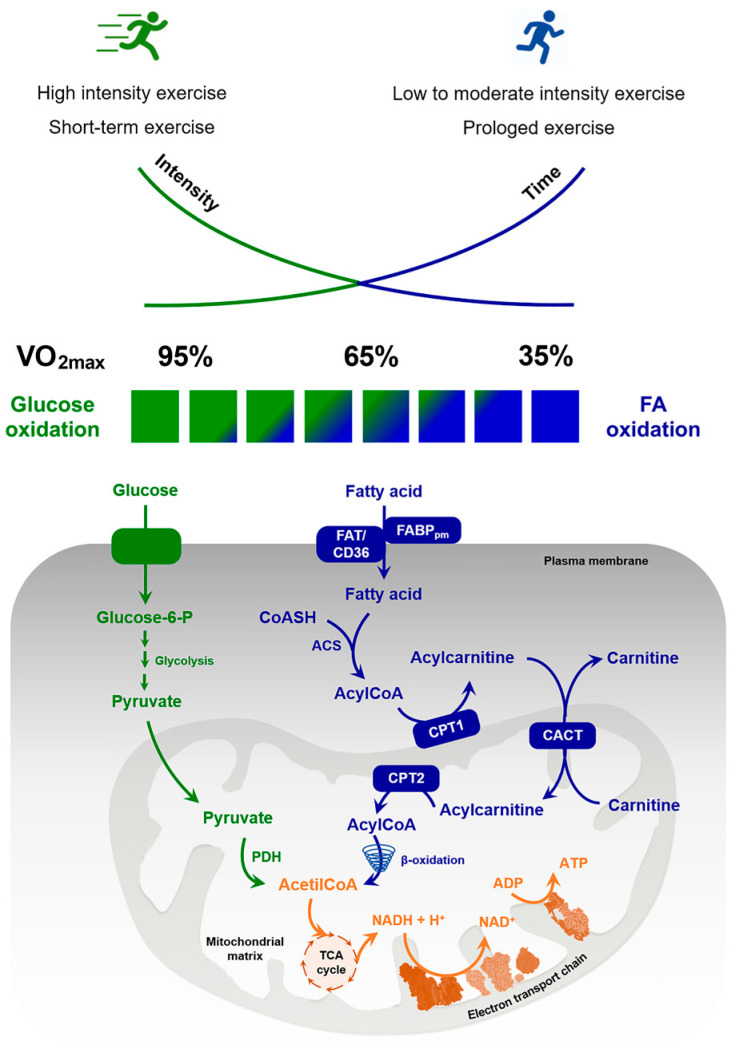
“The substrate used to derive energy during exercise depends on the duration and intensity of the latter: glucose utilization is greater during high exercise intensity, while FAs oxidation increases during moderate exercise intensity [21,22].”
BackgroundTriglyceride Metabolism in the Liver
Alves‐Bezerra, M., & Cohen, D. E. (2017) · Comprehensive Physiology · doi:10.1002/cphy.c170012 · Cited by 1,016
The Biochemistry and Physiology of Mitochondrial Fatty Acid β-Oxidation and Its Genetic Disorders
Houten, S. M., Violante, S., Ventura, F. V., & Wanders, R. J. A. (2016) · Annual Review of Physiology · doi:10.1146/annurev-physiol-021115-105045 · Cited by 920 · cited 1×
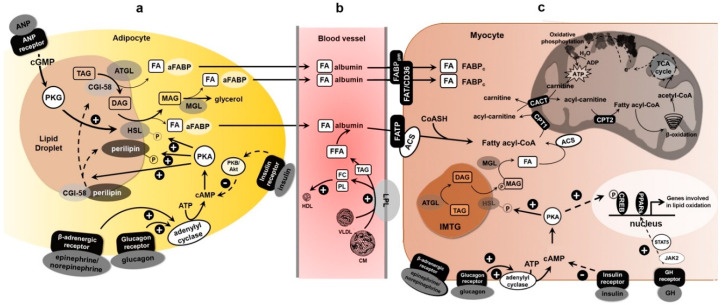
“Acyl carnitine is transported through the mitochondrial inner membrane in exchange for a free carnitine molecule by a translocase (CACT) and is reconverted to acyl-CoA by CPT2 inside the mitochondrion for oxidation [94] (Figure 1c).”
BackgroundThe effects of increasing exercise intensity on muscle fuel utilisation in humans
van Loon, L. J. C., Greenhaff, P. L., Constantin‐Teodosiu, D., Saris, W. H. M., & Wagenmakers, A. J. M. (2001) · The Journal of Physiology · doi:10.1111/j.1469-7793.2001.00295.x · Cited by 897 · cited 4×
“Specifically, the depletion of IMTG of type I muscle fibers is higher than that of type II muscle fibers, since type I fibers contain approximately twice the IMTG of type II fibers [61,90].”
BackgroundInfluential
Research works printed but not linked: 1
- Marriott B.M. Food Components to Enhance Performance: An Evaluation of Potential Performance-Enhancing Food Components for Operational Rations National Academy Press Washington, DC, USA 1994 24967488
Cited by
The impact of aerobic exercise on HDL quantity and quality: a narrative review
Franczyk, B., Gluba-Brzózka, A., Ciałkowska-Rysz, A., Ławiński, J., & Rysz, J. (2023) · International Journal of Molecular Sciences · doi:10.3390/ijms24054653 · Cited by 142
“Apart from being beneficial for physical health and the aging process, regular physical activity is also important for mental health [78].”
From Atherosclerotic Plaque to Myocardial Infarction—The Leading Cause of Coronary Artery Occlusion
Młynarska, E., Czarnik, W., Fularski, P., Hajdys, J., Majchrowicz, G., Stabrawa, M., Rysz, J., & Franczyk, B. (2024) · International Journal of Molecular Sciences · doi:10.3390/ijms25137295 · Cited by 192
“Regular physical activity, even when initiated in old age, improves quality of life and contributes to slowing the progression of atherosclerosis [169,170].”
BackgroundMiller, D. M., McCauley, K. F., & Dunham‐Snary, K. J. (2025) · Endocrinology Diabetes & Metabolism · doi:10.1002/edm2.70132 · Cited by 155
The role of lipid metabolism in osteoporosis: Clinical implication and cellular mechanism
Zhang, J., Hu, W., Zou, Z., Li, Y., Kang, F., Li, J., & Dong, S. (2023) · Genes & Diseases · doi:10.1016/j.gendis.2023.101122 · Cited by 128
“86 Fatty acids may be signaling candidates for regulating the transcription of target genes encoding proteins involved in muscle lipid metabolism.”
BackgroundLópez‐Ortiz, S., Pinto-Fraga, J., Valenzuela, P. L., Martín-Hernández, J., Seisdedos, M. M., García, Ó., Toschi, N., Giuliano, F. D., Garaci, F. G., Mercuri, N. B., et al. (2021) · International Journal of Molecular Sciences · doi:10.3390/ijms22062897 · Cited by 115
“During exercise, the FA transport by carnitine through the mitochondrial membrane is increased, regulating FA oxidation [160].”
BackgroundLiu, G., Li, Y., Liao, N., Shang, X., Xu, F., Yin, D., Shao, D., Jiang, C., & Shi, J. (2023) · The Science of The Total Environment · doi:10.1016/j.scitotenv.2023.164998 · Cited by 49
Pranoto, A., Cahyono, M. B. A., Yakobus, R., Izzatunnisa, N., Ramadhan, R. N., Rejeki, P. S., Miftahussurur, M., Effendi, W. I., Wungu, C. D. K., & Yamaoka, Y. (2023) · Sports · doi:10.3390/sports11030054 · Cited by 60
Physical exercise in kidney disease: A commonly undervalued treatment modality
Kanbay, M., Çöpür, S., Yıldız, A. B., Tanrıöver, C., Mallamaci, F., & Zoccali, C. (2023) · European Journal of Clinical Investigation · doi:10.1111/eci.14105 · Cited by 54
“67,68 These changes are observed in healthy subjects and patients with ischaemic heart disease, diabetes mellitus or CKD. 69 Moderate-intensity exercise increases ApoA1 levels and decreases ApoB levels.”
BackgroundRejeki, P. S., Pranoto, A., Rahmanto, I., Izzatunnisa, N., Yosika, G. F., Hernaningsih, Y., Wungu, C. D. K., & Halim, S. (2023) · Sports · doi:10.3390/sports11040090 · Cited by 59
“Conditions in aerobic training that require high ATP will trigger the activation of the AMPK pathway which acts to conserve ATP by inhibiting biosynthetic and anabolic pathways (glycogen and protein synthesis), as well as stimulating catabolic pathways by increasing glucose transport and fat metabolism [38].”
BackgroundLiang, Y., Kaushal, D., & Wilson, R. B. (2024) · International Journal of Molecular Sciences · doi:10.3390/ijms25147943 · Cited by 45
Miro, C., Nappi, A., Sagliocchi, S., Cicco, E. D., Murolo, M., Torabinejad, S., Acampora, L., Pastore, A., Luciano, P., Civita, E. L., et al. (2023) · International Journal of Molecular Sciences · doi:10.3390/ijms241512074 · Cited by 35
Chávez-Guevara, I. A., Hernández‐Torres, R. P., González-Rodríguez, E., Ramos‐Jiménez, A., & Amaro‐Gahete, F. J. (2022) · European Journal of Applied Physiology · doi:10.1007/s00421-022-04936-0 · Cited by 31
FAT/CD36 Participation in Human Skeletal Muscle Lipid Metabolism: A Systematic Review
Ramos‐Jiménez, A., Zavala-Lira, R. A., Moreno-Brito, V., & González-Rodríguez, E. (2022) · Journal of Clinical Medicine · doi:10.3390/jcm12010318 · Cited by 34
“On this topic, two thematic reviews have recently been published, one on the FAT/CD36 functions in lipid metabolism and signaling [10] and the other on regulating fat metabolism during aerobic exercise [74].”
BackgroundClemente‐Suárez, V. J., Rubio-Zarapuz, A., Belinchón-deMiguel, P., Beltrán-Velasco, A. I., Martín-Rodríguez, A., & Tornero-Aguilera, J. F. (2024) · Cells · doi:10.3390/cells13231940 · Cited by 31
Zaidi, N. E., Shazali, N. A. H., Leow, T. C., Osman, M. A., Ibrahim, K., Cheng, W.-H., Lai, K., & Rahman, N. M. A. N. A. (2022) · Cells · doi:10.3390/cells11223556 · Cited by 25
Kdm2a inhibition in skeletal muscle improves metabolic flexibility in obesity
Wang, Y., Xie, H., Liu, Q., Wang, N., Luo, X., Sun, F., Zhu, J., Dong, R., Wang, Y., Gao, J. L., et al. (2025) · Nature Metabolism · doi:10.1038/s42255-024-01210-9 · Cited by 29
“Specifically, short-term exercise consumes considerable glucose and glycogen, while long endurance and resistance exercise require the use of fatty acid oxidation for energy demand 52–54 .”
Nomikos, T., Methenitis, S., & Panagiotakos, D. B. (2022) · Lipids in Health and Disease · doi:10.1186/s12944-022-01692-0 · Cited by 23
Cheng, Y.-C., Lee, C., Lee, M., Hsu, H., Lin, J., Huang, C., & Watanabe, K. (2023) · Physiological Reports · doi:10.14814/phy2.15835 · Cited by 30
“When the exercise intensity increases, the source of energy production shifts from fatty acid oxidation to the glucose oxidation (Muscella et al., 2020).”
BackgroundPGC-1α activation boosts exercise-dependent cellular response in the skeletal muscle
Mozaffaritabar, S., Koltai, E., Zhou, L., Bori, Z., Kolonics, A., Kujach, S., Gu, Y., Koike, A., Boros, A., & Radak, Z. O. (2024) · Journal of Physiology and Biochemistry · doi:10.1007/s13105-024-01006-1 · Cited by 27
“During rest and moderate exercise intensity, lipids cover most of the energy needed to maintain homeostasis and physical activity [2].”
BackgroundZhu, X., Jiao, J., Liu, Y., Li, H., & Zhang, H. (2024) · Journal of Sports Science and Medicine · doi:10.52082/jssm.2024.559 · Cited by 21
“The impact of HIIT on fat reduction may be closely related to its influence on lipolytic hormone secretion: exercise acts as a primary trigger for their release which, in turn, induces higher rates of lipid breakdown (Muscella et al., 2020).”
BackgroundExerkines, Nutrition, and Systemic Metabolism
Watkins, B. A., Smith, B. J., Volpe, S. L., & Shen, C.-L. (2024) · Nutrients · doi:10.3390/nu16030410 · Cited by 18
“Under this physiological condition, metabolic flux is increased in pathways, as is fatty acid transport from adipose, and muscle triglyceride breakdown, liberating fatty acids [22] that are activated and transported through the mitochondrial membrane by carnitine [23].”
BackgroundSex differences in white adipose tissue expansion: emerging molecular mechanisms
Bond, S. T., Calkin, A. C., & Drew, B. G. (2021) · Clinical Science · doi:10.1042/cs20210086 · Cited by 18
Yang, Y., Wang, Y., Shan, H., Zheng, Y., Xuan, Z., Hu, J., Wei, M., Wang, Z., Liu, Q., & Li, Z. (2022) · Foods · doi:10.3390/foods11030381 · Cited by 18
“Intramuscular fat deposition, fatty acid content and type make up the main factors that affect the quality of goat meat; intramuscular fat (IMF) has a positive effect on the sensory quality traits of meat, including the flavor, juiciness, and tenderness [10].”
BackgroundFollistatin‐like 1 is a myokine regulating lipid mobilization during endurance exercise and recovery
Nam, J. S., Park, S., Ahn, C. W., Cho, E., Kim, H., & Kim, Y.-S. (2023) · Obesity · doi:10.1002/oby.23949 · Cited by 20
“Epi, GH, and ANP, exercise-induced hormones that stimulate lipolysis to maintain energy homeostasis during endurance exercise [23], were measured.”
BackgroundMethodInfluentialLiu, Y., Li, Y., Cheng, B., Feng, S., Zhu, X., Chen, W., & Zhang, H. (2022) · Diabetology & Metabolic Syndrome · doi:10.1186/s13098-022-00834-9 · Cited by 14
“Aerobic exercise mediates moderate secretion, which enhances lipolysis through β-AR of adipocytes to meet fat consumption during exercise, while high-intensity exercise induces excessive secretion of catecholamine and inhibits lipolysis through a negative feedback mechanism involving α-AR [49, 50].”
BackgroundSardinha, L. B., Magalhães, J. P., Santos, D. A., & Hetherington‐Rauth, M. (2022) · European Journal of Clinical Nutrition · doi:10.1038/s41430-022-01242-y · Cited by 19
“From a physiological standpoint, exercise performed at higher intensities may promote greater fat usage, which could be related to mitochondrial quantitative and qualitative adaptations, such as superior increments in skeletal muscle mitochondrial volume and density and intrinsic mitochondrial fatty acid oxidation [15…”
BackgroundZhu, X., Chen, W., Pinho, R. A., & Thirupathi, A. (2025) · Frontiers in Endocrinology · doi:10.3389/fendo.2025.1598419 · Cited by 21
Penggalih, M. H. S. T., Sutanto, Y. S., Taslim, N. A., Syahputra, R. A., Hardinsyah, H., Tjandrawinata, R. R., & Nurkolis, F. (2025) · Frontiers in Nutrition · doi:10.3389/fnut.2025.1611440 · Cited by 16
“Changes in metabolic pathways, such as shifts toward fatty acid metabolism and reduced glycolysis, are indicative of long-term adaptations to exercise that improve energy efficiency (60–63).”
Wang, M., & Yu, L. (2025) · Frontiers in Nutrition · doi:10.3389/fnut.2025.1585922 · Cited by 15
Wang, L., Wang, L., Liu, C., Feng, D., Huang, J., Jin, Z., Ma, F., Xu, J., Xu, Y., Zhang, M., et al. (2025) · Food Chemistry X · doi:10.1016/j.fochx.2025.102257 · Cited by 19
Wang, A., Zhang, H., Liu, J., Yan, Z., Sun, Y., Su, W., Yu, J., Mi, J., & Zhao, L. (2023) · International Journal of Environmental Research and Public Health · doi:10.3390/ijerph20043329 · Cited by 15
“Exercise regulates the rate of FA oxidation [27], as evidenced by acylcarnitine and FA accumulation immediately after exercise, accompanied by a transient accumulation of various complex lipids [28].”
BackgroundHoseini, Z., Behpour, N., & Hoseini, R. (2023) · Diabetology & Metabolic Syndrome · doi:10.1186/s13098-023-01158-y · Cited by 14
“Additionally, AT has been shown to increase the oxidation of adipose tissue [39, 40] and intramuscular triacyl-glycerols by increasing the catecholamine response [41, 42] and enhancing the ability of skeletal muscles to use fatty acids through increased adipose tissue and muscle blood flow [42, 43].”
BackgroundGasser, B. A., Dössegger, A., Giraud, M., & Flück, M. (2024) · Genes · doi:10.3390/genes15070918 · Cited by 14
“Therefore, considerable inter-individual variability can be observed, which relates to the intensity of exercise [12], as well as the capacity of biochemical pathways that determine the rate of local aerobic metabolism [11,13] and efflux rates of lactate from skeletal muscle [14].”
BackgroundCheng, B., Du, J., Tian, S., Zhang, Z., Chen, W., & Liu, Y. (2024) · Lipids in Health and Disease · doi:10.1186/s12944-024-02397-2 · Cited by 12
Acculturation, Physical Activity, and Metabolic Syndrome in Asian American Adults
Sheng, J., Abshire, D. A., Heiney, S. P., & Wirth, M. D. (2022) · Journal of Transcultural Nursing · doi:10.1177/10436596221114150 · Cited by 13
“Regular PA can reduce weight, improve blood pressure (BP), raise high-density lipoprotein (HDL), and decrease triglycerides (Abdelbasset et al., 2019; Muscella et al., 2020; Pucci et al., 2017).”
BackgroundShirkhani, S., Marandi, S. M., Nasr‐Esfahani, M. H., & Kim, S. K. (2023) · Diabetes & Metabolism Journal · doi:10.4093/dmj.2022.0265 · Cited by 15
“This would be associated with a reduction in entering FAs into the hepatic cells since long-term EX increases the consumption of FAs as the main energy source [39].”
Nutritional considerations for vegetarian athletes: A narrative review
Luna, F., Rossi, E. V., & Arrieta, E. M. (2024) · Human Nutrition & Metabolism · doi:10.1016/j.hnm.2024.200267 · Cited by 16
Katz, D. H., Lindholm, M. E., & Ashley, E. A. (2024) · Physiology · doi:10.1152/physiol.00024.2024 · Cited by 17
Wei, M., Fan, Y., Lu, Z., Niu, X., & Wu, H. (2022) · Frontiers in Physiology · doi:10.3389/fphys.2022.994818 · Cited by 11
Nogueira‐Ferreira, R., Santos, I., Ferreira, R. M., Fontoura, D., Sousa-Mendes, C., Falcão‐Pires, I., Lourenço, A. P., Leite-Moreira, A. F., Duarte, I. F., & Moreira‐Gonçalves, D. (2023) · Biochimica et Biophysica Acta (BBA) - Molecular Basis of Disease · doi:10.1016/j.bbadis.2023.166709 · Cited by 15
Carrillo‐Arango, H. A., Atencio‐Osorio, M. A., López‐Álban, C. A., Nava‐González, E. J., Correa‐Rodríguez, M., Izquierdo, M., & Ramírez‐Vélez, R. (2023) · Physiological Reports · doi:10.14814/phy2.15555 · Cited by 10
“…it has been proposed that fat oxidation in the muscle is increased due to the stimulation of lipolysis in adipose tissue, an augmented muscle blood flow and, possibly, enhanced translocation of the lipoprotein receptor CD36 into the cell membrane (Dyck et al., 1996; Muscella et al., 2020).”
BackgroundFernández-Sánchez, J., Trujillo-Colmena, D., Rodríguez-Castaño, A., Pérez, A. M. L., Coso, J. D., Casado, A., & Collado‐Mateo, D. (2024) · Nutrients · doi:10.3390/nu16020207 · Cited by 15
“Considering that insulin inhibits lipolysis and fat oxidation [21,22], this mechanism may explain why the higher doses of caffeine were ineffective in enhancing fat oxidation during fed-state exercise.”
BackgroundGenetics of Exercise and Diet-Induced Fat Loss Efficiency: A Systematic Review
Bojarczuk, A., Egorova, E. S., Dzitkowska-Zabielska, M., & Ahmetov, I. I. (2024) · Journal of Sports Science and Medicine · doi:10.52082/jssm.2024.236 · Cited by 15
“FAs derived from adipose tissue, muscle lipid droplets, and dietary sources constitute the primary energy substrate during exercise within the intensity range of 45% to 65% of the maximal oxygen uptake (VO 2 max) (Purdom et al., 2018; Muscella et al., 2020).”
BackgroundLöfberg, I. E., Karppinen, J. E., Laatikainen‐Raussi, I., Ihalainen, J. K., Lehti, M., Hackney, A. C., & Taipale, R. S. (2025) · Medicine & Science in Sports & Exercise · doi:10.1249/mss.0000000000003676 · Cited by 11
“Although the graded exercise protocols may be advantageous for detecting PFO by using multiple gradually increasing intensities, the short duration of the test (i.e., stage duration) could be a potential limiting factor in achieving maximal lipolysis (52).”
Barca, L. (2025) · Healthcare · doi:10.3390/healthcare13161960 · Cited by 12
“The effects of exercise on metabolic functions are multifaceted, encompassing improvements in insulin sensitivity [38], alterations in adipose tissue metabolism [39], enhanced muscle substrate utilization, and favorable changes in energy balance.”
Exercise, Epigenetics, and Body Composition: Molecular Connections
Williams, A., Wadsworth, D. D., & Geetha, T. (2025) · Cells · doi:10.3390/cells14191553 · Cited by 14
“Exercise promotes FM reduction by enhanced energy expenditure and lipid metabolism [115].”
Jin, A., Kan, Z., Tan, Q., Shao, J., Han, Q., Chang, Y., An, N., & Yi, M. (2023) · Journal of the International Society of Sports Nutrition · doi:10.1080/15502783.2023.2254741 · Cited by 12
“Endogenous triacylglycerol is an important source of fuel for endurance exercise, and its oxidation progressively increases during exercise [5,6].”
BackgroundHoseini, Z., Behpour, N., & Hoseini, R. (2024) · Scientific Reports · doi:10.1038/s41598-024-57023-z · Cited by 12
“Furthermore, recent studies have suggested that AT may also activate LXRs through direct interaction with certain fatty acids and other molecules involved in lipid metabolism 40 .”
Yan, Z., Pu, X., Cai, Y., Chang, X., Liu, Z., & Liu, R. (2025) · Biogerontology · doi:10.1007/s10522-025-10185-3 · Cited by 11
“In fact, the various indicators within LE8 are complementary; increasing PA will also enhance scores in other CVH components, such as maintaining normal lipid levels (Muscella et al. 2020), great BP (Palatini 1988), and improved sleep quality (Sullivan Bisson et al. 2019).”
Ouali, E. M. E., Kartibou, J., Coso, J. D., Elmakhzen, B., Bouguenouch, L., Harane, S. E., Taïb, B., Weiss, K., Knechtle, B., Mesfioui, A., et al. (2024) · Genes · doi:10.3390/genes15040419 · Cited by 9
“However, the rate of oxidation of fatty acids during exercise is influenced by different variables: (i) the intensity and duration of physical effort; (ii) aerobic fitness; (iii) metabolic capacity; and (iv) the protein content necessary for the transport of fatty acids [6,7].”
BackgroundAnalysis of the 72-h ultramarathon using a predictive XG Boost model
Knechtle, B., Villiger, E., Weiss, K., Valero, D., Gajda, R., Scheer, V., de Lira, C. A. B., Braschler, L., Nikolaidis, P. Τ., Vancini, R. L., et al. (2024) · Sport Sciences for Health · doi:10.1007/s11332-024-01243-3 · Cited by 9
“Therefore, in long-duration races, the capacity to mobilize and efficiently use fat reserves may level the playing field, reducing the performance gap between men and women [30].”
Exercise modifies fatty acid perception and metabolism
Shanmugamprema, D., Muthuswamy, K., Ponnusamy, V., Subramanian, G., Vasanthakumar, K., Vasanth, K., & Selvakumar, S. (2023) · Acta Physiologica · doi:10.1111/apha.13968 · Cited by 10
Sari, D. R., Ramadhan, R. N., Agustin, D., Munir, M., Izzatunnisa, N., Susanto, J., Halim, S., Pranoto, A., & Rejeki, P. S. (2023) · Retos · doi:10.47197/retos.v51.101189 · Cited by 12
“This may be due to the increased release of hormones, such as catecholamines, glucagon, growth hormone, and cortisol, which stimulate lipolytic activity in adipocytes and intramuscular stores (Muscella et al, 2020).”
BackgroundRejeki, P. S., Pranoto, A., Widiatmaja, D. M., Utami, D. M., Izzatunnisa, N., Sugiharto, S., Lesmana, R., & Halim, S. (2024) · Sports · doi:10.3390/sports12050116 · Cited by 21
“During low-and mid-intensity aerobic exercise, the body increases fat usage for metabolism, while during high-intensity exercise, carbohydrates are used as the main energy source [61].”
BackgroundPark, D. Y., Lee, O., Lee, Y., Lee, C. G., & Kim, Y. S. (2024) · Journal of Obesity & Metabolic Syndrome · doi:10.7570/jomes24007 · Cited by 15
“Engagement in high-intensity physical activity increases mitochondrial density in muscles, facilitating intracellular fatty acid oxidation, 29 and high-intensity physical activity is associated with two-fold the energy consumption of moderate-intensity physical activity.”
BackgroundXu, R., Feng, J., Liang, C., Song, G., & Yan, Y. (2022) · HORMONES · doi:10.1007/s42000-022-00389-4 · Cited by 8
Ouali, E. M. E., Bosquet, L., Elgharbaoui, B., Laziri, F., Laher, I., Hackney, A. C., Ibrahimi, A., Taïb, B., Harane, S. E., Weiss, K., et al. (2023) · Frontiers in Physiology · doi:10.3389/fphys.2023.1256440 · Cited by 10
Serrano, Q. A., Garf, S. L., Martin, V., Colson, S. S., & Chevalier, N. (2024) · International Journal of Molecular Sciences · doi:10.3390/ijms25020883 · Cited by 8
“Secondly, PA increases lipolysis within the adipose tissue and reduces triglycerides [147,148].”
BackgroundEndurance in Long-Distance Swimming and the Use of Nutritional Aids
Miguel‐Ortega, Á., Calleja-González, J., & Mielgo‐Ayuso, J. (2024) · Nutrients · doi:10.3390/nu16223949 · Cited by 16
“Tendon and ligament tissue strength; the ability of the locomotor system to withstand these stresses is particularly crucial.”
Prehabilitation and Inflammation
Kammerer, T., Mahú, I., & Schier, R. (2025) · Annals of Nutrition and Metabolism · doi:10.1159/000545181 · Cited by 8
“Exercise is not only a profound modulator of lipid metabolism [45], it has a particularly potent effect on lowering the levels of pro-in fl ammatory and disease-driving ceramide species in circulation, promoting a myriad of immune-metabolic health bene fi ts [46].”
Bozbay, K., Çınar, V., Akbulut, T., Aydemir, İ., Yasul, Y., Aytaç, K. Y., Özkaya, A., Russo, L., Fusco, A., & Migliaccio, G. M. (2024) · Applied Sciences · doi:10.3390/app14167284 · Cited by 7
Jiao, Y., Cheng, Z., Lan, Z., Kan, S., & Du, Y. (2025) · International Journal of Rheumatic Diseases · doi:10.1111/1756-185x.70238 · Cited by 6
“Furthermore, appropriate PA supports vascular endothelial health [35], and optimizes lipid metabolism [36, 37], both of which collectively contribute to reducing gout risk.”
The Role of Plant-Based Nutrition and Exercise in Metabolic Syndrome: A Narrative Review
Stavitz, J., Porcelli, R., & Gentile, J. T. (2025) · Nutrients · doi:10.3390/nu17091498 · Cited by 17
“Exercise also enhances reverse cholesterol transport, a process in which HDL cholesterol removes excess cholesterol from circulation and transports it to the liver for excretion, reducing the risk of arterial blockages [66,67].”
InfluentialiMPAQT reveals that adequate mitohormesis from TFAM overexpression leads to life extension in mice
Igami, K., Kittaka, H., Yagi, M., Gotoh, K., Matsushima, Y., Ide, T., Ikeda, M., Ueda, S., Nitta, S.-I., Hayakawa, M., et al. (2024) · Life Science Alliance · doi:10.26508/lsa.202302498 · Cited by 7
“In general, moderate exercise uses fat as an energy source (Houten & Wanders, 2010; Muscella et al, 2020), and the relationship to lifespan progression is interesting.”
Kumari, A., Gujral, T., Sidiq, M., Kashoo, F. Z., Hanif, H., & Rai, R. H. (2024) · Journal of Bodywork and Movement Therapies · doi:10.1016/j.jbmt.2024.12.023 · Cited by 13
Flis, D., Bialobrodzka, E., Rodziewicz-Flis, E., Jost, Z., Borkowska, A., Ziółkowski, W., & Kaczor, J. (2022) · International Journal of Molecular Sciences · doi:10.3390/ijms23020748 · Cited by 5
“Our study found that after 3 h of swimming, there was an increase in plasma NEFA and glycerol level, which should be considered as metabolites related to increased adipose tissue lipolysis [43].”
BackgroundMethenitis, S. K., Feidantsis, K. G., Kaprara, A., Hatzitolios, A. I., Skepastianos, P., Papadopoulou, S. Κ., & Panayiotou, G. (2022) · Journal of Clinical Medicine · doi:10.3390/jcm11206057 · Cited by 6
Kunimura, K., Nakamoto, M., & Ushijima, M. (2024) · Journal of Nutrition · doi:10.1016/j.tjnut.2024.07.027 · Cited by 7
Model characteristics of competition performance in terms of athletes’ functional fit-ness
Balberova, O. V., Sidorkina, E. G., Koshkina, K. S., Plachy, J. K., & Быков, Е. В. (2021) · Science for Education Today · doi:10.15293/2658-6762.2103.09 · Cited by 8
Willems, M. E. T., & Cook, M. D. (2025) · Nutrients · doi:10.3390/nu17060997 · Cited by 5
“For example, for low-and moderate-intensity exercise, the required ATP resynthesis is primarily met by both the oxidation of exogenous and endogenous carbohydrates and adipocyte-located lipids, with only a small contribution of amino acid oxidation [5,6].”
Hoseini, Z., Behpour, N., & Hoseini, R. (2025) · Scientific Reports · doi:10.1038/s41598-025-01757-x · Cited by 10
“The cellular mechanisms behind the beneficial effects of AT on lipid metabolism include increased lipid utilization leading to TG lipolysis 43,44 , enhanced lipid oxidation via optimizing beta-oxidation 45 , improved lipoprotein lipase activity 46 , and regulation of cholesterol transport 47 .”
Wong, C. J. K., Patel, B. K., Tai, Y. K., Tan, T. Z., Khine, W. W. T., Chen, W. C., Kukumberg, M., Ching, J., Lee, L. S., Chua, K. V., et al. (2025) · International Journal of Molecular Sciences · doi:10.3390/ijms26125450 · Cited by 8
López‐Moreno, M., Fresán, U., Coso, J. D., Muñoz, A., Aguilar‐Navarro, M., López, M. T. I., Amaro‐Gahete, F. J., & Gutiérrez‐Hellín, J. (2025) · Nutrients · doi:10.3390/nu17142274 · Cited by 6
Aerobic exercise attenuates intramyocellular lipid accumulation by upregulating vitamin D receptor
Wang, K., Zhang, J., Cui, X., Niu, Y.-J., Liu, J., Lu, S., Liu, X.-M., Zhu, Z., & Cao, Z. (2025) · Molecular and Cellular Endocrinology · doi:10.1016/j.mce.2025.112677 · Cited by 5
Navigating the Physical and Mental Landscape of Cardio, Aerobic, Zumba, and Yoga
Verma, A., Balekar, N., & Rai, A. (2024) · Archives of Medicine and Health Sciences · doi:10.4103/amhs.amhs_20_24 · Cited by 13
Sitlinger, A. P., Deal, M. A., Garcia, E., Connelly, M. A., Thompson, D., Stewart, T., MacDonald, G. A., Hanson, E. D., Neely, M. L., Neely, B., et al. (2022) · Frontiers in Oncology · doi:10.3389/fonc.2022.933619 · Cited by 5
The Effects of Forest Walking on Physical and Mental Health Based on Exercise Prescription
Kim, C., Kim, J., Song, I., Yi, Y., Park, B., & Song, C. (2023) · Forests · doi:10.3390/f14122332 · Cited by 7
Andarianto, A., Rejeki, P. S., Pranoto, A., Izzatunnisa, N., Rahmanto, I., Muhammad, M., & Halim, S. (2024) · Retos · doi:10.47197/retos.v55.103738 · Cited by 9
“Moderate-intensity aerobic exercise triggers the secretion of several lipolytic hormones and the activation of mitochondrial oxidative metabolism, which increases fat metabolism in the body as the primary source of energy (Wang et al., 2022; Muscella et al., 2020; Egan & Zierath, 2013).”
BackgroundLiang, C., Li, X., Song, G., Schmidt, S. F., Sun, L., Chen, J., Pan, X., Zhao, H., & Yan, Y. (2024) · The FASEB Journal · doi:10.1096/fj.202302598rr · Cited by 5
Transcriptomic adaptation of skeletal muscle in response to MICT and HIIT exercise modalities
Hong, W., Luan, Y., Zheng, J., Xiong, Y., Zhang, B., & Ma, Y. (2025) · PLoS ONE · doi:10.1371/journal.pone.0318782 · Cited by 5
“Skeletal muscle transcriptomic adaptations to MICT and HIIT favored for its safety, stability, and ease of adherence, rendering it effective in improving cardiovascular endurance, fat loss, and overall stamina [8,9].”
Anthropometric, biochemical and clinical parameters in climacteric yoga practitioners
Souza, L. A. C. E., & Lima, A. A. (2021) · Climacteric · doi:10.1080/13697137.2021.1965115 · Cited by 7
Naranjo-Díaz, M. B., Borbor-Soriano, J. A., Bazán-Magallán, W. A., & Panchana-Vera, D. V. (2024) · MQRInvestigar · doi:10.56048/mqr20225.8.4.2024.5474-5503 · Cited by 4
Role of L-carnitine in exercise training: Anti-inflammatory, antioxidant, and metabolic interactions
Aminizadeh, S., Zarezadehmehrizi, A., Deh-Ahmadi, M. A., & Shahouzehi, B. (2025) · Advances in Redox Research · doi:10.1016/j.arres.2025.100149 · Cited by 4
Huang, L., Yang, W., Fu, P., Li, X. X., Pi, M., Shi, R., Wang, X., Qi, H., Zhu, C., 蔣仲桓, et al. (2026) · Metabolites · doi:10.3390/metabo16070509 · Cited by 4
Akbulut, T., Çınar, V., Avcu, E. Ç., Yasul, Y., Aydemir, İ., Kuloğlu, T., Artaş, G., & Aydın, S. (2025) · Medicina · doi:10.3390/medicina61030399 · Cited by 5
“Additionally, the fact that low-to moderate-intensity and prolonged exercises largely meet the energy needs of skeletal muscles through fatty acid oxidation [40] could have contributed to the lack of change in adiponutrin levels.”
Dietary and ergogenic supplementation to improve elite swimming players’ performance and recovery
Wang, X., Wang, H., & Wu, H. (2023) · Science & Sports · doi:10.1016/j.scispo.2022.12.004 · Cited by 8
Mourgan, F. H. A. E., AlMatar, M., Al-Shamli, A., Al-Kitani, M., Al-Yaaribi, A. S., & Albarri, O. (2024) · The Open Biochemistry Journal · doi:10.2174/011874091x281813240222053634 · Cited by 6
Miguel‐Ortega, Á., Calleja-González, J., & Mielgo‐Ayuso, J. (2024) · Sport Sciences for Health · doi:10.1007/s11332-024-01261-1 · Cited by 10
“Consequently, these results suggest that a low-moderate fat intake is beneficial in high-intensity athletes to supplement IMTG-derived energy production and increase circulating lipids [76], which is distinct from women’s specific substrate utilisation needs [85].”
Franco-García, J. M., Carlos‐Vivas, J., Castillo-Paredes, A., Mayordomo-Pinilla, N., Rojo-Ramos, J., & Pérez‐Gómez, J. (2024) · Healthcare · doi:10.3390/healthcare12232325 · Cited by 8
Passos, J. P. G., Melo, C. R., de Carvalho, F. M. A., Severino, P. B., Cardoso, J. C., Cunha, J. L. S., Cano, A. C., Souto, E. B., & Júnior, R. L. C. D. A. (2022) · Nutraceuticals · doi:10.3390/nutraceuticals2020009 · Cited by 4
Guzzoni, V., Sanches, A., Costa, R., de Souza, L. B., Firoozmand, L. T., de Abreu, I. C. M. E., Guerra, J. F. D. C., Pedrosa, M. L., Casarini, D. E., Marcondes, F. K., et al. (2022) · Life Sciences · doi:10.1016/j.lfs.2022.120758 · Cited by 5
Faleiro, V., Gurgel, A. V., Guimarães, T. T., Figueiredo, T. C., Teixeira, F. G., Jotta, B., Monteiro, E. R., Meirelles, A. G., Caldas, C. C. A., de Almeida, M. T., et al. (2025) · Sports · doi:10.3390/sports13100355 · Cited by 4
Coughlin, D. J., Dutterer, M. D., LaMonica, Z. D., Peyton, E. M., Kwon, E. S., & Hittle, K. A. (2025) · Journal of Experimental Zoology Part A Ecological and Integrative Physiology · doi:10.1002/jez.2901 · Cited by 5
Nutrigenomics in exercise science: interactions between gene, diet, and exercise
Lin, B., Cheng, R., Jia, M., Wu, T., & Chen, N. (2025) · Food Science and Human Wellness · doi:10.26599/fshw.2025.9250529 · Cited by 6
Minimum Dietary Fat Threshold for Effective Ketogenesis and Obesity Control in Mice
Shou, J., Dong, X., Sun, F., Li, J., Wang, H., Ai, Q., Pellizzon, M., & Fu, T. (2025) · Nutrients · doi:10.3390/nu17203203 · Cited by 3
“Exercise similarly promotes fat mobilization and ketone body production, linking lifestyle factors to metabolic remodeling [31].”
Su, W., Yuan, L., He, Z., Ding, F., Sun, J., Xiong, Y., & Song, X. (2026) · Frontiers in Physiology · doi:10.3389/fphys.2025.1733458 · Cited by 3
“…been shown to significantly enhance fatty acid oxidation in skeletal muscle, which reduces reliance on finite muscle glycogen reserves, prolongs exercise duration, and ultimately improves endurance performance (Huang et al., 2017; Muscella et al., 2020; Yu et al., 2025; Gerhart-Hines et al., 2007).”
Khan, F. F., El‐Awady, R., Mehmood, S., Hussain, Z., Othman, M. I., & Majeed, A. B. A. (2026) · Journal of Proteome Research · doi:10.1021/acs.jproteome.5c01051 · Cited by 4
Jiang, L., Ding, H., Seo, H., & Chun, B. (2025) · EClinicalMedicine · doi:10.1186/s12984-025-01756-z · Cited by 8
Methenitis, S. K., Nomikos, T., Mpampoulis, T., Kontou, E., Evangelidou, E., Papadopoulos, C., Papadimas, G. K., & Terzis, G. D. (2023) · European Journal of Applied Physiology · doi:10.1007/s00421-023-05302-4 · Cited by 5
“Furthermore, muscle tissue possesses an important role in blood lipid clearance (Methenitis et al. 2022a, 2023a, b; Muscella et al. 2020) and muscle fibers with relatively high oxidative capacity, e.g. type I and IIa, can use large amounts of lipids as their energy source (Helge et al. 1999; Mukund…”
Willems, M. E. T., Bray, P. W., Bassett, H. M., Spurr, T. J., & West, A. T. (2024) · Journal of Functional Morphology and Kinesiology · doi:10.3390/jfmk9020076 · Cited by 3
“Therefore, it is possible that the physical training strategy did not provide the optimal adaptation of key enzymes and structural proteins involved in lipoly-J sis, membrane transport of free fatty acids, and intracellular mitochondrial processes [27].”
Background
Metadata
- Authors
- Muscella, A., Stefàno, E., Lunetti, P., Capobianco, L., & Marsigliante, S.
- Affiliations
- University of Salento (IT)
- Corresponding author
- Muscella, Antonella
- Lunetti, Paola
- Venue
- Biomolecules
- Publisher
- MDPI AG
- Published
- 2020-12-21
- Volume
- 10
- Issue
- 12
- Pages
- 1699
- ISSN
- 2218-273X (ISSN-L)
- PMC
- PMC7767423
- OpenAlex
- W3114836706
- Cited by
- 237
- References
- 228
- Citations by year
- 2026: 50 · 2025: 67 · 2024: 51 · 2023: 35 · 2022: 26 · 2021: 7 · 2020: 1
- FWCI
- 2.20
- Type
- journal article
- Language
- en
- Open access
- gold
- doi.org
- Licence
- Locations
- Biomolecules (publishedVersion, cc-by)
- PubMed Central (publishedVersion, cc-by)
- PubMed (publishedVersion)
- DOAJ (DOAJ: Directory of Open Access Journals) (submittedVersion, cc-by-sa)
- AIRUS (submittedVersion)
- Funders
- Ministero dell’Istruzione, dell’Università e della Ricerca (2017PAB8EM_003)
- Topics
- Health Sciences › Medicine › Physiology (medical) › Adipose Tissue and Metabolism
- Health Sciences › Nursing › Nutrition and Dietetics › Muscle metabolism and nutrition
- Health Sciences › Medicine › Physiology (medical) › Cardiovascular and exercise physiology
- Keywords
- fat metabolism, aerobic exercise, lipid metabolism, fatty acid oxidation, lipolysis, fatty acid uptake, mitochondrial fatty acid transport, hormonal regulation, skeletal muscle, adipocytes, physical activity
- MeSH terms
- Adipose Tissue, Blood Glucose, Sterol Esterase, Endocrine System, Fatty Acids, Humans, Lipolysis, Oxygen, Temperature, Triglycerides, Exercise, Muscle, Skeletal, Lipid Metabolism, Mitochondrial Membranes
About these checks
Registry, retraction, Cites and statistics results are computed, not judged, with one exception: a printed reference that no index lists is read once by a model before it counts as a citation error. Claims are extracted by a model and kept only when their quote appears verbatim in the text; each cited source is then checked, with a model’s help, for whether it says what the claim relies on. Those verdicts can be wrong — read the claim’s quote and the cited source before relying on one.
Statistics and arithmetic are recomputed, not judged.
Confidence bands are shown only for fields calibrated on our annotated test set. None is calibrated yet, so no band is shown.
What counts as a claim ›How we measure confidence ›How we check this ›
Are you an author, or do you see a problem with this page? Request a review
Data sources
Bibliographic data: Semantic Scholar, OpenAlex, Crossref.
Contains information from the Semantic Scholar Academic Graph Datasets, made available under the ODC Attribution License (ODC-BY 1.0).
Semantic Scholar’s data is described in: Kinney, R., et al. (2023). The Semantic Scholar Open Data Platform. arXiv:2301.10140.
