

The DOI matches its Crossref record; 129 of the 129 references it cites were found in a registry or an index.
Formulations of Curcumin Nanoparticles for Brain Diseases
Open accessAbstract
Curcumin is a polyphenol that is obtained from Curcuma longa and used in various areas, such as food and textiles. Curcumin has important anti-inflammatory and antioxidant properties that allow it to be applied as treatment for several emerging pathologies. Remarkably, there are an elevated number of publications deriving from the terms “curcumin” and “curcumin brain diseases”, which highlights the increasing impact of this polyphenol and the high number of study groups investigating their therapeutic actions. However, its lack of solubility in aqueous media, as well as its poor bioavailability in biological systems, represent limiting factors for its successful application. In this review article, the analysis of its chemical composition and the pivotal mechanisms for brain applications are addressed in a global manner. Furthermore, we emphasize the use of nanoparticles with curcumin and the benefits that have been reached as an example of the extensive advances in this area of health.
Overview
The claims and statistics of this paper haven’t been checked yet.
Run the check — free, no account needed. It reads the open-access text and checks the sources it cites.
Integrity signals
Registry
Cites
Statistics
Figures

Verification
Claims the paper makes
The claims and statistics of this paper haven’t been checked yet.
Run the check — free, no account needed. It reads the open-access text and checks the sources it cites.
Claims other papers make about this one
Each is checked against this paper’s own text: does it say what the citing paper says it does?
In the citing paper
“Mainly due to a sophisticated surface modification of the nanoparticle that allows adequate transit to the brain [215,216].”
From Multi-Target Mechanisms of Phytochemicals in Alzheimer’s Disease: Effects on Oxidative Stress, Neuroinflammation and Protein Aggregation (2022) · cites this paper as [216]
Self-check
Percentages, sums and reported differences re-computed from the paper’s own numbers.
The self-check needs the paper’s full text.
Citations
Cites
Doxil® — The first FDA-approved nano-drug: Lessons learned
Barenholz, Y. (. (2012) · Journal of Controlled Release · doi:10.1016/j.jconrel.2012.03.020 · Cited by 4,792 · cited 1×
“, Doxil (Janssen, Titusville, FL, USA) for the treatment of certain types of cancer [83].”
Yang, F., Lim, G. P., Begum, A. N., Ubeda, O. J., Simmons, M. R., Ambegaokar, S. S., Chen, P. P., Kayed, R., Glabe, C. G., Frautschy, S. A., et al. (2005) · Journal of Biological Chemistry · doi:10.1074/jbc.m404751200 · Cited by 2,336 · cited 1×
“A more detailed report on the inhibition of Aβ aggregation revealed that, besides curcumin inhibiting fibril formation in vitro, it also inhibited the formation of Aβ oligomers and their toxicity in vivo [37].”
BackgroundTau-mediated neurodegeneration in Alzheimer’s disease and related disorders
Ballatore, C., Lee, V. M.-Y., & Trojanowski, J. Q. (2007) · Nature Reviews Neuroscience · doi:10.1038/nrn2194 · Cited by 2,174 · cited 1×
“Its main clinical features are memory loss, behavioral changes, and cognitive impairment [126,127].”
BackgroundAggarwal, B. B., & Harikumar, K. B. (2008) · The International Journal of Biochemistry & Cell Biology · doi:10.1016/j.biocel.2008.06.010 · Cited by 2,139 · cited 1×
“It has been shown that curcumin possess anti-inflammatory and antioxidant properties [1,2].”
BackgroundCURCUMIN: THE INDIAN SOLID GOLD
Aggarwal, B. B., Sundaram, C., Malani, N., & Ichikawa, H. (2007) · Springer eBooks · doi:10.1007/978-0-387-46401-5_1 · Cited by 1,740 · cited 1×
“It has been shown to decompose when it is exposed to UV/visible light, both in solution and in the solid state [26].”
BackgroundStability of curcumin in buffer solutions and characterization of its degradation products
Wang, Y., Pan, M., Cheng, A., Lin, L., Ho, Y., Hsieh, C., & Lin, J. (1997) · Journal of Pharmaceutical and Biomedical Analysis · doi:10.1016/s0731-7085(96)02024-9 · Cited by 1,709 · cited 2×
“2–6) than in alkaline pH (Figure 3); the degradation products found under hydrolytic conditions are: trans-6-(4′-hydroxy-3′-methoxyphenyl)-2,4-dioxo-5-hexenal, ferulic acid, ferulic aldehyde, feruloylmethane, and vanillin [22,23].”
BackgroundNeuroinflammation: The Devil Is in the Details
DiSabato, D. J., Quan, N., & Godbout, J. P. (2016) · Journal of Neurochemistry · doi:10.1111/jnc.13607 · Cited by 1,640 · cited 1×
“Interleukins such as IL-1β, IL-6, and IL-23, and cytokines such as TNF, interferon gamma (IFNγ), and granulocyte/macrophage colony-stimulating factor (GM-CSF), chemokines (such as CCL2, CCL5, and CXCL1), secondary messengers (nitric oxide and prostaglandins), and ROS are also mediators for the neuroinflammatory respon…”
BackgroundThe Chemistry of Curcumin: From Extraction to Therapeutic Agent
Priyadarsini, K. I. (2014) · Molecules · doi:10.3390/molecules191220091 · Cited by 1,520 · cited 9×
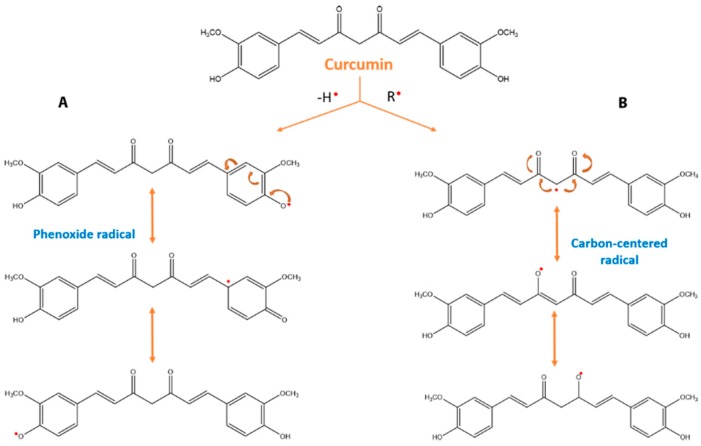
“From a structural point of view, there are three chemical entities in the molecule: two aromatic ring systems containing o-methoxy phenolic groups linked by a seven-carbon spacer consisting of an α,β-unsaturated β-diketone moiety [11].”
BackgroundMethodResultInfluentialActivation of Transcription Factor NF-κB Is Suppressed by Curcumin (Diferuloylmethane)
Singh, S., & Aggarwal, B. B. (1995) · Journal of Biological Chemistry · doi:10.1074/jbc.270.42.24995 · Cited by 1,399 · cited 1×
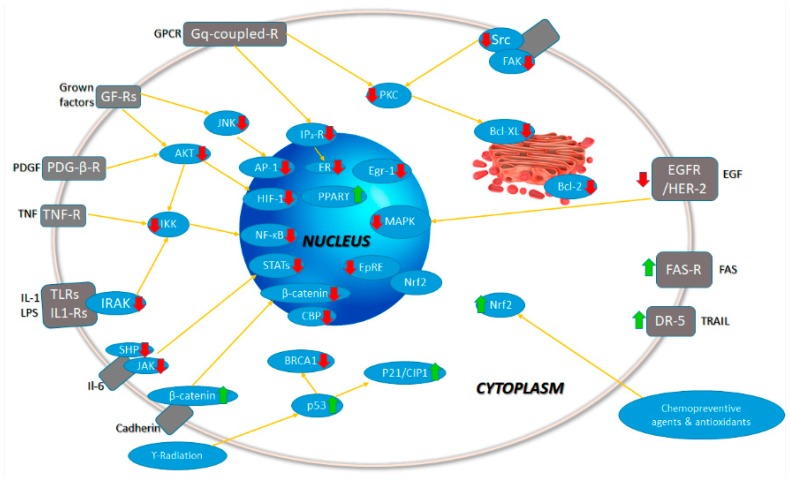
“These authors reported that curcumin reduced the transcription and secretion of TNF-α, and also IL-6, which is induced by palmitate, and induces the nuclear translocation of NF-κB in a concentration-dependent manner [48,49].”
Phase I Clinical Trial of Oral Curcumin
Sharma, R. A., Euden, S. A., Platton, S. L., Cooke, D. N., Shafayat, A., Hewitt, H. R., Marczylo, T. H., Morgan, B., Hemingway, D., Plummer, S. M., et al. (2004) · Clinical Cancer Research · doi:10.1158/1078-0432.ccr-04-0744 · Cited by 1,260 · cited 1×
“1 nmol/L after one hour of dosing on days one, two, eight, and 29 of the administration [65].”
Background
Research works printed but not linked: 3
- Alsamydai, 2018, Pharmacological aspects of curcumin: Review article, Int. J. Pharmacogn., 5, 313
- Andrew, W. (2017). Nanostructures for curcumin delivery: Posibilities and challenges. Nano and -Micro Drug Delivery Systems, Elsevier Science Ltd Desing and Fabrication.
- Sharma, 2012, Development and validation of UV spectrophotometric method for the estimation of curcumin in bulk drug and pharmaceutical dosage forms, Int. J. Drug Dev. Res., 4, 375
Cited by
Sorted by citations
Sairazi, N. S. M., & Sirajudeen, K. N. S. (2020) · Evidence-based Complementary and Alternative Medicine · doi:10.1155/2020/6565396 · Cited by 260
Nanoformulations of Herbal Extracts in Treatment of Neurodegenerative Disorders
Moradi, S. Z., Momtaz, S., Bayrami, Z., Farzaei, M. H., & Abdollahi, M. R. (2020) · Frontiers in Bioengineering and Biotechnology · doi:10.3389/fbioe.2020.00238 · Cited by 187
Rahman, M. H., Bajgai, J., Fadriquela, A., Sharma, S., Trinh, T. T., Akter, R., Jeong, Y. J., Goh, S. H., Kim, C.-S., & Lee, K.-J. (2021) · Molecules · doi:10.3390/molecules26175327 · Cited by 182
Chronic Inflammatory Diseases, Anti-Inflammatory Agents and Their Delivery Nanosystems
Plachá, D., & Jampílek, J. (2021) · Pharmaceutics · doi:10.3390/pharmaceutics13010064 · Cited by 181
Molecular mechanism of curcumin action in signaling pathways: Review of the latest research
Liczbiński, P., Michałowicz, J., & Bukowska, B. (2020) · Phytotherapy Research · doi:10.1002/ptr.6663 · Cited by 175
Metadata
- Authors
- Del Prado-Audelo, M. L., Caballero-Florán, I. H., Meza-Toledo, J. A., Mendoza-Muñoz, N., González-Torres, M., Florán, B., Cortés, H., & Leyva-Gómez, G.
- Affiliations
- Laboratorio de Posgrado en Tecnología Farmacéutica, FES-Cuautitlán, Universidad Nacional Autónoma de México, Cuautitlán Izcalli 54740, Mexico
- Centro de Investigación y de Estudios Avanzados del Instituto Politécnico Nacional (MX)
- Universidad del Valle de México (MX)
- Facultad de Ciencias Químicas, Universidad de Colima, C.P. Colima 28400, México
- CONACyT-Laboratorio de Biotecnología, Instituto Nacional de Rehabilitación Luis Guillermo Ibarra Ibarra, Ciudad de México 14389, Mexico
- Departamento de Fisiología, Biofísica & Neurociencias, Centro de Investigación y de Estudios Avanzados del Instituto Politécnico Nacional, Ciudad de México 07360, Mexico
- Instituto Nacional de Rehabilitación (MX)
- Departamento de Farmacia, Facultad de Química, Universidad Nacional Autónoma de México, Ciudad Universitaria, Circuito Exterior S/N, Del. Coyoacán, C.P. Ciudad de México 04510, Mexico
- Corresponding author
- Cortés, Hernán
- ORCID
- Venue
- Biomolecules
- Publisher
- MDPI AG
- Published
- 2019-02-08
- Volume
- 9
- Issue
- 2
- Pages
- 56
- ISSN
- 2218-273X (ISSN-L)
- PMC
- PMC6406762
- OpenAlex
- W2913877945
- Cited by
- 191
- References
- 129
- Citations by year
- 2026: 18 · 2025: 28 · 2024: 22 · 2023: 30 · 2022: 26 · 2021: 35 · 2020: 21 · 2019: 11
- FWCI
- 1.54
- Type
- journal article
- Language
- en
- Open access
- gold
- dx.doi.org
- Licence
- Locations
- Biomolecules (publishedVersion, cc-by)
- Europe PMC (PubMed Central) (publishedVersion, cc-by)
- PubMed Central (publishedVersion, cc-by)
- PubMed (publishedVersion)
- DOAJ (DOAJ: Directory of Open Access Journals) (submittedVersion, cc-by-sa)
- Funders
- Dirección General de Asuntos del Personal Académico, Universidad Nacional Autónoma de México (PAPIIT TA 200318)
- Topics
- Life Sciences › Biochemistry, Genetics and Molecular Biology › Molecular Medicine › Curcumin's Biomedical Applications
- Life Sciences › Pharmacology, Toxicology and Pharmaceutics › Pharmaceutical Science › Drug Solubulity and Delivery Systems
- Life Sciences › Pharmacology, Toxicology and Pharmaceutics › Pharmaceutical Science › Advanced Drug Delivery Systems
- Keywords
- curcumin, curcumin nanoparticles, brain disorders, nanoparticle drug delivery, bioavailability, water solubility, anti-inflammatory activity, antioxidant activity, polyphenols, neurodegenerative diseases
- MeSH terms
- Animals, Anti-Inflammatory Agents, Non-Steroidal, Brain Diseases, Curcumin, Humans, Temperature, Molecular Structure, Curcuma, Nanoparticles
About these checks
Registry, retraction, Cites and statistics results are computed, not judged, with one exception: a printed reference that no index lists is read once by a model before it counts as a citation error. Claims are extracted by a model and kept only when their quote appears verbatim in the text; each cited source is then checked, with a model’s help, for whether it says what the claim relies on. Those verdicts can be wrong — read the claim’s quote and the cited source before relying on one.
Statistics and arithmetic are recomputed, not judged.
Confidence bands are shown only for fields calibrated on our annotated test set. None is calibrated yet, so no band is shown.
What counts as a claim ›How we measure confidence ›How we check this ›
Are you an author, or do you see a problem with this page? Request a review
