

Estrogens in Adipose Tissue Physiology and Obesity-Related Dysfunction
Open accessThe DOI matches its Crossref record; 174 of the 175 references it cites were found in a registry or an index.
Abstract
Menopause-related decline in estrogen levels is accompanied by a change in adipose tissue distribution from a gynoid to an android and an increased prevalence of obesity in women. These unfavorable phenomena can be partially restored by hormone replacement therapy, suggesting a significant role for estrogen in the regulation of adipocytes’ function. Indeed, preclinical studies proved the involvement of these hormones in adipose tissue development, metabolism, and inflammatory activity. However, the relationship between estrogen and obesity is bidirectional. On the one hand-their deficiency leads to excessive fat accumulation and impairs adipocyte function, on the other-adipose tissue of obese individuals is characterized by altered expression of estrogen receptors and key enzymes involved in their synthesis. This narrative review aims to summarize the role of estrogen in adipose tissue development, physiology, and in obesity-related dysfunction. Firstly, the estrogen classification, synthesis, and modes of action are presented. Next, their role in regulating adipogenesis and adipose tissue activity in health and the course of obesity is described. Finally, the potential therapeutic applications of estrogen and its derivates in obesity treatment are discussed.
Overview
The claims and statistics of this paper haven’t been checked yet.
Free: it reads the open-access text and checks the first 5 claims that cite a source we can check. Create a free account to check every claim.
Integrity signals
Registry
Cites
Statistics
Figures
Verification
Claims the paper makes
The claims and statistics of this paper haven’t been checked yet.
Free: it reads the open-access text and checks the first 5 claims that cite a source we can check. Create a free account to check every claim.
Claims other papers make about this one
Each is checked against this paper’s own text: does it say what the citing paper says it does?
The source backs part of the claim, not all of it — or backs it for a different population, condition or comparison.
In the citing paper
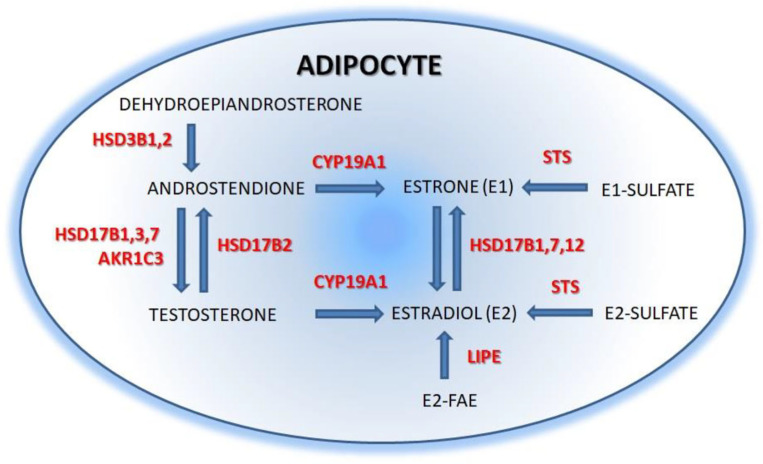
“E1 and E2 can interconvert due to the activity of several hydroxysteroid dehydrogenase (HSD) enzymes, HSD17β subtypes 1, 7, and 12 (62).”
From Metabolic impact of endogenously produced estrogens by adipose tissue in females and males across the lifespan (2025) · cites this paper as [62]
Experimental — accuracy not yet measuredThe source backs part of the claim, not all of it — or backs it for a different population, condition or comparison.
In the citing paper
“Briefly, as shown in Figure 1 , gonadal sex steroids are synthesized from cholesterol by the enzymatic action of steroidogenic acute regulatory protein (StAR) and CYP11A1.”
From Metabolic impact of endogenously produced estrogens by adipose tissue in females and males across the lifespan (2025) · cites this paper as [62]
Experimental — accuracy not yet measuredThe source backs part of the claim, not all of it — or backs it for a different population, condition or comparison.
In the citing paper
“E1 is primarily synthesized in adipose tissue through the aromatization of androgens via aromatase (CYP19A1) (62, 177).”
From Metabolic impact of endogenously produced estrogens by adipose tissue in females and males across the lifespan (2025) · cites this paper as [62]
Experimental — accuracy not yet measuredThe source backs part of the claim, not all of it — or backs it for a different population, condition or comparison.
In the citing paper
“the major substrates for aromatase-mediated estrogenesis in WAT are DHEA and androstenedione, and may be driven by inflammatory cytokines (62, 98).”
From Metabolic impact of endogenously produced estrogens by adipose tissue in females and males across the lifespan (2025) · cites this paper as [62]
Experimental — accuracy not yet measuredThe source backs part of the claim, not all of it — or backs it for a different population, condition or comparison.
In the citing paper
“WAT converts androgens to E1 via CYP19A1 (62, 141), an enzyme that appears to increase with adiposity in males due to the decline in available testosterone (187).”
From Metabolic impact of endogenously produced estrogens by adipose tissue in females and males across the lifespan (2025) · cites this paper as [62]
Experimental — accuracy not yet measured
3 more claims about this paper
Create a free account to see every claim other papers make about this one.
Self-check
Percentages, sums and reported differences re-computed from the paper’s own numbers.
The self-check needs the paper’s full text.
Citations
Cites
The metabolic phenotype in obesity: Fat mass, body fat distribution, and adipose tissue function
Goossens, G. H. (2017) · Obesity Facts · doi:10.1159/000471488 · Cited by 8,481
Identification and Importance of Brown Adipose Tissue in Adult Humans
Cypess, A. M., Lehman, S., Williams, G., Tal, I., Rodman, D., Goldfine, A. B., Kuo, F. C., Palmer, E. L., Tseng, Y.-H., Doria, A., et al. (2009) · New England Journal of Medicine · doi:10.1056/nejmoa0810780 · Cited by 4,399
Estrogen Resistance Caused by a Mutation in the Estrogen-Receptor Gene in a Man
Smith, E. P., Boyd, J., Frank, G. R., Takahashi, H., Cohen, R. M., Specker, B., Williams, T. C., Lubahn, D. B., & Korach, K. S. (1994) · New England Journal of Medicine · doi:10.1056/nejm199410203311604 · Cited by 2,471
Adipocytes as regulators of energy balance and glucose homeostasis
Rosen, E. D., & Spiegelman, B. M. (2006) · Nature · doi:10.1038/nature05483 · Cited by 2,170
Overview of steroidogenic enzymes in the pathway from cholesterol to active steroid hormones
Payne, A. H., & Hales, D. B. (2004) · Endocrine Reviews · doi:10.1210/er.2003-0030 · Cited by 1,766 · cited 1×
“Classical steroidogenic tissues, including gonads, adrenals, and placenta, can synthesize steroid hormones de novo from cholesterol, while steroid synthesis in other tissues mainly relies on the conversion of various precursors obtained from circulation [21].”
BackgroundChait, A., & den Hartigh, L. J. (2020) · Frontiers in Cardiovascular Medicine · doi:10.3389/fcvm.2020.00022 · Cited by 1,529 · cited 1×
“Therefore, the health risk of an obese individual is determined not only by the total amount of adipose tissue but also by its distribution and metabolic activity [4].”
BackgroundIncreased adipose tissue in male and female estrogen receptor-α knockout mice
Heine, P. A., Taylor, J. A., Iwamoto, G. A., Lubahn, D. B., & Cooke, P. S. (2000) · Proceedings of the National Academy of Sciences · doi:10.1073/pnas.97.23.12729 · Cited by 1,282 · cited 1×
“Mice with a global ERα-knockout (αERKO), regardless of sex, are characterized by a significant (50–180%) increase in adipocyte number that is accompanied by insulin resistance, glucose intolerance, and liver steatosis [52].”
BackgroundEstrogen receptor signaling mechanisms
(2019) · Advances in Protein Chemistry and Structural Biology · doi:10.1016/bs.apcsb.2019.01.001 · Cited by 988 · cited 1×
“Upon ligand binding, ERs undergo conformational changes that allow for the formation of heterodimers and interaction with estrogen response elements (ERE) in the promoter of a target gene [37].”
BackgroundThe sexual dimorphism of obesity
Palmer, B. F., & Clegg, D. J. (2015) · Molecular and Cellular Endocrinology · doi:10.1016/j.mce.2014.11.029 · Cited by 919 · cited 1×
“This finding points to the role of estrogen in regulating adipose tissue distribution [6,7].”
BackgroundAndrogens Decrease Plasma Adiponectin, an Insulin-Sensitizing Adipocyte-Derived Protein
Nishizawa, H., Shimomura, I., Kishida, K., Maeda, N., Kuriyama, H., Nagaretani, H., Matsuda, M., Kondo, H., Furuyama, N., Kihara, S., et al. (2002) · Diabetes · doi:10.2337/diabetes.51.9.2734 · Cited by 837
Research works printed but not linked: 1
- 28. Gardner, D.G.; Shoback, D. Greenspan's Basic & Clinical Endocrinology , 7th ed.; McGraw-Hill Medical: New York, NY, USA, 2011.
Cited by
Zhang, K., Ma, Y., Luo, Y., Song, Y., Xiong, G., Ma, Y., Sun, X., & Kan, C. (2023) · Frontiers in Public Health · doi:10.3389/fpubh.2023.1253506 · Cited by 229
Kumari, N., KUMARI, R. R., Dua, A., Singh, M., Kumar, R., Singh, P., Duyar‐Ayerdi, S., Pradeep, S., Ojesina, A. I., & Kumar, R. (2024) · Molecular Nutrition & Food Research · doi:10.1002/mnfr.202300688 · Cited by 128
The Metabolic Syndrome, a Human Disease
Alemany, M. (2024) · International Journal of Molecular Sciences · doi:10.3390/ijms25042251 · Cited by 101
Agius, R., Pace, N. P., & Fava, S. (2023) · Diabetes/Metabolism Research and Reviews · doi:10.1002/dmrr.3725 · Cited by 74
The Impact of Estrogen Deficiency on Liver Metabolism: Implications for Hormone Replacement Therapy
Dong, J., Dennis, K. M. J. H., Venkatakrishnan, R., Hodson, L., & Tomlinson, J. (2025) · Endocrine Reviews · doi:10.1210/endrev/bnaf018 · Cited by 72
Jiao, Y., Butoyi, C., Zhang, Q., Adotey, S. A. A. I., Chen, M., Shen, W., Wang, D., Yuan, G., & Jia, J. (2025) · Diabetology & Metabolic Syndrome · doi:10.1186/s13098-025-01871-w · Cited by 57
“Humans possess four types of estrogens, namely, estrone (E1), estradiol (E2), estriol (E3), and estetrol (E4) [38].”
Endometrial Atypical Hyperplasia and Risk of Endometrial Cancer
Chou, A.-J., Bing, R.-S., & Ding, D. (2024) · Diagnostics · doi:10.3390/diagnostics14222471 · Cited by 60
MASLD: Prevalence, Mechanisms, and Sex-Based Therapies in Postmenopausal Women
Milani, I., Chinucci, M., Leonetti, F., & Capoccia, D. (2025) · Biomedicines · doi:10.3390/biomedicines13040855 · Cited by 38
“Estrogens also regulate genes involved in brown adipose tissue (BAT) function, such as uncoupling protein 1 (UCP-1), which is critical for energy balance, and promotes the “browning” process of white adipocytes [197].”
Health of adipose tissue: oestrogen matters
Vieira‐Potter, V. J., Mishra, G., & Townsend, K. L. (2025) · Nature Reviews Endocrinology · doi:10.1038/s41574-025-01180-2 · Cited by 36
Lee, A. A., & Den Hartigh, L. J. (2025) · Frontiers in Endocrinology · doi:10.3389/fendo.2025.1682231 · Cited by 32
“This localized estrogen synthesis differs from systemic estrogen metabolism as breast WAT appears to maintain high estrogenic activity, especially for postmenopausal women where WAT is the key source of estrogen synthesis.”
InfluentialSanchez-García, M. L., León-Wu, K. S., Miguel-Ibáñez, R. D., López-Juárez, N., Ramírez‐Rentería, C., Espinosa-Cárdenas, E., Sosa, E., & García-Sáenz, M. R. (2025) · Metabolites · doi:10.3390/metabo15040242 · Cited by 34
“However, further studies are required to fully understand the roles of ER isotype activation, expression profiling, receptor–DNA interactions, and estrogen’s non-genomic activities [4,8].”
InfluentialThe Metabolic Syndrome: An Overview and Proposed Mechanisms
Thomaz, F. S., John, O. D., Sinha, P., Shafie, S. R., & Worrall, S. (2024) · Obesities · doi:10.3390/obesities4030020 · Cited by 35
“However, as women enter the postmenopausal phase, the gender difference in BAT activity tends to diminish, indicating a strong connection between sex hormones and BAT functionality [187].”
BackgroundSimancas‐Racines, D., Campuzano-Donoso, M., Román-Galeano, N. M., Zambrano-Villacres, R., Memoli, P., Verde, L., Reytor-González, C., & Carbone, L. (2025) · Food and Agricultural Immunology · doi:10.1080/09540105.2025.2510961 · Cited by 30
“…et al., 2015; Sidorkiewicz et al., 2020) Hormonal Dysregulation Adipose tissue-driven estrogen production post-menopause (Hetemäki et al., 2017; Kuryłowicz, 2023) Increased estrogen exposure, unopposed endometrial proliferation, higher risk of malignancy (Kuryłowicz, 2023; Rodriguez et al., 2019)”
InfluentialThe Interplay of Uterine Health and Obesity: A Comprehensive Review
Šišljagić, D., Blažetić, S., Heffer, M., Vranješ, M., & Müller, A. (2024) · Biomedicines · doi:10.3390/biomedicines12122801 · Cited by 33
Ordeanu, I.-M., Busuioc, C. J., Văduva, C.-C., Pana, R. C., Petrescu, A.-M., Văruț, R. M., Stanciu, M., & Popescu, M. (2025) · Biomedicines · doi:10.3390/biomedicines13112612 · Cited by 31
“The efficiency of androstenedione-to-estrone conversion rises markedly with increasing age and adipose tissue mass, being more pronounced in women with a gynoid than an android fat distribution [28,29].”
InfluentialA Review on Cyclodextrins/Estrogens Inclusion Complexes
Araj, S. K., & Szeleszczuk, Ł. (2023) · International Journal of Molecular Sciences · doi:10.3390/ijms24108780 · Cited by 27
Walsh, S. K., Pettigrew, K., Mezzani, I., Alaswad, I., & Bermano, G. (2024) · Food & medicine homology. · doi:10.26599/fmh.2025.9420056 · Cited by 35
Pernoud, L., Gardiner, P. A., Fraser, S. D., Dillon-Rossiter, K., Dean, M. M., & Schaumberg, M. A. (2024) · Maturitas · doi:10.1016/j.maturitas.2024.108119 · Cited by 31
Calvo, N., McFall, G. P., Ramana, S., Galper, M., Fuller‐Thomson, E., Dixon, R. A., & Einstein, G. (2024) · Journal of Alzheimer s Disease · doi:10.3233/jad-240646 · Cited by 27
“It is possible that higher BMI at an older age is associated with a decreased AD risk because adipose tissue makes estrone 61 which, in the absence of E2, may help maintain cognitive function.”
Bhutani, K., Vishwakarma, S., Yadav, P., & Yadav, M. K. (2025) · The Journal of Steroid Biochemistry and Molecular Biology · doi:10.1016/j.jsbmb.2025.106729 · Cited by 24
Жао, Л., Cheng, H., He, D., Zhang, Y., Chai, Y., Song, A., & Sun, G. (2025) · Discover Oncology · doi:10.1007/s12672-025-02140-y · Cited by 22
“Obesity also contributes to higher estrogen levels as adipose tissue can convert androgens into estrogens through aromatization [30].”
Reytor-González, C., Simancas‐Racines, D., Román-Galeano, N. M., Campuzano-Donoso, M., Am, C., Zambrano-Villacres, R., Teresa, M., Coppola, L., Marchetti, M., Galasso, M., et al. (2025) · Food and Agricultural Immunology · doi:10.1080/09540105.2025.2521270 · Cited by 24
“In postmenopausal women, adipose tissue becomes the primary site for estrogen synthesis through the aromatization of androgens (Kuryłowicz, 2023; Mair et al., 2020).”
InfluentialCardiometabolic risk assessment by anthropometric and biochemical indices in mexican population
Quirino-Vela, L. M., Mayoral-Chávez, M. A., Pérez-Cervera, Y., Idelfonso-García, O. G., Cruz-Altamirano, E., Ruiz-García, M., & Alpuche, J. J. (2025) · Frontiers in Endocrinology · doi:10.3389/fendo.2025.1588469 · Cited by 25
“The hormonal proportionally more metabolically active visceral fat, whereas environment signi fi cantly in fl uences adipocyte progenitor cell females accumulate more subcutaneous adipose tissue, which is differentiation (87).”
Viana, D. P. D. C., Câmara, L. C., & Palau, R. B. (2025) · International Journal of Molecular Sciences · doi:10.3390/ijms26157074 · Cited by 24
“Among the progestins with potential efficacy in lipedema are two notable agents: drospirenone and gestrinone [26,33].”
Belli, R., Dattolo, A., Sampogna, F., Gubinelli, E., Lulli, D., Moretta, G., Scala, E., Sanna, L., Megna, M., Cannizzaro, M. V., et al. (2025) · Frontiers in Immunology · doi:10.3389/fimmu.2025.1607312 · Cited by 21
“This is a signi fi cant source of estrogen, particularly in postmenopausal women, whose ovaries produce less estrogen (58).”
Interactions between glucagon like peptide 1 (GLP-1) and estrogens regulates lipid metabolism
Model, J. F. A., Normann, R. S., Vogt, É. L., Dentz, M. C. V., de Amaral, M., Xu, R., Bachvaroff, T. R., Spritzer, P. M., Chung, J. S., & Vinagre, A. S. (2024) · Biochemical Pharmacology · doi:10.1016/j.bcp.2024.116623 · Cited by 22
Jamalinia, M., Saeian, S., Nikkhoo, N., Nazerian, A., & Lankarani, K. B. (2025) · Metabolism and Target Organ Damage · doi:10.20517/mtod.2025.131 · Cited by 20
Al-Ghadban, S. I., Isern, S. U., Herbst, K. L., & Bunnell, B. A. (2024) · Biomedicines · doi:10.3390/biomedicines12051042 · Cited by 22
“Estrogen and its receptors have been shown to play a role in adipose tissue development, physiology, and function [35–38].”
BackgroundZhang, Z., He, Z., Pan, J., Yuan, M., Lang, Y., Wei, X., & Zhang, C. (2024) · Frontiers in Endocrinology · doi:10.3389/fendo.2024.1384159 · Cited by 19
Huang, P., Yeh, C., Yang, S., Shirakawa, H., Chang, C., Chen, L., Chiu, Y.-S., & Chiu, W. (2023) · Nutrients · doi:10.3390/nu15163514 · Cited by 19
The impact of diabetes and obesity on fertility and the potential role of gut hormones as treatment
Sridhar, A., Khan, D., & Moffett, R. C. (2023) · Diabetic Medicine · doi:10.1111/dme.15230 · Cited by 19
“27 Enhanced production of adipose-derived oestrogen during obesity is linked mainly to the development of breast cancer.”
BackgroundTan, Z., Sheng, B., Chen, L., Dong, H., Deng, Y., Li, Y., Liu, C., Wang, H., Yang, Z., Xie, T., et al. (2025) · Frontiers in Immunology · doi:10.3389/fimmu.2025.1689114 · Cited by 17
“Obesity also increases aromatase activity in adipose depots, resulting in elevated local estrogen production and ampli fi cation of estrogen-mediated proliferative and immunomodulatory effects (44).”
Dattolo, A., Torres, M., Frías-Toral, E., Paganelli, A., Zhang, M., Madonna, S., Mercurio, L., Cucalón, G., Garbarino, F., Albanesi, C., et al. (2025) · Journal of Translational Medicine · doi:10.1186/s12967-025-06175-1 · Cited by 17
“Although sex steroids influence adipose tissue functions [61], with estrogens promoting adipocyte proliferation and survival, studies on the relationship between adipo-kine levels and sex hormones across genders in HS are currently lacking.”
Changes in body composition in early breast cancer patients treated with aromatase inhibitors
Pedersini, R., Schivardi, G., Laini, L., Zamparini, M., Bonalumi, A., di Mauro, P., Bosio, S., Amoroso, V., Villa, N., Alberti, A., et al. (2024) · Journal of Endocrinological Investigation · doi:10.1007/s40618-024-02401-7 · Cited by 15
Hubungan Status Gizi dengan Panjang Siklus Menstruasi pada Mahasiswi Kedokteran Unisba
Fath, T. F. A., Effendi, J. S., & Budiarti, I. (2025) · Jurnal Riset Kedokteran · doi:10.29313/jrk.v5i1.6620 · Cited by 14
Sex Differences in the Impact of Obesity on Immunity
Vijayakumar, S., Pantha, S., Magar, S. B., & Dhakal, S. (2026) · Immunological Reviews · doi:10.1111/imr.70101 · Cited by 14
“Consequently, females who have higher estrogen levels preferentially accumulate SAT, while males more readily develop VAT due to lower ER-α activity and circulating estrogen [210].”
InfluentialBiochemical health implications of textile dyes: a multidisciplinary perspective
Soyinka, O. O., Evbuomwan, I. O., Abodunrin, T. O., & Adekoya, J. A. (2026) · Results in Chemistry · doi:10.1016/j.rechem.2026.103130 · Cited by 15
The Impact of Glucagon-like Peptide-1 Receptor Agonists on Erectile Function: Friend or Foe?
Kounatidis, D. C., Vallianou, N. G., Rebelos, E., Vallianou, K., Diakoumopoulou, E., Makrilakis, K., & Tentolouris, N. (2025) · Biomolecules · doi:10.3390/biom15091284 · Cited by 16
“Elevated estradiol activates hypothalamic estrogen receptors, triggering a negative feedback on gonadotropin release and further lowering testosterone output [67].”
Endocrinological aspects of sarcopenic obesity
Minnetti, M., Poggiogalle, E., Frigerio, F., Piciocchi, C., Pierantozzi, G., Vincenzo, O. D., Pinto, A., Gianfrilli, D., Isidori, A. M., Migliaccio, S., et al. (2026) · Annals of Medicine · doi:10.1080/07853890.2026.2626085 · Cited by 14
“…estrogen deficiency impairs adipocyte differentiation and function, promoting excessive fat accumulation, whereas in obesity, adipose tissue exhibits dysregulated expression of enzymes responsible for estrogen synthesis and of estrogen receptors, further contributing to metabolic dysfunction [55].”
InfluentialBardhi, O., Dubey, P., Palmer, B. F., & Clegg, D. J. (2024) · Proceedings of The Nutrition Society · doi:10.1017/s0029665124000119 · Cited by 14
Kaltsas, A., Dimitriadis, F., Zachariou, A., Koukos, S., Chrisofos, M., & Sofikitis, N. (2026) · Cells · doi:10.3390/cells15020158 · Cited by 12
“Weight reduction also diminishes systemic inflammation and lowers excessive estrogen production, thereby creating a hormonal milieu that is more favorable for optimal Leydig cell activity [80].”
Endometrial Hyperplasia: Current Insights into Epidemiology, Risk Factors, and Clinical Management
Galani, A., Stavros, S., Moustakli, E., Potiris, A., Zikopoulos, A., Anagnostaki, I., Zacharis, K., Paraskevaidi, M., Lyons, D., Stavrakaki, S. M., et al. (2025) · Cancers · doi:10.3390/cancers18010148 · Cited by 13
“Excess adipose tissue aromatization of androgens to estrogens contribute to persistently elevated estrogen levels beyond normal physiological conversion [47].”
Olasore, H. S. A., Oyedeji, T. A., Olawale, M. O., Ogundele, O. I., & Faleti, J. O. (2023) · Metabolism Open · doi:10.1016/j.metop.2023.100249 · Cited by 13
“Estradiol, among several hormones, has been linked to helping in the maintenance and control of lipid storage in the adipose tissues and plays a role in the prevention of the onset of obesity [25,26].”
BackgroundRamadan, A. G., Abdel-Rehim, W. M., El-Tahan, R. A., Elblehi, S. S., Kamel, M. A. E.-N., & Shaker, S. A. (2023) · Scientific Reports · doi:10.1038/s41598-023-42468-5 · Cited by 12
“This relationship is confirmed in our study by the strong positive correlation between mtDNA-CN with the numbers of primary, secondary, and antral follicles and negative correlations with the numbers of atretic and cystic follicles and histologic lesion score.”
ResultGuo, Q., Wu, P., He, J., Zhang, G., Zhou, W., & Chen, Q. (2025) · BMC Cancer · doi:10.1186/s12885-025-14444-x · Cited by 12
The role of glucagon-like peptides in osteosarcopenia
Tufail, E., Sanyal, S., Mithal, A., Sanyal, S., & Chattopadhyay, N. (2024) · Journal of Endocrinology · doi:10.1530/joe-24-0210 · Cited by 12
Stathori, G., Tzounakou, A.-M., Vlahos, N., Charmandari, E., & Valsamakis, G. (2025) · Hormone Research in Paediatrics · doi:10.1159/000544837 · Cited by 10
“Adipose tissue expresses the enzyme aromatase (CYP19A1), which converts androgens into estrogens [68].”
Ye, D., Wang, J., Shi, J., Ma, Y., Li, Y., Li, Q., Hu, X., Chen, J., & Bao, Z. (2025) · BMC Gastroenterology · doi:10.1186/s12876-025-03956-2 · Cited by 10
“This finding aligns with prior research indicating that hormonal factors, such as the role of estrogen in metabolic processes, may contribute to this disparity [23].”
Maugeri, A., Barchitta, M., Favara, G., Lio, R. M. S., Ojeda‐Granados, C., Alonzo, E., Bellavia, D., Bonaccio, M., Nucci, A. D., Donfrancesco, C., et al. (2025) · Nutrients · doi:10.3390/nu17223505 · Cited by 14
“Studies have illustrated that obesity contributes to reproductive disorders by elevating estrogen and other hormonal imbalances that disrupt ovulatory cycles, emphasizing the link between obesity, hormonal dysregulation, and infertility outcomes in women of reproductive age [128,129].”
Zhao, H., Yang, H., Li, Z., Ge, Z., Zhou, M., Li, L., & He, J. (2023) · Heliyon · doi:10.1016/j.heliyon.2023.e22362 · Cited by 10
Dinicola, S., Unfer, V., Soulage, C. O., Yap‐Garcia, M. I. M., Bevilacqua, A., Benvenga, S., Barbaro, D., Wdowiak, A., Nordio, M., Dewailly, D., et al. (2024) · Gynecologic and Obstetric Investigation · doi:10.1159/000536081 · Cited by 12
“This fi nding is in agreement with the preexisting literature that stated the importance of estrogen signaling in adipose tissue and obesity [37].”
Nutrition and Neuroinflammation: Are Middle-Aged Women in the Red Zone?
Bernier, V., Chatelan, A., Point, C., & Strauss, M. (2025) · Nutrients · doi:10.3390/nu17101607 · Cited by 8
“The deficiency of estrogen occurring in menopause has a direct impact on metabolism and physiology, affecting lipid metabolism and energy consumption and fostering the storage of fat mass in abdominal/visceral parts of the body [77–79].”
InfluentialLedesma, S. N. (2025) · Journal of Clinical Medicine · doi:10.3390/jcm14207315 · Cited by 12
“Additionally, adipose tissue expresses estrogen receptors, and their dysfunction contributes to a feedback loop of hormonal insensitivity, metabolic imbalance, and inflammatory activation [106,107].”
Berghuis, S. A., Bocca, G., Bos, A. F., van Faassen, M. H. J. R., Foreman, A. B., van Vliet‐Ostaptchouk, J. V., & Sauer, P. J. J. (2024) · Environment International · doi:10.1016/j.envint.2024.109167 · Cited by 9
Insights into the molecular and genetic role of obesity in breast cancer pathogenesis
Mallya, S. P., Gangadhar, V., Aldrin, S. E., Acharya, M., Kabekkodu, S. P., Kolathur, K. K., & Chakrabarty, S. (2025) · Cancer Biology & Therapy · doi:10.1080/15384047.2025.2501345 · Cited by 12
“41 This forms the precursor for estradiol production.”
Translating Metabolic Interventions into Breast Cancer Therapy: A Comprehensive Review
Chen, L., Shiao, S. L., & Yuan, Y. (2025) · Life · doi:10.3390/life15101634 · Cited by 7
“In postmenopausal women, adipose tissue becomes the predominant site of estrogen biosynthesis through the activity of the cytochrome P450 enzyme aromatase, which catalyzes the conversion of adrenal androgens, such as androstenedione and testosterone, into estrone and estradiol [29,30].”
Atmaca, L., Chauhan, S., Najaf, S. S., Elmadani, M., Al-Jawarneh, M., Soloh, A., Zsuzsanna, V., Vitrai, J., & Prémusz, V. (2026) · Frontiers in Sports and Active Living · doi:10.3389/fspor.2025.1686566 · Cited by 7
“It contains aromatase, an enzyme that converts androgens to estrogens (35).”
Body weight trajectories from midlife are associated with cognitive decline in advanced age
Ceolin, C., Prinelli, F., Trevisan, C., Ravelli, A., Conti, S., Brennan, L., de Groot, C. P. G. M., McEvoy, C. T., Maggi, S., Sergi, G., et al. (2025) · Scientific Reports · doi:10.1038/s41598-025-08725-5 · Cited by 6
“…decline in estrogen levels during and after menopause, for example, may accelerate the accumulation of visceral adipose tissue in females and increase their susceptibility to leptin resistance and systemic inflammation 64 , both of which—as previously mentioned—are implicated in neurodegeneration.”
Zhan, Z., Zeng, Y., Xu, S., Chen, H., Huang, R., Lin, W., Yu, J., Wang, X., Yang, C., Guo, Z., et al. (2025) · Frontiers in Nutrition · doi:10.3389/fnut.2025.1606747 · Cited by 7
“Hormonal imbalances are also implicated: in postmenopausal women, elevated BMI is associated with increased peripheral conversion of androgens to estrogens in adipose tissue, raising the risk for estrogen receptor-positive breast and endometrial cancers (35, 36).”
Gomes, K. N., Mawandji, N. B. D. S., Schereider, I. R. G., Oliveira, E. P. G., Vieira, J. M., Lopes, A. B., Graceli, J. B., Dantas, J. A., Cardoso, L. S., Vassallo, D. V., et al. (2025) · Nutrients · doi:10.3390/nu17152395 · Cited by 6
“Current evidence indicates that estrogens—either through direct action or via activation of their receptors in adipocytes and adipose tissue—play a central role in adipose tissue deposition and regulation [50,51].”
dos Santos, T. C., Silva, H. P., Lima, K. R., Salvador, M., Cândido, G. D. S., Pimenta, L. C. J. P., Bertolini, N. O., Ribeiro, L. B., Fagundes, F. G., Orlando, D. R., et al. (2025) · Biomedicines · doi:10.3390/biomedicines13020495 · Cited by 6
Wang, Y., Wang, L., Yu, B., Wen, S., Mou, X., & Yang, L. (2025) · BMC Cancer · doi:10.1186/s12885-025-14681-0 · Cited by 5
“Liver disease impairs estrogen metabolism, leading to elevated estrogen levels, while obesity increases estrogen through adipose tissue aromatization [102].”
Zhu, Y., Chen, F., Fang, X., Liang, N., Na, G., & Liu, Z. (2025) · Journal of Affective Disorders · doi:10.1016/j.jad.2025.120934 · Cited by 6
Li, N., Zhu, Z., Wu, S., Gong, D., Day, R., Vijayakumar, V., Yu, X., Chen, Q., Feng, Y., Wang, Q., et al. (2025) · Clinical Nutrition · doi:10.1016/j.clnu.2025.106560 · Cited by 5
Cunningham, A. M., Gomes, A., Meng, L., Shapses, S. A., Byham-Gray, L. D., & Samavat, H. (2026) · Nutrients · doi:10.3390/nu18010143 · Cited by 5
“…in the ovaries primarily as estradiol (E2); however, after menopause, estrogen is synthesized in the peripheral tissues mainly as estrone (E1), and excess adiposity results in a greater estrogen biosynthesis, therefore a greater risk for oncogenesis in hormone-responsive tissues [9,13,14].”
InfluentialUnveiling estrogen’s role: a comprehensive review of its impact on skin health and disease
Yi, L., Deng, N., Luo, X., Tan, Y., Huang, Z., Liu, Y., Xing, J., Zeng, Y., & Yi, J. (2026) · APOPTOSIS · doi:10.1007/s10495-025-02244-4 · Cited by 5
Sex steroids, SHBG and type 2 diabetes in women: what do we really know?
Verhoog, N. J. D., Africander, D., & Storbeck, K. (2026) · Diabetologia · doi:10.1007/s00125-025-06647-5 · Cited by 8
Reproductive Landmarks and Lipedema: Lessons to be Learned about Women Hormones throughout Life
Bicca, J. M. (2024) · IntechOpen eBooks · doi:10.5772/intechopen.1006956 · Cited by 6
Paules, E. M., VerHague, M., Lulla, A., Meyer, K. A., Coleman, M. F., Albright, J., Bennett, B. J., North, K. E., Howard, A.-G., Gordon‐Larsen, P., et al. (2025) · American Journal of Physiology-Regulatory, Integrative and Comparative Physiology · doi:10.1152/ajpregu.00220.2024 · Cited by 5
Brown, R. A. (2024) · Integrated science · doi:10.1007/978-3-031-73061-0_8 · Cited by 6
Wang, D., Sha, F., Feng, J., Su, W., Tang, G., Song, J., & Bi, H. (2025) · Scientific Reports · doi:10.1038/s41598-025-12470-0 · Cited by 4
“In addition, estrogen plays an important role in the development of obesity by stimulating adipocytes and adipose tissue to accumulate and perform adipocyte functions, directly or indirectly 45,46 .”
Mammary adipose dysfunction in the dual epidemic of obesity and breast cancer
Jeyakumar, E. S. S., Sundararaju, S., Annett, S., & Elrayess, M. A. (2025) · Carcinogenesis · doi:10.1093/carcin/bgaf053 · Cited by 4
“In postmenopausal women, estrogen production shifts to adipose tissue, raising aromatase expression and local estrogen levels in MAT, worsening dysfunction and heightening BC risk [7 – 9].”
Reytor-González, C., Jiménez-Flores, E., Toral-Noristz, M., Campuzano-Donoso, M., Román-Galeano, N. M., & Simancas‐Racines, D. (2025) · International Journal of Molecular Sciences · doi:10.3390/ijms262211130 · Cited by 4
“These alterations lead to unfavorable gene expression and a shift in adipokine secretion, which, in turn, exacerbates systemic insulin resistance and metabolic imbalance [29].”
InfluentialBu, J., Mi, N., Liang, Z., Xie, P., Long, C., Yang, M., Yuan, J., Xia, B., Liu, A., Xiang, S., et al. (2025) · International Journal of Surgery · doi:10.1097/js9.0000000000004181 · Cited by 4
de Oliveira, T. H. C., & Gonçalves, G. K. N. (2024) · Molecular and Cellular Endocrinology · doi:10.1016/j.mce.2024.112327 · Cited by 4
Hairi, H. A., Ibrahim, N. ‘., Sadikan, M. Z., Jayusman, P. A., & Shuid, A. N. (2024) · Bioimpacts · doi:10.34172/bi.30378 · Cited by 7
“88 E2 therapy improved insulin sensitivity and glucose tolerance in ovariectomised mice fed a high-fat diet (HFD) but not in ER-deficient mice.”
BackgroundTrovato, E., Bardazzi, F., Lernia, V. G. D., Corazza, M., Lasagni, C., & Prignano, F. (2025) · Dermatology Practical & Conceptual · doi:10.5826/dpc.1501a4805 · Cited by 4
“There is a morphological difference between fat accumulation in women and that in men, which gender hormones related, along with the density of their respective receptors [29].”
Cap, D. M., Dong, K. T., Nguyen, D. T. H., Nguyen, H. T., Tang, K. X., Cao, A. T., Nguyen, L. T., Nguyen, T. T. H., & Pham, D. M. (2025) · Obesity Medicine · doi:10.1016/j.obmed.2025.100600 · Cited by 5
Łuszczki, E., Zielińska, M., Oleksy, Ł., Stolarczyk, A., & Dereń, K. (2025) · Diabetes Metabolic Syndrome and Obesity · doi:10.2147/dmso.s520553 · Cited by 4
“54,55 It is interesting to note that in our study there were no significant differences in the percentage of total body fat between the female age groups.”
Vis, J. B. D., Wang, C., Nguyen, K., Sun, L., Jia, B., Sherry, A. D., Alford-Holloway, M. N., Balbach, M. L., Koyama, T., Chakravarthy, A. B., et al. (2025) · Breast Cancer Research and Treatment · doi:10.1007/s10549-025-07675-w · Cited by 4
“Higher endogenous estrogen production has been linked to a greater risk of recurrence in hormone receptor positive BC [17, 18], which may be influenced by both VA and SA [19, 20].”
Considerations and practical recommendations for identifying perimenopause in longitudinal research
Huibregtse, M. E., Taylor, L., Prochaska, T., Arnold, A. R., Epperson, C. N., Chahine, E. B., Smith, A. K., Powers, A. D., Michopoulos, V., & Stevens, J. S. (2026) · Psychoneuroendocrinology · doi:10.1016/j.psyneuen.2026.107748 · Cited by 4
“Adipose tissue is a steroid conversion and synthesis site and estrogen plays a role in adipose tissue distribution, very low and very high BMI can be accompanied by altered menstrual patterns and reproductive disorders (Aladashvili-Chikvaidze et al., 2015; Kurylowicz, 2023).”
Gender Differences in Major Risk Factors for Cardiovascular Disease in Mexican Adults
Flores‐Luna, L., Escamilla-Núñez, C., Cruz‐Bautista, I., Rojas-Martínez, R., Cadena, L. H., Castro-Porras, L. V., Romero, M., & Aguilar-Salinas, C. A. (2026) · Global Heart · doi:10.5334/gh.1531 · Cited by 3
English, L., Hao, W., Meeker, J. D., Jansen, E. C., Watkins, D. J., Goodrich, J. M., Torres-Olascoaga, L. A., Aljahdali, A., Baylín, A., Tolentino, M. C., et al. (2026) · Environmental Research · doi:10.1016/j.envres.2026.124340 · Cited by 3
Adiponectin and Polycystic Ovary Syndrome in Adolescent Girls: A Systematic Review and Meta-Analysis
Fernando, S., & Ramdass, P. V. A. K. (2026) · International Journal of Molecular Sciences · doi:10.3390/ijms27093950 · Cited by 3
“Estrogen is generally associated with a more favorable metabolic profile, promoting subcutaneous fat deposition and supporting beneficial adipokine patterns, including relatively higher adiponectin levels [55].”
Current perspectives on the metabolic aspects of polycystic ovary syndrome
Korchynska, O. O., Khashcha, I. I., & Shumilina, T. (2023) · Reproductive health of woman · doi:10.30841/2708-8731.8.2023.297796 · Cited by 3
Drab, A., Kanadys, W. M., Malm, M., Wdowiak, K., & Dolar-Szczasny, J. (2024) · Archives of Medical Science · doi:10.5114/aoms/196001 · Cited by 5
“For post-menopausal women, adipose tissue becomes the dominant source of estrogen and, hence, plays a significant role in postmenopausal estrogen production [35].”
Amato, A. C. M., Amato, J. L. S., & Benitti, D. A. (2025) · medRxiv · doi:10.64898/2025.12.02.25341445 · Cited by 3
Nutritional Adequacy in Adolescent Towards the Menstrual Cycle
Susmini, S., Hendian, F. I., & Meliana, M. (2024) · Care Jurnal Ilmiah Ilmu Kesehatan · doi:10.33366/jc.v12i3.6303 · Cited by 2
Si, G., Lv, X., Ge, Y., Zhang, R., Hao, D., Chen, X., Wang, C., Li, Y., Li, X., & Yuan, X. (2025) · Experimental Gerontology · doi:10.1016/j.exger.2025.112748 · Cited by 2
Obesity-Associated Cancers: A United States Cancer Statistics (USCS) Database Analysis
Nwafor, J. N., Figueroa, A., Okobi, O. E., Ojukwu, G., Fanegan, E. J., Nyamekye-Affel, R., Oyewole, B. O., Omotunde, O., Mamah, G. N., & Muoghalu, N. (2025) · Cureus · doi:10.7759/cureus.84610 · Cited by 2
Stangl, T. A., Wiepjes, C. M., Heijboer, A. C., & den Heijer, M. (2025) · Clinica Chimica Acta · doi:10.1016/j.cca.2025.120429 · Cited by 2
Chen, X., Shen, X., Guan, S., Liu, Y., Song, N., Song, W., & Jin, H. (2025) · Frontiers in Endocrinology · doi:10.3389/fendo.2025.1587595 · Cited by 2
“ER a has been implicated as a candidate gene for obesity; knockout of ER a in female mice leads to increased fat cell size, number, and elevated cholesterol levels (14).”
Alfikany, M., Sakhr, K., Kremers, S., Khatib, S. E., Adam, T. C., & Meertens, R. M. (2025) · Clocks & Sleep · doi:10.3390/clockssleep7030039 · Cited by 3
“Sex differences in adiponectin concentrations may in part be explained by changes starting during puberty, where the increase in androgen concentrations in males reduces adiponectin production [57].”
Metabolic Effects of Gender-Affirming Hormonal Therapy in Youth
Winer, J., McKee, M., & Lemelman, M. B. (2025) · Pediatric Annals · doi:10.3928/19382359-20250828-05 · Cited by 2
Suba, Z. (2025) · Cancers · doi:10.3390/cancers18010078 · Cited by 2
“Estrogen signaling regulates glucose metabolism, lipolysis/lipogenesis [48], and energy balance [153,154] in the whole body.”
Elkins, C. M., Zhang, J., Ye, C., Moll, S., Weitzmann, M. N., & Li, C. (2026) · The Journal of Immunology · doi:10.1093/jimmun/vkag010 · Cited by 2
Targeting Lifestyle Factors to Reduce the Incidence of Endometrial Cancer
Shrivastava, S. R., Bobhate, P. S., Sengupta, R., & Parate, S. K. (2026) · Journal of Mid-life Health · doi:10.4103/jmh.jmh_111_25 · Cited by 2
New Frontiers in modeling the lipedema microenvironment in vitro
Soni, K., & Abbott, R. D. (2026) · Frontiers in Cell and Developmental Biology · doi:10.3389/fcell.2026.1816014 · Cited by 2
“Estrogen has also been shown to play a role in regulating lipolysis and lipogenesis through its estrogen receptors, ER α and ER β (Kuryłowicz, 2023).”
Habersatter, E., Chen, S., Kostov, T., Drewe, J., Boonen, G., Butterweck, V., & Diel, P. R. (2026) · Biomedicine & Pharmacotherapy · doi:10.1016/j.biopha.2026.119549 · Cited by 2
Hormonal Imbalance in Obesity and Arthritis: Points of Contact
Vijayan, S., & Margesan, T. (2024) · Current Rheumatology Reviews · doi:10.2174/0115733971293288240313090945 · Cited by 2
Metadata
- Authors
- Kuryłowicz, A.
- Affiliations
- Mossakowski Medical Research Institute, Polish Academy of Sciences (PL)
- Corresponding author
- Kuryłowicz, Alina
- ORCID
- Kuryłowicz, Alina
- Venue
- Biomedicines
- Publisher
- MDPI AG
- Published
- 2023-02-24
- Volume
- 11
- Issue
- 3
- Pages
- 690
- ISSN
- 2227-9059 (ISSN-L)
- PMC
- PMC10045924
- OpenAlex
- W4321786273
- Semantic Scholar
- 1e70d4f2c94aa332018deb017aac0942bbcefa03
- Cited by
- 178
- References
- 175
- Citations by year
- 2026: 67 · 2025: 74 · 2024: 26 · 2023: 11
- FWCI
- 6.86
- Type
- journal article
- Language
- en
- Open access
- gold
- doi.org
- Licence
- Locations
- Biomedicines (publishedVersion, cc-by)
- PubMed Central (publishedVersion, cc-by)
- PubMed (publishedVersion)
- DOAJ (DOAJ: Directory of Open Access Journals) (submittedVersion, cc-by-sa)
- Funders
- National Science Centre Poland (2018/31/B/NZ5/01556)
- Topics
- Life Sciences › Biochemistry, Genetics and Molecular Biology › Endocrinology › Estrogen and related hormone effects
- Health Sciences › Medicine › Endocrinology, Diabetes and Metabolism › Adipokines, Inflammation, and Metabolic Diseases
- Health Sciences › Medicine › Physiology (medical) › Adipose Tissue and Metabolism
- Keywords
- estrogen, adipose tissue, obesity, menopause, hormone replacement therapy, estrogen receptor, adipogenesis, adipocyte function, estrogen synthesis, obesity-associated inflammation, estrogen derivatives, obesity treatment
About these checks
Registry, retraction, Cites and statistics results are computed, not judged, with one exception: a printed reference that no index lists is read once by a model before it counts as a citation error. Claims are extracted by a model and kept only when their quote appears verbatim in the text; each cited source is then checked, with a model’s help, for whether it says what the claim relies on. Those verdicts can be wrong — read the claim’s quote and the cited source before relying on one.
Statistics and arithmetic are recomputed, not judged.
Confidence bands are shown only for fields calibrated on our annotated test set. None is calibrated yet, so no band is shown.
What counts as a claim ›How we measure confidence ›How we check this ›
Are you an author, or do you see a problem with this page? Request a review
Data sources
Bibliographic data: Semantic Scholar, OpenAlex, Crossref.
Contains information from the Semantic Scholar Academic Graph Datasets, made available under the ODC Attribution License (ODC-BY 1.0).
Semantic Scholar’s data is described in: Kinney, R., et al. (2023). The Semantic Scholar Open Data Platform. arXiv:2301.10140.
