

Estrogens in Adipose Tissue Physiology and Obesity-Related Dysfunction
Open accessThe DOI matches its Crossref record; 174 of the 175 references it cites were found in a registry or an index.
Abstract
Menopause-related decline in estrogen levels is accompanied by a change in adipose tissue distribution from a gynoid to an android and an increased prevalence of obesity in women. These unfavorable phenomena can be partially restored by hormone replacement therapy, suggesting a significant role for estrogen in the regulation of adipocytes’ function. Indeed, preclinical studies proved the involvement of these hormones in adipose tissue development, metabolism, and inflammatory activity. However, the relationship between estrogen and obesity is bidirectional. On the one hand-their deficiency leads to excessive fat accumulation and impairs adipocyte function, on the other-adipose tissue of obese individuals is characterized by altered expression of estrogen receptors and key enzymes involved in their synthesis. This narrative review aims to summarize the role of estrogen in adipose tissue development, physiology, and in obesity-related dysfunction. Firstly, the estrogen classification, synthesis, and modes of action are presented. Next, their role in regulating adipogenesis and adipose tissue activity in health and the course of obesity is described. Finally, the potential therapeutic applications of estrogen and its derivates in obesity treatment are discussed.
Overview
The claims and statistics of this paper haven’t been checked yet.
Free: it reads the open-access text and checks the first 5 claims that cite a source we can check. Create a free account to check every claim.
Integrity signals
Registry
Cites
Statistics
Figures
Verification
Claims the paper makes
The claims and statistics of this paper haven’t been checked yet.
Free: it reads the open-access text and checks the first 5 claims that cite a source we can check. Create a free account to check every claim.
Claims other papers make about this one
Each is checked against this paper’s own text: does it say what the citing paper says it does?
The source backs part of the claim, not all of it — or backs it for a different population, condition or comparison.
In the citing paper
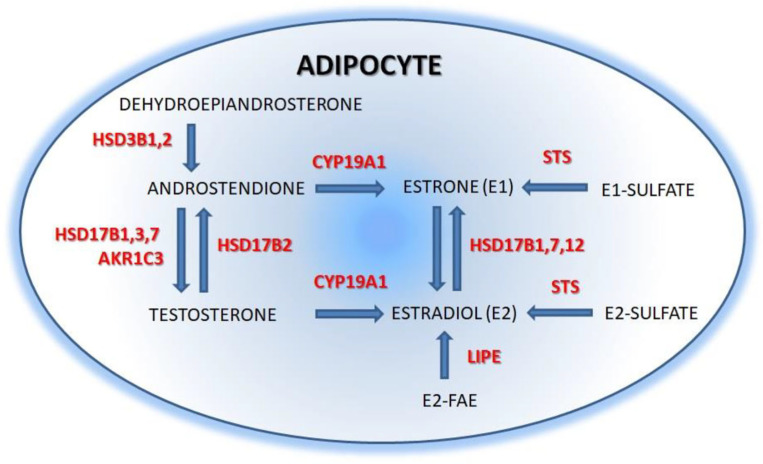
“E1 and E2 can interconvert due to the activity of several hydroxysteroid dehydrogenase (HSD) enzymes, HSD17β subtypes 1, 7, and 12 (62).”
From Metabolic impact of endogenously produced estrogens by adipose tissue in females and males across the lifespan (2025) · cites this paper as [62]
Experimental — accuracy not yet measuredThe source backs part of the claim, not all of it — or backs it for a different population, condition or comparison.
In the citing paper
“Briefly, as shown in Figure 1 , gonadal sex steroids are synthesized from cholesterol by the enzymatic action of steroidogenic acute regulatory protein (StAR) and CYP11A1.”
From Metabolic impact of endogenously produced estrogens by adipose tissue in females and males across the lifespan (2025) · cites this paper as [62]
Experimental — accuracy not yet measuredThe source backs part of the claim, not all of it — or backs it for a different population, condition or comparison.
In the citing paper
“E1 is primarily synthesized in adipose tissue through the aromatization of androgens via aromatase (CYP19A1) (62, 177).”
From Metabolic impact of endogenously produced estrogens by adipose tissue in females and males across the lifespan (2025) · cites this paper as [62]
Experimental — accuracy not yet measuredThe source backs part of the claim, not all of it — or backs it for a different population, condition or comparison.
In the citing paper
“the major substrates for aromatase-mediated estrogenesis in WAT are DHEA and androstenedione, and may be driven by inflammatory cytokines (62, 98).”
From Metabolic impact of endogenously produced estrogens by adipose tissue in females and males across the lifespan (2025) · cites this paper as [62]
Experimental — accuracy not yet measuredThe source backs part of the claim, not all of it — or backs it for a different population, condition or comparison.
In the citing paper
“WAT converts androgens to E1 via CYP19A1 (62, 141), an enzyme that appears to increase with adiposity in males due to the decline in available testosterone (187).”
From Metabolic impact of endogenously produced estrogens by adipose tissue in females and males across the lifespan (2025) · cites this paper as [62]
Experimental — accuracy not yet measured
3 more claims about this paper
Create a free account to see every claim other papers make about this one.
Self-check
Percentages, sums and reported differences re-computed from the paper’s own numbers.
The self-check needs the paper’s full text.
Citations
Cites
The metabolic phenotype in obesity: Fat mass, body fat distribution, and adipose tissue function
Goossens, G. H. (2017) · Obesity Facts · doi:10.1159/000471488 · Cited by 8,481
Identification and Importance of Brown Adipose Tissue in Adult Humans
Cypess, A. M., Lehman, S., Williams, G., Tal, I., Rodman, D., Goldfine, A. B., Kuo, F. C., Palmer, E. L., Tseng, Y.-H., Doria, A., et al. (2009) · New England Journal of Medicine · doi:10.1056/nejmoa0810780 · Cited by 4,399
Estrogen Resistance Caused by a Mutation in the Estrogen-Receptor Gene in a Man
Smith, E. P., Boyd, J., Frank, G. R., Takahashi, H., Cohen, R. M., Specker, B., Williams, T. C., Lubahn, D. B., & Korach, K. S. (1994) · New England Journal of Medicine · doi:10.1056/nejm199410203311604 · Cited by 2,471
Adipocytes as regulators of energy balance and glucose homeostasis
Rosen, E. D., & Spiegelman, B. M. (2006) · Nature · doi:10.1038/nature05483 · Cited by 2,170
Overview of steroidogenic enzymes in the pathway from cholesterol to active steroid hormones
Payne, A. H., & Hales, D. B. (2004) · Endocrine Reviews · doi:10.1210/er.2003-0030 · Cited by 1,766 · cited 1×
“Classical steroidogenic tissues, including gonads, adrenals, and placenta, can synthesize steroid hormones de novo from cholesterol, while steroid synthesis in other tissues mainly relies on the conversion of various precursors obtained from circulation [21].”
BackgroundChait, A., & den Hartigh, L. J. (2020) · Frontiers in Cardiovascular Medicine · doi:10.3389/fcvm.2020.00022 · Cited by 1,529 · cited 1×
“Therefore, the health risk of an obese individual is determined not only by the total amount of adipose tissue but also by its distribution and metabolic activity [4].”
BackgroundIncreased adipose tissue in male and female estrogen receptor-α knockout mice
Heine, P. A., Taylor, J. A., Iwamoto, G. A., Lubahn, D. B., & Cooke, P. S. (2000) · Proceedings of the National Academy of Sciences · doi:10.1073/pnas.97.23.12729 · Cited by 1,282 · cited 1×
“Mice with a global ERα-knockout (αERKO), regardless of sex, are characterized by a significant (50–180%) increase in adipocyte number that is accompanied by insulin resistance, glucose intolerance, and liver steatosis [52].”
BackgroundEstrogen receptor signaling mechanisms
(2019) · Advances in Protein Chemistry and Structural Biology · doi:10.1016/bs.apcsb.2019.01.001 · Cited by 988 · cited 1×
“Upon ligand binding, ERs undergo conformational changes that allow for the formation of heterodimers and interaction with estrogen response elements (ERE) in the promoter of a target gene [37].”
BackgroundThe sexual dimorphism of obesity
Palmer, B. F., & Clegg, D. J. (2015) · Molecular and Cellular Endocrinology · doi:10.1016/j.mce.2014.11.029 · Cited by 919 · cited 1×
“This finding points to the role of estrogen in regulating adipose tissue distribution [6,7].”
BackgroundAndrogens Decrease Plasma Adiponectin, an Insulin-Sensitizing Adipocyte-Derived Protein
Nishizawa, H., Shimomura, I., Kishida, K., Maeda, N., Kuriyama, H., Nagaretani, H., Matsuda, M., Kondo, H., Furuyama, N., Kihara, S., et al. (2002) · Diabetes · doi:10.2337/diabetes.51.9.2734 · Cited by 837
Research works printed but not linked: 1
- 28. Gardner, D.G.; Shoback, D. Greenspan's Basic & Clinical Endocrinology , 7th ed.; McGraw-Hill Medical: New York, NY, USA, 2011.
Cited by
Items 101–200 of 221
Du, Y.-Z., Hu, H.-J., Yang, J.-Q., Yuan, Q., Huang, R., Dong, Q.-X., Guo, B., Cao, Y. J., & Guo, J. (2024) · Journal of Health Population and Nutrition · doi:10.1186/s41043-024-00725-x · Cited by 2
Platnick, C., Choi, Y. J., Narongkiatikhun, P., Bekelman, N. J., Rountree-Jablin, C., Birznieks, C. L., Sell, E., Tommerdahl, K. L., de Boer, I. H., Shah, V. N., et al. (2025) · Journal of Pediatric Endocrinology and Metabolism · doi:10.1515/jpem-2024-0254 · Cited by 2
Sex-Specific Characteristics of Perivascular Fat in Aortic Aneurysms
Heller, K., Doukas, P., Uhl, C., & Gombert, A. (2025) · Journal of Clinical Medicine · doi:10.3390/jcm14093071 · Cited by 2
Hidayat, F., Santoso, A. H., & Wijaya, B. A. (2025) · Jurnal Kesehatan Amanah · doi:10.57214/jka.v9i1.929 · Cited by 2
Dong, H., Guo, M., Yang, Y., Fu, C., Li, X., & Cheng, H. (2025) · Scientific Reports · doi:10.1038/s41598-025-07099-y · Cited by 2
Ben‐Aicha, S., Srivastava, P. K., Kararigas, G., Devaux, Y., Emanueli, C., & Sopić, M. (2025) · Pharmacological Reviews · doi:10.1016/j.pharmr.2025.100091 · Cited by 2
Brad, G.-F., Jugănaru, I., Nicoară, D.-M., Scutca, A.-C., Bugi, M.-A., Asproniu, R., Chelu, A.-D., Basaca, D.-G., Corneanu, M., & Mărginean, O. (2025) · Journal of Clinical Medicine · doi:10.3390/jcm14020610 · Cited by 1
“The biological assessment of CTNNB1 mutation status in tumors is recommended to rule out other differential diagnoses and help exclude any associated syndromic conditions [42,43].”
Bai, J., Lv, P., Li, L., Cheng, S., & Chang, J. (2025) · Scientific Reports · doi:10.1038/s41598-025-08891-6 · Cited by 1
“This may be explained by higher endogenous estrogen production in obese individuals due to increased aromatase activity in adipose tissue, which converts androgens to estrogens, thereby supporting bone maintenance 26 .”
Sá, D., Mendonça, M. I., Sousa, F., Abreu, G., Ferreira, M., Henriques, E., Freitas, S., Rodrigues, M., Borges, S., Guerra, G., et al. (2025) · Genes · doi:10.3390/genes16091019 · Cited by 2
“This fact supports that oestrogen and other sex hormones modulate gene expression and adipose tissue function differently in women [18–20].”
Visceral adipose tissue and the female heart: mechanisms and implications
Fahim, M. A., Yao, Y., & Xuan, W. (2025) · Current Opinion in Physiology · doi:10.1016/j.cophys.2025.100871 · Cited by 1
Khaing, W., Nyamsuren, U., & Shin, S. (2025) · Nutrition Research · doi:10.1016/j.nutres.2025.10.008 · Cited by 1
Pividori, I., Peric, T., Comin, A., Rosso, N., Gazzin, S., Corazzin, M., & Prandi, A. (2025) · Life · doi:10.3390/life15111722 · Cited by 1
“Importantly, given the inhibitory influence of estrogens on adipogenesis and lipogenesis its deficiency leads to excessive fat accumulation and impairs adipocyte function [71].”
Mailloux‐Salinas, P., Jiménez‐Martínez, C., Arias‐Chávez, D. J., Gordillo-Bernal, A. A., Cid‐Gallegos, M. S., Alamilla‐Beltrán, L., & Bravo, G. (2025) · Molecules · doi:10.3390/molecules30244673 · Cited by 1
“This intracrine secretion could exert autocrine/paracrine protective effects, mitigating chronic inflammation and partially preserving insulin sensitivity within this depot [46–48].”
Chambers, P. W. (2025) · Journal of Biomedical Research & Environmental Sciences · doi:10.37871/jbres2177 · Cited by 1
Jeong, D.-H., Pathak, R. K., Kim, T., Kim, J.-M., & Lee, H. (2025) · Comparative Biochemistry and Physiology Part C Toxicology & Pharmacology · doi:10.1016/j.cbpc.2025.110441 · Cited by 1
Unraveling breast cancer risk with a focus on menopausal status: a large case–control study
Jacob, J. S., George, P. S., Mathew, B. S., Nair, R. A., & Mathew, A. (2025) · Cancer Causes & Control · doi:10.1007/s10552-025-02090-4 · Cited by 1
Zhang, L., Yang, X., Yu, Z., Li, X., Wu, Y., Yang, Z., Jing, X., Xu, Q., Yu, Z., Xu, B., et al. (2026) · International Immunopharmacology · doi:10.1016/j.intimp.2025.116157 · Cited by 1
ERα activates NAMPT/IL-33 signaling to enhance beige thermogenesis and metabolic fitness
Hu, R., Park, J., Qian, Y., Xiong, S., Elsabbagh, A. H., Chhikara, A., FAN, H., Shi, Z., Liu, L., Li, Y., et al. (2026) · Science Advances · doi:10.1126/sciadv.adz1385 · Cited by 1
“ER α and ER β are the two primary estrogen receptors, with recent studies implicating ER α in obesity-associated adipose tissue dysfunction ( 52 – 54 ).”
Sangha, G. S., Sapp, R. M., Weber, C. M., Torbit, D., Rangachar, N., Barnes, A., & Clyne, A. M. (2026) · Physiological Reports · doi:10.14814/phy2.70746 · Cited by 1
“…2010; Sousa et al., 2019; Victorio et al., 2021; Wang et al., 2012; Xia et al., 2016; Xia et al., 2017), even though animal models show sex-and hormone-dependent differences in adipose tissue development, metabolism, inflammation, and adipokine secretion (Kuryłowicz, 2023; Steiner & Berry, 2022).”
Mishra, S., Su, Y., Kumar, A., Singh, S., Finlin, B. S., Hsu, F., Lee, J., Furdui, C. M., Kern, P. A., Das, S. K., et al. (2026) · Obesity · doi:10.1002/oby.70157 · Cited by 2
“The ESR1 gene is well established as a modulator of various components of metabolic syndrome such as HDL cholesterol, LDL metabolism, and blood pressure [17].”
Cross-Generational Integration of Exercise and Nutritional Encoding in Offspring Adipose Genomics
Chae, S. A., Yoo, C., & Son, J. S. (2026) · International Journal of Molecular Sciences · doi:10.3390/ijms27062623 · Cited by 1
“Sex hormones such as estrogens and androgens exert powerful regulatory effects on adipose tissue differentiation, distribution, and endocrine function [150,166,167], whereas adipose tissue itself actively produces and metabolizes hormones that shape systemic physiology [168].”
OZKAN, E., KOCATEPE, N., & Avuk, H. S. (2026) · BMC Women s Health · doi:10.1186/s12905-026-04412-3 · Cited by 1
“Adipose tissue functions not merely as a passive energy reservoir but as a metabolically active endocrine organ that modulates estrogen metabolism and secretes pro-inflammatory cytokines [32].”
White adipose atrophy exacerbates cold stress and accelerates aging in male mice
Liu, Z., Hu, W., Tan, X., Sun, S., Huang, X., Meng, Y., Zhao, N., Wang, M., Wu, W., Qian, M., et al. (2026) · Nature Communications · doi:10.1038/s41467-026-71857-3 · Cited by 1
Evans, J., & Torres, W. I. (2026) · Cureus · doi:10.7759/cureus.107452 · Cited by 1
“Obesity contributes to increased peripheral aromatization of adrenal androgens within adipose tissue, resulting in elevated circulating estrone levels and a state of relative unopposed estrogen exposure [11].”
The Role of Physical Activity in Managing Endometriosis: A Comprehensive Review
Papież, M., Bartkiewicz, K., Kostro, J. M., Libera, A., Jędra, Z., Domosud, K., Makulec, G., Zienkiewicz, D., Novik, L., & Kozicki, M. J. (2026) · Quality in Sport · doi:10.12775/qs.2026.55.71029 · Cited by 1
Alsafar, A., & Sehree, M. (2026) · Libyan Journal of Medical and Applied Sciences · doi:10.64943/ljmas.2026.040202 · Cited by 1
Omurzakov, A., Omurzakov, A. M., Burkhart, R. J., Voos, J. E., Calcei, J. G., & Apostolakos, J. M. (2026) · Arthroscopy The Journal of Arthroscopic and Related Surgery · doi:10.1002/arj.70370 · Cited by 1
Więcek, M., Kantorowicz, M., Szymura, J., Kuśmierczyk, J., Lipowska, M., & Szyguła, Z. (2026) · International Journal of Molecular Sciences · doi:10.3390/ijms27136019 · Cited by 1
“In women, sex hormones are important modulators of adipocytokine secretion at different ages [16].”
Associations of the unhealthy plant-based diet index with hsCRP and BMI in Korean adults
Yoo, A., Shin, I., Son, H., Jang, W., & Kim, H. (2026) · Frontiers in Nutrition · doi:10.3389/fnut.2026.1836622 · Cited by 1
“These findings emphasize the regulatory role of estrogen in insulin responsiveness and its significance in adipose tissue development and function (41, 42).”
Depot-Dependent Biology of Human Adipose Tissues and Metabolic Health
Divoux, A., & Fried, S. K. (2026) · Annual Review of Nutrition · doi:10.1146/annurev-nutr-061824-053907 · Cited by 1
Šojat, D., Pirić, M., Lukić, M., Horvat, V., Šafer, M., Feldi, I., Bačun, T., & Kibel, A. (2026) · Biomedicines · doi:10.3390/biomedicines14091921 · Cited by 1
Górecka, K., & Krzyzanowska, M. K. (2026) · Comprehensive physiology · doi:10.1002/cph4.70271 · Cited by 1
Mafla-España, M. A., Torregrosa, M. D., Beamud-Cortés, M., Bermell-Marco, L., Rubio‐Briones, J., & Cauli, O. (2023) · Biomolecules · doi:10.3390/biom13111642 · Cited by 1
“…tissue, in addition to its function as a relevant site of steroid conversion, possesses the ability to initiate steroid production de novo [32,33 In this context, the aromatase enzyme emerges as an essential component in the biosynthesis In this context, the aromatase enzyme emerges as an…”
BackgroundVidović, V., Novaković, I. V., Damnjanović, T., Savic, Z. R., Vidović, S., Škrbić, R., & Maksimović, N. (2023) · Journal of Medical Biochemistry · doi:10.5937/jomb0-47180 · Cited by 1
“Namely, in the puberty increased secretion of progesterone, estrogen and androgen hormones in female compared to adolescent boys, which might lead to increased BMI and visceral adiposity (22).”
BackgroundHuang, C., Ma, S., & Ou, J. (2024) · Elsevier eBooks · doi:10.1016/b978-0-443-15978-7.00075-8 · Cited by 1
Consequences of Oestradiol Deficiency in Menopausal Women
Newson, L. R., & Glynne, S. (2025) · Springer eBooks · doi:10.1007/978-3-031-89650-7_2 · Cited by 1
Inflammatory and endothelial dysfunction markers in females with metabolic syndrome aged 50–75 years
Pusparini, P., Wratsangka, R., Merijanti, L. T., Meiyanti, M., & Yaswir, R. (2023) · Journal of Health Sciences · doi:10.17532/jhsci.2023.2003
“After menopause, estradiol is replaced by estrone, synthesized in adipose tissue from adrenal dehydroepiandrosterone (19).”
BackgroundEnvironmental Obesogens: What You Need to Know
JABAQJI, M., NAKAMEH, S., KABEER, O., & Joujeh, D. (2024) · Journal of Advanced Pharmacy Research · doi:10.21608/aprh.2024.284605.1266
“Findings from randomized controlled trials indicate that phytoestrogens' effects on body weight are specific to the compound and vary depending on the metabolic state 16 .”
BackgroundEtude du rôle de PiT2 dans le métabolisme énergétique
Guicheteau, M. (2024) · theses.fr (ABES) · doi:10.70675/8dbe87e5zdf64z4e29zb4f2zf5ab04140784
Significance of Adipose Tissue as an Endocrine Organ
Avtanski, D. B., & Stojchevski, R. (2024) · Contemporary Endocrinology · doi:10.1007/978-3-031-72570-8_1
Endocrine Interplay in Metabolic Syndrome
Kale, M. B., Wankhede, N. L., Upaganlawar, A. B., & Upasani, C. D. (2024) · Advances in biochemistry in health and disease · doi:10.1007/978-3-031-75686-3_17
Zepeda, D., Pereira, A. P. R., Íñiguez, G., & Verónica Mericq, G. (2025) · Clinical Endocrinology · doi:10.1111/cen.15215
“The bidirectional relationship between estrogens and adiposity have been previously described in different studies in adulthood [22, 23].”
Phytobiotics in Animal Nutrition
Farag, M. R., Alagawany, M. M., El-Hack, M. E. A., Naiel, M. A. E., Madkour, M., Alqhtani, A. H., Tufarelli, V., Attia, Y. A., Khafaga, A. F., & de Oliveira, M. C. (2025) · BENTHAM SCIENCE PUBLISHERS eBooks · doi:10.2174/9789815322767125010006
Mokrianyn, N. (2025) · Journal of Education Health and Sport · doi:10.12775/jehs.2025.80.60415
Patel, M., Mohammed, A., Razab, M. K. A. A., & Bhaskar, L. V. (2025) · Critical Reviews™ in Oncogenesis · doi:10.1615/critrevoncog.2025059847
Liu, K. A., Shah, A., Ramshankar, G., & Perry, R. J. (2025) · medRxiv · doi:10.1101/2025.07.14.25331512
“In women who are obese, adipose tissues can increase estrone production due to the activity of aromatase, an enzyme that converts androgens into estrogens [13,14].”
babaheidari, S. R. R., Salahi‐Niri, A., Mohammadi, M. H., Hamidpour, M., & Esmaeili, S. (2025) · Iranian Journal of Blood and Cancer · doi:10.61186/ijbc.17.1.20
“Understanding these regulatory mechanisms is crucial, as they may provide insights into both normal adipose tissue development and pathological conditions associated with aberrant lipid metabolism (12).”
Chambers, P. W. (2025) · Qeios · doi:10.32388/r0na31
Chambers, P. W. (2025) · Qeios · doi:10.32388/r0na31.2
IMPACTOS DA OBESIDADE INFANTIL NO INÍCIO DA PUBERDADE: UMA REVISÃO DOS MECANISMOS ENDOCRINOLÓGICOS
Barros, A. B. C., Belo, A. L. S., Júnior, L. C. B., & Oliveira, F. A. D. J. (2025) · Revista CPAQV - Centro de Pesquisas Avançadas em Qualidade de Vida · doi:10.36692/v17n2-108r
Wendra, W., Tanuwidjaja, T., Hardaningtyas, K., & Fazamuthi, A. R. (2025) · Contagion Scientific Periodical Journal of Public Health and Coastal Health · doi:10.30829/contagion.v7i2.24341
“Among women, muscle mass typically begins to Vol 7 decline around age 45 and peaks at age 65 (Fitriani, 2018; Kuryłowicz, 2023).”
Chambers, P. W. (2025) · Qeios · doi:10.32388/r0na31.3
Metabolic Reprogramming in Obesity-Linked Cancers: Interplay with Diabetic Pathophysiology
Kato Jumba, K. (2025) · NEWPORT INTERNATIONAL JOURNAL OF SCIENTIFIC AND EXPERIMENTAL SCIENCES · doi:10.59298/nijses/2025/63.212220 · Cited by 1
Hou, Y., Guo, Y., Wu, J., Lou, N., & Yang, D. (2025) · Annals of the Academy of Medicine Singapore · doi:10.47102/annals-acadmedsg.2025170
Tang, K., Shangguan, S., Wang, Y., & Qian, B. (2025) · Research Square · doi:10.21203/rs.3.rs-7964408/v1
Santoso, A. H., Wijaya, B. A., Lumintang, V. G., & Dewanto, P. G. T. (2025) · Jurnal Pengabdian Kolaborasi dan Inovasi IPTEKS · doi:10.59407/jpki2.v3i6.3260
Lontoh, S. O., Santoso, A. H., Wijaya, B. A., Philo, A., & Amertha, A. A. N. P. (2025) · Jurnal Pengabdian Kolaborasi dan Inovasi IPTEKS · doi:10.59407/jpki2.v3i6.3261
Liang, K., Streed, C. G., de la Vega, P. B., & Cohen, B. M. (2026) · Research and Practice in Thrombosis and Haemostasis · doi:10.1016/j.rpth.2026.103369
“Another mechanism of obesity-related hypercoagulability is via aromatase activity in adipose tissue, which leads to the synthesis of estradiol from testosterone and estrone from androstenedione substrates [28].”
Peran Antropometri Lingkar Tubuh dan Tebal Lemak Subkutan dalam Deteksi Dini Sindrom Metabolik
Ariwibowo, D. D., Santoso, A. H., Wijaya, B. A., Setiady, B. A., & Hekmatyar, H. (2026) · Science and Technology · doi:10.69930/scitec.v3i1.618
“( Kuryłowicz, 2023; O’Sullivan, 2009; Pedersen et al., 2004; Shapira, 2013) Analisis berdasarkan usia menunjukkan bahwa kelompok usia 30 – 50 tahun memiliki variasi yang lebih besar dalam lingkar perut dan tebal lipatan lemak.”
Age And Gender Differences In Body Fat Composition: A Cross-Sectional Study
Ilahika, A. P., Pons-Fuster, E., Saleh, H., & Noerwahjono, A. (2025) · Saintika Medika · doi:10.22219/sm.vol21.smumm2.43010
Zhang, J., Hou, M., Zhang, J., Wu, S., & YANG, W. (2026) · Obesity Surgery · doi:10.1007/s11695-026-08502-x
Adipose Tissue and Renal Carcinoma: A Protumor Metabolic and Endocrine Alliance
Ferrando, M., Moya-Morales, D., Romeo, L. R., Carrillo, M. A., Cano, R. Y., Gómez, S. E., López-Fontana, C. M., Carón, R. W., Bruna, F., & Pistone‐Creydt, V. (2026) · International Journal of Molecular Sciences · doi:10.3390/ijms27031528
Dercum’s Disease: Bridging Present Understanding and Emerging Directions
Gorini, F., Coi, A., Verdelli, A., Magnaterra, E., Magliulo, M., Sanna, L., Corti, V., Landini, S., Donati, M., Bonanni, I., et al. (2026) · Life · doi:10.3390/life16020290
“Estrogens may also play a role in DD pathogenesis, given several lines of evidence indicating their key role in regulating adipose tissue development and function in mammals [19,25].”
Vallée, A., & Ayoubi, J.-M. (2026) · PLoS ONE · doi:10.1371/journal.pone.0329110
“Adipose tissue plays a critical role in hormone metabolism, particularly in estrogen production [36,37].”
Balcı, A., Çakır, D. A., KÖSE, S. B. E., & Erkekoğlu, P. (2026) · Journal of Applied Toxicology · doi:10.1002/jat.70083
“The conversion rate of androstenedione to estrone increases with age and adipose tissue volume and is higher in women with gynoid compared to android obesity (Kuryłowicz 2023).”
Zhang, M., Jiang, L., Wang, Q., & Meng, J. (2026) · Population Health Management · doi:10.1177/19427891261416128
Youngiam, W., Kitreerawutiwong, N., & Rakprasit, J. (2026) · BMC Nutrition · doi:10.1186/s40795-026-01290-8
“In addition, the menopausal transition is linked to a decreased resting metabolic rate and reduced physical activity, both contributing factors to weight gain [72].”
Early effects of ovariectomy on bone health, calcium homeostasis, and antioxidant status in rats
Wawrzyniak, N., Selvan, D., Cholik, R. S., & Suliburska, J. (2026) · Acta Scientiarum Polonorum Technologia Alimentaria · doi:10.17306/j.afs.001488
Chen, Y., Shi, X., Liu, N., & Feng, Z. (2026) · PLoS ONE · doi:10.1371/journal.pone.0345257
Biederman, P. D. F., Sacht, A. Z. T., Jassniker, V. B., de Lima, M. P., Nassar, C. A., Costa, R. M., Schneider, S. C. S., & Nassar, P. O. (2026) · Revista Multidisciplinar do Nordeste Mineiro · doi:10.66104/1epwtw35
Early in, early out: reproductive lifespan timing and cardiometabolic risk in women
Calcaterra, V., Nappi, R. E., Cucinella, L., Scavone, I. A. M., Parrotta, G. E., & Zuccotti, G. (2026) · Journal of Endocrinological Investigation · doi:10.1007/s40618-026-02890-8
Chukwuka, A. V., Sharma, P., & Adeogun, A. O. (2026) · Next research. · doi:10.1016/j.nexres.2026.101732
Shen-hao, Z., Yang, 杨. Y., & Zhang, Y. Y. (2026) · World Journal of Clinical Oncology · doi:10.5306/wjco.v17.i4.117705
Zhang, Y., Martínez‐Téllez, B., Kindt, A. S. D., Drouin, N., Harms, A. C., Hankemeier, T., Ruiz, J. R., & Jurado‐Fasoli, L. (2026) · Diabetes Obesity and Metabolism · doi:10.1111/dom.70772
“Such hormonal effects are likely tissue-specific, reflecting distinct regulatory actions of oestrogen and other sex hormones on lipid metabolism across adipose tissue, liver and skeletal muscle [62–65].”
Nam, S. Y., & Jo, J. (2026) · Menopause The Journal of The North American Menopause Society · doi:10.1097/gme.0000000000002767
Body proportion is not affected by sex in LARON syndrome.
Guevara, A., & Bright, G. (2026) · Growth Hormone & IGF Research · doi:10.1016/j.ghir.2026.101701
Effect of obesity on natural fertility in women of reproductive age : a literature review
Cassar, L. (2026) · OAR@UM (University of Malta)
Prabhata, W. R., Pratama, G. Y., & Kaldella, S. A. T. (2026) · JURNAL FARMASIMED (JFM) · doi:10.35451/gnmer592
Diabetes and cancer incidence among adults in the Hispanic Community Health Study/Study of Latinos
Parada, H., Manoharan, L., Aceves, B., McDaniels-Davidson, C. R., Wanjerkhede, P., Agalliu, I., Pichardo, M. S., Sotres‐Alvarez, D., Garcia‐Bedoya, O., Cordero, C., et al. (2026) · Cancer · doi:10.1002/cncr.70430
Li, Z., Liu, Q., Wang, L., Wang, C., Wang, L., Li, S., & Hu, Q. (2026) · Biological Trace Element Research · doi:10.1007/s12011-026-05150-1
“In addition, boron exhibits antioxidant and anti-inflammatory properties [ 14, 17], which can attenuate chronic low-grade inflammation induced by estrogen deficiency, thereby reduces abnormal fat accumulation and excessive weight gain [ 33, 41 ].”
Zhou, F., Zhong, T., He, S., Yang, G., Ding, X., Tian, G., Xiang, S., Tan, S., Zhao, S., & Yan, Y. (2026) · Research Square · doi:10.21203/rs.3.rs-9766806/v1
Shah, F. H., Cho, J. S., Na, J., Chung, H.-J., Jeong, N. Y., & Jung, J. (2026) · Computational Biology and Chemistry · doi:10.1016/j.compbiolchem.2026.109141
Konjedic, T. (2026) · Repository of the University of Primorsk (University of Primorska)
Hypogonadism and Metabolic Disorders
Cignarelli, A., Genchi, V. A., & Jayasena, C. N. (2026) · Endocrinology · doi:10.1007/978-3-319-29456-8_50-1 · Cited by 1
Vázquez-Vázquez, L. C., Nava-Cabrera, A., Soto‐Sánchez, J., Ramírez-Cruz, A., Cruz, M., Cossío-Torres, P. E., Layseca‐Espinosa, E., Vázquez‐Moreno, M. A., Hernández‐Mendoza, H., & Ríos-Lugo, M. J. (2026) · BioMetals · doi:10.1007/s10534-026-00839-1
“This detail is relevant because Cu metabolism is affected by estrogen levels, which influence its distribution, transport, and potential pro-oxidant activity (Arredondo et al. 2010; Kuryłowicz 2023).”
Ansari, M., Hussain, F., Shopon, M., Ajmal, H., Asif, M., & David, S. (2026) · Annals of Rehabilitation Medicine · doi:10.5535/arm.250134
“Estrone (E1), derived from www.e-arm.org peripheral aromatization of androstenedione, becomes the predominant, but significantly less potent, estrogen [9].”
Zhou, Q., Zhang, X., Zhang, T., Xu, L., Gu, X., Lin, J. F., Ma, J., & Li, F. (2026) · Frontiers in Psychology · doi:10.3389/fpsyg.2026.1833217
“Subcutaneous fat is metabolically milder than visceral fat and serves as a safe energy reserve (Kuryłowicz, 2023; UT Southwestern Medical Center, 2025).”
Deng, M., Zhang, Z., & Chen, N. (2026) · Archives of Gynecology and Obstetrics · doi:10.1007/s00404-026-08518-9
“At a cellular level, diminished estradiol availability may be linked to visceral fat accumulation by impairing mitochondrial efficiency, suppressing AMPK-driven lipid oxidation, and weakening ERα-dependent control of adipocyte growth [33, 34].”
The Anatomy of the Human Linea Alba: A Systematic Review and Meta-analysis
Martonovich, N., Fede, C., Bon, G. D., Sun, Y., Luca, C. D., Stecco, C., & Behrbalk, E. (2026) · Plastic & Reconstructive Surgery Global Open · doi:10.1097/gox.0000000000007935
Sadykov, B., Ibrayeva, A., Ismoldayev, Y., Едигеевич, Ш. М., Saliev, T. M., Sadykova, A., Tanabayeva, S., & Fakhradiyev, I. R. (2026) · International Journal of Environmental Research and Public Health · doi:10.3390/ijerph23070934
“These findings are consistent with current concepts that adipose tissue is an active endocrine organ involved in the regulation of estrogen metabolism, inflammation, and metabolic function [23–25].”
Rivero, G., Rodríguez, A., Catalán, V., Ramírez, B., Carbone, F., Montecucco, F., Gómez‐Ambrosi, J., Frühbeck, G., & Becerril, S. (2026) · Current Obesity Reports · doi:10.1007/s13679-026-00740-5
“Evidence from animal models indicates that estrogens promote adipocyte differentiation and adipogenesis as well as the gene expression pathways that regulate insulin sensitivity and lipogenesis [33].”
InfluentialFarhadi‐Azar, M., Naz, M. S. G., Mousavi, M. A., Pezhdam, P., Azizi, F., & Tehrani, F. R. (2026) · Journal of Endocrinological Investigation · doi:10.1007/s40618-026-02993-2
“It is well-established that adipose tissue act as an endocrine organ [7] and plays role in estrogen production [8], immune modulation [9], and chronic inflammation [ 10].”
Yudhitiara, N., & Santoso, A. H. (2026) · Jurnal Pengabdian West Science · doi:10.58812/jpws.v5i07.3553
“(Ekingen et al., 2022; Kuryłowicz, 2023; Lee et al., 2026) Kadar lemak tubuh yang relatif lebih tinggi pada sebagian peserta memiliki implikasi kesehatan yang penting karena peningkatan jaringan adiposa berkaitan erat dengan risiko gangguan metabolik dan inflamasi kronik derajat rendah.”
Real-World Evidence for Breast Cancer Risk Stratification: Insights from the P.I.N.K. Study
Franchini, M., Denoth, F., Pieroni, S., Innocenti, F., Anastasi, G., Montrucchio, E., & Molinaro, S. (2026) · Cancers · doi:10.3390/cancers18152435
“As a result, obesity is frequently associated with a persistent low-grade inflammatory condition known as metainflammation [25].”
Chen, P., Lv, X., Su, H., Wu, H., Zhang, Z., Zhang, B., & Zhang, F. (2026) · Frontiers in Oncology · doi:10.3389/fonc.2026.1752259
Meshkat, K., Gijbels, A., Afman, L. A., Goossens, G. H., Blaak, E. E., & Meex, R. C. R. (2026) · Diabetes Research and Clinical Practice · doi:10.1016/j.diabres.2026.113480
Khan, K. H., Nisa, M.-U., Ahmad, N., & Umbreen, H. (2026) · Genetics and Molecular Research · doi:10.4238/8na3re95
Khan, K. H., Nisa, M.-U., Ahmad, N., & Umbreen, H. (2026) · Genetics and Molecular Research · doi:10.4238/2ye5ye86
Alum, E. U., Obasi, D. C., Uzor, S., Eji, M. O., Amadi, E. B., Emeruwa, A. C., Akwari, A. A., Okoroh, P. N., Aniokete, U. C., Alum, B. N., et al. (2026) · Obesity Medicine · doi:10.1016/j.obmed.2026.100738
Association between body composition and perimenopausal symptom severity in Irish women
Murphy, M. B., Cuskelly, G. J., & Heavey, P. (2026) · Post Reproductive Health · doi:10.1080/20533691.2026.2704833
Metadata
- Authors
- Kuryłowicz, A.
- Affiliations
- Mossakowski Medical Research Institute, Polish Academy of Sciences (PL)
- Corresponding author
- Kuryłowicz, Alina
- ORCID
- Kuryłowicz, Alina
- Venue
- Biomedicines
- Publisher
- MDPI AG
- Published
- 2023-02-24
- Volume
- 11
- Issue
- 3
- Pages
- 690
- ISSN
- 2227-9059 (ISSN-L)
- PMC
- PMC10045924
- OpenAlex
- W4321786273
- Semantic Scholar
- 1e70d4f2c94aa332018deb017aac0942bbcefa03
- Cited by
- 178
- References
- 175
- Citations by year
- 2026: 67 · 2025: 74 · 2024: 26 · 2023: 11
- FWCI
- 6.86
- Type
- journal article
- Language
- en
- Open access
- gold
- doi.org
- Licence
- Locations
- Biomedicines (publishedVersion, cc-by)
- PubMed Central (publishedVersion, cc-by)
- PubMed (publishedVersion)
- DOAJ (DOAJ: Directory of Open Access Journals) (submittedVersion, cc-by-sa)
- Funders
- National Science Centre Poland (2018/31/B/NZ5/01556)
- Topics
- Life Sciences › Biochemistry, Genetics and Molecular Biology › Endocrinology › Estrogen and related hormone effects
- Health Sciences › Medicine › Endocrinology, Diabetes and Metabolism › Adipokines, Inflammation, and Metabolic Diseases
- Health Sciences › Medicine › Physiology (medical) › Adipose Tissue and Metabolism
- Keywords
- estrogen, adipose tissue, obesity, menopause, hormone replacement therapy, estrogen receptor, adipogenesis, adipocyte function, estrogen synthesis, obesity-associated inflammation, estrogen derivatives, obesity treatment
About these checks
Registry, retraction, Cites and statistics results are computed, not judged, with one exception: a printed reference that no index lists is read once by a model before it counts as a citation error. Claims are extracted by a model and kept only when their quote appears verbatim in the text; each cited source is then checked, with a model’s help, for whether it says what the claim relies on. Those verdicts can be wrong — read the claim’s quote and the cited source before relying on one.
Statistics and arithmetic are recomputed, not judged.
Confidence bands are shown only for fields calibrated on our annotated test set. None is calibrated yet, so no band is shown.
What counts as a claim ›How we measure confidence ›How we check this ›
Are you an author, or do you see a problem with this page? Request a review
Data sources
Bibliographic data: Semantic Scholar, OpenAlex, Crossref.
Contains information from the Semantic Scholar Academic Graph Datasets, made available under the ODC Attribution License (ODC-BY 1.0).
Semantic Scholar’s data is described in: Kinney, R., et al. (2023). The Semantic Scholar Open Data Platform. arXiv:2301.10140.
