

Estrogens in Adipose Tissue Physiology and Obesity-Related Dysfunction
Open accessThe DOI matches its Crossref record; 174 of the 175 references it cites were found in a registry or an index.
Abstract
Menopause-related decline in estrogen levels is accompanied by a change in adipose tissue distribution from a gynoid to an android and an increased prevalence of obesity in women. These unfavorable phenomena can be partially restored by hormone replacement therapy, suggesting a significant role for estrogen in the regulation of adipocytes’ function. Indeed, preclinical studies proved the involvement of these hormones in adipose tissue development, metabolism, and inflammatory activity. However, the relationship between estrogen and obesity is bidirectional. On the one hand-their deficiency leads to excessive fat accumulation and impairs adipocyte function, on the other-adipose tissue of obese individuals is characterized by altered expression of estrogen receptors and key enzymes involved in their synthesis. This narrative review aims to summarize the role of estrogen in adipose tissue development, physiology, and in obesity-related dysfunction. Firstly, the estrogen classification, synthesis, and modes of action are presented. Next, their role in regulating adipogenesis and adipose tissue activity in health and the course of obesity is described. Finally, the potential therapeutic applications of estrogen and its derivates in obesity treatment are discussed.
Overview
The claims and statistics of this paper haven’t been checked yet.
Free: it reads the open-access text and checks the first 5 claims that cite a source we can check. Create a free account to check every claim.
Integrity signals
Registry
Cites
Statistics
Figures
Verification
Claims the paper makes
The claims and statistics of this paper haven’t been checked yet.
Free: it reads the open-access text and checks the first 5 claims that cite a source we can check. Create a free account to check every claim.
Claims other papers make about this one
Each is checked against this paper’s own text: does it say what the citing paper says it does?
The source backs part of the claim, not all of it — or backs it for a different population, condition or comparison.
In the citing paper
“E1 and E2 can interconvert due to the activity of several hydroxysteroid dehydrogenase (HSD) enzymes, HSD17β subtypes 1, 7, and 12 (62).”
From Metabolic impact of endogenously produced estrogens by adipose tissue in females and males across the lifespan (2025) · cites this paper as [62]
Experimental — accuracy not yet measuredThe source backs part of the claim, not all of it — or backs it for a different population, condition or comparison.
In the citing paper
“Briefly, as shown in Figure 1 , gonadal sex steroids are synthesized from cholesterol by the enzymatic action of steroidogenic acute regulatory protein (StAR) and CYP11A1.”
From Metabolic impact of endogenously produced estrogens by adipose tissue in females and males across the lifespan (2025) · cites this paper as [62]
Experimental — accuracy not yet measuredThe source backs part of the claim, not all of it — or backs it for a different population, condition or comparison.
In the citing paper
“E1 is primarily synthesized in adipose tissue through the aromatization of androgens via aromatase (CYP19A1) (62, 177).”
From Metabolic impact of endogenously produced estrogens by adipose tissue in females and males across the lifespan (2025) · cites this paper as [62]
Experimental — accuracy not yet measuredThe source backs part of the claim, not all of it — or backs it for a different population, condition or comparison.
In the citing paper
“the major substrates for aromatase-mediated estrogenesis in WAT are DHEA and androstenedione, and may be driven by inflammatory cytokines (62, 98).”
From Metabolic impact of endogenously produced estrogens by adipose tissue in females and males across the lifespan (2025) · cites this paper as [62]
Experimental — accuracy not yet measuredThe source backs part of the claim, not all of it — or backs it for a different population, condition or comparison.
In the citing paper
“WAT converts androgens to E1 via CYP19A1 (62, 141), an enzyme that appears to increase with adiposity in males due to the decline in available testosterone (187).”
From Metabolic impact of endogenously produced estrogens by adipose tissue in females and males across the lifespan (2025) · cites this paper as [62]
Experimental — accuracy not yet measured
3 more claims about this paper
Create a free account to see every claim other papers make about this one.
Self-check
Percentages, sums and reported differences re-computed from the paper’s own numbers.
The self-check needs the paper’s full text.
Citations
Cites
The metabolic phenotype in obesity: Fat mass, body fat distribution, and adipose tissue function
Goossens, G. H. (2017) · Obesity Facts · doi:10.1159/000471488 · Cited by 8,481
Identification and Importance of Brown Adipose Tissue in Adult Humans
Cypess, A. M., Lehman, S., Williams, G., Tal, I., Rodman, D., Goldfine, A. B., Kuo, F. C., Palmer, E. L., Tseng, Y.-H., Doria, A., et al. (2009) · New England Journal of Medicine · doi:10.1056/nejmoa0810780 · Cited by 4,399
Estrogen Resistance Caused by a Mutation in the Estrogen-Receptor Gene in a Man
Smith, E. P., Boyd, J., Frank, G. R., Takahashi, H., Cohen, R. M., Specker, B., Williams, T. C., Lubahn, D. B., & Korach, K. S. (1994) · New England Journal of Medicine · doi:10.1056/nejm199410203311604 · Cited by 2,471
Adipocytes as regulators of energy balance and glucose homeostasis
Rosen, E. D., & Spiegelman, B. M. (2006) · Nature · doi:10.1038/nature05483 · Cited by 2,170
Overview of steroidogenic enzymes in the pathway from cholesterol to active steroid hormones
Payne, A. H., & Hales, D. B. (2004) · Endocrine Reviews · doi:10.1210/er.2003-0030 · Cited by 1,766 · cited 1×
“Classical steroidogenic tissues, including gonads, adrenals, and placenta, can synthesize steroid hormones de novo from cholesterol, while steroid synthesis in other tissues mainly relies on the conversion of various precursors obtained from circulation [21].”
BackgroundChait, A., & den Hartigh, L. J. (2020) · Frontiers in Cardiovascular Medicine · doi:10.3389/fcvm.2020.00022 · Cited by 1,529 · cited 1×
“Therefore, the health risk of an obese individual is determined not only by the total amount of adipose tissue but also by its distribution and metabolic activity [4].”
BackgroundIncreased adipose tissue in male and female estrogen receptor-α knockout mice
Heine, P. A., Taylor, J. A., Iwamoto, G. A., Lubahn, D. B., & Cooke, P. S. (2000) · Proceedings of the National Academy of Sciences · doi:10.1073/pnas.97.23.12729 · Cited by 1,282 · cited 1×
“Mice with a global ERα-knockout (αERKO), regardless of sex, are characterized by a significant (50–180%) increase in adipocyte number that is accompanied by insulin resistance, glucose intolerance, and liver steatosis [52].”
BackgroundEstrogen receptor signaling mechanisms
(2019) · Advances in Protein Chemistry and Structural Biology · doi:10.1016/bs.apcsb.2019.01.001 · Cited by 988 · cited 1×
“Upon ligand binding, ERs undergo conformational changes that allow for the formation of heterodimers and interaction with estrogen response elements (ERE) in the promoter of a target gene [37].”
BackgroundThe sexual dimorphism of obesity
Palmer, B. F., & Clegg, D. J. (2015) · Molecular and Cellular Endocrinology · doi:10.1016/j.mce.2014.11.029 · Cited by 919 · cited 1×
“This finding points to the role of estrogen in regulating adipose tissue distribution [6,7].”
BackgroundAndrogens Decrease Plasma Adiponectin, an Insulin-Sensitizing Adipocyte-Derived Protein
Nishizawa, H., Shimomura, I., Kishida, K., Maeda, N., Kuriyama, H., Nagaretani, H., Matsuda, M., Kondo, H., Furuyama, N., Kihara, S., et al. (2002) · Diabetes · doi:10.2337/diabetes.51.9.2734 · Cited by 837
Aromatase-deficient (ArKO) mice have a phenotype of increased adiposity
Jones, M. E. E., Thorburn, A. W., Britt, K. L., Hewitt, K. N., Wreford, N. G., Proietto, J., Oz, O. K., Leury, B. J., Robertson, K. M., Yao, S., et al. (2000) · Proceedings of the National Academy of Sciences · doi:10.1073/pnas.97.23.12735 · Cited by 729 · cited 2×
“Similarly, ArKO mice have increased systemic IL-6 and TNFα concentrations and recruitment of the pro-inflammatory M1 macrophages [53], while aromatase overexpression (but not 17 β-E2 treatment) reduced adipose tissue inflammation [61,123].”
BackgroundSalpeter, S. R., Walsh, J. M. E., Ormiston, T. M., Greyber, E., Buckley, N. S., & Salpeter, E. E. (2006) · Diabetes, Obesity and Metabolism · doi:10.1111/j.1463-1326.2005.00545.x · Cited by 640 · cited 2×
“However, meta-analyses suggest that properly chosen HRT reduces the proinflammatory state in postmenopausal women with the metabolic syndrome, parallel to the decrease in insulin resistance, fasting glucose, and new-onset diabetes in women without diabetes and reduced insulin resistance and fasting glucose in women wi…”
BackgroundCytochrome P450-mediated metabolism of estrogens and its regulation in human
Tsuchiya, Y., Nakajima, M., & Yokoi, T. (2005) · Cancer Letters · doi:10.1016/j.canlet.2004.10.007 · Cited by 616 · cited 2×
“The hydroxyl group can then be sulfated, glucuronidate , or methylated [31].”
BackgroundSilha, J., Krsek, M., Skrha, J., Sucharda, P., Nyomba, B., & Murphy, L. (2003) · European Journal of Endocrinology · doi:10.1530/eje.0.1490331 · Cited by 589
Combs, T. P., Berg, A. H., Rajala, M. W., Klebanov, S., Iyengar, P., Jimenez-Chillaron, J. C., Patti, M. E., Klein, S. L., Weinstein, R. S., & Scherer, P. E. (2003) · Diabetes · doi:10.2337/diabetes.52.2.268 · Cited by 544
The Subtle Balance between Lipolysis and Lipogenesis: A Critical Point in Metabolic Homeostasis
Saponaro, C., Gaggini, M., Carli, F., & Gastaldelli, A. (2015) · Nutrients · doi:10.3390/nu7115475 · Cited by 529 · cited 1×
“TAG is stored in adipocytes in the form of lipid droplets and mobilized during lipolysis-the process catalyzed by lipoprotein lipase (LPL) leading to the breakdown of TAG into glycerol and free fatty acids (FFA) [91].”
BackgroundMolecular mechanism of estrogen–estrogen receptor signaling
Yaşar, P., Ayaz, G., User, S. D., Güpür, G., & Muyan, M. (2017) · Reproductive Medicine and Biology · doi:10.1002/rmb2.12006 · Cited by 482
Extranuclear Steroid Receptors: Nature and Actions
Hammes, S. R., & Levin, E. R. (2007) · Endocrine Reviews · doi:10.1210/er.2007-0022 · Cited by 475 · cited 2×
“In addition, the activity of mitochondria can be modulated by the nuclear ERs that regulate the expression of genes crucial for mitochondrial actions [41,43].”
BackgroundEstrogen increases in vivo leptin production in rats and human subjects
Shimizu, H., Shimomura, Y., Nakanishi, Y., Futawatari, T., Ohtani, K., Sato, N., & Mori, M. (1997) · Journal of Endocrinology · doi:10.1677/joe.0.1540285 · Cited by 472
Böttner, A., Kratzsch, J., Müller, G., Kapellen, T. M., Blüher, S., Keller, E., Blüher, M., & Kiess, W. (2004) · The Journal of Clinical Endocrinology & Metabolism · doi:10.1210/jc.2004-0303 · Cited by 455
Estradiol Regulates Brown Adipose Tissue Thermogenesis via Hypothalamic AMPK
Martínez de Morentin, P. B., González-García, I., Martins, L., Lage, R., Fernández-Mallo, D., Martínez-Sánchez, N., Ruíz-Pino, F., Liu, J., Morgan, D. A., Pinilla, L., et al. (2014) · Cell Metabolism · doi:10.1016/j.cmet.2014.03.031 · Cited by 451
Role of innate and adaptive immunity in obesity-associated metabolic disease
McLaughlin, T., Ackerman, S. E., Shen, L., & Engleman, E. (2017) · Journal of Clinical Investigation · doi:10.1172/jci88876 · Cited by 444
Xu, A., Chan, K. W., Hoo, R. L. C., Wang, Y., Tan, K. C. B., Zhang, J., Chen, B., Lam, M. C., Tse, C., Cooper, G. J. S., et al. (2005) · Journal of Biological Chemistry · doi:10.1074/jbc.m414231200 · Cited by 419
Impact of Age on the Relationships of Brown Adipose Tissue With Sex and Adiposity in Humans
Pfannenberg, C., Werner, M. K., Ripkens, S., Stef, I., Deckert, A., Schmadl, M., Reimold, M., Häring, H.-U., Claussen, C. D., & Stefan, N. (2010) · Diabetes · doi:10.2337/db10-0004 · Cited by 419
Reassessing human adipose tissue
Cypess, A. M. (2022) · New England Journal of Medicine · doi:10.1056/nejmra2032804 · Cited by 404 · cited 4×
“Subsequently, obesity-associated adipose tissue dysfunction contributes to an unfavorable change in the profile of substances secreted by adipocytes, and thus-to the development of obesity-related complications [1].”
BackgroundInfluentialSex and depot differences in adipocyte insulin sensitivity and glucose metabolism
Macotela, Y., Boucher, J., Tran, T. T., & Kahn, C. R. (2009) · Diabetes · doi:10.2337/db08-1054 · Cited by 401
Economic impacts of overweight and obesity: current and future estimates for eight countries
Okunogbe, A., Nugent, R., Spencer, G., Ralston, J., & Wilding, J. (2021) · BMJ Global Health · doi:10.1136/bmjgh-2021-006351 · Cited by 385 · cited 1×
“This process, known as adipose tissue dysfunction, is believed to underlie the development of insulin resistance predisposing to glucose intolerance and several other obesity-related chronic complications, affecting virtually all organs and significantly deteriorating the quality of life, which constitutes a serious s…”
BackgroundRegional differences in cellular mechanisms of adipose tissue gain with overfeeding
Tchoukalova, Y. D., Votruba, S. B., Tchkonia, T., Giorgadze, N., Kirkland, J. L., & Jensen, M. D. (2010) · Proceedings of the National Academy of Sciences · doi:10.1073/pnas.1005259107 · Cited by 378 · cited 2×
“Subsequently, subcutaneous adipose tissue in healthy women was found to contain a higher content of early-differentiated adipocytes compared to men [63].”
BackgroundFilardo, E. J., & Thomas, P. (2012) · Endocrinology · doi:10.1210/en.2012-1061 · Cited by 366 · cited 1×
“The most prominent form of membrane ER is GPER1 (G protein-coupled membrane receptor1) [41,42].”
BackgroundThe adipose tissue microenvironment regulates depot-specific adipogenesis in obesity
Jeffery, E., Wing, A., Holtrup, B., Sebo, Z., Kaplan, J. L., Saavedra-Peña, R., Church, C. D., Colman, L., Berry, R., & Rodeheffer, M. S. (2016) · Cell Metabolism · doi:10.1016/j.cmet.2016.05.012 · Cited by 352 · cited 3×
“This finding points to the role of estrogen in regulating adipose tissue distribution [6,7].”
BackgroundMaffei, L., Murata, Y., Rochira, V., Tubert, G., Aranda, C., Vazquez, M., Clyne, C. D., Davis, S., Simpson, E. R., & Carani, C. (2004) · The Journal of Clinical Endocrinology & Metabolism · doi:10.1210/jc.2003-030313 · Cited by 342
Role of estrogen receptors in health and disease
Chen, P., Li, B., & Ou-Yang, L. (2022) · Frontiers in Endocrinology · doi:10.3389/fendo.2022.839005 · Cited by 339 · cited 1×
“While ERα plays a stronger physiologic role in females, the activity of ERβ is similar in men and women [36].”
BackgroundResolving the paradox of hepatic insulin resistance
Santoleri, D., & Titchenell, P. M. (2019) · Cellular and Molecular Gastroenterology and Hepatology · doi:10.1016/j.jcmgh.2018.10.016 · Cited by 336
Obesity and Disturbed Lipoprotein Profile in Estrogen Receptor-α-Deficient Male Mice
Ohlsson, C., Hellberg, N., Parini, P., Vidal, O., Bohlooly, M., Rudling, M., Lindberg, M. K., Warner, M., Angelin, B., & Gustafsson, J.-Å. (2000) · Biochemical and Biophysical Research Communications · doi:10.1006/bbrc.2000.3827 · Cited by 332 · cited 2×
“Similarly, ArKO mice have increased systemic IL-6 and TNFα concentrations and recruitment of the pro-inflammatory M1 macrophages [53], while aromatase overexpression (but not 17 β-E2 treatment) reduced adipose tissue inflammation [61,123].”
BackgroundBody weight, body fat distribution, and hormonal replacement therapy in early postmenopausal women
Gambacciani, M., Ciaponi, M., Cappagli, B., Piaggesi, L., De Simone, L., Orlandi, R., & Genazzani, A. R. (1997) · The Journal of Clinical Endocrinology & Metabolism · doi:10.1210/jcem.82.2.3735 · Cited by 321
"USA-Fat": prevalence is related to ambient outdoor temperature-evaluation with 18F-FDG PET/CT.
Cohade, C., Mourtzikos, K. A., & Wahl, R. L. (2003) · PubMed · Cited by 295
The Role of Estrogen in Insulin Resistance
De Paoli, M., Zakharia, A., & Werstuck, G. H. (2021) · The American Journal of Pathology · doi:10.1016/j.ajpath.2021.05.011 · Cited by 290
Sex dimorphism and depot differences in adipose tissue function
White, U. A., & Tchoukalova, Y. D. (2014) · Biochimica et Biophysica Acta (BBA) - Molecular Basis of Disease · doi:10.1016/j.bbadis.2013.05.006 · Cited by 284
Davis, K. E., D. Neinast, M., Sun, K., M. Skiles, W., D. Bills, J., A. Zehr, J., Zeve, D., D. Hahner, L., W. Cox, D., M. Gent, L., et al. (2013) · Molecular Metabolism · doi:10.1016/j.molmet.2013.05.006 · Cited by 278
Pedersen, S. B., Kristensen, K., Hermann, P. A., Katzenellenbogen, J. A., & Richelsen, B. (2004) · The Journal of Clinical Endocrinology & Metabolism · doi:10.1210/jc.2003-031327 · Cited by 276 · cited 12×
“However, menopause and pharmacological castration in women lead to increased accumulation of VAT, which can be partially reversed by HRT [98,99].”
BackgroundInfluentialLeptin as a key regulator of the adipose organ
Picó, C., Palou, M., Pomar, C. A., Rodríguez, A. M., & Palou, A. (2022) · Reviews in Endocrine and Metabolic Disorders · doi:10.1007/s11154-021-09687-5 · Cited by 273
Okazaki, R., Inoue, D., Shibata, M., Saika, M., Kido, S., Ooka, H., Tomiyama, H., Sakamoto, Y., & Matsumoto, T. (2002) · Endocrinology · doi:10.1210/endo.143.6.8854 · Cited by 271 · cited 1×
“In mouse bone marrow stromal cell line (ST-2), overexpressing Erα and Erβ, 17 β-E2 causes lineage shift towards osteoblasts [47].”
BackgroundLobo, R. A., Pinkerton, J. V., Gass, M. L. S., Dorin, M. H., Ronkin, S., Pickar, J. H., & Constantine, G. (2009) · Fertility and Sterility · doi:10.1016/j.fertnstert.2009.03.113 · Cited by 254
The Dynamic Structure of the Estrogen Receptor
Kumar, R., Zakharov, M. N., Khan, S. H., Miki, R., Jang, H., Toraldo, G., Singh, R., Bhasin, S., & Jasuja, R. (2011) · Journal of Amino Acids · doi:10.4061/2011/812540 · Cited by 252 · cited 1×
“α and β, which differ in their tissue expression and function [35].”
BackgroundRen, Y., Zhao, H., Yin, C., Lan, X., Wu, L., Du, X., Griffiths, H. R., & Gao, D. (2022) · Frontiers in Endocrinology · doi:10.3389/fendo.2022.873699 · Cited by 244
The Anti-Inflammatory Effects of Testosterone
Bianchi, V. E. (2019) · Journal of the Endocrine Society · doi:10.1210/js.2018-00186 · Cited by 244
Casabiell, X., Piñeiro, V., Peino, R., Lage, M., Camiña, J., Gallego, R., Vallejo, L. G., Dieguez, C., & Casanueva, F. F. (1998) · The Journal of Clinical Endocrinology & Metabolism · doi:10.1210/jcem.83.6.4849 · Cited by 229
Hormone therapy for postmenopausal women
Pinkerton, J. V. (2020) · New England Journal of Medicine · doi:10.1056/nejmcp1714787 · Cited by 220
Induction of Adipose Tissue Browning as a Strategy to Combat Obesity
Kuryłowicz, A., & Puzianowska-Kuźnicka, M. (2020) · International Journal of Molecular Sciences · doi:10.3390/ijms21176241 · Cited by 219 · cited 1×
“Irrespective of their origin, due to their metabolic properties, the induction of brown adipocytes constitutes an attractive therapeutic approach to combat obesity [1,73].”
BackgroundSelf-citationAromatase expression and regulation in breast and endometrial cancer
Zhao, H., Zhou, L., Shangguan, A. J., & Bulun, S. E. (2016) · Journal of Molecular Endocrinology · doi:10.1530/jme-15-0310 · Cited by 216
Estrogen suppresses transcription of lipoprotein lipase gene
Homma, H., Kurachi, H., Nishio, Y., Takeda, T., Yamamoto, T., Adachi, K., Morishige, K.-I., Ohmichi, M., Matsuzawa, Y., & Murata, Y. (2000) · Journal of Biological Chemistry · doi:10.1074/jbc.275.15.11404 · Cited by 209 · cited 1×
“ERs via interaction with an activator protein (AP-1)-like TGAATTC sequence located in the gene encoding lipoprotein lipase (LPL) downregulate its expression as it was shown in 3T3-L1 preadipocytes [94].”
BackgroundCarrera-Quintanar, L., López Roa, R. I., Quintero-Fabián, S., Sánchez-Sánchez, M. A., Vizmanos, B., & Ortuño-Sahagún, D. (2018) · Mediators of Inflammation · doi:10.1155/2018/9734845 · Cited by 189
Naaz, A., Zakroczymski, M., Heine, P., Taylor, J., Saunders, P., Lubahn, D., & Cooke, P. S. (2002) · Hormone and Metabolic Research · doi:10.1055/s-2002-38259 · Cited by 188 · cited 1×
“Thus, it appears that the ERβ-mediated effects of estrogens are opposite to those mediated by ERα [107].”
BackgroundThe structural biology of oestrogen metabolism
Thomas, M. P., & Potter, B. V. L. (2013) · The Journal of Steroid Biochemistry and Molecular Biology · doi:10.1016/j.jsbmb.2012.12.014 · Cited by 182
Ribas, V., Drew, B. G., Le, J. A., Soleymani, T., Daraei, P., Sitz, D., Mohammad, L., Henstridge, D. C., Febbraio, M. A., Hewitt, S. C., et al. (2011) · Proceedings of the National Academy of Sciences · doi:10.1073/pnas.1104533108 · Cited by 181
Anderson, L. A., McTernan, P. G., Barnett, A. H., & Kumar, S. (2001) · The Journal of Clinical Endocrinology & Metabolism · doi:10.1210/jc.86.10.5045 · Cited by 175 · cited 1×
“Interestingly, neither E1 nor dihydrotestosterone had a gender- or site-specific effect on the preadipocyte proliferation rate [62].”
BackgroundSelective Androgen Receptor Modulators: Current Knowledge and Clinical Applications
Solomon, Z. J., Mirabal, J. R., Mazur, D. J., Kohn, T. P., Lipshultz, L. I., & Pastuszak, A. W. (2019) · Sexual Medicine Reviews · doi:10.1016/j.sxmr.2018.09.006 · Cited by 174
Serum leptin concentration in women: effect of age, obesity, and estrogen administration
Castracane, V. D., Kraemer, R. R., Franken, M. A., Kraemer, G. R., & Gimpel, T. (1998) · Fertility and Sterility · doi:10.1016/s0015-0282(98)00187-3 · Cited by 173
Chen, K. Y., Brychta, R. J., Linderman, J. D., Smith, S., Courville, A., Dieckmann, W., Herscovitch, P., Millo, C. M., Remaley, A., Lee, P., et al. (2013) · The Journal of Clinical Endocrinology & Metabolism · doi:10.1210/jc.2012-4213 · Cited by 173
Gambacciani, M., Ciaponi, M., Cappagli, B., De Simone, L., Orlandi, R., & Genazzani, A. R. (2001) · Maturitas · doi:10.1016/s0378-5122(01)00194-3 · Cited by 173
Androgens inhibit adipogenesis during human adipose stem cell commitment to preadipocyte formation
Chazenbalk, G., Singh, P., Irge, D., Shah, A., Abbott, D. H., & Dumesic, D. A. (2013) · Steroids · doi:10.1016/j.steroids.2013.05.001 · Cited by 167 · cited 1×
“This phenomenon seems to be responsible for the decreased lipid storage capacity in adipose tissue in women with hyperandrogenism and promotes lipotoxicity [67,68].”
BackgroundMetabolic syndrome in menopause and associated factors: a meta-analysis
Pu, D., Tan, R., Yu, Q., & Wu, J. (2017) · Climacteric · doi:10.1080/13697137.2017.1386649 · Cited by 164
Aromatase and estrogen receptor α deficiency
Bulun, S. E. (2014) · Fertility and Sterility · doi:10.1016/j.fertnstert.2013.12.022 · Cited by 155
Sexual Dimorphism and Regulation of Resistin, Adiponectin, and Leptin Expression in the Mouse
Gui, Y., Silha, J. V., & Murphy, L. J. (2004) · Obesity Research · doi:10.1038/oby.2004.185 · Cited by 154
López, M., Lelliott, C. J., Tovar, S., Kimber, W., Gallego, R., Virtue, S., Blount, M., Vázquez, M. J., Finer, N., Powles, T. J., et al. (2006) · Diabetes · doi:10.2337/db05-1356 · Cited by 152
Estrogens and Glucocorticoid Hormones in Adipose Tissue Metabolism
Mattsson, C., & Olsson, T. (2007) · Current Medicinal Chemistry · doi:10.2174/092986707782359972 · Cited by 151 · cited 1×
“This refers to the ability of E2 to upregulate the activity of 11-β-hydroxysteroid dehydrogenase type 1 (11βHSD1) which converts inactive cortisone to active cortisol-an important adipogenesis upregulator in human preadipocytes [64].”
BackgroundOvarian Hormone Status and Abdominal Visceral Adipose Tissue Metabolism
Tchernof, A., Desmeules, A., Richard, C., Laberge, P., Daris, M., Mailloux, J., Rhéaume, C., & Dupont, P. (2004) · The Journal of Clinical Endocrinology & Metabolism · doi:10.1210/jc.2003-031561 · Cited by 147 · cited 1×
“indicated that adipose tissue of postmenopausal women is characterized by a higher LPL expression and basal lipolysis, compared to younger counterparts [101].”
ResultLoss of cyclin‐dependent kinase inhibitors produces adipocyte hyperplasia and obesity
Naaz, A., Holsberger, D. R., Iwamoto, G. A., Nelson, A., Kiyokawa, H., & Cooke, P. S. (2004) · The FASEB Journal · doi:10.1096/fj.04-2631fje · Cited by 144 · cited 1×
“Other potential pathways may involve the activation of cyclin-dependent kinase inhibitors (CDKIs) p27 and p21, since animals with a double p27 and p21 knockout present the same clinical phenotype as αERKO and ArKO mice [59].”
BackgroundPalin, S., McTernan, P. G., Anderson, L. A., Sturdee, D. W., Barnett, A. H., & Kumar, S. (2003) · Metabolism · doi:10.1053/meta.2003.50088 · Cited by 140
Estrogen metabolism in abdominal subcutaneous and visceral adipose tissue in postmenopausal women
Hetemäki, N., Savolainen-Peltonen, H., Tikkanen, M. J., Wang, F., Paatela, H., Hämäläinen, E., Turpeinen, U., Haanpää, M., Vihma, V., & Mikkola, T. S. (2017) · The Journal of Clinical Endocrinology & Metabolism · doi:10.1210/jc.2017-01474 · Cited by 140
Aromatase research and its clinical significance.
Czajka-Oraniec, I., & Simpson, E. R. (2010) · PubMed · Cited by 138
Meal fatty acid uptake in adipose tissue: gender effects in nonobese humans
Romanski, S. A., Nelson, R. M., & Jensen, M. D. (2000) · American Journal of Physiology-Endocrinology and Metabolism · doi:10.1152/ajpendo.2000.279.2.e455 · Cited by 136 · cited 1×
“Indeed, clinical studies show that in women the majority of circulating FAs is taken up by SAT, while in men, a significant number of FAs is preferentially stored in visceral fat [93].”
BackgroundPedersen, S. B., Bruun, J. M., Kristensen, K., & Richelsen, B. (2001) · Biochemical and Biophysical Research Communications · doi:10.1006/bbrc.2001.5763 · Cited by 134 · cited 1×
“The ability of estrogen to induce BAT and increase its thermogenic activity was confirmed in animal models [76,77].”
BackgroundAromatase deficiency in men: a clinical perspective
Rochira, V., & Carani, C. (2009) · Nature Reviews Endocrinology · doi:10.1038/nrendo.2009.176 · Cited by 134
Steroid biosynthesis in adipose tissue
Li, J., Papadopoulos, V., & Vihma, V. (2015) · Steroids · doi:10.1016/j.steroids.2015.03.016 · Cited by 130 · cited 3×
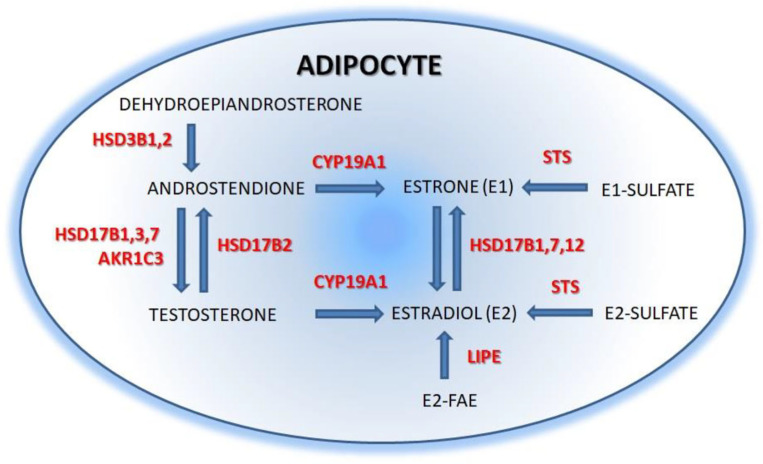
“Although the role of adipose tissue as a major steroid conversion site is well established [22], it was also found to be able to initiate steroidogenesis de novo [23,24].”
BackgroundEstrogen Receptor Knockout Mice as a Model for Endocrine Research
Walker, V. R., & Korach, K. S. (2004) · ILAR Journal · doi:10.1093/ilar.45.4.455 · Cited by 128 · cited 1×
“Interestingly, mice with a deletion in ERβ (βERKO) are not characterized by increased adiposity, which suggests a major role of ERα in the regulation of adipocyte proliferation [60].”
BackgroundFaulds, G., Rydén, M., Ek, I., Wahrenberg, H., & Arner, P. (2003) · The Journal of Clinical Endocrinology & Metabolism · doi:10.1210/jc.2002-021573 · Cited by 125 · cited 1×
“In contrast, in this study, administration of testosterone undecanoate (40 mg every second day) significantly downregulated LIPE protein level [104].”
ResultMitochondrial Dysfunction in Adipocytes as a Primary Cause of Adipose Tissue Inflammation
Woo, C.-Y., Jang, J. E., Lee, S. E., Koh, E. H., & Lee, K.-U. (2019) · Diabetes & Metabolism Journal · doi:10.4093/dmj.2018.0221 · Cited by 125 · cited 1×
“Obesity-related excessive accumulation of lipids causes changes in the metabolism of adipocytes, leading, among other things, to the dysfunction of the mitochondria and the associated endoplasmic reticulum stress [2].”
BackgroundToniolo, A., Fadini, G. P., Tedesco, S., Cappellari, R., Vegeto, E., Maggi, A., Avogaro, A., Bolego, C., & Cignarella, A. (2015) · The Journal of Clinical Endocrinology & Metabolism · doi:10.1210/jc.2014-2751 · Cited by 123
Metabolic and Epigenetic Regulation by Estrogen in Adipocytes
Bjune, J.-I., Panahandeh, P., Jersin, R. Å., Mellgren, G., & Dankel, S. N. (2022) · Frontiers in Endocrinology · doi:10.3389/fendo.2022.828780 · Cited by 122
Adipose tissue estrogen production and metabolism in premenopausal women
Hetemäki, N., Mikkola, T. S., Tikkanen, M. J., Wang, F., Hämäläinen, E., Turpeinen, U., Haanpää, M., Vihma, V., & Savolainen-Peltonen, H. (2021) · The Journal of Steroid Biochemistry and Molecular Biology · doi:10.1016/j.jsbmb.2021.105849 · Cited by 118
Torres, M., Rubio, M., Damiá, E., Cuervo, B., Romero, A. D., Peláez, P., Chicharro, D., de Miguel, L., & Sopena, J. J. (2019) · International Journal of Molecular Sciences · doi:10.3390/ijms20123105 · Cited by 118
The role of sex steroids in white adipose tissue adipocyte function
Newell-Fugate, A. E. (2017) · Reproduction · doi:10.1530/rep-16-0417 · Cited by 114
Impaired estrogen receptor action in the pathogenesis of the metabolic syndrome
Hevener, A. L., Clegg, D. J., & Mauvais-Jarvis, F. (2015) · Molecular and Cellular Endocrinology · doi:10.1016/j.mce.2015.05.020 · Cited by 112 · cited 1×
“Importantly, since ER subtypes have a diverse impact on gene transcription, the local ERα/ERβ ratio is critical for the final effect of estrogen action in a particular tissue [9].”
BackgroundKey lipogenic gene expression can be decreased by estrogen in human adipose tissue
Lundholm, L., Zang, H., Hirschberg, A. L., Gustafsson, J.-Α., Arner, P., & Dahlman‐Wright, K. (2008) · Fertility and Sterility · doi:10.1016/j.fertnstert.2007.06.011 · Cited by 111 · cited 1×
“E2-based HRT was associated with a decrease in the expression of lipogenic genes such as fatty acid desaturase 1, acetyl CoA carboxylase alpha, stearoyl-coenzyme A (CoA) desaturase, and PPARγ in adipose tissue of post-menopausal women [100].”
Background17β-Estradiol inhibition of PPARγ-induced adipogenesis and adipocyte-specific gene expression
Jeong, S., & Yoon, M. (2011) · Acta Pharmacologica Sinica · doi:10.1038/aps.2010.198 · Cited by 109 · cited 3×
“BPA binds to estrogen receptors (ERα and ERβ) and subsequently, in a concentrationdependent manner, modulates the expression of several proadipogenic genes, including PPARγ, SRC-1, and CBP [69].”
BackgroundMaffei, L., Rochira, V., Zirilli, L., Antunez, P., Aranda, C., Fabre, B., Simone, M. L., Pignatti, E., Simpson, E. R., Houssami, S., et al. (2007) · Clinical Endocrinology · doi:10.1111/j.1365-2265.2007.02864.x · Cited by 108 · cited 1×
“Of note, studies in men with either estrogen deficiency due to the CYP19A1 mutation or estrogen resistance due to a mutation in ESR1 indicate that estrogens are crucial for the regulation of insulin sensitivity and glucose metabolism in both sexes [54,117].”
BackgroundHong, L., Çolpan, A., & Peptan, I. A. (2006) · Tissue Engineering · doi:10.1089/ten.2006.12.2747 · Cited by 108 · cited 1×
“Experimental data suggest that the E2 effect on osteogenesis occurs via stimulation of both estrogen nuclear receptors α and β, whereas the effect on adipogenesis is ERα selective [51].”
BackgroundAnti-Inflammatory Strategies Targeting Metaflammation in Type 2 Diabetes
Kuryłowicz, A., & Koźniewski, K. (2020) · Molecules · doi:10.3390/molecules25092224 · Cited by 99
Self-citationIncreased systemic inflammation and altered distribution of T-cell subsets in postmenopausal women
Abildgaard, J., Tingstedt, J., Zhao, Y., Hartling, H. J., Pedersen, A. T., Lindegaard, B., & Dam Nielsen, S. (2020) · PLOS ONE · doi:10.1371/journal.pone.0235174 · Cited by 98
Oestrogen receptor α gene expression levels are reduced in obese compared to normal weight females
Nilsson, M., Dahlman, I. A., Rydén, M., Nordström, E. A., Gustafsson, J.-Å., Arner, P., & Dahlman‐Wright, K. (2007) · International Journal of Obesity · doi:10.1038/sj.ijo.0803528 · Cited by 98 · cited 1×
“Obesity is associated with a significant decrease in the expression of both nuclear ER subtypes in adipose tissue, while weight loss leads to an increase in ERα and ERβ mRNA levels [38,39].”
BackgroundHameed, A. S. S., Rawat, P. S., Meng, X., & Liu, W. (2020) · Biotechnology Advances · doi:10.1016/j.biotechadv.2020.107576 · Cited by 97
Sex Steroid Receptor Expression Profile in Brown Adipose Tissue. Effects of Hormonal Status
Rodriguez-Cuenca, S., Monjo, M., Frontera, M., Gianotti, M., Proenza, A. M., & Roca, P. (2007) · Cellular Physiology and Biochemistry · doi:10.1159/000110448 · Cited by 92
Johansson, H. A., Gandini, S., Guerrieri‐Gonzaga, A., Iodice, S., Ruscica, M., Bonanni, B., Gulisano, M., Magni, P., Formelli, F., & DeCensi, A. (2008) · Cancer Research · doi:10.1158/0008-5472.can-08-0553 · Cited by 92
Correlation between estrogens and serum adipocytokines in premenopausal and postmenopausal women
Hong, S. C., Yoo, S. W., Cho, G. J., Kim, T., Hur, J. Y., Park, Y. K., Lee, K. W., & Kim, S. H. (2007) · Menopause · doi:10.1097/gme.0b013e31802cddca · Cited by 91
Differential effect of subcutaneous abdominal and visceral adipose tissue on cardiometabolic risk
Sam, S. (2018) · Hormone Molecular Biology and Clinical Investigation · doi:10.1515/hmbci-2018-0014 · Cited by 91 · cited 1×
“Overall, women have higher adiposity than men; however, their adipose tissue accumulates favorably in the subcutaneous depot, which is associated with a lower risk of obesity-related complications [5].”
BackgroundKuryłowicz, A., Jonas, M. I., Lisik, W., Jonas, M., Wicik, Z., Wierzbicki, Z., Chmura, A., & Puzianowska‐Kuźnicka, M. (2015) · Journal of Translational Medicine · doi:10.1186/s12967-015-0395-2 · Cited by 90 · cited 1×
“Importantly, in humans, obesity is associated with a decrease in the expression of both estrogen receptor and thermogenesis-related genes in adipose tissue [39,90].”
BackgroundSelf-citationOmental and subcutaneous adipose tissue steroid levels in obese men
Bélanger, C., Hould, F.-S., Lebel, S., Biron, S., Brochu, G., & Tchernof, A. (2006) · Steroids · doi:10.1016/j.steroids.2006.04.008 · Cited by 89
Babaei, P., Mehdizadeh, R., Ansar, M. M., & Damirchi, A. (2010) · Menopause International · doi:10.1258/mi.2010.010028 · Cited by 88
Wang, L., Li, S., Zhao, A., Tao, T., Mao, X., Zhang, P., & Liu, W. (2012) · The Journal of Steroid Biochemistry and Molecular Biology · doi:10.1016/j.jsbmb.2012.02.003 · Cited by 82 · cited 1×
“Although the role of adipose tissue as a major steroid conversion site is well established [22], it was also found to be able to initiate steroidogenesis de novo [23,24].”
BackgroundAdipocyte Fatty Acid Storage Factors Enhance Subcutaneous Fat Storage in Postmenopausal Women
Santosa, S., & Jensen, M. D. (2013) · Diabetes · doi:10.2337/db12-0912 · Cited by 82 · cited 1×
“However, a subsequent work found no difference in LPL activity in VAT between pre- and postmenopausal women suggesting that increased adiposity in post-menopausal women may be due to the increased lipogenesis alone [102].”
BackgroundActivation of estrogen receptor alpha induces beiging of adipocytes
Santos, R. S., Frank, A. P., Fátima, L. A., Palmer, B. F., Öz, O. K., & Clegg, D. J. (2018) · Molecular Metabolism · doi:10.1016/j.molmet.2018.09.002 · Cited by 82 · cited 1×
“In contrast, induction of ERβ in murine ASCs repressed brown adipogenesis by decreasing the expression of these genes [48,75].”
BackgroundEstrogens as regulator of hematopoietic stem cell, immune cells and bone biology
Kumar, R. S., & Goyal, N. (2021) · Life Sciences · doi:10.1016/j.lfs.2021.119091 · Cited by 80 · cited 1×
“Subsequently, E3 and E4 levels are negligible in mature men and non-pregnant women [17,18].”
BackgroundBartness, T. J., & Wade, G. N. (1984) · Behavioral Neuroscience · doi:10.1037//0735-7044.98.4.674 · Cited by 74 · cited 1×
“This finding is consistent with the results of preclinical studies indicating that estrogen has the potential for increasing BAT sympathetic nerve discharge and in this way-to stimulate BAT development and thermogenesis [87].”
ResultEffects of epinephrine on regional free fatty acid and energy metabolism in men and women
Jensen, M. D., Cryer, P. E., Johnson, C. M., & Murray, M. J. (1996) · American Journal of Physiology-Endocrinology and Metabolism · doi:10.1152/ajpendo.1996.270.2.e259 · Cited by 74 · cited 1×
“Sympathetic stimulation of brown and beige adipocytes results in lipolysis and subsequent production of heat and norepinephrine-stimulated lipolysis in women’s adipocytes exceeds that seen in men in vitro and in vivo [88].”
BackgroundUpdated survey of the steroid-converting enzymes in human adipose tissues
Tchernof, A., Mansour, M. F., Pelletier, M., Boulet, M.-M., Nadeau, M., & Luu-The, V. (2015) · The Journal of Steroid Biochemistry and Molecular Biology · doi:10.1016/j.jsbmb.2014.11.011 · Cited by 73 · cited 1×
“Although the role of adipose tissue as a major steroid conversion site is well established [22], it was also found to be able to initiate steroidogenesis de novo [23,24].”
BackgroundNon‐shivering thermogenesis as a mechanism to facilitate sustainable weight loss
Palmer, B. F., & Clegg, D. J. (2017) · Obesity Reviews · doi:10.1111/obr.12563 · Cited by 73 · cited 1×
“Female adipose tissue has a higher sensitivity to activation of the sympathetic nervous system, a key mediator of BAT activation and/or beiging, too [86].”
BackgroundHong, L., Çolpan, A., Peptan, I. A., Daw, J. L., George, A., & Evans, C. A. (2007) · Tissue Engineering · doi:10.1089/ten.2006.0317 · Cited by 72 · cited 1×
“This ability of E2 to weaken ASC osteogenic potential was most evident in ASCs isolated from pre-menopausal women [49,50].”
BackgroundThe Role of Sex and Sex Hormones in Regulating Obesity-Induced Inflammation
Varghese, M., Griffin, C. A., & Singer, K. (2017) · Advances in experimental medicine and biology · doi:10.1007/978-3-319-70178-3_5 · Cited by 70
Role of sex hormones in modulation of brown adipose tissue activity
Quarta, C., Mazza, R., Pasquali, R., & Pagotto, U. (2012) · Journal of Molecular Endocrinology · doi:10.1530/jme-12-0043 · Cited by 64
Women have more potential to induce browning of perirenal adipose tissue than men
van den Beukel, J. C., Grefhorst, A., Hoogduijn, M. J., Steenbergen, J., Mastroberardino, P. G., Dor, F. J. M. F., & Themmen, A. P. N. (2015) · Obesity · doi:10.1002/oby.21166 · Cited by 63
Resistin mRNA levels are downregulated by estrogen in vivo and in vitro
Huang, S., Seow, K., Ho, L., Chien, Y., Chung, D.-Y., Chang, C.-L., Lai, Y.-H., Hwang, J., & Juan, C. (2004) · FEBS Letters · doi:10.1016/j.febslet.2004.12.010 · Cited by 63
Shin, J., Hur, J.-Y., Seo, H. S., Jeong, Y.-A., Lee, J. K., Oh, M., Kim, T., Saw, H. S., & Kim, S. (2007) · Steroids · doi:10.1016/j.steroids.2007.03.013 · Cited by 63 · cited 2×
“This is the case with obesity: the adipose tissue of obese individuals of both sexes is characterized by a higher ERα/ERβ ratio compared to the tissues obtained from the normal weight subjects [39,40].”
BackgroundGlisic, M., Kastrati, N., Musa, J., Milic, J., Asllanaj, E., Portilla Fernandez, E., Nano, J., Ochoa Rosales, C., Amiri, M., Kraja, B., et al. (2018) · Maturitas · doi:10.1016/j.maturitas.2018.06.012 · Cited by 63
Zhong, Q., Peng, M., He, J., Yang, W.-J., & Huang, F. (2019) · The Science of The Total Environment · doi:10.1016/j.scitotenv.2019.134720 · Cited by 63 · cited 1×
“However, epidemiological studies regarding the impact of prenatal exposure to BPA on birth weight have led to conflicting results [71,72].”
ResultJonas, M., Kurylowicz, A., Bartoszewicz, Z., Lisik, W., Jonas, M., Wierzbicki, Z., Chmura, A., Pruszczyk, P., & Puzianowska-Kuznicka, M. (2015) · International Journal of Molecular Sciences · doi:10.3390/ijms161025817 · Cited by 61 · cited 12×
“This adipokine is preferentially expressed in VAT as compared with SAT and its plasma level correlates positively with the volume of visceral fat depots in humans and increased cardio-metabolic risk, as well as the risk of all-cause mortality.”
BackgroundSelf-citationMattison, D. R., Karyakina, N. A., Goodman, M. G., & LaKind, J. S. (2014) · Critical Reviews in Toxicology · doi:10.3109/10408444.2014.930813 · Cited by 61 · cited 2×
“In turn, Bisphenol A (BPA), a synthetic chemical used, among others, in the production of polycarbonate bottles and coatings in cans, is a representative of xenoestrogens [16].”
BackgroundKeller, E., Chazenbalk, G. D., Aguilera, P., Madrigal, V., Grogan, T., Elashoff, D., Dumesic, D. A., & Abbott, D. H. (2014) · Endocrinology · doi:10.1210/en.2014-1050 · Cited by 60 · cited 1×
“This phenomenon seems to be responsible for the decreased lipid storage capacity in adipose tissue in women with hyperandrogenism and promotes lipotoxicity [67,68].”
BackgroundTiming of estradiol treatment after menopause may determine benefit or harm to insulin action
Pereira, R. I., Casey, B. A., Swibas, T. A., Erickson, C. B., Wolfe, P., & Van Pelt, R. E. (2015) · The Journal of Clinical Endocrinology & Metabolism · doi:10.1210/jc.2015-3084 · Cited by 59
Effects of Age on Insulin Resistance and Secretion in Subjects without Diabetes
Oya, J., Nakagami, T., Yamamoto, Y., Fukushima, S., Takeda, M., Endo, Y., & Uchigata, Y. (2014) · Internal Medicine · doi:10.2169/internalmedicine.53.1580 · Cited by 59
Adiponectin/resistin interplay in serum and in adipose tissue of obese and normal-weight individuals
Jonas, M. I., Kuryłowicz, A., Bartoszewicz, Z., Lisik, W., Jonas, M., Domienik‐Karłowicz, J., & Puzianowska‐Kuźnicka, M. (2017) · Diabetology & Metabolic Syndrome · doi:10.1186/s13098-017-0293-2 · Cited by 59
Self-citationTissue selective estrogen complex (TSEC): a review
Pickar, J. H., Boucher, M., & Morgenstern, D. (2018) · Menopause The Journal of The North American Menopause Society · doi:10.1097/gme.0000000000001095 · Cited by 57
Role of Estrogen Receptor‐α and −β in Regulating Leptin Expression in 3T3‐L1 Adipocytes
Yi, K. W., Shin, J., Seo, H. S., Lee, J. K., Oh, M., Kim, T., Saw, H. S., Kim, S., & Hur, J. (2008) · Obesity · doi:10.1038/oby.2008.389 · Cited by 56
Effect of selective estrogen receptor modulators on metabolic homeostasis
Xu, B., Lovre, D., & Mauvais‐Jarvis, F. (2015) · Biochimie · doi:10.1016/j.biochi.2015.06.018 · Cited by 55 · cited 1×
“In addition, there is a large group of chemical compounds known as selective estrogen receptor modulators (SERMs) able to bind and interact with estrogen receptors and possess estrogen agonist or antagonist properties at different target tissues, including adipose tissue (described in the following sections) [20].”
BackgroundLapid, K., Lim, A., Clegg, D. J., Zeve, D., & Graff, J. M. (2014) · Nature Communications · doi:10.1038/ncomms6196 · Cited by 55 · cited 1×
“The authors suggest that the underlying mechanism is probably based on ERα ability to inhibit tumor growth factor (TGF) β signaling, while ERα loss activates TGFβ expression and signal transduction, which reprograms progenitor cells into alternative fates, such as the smooth muscle lineage [74].”
BackgroundInfluence of Sex Hormones on Adiponectin Expression in Human Adipocytes
Horenburg, S., Fischer‐Posovszky, P., Debatin, K., & Wabitsch, M. (2008) · Hormone and Metabolic Research · doi:10.1055/s-0028-1083780 · Cited by 54
Machek, S. B., Cardaci, T. D., Wilburn, D. T., & Willoughby, D. S. (2020) · Steroids · doi:10.1016/j.steroids.2020.108753 · Cited by 54
Sharma, A., Mah, M., Ritchie, R. H., & Blasio, M. J. D. (2021) · Pharmacology & Therapeutics · doi:10.1016/j.pharmthera.2021.108008 · Cited by 53
Suárez-Cuenca, J. A., De La Peña-Sosa, G., De La Vega-Moreno, K., Banderas-Lares, D. Z., Salamanca-García, M., Martínez-Hernández, J. E., Vera-Gómez, E., Hernández-Patricio, A., Zamora-Alemán, C. R., Domínguez-Pérez, G. A., et al. (2021) · Scientific Reports · doi:10.1038/s41598-021-81289-2 · Cited by 53
Keller, C., Larkey, L., Distefano, J. K., Boehm-Smith, E., Records, K., Robillard, A., Veres, S., Al-Zadjali, M., & O'Brian, A.-M. (2010) · Journal of Women's Health · doi:10.1089/jwh.2009.1547 · Cited by 53 · cited 11×
“However, menopause and pharmacological castration in women lead to increased accumulation of VAT, which can be partially reversed by HRT [98,99].”
BackgroundInfluentialChen, Y.-H., Lee, M.-J., Chang, H.-H., Hung, P.-F., & Kao, Y.-H. (2006) · Endocrinology · doi:10.1210/en.2005-1655 · Cited by 52
Wang, F., Vihma, V., Soronen, J., Turpeinen, U., Hämäläinen, E., Savolainen-Peltonen, H., Mikkola, T. S., Naukkarinen, J., Pietiläinen, K. H., Jauhiainen, M., et al. (2013) · The Journal of Clinical Endocrinology & Metabolism · doi:10.1210/jc.2013-2605 · Cited by 50 · cited 3×
“In women, concentrations of E2 in subcutaneous adipo e tissue (SAT) are higher than i men, which correlates with a highe expression of estrogenconverting g ne [29,30].”
BackgroundTargeting Abdominal Obesity and Its Complications with Dietary Phytoestrogens
Kuryłowicz, A., Cakala, M., & Puzianowska‐Kuźnicka, M. (2020) · Nutrients · doi:10.3390/nu12020582 · Cited by 49
Self-citationLACASA, D., AGLI, B., PECQUERY, R., & GIUDICELLI, Y. (1991) · Endocrinology · doi:10.1210/endo-128-2-747 · Cited by 48 · cited 1×
“Therefore, in rodents E2 deficiency seems to impair both basal and catecholaminestimulated lipolysis, preferably in the visceral adipose tissue depot which can be reversed by estrogen replacement [95].”
BackgroundZang, H., Rydén, M., Wåhlen, K., Dahlman-Wright, K., Arner, P., & Hirschberg, A. L. (2007) · Fertility and Sterility · doi:10.1016/j.fertnstert.2006.11.088 · Cited by 47 · cited 1×
“Concomitantly, three-month treatment with 2 mg estradiol valerate did not influence LIPE expression in SAT of postmenopausal women [103].”
BackgroundGavin, K. M., Cooper, E. E., Raymer, D. K., & Hickner, R. C. (2013) · American Journal of Physiology-Endocrinology and Metabolism · doi:10.1152/ajpendo.00023.2013 · Cited by 45 · cited 1×
“However, the responsiveness of adipose tissue to lipolytic adrenergic stimulation depends on the depot and menopausal status [89].”
BackgroundRole of Obesogens in the Pathogenesis of Obesity
Shahnazaryan, U., Wójcik, M., Bednarczuk, T., & Kuryłowicz, A. (2019) · Medicina · doi:10.3390/medicina55090515 · Cited by 45 · cited 2×
“BPA binds to estrogen receptors (ERα and ERβ) and subsequently, in a concentrationdependent manner, modulates the expression of several proadipogenic genes, including PPARγ, SRC-1, and CBP [69].”
BackgroundSelf-citationZhou, Z., Lei, Y., Wei, W., Zhao, Y., Jiang, Y., Wang, N., Li, X., & Chen, X. (2019) · Medicine · doi:10.1097/md.0000000000017672 · Cited by 45 · cited 1×
“However, epidemiological studies regarding the impact of prenatal exposure to BPA on birth weight have led to conflicting results [71,72].”
ResultMuscoli, S., Barillà, F., Tajmir, R., Meloni, M., Della‐Morte, D., Bellia, A., Daniele, N. D., Lauro, D., & Andreadi, A. (2022) · Pharmaceutics · doi:10.3390/pharmaceutics14081730 · Cited by 45
Effect of menopausal hormone therapy on components of the metabolic syndrome
Lovre, D., Lindsey, S. H., & Mauvais-Jarvis, F. (2017) · Therapeutic Advances in Cardiovascular Disease · doi:10.1177/1753944716649358 · Cited by 44
Varlamov, O., Chu, M. P., McGee, W. K., Cameron, J. L., O'Rourke, R. W., Meyer, K. A., Bishop, C. V., Stouffer, R. L., & Roberts, C. T. (2013) · Endocrinology · doi:10.1210/en.2013-1428 · Cited by 44 · cited 10×
“This adipokine is preferentially expressed in VAT as compared with SAT and its plasma level correlates positively with the volume of visceral fat depots in humans and increased cardio-metabolic risk, as well as the risk of all-cause mortality.”
BackgroundInfluentialBody fat distribution and body composition during GnRH agonist therapy
Yamasaki, H. (2001) · Obstetrics & Gynecology · doi:10.1016/s0029-7844(00)01181-9 · Cited by 43 · cited 11×
“However, menopause and pharmacological castration in women lead to increased accumulation of VAT, which can be partially reversed by HRT [98,99].”
BackgroundInfluentialNiada, S., Giannasi, C., Ferreira, L. M., Milani, A. M., Arrigoni, E., & Brini, A. T. (2016) · Differentiation · doi:10.1016/j.diff.2016.04.001 · Cited by 41
Zhang, W., Schmull, S., Du, M., Liu, J., Lu, Z., Zhu, H., Xue, S., & Feng, L. (2016) · Cellular Physiology and Biochemistry · doi:10.1159/000445583 · Cited by 41
Risk of fatty liver after long-term use of tamoxifen in patients with breast cancer
Yoo, J., Lim, Y. S., Kim, M. S., Lee, B., Kim, B., Kim, Z., Lee, J. E., Lee, M. H., Kim, S. G., & Kim, Y. S. (2020) · PLoS ONE · doi:10.1371/journal.pone.0236506 · Cited by 40
Xu, C., Liu, Q., Zhang, Q., Gu, A., & Jiang, Z.-Y. (2015) · British Journal of Nutrition · doi:10.1017/s0007114514004115 · Cited by 39
Do estrogens enhance activation of brown and beiging of adipose tissues?
Frank, A. P., Palmer, B. F., & Clegg, D. J. (2017) · Physiology & Behavior · doi:10.1016/j.physbeh.2017.09.026 · Cited by 38 · cited 1×
“These controversial findings in animal and human studies can be partially explained by the differences in local proportion between estrogen receptors [106].”
BackgroundEffects of raloxifene on body fat distribution and lipid profile in healthy post-menopausal women
Francucci, C. M., Pantaleo, D., Iori, N., Camilletti, A., Massi, F., & Boscaro, M. (2005) · Journal of Endocrinological Investigation · doi:10.1007/bf03347261 · Cited by 37
Estrogen or raloxifene during postmenopausal weight loss: Adiposity and cardiometabolic outcomes
Pelt, R. E. V., Gozansky, W. S., Wolfe, P., Kittelson, J. M., Jankowski, C. M., Schwartz, R. S., & Kohrt, W. M. (2013) · Obesity · doi:10.1002/oby.20653 · Cited by 35
Effects of Estrogens on Adipokines and Glucose Homeostasis in Female Aromatase Knockout Mice
Sinderen, M. L. V., Steinberg, G. R., Jørgensen, S. B., Honeyman, J. E., Chow, J. D. Y., Herridge, K. A., Winship, A., Dimitriadis, E., Jones, M. E. E., Simpson, E. R., et al. (2015) · PLoS ONE · doi:10.1371/journal.pone.0136143 · Cited by 34
Bisphenol A enhances adipogenic signaling pathways in human mesenchymal stem cells
Salehpour, A., Shidfar, F., Hedayati, M., Tehrani, A. N., Farshad, A. A., & Mohammadi, S. (2020) · Genes and Environment · doi:10.1186/s41021-020-00150-6 · Cited by 34 · cited 1×
“Exposition of human ASC to BPA results in the increased expression of genes encoding fatty acid synthase (FASN) and lipoprotein lipase (LPL) and subsequent, dose-dependent triglyceride accumulation [70].”
BackgroundKinoshita, T., Honma, S., Shibata, Y., Yamashita, K., Watanabe, Y., Maekubo, H., Okuyama, M., Takashima, A., & Takeshita, N. (2014) · The Journal of Clinical Endocrinology & Metabolism · doi:10.1210/jc.2013-3715 · Cited by 33 · cited 1×
“The most abundant steroids in adipose tissue, regardless of the depot and gender, are DHEA and androstenedione [32,33].”
BackgroundSkouby, S. O., Pan, K., Thompson, J. R., Komm, B. S., & Mirkin, S. (2014) · Menopause The Journal of The North American Menopause Society · doi:10.1097/gme.0000000000000362 · Cited by 33
McInnes, K. J., Andersson, T. C., Šimonytė, K., Söderström, I., Mattsson, C., Seckl, J. R., & Olsson, T. (2012) · Menopause · doi:10.1097/gme.0b013e318258aad7 · Cited by 32
Jacobsen, D. E., Samson, M., Emmelot‐Vonk, M. H., & Verhaar, H. J. J. (2009) · European Journal of Endocrinology · doi:10.1530/eje-09-0619 · Cited by 32
Yang, F., Li, N., Găman, M., & Wang, N. (2021) · Pharmacological Research · doi:10.1016/j.phrs.2021.105512 · Cited by 31
Ramis, J. M., Salinas, R., García-Sanz, J. M., Moreiro, J., Proenza, A. M., & Lladó, I. (2006) · Cellular Physiology and Biochemistry · doi:10.1159/000092079 · Cited by 30 · cited 1×
“In general, women, whose visceral adipose tissue is characterized by a higher number of beta-adrenergic receptors, have increased sensitivity to catecholamine-induced lipolysis compared to men [97].”
BackgroundŠimonytė, K., Rask, E., Näslund, I., Angelhed, J., Lönn, L., Olsson, T., & Mattsson, C. (2009) · Obesity · doi:10.1038/oby.2009.99 · Cited by 29 · cited 1×
“Expression of 11βHSD1 correlates positively with CYP19A1 and ESR2 (encoding ERβ) mRNA levels in SAT from both premenopausal and postmenopausal women irrespective of the nutritional status, and with measures of central fat accumulation [65,66].”
BackgroundLi, X., Liu, J., Zhou, B., Li, Y., Wu, Z., Meng, H., & Wang, G. (2021) · The Journal of Clinical Endocrinology & Metabolism · doi:10.1210/clinem/dgab325 · Cited by 29
Estrogens induce visfatin expression in 3T3-L1 cells
Zhou, J., & Seidel, E. R. (2009) · Peptides · doi:10.1016/j.peptides.2009.12.004 · Cited by 28
Kim, J.-E., Choi, J., Park, J., Lee, J., Shin, A., Park, S. M., Kang, D., & Choi, J. (2018) · Maturitas · doi:10.1016/j.maturitas.2018.12.012 · Cited by 25
Borowski, A., & Siemińśka, L. (2020) · Journal of Clinical Medicine · doi:10.3390/jcm9041179 · Cited by 23
Buscato, M., Davezac, M., Zahreddine, R., Adlanmérini, M., Métivier, R., Fillet, M., Cobraiville, G., Moro, C., Foidart, J., Lenfant, F., et al. (2020) · American Journal of Physiology-Endocrinology and Metabolism · doi:10.1152/ajpendo.00211.2020 · Cited by 23
Frankenfeld, C. L. (2013) · European Journal of Clinical Nutrition · doi:10.1038/ejcn.2013.107 · Cited by 22
Pektaş, M., Kurt, A. H., Ün, İ., Tiftik, R. N., & Büyükafşar, K. (2015) · Cytokine · doi:10.1016/j.cyto.2014.12.020 · Cited by 20
Koźniewski, K., Wąsowski, M., Jonas, M. I., Lisik, W., Jonas, M., Binda, A., Jaworski, P., Tarnowski, W., Noszczyk, B. H., Puzianowska‐Kuźnicka, M., et al. (2022) · International Journal of Molecular Sciences · doi:10.3390/ijms23115989 · Cited by 20 · cited 5×
“Importantly, in humans, obesity is associated with a decrease in the expression of both estrogen receptor and thermogenesis-related genes in adipose tissue [39,90].”
BackgroundSelf-citationInhibitory effect of androgens on white adipose tissue thermogenic capacity
Harnichar, A. E., Zubiría, M. G., Giordano, A. P., Miguel, I., Rey, M. A., Spinedi, E., & Giovambattista, A. (2022) · Molecular and Cellular Endocrinology · doi:10.1016/j.mce.2021.111542 · Cited by 18 · cited 1×
“In turn, testosterone inhibits the thermogenic program in beige adipocytes [85].”
BackgroundWang, F., Vihma, V., Badeau, M., Savolainen-Peltonen, H., Leidenius, M., Mikkola, T., Turpeinen, U., Hämäläinen, E., Ikonen, E., Wähälä, K., et al. (2012) · The Journal of Clinical Endocrinology & Metabolism · doi:10.1210/jc.2012-1762 · Cited by 17 · cited 3×
“In women, concentrations of E2 in subcutaneous adipo e tissue (SAT) are higher than i men, which correlates with a highe expression of estrogenconverting g ne [29,30].”
BackgroundBlack, D., Messig, M., Yu, C., Assaf, A. R., Komm, B. S., Mirkin, S., & Boucher, M. (2015) · Menopause The Journal of The North American Menopause Society · doi:10.1097/gme.0000000000000541 · Cited by 14
Zangooei, M., Nourbakhsh, M., Ghahremani, M. H., Meshkani, R., Khedri, A., Shadboorestan, A., Afra, H. S., Shahmohamadnejad, S., Mirmiranpour, H., & Khaghani, S. (2018) · EXCLI journal · doi:10.17179/excli2018-1299 · Cited by 14
Estradiol does not directly regulate adipose lipolysis
MacDonald, T. L., MacPherson, R. E. K., Castellani, L. N., Cervone, D. T., Anderson, E., Wright, D. C., & Dyck, D. J. (2017) · Adipocyte · doi:10.1080/21623945.2017.1287638 · Cited by 13 · cited 1×
“In rodents, the relationship between the estrogen status and lipolysis rate in SAT is even less evident-in some studies, ovariectomy led to a 50% decrease in lipolysis in subcutaneous adipocytes (restored by E2 supplementation) while in others, no difference of estrogen deprivation on lipolysis rate was observed [92,1…”
BackgroundSevere acute pancreatitis due to tamoxifen‐induced hypertriglyceridemia
Yoneyama, K., & Nakagawa, M. (2019) · The Breast Journal · doi:10.1111/tbj.13279 · Cited by 12
Zangooei, M., Nourbakhsh, M., Mh, G., Meshkani, R., Khedri, A., Shadboorestan, A., Shokri Afra, H., Shahmohamadnejad, S., Mirmiranpour, H., & Khaghani, S. (2018) · Technische Universität Dortmund Eldorado (Technische Universität Dortmund) · doi:10.17877/de290r-19199 · Cited by 11
Babaei, P., Damirchi, A., & Ghouroghchi, A. P. (2016) · DOAJ (DOAJ: Directory of Open Access Journals) · Cited by 4
Research works printed but not linked: 1
- 28. Gardner, D.G.; Shoback, D. Greenspan's Basic & Clinical Endocrinology , 7th ed.; McGraw-Hill Medical: New York, NY, USA, 2011.
Cited by
Zhang, K., Ma, Y., Luo, Y., Song, Y., Xiong, G., Ma, Y., Sun, X., & Kan, C. (2023) · Frontiers in Public Health · doi:10.3389/fpubh.2023.1253506 · Cited by 229
Kumari, N., KUMARI, R. R., Dua, A., Singh, M., Kumar, R., Singh, P., Duyar‐Ayerdi, S., Pradeep, S., Ojesina, A. I., & Kumar, R. (2024) · Molecular Nutrition & Food Research · doi:10.1002/mnfr.202300688 · Cited by 128
The Metabolic Syndrome, a Human Disease
Alemany, M. (2024) · International Journal of Molecular Sciences · doi:10.3390/ijms25042251 · Cited by 101
Agius, R., Pace, N. P., & Fava, S. (2023) · Diabetes/Metabolism Research and Reviews · doi:10.1002/dmrr.3725 · Cited by 74
The Impact of Estrogen Deficiency on Liver Metabolism: Implications for Hormone Replacement Therapy
Dong, J., Dennis, K. M. J. H., Venkatakrishnan, R., Hodson, L., & Tomlinson, J. (2025) · Endocrine Reviews · doi:10.1210/endrev/bnaf018 · Cited by 72
Metadata
- Authors
- Kuryłowicz, A.
- Affiliations
- Mossakowski Medical Research Institute, Polish Academy of Sciences (PL)
- Corresponding author
- Kuryłowicz, Alina
- ORCID
- Kuryłowicz, Alina
- Venue
- Biomedicines
- Publisher
- MDPI AG
- Published
- 2023-02-24
- Volume
- 11
- Issue
- 3
- Pages
- 690
- ISSN
- 2227-9059 (ISSN-L)
- PMC
- PMC10045924
- OpenAlex
- W4321786273
- Cited by
- 178
- References
- 175
- Citations by year
- 2026: 67 · 2025: 74 · 2024: 26 · 2023: 11
- FWCI
- 6.86
- Type
- journal article
- Language
- en
- Open access
- gold
- doi.org
- Licence
- Locations
- Biomedicines (publishedVersion, cc-by)
- PubMed Central (publishedVersion, cc-by)
- PubMed (publishedVersion)
- DOAJ (DOAJ: Directory of Open Access Journals) (submittedVersion, cc-by-sa)
- Funders
- National Science Centre Poland (2018/31/B/NZ5/01556)
- Topics
- Life Sciences › Biochemistry, Genetics and Molecular Biology › Endocrinology › Estrogen and related hormone effects
- Health Sciences › Medicine › Endocrinology, Diabetes and Metabolism › Adipokines, Inflammation, and Metabolic Diseases
- Health Sciences › Medicine › Physiology (medical) › Adipose Tissue and Metabolism
- Keywords
- estrogen, adipose tissue, obesity, menopause, hormone replacement therapy, estrogen receptor, adipogenesis, adipocyte function, estrogen synthesis, obesity-associated inflammation, estrogen derivatives, obesity treatment
About these checks
Registry, retraction, Cites and statistics results are computed, not judged, with one exception: a printed reference that no index lists is read once by a model before it counts as a citation error. Claims are extracted by a model and kept only when their quote appears verbatim in the text; each cited source is then checked, with a model’s help, for whether it says what the claim relies on. Those verdicts can be wrong — read the claim’s quote and the cited source before relying on one.
Statistics and arithmetic are recomputed, not judged.
Confidence bands are shown only for fields calibrated on our annotated test set. None is calibrated yet, so no band is shown.
What counts as a claim ›How we measure confidence ›How we check this ›
Are you an author, or do you see a problem with this page? Request a review
Data sources
Bibliographic data: Semantic Scholar, OpenAlex, Crossref.
Contains information from the Semantic Scholar Academic Graph Datasets, made available under the ODC Attribution License (ODC-BY 1.0).
Semantic Scholar’s data is described in: Kinney, R., et al. (2023). The Semantic Scholar Open Data Platform. arXiv:2301.10140.
