

The Role of Adipokines in Health and Disease
Open accessThe DOI matches its Crossref record; 322 of the 326 references it cites were found in a registry or an index, and 1 are not checked yet.
Abstract
Adipokines are cell-signaling proteins secreted by adipose tissue that has been related to a low-grade state of inflammation and different pathologies. The present review aims to analyze the role of adipokines in health and disease in order to understand the important functions and effects of these cytokines. For this aim, the present review delves into the type of adipocytes and the cytokines produced, as well as their functions; the relations of adipokines in inflammation and different diseases such as cardiovascular, atherosclerosis, mental diseases, metabolic disorders, cancer, and eating behaviors; and finally, the role of microbiota, nutrition, and physical activity in adipokines is discussed. This information would allow for a better understanding of these important cytokines and their effects on body organisms.
Overview
The claims and statistics of this paper haven’t been checked yet.
Free: it reads the open-access text and checks the first 5 claims that cite a source we can check. Create a free account to check every claim.
Integrity signals
Registry
Cites
Statistics
Figures
Verification
Claims the paper makes
The claims and statistics of this paper haven’t been checked yet.
Free: it reads the open-access text and checks the first 5 claims that cite a source we can check. Create a free account to check every claim.
Claims other papers make about this one
Each is checked against this paper’s own text: does it say what the citing paper says it does?
The check wasn’t confident either way, so it gives no verdict — never disputed.
In the citing paper
“Healthy expansion of WAT includes increased vascularization and anti-inflammatory signals (17, 18).”
From Metabolic impact of endogenously produced estrogens by adipose tissue in females and males across the lifespan (2025) · cites this paper as [17]
Experimental — accuracy not yet measured
Self-check
Percentages, sums and reported differences re-computed from the paper’s own numbers.
The self-check needs the paper’s full text.
Citations
Cites
1 retracted
Visfatin: A Protein Secreted by Visceral Fat That Mimics the Effects of Insulin
Fukuhara, A., Matsuda, M., Nishizawa, M., Segawa, K., Tanaka, M., Kishimoto, K., Matsuki, Y., Murakami, M., Ichisaka, T., Murakami, H., et al. (2005) · Science · doi:10.1126/science.1097243 · Cited by 1,906
RetractedVos, T., Lim, S. S., Abbafati, C., Abbas, K. M., Abbasi, M., Abbasifard, M., Abbasi-Kangevari, M., Abbastabar, H., Abd-Allah, F., Abdelalim, A., et al. (2020) · The Lancet · doi:10.1016/s0140-6736(20)30925-9 · Cited by 19,358
Inflammation and metabolic disorders
Hotamisligil, G. S. (2006) · Nature · doi:10.1038/nature05485 · Cited by 9,199 · cited 1×
“Adipose tissue inflammation is thought to be a key factor in the development of insulin resistance and other metabolic disorders [33].”
BackgroundThe metabolic phenotype in obesity: Fat mass, body fat distribution, and adipose tissue function
Goossens, G. H. (2017) · Obesity Facts · doi:10.1159/000471488 · Cited by 8,481
A PGC1-α-dependent myokine that drives brown-fat-like development of white fat and thermogenesis
Boström, P., Wu, J., Jedrychowski, M. P., Korde, A., Ye, L., Lo, J. C., Rasbach, K. A., Boström, E. A., Choi, J. H., Long, J. Z., et al. (2012) · Nature · doi:10.1038/nature10777 · Cited by 4,810
Obesity induces a phenotypic switch in adipose tissue macrophage polarization
Lumeng, C. N., Bodzin, J. L., & Saltiel, A. R. (2007) · Journal of Clinical Investigation · doi:10.1172/jci29881 · Cited by 4,664
Adipokines in inflammation and metabolic disease
Ouchi, N., Parker, J. L., Lugus, J. J., & Walsh, K. (2011) · Nature Reviews Immunology · doi:10.1038/nri2921 · Cited by 4,625
Weight-Reducing Effects of the Plasma Protein Encoded by the obese Gene
Halaas, J. L., Gajiwala, K. S., Maffei, M., Cohen, S. L., Chait, B. T., Rabinowitz, D., Lallone, R. L., Burley, S. K., & Friedman, J. M. (1995) · Science · doi:10.1126/science.7624777 · Cited by 4,451
Body Fatness and Cancer — Viewpoint of the IARC Working Group
Lauby-Secretan, B., Scoccianti, C., Loomis, D., Grosse, Y., Bianchini, F., & Straif, K. (2016) · New England Journal of Medicine · doi:10.1056/nejmsr1606602 · Cited by 3,596
European Guidelines for Obesity Management in Adults
Yumuk, V., Tsigos, C., Fried, M., Schindler, K., Busetto, L., Micic, D., & Toplak, H. (2015) · Obesity Facts · doi:10.1159/000442721 · Cited by 3,432
Research works printed but not linked: 4
- (2023, March 16). Extreme Eating Behaviours|Frontiers Research Topic. Available online: https://www.frontiersin.org/research-topics/9836/extreme-eating-behaviours.
- Hussein, 2021, Salivary Levels of Interleukin-1beta, Tumour Necrosis Factor-α, and C-Reactive Proteins in Smokers Patients with Severe Chronic Periodontitis, Syst. Rev. Pharm., 12, 1804
- (2023, March 17). SciELO—Brazil—Efeito Do Treinamento Concorrente e Destreinamento Sobre o Biomarcador Anti-Inflamatório e Níveis de Condicionamento Físico Em Crianças Obesas Efeito Do Treinamento Concorrente e Destreinamento Sobre o Biomarcador Anti-Inflamatório e Níveis de Condicionamento Físico Em Crianças Obesas. Available online: https://www.scielo.br/j/rbme/a/H4BHxv76F7SK3YhpQYKDs5H/?format=html&lang=en.
- Pigatto, E.; Schiesaro, M.; Caputo, M.; Beggio, M.; Galozzi, P.; Cozzi, F.; Sfriso, P. POS0329 gastrointestinal involvement in systemic sclerosis: Pathogenetic role of gut microbiome, cytokines and adipokines. Ann. Rheum. Dis. 2021, 80, 392. [CrossRef · DOI
Cited by
Global Impacts of Western Diet and Its Effects on Metabolism and Health: A Narrative Review
Clemente-Suárez, V. J., Beltrán-Velasco, A. I., Redondo-Flórez, L., Martín-Rodríguez, A., & Tornero-Aguilera, J. F. (2023) · Nutrients · doi:10.3390/nu15122749 · Cited by 804
Self-citationGut microbiota in overweight and obesity: crosstalk with adipose tissue
Cani, P. D., & Van Hul, M. (2024) · Nature Reviews Gastroenterology & Hepatology · doi:10.1038/s41575-023-00867-z · Cited by 194
The interplay of factors in metabolic syndrome: understanding its roots and complexity
Islam, M. S., Wei, P., Suzauddula, M., Nime, I., Feroz, F., Acharjee, M., & Pan, F. (2024) · Molecular Medicine · doi:10.1186/s10020-024-01019-y · Cited by 169
New Insights and Potential Therapeutic Interventions in Metabolic Diseases
Clemente‐Suárez, V. J., Martín-Rodríguez, A., Redondo-Flórez, L., López-Mora, C., Sepulveda, R. A. Y., & Tornero-Aguilera, J. F. (2023) · International Journal of Molecular Sciences · doi:10.3390/ijms241310672 · Cited by 202
Self-citationKirsher, D. Y., Chand, S., Phong, A., Nguyen, B., Szoke, B. G., & Ahadi, S. (2025) · Communications Chemistry · doi:10.1038/s42004-025-01665-1 · Cited by 111
“For instance, Leptin (P41159), a circulating adipokine involved in regulating appetite, food intake, and fat distribution 36 , is known to be in fl uenced by sex hormones.”
Beltrán-Velasco, A. I., & Clemente‐Suárez, V. J. (2025) · International Journal of Molecular Sciences · doi:10.3390/ijms26062440 · Cited by 138
“The methodology used in previous comprehensive literature reviews was followed, ensuring a systematic and exhaustive approach [28,29].”
Self-citationEndothelial Dysfunction as the Common Pathway Linking Obesity, Hypertension and Atherosclerosis
Młynarska, E., Bojdo, K., Frankenstein, H., Krawiranda, K., Kustosik, N., Lisińska, W., Rysz, J., & Franczyk, B. (2025) · International Journal of Molecular Sciences · doi:10.3390/ijms262010096 · Cited by 87
“Elevated levels of these mediators have been correlated with impaired flow-mediated dilation (FMD), increased arterial stiffness, and progression of atherosclerotic lesions [44].”
Jouy, S. H., Mohan, S., Scichilone, G., Mostafa, A., & Mahmoud, A. M. (2024) · Biomedicines · doi:10.3390/biomedicines12092129 · Cited by 110
Type 2 diabetes mellitus – conventional therapies and future perspectives in innovative treatment
Gieroba, B., Kryska, A., & Sroka‐Bartnicka, A. (2025) · Biochemistry and Biophysics Reports · doi:10.1016/j.bbrep.2025.102037 · Cited by 212
“Excess visceral fat causes an imbalance in the secretion of adipokines such as leptin, adiponectin, and resistin, further impairing insulin sensitivity [20,21].”
Cytokines as key players in obesity low grade inflammation and related complications
Uti, D. E., Atangwho, I. J., Omang, W. A., Alum, E. U., Obeten, U. N., Udeozor, P. A., Agada, S. A., Bawa, I., & Ogbu, C. O. (2025) · Obesity Medicine · doi:10.1016/j.obmed.2025.100585 · Cited by 129
Obesity-driven inflammation and cancer risk: A comprehensive review
Lamabadusuriya, D. A., Jayasena, H., Bopitiya, A. K., Silva, A. D. D., & Jayasekera, P. T. (2025) · Seminars in Cancer Biology · doi:10.1016/j.semcancer.2025.07.007 · Cited by 79
Banerjee, D., & Mani, A. (2025) · Frontiers in Endocrinology · doi:10.3389/fendo.2025.1681766 · Cited by 89
Lopez‐Yus, M., Horndler, C., Ansón, S. B., Monterde, V. B., & Arbonés-Mainar, J. M. (2024) · Cells · doi:10.3390/cells13050380 · Cited by 63
“The expansion of scWAT occurs primarily through adipocyte hypertrophy, whereas visWAT expansion involves both hypertrophy and hyperplasia [42].”
BackgroundClemente‐Suárez, V. J., Redondo-Flórez, L., Rubio-Zarapuz, A., Martín-Rodríguez, A., & Tornero-Aguilera, J. F. (2024) · Biomedicines · doi:10.3390/biomedicines12010221 · Cited by 65
Self-citationIs Adipose Tissue Inflammation the Culprit of Obesity‐Associated Comorbidities?
Turner, L., Wanasinghe, A. I., Brunori, P., & Santosa, S. (2025) · Obesity Reviews · doi:10.1111/obr.13956 · Cited by 69
“Leptin is an important homeostatic adipokine that regulates energy balance, metabolism, immune function, and many other physiological processes of the body [136].”
Unveiling the Immune Microenvironment’s Role in Breast Cancer: A Glimpse into Promising Frontiers
Kotsifaki, A., Alevizopoulos, N., Dimopoulou, V., & Armakolas, A. (2023) · International Journal of Molecular Sciences · doi:10.3390/ijms242015332 · Cited by 52
“Finally, TNF is a crucial cytokine involved in the production of the pro-inflammatory response and different cellular responses, and CSF has been linked to BC [135].”
BackgroundMann, V., Sundaresan, A., & Shishodia, S. (2024) · Biology · doi:10.3390/biology13040241 · Cited by 54
“This dysfunction can lead to an imbalance in the release of adipokines (hormones produced by adipose tissue) and an increase in the release of free fatty acids into the bloodstream [34].”
BackgroundThe Visceral Adiposity Index and Its Usefulness in the Prediction of Cardiometabolic Disorders
Jakubiak, G. K., Bădicu, G., Surma, S., Waluga, E., Chwalba, A., & Pawlas, N. (2025) · Nutrients · doi:10.3390/nu17142374 · Cited by 57
Altalbawy, F. M. A., mukhlif, B. A., Hussen, A., Mohammed, J. S., Renuka Jyothi, S., Singh, A., Mishra, S. B., Chauhan, A. S., Astaneh, M. E., & Fereydouni, N. (2025) · Regenerative Therapy · doi:10.1016/j.reth.2025.06.008 · Cited by 54
“Obesity also alters immune function through bioactive substances known as adipokines, which contribute to delayed healing [54].”
Gostoli, S., Raimondi, G., Popa, A. P., Giovannini, M., Benasi, G., & Rafanelli, C. (2024) · Current Obesity Reports · doi:10.1007/s13679-024-00552-5 · Cited by 37
Murray, P. E., Coffman, J. A., & García-Godoy, F. (2024) · Pathogens · doi:10.3390/pathogens13121084 · Cited by 56
Obesity and Leukemia: Biological Mechanisms, Perspectives, and Challenges
Tsilingiris, D., Vallianou, N. G., Spyrou, N., Kounatidis, D. C., Christodoulatos, G. S., Karampela, Ι., & Dalamaga, Μ. (2023) · Current Obesity Reports · doi:10.1007/s13679-023-00542-z · Cited by 50
“The secretory and circulating profiles of these molecules are subject to the distribution of adipose tissue of origin (visceral or subcutaneous) and substantial changes from the lean state to increasing obesity severity [196].”
BackgroundTargeting Fusobacterium nucleatum in colorectal cancer: therapeutic strategies and future directions
Kowsarkhizi, A. S., Yousefi, B., Rahimi, A., & Aliramezani, A. (2025) · Infectious Agents and Cancer · doi:10.1186/s13027-025-00676-w · Cited by 41
“Both the gut microbiome and obesity are connected [185].”
Insulin resistance induced by obesity: Mechanisms, metabolic implications and therapeutic approaches
Choo, Y. N., Ravi, R. N., & Subramaniyan, V. (2026) · Molecular Biology Reports · doi:10.1007/s11033-026-11509-3 · Cited by 55
“Adipose tissue is triggered to secrete more pro-inflammatory and insulin-resistant adipokines such as TNF-α, IL-6, resistin and leptin [ 32 – 34].”
Sex Hormones and Metabolic Dysfunction-Associated Steatotic Liver Disease
Weiskirchen, R., & Lonardo, A. (2025) · International Journal of Molecular Sciences · doi:10.3390/ijms26199594 · Cited by 44
“In obesity, expanded, inflamed, and dysfunctional adipose tissue acts as an endocrine organ contributing to MASLD through a deranged adipokine profile [3].”
Rispoli, R. M., Popolo, A., Fabrizio, V. D., Bianca, R. D. D. V., Autore, G., Dalli, J., & Marzocco, S. (2025) · International Journal of Molecular Sciences · doi:10.3390/ijms26073072 · Cited by 49
“Specifically, angiotensin II, a key component of the RAAS, exerts direct pro-inflammatory effects by stimulating the production of cytokines, such as IL-6 and TNF-alpha, along with adhesion molecules and chemokines that facilitate leukocyte recruitment and inflammation in the kidneys [104,105].”
Theodorakis, N., Kreouzi, M., Hitas, C., Anagnostou, D., & Nikolaou, M. (2024) · Diagnostics · doi:10.3390/diagnostics14232677 · Cited by 46
Mir, R., Jeelani, M., Alharthi, M. H., Rizvi, S. F., Sohail, S. K., Wani, J. I., Sabah, Z. U., BinAfif, W. F., Nandi, P. S., Alshahrani, A. M., et al. (2025) · International Journal of Molecular Sciences · doi:10.3390/ijms26062770 · Cited by 54
“Adipose tissue needs insulin to absorb glucose and prevent lipolysis; as a result, its expansion reduces systemic insulin resistance by preventing extra lipids from accumulating in muscles, the liver, and the pancreas [229].”
InfluentialThe Role of Adiponectin and ADIPOQ Variation in Metabolic Syndrome: A Narrative Review
Błażejewska, W., Dąbrowska, J., Michałowska, J., & Bogdański, P. (2025) · Genes · doi:10.3390/genes16060699 · Cited by 45
Sukhorukov, V. N., & Orekhov, A. N. (2024) · International Journal of Molecular Sciences · doi:10.3390/ijms25126299 · Cited by 33
“Adipokines such as leptin and adiponectin also mediate this interaction; inflammation elevates leptin levels, altering lipid metabolism and reducing insulin sensitivity while decreasing adiponectin levels, further dysregulating lipid metabolism [12].”
BackgroundOnu, A., Trofin, D. M., Tutu, A., Onu, I., Galaction, A., Sardaru, D.-P., Trofin, D., Onita, C. A., Iordan, D. A., & Matei, D.-V. (2025) · Life · doi:10.3390/life15050757 · Cited by 39
“WAT also controls appetite, intervenes in the metabolism of carbohydrates and fat, and regulates thermogenesis and immunity [27,28].”
Metabolic Dysfunction-Associated Steatotic Liver Disease: Pathogenetic Links to Cardiovascular Risk
Ionescu, V., Gheorghe, G., Bacalbaşa, N., & Diaconu, C. C. (2025) · Biomolecules · doi:10.3390/biom15020163 · Cited by 37
Rroji, M., Spahia, N., Figurek, A., & Spasovski, G. B. (2025) · Biomedicines · doi:10.3390/biomedicines13030728 · Cited by 35
“…), interleukin-6 (IL-6), monocyte chemoattractant protein-1 (MCP-1), plasminogen activator inhibitor-1 (PAI-1), resistin, visfatin, and retinol-binding protein 4 (RBP4)] and reduces the levels of protective adiponectin that impairs insulin signaling in the muscle, liver, and other tissues [32].”
Obesity and Colorectal Cancer: A Narrative Review
Miranda, B. C. J., Tustumi, F., Nakamura, E. T., Shimanoe, V. H., Kikawa, D., & Waisberg, J. (2024) · Medicina · doi:10.3390/medicina60081218 · Cited by 37
“Adipose tissue, traditionally viewed solely as a passive energy storage site, is now recognized as an active endocrine organ that releases a variety of adipokines, cytokines, and other signaling molecules [21].”
BackgroundSimancas‐Racines, D., Campuzano-Donoso, M., Román-Galeano, N. M., Zambrano-Villacres, R., Memoli, P., Verde, L., Reytor-González, C., & Carbone, L. (2025) · Food and Agricultural Immunology · doi:10.1080/09540105.2025.2510961 · Cited by 30
“…adipocytes, macrophages, endothelial cells, fibroblasts, and immune cells, all of which produce various bio-active molecules (Brown & Scherer, 2023; Clemente-Suárez et al., 2023; Dumas & Brisson, 2021; Kawai et al., 2021; Liu et al., 2024; Ray et al., 2022; Richard et al., 2000; van den Bosch et…”
Role of Perturbated Hemostasis in MASLD and Its Correlation with Adipokines
Pezzino, S., Luca, T., Castorina, M., Puleo, S., Latteri, S., & Castorina, S. (2024) · Life · doi:10.3390/life14010093 · Cited by 32
“Gradually, adipokines are being recognized as significant contributors to the dysregulated hemostatic mechanism in MASLD [30,32].”
BackgroundInfluentialLee, A. A., & Den Hartigh, L. J. (2025) · Frontiers in Endocrinology · doi:10.3389/fendo.2025.1682231 · Cited by 32
Ludovico, A. D., Bella, S. L., Ciarelli, F., Chiarelli, F., Breda, L., & Mohn, A. (2024) · Journal of Ultrasound · doi:10.1007/s40477-024-00917-5 · Cited by 28
“Alternatives to therapeutic intervention in this regard may involve targeting cytokines to control their over-production or blocking the receptors to stop their damaging effect [31].”
BackgroundAl-Regaiey, K. (2024) · Immunity & Ageing · doi:10.1186/s12979-024-00481-w · Cited by 33
Metabolic Syndrome and Psoriasis: Pivotal Roles of Chronic Inflammation and Gut Microbiota
Secchiero, P., Rimondi, E., Marcuzzi, A., Longo, G., Papi, C., Manfredini, M., Fields, M., Caruso, L., Caprio, R. D., & Balato, A. (2024) · International Journal of Molecular Sciences · doi:10.3390/ijms25158098 · Cited by 34
“Uncontrolled adipocyte hypertrophy leads to abnormal adipokine release, with an increase in proinflammatory adipokines (leptin, visfatin) and a reduction in anti-inflammatory adipokines (adiponectin), leading to local inflammation and immune cell recruitment [63].”
BackgroundHallmarks of Appetite: A Comprehensive Review of Hunger, Appetite, Satiation, and Satiety
Garutti, M., Sirico, M., Noto, C., Foffano, L., Hopkins, M., & Puglisi, F. (2025) · Current Obesity Reports · doi:10.1007/s13679-024-00604-w · Cited by 36
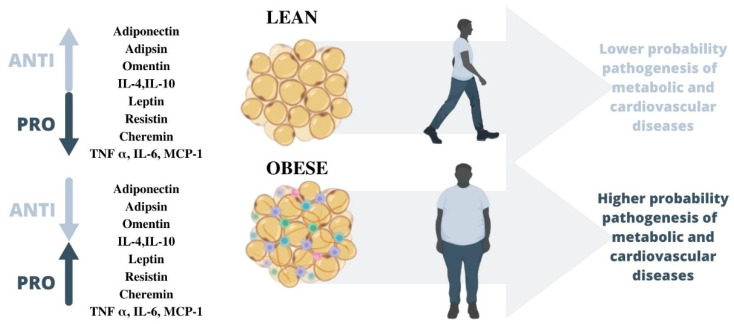
“These molecules are classified pro-and anti-inflammatory adipokines [23].”
The Impact of Excessive Fructose Intake on Adipose Tissue and the Development of Childhood Obesity
Azevedo‐Martins, A. K., Santos, M. P., Abayomi, J. C., Ferreira, N. J. R., & Evangelista, F. S. (2024) · Nutrients · doi:10.3390/nu16070939 · Cited by 36
“The role of adipokines such as leptin, adiponectin, interleukin-6 (IL-6), and fibroblast growth factor 21 (FGF21) in health and disease were widely presented in a recent review by Clemente-Su á rez et al. [17].”
BackgroundCardiometabolic Aspects of Congenital Adrenal Hyperplasia
Krysiak, R. G., der Grinten, H. L. C., Reisch, N., Touraine, P. A., & Falhammar, H. (2024) · Endocrine Reviews · doi:10.1210/endrev/bnae026 · Cited by 26
Disrupted adipokine secretion and inflammatory responses in human adipocyte hypertrophy
Gao, D., Chen, B., & Griffiths, H. R. (2025) · Adipocyte · doi:10.1080/21623945.2025.2485927 · Cited by 28
Nuszkiewicz, J., Kukulska-Pawluczuk, B., Piec, K., Jarek, D. J., Motolko, K., Szewczyk‐Golec, K., & Woźniak, A. (2024) · Journal of Clinical Medicine · doi:10.3390/jcm13144258 · Cited by 27
“The complex network formed by adipokines significantly influences the pathophysiology of obesity and associated metabolic disorders, highlighting a sophisticated interplay between metabolic health and inflammatory pathways [9].”
BackgroundInfluentialThe Interplay of Genetic Predisposition, Circadian Misalignment, and Metabolic Regulation in Obesity
Halder, S. K., & Melkani, G. C. (2025) · Current Obesity Reports · doi:10.1007/s13679-025-00613-3 · Cited by 26
“Dysregulation in those proteins could induce obesity-related syndromes [90, 91].”
Dimeji, I. Y., Abass, K. S., Audu, N. M., & Adekola, S. A. (2025) · European Journal of Pharmacology · doi:10.1016/j.ejphar.2025.177615 · Cited by 31
Arias, C., Álvarez‐Indo, J., Cifuentes, M., Morselli, E., Kerr, B., & Burgos, P. V. (2024) · Biological Research · doi:10.1186/s40659-024-00531-z · Cited by 29
“Proinflammatory adi-pokines can directly enhance the generation of many proinflammatory cytokines, such as TNFα, monocyte chemoattractant protein MCP1, and IL-6, favoring the development of metabolic diseases [12].”
BackgroundAbdulla, A., Sadida, H. Q., Jerobin, J., Elfaki, I., Mir, R., Mirza, S., Singh, M. K., Macha, M. A., Shahab Uddin, M. S., Fakhro, K. A., et al. (2024) · Journal of the National Cancer Center · doi:10.1016/j.jncc.2024.11.001 · Cited by 40
“17 In individuals with obesity, there is a dysregulation in adipokine secretion, leading to chronic low-grade inflammation characterized by immune cell infiltration, insulin resistance, and aberrant signaling pathways implicated in cancer initiation and progression.”
Bioengineering vascularization
Landau, S., Okhovatian, S., Zhao, Y., Liu, C., Shakeri, A., Wang, Y., Ramsay, K., Kieda, J., Jiang, R., & Radisic, M. (2024) · Development · doi:10.1242/dev.204455 · Cited by 30
Gut–Adipose Tissue Axis and Metabolic Health
Borozan, S., Fernandez, C. J., Samee, A., & Pappachan, J. M. (2025) · Current Issues in Molecular Biology · doi:10.3390/cimb47060424 · Cited by 26
Inflammation—Insulin Resistance Crosstalk and the Central Role of Myokines
Dobre, M.-Z., Vîrgolici, B., Stefan, D. C. A., Doicin, I.-C., & Stănescu-Spînu, I.-I. (2025) · International Journal of Molecular Sciences · doi:10.3390/ijms27010060 · Cited by 28
“Exercise also improves the adipokine profile, increasing adiponectin—which enhances energy expenditure and insulin sensitivity—and reducing leptin, resistin, TNF-α , and IL-6 levels [165].”
Bai, Y., Wang, Z.-H., Lv, Y., Liu, J., Xu, Z.-Z., Feng, Y., Liu, G.-Y., Yin, P., Wang, Y., Dong, N., et al. (2024) · International Journal of Surgery · doi:10.1097/js9.0000000000001861 · Cited by 28
Jang, H., Joung, H., Chu, J., Cho, M., Kim, Y.-W., Kim, K. H., Shin, C. H., Lee, J., & Ha, J. (2024) · Nutrients · doi:10.3390/nu16244260 · Cited by 21
“EAT is metabolically sensitive and secretes adipokines such as leptin and adiponectin, which regulate metabolic homeostasis [105].”
Weighty matters: Unraveling the impact of obesity on colorectal cancer and nutritional interventions
Simancas‐Racines, D., Reytor-González, C., Frías-Toral, E., Katsanos, C. S., & Hidalgo, R. (2025) · Seminars in Cancer Biology · doi:10.1016/j.semcancer.2025.06.004 · Cited by 21
Role of systemic and epicardial adipose tissue in cardiometabolic disease
Khanna, S., Mann, G. V., Bhat, A., Lin, A., Patel, A., Nicholls, S. J., Sindone, A. P., Dey, D., Bhatt, D. L., Arnott, C. G., et al. (2026) · Nature Reviews Cardiology · doi:10.1038/s41569-026-01304-9 · Cited by 32
“In addition, EAT secretes anti-inflammatory and protective adipokines such as adiponectin, omentin 1 and fibroblast growth factor 21, contributing to endothelial stability and protection against oxidative stress 23,25 .”
Adipose tissue as a therapeutic target for vascular damage in Alzheimer's disease
Bettinetti‐Luque, M., Trujillo‐Estrada, L., García‐Fuentes, E., Andreo‐Lopez, J., Sanchez-Varo, R. M., Garrido‐Sánchez, L., Mediavilla, A. G., López, M. G., García‐Caballero, M., Gutiérrez, A., et al. (2023) · British Journal of Pharmacology · doi:10.1111/bph.16243 · Cited by 24
“Moreover CCL2 silencing can also aggravate AD pathology in mouse models.”
BackgroundMethodInfluentialSystemic and joint adipose tissue lipids and their role in osteoarthritis
Zapata‐Linares, N., Loisay, L., de Haro, D., Berenbaum, F., Hügle, T., Geurts, J., & Houard, X. (2024) · Biochimie · doi:10.1016/j.biochi.2024.09.015 · Cited by 23
Merza, W. M., Yaseen, A. K., & Mahmood, M. A. (2025) · The Journal of Steroid Biochemistry and Molecular Biology · doi:10.1016/j.jsbmb.2025.106773 · Cited by 28
The effect of intermittent fasting on microbiota as a therapeutic approach in obesity
Cadena-Ullauri, S., Guevara‐Ramírez, P., Ruiz‐Pozo, V. A., Tamayo‐Trujillo, R., Paz‐Cruz, E., Zambrano-Villacres, R., Simancas‐Racines, D., & Zambrano, A. K. (2024) · Frontiers in Nutrition · doi:10.3389/fnut.2024.1393292 · Cited by 23
AdipoRon’s Impact on Alzheimer’s Disease—A Systematic Review and Meta-Analysis
Barbalho, S. M., Laurindo, L. F., de Oliveira Zanuso, B., da Silva, R. M. S., Gallerani Caglioni, L., Nunes Junqueira de Moraes, V. B. F., Fornari Laurindo, L., Dogani Rodrigues, V., da Silva Camarinha Oliveira, J., Beluce, M. E., et al. (2025) · International Journal of Molecular Sciences · doi:10.3390/ijms26020484 · Cited by 18
Subcutaneous adipose tissue: Implications in dermatological diseases and beyond
Ziadlou, R., Pandian, G. N., Hafner, J., Akdiş, C. A., Stingl, G., Maverakis, E., & Brüggen, M. (2024) · Allergy · doi:10.1111/all.16295 · Cited by 21
Reytor-González, C., Simancas‐Racines, D., Román-Galeano, N. M., Campuzano-Donoso, M., Am, C., Zambrano-Villacres, R., Teresa, M., Coppola, L., Marchetti, M., Galasso, M., et al. (2025) · Food and Agricultural Immunology · doi:10.1080/09540105.2025.2521270 · Cited by 24
Pezzino, S., Puleo, S., Luca, T., Castorina, M., & Castorina, S. (2025) · Biomedicines · doi:10.3390/biomedicines13081854 · Cited by 25
“Their dynamic interaction generates complicated signaling networks that control fibrotic development, oxidative stress responses, and hepatic fat accumulation [8–11].”
Dicks, L. M. T. (2025) · International Journal of Molecular Sciences · doi:10.3390/ijms262110539 · Cited by 21
Gut microbiota interventions in type 2 diabetes mellitus: An umbrella review of glycemic indices
Keivanlou, M., Amini‐Salehi, E., Sattari, N., Hashemi, M., Saberian, P., Prabhu, S. V., Javid, M., Mirdamadi, A., Heidarzad, F., Bakhshi, A., et al. (2024) · Diabetes & Metabolic Syndrome Clinical Research & Reviews · doi:10.1016/j.dsx.2024.103110 · Cited by 23
Rondanelli, M., Gasparri, C., Pirola, M., Barrile, G. C., Moroni, A., Sajoux, I., & Perna, S. (2024) · Nutrients · doi:10.3390/nu16234002 · Cited by 21
Diez-Roda, P., Perez-Navarro, E., & García-Martín, R. (2024) · International Journal of Molecular Sciences · doi:10.3390/ijms252413488 · Cited by 17
“These proteins have diverse regulatory functions both locally and in other tissues on insulin sensitivity, inflammation, energy balance, and many other processes [1,2].”
The microenvironment of secondary lymphedema. The key to finding effective treatments?
Hossain, L., Gomes, K. P., Safarpour, S., & Gibson, S. B. (2025) · Biochimica et Biophysica Acta (BBA) - Molecular Basis of Disease · doi:10.1016/j.bbadis.2025.167677 · Cited by 22
The Effects of Adipose Tissue Dysregulation on Type 2 Diabetes Mellitus
Rausch, J., Horne, K., & Marquez, L. (2025) · Biomedicines · doi:10.3390/biomedicines13071770 · Cited by 21
“Two of these hormones, leptin and adiponectin, have been identified as important regulators of inflammation [42].”
Insights into Nutritional Strategies in Psoriasis
Constantin, C., Surcel, M., Munteanu, A. N., & Neagu, M. T. (2023) · Nutrients · doi:10.3390/nu15163528 · Cited by 20
“Moreover, in light of recent studies, adipose tissue should be considered not only a simple energy storage deposit but also a dynamic endocrine organ that actively intercedes in the regulation of inflammation, metabolism, and immunity, as well as in other physiological processes [25].”
Lifestyle-Driven Variations in Nutrimiromic MicroRNA Expression Patterns across and beyond Genders
Pointner, A., Krammer, U. D. B., Tomeva, E., Magnet, U., Hippe, B., Jacob, U., & Haslberger, A. G. (2024) · Life · doi:10.3390/life14030390 · Cited by 20
Sarcopenic obesity in the Asia-Pacific region: Epidemiology, risk factors, and management
Huang, C., & Wu, C. (2025) · Osteoporosis and Sarcopenia · doi:10.1016/j.afos.2025.05.001 · Cited by 21
Fâcă, A. I., Udeanu, D. I., Arsene, A. L., Mahler, B., Drăgănescu, D., & Apetroaei, M.-M. (2025) · Nutrients · doi:10.3390/nu17111878 · Cited by 33
Antioxidant and Anti-Inflammatory Activities of Probiotic Strains
Căliman-Sturdza, O. A., Vaz, J. A., Lupăescu, A.-V., Lobiuc, A., Bran, C., & Gheorghita, R. E. (2026) · International Journal of Molecular Sciences · doi:10.3390/ijms27021079 · Cited by 22
“Adipose tissue inflammation, which is one of the causes of insulin resistance, is also positively influenced: probiotics may suppress the expression of inflammatory adipokines in fat cells as well as reduce the infiltration of adipose tissue by macrophages [129].”
Ispas, S., Tuta, L. A., Botnarciuc, M., Ispas, V., Staicovici, S., Ali, S., Twakor, A. N., Cojocaru, C., Herlo, A., & Petcu, A. (2023) · Journal of Personalized Medicine · doi:10.3390/jpm13111602 · Cited by 24
“The host or the bacteria can acquire nutrients The host or the bacteria can acquire nutrients that would otherwise be inaccessible thanks to symbiotic or commensal interactions [21]. that would otherwise be inaccessible thanks to symbiotic or commensal interactions [21].”
BackgroundOncostatin M Is Related to Polycystic Ovary Syndrome-Case Control Study
Çamili, F. E., Akış, M., Adalı, E., Hişmioğulları, A. A., Taşkın, M. İ., Güney, G., & Afşar, S. (2024) · Biomedicines · doi:10.3390/biomedicines12020355 · Cited by 17
Rahaman, S. N., Lishadevi, M., & Anandasadagopan, S. K. (2025) · Phytotherapy Research · doi:10.1002/ptr.8455 · Cited by 17
“In addition to producing pro-inflammatory cytokines such as TNF-α, IL-1β, and IL-6, hypertrophic adipocytes also secrete soluble factors known as adipokines, which include adiponectin, leptin, resistin, chemerin, and visfatin (Clemente-Suárez et al. 2023).”
Pescari, D., Mihuţa, M. S., Bena, A., & Stoian, D. (2025) · Nutrients · doi:10.3390/nu17050798 · Cited by 15
“Resistin, a pro-inflammatory adipokine secreted by immune cells in humans, plays a key role in cardiometabolic diseases such as type 2 diabetes, atherosclerosis, and hypertension [43].”
Xu, J., Jia, S., Ren, Y., Zhang, Y., Zhang, J., Tang, C., Kan, J., Liu, J., & Wang, Y. (2025) · Food Bioscience · doi:10.1016/j.fbio.2025.106769 · Cited by 14
Unraveling the complexities of diet induced obesity and glucolipid dysfunction in metabolic syndrome
Dutta, B., Tripathy, A., Archana, P. R., & Kamath, S. U. (2025) · Diabetology & Metabolic Syndrome · doi:10.1186/s13098-025-01837-y · Cited by 21
Zhao, D., Sohouli, M. H., Rohani, P., Fotros, D., Velu, P., Ziamanesh, F., Fatahi, S., Shojaie, S., & Li, Y. (2023) · Diabetes Research and Clinical Practice · doi:10.1016/j.diabres.2023.111076 · Cited by 16
The Multifaceted S100B Protein: A Role in Obesity and Diabetes?
Michetti, F., Sante, G. D., Clementi, M. E., Valeriani, F., Mandarano, M., Ria, F., Liddo, R. D., Rende, M., & Spica, V. R. (2024) · International Journal of Molecular Sciences · doi:10.3390/ijms25020776 · Cited by 16
Diabetic Cardiomyopathy: An Update on Emerging Pathological Mechanisms
Kakkar, C., Sharma, V., Mannan, A., Gupta, G., Singh, S. K., Kumar, P., Dua, K., Kaur, A., Singh, S., Dhiman, S., et al. (2024) · Current Cardiology Reviews · doi:10.2174/011573403x331870241025094307 · Cited by 14
“Moreover, it has been observed that visceral fats, which have high metabolic activity, might enhance the inflammatory response by releasing several bioactive molecules, such as adipokines, including TNF-α, IL-6, and resistin [19].”
Malicka-Durczak, A., Ali, A., MacCannell, A. D. V., & Roberts, L. D. (2024) · Experimental Physiology · doi:10.1113/ep092008 · Cited by 15
“Both adipokines and batokines play essential roles in maintaining metabolic balance and have been the subject of extensive reviews covering their functions (Clemente-Suárez et al., 2023; Gavaldà-Navarro et al., 2022; Yang & Stanford, 2022).”
Lambert, G. W., Patel, M., & Lambert, É. (2025) · Metabolites · doi:10.3390/metabo15050286 · Cited by 15
“Through their various pro-and anti-inflammatory processes, adipokines can exert positive or negative effects on a range of conditions includ-Metabolites ing insulin resistance, diabetes, inflammation, and atherosclerosis [7].”
Exploring obesity phenotypes: a longitudinal perspective
Rosero, R., Tamayo, M., Correa, R. R., Pantalone, K. M., Creel, D. B., Burguera, B. G., & Griebeler, M. L. (2025) · Reviews in Endocrine and Metabolic Disorders · doi:10.1007/s11154-025-09976-3 · Cited by 17
Lee, F., Moore, J., Markouli, M., & Ghusn, W. (2025) · Biomedicines · doi:10.3390/biomedicines13071571 · Cited by 18
“Metabolic dysfunction associated with obesity, including chronic low-grade inflammation, oxidative stress, and altered adipokine levels, is increasingly recognized as a key driver in the pathogenesis of gastrointestinal cancers [10,11].”
Clemente‐Suárez, V. J., Redondo-Flórez, L., Beltrán-Velasco, A. I., Sepulveda, R. A. Y., Rubio-Zarapuz, A., Martín-Rodríguez, A., Navarro-Jiménez, E., & Tornero-Aguilera, J. F. (2025) · Metabolites · doi:10.3390/metabo15070453 · Cited by 21
Self-citationMeshkat, S., Luciano, C. D., Swiderski, A., Li, G., Aguilar, R. J., Dunkley, B. T., Reichelt, A. C., Zhang, Y., Greenshaw, A. J., Vermetten, E. H. G. J. M., et al. (2025) · Brain and Behavior · doi:10.1002/brb3.70661 · Cited by 23
Adipokines in preeclampsia: disrupted signaling pathways and novel therapeutic strategies
Abdalla, R. A. H., Parveen, N., Iqbal, N., Mohamed, A. A. A., Shahid, S. M. A., Elhussein, G. E. M. O., Saleem, M., & Khan, M. S. (2025) · European journal of medical research · doi:10.1186/s40001-025-02972-y · Cited by 20
“Pregnancy, characterized by the enhancement of metabolic and immune needs, promotes adaptation to the needs in adipokines that enhance the exchanges between fetus and mother, while ensuring effective vascular performance [21].”
InfluentialDattolo, A., Torres, M., Frías-Toral, E., Paganelli, A., Zhang, M., Madonna, S., Mercurio, L., Cucalón, G., Garbarino, F., Albanesi, C., et al. (2025) · Journal of Translational Medicine · doi:10.1186/s12967-025-06175-1 · Cited by 17
“Adipokines have various immuno-modulatory effects that may influence the pathogenesis of HS [51, 52].”
Inter‐organ crosstalk: The kidney's role in systemic health and disease
Zoccali, C., Agarwal, R., Mallamaci, F., Jager, K. J., Stel, V. S., Kanbay, M., Pollock, C. A., Kalantar‐Zadeh, K., Ronco, C., & Vanholder, R. (2025) · Journal of Internal Medicine · doi:10.1111/joim.70015 · Cited by 22
“The adipose tissue, especially visceral fat, acts as a dynamic endocrine organ by secreting various adipokines, including leptin, adiponectin, and several other peptides [41].”
Macrophage Phenotypic Switch and Obesity‐Associated Metabolic Risk: Mechanisms and Targets
Vera, K., Hemakumar, C., Bilachi, R. S., Ramírez, D. C., & Gomez-Mejiba, S. (2025) · Oxidative Medicine and Cellular Longevity · doi:10.1155/omcl/6710641 · Cited by 16
“…leptin and less adiponectin, lower sensitivity to insulin in tissues, mitochondrial dysfunction, and greater stress in the endoplasmic reticulum; these disruptions increase basal lipolysis and decrease de novo lipogenesis, which results in alterations in the cellular structure of adipocytes [53].”
The Interplay Between Adipokines and Body Composition in Obesity and Metabolic Diseases
Zadgaonkar, U. (2025) · Cureus · doi:10.7759/cureus.78050 · Cited by 21
Involvement of Lipids and Lipid Mediators in Inflammation and Atherogenesis
Kotlyarov, S. N. (2024) · Current Medicinal Chemistry · doi:10.2174/0109298673303369240312092913 · Cited by 11
Resistin and omentin in breast cancer: A systematic review and meta-analysis
Zoroddu, S., Lorenzo, B. D., Paliogiannis, P., Mangoni, A. A., Carru, C., & Zinellu, A. (2024) · Clinica Chimica Acta · doi:10.1016/j.cca.2024.119838 · Cited by 12
Ziqubu, K., Dludla, P. V., Mthembu, S. X. H., Nkambule, B. B., & Mazibuko-Mbeje, S. E. (2024) · Adipocyte · doi:10.1080/21623945.2024.2390833 · Cited by 14
“In recent years, adipose tissue-derived bioactive molecules, known as adipocytokines or adipokines, have been increasingly studied as potential biomarkers for obesity and MetS [15–17].”
BackgroundTakahata, M., Koike, Y., Endo, T., Ikegawa, S., Imagama, S., Kato, S., Kanayama, M., Kobayashi, K., Kaito, T., Sakai, H., et al. (2024) · The Spine Journal · doi:10.1016/j.spinee.2024.09.023 · Cited by 11
Association between body roundness index and sleep disorder: the mediating role of depression
Gong, H., & Zhao, Y. (2025) · BMC Psychiatry · doi:10.1186/s12888-025-06664-z · Cited by 14
“Leptin is a satiety hormone that typically exhibits elevated levels in obese individuals; however, these individuals often develop leptin resistance [26].”
Metadata
- Authors
- Clemente-Suárez, V. J., Redondo-Flórez, L., Beltrán-Velasco, A. I., Martín-Rodríguez, A., Martínez-Guardado, I., Navarro-Jiménez, E., Laborde-Cárdenas, C. C., & Tornero-Aguilera, J. F.
- Affiliations
- Faculty of Sports Sciences, Universidad Europea de Madrid, Tajo Street, s/n, 28670 Madrid, Spain
- Universidad Europea de Madrid (ES)
- Universidad Nebrija (ES)
- BRABE Group, Department of Psychology, Faculty of Life and Natural Sciences, University of Nebrija, C/del Hostal, 28248 Madrid, Spain
- Universidad Simón Bolívar (CO)
- Corresponding author
- Martín-Rodríguez, Alexandra
- ORCID
- Venue
- Biomedicines
- Publisher
- MDPI AG
- Published
- 2023-04-27
- Volume
- 11
- Issue
- 5
- Pages
- 1290
- ISSN
- 2227-9059 (ISSN-L)
- PMC
- PMC10216288
- OpenAlex
- W4367181460
- Semantic Scholar
- e8f00c12c3f4126c0f13105c46928305660c3592
- Cited by
- 463
- References
- 326
- Citations by year
- 2026: 143 · 2025: 185 · 2024: 107 · 2023: 27
- FWCI
- 18.06
- Type
- journal article
- Language
- en
- Open access
- gold
- doi.org
- Licence
- Locations
- Biomedicines (publishedVersion, cc-by)
- PubMed Central (publishedVersion, cc-by)
- PubMed (publishedVersion)
- ABACUS. Repositorio de Producción Científica (Universidad Europea) (submittedVersion, cc-by)
- DOAJ (DOAJ: Directory of Open Access Journals) (submittedVersion, cc-by-sa)
- Topics
- Health Sciences › Medicine › Endocrinology, Diabetes and Metabolism › Adipokines, Inflammation, and Metabolic Diseases
- Health Sciences › Medicine › Physiology (medical) › Adipose Tissue and Metabolism
- Health Sciences › Medicine › Cardiology and Cardiovascular Medicine › Cardiovascular Disease and Adiposity
- Keywords
- adipokines, adipose tissue, adipocytes, low-grade inflammation, cardiovascular disease, atherosclerosis, mental illness, metabolic disorders, cancer, dietary habits, gut microbiota, nutrition, physical activity
About these checks
Registry, retraction, Cites and statistics results are computed, not judged, with one exception: a printed reference that no index lists is read once by a model before it counts as a citation error. Claims are extracted by a model and kept only when their quote appears verbatim in the text; each cited source is then checked, with a model’s help, for whether it says what the claim relies on. Those verdicts can be wrong — read the claim’s quote and the cited source before relying on one.
Statistics and arithmetic are recomputed, not judged.
Confidence bands are shown only for fields calibrated on our annotated test set. None is calibrated yet, so no band is shown.
What counts as a claim ›How we measure confidence ›How we check this ›
Are you an author, or do you see a problem with this page? Request a review
Data sources
Bibliographic data: Semantic Scholar, OpenAlex, Crossref.
Contains information from the Semantic Scholar Academic Graph Datasets, made available under the ODC Attribution License (ODC-BY 1.0).
Semantic Scholar’s data is described in: Kinney, R., et al. (2023). The Semantic Scholar Open Data Platform. arXiv:2301.10140.
