

The Role of Adipokines in Health and Disease
Open accessThe DOI matches its Crossref record; 322 of the 326 references it cites were found in a registry or an index, and 1 are not checked yet.
Abstract
Adipokines are cell-signaling proteins secreted by adipose tissue that has been related to a low-grade state of inflammation and different pathologies. The present review aims to analyze the role of adipokines in health and disease in order to understand the important functions and effects of these cytokines. For this aim, the present review delves into the type of adipocytes and the cytokines produced, as well as their functions; the relations of adipokines in inflammation and different diseases such as cardiovascular, atherosclerosis, mental diseases, metabolic disorders, cancer, and eating behaviors; and finally, the role of microbiota, nutrition, and physical activity in adipokines is discussed. This information would allow for a better understanding of these important cytokines and their effects on body organisms.
Overview
The claims and statistics of this paper haven’t been checked yet.
Free: it reads the open-access text and checks the first 5 claims that cite a source we can check. Create a free account to check every claim.
Integrity signals
Registry
Cites
Statistics
Figures
Verification
Claims the paper makes
The claims and statistics of this paper haven’t been checked yet.
Free: it reads the open-access text and checks the first 5 claims that cite a source we can check. Create a free account to check every claim.
Claims other papers make about this one
Each is checked against this paper’s own text: does it say what the citing paper says it does?
The check wasn’t confident either way, so it gives no verdict — never disputed.
In the citing paper
“Healthy expansion of WAT includes increased vascularization and anti-inflammatory signals (17, 18).”
From Metabolic impact of endogenously produced estrogens by adipose tissue in females and males across the lifespan (2025) · cites this paper as [17]
Experimental — accuracy not yet measured
Self-check
Percentages, sums and reported differences re-computed from the paper’s own numbers.
The self-check needs the paper’s full text.
Citations
Cites
1 retracted
Visfatin: A Protein Secreted by Visceral Fat That Mimics the Effects of Insulin
Fukuhara, A., Matsuda, M., Nishizawa, M., Segawa, K., Tanaka, M., Kishimoto, K., Matsuki, Y., Murakami, M., Ichisaka, T., Murakami, H., et al. (2005) · Science · doi:10.1126/science.1097243 · Cited by 1,906
RetractedVos, T., Lim, S. S., Abbafati, C., Abbas, K. M., Abbasi, M., Abbasifard, M., Abbasi-Kangevari, M., Abbastabar, H., Abd-Allah, F., Abdelalim, A., et al. (2020) · The Lancet · doi:10.1016/s0140-6736(20)30925-9 · Cited by 19,358
Inflammation and metabolic disorders
Hotamisligil, G. S. (2006) · Nature · doi:10.1038/nature05485 · Cited by 9,199 · cited 1×
“Adipose tissue inflammation is thought to be a key factor in the development of insulin resistance and other metabolic disorders [33].”
BackgroundThe metabolic phenotype in obesity: Fat mass, body fat distribution, and adipose tissue function
Goossens, G. H. (2017) · Obesity Facts · doi:10.1159/000471488 · Cited by 8,481
A PGC1-α-dependent myokine that drives brown-fat-like development of white fat and thermogenesis
Boström, P., Wu, J., Jedrychowski, M. P., Korde, A., Ye, L., Lo, J. C., Rasbach, K. A., Boström, E. A., Choi, J. H., Long, J. Z., et al. (2012) · Nature · doi:10.1038/nature10777 · Cited by 4,810
Obesity induces a phenotypic switch in adipose tissue macrophage polarization
Lumeng, C. N., Bodzin, J. L., & Saltiel, A. R. (2007) · Journal of Clinical Investigation · doi:10.1172/jci29881 · Cited by 4,664
Adipokines in inflammation and metabolic disease
Ouchi, N., Parker, J. L., Lugus, J. J., & Walsh, K. (2011) · Nature Reviews Immunology · doi:10.1038/nri2921 · Cited by 4,625
Weight-Reducing Effects of the Plasma Protein Encoded by the obese Gene
Halaas, J. L., Gajiwala, K. S., Maffei, M., Cohen, S. L., Chait, B. T., Rabinowitz, D., Lallone, R. L., Burley, S. K., & Friedman, J. M. (1995) · Science · doi:10.1126/science.7624777 · Cited by 4,451
Body Fatness and Cancer — Viewpoint of the IARC Working Group
Lauby-Secretan, B., Scoccianti, C., Loomis, D., Grosse, Y., Bianchini, F., & Straif, K. (2016) · New England Journal of Medicine · doi:10.1056/nejmsr1606602 · Cited by 3,596
European Guidelines for Obesity Management in Adults
Yumuk, V., Tsigos, C., Fried, M., Schindler, K., Busetto, L., Micic, D., & Toplak, H. (2015) · Obesity Facts · doi:10.1159/000442721 · Cited by 3,432
Beige Adipocytes Are a Distinct Type of Thermogenic Fat Cell in Mouse and Human
Wu, J., Boström, P., Sparks, L. M., Ye, L., Choi, J. H., Giang, A.-H., Khandekar, M., Virtanen, K. A., Nuutila, P., Schaart, G., et al. (2012) · Cell · doi:10.1016/j.cell.2012.05.016 · Cited by 3,319 · cited 2×
“TNF-α also plays a role in the regulation of inflammation and immune function [41].”
BackgroundAdipocytokines: mediators linking adipose tissue, inflammation and immunity
Tilg, H., & Moschen, A. R. (2006) · Nature Reviews Immunology · doi:10.1038/nri1937 · Cited by 3,188 · cited 2×
“(2006) [46] Adipocytokines: Mediators Linking Adipose Tissue, Inflammation, and Immunity Understand adipocyte-derived mediators.”
BackgroundThe anti-inflammatory effect of exercise
Petersen, A. M. W., & Pedersen, B. K. (2005) · Journal of Applied Physiology · doi:10.1152/japplphysiol.00164.2004 · Cited by 3,100
Kim, H. J., Park, S. Y., Choi, Y. J., Han, S. J., Lee, K. W., & Kim, D. J. (2013) · Hormone Research in Paediatrics · doi:10.1159/000348848 · Cited by 3,048
Muscles, exercise and obesity: skeletal muscle as a secretory organ
Pedersen, B. K., & Febbraio, M. A. (2012) · Nature Reviews Endocrinology · doi:10.1038/nrendo.2012.49 · Cited by 2,909 · cited 1×
“IL-6 is produced by white adipocytes in response to various stimuli, including exercise, and has been shown to have both pro- and anti-inflammatory effects [29].”
BackgroundWhat we talk about when we talk about fat
Rosen, E. D., & Spiegelman, B. M. (2014) · Cell · doi:10.1016/j.cell.2013.12.012 · Cited by 2,373
Adipokines: inflammation and the pleiotropic role of white adipose tissue
Trayhurn, P., & Wood, I. S. (2004) · British Journal of Nutrition · doi:10.1079/bjn20041213 · Cited by 2,210
Fruebis, J., Tsao, T., Javorschi, S., Ebbets-Reed, D., Erickson, M., Yen, F. T., Bihain, B. E., & Lodish, H. F. (2001) · Proceedings of the National Academy of Sciences · doi:10.1073/pnas.041591798 · Cited by 1,985
Adipose tissue inflammation and metabolic dysfunction in obesity
Kawai, T., Autieri, M. V., & Scalia, R. (2021) · American Journal of Physiology-Cell Physiology · doi:10.1152/ajpcell.00379.2020 · Cited by 1,947
Chait, A., & den Hartigh, L. J. (2020) · Frontiers in Cardiovascular Medicine · doi:10.3389/fcvm.2020.00022 · Cited by 1,529 · cited 1×
“When caloric intake is excessive, adipocytes first become hypertrophic and secrete adipokines that cause the recruitment of additional pre-adipocytes, which then differentiate into mature adipocytes as a protective measure against some of the negative metabolic effects of obesity [25].”
BackgroundLong-term persistence of hormonal adaptations to weight loss
Sumithran, P., Prendergast, L. A., Delbridge, E., Purcell, K., Shulkes, A., Kriketos, A., & Proietto, J. (2011) · New England Journal of Medicine · doi:10.1056/nejmoa1105816 · Cited by 1,449
Association of Hypoadiponectinemia With Coronary Artery Disease in Men
Kumada, M., Kihara, S., Sumitsuji, S., Kawamoto, T., Matsumoto, S., Ouchi, N., Arita, Y., Okamoto, Y., Shimomura, I., Hiraoka, H., et al. (2003) · Arteriosclerosis, Thrombosis, and Vascular Biology · doi:10.1161/01.atv.0000048856.22331.50 · Cited by 1,420 · cited 1×
“Adiponectin is one of the amplest adipokines studied due to its apparently negative association with diabetes mellitus, obesity, and CVD [78,79].”
BackgroundAtherosclerosis: Recent developments
Björkegren, J. L. M., & Lusis, A. J. (2022) · Cell · doi:10.1016/j.cell.2022.04.004 · Cited by 1,249
Leon, B. M. (2015) · World Journal of Diabetes · doi:10.4239/wjd.v6.i13.1246 · Cited by 1,215 · cited 1×
“Thus, hyperadiponectinemia has been elucidated as a protective cardiovascular factor, since it contributes to increasing nitric oxide (NO) release from the endothelium and, consequently, may decrease vascular dysfunction, as well as it may reduce adhesion-molecules expression [82].”
BackgroundAdiponectin, a Therapeutic Target for Obesity, Diabetes, and Endothelial Dysfunction
Achari, A., & Jain, S. (2017) · International Journal of Molecular Sciences · doi:10.3390/ijms18061321 · Cited by 1,158
Adipokines in health and disease
Fasshauer, M., & Blüher, M. (2015) · Trends in Pharmacological Sciences · doi:10.1016/j.tips.2015.04.014 · Cited by 1,050 · cited 2×
“Among these common diseases are diabetes, hypertension, atherosclerosis, fatty-liver disease, dementia, obstructive sleep apnea, and different types of cancer [1].”
BackgroundGenetic determinants of the gut microbiome in UK twins
Goodrich, J. K., Davenport, E. R., Beaumont, M., Jackson, M. A., Knight, R., Ober, C., Spector, T. D., Bell, J. T., Clark, A. G., & Ley, R. E. (2016) · Cell Host & Microbe · doi:10.1016/j.chom.2016.04.017 · Cited by 1,048
Brown and Beige Fat: Physiological Roles beyond Heat Generation
Kajimura, S., Spiegelman, B. M., & Seale, P. (2015) · Cell Metabolism · doi:10.1016/j.cmet.2015.09.007 · Cited by 1,001
de La Serre, C. B., Ellis, C. L., Lee, J., Hartman, A. L., Rutledge, J. C., & Raybould, H. E. (2010) · American Journal of Physiology-Gastrointestinal and Liver Physiology · doi:10.1152/ajpgi.00098.2010 · Cited by 949
Schwartz, M. W., Baskin, D. G., Bukowski, T. R., Kuijper, J. L., Foster, D., Lasser, G., Prunkard, D. E., Porte, D., Woods, S. C., Seeley, R. J., et al. (1996) · Diabetes · doi:10.2337/diab.45.4.531 · Cited by 904
Obesity Is a Fibroblast Growth Factor 21 (FGF21)-Resistant State
Fisher, F. M., Chui, P. C., Antonellis, P. J., Bina, H. A., Kharitonenkov, A., Flier, J. S., & Maratos-Flier, E. (2010) · Diabetes · doi:10.2337/db10-0193 · Cited by 830 · cited 2×
“various stimuli such as cold exposure, exercise, and high-fat diets, and acts on multiple tissues to improve metabolic function [36].”
BackgroundRole of oxidative stress in depression
Bhatt, S., Nagappa, A. N., & Patil, C. R. (2020) · Drug Discovery Today · doi:10.1016/j.drudis.2020.05.001 · Cited by 821
Linking Gut Microbiota and Inflammation to Obesity and Insulin Resistance
Saad, M. J. A., Santos, A., & Prada, P. O. (2016) · Physiology · doi:10.1152/physiol.00041.2015 · Cited by 810
Effect of fasting on serum leptin in normal human subjects
Boden, G. (1996) · Journal of Clinical Endocrinology & Metabolism · doi:10.1210/jc.81.9.3419 · Cited by 809
Obesity, adiponectin and vascular inflammatory disease
Ouchi, N., Kihara, S., Funahashi, T., Matsuzawa, Y., & Walsh, K. (2003) · Current Opinion in Lipidology · doi:10.1097/00041433-200312000-00003 · Cited by 740 · cited 1×
“Thus, A few anti-inflammatory adipokines that are downregulated in the states of obesity appear to guard against the emergence of obese comorbidities [70].”
BackgroundCurat, C. A., Wegner, V., Sengenès, C., Miranville, A., Tonus, C., Busse, R., & Bouloumié, A. (2006) · Diabetologia · doi:10.1007/s00125-006-0173-z · Cited by 693
Blum, W. F. (1997) · Journal of Clinical Endocrinology & Metabolism · doi:10.1210/jc.82.9.2904 · Cited by 690 · cited 1×
“Leptin levels are positively associated with adipose tissue presence, since the higher the fat mass, the greater leptinemia could be found in patients [89].”
BackgroundLi, G., Xie, C., Lu, S., Nichols, R. G., Tian, Y., Li, L., Patel, D., Ma, Y., Brocker, C. N., Yan, T., et al. (2017) · Cell Metabolism · doi:10.1016/j.cmet.2017.08.019 · Cited by 667
Leptin and the endocrine control of energy balance
Friedman, J. M. (2019) · Nature Metabolism · doi:10.1038/s42255-019-0095-y · Cited by 661 · cited 3×
“Leptin levels are positively correlated with body-fat mass, and leptin resistance is a hallmark of obesity and metabolic disorders such as type two diabetes [27].”
BackgroundAltered adipose tissue and adipocyte function in the pathogenesis of metabolic syndrome
Kahn, C. R., Wang, G., & Lee, K. Y. (2019) · Journal of Clinical Investigation · doi:10.1172/jci129187 · Cited by 661
Adiponectin, the past two decades
Wang, Z. V., & Scherer, P. E. (2016) · Journal of Molecular Cell Biology · doi:10.1093/jmcb/mjw011 · Cited by 609 · cited 1×
“Adipocytes from white adipose tissue and brown adipose tissue express the adipokine adiponectin, which is antisteatotic, anti-inflammatory, and antifibrotic [68].”
BackgroundVenteclef, N., Guglielmi, V., Balse, E., Gaborit, B., Cotillard, A., Atassi, F., Amour, J., Leprince, P., Dutour, A., Clément, K., et al. (2015) · European Heart Journal · doi:10.1093/eurheartj/eht099 · Cited by 590
Silha, J., Krsek, M., Skrha, J., Sucharda, P., Nyomba, B., & Murphy, L. (2003) · European Journal of Endocrinology · doi:10.1530/eje.0.1490331 · Cited by 589
Balducci, S., Zanuso, S., Nicolucci, A., Fernando, F., Cavallo, S., Cardelli, P., Fallucca, S., Alessi, E., Letizia, C., Jimenez, A., et al. (2010) · Nutrition, Metabolism and Cardiovascular Diseases · doi:10.1016/j.numecd.2009.04.015 · Cited by 566
The Role of Adipose Tissue and Adipokines in Obesity-Related Inflammatory Diseases
Balistreri, C. R., Caruso, C., & Candore, G. (2010) · Mediators of Inflammation · doi:10.1155/2010/802078 · Cited by 550 · cited 1×
“Therefore, alterations in the production of adipokines of an inflammatory nature mostly explain the appearance and epidemiology of Western diseases, including cancer and metabolic disorders [9].”
BackgroundThe Common and Distinct Features of Brown and Beige Adipocytes
Ikeda, K., Maretich, P., & Kajimura, S. (2018) · Trends in Endocrinology & Metabolism · doi:10.1016/j.tem.2018.01.001 · Cited by 543 · cited 1×
“These cytokines play a crucial role in the regulation of glucose and lipid metabolism and energy homeostasis [40].”
BackgroundLöllgen, H., Böckenhoff, A., & Knapp, G. (2009) · International Journal of Sports Medicine · doi:10.1055/s-0028-1128150 · Cited by 529
Obesity, Bioactive Lipids, and Adipose Tissue Inflammation in Insulin Resistance
Kojta, I., Chacińska, M., & Błachnio-Zabielska, A. (2020) · Nutrients · doi:10.3390/nu12051305 · Cited by 526
An Inflammatory Cascade Leading to Hyperresistinemia in Humans
Lehrke, M., Reilly, M. P., Millington, S. C., Iqbal, N., Rader, D. J., & Lazar, M. A. (2004) · PLoS Medicine · doi:10.1371/journal.pmed.0010045 · Cited by 518
Multifaceted Physiological Roles of Adiponectin in Inflammation and Diseases
Choi, H. M., Doss, H. M., & Kim, K. S. (2020) · International Journal of Molecular Sciences · doi:10.3390/ijms21041219 · Cited by 510 · cited 1×
“However, it contributes significantly to anti-inflammatory action, thermogenesis, lipolysis, and oxidation of fatty acids in skeletal muscle and the liver [69].”
BackgroundNassis, G. P., Papantakou, K., Skenderi, K., Triandafillopoulou, M., Kavouras, S. A., Yannakoulia, M., Chrousos, G. P., & Sidossis, L. S. (2005) · Metabolism · doi:10.1016/j.metabol.2005.05.013 · Cited by 469
Yanai, H., & Yoshida, H. (2019) · International Journal of Molecular Sciences · doi:10.3390/ijms20051190 · Cited by 468 · cited 1×
“Adiponectin, on the other hand, is an anti-inflammatory cytokine that is produced by adipocytes and has been shown to have beneficial effects on glucose and lipid metabolism [31].”
BackgroundDistribution and Development of Brown Adipocytes in the Murine and Human Adipose Organ
Frontini, A., & Cinti, S. (2010) · Cell Metabolism · doi:10.1016/j.cmet.2010.03.004 · Cited by 459
Matsuzawa, Y., Funahashi, T., & Nakamura, T. (2011) · Journal of Atherosclerosis and Thrombosis · doi:10.5551/jat.7922 · Cited by 446 · cited 1×
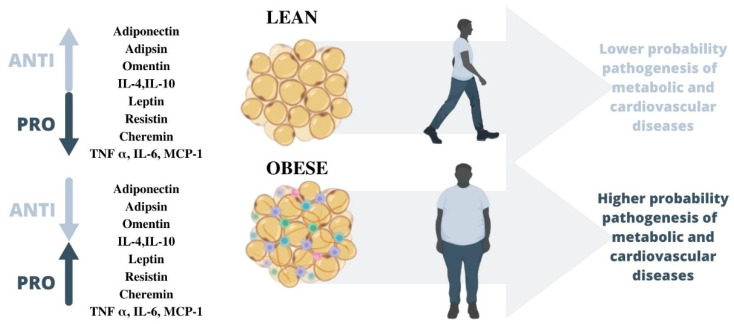
“Concretely, the dysregulation of the production of adipokines seen in obesity is linked to the pathogenesis of various disease processes, especially metabolic and cardiovascular diseases [76] (Figure 1).”
BackgroundAdipokines and Obesity. Potential Link to Metabolic Disorders and Chronic Complications
Zorena, K., Jachimowicz-Duda, O., Ślęzak, D., Robakowska, M., & Mrugacz, M. (2020) · International Journal of Molecular Sciences · doi:10.3390/ijms21103570 · Cited by 411
Microbiota depletion promotes browning of white adipose tissue and reduces obesity
Suárez-Zamorano, N., Fabbiano, S., Chevalier, C., Stojanović, O., Colin, D. J., Stevanović, A., Veyrat-Durebex, C., Tarallo, V., Rigo, D., Germain, S., et al. (2015) · Nature Medicine · doi:10.1038/nm.3994 · Cited by 403
Obesity and cancer: Pathophysiological and biological mechanisms
Renehan, A. G., Roberts, D. L., & Dive, C. (2008) · Archives of Physiology and Biochemistry · doi:10.1080/13813450801954303 · Cited by 402
Jorge, M. L. M. P., de Oliveira, V. N., Resende, N. M., Paraiso, L. F., Calixto, A., Diniz, A. L. D., Resende, E. S., Ropelle, E. R., Carvalheira, J. B., Espindola, F. S., et al. (2011) · Metabolism · doi:10.1016/j.metabol.2011.01.006 · Cited by 398
Effect of Lifestyle Modification on Adipokine Levels in Obese Subjects with Insulin Resistance
Monzillo, L. U., Hamdy, O., Horton, E. S., Ledbury, S., Mullooly, C., Jarema, C., Porter, S., Ovalle, K., Moussa, A., & Mantzoros, C. S. (2003) · Obesity Research · doi:10.1038/oby.2003.144 · Cited by 397
Varady, K. A., Bhutani, S., Klempel, M. C., Kroeger, C. M., Trepanowski, J. F., Haus, J. M., Hoddy, K. K., & Calvo, Y. (2013) · Nutrition Journal · doi:10.1186/1475-2891-12-146 · Cited by 395
Adipose tissue and adipokines: for better or worse
Guerre-Millo, M. (2004) · Diabetes & Metabolism · doi:10.1016/s1262-3636(07)70084-8 · Cited by 387
The role of adipokines in chronic inflammation
Mancuso, P. (2016) · ImmunoTargets and Therapy · doi:10.2147/itt.s73223 · Cited by 378 · cited 3×
“These alterations could affect long-term energy storage and have a major effect on reproductive function, blood pressure management, energy balance, the immune system, and a great number of other physiologic functions [2].”
BackgroundInfluentialBrown Adipose Tissue in Morbidly Obese Subjects
Vijgen, G. H. E. J., Bouvy, N. D., Teule, G. J. J., Brans, B., Schrauwen, P., & van Marken Lichtenbelt, W. D. (2011) · PLoS ONE · doi:10.1371/journal.pone.0017247 · Cited by 377
Azzu, V., Vacca, M., Virtue, S., Allison, M., & Vidal-Puig, A. (2020) · Gastroenterology · doi:10.1053/j.gastro.2019.12.054 · Cited by 369
Mitochondrial dysfunction in metabolic syndrome
Prasun, P. (2020) · Biochimica et Biophysica Acta (BBA) - Molecular Basis of Disease · doi:10.1016/j.bbadis.2020.165838 · Cited by 364
Puddu, A., Sanguineti, R., Montecucco, F., & Viviani, G. L. (2014) · Mediators of Inflammation · doi:10.1155/2014/162021 · Cited by 342
Leptin in inflammation and autoimmunity
La Cava, A. (2017) · Cytokine · doi:10.1016/j.cyto.2016.10.011 · Cited by 342
Zaibi, M. S., Stocker, C. J., O'Dowd, J., Davies, A., Bellahcene, M., Cawthorne, M. A., Brown, A. J. H., Smith, D. M., & Arch, J. R. S. (2010) · FEBS Letters · doi:10.1016/j.febslet.2010.04.027 · Cited by 340
Leptin: a pivotal regulator of human energy homeostasis
Farooqi, I. S., & O’Rahilly, S. (2009) · The American Journal of Clinical Nutrition · doi:10.3945/ajcn.2008.26788c · Cited by 332 · cited 1×
“Leptin is another of the most studied adipokines due to its relationship to obesity and cardiovascular events [88].”
BackgroundRole of Leptin in Inflammation and Vice Versa
Pérez-Pérez, A., Sánchez-Jiménez, F., Vilariño-García, T., & Sánchez-Margalet, V. (2020) · International Journal of Molecular Sciences · doi:10.3390/ijms21165887 · Cited by 330 · cited 2×
“Leptin is involved in several types of cellular dysfunction, such as proinflammatory processes, oxidative stress, angiogenesis enhancement, atherogenesis and thrombotic events, and endothelial dysfunction improvement as well as arterial tightness and atherosclerotic plaque development [58,90].”
BackgroundAdipose tissue, obesity and adipokines: role in cancer promotion
Booth, A., Magnuson, A., Fouts, J., & Foster, M. (2015) · Hormone Molecular Biology and Clinical Investigation · doi:10.1515/hmbci-2014-0037 · Cited by 329 · cited 5×
“Furthermore, leptin can also influence angiogenesis, stimulating the formation of new blood vessels, increasing their permeability, and facilitating the movement of cancer cells through them [12].”
BackgroundInfluentialPrevalence of Severe Obesity among Primary School Children in 21 European Countries
Spinelli, A., Buoncristiano, M., Kovacs, V. A., Yngve, A., Spiroski, I., Obreja, G., Starc, G., Pérez, N., Rito, A. I., Kunešová, M., et al. (2019) · Obesity Facts · doi:10.1159/000500436 · Cited by 325 · cited 1×
“A pandemic of obesity is currently recognized [22].”
BackgroundHamilton, M. K., Boudry, G., Lemay, D. G., & Raybould, H. E. (2015) · American Journal of Physiology-Gastrointestinal and Liver Physiology · doi:10.1152/ajpgi.00029.2015 · Cited by 324
Lippert, K., Kedenko, L., Antonielli, L., Kedenko, I., Gemeier, C., Leitner, M., Kautzky-Willer, A., Paulweber, B., & Hackl, E. (2017) · Beneficial Microbes · doi:10.3920/bm2016.0184 · Cited by 323
Henning, R. J. (2021) · Europe PMC (PubMed Central) · Cited by 321
Biomarkers in Stress Related Diseases/Disorders: Diagnostic, Prognostic, and Therapeutic Values
Dhama, K., Latheef, S. K., Dadar, M., Samad, H. A., Munjal, A., Khandia, R., Karthik, K., Tiwari, R., Yatoo, M. I., Bhatt, P., et al. (2019) · Frontiers in Molecular Biosciences · doi:10.3389/fmolb.2019.00091 · Cited by 321
Role of anti-inflammatory adipokines in obesity-related diseases
Ohashi, K., Shibata, R., Murohara, T., & Ouchi, N. (2014) · Trends in Endocrinology & Metabolism · doi:10.1016/j.tem.2014.03.009 · Cited by 319 · cited 6×
“Particularly, the increased synthesis of antiinflammatory adipokines could be useful as a potential treatment for a variety of obesityrelated problems [66].”
BackgroundInfluentialThe gut microbiota regulates white adipose tissue inflammation and obesity via a family of microRNAs
Virtue, A. T., McCright, S. J., Wright, J. M., Jimenez, M. T., Mowel, W. K., Kotzin, J. J., Joannas, L., Basavappa, M. G., Spencer, S. P., Clark, M. L., et al. (2019) · Science Translational Medicine · doi:10.1126/scitranslmed.aav1892 · Cited by 317
Deiuliis, J., Shah, Z., Shah, N., Needleman, B., Mikami, D., Narula, V., Perry, K., Hazey, J., Kampfrath, T., Kollengode, M., et al. (2011) · PLoS ONE · doi:10.1371/journal.pone.0016376 · Cited by 314
Gut Microbiota-Dependent Modulation of Energy Metabolism
Heiss, C. N., & Olofsson, L. E. (2018) · Journal of Innate Immunity · doi:10.1159/000481519 · Cited by 310
McNeely, M. J., Boyko, E. J., Weigle, D. S., Shofer, J. B., Chessler, S. D., Leonnetti, D. L., & Fujimoto, W. Y. (1999) · Diabetes Care · doi:10.2337/diacare.22.1.65 · Cited by 308
Kang, Y. E., Kim, J. M., Joung, K. H., Lee, J. H., You, B. R., Choi, M. J., Ryu, M. J., Ko, Y. B., Lee, M. A., Lee, J., et al. (2016) · PLOS ONE · doi:10.1371/journal.pone.0154003 · Cited by 306
IL-6 signalling pathways and the development of type 2 diabetes
Akbari, M., & Hassan-Zadeh, V. (2018) · Inflammopharmacology · doi:10.1007/s10787-018-0458-0 · Cited by 302 · cited 1×
“These cytokines have been implicated in the development of insulin resistance, a key feature of type two diabetes and other metabolic disorders [28].”
BackgroundRelevance of Leptin and Other Adipokines in Obesity-Associated Cardiovascular Risk
Landecho, M. F., Tuero, C., Valentí, V., Bilbao, I., de la Higuera, M., & Frühbeck, G. (2019) · Nutrients · doi:10.3390/nu11112664 · Cited by 297 · cited 2×
“The discovery of leptin, the first adipokine, was a significant step forward in the understanding of adipose tissue as an endocrine organ [55].”
BackgroundPlasma Adiponectin Concentrations in Children: Relationships with Obesity and Insulinemia
Stefan, N., Bunt, J. C., Salbe, A. D., Funahashi, T., Matsuzawa, Y., & Tataranni, P. A. (2002) · The Journal of Clinical Endocrinology & Metabolism · doi:10.1210/jc.2002-020694 · Cited by 293
Caloric Restriction Leads to Browning of White Adipose Tissue through Type 2 Immune Signaling
Fabbiano, S., Suárez-Zamorano, N., Rigo, D., Veyrat-Durebex, C., Stevanovic Dokic, A., Colin, D. J., & Trajkovski, M. (2016) · Cell Metabolism · doi:10.1016/j.cmet.2016.07.023 · Cited by 293 · cited 1×
“IL-6 also plays a role in the regulation of glucose metabolism and insulin sensitivity [42].”
BackgroundRole of adipokines in cardiovascular disease
Mattu, H. S., & Randeva, H. S. (2013) · Journal of Endocrinology · doi:10.1530/joe-12-0232 · Cited by 292 · cited 5×
“White adipocytes store excess energy as triglycerides and secrete various cytokines such as leptin, adipsin, adiponectin, omentin, tumor necrosis factor-alpha (TNF-α), interleukin-6 (IL-6), monocyte chemoattractant protein-1 (MCP-1), plasminogen activator inhibitor-1 (PAI-1), resistin, visfatin, and retinol-binding pr…”
BackgroundInfluentialAdiponectin is not altered with exercise training despite enhanced insulin action
Hulver, M. W., Zheng, D., Tanner, C. J., Houmard, J. A., Kraus, W. E., Slentz, C. A., Sinha, M. K., Pories, W. J., MacDonald, K. G., & Dohm, G. L. (2002) · American Journal of Physiology-Endocrinology and Metabolism · doi:10.1152/ajpendo.00150.2002 · Cited by 291
Moraes-Vieira, P. M., Yore, M. M., Dwyer, P. M., Syed, I., Aryal, P., & Kahn, B. B. (2014) · Cell Metabolism · doi:10.1016/j.cmet.2014.01.018 · Cited by 286
Leptin, cardiovascular diseases and type 2 diabetes mellitus
Katsiki, N., Mikhailidis, D. P., & Banach, M. (2018) · Acta Pharmacologica Sinica · doi:10.1038/aps.2018.40 · Cited by 285
miR-155 regulates differentiation of brown and beige adipocytes via a bistable circuit
Chen, Y., Siegel, F., Kipschull, S., Haas, B., Fröhlich, H., Meister, G., & Pfeifer, A. (2013) · Nature Communications · doi:10.1038/ncomms2742 · Cited by 285 · cited 1×
“Brown adipocyte-derived EVs have been shown to contain various bioactive molecules, including microRNAs (miRNAs), which have been implicated in the regulation of brown adipocyte function and thermogenesis [39].”
BackgroundGut microbiota in obesity and metabolic disorders
Sanz, Y., Santacruz, A., & Gauffin, P. (2010) · Proceedings of the Nutrition Society · doi:10.1017/s0029665110001813 · Cited by 281
Novel Insights into the Pathogenesis and Management of the Metabolic Syndrome
Wang, H. H., Lee, D. K., Liu, M., Portincasa, P., & Wang, D. Q.-H. (2020) · Pediatric Gastroenterology, Hepatology & Nutrition · doi:10.5223/pghn.2020.23.3.189 · Cited by 281
Towards an integrative approach to understanding the role of chemerin in human health and disease
Rourke, J. L., Dranse, H. J., & Sinal, C. J. (2013) · Obesity Reviews · doi:10.1111/obr.12009 · Cited by 281 · cited 1×
“Chemerin is an adipocytederived chemoattractant for monocytes and dendritic cells that are produced by mature adipocytes [63].”
BackgroundArcuate Nucleus-Dependent Regulation of Metabolism—Pathways to Obesity and Diabetes Mellitus
Jais, A., & Brüning, J. C. (2022) · Endocrine Reviews · doi:10.1210/endrev/bnab025 · Cited by 280
Lee, S., Lee, H.-C., Kwon, Y.-W., Lee, S. E., Cho, Y., Kim, J., Lee, S., Kim, J.-Y., Lee, J., Yang, H.-M., et al. (2014) · Cell Metabolism · doi:10.1016/j.cmet.2014.01.013 · Cited by 280
Leptin signalling pathways in hypothalamic neurons
Kwon, O., Kim, K. W., & Kim, M.-S. (2016) · Cellular and Molecular Life Sciences · doi:10.1007/s00018-016-2133-1 · Cited by 280 · cited 1×
“It follows that elevated levels of circulating leptin in obese people considerably contribute to the low-grade inflammatory state that makes these individuals more prone to cardiovascular disease, type II diabetes, or degenerative illness [27,57].”
BackgroundThe adipocyte as an endocrine organ in the regulation of metabolic homeostasis
Harwood, H. J. (2012) · Neuropharmacology · doi:10.1016/j.neuropharm.2011.12.010 · Cited by 273
Adiponectin: Regulation of its production and its role in human diseases
Shehzad, A., Iqbal, W., Shehzad, O., & Lee, Y. S. (2012) · Hormones · doi:10.1007/bf03401534 · Cited by 272
Kadowaki, T., Yamauchi, T., & Kubota, N. (2008) · FEBS Letters · doi:10.1016/j.febslet.2007.11.070 · Cited by 272 · cited 1×
“Adiponectin is also known to regulate inflammation and play a role in the development of metabolic disorders [38].”
BackgroundObesity and Breast Cancer: Role of Leptin
Sánchez-Jiménez, F., Pérez-Pérez, A., de la Cruz-Merino, L., & Sánchez-Margalet, V. (2019) · Frontiers in Oncology · doi:10.3389/fonc.2019.00596 · Cited by 268
Probiotics modulate gut microbiota and improve insulin sensitivity in DIO mice
Bagarolli, R. A., Tobar, N., Oliveira, A. G., Araújo, T. G., Carvalho, B. M., Rocha, G. Z., Vecina, J. F., Calisto, K., Guadagnini, D., Prada, P. O., et al. (2017) · The Journal of Nutritional Biochemistry · doi:10.1016/j.jnutbio.2017.08.006 · Cited by 266
Exercise training is not associated with improved levels of C-reactive protein or adiponectin
Marcell, T. J., McAuley, K. A., Traustadóttir, T., & Reaven, P. D. (2005) · Metabolism · doi:10.1016/j.metabol.2004.11.008 · Cited by 256
Atypical Antipsychotics and Metabolic Syndrome: From Molecular Mechanisms to Clinical Differences
Carli, M., Kolachalam, S., Longoni, B., Pintaudi, A., Baldini, M., Aringhieri, S., Fasciani, I., Annibale, P., Maggio, R., & Scarselli, M. (2021) · Pharmaceuticals · doi:10.3390/ph14030238 · Cited by 250
Cerdá, B., Pérez, M., Pérez-Santiago, J. D., Tornero-Aguilera, J. F., González-Soltero, R., & Larrosa, M. (2016) · Frontiers in Physiology · doi:10.3389/fphys.2016.00051 · Cited by 247
Self-citationRen, Y., Zhao, H., Yin, C., Lan, X., Wu, L., Du, X., Griffiths, H. R., & Gao, D. (2022) · Frontiers in Endocrinology · doi:10.3389/fendo.2022.873699 · Cited by 244 · cited 1×
“As a hormone, it regulates many endocrine activities including bone metabolism, in addition to its primary function of influencing energy homeostasis via thermoregulation-related mechanisms [45,56].”
BackgroundAdiponectin, a key adipokine in obesity related liver diseases.
Buechler, C., Wanninger, J., & Neumeier, M. (2011) · PubMed · doi:10.3748/wjg.v17.i23.2801 · Cited by 242 · cited 1×
“They can also contribute to other obesity-related complications such as nonalcoholic fatty liver disease (NAFLD), polycystic ovary syndrome (PCOS), and sleep-apnea syndrome (SAS) [11].”
BackgroundPainold, A., Mörkl, S., Kashofer, K., Halwachs, B., Dalkner, N., Bengesser, S., Birner, A., Fellendorf, F., Platzer, M., Queissner, R., et al. (2019) · Bipolar Disorders · doi:10.1111/bdi.12682 · Cited by 240
Hong, J., Jia, Y., Pan, S., Jia, L., Li, H., Han, Z., Cai, D., & Zhao, R. (2016) · Oncotarget · doi:10.18632/oncotarget.11267 · Cited by 233
Chemerin, a Novel Adipokine in the Regulation of Angiogenesis
Bozaoglu, K., Curran, J. E., Stocker, C. J., Zaibi, M. S., Segal, D., Konstantopoulos, N., Morrison, S., Carless, M., Dyer, T. D., Cole, S. A., et al. (2010) · The Journal of Clinical Endocrinology & Metabolism · doi:10.1210/jc.2010-0042 · Cited by 226
Improved Insulin Sensitivity and Adiponectin Level after Exercise Training in Obese Korean Youth
Kim, E. S., Im, J., Kim, K. C., Park, J. H., Suh, S., Kang, E. S., Kim, S. H., Jekal, Y., Lee, C. W., Yoon, Y., et al. (2007) · Obesity · doi:10.1038/oby.2007.360 · Cited by 222
Role of resistin in inflammation and inflammation-related diseases.
Pang, S. S., & Le, Y. Y. (2006) · PubMed · Cited by 221
Adipose tissue plasticity from WAT to BAT and in between
Lee, Y.-H., Mottillo, E. P., & Granneman, J. G. (2014) · Biochimica et Biophysica Acta (BBA) - Molecular Basis of Disease · doi:10.1016/j.bbadis.2013.05.011 · Cited by 216 · cited 2×
“Activation of beige adipocytes in white adipose tissue has been shown to increase energy expenditure and improve glucose and lipid metabolism [20].”
BackgroundOhmura, K., Ishimori, N., Ohmura, Y., Tokuhara, S., Nozawa, A., Horii, S., Andoh, Y., Fujii, S., Iwabuchi, K., Onoé, K., et al. (2010) · Arteriosclerosis, Thrombosis, and Vascular Biology · doi:10.1161/atvbaha.109.198614 · Cited by 215
Linking resistin, inflammation, and cardiometabolic diseases
Park, H. K., Kwak, M. K., Kim, H. J., & Ahima, R. S. (2017) · The Korean Journal of Internal Medicine · doi:10.3904/kjim.2016.229 · Cited by 215
Balancing susceptibility to infection and autoimmunity: a role for leptin?
Matarese, G. (2002) · Trends in Immunology · doi:10.1016/s1471-4906(02)02188-9 · Cited by 213
Chen, C., Jiang, J., Lü, J.-M., Chai, H., Wang, X., Lin, P. H., & Yao, Q. (2010) · American Journal of Physiology-Heart and Circulatory Physiology · doi:10.1152/ajpheart.00431.2009 · Cited by 210
Adipokines, diabetes and atherosclerosis: an inflammatory association
Freitas Lima, L. C., Braga, V. D. A., do Socorro de França Silva, M., Cruz, J. D. C., Sousa Santos, S. H., de Oliveira Monteiro, M. M., & Balarini, C. D. M. (2015) · Frontiers in Physiology · doi:10.3389/fphys.2015.00304 · Cited by 209
Differential Role of Adipose Tissues in Obesity and Related Metabolic and Vascular Complications
Gómez-Hernández, A., Beneit, N., Díaz-Castroverde, S., & Escribano, Ó. (2016) · International Journal of Endocrinology · doi:10.1155/2016/1216783 · Cited by 204
Solmi, M., Suresh Sharma, M., Osimo, E. F., Fornaro, M., Bortolato, B., Croatto, G., Miola, A., Vieta, E., Pariante, C. M., Smith, L., et al. (2021) · Brain, Behavior, and Immunity · doi:10.1016/j.bbi.2021.07.014 · Cited by 196
Leptin Is Associated with Increased Prostate Cancer Risk: A Nested Case-Referent Study1
Stattin, P., Söderberg, S., Hallmans, G., Bylund, A., Kaaks, R., Stenman, U.-H., Bergh, A., & Olsson, T. (2001) · The Journal of Clinical Endocrinology & Metabolism · doi:10.1210/jcem.86.3.7328 · Cited by 196
Kraemer, R. R., Chu, H., & Castracane, V. D. (2002) · Experimental Biology and Medicine · doi:10.1177/153537020222700903 · Cited by 195
Auguet, T., Quintero, Y., Riesco, D., Morancho, B., Terra, X., Crescenti, A., Broch, M., Aguilar, C., Olona, M., Porras, J. A., et al. (2011) · BMC Medical Genetics · doi:10.1186/1471-2350-12-60 · Cited by 190
Wang, Y., Qu, H., Xiong, X., Qiu, Y., Liao, Y., Chen, Y., Zheng, Y., & Zheng, H. (2018) · Mediators of Inflammation · doi:10.1155/2018/9471583 · Cited by 189
Sirico, F., Bianco, A., D'Alicandro, G., Castaldo, C., Montagnani, S., Spera, R., Di Meglio, F., & Nurzynska, D. (2018) · Childhood Obesity · doi:10.1089/chi.2017.0269 · Cited by 182 · cited 3×
“The different studies carried out in children or adolescents with obesity indicate that the adiponectin response to exercise depends on the different hormonal changes associated with sex in the pre- or postpubertal age [19].”
BackgroundInfluentialRole of Adipokines in Cardiovascular Disease
Lau, W. B., Ohashi, K., Wang, Y., Ogawa, H., Murohara, T., Ma, X.-L., & Ouchi, N. (2017) · Circulation Journal · doi:10.1253/circj.cj-17-0458 · Cited by 178 · cited 1×
“These cytokines have beneficial effects on thermogenesis, energy expenditure, glucose homeostasis, lipid metabolism, insulin sensitivity, angiogenesis, and anti-inflammation [4].”
BackgroundNagpal, R., Newman, T. M., Wang, S., Jain, S., Lovato, J. F., & Yadav, H. (2018) · Journal of Diabetes Research · doi:10.1155/2018/3462092 · Cited by 177
Adipokines and inflammation: is it a question of weight?
Francisco, V., Pino, J., Gonzalez‐Gay, M. A., Mera, A., Lago, F., Gómez, R., Mobasheri, A., & Gualillo, O. (2018) · British Journal of Pharmacology · doi:10.1111/bph.14181 · Cited by 166
Kelly, A. S., Steinberger, J., Olson, T. P., & Dengel, D. R. (2007) · Metabolism · doi:10.1016/j.metabol.2007.03.009 · Cited by 165
Biglari, N., Gaziano, I., Schumacher, J., Radermacher, J., Paeger, L., Klemm, P., Chen, W., Corneliussen, S., Wunderlich, C. M., Sue, M., et al. (2021) · Nature Neuroscience · doi:10.1038/s41593-021-00854-0 · Cited by 164
Chemerin as a Mediator between Obesity and Vascular Inflammation in Children
Landgraf, K., Friebe, D., Ullrich, T., Kratzsch, J., Dittrich, K., Herberth, G., Adams, V., Kiess, W., Erbs, S., & Körner, A. (2012) · The Journal of Clinical Endocrinology & Metabolism · doi:10.1210/jc.2011-2937 · Cited by 163
Resistin: Insulin resistance to malignancy
Codoñer‐Franch, P., & Alonso‐Iglesias, E. (2014) · Clinica Chimica Acta · doi:10.1016/j.cca.2014.07.043 · Cited by 163
Adiponectin-Resistance in Obesity
Engin, A. (2017) · Advances in experimental medicine and biology · doi:10.1007/978-3-319-48382-5_18 · Cited by 161
Westfall, S., Caracci, F., Zhao, D., Wu, Q.-L., Frolinger, T., Simon, J., & Pasinetti, G. M. (2021) · Brain, Behavior, and Immunity · doi:10.1016/j.bbi.2020.10.013 · Cited by 161
Çakici, N., Sutterland, A. L., Penninx, B. W. J. H., Dalm, V. A., de Haan, L., & van Beveren, N. J. M. (2020) · Brain, Behavior, and Immunity · doi:10.1016/j.bbi.2020.04.039 · Cited by 160
Effects of exercise on inflammation markers in type 2 diabetic subjects
Hopps, E., Canino, B., & Caimi, G. (2011) · Acta Diabetologica · doi:10.1007/s00592-011-0278-9 · Cited by 153
Racil, G., Zouhal, H., Elmontassar, W., Abderrahman, A. B., de Sousa, M. V., Chamari, K., Amri, M., & Coquart, J. B. (2015) · Applied Physiology, Nutrition, and Metabolism · doi:10.1139/apnm-2015-0384 · Cited by 153
Kopp, A., Bala, M., Buechler, C., Falk, W., Gross, P., Neumeier, M., Schölmerich, J., & Schäffler, A. (2010) · Endocrinology · doi:10.1210/en.2010-0571 · Cited by 152 · cited 1×
“Omentin is a new adipokine that suppresses TNF α-induced COX2 expression in endothelial cells and stimulates endothelial nitric oxide synthase [74].”
BackgroundThe Leptin System and Diet: A Mini Review of the Current Evidence
Mendoza-Herrera, K., Florio, A. A., Moore, M., Marrero, A., Taméz, M., Bhupathiraju, S. N., & Mattei, J. (2021) · Frontiers in Endocrinology · doi:10.3389/fendo.2021.749050 · Cited by 152
Adipose Tissue Dysfunction and Impaired Metabolic Health in Human Obesity: A Matter of Oxygen?
Goossens, G. H., & Blaak, E. E. (2015) · Frontiers in Endocrinology · doi:10.3389/fendo.2015.00055 · Cited by 145
The Roles and Associated Mechanisms of Adipokines in Development of Metabolic Syndrome
Kim, J.-E., Kim, J.-S., Jo, M.-J., Cho, E., Ahn, S.-Y., Kwon, Y.-J., & Ko, G.-J. (2022) · Molecules · doi:10.3390/molecules27020334 · Cited by 145
Kadoglou, N. P. E., Fotiadis, G., Kapelouzou, A., Kostakis, A., Liapis, C. D., & Vrabas, I. S. (2013) · Diabetic Medicine · doi:10.1111/dme.12055 · Cited by 142
Leptin Is Associated with Increased Prostate Cancer Risk: A Nested Case-Referent Study
Stattin, P. E. (2001) · The Journal of Clinical Endocrinology & Metabolism · doi:10.1210/jc.86.3.1341 · Cited by 142
Adiponectin as a potential biomarker of vascular disease
Mohammadi, S., Arefhosseini, S. R., Ebrahimi‐Mameghani, M., Fallah, P., & Bazi, Z. (2015) · Vascular Health and Risk Management · doi:10.2147/vhrm.s48753 · Cited by 141
Gallí, M., Van Gool, F., Rongvaux, A., Andris, F., & Leo, O. (2010) · Cancer Research · doi:10.1158/0008-5472.can-09-2465 · Cited by 140
Adipokines as emerging depression biomarkers: A systematic review and meta-analysis
Carvalho, A. F., Rocha, D. Q. C., McIntyre, R. S., Mesquita, L. M., Köhler, C. A., Hyphantis, T. N., Sales, P. M. G., Machado-Vieira, R., & Berk, M. (2014) · Journal of Psychiatric Research · doi:10.1016/j.jpsychires.2014.08.002 · Cited by 138 · cited 1×
“They can also modulate mood, cognition, stress response, reward system, and eating behavior through various neurotransmitters such as serotonin, dopamine, norepinephrine, and glutamate [6].”
BackgroundExpression of SDF-1α and nuclear CXCR4 predicts lymph node metastasis in colorectal cancer
Yoshitake, N., Fukui, H., Yamagishi, H., Sekikawa, A. M., Fujii, S., Tomita, S., Ichikawa, K., Imura, J., Hiraishi, H., & Fujimori, T. (2008) · British Journal of Cancer · doi:10.1038/sj.bjc.6604363 · Cited by 138
Metabolic Regulation by C1q/TNF-related Protein-13 (CTRP13)
Wei, Z., Peterson, J. M., & Wong, G. W. (2011) · Journal of Biological Chemistry · doi:10.1074/jbc.m110.201087 · Cited by 133
The association between obesity related adipokines and risk of breast cancer: a meta-analysis
Gui, Y., Pan, Q., Chen, X., Xu, S., Luo, X., & Chen, L. (2017) · Oncotarget · doi:10.18632/oncotarget.17853 · Cited by 132
Li, X., Zhai, Y., Zhao, J., He, H., Li, Y.-J., Liu, Y., Feng, A., Li, L., Huang, T., Xu, A., et al. (2021) · Frontiers in Cardiovascular Medicine · doi:10.3389/fcvm.2021.704145 · Cited by 124
Kunduzova, O., Alet, N., Delesque‐Touchard, N., Millet, L., Castan‐Laurell, I., Muller, C., Dray, C., Schaeffer, P., Herault, J. P., Savi, P., et al. (2008) · The FASEB Journal · doi:10.1096/fj.07-104018 · Cited by 123
Nakamura, K., Sano, S., Fuster, J. J., Kikuchi, R., Shimizu, I., Ohshima, K., Katanasaka, Y., Ouchi, N., & Walsh, K. (2016) · Journal of Biological Chemistry · doi:10.1074/jbc.m115.693937 · Cited by 123
Balakrishna, R., Bjørnerud, T., Bemanian, M., Aune, D., & Fadnes, L. T. (2022) · Advances in Nutrition · doi:10.1093/advances/nmac077 · Cited by 123
Adiponectin is altered after maximal exercise in highly trained male rowers
Jürimäe, J., Purge, P., & J�rim�e, T. (2004) · European Journal of Applied Physiology · doi:10.1007/s00421-004-1238-7 · Cited by 122
An Overview of the Role of Adipokines in Cardiometabolic Diseases
Farkhondeh, T., Llorens, S., Pourbagher-Shahri, A. M., Ashrafizadeh, M., Talebi, M., Shakibaei, M., & Samarghandian, S. (2020) · Molecules · doi:10.3390/molecules25215218 · Cited by 122 · cited 1×
“In addition, they can influence the progression of atherosclerosis by affecting plaque stability, smooth-muscle cell proliferation, macrophage infiltration, and foam-cell formation [5].”
BackgroundCirculating adipokines and risk of obesity related cancers: A systematic review and meta-analysis
Yoon, Y. S., Kwon, A.-R., Lee, Y. K., & Oh, S. W. (2019) · Obesity Research & Clinical Practice · doi:10.1016/j.orcp.2019.03.006 · Cited by 121
Yang, J. L., Liu, D. X., Jiang, H., Pan, F., Ho, C. S., & Ho, R. C. (2016) · Scientific Reports · doi:10.1038/srep35239 · Cited by 117 · cited 1×
“Animal studies have shown that leptin can have an antidepressantlike effect, and some clinical trials have suggested that leptin administration may improve symptoms of depression in humans [8].”
BackgroundWadden, T. A., Considine, R. V., Foster, G. D., Anderson, D. A., Sarwer, D. B., & Caro, J. S. (1998) · The Journal of Clinical Endocrinology & Metabolism · doi:10.1210/jcem.83.1.4494 · Cited by 115
Jocken, J. W. E., González Hernández, M. A., Hoebers, N. T. H., van der Beek, C. M., Essers, Y. P. G., Blaak, E. E., & Canfora, E. E. (2018) · Frontiers in Endocrinology · doi:10.3389/fendo.2017.00372 · Cited by 115
Obesity-induced cognitive impairment in older adults: a microvascular perspective
Balasubramanian, P., Kiss, T., Tarantini, S., Nyúl-Tóth, Á., Ahire, C., Yabluchanskiy, A., Csipo, T., Lipecz, A., Tabak, A., Institoris, A., et al. (2021) · American Journal of Physiology-Heart and Circulatory Physiology · doi:10.1152/ajpheart.00736.2020 · Cited by 115
The Role of Adipokines in Breast Cancer: Current Evidence and Perspectives
Christodoulatos, G. S., Spyrou, N., Kadillari, J., Psallida, S., & Dalamaga, Μ. (2019) · Current Obesity Reports · doi:10.1007/s13679-019-00364-y · Cited by 114
Effect of exercise training on plasma visfatin and eotaxin levels
Choi, K. M., Kim, J. H., Cho, G. J., Baik, S. H., Park, H. S., & Kim, S. M. (2007) · European Journal of Endocrinology · doi:10.1530/eje-07-0127 · Cited by 112
Association between adiponectin, resistin, insulin resistance, and colorectal tumors
Gönüllü, G., Kahraman, H., Bedir, A., Bektaş, A., & Yücel, İ. (2009) · International Journal of Colorectal Disease · doi:10.1007/s00384-009-0828-6 · Cited by 111
The Adipokine Visfatin is Markedly Elevated in Obese Children
Haider, D. G., Holzer, G., Schaller, G., Weghuber, D., Widhalm, K., Wagner, O., Kapiotis, S., & Wolzt, M. (2006) · Journal of Pediatric Gastroenterology and Nutrition · doi:10.1097/01.mpg.0000235749.50820.b3 · Cited by 111 · cited 2×
“[32] reported that four months of supervised aerobic training performed two to three times per week was sufficient to reduce plasma visfatin levels in patients with type one diabetes, maintaining this reduction eight months after cessation of the training protocol.”
BackgroundAdiponectin Responses to Continuous and Progressively Intense Intermittent Exercise
KRAEMER, R. R., ABOUDEHEN, K. S., CARRUTH, A. K., DURAND, R. J., ACEVEDO, E. O., HEBERT, E. P., JOHNSON, L. G., & DANIEL CASTRACANE, V. (2003) · Medicine & Science in Sports & Exercise · doi:10.1249/01.mss.0000079072.23998.f3 · Cited by 110
Al-muzafar, H. M., & Amin, K. A. (2017) · BMC Complementary and Alternative Medicine · doi:10.1186/s12906-016-1540-z · Cited by 110
Obesity, adipokines and cancer: an update
Lee, C., Woo, Y. C., Wang, Y., Yeung, C., Xu, A., & Lam, K. S. L. (2014) · Clinical Endocrinology · doi:10.1111/cen.12667 · Cited by 109
The association of resistin with cardiovascular disease in the Multi-Ethnic Study of Atherosclerosis
Muse, E. D., Feldman, D. I., Blaha, M. J., Dardari, Z. A., Blumenthal, R. S., Budoff, M. J., Nasir, K., Criqui, M. H., Cushman, M., McClelland, R. L., et al. (2015) · Atherosclerosis · doi:10.1016/j.atherosclerosis.2014.12.044 · Cited by 106
The Relationships of Adiponectin with Insulin and Lipids Are Strengthened with Increasing Adiposity
Martin, L. J., Woo, J. G., Daniels, S. R., Goodman, E., & Dolan, L. M. (2005) · The Journal of Clinical Endocrinology & Metabolism · doi:10.1210/jc.2005-0019 · Cited by 106
Leptin and Nutrition in Gestational Diabetes
Pérez‐Pérez, A., Vilariño‐García, T., Guadix, P., Dueñas, J. L., & Sánchez‐Margalet, V. (2020) · Nutrients · doi:10.3390/nu12071970 · Cited by 106
Cheng, Y.-C., & Liu, J. (2020) · Nutrients · doi:10.3390/nu12092557 · Cited by 106
Apelin promotes lymphangiogenesis and lymph node metastasis
Berta, J., Hoda, M. A., László, V., Rózsás, A., Garay, T., Török, S., Grusch, M., Berger, W., Paku, S., Renyi-Vamos, F., et al. (2014) · Oncotarget · doi:10.18632/oncotarget.2032 · Cited by 105
Adipokines and cardiovascular disease: A comprehensive review
Smekal, A., & Vaclavik, J. (2017) · Biomedical Papers · doi:10.5507/bp.2017.002 · Cited by 105
Heo, K., Kim, Y. H., Sung, H. J., Li, H. Y., Yoo, C. W., Kim, J. Y., Park, J. Y., Lee, U., Nam, B., Kim, E. O., et al. (2012) · Oral Oncology · doi:10.1016/j.oraloncology.2011.12.015 · Cited by 104
Liu, Y., Yuan, Ž., Chen, H., Wang, D., Wang, M., Ou, J., & Xia, M. (2017) · Circulation · doi:10.1161/circulationaha.116.024503 · Cited by 103
Leptin resensitisation: a reversion of leptin-resistant states
Andreoli, M. F., Donato, J., Çakır, I., & Perelló, M. (2019) · Journal of Endocrinology · doi:10.1530/joe-18-0606 · Cited by 103
Vasconcellos, F., Seabra, A., Cunha, F., Montenegro, R., Penha, J., Bouskela, E., Nogueira Neto, J. F., Collett-Solberg, P., & Farinatti, P. (2016) · Journal of Sports Sciences · doi:10.1080/02640414.2015.1064150 · Cited by 102
Kim, D. H., Vanella, L., Inoue, K., Burgess, A., Gotlinger, K., Manthati, V. L., Koduru, S. R., Zeldin, D. C., Falck, J. R., Schwartzman, M. L., et al. (2010) · Stem Cells and Development · doi:10.1089/scd.2010.0098 · Cited by 100
Pan, H., Deng, L.-L., Cui, J.-Q., Shi, L., Yang, Y.-C., Luo, J.-H., Qin, D., & Wang, L. (2018) · Medicine · doi:10.1097/md.0000000000011345 · Cited by 100
Lee, J. O., Kim, N., Lee, H. J., Lee, Y. W., Kim, S. J., Park, S. H., & Kim, H. S. (2016) · Scientific Reports · doi:10.1038/srep18923 · Cited by 96
Czaja-Stolc, S., Potrykus, M., Stankiewicz, M., Kaska, Ł., & Małgorzewicz, S. (2022) · Nutrients · doi:10.3390/nu14071457 · Cited by 96 · cited 1×
“For example, a diet high in saturated fats and simple sugars has been shown to increase the production of proinflammatory adipokines, such as resistin and IL-6, while a diet high in fruits, vegetables, and fiber has been associated with increased levels of anti-inflammatory adipokines, such as adiponectin [16].”
BackgroundA review on gut microbiota: a central factor in the pathophysiology of obesity
Cunningham, A. L., Stephens, J. W., & Harris, D. A. (2021) · Lipids in Health and Disease · doi:10.1186/s12944-021-01491-z · Cited by 95
The Role of Adipocytokines in Coronary Atherosclerosis
Liberale, L., Bonaventura, A., Vecchié, A., Casula, M., Dallegri, F., Montecucco, F., & Carbone, F. (2017) · Current Atherosclerosis Reports · doi:10.1007/s11883-017-0644-3 · Cited by 95 · cited 1×
“Leptin is involved in several types of cellular dysfunction, such as proinflammatory processes, oxidative stress, angiogenesis enhancement, atherogenesis and thrombotic events, and endothelial dysfunction improvement as well as arterial tightness and atherosclerotic plaque development [58,90].”
BackgroundAdiponectin is an endogenous anti-fibrotic mediator and therapeutic target
Marangoni, R. G., Masui, Y., Fang, F., Korman, B., Lord, G., Lee, J., Lakota, K., Wei, J., Scherer, P. E., Otvos, L., et al. (2017) · Scientific Reports · doi:10.1038/s41598-017-04162-1 · Cited by 95
Serum leptin responses after acute resistance exercise protocols
Zafeiridis, A., Smilios, I., Considine, R. V., & Tokmakidis, S. P. (2003) · Journal of Applied Physiology · doi:10.1152/japplphysiol.00330.2002 · Cited by 89
Exercise, adipokines and pediatric obesity: a meta-analysis of randomized controlled trials
García-Hermoso, A., Ceballos-Ceballos, R. J. M., Poblete-Aro, C. E., Hackney, A. C., Mota, J., & Ramírez-Vélez, R. (2017) · International Journal of Obesity · doi:10.1038/ijo.2016.230 · Cited by 89
Beaudry, J. L., Kaur, K. D., Varin, E. M., Baggio, L. L., Cao, X., Mulvihill, E. E., Stern, J. H., Campbell, J. E., Scherer, P. E., & Drucker, D. J. (2019) · Molecular Metabolism · doi:10.1016/j.molmet.2019.01.011 · Cited by 88
Kord-Varkaneh, H., Tinsley, G. M., Santos, H. O., Zand, H., Nazary, A., Fatahi, S., Mokhtari, Z., Salehi‐Sahlabadi, A., Tan, S. C., Rahmani, J., et al. (2020) · Clinical Nutrition · doi:10.1016/j.clnu.2020.10.034 · Cited by 88
Plasma Leptin Levels and Risk of Breast Cancer in Premenopausal Women
Harris, H. R., Tworoger, S. S., Hankinson, S. E., ROSNER, B. A., & Michels, K. B. (2011) · Cancer Prevention Research · doi:10.1158/1940-6207.capr-11-0125 · Cited by 87
Role of Adiponectin in Cardiovascular Diseases Related to Glucose and Lipid Metabolism Disorders
Han, W., Yang, S., Xiao, H., Wang, M., Ye, J., Cao, L., & Sun, G. (2022) · International Journal of Molecular Sciences · doi:10.3390/ijms232415627 · Cited by 87
White adipocytes: More than just fat depots
Henry, S. L., Bensley, J. G., Wood‐Bradley, R. J., Cullen‐McEwen, L. A., Bertram, J. F., & Armitage, J. A. (2011) · The International Journal of Biochemistry & Cell Biology · doi:10.1016/j.biocel.2011.12.011 · Cited by 84 · cited 1×
“IL-6 is a proinflammatory cytokine that is involved in the immune response and plays a role in insulin resistance [26].”
BackgroundCirculating adiponectin levels and the risk of breast cancer
Ye, J., Jia, J., Dong, S., Zhang, C., Yu, S., Li, L., Mao, C., Wang, D., Chen, J., & Yuan, G. (2013) · European Journal of Cancer Prevention · doi:10.1097/cej.0b013e328364f293 · Cited by 83
Koper‐Lenkiewicz, O. M., Sutkowska, K., Wawrusiewicz‐Kurylonek, N., Kowalewska, E., & Matowicka-Karna, J. (2022) · International Journal of Molecular Sciences · doi:10.3390/ijms23042106 · Cited by 83
High Visfatin Expression in Breast Cancer Tissue Is Associated with Poor Survival
Lee, Y.-C., Yang, Y., Su, J., Chang, H.-L., Hou, M., & Yuan, S. F. (2011) · Cancer Epidemiology Biomarkers & Prevention · doi:10.1158/1055-9965.epi-11-0399 · Cited by 82
Liang, W. H., & Ye, D. D. (2019) · Cytokine & Growth Factor Reviews · doi:10.1016/j.cytogfr.2019.06.002 · Cited by 82
Spyrou, N., Avgerinos, K. I., Mantzoros, C. S., & Dalamaga, Μ. (2018) · Current Obesity Reports · doi:10.1007/s13679-018-0318-7 · Cited by 81
The protective functions of omentin in cardiovascular diseases
Tan, Y. L., Zheng, X., & Tang, C. (2015) · Clinica Chimica Acta · doi:10.1016/j.cca.2015.05.019 · Cited by 80 · cited 1×
“Regarding other adipokines with anti-inflammatory effects, such as CTRP, omentin, and secreted frizzled-related protein five (SFRP5), relatively little is known [66,67].”
BackgroundYang, H., Guo, W., Li, J., Cao, S., Zhang, J., Pan, J., Wang, Z., Wen, P., Shi, X., & Zhang, S. (2017) · PLoS ONE · doi:10.1371/journal.pone.0166360 · Cited by 79 · cited 1×
“Nevertheless, several controversial results have been elucidated, since a recent meta-analysis suggested that there is no association between raised leptin levels and coronary heartdisease risk [97].”
ResultAgranyoni, O., Meninger-Mordechay, S., Uzan-Yulzari, A., Oren, Z., Salmon‐Divon, M., Rodin, D., Raz, O., Koman, I. E., Koren, O., Pinhasov, A., et al. (2021) · npj Biofilms and Microbiomes · doi:10.1038/s41522-021-00193-9 · Cited by 79
Adiponectin stimulates lipid metabolism via AMPK in rabbit blastocysts
Schindler, M., Pendzialek, M., Grybel, K. J., Seeling, T., Gürke, J., Fischer, B., & Santos, A. N. (2017) · Human Reproduction · doi:10.1093/humrep/dex087 · Cited by 78 · cited 1×
“Nevertheless, low blood adiponectin levels are associated with chronic inflammation of metabolic diseases such as type two diabetes, obesity, and atherosclerosis [72].”
Background
Research works printed but not linked: 4
- (2023, March 16). Extreme Eating Behaviours|Frontiers Research Topic. Available online: https://www.frontiersin.org/research-topics/9836/extreme-eating-behaviours.
- Hussein, 2021, Salivary Levels of Interleukin-1beta, Tumour Necrosis Factor-α, and C-Reactive Proteins in Smokers Patients with Severe Chronic Periodontitis, Syst. Rev. Pharm., 12, 1804
- (2023, March 17). SciELO—Brazil—Efeito Do Treinamento Concorrente e Destreinamento Sobre o Biomarcador Anti-Inflamatório e Níveis de Condicionamento Físico Em Crianças Obesas Efeito Do Treinamento Concorrente e Destreinamento Sobre o Biomarcador Anti-Inflamatório e Níveis de Condicionamento Físico Em Crianças Obesas. Available online: https://www.scielo.br/j/rbme/a/H4BHxv76F7SK3YhpQYKDs5H/?format=html&lang=en.
- Pigatto, E.; Schiesaro, M.; Caputo, M.; Beggio, M.; Galozzi, P.; Cozzi, F.; Sfriso, P. POS0329 gastrointestinal involvement in systemic sclerosis: Pathogenetic role of gut microbiome, cytokines and adipokines. Ann. Rheum. Dis. 2021, 80, 392. [CrossRef · DOI
Cited by
Global Impacts of Western Diet and Its Effects on Metabolism and Health: A Narrative Review
Clemente-Suárez, V. J., Beltrán-Velasco, A. I., Redondo-Flórez, L., Martín-Rodríguez, A., & Tornero-Aguilera, J. F. (2023) · Nutrients · doi:10.3390/nu15122749 · Cited by 804
Self-citationGut microbiota in overweight and obesity: crosstalk with adipose tissue
Cani, P. D., & Van Hul, M. (2024) · Nature Reviews Gastroenterology & Hepatology · doi:10.1038/s41575-023-00867-z · Cited by 194
The interplay of factors in metabolic syndrome: understanding its roots and complexity
Islam, M. S., Wei, P., Suzauddula, M., Nime, I., Feroz, F., Acharjee, M., & Pan, F. (2024) · Molecular Medicine · doi:10.1186/s10020-024-01019-y · Cited by 169
New Insights and Potential Therapeutic Interventions in Metabolic Diseases
Clemente‐Suárez, V. J., Martín-Rodríguez, A., Redondo-Flórez, L., López-Mora, C., Sepulveda, R. A. Y., & Tornero-Aguilera, J. F. (2023) · International Journal of Molecular Sciences · doi:10.3390/ijms241310672 · Cited by 198
Self-citationKirsher, D. Y., Chand, S., Phong, A., Nguyen, B., Szoke, B. G., & Ahadi, S. (2025) · Communications Chemistry · doi:10.1038/s42004-025-01665-1 · Cited by 111
“For instance, Leptin (P41159), a circulating adipokine involved in regulating appetite, food intake, and fat distribution 36 , is known to be in fl uenced by sex hormones.”
Metadata
- Authors
- Clemente-Suárez, V. J., Redondo-Flórez, L., Beltrán-Velasco, A. I., Martín-Rodríguez, A., Martínez-Guardado, I., Navarro-Jiménez, E., Laborde-Cárdenas, C. C., & Tornero-Aguilera, J. F.
- Affiliations
- Faculty of Sports Sciences, Universidad Europea de Madrid, Tajo Street, s/n, 28670 Madrid, Spain
- Universidad Europea de Madrid (ES)
- Universidad Nebrija (ES)
- BRABE Group, Department of Psychology, Faculty of Life and Natural Sciences, University of Nebrija, C/del Hostal, 28248 Madrid, Spain
- Universidad Simón Bolívar (CO)
- Corresponding author
- Martín-Rodríguez, Alexandra
- ORCID
- Venue
- Biomedicines
- Publisher
- MDPI AG
- Published
- 2023-04-27
- Volume
- 11
- Issue
- 5
- Pages
- 1290
- ISSN
- 2227-9059 (ISSN-L)
- PMC
- PMC10216288
- OpenAlex
- W4367181460
- Cited by
- 463
- References
- 326
- Citations by year
- 2026: 143 · 2025: 185 · 2024: 107 · 2023: 27
- FWCI
- 18.06
- Type
- journal article
- Language
- en
- Open access
- gold
- doi.org
- Licence
- Locations
- Biomedicines (publishedVersion, cc-by)
- PubMed Central (publishedVersion, cc-by)
- PubMed (publishedVersion)
- ABACUS. Repositorio de Producción Científica (Universidad Europea) (submittedVersion, cc-by)
- DOAJ (DOAJ: Directory of Open Access Journals) (submittedVersion, cc-by-sa)
- Topics
- Health Sciences › Medicine › Endocrinology, Diabetes and Metabolism › Adipokines, Inflammation, and Metabolic Diseases
- Health Sciences › Medicine › Physiology (medical) › Adipose Tissue and Metabolism
- Health Sciences › Medicine › Cardiology and Cardiovascular Medicine › Cardiovascular Disease and Adiposity
- Keywords
- adipokines, adipose tissue, adipocytes, low-grade inflammation, cardiovascular disease, atherosclerosis, mental illness, metabolic disorders, cancer, dietary habits, gut microbiota, nutrition, physical activity
About these checks
Registry, retraction, Cites and statistics results are computed, not judged, with one exception: a printed reference that no index lists is read once by a model before it counts as a citation error. Claims are extracted by a model and kept only when their quote appears verbatim in the text; each cited source is then checked, with a model’s help, for whether it says what the claim relies on. Those verdicts can be wrong — read the claim’s quote and the cited source before relying on one.
Statistics and arithmetic are recomputed, not judged.
Confidence bands are shown only for fields calibrated on our annotated test set. None is calibrated yet, so no band is shown.
What counts as a claim ›How we measure confidence ›How we check this ›
Are you an author, or do you see a problem with this page? Request a review
Data sources
Bibliographic data: Semantic Scholar, OpenAlex, Crossref.
Contains information from the Semantic Scholar Academic Graph Datasets, made available under the ODC Attribution License (ODC-BY 1.0).
Semantic Scholar’s data is described in: Kinney, R., et al. (2023). The Semantic Scholar Open Data Platform. arXiv:2301.10140.
